


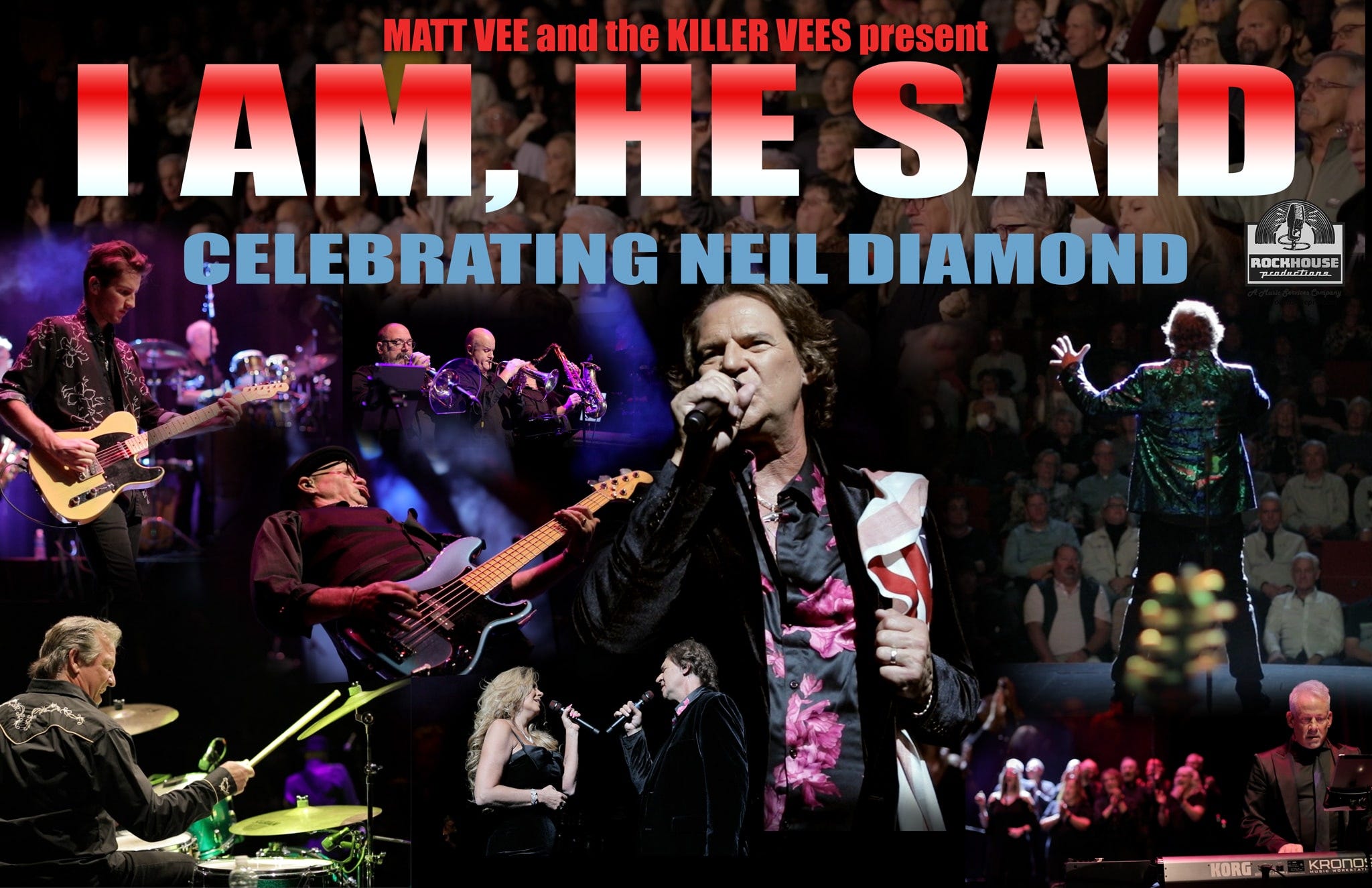
The first song in Matt Vee’s story isn’t even a Neil Diamond song.
It’s “Peggy Sue,” played by a 10-year-old kid in North Fargo on a 1959 Fender Jazzmaster that already carried more family history than he could have understood. Matt’s father, Bill Velline, had given him the guitar, taught him a G chord and showed him the Buddy Holly song.
Matt remembers an acoustic guitar coming first, though not a particularly good one. Then his father decided to hand over the real thing.
The Jazzmaster is still with him.
That detail would be enough on its own, a father giving his son the instrument that helped pull him toward a lifetime of music. In the Velline family, though, “Peggy Sue” carries another weight. Bill and his younger brother Bobby were part of The Shadows, the Fargo group that performed at the Moorhead Armory on Feb. 3, 1959, after Holly, Ritchie Valens and J.P. “The Big Bopper” Richardson were killed in a plane crash early that morning following the Winter Dance Party’s Feb. 2 show at the Surf Ballroom in Clear Lake, Iowa.
The Moorhead concert continued, local musicians were recruited and a 15-year-old Bobby Vee suddenly found himself onstage during one of rock and roll’s darkest 24 hours.
Matt heard those stories growing up, but hearing a family story and understanding where it sits in history are different things. He thinks he was around 12 when it settled in.
He had gone to the Surf Ballroom, where Bobby later returned repeatedly for anniversary performances, and saw the ballroom and the crash site for himself.
“That’s when I saw the crash site for the first time,” Matt said. “And the ballroom and just the feel of that place, it’s really special.”
Suddenly, his father and uncle weren’t simply adults talking about something that happened before he was born. Bill and Bobby Velline occupied a small but permanent place in the history surrounding the Winter Dance Party. Bobby would go on to place 38 songs on the Billboard Top 100, including “Take Good Care of My Baby.” Bill’s son would take a considerably less direct route.
He had the guitar, though. That was a start.

Please consider Donating to Sponsor an article even $1 helps!

Learning what a show owes the room
Bobby Vee was Uncle Bobby before Matt had enough perspective to understand what the other name meant. Celebrities passed through the family’s orbit. Matt remembers Dick Clark package shows and encounters with Chuck Berry, Bo Diddley, Jerry Lee Lewis and others from the generation that built early rock and roll.
“You know, I was never really starstruck when I was young,” he said. “But now when I think about it it’s like, wow, that was really cool.”
The education he took from Bobby had surprisingly little to do with celebrity.
“He was the last guy to leave every night,” Matt said. “He would talk to everybody that wanted to say hi to him or get an autograph. We’d all be on the bus, everybody waiting for Bobby.”
Matt remembers his uncle playing to the person in the highest row and treating the people working behind a venue with the same attention he gave the people waiting near the stage. He watched how Bobby handled audiences, but also how he handled everybody else.
“He was just a real genuine human being,” Matt said.
Then another Midwestern institution entered the picture.
Matt left the University of Minnesota after a year and spent roughly 13 years singing and playing guitar full-time with the Johnny Holm Band, eventually returning to school and finishing his degree. Those Holm years put him inside a version of the Upper Midwest music circuit that has mostly disappeared: bands driving from ballroom to ballroom five nights a week, Tuesday through Saturday, with dance floors that expected more than a technically clean set.
Johnny Holm taught Matt how to pace a night.
“It’s one thing to stand up there and play music, but people come to be entertained also and hopefully leave with a feeling like they had a great time,” Matt said.
The timing of our conversation made that memory especially fitting. Holm was inducted into the North Dakota Music Hall of Fame on Sept. 20, with a Johnny Holm Band concert following the ceremony in Bismarck. Matt had planned to be there.
Those two teachers, Bobby Vee and Johnny Holm, gave him different pieces of the same lesson. One showed him how to treat people when the stage lights went down. The other showed him how to hold them while the lights were up.
Later, Matt got another education when he toured the United States and United Kingdom with Bobby from 2002 to 2004. British audiences surprised him with their attention and restraint. People would sit almost unnervingly quiet while a song was happening, then applaud when it was finished. Scotland was another story. He still laughs about Freddie “Boom Boom” Cannon walking onstage in Glasgow and greeting the room with “Hello England.”
The reception was immediate.
“Do not say hello England in Scotland,” Matt said, laughing.
More important were the hours around the shows. He met fans who knew obscure pieces of American rock history better than many Americans did. He spent time around musicians his uncle had known for decades. Sir Tim Rice rode with the touring party and, according to Matt, surprised him by immediately identifying him through his father.
The road also gave Matt years with Bobby that became more valuable after Alzheimer’s disease forced his uncle to retire in 2011. Bobby died in 2016.
Near the end, language faded before music did.
“We would sit around the campfire and he couldn’t talk,” Matt said. “But I’d play his songs and he would hum along. He could hit the notes.”
Then he stopped for a second.
“Music right till the end, the very end.”
The Neil Diamond show that audiences asked for
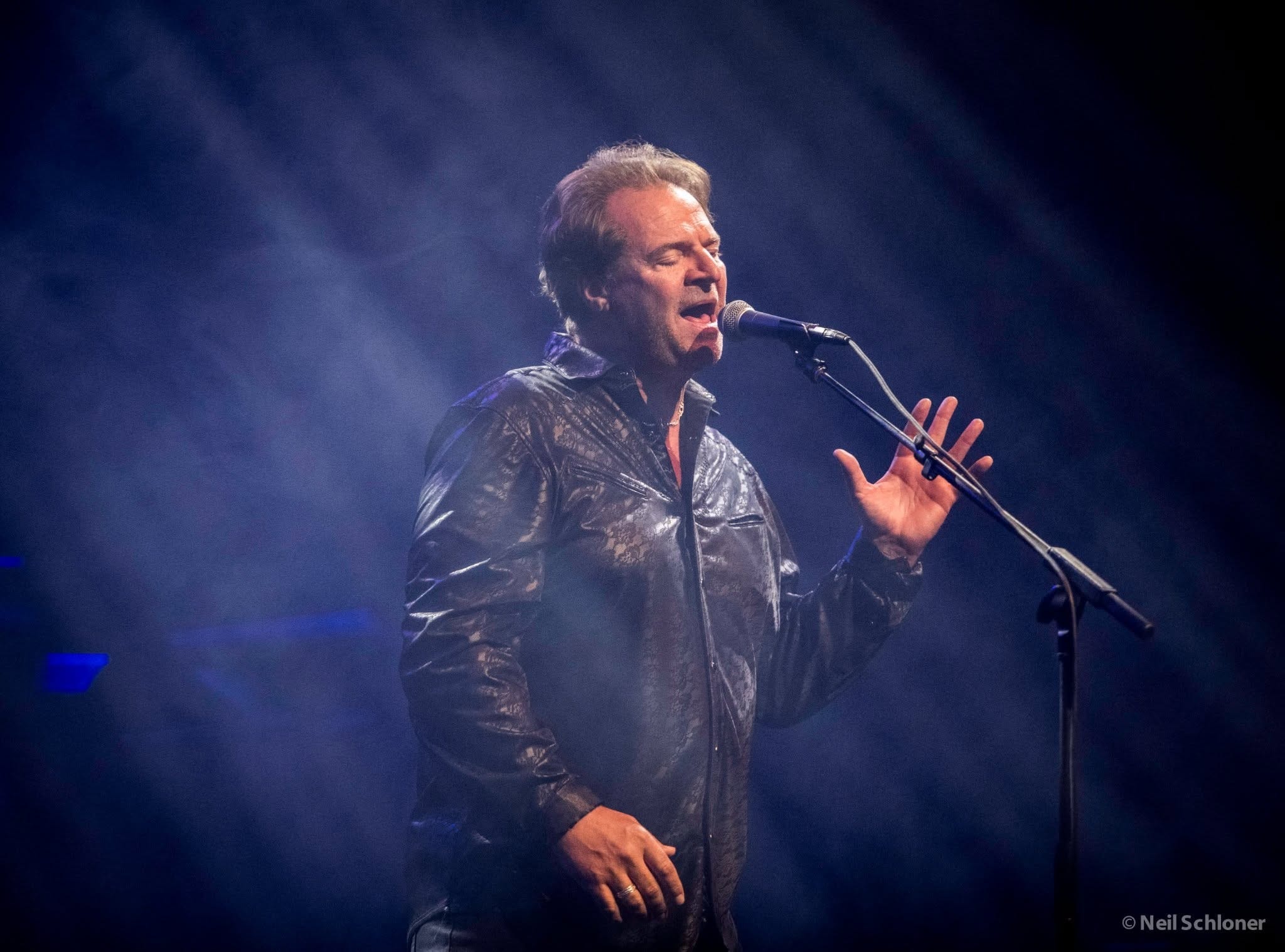
For all that family history, Matt Vee’s eventual turn toward Neil Diamond wasn’t some carefully mapped extension of the Bobby Vee story. Audiences more or less nagged him into it.
Diamond was already familiar territory. Matt’s mother played his records at home, and Matt remembers hearing Hot August Night and being struck by it. Years later, while appearing with Minnesota regional favorite The Fabulous Armadillos, he kept landing on Diamond songs during the group’s themed theater productions.
They fit his voice.
Then people started cornering him after shows.
“When are you gonna do your Neil Diamond show?”
It happened often enough that the suggestion stopped sounding hypothetical. Matt called his cousins Jeff and Tommy Vee, Bobby’s sons, and asked whether they wanted in.
They started locally. The thing took off.
Now “I AM, HE SAID” travels around the country, with Matt estimating the production at roughly 40 performances in a year. The title plays off Diamond’s “I Am... I Said,” but the Vees are unusually particular about what they want the production called.
Not an impersonation. Not somebody throwing on a wig, lowering his voice and pretending Neil Diamond has entered the building.
“I’m not a Vegas impersonator,” Matt said. “It just gives me the heebie-jeebies when I see some of these tribute shows where they’re acting like they actually are the star.”
He does work on Diamond’s sound. Carefully.
“I treat my voice just like an instrument,” Matt said. “You want to have the right instrument for the right part in whatever song you’re playing and vocals are no different.”
That idea explains much of the show. Matt isn’t trying to convince a room that he is Neil Diamond. He wants the voice to occupy the same musical space because the arrangements require it.
Even the family connection between Diamond and Bobby Vee turns out to be more interesting when Matt strips away some promotional mythology. Matt Vee’s official biography describes a deep friendship between the two singers. Matt was more measured when I asked him directly.
“They weren’t close friends by any means,” he said.
They did know one another. Bobby moved through the New York songwriting world that produced his 1961 No. 1 “Take Good Care of My Baby,” written by Gerry Goffin and Carole King. Diamond also came through that Brill Building-era ecosystem before establishing himself as a recording artist. Matt remembers Bobby talking about Diamond approaching him with songs, and Bobby eventually recorded Diamond’s “The Boat That I Row.”
There is enough connection there without turning acquaintance into legend. Twelve musicians instead of shortcuts
If Matt’s resistance to the word “tribute” can sound like semantics at first, his description of the band makes the argument better than the label does.
“I just said look, I want to do this right,” he told me. “I don’t want to be out there five piece band trying to play Neil Diamond songs. It’s not going to fly.”
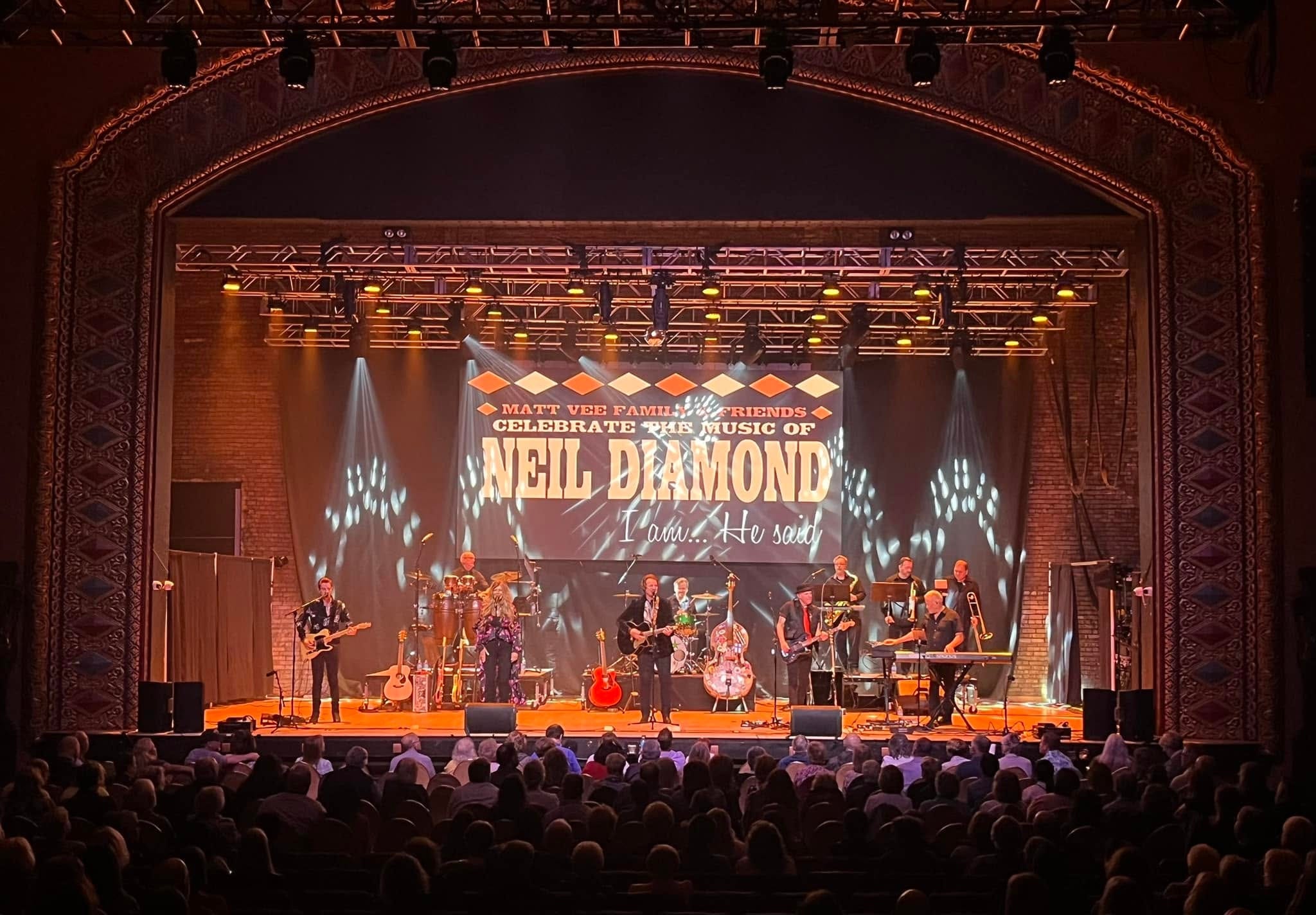
The full production uses a 12-piece band with horns, keyboards, percussion and the layers needed to reproduce records that were rarely built around four people in a room. Songs such as “Holly Holy” and “Brother Love’s Traveling Salvation Show” swell because of those layers. Remove enough of them and the melody survives, but the physical size of the record disappears.
Matt hears that absence even when audiences can’t name it.
“People don’t know what they don’t know, right?” he said. “A lot of it’s subconscious. If something’s wrong, they don’t know what it is, but they know something’s off in a song if you’re not doing it like they remember it.”
So the band goes backward before it moves forward. They return to the original records, isolate the parts, rebuild horn lines and keyboard textures and pay attention to the way Diamond phrases a word rather than merely where the note sits.
Local singers frequently become part of that construction. The production recruits choirs in tour cities for four songs in the finale, sometimes putting 15 voices behind the band, sometimes 40. The Washington Pavilion’s current listing promises local talent again for Sioux Falls. Previous Pavilion performances have used local singers, including Dakota Academy of Performing Arts students during the 2023 engagement.
The show has been here enough times to develop a relationship with the room. Washington Pavilion brought it back in 2022 after an earlier 2019 appearance, then welcomed the production again in October 2023. This year’s Sept. 25 performance is at least its fourth documented Pavilion engagement.
Matt remembers the room.
“Sioux Falls is probably right up there in my top five in that room to play,” he said, pointing to the sound, the audiences and the feel of Mary W. Sommervold Hall.
There is one personnel wrinkle that appears to have changed since the Pavilion published its current show listing. The venue lists Tommy Vee’s son Bennett on lead guitar. Matt told me Bennett is expected to play drums in Sioux Falls while Matt’s son Will Velline handles guitar.
Which means another Velline is stepping onto the stage.The family keeps getting bigger
Matt, Jeff and Tommy have been playing together since they were about 12. Julie Velline, Matt’s wife, eventually became part of the production as well.
Their story goes back even farther than their marriage. Matt remembers Julie as a 14-year-old who would get pulled from Johnny Holm audiences to sing. Years later they reconnected, dated, married and spent time performing as an acoustic duo. When the Diamond production expanded, adding Julie was less a casting decision than a continuation.
Her role has grown.
One of Matt’s favorite moments in the current show belongs to her, not him. Julie sings “I’ve Been This Way Before,” the 1974 Diamond ballad that also resurfaced through Kate Hudson’s performance in the 2025 film Song Sung Blue.
“To me it’s the highlight of the show,” Matt said of Julie’s performance.
Then there are the sons.
Bennett Vee, Tommy’s son and Bobby’s grandson, has already built credits outside the family band as a drummer and guitarist. Matt speaks about his future with the strange pride musicians get when they know somebody they love may soon become too busy to stay.
“I’m dreading it but I’m happy for him because I know he’s not going to be part of this forever,” he said.
Will is coming behind him, playing drums and guitar while also learning lighting. Matt sounded almost more bewildered by the latter.
“He can walk into any theater and jump on those massive boards. And I’m just like, how does he know this?”
The lineage has become almost absurdly tidy. Bill Velline gives his son Matt a 1959 Jazzmaster. Bill and Bobby’s story runs through the first chaotic hours after Buddy Holly’s death. Bobby becomes a recording star. Matt learns his profession under Bobby and Johnny Holm. Jeff and Tommy build careers of their own. Matt, his cousins and Julie form The Killer Vees. Then Bennett and Will walk onto the same stages.
It could feel museum-like if they treated the songs as artifacts. They don’t.
Matt’s irritation with fully AI-generated music came up unexpectedly during our conversation, but it fit his approach to “I AM, HE SAID” almost perfectly. He has no objection to using technology as a tool. He talked about its usefulness for making a demo when a songwriter wants to communicate an arrangement before musicians assemble. What bothers him is removing the players, singers and writers until all that remains is a finished product nobody actually performed.
That opinion makes sense coming from a guy hauling a 12-piece band around the country because five musicians aren’t enough to make “Holly Holy” feel right.The song beneath the singalongs
There is an obvious Neil Diamond show available to anyone who wants to build one.
Play “Sweet Caroline.” Let the room supply the famous response. Hit “Cracklin’ Rosie.” Hit “America.” Send everybody home smiling.
Matt’s show has those pleasures, but the songs he talks about most intensely are often elsewhere.
The title song is one.
Diamond spent months wrestling with “I Am... I Said,” a song born during an emotionally difficult period. Matt hears the loneliness first.
“That song, I mean, it’s a gut-wrenching song,” he said.
There’s no need to oversell the lyric. The song already does the work, placing a man between New York and Los Angeles and unable to feel completely claimed by either. Diamond’s big voice is there, but the real tension is inward. The singer capable of commanding an arena is admitting that the room can still be empty after everyone goes home.
Then there is “Shilo.”
It wasn’t one of Diamond’s largest hits. Matt put it in the show anyway because it had belonged to him and his sister when they were children. Diamond wrote the song around an imaginary childhood companion, turning loneliness into someone who could answer back.
“You can’t stray too far or you’re going to disappoint people because there’s so many huge hits,” Matt said. “But I put Shiloh in the show because that’s my favorite song from when I was a kid.”
There will always be somebody leaving a Neil Diamond production asking why one particular song wasn’t played. Matt hears it regularly.
His answer is practical.
There are too many songs.
“We would have been here for four hours.”
Afterglow
Back in North Fargo, none of this existed yet.
There was no 12-piece Diamond production. No Washington Pavilion. No tours through Britain with Bobby. No decades with Johnny Holm, no Jeff and Tommy beside him, no Julie taking the spotlight, no Bennett moving behind the drums or Will picking up a guitar.
There was a kid, his dad and a 1959 Fender Jazzmaster.
Bill taught him a G chord and “Peggy Sue.”
More than half a century after that guitar was built, Matt still has it. He called it his favorite instrument and his keepsake, which feels about right. The valuable part isn’t that it survived. Plenty of old guitars survive.
This one kept getting handed forward.
“I AM, HE SAID” with Matt Vee and The Killer Vees comes to Mary W. Sommervold Hall at the Washington Pavilion in Sioux Falls on Friday, Sept. 25 at 7:30 p.m. The production features members of the Vee/Velline family alongside a full ensemble.
Please consider Donating to Sponsor an article even $1 helps!



