


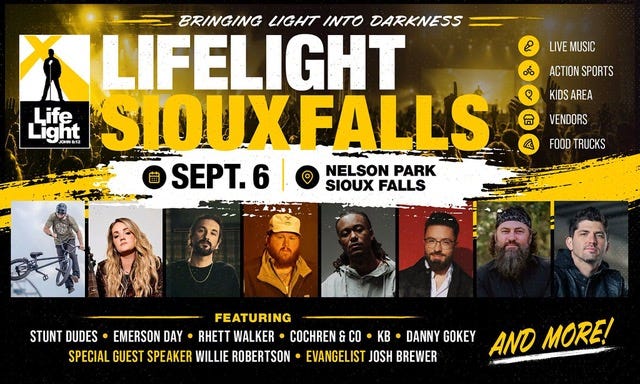
For Josh Brewer, booking a Christian music festival begins with talent, but talent alone will not get an artist onto the stage.
“We tend to be very selective, very picky at who we book because we want people that are, of course, high on talent, but also high on impact,” Brewer said. “They’re willing to share their story. They’re willing to share their experiences, which could impact someone who’s in the crowd.”
Brewer has served as CEO of LifeLight since 2016, though his connection to the ministry began years earlier. He married into the family behind the organization, started working there a few years later and eventually assumed its leadership. This September, he and his wife will celebrate their 20th wedding anniversary.
During our conversation, his answers repeatedly returned to relationships: with artists, booking agents, volunteers, churches, donors and the people standing in front of the stage. He does not hide the machinery required to produce a free festival, but he also refuses to describe LifeLight as merely a concert promotion company with an altar call attached.
“I’m not interested in just being another concert promoter or another festival promoter,” he said. “We do that. Of course we do that. That’s the vehicle that God’s given us.”
The vehicle has changed considerably. LifeLight grew from a church lawn into a sprawling, multistage festival near Worthing, stepped away from that model, returned to Sioux Falls at 8th & Railroad in 2023 and then moved to Nelson Park. This year’s free festival runs from noon to 9:30 p.m. Sunday, Sept. 6, with Danny Gokey, KB, Cochren & Co., Rhett Walker, Emerson Day, Jesse LaBelle, Movement Worship and Z8 Worship. Willie Robertson and Brewer will speak, while BMX veteran Vic Murphy joins the action-sports programming.
Brewer calls the day “a party mixed with the best family reunion you’ve ever been to.”
That description fits the modern LifeLight. It also leaves a question hanging over the music: Who gets invited to the reunion, and who is the party meant to reach?
If you would like to check out some of our previous years coverage here are the links. We have majorly upgraded our camera equipment and can’t wait to share this years coverage with you after the festival!


Please consider Donating to Sponsor an article even $1 helps!


The songs people carry with them
My own history with LifeLight began before I ever entered its grounds.
During my sophomore year of high school, my mother moved us across the country to the middle of nowhere in Texas. I knew nobody. Switchfoot’s music, especially “Dare You to Move,” stayed with me through that upheaval. I played it throughout the drive and kept returning to it for months afterward whenever I needed some reassurance that the world had not closed in for good.
Hearing Switchfoot at LifeLight in 2015 fulfilled a long-held wish, but it did more than knock a band off my concert list. Standing there brought me back to the teenager in that car, clutching at those songs because they offered a way to imagine life improving.
Brewer understands the responsibility attached to memories like that.
“We always say we don’t want someone coming to any LifeLight event for any amount of time and not be deeply impacted in one way or another, whether it’s through the music or the message,” he said. “John Foreman is an incredibly talented lyricist. Those high entertainers or artists, they look at the world a little differently than some of us, and John’s one of those guys.”
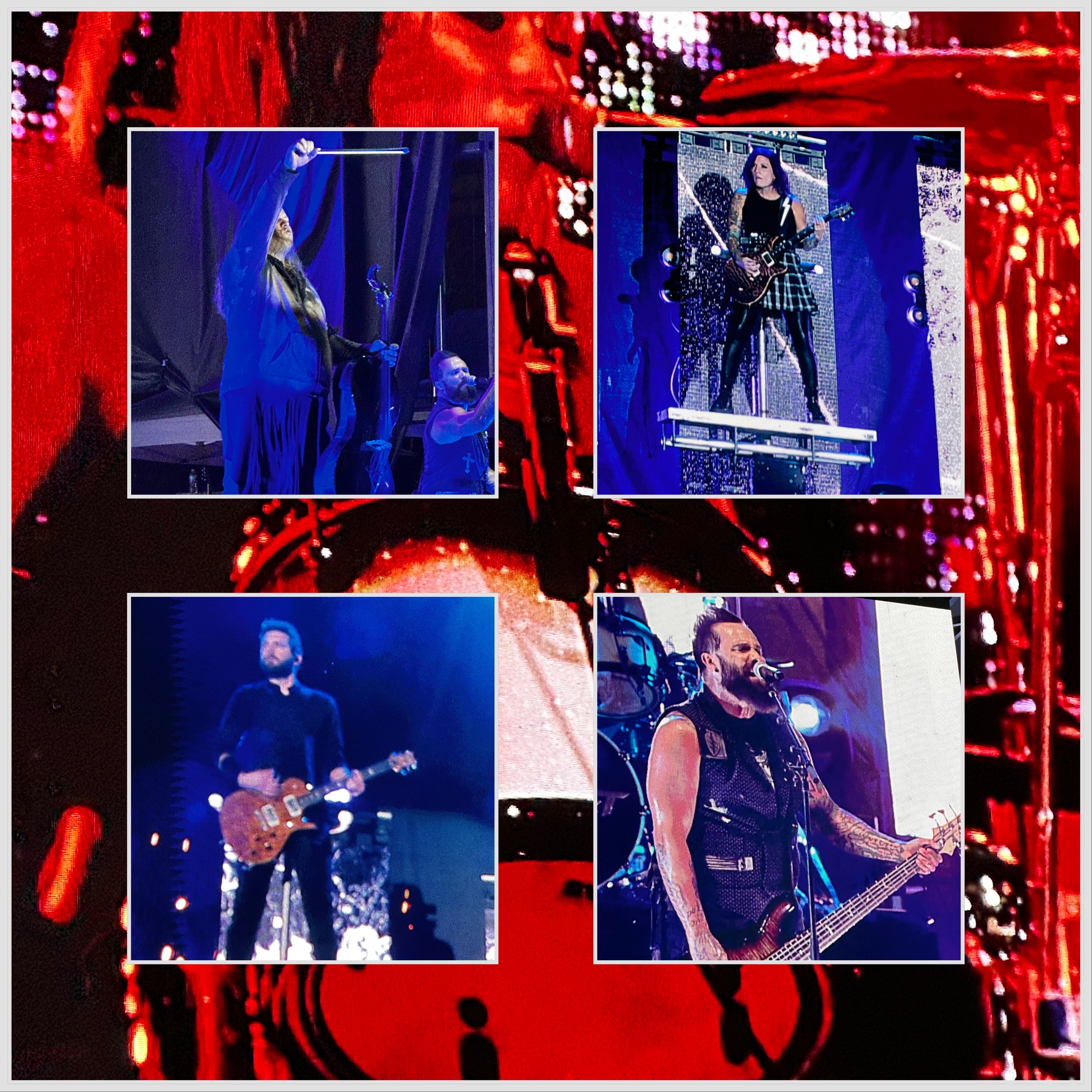
That emphasis on impact helps explain why the same musicians have returned throughout LifeLight’s history. Remedy Drive appeared repeatedly during the Worthing years. Skillet came back for the reborn Sioux Falls festival in 2023, followed by Newsboys in 2024 and Tenth Avenue North in 2025. Each booking supplied a recognizable headliner while reconnecting the smaller, rebuilt event with the festival people remembered.
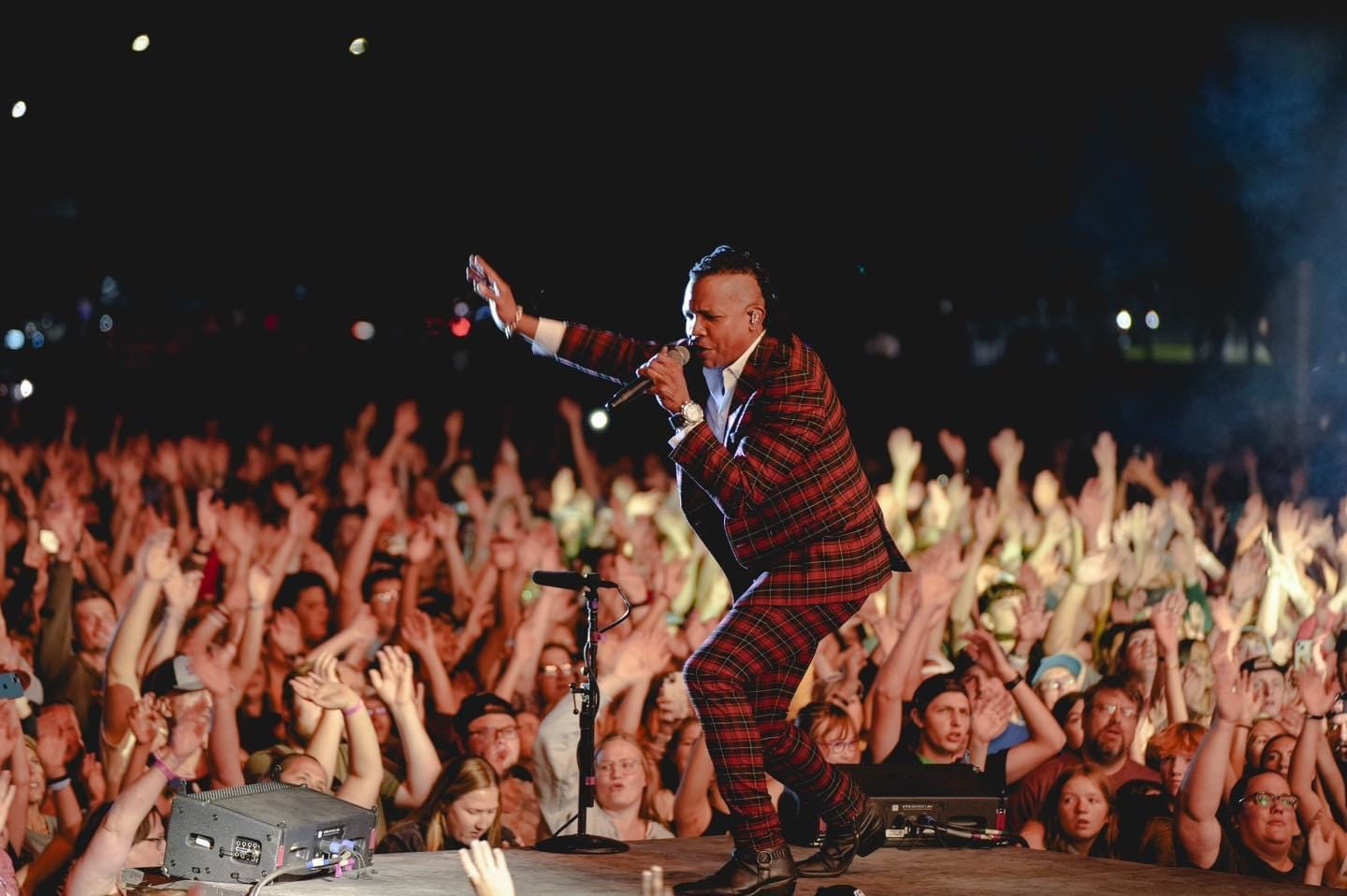
Brewer has developed a close relationship with Skillet’s John Cooper and recalled a comment Cooper made backstage in 2023.
“He looked right at me backstage,” Brewer said. “He goes, ‘Every time we play at a LifeLight event, it feels a lot more like a mission trip than a festival.’”
Brewer still considers it one of the best compliments the ministry has received. Skillet can deliver the volume, flames and arena-sized rock show expected from its name, but Cooper also understands what LifeLight wants those elements to accomplish.
“We want to put on fantastic events, and we do, and we’re proud of our team,” Brewer said. “But we also want those moments of high energy to coincide with those moments of high impact.”
Repeat bookings depend on more than whether a performer filled the field. Brewer spoke about humility several times, acknowledging how difficult it can be for successful artists to remain grounded when they spend hours each day surrounded by people praising them.
“When they get the mission behind LifeLight, when they’re humble,” he said, “they’re easy to work with.”
A different kind of crossover
This year’s lineup does not contain a rock headliner with Skillet’s mainstream footprint or a band carrying the secular-radio familiarity of Switchfoot. Danny Gokey remains one of contemporary Christian music’s most established performers, and KB has become a major name in Christian hip-hop, but much of the bill is aimed more directly at listeners already tuned into Christian radio.
Brewer does not dispute the difference. LifeLight changed where it placed its crossover appeal.
“We always try to have what we would call a crossover draw,” he said. “We want the church there. We want the people there that are into Danny Gokey and into some of those artists, but we also want to make it feel comfortable with people that aren’t church attendees.”
Instead of spending the festival’s reach on a crossover rock band this year, LifeLight brought in Robertson, whose visibility through Duck Dynasty stretches well beyond Christian radio. Robertson’s appearance also helped attract Scheels as a significant partner because the retailer carries his products. Brewer believes that relationship could push attendance from last year’s estimated 30,000 to 35,000 people toward 40,000 or more.
The other crossover arrives on two wheels. Brewer described Murphy as “the Michael Jordan of the BMX world,” a name capable of attracting young riders who may not recognize every musician listed on the poster.
“It’s one message, many expressions,” Brewer said. “It doesn’t matter if you’re a BMX athlete or an artist or a guy in the back doing balloon animals for kids. It’s all the same message.”
Still, LifeLight’s musical center has plainly shifted. Its old lineups could place Michael W. Smith, Lecrae, Family Force 5, Relient K, NF, Blindside, FM Static, Kutless, NEEDTOBREATHE and metal or punk acts on the same grounds. It was less a single Christian-music audience than several subcultures arriving with different clothes, different volumes and occasionally suspicious parents.
The contemporary version has one day and one main stage. It cannot reproduce a weekend in which worship, pop-punk, metalcore, hip-hop and radio-friendly rock operated simultaneously without competing for the same limited hours.
Brewer believes current youth tastes are best represented by worship and hip-hop. His evidence for KB comes from watching young listeners respond in real time. At a recent Rapid City event, KB launched into “Church Clap,” and Brewer saw roughly 5,000 young people perform its accompanying dance together.
“KB is, if not one of the biggest Christian acts, one that the students know his music,” Brewer said. “He’s incredibly humble. He loves the Lord. He’s easy to work with, and so he’s one of our favorites to have around.”
LifeLight’s Z8 team also has a direct role in those conversations. Younger staff members recommend artists to the festival team, sometimes sending Brewer to research names he has never encountered.
“That’s happened quicker than I would have wanted,” he said, laughing at the reversal. Years earlier, his father-in-law did not always recognize the artists Brewer followed. Now teenagers are doing the same thing to him.
Brewer also acknowledged the practical limit of representing a rapidly splintering musical culture in a single afternoon.
“There are artists that you look at and you have trouble even putting them in a genre, putting them in a box because they’re so creative,” he said. “The challenge behind it all is, when you’re planning an event, how do you get every genre represented?”
His answer included a small but significant disclosure: LifeLight hopes Sioux Falls will not remain a one-day festival forever. Discussions about expansion have begun, though Brewer offered no firm timeline.
“We’re never short on vision here at LifeLight,” he said. “It’s just a matter of respect and collaboration and, in due time, working with people in the community.”
Ice cream bars and expensive artists
LifeLight’s admission policy creates one of the strangest financial propositions in live entertainment. The organization books national touring acts, constructs a stage, supplies professional production, secures the grounds and serves tens of thousands of attendees without collecting a dollar at the gate.
“Free is a terrible business model,” Brewer said.
It was delivered with a laugh, but the pressures behind it are real. Artist guarantees and touring costs have risen. Grants do not arrive on the same schedule every year. Some funders skip a year, reduce their contribution or move to alternating-year support. Brewer said an individual donor or corporate sponsor has often emerged when an expected grant did not.
“Sometimes He waits till the very last minute, which I wish He wouldn’t do,” Brewer said of God’s provision. “But He always takes care of us.”
Relationships affect the price of artists too. LifeLight Festival Director Jill works closely with managers and booking agents, while Brewer tries to establish a direct connection with performers. Those artists remember whether the festival treated them well, and years of trust can influence future negotiations.
“We always say a saying around here with the team,” Brewer said. “Relationships either matter or they don’t.”
They matter backstage in surprisingly small ways. When LifeLight took over Hills Alive in Rapid City, Brewer learned that the long-running festival had developed a reputation among touring artists for filling backstage coolers with ice cream bars. It sounds almost comically minor beside contracts, production riders and transportation costs. It also tells an exhausted road crew somebody thought about them before the bus arrived.
Hills Alive began in 1985 and was only supposed to happen once—the year inspired its rhyming name. It kept returning. After LifeLight’s 2023 Sioux Falls comeback, Brewer received a call from Hills Alive’s festival director, who told him the event had reached its end.
“My heart’s just broken for them because I know everything that means to the community, the team,” he recalled.
Then she offered another possibility: LifeLight could assume responsibility and allow the existing crew to continue.
“I’m like, ‘Okay, I have only about 19 questions.’”
LifeLight now operates Hills Alive under its organizational umbrella while attempting to preserve the event’s local identity and longtime volunteer culture. One man has worked in its finance trailer since 1985. Brewer’s reaction to meeting volunteers with that kind of tenure was simple: “What can I do for you? I’m here to serve you.”
He does not pretend LifeLight rescued a poorly operated festival. Hills Alive’s production and community care required no repair, he said. LifeLight could contribute its ministry emphasis, but the event itself already worked.
The festival that was not coming back
When LifeLight ended its massive Worthing-era festival, leadership did not quietly maintain a five-year plan to resurrect it downtown. Brewer said the organization was committed to moving elsewhere—building outreach in other communities and expanding its work in Africa and Cuba.
Without the Sioux Falls festival consuming so much staff time and money, those efforts could grow.
“We were not planning on coming back,” he said.
Mayor Paul TenHaken changed the conversation. Brewer recalled receiving a call around 2022 asking what it would take to hold another LifeLight Festival in Sioux Falls. Brewer initially told him it was not in the organization’s plans.
“He goes, ‘Well, let’s have a discussion. What would it take for you guys?’” Brewer said. “So he really wanted it to happen.”
The resulting 2023 festival filled the 8th & Railroad area, a compact setting Brewer still describes warmly. It also became clear almost immediately that LifeLight had outgrown it.
That afternoon was among the hottest LifeLight events I have attended. A donation-based drink station appeared to be enforcing a minimum contribution until attendees began collapsing in the heat. After paramedics became involved, water was distributed more freely. Asked whether LifeLight addressed the situation afterward, Brewer placed attendee care above any fundraising objective while acknowledging how difficult it can be to make policies consistent across hundreds of temporary workers.
“The most important thing to us outside of our mission and why we exist—which is also very much a part of our mission—is to care for the needs of people,” he said. “That comes before making money, obviously.”
LifeLight has a permanent staff of 17, Brewer said, but a festival weekend can add approximately 500 volunteers. Instructions must pass through each layer without being misunderstood or improvised. Current festival guidance allows attendees to bring coolers and plastic water bottles, identifies professional first-aid services on site and warns guests to watch for signs of heat exhaustion.
Brewer did not dodge the broader point.
“There are many times where I’m like, ‘Oh, this was a ball drop,’” he said.
Nelson Park gives LifeLight more room, along with a configuration better suited to the crowd it now draws. The reconstructed event no longer resembles the temporary city that formed near Worthing, yet LifeLight is expanding again. Rapid City is established, two additional cities may be announced for next year and Brewer wants the effects of each festival to continue after the final road case leaves the grounds.
He would like to see more attendees connected with churches, ministries, counseling and support services throughout the year, even if LifeLight receives no recognition for those connections.
“How do we take this weekend event and put more efforts into ensuring that this isn’t just a weekend event?” he asked. “I’d love to have more collaboration and more partnerships with more ministries and nonprofits in town to ensure that the impact goes year-round.”
LifeLight could also use its relationships to address Sioux Falls’ shortage of Christian touring concerts outside festival weekend, though Brewer offered a blunt assessment of the obstacle: artists are becoming more expensive, fewer acts remained on the road after the pandemic years and promoters cannot repeatedly absorb losses.
He believes the industry is beginning to recover. Whether LifeLight becomes more active in local venues remains uncertain.
Afterglow
Brewer ended our conversation where he began it: not with attendance projections or expansion maps, but with the people who might otherwise be priced out.
He and his wife have three children. Even at $75 or $100 per ticket—a routine price for national touring shows—a family night can quickly become a $500 decision.
“That’s half a mortgage payment sometimes,” he said. “Families, they can’t do that too many times throughout the year. Some can’t do it at all.”
My wife and I have four children. We know the arithmetic. Free admission determines whether a family can attend together, whether parents must choose which child gets to go and whether a teenager who needs a particular song can be standing near the stage when it arrives.
Brewer cannot predict which performance will become somebody else’s Switchfoot in 2015. He cannot know which kid will carry a chorus through a lonely move, a damaged home or the long months when life refuses to explain itself.
He can keep the gate open.
For LifeLight, the invitation remains the one promise its changing stages have not altered: all may come, and all may freely hear.
Please consider Donating to Sponsor an article even $1 helps!


