



The first real jolt in my conversation with John PayCheck came when he started talking about a song almost nobody outside the tour has heard yet.
“Battles You Never Knew” arrives September 11, one of the final stops on the road toward his third studio album, Better Plan, due November 27. PayCheck expected the song to get a reaction. What he did not expect was how quickly that reaction would begin, even from the small samples released ahead of it.
“It’s intense,” he said. “It was a little bit of a push for me to write the song.”
Then he explained why.
“A lot of it is just, you know, me talking about how I don’t appreciate other country artists taking advantage of veterans and using them as props, right?”
PayCheck is not approaching that subject from the outside. He is a U.S. Army combat veteran who still serves as a major in the Army Reserve, following years as an aviator and military intelligence officer. He has also worked as a firefighter, another job where the aftermath of terrible days tends to follow people home.
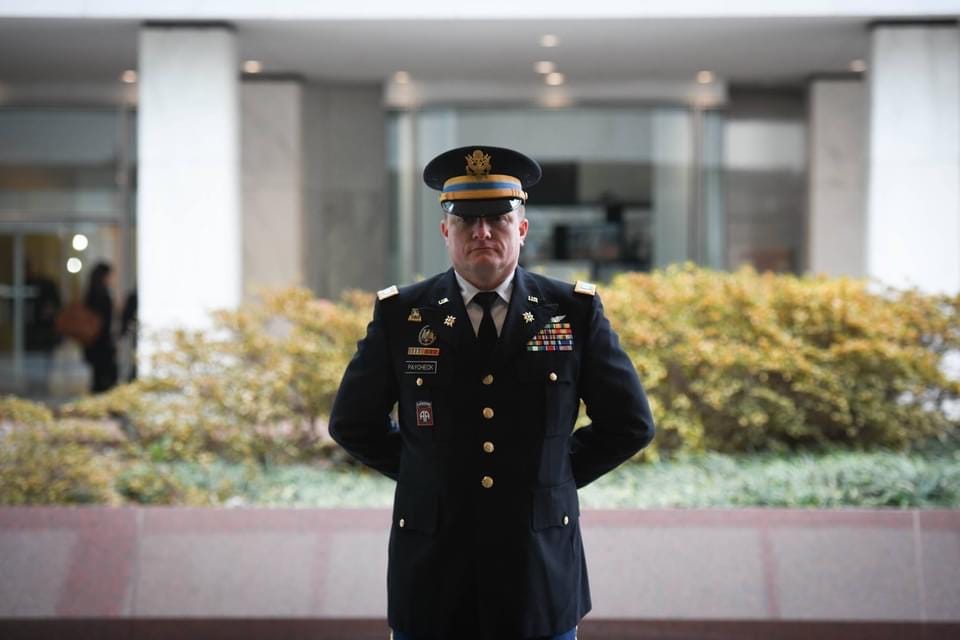
His objection is not that a songwriter without military service should never write about veterans. It is what happens when somebody else’s experience gets flattened into costume, sentiment or marketing.
“If you’re going to write a song about veterans and what we go through, don’t pretend like it’s what you’ve been through,” he said. His answer was simple: bring a veteran into the writing room. Listen. Give them credit for the story being told. If a song is going to draw attention from veterans and their families, he wants artists to consider putting some of the money and attention back into organizations serving those communities.
The timing of “Battles You Never Knew” is deliberate enough to sting. September 11 sits inside PayCheck’s own story. The attacks pushed him toward service, and the calendar does not get much easier from there. As the year moves into the holidays, he said, memories can become heavier for veterans, himself included.
PayCheck also told me he is working to establish a charitable organization that can direct grants toward veterans’ health initiatives and Western heritage preservation. It is another version of the argument inside the song: if you are going to say something matters, eventually the saying has to become doing.
That idea kept resurfacing throughout our conversation, sometimes in places that had nothing to do with the military. What do you inherit? What do you earn? What do you refuse to repeat?
For somebody carrying the PayCheck name through country music, those are not abstract questions.

Please consider Donating to Sponsor an article even $1 helps!

A better plan isn’t a clean slate

PayCheck’s 2024 album “More Days Behind” was unusually willing to stare at the clock. The title itself carries the realization that eventually the math flips and there may be more life behind you than there is waiting ahead.
Listening to that record before our interview, I wondered whether Better Plan was the natural next question. Once you recognize that time is finite, what are you actually going to do with what remains?
PayCheck laughed slightly at the suggestion that he had engineered some careful multi-album narrative. He hadn’t.
“The albums aren’t meant to progress that way,” he said, though the songs sometimes seem to arrange themselves into a sequence after the fact. His writing follows whatever part of life he is examining at the time, which means one question has a habit of producing the next.
Better Plan moves from measuring the years toward deciding what kind of man is going to inhabit them.
The title track is built around that pursuit, not the fantasy that anybody reaches a finish line where all their flaws suddenly disappear. PayCheck described the album as “about being a better man and it’s about, you know, trying to improve yourself and constantly struggling with that.”
There is another piece to it too: figuring out whose judgment deserves a seat in the room.
“People that, you know, want to criticize you and weigh you down, they’re not part of your plan anyway,” he said. “So why are you focused on that? Keep moving forward. And that’s really what it’s about.”
Recorded at Gnome Studios in Nashville with producer Bill McDermott, Better Plan still plants its boots firmly in traditional country. PayCheck is not interested in shaving away the instruments that make the music expensive to carry from city to city. His Cavalry Band travels with the fiddle and steel guitar he considers essential to the sound.
That choice comes with arithmetic. PayCheck has spoken openly about making sure his musicians get paid, housed and taken care of even on nights when doing so leaves very little for him. A smaller acoustic configuration would be easier. He does occasionally strip the show down, but he has no desire to make that the default.
“Musically, we’re protecting the sound, right?” he said. “We’re protecting the heritage of country music a little bit too, I think.”
For PayCheck, fiddle and steel are not museum pieces. They are working parts of a live show meant to fill a dance floor.
“It makes the music interesting,” he said. “It gives you just such an awesome sound on stage and it, the experience is better for the listener and for the audience.”
There is inherited muscle memory in that decision. His father liked a big band. John grew up around that sound and still hears something missing when those pieces are removed.
Not every lesson handed down from Johnny Paycheck has been that easy to keep.
Inheriting the spark without repeating the fire
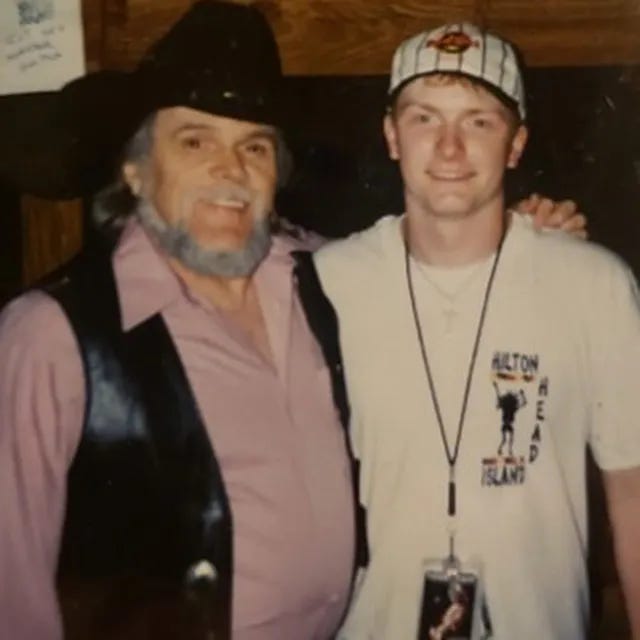
“Sons of the Spark”, PayCheck’s collaboration with Struggle Jennings, could have been sold on surname alone. Two artists from complicated country-music families, two men with ancestors whose reputations arrived in the room before they did.
The more interesting question is buried in the title.
How do you inherit somebody’s spark without repeating the damage caused by the fire?
“You learn from the lessons they left you,” PayCheck said.
His father left plenty.
Johnny Paycheck could be defiant to the point of self-destruction, a man who did not react well to being shoved into corners. John tells a family story about a bruising record-label negotiation where his father told executives exactly what he thought, then parked a car they had given him in their lobby. As PayCheck tells it, an executive responded by telling Johnny that nobody in Nashville would remember his name and he would never have another record deal.
John does not tell the story as uncomplicated outlaw mythology. He understands the price that can accompany satisfaction in the moment.
“There are people that have a lot of sway in Nashville and they’ve got a lot of money, and money talks,” he said. “So if you burn those bridges, that’s what can happen.”
Then comes the part he enjoys.
“People ain’t forgotten who Johnny Paycheck is.”
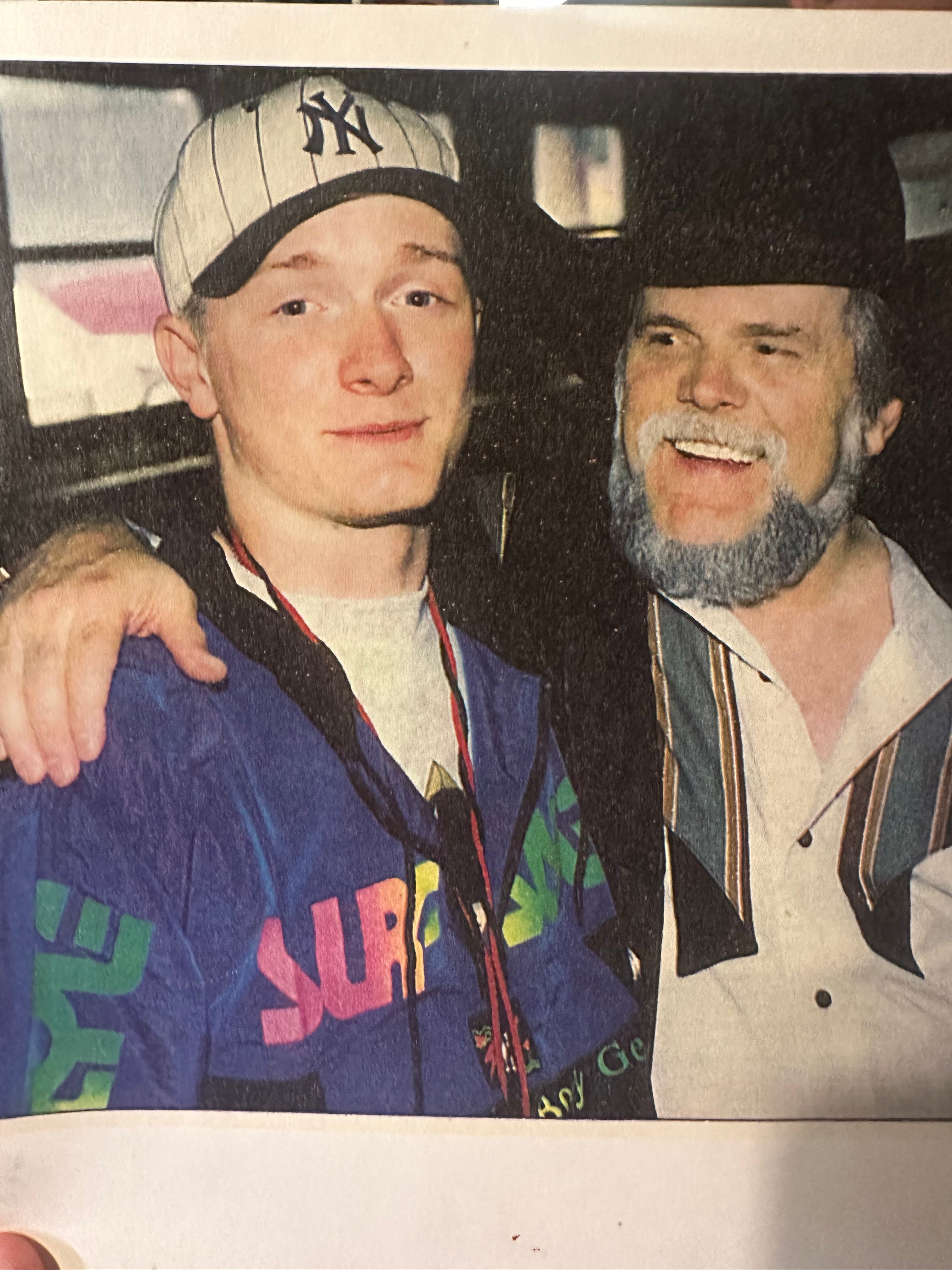
No, they haven’t.
His father’s signature recording, “Take This Job and Shove It”, written by David Allan Coe, remains one of country’s great working-class middle fingers. The song reaches its 50th anniversary in 2027, and John plans to mark it with several special tribute performances.
Those shows will be an exception to a rule he has guarded carefully.
“I’m not a tribute show, and I don’t want to be,” he said.
That line explains much of John PayCheck’s career better than any family tree could.
When his first music began attracting attention, he remembers one early review essentially complimenting his ability to sing and write before adding that the song was not as good as a Johnny Paycheck song.
John’s internal response has not softened much with time.
“You’ll never be as good as Shakespeare either, so I don’t know what to tell you, man.”
He laughed.
“I take it with a grain of salt, let it go and look at, I’m on album three now and we’re doing our thing and people are enjoying it.”
That is also the idea he hopes listeners hear inside “Sons of the Spark.” A famous parent is only the most visible version of the problem. Somebody can inherit a farm, family business or reputation in a small town and still spend years being measured against the person who came before them.
“You do not have to live in their shadow,” PayCheck said.
He knows because he has spent most of his life moving in and out of one.
The road taught him what not to carry
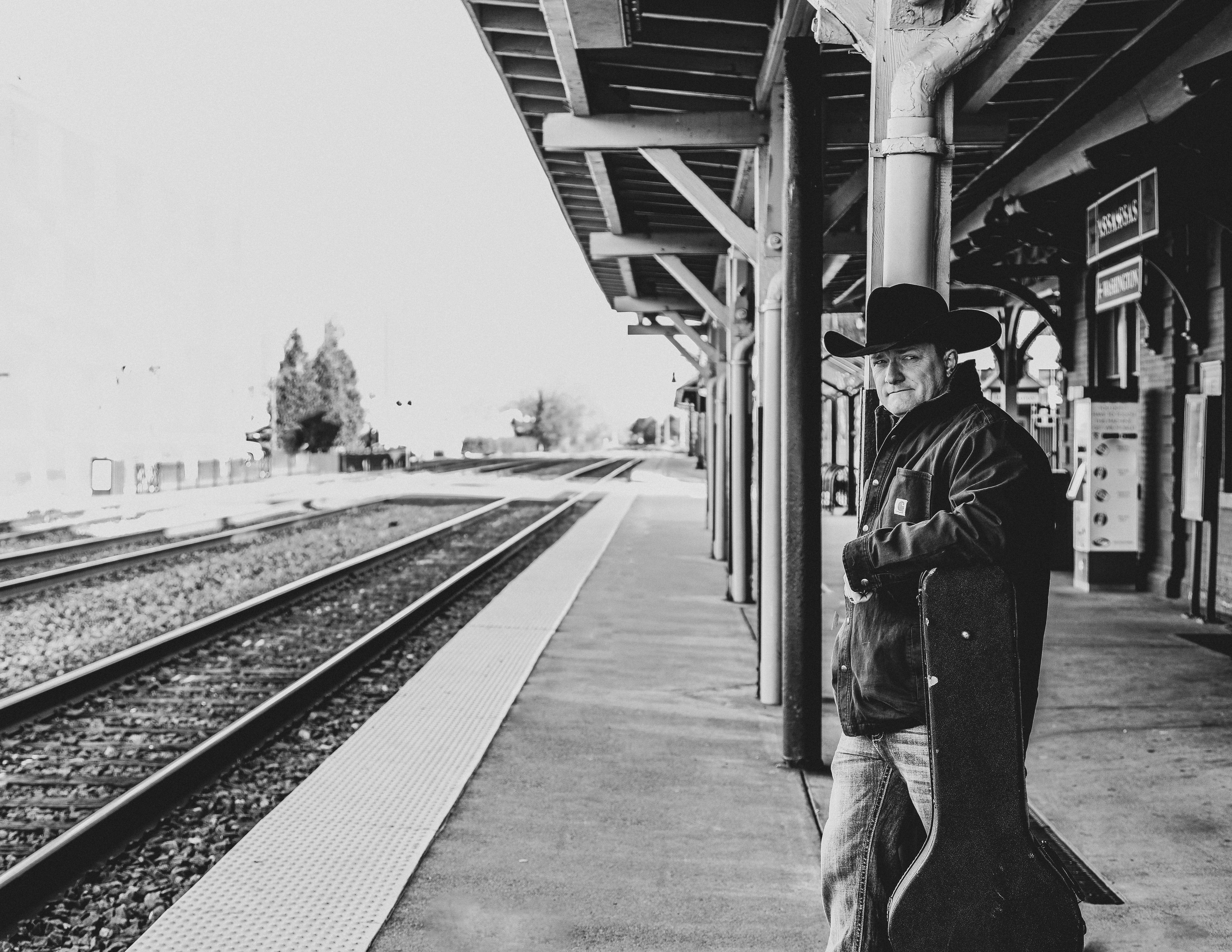
Long before he was the name on the marquee, PayCheck learned touring from the bottom of the ladder.
As a kid he experienced the road around his father. Later he returned as a roadie, then eventually became Johnny’s road manager. Being the boss’s son offered no magical exemption from the ugly work.
“When I went on the road with him, I am just one of the crew and he treated me accordingly,” PayCheck said.
New band members sometimes tiptoed around him until somebody explained that John was not there as royalty. He was there to work.
Becoming road manager changed the dynamic because he was suddenly involved more directly in the family business, but there was never much confusion over who had final say. It was Johnny’s operation.
“Hard to tell him different,” John said.
Those years also taught him what he did not want to reproduce. His current band operates under clear rules about drugs and drinking before shows. What musicians do when they return home is their business, he said, but if it interferes with the job, the relationship ends. Some of those boundaries were formed by watching what life on the road could do when nobody bothered to draw any.
Still, the road got into him.
He talked about “the smell of the diesel coming off that engine of a tour bus or a sprinter van,” about waking up and needing a second to remember what city is outside. There is work before the lights come on, loading, setup and all the anonymous labor that disappears once a band takes the stage.
Then comes the trade.
For roughly 90 minutes, an audience gives you its attention.
PayCheck gives it back.
That relationship with the road became far more difficult during his father’s final years. John left college when Johnny’s health declined, not because of a dramatic calculation about sacrifice but because his dad needed him.
“I don’t think I thought as deeply about it,” he told me.
There was also a denial familiar to anyone who has watched a parent become seriously ill.
“I didn’t really conceptualize a world without my dad until it happened.”
As Johnny became frailer, John and the band tried to keep him performing as long as they safely could because the stage remained one of the places he wanted to be. John remembers an oxygen tank behind his father, the nasal cannula, the difficulty of watching him push through songs while his body was losing the argument.
Eventually John had to be one of the people saying the road was over.
Outside opinions about appearances, publicity or career consequences meant nothing by then.
“I didn’t care what the optics were,” he said. “This is my dad.”
College could wait.
Years later he went back, largely because earning his degree opened the route toward becoming an Army officer. His life moved into technology, firefighting and military service before music eventually pulled him back toward Nashville after roughly two decades away.
The years outside the industry did not interrupt his education in storytelling. They complicated it.
That becomes especially obvious when PayCheck talks about the way military service is represented in songs and movies.
Some mistakes are almost funny to him: incorrect rank, uniforms worn wrong, covers sitting strangely on an actor’s head. The fix is basic.
“Get an advisor,” he said.
The deeper mistake bothers him more. Veterans are frequently portrayed as if service leaves every one of them permanently ruined.
“We’re all broken. We’re not all broken. We’ve survived more than many people have.”
PayCheck does not deny trauma. He talks openly about memories, loss and the things people carry home. His objection is to turning veterans into a single character type, whether that character exists to generate pity, patriotism or applause.
That circles directly back to “Battles You Never Knew.”
He is not asking country music to stop telling these stories.
He is asking people to tell them better.
Lavender after diesel

For a life that has moved through tour buses, technology, firehouses, aircraft, military deployments and recording studios, the lavender farm arrived almost accidentally.
PayCheck and his family were searching for property with enough room for horses when they came across an existing lavender farm in Virginia.
“We dove in,” he said.
Several years later, HorseBite Farms is part of the family business. There are chickens for eggs, rabbits, lavender fields and the normal collection of chores that do not care whether somebody has a show the night before. PayCheck admitted he wanted Flemish giant rabbits but could not win the family vote, so they ended up with lop-eared rabbits instead.
“I’m still going to get me one of them,” he said.
Touring once meant returning home and immediately facing fields that needed cutting. These days, his wife and three daughters have absorbed much of the farm work during the heaviest stretches of the tour.
“I am extremely thankful for my wife and my three girls because, yeah, they’re taking care of everything,” he said. “They really are, and they’re doing a fantastic job.”
The contrast is almost too neat: diesel on the road, lavender at home.
For PayCheck, though, neither life seems to cancel the other. The farm is not an escape from music any more than the Army erased it. They are different rooms in the same house, each one handing him material.
The Better Plan Tour now carries him and the Cavalry Band through 26 states and 43 cities. On September 17, that road reaches Bigs Bar in Sioux Falls for a 7 p.m. show, bringing the full-band version PayCheck insists is worth the cost.
“Battles You Never Knew” arrives September 11. “Texan One Day” follows October 8, with “Daddy Are You Listening” scheduled for November 6 before Better Plan arrives in full November 27.
Afterglow
The interview began with John PayCheck talking about the danger of borrowing somebody else’s pain and pretending it belongs to you. By the end, he was talking about his daughters handling farm chores while he crosses the country playing fiddle-and-steel country music under a last name everybody already recognizes.
They are closer subjects than they first appear.
PayCheck has spent much of his life surrounded by stories he inherited: his father’s triumphs, his father’s mistakes, the mythology of outlaw country, the language surrounding veterans, the expectations attached to a famous name. Better Plan finds him less interested in escaping those stories than deciding which ones deserve to travel with him.
He can honor Johnny Paycheck without becoming a tribute act. He can love the road without repeating everything he saw on it. He can write about military service without turning veterans into scenery. He can carry the spark without setting the same fires.
And when somebody decides the son can never measure up to the father, he has already answered that one too.
Album three. A national tour. Another city outside the window.
“Keep moving forward. And that’s really what it’s about.”
Please consider Donating to Sponsor an article even $1 helps!


