


On a Tuesday?
Wanna guess where I was?
On the afternoon Dolly Parton died at 80, I found myself back at arguably the best and most famous beach dive in the country: the Flora-Bama.
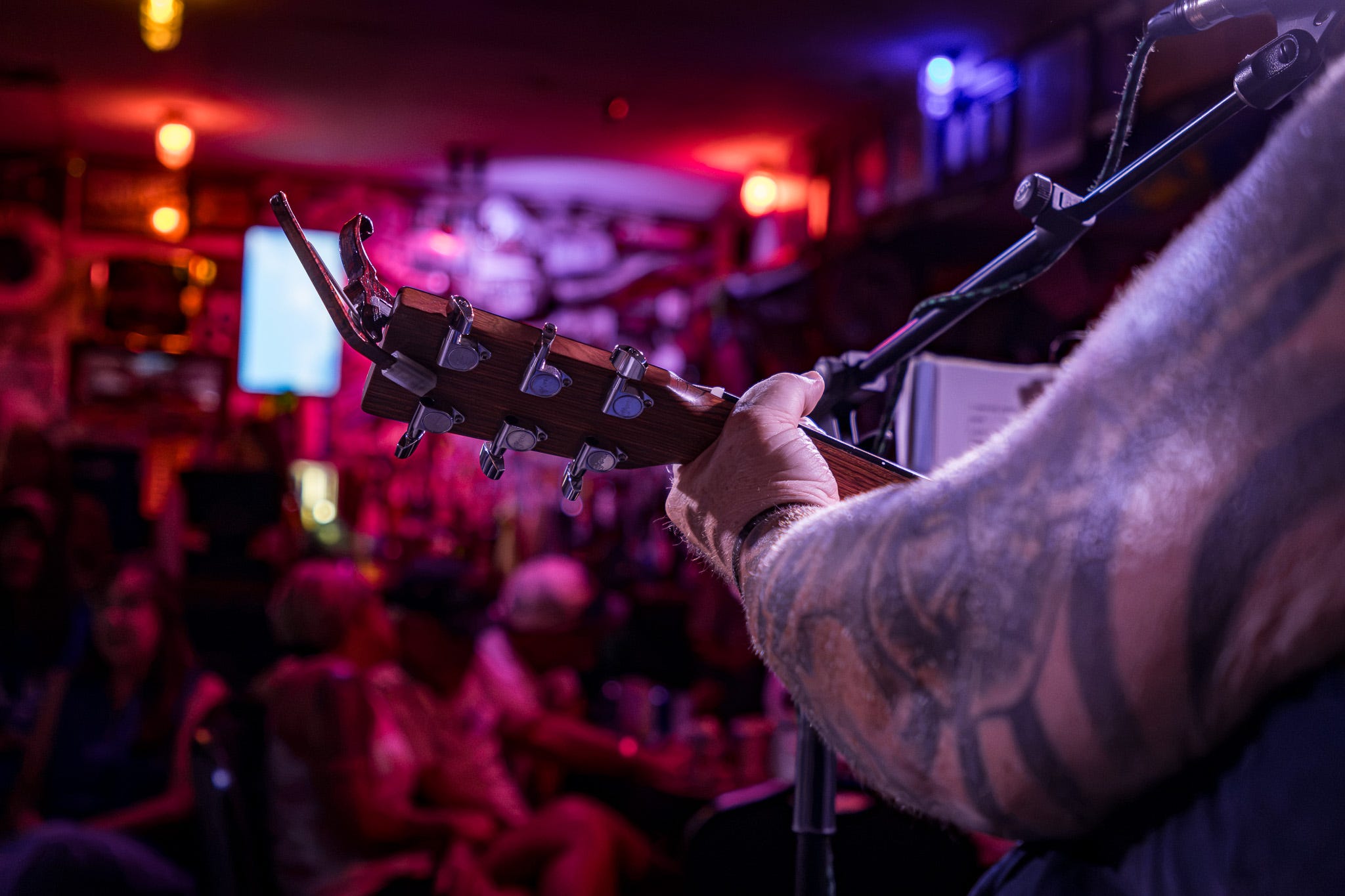
The Main Room, in my opinion, is the heart of the Bama. It is nostalgic without being precious about it, intimate without ever feeling delicate. The stage sits close enough that the performers can see who is listening, who is talking and whether a joke has landed or fallen straight through the floorboards. With only two or three feet separating musicians from the audience, there is nowhere to retreat. You stay on top of your game, keep the crowd entertained and hope the people in front of you come along.
They came along.
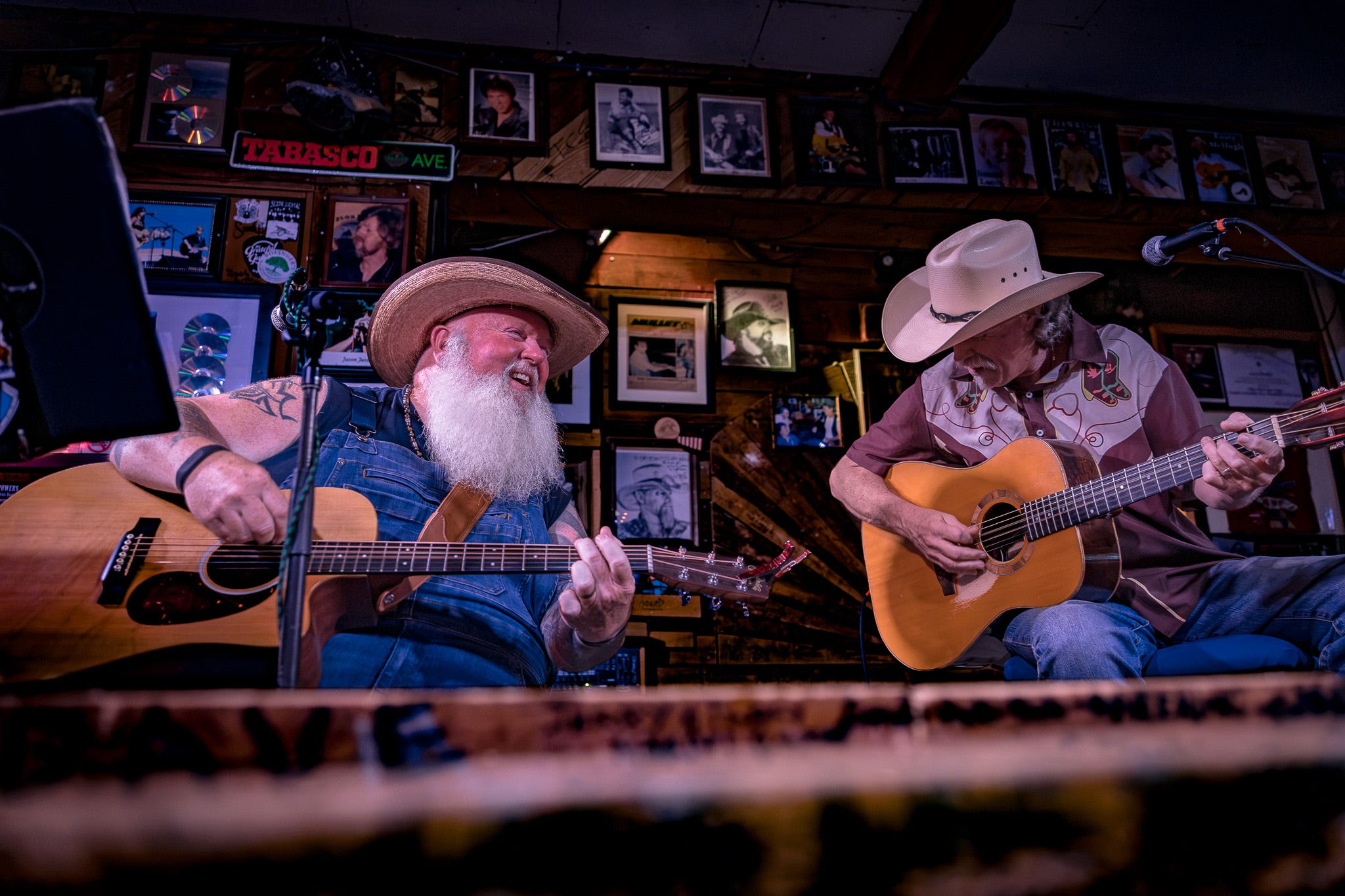
It was 3:30 on a Tuesday afternoon, but the Main Room had the pulse of a Friday night. Bartenders slung drinks across the bar. Strangers mingled with regulars as if they had arrived together. Conversations bumped against the music, laughter broke loose between songs and the sound of the South kept pouring from the stage. Flora-Bama runs live music every day across five stages, but the Main Room still makes a set feel less like another name on a schedule and more like something that happened specifically to the people crowded around it.
Brian “Biggin” Noble, T-Bone Montgomery and Mac Walter were already making quite a bit happen.

Mac. That is all.
Ooooooeeeee! Lemme tell ya.
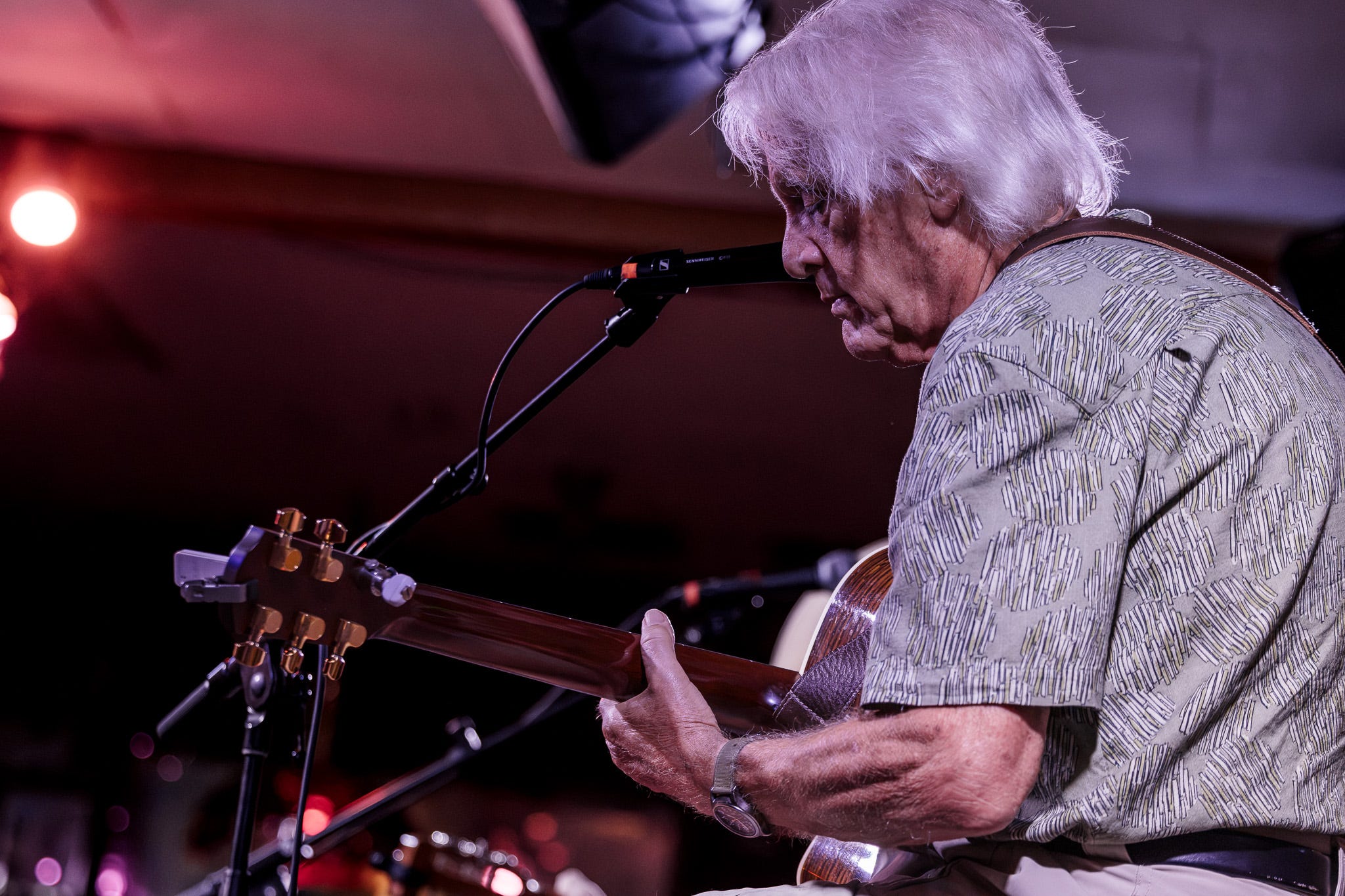
There is nothing better than walking in and hearing guitar virtuoso Mac Walter at work. His tone was warm and vocal, less concerned with showing how many notes he could fit into a measure than with making the right one hang in the air. When he reached for the slide, the pitch did not simply rise. It bent, tightened and cried.
Walter could push the sound outward with a few sustained notes, then pull it back into a stillness that felt almost private. One passage carried the openness of country music; another settled into the worn grain of old Delta blues. Then he would soften his touch and suddenly it was Sunday morning porch music—unhurried, human and close enough to hear the fingers behind the sound. Those changes did not arrive with announcements. He handled them through pressure, space and the length of a note.
It was such a vibe that I had to remind myself I was there to take pictures.
RATS! There these musicians go again, making me forget I have to hit the shutter button.
The lapse says more about Walter’s playing than another paragraph of praise could. A photographer watches for hands, expressions and the fraction of a second when a musician’s body tells the truth about the sound. Walter kept redirecting that attention toward the sound itself. The camera stayed ready. My finger did not always cooperate.
Please consider Donating to Sponsor an article even $1 helps!

“Sassafrass Angel”
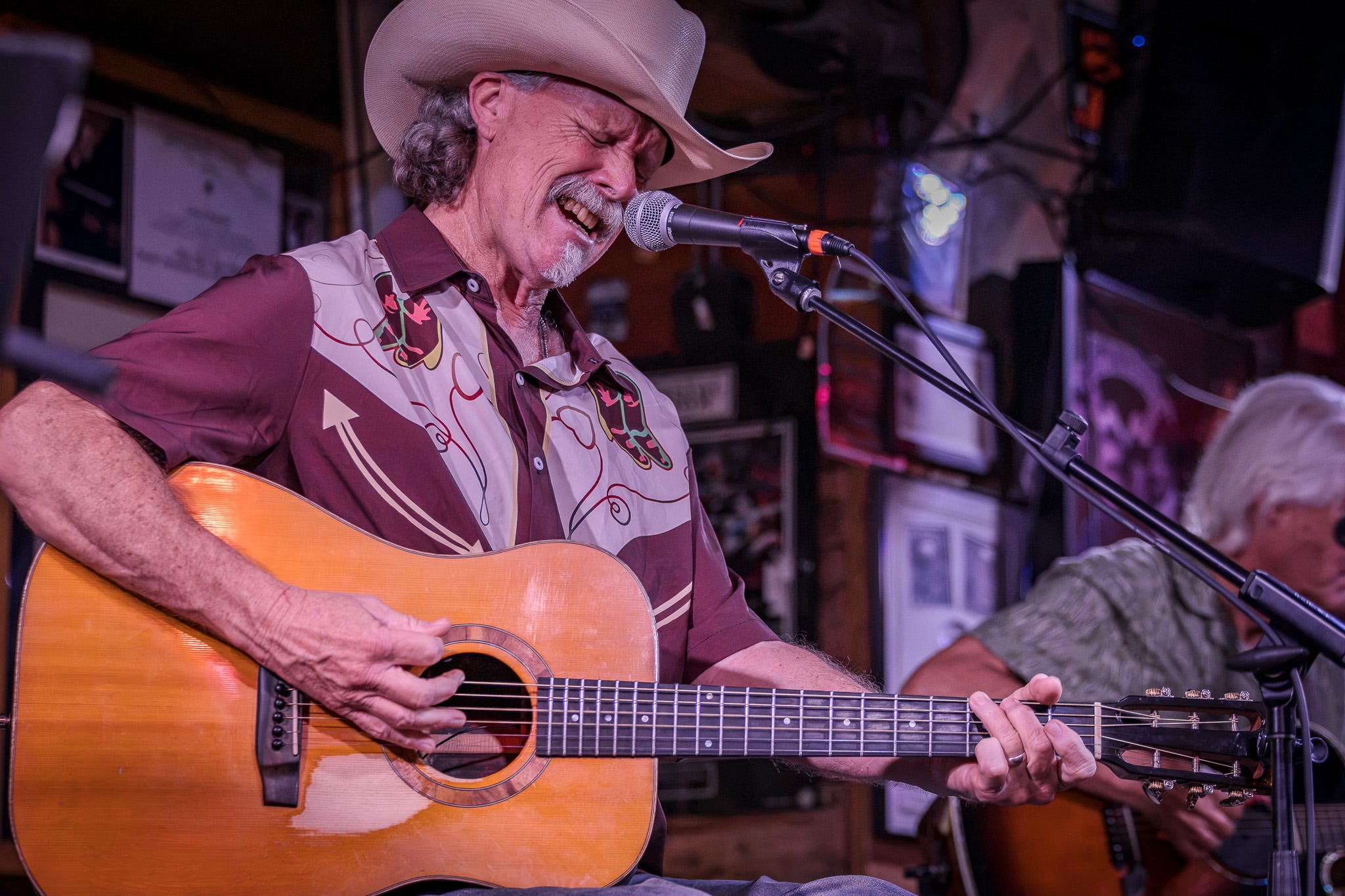
T-Bone Montgomery brought his beachgrass, outlaw-country and honky-tonk instincts to the front of the trio. The music had grit, but Montgomery did not treat grit as an excuse to become humorless. He worked the space between songs with the same ease he brought to the material, tossing out jokes and waiting just long enough for the Main Room to answer. They were landing.
His wife, JoJo, was in the audience. At the Flora-Bama, that is less a fixed fact than the beginning of a possibility. You never know who is sitting a few feet from the stage or who might be singing before the next round of drinks reaches the bar.
JoJo stepped up to join the fellers for “Sassafrass Angel,” an original the couple wrote together about their own love story. No manufactured duet chemistry was needed. T-Bone was singing with the woman who helped write the song, about the life they had built together, while she stood beside him and sang it back. Faces around the stage softened before anyone had time to decide whether the song belonged to their preferred genre.
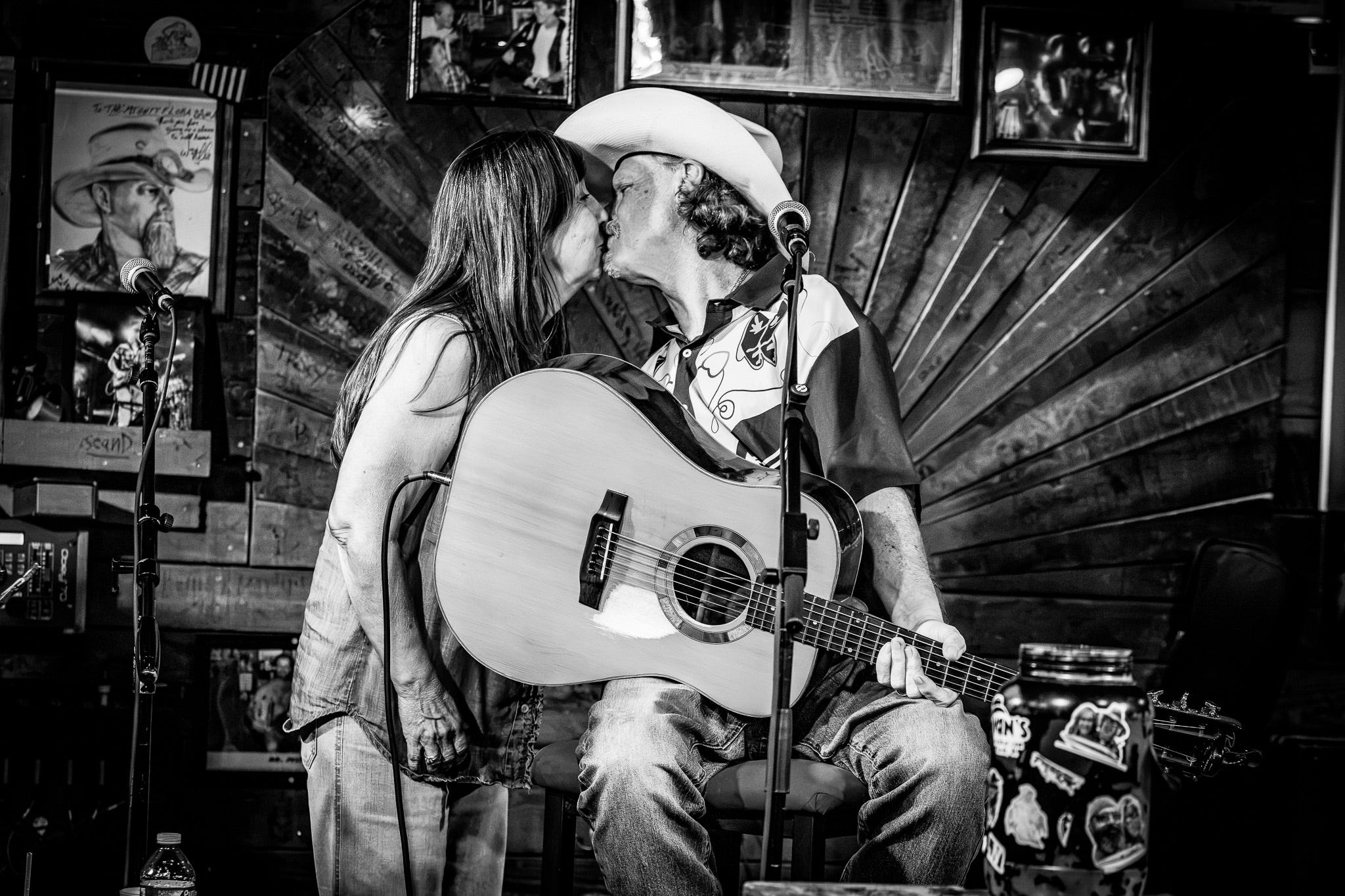
That is what a well-written love song can do. It removes the argument. The details belong to two people, but the feeling does not stay theirs for long. “Sassafrass Angel” carried enough tenderness to make a listener grin and enough lived history to put a little water in the eyes. On an afternoon shadowed by the loss of one of country music’s finest songwriters, the moment also felt like a small demonstration of what Dolly Parton understood so well: specificity does not limit a song’s reach. It gives people something real enough to recognize.
Biggin’
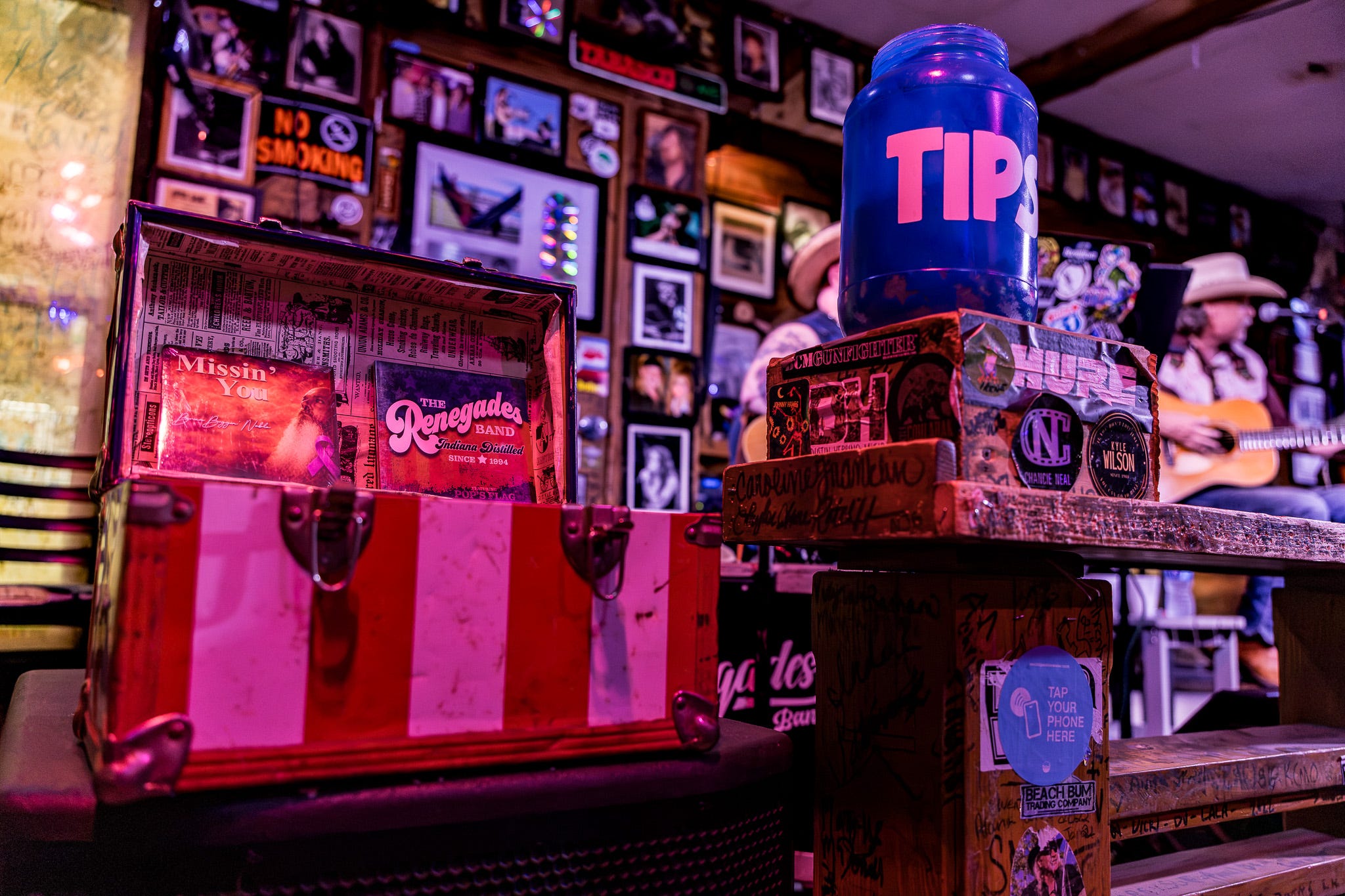
Brian “Biggin” Noble does not need much space to seem larger than the stage beneath him. A 2017 inductee into the Southeastern Indiana Music Association Hall of Fame and the longtime frontman of The Renegades, he commanded the Main Room without sanding down the warmth that makes people lean toward him. Music, witty quips and no-holds-barred storytelling all came from the same place. Nothing felt separated into the formal categories of song, joke and speech. He talked to the crowd until talking became singing, then pulled them back out with another line.
His version of Johnny Cash’s “Folsom Prison Blues” showed how well he understands a familiar song. He did not handle it like a museum piece, and he did not strain to reinvent something that already works. He found the physical details inside it. This was the second time our publication has heard that song in a short period of time thanks to Red Clay Strays

“Y’all ready for the horn?” Biggin’ asked.
Then he made the sound himself—a low, breathy train whistle that rolled out of his mouth and sent the song’s lonesome machinery through the bar. The bit was funny, but it was not only a bit. That whistle opened the door for the performance that followed: Southern twang in the vowels, grit in the low end of his voice and enough rock ’n’ roll force to keep Cash’s rhythm from becoming an impression of the past. The audience knew the song. Biggin’ gave them a reason to listen again.
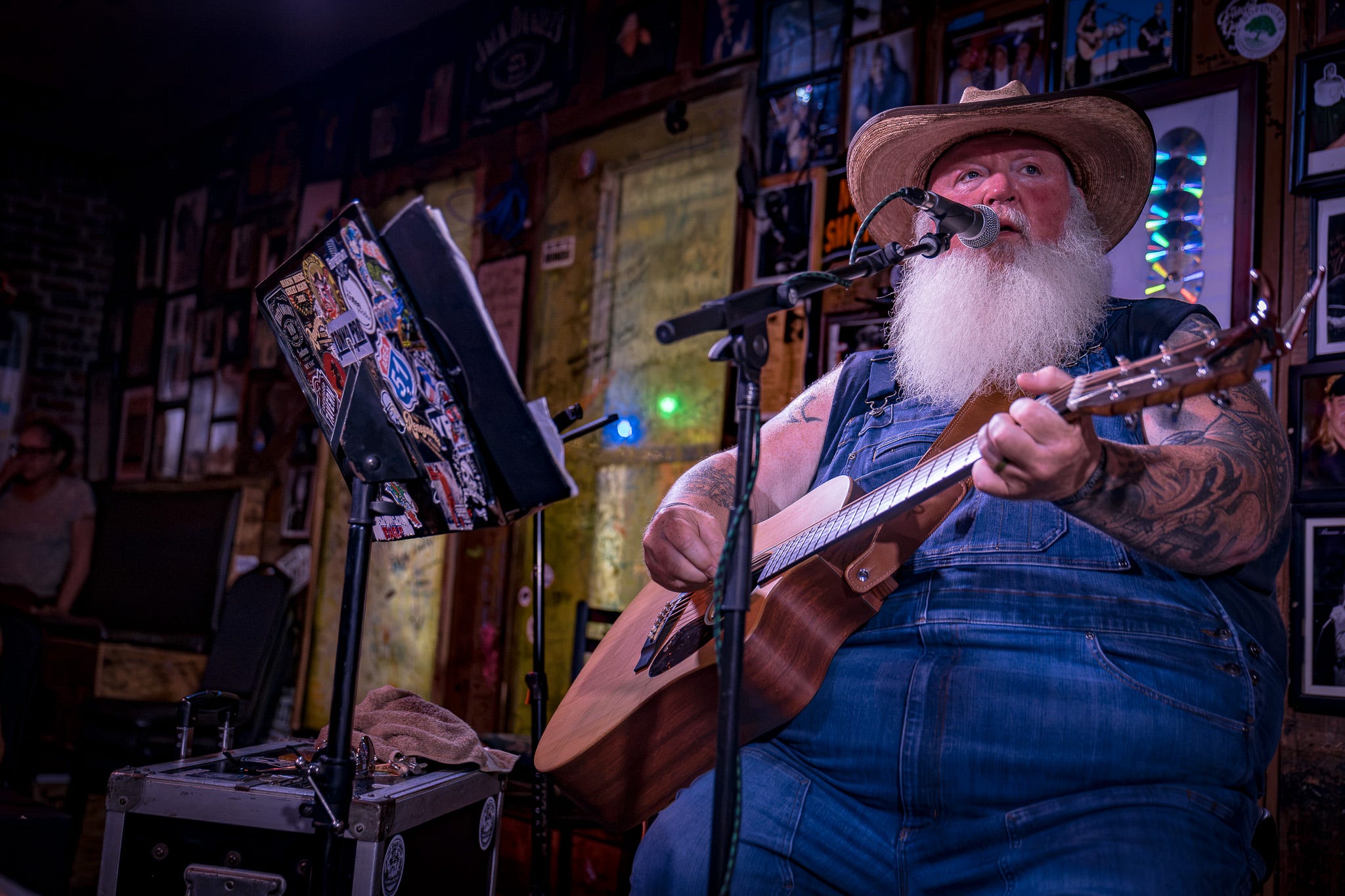
He also gave his originals the same confidence, including “Pop’s Flag” and his latest release, “Missin’ You.” Those songs changed the temperature. The jokes stopped. The mains were still booming and glasses were still being moved somewhere behind us, but the crowd quieted until every small sound seemed to have edges.
What we carry
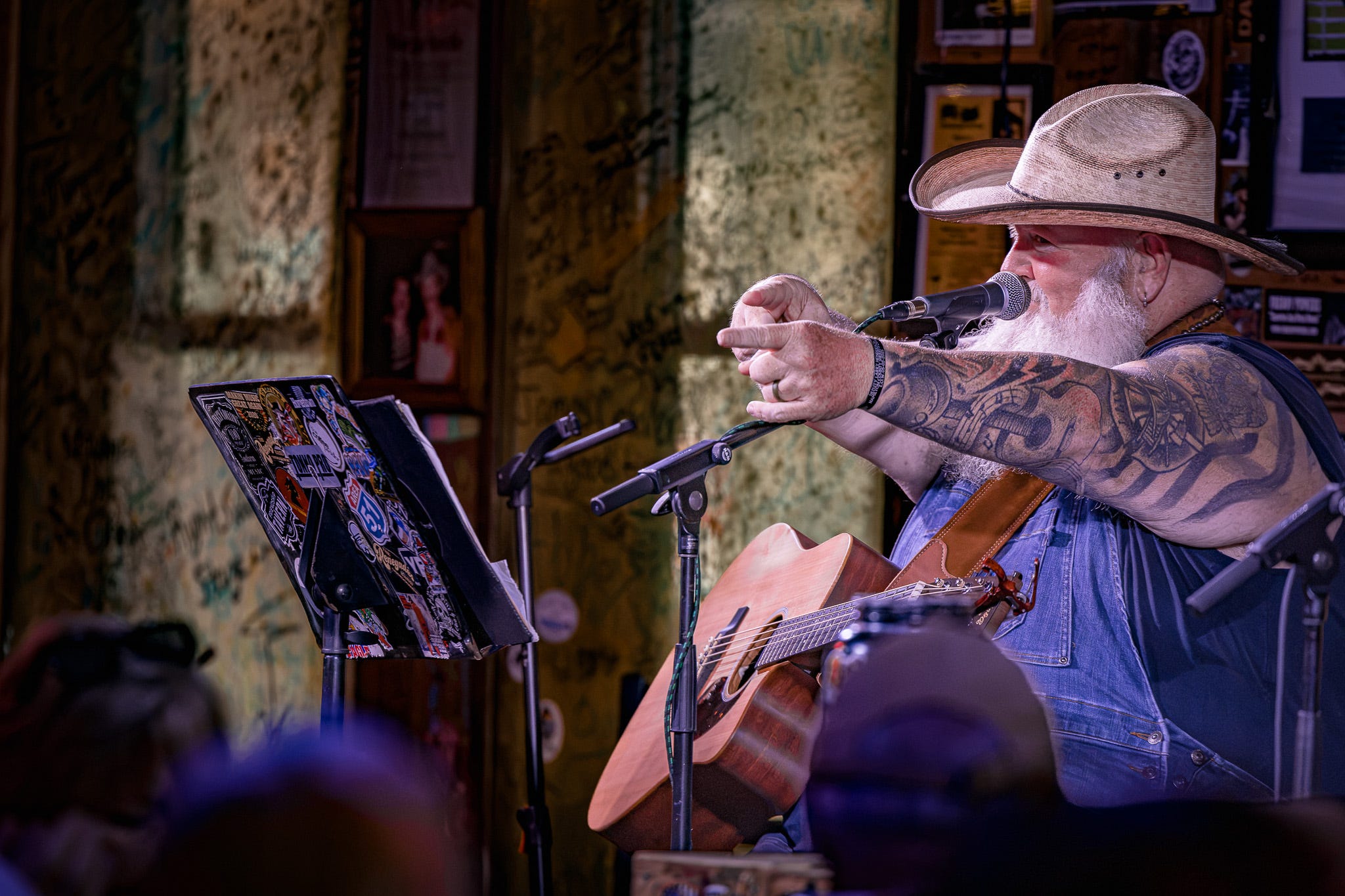
“Pop’s Flag” is dedicated to Biggin’s late father, a veteran who died from cancer. Noble did not perform it as a vague patriotic gesture. He tied it to the values his father lived by—honor, respect and the proper treatment of the American flag—then widened the dedication to those who have served and those still serving.
His delivery was unapologetically American. Biggin’ acknowledged that some people tell artists to keep politics off the stage, especially when an audience may not like what they have to say. He rejected the premise. To him, this was not about party politics. It was about respect for the flag and the country it represents. Whether every listener would have phrased it exactly as he did seemed beside the point. Nobody had to wonder whether he meant it.
That conviction carried the song, but grief sat underneath it. “Pop’s Flag” was not merely about how a piece of fabric should be handled. It was about how a son continues to handle what his father handed down after his father is gone. Biggin’s voice did not ask the audience to observe that loss from a safe distance. He brought his father into the Main Room through the values, memories and symbols that remained.
Then came “Missin’ You.”
“Got the news today that you were gone.”
The opening lyric lands without decoration because bad news rarely arrives with any. Biggin’ said the song took him five years to finish, and for much of that time he was not sure it would ever come fully to life. It began amid the deaths of people close to him, then accumulated more meaning as the losses continued. The musicians he knew down South mattered to its completion. Seeing that they were carrying versions of the same hurt helped him recognize that the song was not his alone.
You can hear that realization in its movement from loss toward hope. “Missin’ You” does not hurry grief, fix it or pretend reassurance cancels the empty chair. The song lets absence remain an absence. Its comfort comes later, in the belief that the people we love are not lost forever and that separation is not the final word.
Biggin’ built the performance around that idea and did not let go. The response was not loud in the way a bar crowd usually proves it is engaged. People listened. The quiet mattered. Nearly everyone has a name they could place inside that song, and on August 25 the country had just been given another one.
Afterglow
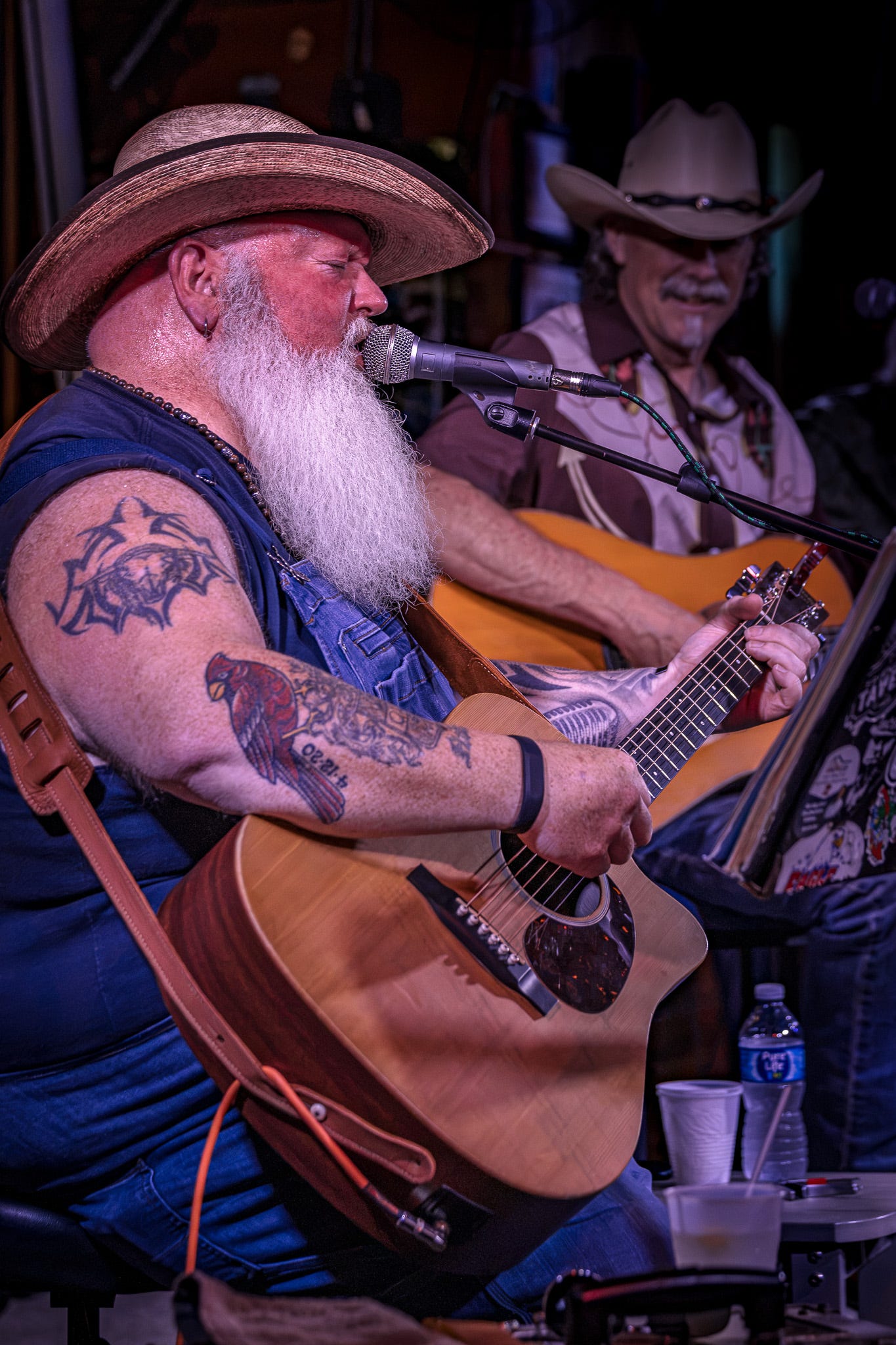
At a place where the party does not end and the stage never sleeps, the afternoon felt right precisely because it allowed more than a party. Biggin’ left us wanting more, but he also turned the set into a heartfelt tribute to country music’s brightest light, Dolly Parton. Her death had made the day heavier. The songs did not remove that weight. They gave us somewhere to put it.
Sometimes, for some of us, the music is all we have.
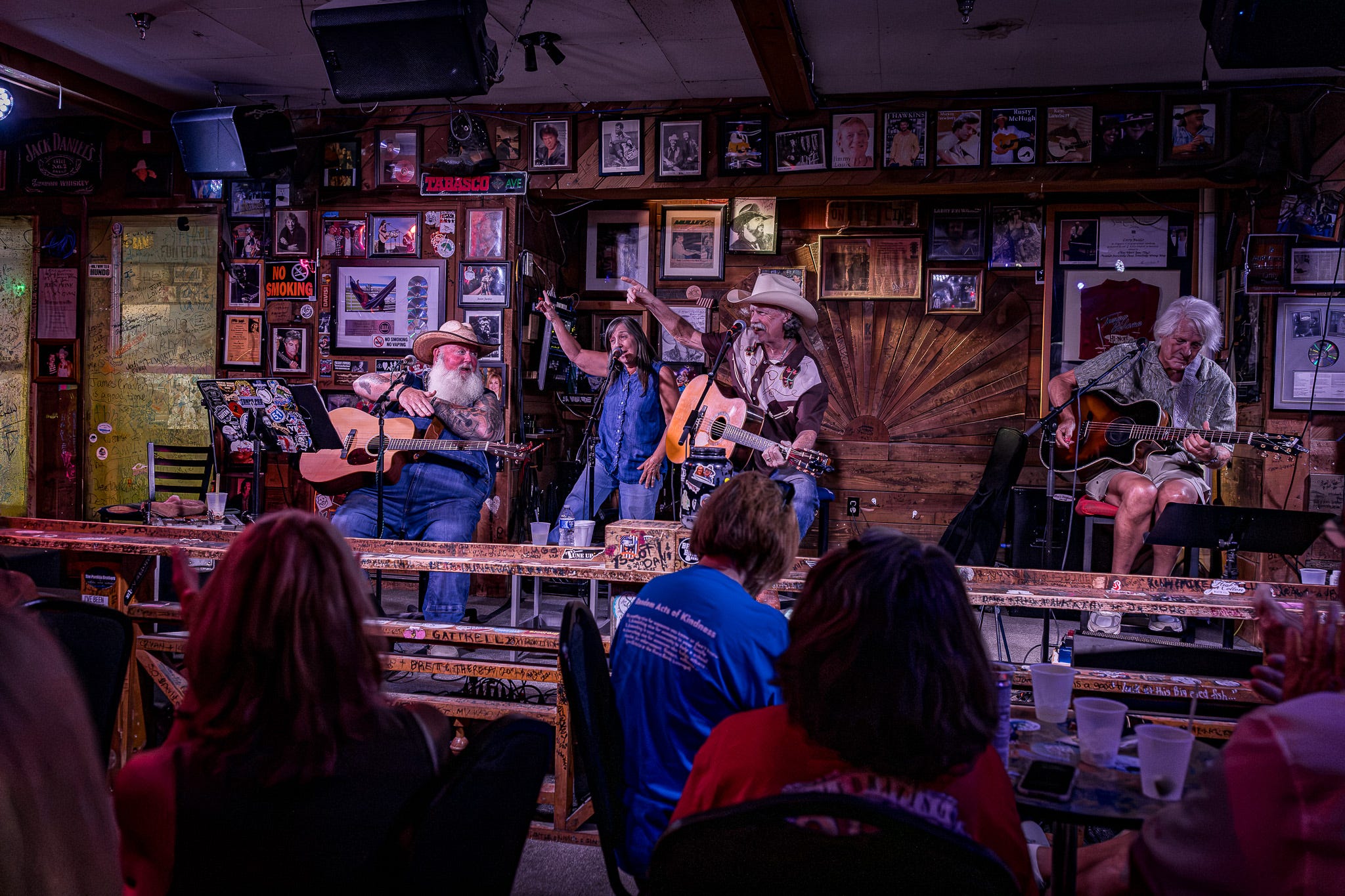
Mac Walter bent a guitar note until it sounded closer to a voice than a piece of metal against strings. T-Bone and JoJo stood together and sang their love story. Biggin’ kept his father present through “Pop’s Flag,” stood up for the country he loves and used “Missin’ You” to tell the crowd that grief is not the end of the story. One set held desire, memory, conviction, sorrow and hope without requiring everyone in the Main Room to agree on anything before feeling it.
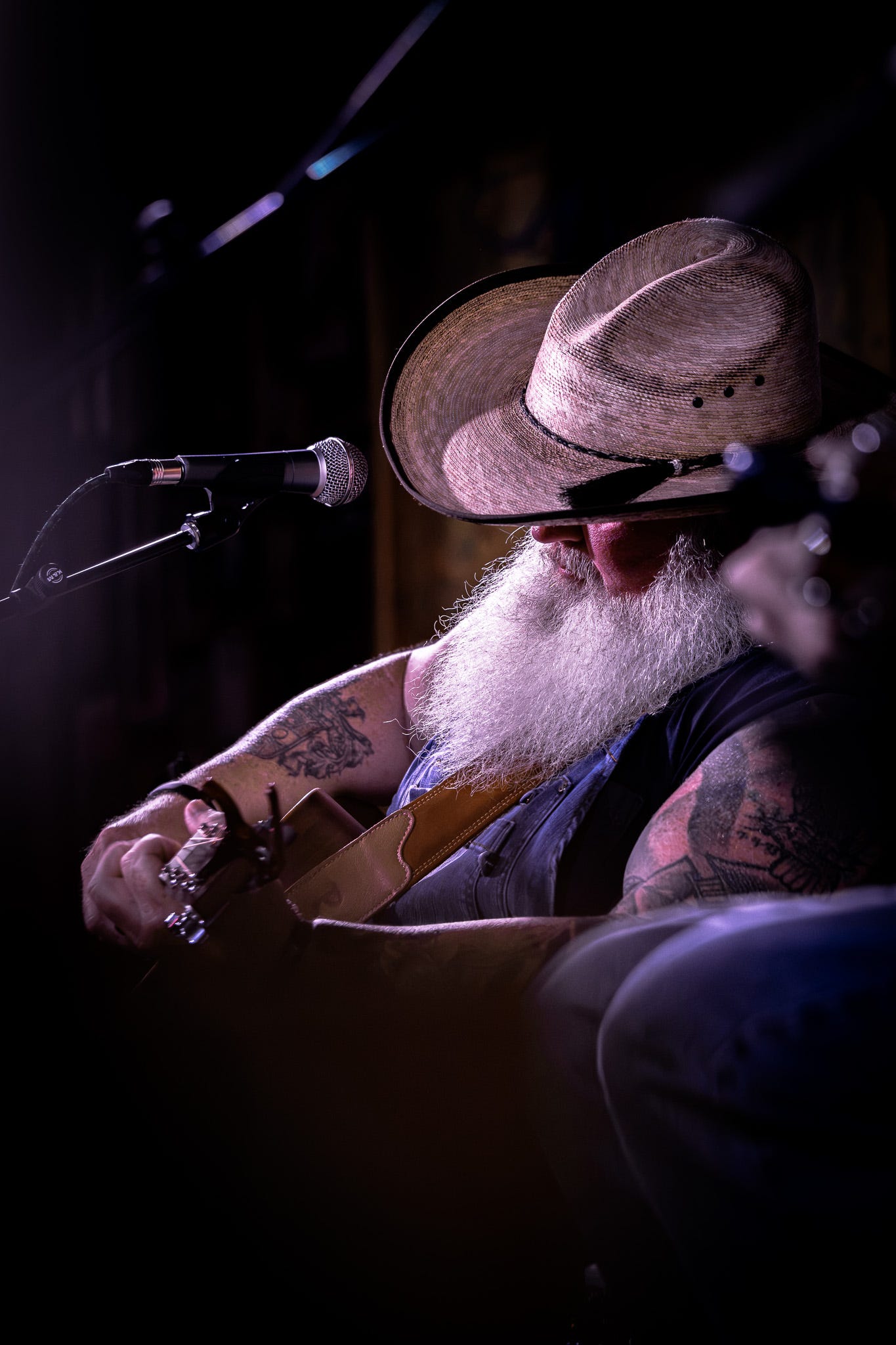
That is the universal language—not the claim that music makes us identical, but the proof that it lets us recognize one another anyway.
For a while, the usual divisions and judgments lost their grip. A guitar could say what a person could not. A couple’s private history could make strangers smile. A son’s remembrance of his father could quiet a booming bar. A new song could return us to the people we miss, hurt all over again and still leave us with hope.
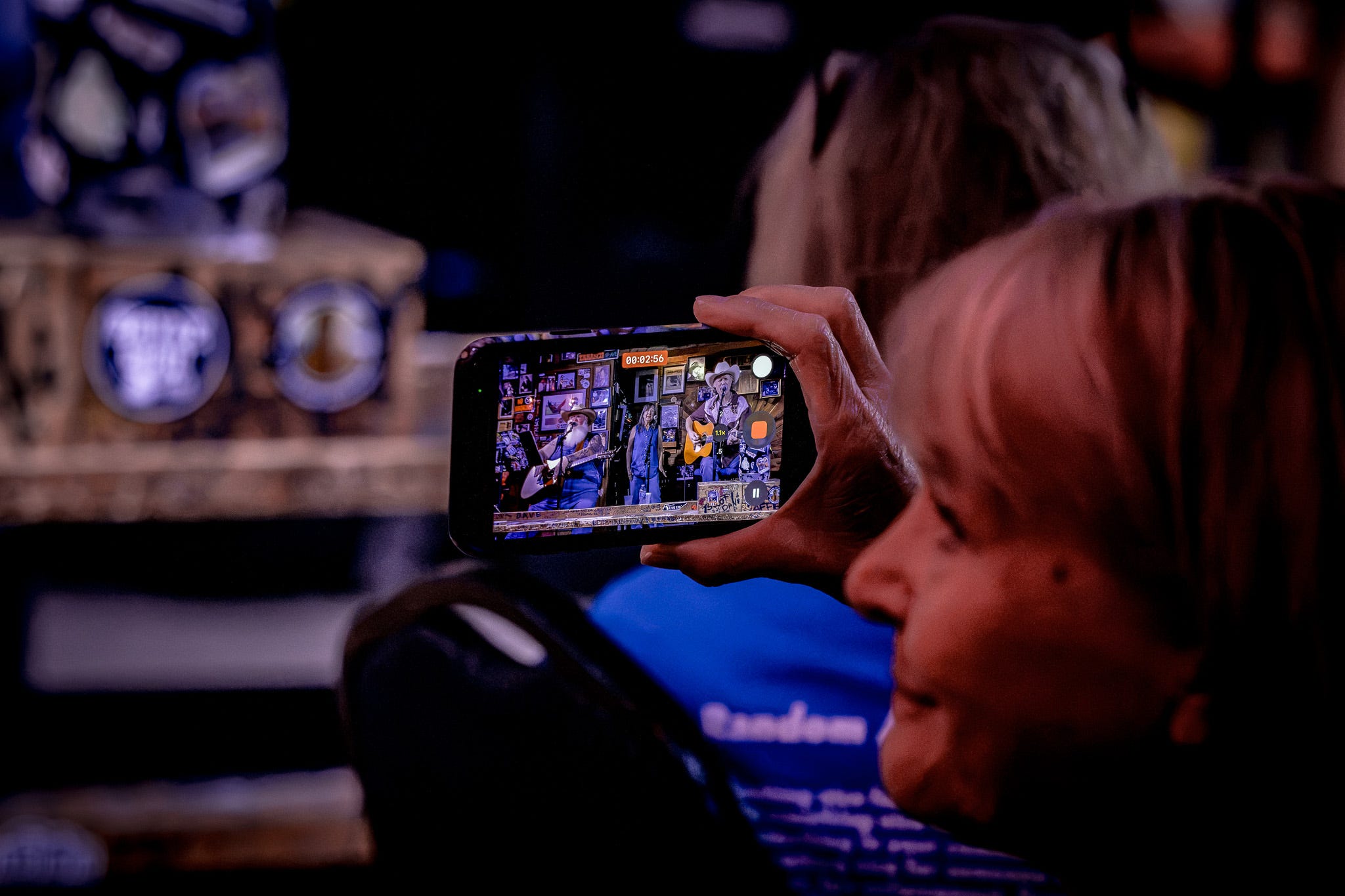
We live through the artists who keep playing these songs after their original creators are gone. That may be why we reach for our phones so quickly and hit record. We know the moment is leaving even while it happens. We want some piece of the voice, the laugh, the whistle or the note that bent just right. We want proof that, for three minutes, the person who wrote the song was right there with us.
To Dolly, and to all the remarkable musical beings who keep giving us language when our own words fail: thank you for the music, the connection, the love and the memories.
We will always love you.
Please consider Donating to Sponsor an article even $1 helps!
