



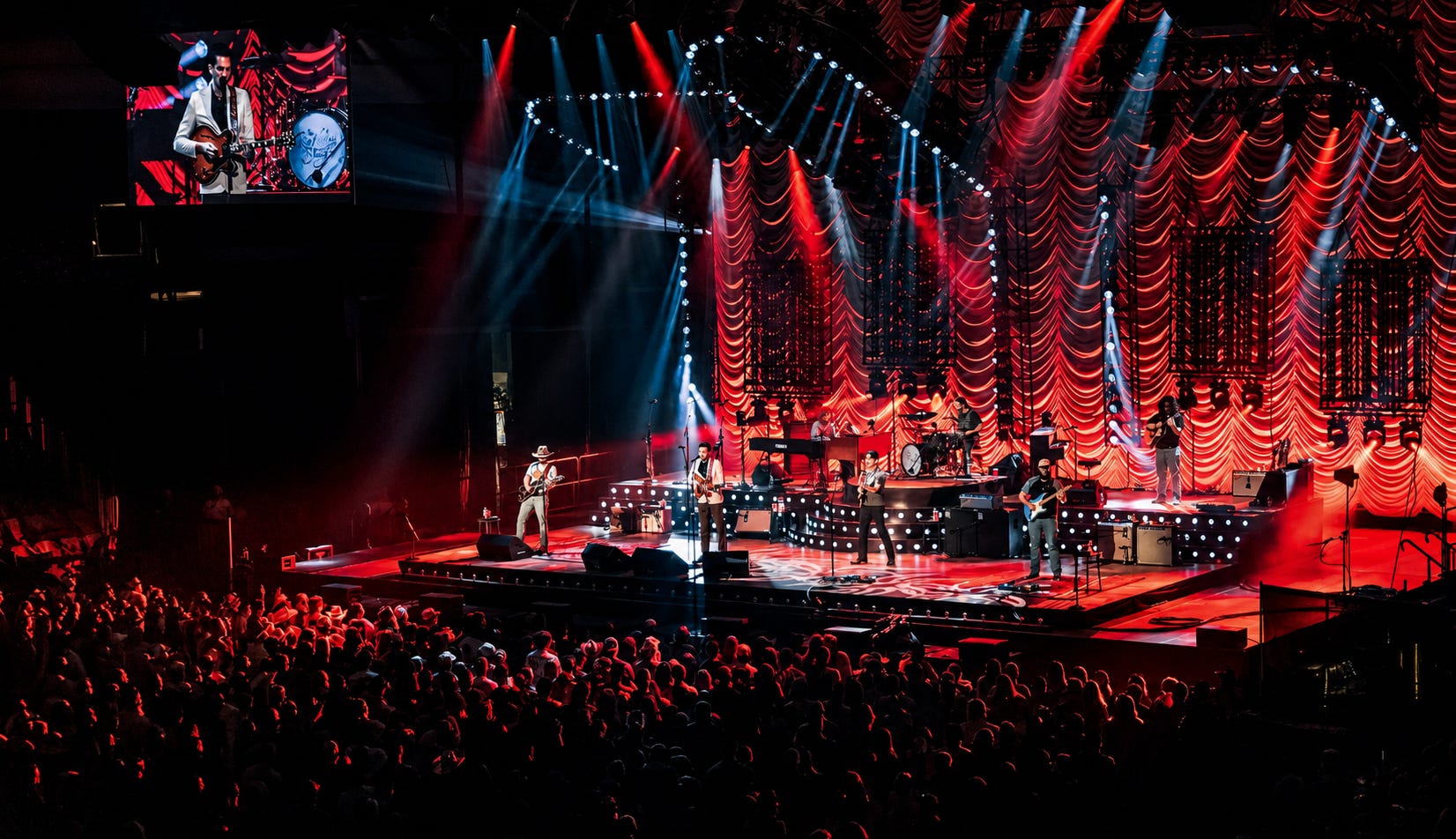

Getting the room awake
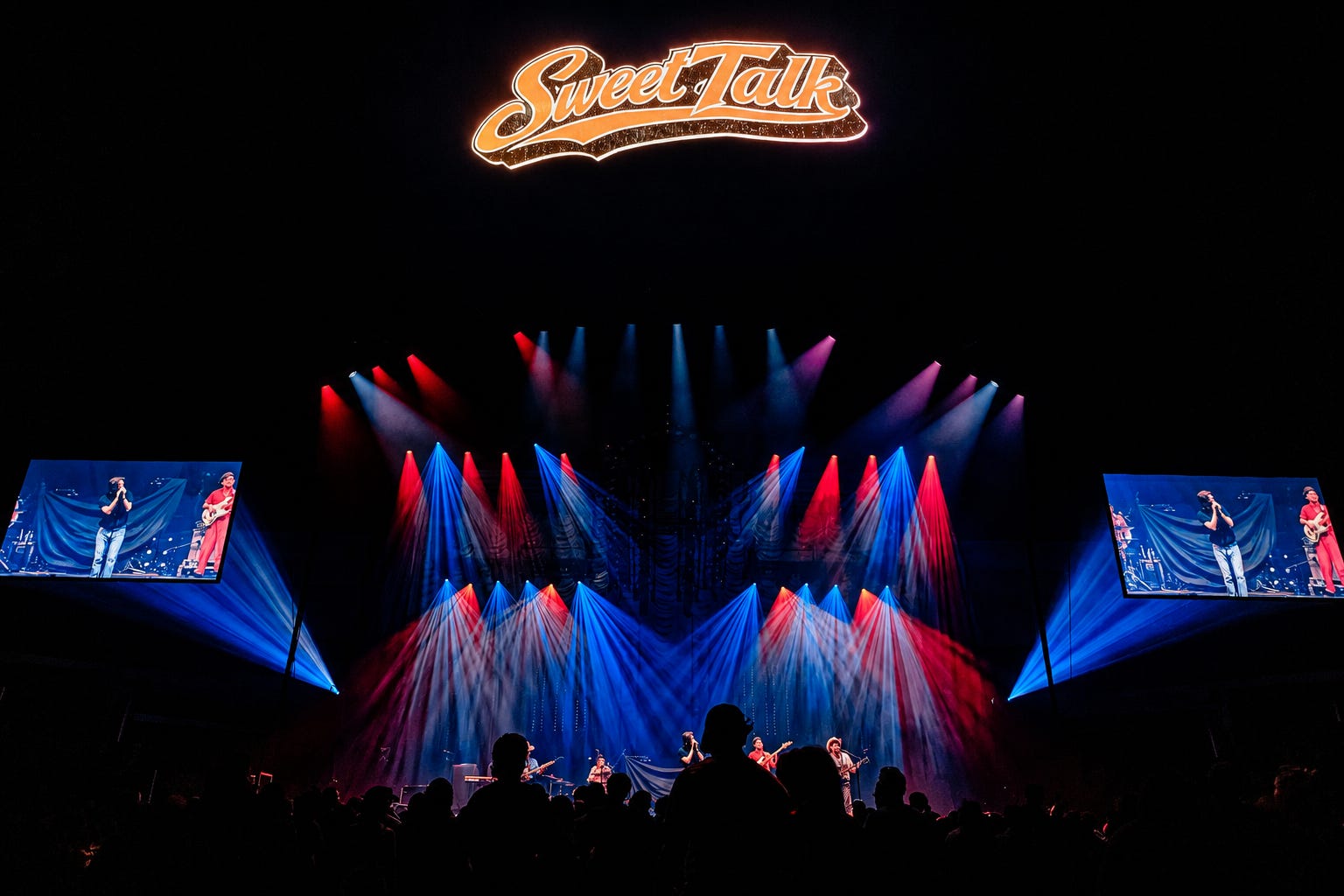
Sweet Talk were okay.
There isn’t much benefit in dressing that sentence up. They got the crowd ready for music, which is sometimes exactly what the first band on a three-act arena bill needs to accomplish. People were getting settled, finding seats and shifting their attention toward the stage. Sweet Talk gave them something to settle into. Nothing bad stood out by any means but nothing caught my attention so much that I had to write it down either.

The Australian six-piece has more history with the headliner than might have been obvious from watching them open in Sioux Falls. They previously supported the Red Clay Strays during the Alabama band’s 2025 Australian tour before joining them for this American arena run. Their own material pulls Southern rock and Americana through a Melbourne band’s perspective, but Sunday’s set functioned less as some grand introduction than a useful ignition point.
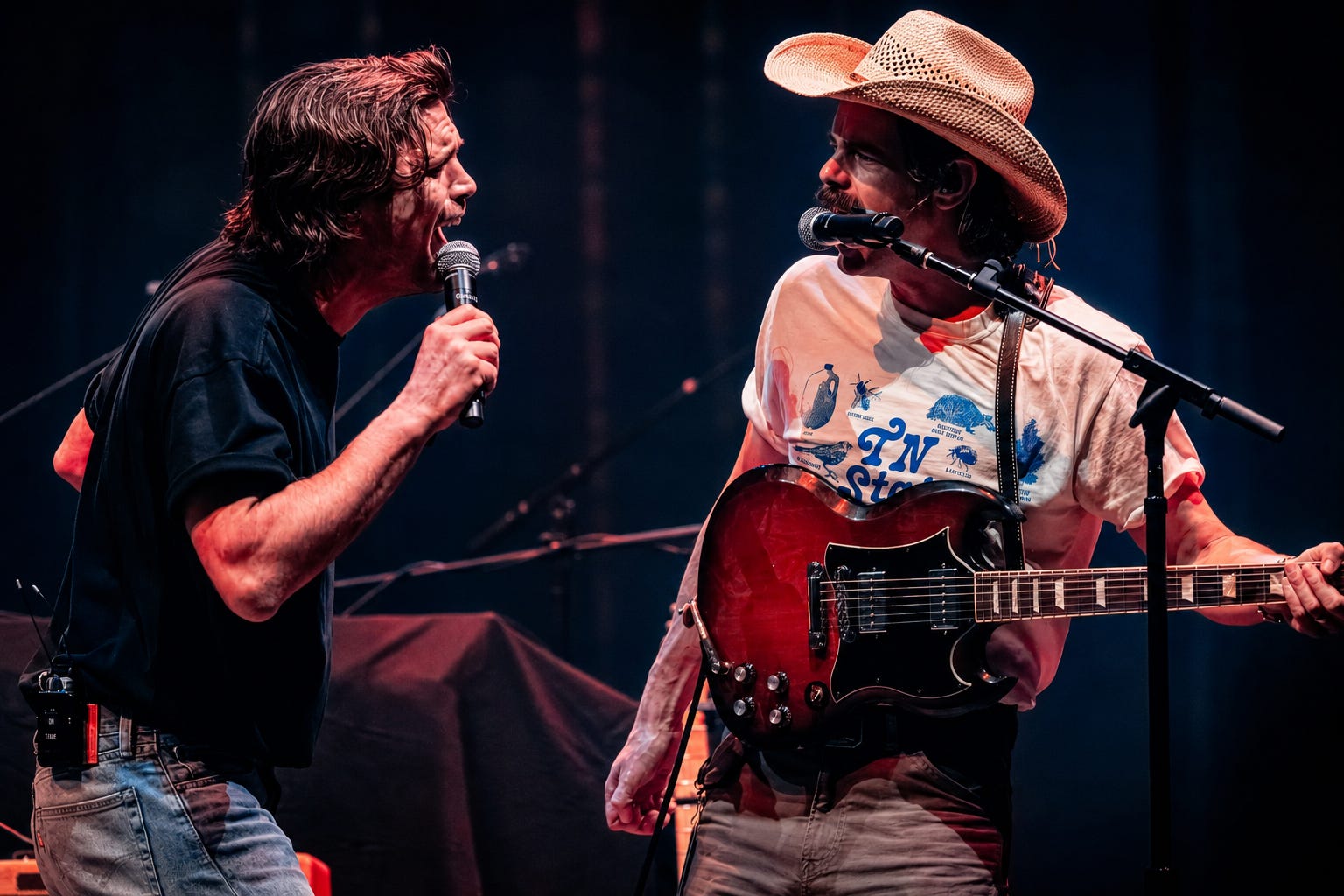
They played. The room loosened up.
Then Gossett gave everyone more to look at and listen for.


Please consider Donating to Sponsor an article even $1 helps!

Dylan Gossett fills the stage with instruments
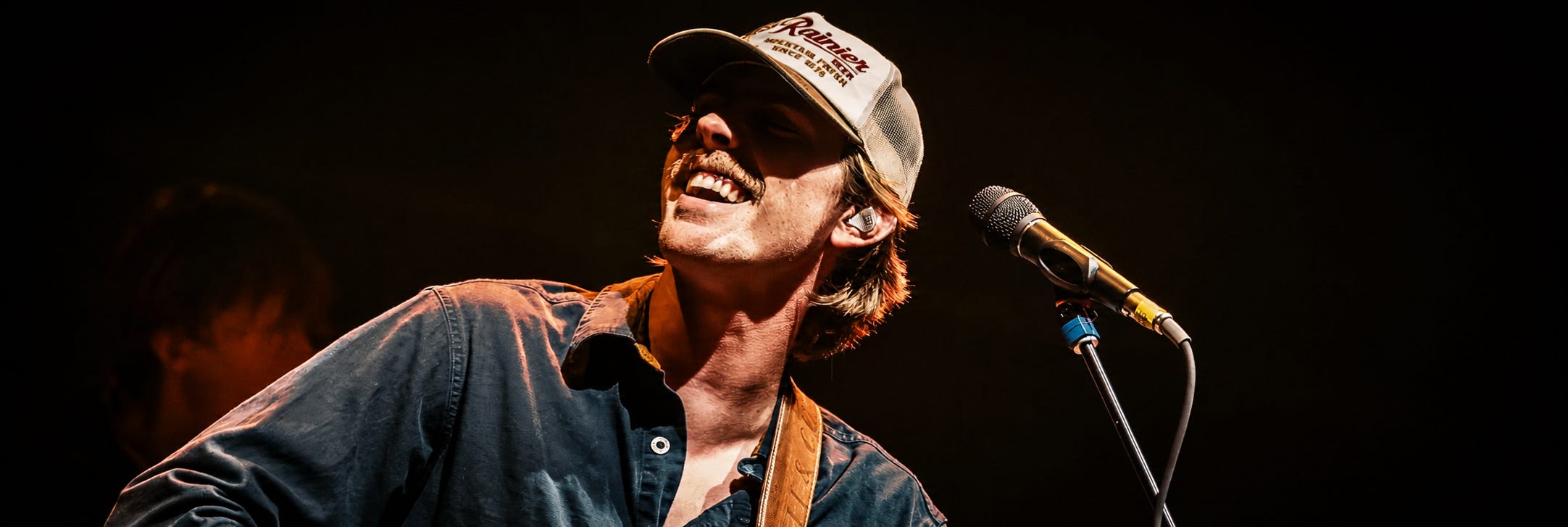
The harmonica was the first thing that stuck.
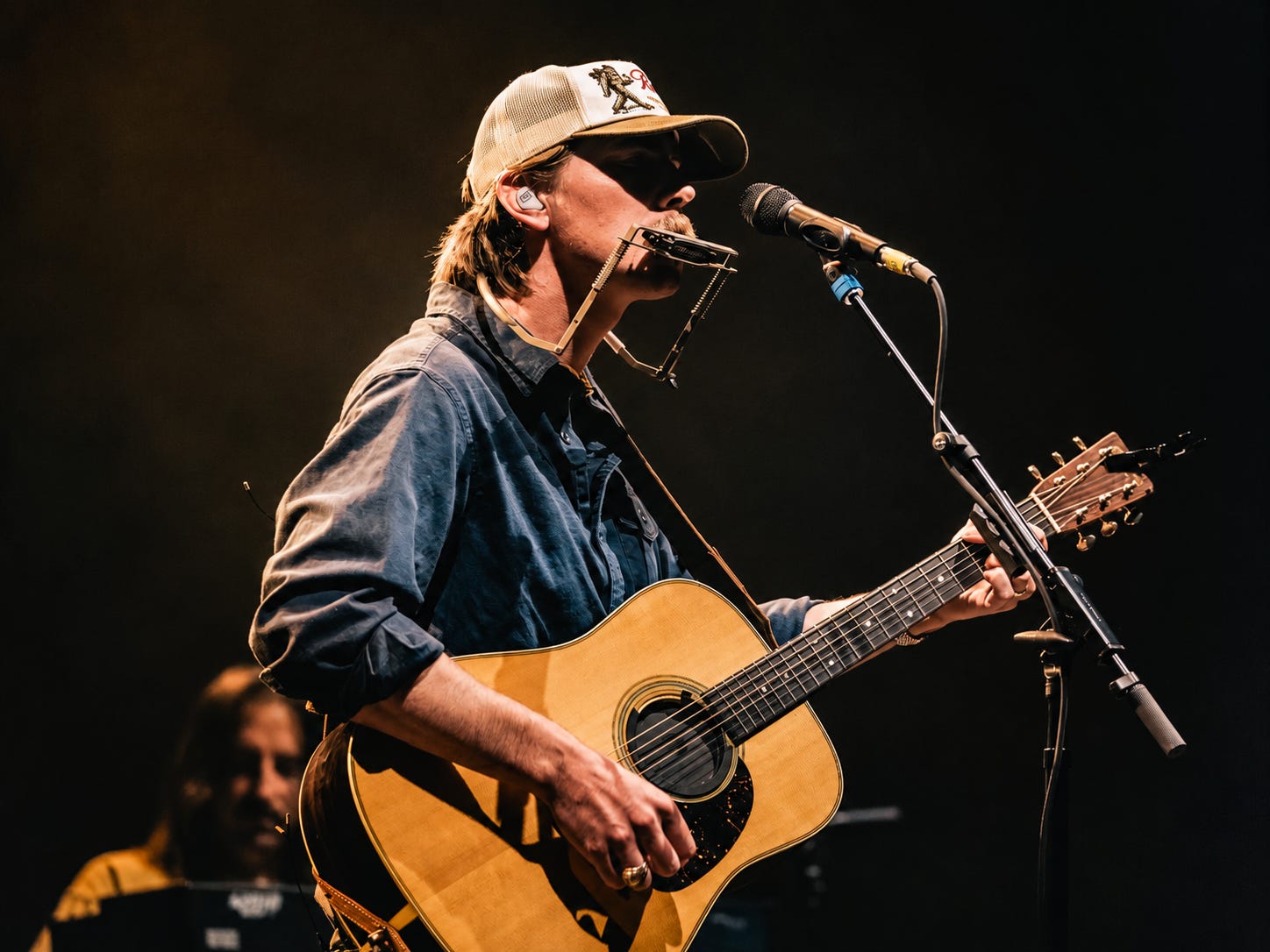
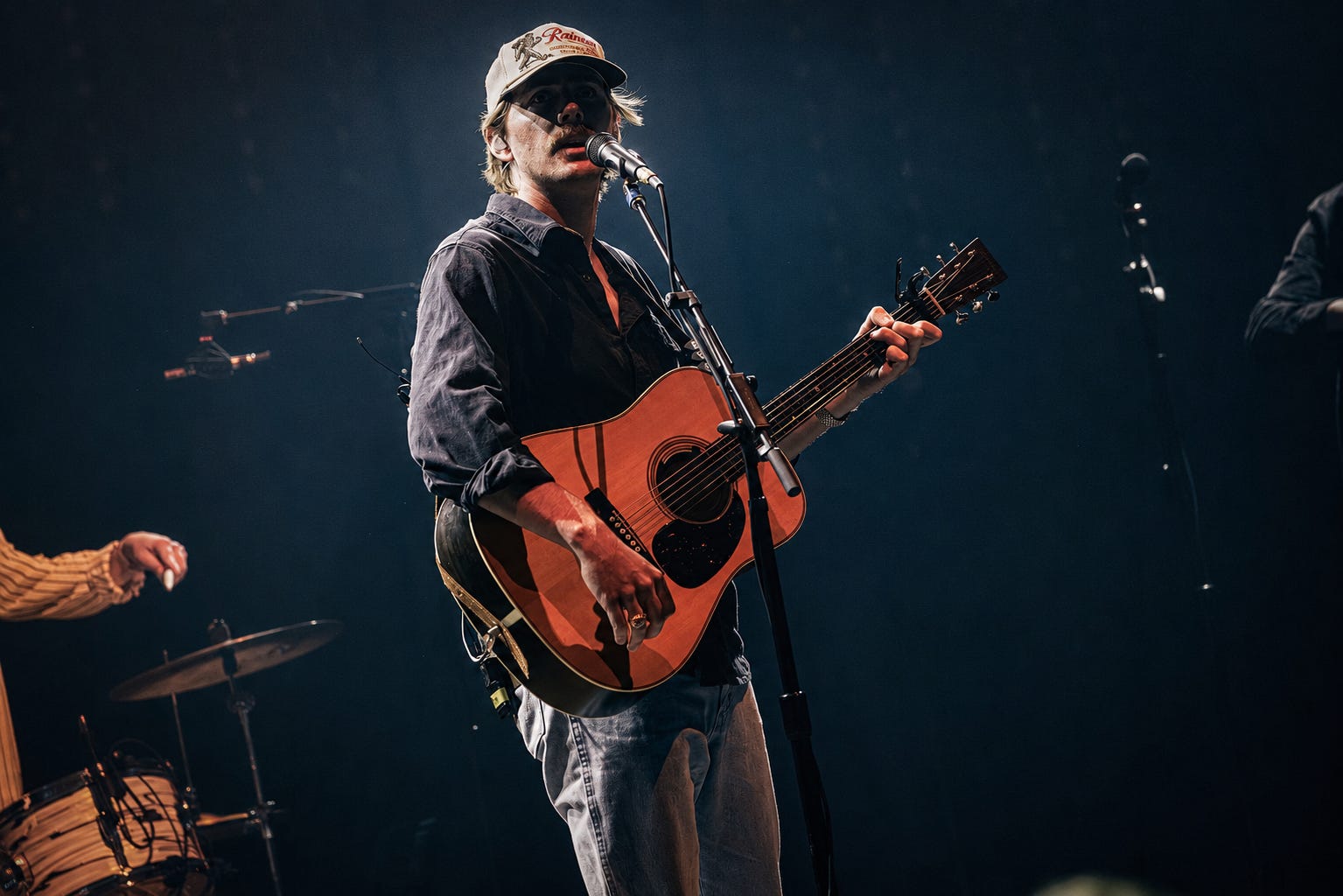
Then violin. Banjo. More instruments kept showing up around Dylan Gossett, and his set became increasingly interesting because the songs weren’t being asked to survive on voice and acoustic guitar alone.

That array of sounds made a difference in an arena.
Banjo gave certain passages a sharper attack. The violin could hang above the rest of the band without crowding Gossett’s vocal. Harmonica brought in another voice entirely, sometimes answering what he had just sung rather than simply decorating it. The set had enough acoustic DNA to remain recognizably Gossett’s, but it didn’t feel small.
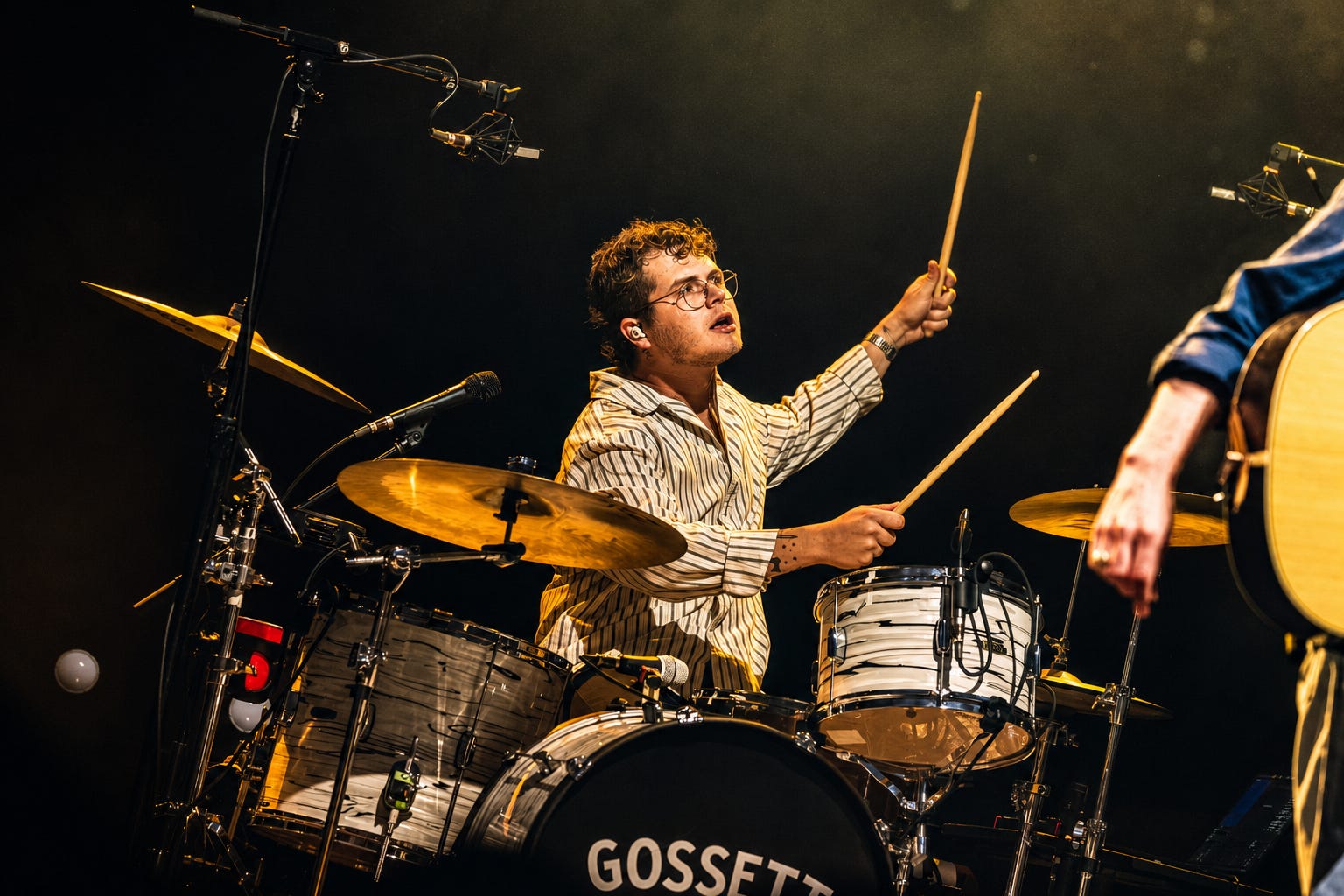
Somewhere in the set came one of those moments where recognition reaches the crowd before explanation does. Johnny Cash metaphorically entered the room. The song was “Folsom Prison Blues”, Cash’s prison standard. Gossett has worked the song into his 2026 live performances elsewhere, often alongside “Hangin’ On.”
The cover worked because he didn’t suddenly become a Johnny Cash impersonator.
That would have killed it.
“Folsom Prison Blues” has been covered so many times that the opening guitar figure alone can turn into costume jewelry in the wrong hands. Gossett kept his own voice in it. The familiar words gave the crowd an immediate foothold while the roughness already present in his singing kept the song from sounding borrowed for three minutes and returned afterward.
Then, late in the set, the room changed visually.
Honeycomb-shaped lights began moving around the audience.
They circled the crowd rather than simply firing outward from behind the musicians, and that was what made the effect stick. Most concert lighting keeps reminding you where to look. Stage. Artist. Stage again. Gossett’s production briefly pulled attention away from him.
I found myself watching the lights travel instead.
The repeating shapes worked their way around the arena during one of his final songs, turning a large room into something stranger for a few minutes. It wasn’t an assault of strobes or a giant production trick demanding applause. The effect was quieter than that.

Mesmerizing, really.
You could watch the pattern move and forget for a second that lighting rigs are mostly wires, motors and programming.
By the end of Gossett’s set, the night felt substantially different than it had during Sweet Talk. Part of that was the instrumentation. Part of it was the Cash cover. A surprising amount of it was those lights.
He had given the room an identity before the headliner touched the stage.
Alabama finally gets its South Dakota show

The joke landed because Coleman didn’t oversell it.
Yes, the Red Clay Strays are from Alabama.
No, apparently all those years of traveling had never resulted in an actual South Dakota performance.
The band’s official schedule confirms Sioux Falls as the Aug. 16 stop on its current Grateful Tour, though I haven’t found an authoritative source documenting every performance in the group’s history well enough to independently declare this its first-ever South Dakota concert. So that distinction belongs where it happened Sunday night, in Coleman’s own stage banter.
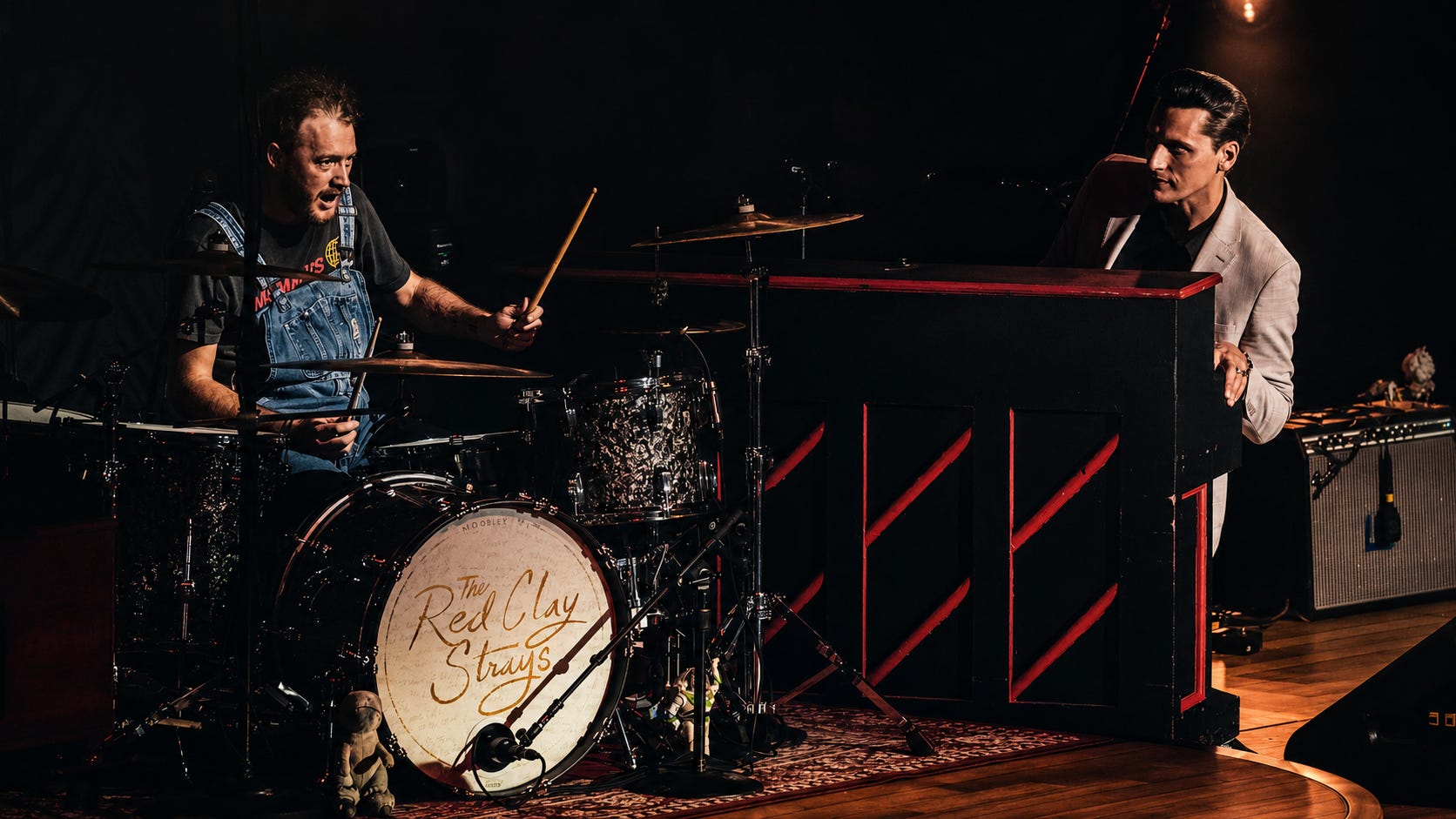
What he said next was better anyway.
He thanked Sioux Falls for showing up in enough numbers that the band didn’t have to begin its local relationship at the bottom of the booking ladder.

That is not how most bands meet a city.
Normally there are years hidden inside the process. The miserable opening slot. The club where half the crowd is there for somebody else. A return date with a few more tickets sold. Another return where somebody finally decides the band can handle the larger room.

Coleman looked out from the stage at the Denny and acknowledged that Sioux Falls had essentially spared them the early chapters.
There was gratitude in that, but also some disbelief.
It fit the current version of the band.
The Red Clay Strays are touring behind Grateful, their third studio album, released this summer, and the record itself spends plenty of time staring at survival, faith and what it feels like to reach a point in your life where hardship can finally be discussed from somewhere other than the middle of it. Their official site currently builds the tour around the album and its new material.
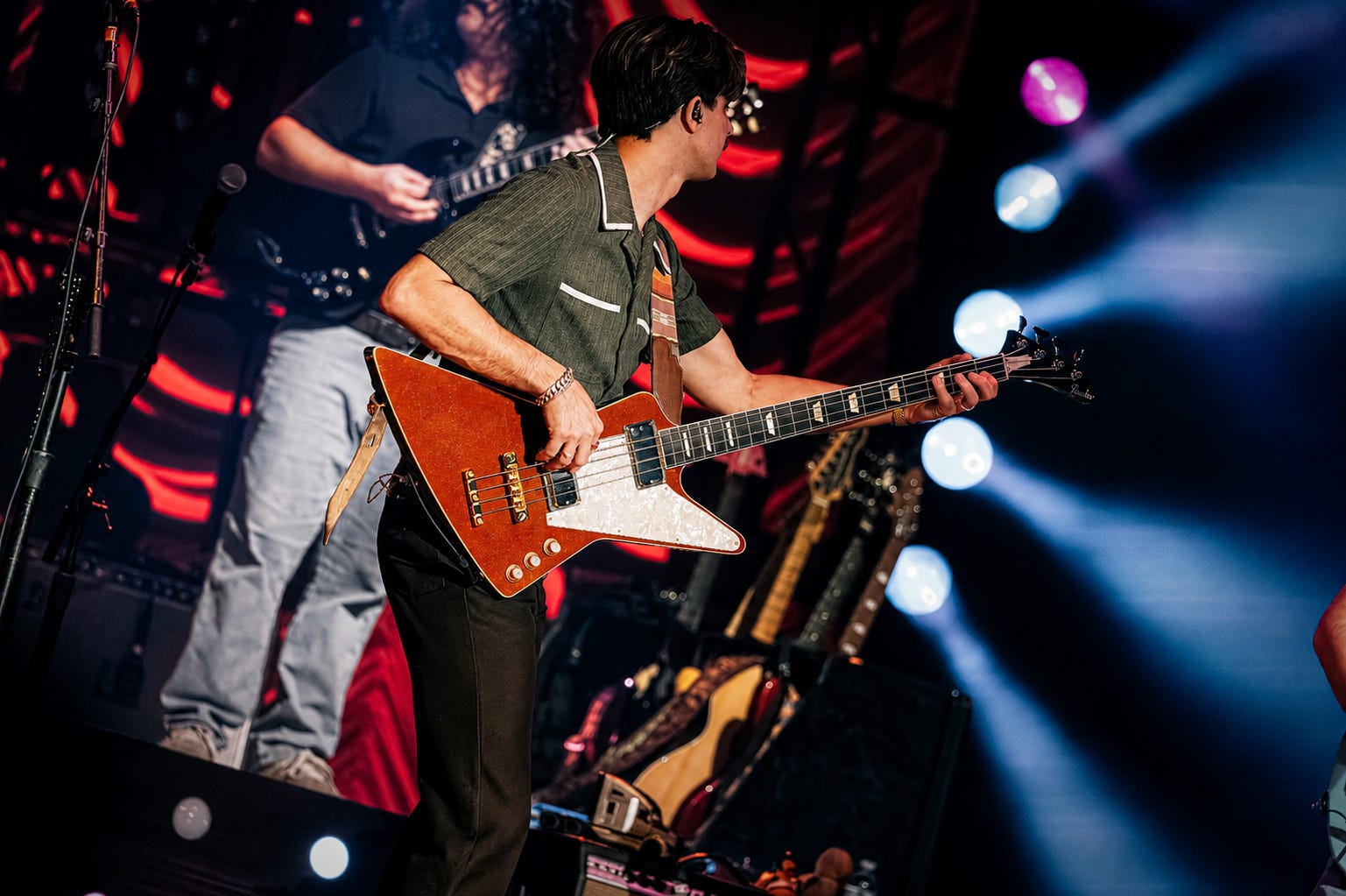
You didn’t need an album biography to understand Coleman’s point Sunday.
The evidence was sitting in front of him.
A first South Dakota show at an arena is ridiculous when you say it out loud. Coleman knew it. The audience knew it. The whole exchange had the looseness of a band realizing in real time that this particular part of its story had taken an unusual shortcut.
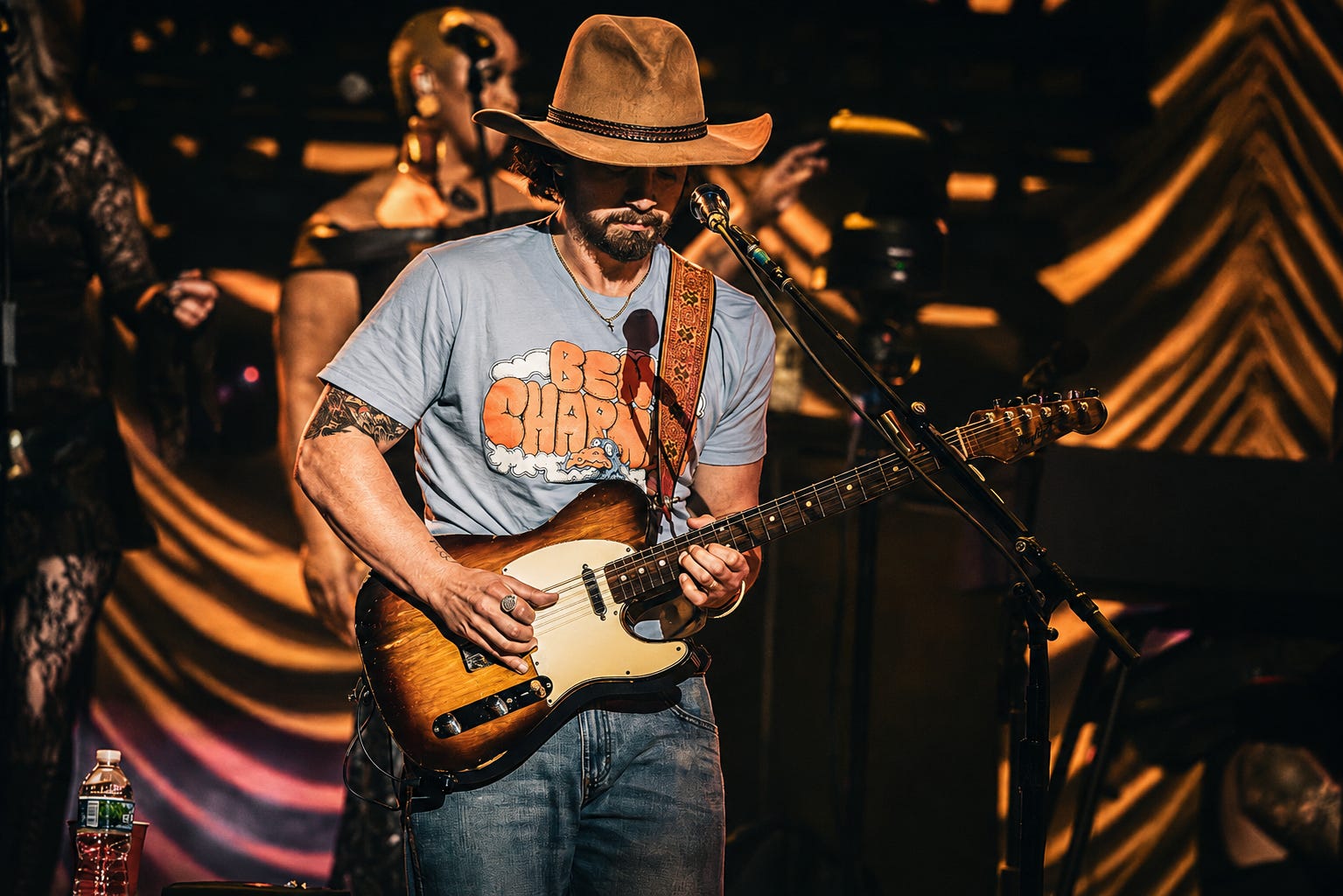
And there was that breakdown.
I kept coming back to it.
Not because a stranded vehicle is especially remarkable for a touring musician. Talk to enough bands and nearly everybody has a story about a dead van, fried alternator, blown tire or some piece of equipment choosing the worst possible moment to surrender.
It was the order of events that made this one funny.
South Dakota got to meet the Red Clay Strays’ mechanical problems before it got to hear their songs.
Years later, the band finally returned under better circumstances.
No tow truck required.
What the opening acts left behind
Three-band bills can become exercises in waiting. The audience watches the first opener while thinking about the second, then watches the second while thinking about the headliner.
Sunday didn’t quite work that way.
Sweet Talk got things moving without forcing the issue. Their part of the evening was straightforward. A room that had arrived in pieces began paying attention to the same thing.
Gossett was where my notebook started filling faster.
The instruments mattered. Violin and banjo gave the set different textures to turn toward, while the harmonica kept appearing with that unmistakable dry cry that can cut through a band without becoming louder than everything around it. The Cash cover supplied instant recognition, but it didn’t become the whole story.
Then those honeycomb lights moved around the crowd.
That is the image I would keep from his set.
Not because it was the biggest effect of the night. It probably wasn’t.
Because I watched it.
Concert production is at its best when you catch yourself responding before you’ve started grading the machinery behind it. For those few minutes I wasn’t thinking about how the lights were programmed or whether some larger tour had done something more complicated. I was following the shapes around the arena.
That was enough.
Red Clay’s most memorable moment from the stage, at least outside the music itself, came from the opposite direction. No elaborate production was needed. Coleman just talked.
A band from Mobile finally stood in Sioux Falls and explained that South Dakota had been part of its history for years without ever becoming part of its performance history.
Until now.
Afterglow
There is probably a dead vehicle somewhere in the Red Clay Strays’ past that nobody remembers fondly.
Maybe there was a repair bill attached. Maybe some schedule got wrecked. Maybe everybody sat around waiting for somebody who knew what was wrong.
Coleman turned whatever version of that story exists into a laugh Sunday night.
That is a better ending for it.
The Red Clay Strays had passed through South Dakota. They had broken down here. They had somehow never played here.
Then, when they finally did, there was no two-hundred-capacity club waiting for them.
There was the Denny.
Please consider Donating to Sponsor an article even $1 helps!
