





A borrowed guitar and a tour that kept moving
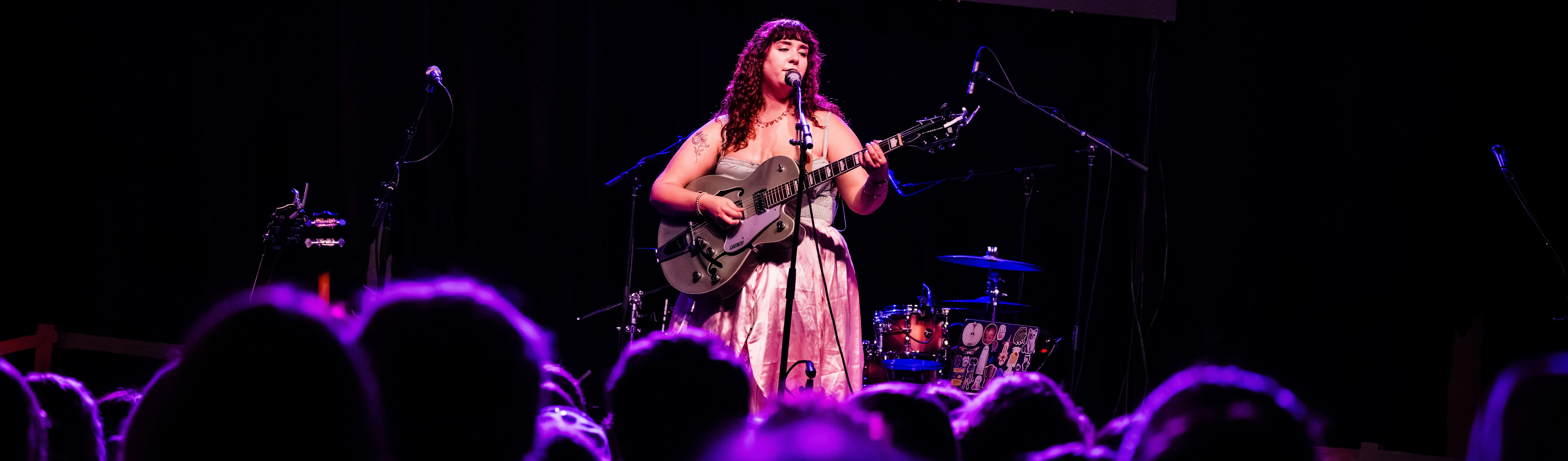
Before The Crane Wives could make their South Dakota debut, Brye had her own story to tell, although it was one she probably would have preferred never happened.

Brye thanked The Crane Wives from the stage for allowing her to use one of their guitars. Days earlier, after an Aug. 8 show in Colorado Springs, the trailer carrying her touring equipment and merchandise had been stolen from a hotel parking lot. Inside were roughly $22,000 worth of gear and merchandise, including the guitar she had owned since childhood. The abandoned trailer was eventually recovered. Its contents were not.

For a touring musician, there is no romantic version of that story. Instruments are tools, inventory is income and the road keeps charging you whether your trailer gets stolen or not. Brye spent part of the aftermath hand-printing replacement shirts and tote bags in a hotel room, then kept playing shows using equipment loaned by others.

So when she thanked The Crane Wives for the guitar in Sioux Falls, it landed differently than the usual opener thanking the headliner for bringing them along.
She was literally holding evidence of one band helping another stay on the road.

It also made Brye an unexpectedly appropriate opener. Her own writing has often been direct where The Crane Wives lean metaphorical. Songs such as “Diet Culture” put body image, shame and self-acceptance directly on the table, while The Crane Wives are more likely to send the same kinds of difficult feelings through forests, moons, teeth, monsters and burning houses. Brye often names the wound. The Crane Wives sometimes build a mythology around it.
Different vocabulary, similar willingness to go somewhere uncomfortable.
And after the week Brye had just lived through, simply getting onto another stage with somebody else’s guitar carried its own meaning.


Transition time proved anticipation
The Crane Wives weren’t even onstage yet.
The lights had begun changing. The stage production was waking up piece by piece and whatever restlessness had accumulated during the changeover suddenly had somewhere to go. Then Natasha Bedingfield’s “Unwritten” came over the between-set soundtrack.
The crowd sang.
Not a few people recognizing the chorus. Not the scattered mumbling you sometimes get when the house playlist lands on something everybody remembers from 2004. The room took it. Loudly.
That was probably the first warning that Sioux Falls had been waiting for this one.
Two weeks earlier, in our interview with Emilee Petersmark and Dan Rickabus, we had spent a lot of time talking about audiences. The earliest version of The Crane Wives performed Friday nights in the Chinese buffet where Petersmark and Kate Pillsbury worked. The customers hated it. One coworker memorably told Petersmark, “When you play, it annoying.” Sixteen years later, we ended that story looking ahead to the band’s first Sioux Falls appearance with one prediction: the room would not resemble that Chinese buffet.
We underestimated it.
This crowd couldn’t even wait for the band.
Please consider Donating to Sponsor an article even $1 helps!

The prairie gets its rock and roll folklore
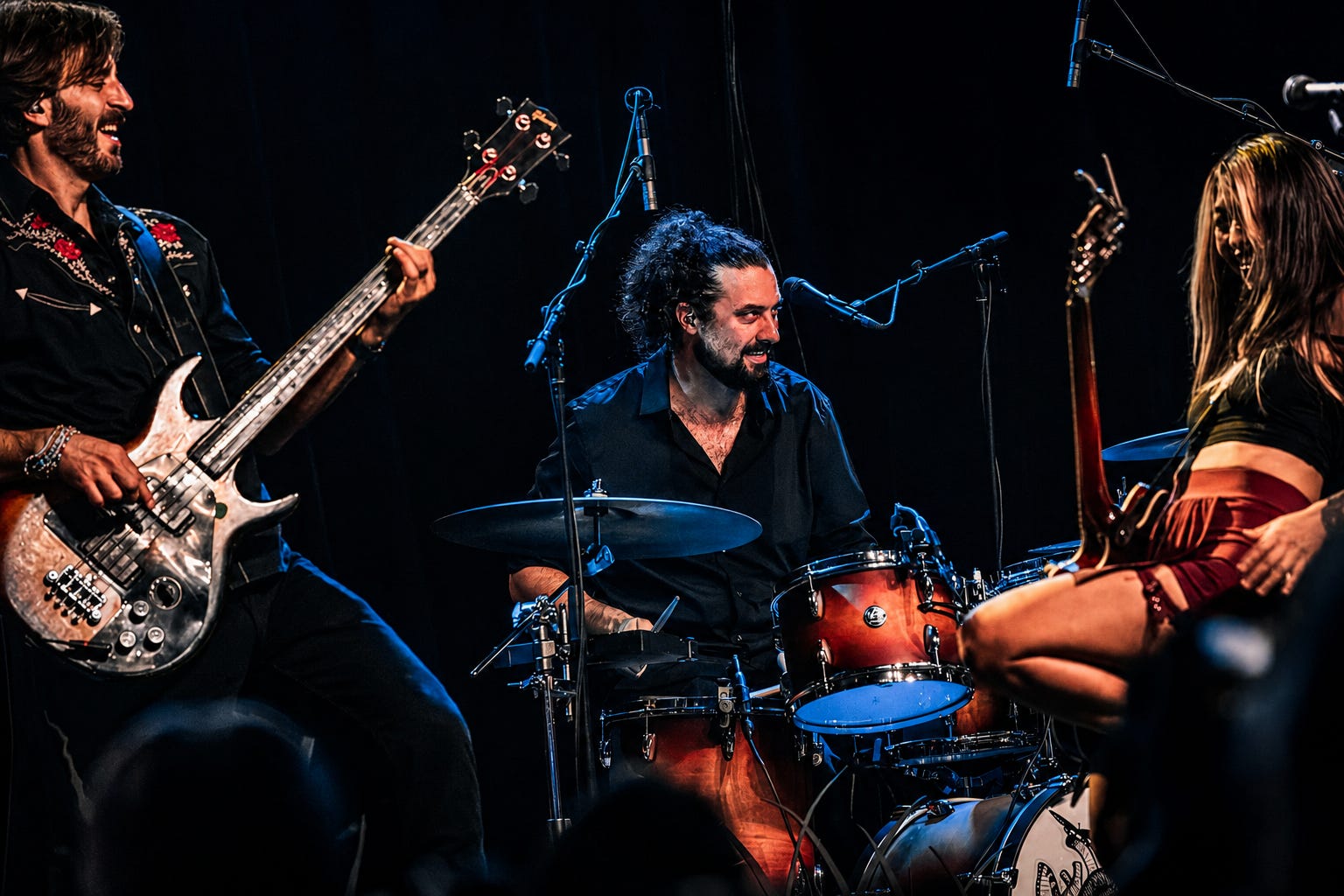
Then the lights changed again.
The first Crane Wives song grabbed the room.
The second demanded it.
There was a noticeable shift in the crowd, the kind you can actually watch happen. Conversation disappeared. Bodies stopped turning toward friends. Faces pointed forward. The District got quiet enough that attention itself seemed to become part of the production.

Then came the first notes of the third song.
The room erupted.
Whatever formal introduction South Dakota and The Crane Wives might have needed was over.
This was the band’s first performance in the state, according to Petersmark from the stage, and Sioux Falls did not treat it like an exploratory first date. The show was a strong size without losing the intimacy that lets an artist actually see who is singing back at them. More importantly, these were engaged fans. They knew where songs were going. They reacted to openings before lyrics arrived. They understood the little pieces of band lore tucked between them.

The current Crane Wives describe themselves as having moved beyond their beginnings in the 2010s folk boom and into a “rock and roll era,” with Ben Zito’s bass and Dan Rickabus’ percussion underneath the twin guitar work and vocals of Petersmark and Pillsbury. That description makes considerably more sense after watching the four of them occupy a stage together.

Zito and Rickabus hold down the rear of the stage with the kind of presence that does not need to compete for attention. They create the structure that allows Petersmark and Pillsbury to move through the bluesier, folkier and increasingly rock-oriented edges of the songs. Nobody feels like hired infrastructure. All four look invested in the same version of the band.
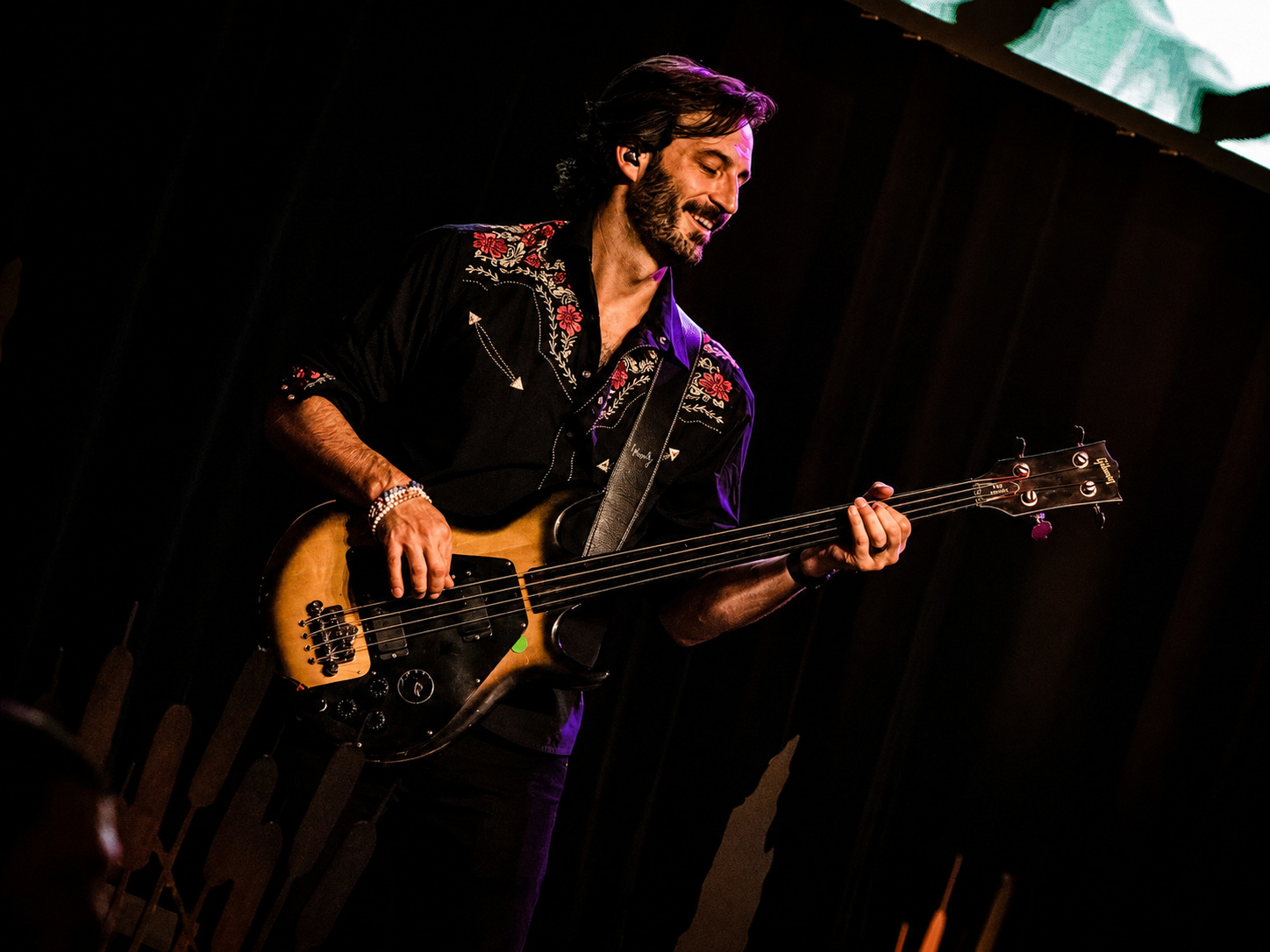
That was something Rickabus talked about during our interview. The Crane Wives is no longer just four musicians. Petersmark called it “the machine,” meaning the members, touring crew, business and people who keep the whole thing functioning after sixteen years of doing this professionally.
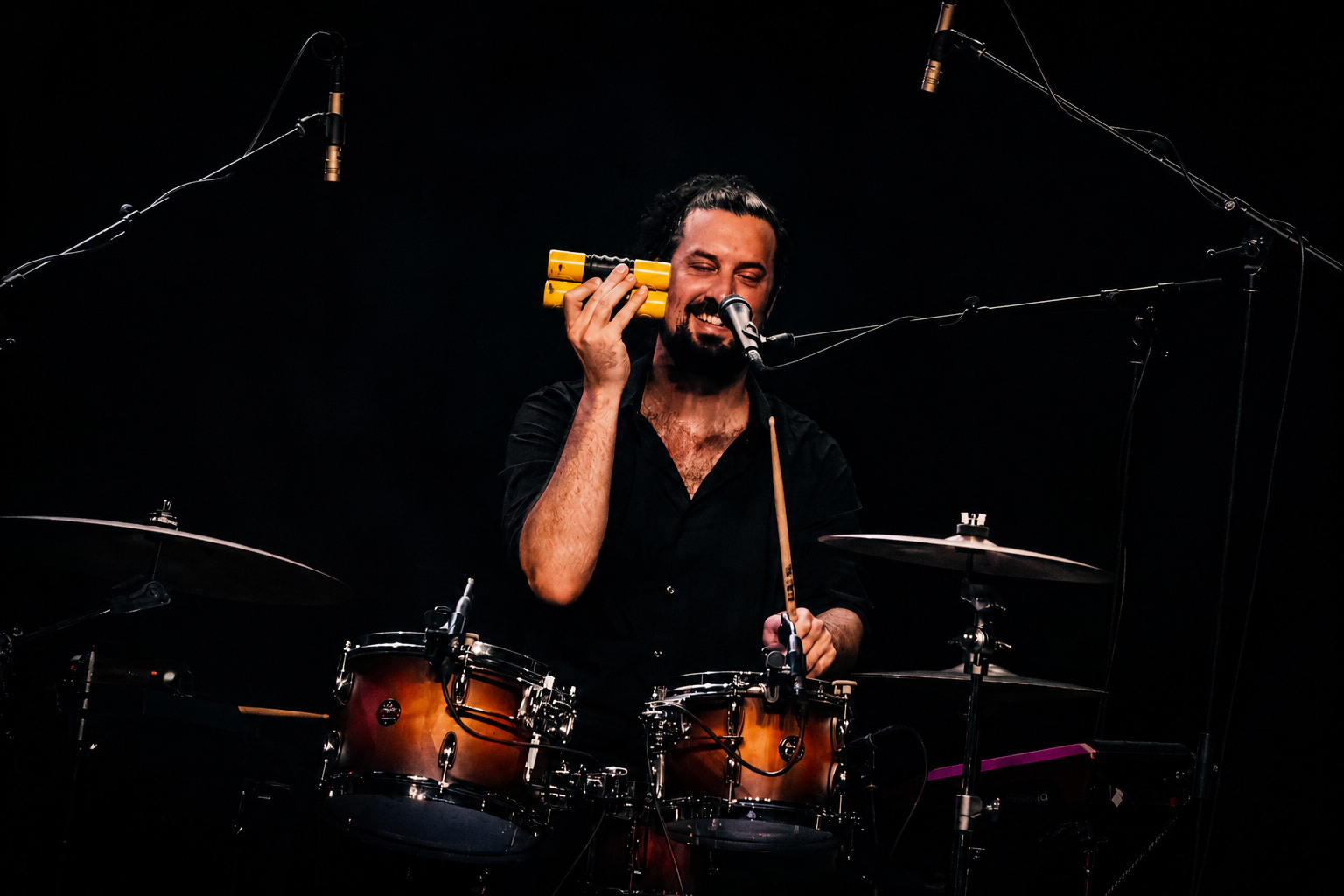
In Sioux Falls, the machine briefly needed a cable.
“We have to change out a cable on the snare drum.”
A crew member walked onto the stage.
Petersmark looked toward him.
“This is Steve.”
And because this was apparently the kind of audience we were dealing with, The District immediately began chanting:
“STEVE! STEVE! STEVE!”
A technical delay became another reason to participate.
It was funny, but it also said something about the distance between this band and its audience. There wasn’t much of one.

The production followed the same philosophy. The stage had enough visual character to prove care had gone into it without turning the show into a traveling warehouse of expensive objects. The lighting and scenery carried the band’s folk-adventure identity nicely, almost like they had hauled these rock-and-roll folktales across the prairie and unpacked them for the evening.
It built a world without suffocating the musicians inside it.
Moonlight, space songs and an anchor
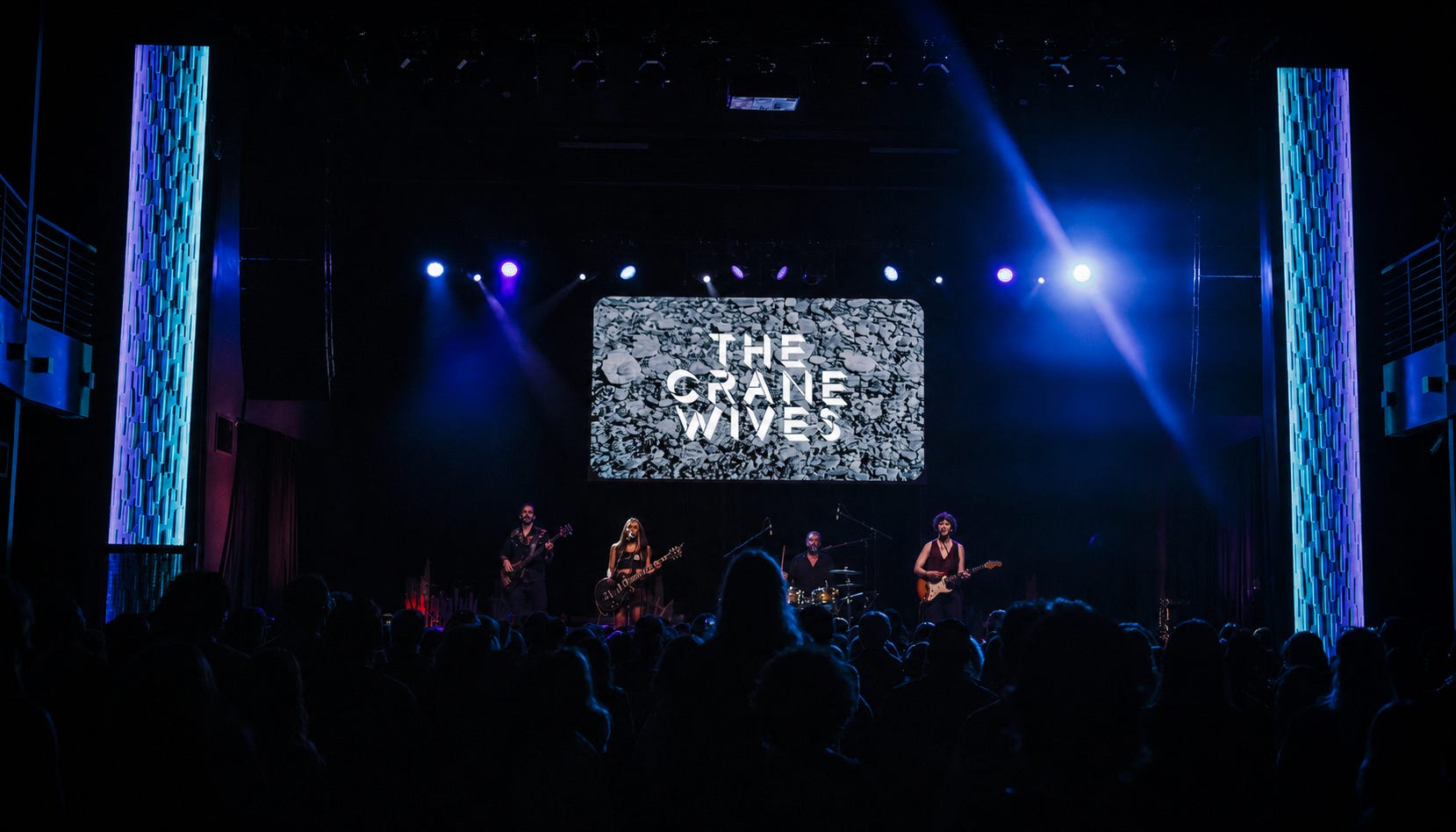
Then came “The Moon Will Sing”.
I had been waiting for it.
There are songs you hope make the set because they are popular and songs you hope make the set because some part of you needs to hear how they behave outside your headphones. “The Moon Will Sing” falls into the second category for me.

The song arrived as part of a three-song stretch of space-themed material and immediately became one of the emotional peaks of the night.
There was already another layer attached to it for us. During the interview, Petersmark had explained that when their friend and tour manager Steve Leaf worked on an ambient guitar part for the recording, Pillsbury told him she wanted it to sound like moonlight reflecting on a lake.
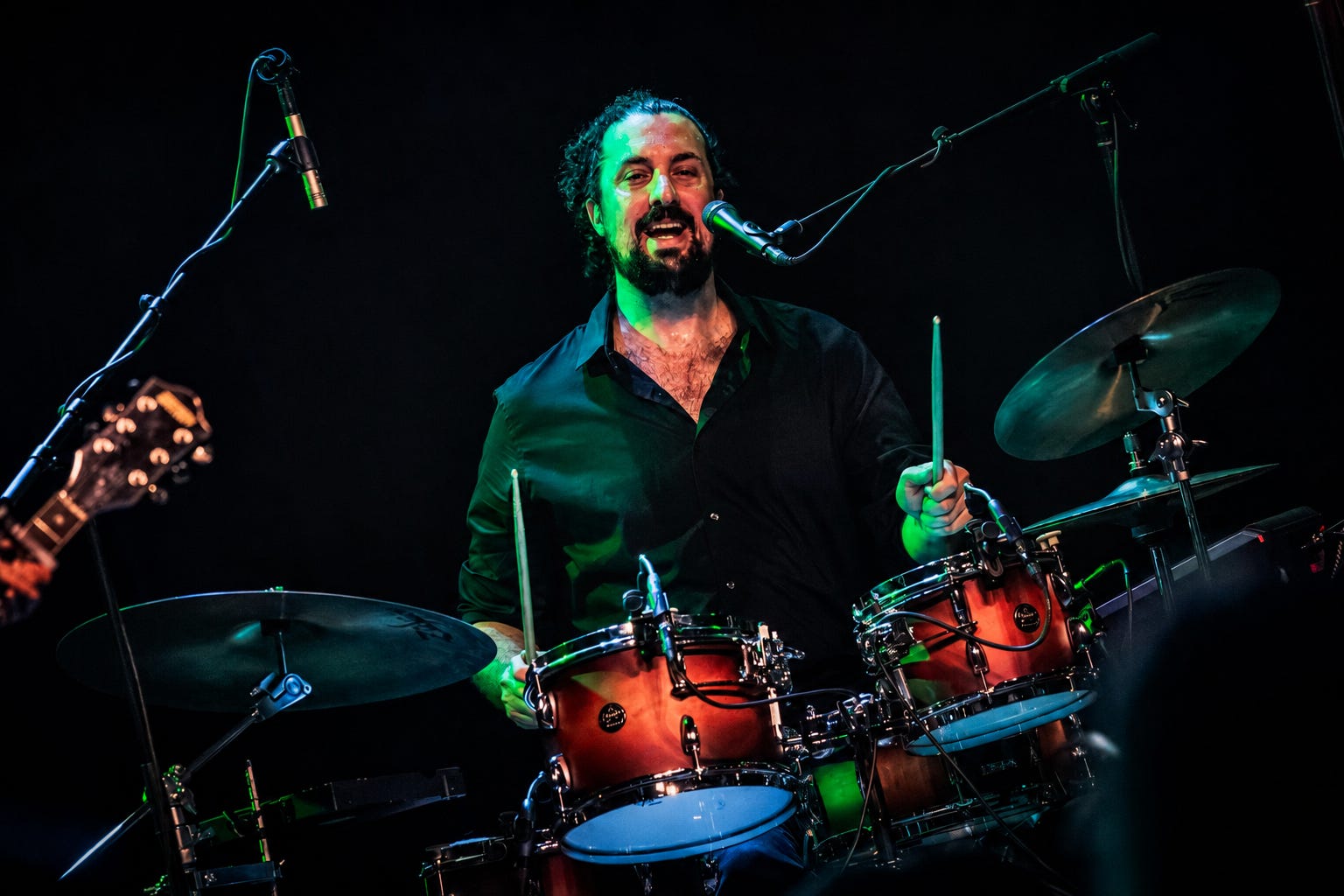
“He did it,” Petersmark said.
Now the song was happening in front of us instead of being discussed through a Google Meet window.
After that run of songs, the band unexpectedly gave Intellectual Dissatisfaction and our interview a shout-out from the stage. They specifically acknowledged the thought that had gone into the questions instead of another round of predictable band-origin prompts.

Then they played “Never Love an Anchor”.
Of course they did.
That song had occupied some of the most personal territory in the interview. Petersmark talked with us about adoption, her experience as a Korean adoptee and the years of work required to find language for feelings she had carried since childhood. She described “Never Love an Anchor” as an earlier attempt to approach those ideas through separation and the fear that loving someone might eventually hurt them.
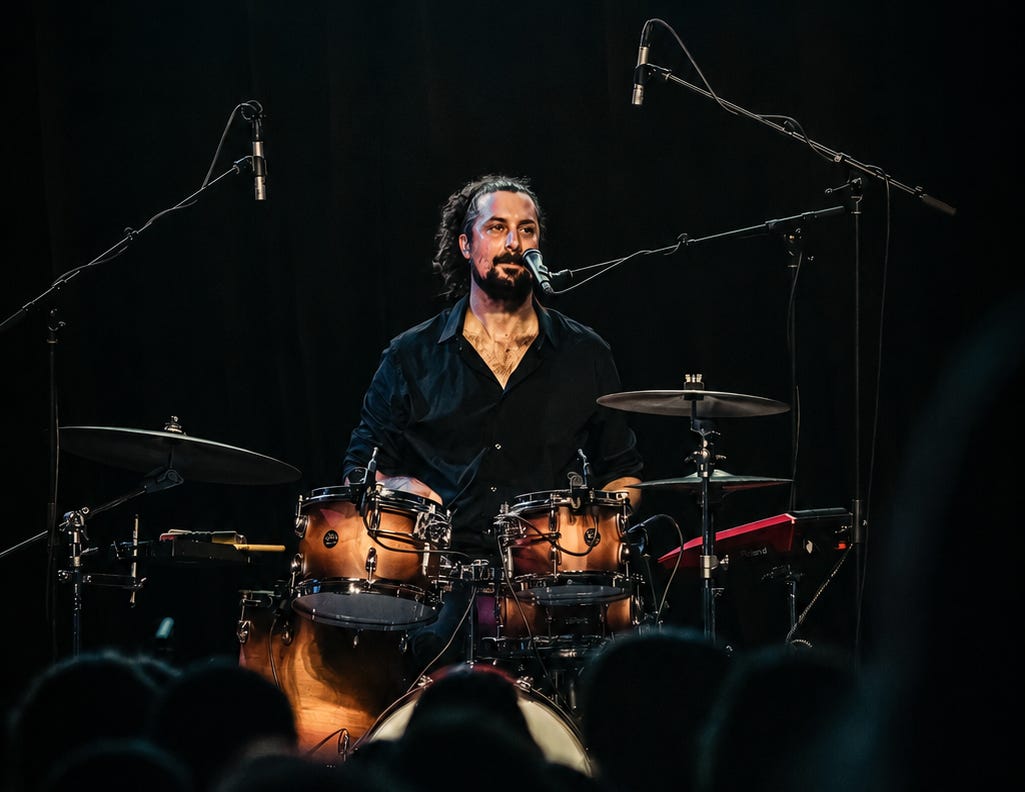
There was something strange and satisfying about watching journalism fold back into the live experience that way. We had asked about the song. She had opened up about it. Now, days later, the same music filled The District with hundreds of other interpretations attached to it.

Rickabus had said something else during the interview about listeners finding their own meanings inside Crane Wives songs.
“It’s yours now.”
Watching the audience proved the point.
Four friends inside the machine

For all the mythology built around The Crane Wives, one of the best things about watching them is how little mystery there is about why the band works musically.
They listen to each other.
Zito and Rickabus can sit deeper inside the songs while Petersmark and Pillsbury push at their edges. The rhythm section does not disappear, but it does not fight the front line either. Bass and drums make room for two guitars, intertwined vocals and the lyrical detail that brought many of these fans here in the first place.
Then Petersmark and Pillsbury get to play.
Really play.
Their guitars can converse, needle each other and occasionally square off. There is blues in the phrasing, folk in the bones and considerably more rock in the live sound than somebody discovering the band through its older acoustic reputation might expect. At points the two women seemed to be playfully challenging one another across the stage, a guitar battle without the bloated showmanship usually implied by that phrase.
It worked because neither appeared interested in winning.
That may be the simplest description of this lineup. Four people working toward the same song.
Near the back half of the performance, “Curses” somehow found another level of energy inside a crowd that had already spent most of the evening operating near full charge.
There is history buried in that reaction.
Petersmark told us that “Curses” had once felt almost like a B-side to her. Years after its release, a fan animation sent the track spreading through YouTube recommendations, fandom communities and younger audiences. The response eventually changed Petersmark’s own relationship with a song she had performed enough times to grow tired of.
Sioux Falls supplied the live version of that story.
A song can belong to a musician for years. Then an audience takes custody of it and hands it back different.
When those opening sounds arrived near the end of the night, nobody cared how old “Curses” was or where it sat in the catalog. The room reacted like the song had been written specifically for this night.
Nobody was ready for the door

The clearest measure of a concert sometimes comes after the supposed ending.
At plenty of shows, house lights flicker and the migration begins immediately. People start calculating parking ramps, babysitters, work tomorrow and whether they can beat the merch line before everybody else has the same idea.
Not here.
The crowd stayed put.
There was no meaningful movement toward the exits. They wanted an encore and there was very little ambiguity in the request.
The Crane Wives flew back out to answer it.
Only then did a few people make the tactical sprint toward the merch table, trying to secure something physical from the night without sacrificing too much of what remained. There is a specific kind of panic in that calculation. Buy the shirt now, but absolutely do not miss the song.
Onstage, Petersmark did not treat the encore like a cooldown. Vocally, she held nothing back. Pillsbury and Petersmark went back into that playful guitar exchange, each throwing musical ideas toward the other while Zito and Rickabus kept the machinery underneath them moving.
Then, at the end, Petersmark headed toward the ADA section with a setlist.
That small gesture said all I needed to know about The Crane Wives. They don’t just portray themselves a certain way, they actually live it.
Afterglow
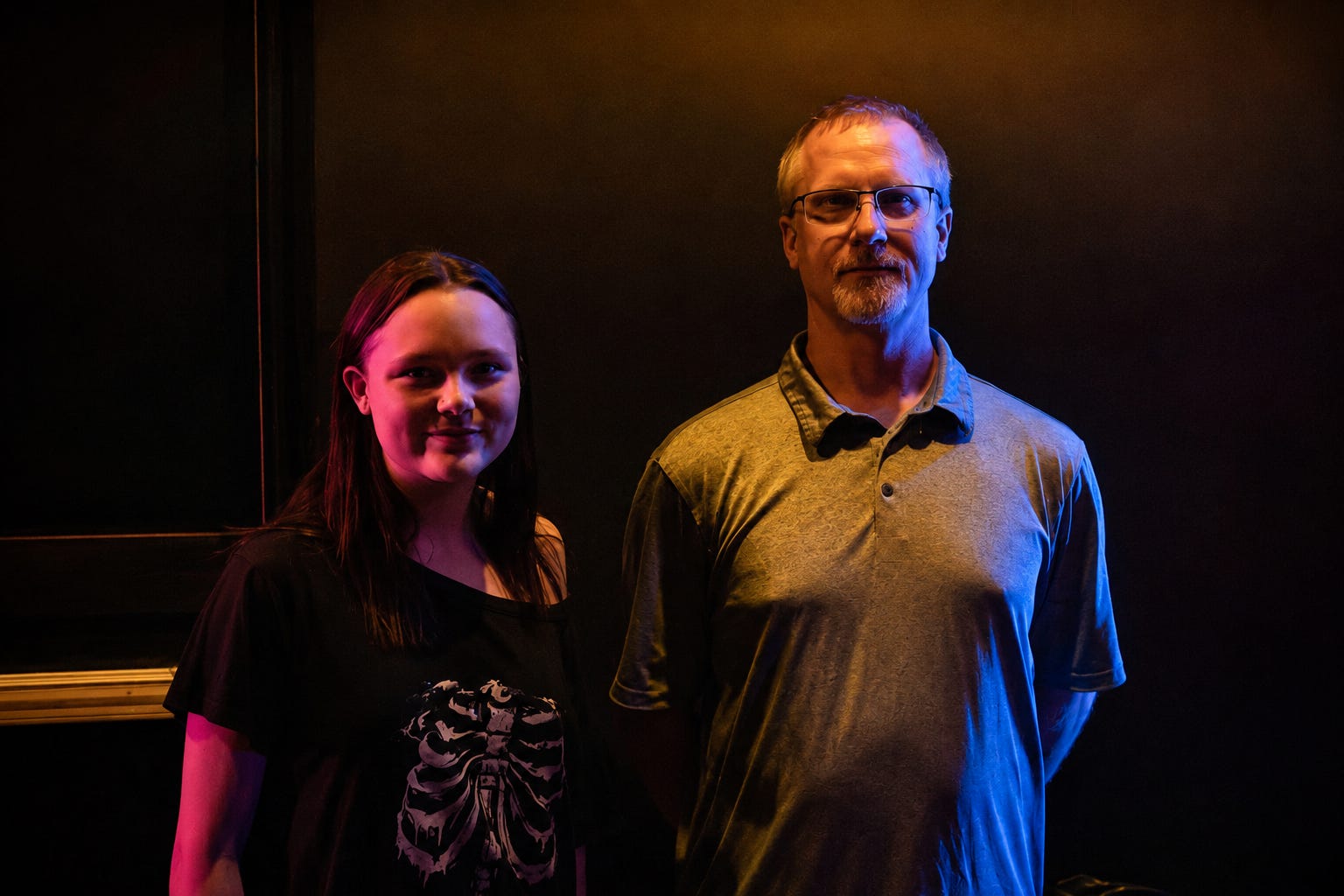
In our interview, Petersmark talked about the responsibility The Crane Wives feel toward their audience because, for some younger fans, one of their shows may be the first concert they have ever attended. The band asks venues about accessibility and safety because they want the experience around the songs to live up to the community forming inside them.
Sioux Falls made that idea visible.
There were fans in the ADA section with obvious mobility limitations. Elsewhere, people wore sound-reducing headphones and other hearing protection. Different people had clearly arrived with different calculations about what attending a loud, crowded concert required from them.
They came anyway.
Not because those considerations disappeared for a night. They found ways to make the room work for them because missing The Crane Wives apparently was not the preferred option.
Then the band answered that commitment in the smallest ways. A setlist brought directly to the ADA section. A crew member getting his name chanted while replacing a cable. An opener able to continue her tour because the headliner had a guitar to spare. Four musicians playing with the looseness of friends who still appear to enjoy the strange dream they built together.
And a crowd that sang the filler music because waiting quietly had ceased to be an option.
I have not seen a cult following this strong since Watsky.
Maybe that sounds strange until you remember where this band’s story started.
Sixteen years ago, people wanted The Crane Wives to stop interrupting dinner.
On Aug. 14 in Sioux Falls, the band had not even walked onto the stage yet and the audience was already singing.
They found their people.
Please consider Donating to Sponsor an article even $1 helps!
