



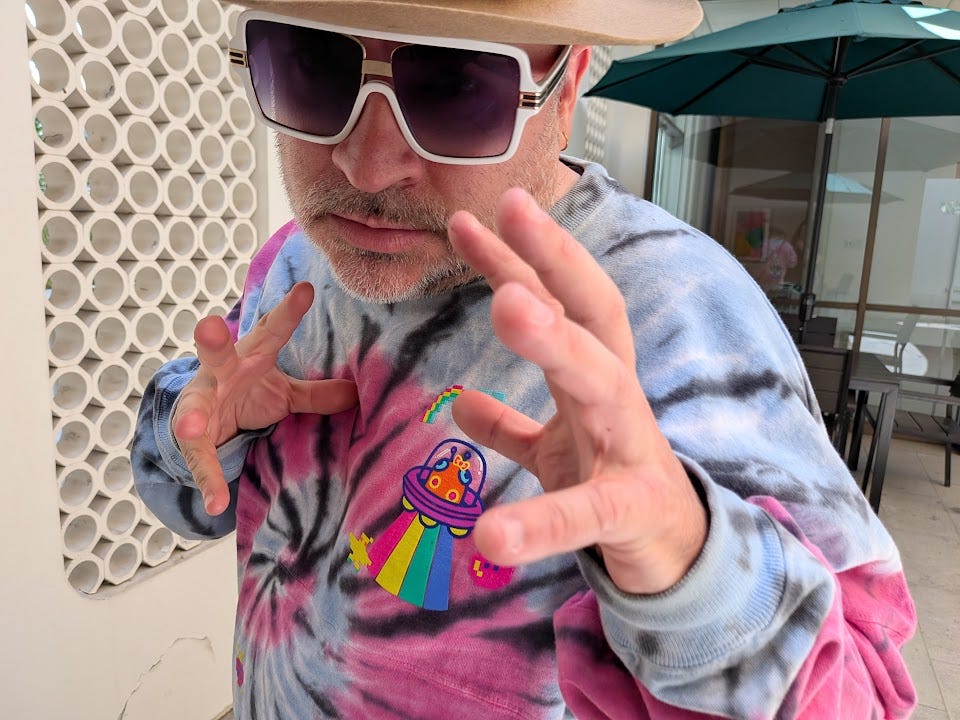
Before Spookey Ruben explains the title of his new album, he laughs around the size of the answer. “A bit of a long story,” he says, “but I’ll try to keep it short.” That is a dangerous promise from an artist whose music has spent three decades merrily refusing straight lines. With Ruben, even the short version tends to come with a side door, a mural, a vanished city, a memory of MuchMusic, and a song idea that will not leave him alone until he chases it down.
The album is called “Toronto, You’ve Changed”, and the phrase did not arrive first. The songs did. Ruben had received support through a recording grant, with producer Chris Graham helping shape the project, and the recording brought him back into Toronto after time away. That return put him inside a version of the city that was both familiar and slightly estranged. The streets were still there, but some of the old rooms had disappeared. Places he loved were gone. Memory had been renovated without asking him.
Toronto was not just a backdrop. It was the place where the Spookey Ruben career began to move. The city gave him a playground, one where his first album found air through MuchMusic and where his strange, melodic, category-resistant pop first began behaving like it had somewhere to go. While working on the new record, Ruben found himself looking around and thinking, “Wow, man, Toronto, you’ve changed.” Then the city answered him in paint. At Queen and Ossington, there was a mural that simply said, “you’ve changed.” Ruben put the pieces together. The album had its title.
The cover carried the thought even further. The image was already there. He wrote “Toronto” across it in blue ink, letting the city name sit on top of a photograph that already felt like a message from an earlier room in his life. This is often how Ruben’s art works. A phrase catches on an object. An old song becomes a new rhythm. A visual detail finds its way into the music. The ordinary thing begins acting suspiciously alive.

Please consider Donating to Sponsor an article even $1 helps!


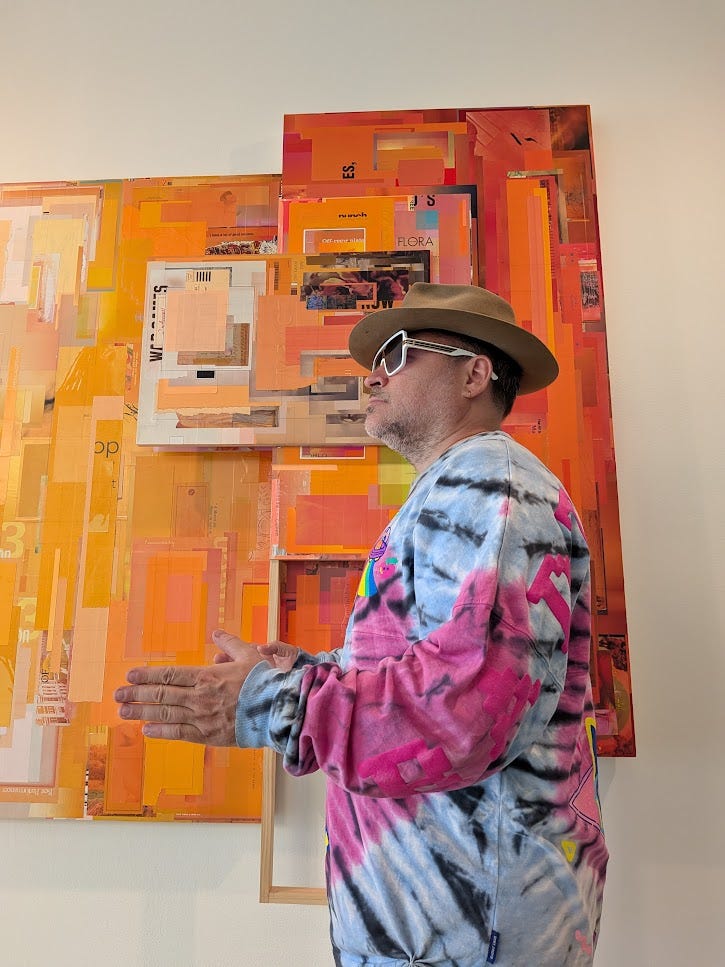
Joy First, Dark Corners Later
One of the first things that jumps out about Ruben’s music is how catchy it remains, even when it turns surreal. The songs can twist through odd voices, genre shifts, keyboard colors, strange little production decisions, and lyrical images that feel pulled from a dream after too much diner coffee. Yet the melody usually stays close enough to grab. Ruben recognizes that tension. He mentions an article from The Wire that described his music as “joyful, but in a weird way,” and while the word weird can sometimes feel like a critic’s lazy umbrella, Ruben hears the compliment inside it.
“I’ve always looked for happiness or joy in music,” he says. He admits there is melancholy in what he makes, and he listens to plenty of melancholic music himself, but the presentation usually leans joy-forward. That phrase opens the lock. Spookey Ruben’s music often greets you with color, bounce, a grin, a melodic handshake. Then, once you have stepped inside, the room gets deeper. “Once you get in there,” he says, “you will see the darker corners inside.”
That is the trick. He does not hide the shadows. He just does not make listeners crawl through barbed wire to reach them. The surface can be playful, but the play is not empty. It is an invitation. Ruben’s songs know that joy can be a mode of entry rather than a denial of trouble. The brightness is not there to erase the melancholy. It is there to carry it without making the whole thing collapse under its own weight.
That balance has followed him since “Modes of Transportation Vol. 1”, the 1995 debut that remains the most famous portal into his world. Songs like “These Days Are Old,” “Running Away,” “Crystal Cradle,” “Welcome to the House of Food,” and “Wendy McDonald” still sound like dispatches from a pop universe where the walls are soft, the clocks are edible, and every strange hallway eventually leads back to a hook.

The Ideas That Refuse to Leave
When asked whether one song unlocked the direction of “Toronto, You’ve Changed,” Ruben resists the idea of a single key. His albums, he explains, tend to contain several directions at once. He likes different genres living under the same roof. He likes contrast. A song does not need to explain the whole album. Sometimes it just needs to demand existence.
That is what happened with his cover of Heart’s “These Dreams.” The song was not necessarily one of his favorite songs in the world, but it had been there since childhood, floating through MTV until it embedded itself somewhere in the nervous system. Then, without warning, Ruben heard another version of it. He could imagine the melody riding a reggae groove. Once that thought appeared, he had to chase it.
“Certain ideas that I have,” he says, “once I have this idea, I have to do it now.” He might not even enjoy the process. He might “hate doing it,” as he puts it, but the idea still has to be executed. Anyone who has ever had a melody, image, sentence, or bad idea with good shoes take over their brain knows exactly what he means. Sometimes the only way to get the thing unstuck is to build it.
That compulsion is part of why Ruben’s catalog has the shape it does. It is not tidy in the conventional sense. It does not move in one lane. It skips, swerves, doubles back, disguises itself, and then pops up later wearing a different hat. He connects the new record to nostalgia and the beginning of his musical life, but he does not let nostalgia become a museum label. The past keeps changing form.
Even before “Toronto, You’ve Changed” had finished making its way into the world, another album was already waiting in the wings. Ruben says he is finishing a project called “Who Does That?,” an album he had started three years earlier before being pulled into the Toronto record. Conceptually, the new city-centered material fit more naturally with what he and Graham were doing, so “Who Does That?” paused. Now he is back to it.
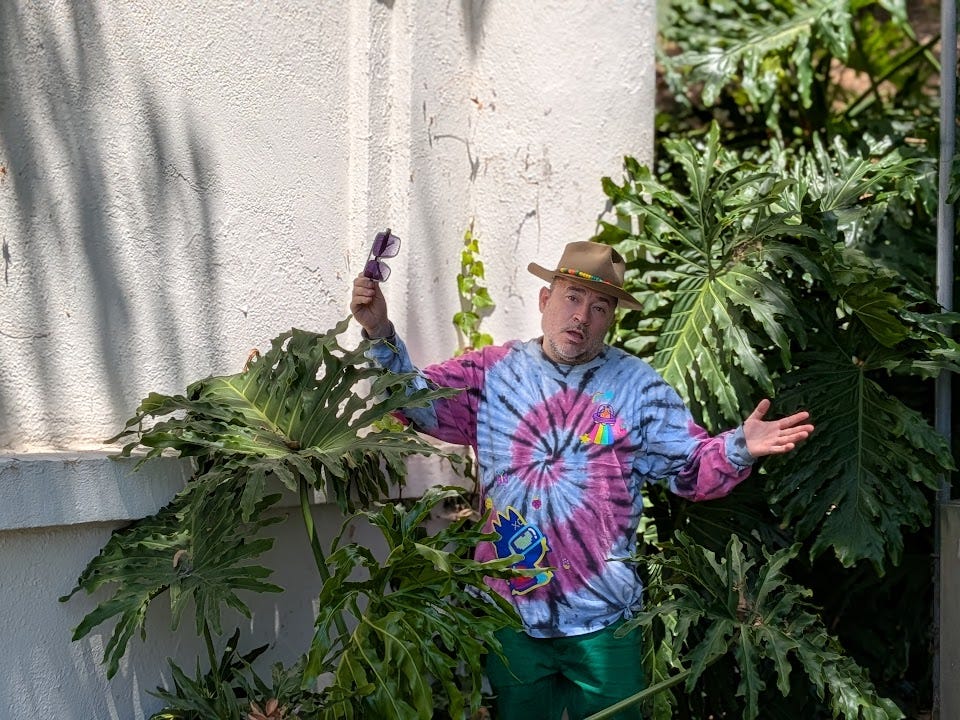
Restlessness as a Working Method
After more than 30 years of music and film, Ruben does not talk about creativity like a person guarding a finished legacy. He talks like someone bothered by the amount still undone. The secret, if there is one, is restlessness. “There’s so many things that I want to do musically and also on film,” he says. What he has released, in his mind, is “the bare minimum.”
There is something both funny and revealing in that. From the outside, Ruben’s body of work already looks unusually varied: records, videos, collaborations, visual storytelling, cult songs that keep finding new listeners. From inside the machine, he sees the missing projects, the unmade films, the albums still waiting their turn, the ideas that have not yet found the right doorway. The catalog may look sprawling to listeners. To him, it sounds like the tip of the iceberg complaining about its schedule.
That restlessness also helps explain his relationship with genre. Ruben’s work has always resisted easy categorization, and he does not romanticize the cost of that. When asked whether that resistance has been a blessing or challenge, he answers with the bluntness of someone who has had to live with the consequences: “So far it’s only been a challenge.”
Still, he has not given it up.
Across his records, Ruben says he has kept chasing the same larger idea: albums that sound like he is “merrily skipping through different genres and different concepts and different visual ideas.” The word merrily does a lot of work there. He is not describing a cold exercise in eclecticism. He is describing motion with a grin. The shifts are intentional, even intense. He wants a different type of dance groove, a new keyboard texture, a contrast between synth-pop and heavy progressive metal, between Latin percussion and commercial indie rock architecture. He wants the album to keep opening trapdoors under itself.
On “Toronto, You’ve Changed,” he points to “NRT LAX YYZ,” which he describes as a mambo-style piece with jazz piano, Latin percussion, and Afro-Cuban movement. Then he places it against “Everything You Wanted,” shaped with a more direct indie-rock production sensibility. In his mind, those are strong contrasts. For longtime Spookey Ruben listeners, the contrast may feel strangely smooth. They have spent years learning the language. At this point, shock would almost be the least surprising response.
Ruben’s hope is that the whole body of work eventually clarifies itself. Maybe a single album will not explain him. Maybe a whole career will. “It is the category of Spookey, basically,” he says. That sounds like a joke until you realize it is also the most accurate genre tag available.

The Myth of Easy Independence
Ruben is equally direct when the conversation turns to independence. The usual music-industry story goes like this: once an artist leaves the label system, they are free. They can do whatever they want. They answer to no one. The cage opens. The bird becomes its own accountant.
Ruben complicates that fantasy immediately.
“What I loved about being signed,” he says, “is that I had a full-on team that was backing me up and they gave me all the money I wanted and needed.” If he needed more time, they gave him more time. If he needed more money, they gave him more money. That is not the preferred myth of the self-sufficient artist grinding nobly in a room with one flickering lamp, but it is honest. Big records require resources. Big ideas often arrive with a bill.
The transition from being signed to being independent was not easy for him. He had started as a home-recording artist, but after working with top engineers in major studios, returning to a smaller room with a recording machine could feel like a strange demotion. He describes feeling like “a total idiot” pressing record alone after having been surrounded by high-end rooms and expert support.
Yet the contradiction is part of him. Even while signed, Ruben says he remained independent-minded. The label did not erase that impulse. In some ways, the right A&R support helped nurture it. The backing gave him space to pursue unusual ideas while still being encouraged to think like himself.
That is a useful corrective to the flattened romance around independence. Freedom without resources can become another form of restriction. A major-label machine can crush an artist, sure, but it can also, under the right conditions, fund the room where the strangest thing gets made properly. Ruben is not pining for the past so much as refusing a cute lie about the present.

Esthero at the Mixing Board
When Ruben talks about creative inspiration, one name rises with immediate warmth: Esthero. He calls her an incredible vocalist, one of the greatest he has worked with, but the story he tells is not only about singing. It is about the mix.
They were working on a song he co-wrote and co-produced for her album, “We Are in Need of a Musical Revolution,” in a studio in the Valley. As the song played, Esthero was hands-on with the board, raising and lowering parts in real time, even moving elements like snare and kick drum that many people would leave locked once the drum balance felt right. She treated the mix less like a static polish job and more like a performance.
For Ruben, watching her work that way was eye-opening. He soaked it in. He says he now does more of that because of her. The story lands because it mirrors his own musical personality. He is drawn to records that move from the inside, where arrangement and production are not fixed scenery but active characters. Esthero’s approach gave him another model for treating sound as something alive under the fingers.
Ruben also wants to return to another collaboration thread. He hopes to work again with John McEntire, who was part of Ruben’s “Alone at the Zoo” era. Ruben recorded with McEntire at Soma Studios in Chicago, with Doug McCombs and Jeff Parker also involved. A follow-up has been an ongoing conversation, one of those “we’ve got to do this” promises passed back and forth a couple times a year. Ruben says he is hoping, realistically, that 2027 might bring him back into the studio with McEntire and the gang.
In Ruben’s world, unfinished collaborations do not disappear. They orbit.
Film Without the Parade
Ruben’s visual instincts have always been part of the music. His official YouTube channel is full of music videos, short films, and side-door visual material, and his TV and film work confirms that the camera has never been a casual add-on. He has wanted to make a feature film for decades. He has written feature-length scripts. The desire is there.
The machinery is the problem.
When Ruben talks about filmmaking, the fantasy drains out of the room fast. He is not dazzled by the logistical spectacle. He thinks about the number of people required, the money, the disruption, the way even one scene can demand a small village of labor and permission. He describes seeing productions shut down parts of a city and thinking about the ordinary people caught around the edges. The old lady across the street who cannot get to the supermarket because someone is shooting their movie. The grandeur of film production, especially when attached to a small or mediocre project, can feel repulsive to him.
Some of this comes from frustration. He mentions rejection letters and people who said they would help make a movie and did not. Film depends on agreement from too many directions. Money has to agree. People have to agree. Locations have to agree. The weather might still heckle you.
So Ruben is rethinking scale. He still looks toward making a feature, but he imagines one not dependent on expensive shots. Maybe something in an apartment. Something stripped back enough to avoid the circus. It is a very Spookey Ruben turn: if the large machine becomes grotesque, build a smaller one with stranger gears.

The First Album Keeps Finding New Ears
For listeners discovering Ruben through “Toronto, You’ve Changed,” the obvious next stop is still “Modes of Transportation Vol. 1.” Ruben is proud of that record, and he has noticed something unexpected around it: younger listeners have been finding it. He talks about a friend named Jeremy from Fresno, California, who discovered “Modes” and started sharing it with friends in their early twenties. Suddenly, a new pocket of listeners opened around an album released long before they would have encountered it in its original moment.
That kind of rediscovery fits Ruben’s catalog. His music was built for delayed entrances. It does not rely on one era’s surface trend to make sense. In some ways, it may even benefit from the modern listening maze. A younger fan can stumble from “These Days Are Old” into a deeper cut like “Mennonite Lady” and arrive with no concern for release cycles, label history, or old media narratives. The music just appears, strange and intact, ready to be adopted by whoever has the right antenna.
Ruben does not feel a need to direct people too forcefully. If something grabs them, he says, they can go online and find the rest. It is all there. The catalog has become its own map.
He is also planning to bring the music back to the road. At the time of the interview, Ruben said he was working on East Coast dates for late October, with Boston, New Jersey, Rhode Island, and Baltimore among the planned areas, though exact dates were not yet settled. He wants to play more. He is also blunt about needing a booking agent. In classic Ruben fashion, the practical ask sits right next to the surreal universe. Follow the music. Watch the videos. Leave comments. Subscribe. Also, if there are booking agents nearby, kindly stop hiding in the shrubbery.

Afterglow
Near the end of the conversation, Ruben thanks Intellectual Dissatisfaction and tells listeners to stay tuned. It is a normal artist sign-off, but after spending time inside his answers, the phrase feels unusually appropriate. Staying tuned has always been the right instruction for Spookey Ruben. Tune to the city that changed. Tune to the song from childhood that suddenly wants a reggae groove. Tune to the dark corners behind the joy. Tune to the body of work until the category reveals itself.
The mistake would be treating Ruben’s weirdness as a decorative feature. The deeper story is discipline, restlessness, and a stubborn loyalty to the idea that an album can move through genres and still belong to one imagination. He knows the challenge of that. He knows the cost. He knows the industry would have had an easier time with him if he had behaved more like a shelf label and less like a secret passage.
But then he would not be Spookey Ruben.
The new album looks back at Toronto and sees a city altered by time, loss, memory, and redevelopment. The older songs keep finding listeners young enough to hear them without nostalgia. The next album is already waiting. The film ideas are still alive, though maybe smaller now, maybe sharper for being forced out of the parade. The collaborations remain in orbit. The joyful front door still opens into darker rooms.
Step through, and the house is still full of food, ghosts, hooks, old cities, strange vehicles, flickering screens, and a melody somewhere upstairs refusing to behave.
Please consider Donating to Sponsor an article even $1 helps!


