



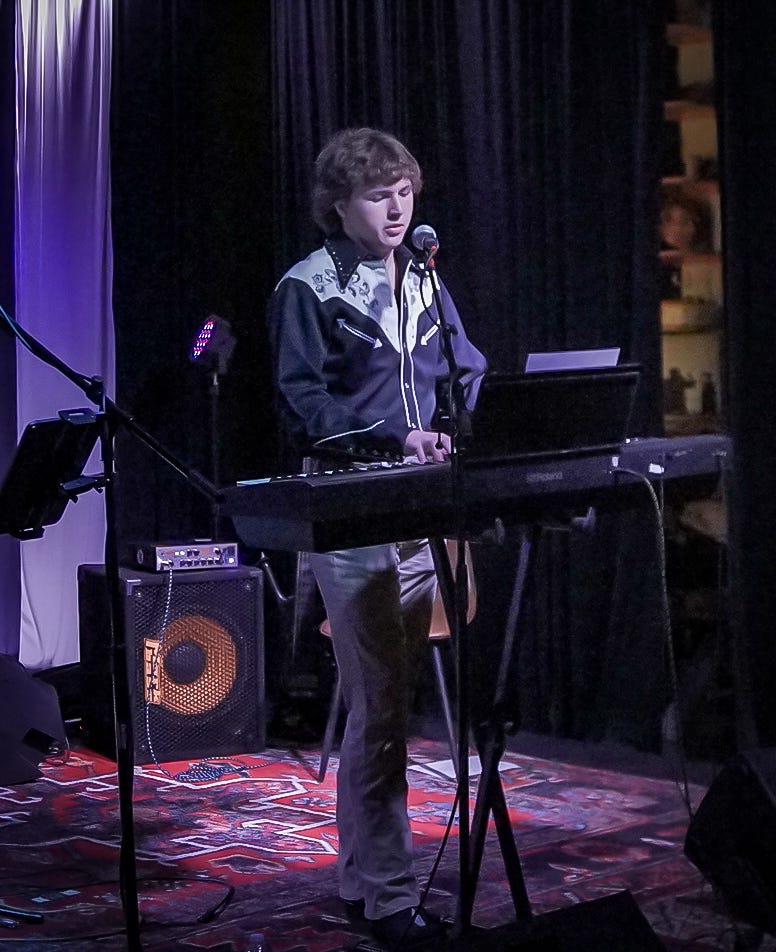
Back on Trakk after a short vacation. A cool fall night in October, and that old familiar road was calling for some live music. I was headed to Backline Music Hall to catch two young artists I had seen during the summer: Davis White and John Clayton White. Both had given me reasons to come back. This time, I wanted to hear what each would bring to the room with a few more months of playing behind him.
The Fall Youth Concert Series paired Davis’s traditional country with John Clayton’s electric blues and a full band. That made for two different ways into a night of roots music. One set would take me back to songs I grew up hearing with my dad. The other would turn up the heat with a guitar, a driving rhythm section, and a young bandleader who already has some impressive stages behind him.
I have been enjoying what Backline started with its Summer Youth Concert Series. Seeing these artists once is a good introduction. Getting to see them again gives you something to follow. You remember a voice, an approach to a song, or a guitarist making an impression, then come back to find out where the next show takes them. On October 22, there was plenty worth following.

Please consider Donating to Sponsor an article even $1 helps!

Davis White keeps it country
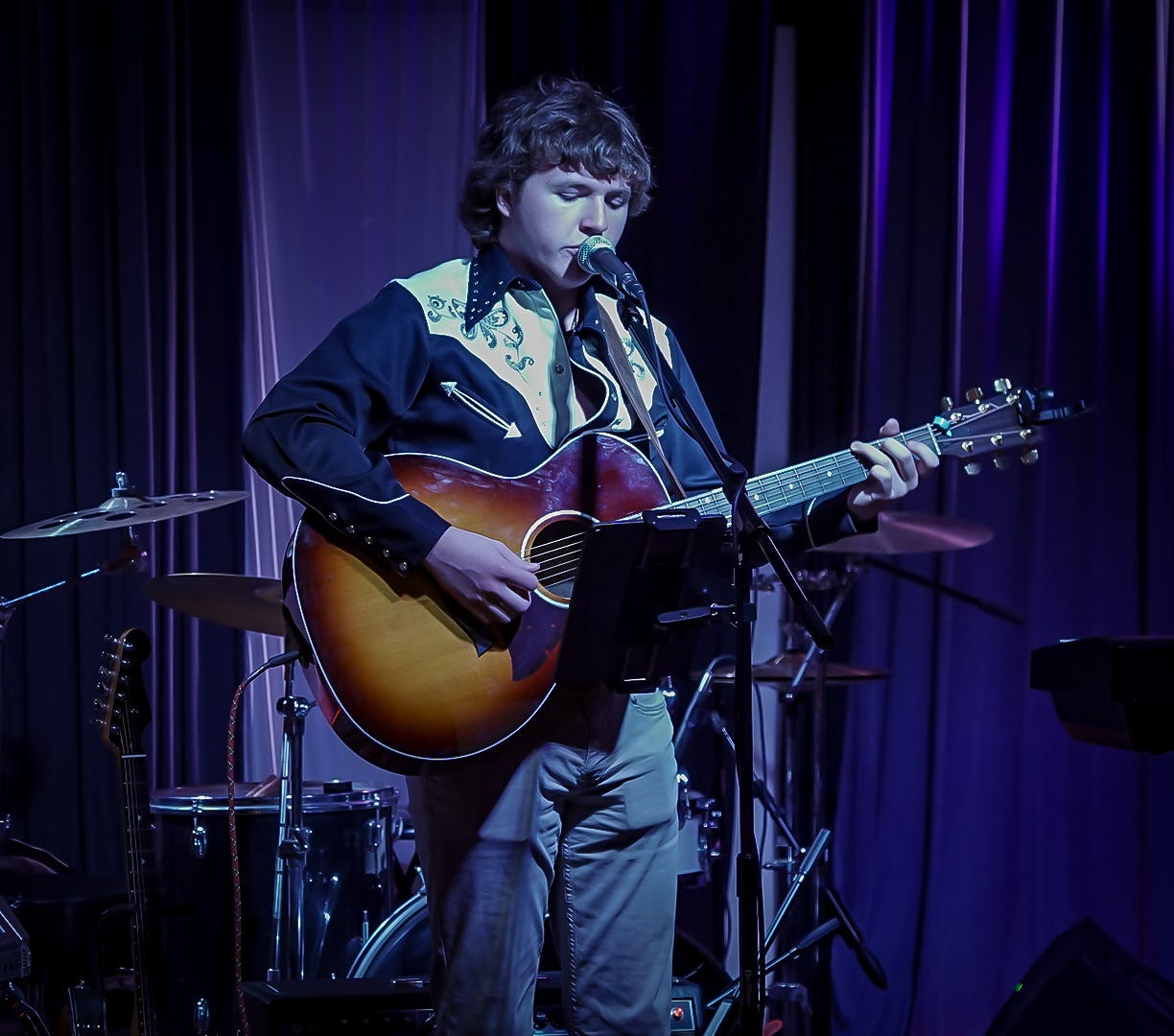
Davis began at the keyboards, spending the first few songs there before picking up his guitar. It was a welcome way to open the evening and a reminder that he has more than one way to carry a set. His playing on both instruments supported what I liked most about the performance: that wonderfully mature voice and the traditional country songs he seems so comfortable singing.
The young musician from Pontotoc had already impressed me at the summer series opener. He began learning piano early and had moved into guitar by age seven. On that earlier visit, he also worked a Billy Strings tune into the set, giving us a glimpse of his picking ability. This return put the focus firmly on the country catalog and the voice delivering it.
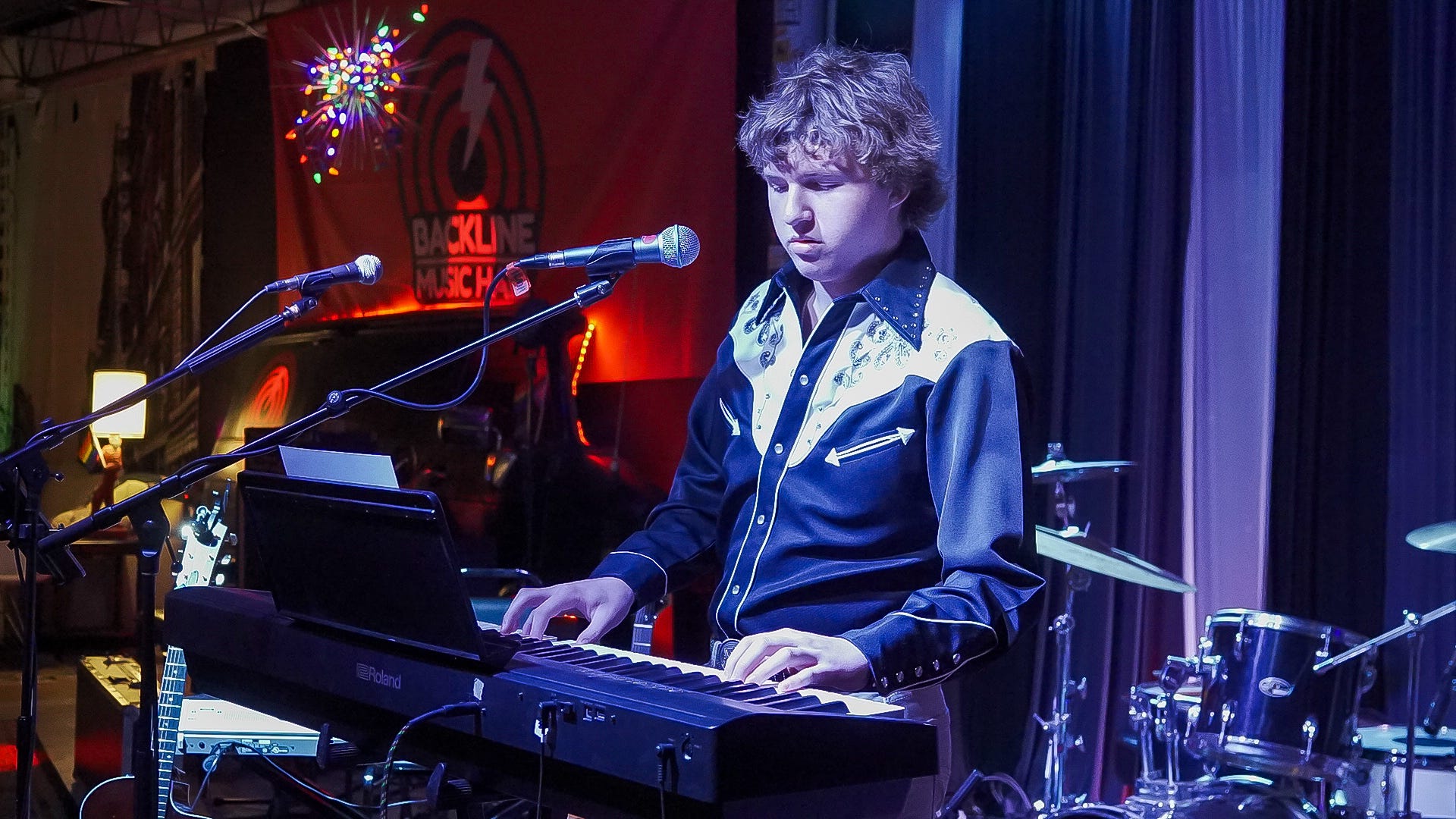
There is a seasoned quality to Davis’s singing that suits this material. Listening to him, I hear the appeal of singers such as Randy Travis, Merle Haggard, David Allan Coe, and George Jones: voices that can put weight behind a plainspoken line. Those comparisons describe the tradition he draws me toward. The pleasure of hearing Davis is finding that kind of sound coming from a young performer who already seems at home with the songs.
Keith Whitley’s “Don’t Close Your Eyes” and Merle Haggard’s “My Favorite Memory” were among the selections. These are songs I know well, and hearing them again brought more than recognition. I grew up listening to this music with my dad. A familiar title can get your attention, but a voice that fits the song can take you right back to why it stayed with you.
That was the part of Davis’s set that reached me most. I came to photograph and listen to a young artist, and found myself remembering the music that helped make me a listener in the first place. Those old emotions came back with the songs, and I was smiling. Davis gave the material the care I wanted to hear, letting its connection to my own life do the rest.
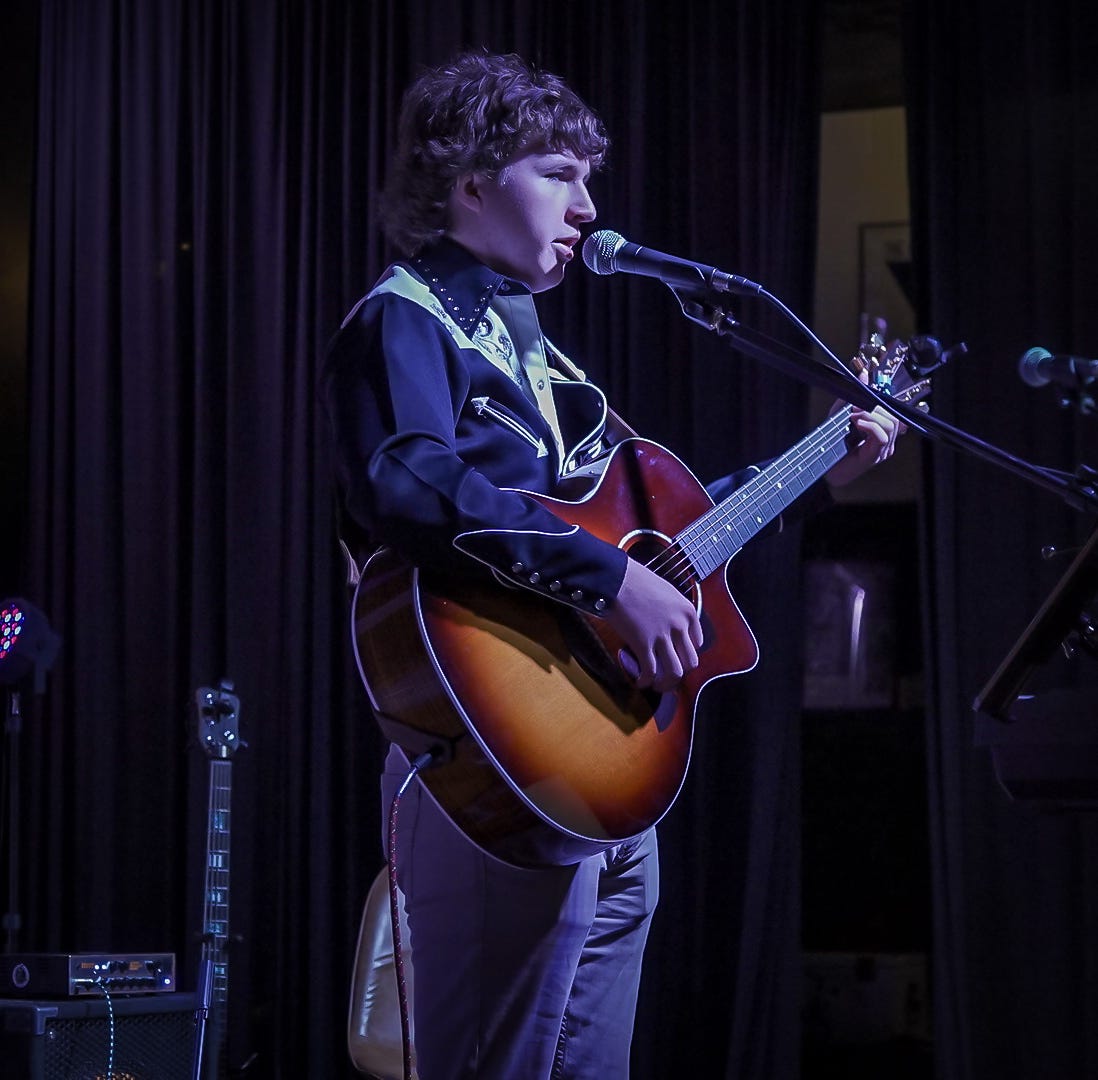
There was room for Hank Williams Jr. through “Old Habits” and “The Blues Man,” along with “Long White Line,” a song many listeners will know through Sturgill Simpson. The choices gave Davis a set rooted in country storytelling without reducing it to one singer’s catalog. Moving among those familiar names, he kept returning to the strengths of his own voice and accompaniment.
His take on “Tennessee Whiskey” followed the older country approach associated with David Allan Coe’s recording. I appreciated hearing that version’s character carried into the room. In a set already full of classics, it was another clear sign of where Davis’s musical interests lie and how naturally his voice fits that direction.
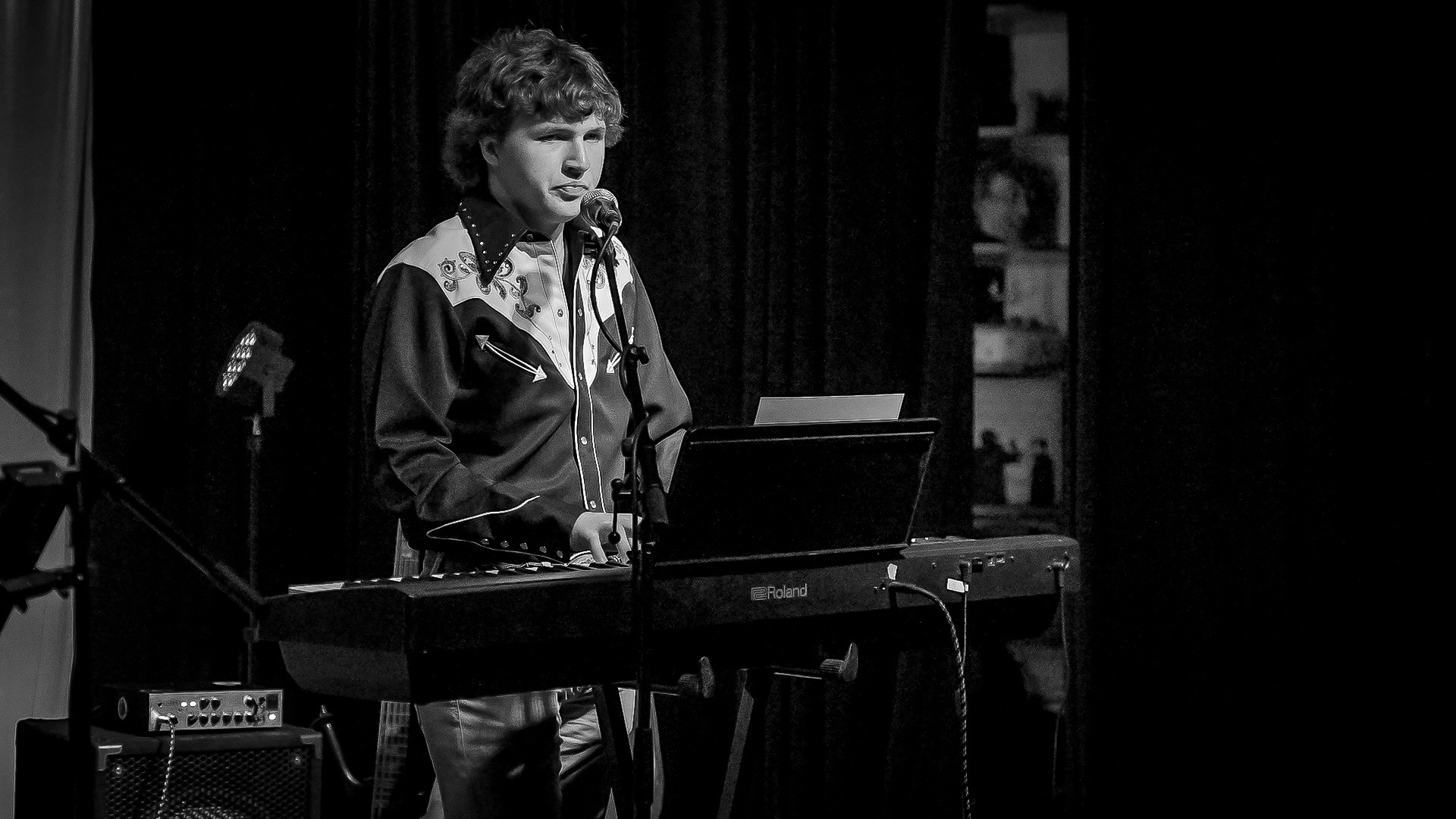
He closed with Alabama’s “Dixieland Delight.” After the memories stirred by the ballads, that was a fine way to finish his part of the evening. Davis had shown his ability on keys and guitar, worked through a strong collection of country songs, and given me one of the night’s most personal connections. Thank you, Davis, for keeping this music alive on a local stage.
John Clayton brings the full band
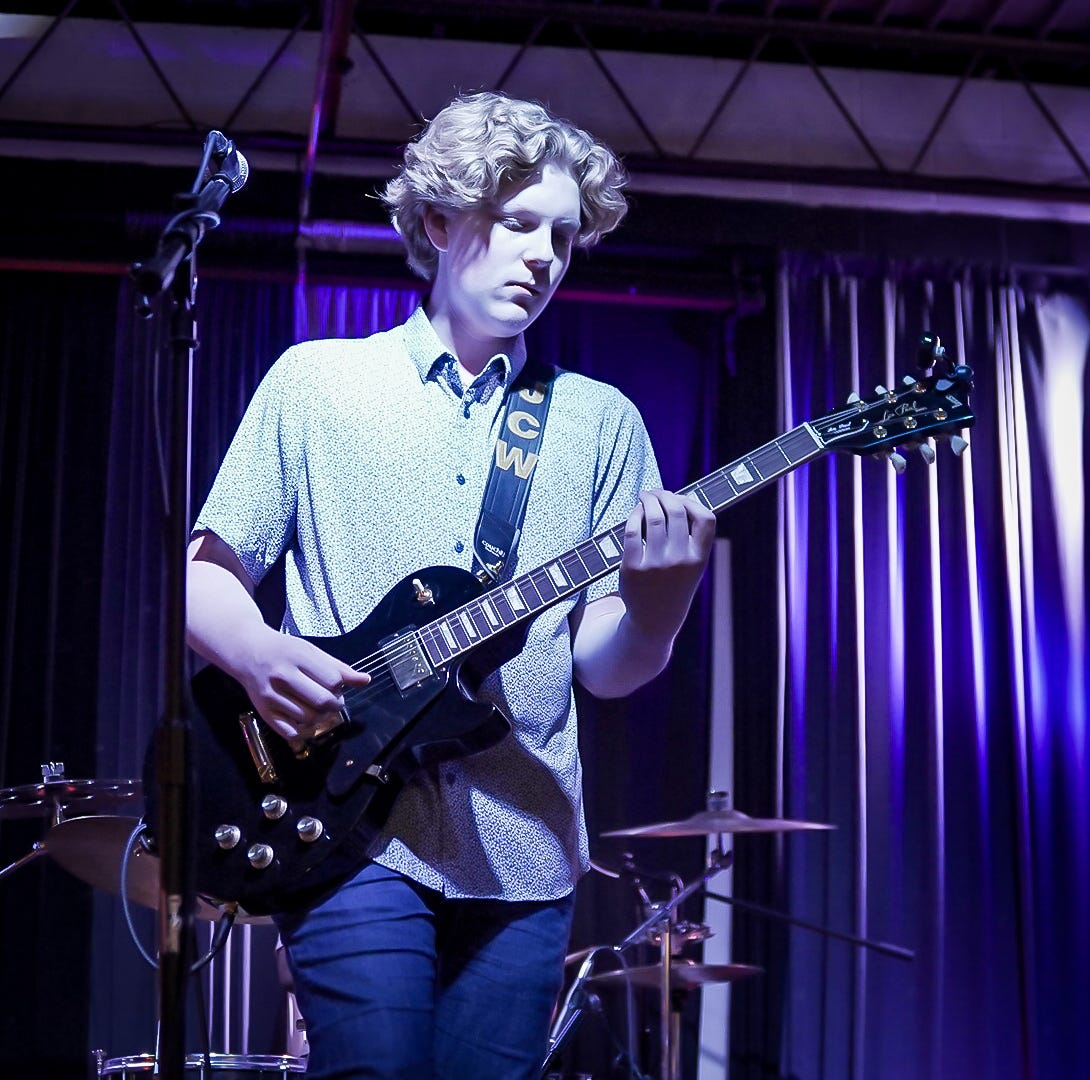
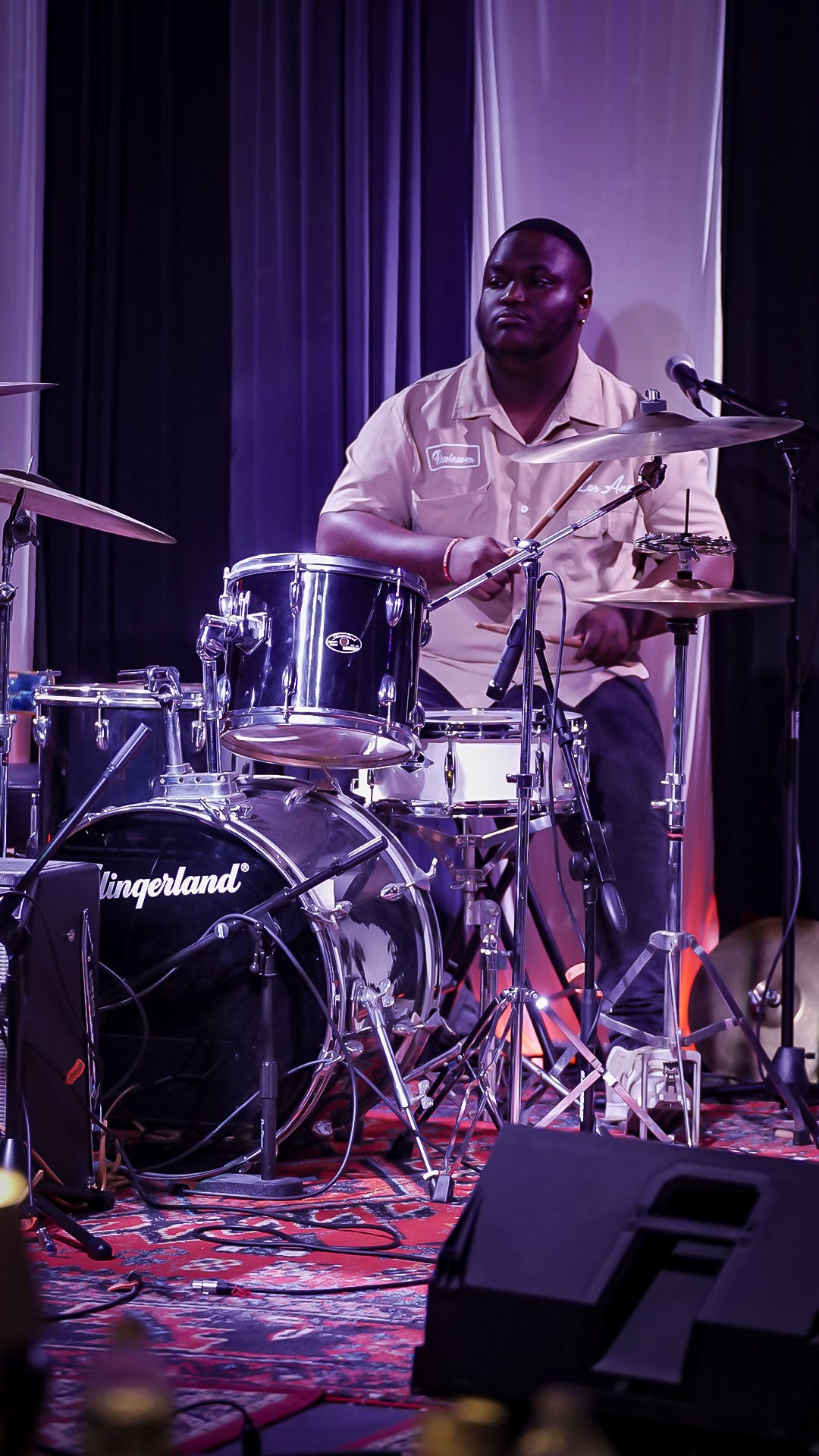
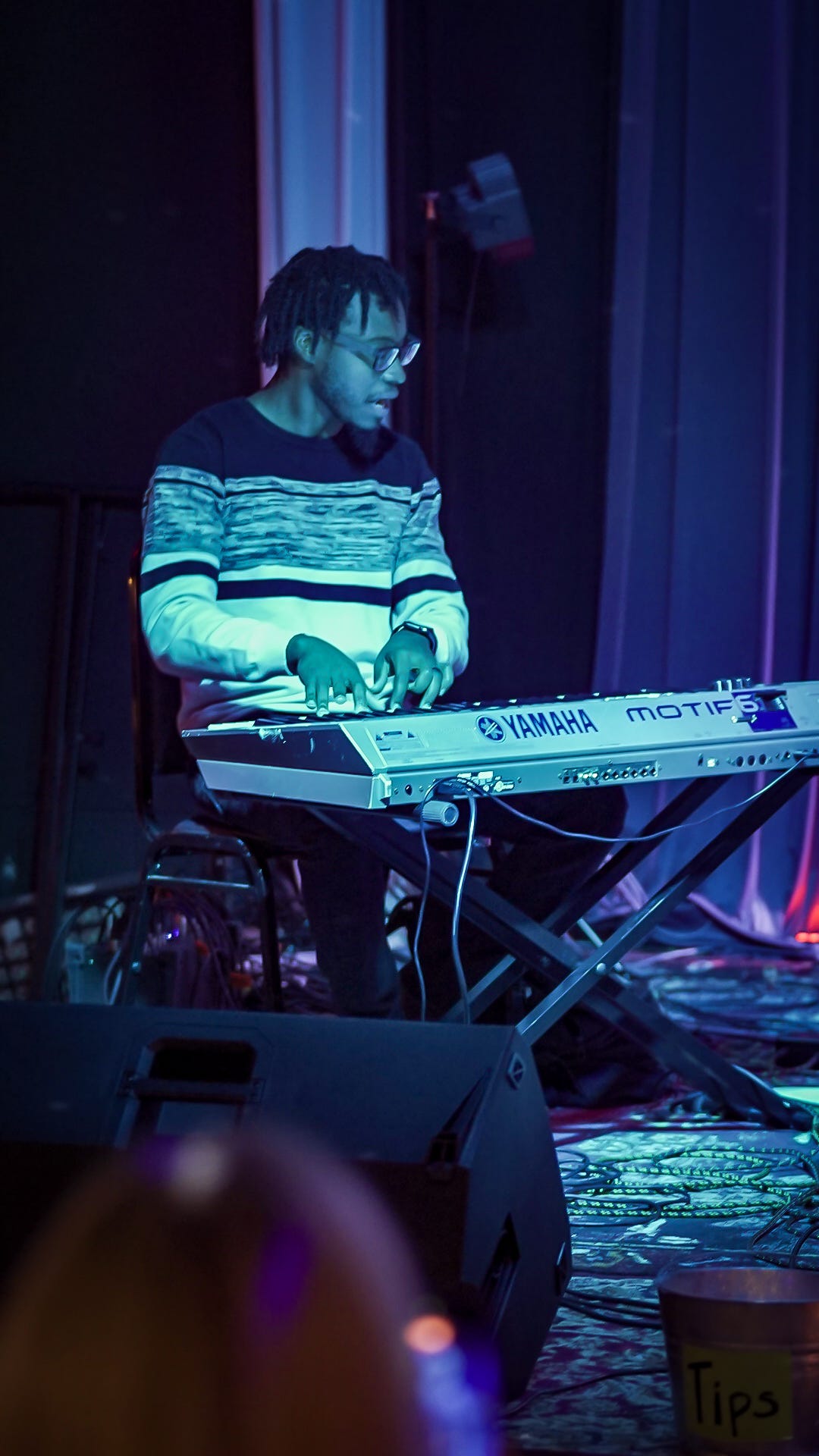
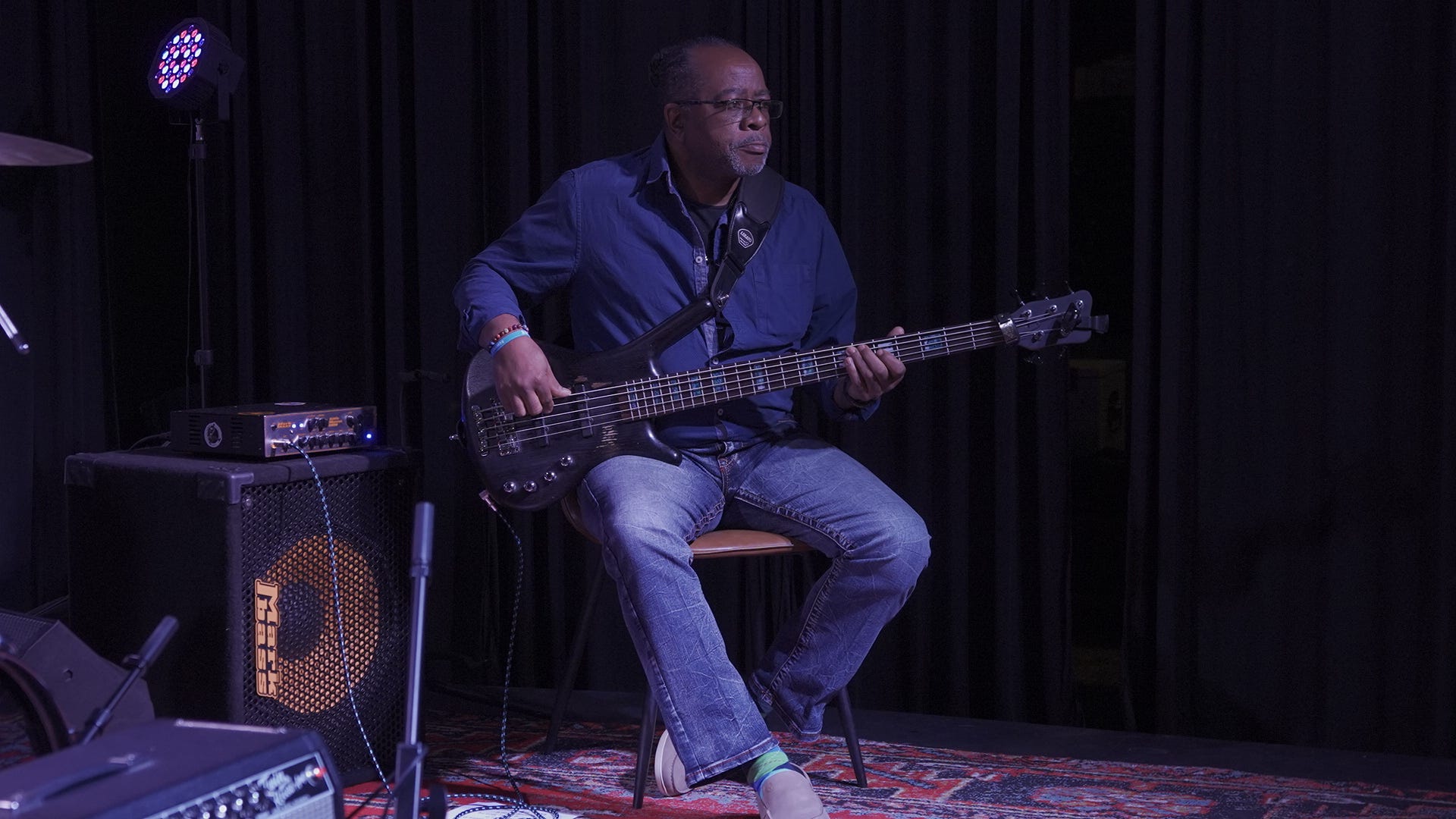
John Clayton White brought a different setup from the one I had seen at the summer showcase. This time, he had Roderick Talley II on drums and vocals, Brandon Gregory on keyboards, and Michael Vaughn on bass. That full-band sound gave his lead guitar a much bigger setting, and the opening improvisation made it clear that the evening was about to move into heavier territory.
John Clayton is 15, but he has already spent several years leading a band. His experience includes playing at Club Ebony’s reopening with Susan Tedeschi and Derek Trucks, and a place on the Visit Mississippi stage at the 2026 Chicago Blues Festival. He and his band also won the Mississippi Delta Blues Society’s regional challenge in October 2024 before competing in Memphis. Those are substantial opportunities for a young player; the reason to pay attention at Backline was how he used the stage in front of him.
The band found a fierce, syncopated pocket and gave him room to work. Talley’s drums and Vaughn’s bass kept the groove underneath the lead, while Gregory’s keyboards filled out the sound. The guitar could step forward because the rest of the group was holding its part together. That balance made the bigger solos feel like part of a band performance.
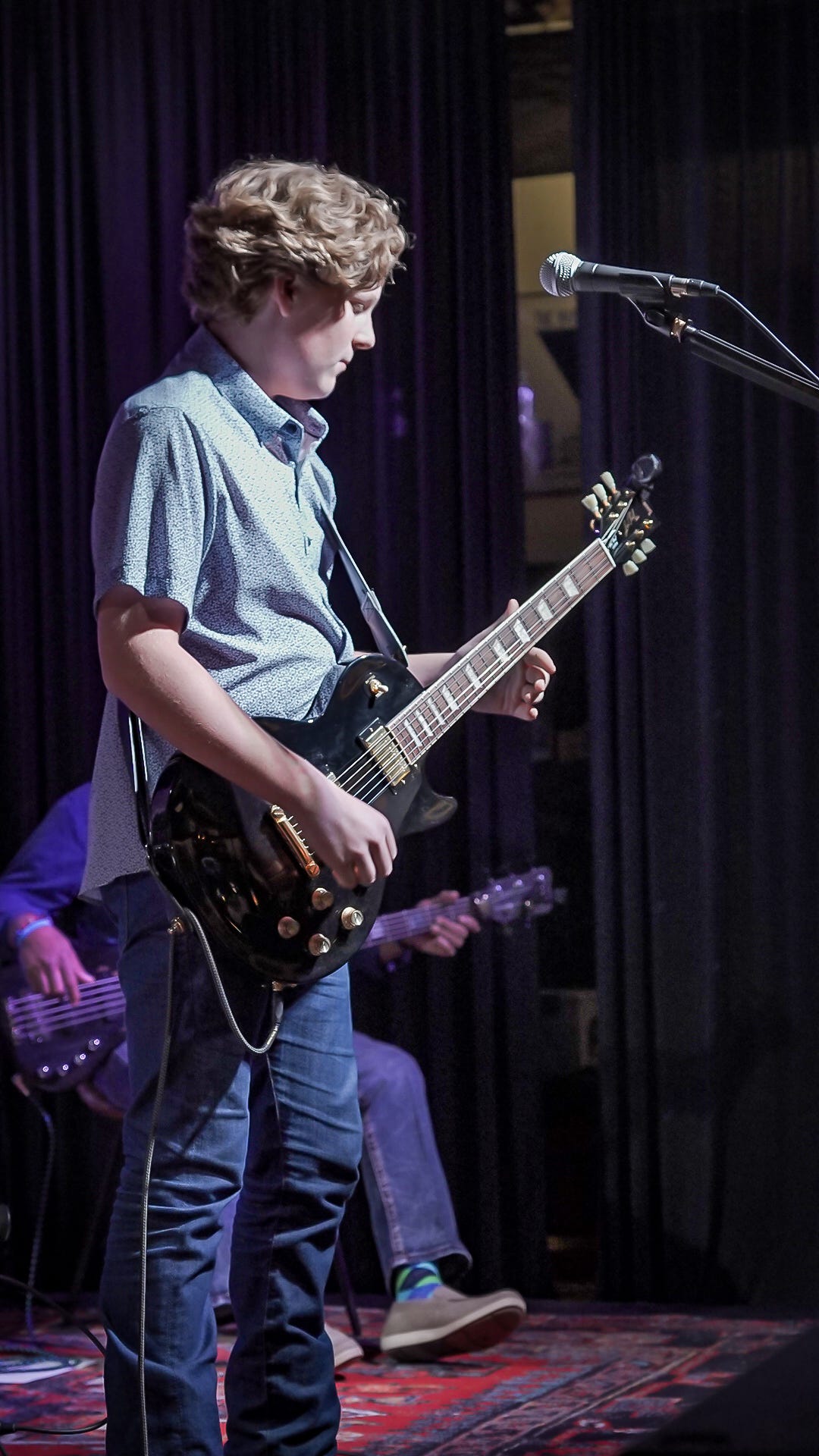
“Catfish Blues” brought swampy slide-guitar grit, followed elsewhere in the set by the soul of Bill Withers’ “Ain’t No Sunshine.” The change in material gave the group room to shift its feel while keeping the set connected. John Clayton’s expressive lead work remained the focus, but the rhythm section gave those changes somewhere solid to land.
Talley deserves attention as a vocalist as well as a drummer. Gregory’s musical background includes gospel, R&B, and jazz, while Vaughn brings decades of professional playing. John Clayton was fronting a group with its own experience and musical range. Hearing that experience behind him helped explain the confidence of the ensemble sound.
Hendrix heat and Mississippi mud
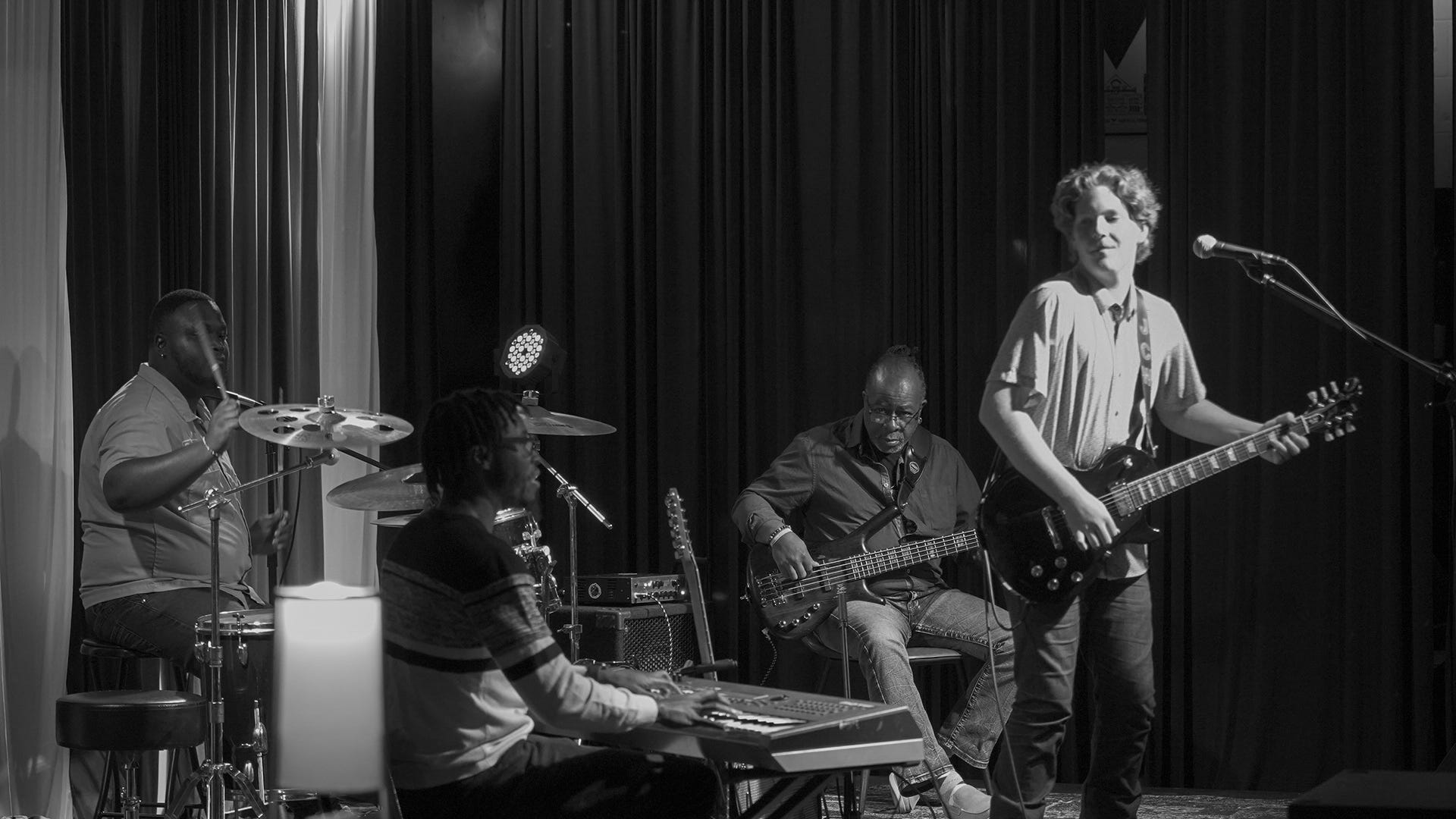
The Hendrix material pushed the performance into its most electrifying stretch. “Little Wing” and “Voodoo Child” put John Clayton’s technique and expression in the spotlight, and he met the challenge with a staggering amount of command. The playing had precision, but it also had the emotional weight that makes you want to keep listening after the initial surprise has worn off.
By then, his age had become less useful as a way to describe what was happening. It helps explain why a performance like this catches people’s attention, but the music has to hold that attention. At Backline, the lead guitar and the band behind it gave me plenty to stay with. The set had moved from an impressive introduction to a blistering showcase of what this group could do.
My highlight was “Something in the Mud,” John Clayton’s own song about the Mississippi Delta. After hearing him work through music associated with some formidable players, it was especially satisfying to hear an original take its place in the set. The roaring delivery made it feel like a statement of his own musical identity.
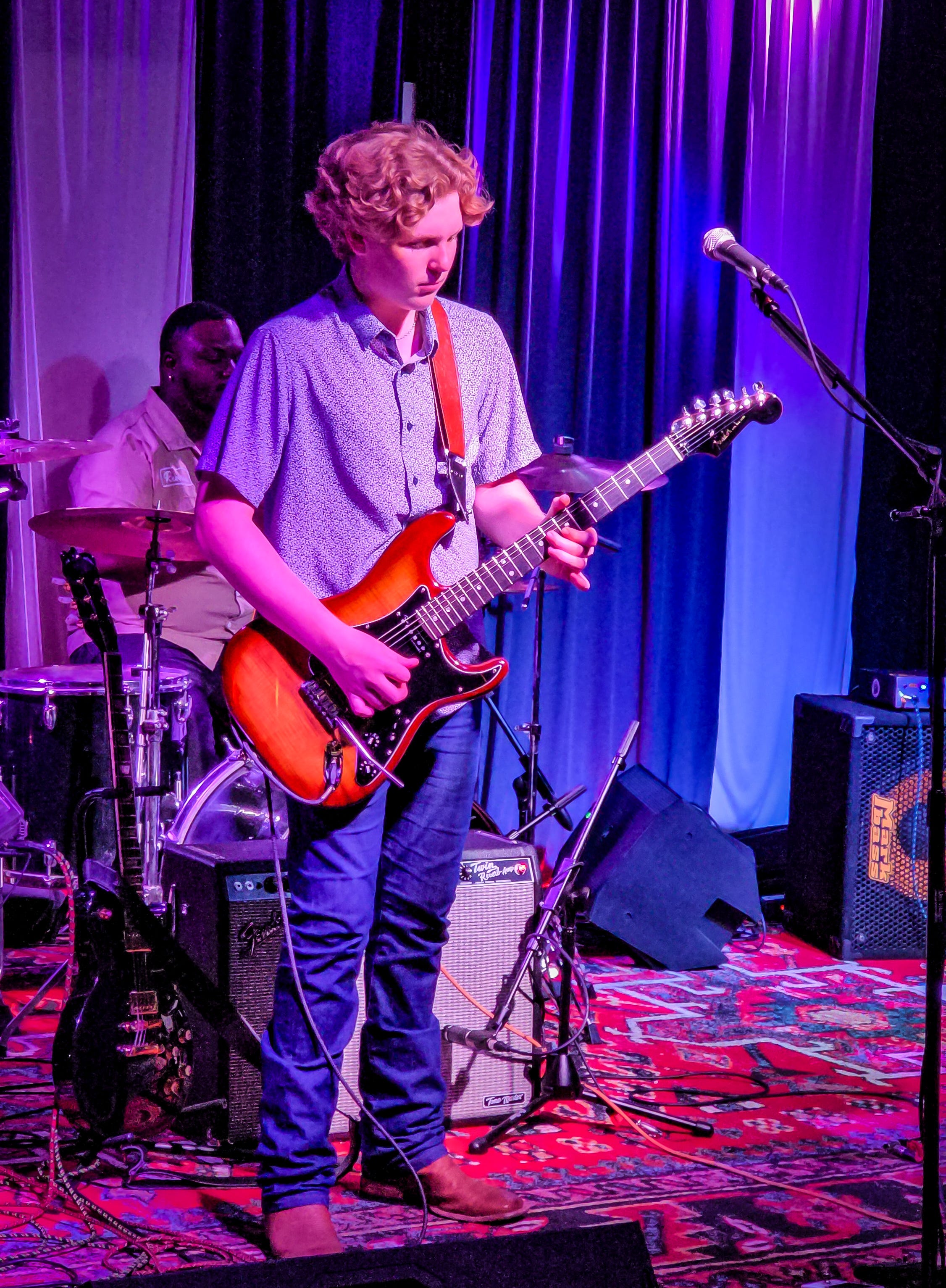
Hearing that original alongside the covers gave me a fuller picture of John Clayton as an artist. He was writing material that belonged beside the songs he loves to play. “Something in the Mud” was the crown jewel of his performance for me, and it gave the night a strong reason to keep watching where he goes next.
I also liked what the full band brought to this return visit. A guitarist can make an impression in a smaller setting, then reveal another part of his playing when drums, bass, and keys are involved. John Clayton had room to lean into the heavier side of his sound here, and the musicians alongside him made that room count. It was a powerful finish to an evening that had begun with Davis at the keyboard.
Afterglow
I left Backline thinking about the distance between the two sets and how well they had worked on the same bill. Davis brought country songs that carried memories of listening with my dad. John Clayton brought electric blues, Hendrix, and an original that made its own impression. Each had given me a different reason to be glad I took that familiar road back to Tupelo.
That is what I am loving about this Youth Series. Backline is giving young artists a stage, then giving us opportunities to return and hear them again. The summer appearances made me curious about this fall show; this one has left me interested in the next. For a local music fan, that is a good cycle to be part of.
We still had a full weekend of music ahead, so it was time to recharge, recover, and rerun. But this was a strong way to get back on Trakk: country classics bringing old memories into the room, followed by a full-band blues performance with enough fire to send me home smiling.
Get on Trakk with IronTrakksMedia.
Please consider Donating to Sponsor an article even $1 helps!
