


Can anyone relate to night-before-a-flight insomnia? Sleeping before an early flight is not really sleeping. It is lying there with your eyes closed while your brain performs an unauthorized inventory of everything you packed, everything you might have forgotten and every conceivable way the morning could go wrong. Positive anticipation becomes stress. Did I pack that? WHAT IF I forgot this? Did I set the alarm? Did I set enough alarms? How much time do I actually need at the airport?
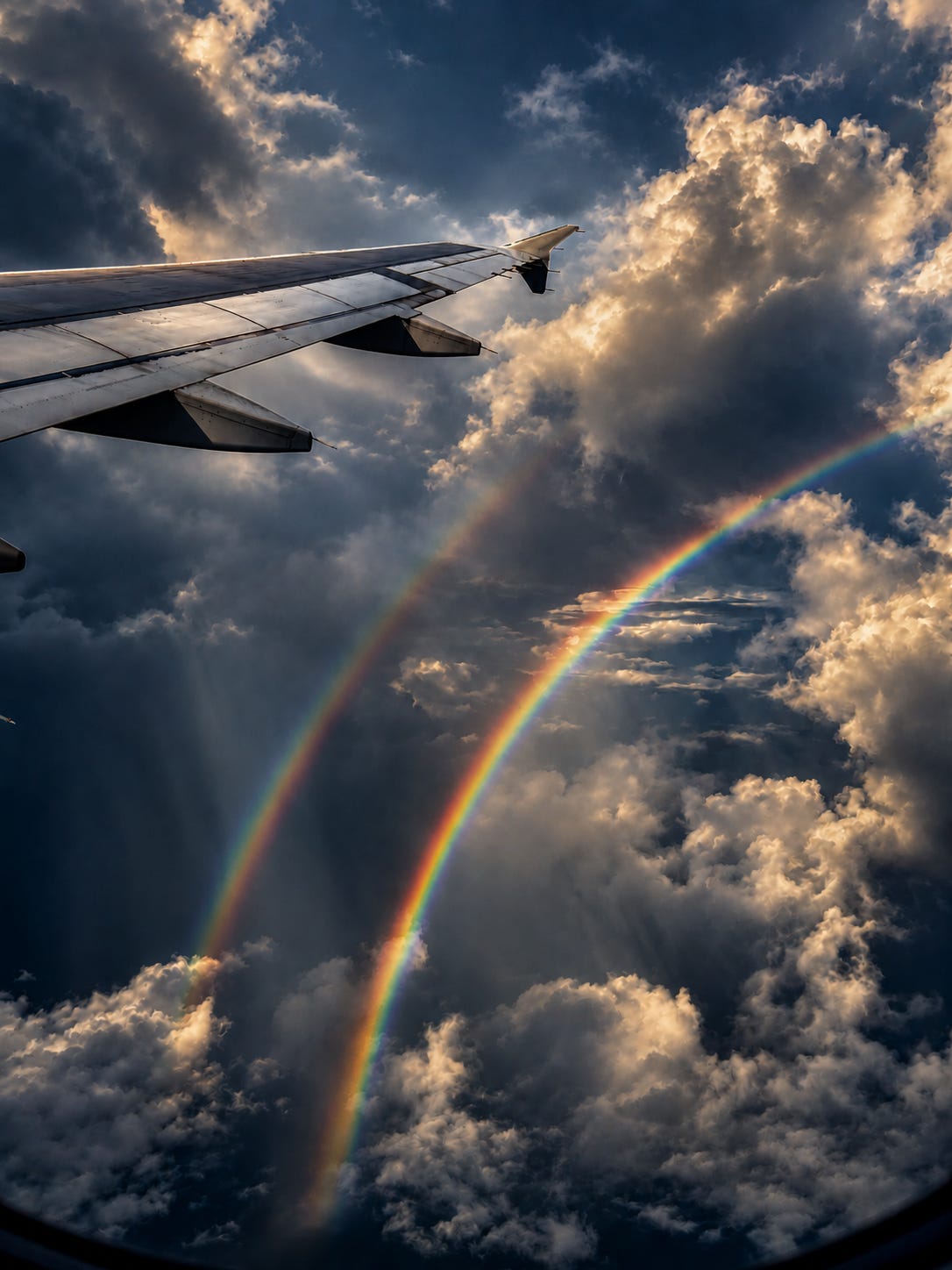
Then comes the final nightmare: waking up two hours late and turning into the McCallister family from Home Alone.
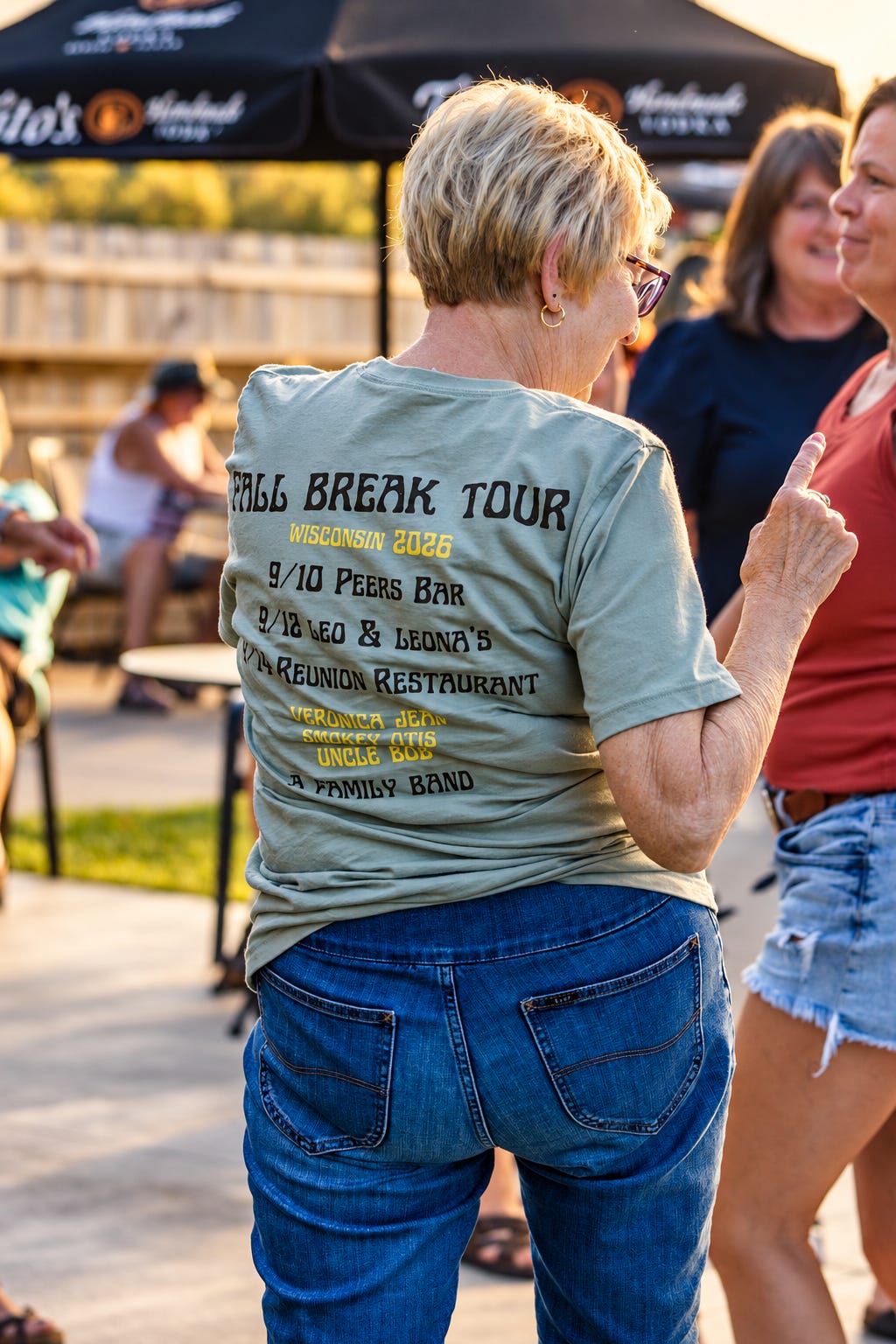
At 6:30 a.m., I was sitting inside Pensacola International Airport with black coffee, a spicy chicken biscuit from Chick-fil-A and approximately three functioning brain cells. Ahead of me was Pensacola to Charlotte, Charlotte to Minneapolis-Saint Paul, then Wisconsin for four days and three shows with the Veronica Jean Trio on its Fall Break Tour.

Wisconsin. Oshkosh. Manitowoc. Sheboygan. Sister Bay.
DAAAMMMMMITTT. Polka.
Sorry. I fell asleep with my eyes open for a second.
Before we continue, I need to explain snowbirds. A snowbird, is a person who escapes a frozen northern climate every winter for somewhere warmer and eventually earns professional status in daytime drinking. Where I live in Gulf Shores, Alabama, we know this species very well.
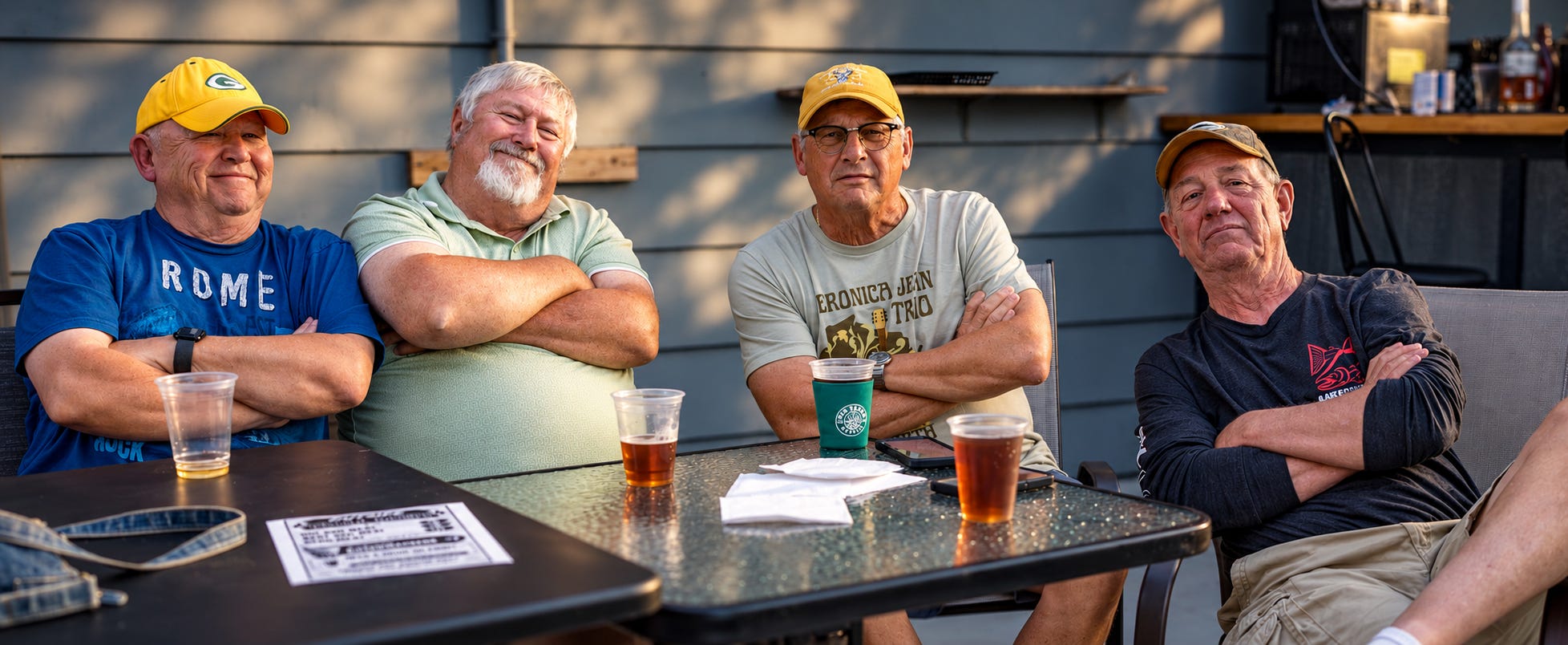
They descend every year when their homeland freezes solid, carefully stocked for migration and ready to congregate with members of their own flock. Wisconsin. Minnesota. Iowa. Michigan. Illinois. Ohio. Indiana. Canada sneaks a few across the border too. They arrive at our small-town-big-beach slice of Coastal Alabama and bring certain identifiable behaviors with them: leisurely driving, cold beer, stories that take increasingly strange turns, dancing shoes that refuse retirement and, every so often, a suspicious enthusiasm for polka.
The easy joke is that they clog Highway 59 and pack the restaurants, but spend enough time around them and another picture appears. They come south because they love the place. More importantly, they keep coming back because they love the people they found there.
So what happens when the migration reverses? What happens when three Sandbirds from Gulf Shores load the van, pack the amps and head north into Snowbird Country?
We were about to find out.

Sandbirds Northbound
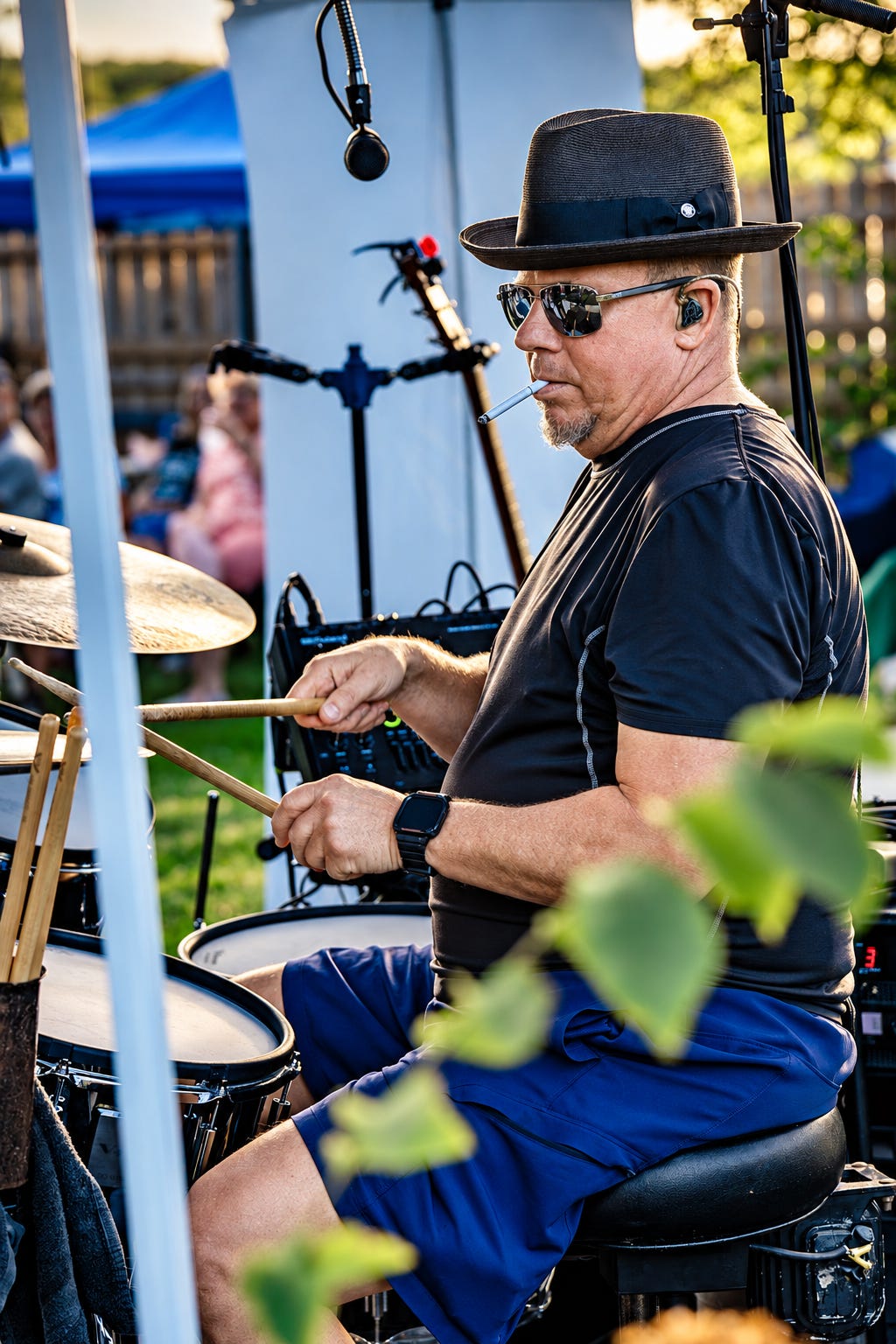
The Veronica Jean Trio is a family band, although “family” works a little more loosely here than a genealogy chart would suggest. Veronica Jean handles lead vocals, bass and guitar. Her father, Smokey Otis, moves between vocals, lead guitar and bass. Behind them sits Uncle Bob, holding down drums, percussion and vocals. Bob is not technically blood related, but after watching these three operate together for any length of time, arguing genetics feels like missing the point.
Veronica grew up around musicians and eventually stepped into the same working world. Her musical reference points stretch through folk, Americana, country and classic rock without forcing her neatly into any one of them. Even the covers she chooses make that obvious. Stevie Nicks and Ella Langley can coexist with Paramore, Nena and ABBA because Veronica does not approach them as exercises in genre loyalty. She looks for songs she can inhabit.
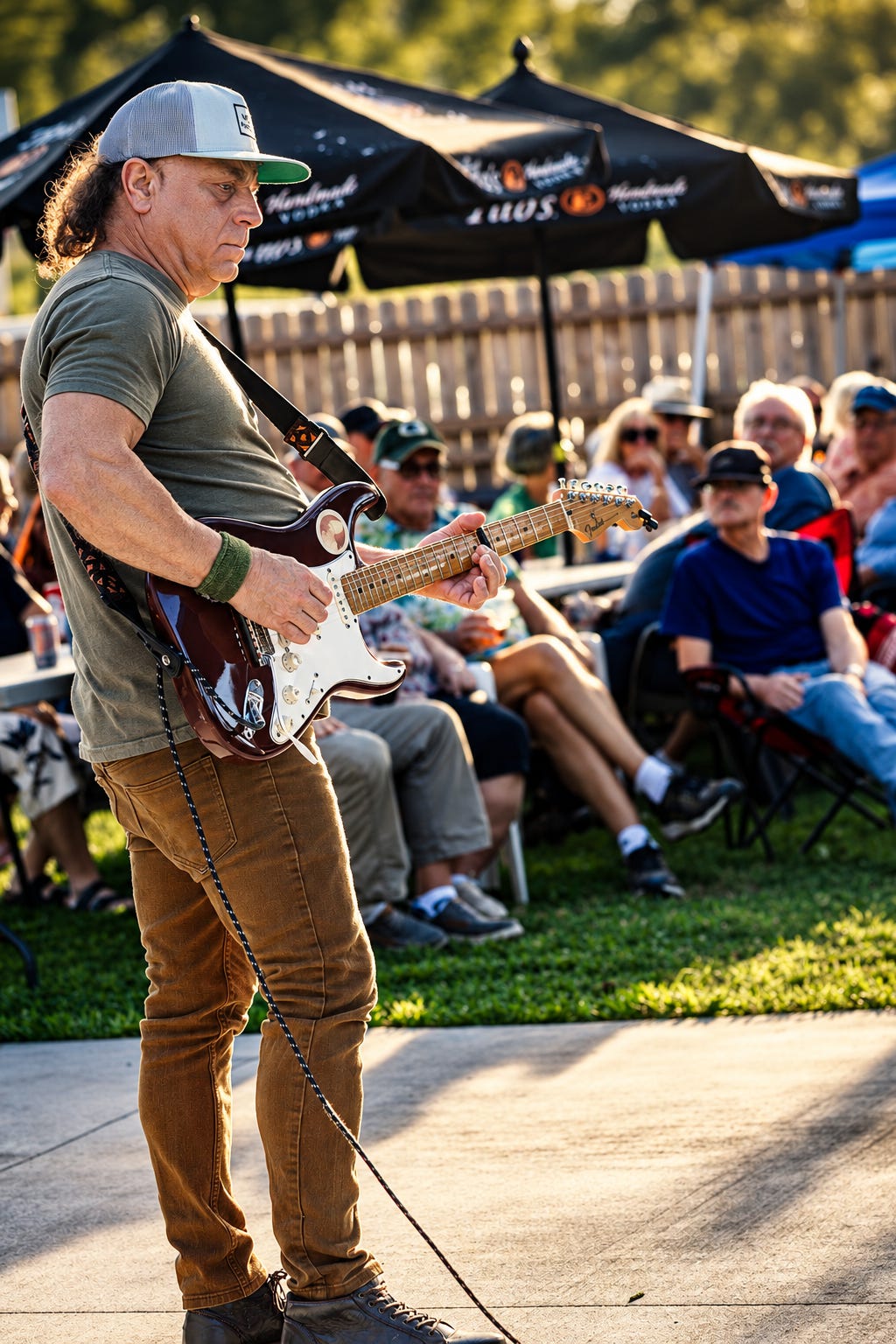
There is another element that is harder to measure but much easier to notice in person: the woman keeps growing every time I see her perform.
Limp Bizkit is probably not the first band most people would use to explain the Veronica Jean Trio, but stay with me. There is a line about feeling like a freight train that occasionally comes to mind when Veronica gets going, and once you hear this trio operating at full tilt, the image starts making a disturbing amount of sense.
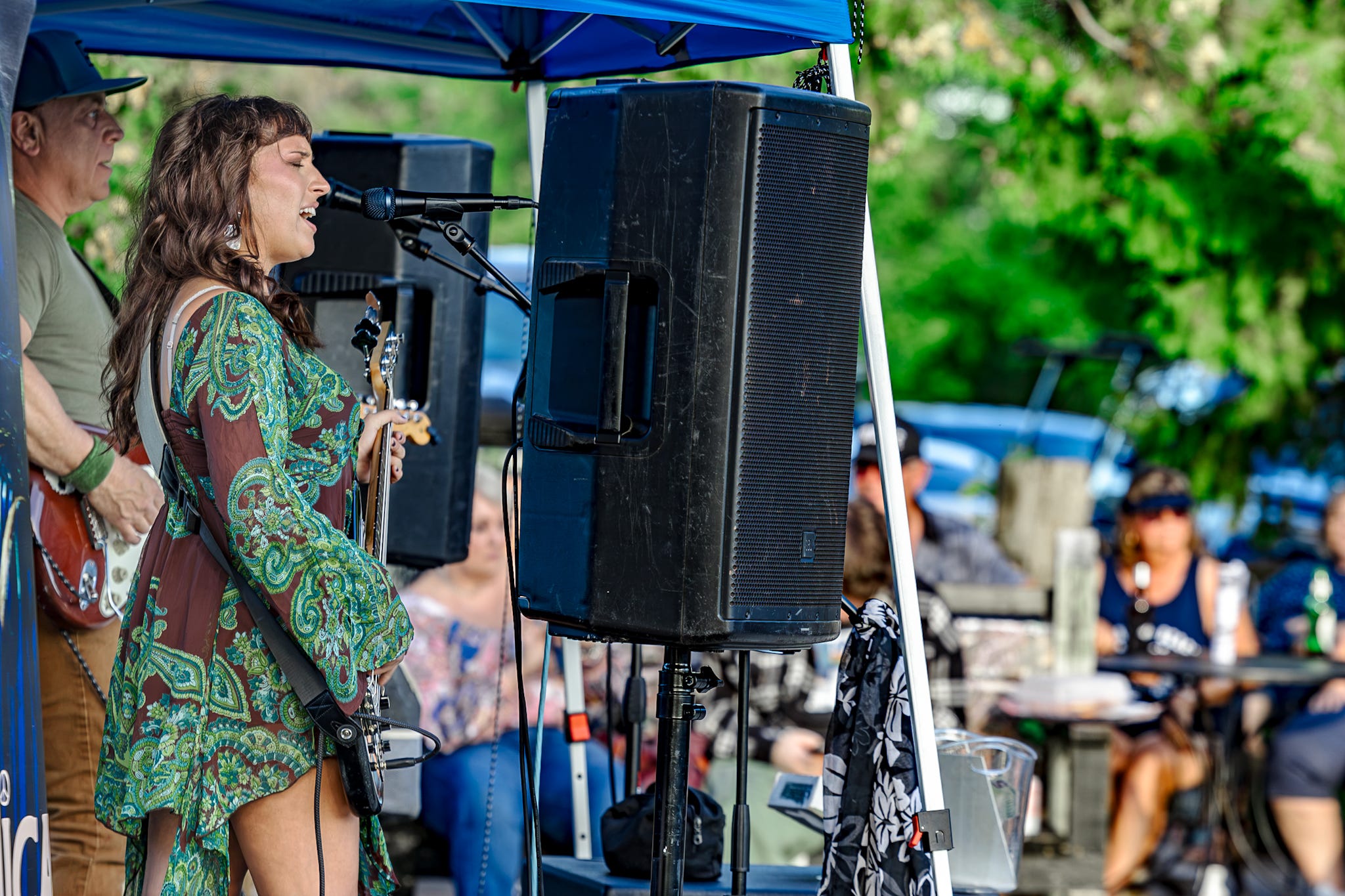
Bob supplies the wheels. His drums carry that boom-clack, boom-clack regularity that can make a straight 4/4 groove feel physical. He does not need to overcrowd it. The impact comes from where he places things, how firmly he holds the pocket and what happens when he finally breaks out of it with a fill. The kick lands in the chest, the snare answers and the rest of the band can move because the floor underneath them is not going anywhere.
Smokey supplies the throttle. Calling his playing polished almost feels wrong because polish suggests somebody buffed away the rough edges, and Smokey needs those edges. His guitar work has urgency and a working-musician directness to it, less interested in decorating a song than pushing it where it needs to go. He can settle inside a groove and then, almost without warning, start leaning on it until the entire trio feels faster even when the tempo has barely moved.
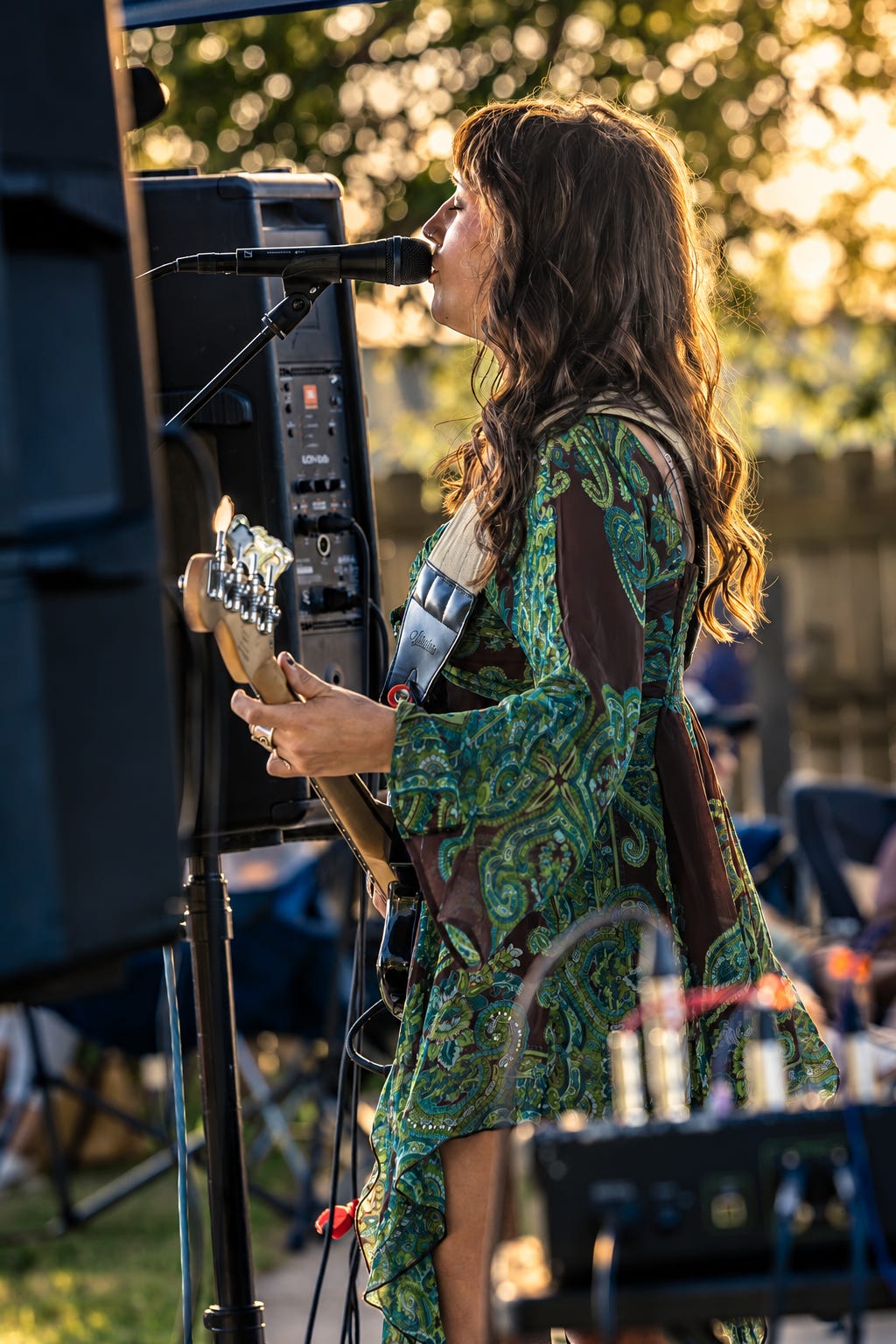
Then there is Veronica. Her voice carries some of Ella Langley’s grit and flashes of the grain people recognize immediately in Stevie Nicks, but comparisons are becoming less useful the longer she sings. Veronica’s tone has developed its own bite. When she pushes, it does not simply get louder. The center of the vocal stays intact while the edges roughen, which is why she can move from a country song into something rockier without sounding like she changed costumes between numbers.
There are moments when she begins almost conversationally and then lets the voice widen until it clears everything around it. Underneath that voice, the bass can arrive before your brain fully registers what is happening. You feel the low end through the floor first.
Three musicians should not always sound this big. These three frequently do.
Please consider Donating to Sponsor an article even $1 helps!

Peer’s Bar
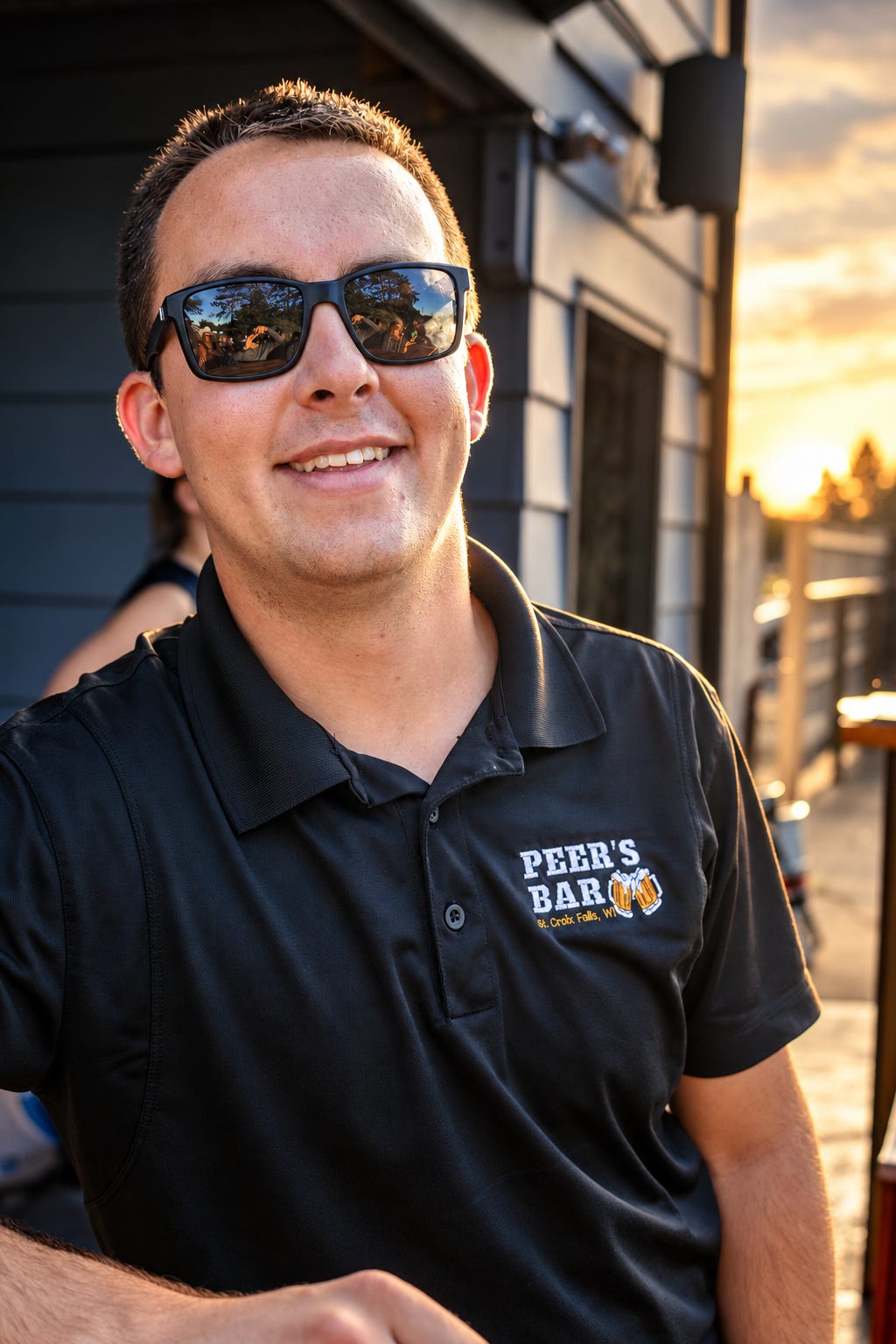
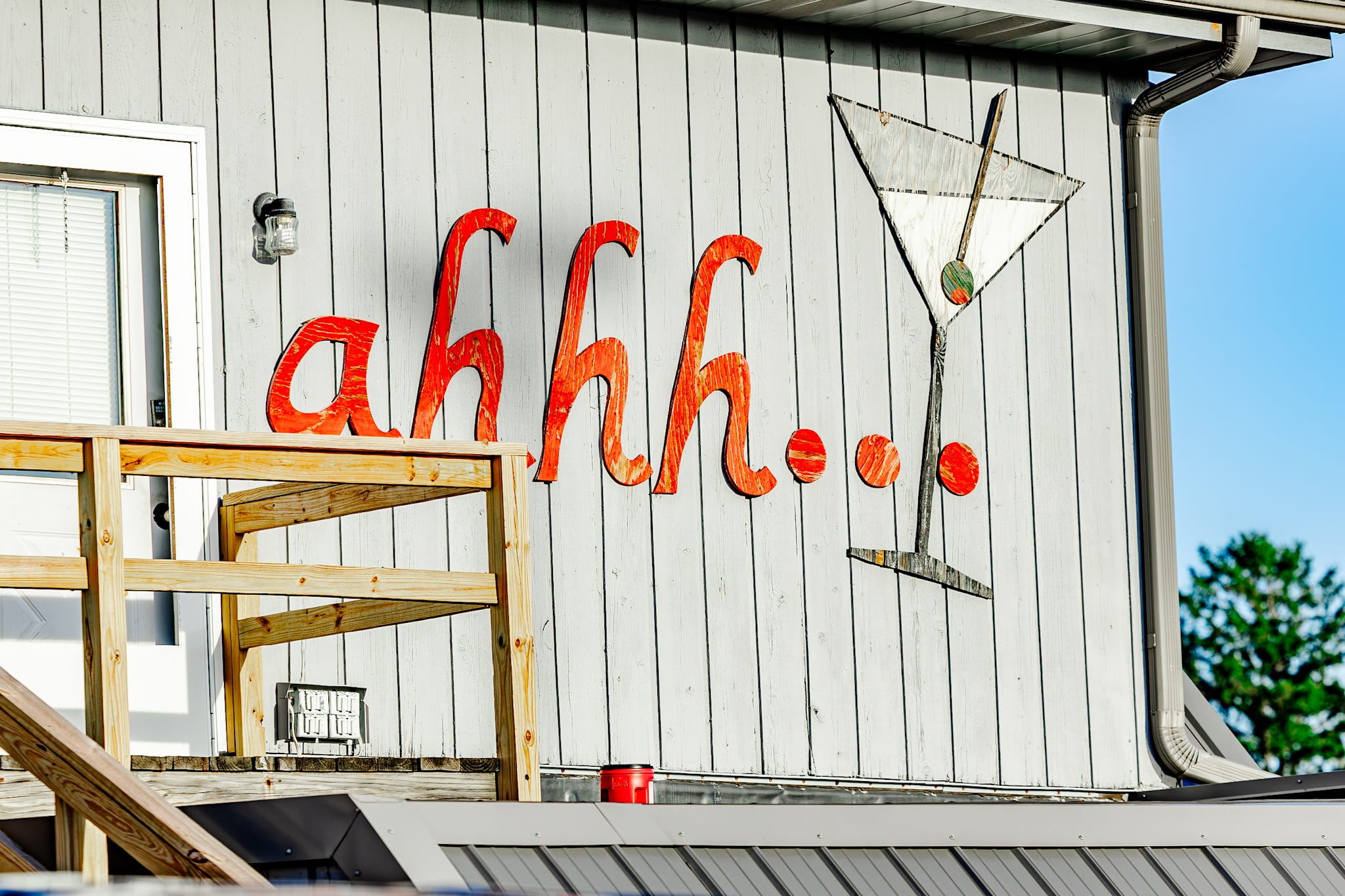
The first Wisconsin stop put us at Peer’s Bar in St. Croix Falls, the kind of neighborhood tavern where the details tell you more than any carefully written “about us” page could. Smoking room. Gambling machines. Darts. A jar of vinegar eggs underneath the beer taps.
Vinegar eggs were foreign territory for me, but Wisconsin had already given me airport exhaustion, Spotted Cow and polka. At that point I was trying to remain culturally flexible.
Mason Peer’s place has the lived-in quality of a bar where regulars do not need to announce themselves. People know one another. Drinks have a tendency to begin appearing before the sentence ordering them is completely finished. The staff watches the room because they know the room.
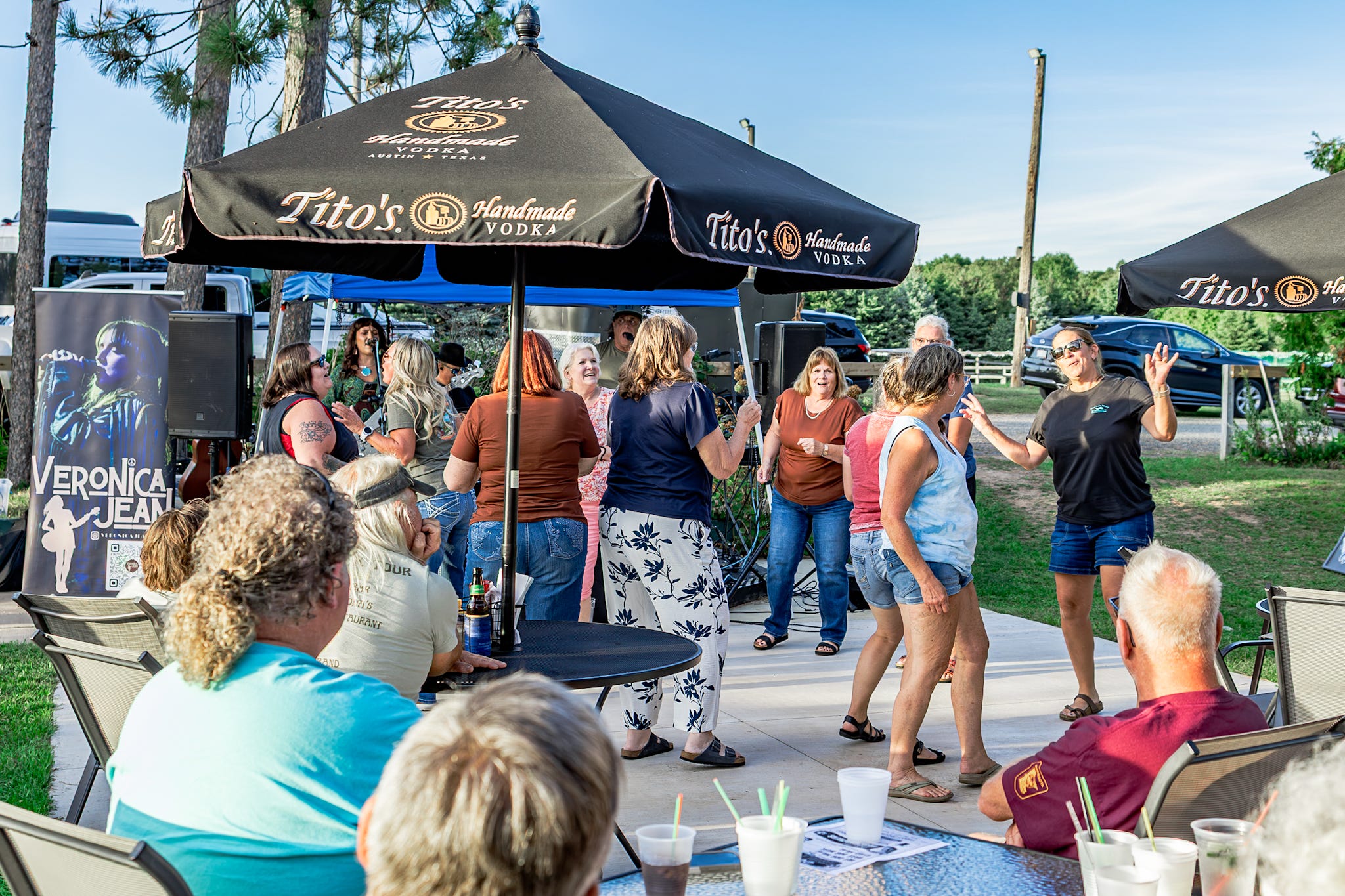
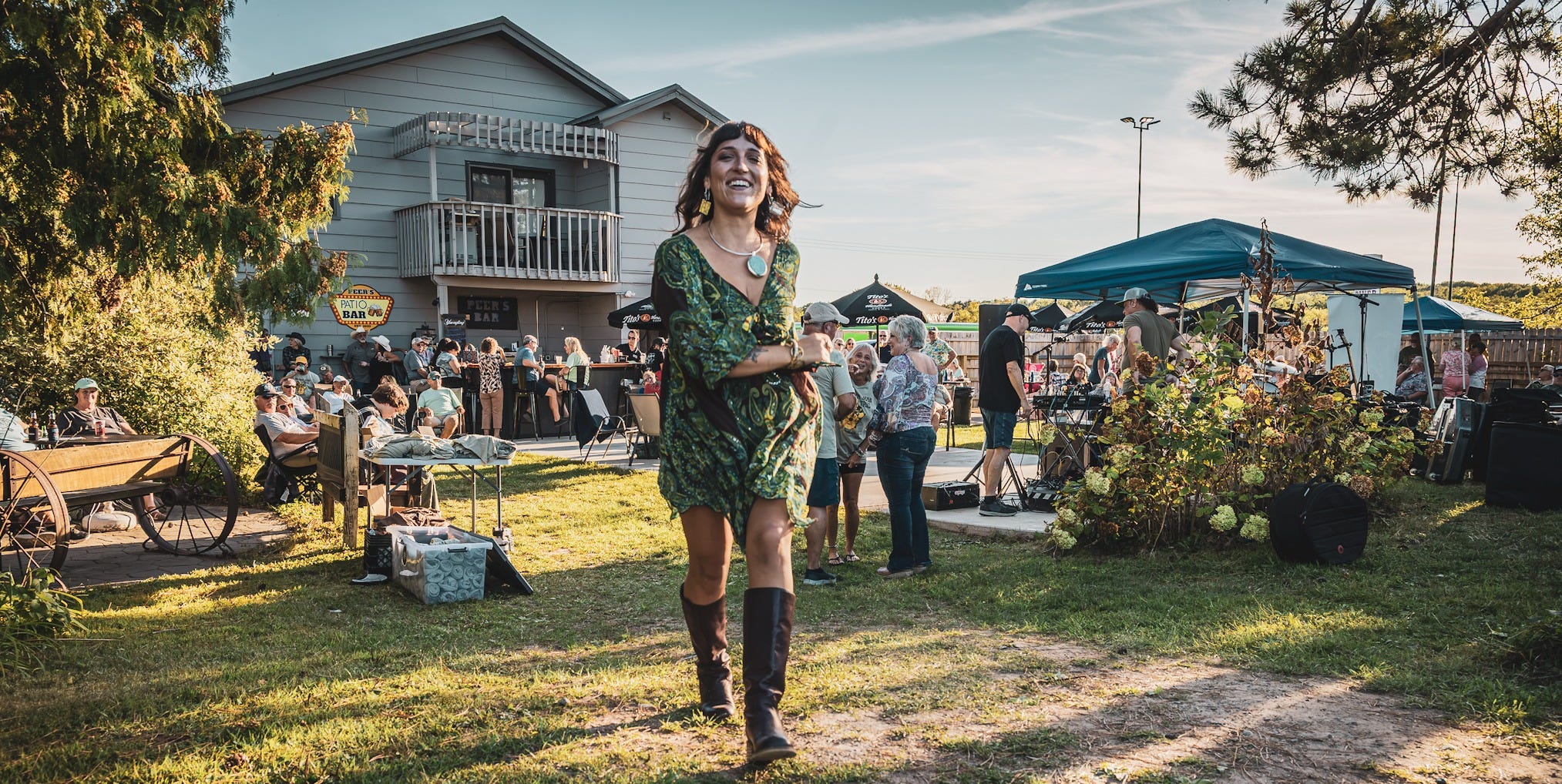
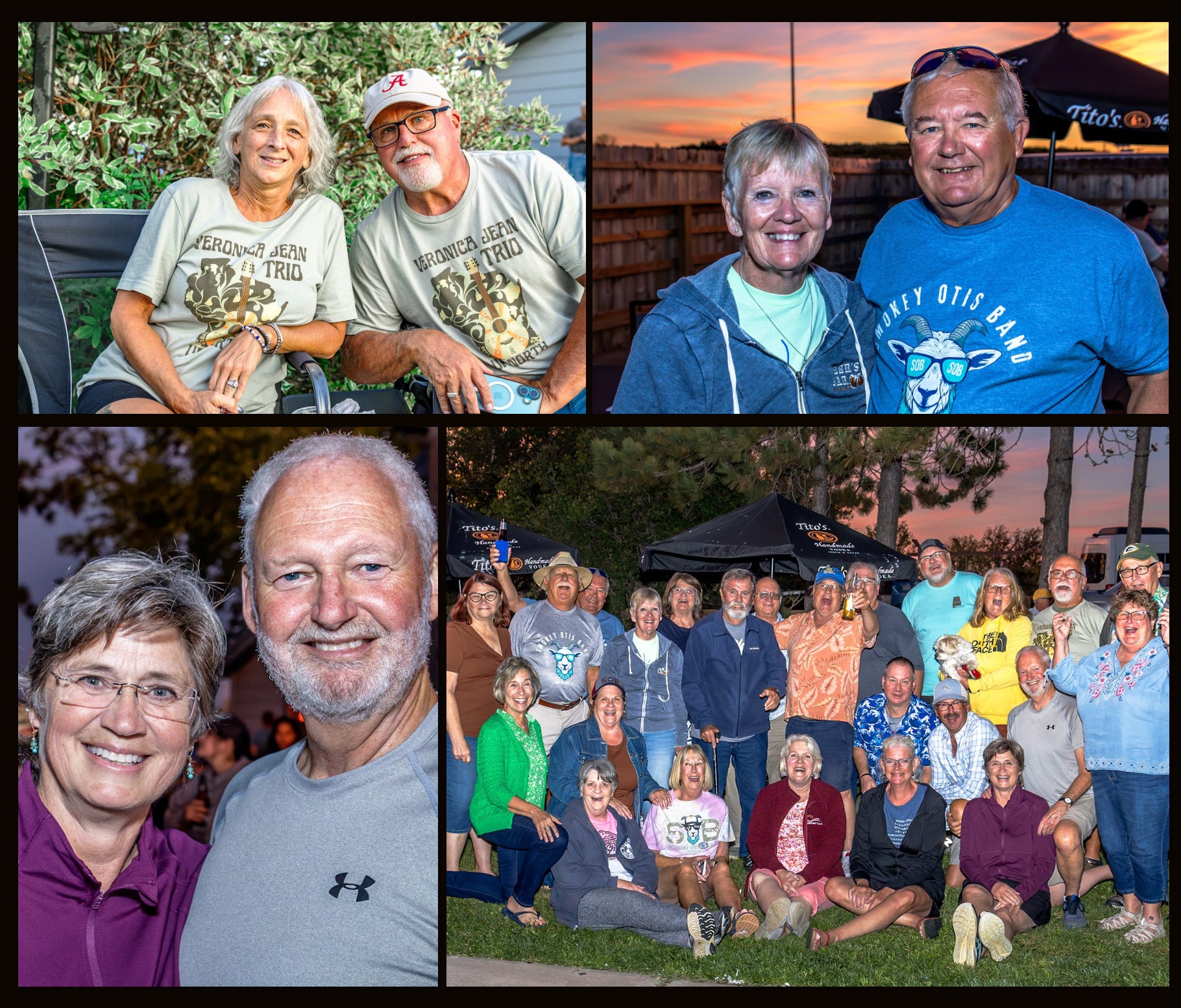
Out back, the patio had been prepared for the trio. Tables were set. The bar was stocked. Every seat disappeared quickly enough that people started arriving with camping chairs. Beneath the Wisconsin pines, the place was filling with people who had crossed paths with this band hundreds of miles south.
That is where something funny happened to the whole snowbird/sandbird joke.
People recognized one another.
These were folks from the North Country who spend part of their year down around Gulf Shores, people who had seen the trio there and were now standing together in Wisconsin waiting to hear them again. The geography had reversed itself, but the relationships had not. For the first few hours of the trip, I had been thinking about snowbirds as a bit. Standing on that patio, they started looking more like old friends.
Sonic Boom
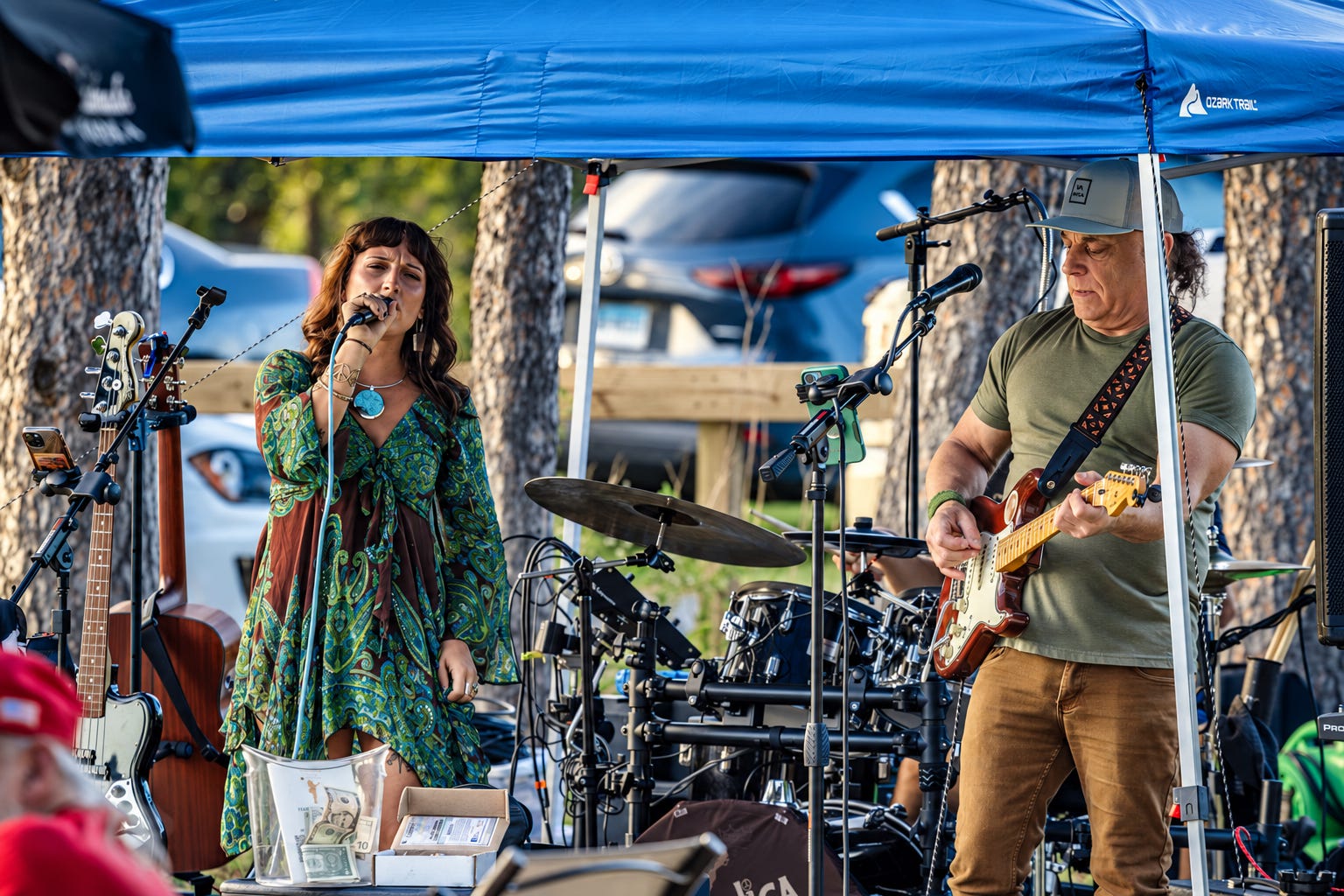
Before the band really got going, a polka version of “Living Next Door to Alice” came through the speakers.
Of course it did.
Spotted Cow was moving steadily across the bar. Camping chairs had become part of the furniture. Conversations overlapped beneath the trees until the trio started pulling everybody’s attention toward the stage.
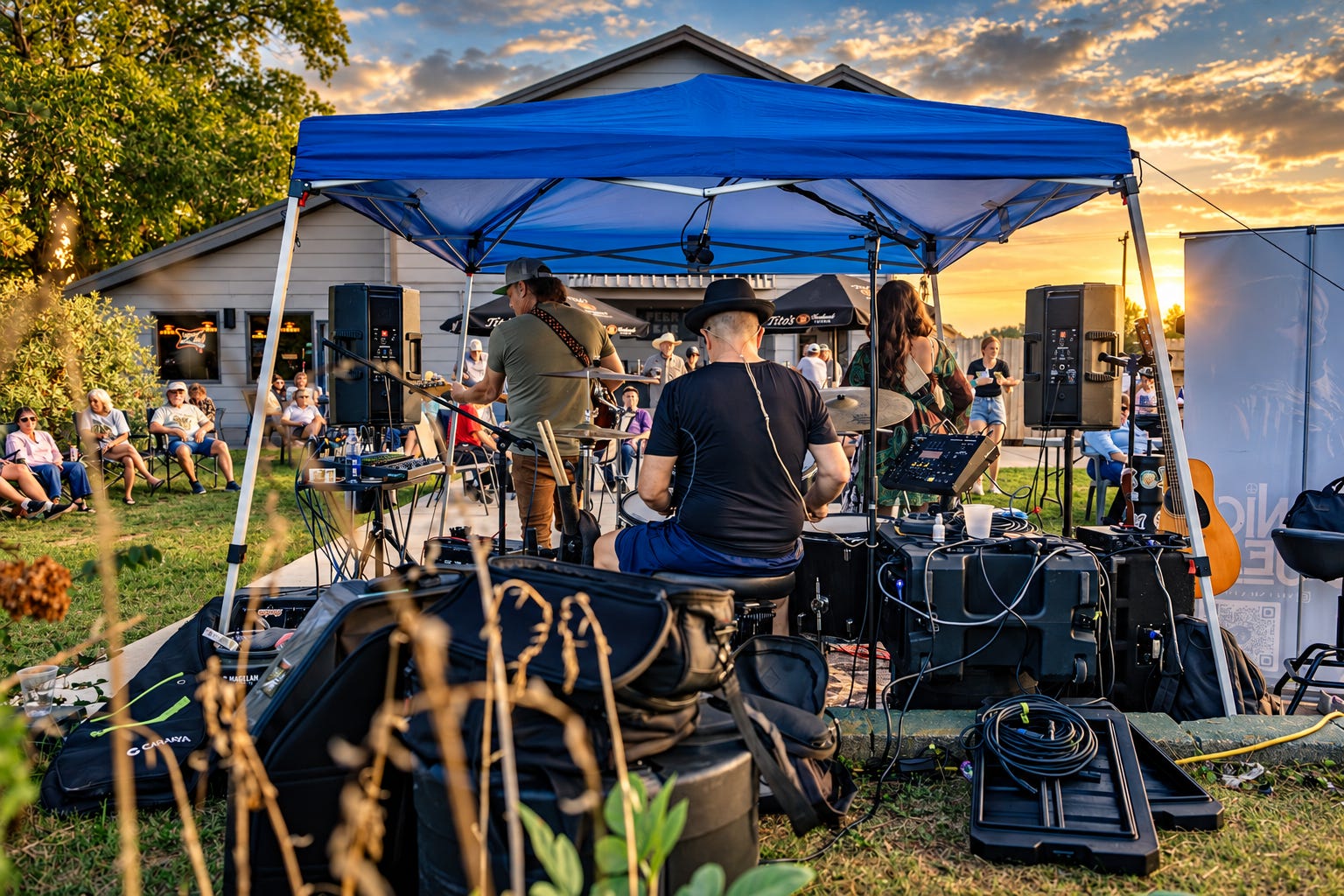
This is where three-piece bands get exposed. There is nowhere to hide a weak rhythm section and nobody standing off to the side ready to fill a hole because somebody else got lazy. Every instrument has to occupy enough space without stomping on the other two.

The Veronica Jean Trio kept the arrangement open enough to breathe while still sounding considerably larger than three people. Smokey took over vocals for “Night Moves”, settling into the Bob Seger song without sanding off its worn-in character. He followed with the Animals’ “We Gotta Get Out of This Place,” which became unintentionally funny because absolutely nobody appeared interested in leaving.
People stayed, and then Andy appeared.
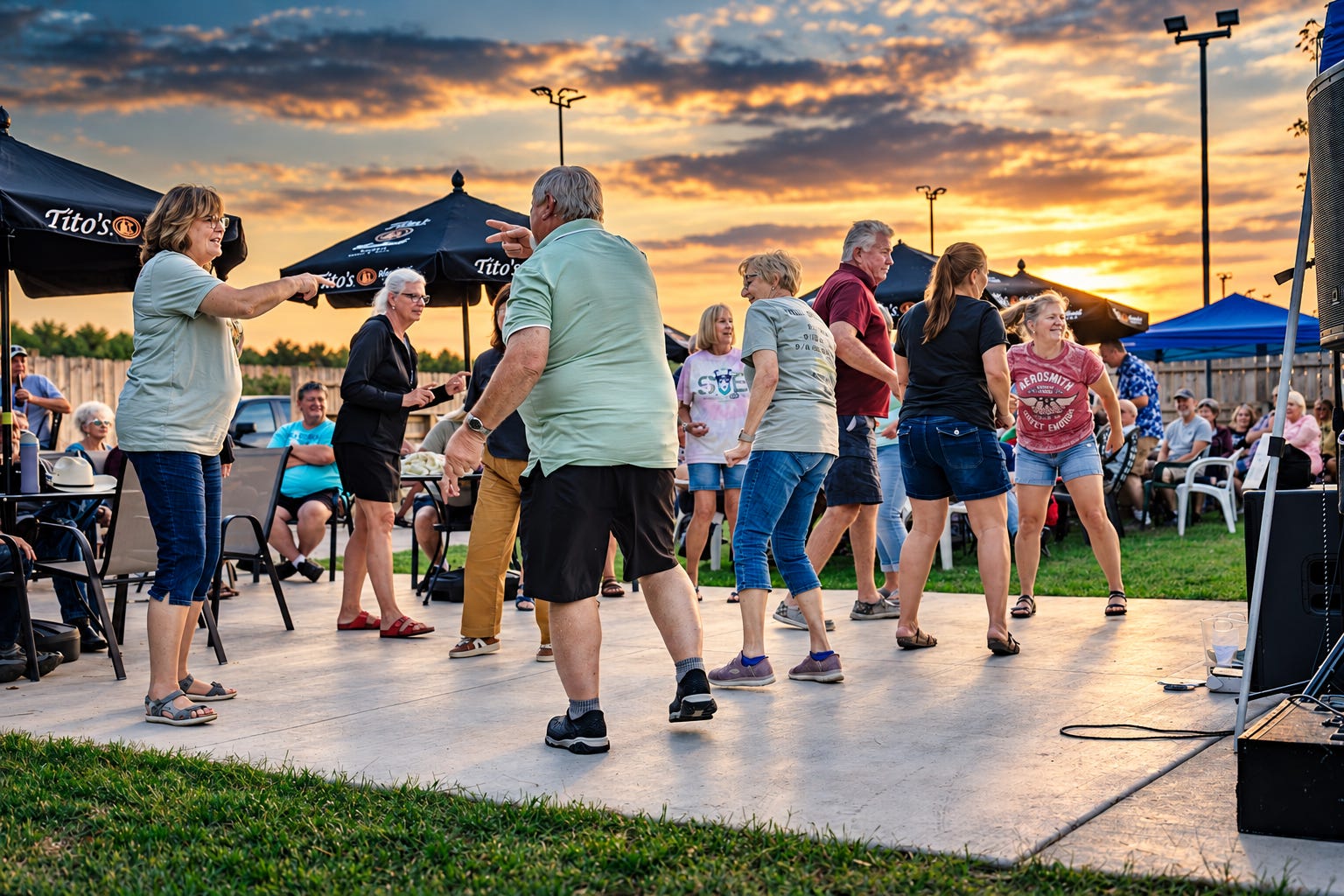
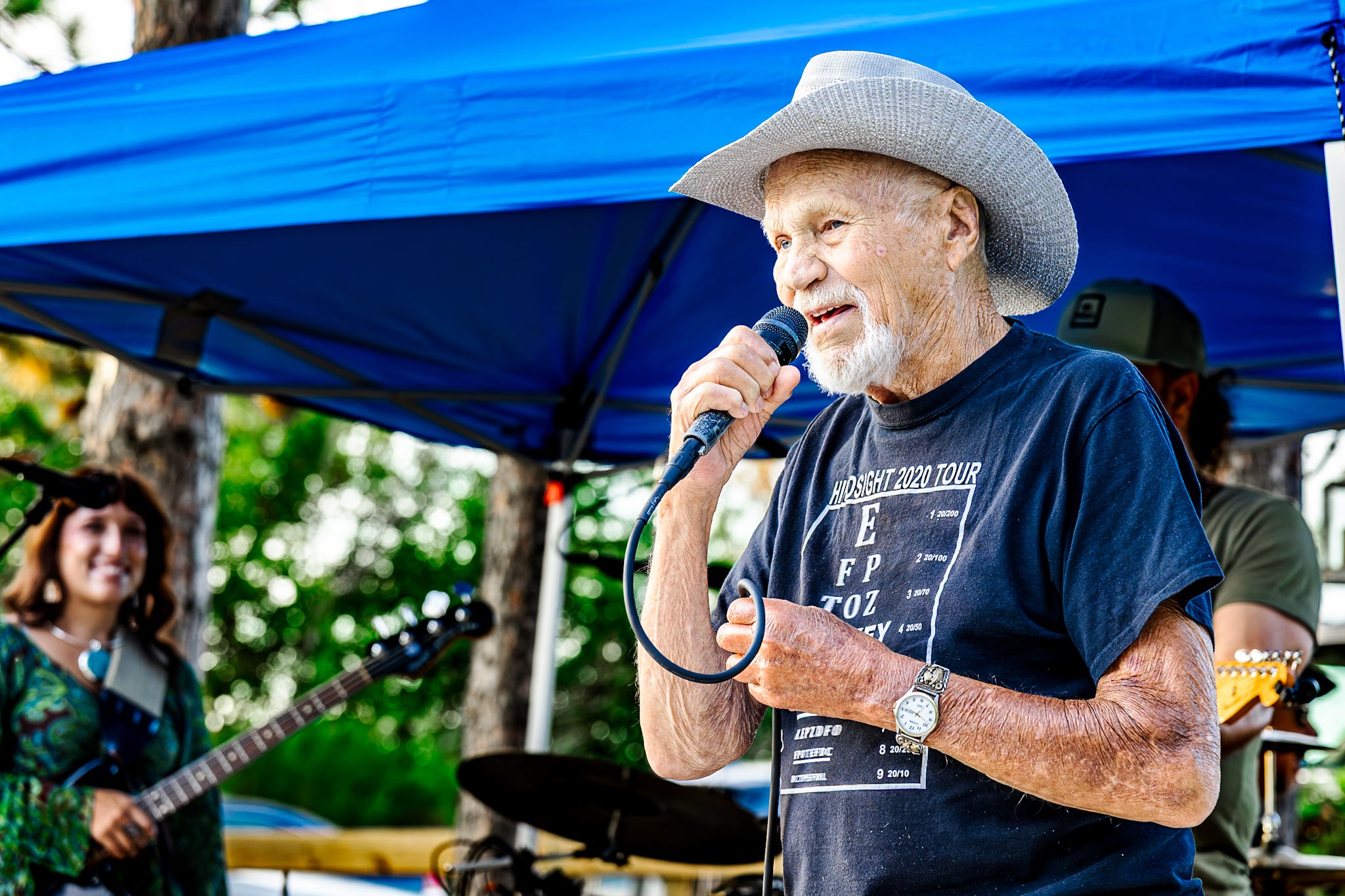
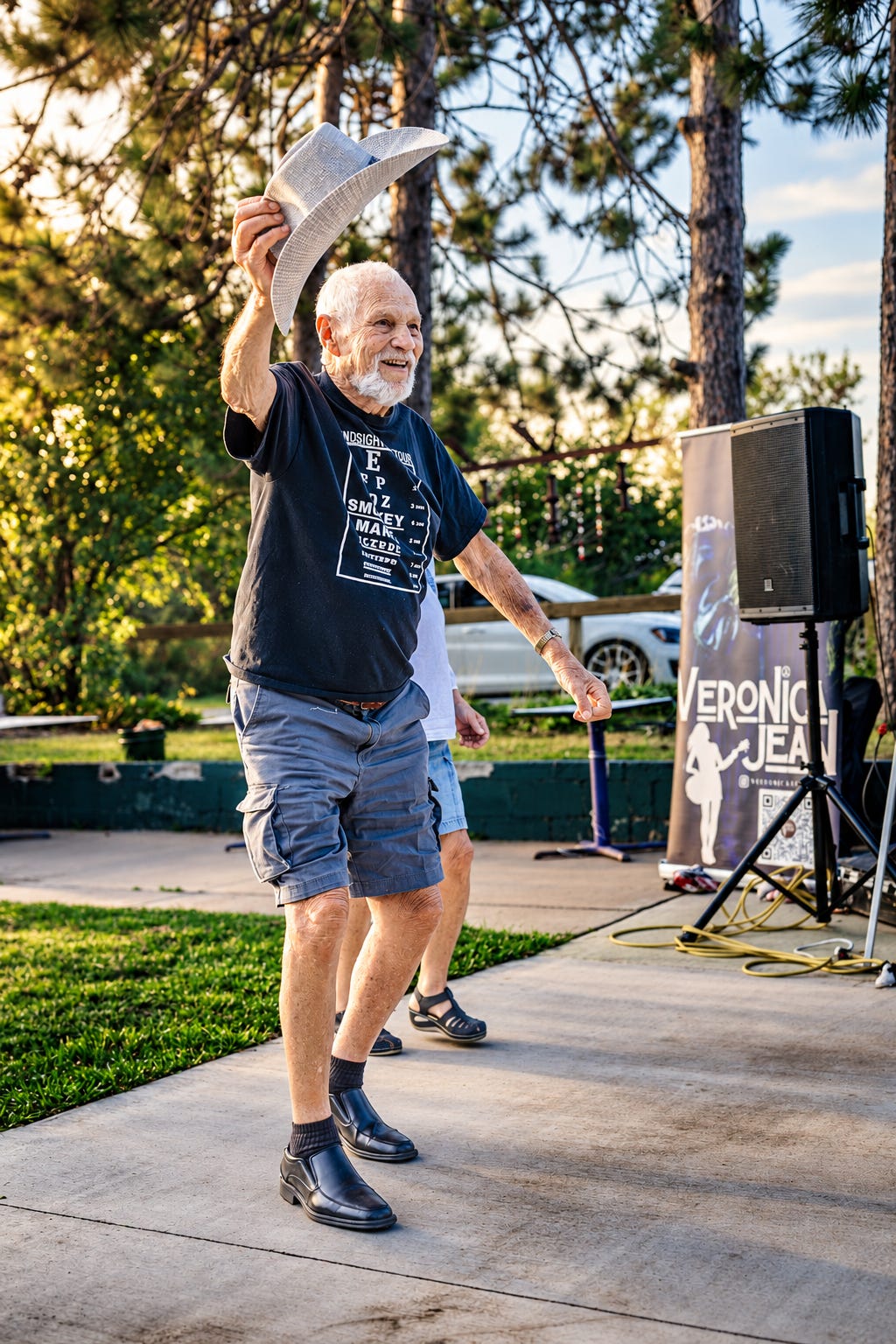
Andy is 95 and has dealt with some health problems, but apparently nobody informed his feet. When the trio landed on “Folsom Prison Blues”, Andy stepped out, raised his cap toward the crowd and started dancing. Not politely swaying. Dancing. Footwork.
At 95.
The patio erupted.
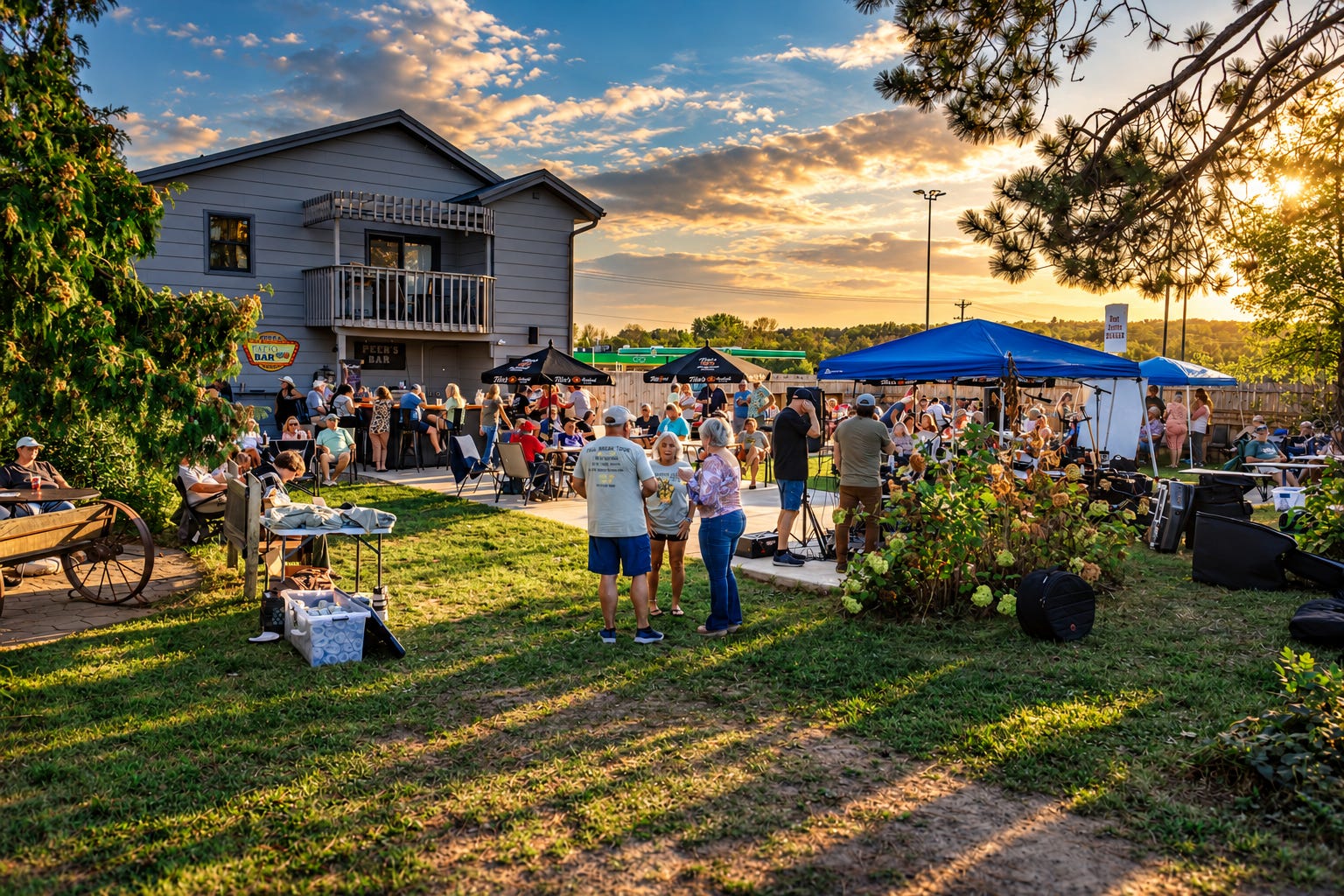
For a few minutes, the concert stopped belonging solely to the three musicians onstage. Everybody was watching Andy. People cheered him on. He kept going. The band gave him room to have his moment without treating him like a novelty act. It was the kind of thing you cannot manufacture into a set: a Johnny Cash song recorded decades ago giving a 95-year-old Wisconsin snowbird a dance floor while three musicians from Coastal Alabama played behind him.
Try putting that into an algorithm.
Veronica’s part of the set showed just how wide her listening habits run. “Edge of Seventeen” gave her somewhere to lean into the harder grain in her voice. “Silver Springs” required something else entirely, less force and more patience, letting the tension sit inside the song instead of chasing a vocal climax. Then came Paramore’s “The Only Exception”, another shift in phrasing and emotional weight.

She also reached toward one of the artists currently shaping her country side with Ella Langley’s “Choosin’ Texas”. Hearing that alongside Stevie Nicks and Paramore explains Veronica better than dropping a genre label on her. Her taste is not organized by decade or radio format. She follows voices, songs and whatever happens to hit her hard enough to want to sing it herself.
Then she threw “99 Red Balloons” into the room. Somewhere along the way, “Dancing Queen” showed up too, and the crowd lost it.
There is a specific difference between an audience enjoying a singer and an audience surrendering to one. By this point, Veronica could move and people moved with her. A shift in her body changed the way the people closest to the stage reacted. When she pushed a chorus, voices rose with her. When she backed off, they leaned closer.
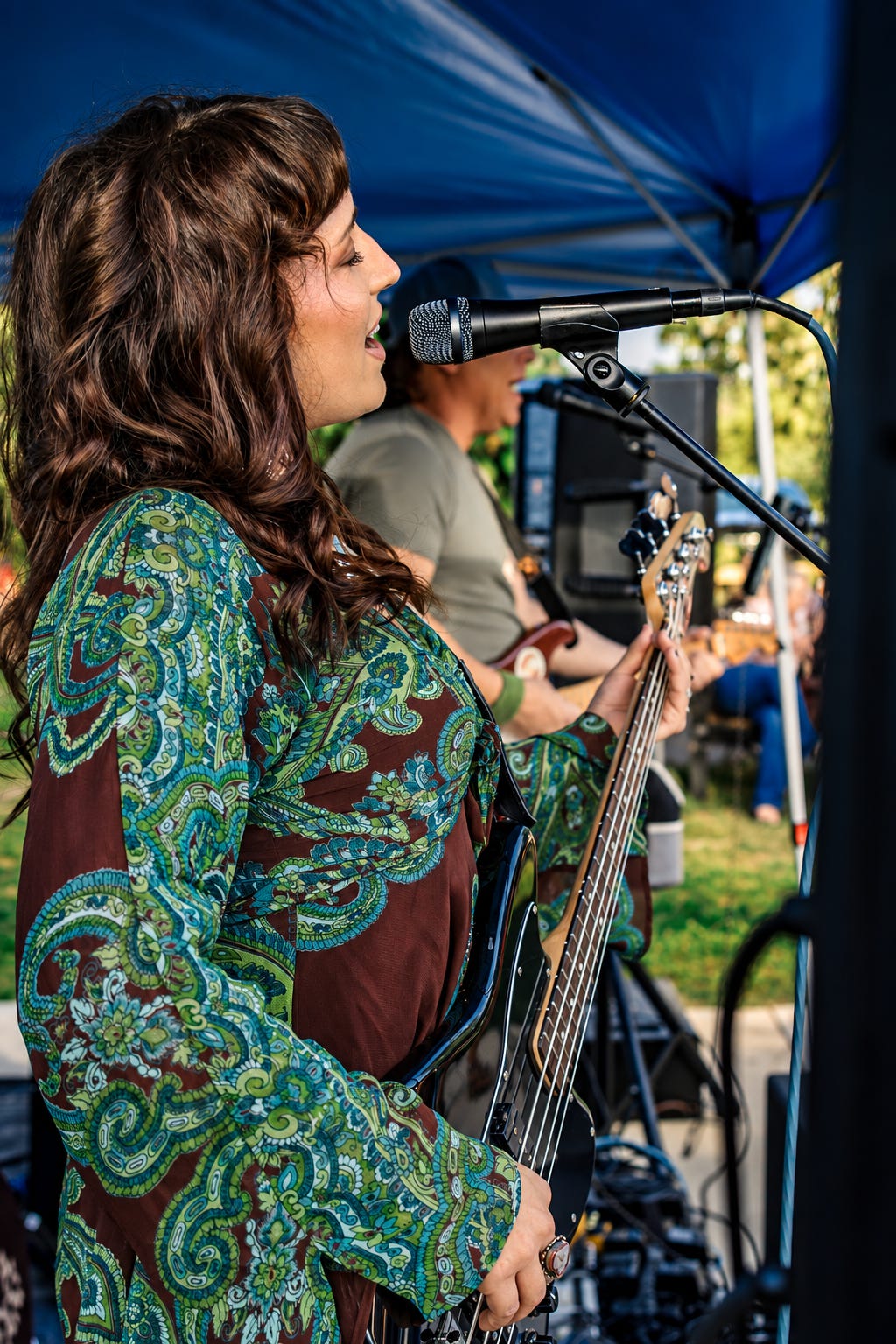
The feedback ran both directions because she was watching them too. The longer the night went, the less the stage felt separated from the people gathered around it. The band responded to the room, the room responded to the band and songs that should have had very little business living beside one another somehow made sense because the musicians playing them understood who they were playing for.
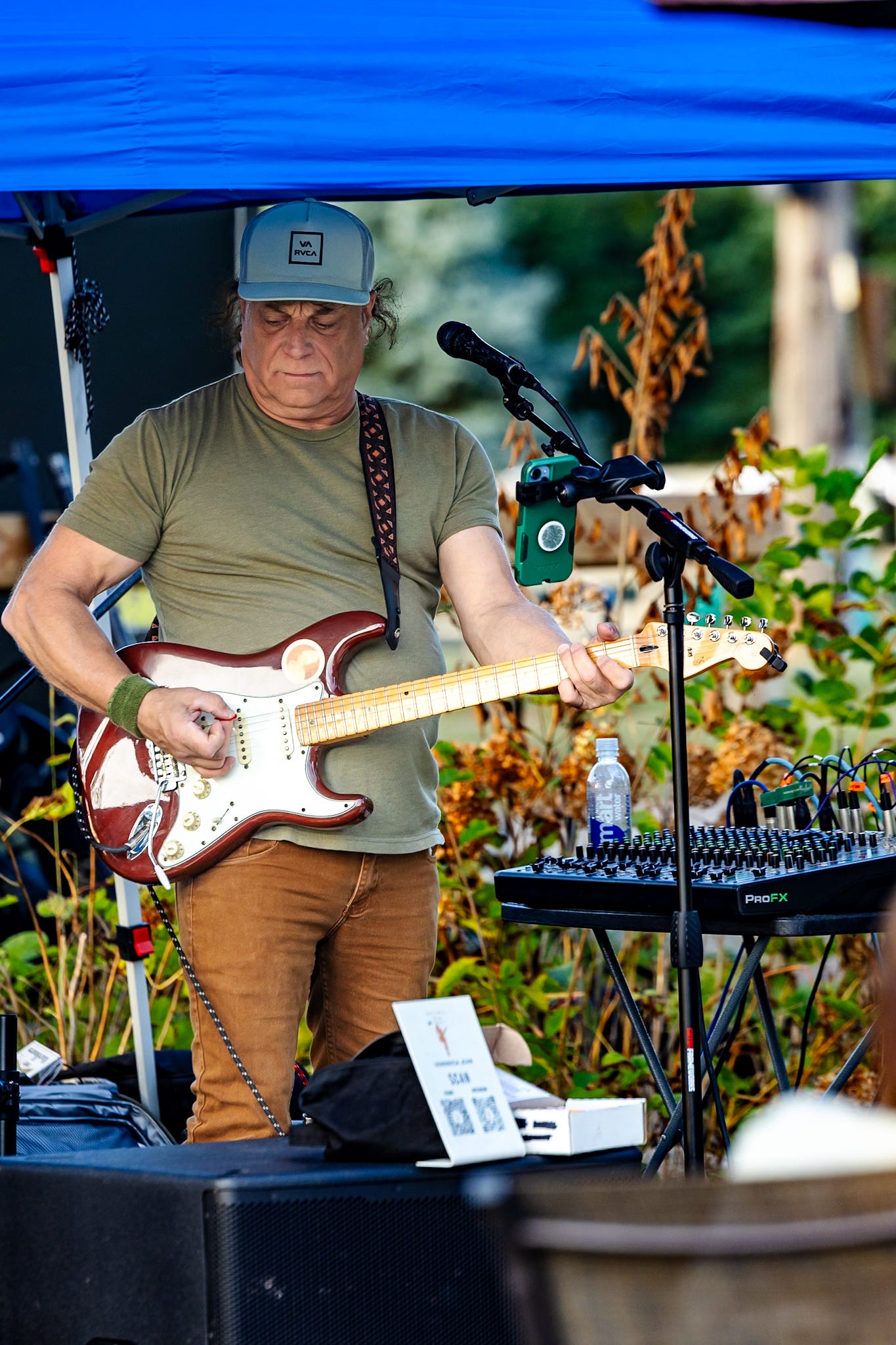
Bob kept all of it locked together rhythmically. A drumstick would turn around his fingers between hits, then drop straight back into the pocket without disturbing the beat. Flash without sacrificing time. His fills arrived when an arrangement needed lifting rather than simply because empty space existed. Smokey kept digging into the guitar, Veronica kept finding another song and nobody seemed particularly concerned with going home.
Afterglow
Back in Gulf Shores, Veronica has spent a long time being introduced through somebody else’s name: Smokey’s daughter. It makes sense. Smokey Otis is one of those musicians who seems to know a thousand songs, has a voice people recognize before they turn around and carries himself onstage with the ease of someone who has spent an enormous portion of his life standing there. Around home, people know him.
That kind of reputation can cast a very long shadow. The beautiful part is that Veronica does not appear to be running from it.
She is growing beside it.
Watching the two of them play together gives you a clearer picture than any explanation could. A father who already knows who he is musically, standing beside a daughter still discovering exactly who she wants to be. Neither one has to shrink for the other to get bigger.
Every time Veronica steps up to the microphone, more of her comes through. The confidence is different. The choices are different. The voice is stronger, yes, but strength is only part of it. She seems increasingly willing to trust the strange combination of things she loves. Stevie Nicks does not need to cancel out Ella Langley. Country does not need to cancel out rock. A singer raised around her father’s enormous catalog does not need to pretend she came from somewhere else just to prove she has an identity of her own.
She can be Smokey’s daughter and Veronica Jean. Those facts are not fighting each other.
Then there is Uncle Bob, who is not technically an uncle by blood and somehow feels completely necessary to the picture anyway. Maybe that is the easiest way to explain this band. Family is not just biology here. It is loading gear together, setting it up again, learning where somebody else is going before they get there and making the same long drives because three people still believe there is another room worth playing.
At Peer’s Bar, that room turned into something smaller and stranger and better. A 95-year-old man danced to Johnny Cash. People who usually travel south to see friends from Alabama got to welcome those friends north instead. The chairs filled, the drinks kept coming and nobody seemed especially interested in checking the time.
For a while, Peer’s Bar was enough.
Maybe I had the snowbirds wrong. You can tease them about the slow driving, stale Budweiser, polka and their apparently supernatural ability to know exactly when happy hour begins, but their defining characteristic might be simpler: once they find something they love, they keep coming back to it.
Bands ought to be so lucky.
Cheers to you, dark-eyed juncos. The Sandbirds are north now, and the freight train is already moving again.
Next stop: Leo & Leona’s in Bangor, Wisconsin, September 12.
YEEEEEEHHHAAAWWWWW!
Please consider Donating to Sponsor an article even $1 helps!
