


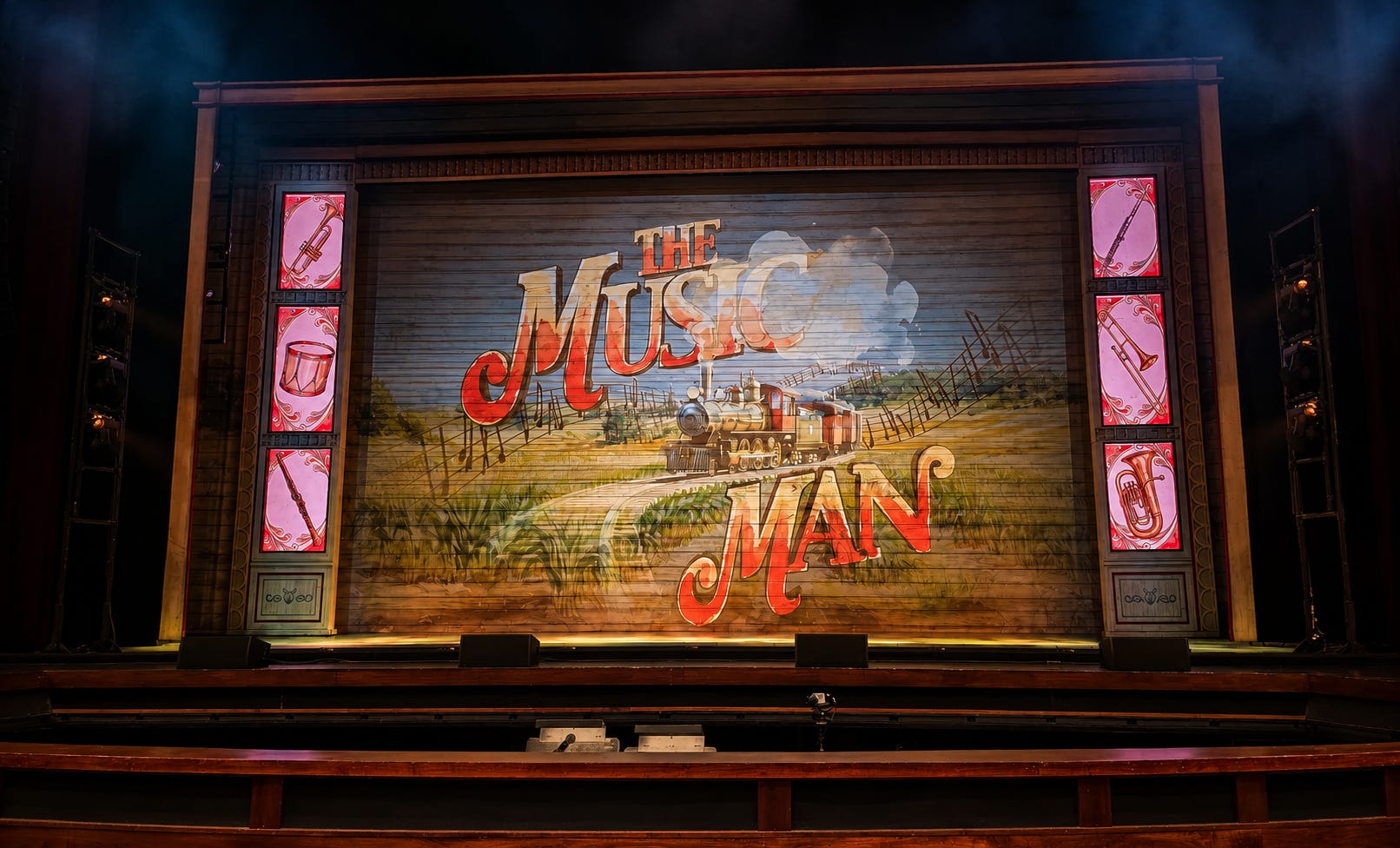

A Season Finale Worth Revisiting
Walking into the Washington Pavilion for the final show of the season felt bittersweet. Before the curtain even rose, the lobby was already buzzing with excitement for what comes next. Instead of the usual merch tables packed with shirts and souvenirs for the current show, the Pavilion had fully shifted into promotion mode for next season’s lineup. And honestly, it worked.
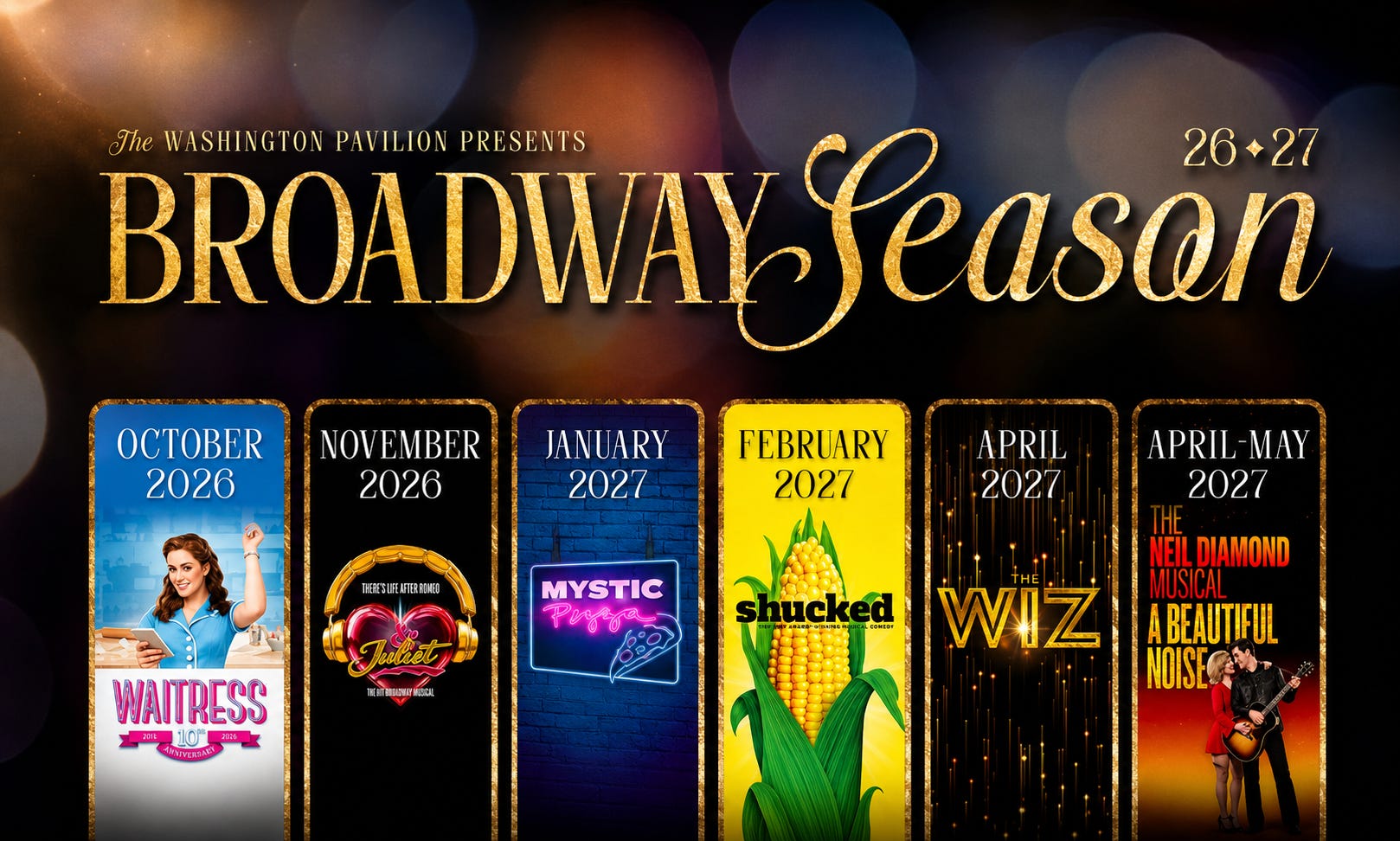
With productions like & Juliet, The Wiz, and the newly announced Shucked on deck, next year already feels overwhelming. Hearing the Pavilion director mention before the show that they were actively trying to add even more productions only added to the anticipation. It is hard not to get excited when a season already looks this loaded before it has even begun.
But before looking ahead, there was still one more classic left to experience.
A Musical That Has Refused to Fade Away
The Music Man premiered in 1957, yet somehow still feels timeless. The humor still lands, the choreography still dazzles, and the songs remain instantly recognizable generations later. Numbers like “Ya Got Trouble,” “Pick-a-Little, Talk-a-Little,” and “Till There Was You” are woven into musical theater history for a reason.
Inspired by Mason City, hometown of Meredith Willson, the story follows charismatic con man Harold Hill as he attempts to swindle the citizens of River City while unexpectedly finding himself challenged by Marian Paroo, the town librarian. At its core, the musical is really about transformation. Harold slowly learns sincerity while Marian learns to let her guard down, and the entire town changes alongside them.
Even nearly seventy years later, those themes still resonate.
The Return of the Physical Playbill
One of the first things that caught my attention while walking to my seat was the return of something that feels increasingly rare in live theater: an actual printed playbill. There is still something satisfying about flipping through cast lists, reading production notes, and seeing the artistry laid out in your hands rather than on a phone screen.
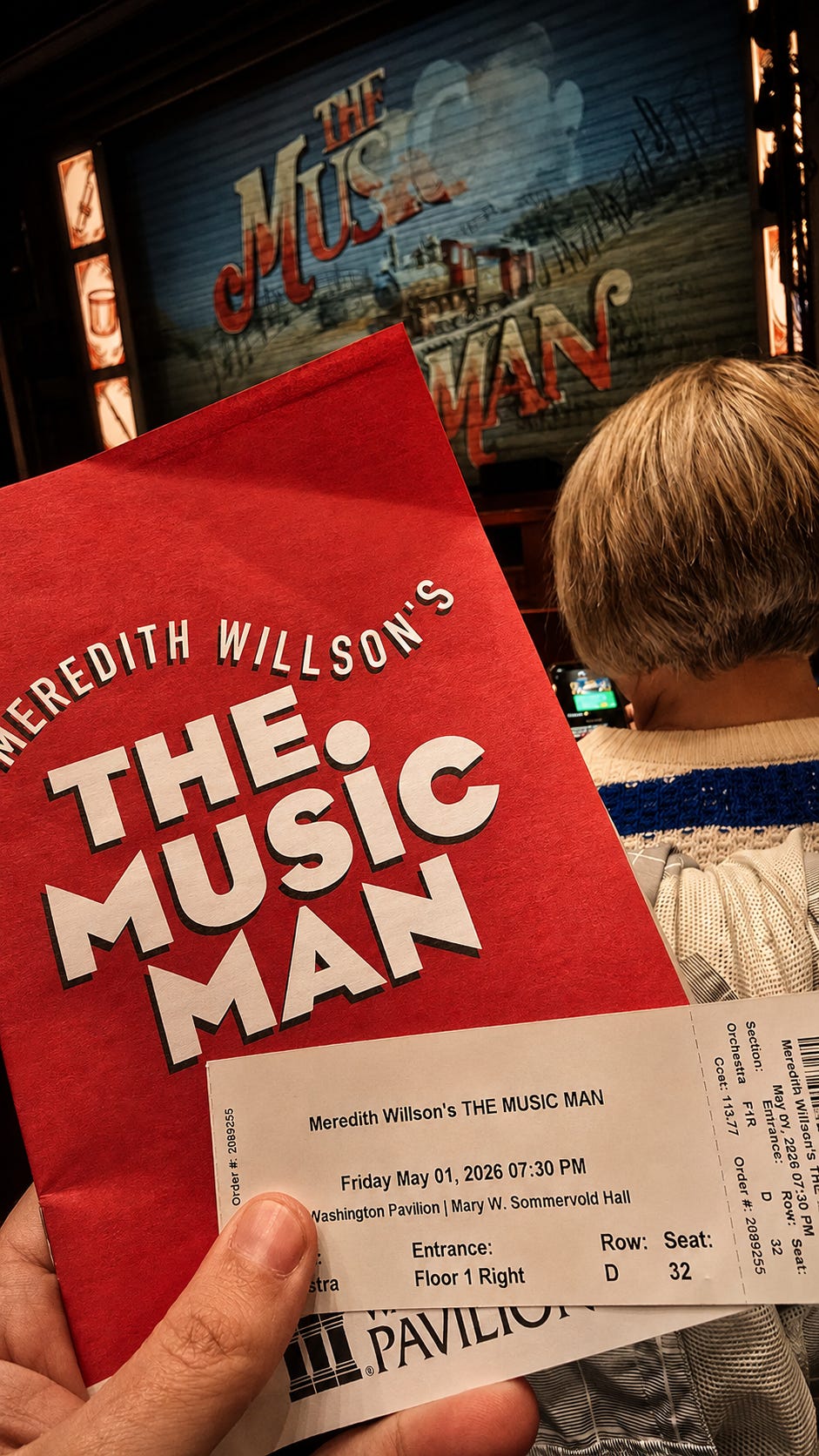
Ironically, venues will claim physical programs are too expensive or outdated while simultaneously printing thousands of promotional flyers to tape onto seats for subscription perks. That contradiction will probably never make sense to me.
Still, having that playbill paid off immediately because it revealed one fascinating detail about this touring production: 18 national tour debuts out of 35 cast members.
That statistic felt both exciting and slightly nerve-racking. Touring productions demand precision, stamina, and consistency. Could that many newcomers handle the pressure?
Spoiler alert. They could.
A Cast Overflowing With Talent
From top to bottom, this cast was outstanding. In fact, there were moments where the ensemble was so energetic and polished that it became difficult deciding where to focus my attention. Every corner of the stage felt alive.
The dance ensemble deserves particular praise. Whether in full company musical numbers or background transitions, the choreography never felt secondary. Every movement contributed to the energy of River City, making the town itself feel vibrant and constantly in motion.
And remarkably, none of the first time national tour performers looked nervous. If anything, they performed with the hunger and excitement you hope to see from artists stepping onto a larger stage for the first time.
Supporting Characters That Stole Scenes
Some of the biggest surprises of the night came from the supporting cast.
Dylan Patterson brought genuine heart to Winthrop, a role famously originated onscreen by Ron Howard. His performance balanced vulnerability and charm perfectly, making Winthrop feel more emotionally central to the story than audiences sometimes remember.
Meanwhile, Paul Urriola as Marcellus Washburn delivered exactly the kind of comedic energy the role demands. Originally portrayed by Buddy Hackett, Marcellus serves as Harold Hill’s chaotic counterpart, and Urriola leaned fully into the humor without ever making the character feel cartoonish.
Every time he stepped onstage, the energy noticeably lifted.

The Perfect Comedy Duo
Another major highlight came from River City’s leading couple: Mayor and Mrs. Shinn.
Patrick Blashill played Mayor Shinn with a perfect blend of puffed up authority and complete incompetence, while Emmanuelle Zeesman absolutely thrived as Eulalie Shinn. Her dramatic antics and exaggerated social ambitions created some of the funniest moments in the entire production.
Together, they operated like a beautifully dysfunctional comedy routine. Their constant back and forth added levity exactly when the story needed it, and the audience responded every single time they appeared.
Marian Paroo’s Powerful Presence
Then came Elizabeth D’Aiuto as Marian Paroo.
Originally portrayed by Shirley Jones, Marian requires a performer capable of balancing elegance, skepticism, emotional depth, and vocal excellence all at once. D’Aiuto handled every piece of that challenge effortlessly.
Vocally, she was stunning. There were moments throughout the show where her delivery leaned so powerfully into classical technique that it nearly felt operatic. Yet she never lost the warmth necessary for Marian’s softer emotional moments.
Her scenes with Harold Hill carried genuine chemistry, making their gradual emotional shift believable rather than rushed.
A Harold Hill Worthy of the Legacy
Of course, everything ultimately revolves around Harold Hill, and Elliot Andrews absolutely delivered.
The role, immortalized by Robert Preston in the film adaptation, demands near impossible levels of timing and stamina. Harold Hill talks fast, moves constantly, commands attention in every room, and somehow still needs to remain likable despite being a con artist.
Andrews handled all of it masterfully.
What impressed me most was his pacing. His rapid fire delivery during songs like “Ya Got Trouble” remained incredibly sharp and understandable while he simultaneously moved through complex choreography. Watching that level of breath control and stage command live was honestly incredible.
On top of that, he simply looked the part. From mannerisms to charisma, he fully embodied Harold Hill in a way that never felt like imitation, but still honored the character audiences know so well.
Why The Music Man Still Matters
By the end of the night, I realized something surprising. I had forgotten just how much I love this musical.
Seeing The Music Man live renewed my appreciation for why it has endured for decades as one of the most beloved and continually produced Broadway classics. Beneath all the comedy, choreography, and catchy songs is a story about community, vulnerability, and the possibility of change.
That combination still works.
And when performed by a cast this talented, it works exceptionally well.
If you ever get the chance to see this musical live, take it. Some classics survive because of nostalgia. Others survive because they are genuinely timeless. The Music Man absolutely belongs in the second category.
