


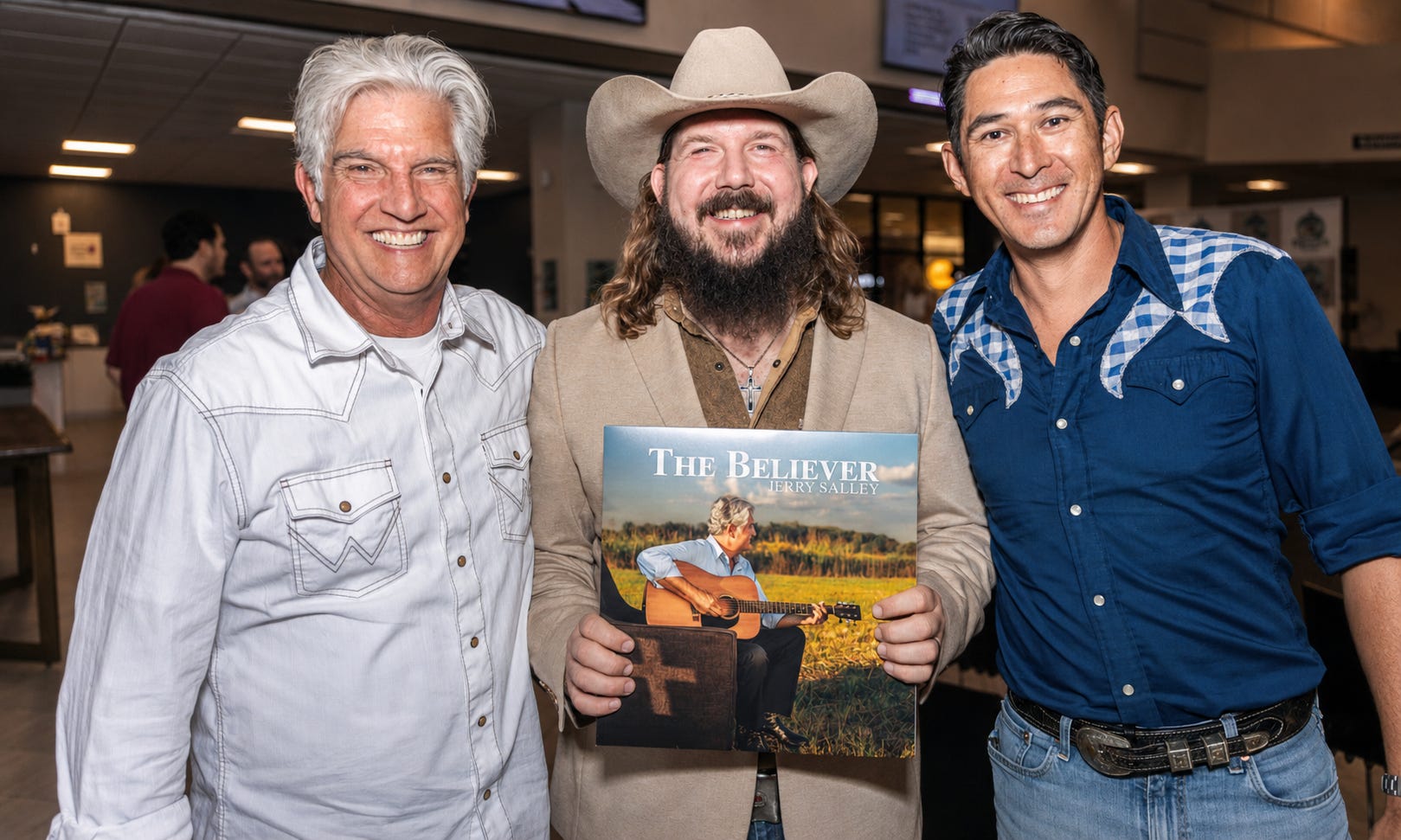

Note from the editors: We are excited to welcome Molly of Molly Ravenscraft Photography to the team! Thanks for taking the time to read her first article with us!
When I Sing My Last Song
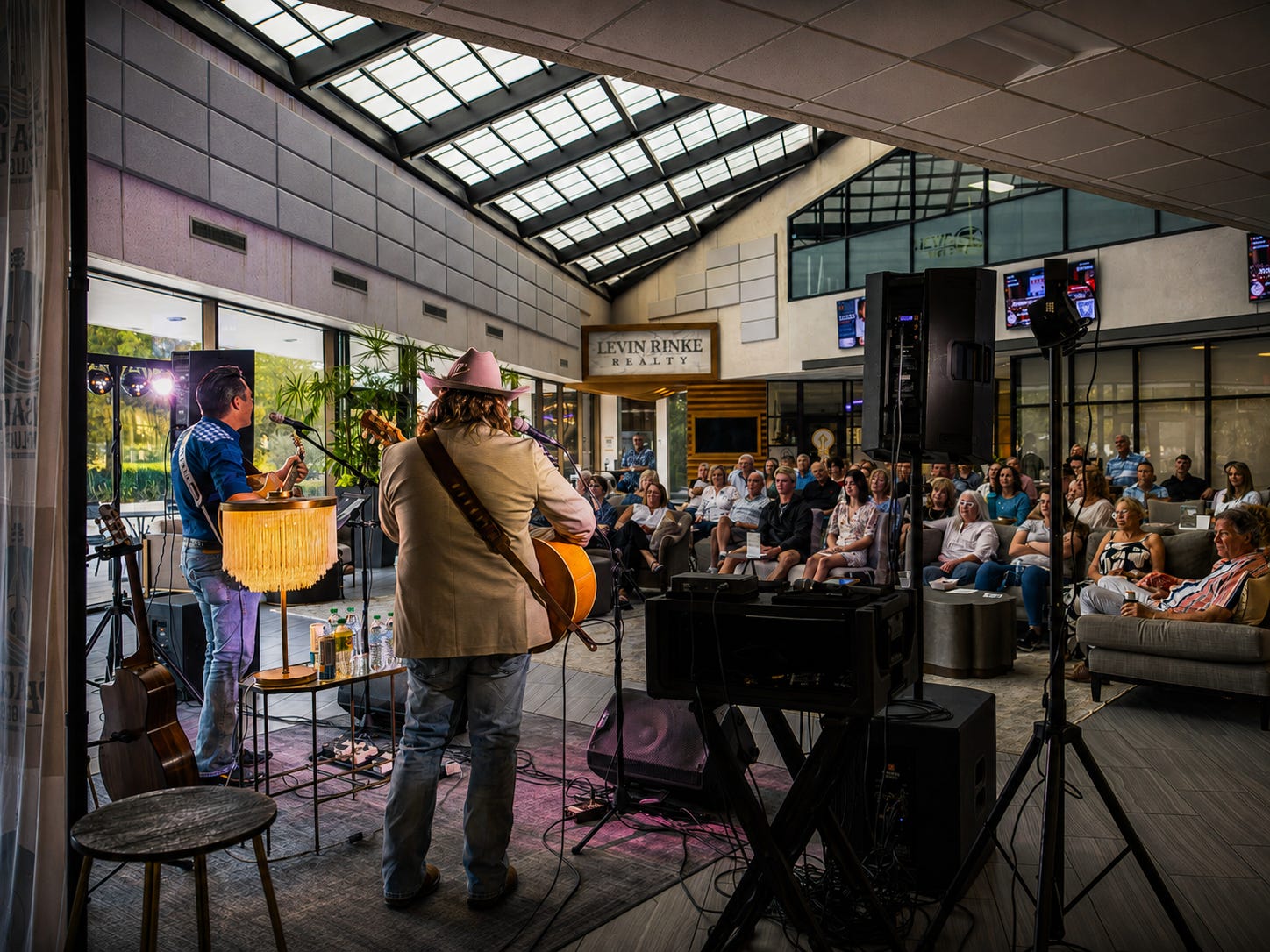
It’s easy for me as a photographer to get so lost in the music that I forget to hit the shutter button. Ha! If I may, let me take you back to Saturday night, August 1, at Pensacola Unplugged, and you’ll see why.
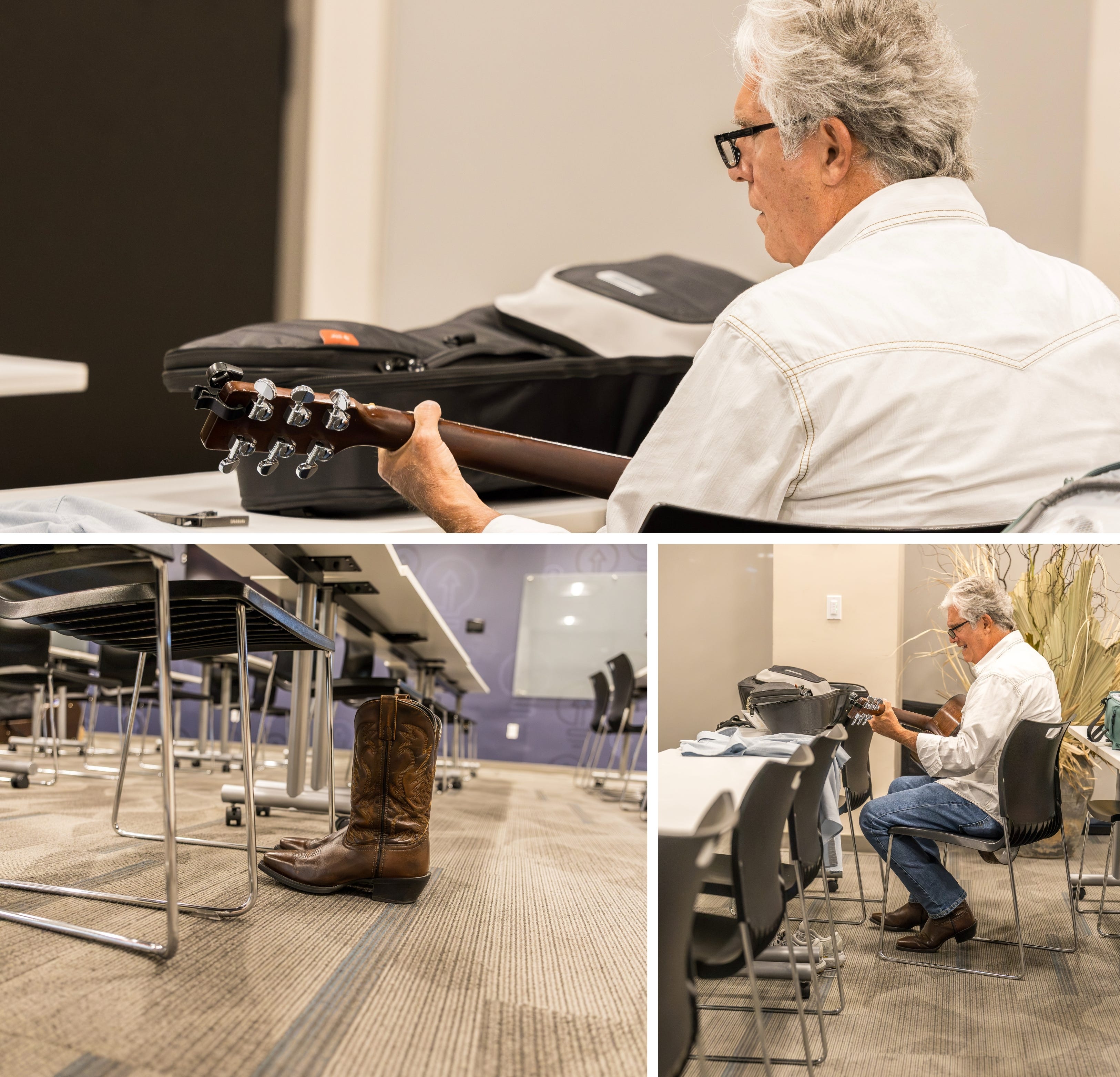
A songwriter night begins long before the first chord. It starts in the green room as artists prepare, in the easy camaraderie between performers and fans and in the rare accessibility that allows everyone to connect before the show. Once the music begins, the setting invites you to completely immerse yourself as artists share the stories behind songs that have transformed our lives—or as someone you have never heard before sings the song you never knew would hit you right in your feels.
Learning who inspired a lyric, what happened while it was being written or why a songwriter nearly abandoned it can change the way the next three minutes sound.
Please consider Donating to Sponsor an article even $1 helps!

A Room Made For Stories
Pensacola Unplugged offers the listening-room experience inside the atrium of the Studer Community Institute in the heart of downtown Pensacola. Founded by three songwriters—Devan Dunlap, Rachel “Goldie” Lahr and Jessie Ritter—the series was created to bring artists and listeners close enough for the stories to remain part of the music.
August 1 marked the third of four Pensacola Unplugged showcases scheduled for 2026. The lineup featured Zachary Thomas Diedrich, Kevin Swanson and Jerry Salley, three writers with distinctly different catalogs but the same willingness to let an audience see the people behind the songs.
Finally Learning to Fly
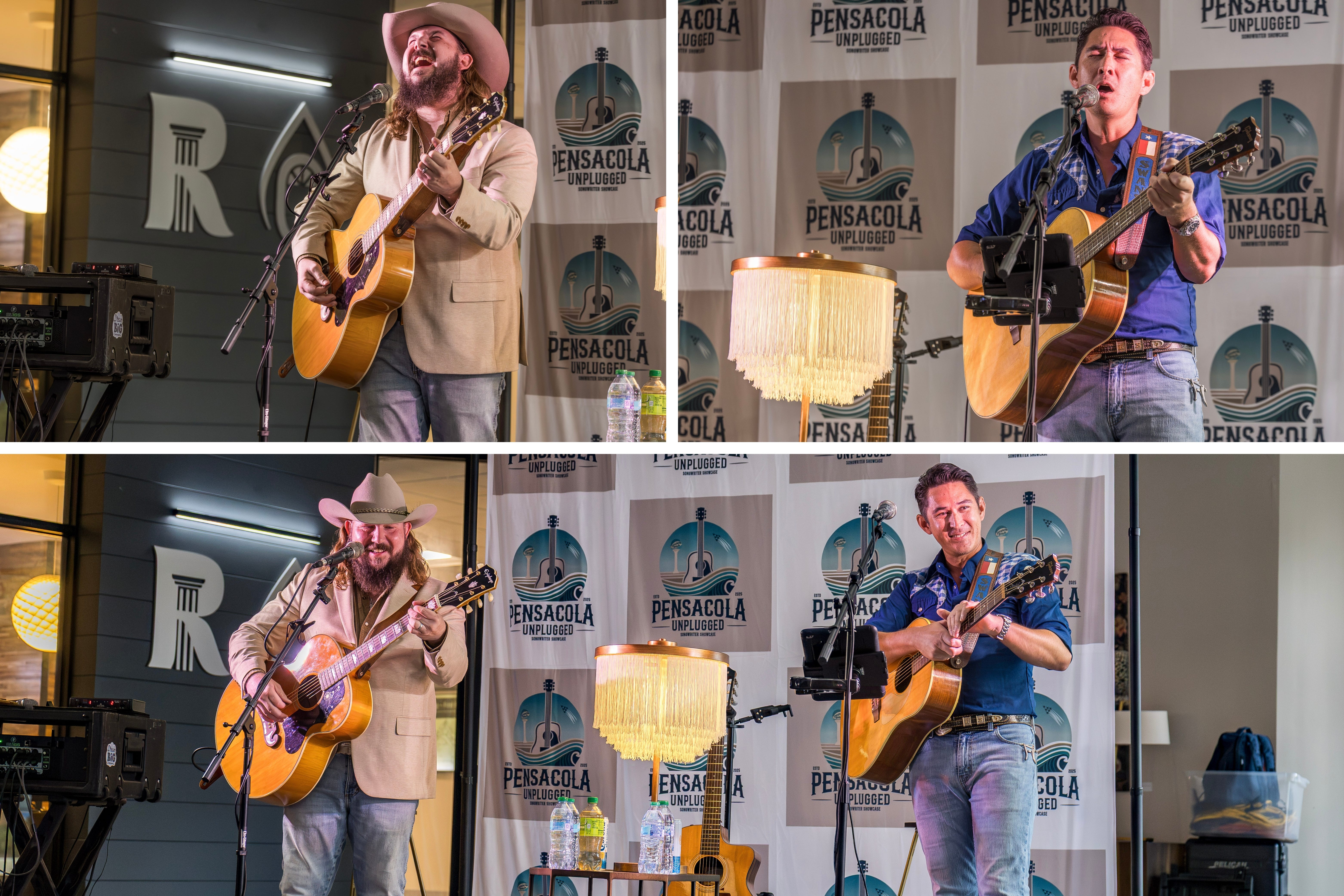
Diedrich and Swanson opened the night by alternating two songs each. Close friends, they played off one another while exchanging songs and stories about imposter syndrome, life, love, heartbreak, too many Bushwackers and perhaps the questionable wisdom of writing a song while driving.
Two songs stayed with me.
Kevin Swanson’s “Finally Learning to Fly” is a love song about commitment, emotional safety and the freedom to be completely yourself with the person you love. He dedicated it to his best friend, who was getting married. What kept it from becoming another generic wedding song was its focus on acceptance—not finding someone who completes you, but finding someone who makes it safe to remain fully yourself.
Diedrich’s “The Neverends” arrived July 14 and was dedicated to his mother. He began crafting it during the dark months of 2020 and finished it after Hurricane Sally. The song does not pretend grief disappears. It acknowledges the days when pain feels permanent, then offers the reminder that no matter how endless those days may seem, everything can still be okay.
Placed beside one another, the two songs showed different faces of hope: one looking toward a marriage and the life ahead, the other finding a way to keep moving through loss. Neither treated hope like an easy answer. Both made it sound earned.
Three Chords and The Lord
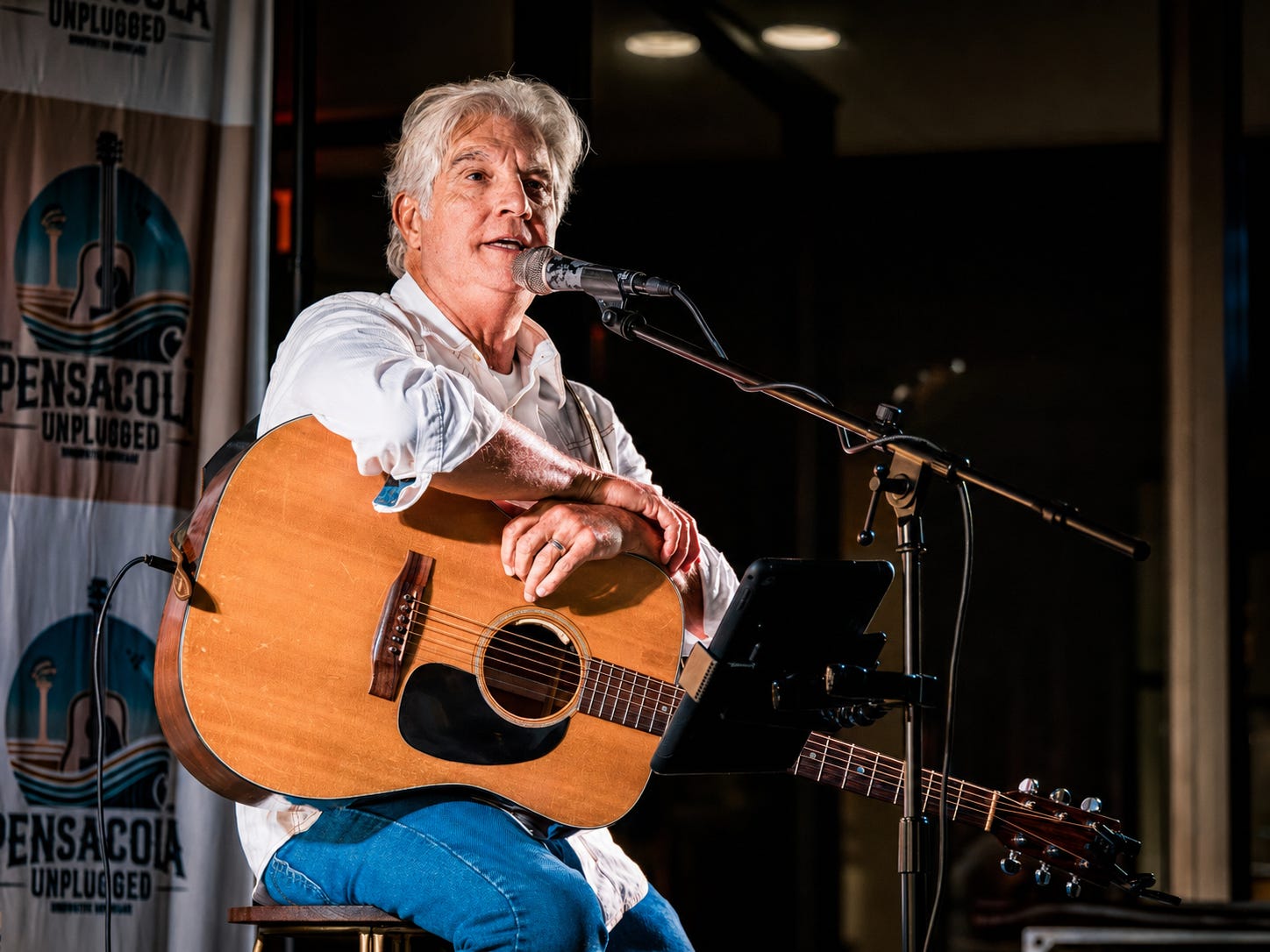
Up next to close the night was Jerry Salley, whose songs have been recorded by some of the biggest names in music, including Chris Stapleton, Reba McEntire, The Oak Ridge Boys, Brad Paisley, Loretta Lynn, Toby Keith, Sara Evans, Travis Tritt and John Anderson.
Among Salley’s recent high-profile credits is “It Takes a Woman”, which he co-wrote with Stapleton and Ronnie Bowman for Stapleton’s 2023 album, Higher. Salley’s songwriting and production career has also brought Grammy and Dove Award recognition. He received a 2020 Grammy nomination as producer of Gonna Sing, Gonna Shout, then produced and performed on Dolly Parton’s award-winning recording of “In the Sweet By and By.”
That résumé could have dominated the evening. Instead, it remained context. The songs and the people inside them stayed at the center.
Salley’s round moved through laughter, tears and deep reflection. We heard the stories behind songs including John Anderson’s “I Fell in the Water”, Reba McEntire’s “I’m Gonna Take That Mountain” and Stapleton’s “It Takes a Woman.” He also reached into his own catalog for “BYOB,” “God and a Dog” and “Three Chords and the Lord” from his newly released album, The Believer.
The titles can sound playful on paper, but the set never stayed in one emotional register for long. Humor, faith, mortality and family all belonged in the same round without one diminishing another. It felt like exactly what I needed.
Five O’clock Shadow
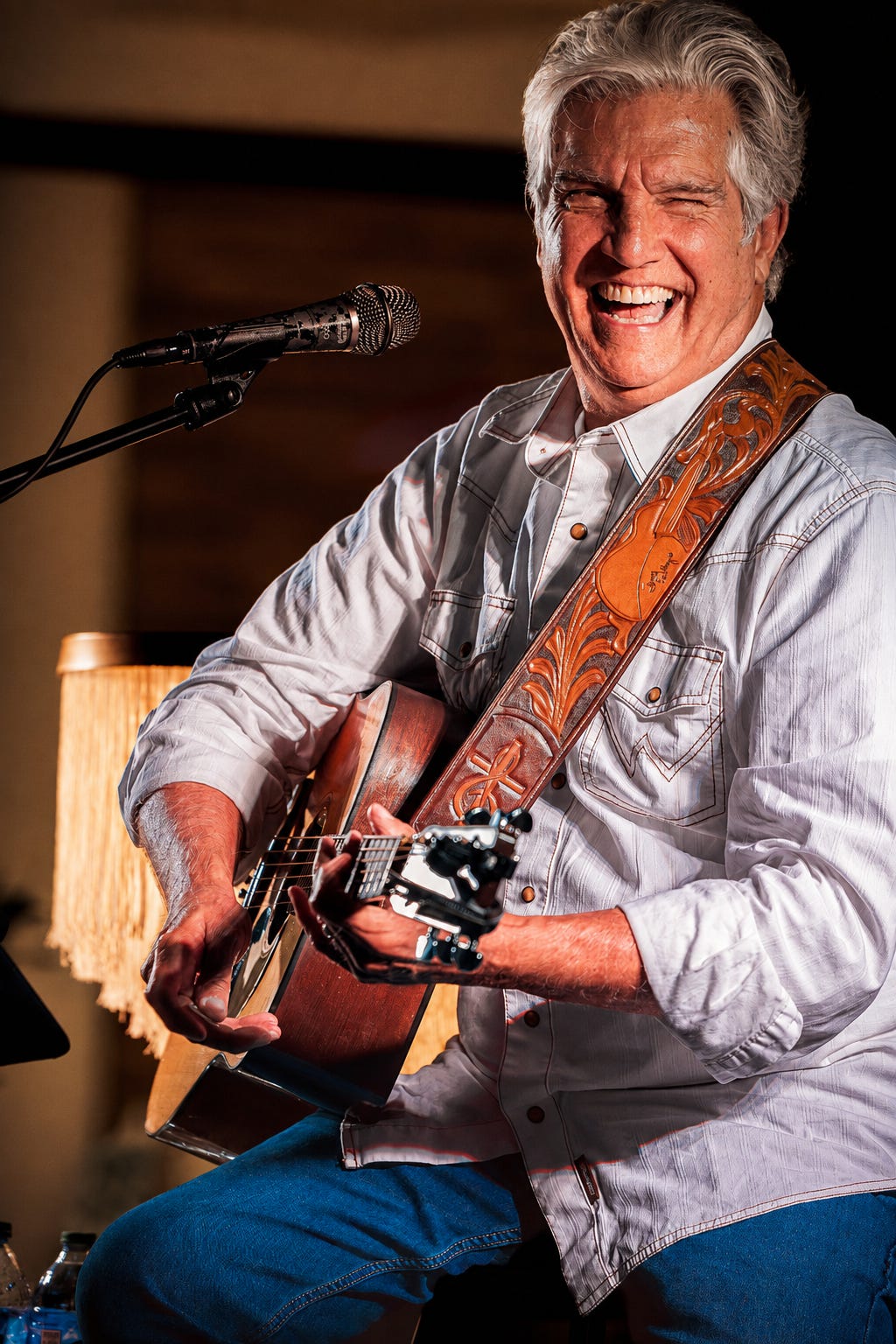
Then Salley introduced “Five O’Clock Shadow”.
Written for his son Ethan, who was in attendance, the song captures fatherhood through a small, recognizable image: a boy who wants nothing more than to remain beside his dad. Salley told us he was not going to break down while singing it as he had before.
He did anyway. So did we.
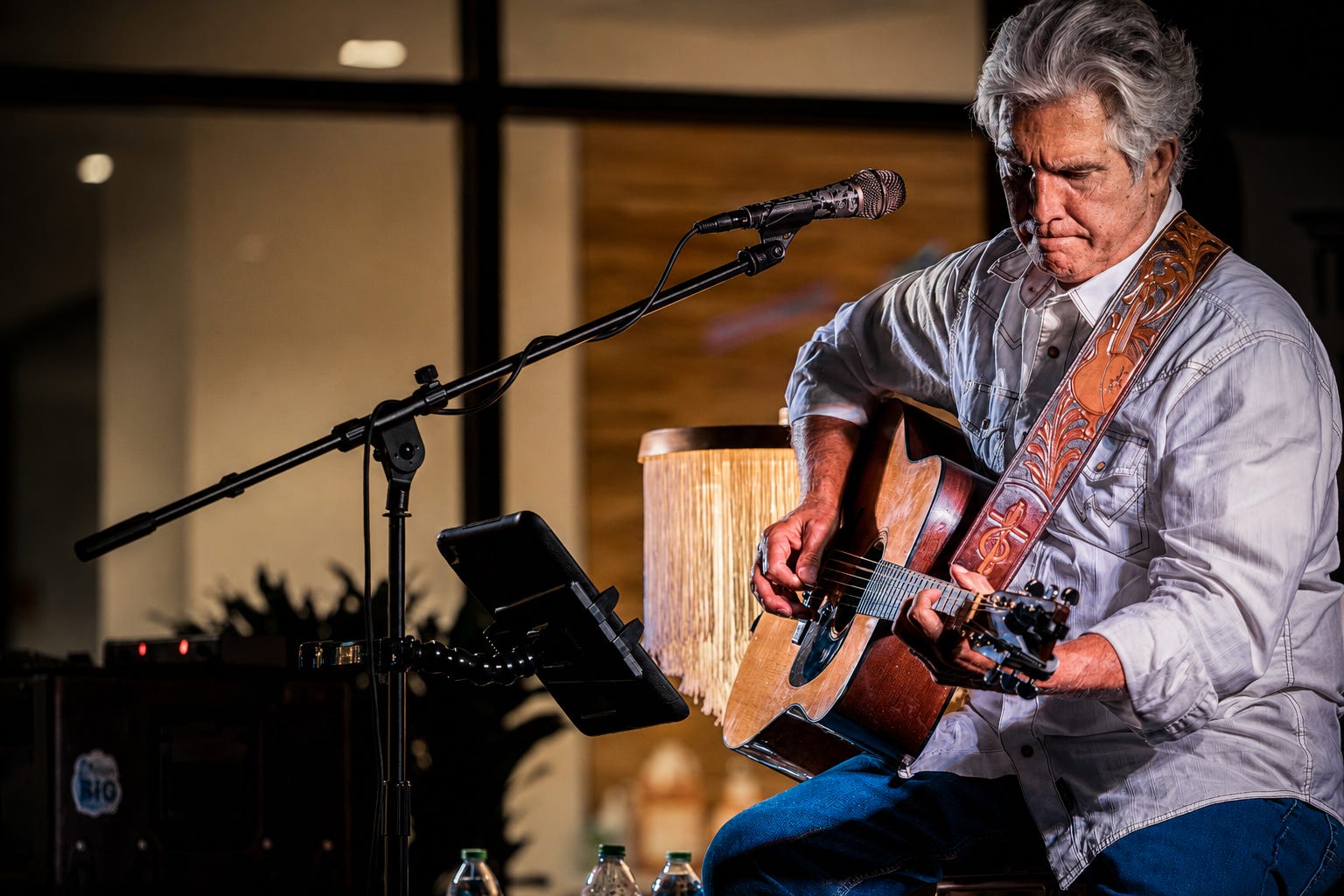
Nothing about the moment felt polished or guarded. With Ethan there to hear the song written for him, fatherhood was no longer an idea inside a lyric. It was sitting in the room. The writer became vulnerable to his own words again, and the audience was allowed to share in it.
That is what this kind of night is all about.
Afterglow
These are the raw, unfiltered stories behind the music, written by people like you and me, leaving us enamored, inspired and wanting more.
Salley ended the night with “When I Sing My Last Song”. It is human nature to wonder about death, about the people who shaped our lives and have gone before us, about the legacies we leave behind and whether we will be remembered.
By then, the answer felt less abstract. A mother had been remembered through “The Neverends.” A best friend had been honored before his wedding. A son had listened as his father tried and failed not to cry through the song written for him.
When songwriters finally lay down their pens and guitars. The songs keep finding new voices because someone hears a piece of their own life inside them. They remain because of how they made us feel and how, for a few minutes, they connected everyone listening.
Maybe that is why I nearly forgot to hit the shutter button.
I remembered to press it again, but I will not forget what made me pause.
Please consider Donating to Sponsor an article even $1 helps!

