


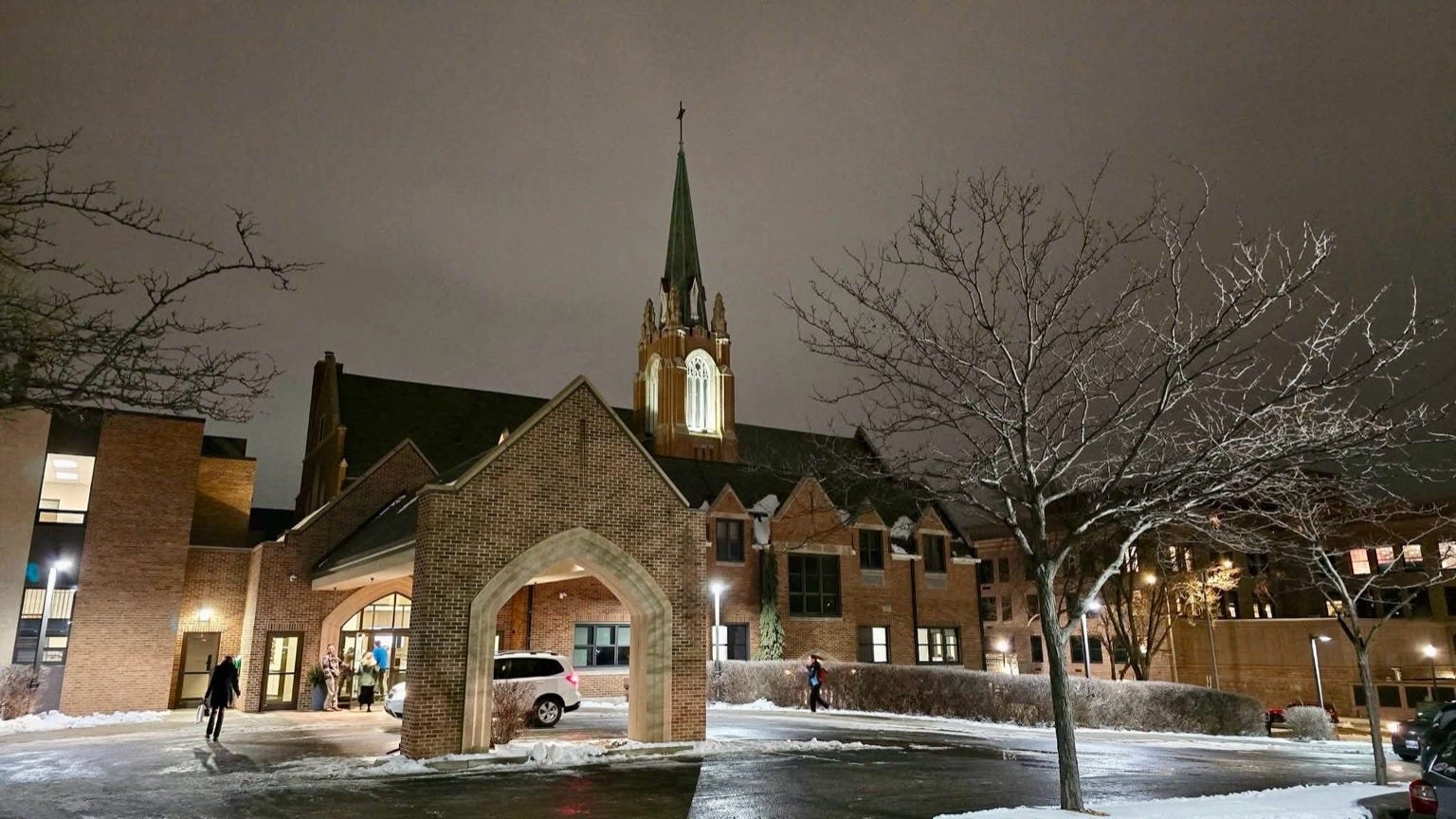

On December 5, 2025, the South Dakota Symphony Orchestra undertook the holiday mainstay piece, Handel’s “Messiah,” inside First Lutheran Church. This now yearly performance at First Lutheran has become a tradition for many families in the area. While that is the case for some, this was the first time I had intentionally gotten a ticket to see this masterpiece performed.
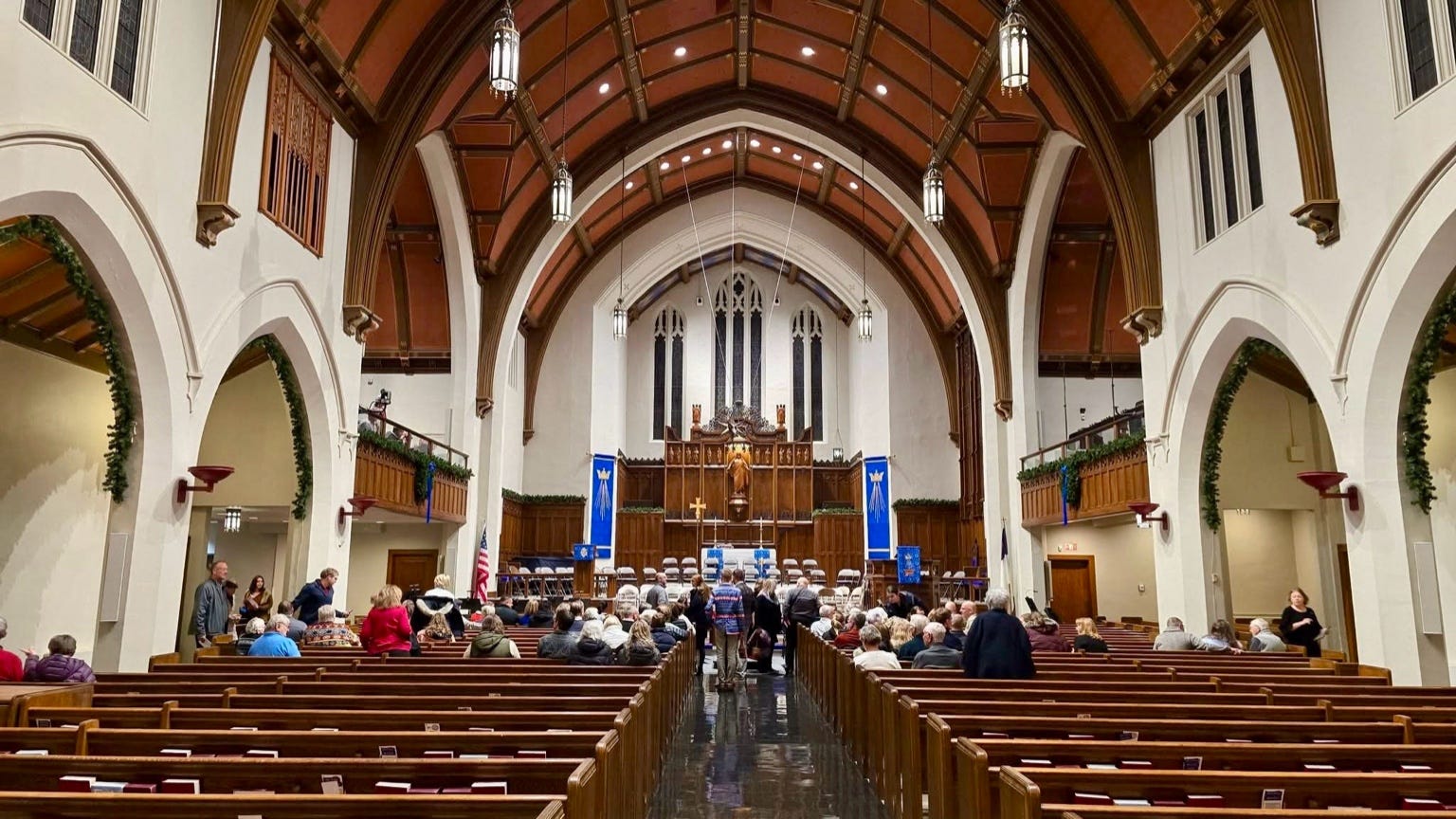
Before the show even began, the magnitude of this church loomed large. I had never been inside the sanctuary before, and seeing it for the first time in this context made the atmosphere that much more intense.
Sound and performance
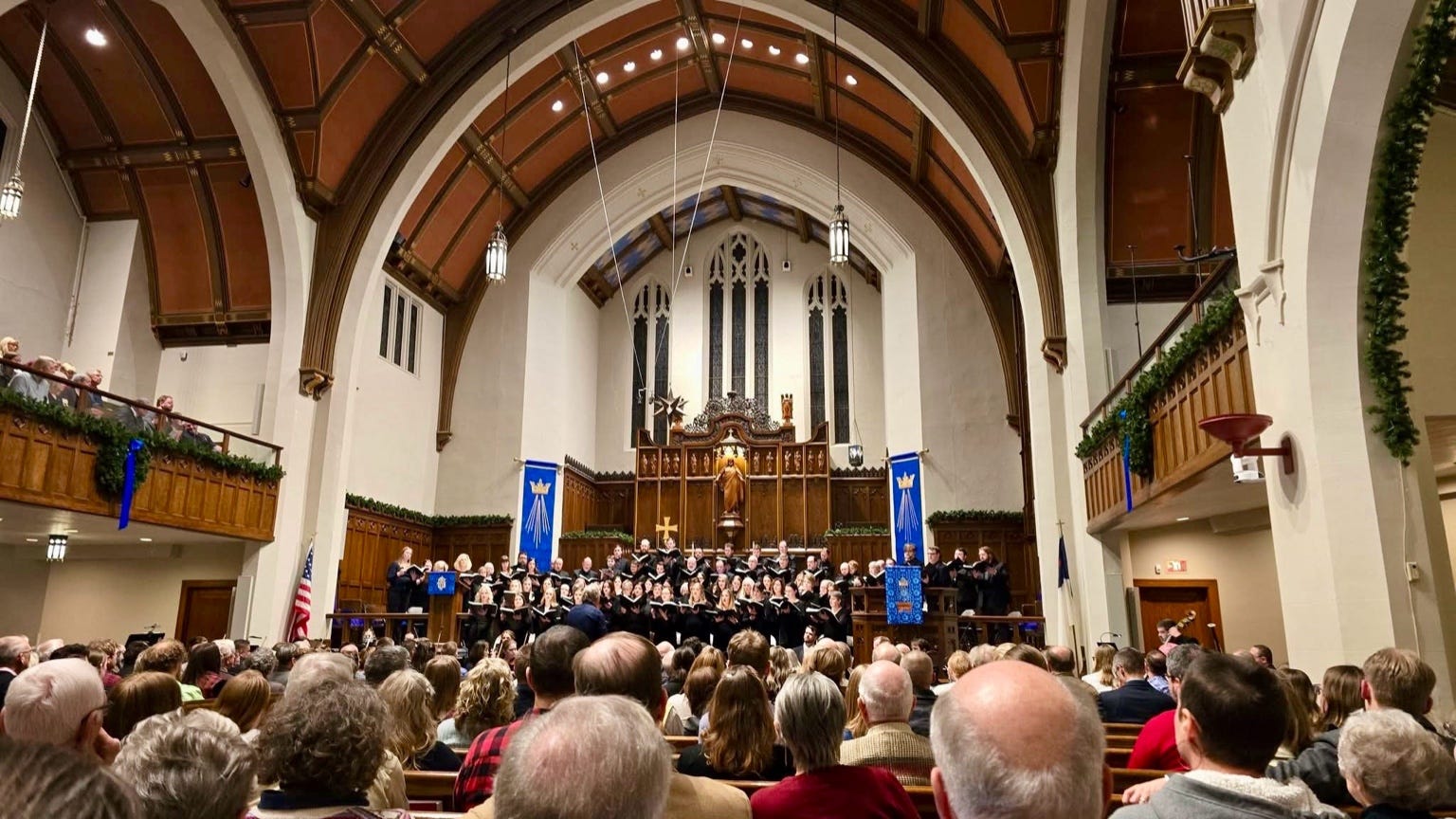
The performance started with a chorus of what seemed like sixty people entering to take their place, followed by the orchestra. The audience then erupted in applause as the four soloists (soprano, alto, tenor, bass) entered the room with conductor Delta David Gier, just as listed in the official program.
First Lutheran’s sanctuary acts like another instrument. The strings carried a warm glow through the space; trumpets and timpani rang out clearly without ever overwhelming the choir. The chorus filled the room with a rich, blended sound that suited the church’s stone and wood, giving familiar lines a fresh weight.
Gier kept the tempos steady and confident. The opening symphony set a dignified tone, and “And the glory of the Lord” unfolded like a calm, steady build rather than a race. “For unto us a child is born” lifted that energy higher, the orchestra and chorus moving together as one big, breathing instrument.
I will not lie, I was uncultured to how long this piece truly is, amassing an almost three-hour run time. But hearing it live, with this chorus and orchestra in this room, made that length feel like being drawn into a single, unfolding story rather than a string of separate “greatest hits.”
Setlist and pacing
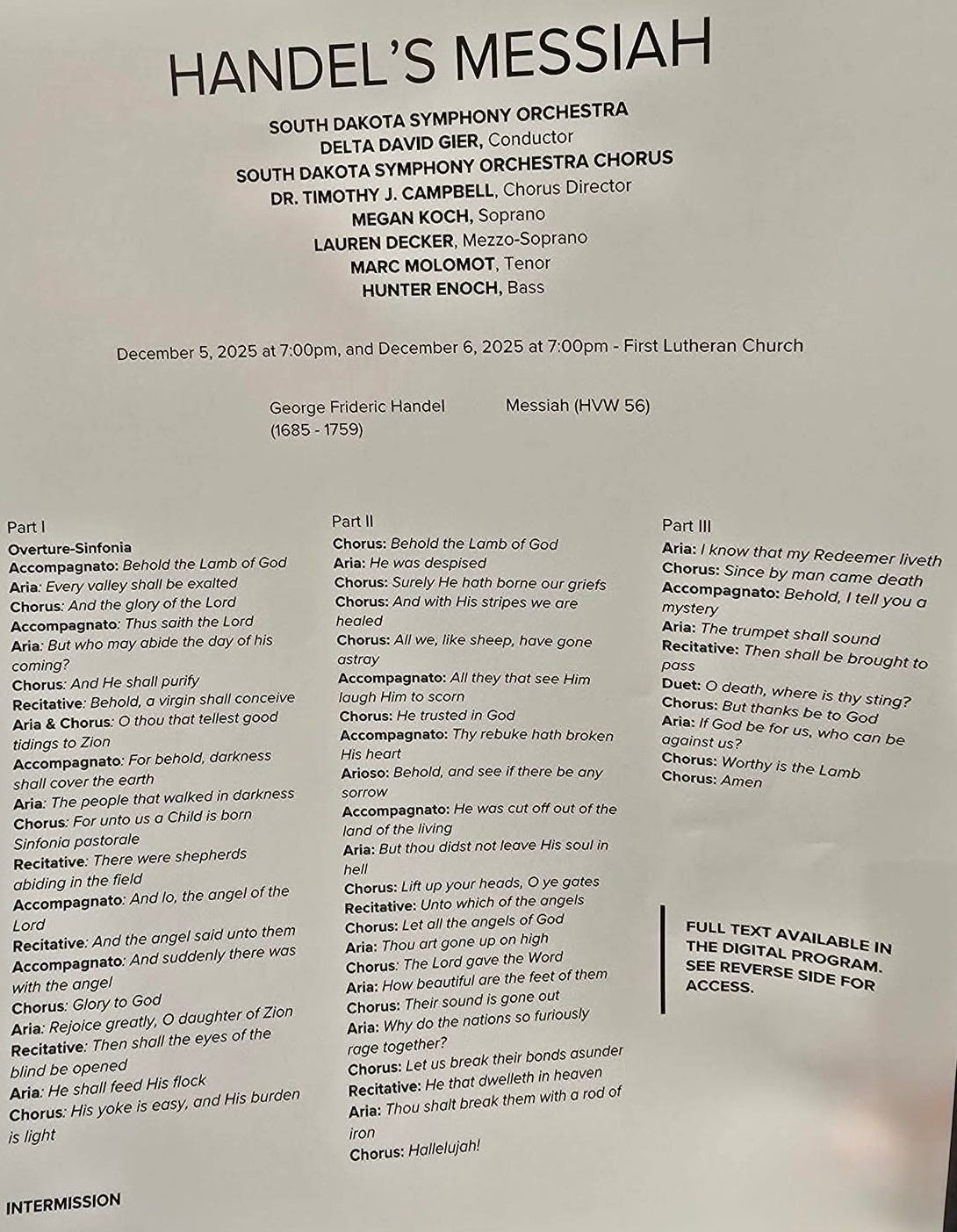
“Messiah” is laid out in three Acts (or Parts): prophecy and birth, suffering and “Hallelujah,” then resurrection and triumph. The South Dakota Symphony kept that structure, as laid out on their concert page.
After Act I there was a brief intermission to allow us to stretch and loosen up for the remaining length of the piece. That pause reset the room: people unfolded from the pews, grabbed water or coffee, and braced for the more dramatic middle section.
Act II leaned into the drama, the orchestra and chorus carrying the weight of the Passion and building toward the moment everyone was waiting for.
Act III, the shortest of the Acts for “Messiah,” is a triumphant ending to the piece with magnificent solos and the only duet (alto and tenor) in the whole work — a compact, joyful finale after the long journey of the first two Acts.
Crowd and context
This yearly “Messiah” is baked into Sioux Falls’ December calendar, showing up in places like South Dakota Magazine’s event listings and Experience Sioux Falls as a go-to start to the Christmas season.
I will say, most of the audience was between 40 and 70 years old, which gave the night the feel of a long-standing community tradition. Only the youngest in the crowd, myself included, could be seen yawning throughout the performance. Not for lack of beauty onstage, but because a full “Messiah” is a rare kind of marathon in modern concert-going.
The sanctuary looked comfortably full, rows of winter coats settling in as people prepared for an evening that was clearly familiar to many of them and brand new to me.
Standout moments
As Act II loomed on, the entire sanctuary was set with anticipation for what we were all there to hear: the now-iconic “Hallelujah” chorus. As the final movement of Act II began, the entire sanctuary stood to their feet.
This tradition is rumored to have started back in 1743 when King George II stood for it during an early London performance and the rest of the audience stood in respect for the King. However it started, it continues to this day, and actually helped in waking me up a little bit, along with the thunderous chorus itself. Hearing that word repeated over and over, wrapped in brass and voices, with everyone around me standing, felt like the heart of the night.
Act III’s closing stretch, with those magnificent solos and that single alto-tenor duet, brought the focus in a little closer. After the large, roof-shaking choruses, hearing two voices weave around each other in that final section was a reminder that this giant piece is still built on individual singers, one breath at a time.
Openers and production
There was no opener for this concert. No holiday medley, no children’s choir, no pre-show carols. Just “Messiah” itself, which in 2025 feels like a bold and refreshing choice. The “setlist” was simply Handel from start to finish, exactly as advertised in the concert listing.
Production stayed simple and fitting for the space. Lighting was the warm, even glow of a working church. No projections, no extra screens, just chandeliers and the soft focus on the platform. General-admission seating, first-come first-served, added to the sense of people gathering for something shared rather than assigned.
On stage, the team was stacked: South Dakota Symphony Orchestra under Delta David Gier, the South Dakota Symphony Orchestra Chorus led by Dr. Timothy J. Campbell, and the four soloists carrying the story, all credited in the SDSO program. No tricks, no extra frills — just a score from 1741 brought to life by a lot of musicians who clearly know it well.
Counterpoint/limitation
My only critique, there was barely any leg room in the pews to move for a guy of my stature. But I digress.
For the music itself — the orchestra, the chorus, the soloists, and the setting — there isn’t much to complain about. The night felt more like joining a long-running ritual than attending a “one and done” concert.
Afterglow
Overall, this opening to the Christmas season may in fact become a yearly tradition for myself as well, although I will be sure to drink more caffeine next year.
Walking back out into the December air, my knees were stiff but my head was full of choral lines and trumpet calls. For many in that room, this “Messiah” is something they return to every year. For me, this was the first time I had intentionally gotten a ticket — and it probably won’t be the last.
Somewhere between the first prophecy in Act I and the final “Amen” of Act III, in a packed sanctuary with cramped pews and expansive sound, the piece did what it has always done: it stretched time out and then folded it back in, leaving me a little more awake to the season than when I came in.

