



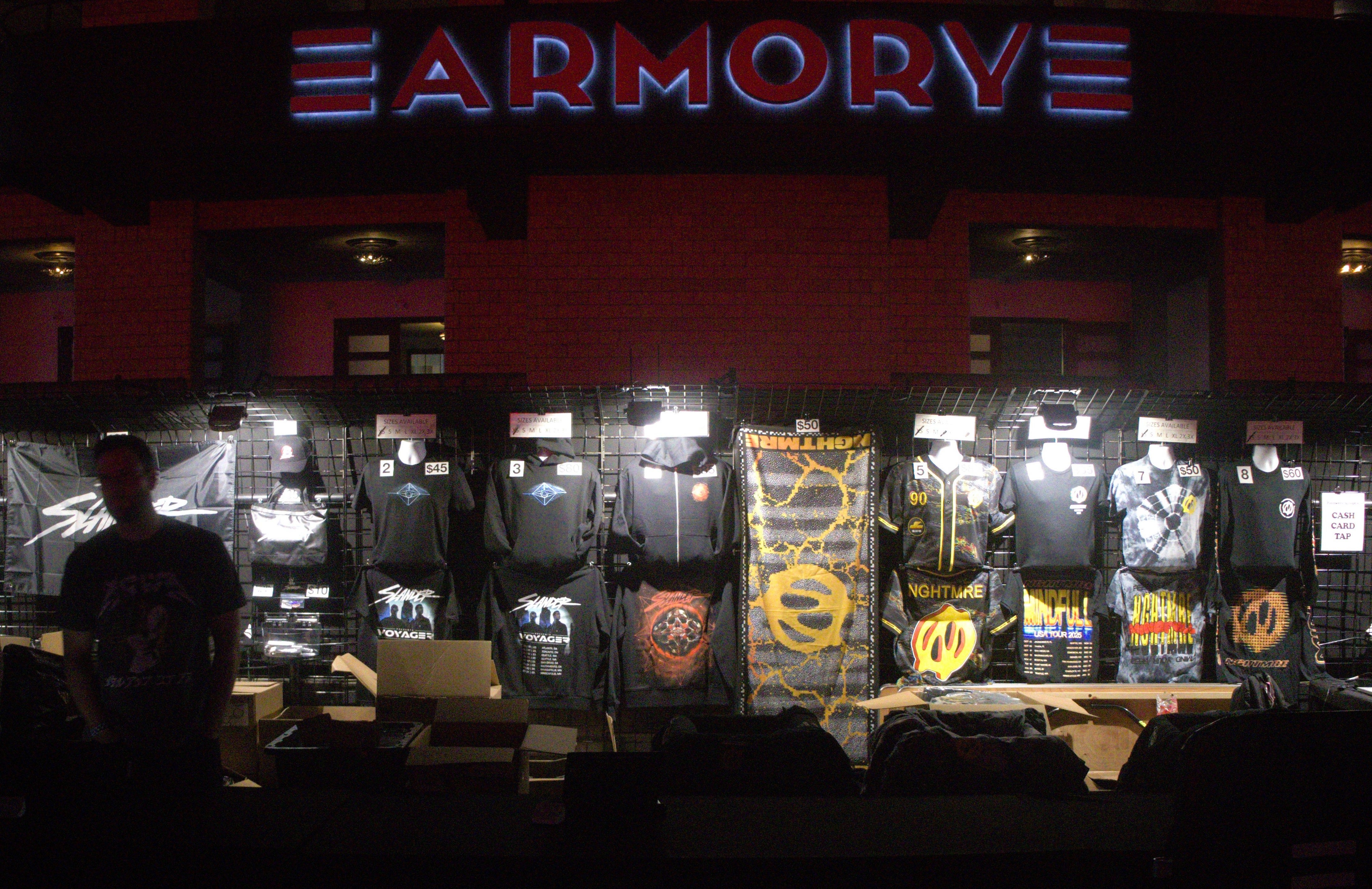
By now, the drive to The Armory barely requires discussion. We know the turns. We know the routine at the door. We know the building well enough that the whole process, from leaving home to getting cameras through security, has started to feel strangely ordinary for a place capable of making several thousand people feel their internal organs move.
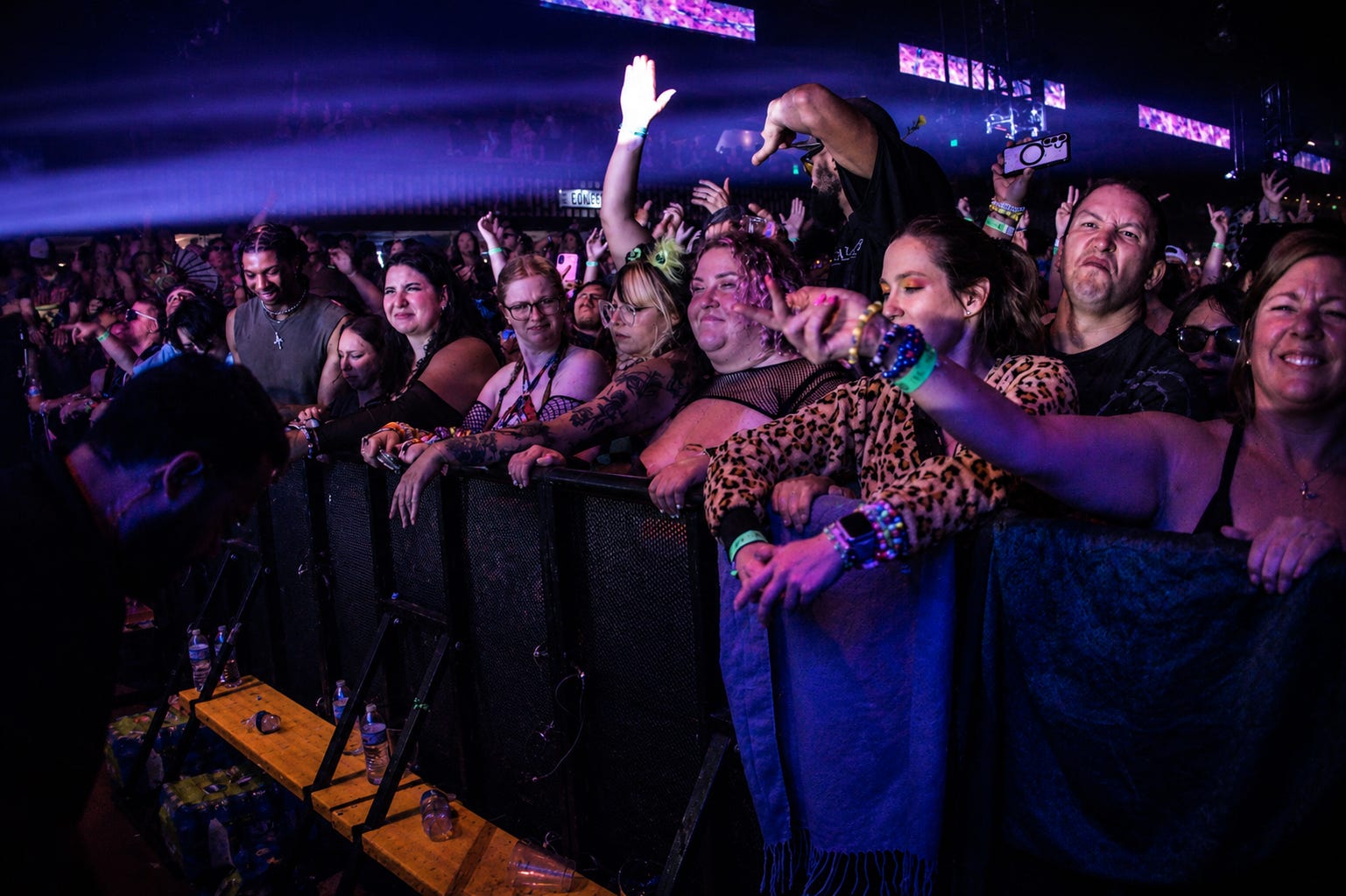
Saturday was as seamless as these trips get. Staff knew what was happening. Photo pit access was easy. Moving in and out never became an ordeal. Even before the music really had a chance to announce itself, the crowd did. People noticed cameras coming up and ducked out of sightlines without being asked. Someone sprouted us, clipping one of those tiny rave plants onto us as a little stranger-to-stranger hello. Sparkles moved past fanny packs, kandi, lights, elaborate costumes, layers stacked on layers and people wearing approximately enough fabric to make one sock.
PLUR was already in the building.
The official billing for SLANDER’s second Voyager night listed NGHTMRE, Prosecute, VCTRE and arman. beneath the headliner, with doors at 8 p.m. and music starting at 8:20. Once we stepped into the stage area, though, the giant screen gave us an addition the advance billing had not. ARMAN. sat above REDLINE in enormous letters, both performers sharing the opening set beneath a flood of red.

Red before the room was full
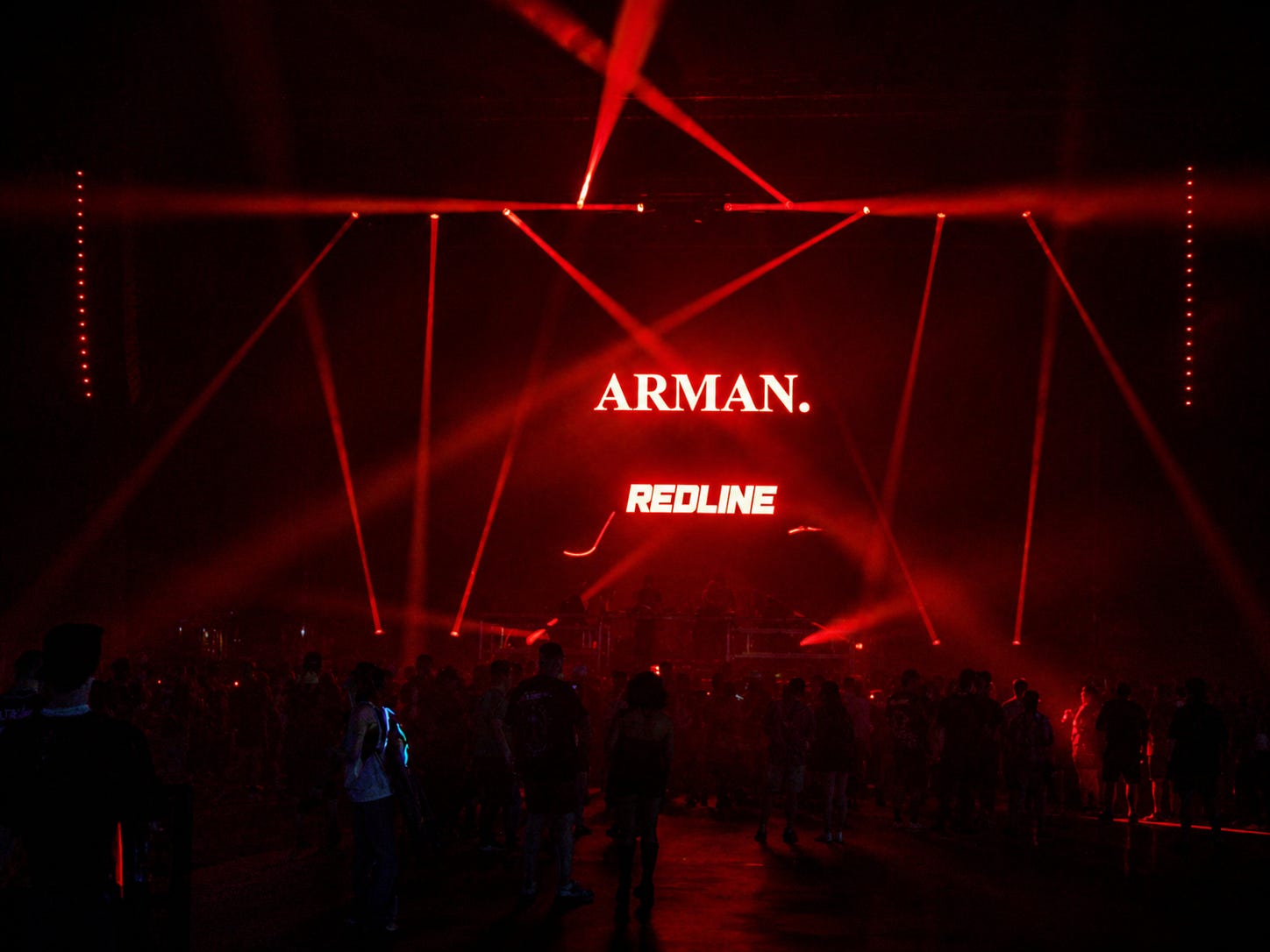
Arman and Redline caught us while we were still settling into the night. Drum-and-bass rhythms kept the floor moving while familiar pieces of pop songs appeared in forms that sounded dug out of corners we did not know existed. The appeal was less about recognizing every source than hearing something recognizable bent far enough that your brain needed a second to place it.
The opening set understood pressure, too. When the momentum started to flatten, they did not simply add more noise. They let it slacken. A phrase would stretch, the room would loosen, then the beat would pull everyone back before attention had enough time to wander.
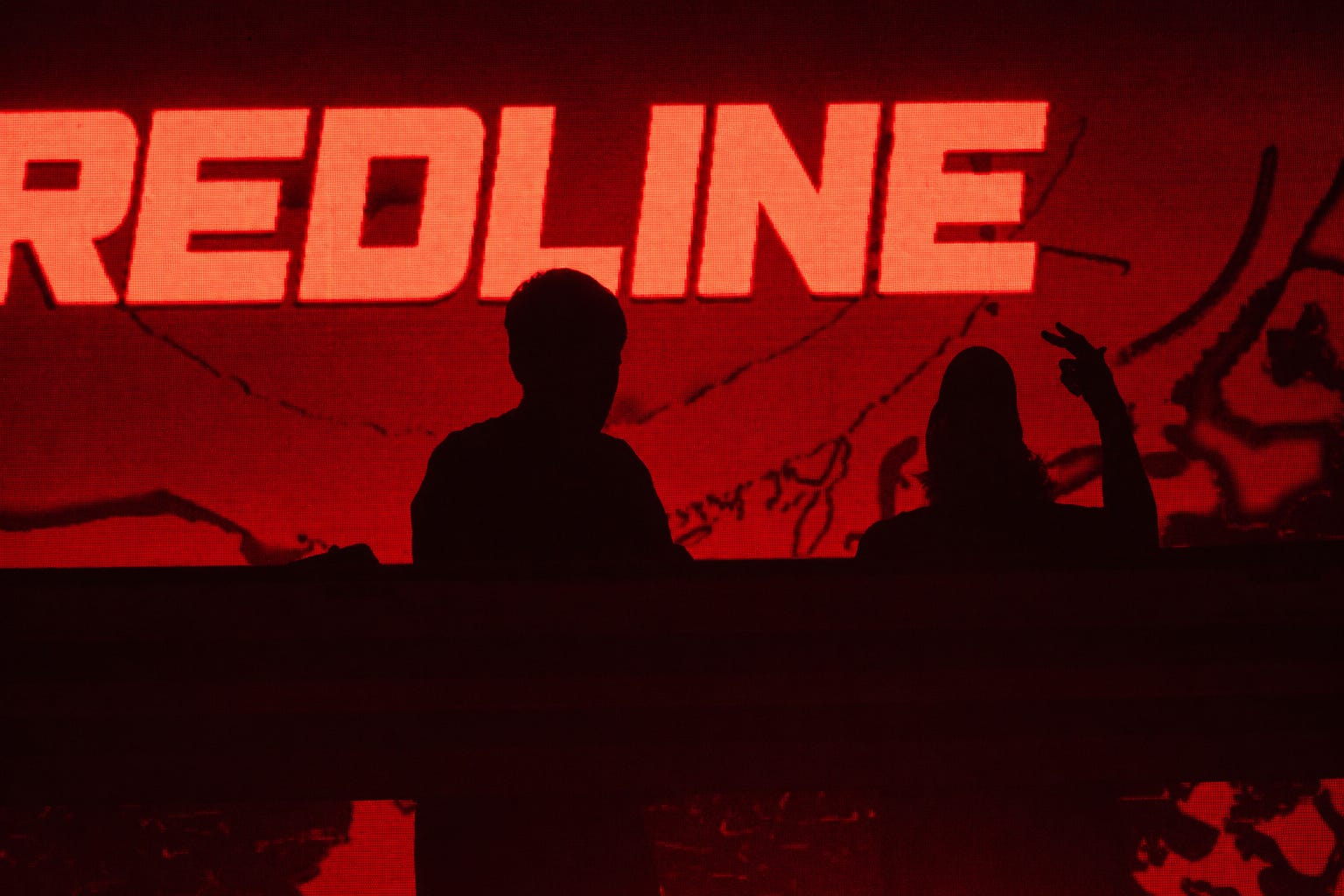
Behind them, everything stayed red. Their names hovered over the booth while early arrivals filled the open space in front of it, creating one of those rare opening-set moments where a room still has enough oxygen to notice the people inside. EDM crowds can resemble little moving galleries of private invention. Outside of metal shows, there are few places where personal presentation gets this gloriously specific. Sparkles. Light-up accessories. Character costumes. Tiny sunglasses. Giant pants. No pants. Fanny packs worn with grave seriousness.
Nobody seemed particularly interested in asking permission to look strange.
By the time VCTRE appeared, red disappeared with him.
Please consider Donating to Sponsor an article even $1 helps!

VCTRE’s blue light and moving parts
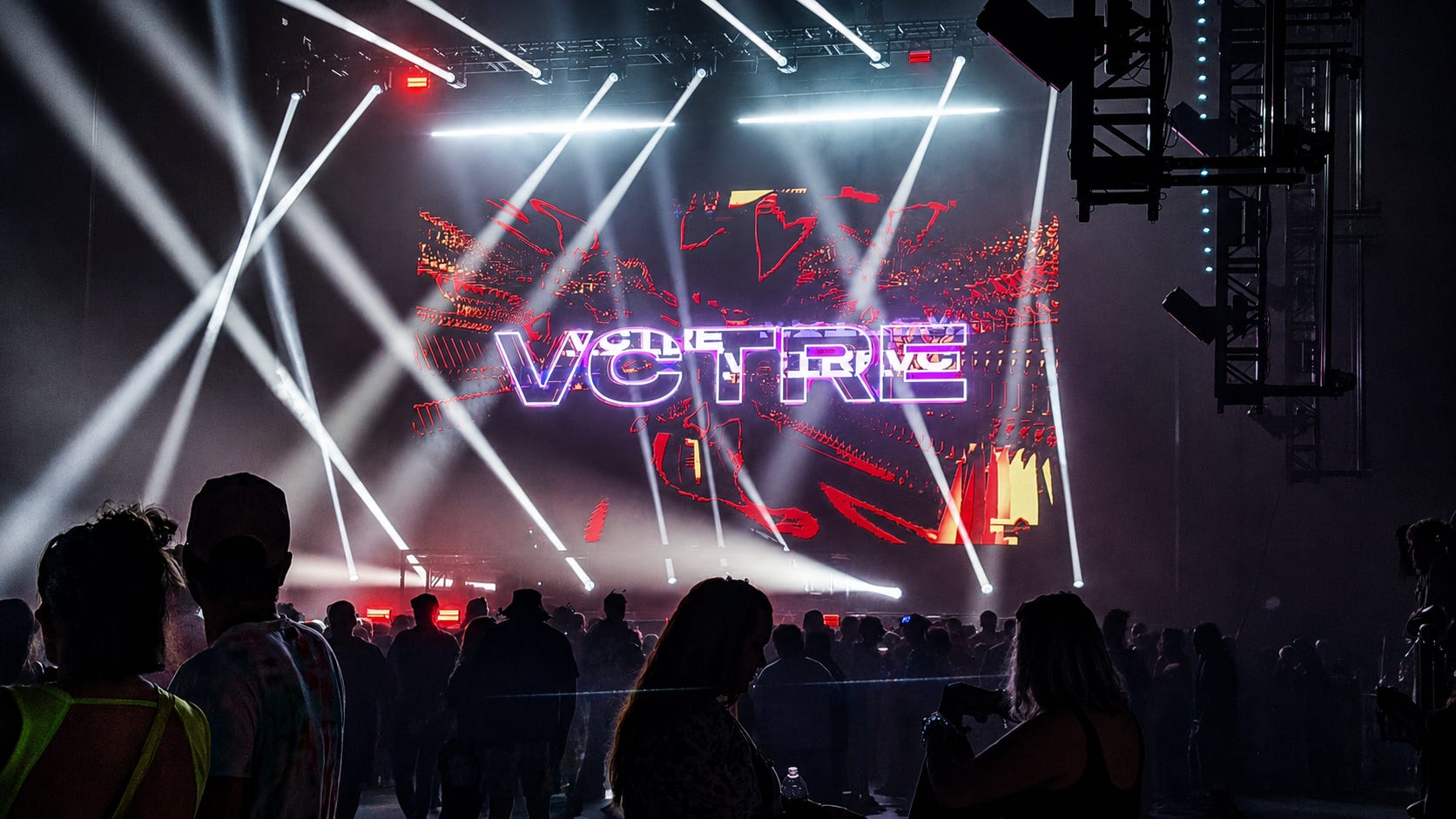
VCTRE’s entrance sounded like Bumblebee’s radio had picked up a hostile station.
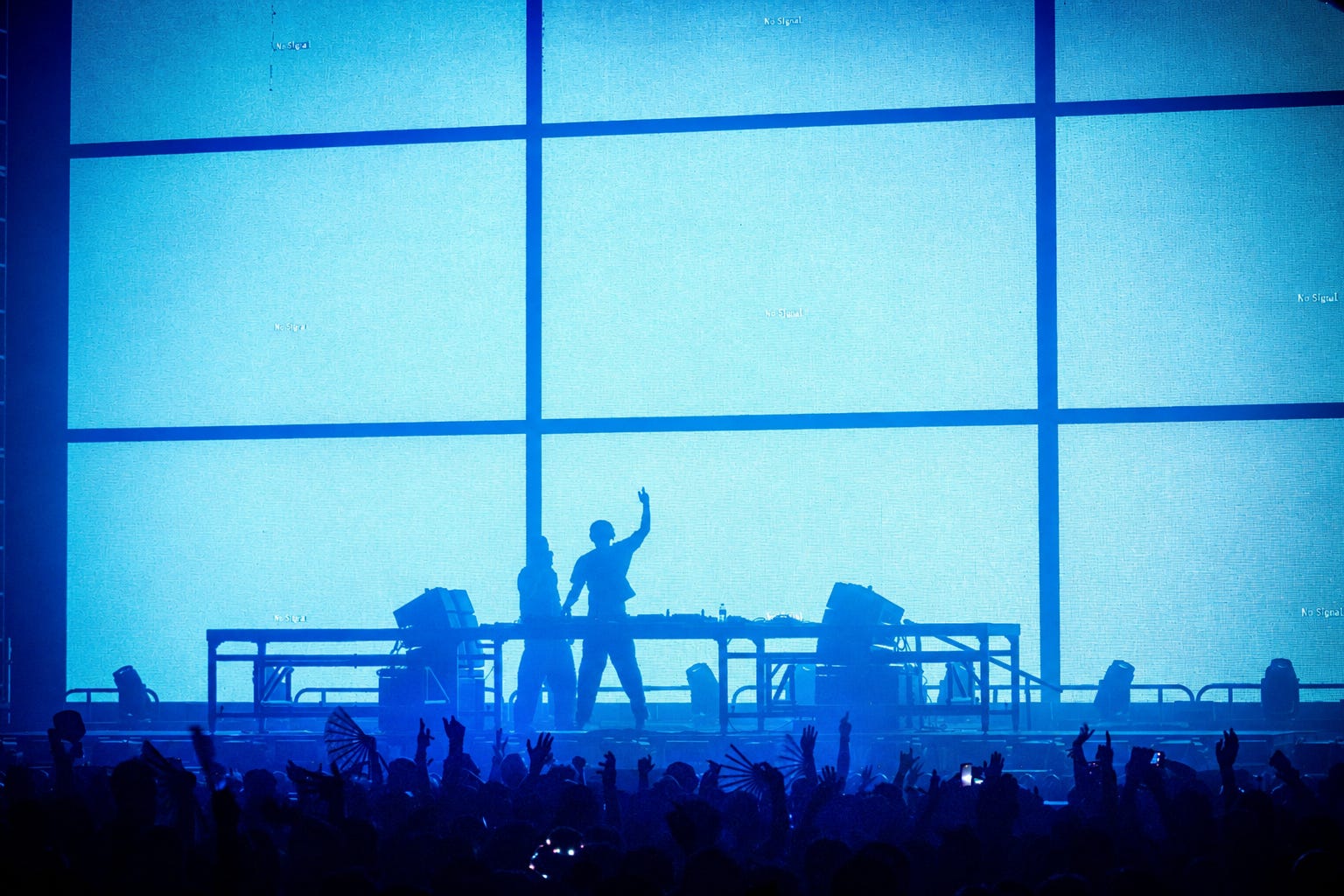
The screen shifted toward chrome, electric blue and black while his logo stayed visible almost continuously, changing shape and treatment as the set moved. It sounds like a minor production choice until you spend enough nights photographing opening acts and realize how often artists forget to tell the room who they are. VCTRE did the opposite. His name became part of the visual design, mutating alongside the music.
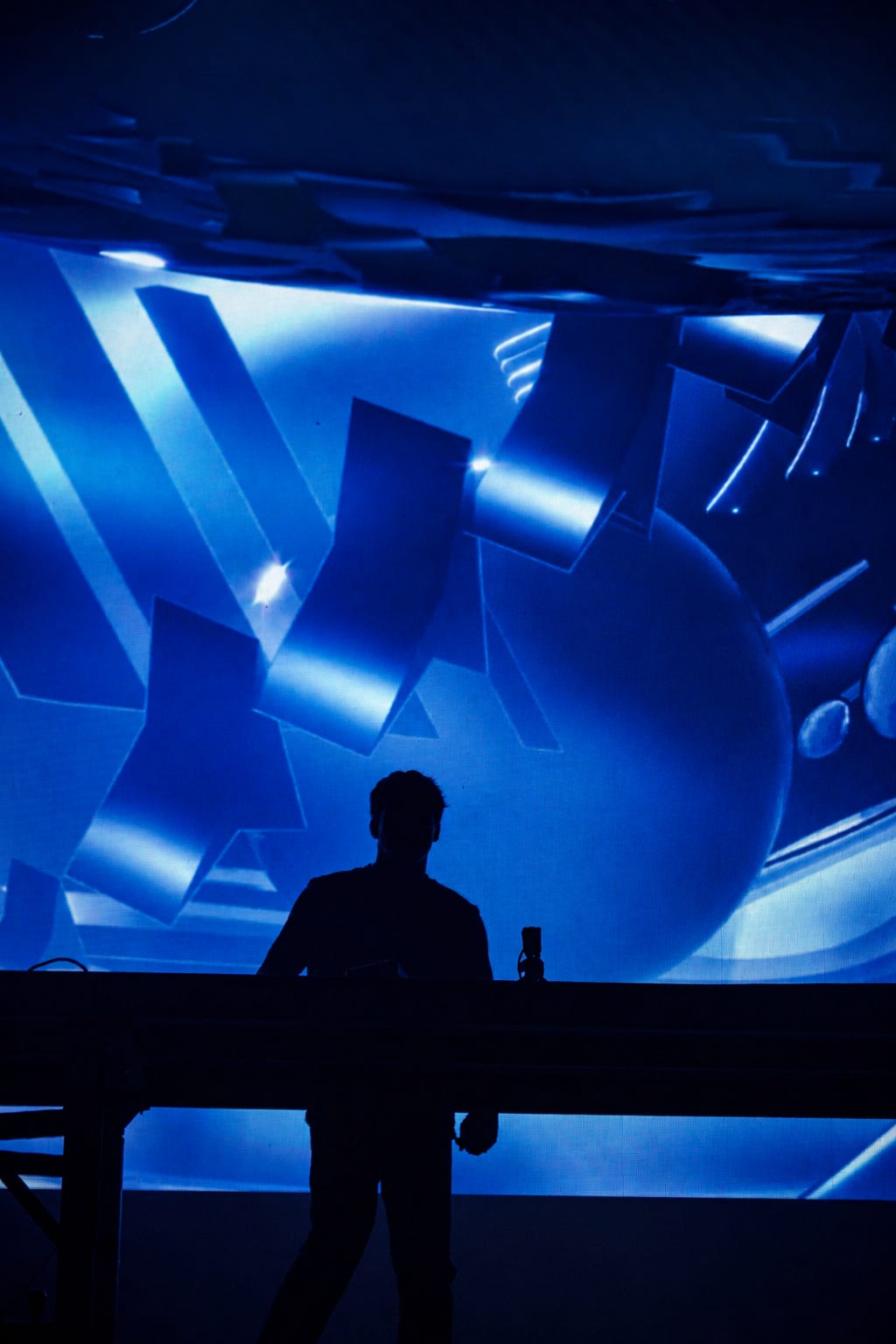
That suited him. VCTRE’s own description of his work places him between dubstep, bass music and glitch-influenced electronic production, with aggressive low end sharing space with intricate rhythm and layered synth textures. Live, the harder edges were there, but his set had more breathing room than what was coming later.
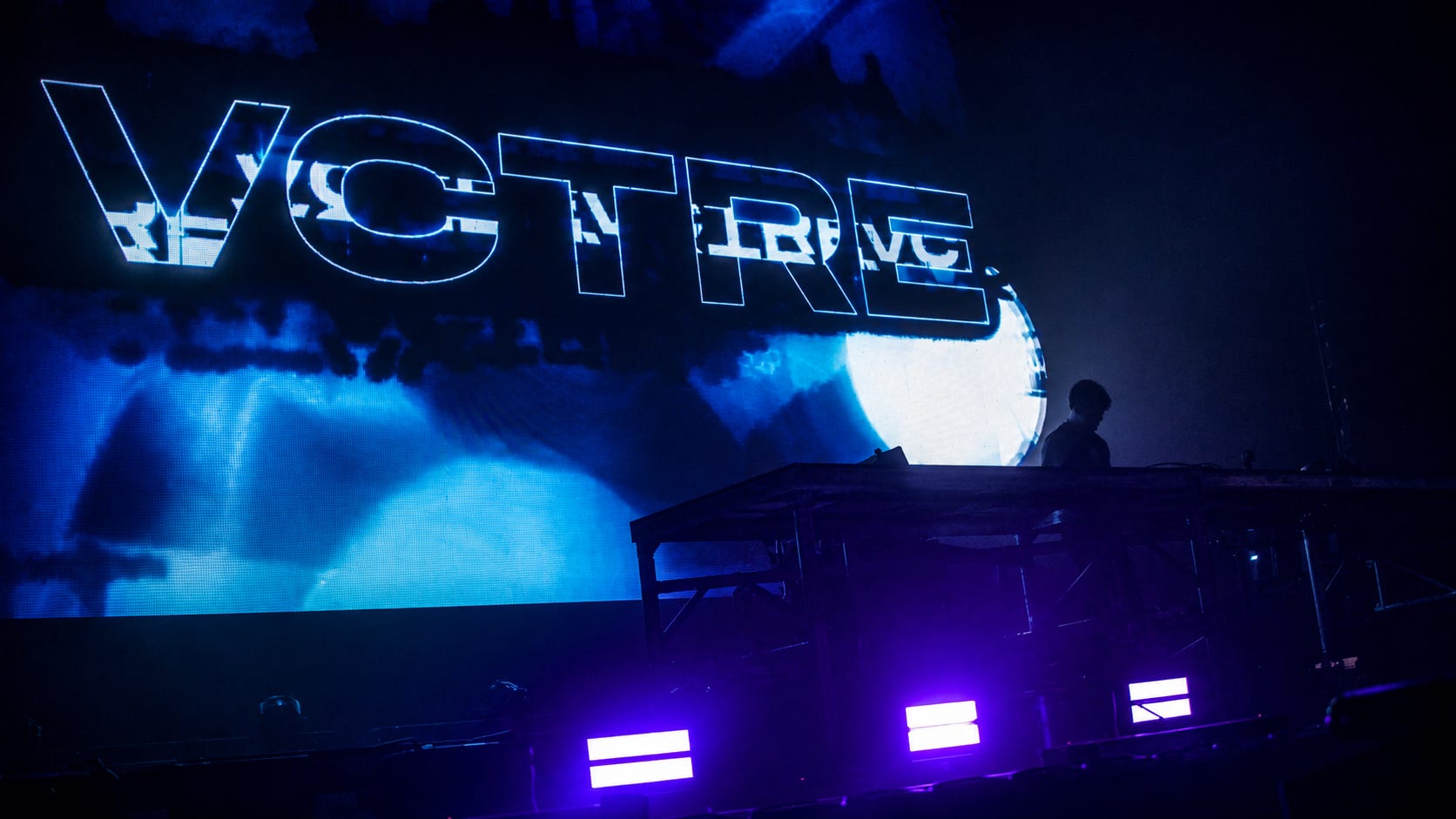
A Kendrick Lamar vocal surfaced inside the mix. Wubs stretched until they stopped feeling like punctuation and became the pulse itself. Little zips, electrical cracks and scraps of audio flickered through transitions, sometimes functioning as percussion and sometimes just adding another texture for the brain to catch before it vanished.
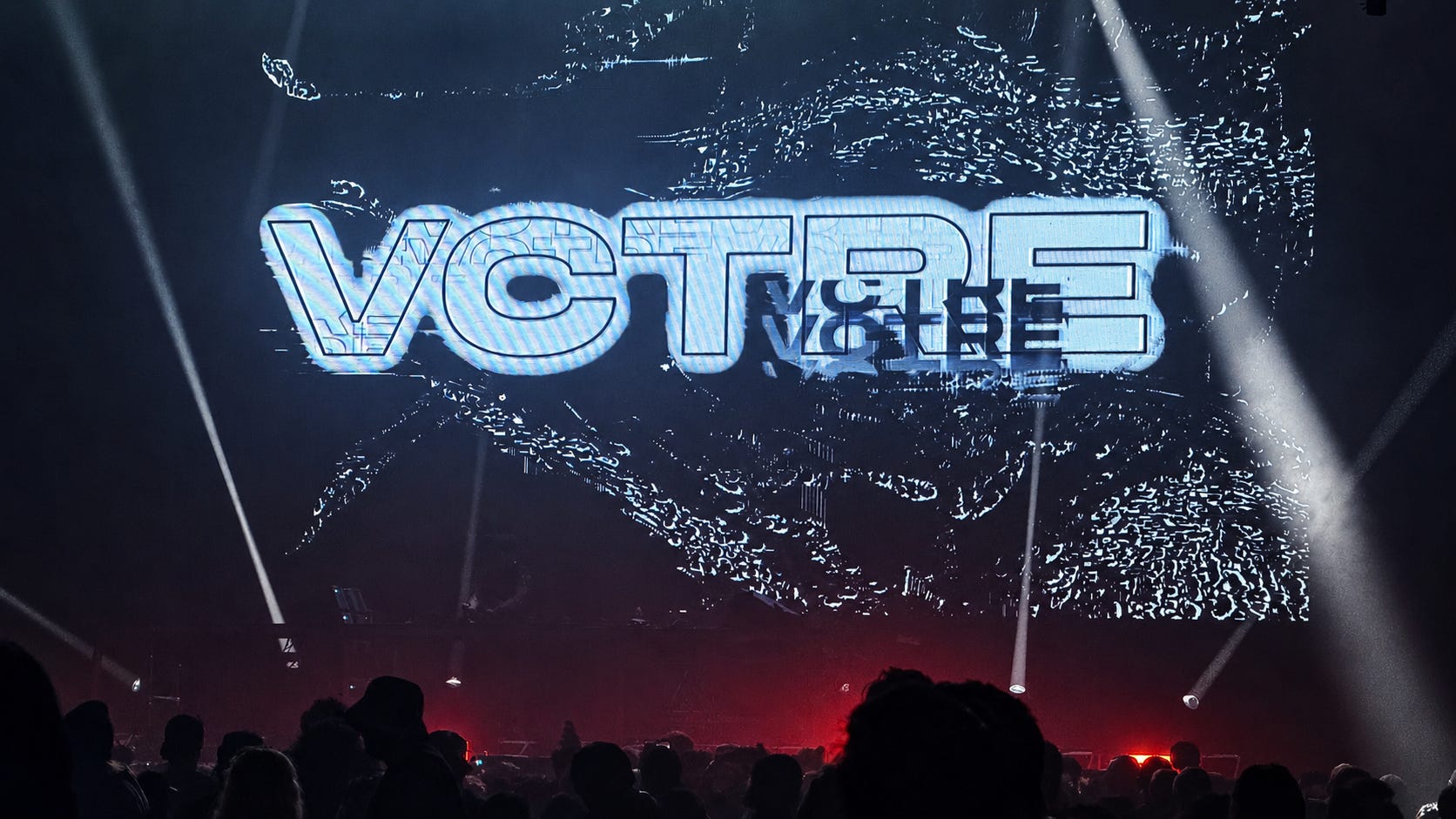
There was something graceful about the pacing. VCTRE could whomp when necessary, but the set did not spend its entire runtime trying to prove how hard it could hit. Here, each artist seemed to be nudging the room toward what would come next.
VCTRE finally took the microphone, thanked Minneapolis and told everyone they looked great.
Then he got out of the way.
The pit gets teeth
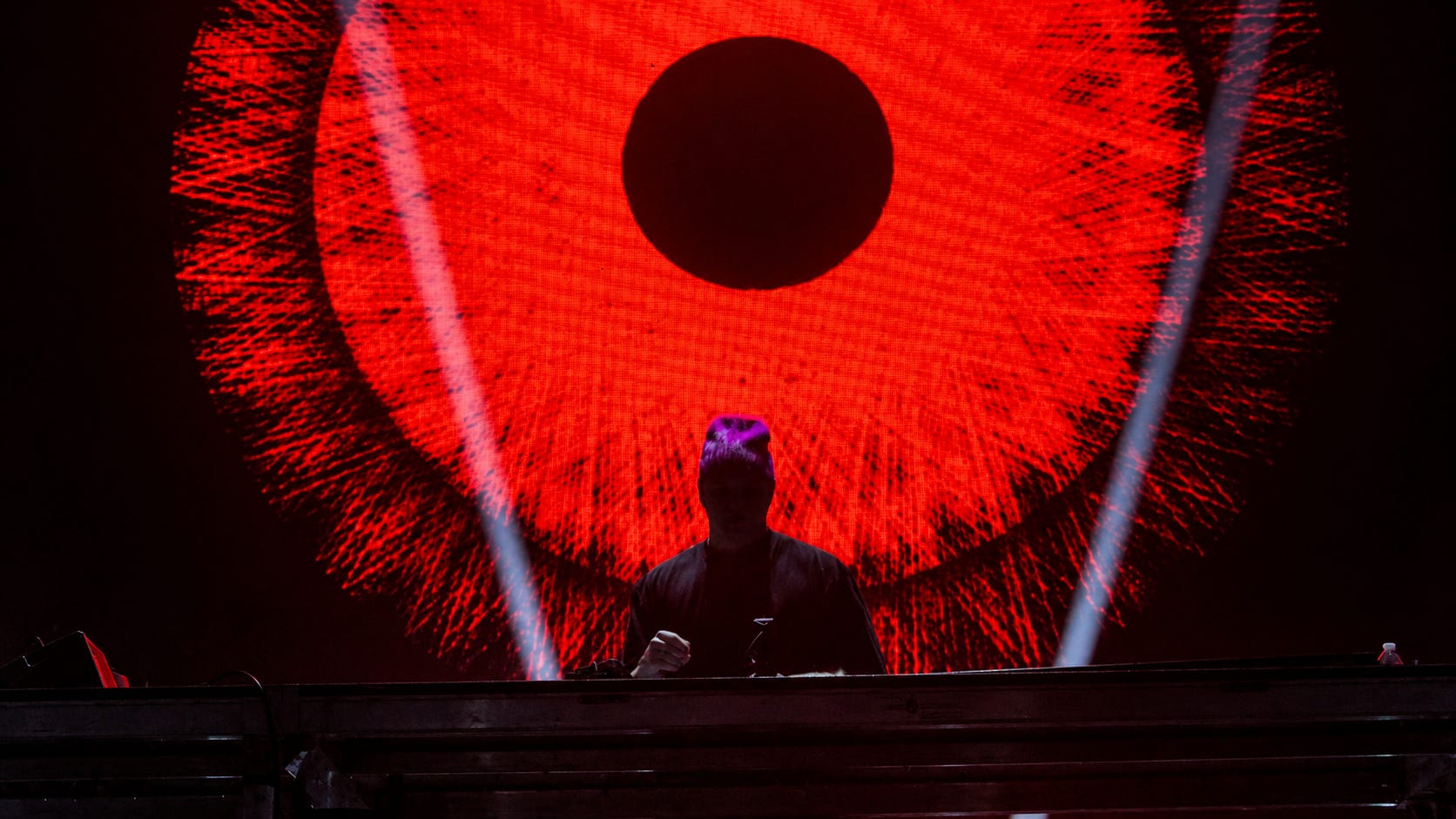
Prosecute arrived with demands.
He wanted a mosh pit in front of him for the next hour.
A quick microphone check followed and then the womps came directly at us. No delicate introduction. No polite little ramp upward. The screen turned into the red, black and white visual vocabulary that tends to accompany the nastier end of bass music, eventually producing that enormous red eye staring over the booth while Prosecute worked underneath it.
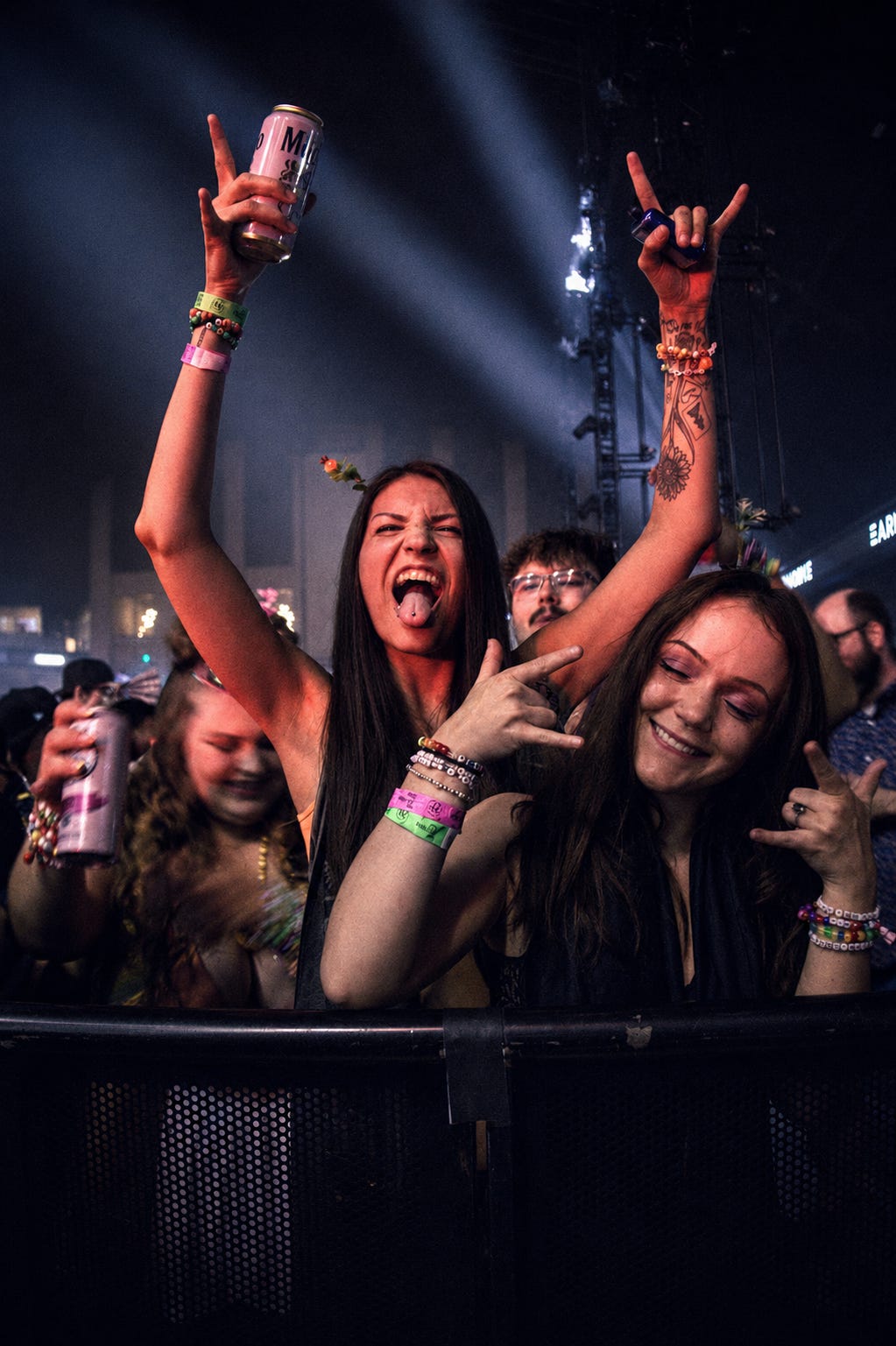
By roughly 10:30, The Armory had filled in both definitions of the phrase. More bodies were on the floor, but there was also that particular pre-headliner buzz where everybody has decided what kind of night they are going to have. Some came dressed to be seen. Some came to unload whatever the week had done to them. Some wanted to disappear into volume. Some were clearly there because their friends had dragged them along.
There seemed to be room for all of them.
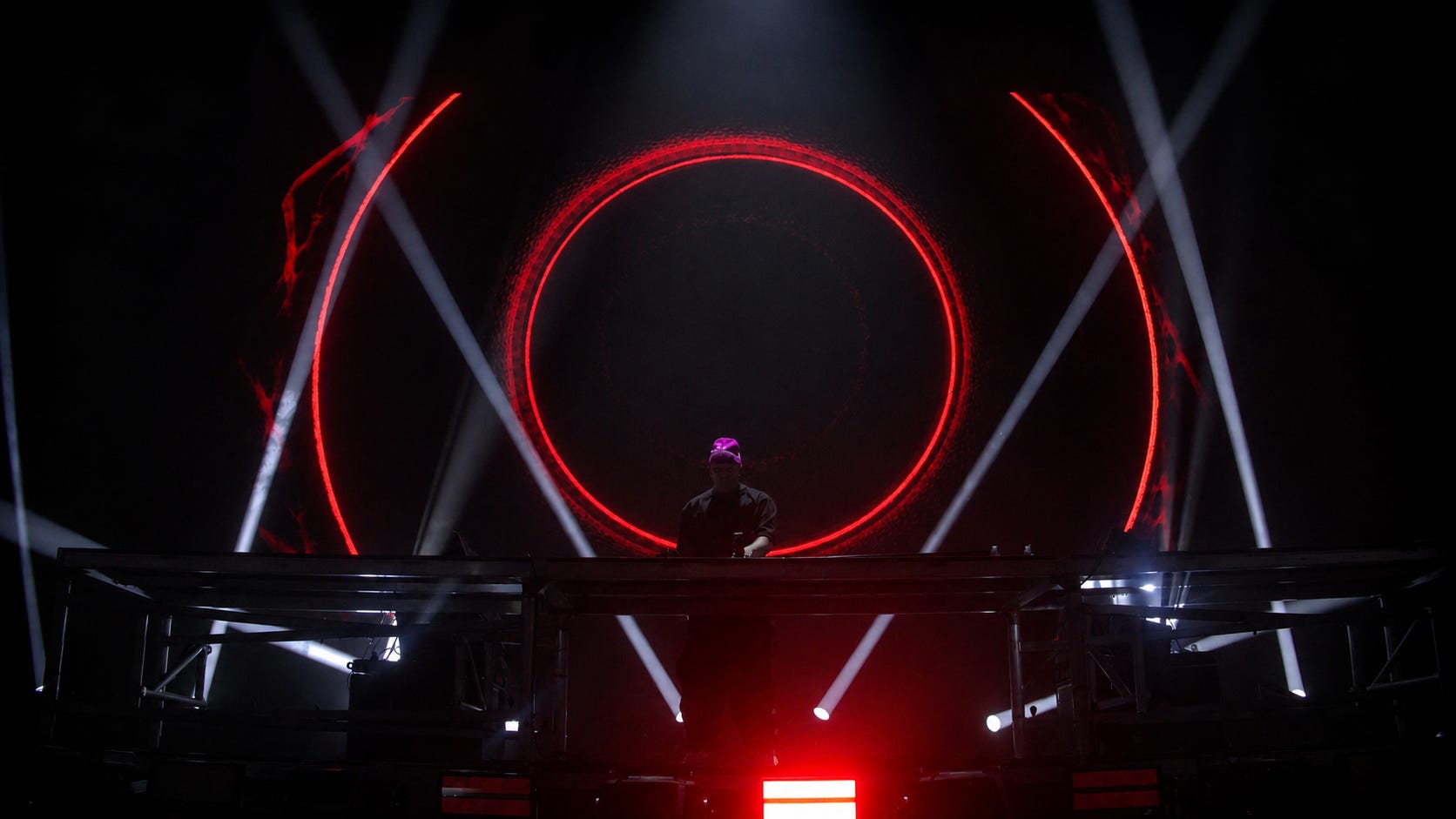
Prosecute fed that room metal vocals, blunt breakdowns and sounds that carried traces of a grimier 1990s club vocabulary before getting chewed up by modern dubstep. He requested a circle pit. Shortly afterward came one of his collaborations with Kai Wachi, an artist connection that already carries memories for us from a dinosaur-themed festival and, somehow, North Dakota of all places. Prosecute and Kai Wachi have released more than one track together, including “CLINCH” and “Uncaged.”
The most useful thing I did in the photo pit during all of this had nothing to do with a camera.
A girl near the front needed earplugs. Security had some, so we helped get a pair to her while the stage was busy trying to rearrange everyone’s skeleton.
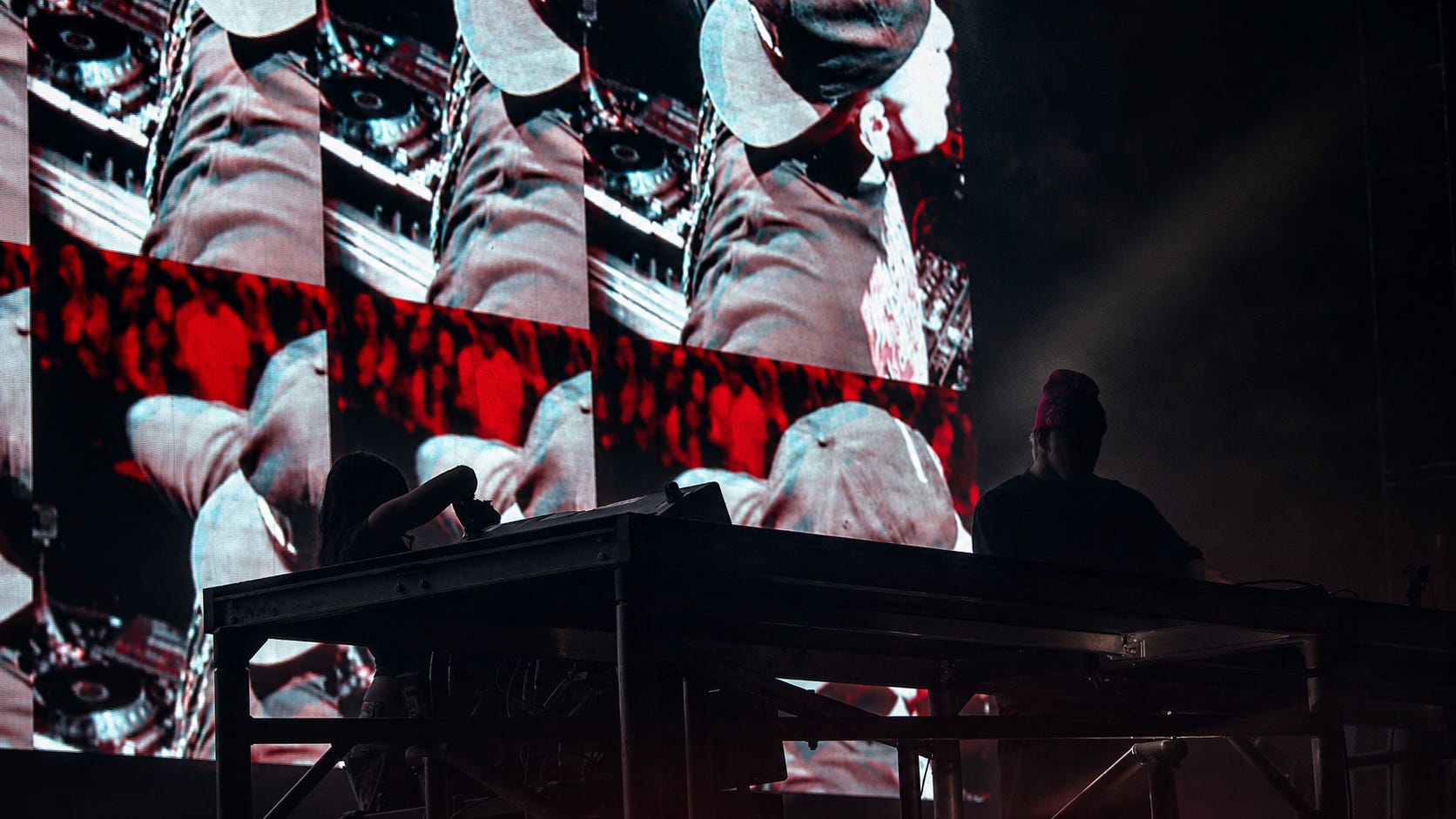
For his ending, Prosecute reached somewhere completely different, closing with his official remix of Mike Posner’s “I Took a Pill in Ibiza”. A song built around regret and aftermath got dragged through Prosecute’s heavier vocabulary before he surrendered the stage.
NGHTMRE was waiting.
MINDFULL, then completely unhinged
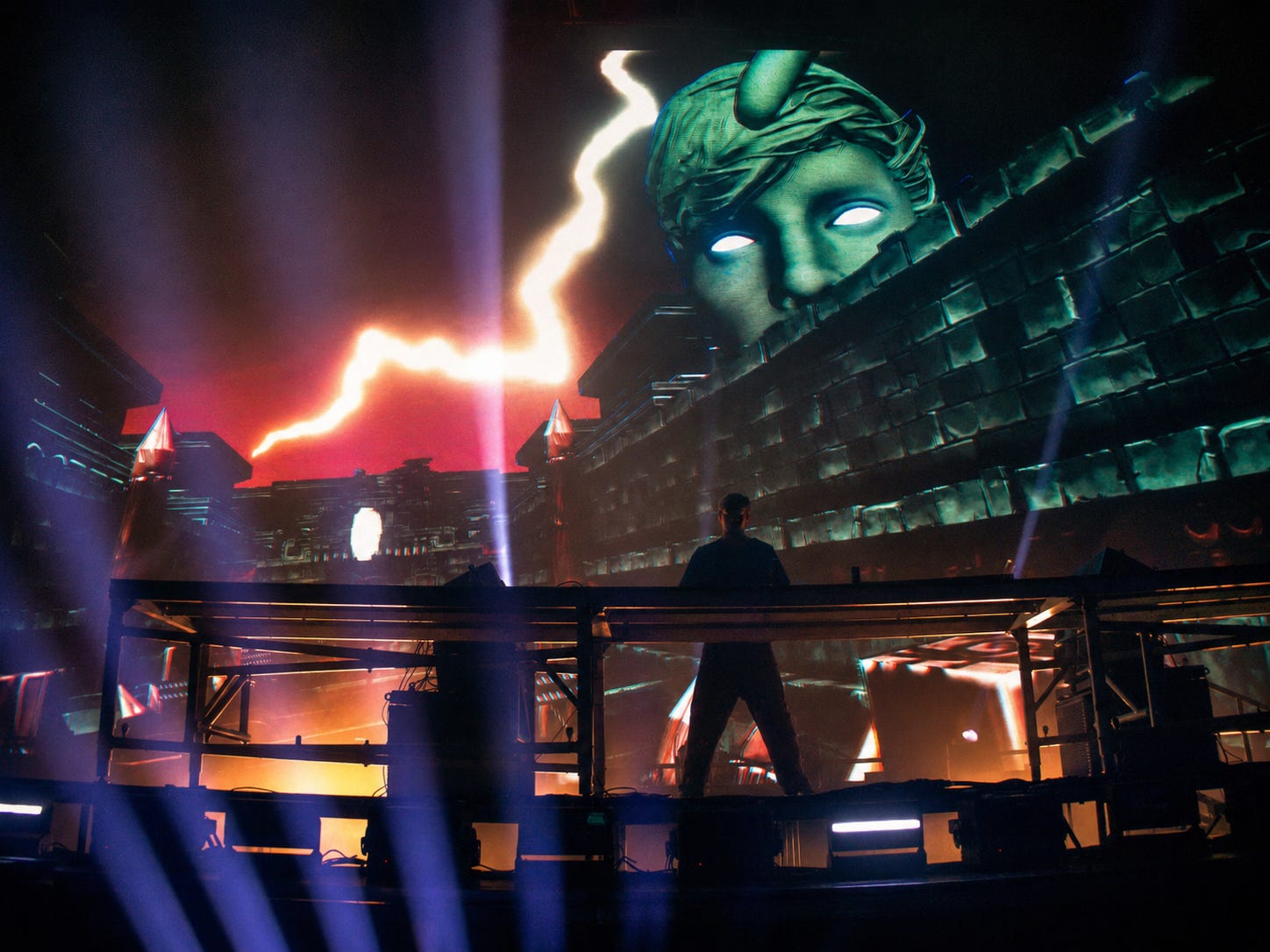
NGHTMRE did not begin by trying to out-muscle Prosecute.
He began with a short film and affirmations.
The language fit his current MINDFULL era, which expanded with a deluxe edition in 2026. The whole thing briefly asked thousands of people in a bass show to focus themselves collectively, to be present, to decide what kind of night this would become.
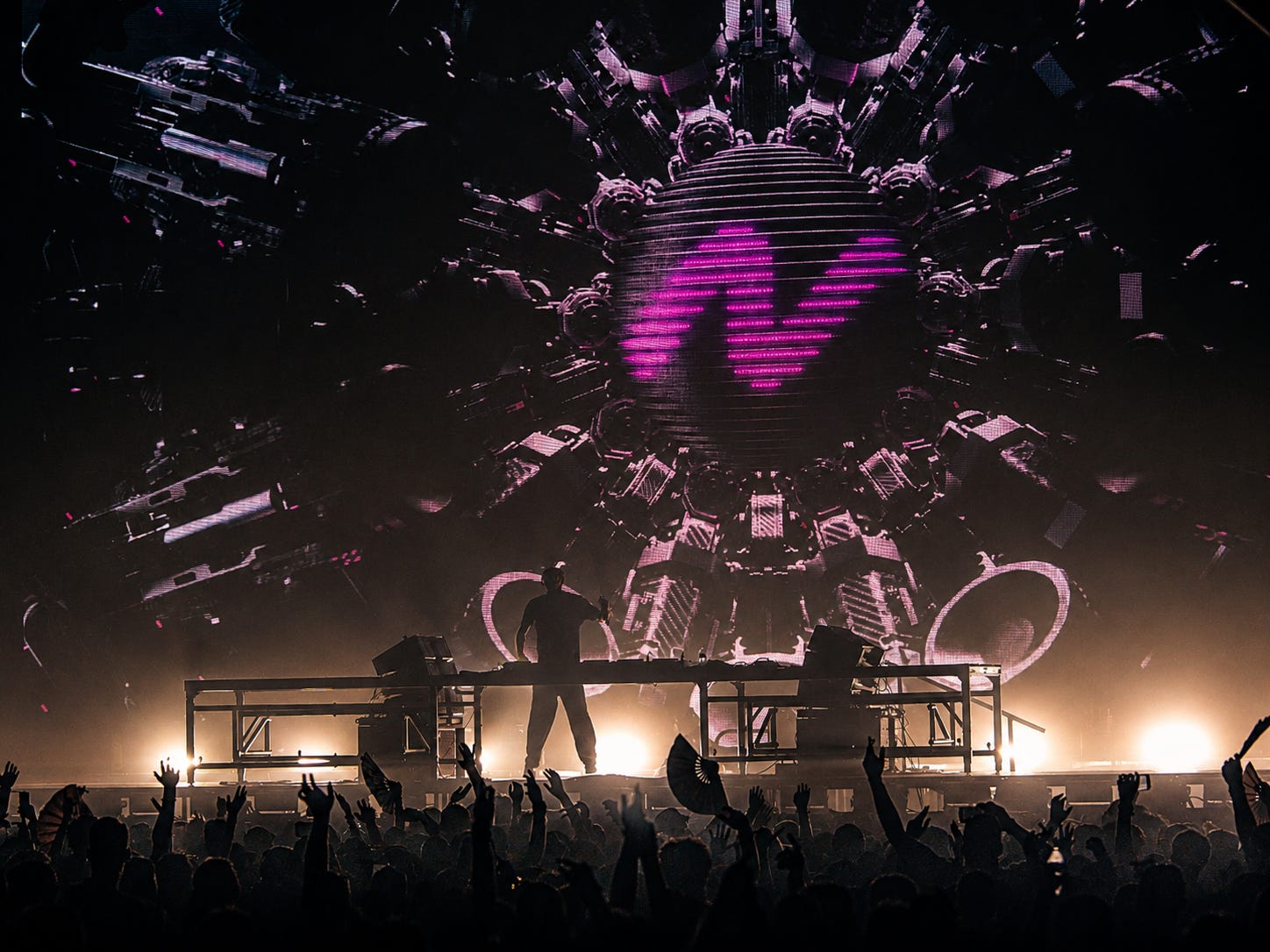
Then the affirmation ended with: “and I’m going to turn the fuck up tonight.”
There it was.
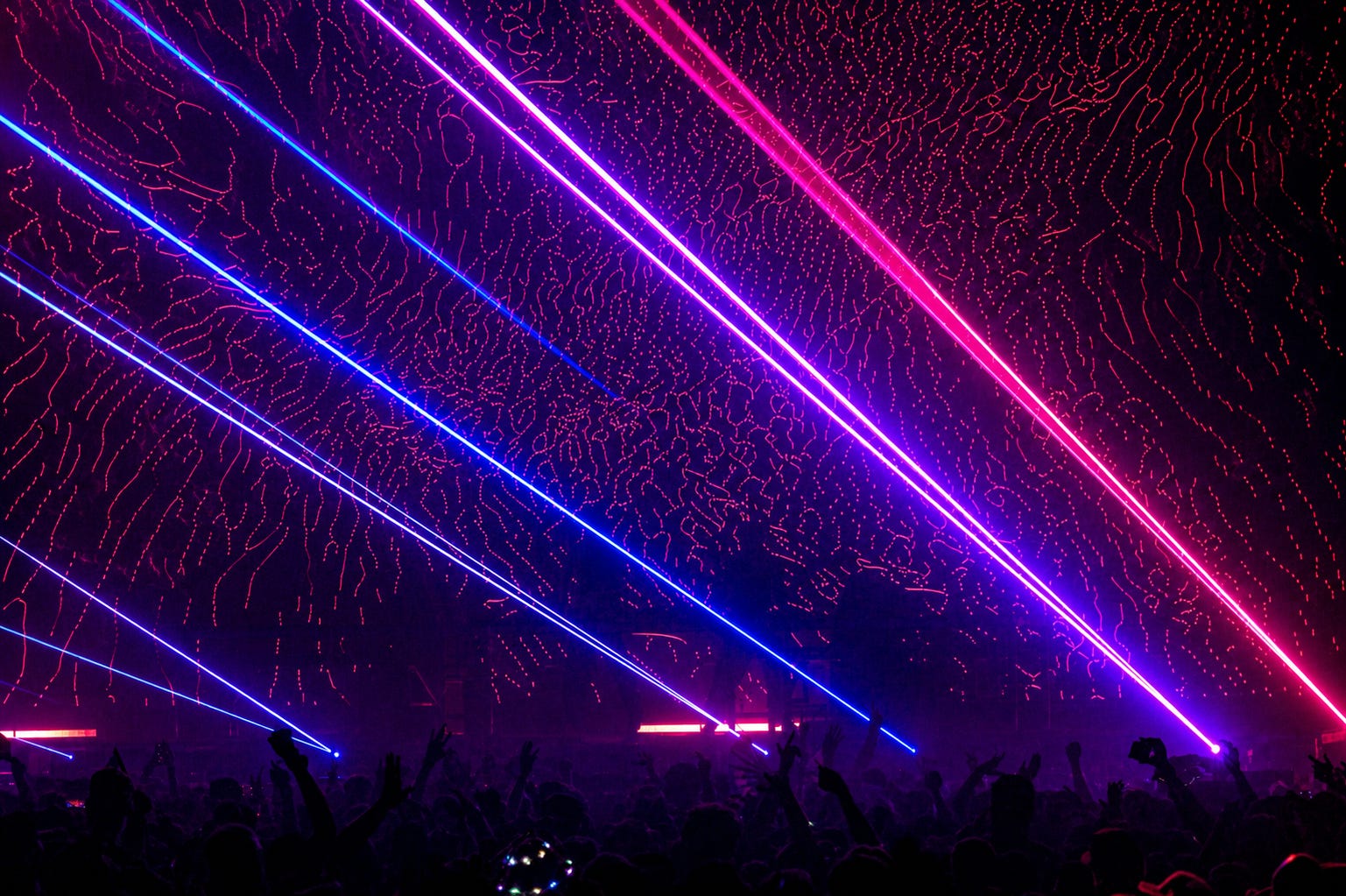
Lasers opened above the crowd. Cityscapes rushed across the screen. Industrial machinery, video-game imagery, enormous faces and mechanical structures kept replacing one another while white vapor cannons blasted around the stage. NGHTMRE’s visuals seemed almost unwilling to remain in the same world for more than a few minutes.
The music behaved similarly.
Hip-hop kept cutting through the heavier material, giving the set another layer of recognition. GRiZ slipped into the mix. The familiar opening of Vengaboys’ “We Like to Party!” appeared before Lil Wayne’s “A Milli” took over. One recognizable “good feeling” vocal cue barely had time to register before “Tokyo Drift” sent the room somewhere else.
By then, reporting from inside the crowd had acquired its own strange split-screen quality. On one side, someone was having what appeared to be the best night of their life. A few feet away, someone else was throwing up into a garbage can.
Both were committed to the evening.
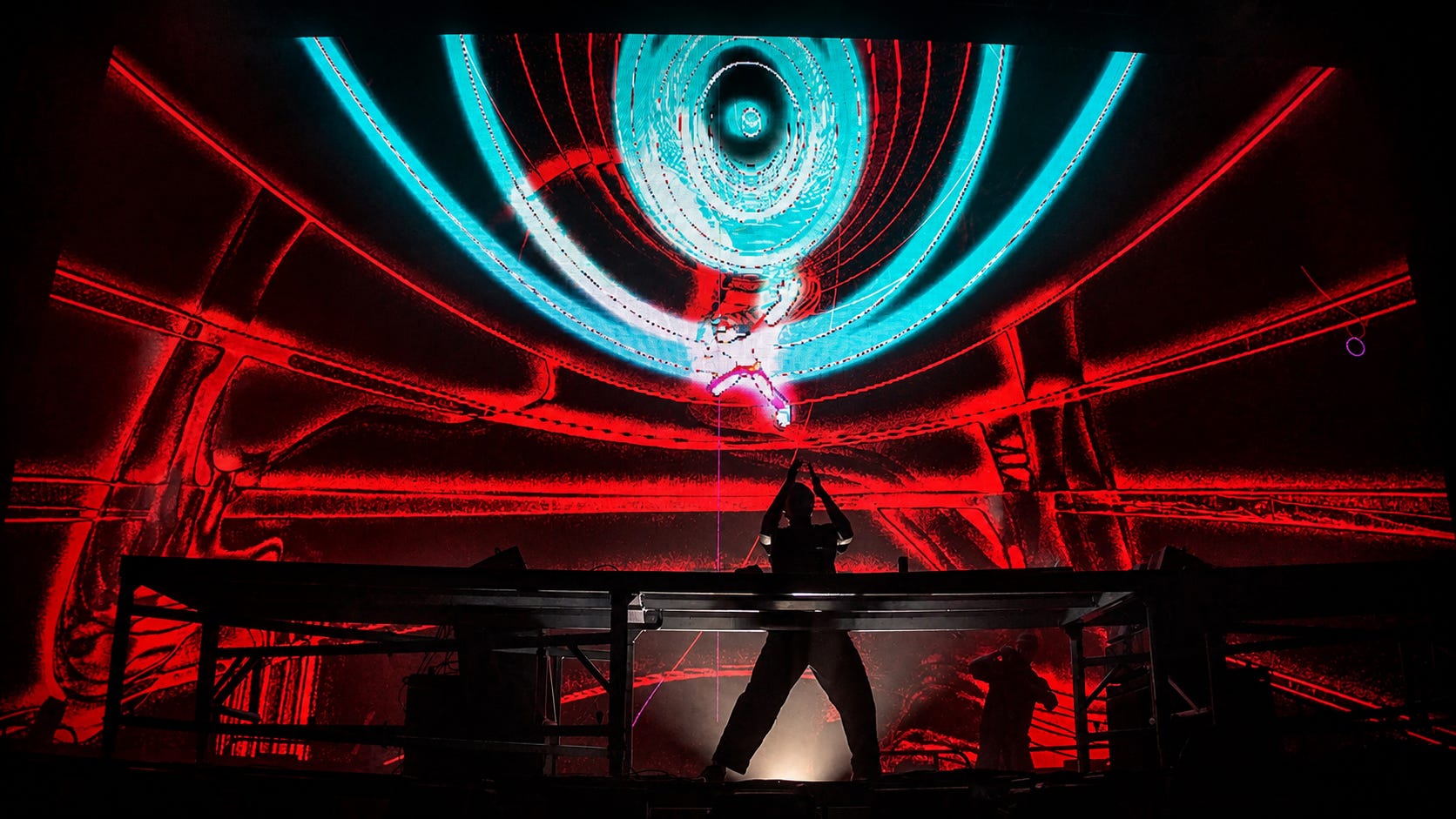
NGHTMRE told the audience he had become something of a frequent flyer at The Armory and that its crowds never disappointed. From where we were standing, he had a case. The floor remained packed without becoming impossible to navigate and people continued making small adjustments for each other even as the show grew louder and more visually aggressive.
Then came one of my favorite turns. Flume’s “Never Be Like You” appeared, a song whose refusal to become someone else already carries its own little streak of defiance. NGHTMRE followed the familiar with his own shared history, including “FEELING GUD”, his collaboration with SLANDER and Matthew Santos.
That was where the set’s use of old material started feeling less like cheap nostalgia and more like crowdcraft.
Aerosmith’s “Dream On” cut into bass and womps. “Gangsta’s Paradise” surfaced. Jordin Sparks and Chris Brown’s “No Air” was the happy surprise I did not know I needed, especially during a recent personal relapse into early-2000s music.
DJs write with other people’s memories as much as their own records. NGHTMRE understood that. Put the right lyric on a giant screen and suddenly thousands of people become an extremely loud, questionably tuned karaoke choir.
He kept giving them reasons to sing.
Voyager at full scale
When NGHTMRE finished, SLANDER did not immediately appear.
Instead, the room sat inside a deliberately uncomfortable holding pattern. A darker little beat played between sets, something like Jeopardy music after Jeopardy had made several poor life choices. Every so often SLANDER’s name flashed across the screen for an instant, almost like a camera firing in the dark.
It worked.
Every flash reminded the room exactly what it was waiting for.
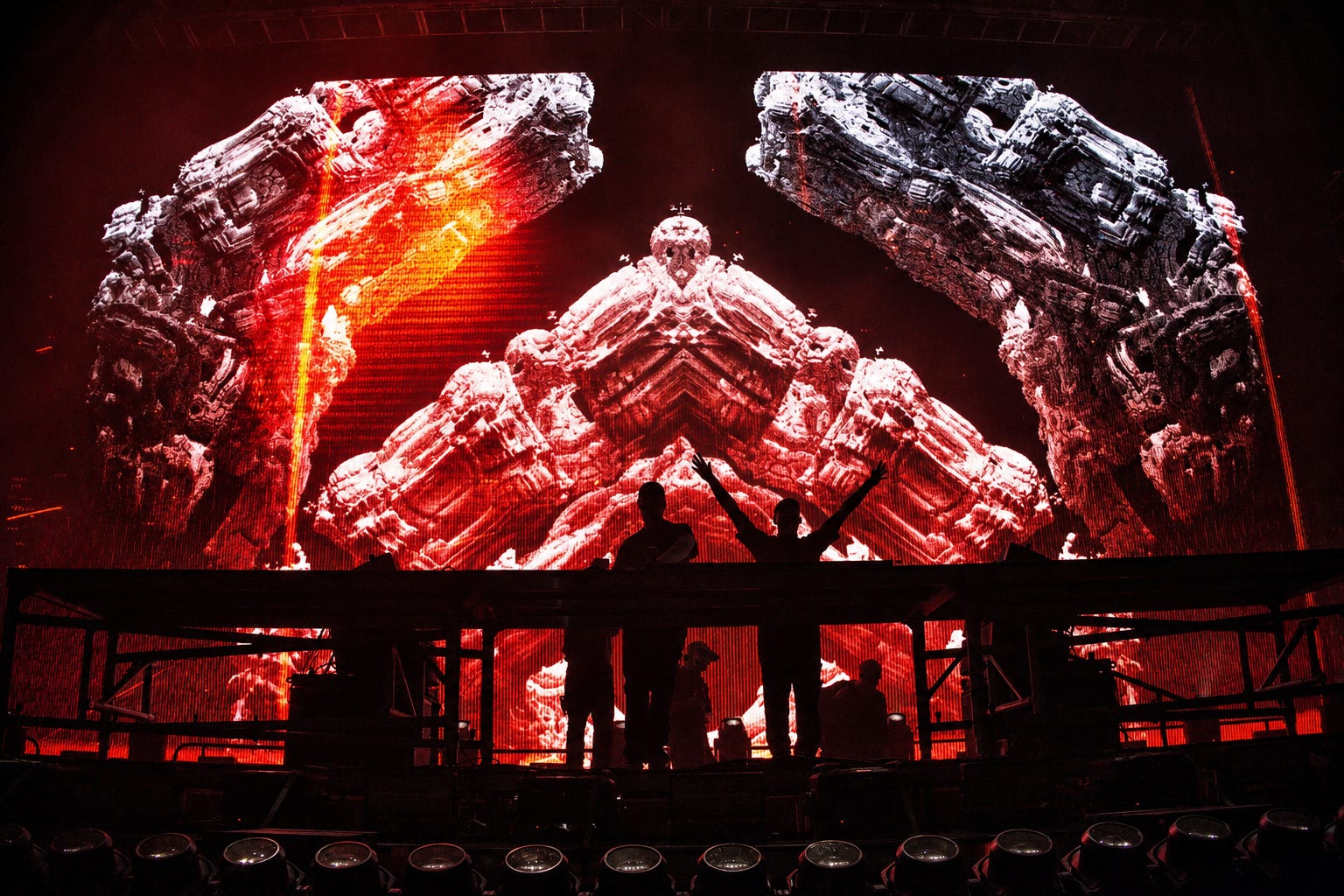
Then SLANDER arrived beneath enormous red mechanical imagery, Derek Andersen and Scott Land reduced to silhouettes in front of a screen large enough to make two human beings seem incidental. Their Voyager Night 2 production finally showed what The Armory’s lighting system had been holding back.
No laser seemed to have the evening off.
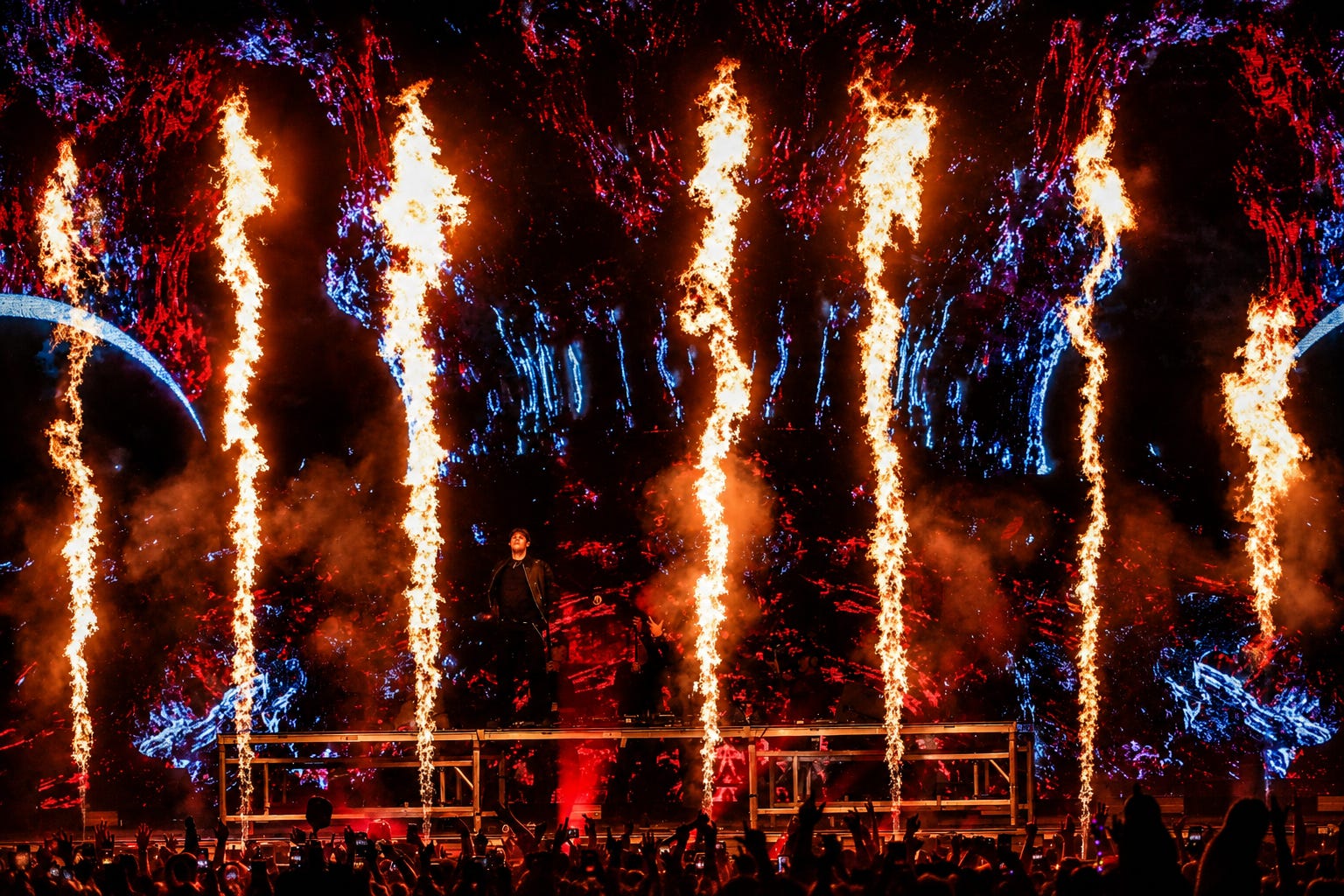
The floor vibrated hard enough that listening stopped being an activity performed exclusively by the ears. Bass moved through legs, chest and teeth. Red mechanical figures gave way to purple silhouettes, white sparks, fire columns and laser grids. The venue’s scale became part of the instrument.
SLANDER knew when not to use all of it, too.
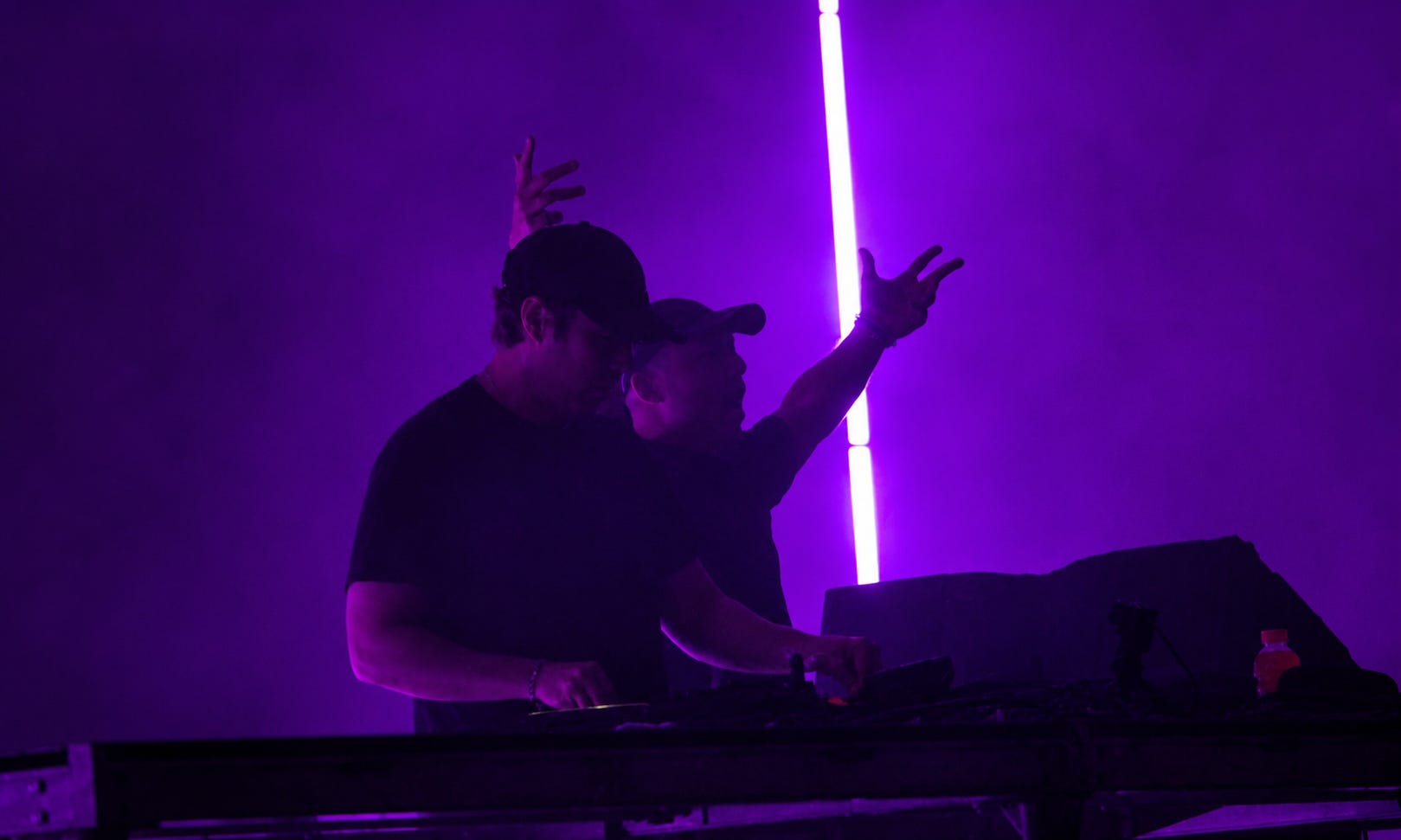
One of the night’s most emotional sequences put footage of a vocalist across the screen while the crowd supplied the feeling underneath it. The room softened, people sang, and couples leaned into each other. Hands that had been throwing horns a few minutes earlier simply stayed raised.
Then Kendrick Lamar’s “HUMBLE.” arrived and tenderness got evicted.
Bass snapped back underneath it. The buildup kept adding weight, lasers spreading across the floor until the production suddenly pulled itself inward again. The stillness after the impact echoed NGHTMRE’s opening emphasis on being present. Whether that symmetry was deliberate or simply good sequencing, it gave the top two sets an unexpected relationship.


“First Time”, SLANDER’s collaboration with Seven Lions, Dabin and Dylan Matthew, carried another of those rises and releases. It let the room feel something without stranding it there.
Then came “Gud Vibrations”.
That one has history. NGHTMRE and SLANDER released the track together a decade ago, long before Saturday’s Voyager production was throwing fire across The Armory. Hearing it after NGHTMRE’s set made the top of the bill feel less like headliner and special guest taking turns and more like two careers that have kept crossing back into one another.
And just when everything had become enormous, serious and emotionally loaded, SLANDER gave us “Space Jam.”
Everybody smiled.
The smartest part of their set was how quickly they moved in and out of those memories. Nothing was allowed to sit around long enough to become novelty. A sentimental vocal could be replaced by a drop that gave half the floor the same bass face. A heavy run could collapse into stillness. Sweetness was usually temporary.
So was brutality.
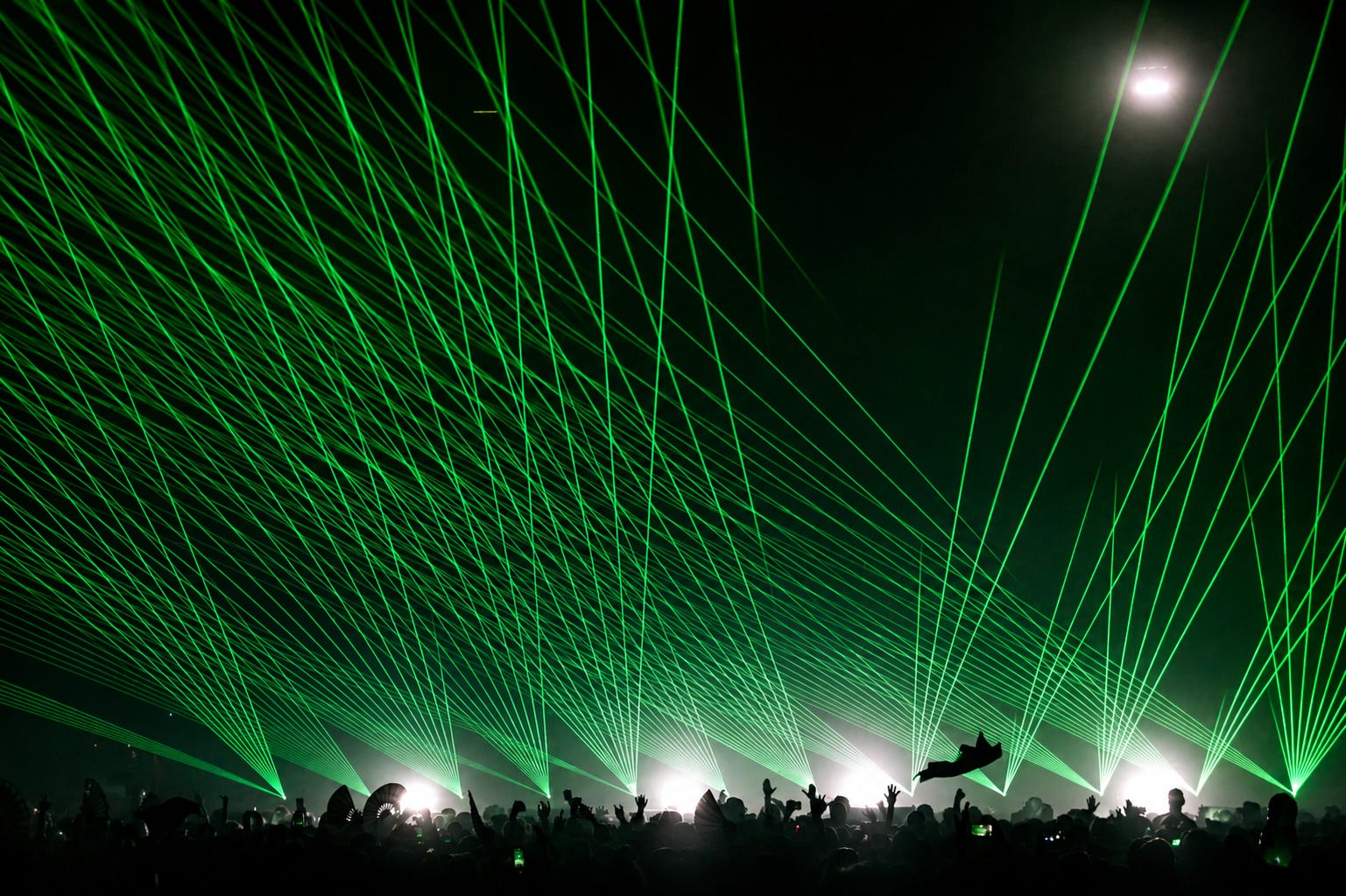
That push and pull is where SLANDER made the scale useful. Fire is impressive. Lasers are impressive. A screen the size of a building’s interior is impressive. None of those things mean much if every song receives the same treatment. Voyager kept changing the size of its own emotions.
By the time columns of fire were climbing in front of the duo, the production looked gigantic.
By the time green lasers stretched over the audience later, the people underneath them seemed more interesting.
Afterglow
Earlier in the evening, familiarity had been the story. The familiar drive. The familiar door. The Armory staff who knew how to move people through a show without turning every interaction into an ordeal.
Hours later, after the room had been red, blue, black, purple, white, green and occasionally on fire, the things I kept thinking about were still small.
People ducked when cameras came up. Someone sprouted us. Security handed forward earplugs when a girl needed them. The crowd moved around each other instead of through each other. People picked up after themselves. At the rail, strangers screamed the same songs while dressed like they had arrived from entirely different planets.
The bass was huge. The room worked because people knew when to make space.
We say it often because we keep seeing the evidence: The Armory usually brings the right kind of crowd.
On Night 2 of Voyager, the lasers just made them easier to see.
Please consider Donating to Sponsor an article even $1 helps!
