


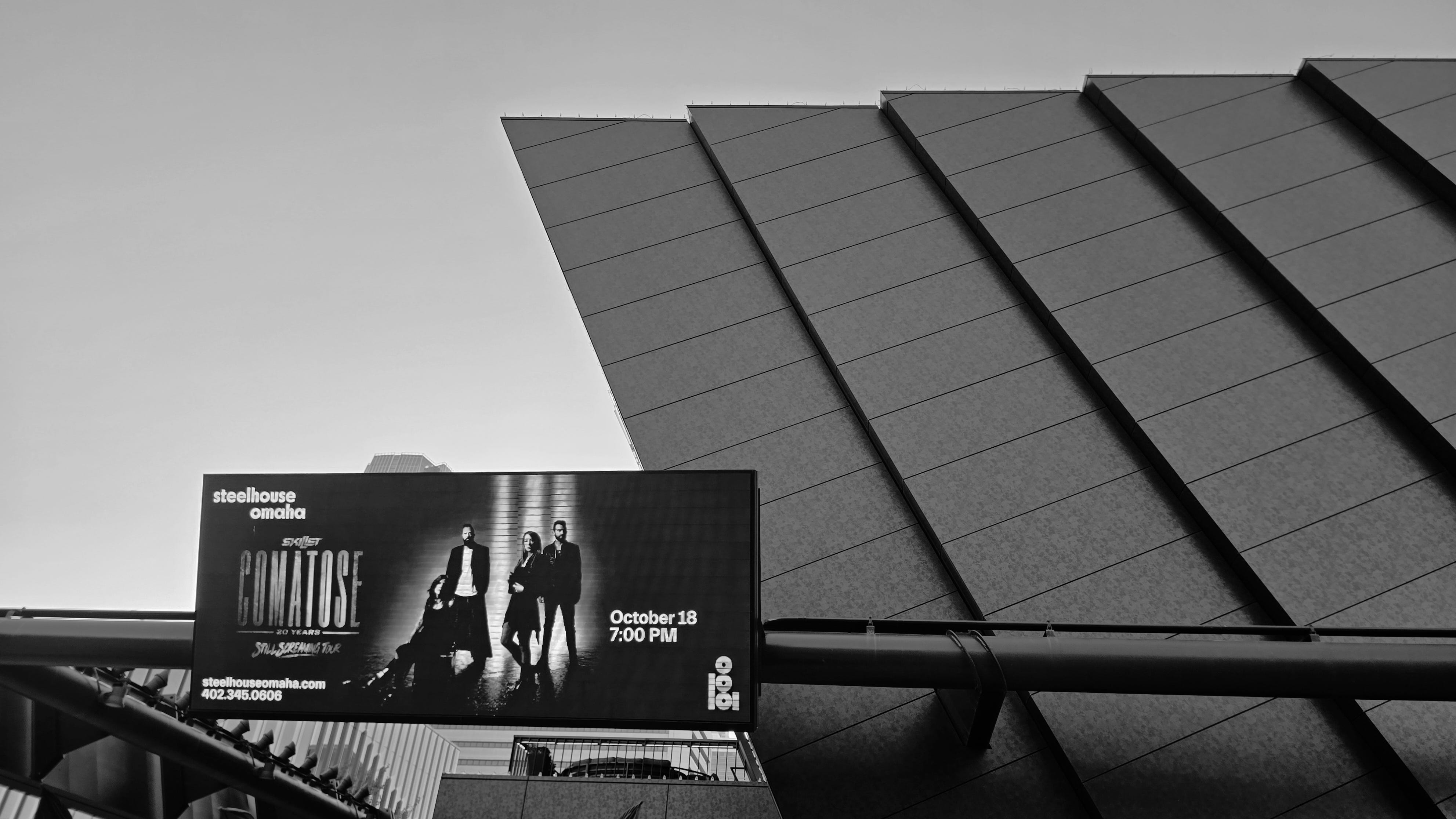
For as long as I can remember, I’ve been trying to cover a show at Steelhouse Omaha. Between disappointing denials and multiple unfortunate turns of events that caused previous approvals to fall through, getting into this venue as a photographer has been a long time coming. Finally, on a Sunday night in Omaha, I made it inside this 3,000 capacity venue for a show that promised a little bit of everything. From an opener I’d only ever heard on the radio to bands that have occupied my concert calendar multiple times over, the night delivered a variety of sounds, plenty of reasons to keep the camera moving, and emotions that ran high for more than one reason.
The occasion was Skillet’s Comatose 20 Years: Still Screaming Tour, a celebration of the album that really hooked me on the band two decades ago. With Autumn Kings and Escape the Fate setting the stage, the evening had plenty to offer before the headliner even stepped out. But for me, this was about more than finally covering a show at a venue I’d been chasing. It was about revisiting an album that helped shape my musical life and witnessing a band continue to bring its message of Jesus to a new generation.

From Octane to the Steelhouse stage
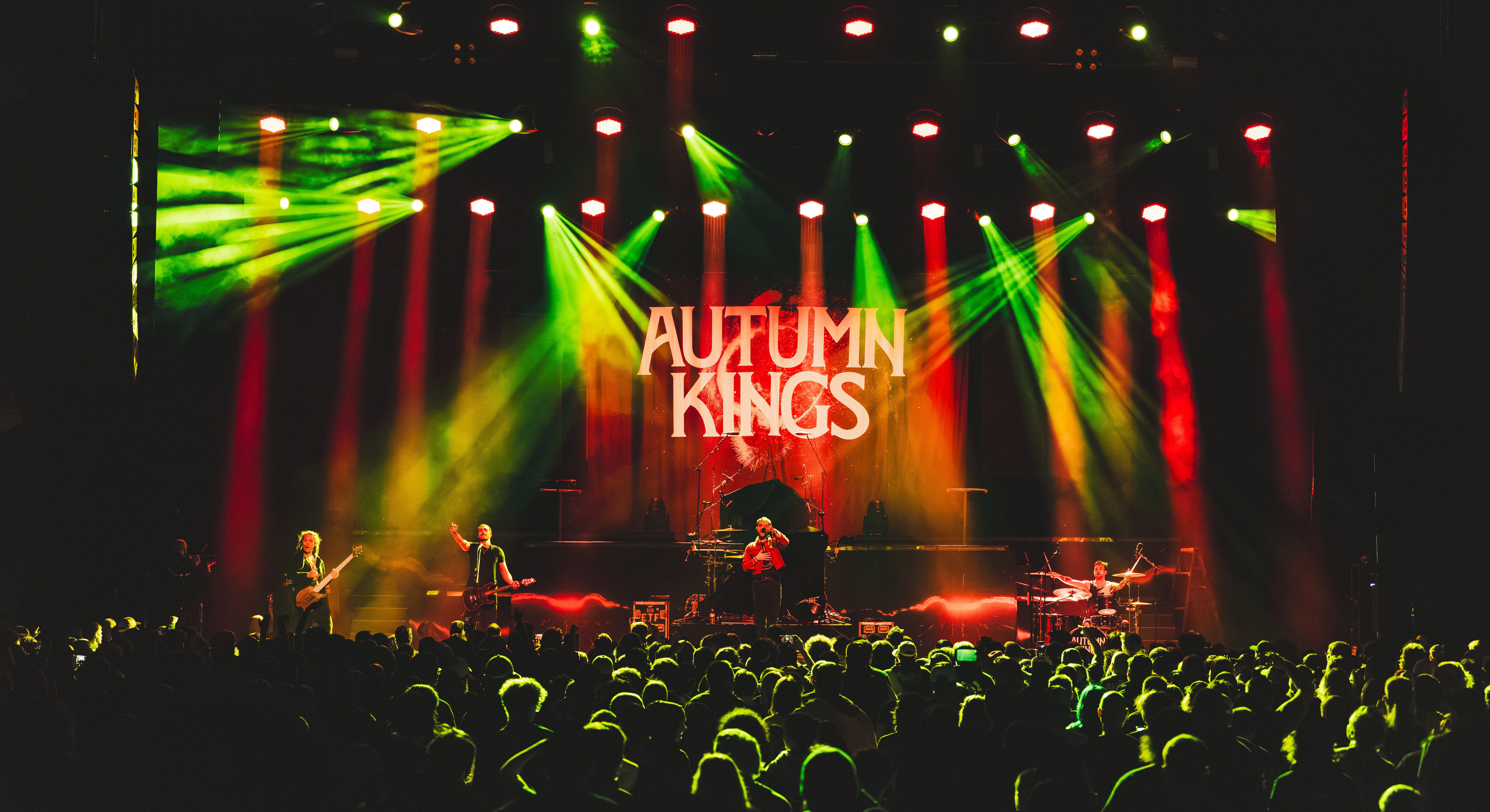
First up was Autumn Kings, a band I’d never had the chance to see live before this night. If you’ve been following my articles, you know what I’m about to say. I first discovered these guys through SiriusXM Octane, where I get most of my introductions to new hard rock music. Songs like “Gone Gone Gone,” “Sleep When I’m Dead,” and “Hellbound” have received plenty of repeat spins on the station, so I came into the set knowing the words to songs I’d never actually witnessed in person.
That’s one of my favorite parts of live music. I can spend weeks or months listening to a band through headphones or in the car, but there’s still something to discover when the songs are performed in front of you. Sometimes it’s a new arrangement or a particular instrumental moment. Other times, it’s hearing the story behind a song and discovering another layer to something you already enjoy.
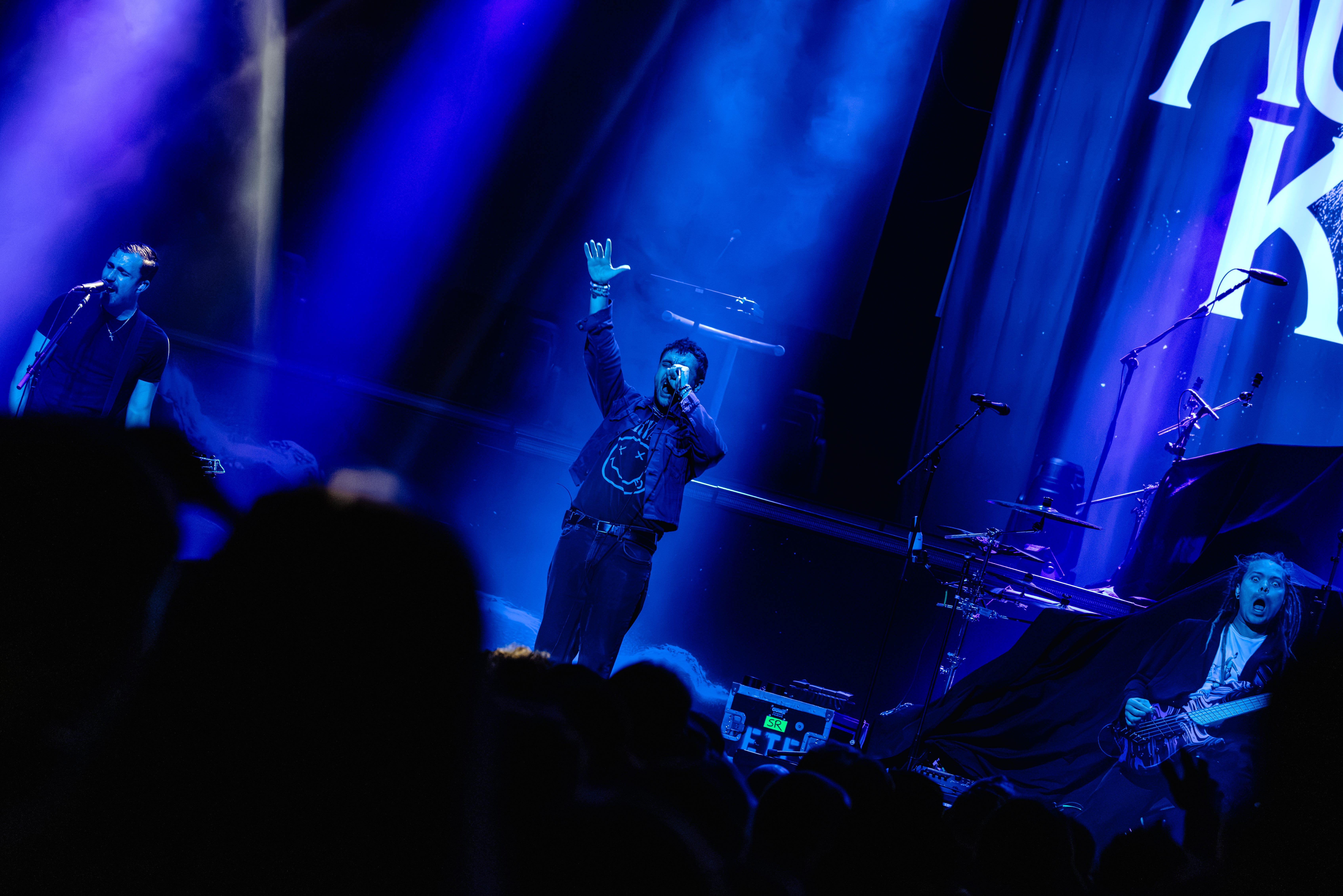
Autumn Kings delivered that second kind of discovery with “Snake Charmer.” When the band introduced the song as an epic inspired by Attack on Titan, one of my favorite anime series of all time, they had my undivided attention. Rock music and anime are two worlds I love, and hearing the band connect them was an unexpected highlight. It’s always fun when a concert gives you a reason to appreciate a song beyond the fact that it sounds good.
The band’s stage presence helped make the set an effective opening statement, too. Lead guitarist Jake Diab and bassist Sky Werth were particularly energetic, giving me plenty to watch as a photographer while the band worked to pull the crowd into the performance. There was no need to wait until the headliner to get things moving. By the end of Autumn Kings’ set, the audience was warmed up and ready for the next band.
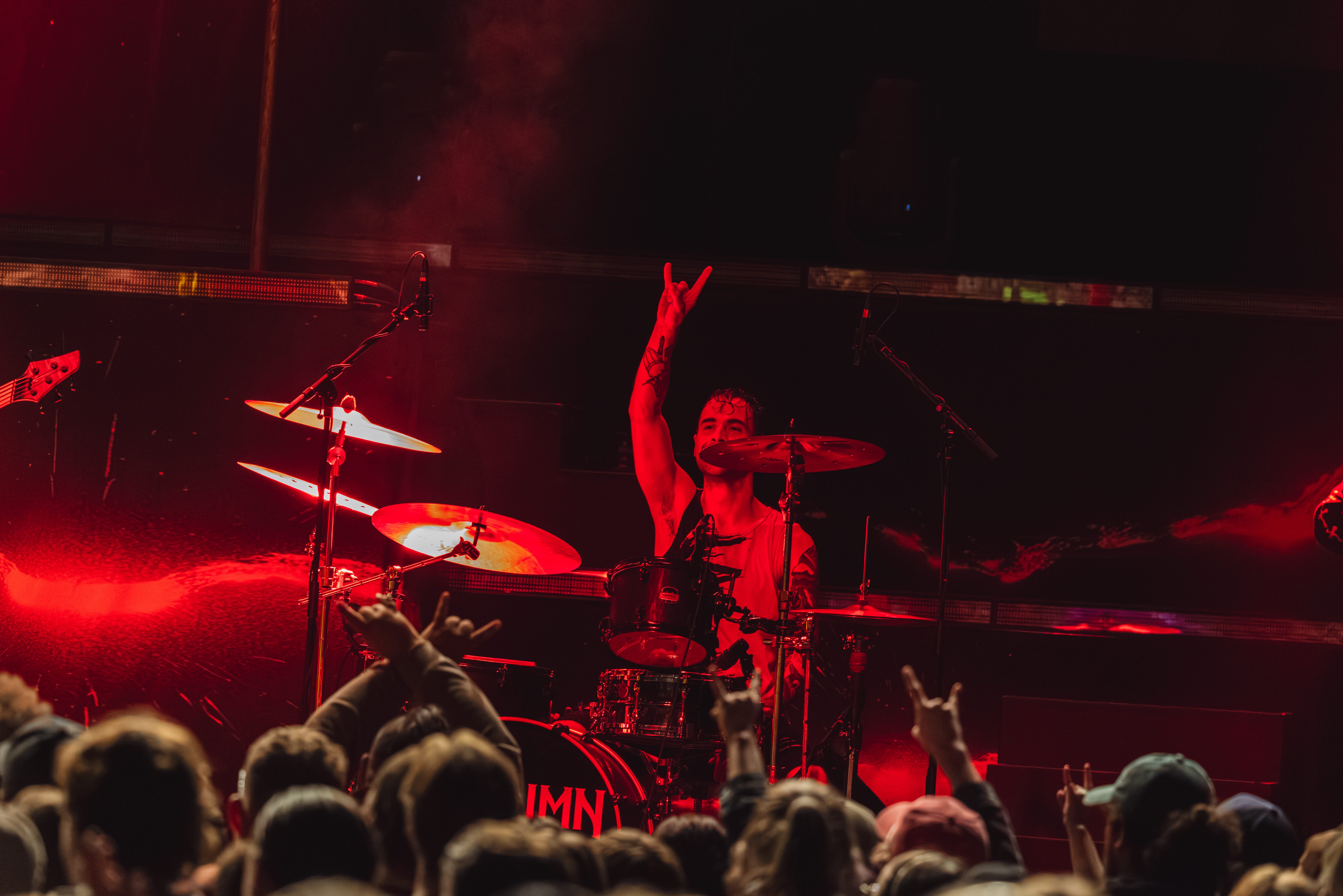
For an opener I had previously known almost entirely through radio airplay, it was a welcome introduction to what the band brings to the stage. I left with another reason to keep an eye on the artists making their way through Octane’s rotation.
Please consider Donating to Sponsor an article even $1 helps!

Five years later, Escape the Fate still delivers
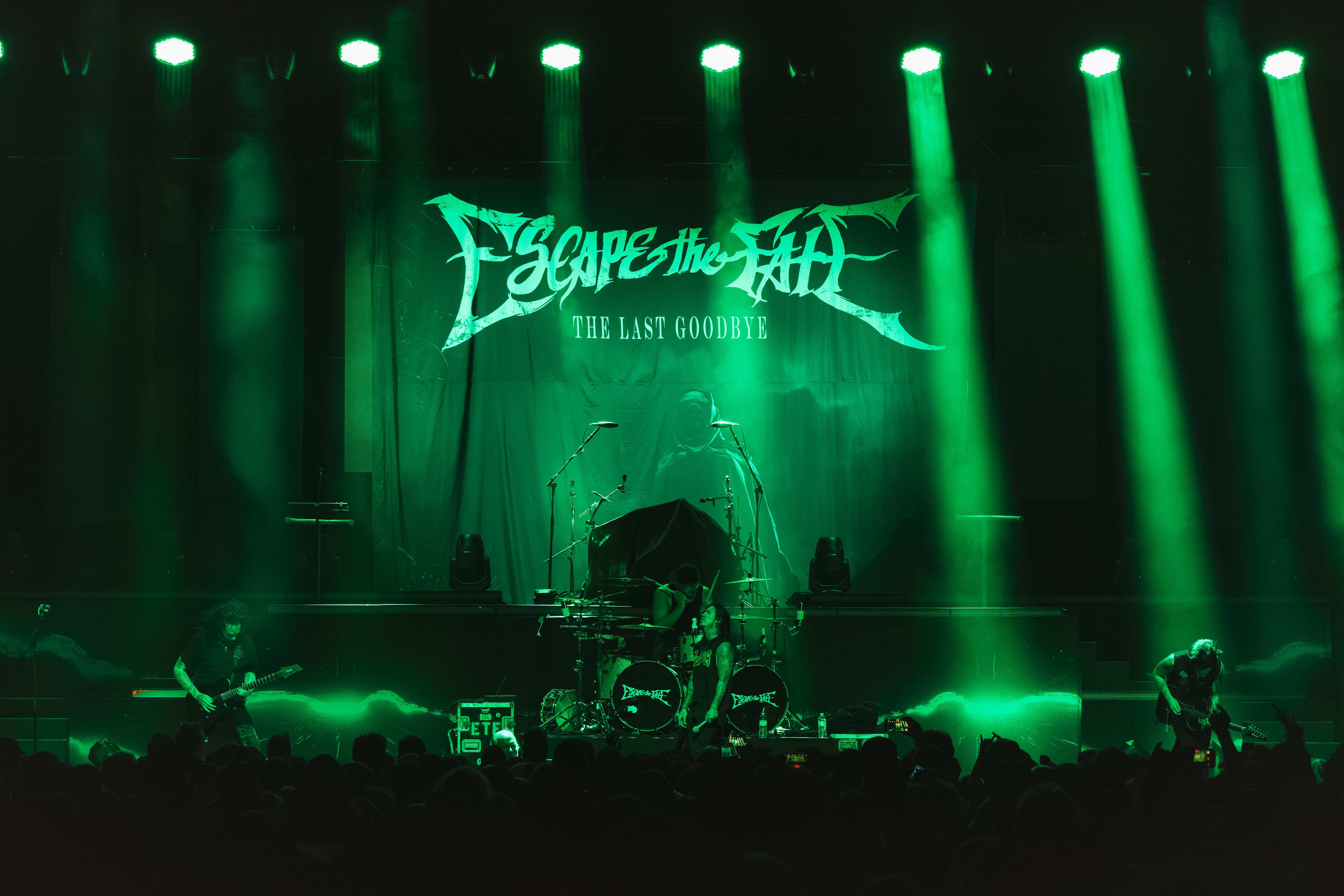
Next up was Escape the Fate. It’d been a minute since I’d seen these guys, with my last encounter dating back to 2021, when they opened for Ice Nine Kills. Five years is a considerable stretch between shows, so I was excited to get another opportunity to see them with the added benefit of photographing them as well and see how the performance would unfold.
I was particularly pleased when they launched into “Broken Heart.” Released in 2018, the song has become a solidified breakup anthem, and hearing it live was a great way to reconnect with a track that has stuck around for a reason. Escape the Fate has a knack for pairing an emotionally charged chorus with a sound that invites the crowd to sing along, and the song fit comfortably into a set built to keep the audience engaged.
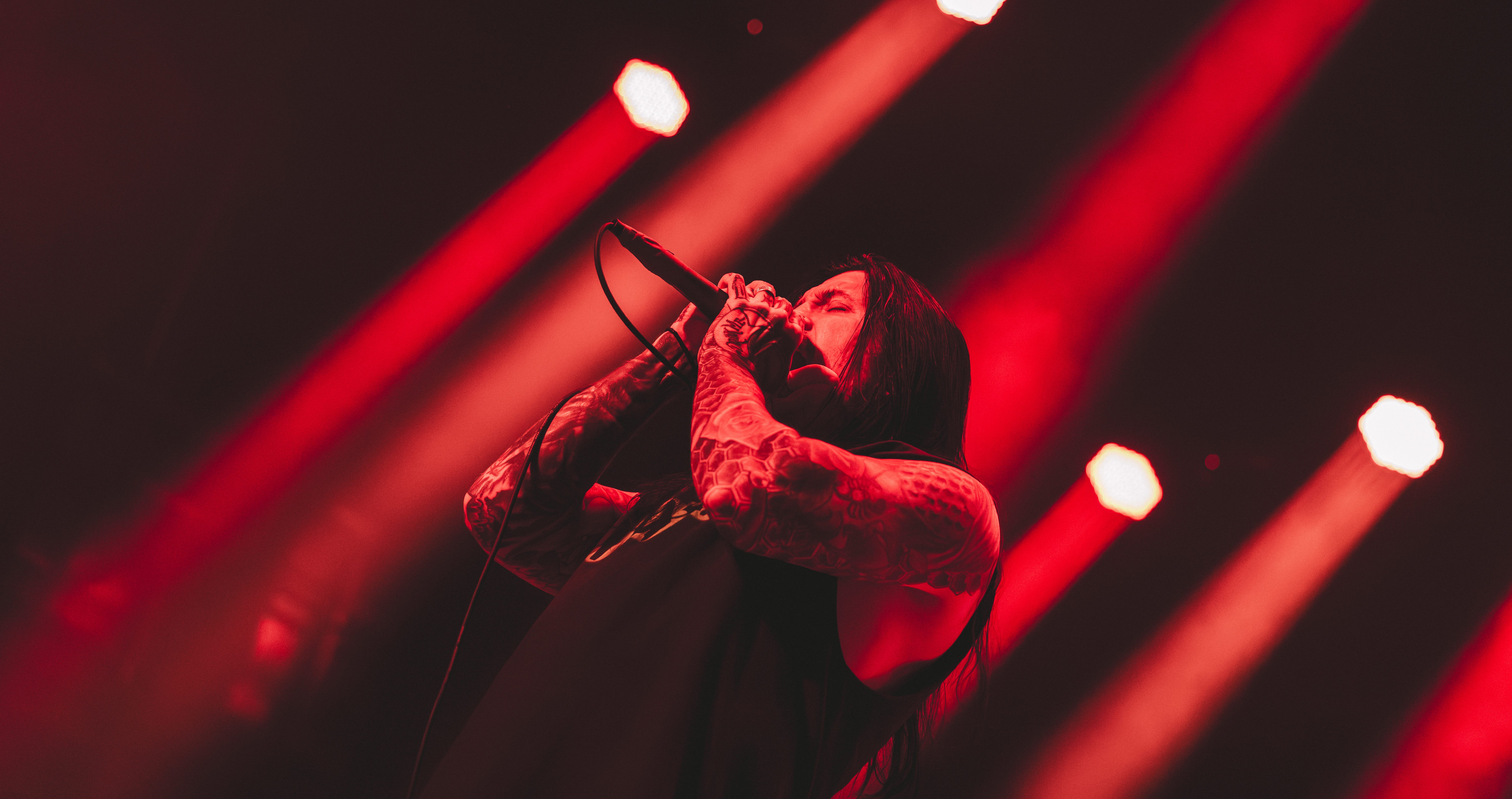
Their stage presence is another reason the band is worth watching. Frontman Craig Mabbitt brings a commanding vocal presence, while guitarist Matti Hoffman delivers the kind of unmistakable emo band aesthetic that feels right at home in this corner of rock music. Erik Jensen was constantly spinning, adding movement to the performance, and drummer Robert Ortiz apparently has little interest in remaining seated for an entire set. Watching a drummer stand up and play is a detail that can catch your eye even in a crowded stage production, and Ortiz certainly gave me something to watch.
That’s one of the enjoyable challenges of concert photography: deciding where to look when every member seems determined to give you a different moment worth capturing. Escape the Fate made that decision difficult in the best possible way. Between Mabbitt’s vocals, the guitar work, Jensen’s movement, and Ortiz’s approach behind the kit, there was always something happening somewhere onstage.
The band also continued the evening’s unexpected connection between rock music and the worlds of anime and video games. “This War Is Ours (The Guillotine II),” a song closely associated with the Halo gaming universe in the minds of many fans, brought another welcome dose of that crossover appeal. For someone who enjoys both heavy music and gaming, these moments added another layer to a night that already had plenty going for it.
It was also great to hear something heavier in the form of their newer single “Last Goodbye.” The song provided another reminder that Escape the Fate’s sound can move between melodic hooks and harder hitting material without losing its identity. The band has a substantial catalog to draw from, and this set offered enough variety to make the wait worthwhile.
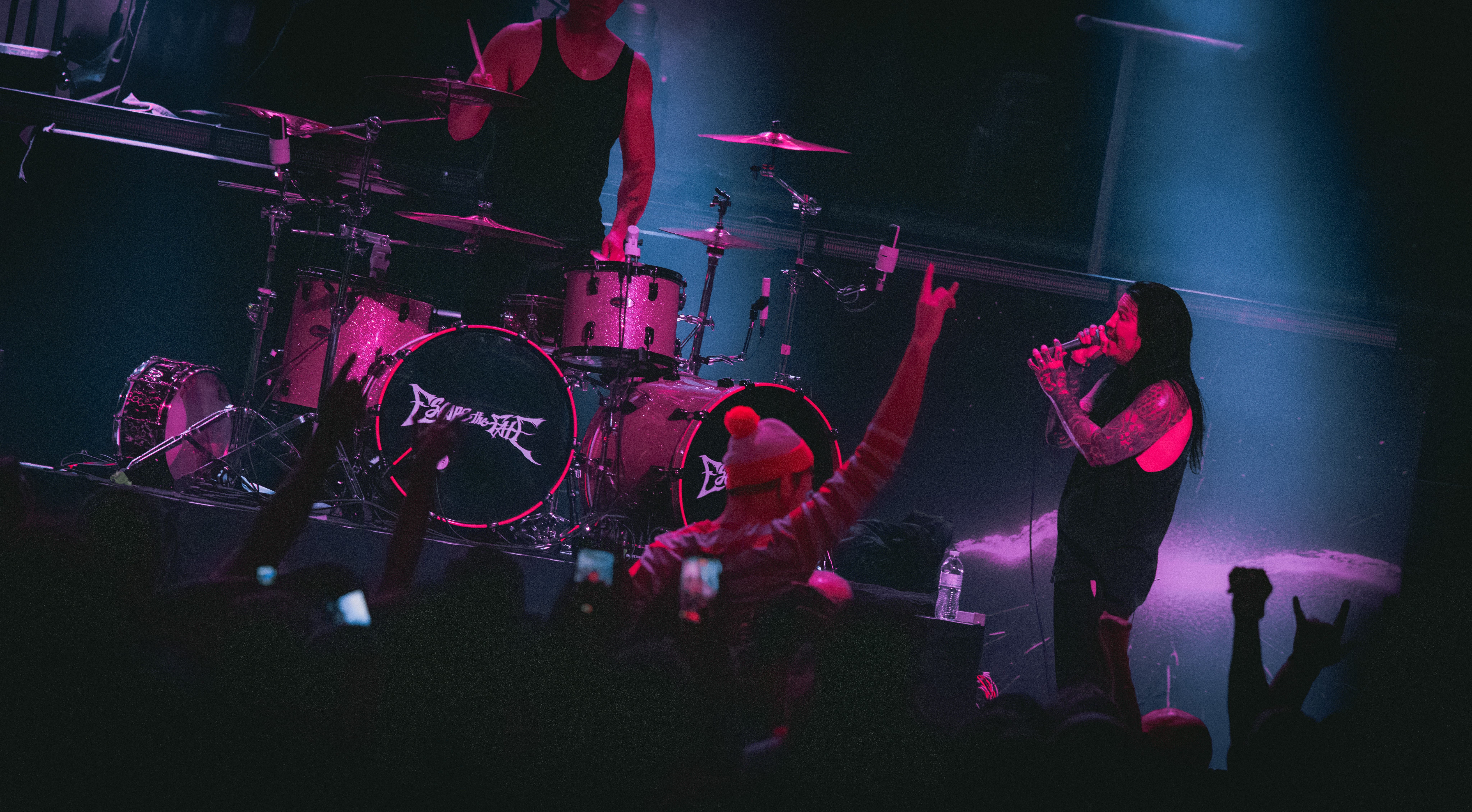
After five years out of sight, it was a blast to see Escape the Fate again. Hopefully, I won’t have to wait another five years before the next time.
Twenty years of Comatose, and a new generation singing along
And then came the band of the night.
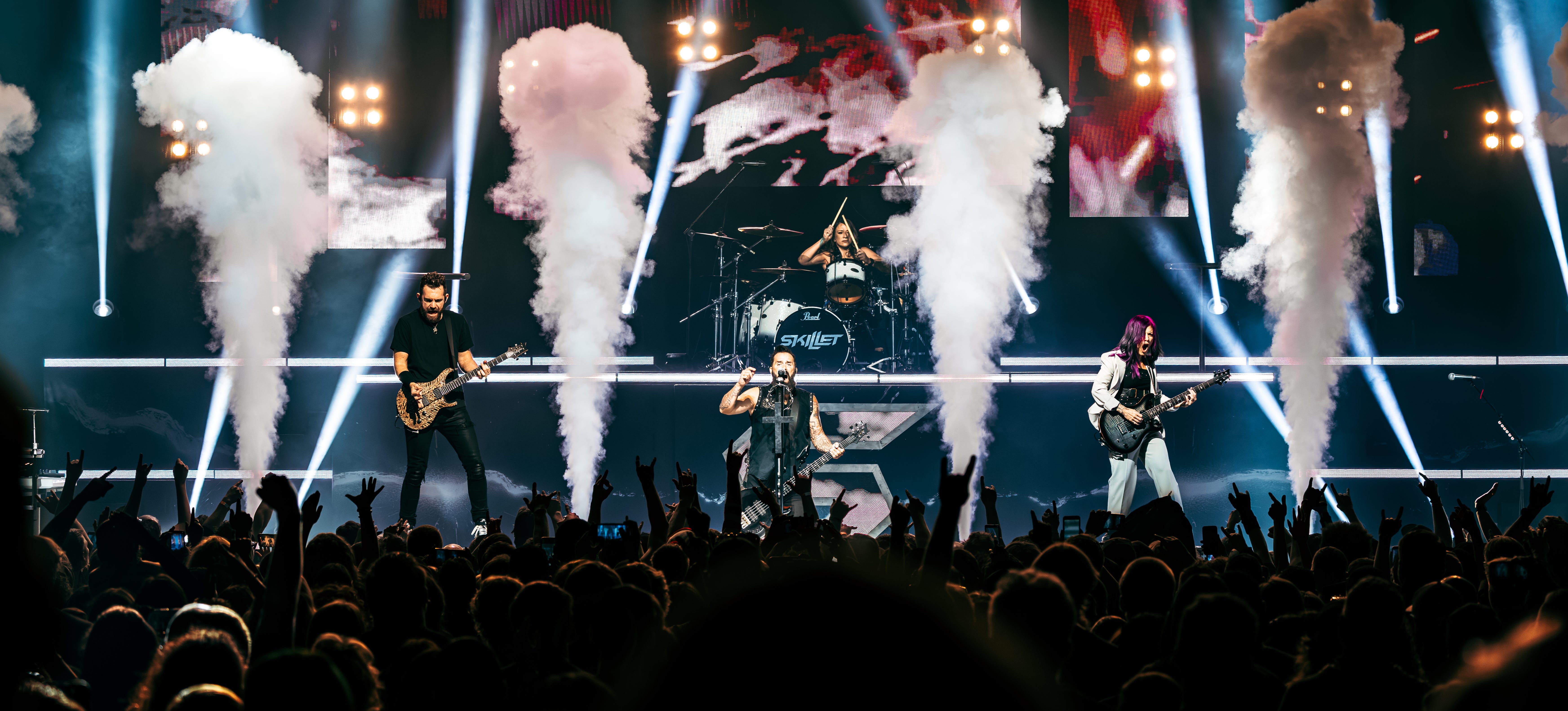
Skillet has been part of my musical life for as long as I can remember, and over the years, I’ve found myself falling more and more in love with what the band does. This tour meant even more because it celebrated the 20th anniversary of Comatose, the album that really got me hooked. Knowing that one of the defining records of my childhood is turning 20 is both humbling and exciting. Humbling, because the passage of time is an unmistakable reminder that I’m getting older. Exciting, because the celebration is introducing that same music to a new generation of fans.
And these fans really love this band.
One of the unexpected privileges of being a concert photographer is getting to know the people at the barricade between sets. While the crowd waits for the next artist, you sometimes hear stories that help explain what a particular band means to the people who have followed it for years. At Steelhouse, I met a family who told me they had been following Skillet throughout the tour. Omaha marked their 20th time seeing the band live.
Twenty shows, and the emotions were still running wild.
Watching a fan break into tears while singing a song back to a band that means the world to them is profoundly moving. It’s a reminder that a concert is rarely just about the musicians on stage. The songs carry memories, experiences, and personal connections that the audience brings with them. You might be hearing a chorus for the hundredth time, but for someone standing beside you, it can still feel like the first time they heard it.
That emotional connection was especially fitting for an album anniversary. Released in 2006, Comatose helped define Skillet’s sound for a generation of rock fans, combining heavy guitars and driving rhythms with melodies built to stay with you. The band has continued to evolve over the years, but the songs on this album remain a significant part of its identity. The anniversary tour gave those tracks a chance to stand on their own again rather than simply appearing as occasional favorites in a much larger setlist.
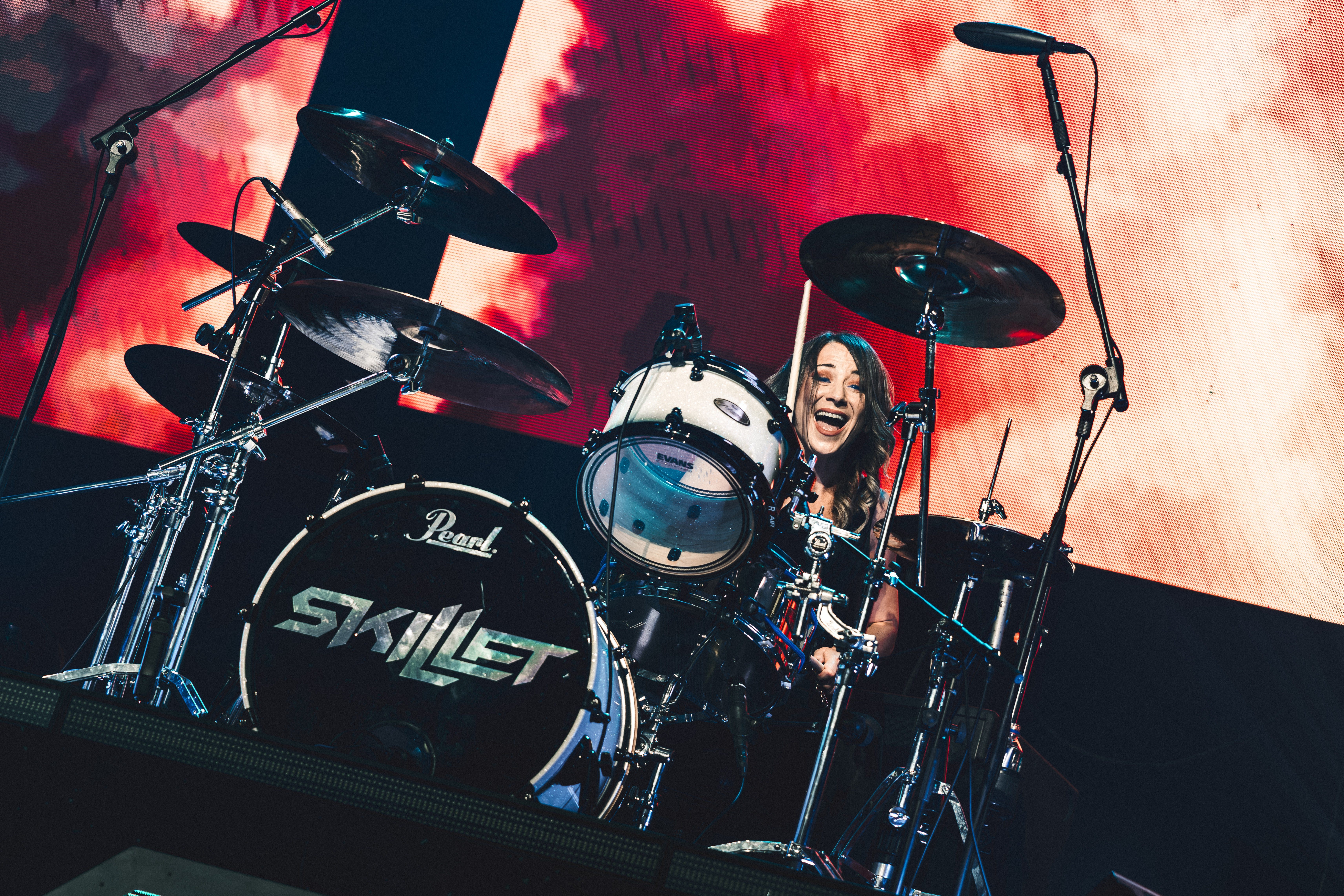
The band performed the album in its entirety, though not in the original track order. Honestly, I liked that approach. Even when you know every song on a record, hearing the tracks rearranged keeps a little mystery alive. You know what’s coming eventually, but you don’t necessarily know what the next few minutes will bring. Each song becomes another welcome return rather than a predictable step through a familiar sequence.
My personal highlight was “Whispers in the Dark,” my personal favorite song from the album. There is an undeniable magic in hearing a longtime favorite performed as part of a full album celebration, especially one that hasn’t been a setlist regular for years. You aren’t simply waiting for the one song you came to hear; you’re experiencing it as part of the larger record that made you a fan in the first place. For me, it was one of those moments that made the entire anniversary concept feel worthwhile.
Once the band had worked through Comatose, the night was far from over. Skillet continued with other favorites, including “Invincible,” “Awake and Alive,” and the newest single “Scream,” among others. The set connected the music that first drew longtime fans to the band with the material keeping its catalog moving forward.
And the production? I honestly don’t know how to describe a Skillet show without feeling as though I’m leaving something out.
A production built to be seen and heard
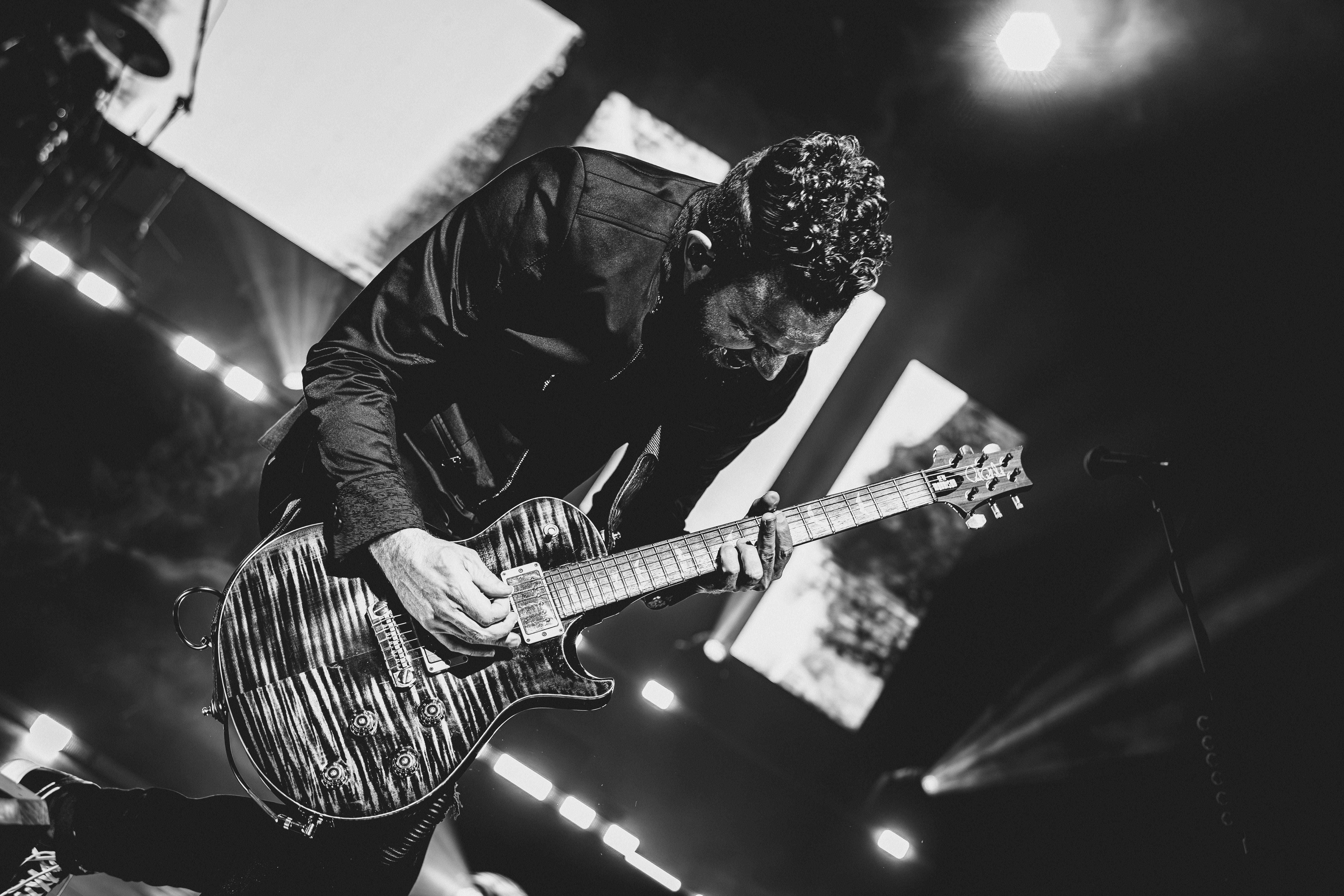
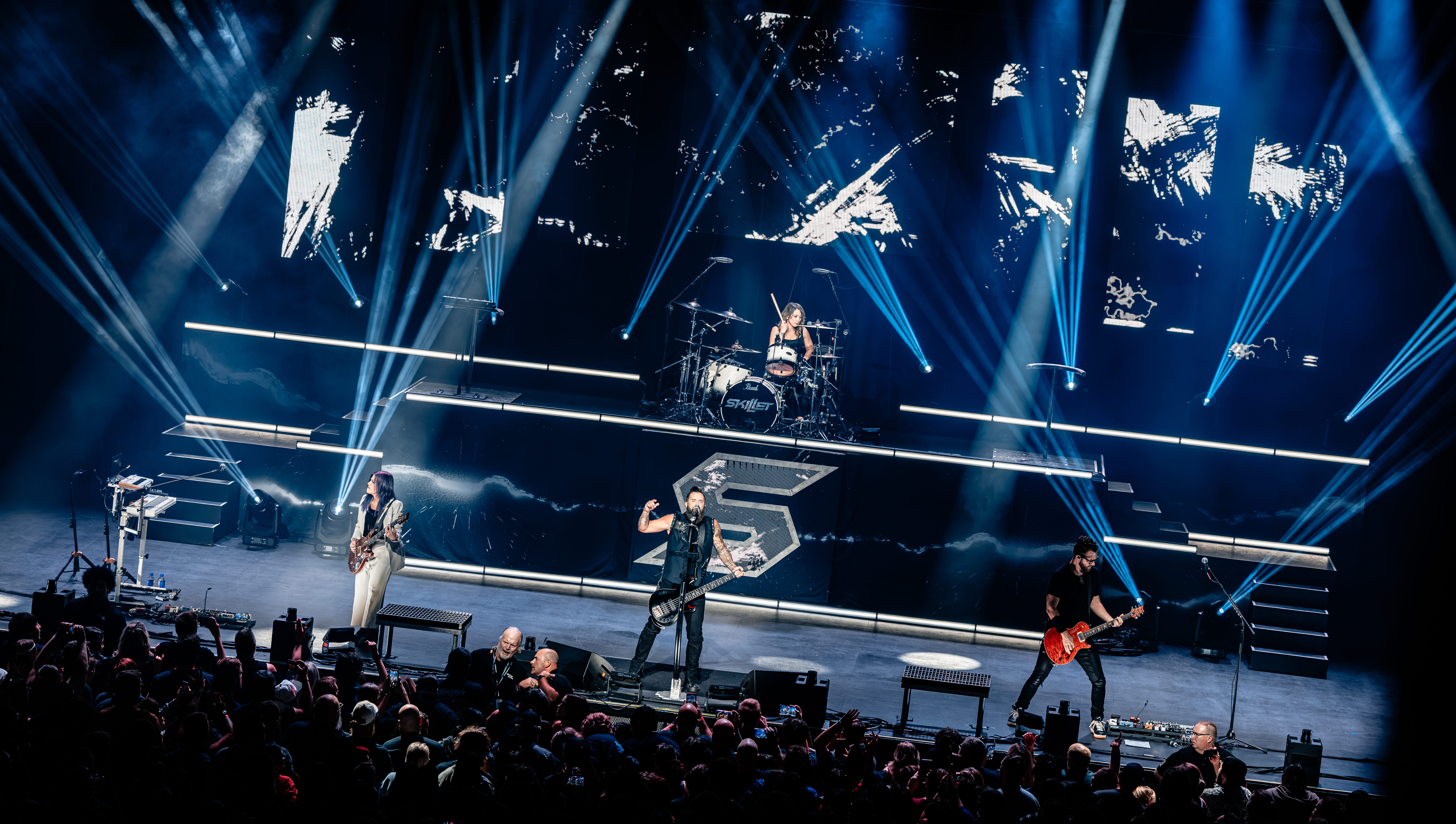
From Jen Ledger singing while pounding away at the drums to Korey Cooper shifting between guitar and keys, the musicianship was every bit as engaging as the visual spectacle. Seth Morrison shredded on guitar, while frontman and bassist John Cooper led the charge with commanding vocals and an unmistakable presence.
Every member contributed to the scale of the performance. Ledger is particularly impressive because singing while playing drums is demanding enough without the added force and intensity she brings to the kit. Korey Cooper’s versatility helps give the music its range, while Morrison’s guitar work supplies the sharp edged riffs and solos that drive the heavier passages. John Cooper anchors the performance, moving between the bass and vocals while keeping the audience engaged.
There was also plenty for the eyes to take in. Smoke machines, moving platforms, and John’s iconic handheld steam gauntlets all contributed to the spectacle. The production is designed to make a Skillet show feel larger than life, and it does. There’s a reason the band has spent years building a reputation for performances that combine hard rock with theatrical presentation.
One particularly interesting detail for guitar fans was Morrison’s use of an unreleased PRS Tekon guitar throughout the night. Its design is suited to the heavier musical territory Skillet occupies, and it looked right at home in the set. Seeing an instrument that hadn’t been released publicly was a fun bonus, especially for someone watching the performance through a photographer’s lens and paying attention to the details on stage.
But even with all the smoke, movement, guitars, and visual effects, the production wasn’t the part of the show I carried away most strongly.
That honor belonged to the message.
More than the music
For all the spectacle Skillet brings to the stage, the message at the center of the performance is what many fans come to find most important: Jesus.
Sometimes that message is communicated through a subtle visual detail rather than a speech. John Cooper’s microphone stand, for example, featured a cross complete with three nails and a crown of thorns. It was an unmistakable reminder of the crucifixion, positioned right there amid the instruments, lighting, and theatrical elements of a major rock production.
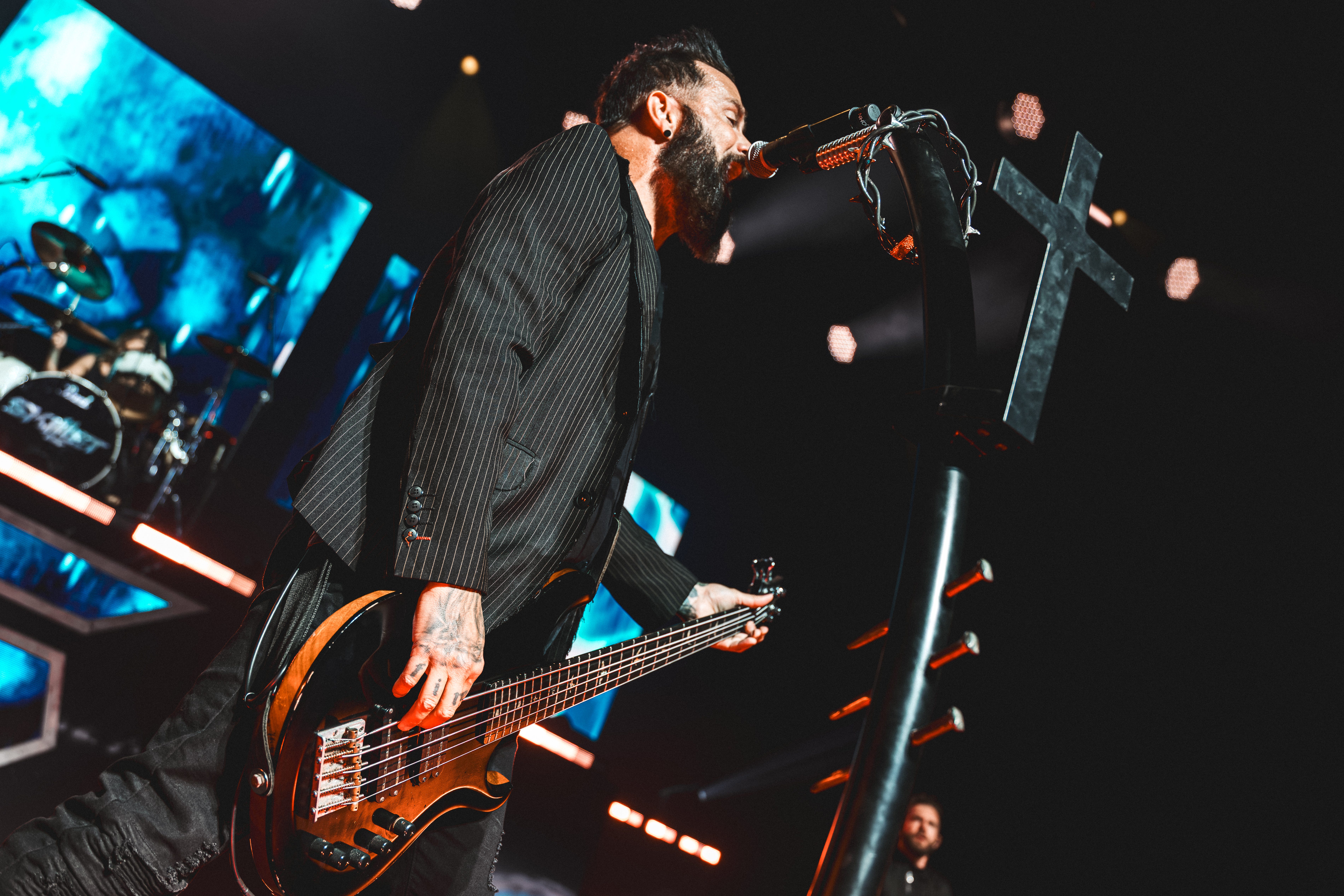
At other points, the message was more direct. Stories about Jesus were shared from the stage throughout the set. These moments didn’t come after every song, nor did they need to. When they happened, they gave the performance an added dimension, connecting the music with the faith that has long been central to Skillet.
As someone whose own faith has become increasingly important to how I approach music and photography, these moments mean a great deal to me. I spend much of my time covering secular artists, and I enjoy the work, the opportunity to photograph different styles of music, and the chance to keep growing in this industry. But I also feel called to use photography to capture Christian artists doing what they do best: proclaiming Jesus through music.
Skillet gives me the opportunity to see that calling expressed on a large stage without losing sight of the people standing in the crowd. The family I met at the barricade was one example. Their 20th show was not simply another date on a tour itinerary. It was another chance to experience songs that had clearly become part of their lives. When a band’s music reaches people that deeply, and the band uses its platform to point those people toward Jesus, the concert becomes something more than a collection of songs and production cues.
That doesn’t mean the music has to take a back seat. Quite the opposite. The riffs, melodies, performances, and spectacle bring people together in the first place. The message gives the night another level of meaning. At Steelhouse, the two worked alongside one another, with the songs of Comatose providing a familiar foundation for an evening that also celebrated the band’s faith and the people it’s reached over the years.
It was a celebration of an album turning 20, but also of what God has done through Skillet and the people the band has touched along the way. For me, that combination made this a particularly meaningful show to cover.
Afterglow
The Comatose 20 Years: Still Screaming Tour stop at Steelhouse Omaha was a complete success. The music was amazing, emotions were felt, and Jesus was proclaimed. After years of trying to secure an opportunity to cover a show at this venue, finally making it through the doors for a band that has been part of my life for so long made the night feel even sweeter.
I came away with new appreciation for Autumn Kings, a long-overdue reunion with Escape the Fate, and the chance to photograph Skillet celebrating one of the albums that helped shape my childhood. I also came away reminded of why I keep pursuing this work. The photographs are important, the music is worth celebrating, and the opportunities to grow as a photographer are exciting. But being able to document Christian artists sharing their faith with audiences is something I never want to take for granted.
Twenty years after Comatose first found its way into my life, those songs are still being sung by longtime fans and a new generation discovering them for the first time. And as Skillet continues to bring its music and message to the stage, I can’t wait to see what comes next.
I hope I get the opportunity to cover them again soon.
Please consider Donating to Sponsor an article even $1 helps!
