



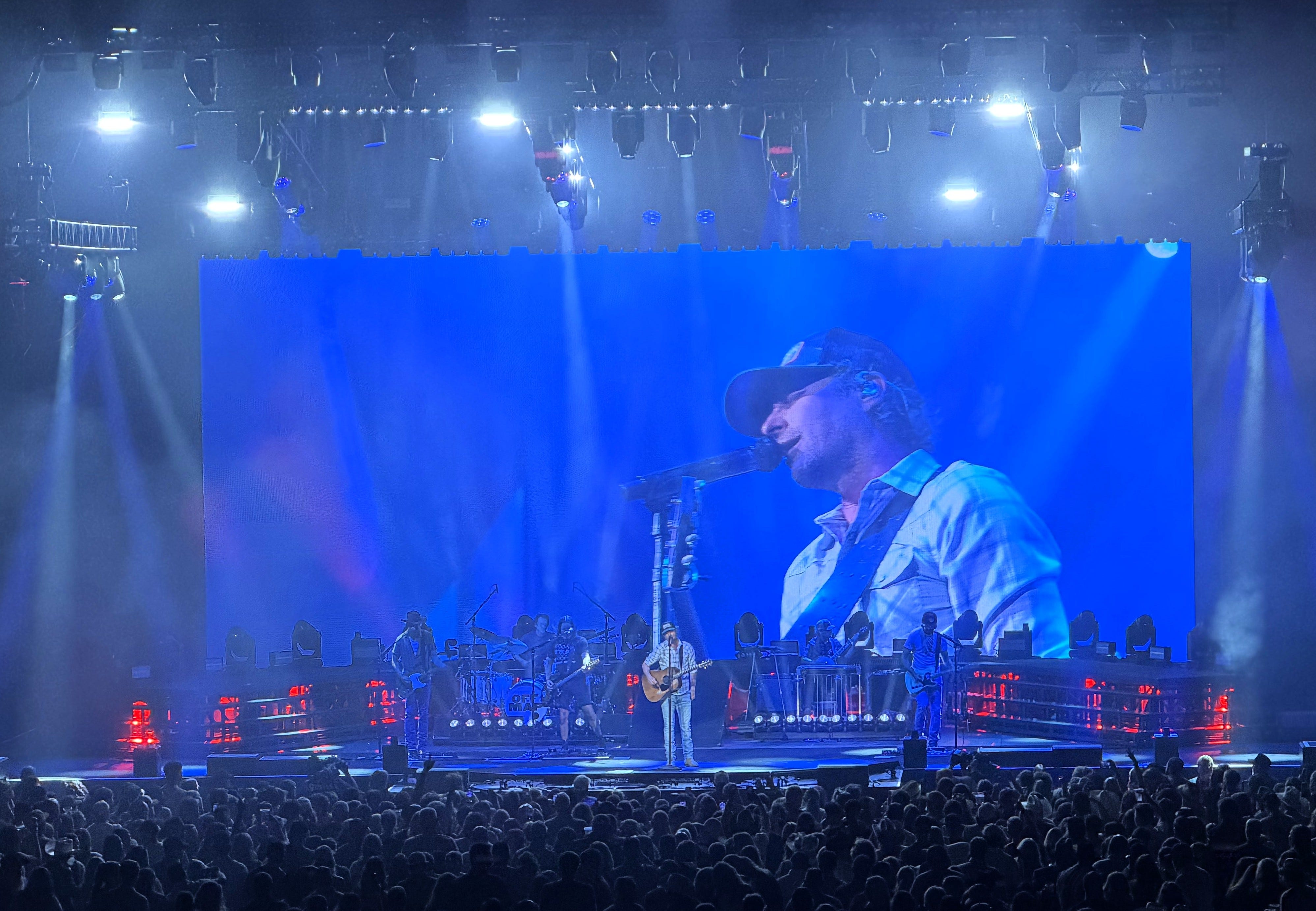
Before Dierks Bentley became the kind of country artist who could turn an arena into a singalong field, he was the guy trying to get closer to the music before anyone had officially let him in. Bentley, long before becoming a member of the Grand Ole Opry, was reportedly banned from its backstage area for slipping into places he was not supposed to be while working around The Nashville Network. He was not smashing footlights like Johnny Cash. He was not missing commitments like Hank Williams. He was not turning the Opry into a rock-and-roll powder keg like Jerry Lee Lewis. Bentley’s offense was almost sweet by comparison.
He wanted in too badly.
Years later, the same institution that had pushed him away welcomed him as family. Bentley made his Opry debut in 2003, then became a Grand Ole Opry member in 2005. That arc followed him into Sioux Falls on Saturday night like a ghost with a backstage pass. The young dreamer who once haunted the edges of country music’s most sacred room was now standing under the big lights at the Denny Sanford PREMIER Center, headlining the South Dakota Cattlemen’s Foundation’s Prime Time Gala concert with Muscadine Bloodline and Elizabeth Jo on the bill.
The concert was the final, loudest chapter of a full evening built around beef, fundraising, youth development and food security. Earlier that night, our coverage of the South Dakota Cattlemen’s Foundation’s 13th annual Prime Time Gala followed the dinner, auction, awards and check presentation to Feeding South Dakota, where $292,620 was raised to help purchase beef for South Dakotans facing hunger. Across its run, the gala’s partnership with Feeding South Dakota has helped raise more than $3 million and support the distribution of nearly 1.7 million pounds of beef across all 66 counties in the state.

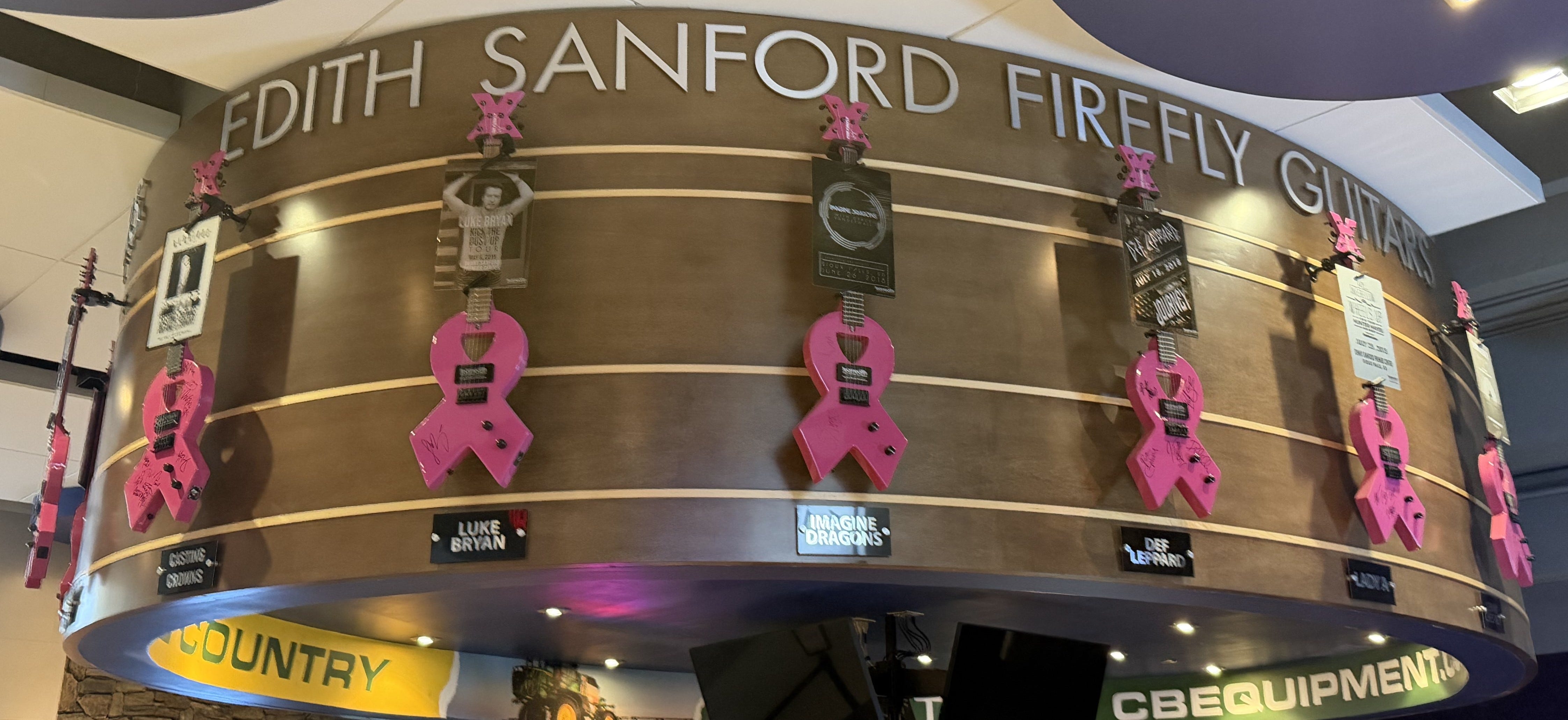
That context changed the temperature of the concert. This was still an arena country show, with shouted hooks, raised drinks and a crowd ready to treat Saturday night like a renewable resource. The music came after an evening where cattle producers, agricultural businesses, donors, volunteers and community leaders had gathered around a practical question: how do you feed people with the product and culture South Dakota knows best?

Coming in from the run
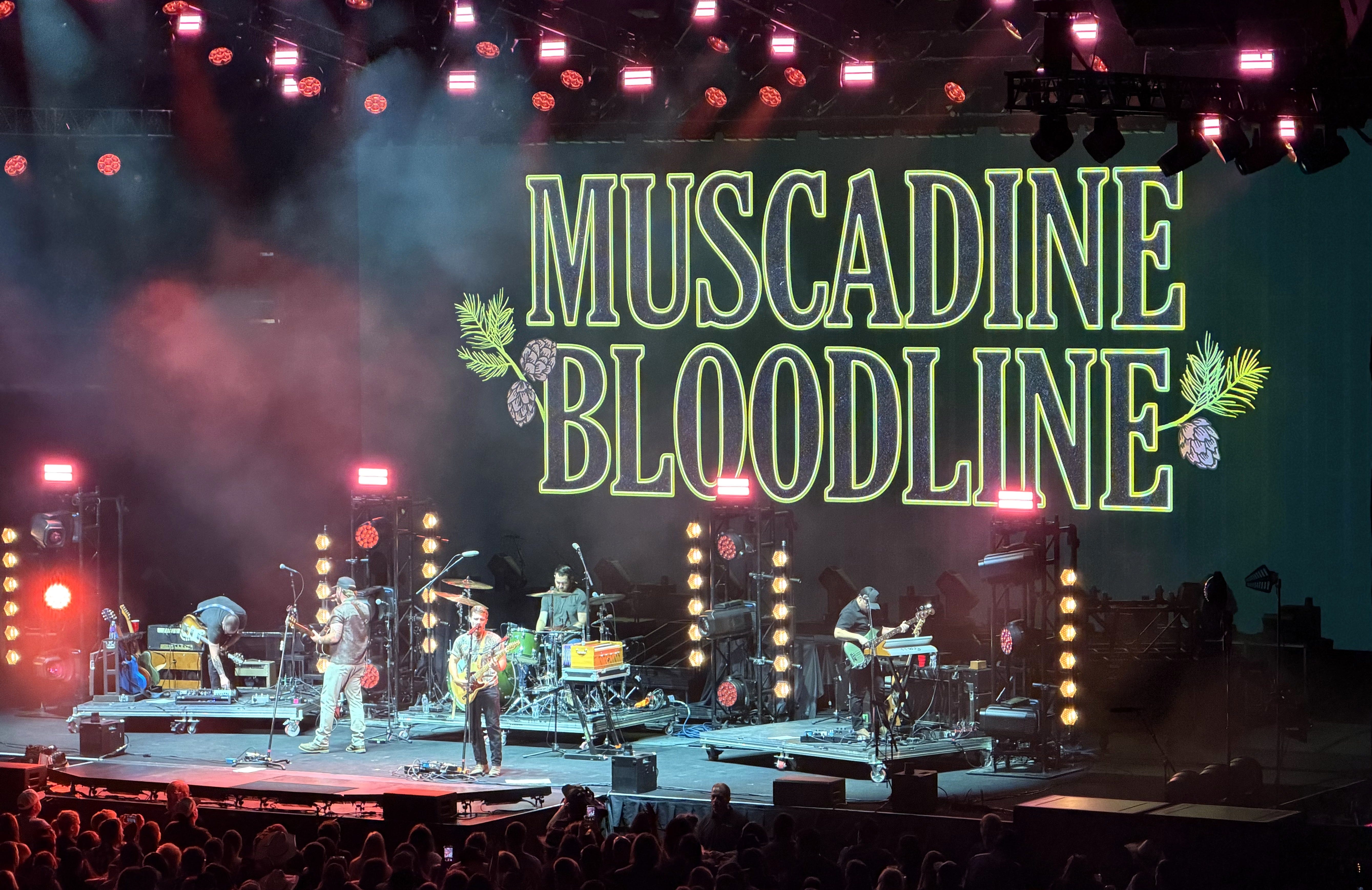
This was one of those nights where the coverage itself felt like a relay race, but for the best reason. One of our kids’ friends was performing at the Levitt earlier that evening, and we stayed through the children’s performance before making the jump across town to the Denny Sanford PREMIER Center. That meant we arrived after Muscadine Bloodline had already started. Elizabeth Jo was part of the official bill, and her South Dakota roots made her a meaningful fit for a night built around cattlemen, hunger relief and hometown pride. We were sad we missed this set.
The first full moment we caught was “Porch Swing Angel,” which turned out to be a beautiful place to enter. The Alabama duo of Charlie Muncaster and Gary Stanton have a way of making romance feel less polished and more realistic, like the words still have sawdust on them. “Porch Swing Angel” gave the arena a softer edge for a few minutes.
The band mentioned they had only been at this for about ten years, which landed with a little extra punch once you heard how steady they sounded. A decade is both young and not young at all in a business that can age a person faster than others. They also pointed out a Sioux Falls connection in the band, which gave the set an immediate local hook. They were not just passing through. At least part of the night had a thread tied here.
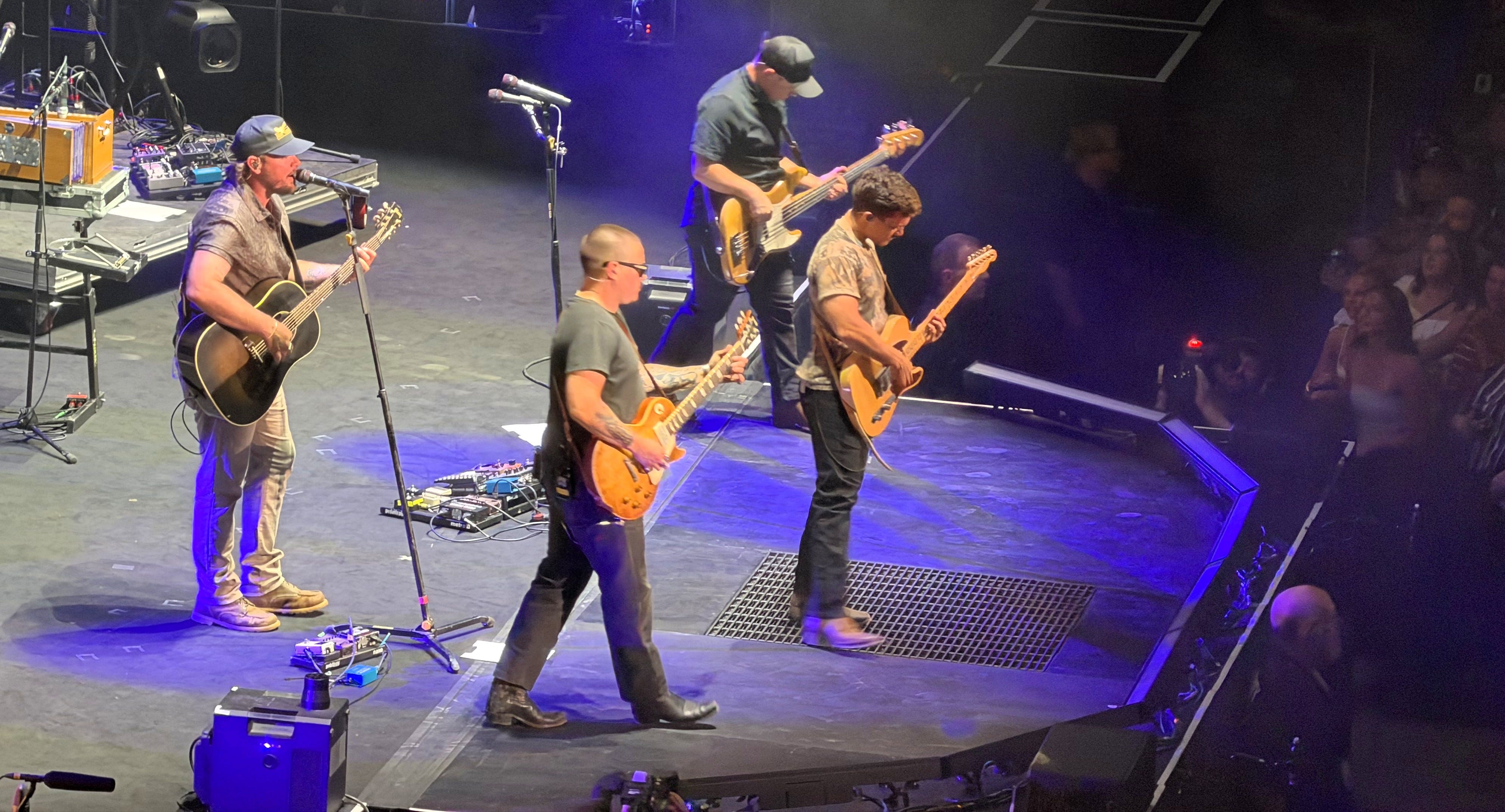
“10-90” was the heart-throb moment. It is one of those country love songs that works because it understands devotion as action rather than decoration. Every line is built to make someone in the crowd lean closer to the person they came with, or think hard about the person they wish they had.
Then came “Devil Died in Dixie,” which played like a cousin to “The Devil Went Down to Georgia” after wandering through darker back roads and coming back with a few bad ideas. It had that folklore spark, the kind of Southern gothic wink that lets a song grin without turning into novelty. Their cover of “Superstition” was the unexpected turn, and it worked because it broke the set’s shape without breaking its mood. The band did not treat the cover like a costume. They treated it like a chance to loosen the boards under everyone’s feet.
Please consider Donating to Sponsor an article even $1 helps!

The reason under the party
Before Bentley appeared, Feeding South Dakota had a video play across the screens, bringing the room back to the purpose underneath the concert. It worked because the gala had already laid the foundation for it. The awards, auction items, scholarship recognition, Emerging Breeders Program, Fed Cattle Challenge honorees and the check presentation were not separate from the concert.
Charity tie-ins can become decorative if they are handled like logos in the corner of a screen. Here, the video did what it needed to do. It reminded everyone that hunger is not an abstract issue somewhere else. It sits in the same region as the music, the same towns, the same schools, the same roads people drove to get there.
Our editor in chief Jeremy Mercier had been doing interviews before the concert, which added another layer to the night. This was not only about catching a headliner. It was about documenting the larger machinery around the event, from the gala to the cause to the people who showed up for both.
Burning toward the honky-tonk dream
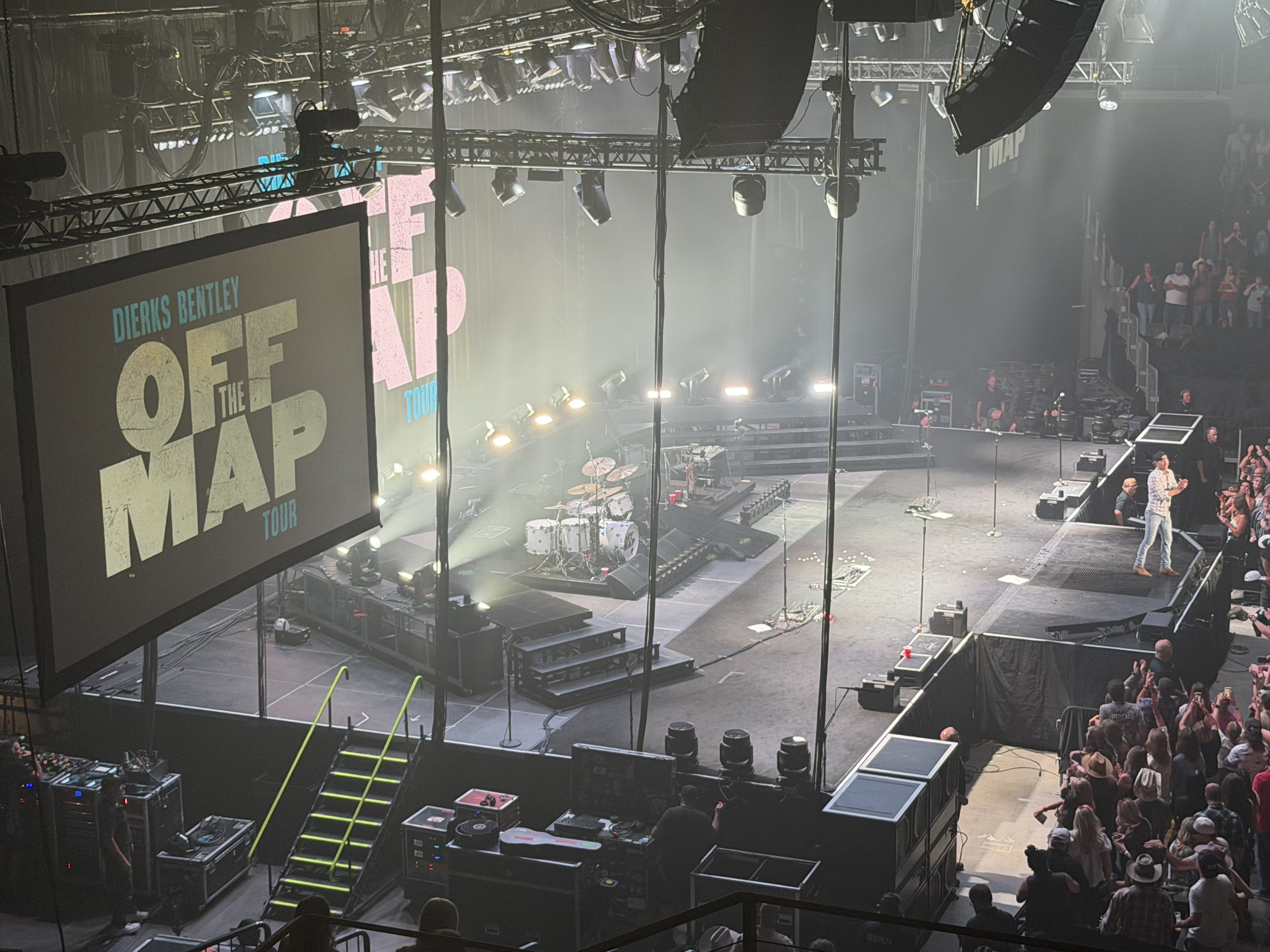
Bentley came out with “Burning Man,” and that was the right kind of ignition. It is one of his best self-portraits because it understands contradiction without trying to solve it. A little restless, a little rooted. Half trouble, half prayer. That tension has always been part of his appeal. Bentley can sell the ridiculous release of “Drunk on a Plane,” then turn around and make “I Hold On” feel like a personal inventory of everything a man refuses to let go of.
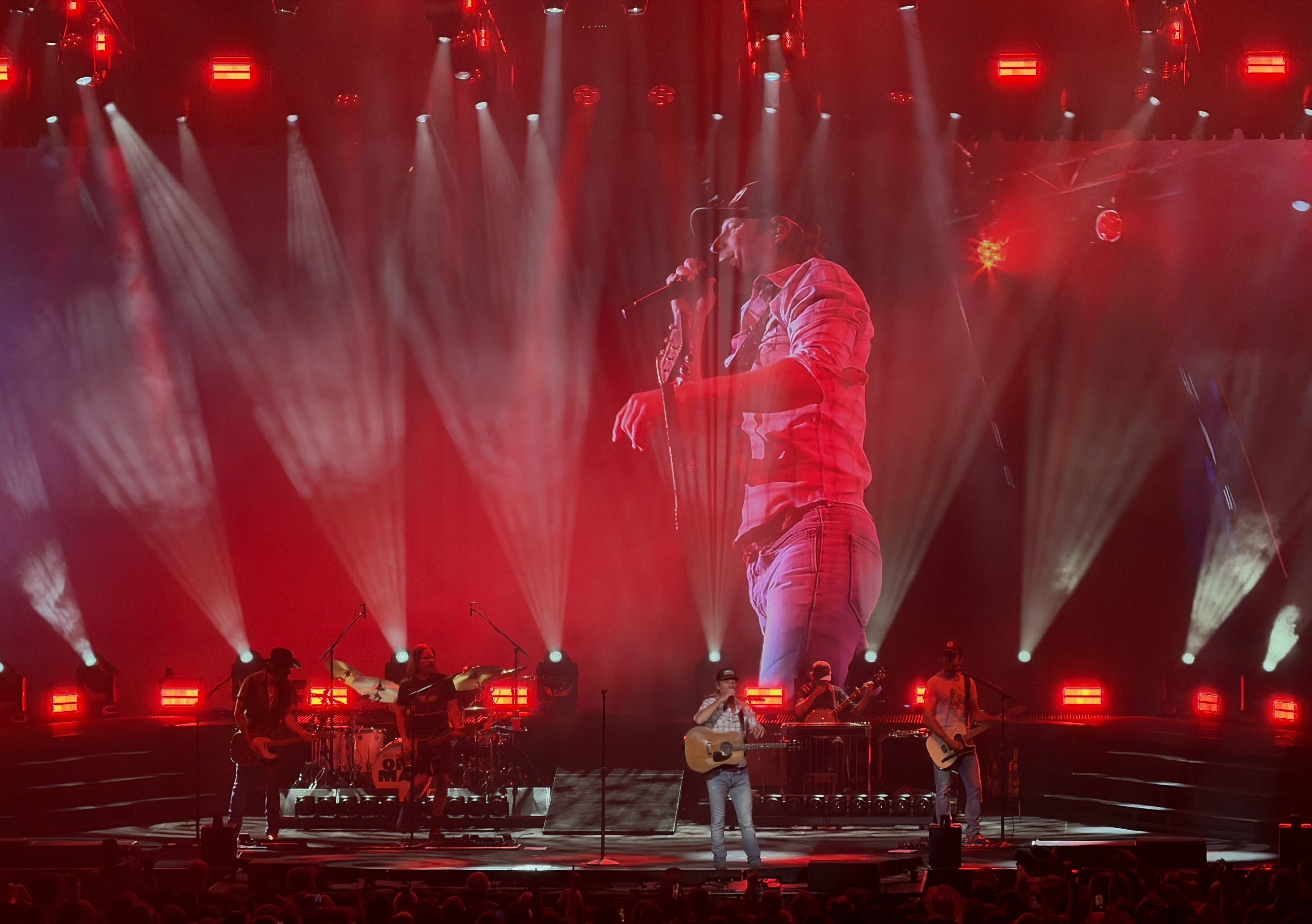
Early on, he leaned into the Prime Time Gala setting with a joke, offering to be your bartender or whatever else the room needed for the night. He also joked about not knowing how to pronounce “gala,” which got the kind of laugh that comes from an artist knowing exactly how to lower the temperature in a big room.
He talked about running to Nashville to follow his honky-tonk dream, and that line connected directly back to the old Opry story. Bentley’s career has never been only about commercial country success, even though the commercial success is enormous.
“I Hold On” brought the emotional pull early. Live, it becomes less about the things named in the song and more about the private inventory every listener carries. Trucks, guitars, family, faith, memory, old promises, old grief, the version of yourself you keep dragging forward because abandoning it would feel worse than carrying it.
Bentley also gave the room little local stitches throughout the night. He joked about a picture of the falls being shown, coming in with the obvious but still funny, “That’s why it’s called Sioux Falls.” He mentioned band members with regional roots, including homegrown Minnesota ties. He picked on his drummer for being a pilot, then moved into teasing the bassist about wearing cologne and deodorant.
South Dakota in the lyrics
One of the night’s best recurring touches was Bentley changing place references in songs to South Dakota. It was adorable in the most functional way. Not cutesy, not desperate for approval, just aware. Audiences notice when an artist knows where they are. They notice even more when the artist has been there enough times for the gesture to feel like a nod rather than a sales pitch.
That worked because Bentley has been to South Dakota plenty over the years, and the crowd seemed ready to claim him back a little. The local references threaded into the songs gave the show the higher artist commitment/production value points we always enjoy.
“Somewhere on a Beach” sent the crowd into a happy, somewhat intoxicated frenzy. That song is pure escape hatch, and it knows exactly what it is. It is not trying to win a poetry prize. It did its job. People loosened up and sang louder.
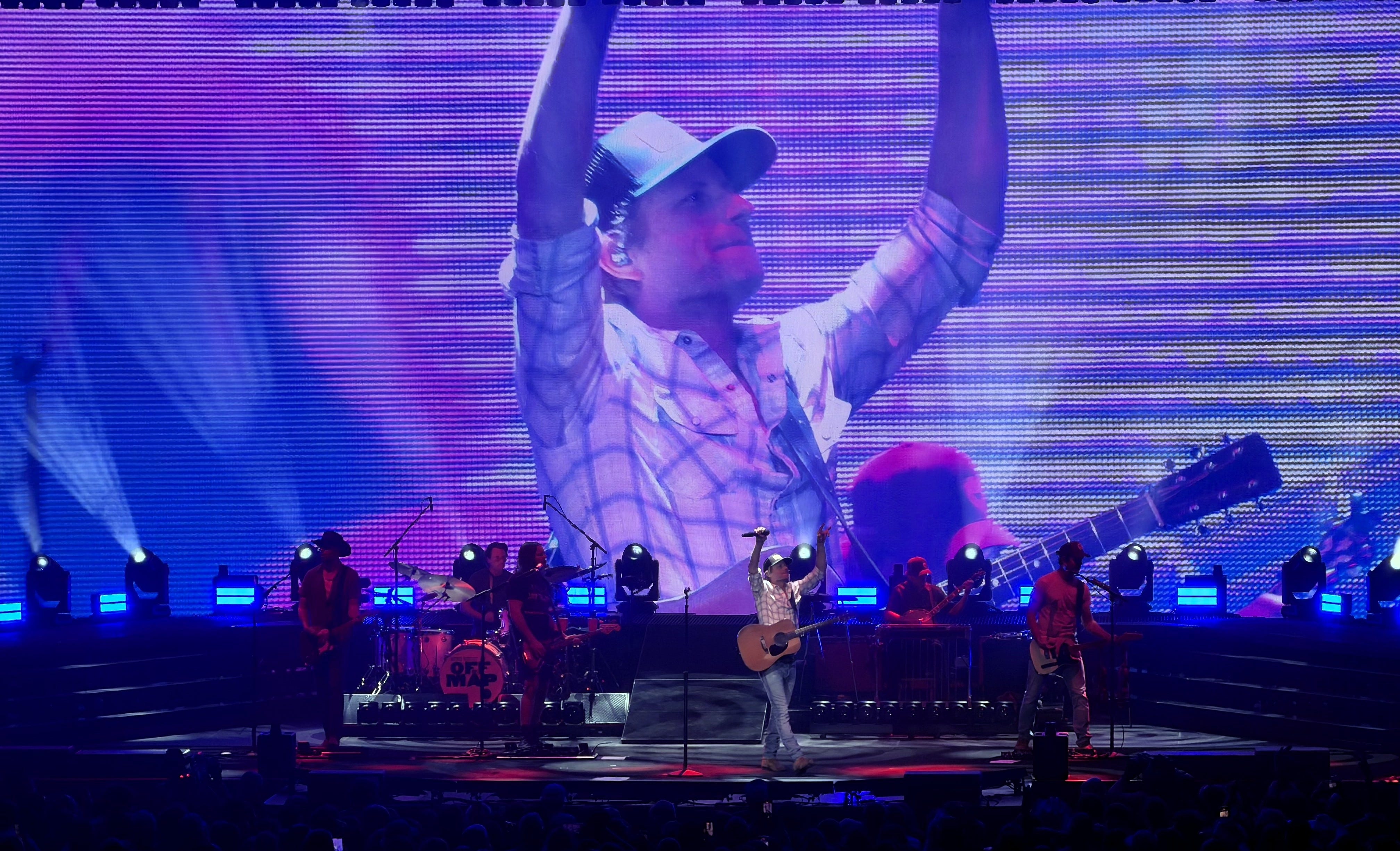
Then came the fans with signs. Some held up how many concerts they had attended and how much time they had put into following him. Bentley noticed, asked if there was any song they wanted to hear and suddenly the night bent into a looser, older shape. “Come a Little Closer” came out of that exchange, followed by requests like “Riser.” The impressive part was not only that he played them. It was that the band could turn on a dime and handle older songs on the whim without making the moment feel like a stunt.
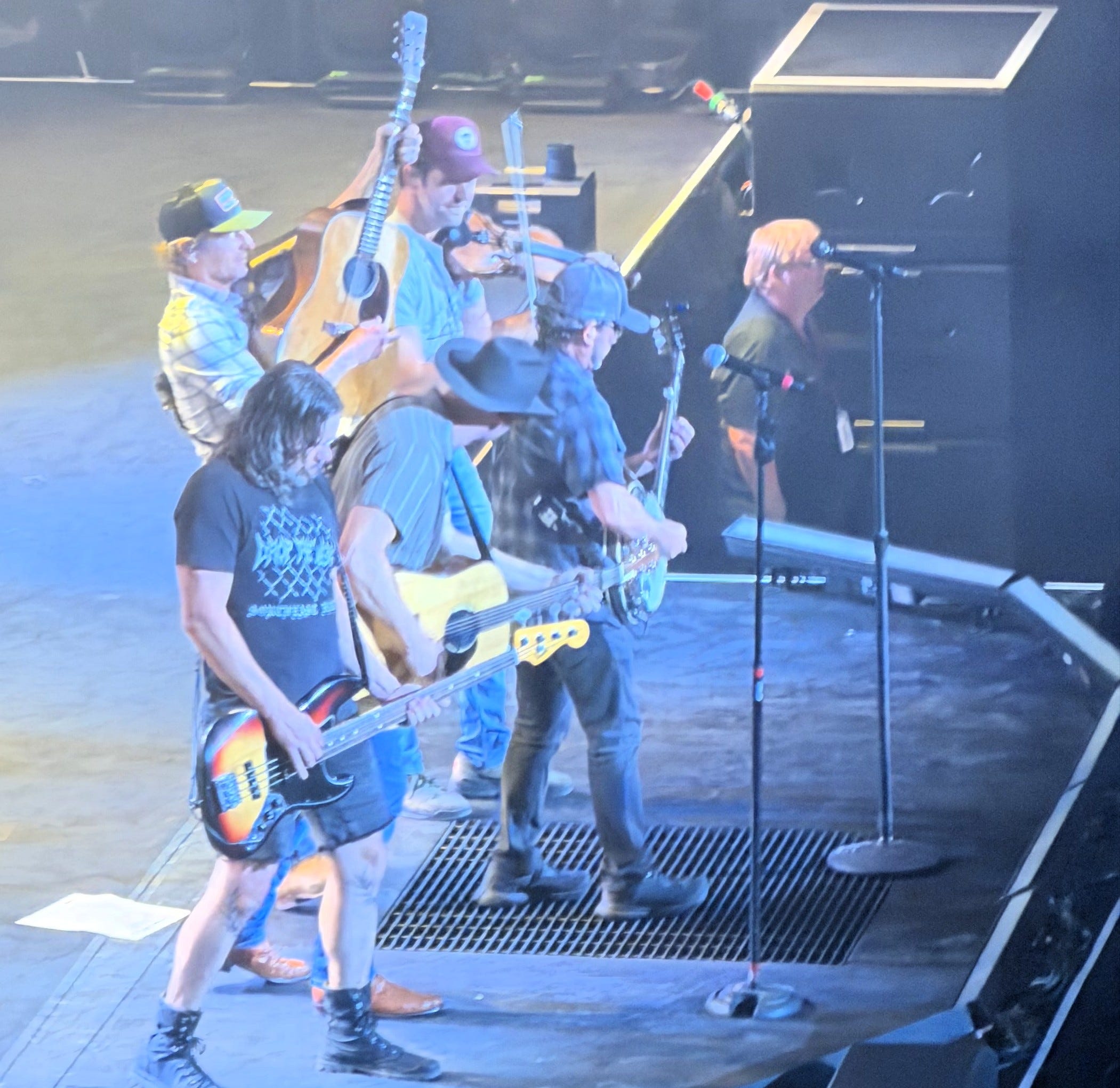
That is where a live band shows its bones. Bentley’s band had the polish, but they also had enough muscle memory to chase a fan request and land on their feet. Those older songs opened a side door in the set, and for a few minutes the night felt less like a scripted production and more like a real time conversation between fans and artist.
Crowd favorites
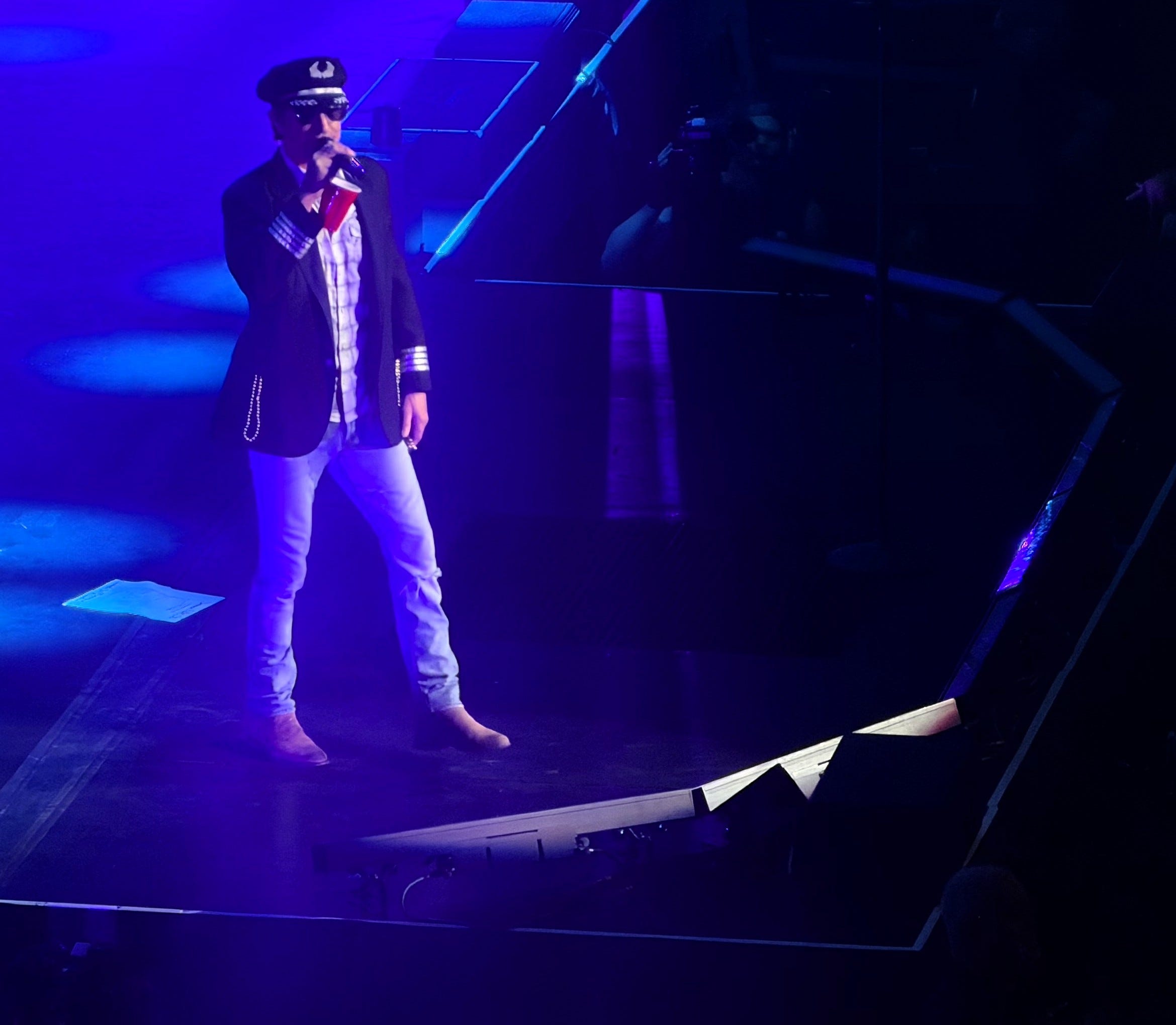
The covers near the end pushed the room into communal mode. “Take Me Home, Country Roads” had every single person singing, or at least it felt that way from inside the noise. Some songs are so familiar they bypass taste altogether and go straight to reflex. The crowd did not need instructions. It knew where to enter.
Bentley also folded in “Man! I Feel Like a Woman!” by Shania Twain and “Friends in Low Places” by Garth Brooks, a pair of choices that understood the assignment with zero shame. Both are big, durable, crowd-owned songs.
The shotgun contest with people in the crowd moved the show toward “Drunk on a Plane.”
There was also one of those strange concert-life moments that has nothing to do with the artist and everything to do with why live events keep pulling people back into rooms. During a break, I ran into someone my friend knew from an old job, only to find out that person’s younger sister had gone to elementary school with me.
Afterglow
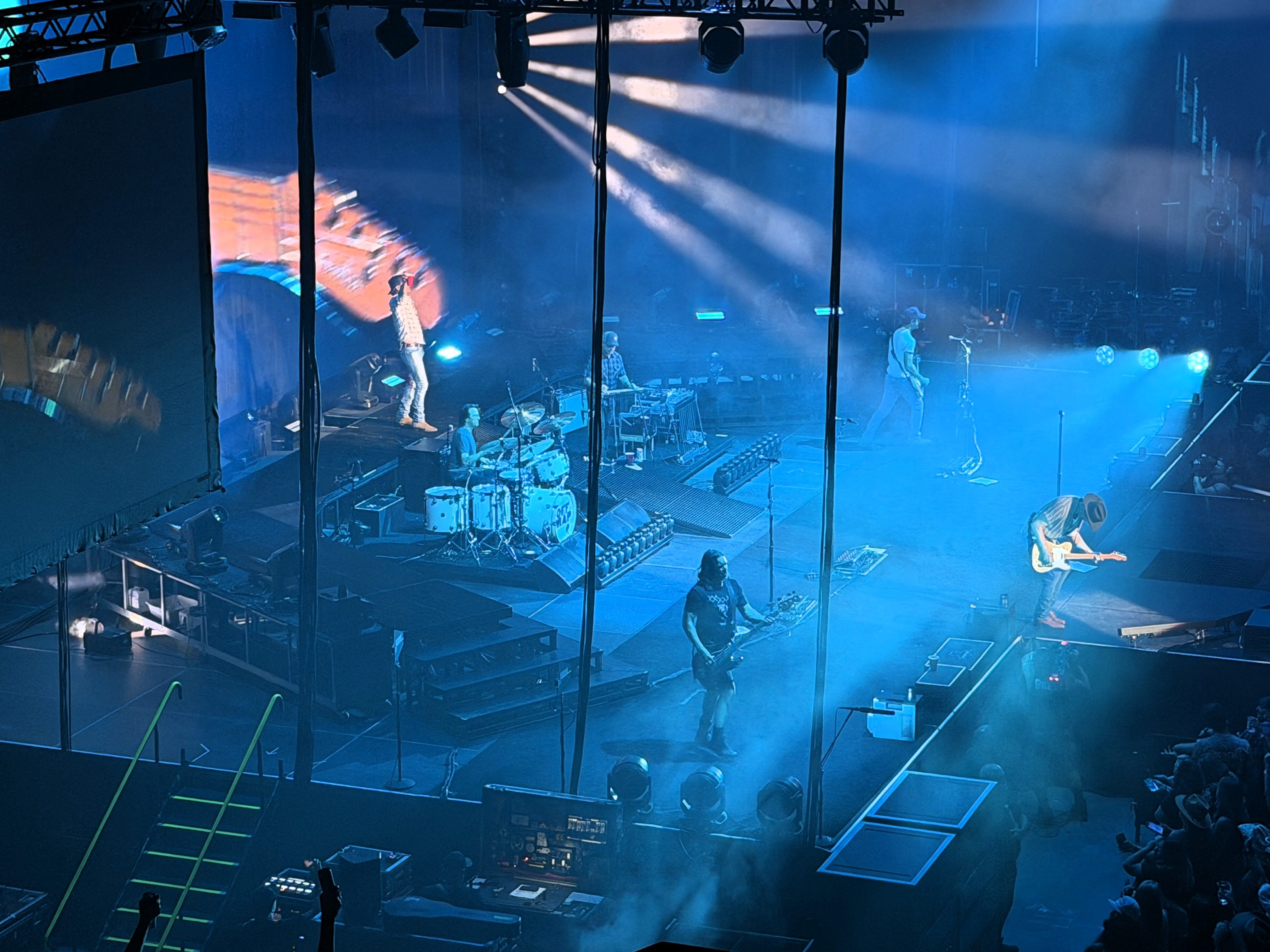
In Sioux Falls, there was no question of whether he belonged. He moved through the hits, the jokes, the fan requests, the local nods and the big communal covers with the ease of someone who has learned how to make a massive room feel like home turf. Muscadine Bloodline gave the night its porch-swing romance and Dixie grit. Elizabeth Jo belongs as the South Dakota-rooted voice on the bill, a reminder that the evening was not only bringing country music into the state but lifting a voice from it. Feeding South Dakota gave it a reason beyond the ticket. The Cattlemen’s Foundation gave it local ground.
Please consider Donating to Sponsor an article even $1 helps!
