


In its ninth edition, Sioux Falls’ homegrown extreme-metal festival filled Bigs Bar with two stages, a dozen Saturday bands and the kind of community that keeps local music alive.
Metal has always had a funny way of looking hostile from the parking lot and feeling like home once you walk through the door. From a distance, it is all sharp logos, hard riffs and vocals that sound capable of filing their own weather report. Up close, it is often one of the kindest rooms in live music.
That has been true for me since I was younger. I came for the hardest riffs, loudest screams and best breakdowns. I stayed because the metal scene was the one that invited me in with open arms. It is where my real love of live music began.
On Saturday, July 11, SlamDakota Death Fest IX brought that lesson back to Bigs Bar in Sioux Falls. This was only my second year attending, but the festival already felt familiar in the best way: part concert, part reunion and part evidence that something local can keep growing if enough people decide it deserves another year.

Nine editions and still growing
SlamDakota first gathered at Bigs in August 2018. A 2019 listing called the next event the second annual festival, the 2020 lineup was documented as Death Fest III and the 2021 event was billed as the fourth annual edition. From there came V in 2022, VI in 2023, VII in 2024, VIII in 2025 and IX in 2026.
That gives SlamDakota nine annual editions across the eight years since the first festival.
The Roman numerals are more than trivia. They are a record of persistence. Local festivals rarely disappear with a formal goodbye. More often, they miss a year, then another, until somebody notices the poster is no longer in the window.
SlamDakota has gone in the other direction. It has continued through changing lineups, changing summers and the ordinary wear that comes with asking venues, bands, vendors, production crews and fans to keep believing in the same thing.
Travel South Dakota describes SlamDakota as an annual gathering of death metal, slam and thrash bands from across the country and around the world. That is a long way from a small passion project, but the festival has not outgrown the quality that helped it survive: South Dakota’s heavy-music scene still has a stage of its own.
Please consider Donating to Sponsor an article even $1 helps!

Two stages and very little standing still
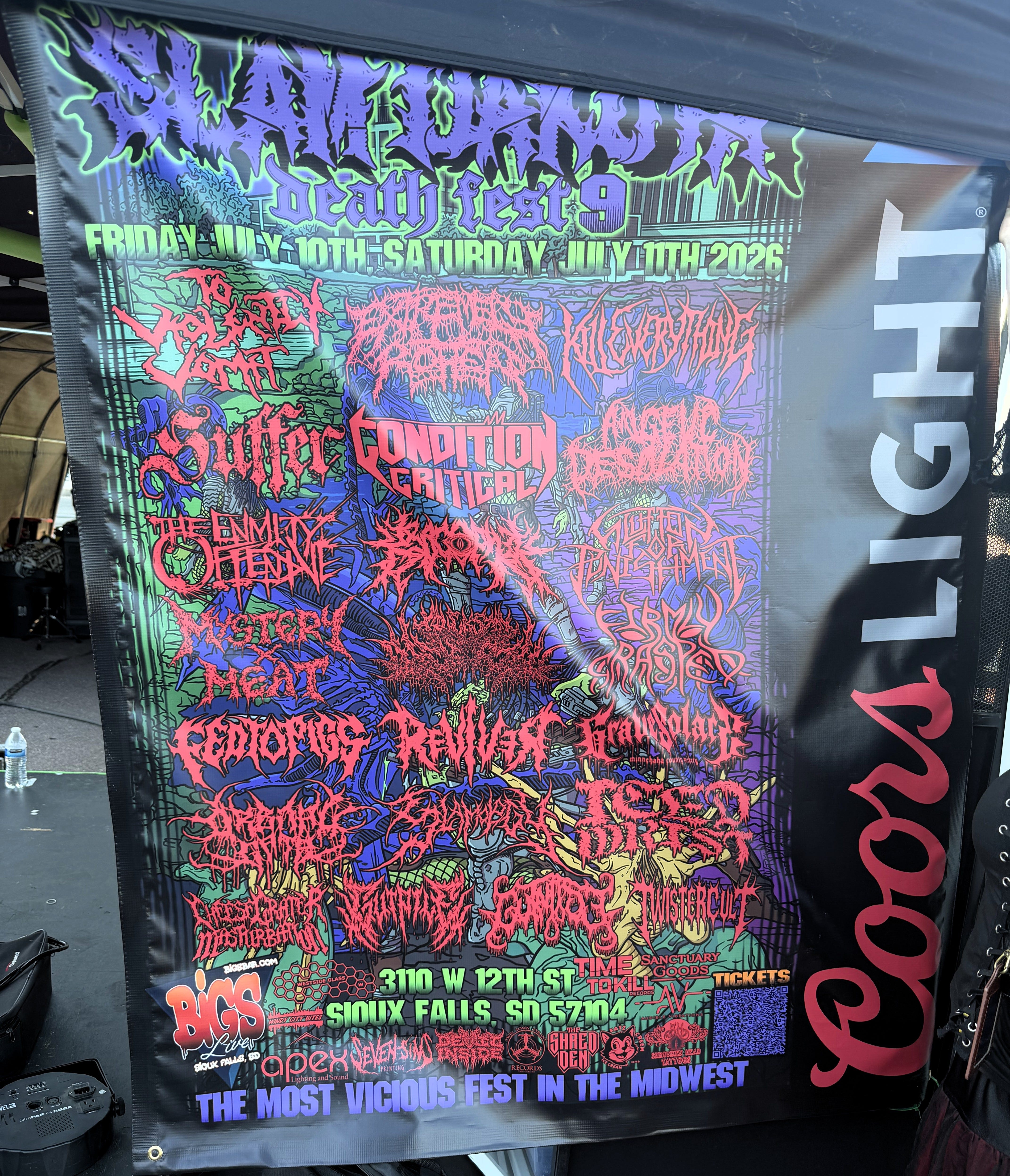
Bigs is unusually well suited to a festival like this. The parking lot becomes an outdoor stage and gathering space while the indoor room holds the other half of the bill, the bar and a growing collection of vendors.
On Saturday, the doors opened at 4 p.m. and the music began at 5. For most of the evening, a new set started every half hour, alternating between the indoor and outdoor stages. If one band finished and you wondered what came next, the correct answer was usually, “Turn around and start walking.”
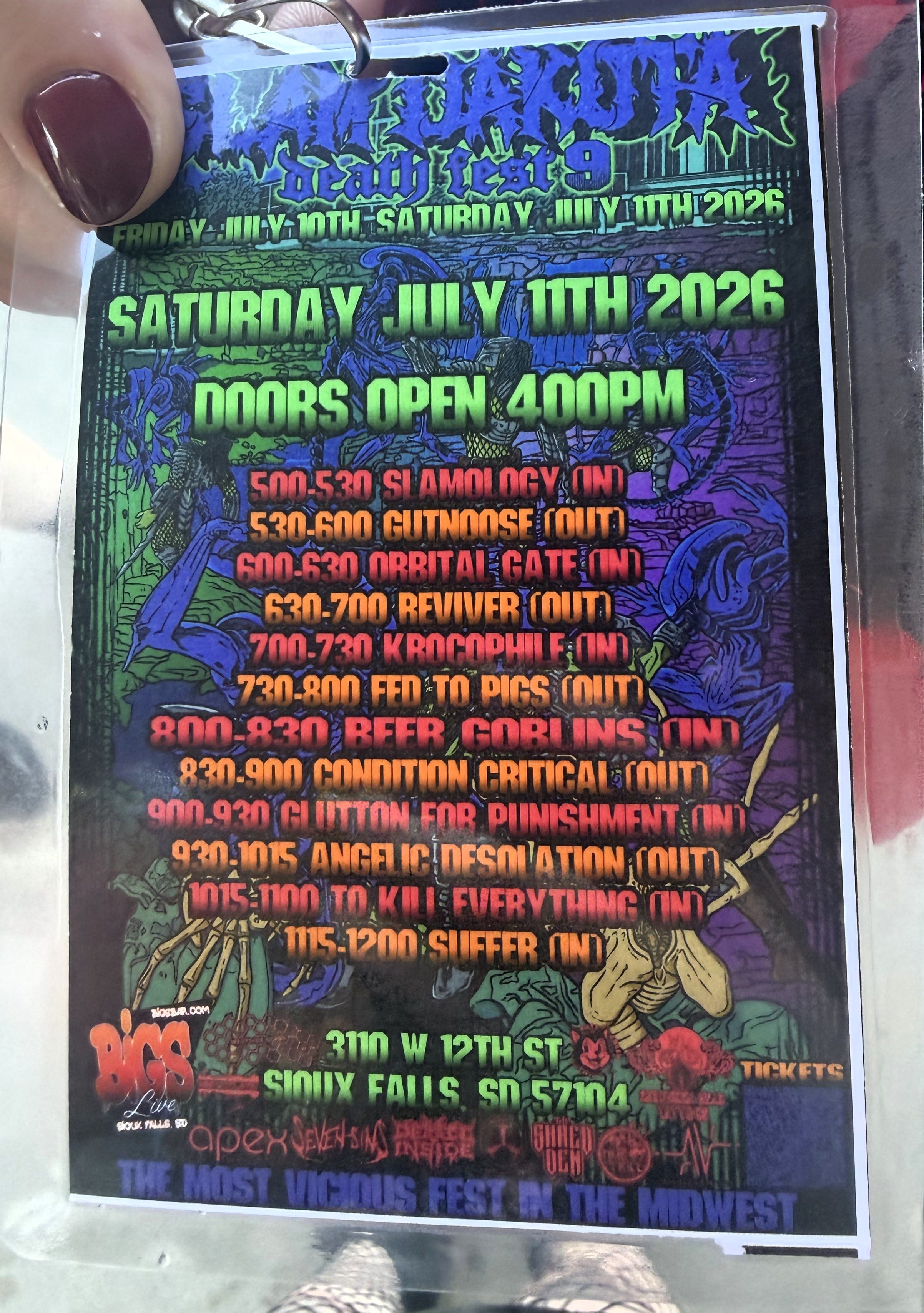
That rhythm kept the day moving without making it feel rushed. It also gave the crowd natural moments to cool off, find water, visit a booth or grab something to eat. The schedule was demanding, but it understood something important: even the most committed metal fan occasionally needs a taco and a minute to locate both earplugs.
A Saturday bill that told its own history
The first four sets leaned into the newer edge of slam and deathcore.
At 5 p.m., Indiana’s Slamology opened indoors. The Charlestown project had released its first track, “Iverson Anklebreaker,” only in January, giving the beginning of the day a genuinely fresh band.
Chicago’s Gutnoose took the outdoor stage at 5:30 with a five-song debut EP from 2025 and a sound planted firmly in slamming brutal death metal.
At 6, Orbital Gate brought one-woman slamming brutal death metal from Cary, Illinois, into the indoor room.
At 6:30, Sioux Falls’ own Reviver moved outside with progressive deathcore and a catalog that runs from 2020’s “The Death Experience” through the 2023 release Voids Embrace.
In 90 minutes, the festival had already made room for a new Indiana project, a Chicago band with one EP, a solo Illinois project and a hometown act with several years of releases behind it.
The middle of the schedule widened the sound.
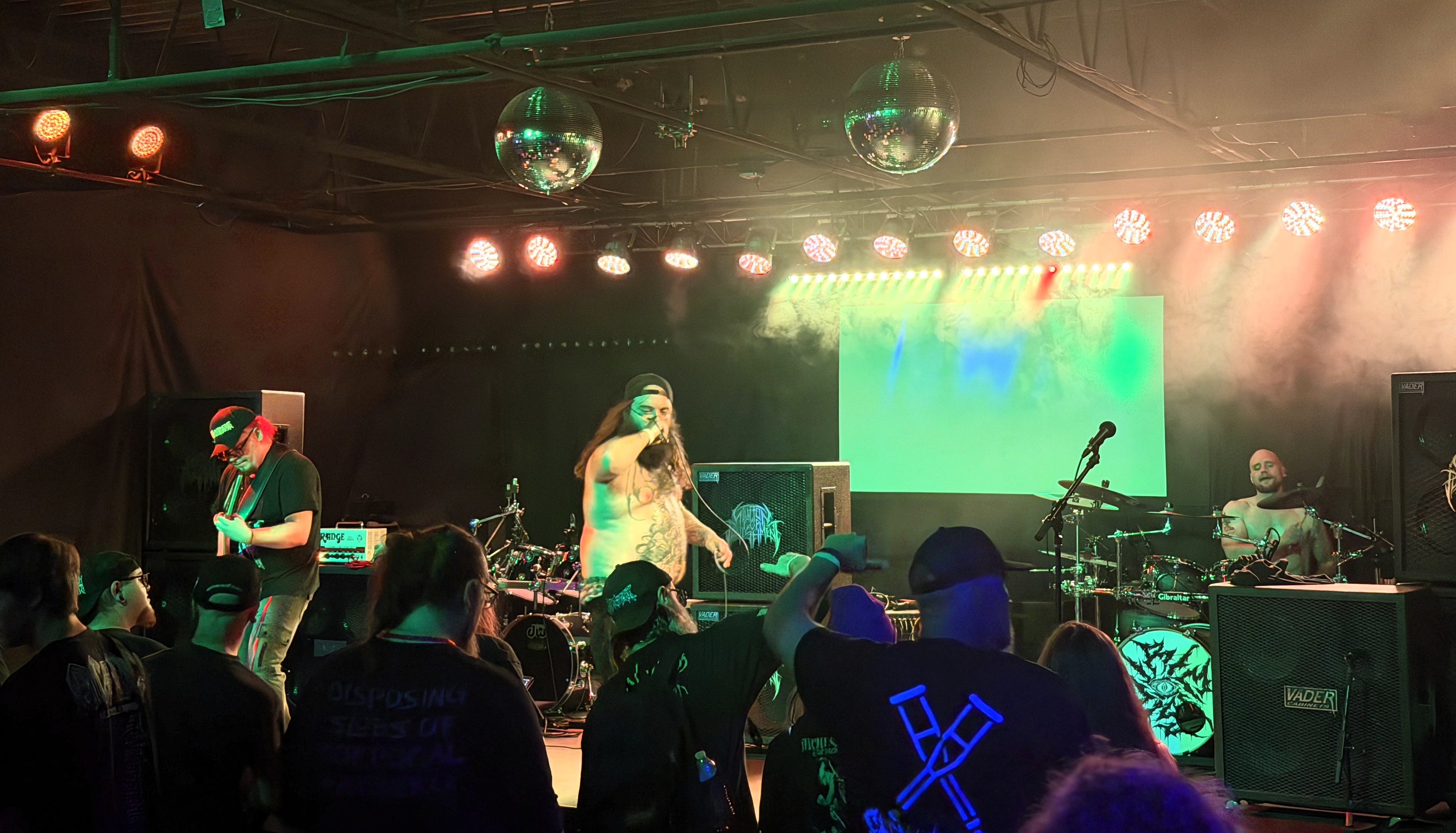
Lansing, Michigan’s Krocophile took over indoors at 7 with reptile-themed slam. The concept carries a sense of humor, but the music does not treat heaviness like a joke. Releases such as A Cold-Blooded Torture Chamber and 2025’s Sewer King, King of the Sewer give the band a whole scaly little universe to work in.
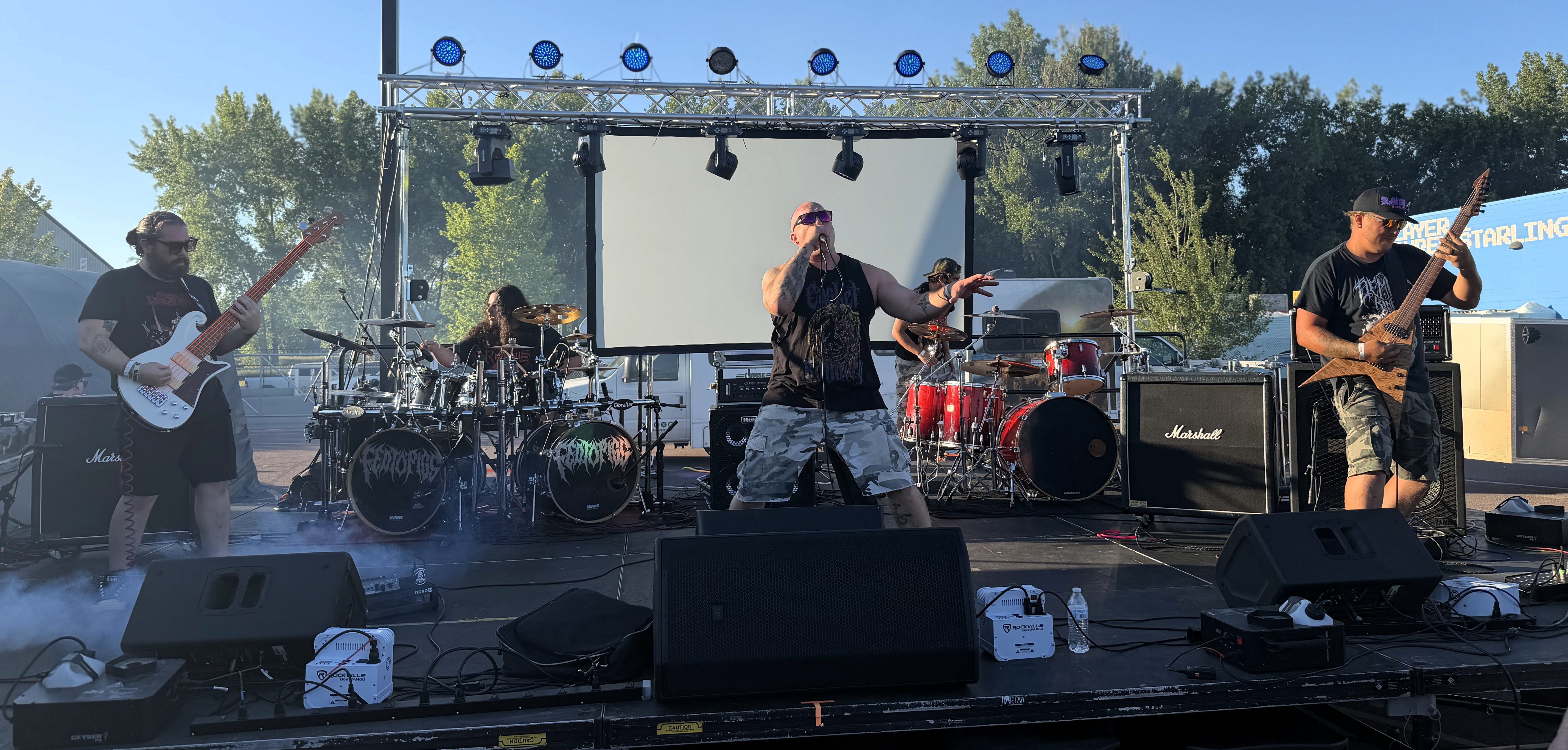
At 7:30, Fed to Pigs put Sioux Falls death metal on the outdoor stage. Formed in 2024, the band is young enough to represent the scene’s current growth, yet its full-stage presence looked completely at home within the festival.
A local event does not become regional by leaving local bands behind. It grows by giving them room beside the touring acts.
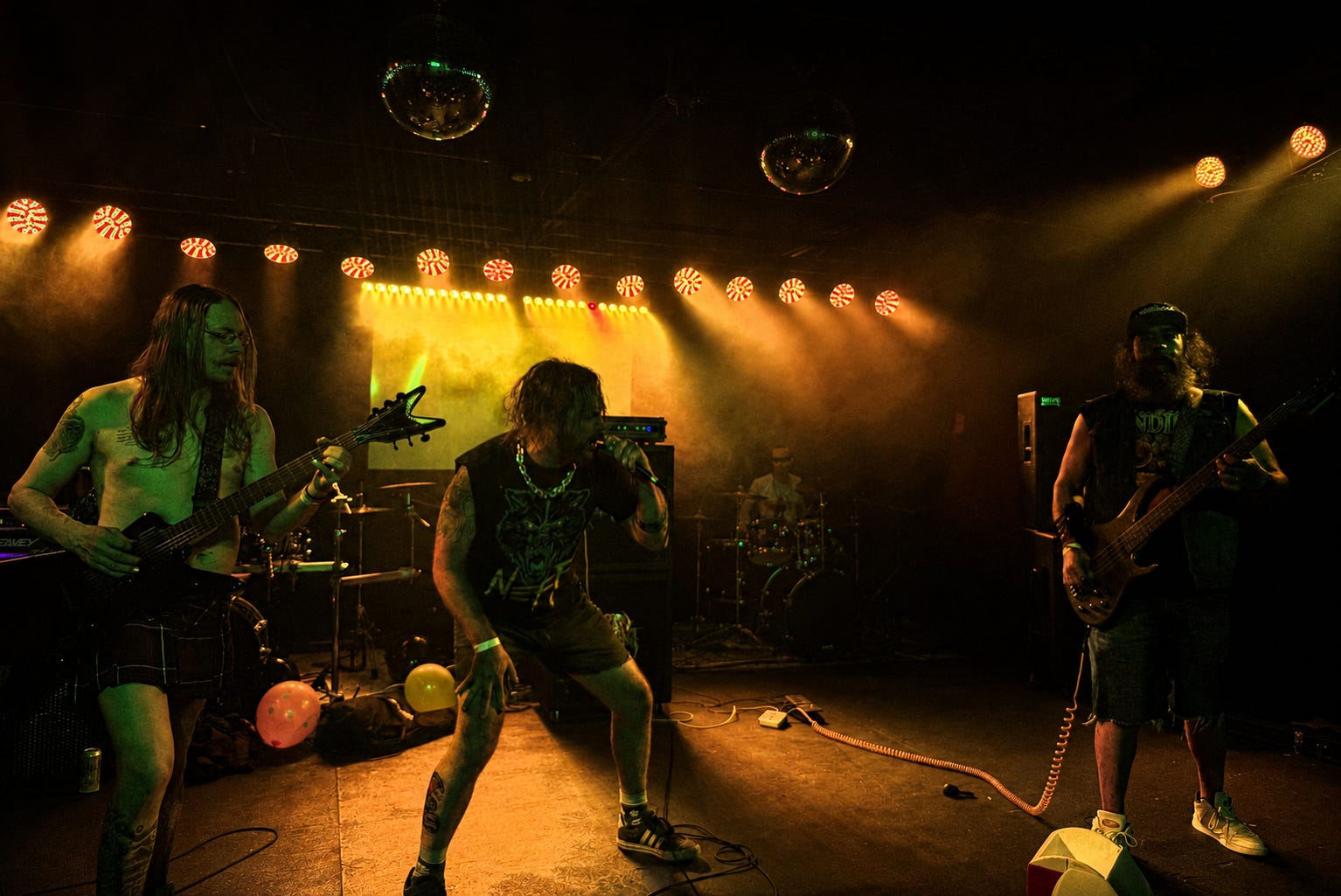
Then came Beer Goblins at 8. The Sioux Falls band has been described locally as party thrash and groove metal, a useful change of gait on a bill dominated by death metal’s heavier subdivisions.
By that point, the schedule read less like an itinerary and more like a list of things a county health inspector would prefer not to discuss, which is how you know a death festival is doing its job.
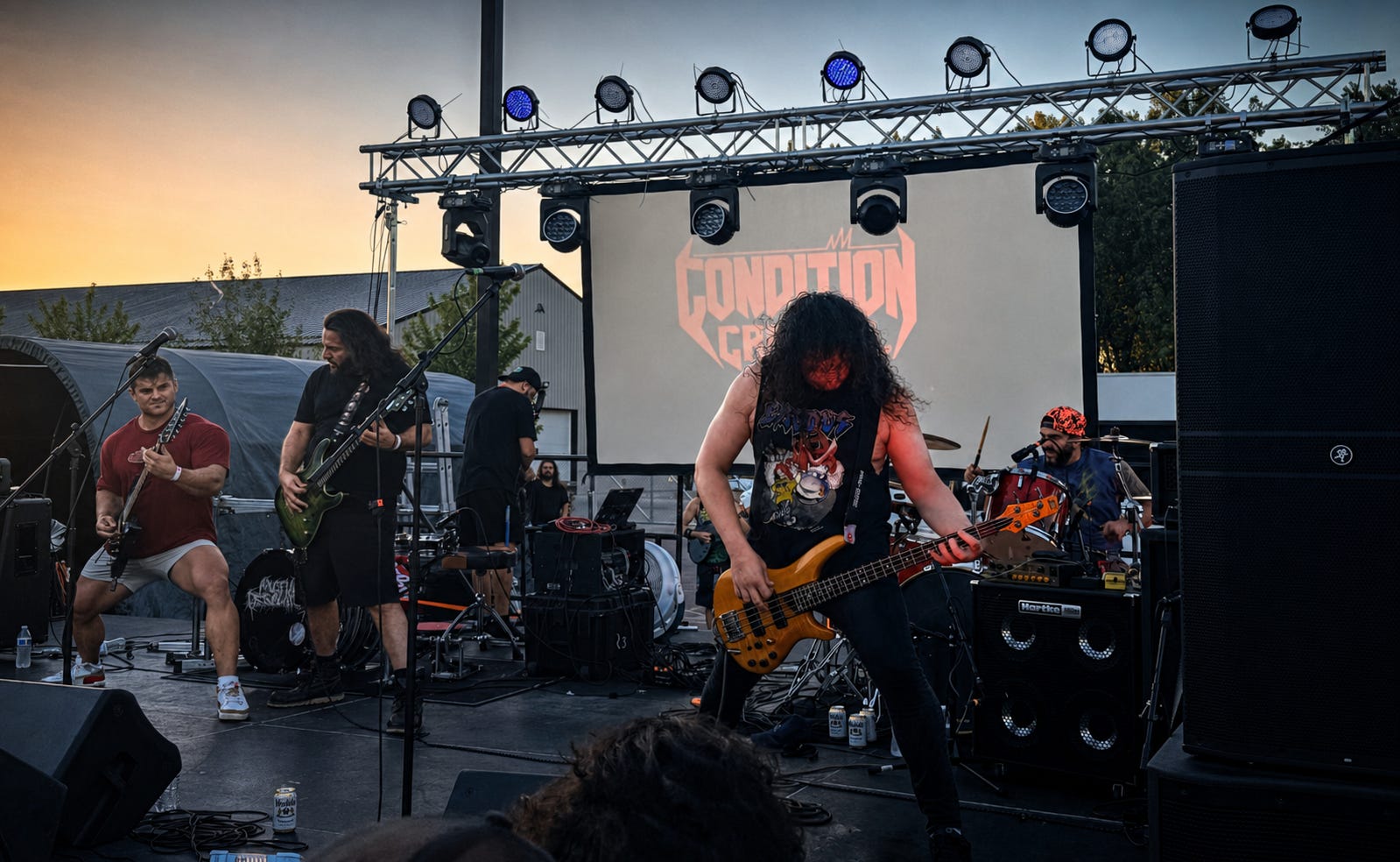
New Jersey’s Condition Critical followed outside at 8:30. The band has played what it calls “unrelenting New Jersey thrash metal” since 2010 and arrived with Degeneration Chamber, released in 2025. Its sharper thrash attack gave the outdoor stage a different kind of momentum before the late-night stretch.
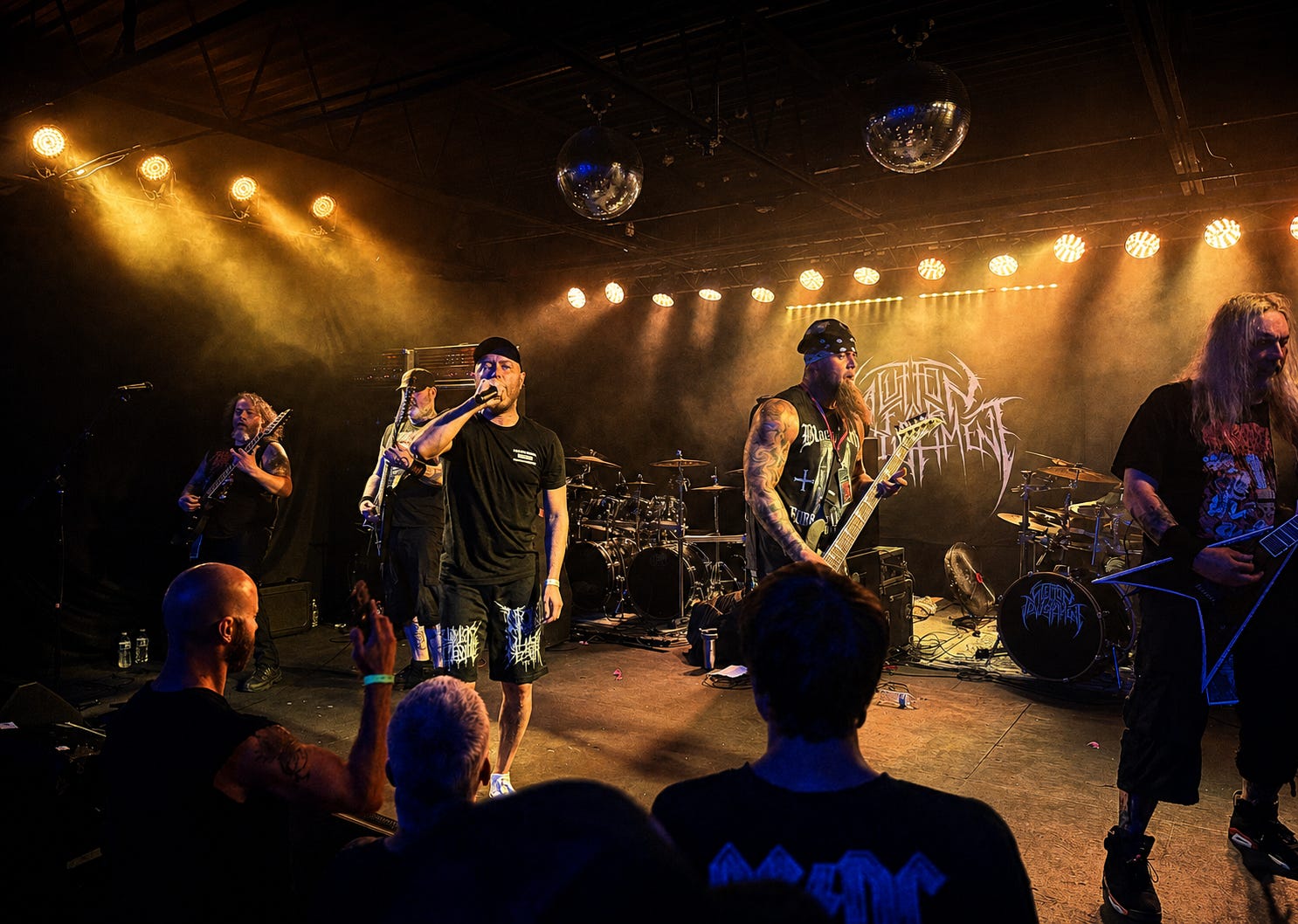
At 9, Minnesota’s Glutton for Punishment returned the night to death metal indoors. The band’s history reaches back more than two decades, with releases including Purified in Blood and the 2018 full-length The Mutilation Process.
Glutton for Punishment has also appeared at earlier SlamDakota editions, including 2019 and 2025. A recurring festival is partly built from bands that know the road back.
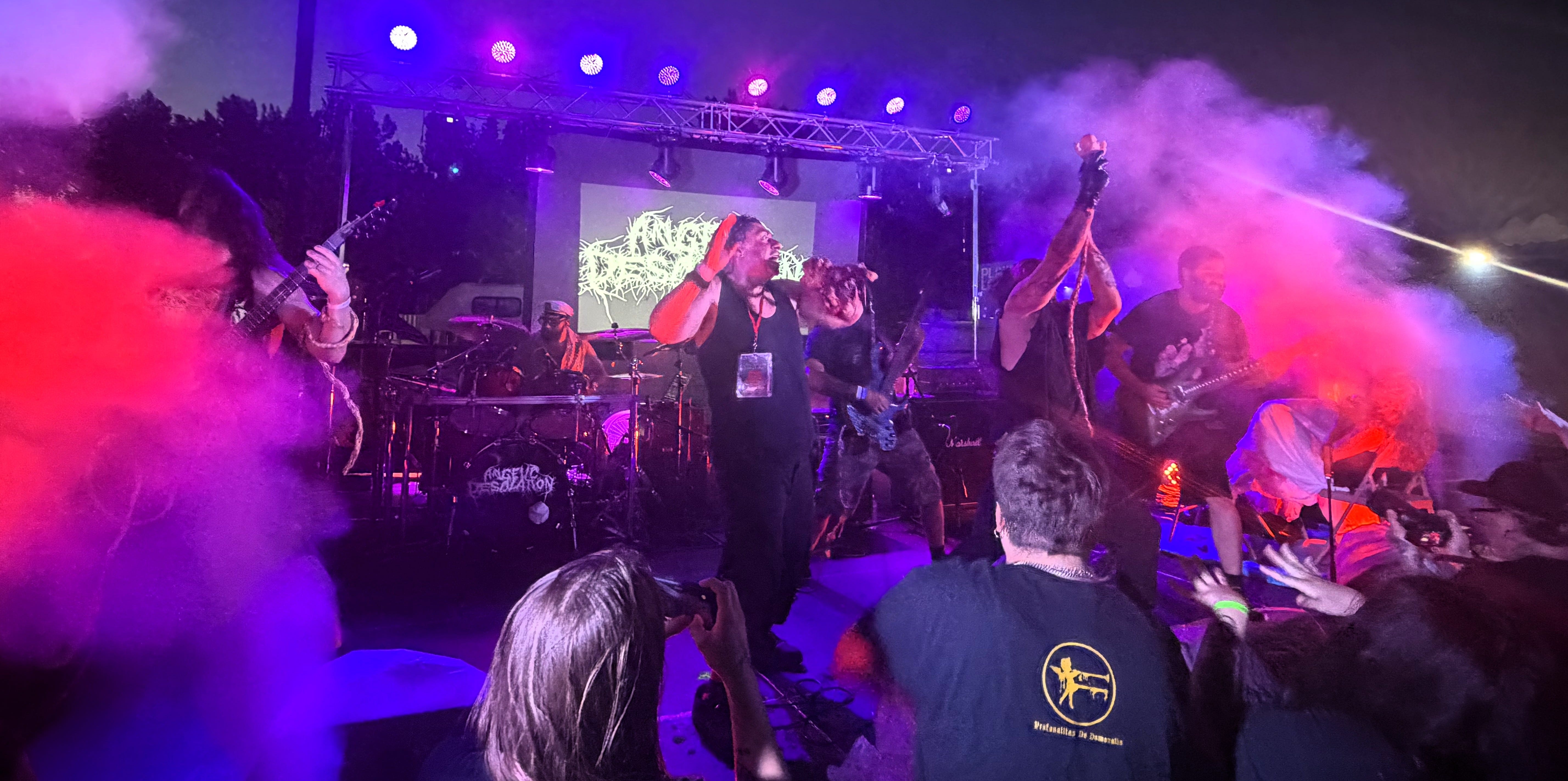
Denver’s Angelic Desolation took the outdoor stage at 9:30 and supplied one of the evening’s most complete visual moments: smoke rolling across the musicians, purple and red light filling the air and the crowd pressed close enough to become part of the composition.
The band calls its collision of thrash, grindcore, death metal, horror and riff worship “American Razorgrind.” The description fits. Its 2023 full-length Orchestrionic Abortion turns the same mixture into a full record.
At 10:15, Dallas–Fort Worth’s Kill Everything moved the night back inside. Formed in 2016, the Comatose Music band works in slam and brutal death metal and released Scorched Earth in 2018.
The closing slot at 11:15 belonged to Suffer, and that was more than a hometown courtesy.
Suffer’s roots reach to 1989, when the musicians were known as Pukus, before the Sioux Falls death-metal name took shape in 1990. The surviving demos from 1989 through 1994 document a local band working during the birth of death metal itself.
The Saturday bill became a compressed history of underground metal. It began with a project whose first song arrived six months earlier and ended with a Sioux Falls band whose earliest recordings are older than many people in the room.
New slam, local deathcore, party thrash, razorgrind, brutal death metal and old-school hometown history all fit within the same day.
We ran into our friend Kayla Stensland at the show who was nice enough to provide this gallery she got of Fed to Pigs.


The part of the festival that does not come through the speakers
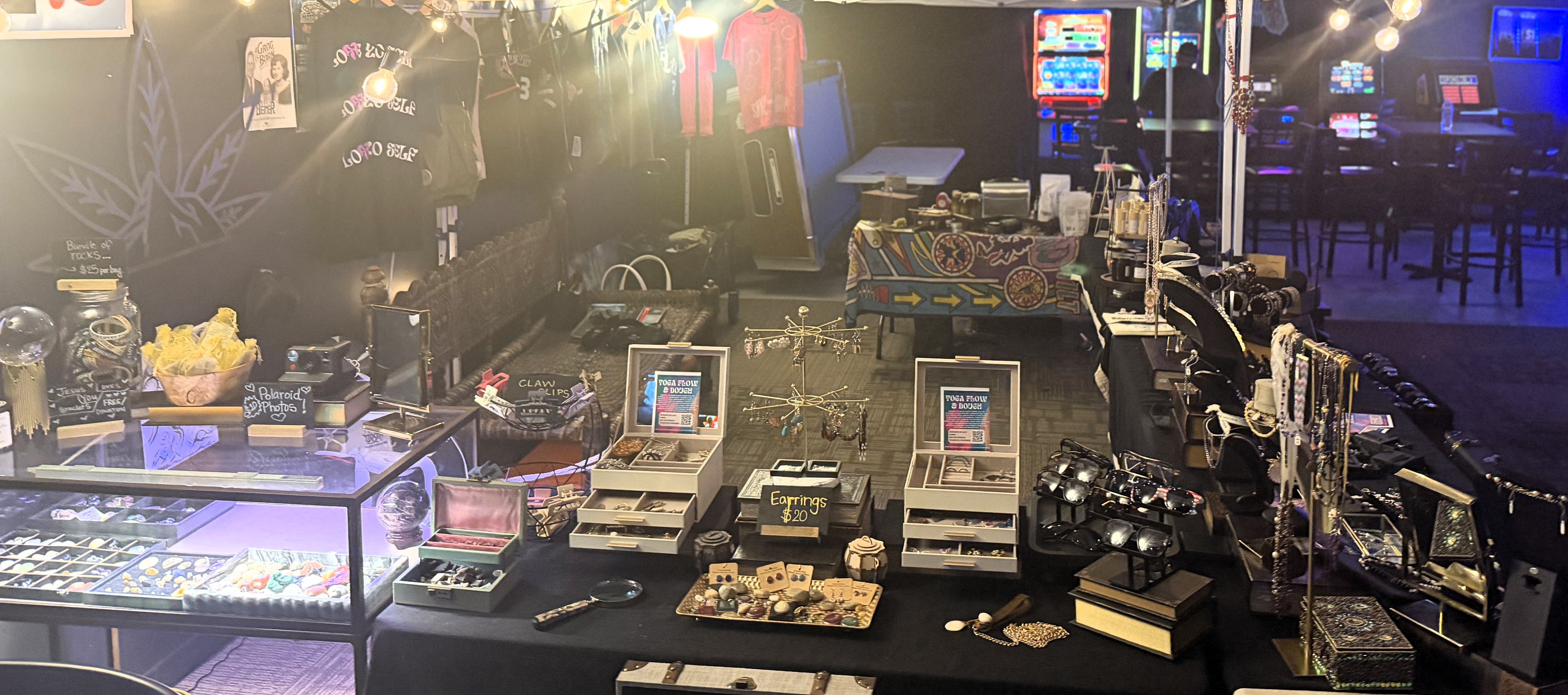
As someone who has worked as an event vendor, I know how much a good booth can change the feeling of a room.
Vendors give people somewhere to linger between sets. They create conversations that would not happen in a line at the bar and remind us that a local scene is built by more than musicians.
One of my favorite parts of events at Bigs has been running into Michele and her partner with Sanctuary Goods. Their table is filled with jewelry, stones, tinctures, artwork and other handcrafted goods, but what stays with me is their warmth.
They do not simply put merchandise on a folding table. They take care of people, and people can feel the difference.
Sanctuary Goods is still a relatively new Sioux Falls shop. Founder and curator Stefan Bernardino opened the Jones421 storefront in December 2024 and described it as “a place filled with curiosities.”
Its mix of local art, wellness, spirituality and handmade work fit naturally at SlamDakota. Alternative culture is rarely one straight line. It is more like a neighborhood where the tattoo shop, record label, jewelry maker and death-metal band all borrow extension cords from one another.


The rest of the festival marketplace carried the same handmade character. Shirts and records shared space with jewelry and artwork. An artist worked at an easel inside while another booth glowed behind them.
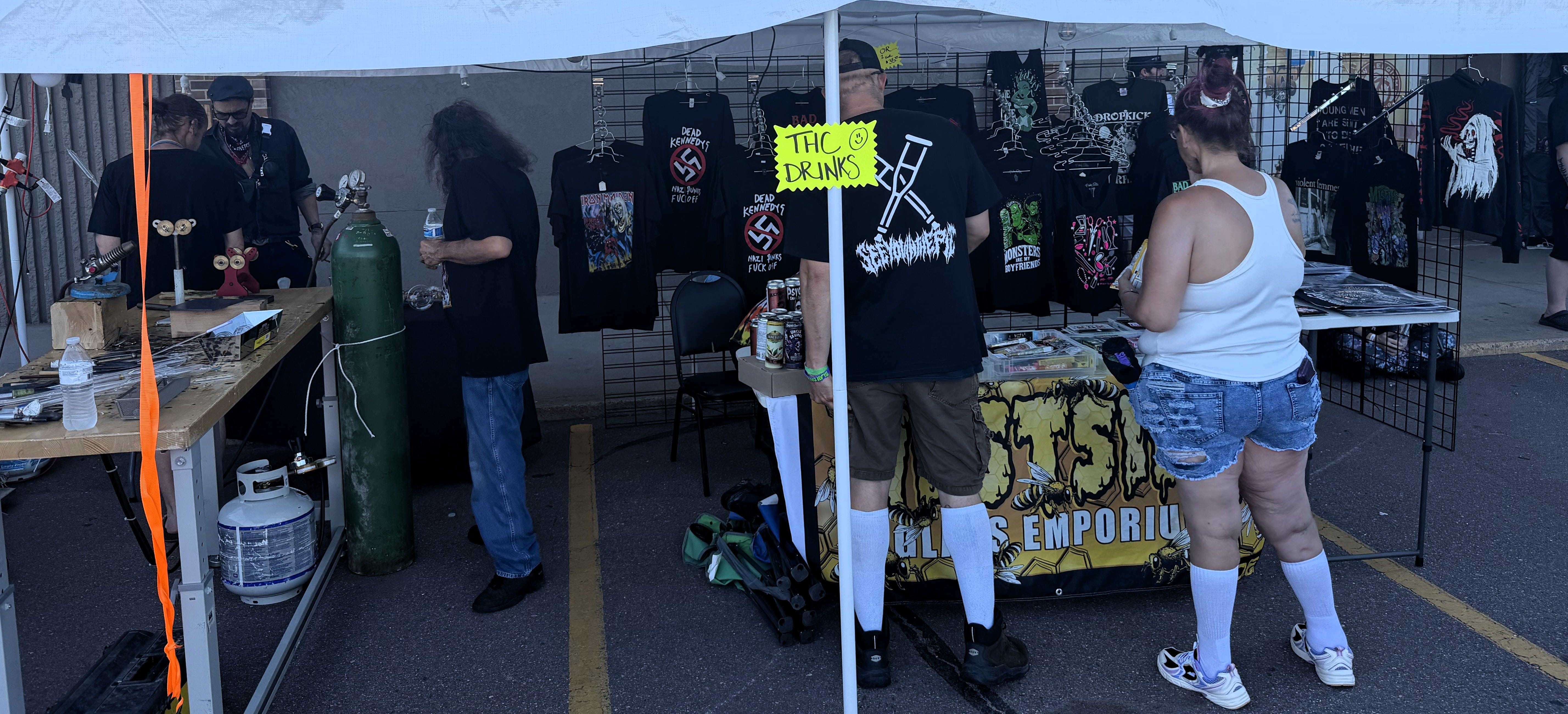
Outside, Westside Glass Emporium paired its merchandise display with live glassworking, giving the parking lot one more kind of controlled fire.
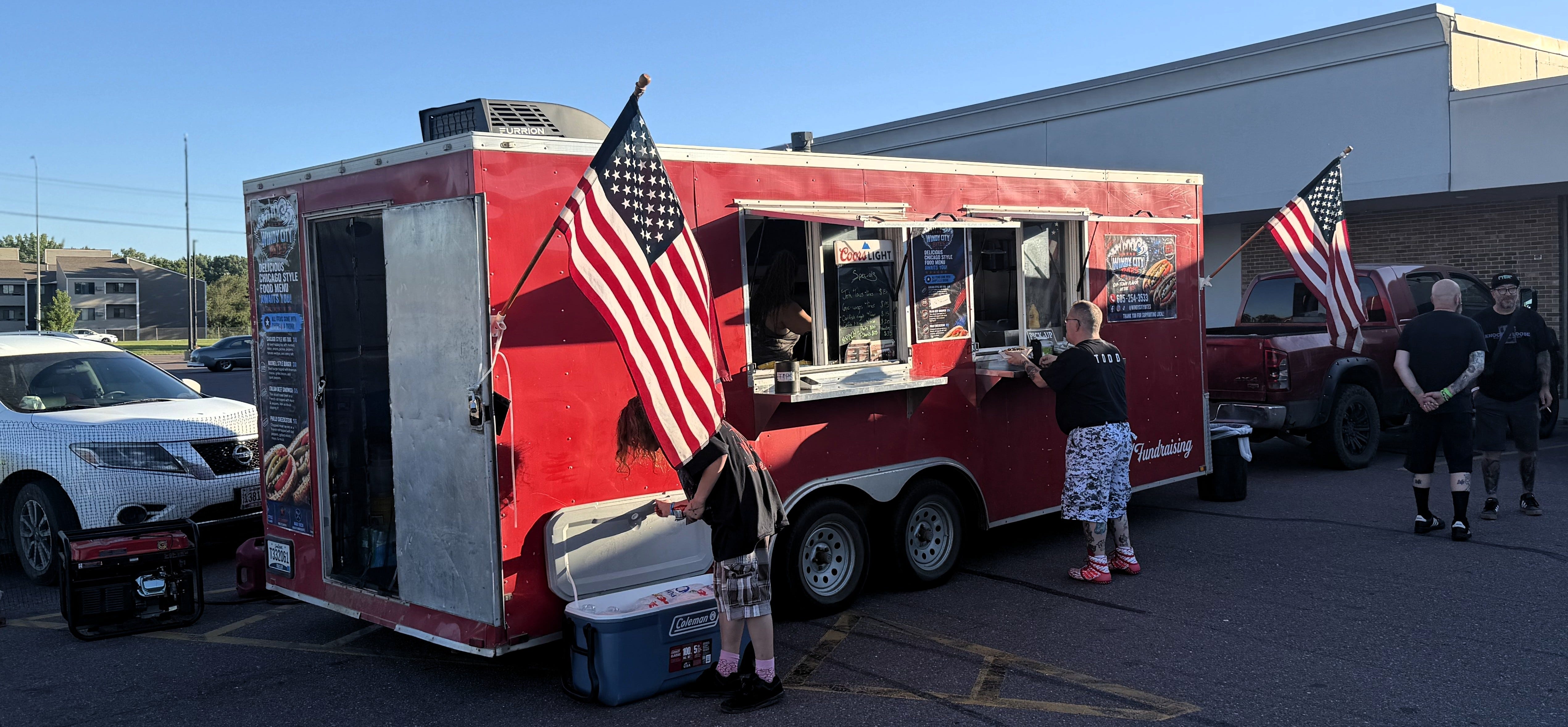
When all that culture made people hungry, Windy City Bites was waiting in the parking lot. Food trucks are humble pieces of festival infrastructure, but around hour six, a hot meal can feel like thoughtful urban planning.
The afterglow
By midnight, the smoke had started to clear, the vendor tables were being packed away and the parking lot was slowly becoming a parking lot again. The music may stop on schedule, but a metal festival follows you home in ringing ears, dusty shoes and the sudden realization that your neck is going to file a complaint in the morning.
This was only my second SlamDakota, but I left with the same feeling that first brought me into the metal scene years ago. The music may be built from aggression, distortion and every unpleasant medical term a band could fit onto a T-shirt, but the people remain remarkably welcoming.
Most communities are built with lumber, asphalt and meetings that should have been emails. Metal communities are built with cables, black shirts and somebody reaching down to help a stranger back to their feet.
Watching Suffer close the night brought the festival’s history full circle. A Sioux Falls band with roots reaching back to 1989 finished a day that began with some of the newest names in slam and death metal. Between them stood the touring bands, local musicians, artists, vendors, sponsors, production crews and fans carrying the scene forward.
Nine editions are now in the books. If the Roman numerals continue as expected, next year brings X. Until then, Sioux Falls can let its ears recover and take some pride in knowing the most vicious fest in the Midwest is also one of its warmest welcomes.
Please consider Donating to Sponsor an article even $1 helps!
