



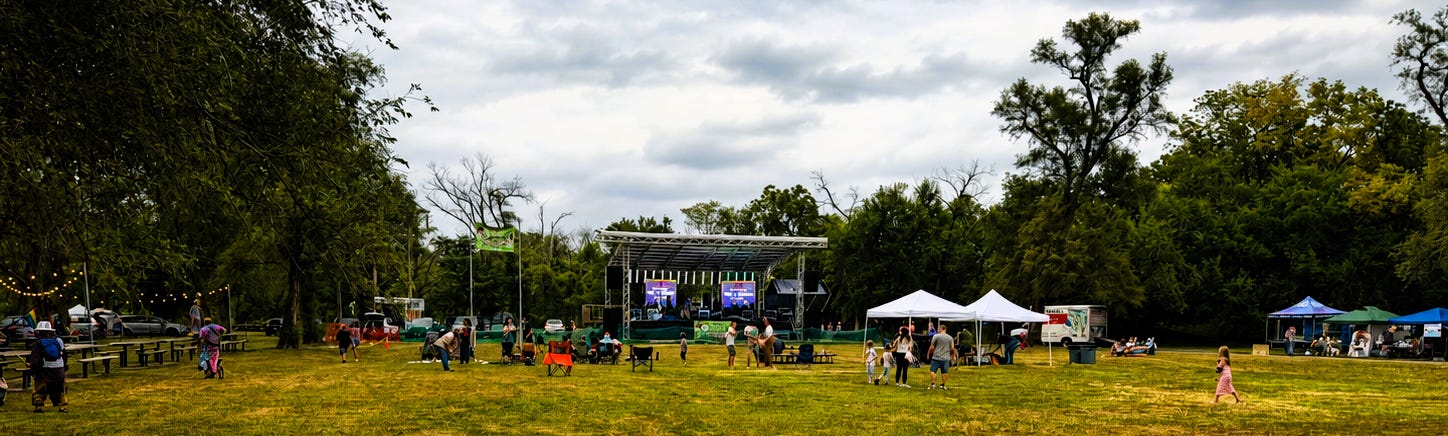
Bellevue arrived one lane closure at a time.
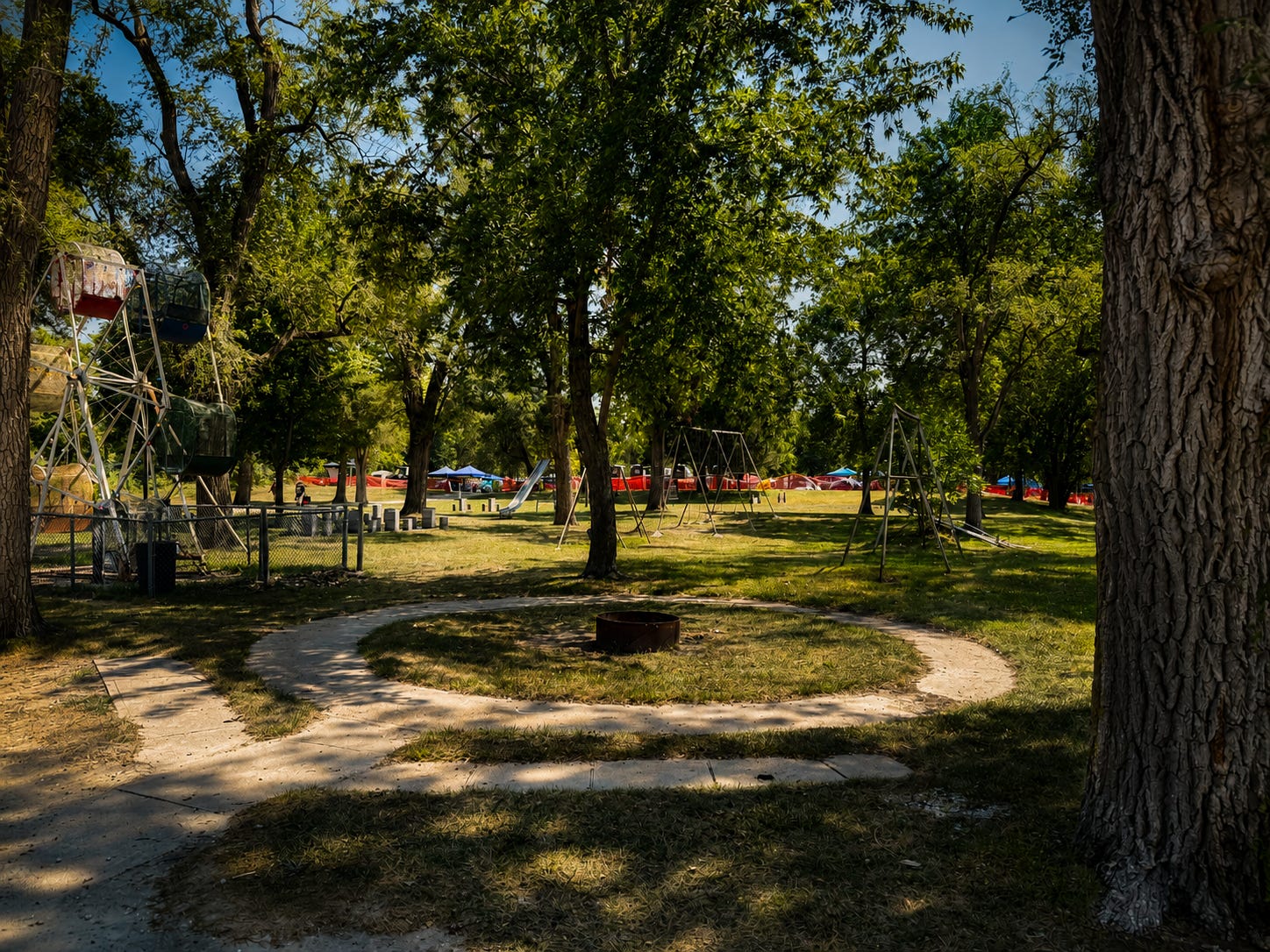
The summer construction season had turned the drive into a procession of orange barrels, narrowed lanes and quick decisions made while the GPS recalculated. By the time we reached Falconwood Park, the idea of staying in one place for the night sounded luxurious. Check-in offered no further resistance. We pulled up, completed the easy wristband transaction and drove into the campground without having to decode a maze of handwritten signs or circle the property searching for a patch of grass.
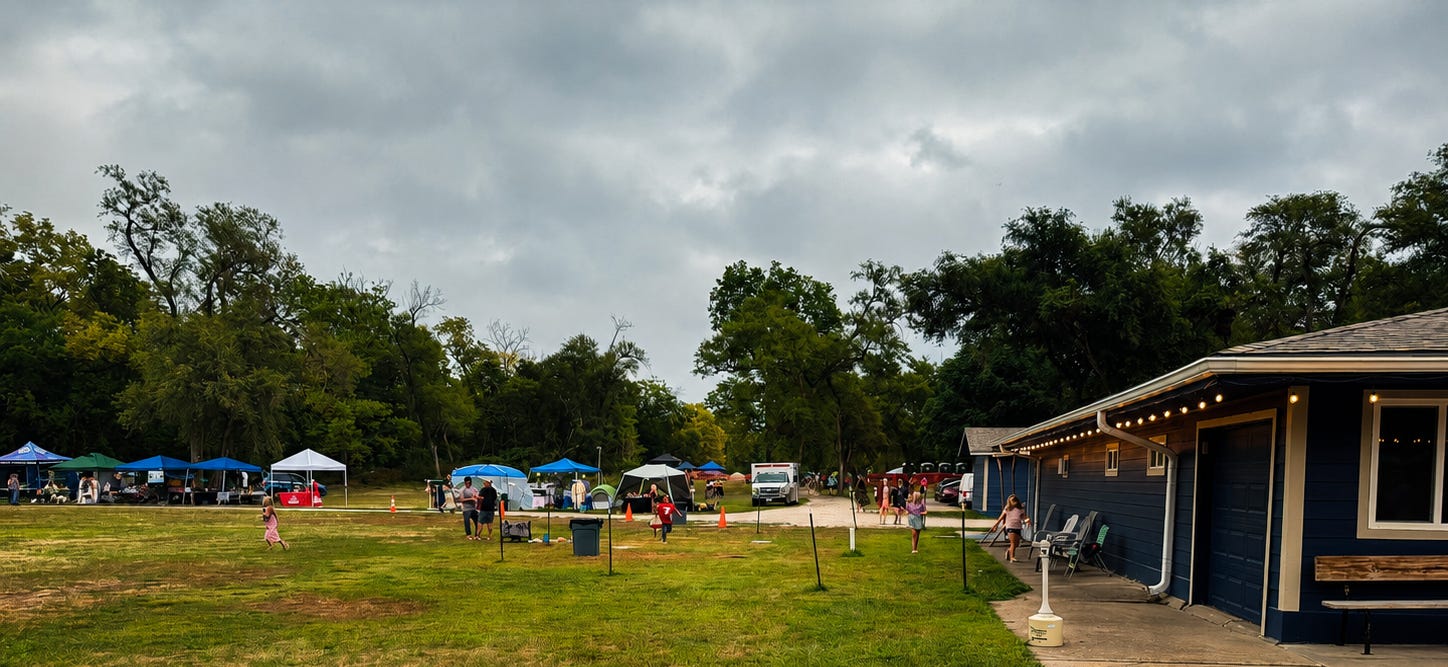
The campground roads were wide enough to navigate comfortably and the grounds were compact enough that disappearing into the wrong campsite never felt likely. In the middle sat a polished building that looked ready to host a wedding as soon as the speakers came down. Falconwood does, in fact, specialize in weddings and other private events across its more than 200 acres, but the air-conditioned restrooms were the feature earning our immediate loyalty. After construction traffic and the long drive into Bellevue, refrigeration-level plumbing felt close enough to a spiritual experience.
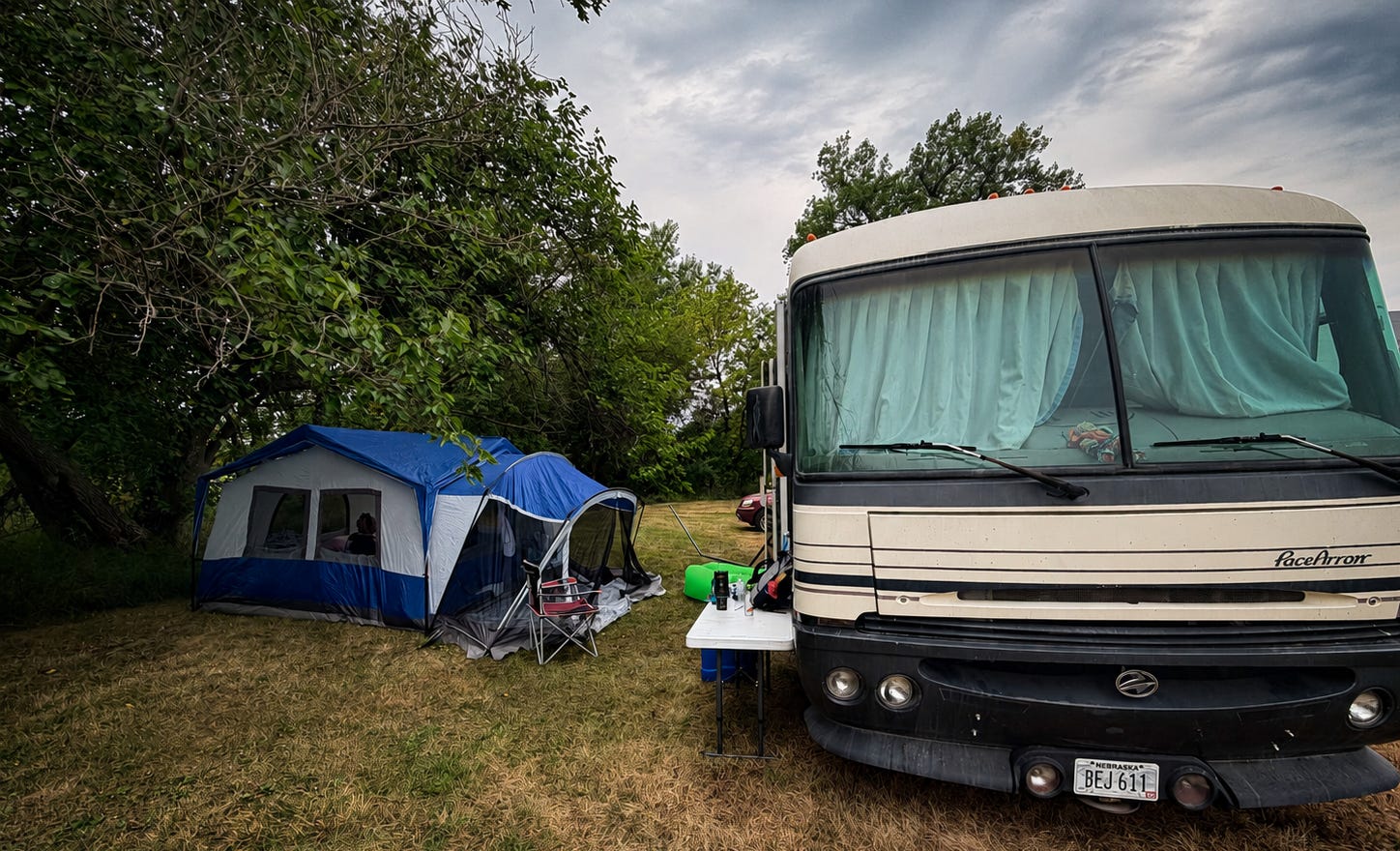
We stayed at camp for a while. No urgency. Bags were unpacked, chairs settled into place and muscles slowly remembered they were no longer folded inside a vehicle. Festivals often tempt people into sprinting toward the first audible kick drum, afraid they have already missed the moment everyone will discuss later. Power & Progress did not inspire that panic. The grounds seemed to give permission to arrive gradually.
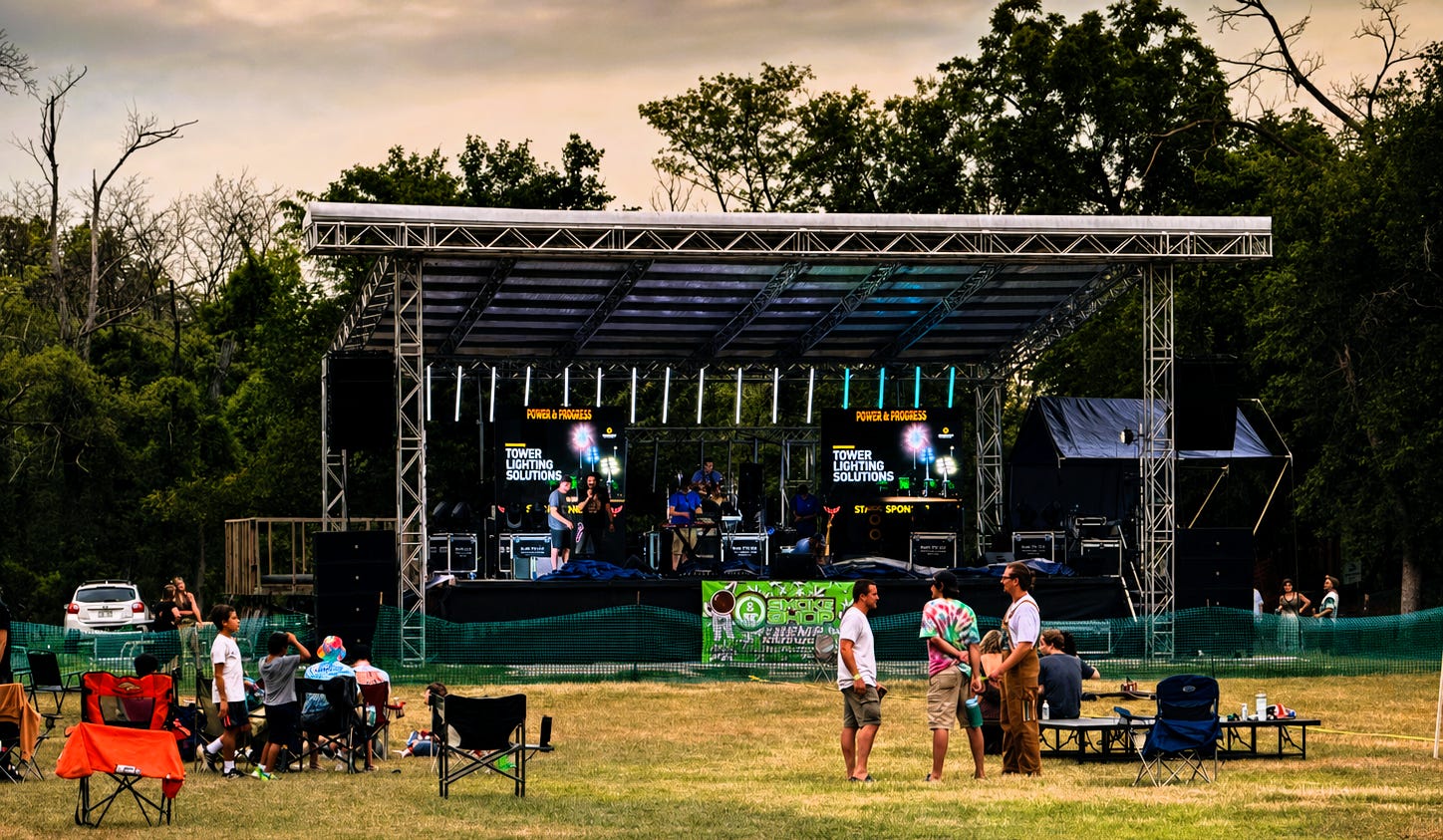
As the sun began lowering, we finally moved toward the music.

No itinerary, no problem
Poe was finishing a set inside when we entered the main festival area. We caught only the closing portion, enough to hear the indoor stage working at full volume and to realize how easily Falconwood’s separate performance spaces could pull the evening in different directions. Friday’s official schedule placed Poe from 8 to 9 p.m. on the MAPP Entertainment stage, followed immediately by Rawlz. Across the grounds, Funk Trek was beginning on the Main Stage at the same time Rawlz took over indoors. Choosing one meant surrendering part of another. Power & Progress had built scheduling conflict directly into the night.
We chose movement instead of loyalty.
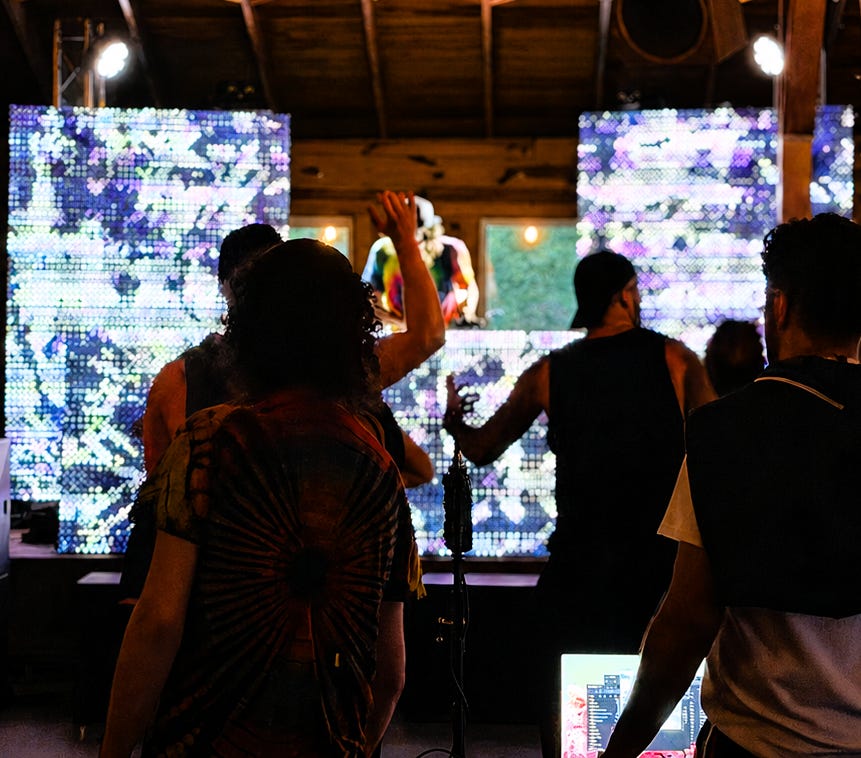
Rawlz immediately changed the posture of the electronic stage by bringing out an electric guitar. The instrument gave the set a physical point of focus beyond the laptop and LED panels. He leaned into the fretboard while the screen behind him dissolved into bright, cellular patterns, the guitar’s reflective blue finish catching flashes from the visuals. Electronic performances can sometimes leave an audience watching equipment it cannot see being operated. Rawlz gave the room hands, strings and visible pressure.
There was something satisfying about watching a guitar played inside a production built from screens, programmed light and bass. It did not feel pasted onto the set as a novelty. The guitar created friction against the digital environment, pulling the eye toward a performer working through notes in real time while the stage around him mutated.


Still, Funk Trek was waiting outside.
We drifted back toward the Main Stage and caught the closing stretch of Funk Trek, an Omaha group whose jazz-funk and fusion background makes its name unusually honest advertising. The band did not have to announce the assignment. Bass, keys, guitar and drums were already inside it, pushing the music through rhythmic turns without sanding away the groove people had followed toward the stage.
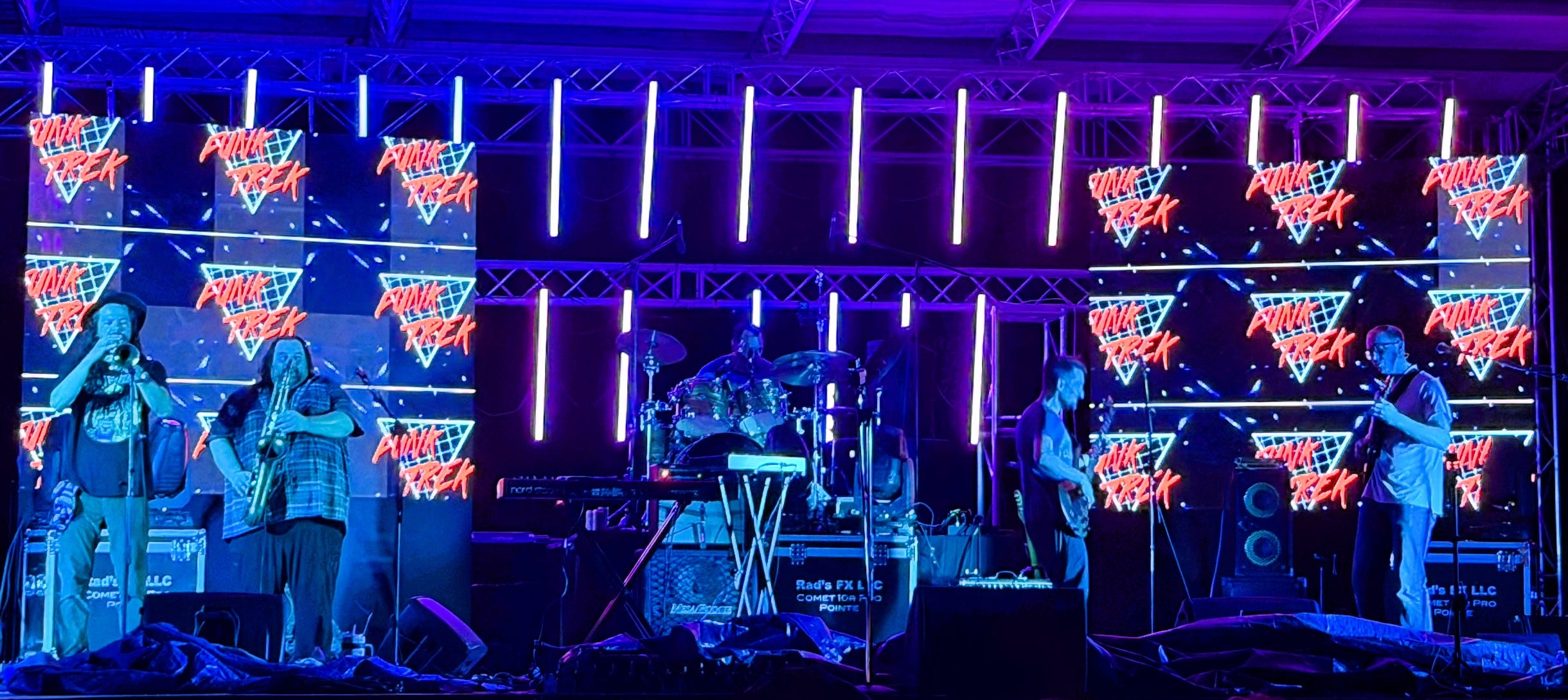
“Funky” can become a lazy adjective when a band owns a bass guitar and knows one syncopated rhythm. Funk Trek earned it through the way the players left room for one another. The rhythm section established the floor, then the other instruments moved across it without crowding every available space. Even arriving late, we heard enough to understand why the set had gathered people instead of merely playing in front of them.
Then it ended.
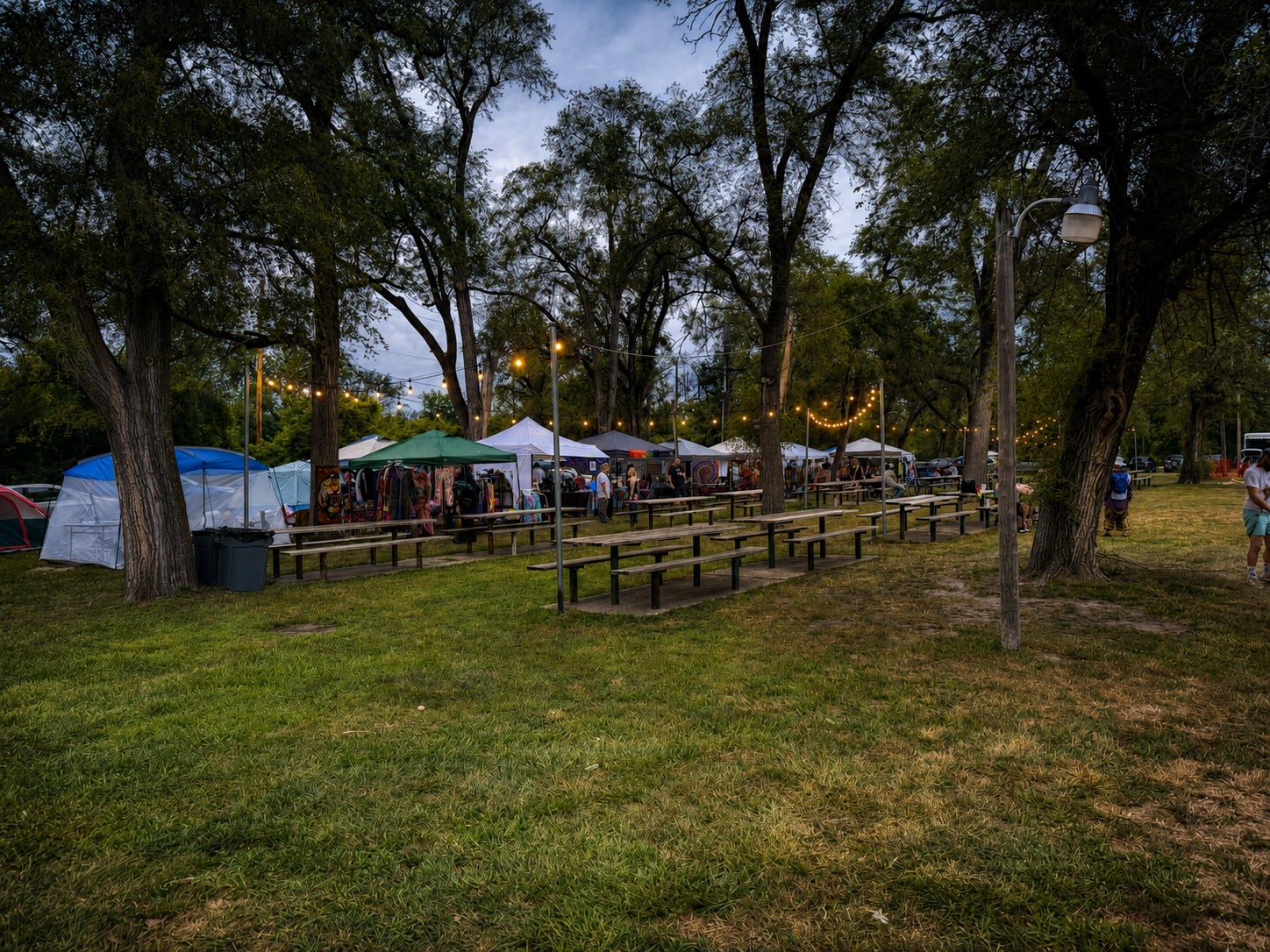
Rather than immediately chase another scheduled performance, we made the only responsible choice available to mature adults at a camping festival: we went looking for a mysterious path through the woods.
Please consider Donating to Sponsor an article even $1 helps!

The troll at the trailhead
We had heard about a special trail leading toward the third stage, though “trail” sounded suspiciously vague when we first started searching. For a moment, there was only darkness beyond the organized festival area. Then we spotted tiki torches among the trees, small flames marking the correct direction.
At the entrance, a festival volunteer claimed to be a troll demanding payment before allowing us to pass. Negotiations were brief. Currency was rejected. A game of rock-paper-scissors would settle the toll.
I won.
This surprised me enough that the victory deserves documentation.
The bit lasted only a minute, but it revealed something about the festival that polished production cannot manufacture. A volunteer had been given enough freedom to turn crowd control into a private joke with strangers. Nobody was being hurried through a checkpoint. Nobody barked directions. The entrance to the path became its own tiny performance, starring a self-appointed troll and several adults suddenly taking rock-paper-scissors far too seriously.
Beyond him, the trail curved through the trees under torchlight. Music from the other stages thinned as we moved farther into the woods. Falconwood’s manageable size had made the campground simple to understand, but the path introduced a hidden pocket to the property, a place you could miss completely by following only the obvious routes.
We reached the third stage.
No one was playing.
Our side quest had achieved precisely what side quests usually achieve: the discovery of something interesting at the least useful possible time.
It was still worth it. The vacant stage showed how far Power & Progress had spread itself across Falconwood and how differently each area was allowed to feel. The Main Stage had festival-scale screens and an open-air crowd. The MAPP room compressed electronic music into a wooden structure where LEDs, dancers and haze could control the full visual field. This third space waited beyond firelight and trees, separate enough to feel discovered rather than advertised.
The official festival material describes three large stages and dozens of performers across the weekend. Friday alone carried six campground sets, seven Main Stage appearances and nine electronic performances, continuing until 2 a.m. We did not attempt to conquer all of it. Treating a festival schedule like a scavenger hunt for completed names can turn an evening into unpaid clerical work. We let Power & Progress interrupt our plans instead.
The reward came when we returned indoors.
Bodies against the LEDs
We arrived for the end of HYDDIN, and the room looked entirely different from the one Rawlz had occupied.
HYDDIN stood behind a white hoodie and cap, framed by LED panels cycling through blue geometric patterns. Three dancers occupied the platforms and floor in front of the booth. Their black outfits and long braided hair reduced them to sharp silhouettes whenever the screens flared. Arms extended, wrists curled, bodies held still for a beat before breaking into another formation. The choreography was not decorative movement beside a DJ. It controlled where the audience looked.
Blue dominated first. White light followed, flattening the screens into a severe brightness that left the dancers nearly featureless. Red changed the room again. The same poses suddenly carried a harder edge, hands and bent elbows cutting across the color rather than floating inside it. Haze caught the light above the booth while the dancers shifted levels, two elevated on the side platforms and one working lower in the center.
HYDDIN’s recorded catalog sits firmly within electronic music, but the performance we witnessed depended as much on bodies and staging as the production coming through the speakers. The dancers gave the bass a visible consequence. Every stop, extension and drop translated sound into shape without trying to illustrate it too neatly.
The crowd inside had less room to drift than the people outside. Bodies gathered closer to the stage, some watching the choreography while others moved without facing forward at all. Behind them, the wooden ceiling and exposed beams remained visible above the digital production. Falconwood never fully disappeared beneath the technology. It still looked like a rustic event building temporarily possessed by low frequencies.


That collision suited Power & Progress. A jam band could be working through an extended passage outdoors while, a short walk away, three dancers turned an electronic set into shadow theater. Farther through the trees, another stage waited behind a troll with a flexible admissions policy.
HYDDIN’s set ended at 11 p.m. The final Main Stage performance was scheduled for 11:15.
We found a comfortable place and stayed there.
The band behind the festival
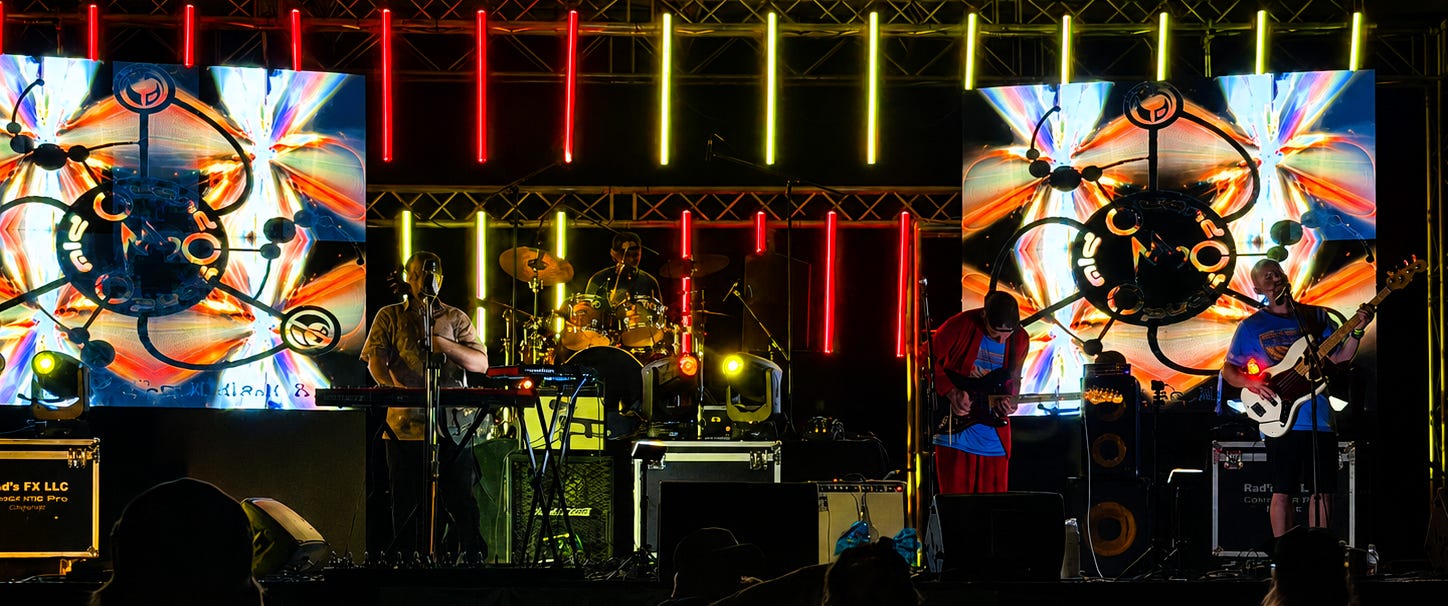
The late set belonged to The Midland Band, whose connection to Power & Progress runs deeper than a prominent slot on Friday’s schedule. Members of the Nebraska progressive jazz-rock group created the first festival outside Columbus in 2012. It began as a one-day gathering built around local music, art and camping. Even then, guitarist Tom Adelman was talking about expanding it into a full weekend with regional and national performers. Fourteen editions later, the event had reached Falconwood with three stages and a lineup stretching across funk, jam music, bluegrass and electronic production.
Knowing the history changed the late set. The Midland Band was not closing the Main Stage as a ceremonial nod to the organizers. The group was still operating inside the musical identity that helped create the festival in the first place: improvisation, progressive structures and enough rhythmic ease to keep technical playing from turning into homework. The band describes its sound through 1970s jazz-rock, danceable improvisation and influences ranging from Frank Zappa and Yes to Steely Dan and the Grateful Dead.
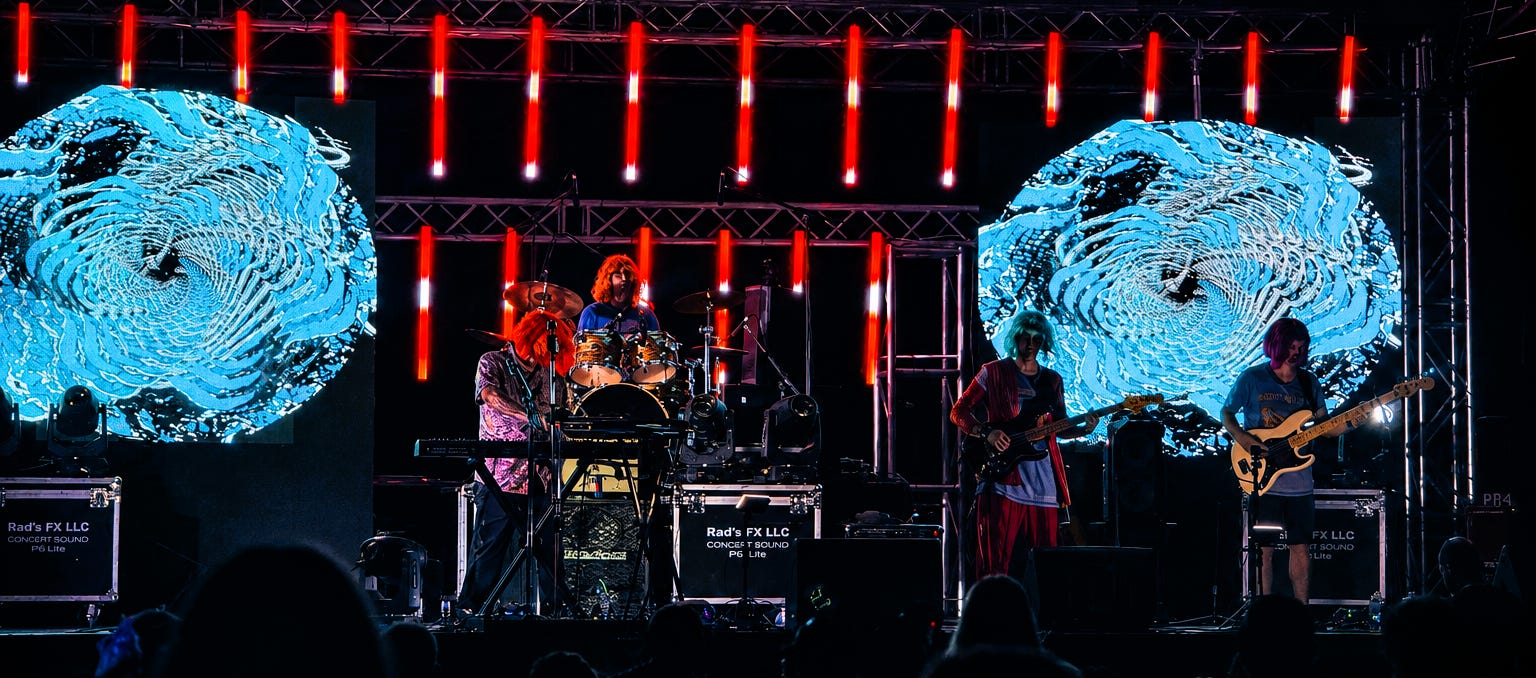
What reached us Friday carried a feel-good jam-band looseness. By then, people had been moving between stages for hours. Some had planted themselves in front of the band. Others listened from farther back, conserving whatever their legs had left. The set did not demand a dramatic second wind from everyone on the grounds. It made room for sitting, swaying, talking briefly and then turning back when a musical phrase caught the ear.
That comfort was important to me.
I have been dealing with back problems for a while, and by late Friday my body was no longer interested in pretending otherwise. Pain changes how a festival is experienced. Distance becomes a calculation. Standing through one more song becomes a negotiation. Even spontaneous choices, such as following tiki torches into the woods because a stranger mentioned a hidden stage, carry consequences that may arrive several minutes later.
My friends knew.
I see this group perhaps once every six months. Time and distance mean our lives usually intersect in bursts, then scatter again. Friday, they cared for me without being asked and without turning that care into a production. They adjusted to what I could handle. They let the night slow down when it needed to. There was no frustration, no suggestion that my pain had made the festival less fun and no expectation that kindness should be rewarded.
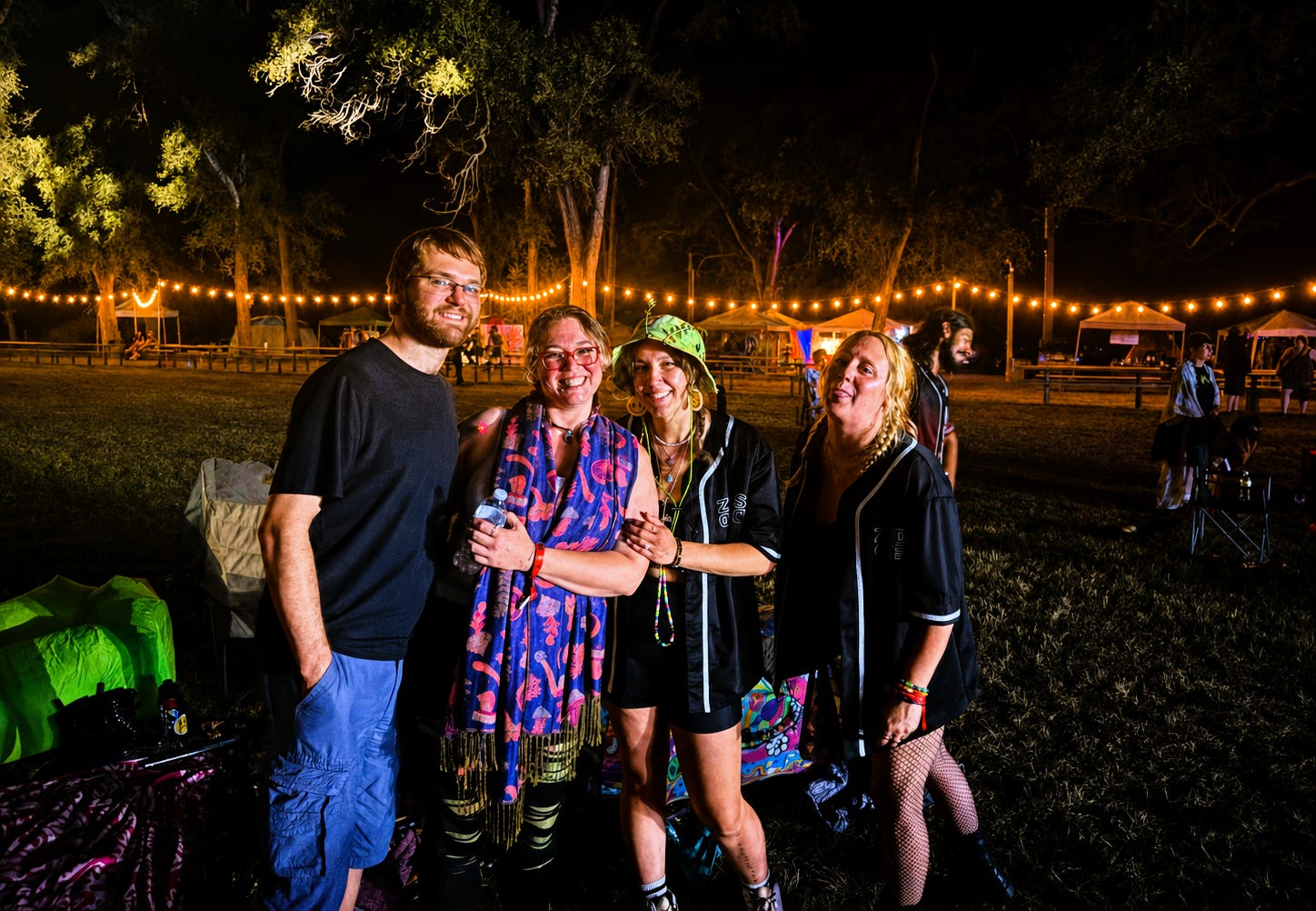
The strongest expression of festival culture came nowhere near a microphone.
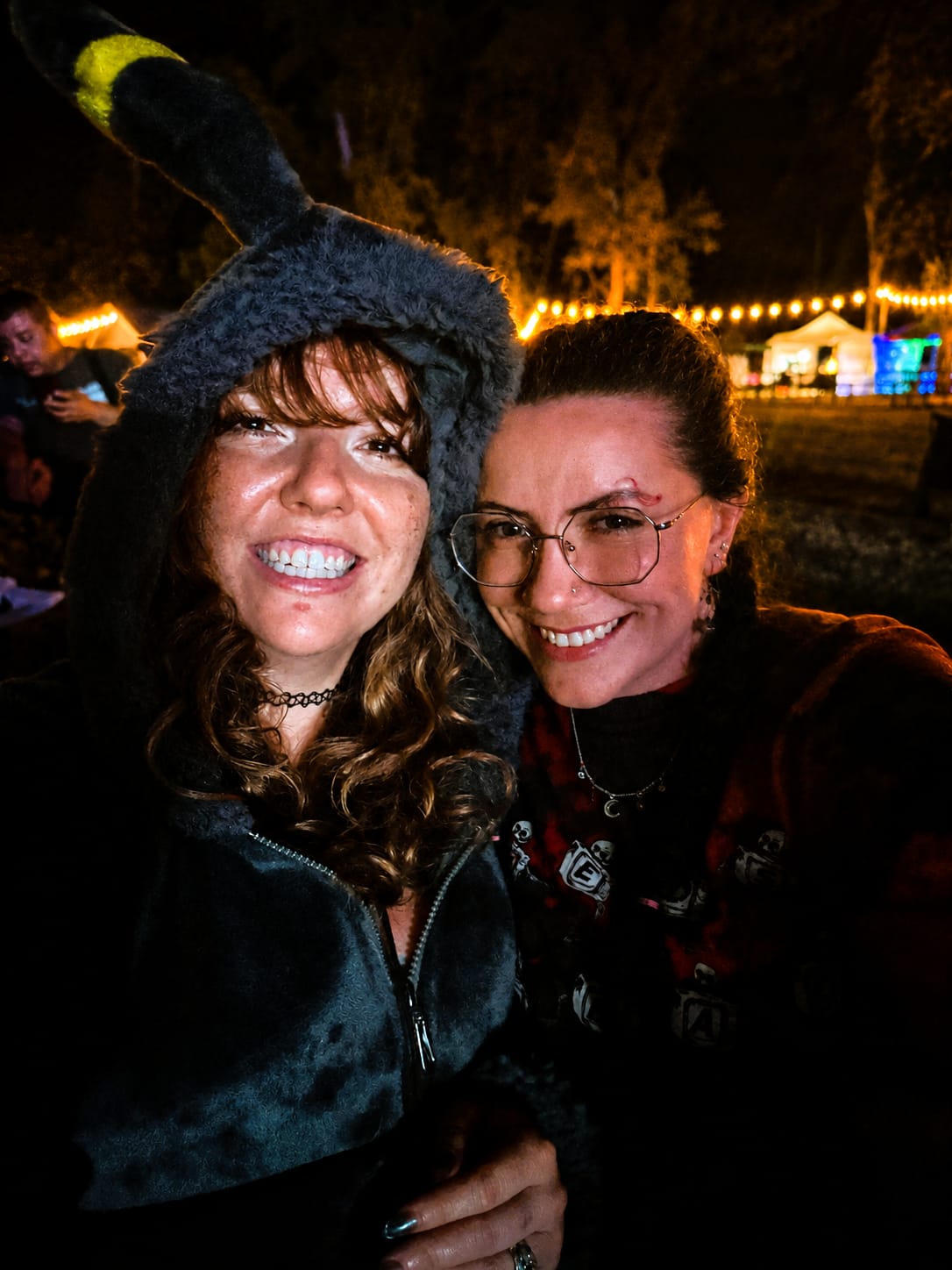
Electronic communities often use PLUR as shorthand for peace, love, unity and respect. Those words can become merchandise language, repeated so often that they lose contact with actual behavior. Friday, my friends put them back into practice. They did not announce it. They simply took care of someone who was hurting.
Music culture is often discussed through scale: ticket counts, stage size, decibel levels, touring distance, streaming numbers. None of those measurements explain why people continue gathering in fields and campgrounds when the weather is punishing, sleep is unreliable and every necessary item is somehow a ten-minute walk away. The reason can be much smaller. Someone notices what you need before you have to say it. Someone changes pace. Someone stays.
Power & Progress says it was built around love, peace, unity, inclusion and community. Those ideas were present in the festival’s history and promotional language before we arrived. On Friday, they stopped being claims. They became people I trust standing beside me while my back argued with the rest of the evening.
Afterglow
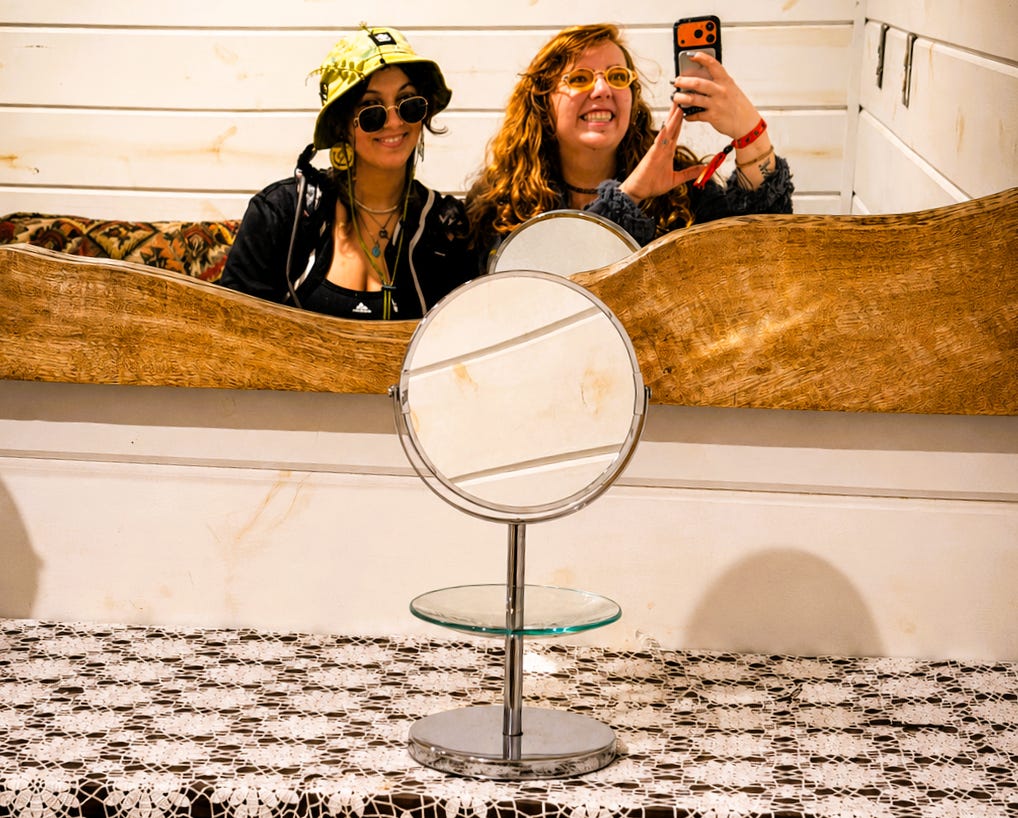
The drive into Bellevue had been a blur of construction, detours and the stubborn urge to get there faster. By midnight, speed had lost its appeal.
The Midland Band continued on the stage built at the festival its members had helped imagine fourteen years earlier. Somewhere behind us, electronic music was preparing to run into the early morning. The torchlit path still waited in the trees. Campsites sat ready for people to return carrying folding chairs, dust and whatever remained in their cups.
My friends stayed close.
The festival’s biggest impression did not come from the loudest drop, the most complicated solo or the brightest screen. It came from being allowed to hurt without being treated as a burden. Peace, love, unity and respect sounded better when nobody needed to say the words.
For one Friday night at Falconwood, they were simply how people behaved.
Please consider Donating to Sponsor an article even $1 helps!
