



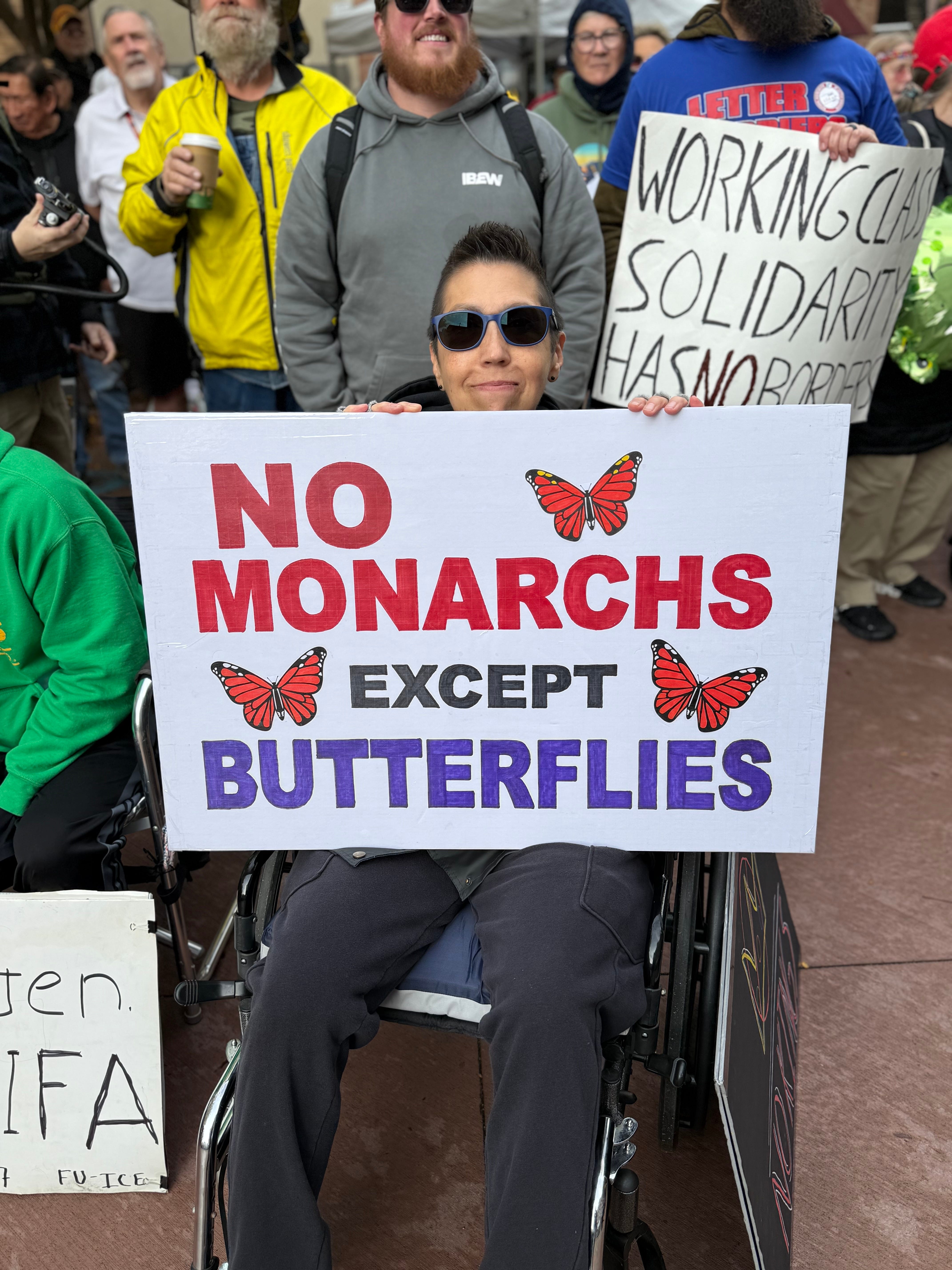
What is “No Kings” really about?
The Downtown Sioux Falls “No Kings” protest took place between 4-6pm on Saturday, October 18th, in the public alley way between two buildings at the 12th and Philips intersection.
The peaceful assembly opened on a first principle: accountability. From the ACLU’s Samantha Chapman to District 15’s Rep. Kadyn Wittman, the crowd heard a through-line that no office confers a crown and no leader stands above the law. Speakers rejected partisan gatekeeping of patriotism and the caricature that dissent equals disloyalty; they cast protest as a constitutional obligation — peaceful, disciplined, and aimed squarely at defending due process, free speech, and the franchise.
Local stakes framed the national critique. Chapman tied federal overreach to Operation Prairie Thunder and visible helicopter surveillance, warning how vague, state-invited operations creep into city life and disproportionately rattle Black, brown, and Indigenous neighbors. Olimpia of South Dakota Voices for Peace made the costs concrete: grant losses, new fees for children in immigration cases, and fear that keeps families indoors and victims silent. A veteran, George Hamilton, placed it in historical relief — rights are won by organizing, voting, and refusing complacency — while a young poet braided moral indictment with an anti-division plea: we are power, we are the people; keep it peaceful.
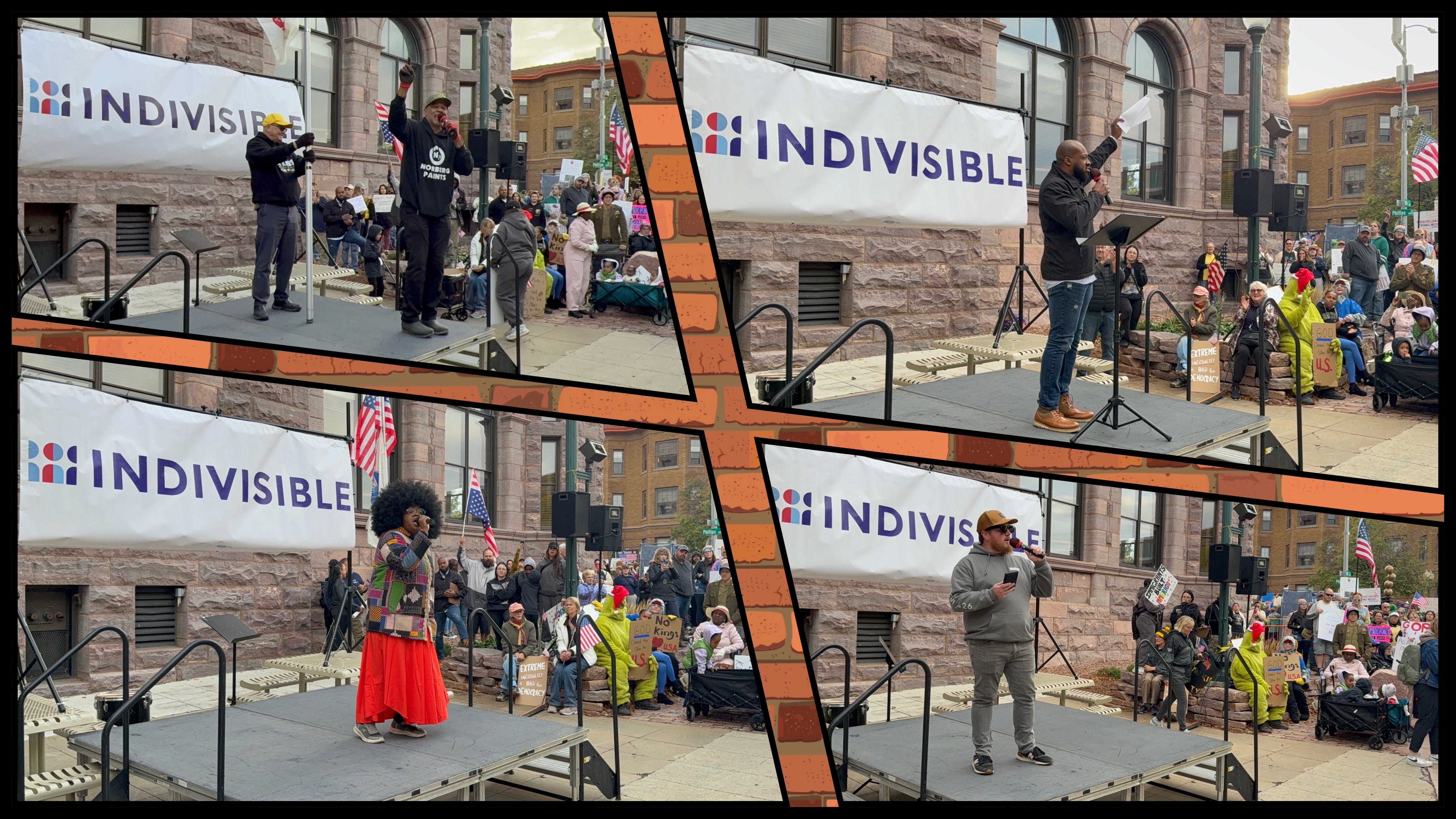
Labor gave the day its spine. IBEW’s Michael Iverson and AFSCME’s Jordan Deffenbaugh argued that elites fear the only class that matters — the working class — because strikes prove who actually holds the cards. Senate candidate Julian Beaudoin hammered the refrain — America belongs to the people, not to the powerful — while a “patriotism” speaker turned civics into a to-do list: show up at City Council, check your voter registration early, write letters, keep pressure on officials. The synthesis was blunt and cohesive: no kings, no cults, no crowns — just a community that intends to keep shaping the country it built.
Attendance Discrepancies and Media Sourcing
Crowd size is one of protest journalism’s oldest distortions — an easy number to inflate, a hard one to verify. While most outlets avoided specific figures, South Dakota Searchlight stood alone in publishing an attendance estimate: 3,500 people. After reviewing our full photographic archive, video stills, aerial shots, and social media posts from attendees, our manual and tech-assisted count placed the number closer to 2,000, rounding up for crowd fluidity throughout the afternoon.
When we reached out to Searchlight reporter Makenzie Huber to understand their methodology, she clarified:
“I did not make this count myself. I rely on event organizers’ counts for such large events because they tend to use the same methods you indicated.”
That transparency matters. It highlights a recurring journalistic tension — between proximity and precision — and underscores the need for consistent, independently verified crowd metrics, especially in politically charged environments.
Costumes and signs
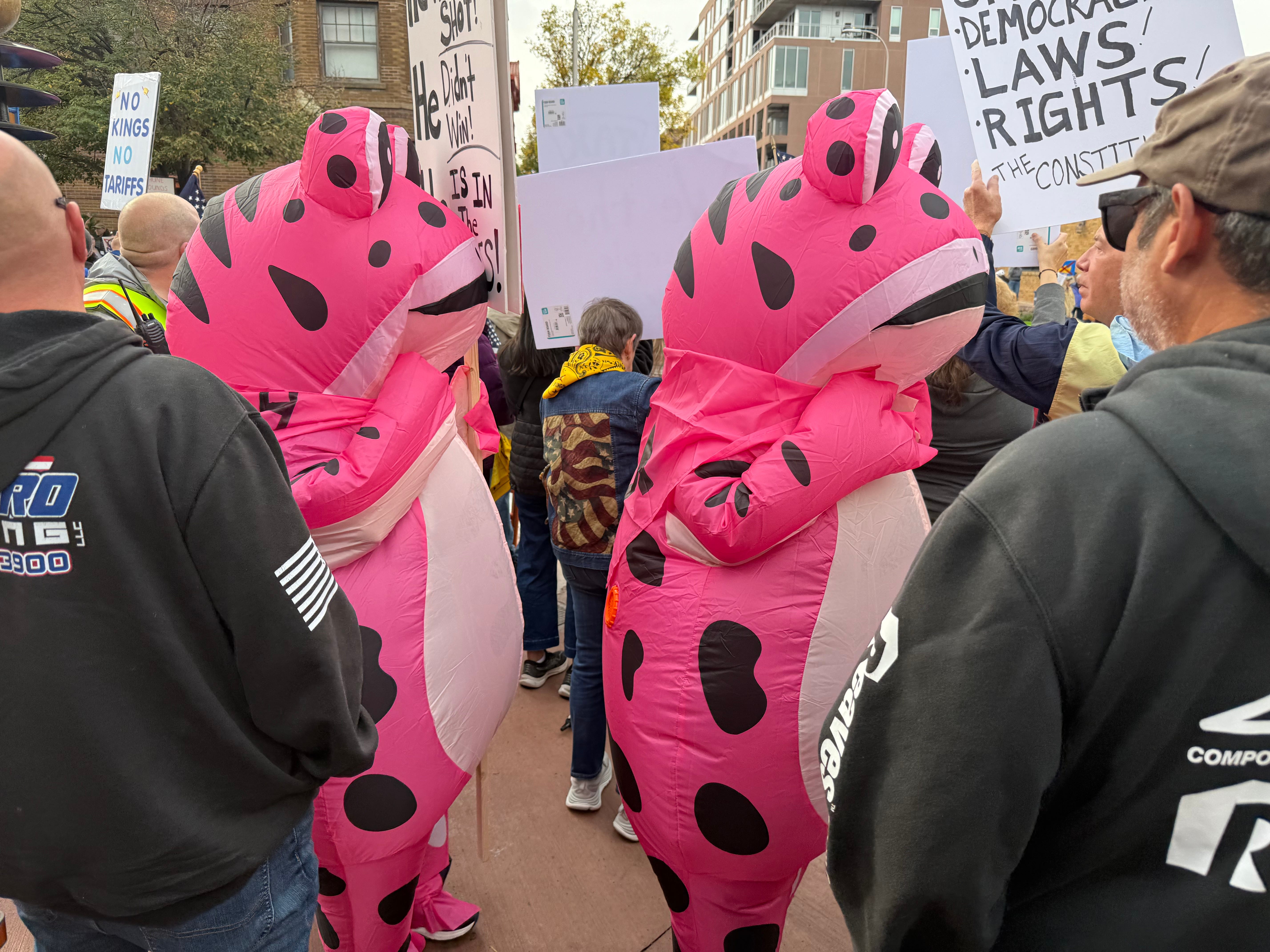
There was no shortage of goofy costumes and profanity laced signs featuring various versions of “Fuck Trump” and “No Kings”, amongst other grievances referencing the destruction of the Constitution and the absolution of rights for not only immigrants, but US citizens as well.
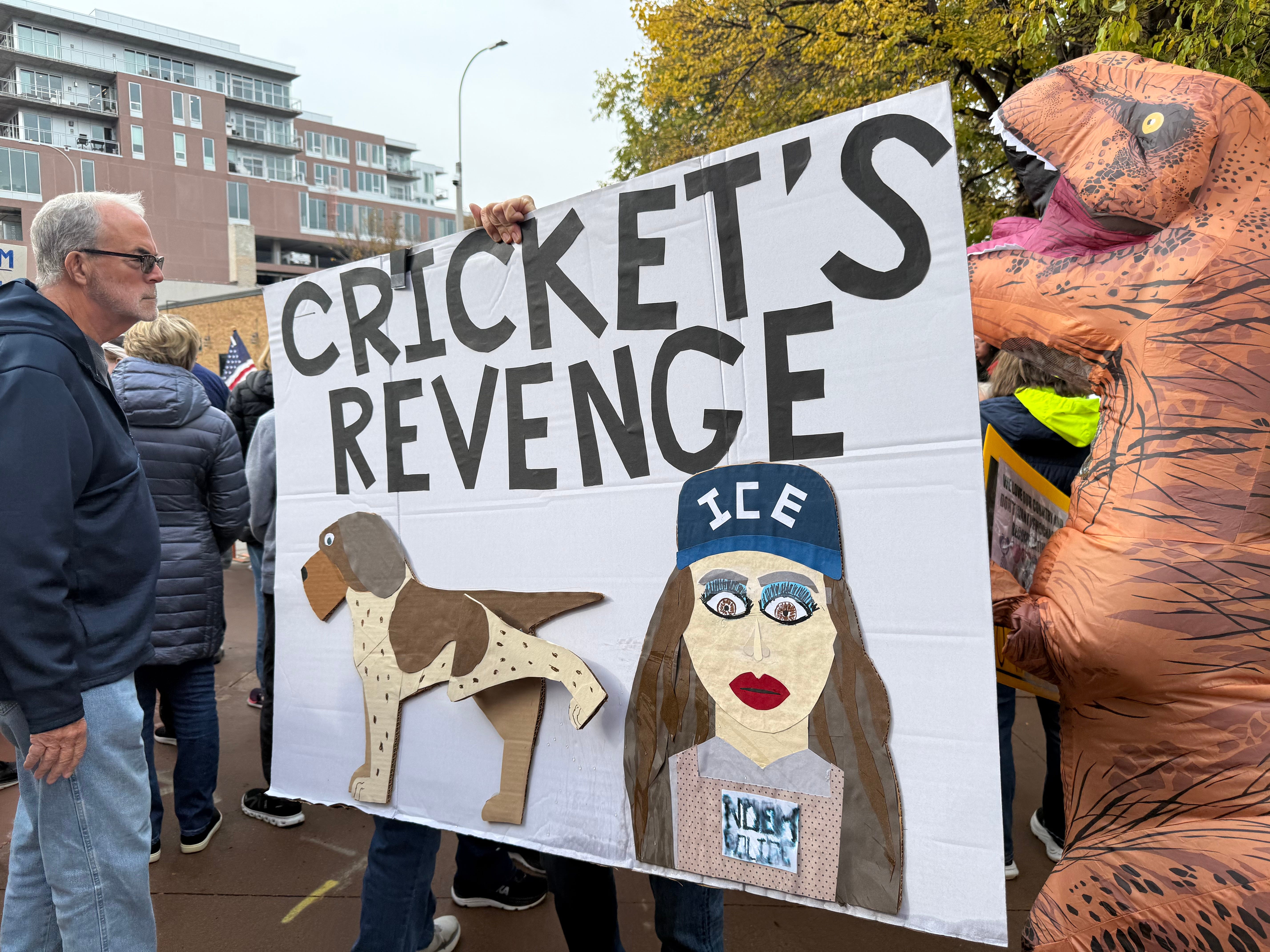
One sign featured the words “Cricket’s Revenge” and a hand crafted homage to Cricket — the late pup Kristi Noem decided to let the nation know she shot to death after an incident with a farmer’s chickens — lifting its leg as if it were urinating on Kristi who is wearing thick makeup and an “ICE” hat.
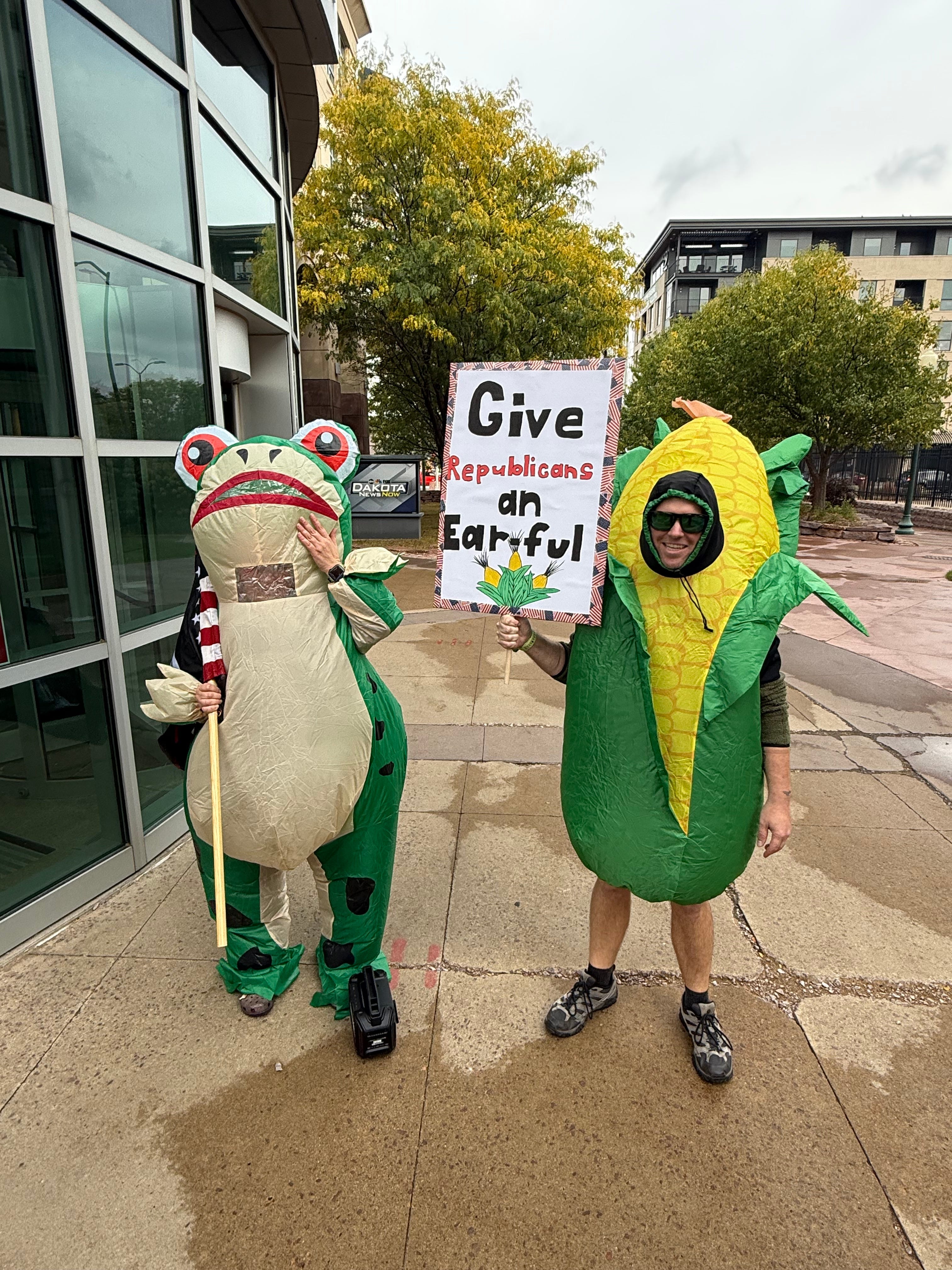
There was also no shortage of “Portland Frogs” costumes that were nearly identical to one seen in the images of the ICE protests in Portland. One man came dressed as a “Corn Cob”, holding a sign which read, “Give Republicans an Earfull.”
There was a light-hearted and satirical vibe to the aesthetic that still managed to capture the urgency and intensity of the protester’s grievances, with no sacrifice of the message. The energy filling the air was unmistakable between the constant honking of horns from cars driving by protesters holding their signs, and the sound of conviction in each speakers voice.
Allison Renville announces her run for governor, Etta McKinley leads protesters in song
Allison Renville, political organizer and community activist, announced her gubernatorial bid before welcoming Etta McKinley to the stage where she sang a song called Hold On. She welcomed the crowd to join in song with her, and they obliged.
A special thanks to my good friend Nelson for bringing me a portable phone charger before my phone died half way through filming.
Full, unedited video of speeches and downloadable audio files
Speaker Erik Muckey
“No one is above the law. No one.”
— Erik Muckey
Muckey grounds the rally in a first principle — accountability — and rejects Sen. Thune’s claim that protesters “hate America,” calling them the people who love and defend it. As a state legislator, he contrasts under-resourced local service with a federal delegation “fighting for a president” bent on kingship, while residents need rule of law, healthcare, and real economic opportunity. He stresses nonviolence — don’t give them a pretext to strip due process — and urges sustained civic engagement ahead of a high-stakes election. The ask: keep the energy, lift up leaders who believe in democracy, and get involved in campaigns from “governor to dog catcher.”
Speaker Olimpia Justice
“In my opinion, immigrants are patriots — and I can say that with full conviction because I am an immigrant.”
— Olimpia Justice
Olimpia, a Mexican-American mother of three, describes eight years with South Dakota Voices for Peace, which provides free legal help to crime victims and children in immigration court and connects families to health and social services. She details cascading setbacks — loss of major grants, new $250 fees for applications once free to children, and funding cuts for victim services — arguing shifting rules make lawful status “almost unattainable.”
Reframing patriotism, she says the flag “is our flag,” and notes kids celebrate IDs so they can do ordinary American things like go fishing or serve. Amid Operation Prairie Thunder, she reports widespread fear keeping families home and victims silent, so the group prepares free powers of attorney and safety plans.
Her ask: become allies — learn and assert constitutional rights, stand with immigrant neighbors, and rebuild trust so victims can safely report abuse.
Speaker KC Brauer
“Protest is patriotic.”
— KC Brauer
Framing themselves as a typical, lower-middle-class American, KC rejects partisan gatekeeping of patriotism and says the president “who wants to be king” has deepened division. They argue accountability now falls to “we the people” as multiple institutions have failed, and that defending free speech, due process for immigrants, and peaceful assembly is core American practice. The crowd is urged to keep pressure on officials and stay nonviolent.
A practical checklist follows: engage City Council (show up or livestream and speak), verify voter registration and polling place before every election, and write letters to local outlets like the Argus Leader, Dakota Scout, and South Dakota Standard. The through-line: ordinary civic work — done persistently — is real patriotism.
Speaker Samantha Chapman
Protecting our democracy is not a partisan issue and it never should be. It’s an American imperative.
— Samantha Chapman
Chapman frames the ACLU’s century-long mission, then charges that the Trump administration is abusing federal power to punish opponents and chill First Amendment rights. She localizes the threat through Operation Prairie Thunder — noting helicopter surveillance, opaque aims, and the disproportionate impact on Black, brown, and Indigenous neighbors despite city officials reporting five-year-low violent crime. The remedy, she argues, is sunlight and civic pressure: dissent as a constitutional duty, not a partisan act.
Chapman urges Mayor TenHaken to demand transparency from Governor Noem, defend due process and separation of powers, and calls attendees to immediate action at the ACLU “phone booth” to contact City Hall.
Speaker Michael Iverson
“Unions express — in embryo — the organized power of the working class.”
— Michael Iverson
Iverson warns that the Trump administration’s cancellations and contract terminations are gutting union jobs and clearing space for corporate exploitation. He argues bosses fear unions because collective power won the weekend, the eight-hour day, and basic dignity — and that today’s anti-union drive is the “axis” of a broader fascist turn serving monopoly interests. Big business, he says, masquerades as speaking for all classes while suppressing constitutional rights.
Some counter-protesters are “deceived” workers, so labor must meet them with a pro-worker message before resentment is weaponized against their own interests. The prescription: a united front of unions and allied groups to defend hard-won gains and confront the slide toward authoritarianism.
Check out his article on yesterday’s protest, and subscribe to his Substack!

Speaker Kadyn Wittman
“No kings, no cults, and no crowns. Just we the people.”
— Kadyn Wittman
Wittman frames the moment as a fight between ordinary Americans and “billionaire overlords,” not red vs. blue or urban vs. rural. She argues elites hoard wealth, gerrymander maps, and rig systems while pitting neighbors against each other.
Calling for accountability, she says presidents, corporations, and billionaires must be held to the law and to taxes. Citing shutdown politics, threats to the Voting Rights Act, and stretched disaster agencies, she contrasts monarchy with mutual aid: democracy is “a kitchen table,” not a “golden throne.” The close is a unifying pledge to stand together — no kings, no cults, no crowns — and to keep shaping the country as a community.
Speaker Julian Beaudoin
“America does not belong to the powerful, it belongs to the people.”
— Julian Beaudoin
Beaudoin declares his Senate run and frames the rally’s theme: America has no kings — power flows from the people. He condemns leaders who treat offices like thrones, profit from politics, and govern by fear, scapegoating immigrants, educators, the press, and even neighbors. He contrasts South Dakota’s ethic of mutual care with elitism, arguing we need “neighbors, not kings.”
Citing policy harms to working families and efforts to control women’s bodies, he calls for courage and accountability across parties. The refrain “No kings!” punctuates a populist promise to restore representation and dignity.
Speaker George Hamilton
“We don’t get rights from politicians. We vote. We mobilize. We organize.”
— Veteran, George Hamilton
Hamilton roots the stakes in lived history — born in 1961 Texas, he recalls segregated water fountains and reminds the crowd that progress (women’s suffrage, LGBTQ equality) came from collective action, not benevolence. As the nation nears its 250th year, he warns of efforts to roll back rights, dignity, and accountability, and insists only the people who grant power can take it back. The remedy is participation: vote, organize, write Congress, and reject complacency because any right not defended can be lost. He closes with urgency and resolve: this is our country, and “we will not go silent into the night.”
Speaker Carter Kittelson
“Division is the killer of all progress. But with a little compassion and patience, we become progress!”
— Carter Kittelson
Kittelson delivers a blistering but nonviolent address to power, repeating “you’re nothing without us” to remind officials that authority derives from the people. The piece marries indictment — corruption, harmful laws, sanctioned brutality — with a pivot to empathy, urging listeners to love those they disagree with and to practice peaceful opposition. Vivid images of “thrones” vs. working-class struggle frame democracy as collective dignity, not domination. The close is rallying and inclusive: We are power. We are the people. Keep fighting — peacefully, together.
Speaker Jordan Deffenbaugh
“There are no kings in America… and it’s going to stay that way.”
— Jordan Deffenbaugh
Deffenbaugh, a new AFSCME rep, anchors the rally in first principles: no one is above the law and workers make the country run. He urges unity around a single identity — the working class — rejecting elite-made divisions of upper/middle/lower class, and uses strike power to illustrate who truly “holds the cards.” In call-and-response style, he contrasts people who “work for a living” with those who “own for a living,” deriding soft-handed elites. He pivots to warn about billionaire influence (naming Peter Thiel), surveillance/defense contracting, and efforts to fuse deregulatory tech agendas with Christian nationalism, invoking a biblical critique of hypocrisy (“Pharisees”). The through-line is solidarity: organized labor as the firewall against would-be kings.