


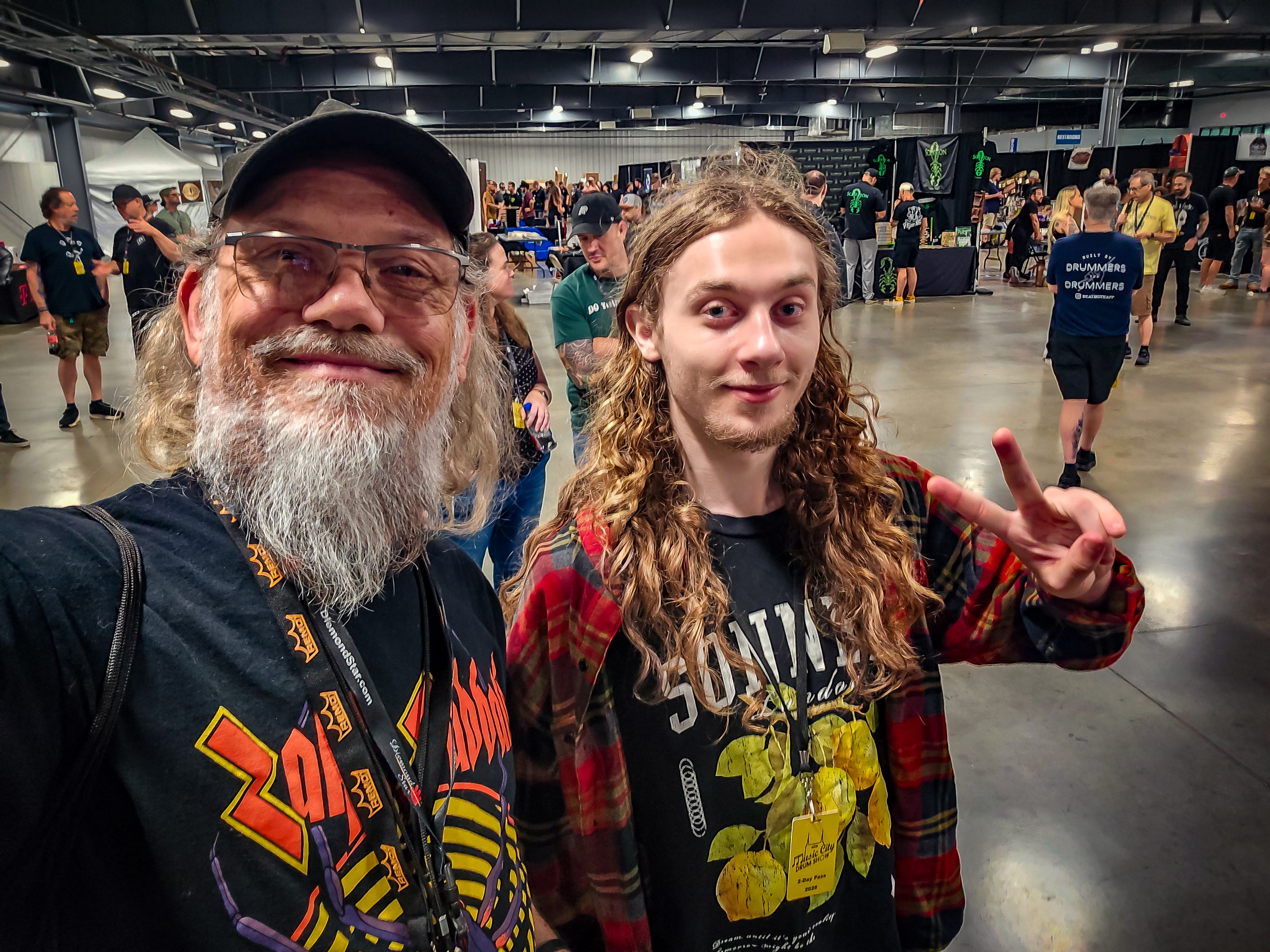
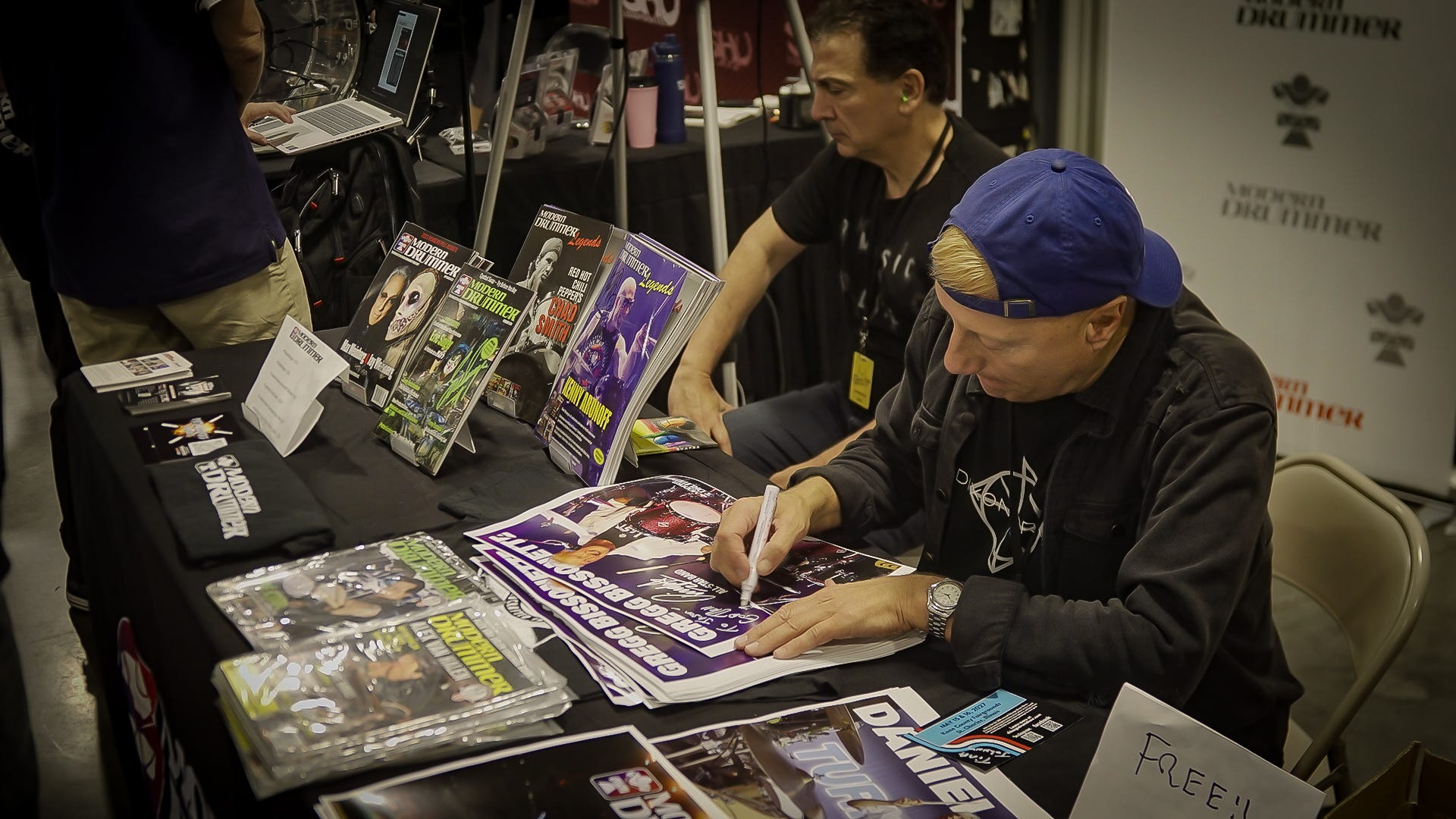
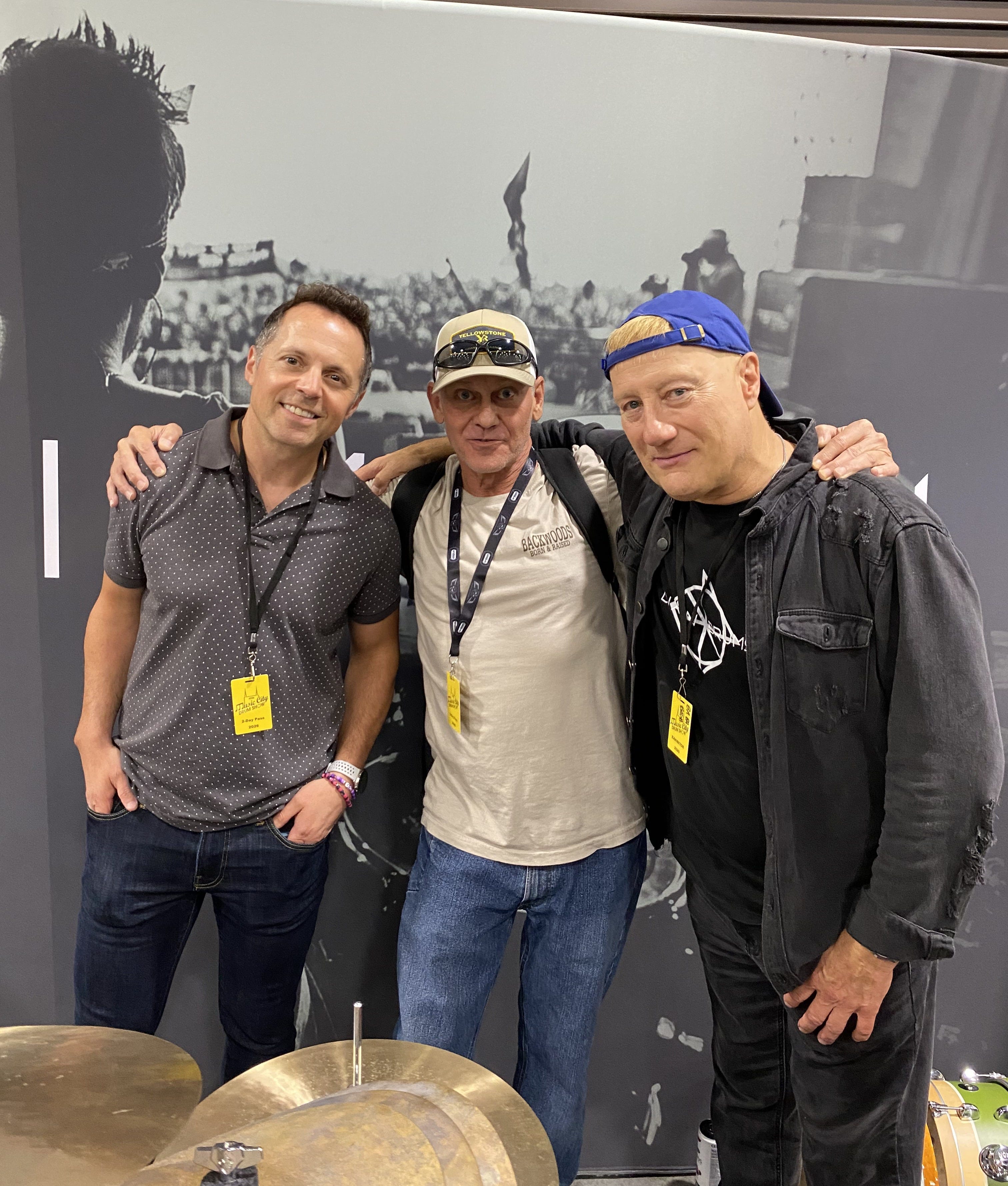
Mason Hanlon and I were standing at the Modern Drummer booth Sunday afternoon, where Bissonette was signing posters and talking with attendees. We asked if he remembered us. He looked again, worked backward through a year’s worth of faces, then found the connection. Yes, he did.
The last time Mason and Gregg had been together, there was a screen between them, a video call fighting through one technical problem after another and a small group packed into Carson’s room over the garage. Now they were in the same building — one of two buildings, actually — surrounded by more drums than either of us could count.
For Gregg, it was probably one familiar memory among thousands. For Mason, it was the reason the drive to Nashville mattered.
Sunday had barely made it onto my calendar. Mason and I had talked about attending both days of the sixth annual Music City Drum Show, but I had a family trip Saturday. By then, spending Sunday on the highway was not part of my weekend plan. Then I saw a Modern Drummer ad announcing that Bissonette would be signing at its booth.
I like to travel, even when it means going alone, but the miles pass easier with another voice in the car. Mason, the drummer for LRM, was an easy choice. We met a few years ago, and there is a steadiness about him that makes you want to see him do well. He is quiet and laid-back, smart without needing to advertise it and levelheaded as he prepares for college. Put him behind a kit, though, and quiet becomes concentration.
I also had a very specific reason for wanting him there.

The raffle ticket
This was my third time attending the Music City Drum Show. Important distinction: the event itself was in its sixth year. I am also still not a drummer. No identity crisis here.
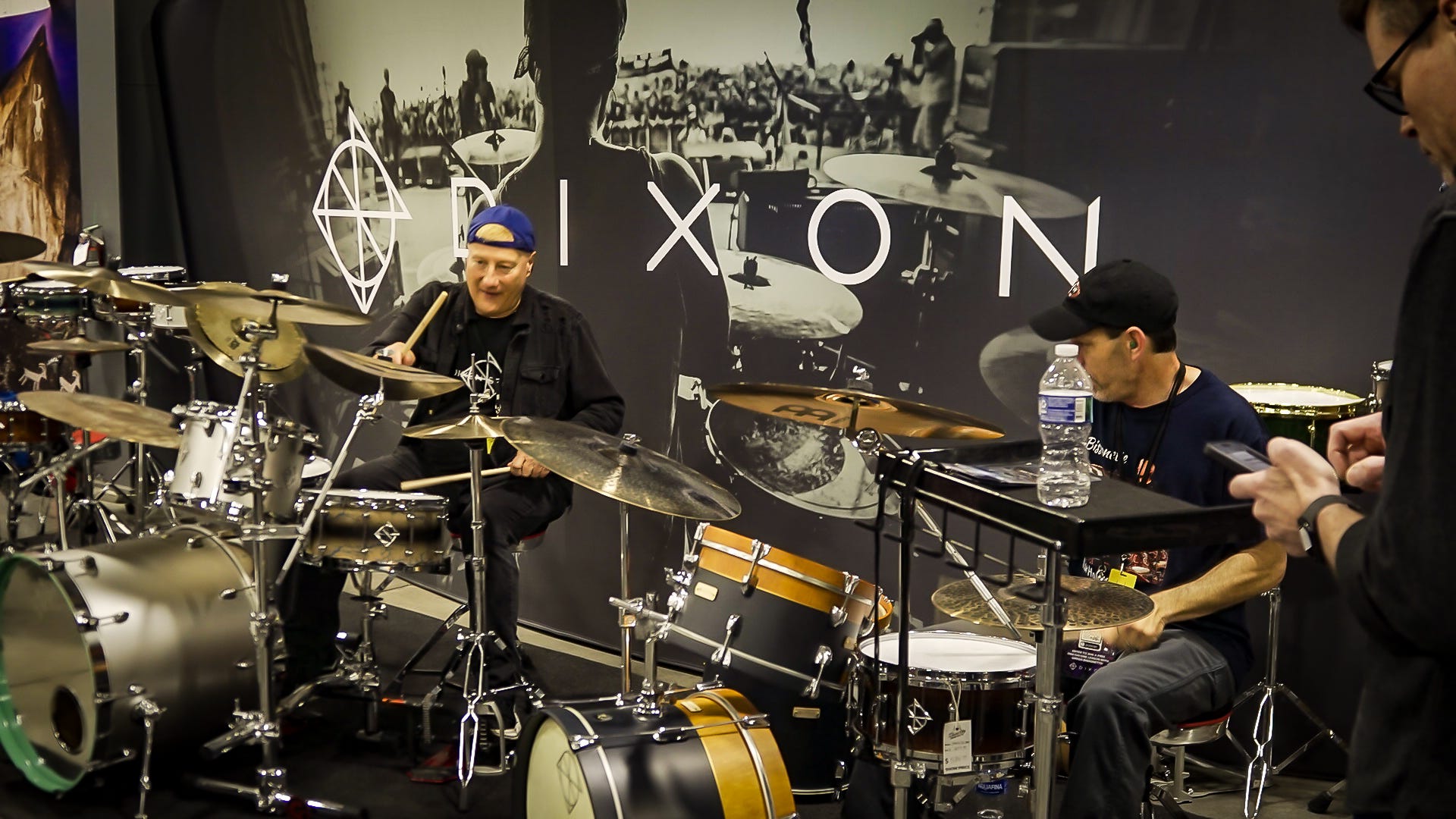
What I do have is a lot of drummer friends and a weakness for any room where musicians, builders and working professionals can talk without a barricade between them. Last year, one of those conversations happened at the Dixon Drums booth. Gregg Bissonette was not tucked behind a table waiting for an autograph line to move. He was playing with people, joking and hanging around like he had nowhere more important to be.
I had him sign my David Lee Roth vinyl. Before I left, he mentioned that I should put my name in for a drum lesson.
So I did.
The following Monday evening, after the weekend had already started fading into memory, my phone rang. Dixon Drums was calling. I had won the lesson with Gregg Bissonette.
There was one obvious problem: I had no business using it.
Giving the lesson to a drummer made more sense, and giving it to a young drummer who could carry something forward made even more. Mason was the first person I thought of. Schedules ruined the surprise because, after a few texts and calls with Gregg, I had to tell Mason enough to make certain he would be available.
We gathered in Carson’s room above the garage with Gregg on video. Technology fought us the whole way. If one issue settled down, another seemed ready to take its place. Somewhere among the connection problems, jokes, off-camera antics and everybody trying to get situated, Gregg and Mason managed to have an actual lesson.
It lasted more than an hour, but the clock was not the part that stayed with me. Gregg did not treat the call like a prize he needed to fulfill and move on from. He gave Mason his attention. Laughter did not interrupt the teaching; it was part of how the room relaxed enough for the teaching to work.
That is why the Modern Drummer announcement caught me a year later. A video lesson had been fun and useful, tech trouble included. Letting Mason and Gregg finally meet face to face felt like the proper next scene.
Please consider Donating to Sponsor an article even $1 helps!

Sixty thousand square feet of temptation
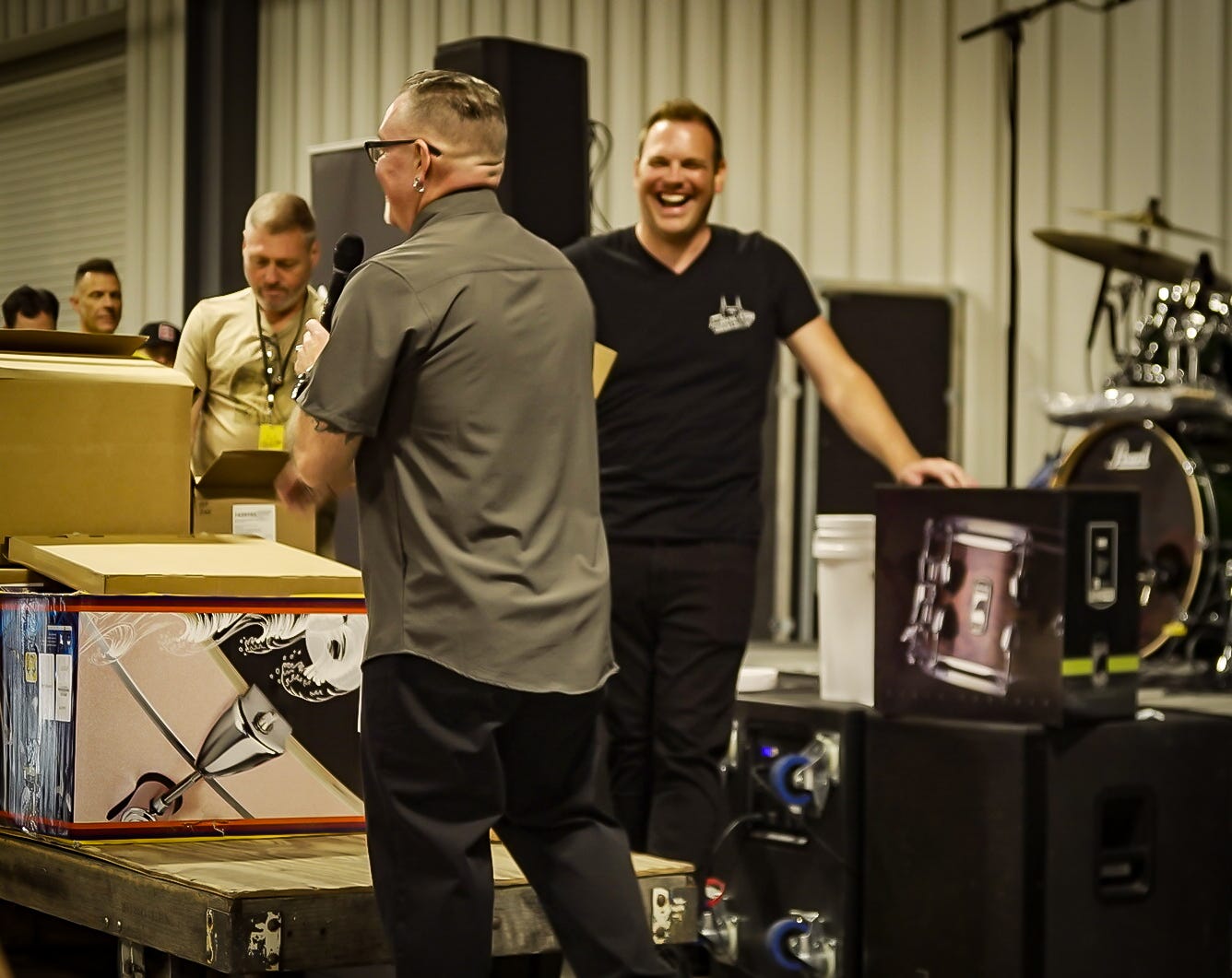
The show’s growth was visible before we settled into any clinic. Previous editions had already started pushing against their available space. This year, the event spread through Expo 2 and Expo 3 at The Fairgrounds Nashville, giving exhibitors and attendees roughly 60,000 square feet of drums, cymbals, hardware, accessories and people who knew exactly what every piece did.
No single clean sound ruled the floor. Every few steps, somebody tested a snare, tapped a cymbal or sat behind a full kit. Even the show rules reveal the noise: product tests are limited to 30 seconds, with quiet periods during the first 15 minutes of each hour. That tells you more about the room than any big adjective could.
Mason’s attention kept moving ahead of his feet. He could sit at nearly any kit, pick up the sticks and play. It took him a while to believe the invitation was real.
I understood. A guitar store does the same thing to me.
In the second building, we met up with my friends Johnny Fears and Terry Cagle. Yes, both are drummers. Between the three of us, attendance at this show has become some rotating combination depending on the year. Mason and I found seats for the remainder of Dorothea Taylor’s clinic. Known as “The Godmother of Drumming,” Taylor was working through rudiments and speed, but the important part was how clearly the patterns held together as her hands accelerated. Fast can turn into a blur. Hers stayed legible.
Then came the raffle.
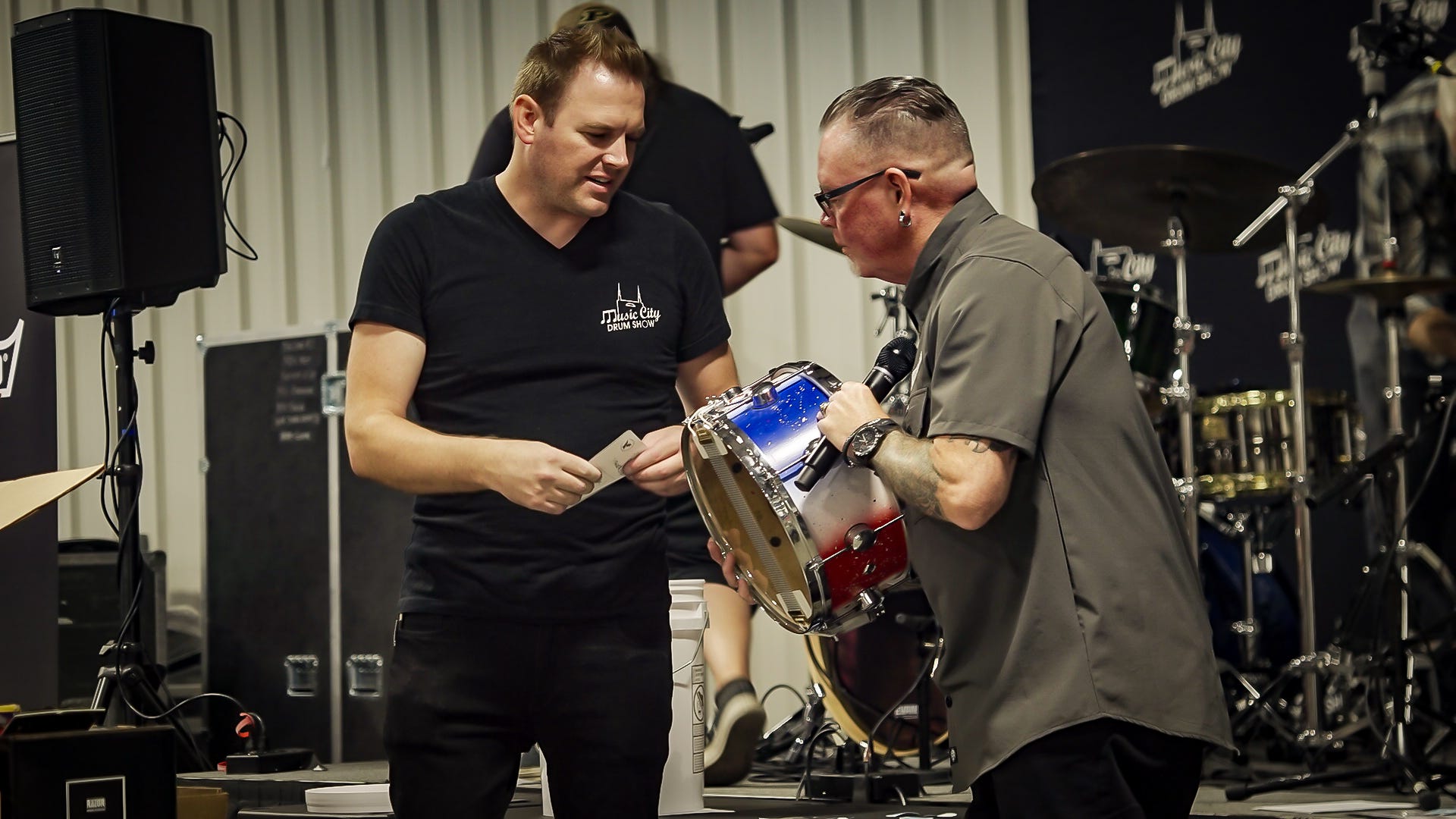
You could make an argument for attending the show on the prizes alone. Sunday’s raffle tickets were $2 apiece, and the biggest prize this year was an entire drum kit. Enough gear sat on the tables to make every number called feel personal to somebody. Our numbers did not come up.
Luck had done enough for this story the year before.
With the raffle finished and Tom Hurst’s closing clinic still ahead, Mason and I went back through the aisles. This was where his expression gave him away. There was no need to ask whether he was enjoying himself. He would stop at one kit, look across at another, then notice something else before he had fully left the first. At a show built around access, a young player did not have to admire the equipment from a distance. He could find out what it felt like under his hands.
The people behind the kits
I make a point of finding Baker Drums whenever I attend. Owner and builder Billy Baker started the company in his Nashville home in 2006, driven by a desire to stay involved with drums even as he was playing less. He built the shop through referrals and word of mouth, guarding the difference between work he wanted to do and work he merely had to do.
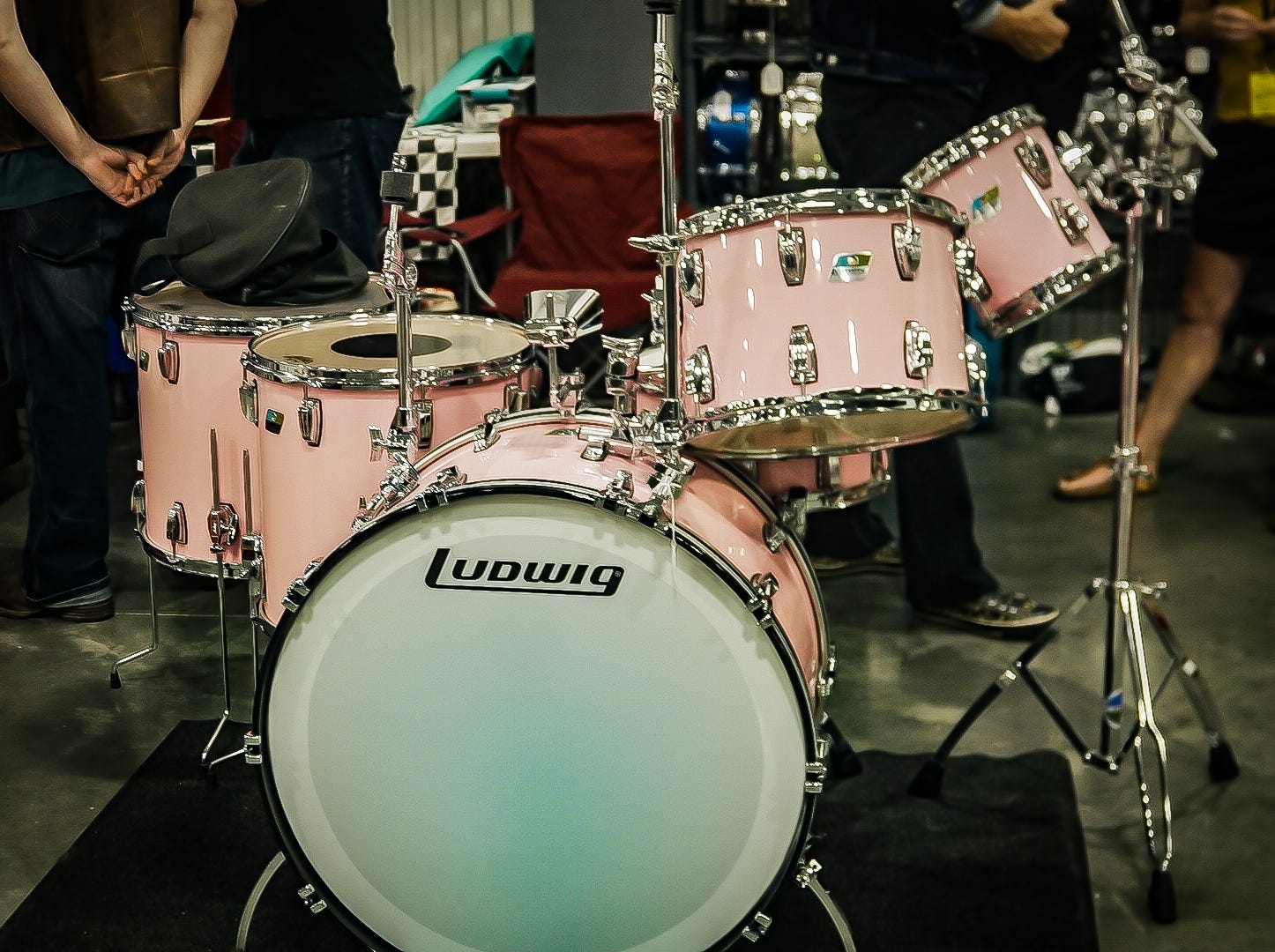
That attitude survives in person. Billy has handled custom work connected to major stages, including Eric Singer’s KISS kit. We also talked about his wrap work on a kit used during Ozzy Osbourne’s final performance at Villa Park in Birmingham. A big-name client list never takes over the conversation. Billy remains funny, approachable and interested in the person standing in front of him.
For Mason, that mattered as much as seeing the finished drums. A builder’s booth can show what years of craft look like up close. There are no arena lights to hide behind, only the shell, the hardware, the finish and the person willing to explain how it came together.
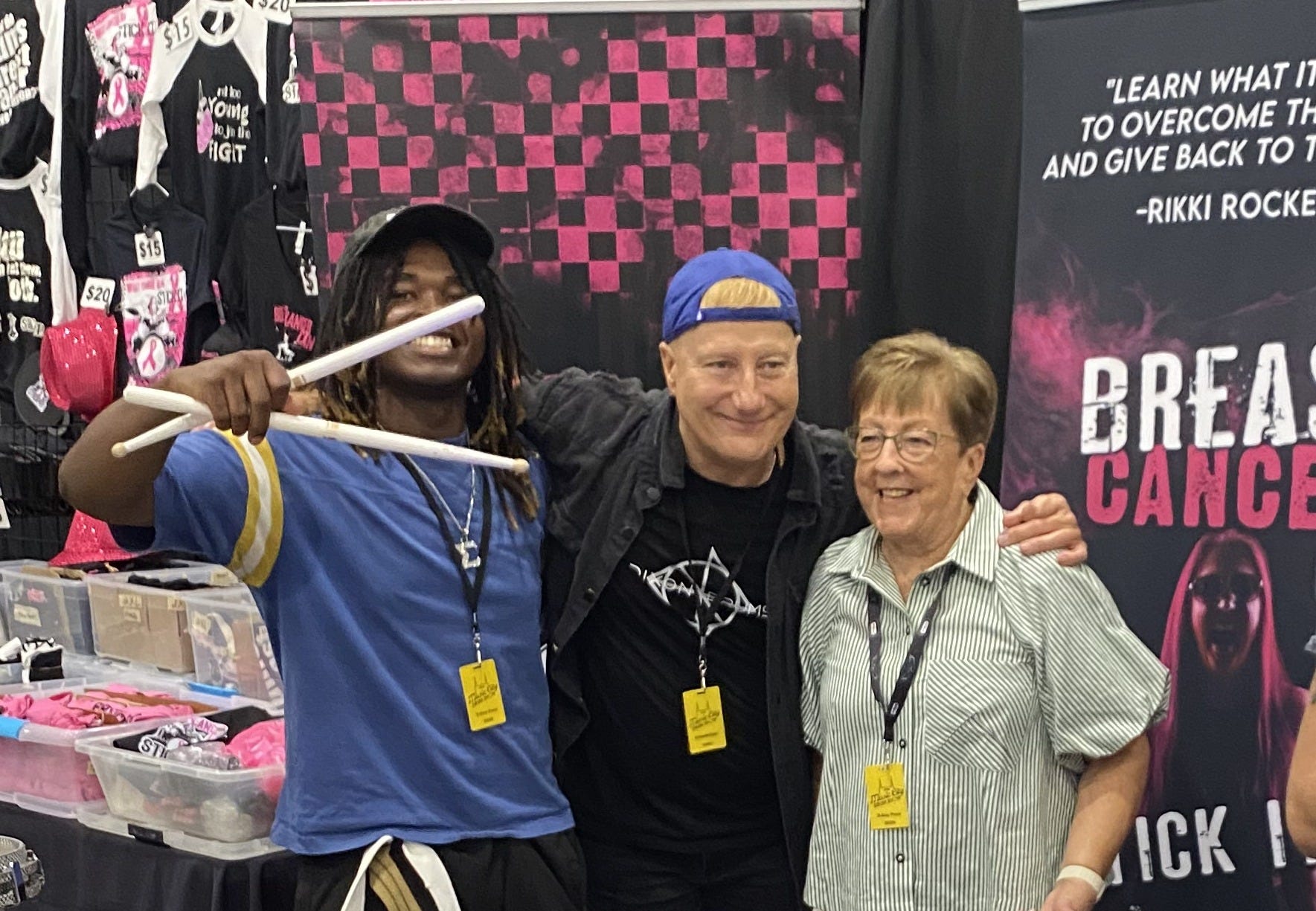
April Samuels was another person I wanted Mason to meet. Her name belongs in a drum show for reasons that extend well past performance. Samuels was diagnosed with aggressive triple-negative breast cancer in 2010. She began selling Breast Cancer Can Stick It! shirts from the back of her car, turned the idea into a nonprofit in 2013 and built the Drummathon into its largest annual fundraiser. Her organization has supported treatment assistance, research, clinical trials and mammograms, with nearly $700,000 raised since her work began.
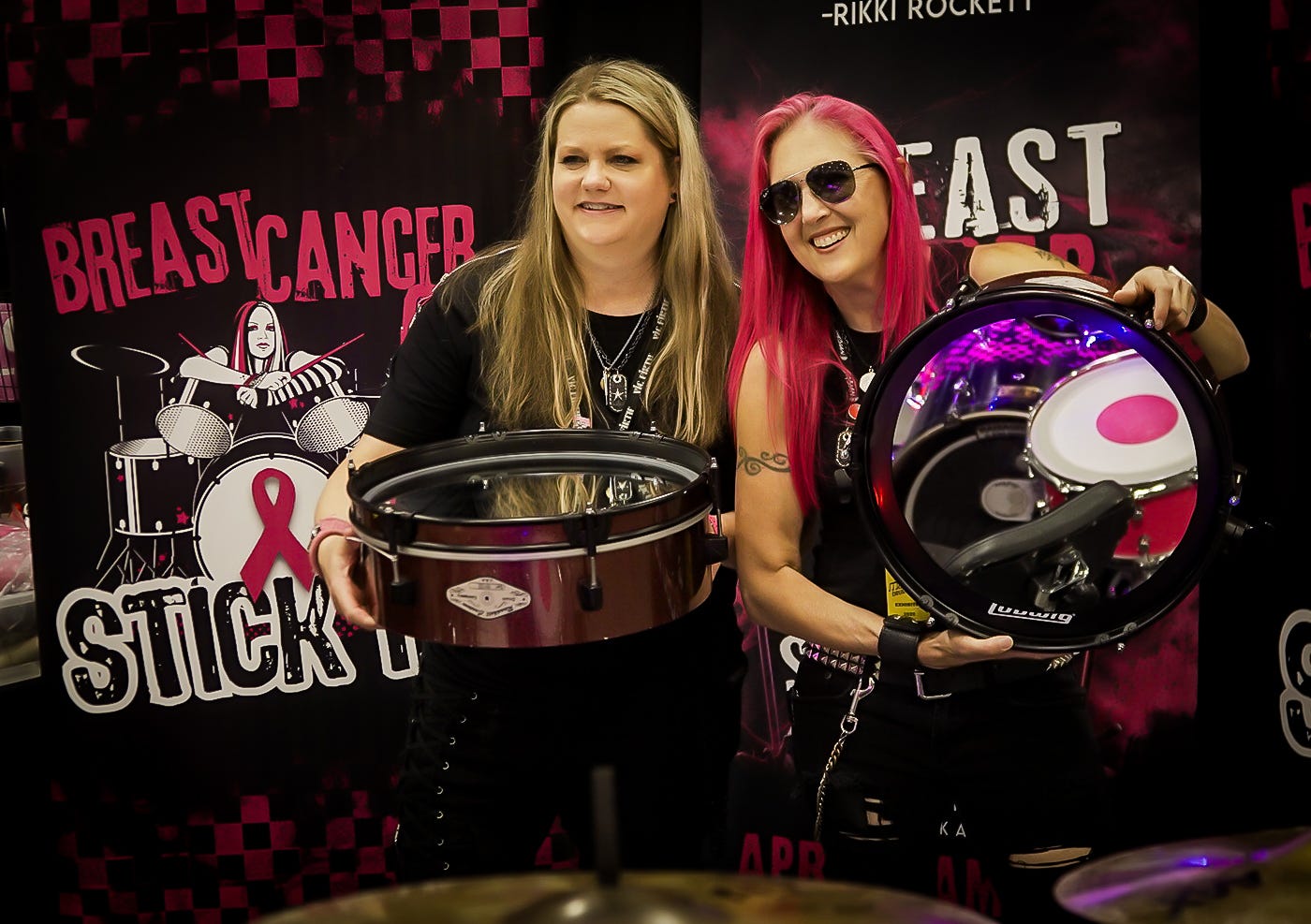
There were expensive kits in every direction. Samuels offered a different measure of what drumsticks can accomplish.
Introducing a young musician to someone like April was not about slipping another famous name into the day. Music gives people a platform long before it gives them instructions for using it. She decided what hers would do.
Technique has to become music
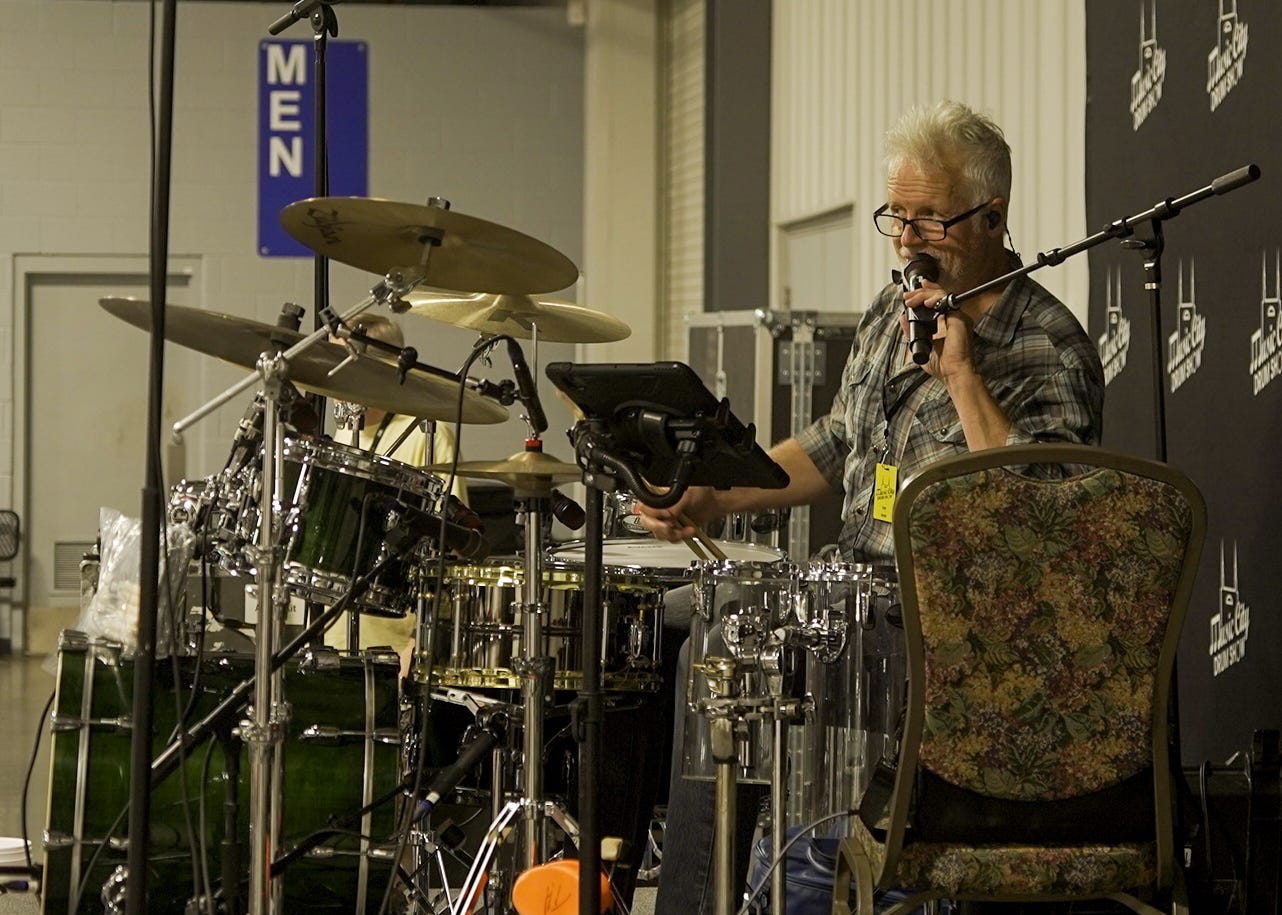
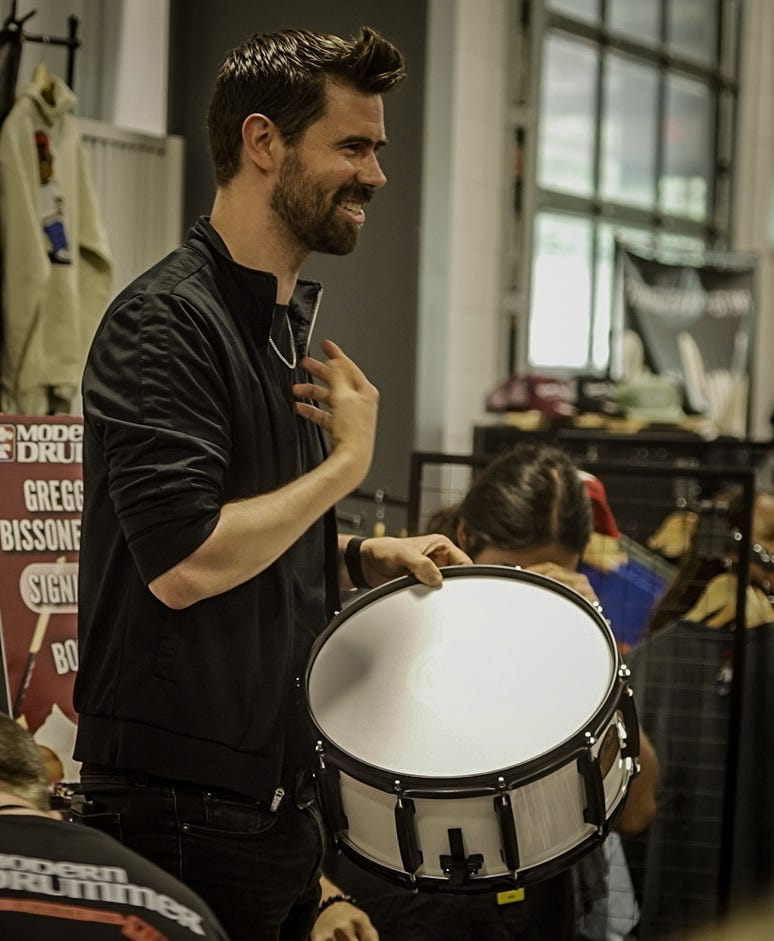
The final clinic began at 3:30 p.m. with Tom Hurst, a Nashville percussionist and educator whose résumé reaches from the Backstreet Boys and Wang Chung to Gary Allan, Lee Brice and Joe Nichols. Hurst is a University of Florida graduate who has taught drum set, popular music history and jazz studies at several universities. None of that made his clinic feel like a résumé reading.
He tied technique to songs.


Hurst moved through several drumming ideas by showing how they functioned inside music he loved and in the work of players who shaped his own style. His advice became useful because it had somewhere to go. A sticking pattern alone can become homework. Put it inside a song and it becomes a decision — where to sit, when to push, what to leave alone.
That was a fitting final clinic for a day when Mason had been free to test kit after kit. Access lets a drummer discover what equipment can do. Listening teaches him why he might do it.
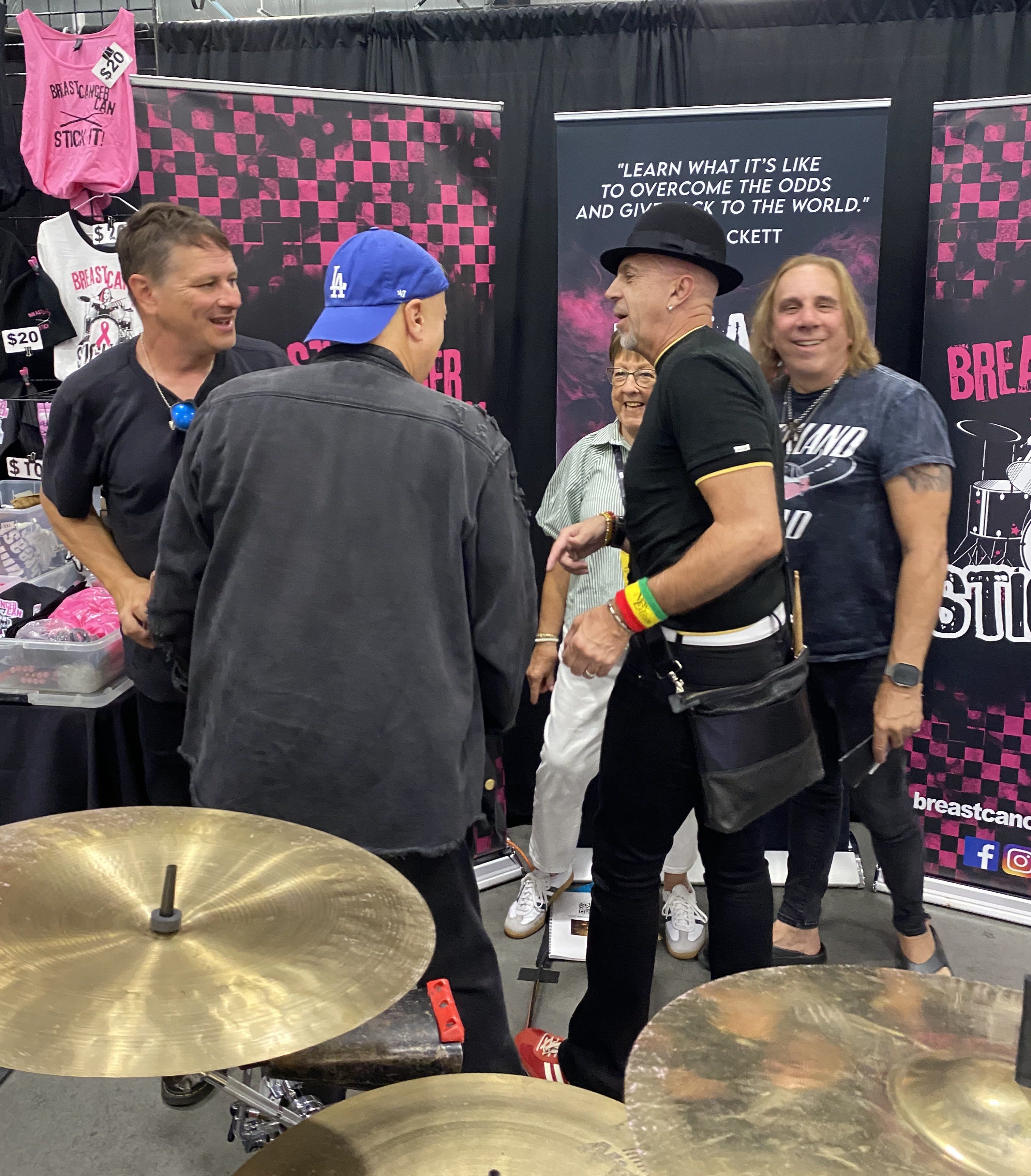
When the clinic ended, we stood around with Johnny and Terry for a few more minutes and considered the two usual options: find somewhere to eat and keep talking or point the vehicles toward home. They chose the road. Our vote was Twin Peaks.
Twin Peaks’ Franklin location had closed.
Even a well-planned drum show trip needs one dead note.


So we drove. A stop at Buc-ee’s was never in doubt; we had already made one on the way down. It sits near the halfway point for me, and I am not passing that brisket twice in one day without stopping at least once. The drum show may be the destination, but the beaver gets his cut.
Afterglow
The ride home was filled with the kind of conversation that does not need an agenda: laughs, small talk, music, college and life beyond either one. Mason had spent the afternoon seeing how large the drumming world looked when it spread across two expo buildings.
Still, I kept returning to a smaller moment. Gregg Bissonette looked at us, needed a second and remembered.
A year earlier, Mason had been in a room over a garage, learning through a video call that refused to cooperate. This time, he stood face to face with the person on the other side of that screen. Celebrity recognition was not the value. Continuity was. Gregg had answered the messages, given the lesson, shared the jokes and made time again when two familiar faces appeared at the booth.
The raffle ticket made the first call possible. Everything after it depended on people following through.
By then, Mason looked ready to come back next year. I am pretty sure I will be there too — still surrounded by drummers, still enjoying every minute and still not pretending I am one.
Until then: “Is Your Music on the Right Trakks!”
Please consider Donating to Sponsor an article even $1 helps!
