



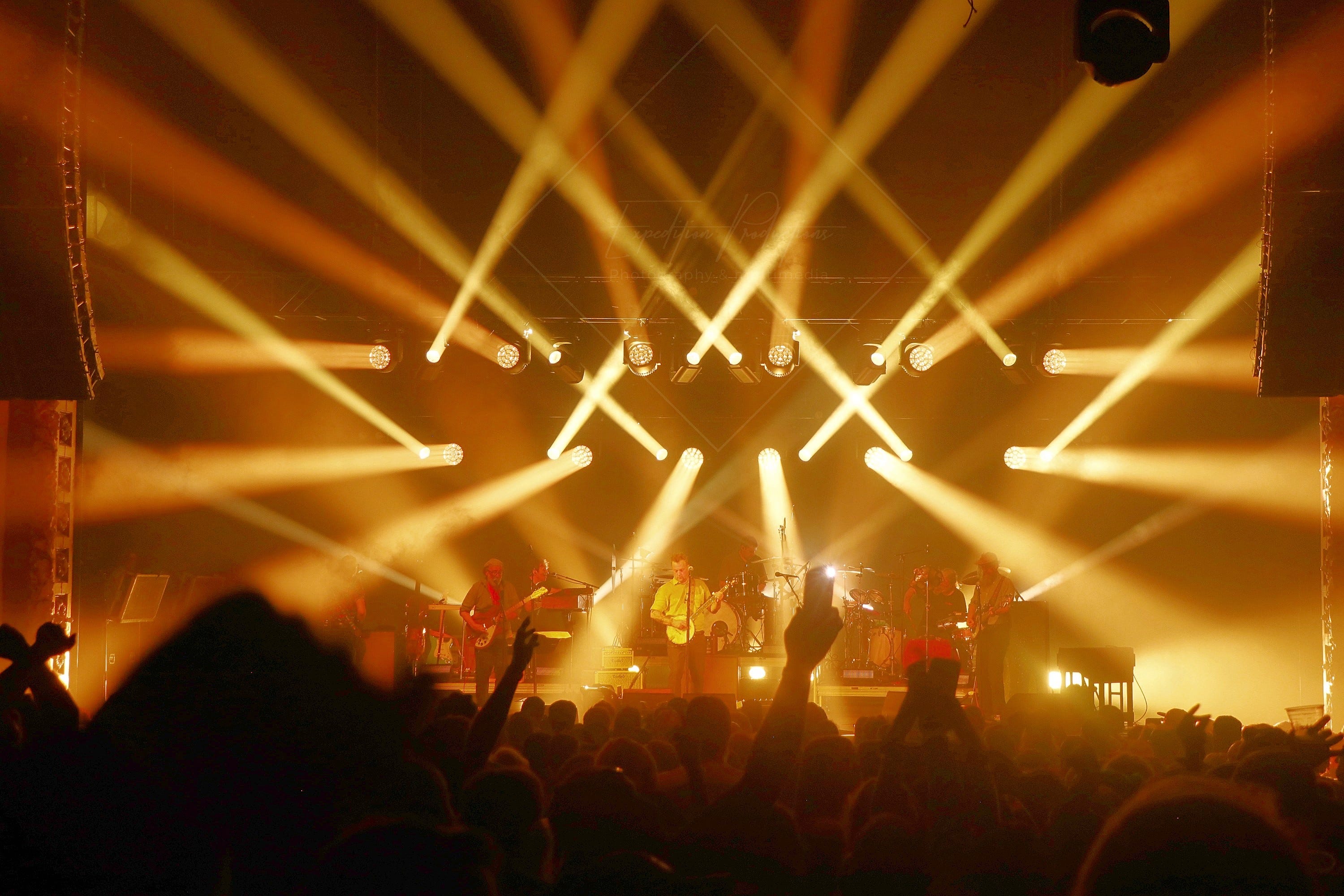
At 2:30 Thursday afternoon, I got off work with four hours of interstate between me and a Modest Mouse show. The short notice made the whole thing more exciting. There was no carefully planned concert day, no leisurely drive north with time to spare. I changed clothes, kissed my babies goodbye and headed toward the Twin Cities.
Parking in downtown St. Paul nearly broke the momentum before I even reached the venue. I circled blocks looking for something, anything, while the Palace Theatre sat somewhere frustratingly close. Eventually I found a curb spot about a block away, decided it was legal enough for my purposes and hurried toward the marquee, where a few fans were still waiting near the ticket line.

Next time, I’m arriving much earlier.
Not because the Palace is difficult to get into, but because downtown St. Paul gives you plenty of reasons not to rush straight to the doors. Candyland, the candy shop that has been operating in the city since 1932, is right around the corner. Mickey’s Diner is within walking distance. Bars, restaurants and small shops fill the surrounding blocks. You could show up two or three hours early, wander around, eat something questionable in the best possible way and still have plenty left unexplored by the time doors opened.
Walking into the Palace felt like old theater elegance had been allowed to age instead of being scrubbed clean and turned into a theme. The building dates back to 1916, and even after the renovation that brought it back to life as a concert venue, pieces of that history remain right in front of you. Ornamental plasterwork still surrounds modern lighting hardware. The front of the balcony carries the sort of architectural detail nobody would bother building into a new concert hall now. Some surfaces are restored. Others simply look like they have lived a long life.

At first the layout confused me. Hallways seemed to lead in several directions, staircases appeared where I wasn’t expecting them and I had to spend a few minutes figuring out where everything went. Once I did, I started to really like the place. The Palace doesn’t disappear behind the band. You notice the room, which is fitting for a building that has been hosting audiences for more than a century.
Califone was already playing when I made it inside.

Califone Makes You Pay Attention
I had heard of Califone before and spent some time listening in the days leading up to the show. “Experimental” is probably the easiest description, though it only gets you part of the way there. Tim Rutili’s music has always seemed interested in what happens when familiar sounds are nudged just far enough out of place. Folk, blues, noise, electronics and damaged little pieces of melody can all occupy the same song.
Rutili has also worked in film and visual art, and watching Califone live, that part of his brain made sense to me. The music didn’t feel arranged solely around verses and choruses. Sounds appeared, lingered and disappeared as though somebody was paying equal attention to texture and space. His guitar playing supplied much of the color, while his voice sat lower, soft and slightly worn, sometimes almost melancholy without turning theatrical about it.

Behind him, the percussion kept shifting the shape of the songs. It wasn’t there just to hold tempo. Little rhythmic details would appear underneath passages that might have felt loose in another band and suddenly everything locked into place. Califone never needed to overpower the room. They simply gave people enough to listen to that conversations around me gradually disappeared.
People stopped talking. That was probably the clearest reaction they earned.

For me, some of the appeal was personal. My father had a huge influence on my music taste. He grew up as a punk in downtown Chicago in the ’70s, but the music around him was never confined to punk. Chicago blues was part of the city’s bloodstream too, and his taste always reflected that wider mix. I inherited plenty of it.
Califone comes out of Chicago, and hearing Rutili move between experimental sounds, bluesier guitar phrasing and stranger bits of noise hit something familiar in me. Not because the band sounded old. They didn’t. It was more the freedom to let completely different musical ideas occupy the same space without stopping to explain why they belonged together.
You could watch the musicians working through those ideas in real time. Rutili would let a guitar phrase hang for a moment, the percussion would slip underneath it and suddenly a song that had seemed barely held together revealed how carefully everybody was listening to one another. Califone wasn’t just an opener providing forty minutes of atmosphere while people found the bar. The musicianship kept pulling my attention back toward the stage.
Near the end, Rutili told the crowd to love themselves and love each other before the band left to a genuinely loud response.
I used the set change to wander. Looking up, I could see modern stage lights mounted against ornate plasterwork from another era. The balcony facade stretched across the room with its decorative details still intact. You could stand there staring at the ceiling while crew members moved equipment underneath it. A hundred-year-old theater waiting for Modest Mouse felt pretty appropriate.
Please consider Donating to Sponsor an article even $1 helps!

The Rough Edges Stay
Modest Mouse arrived quickly after the changeover and opened with “We Are Between”. The response was immediate. People around me were already singing before the song had settled into its first full stretch, and the band moved straight into “We’re Lucky”, keeping the newer material up front before Isaac Brock stopped long enough to talk to the crowd.
He had recently downloaded an app that warned him about wildfires because of what had been happening in the western United States. Eventually, he said, the alerts became so constant that he turned the notifications off. Before “Breakthrough”, Brock told us he hoped he could scream all the Oregon smoke out of his lungs.
Then he tried.
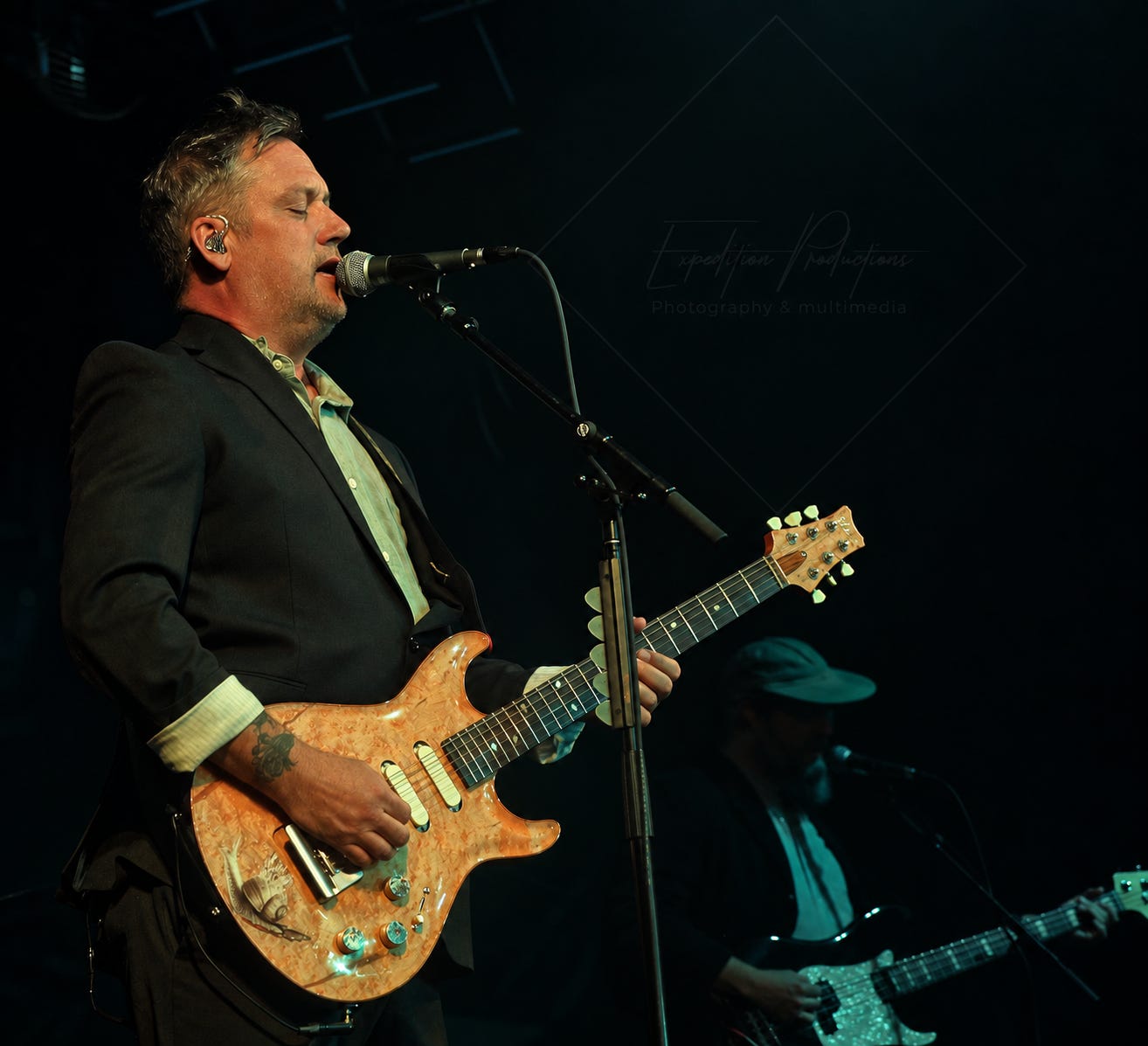
“Breakthrough” comes from 1996, which makes the song roughly as old as I am. That is a strange thing to think about while standing in front of the people who made it. A little later Brock changed guitars, picking up a cherry SG-style guitar that immediately made me think of Jack Black in School of Rock, and then came “A Different City”.
The set kept jumping decades without making a ceremony out of it. Modest Mouse didn’t present the older songs like protected artifacts, and they didn’t suddenly stiffen up because a song had been on a record for twenty-five years. Newer material and songs I had listened to since grade school were played with the same looseness.
Loose is not the same thing as careless.
Before this show, I had been getting bombarded with conversations about how artificial live music can become. Anybody who spends enough time behind concert production eventually sees things the average ticket buyer may never notice. Amplifiers can be onstage while the real signal is coming from somewhere else. Vocal tracks can be ready at the soundboard. Playback systems can make a complicated show run with astonishing precision.
I’m not arguing that using technology somehow makes a concert fake. Some productions would be nearly impossible without it. But there is a point where polish starts removing evidence that humans are involved, and Modest Mouse left that evidence everywhere.

There were tiny tempo corrections. A lyric would occasionally become a muttered piece of syllabic noise instead of the exact recorded line. Brock sometimes sounded like he had decided halfway through a phrase that getting the feeling across mattered more than reproducing the album. Maybe he forgot a word. Maybe he was tired after singing for nearly two hours. Maybe he simply felt like changing it. The song kept going, nobody looked panicked and nobody needed to pretend it hadn’t happened.
Watching a band that has been doing this for decades handle those little moments without letting them derail anything was far more interesting than watching somebody reproduce a studio recording with surgical accuracy.
“Bukowski,” a Wrong Key and a Guitar Pick
A few songs later came “Bukowski”, one of my personal favorites. I know that song well enough that when the rhythm guitar started in the wrong key, I heard it almost immediately.
They fixed it almost as quickly.
There was no awkward stop, no discussion and no dramatic restart. The mistake was caught while the band was moving and corrected so smoothly that somebody less familiar with the song might never have known anything happened. I loved it, not because somebody made a mistake, but because of what happened next.
Nothing.
They kept playing.
By then Brock had grabbed his banjo. Somewhere during all of the switching between playing styles, he apparently got tired of dealing with the guitar pick holder. When he started fingerpicking, he began sticking the pick to his forehead instead. Somewhere inside a production full of professional musicians, lighting cues, guitar changes and decades of touring experience, Isaac Brock had solved a practical stage problem by sticking a guitar pick to his face.

Then came “Dashboard”, and somewhere during the back half of the set I realized the band had started running through what felt like an increasingly suspicious percentage of my favorite Modest Mouse songs.
The setlist reached across their career instead of camping out in one period. There were songs from the early records, material from The Moon & Antarctica, Good News for People Who Love Bad News, We Were Dead Before the Ship Even Sank, The Golden Casket and the newly released An Eraser And A Maze. Nobody stopped every few songs to remind us what year something came out. They just played, with Brock switching instruments, the band making small adjustments and another song starting almost immediately.
For a band with this much history, there is probably no version of a setlist that satisfies everybody. One person wants “Float On.” Someone else wants the deepest possible cut from 1996. Somebody discovered the band ten years later. Somebody standing five feet away may have come specifically for the newest songs.
Modest Mouse didn’t appear very interested in solving that problem. They played a lot of music.

Eventually the band walked offstage and stayed gone for several minutes. The room waited, knowing what was probably coming but still holding onto that little bit of uncertainty before an encore.
Then they came back.
The encore started slowly with “Picking Dragons’ Pockets”, followed by “Guilty Cocker Spaniels”. Then I heard the opening of “Dramamine”.
That one hit differently.
I have listened to Modest Mouse since I was in grade school. Some songs become so embedded in your life that you stop thinking about where you first heard them. They are simply there, attached to old rooms, old cars and old versions of yourself. Hearing “Dramamine” live snapped some of those years back into focus.
The performance wasn’t frozen to the album. It still had the roughness I had been hearing all night. Brock’s voice carried the wear of the set, and the band let the song breathe instead of tightening every corner. It sounded like people playing it.
That was enough.
They finished the night with “Night on the Sun”, a strange, sprawling way to close and probably the right choice because of it. There was no giant farewell speech or forced final explosion. The song stretched out, finished and eventually the house lights came up while people started filing toward the exits still talking about what they had just heard.
I went outside and kept walking.
Afterglow

Every bar I passed around the Palace seemed to be playing Modest Mouse. Maybe I was just catching the right places at the right moments, but the effect was funny. We had already left the concert and the concert kept following us down the block. Songs drifted out of doorways while groups of fans separated and disappeared toward parked cars, hotels and whatever came next.
I wandered downtown for a little while before reality checked the clock. It was nearing midnight. I had roughly four hours of driving ahead of me and needed to be back for work at 6 a.m.
There was still one stop I wasn’t skipping.
White Castle.
It is an old ritual passed down from touring with my parents. Somewhere along the way, White Castle became tied to road trips and shows, one of those family habits that makes complete sense to you and probably none whatsoever to anyone else. I hadn’t been to my favorite restaurant in more than twelve years, so I ordered a 30-pack of sliders for myself and my family, grabbed a red cream soda and got back on the road toward Iowa.
The Palace disappeared behind me. My ears were ringing. Work was getting closer by the minute. A few hours earlier I had watched a band I’ve listened to since childhood play songs that have been following me around for most of my life. They missed a key and fixed it. Brock forgot or replaced a few words. A guitar pick ended up stuck to his forehead. “Dramamine” sounded worn-in instead of preserved.
None of those things weakened the show. They are some of the reasons I remember it.
I pulled onto the interstate with thirty White Castle sliders riding home beside me and four hours of dark highway ahead.
Worth it.
Please consider Donating to Sponsor an article even $1 helps!
