



There are some shows that do not try to be polished into perfection. They are better than that. They walk in with inside jokes, broken strings, friends in the crowd, somebody saying something absolutely unprintable into a microphone, and a room full of people who already feel like they are part of the story before the first chorus lands.
That was the feeling at The Den for a three-band night with Lovely Ave., Aliens Do Exist, and stop.drop.rewind. It had the shape of a local scene gathering, the kind where the bands do not feel separated from the crowd by some invisible wall. Friends were there. Familiar faces were there. People were singing along, laughing at stage banter, noticing ridiculous details, and letting the night become its own little pocket universe.
The lineup itself felt like a good map of what makes a room like this work. Lovely Ave. brought the local punk-rock spark, the kind that starts fast and does not waste time warming up. Aliens Do Exist leaned into covers, chaos, and the familiar pull of pop-punk nostalgia. Then stop.drop.rewind came in from Northwest Indiana with a stranger, sharper bag of tricks, turning mathy time shifts and jam-band looseness into something that could make the room laugh one minute and lean in the next.
By the end, there were homemade shirts, crowd chants for one more song, and enough jokes about “Horny Rob” to make anyone walking in late wonder if they had missed a very important town meeting.

The Merch Table Told Its Own Story
Before the night had fully settled into its final form, the merch area already had its own little gravity. Flyers lined the front counter like a paper map of what has been moving through The Den, each one carrying a piece of the local scene’s pulse. In the background, Lovely Ave. was already visible onstage, but the front of the room had its own quiet kind of introduction happening through stickers, shirts, hats, and the people gathered around them.
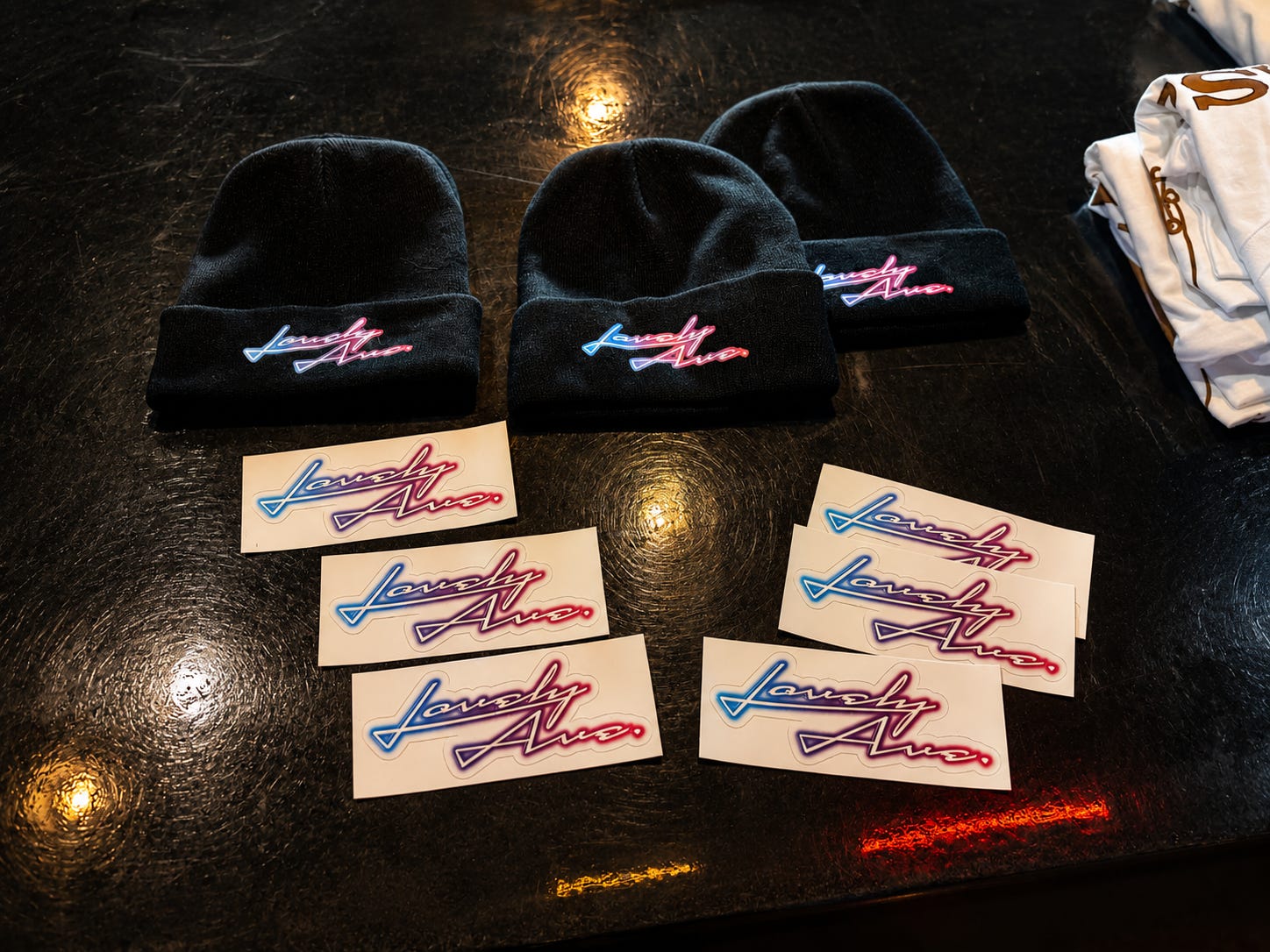
Lovely Ave.’s merch had a clean, personal feel to it. Their logo stretched across black beanies and bright stickers in blue, pink, and purple, catching the light against the dark tabletop. It was simple, but it looked intentional, the kind of table that says a young band is thinking beyond the set itself. Not in a corporate way, but in the real local-band way, where every sticker and hat becomes a small piece of evidence that this thing is growing.
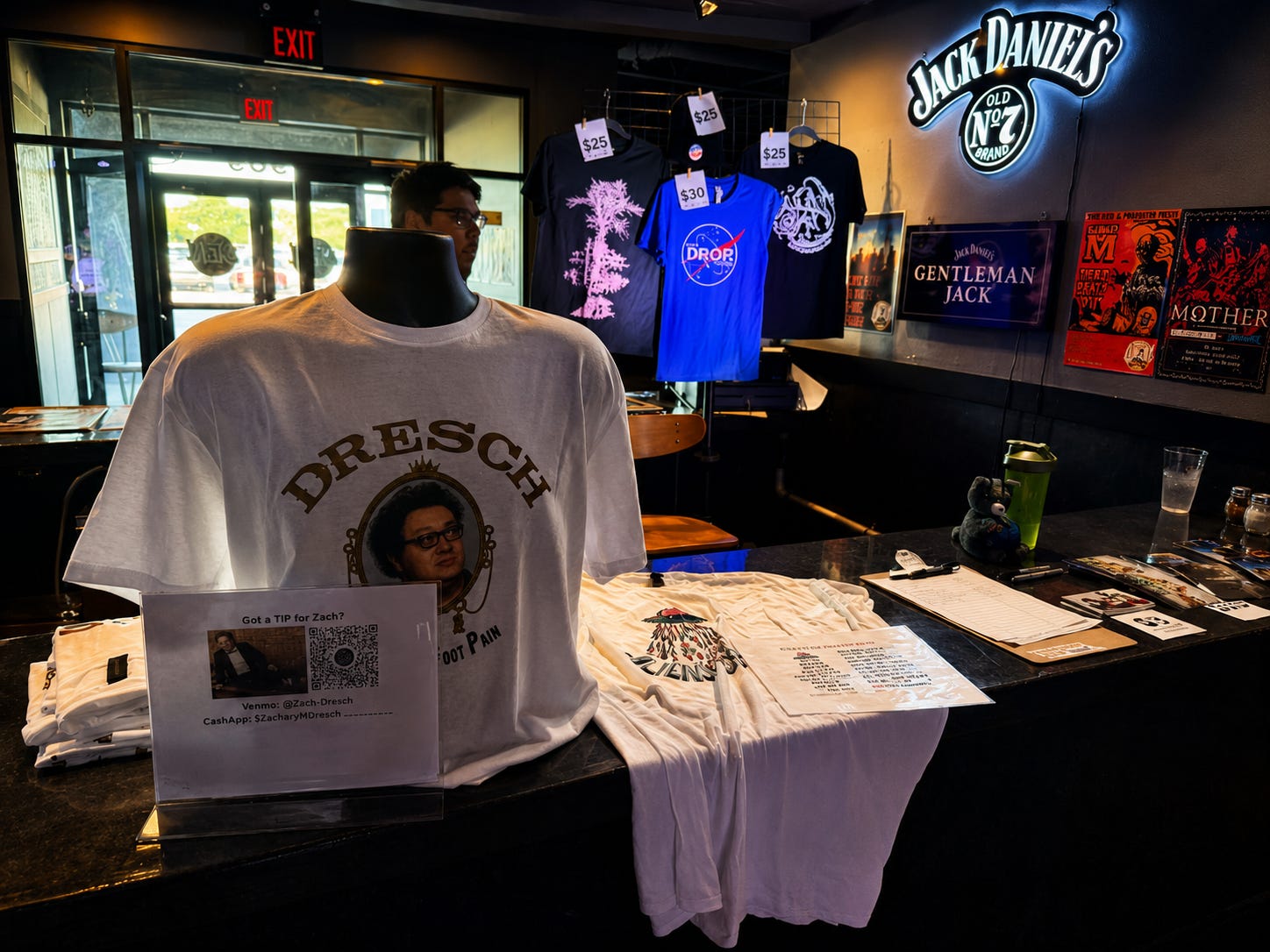
There was also plenty of humor folded into the table, especially around Zach Dresch. The “Dresch” shirt on display had the kind of strange, funny confidence that fit the night perfectly, and the tip sign nearby made the whole setup feel less like a polished sales station and more like a living corner of the room. It matched the tone of the show itself, where inside jokes, friendships, and stage banter were not side details. They were part of the night’s character.
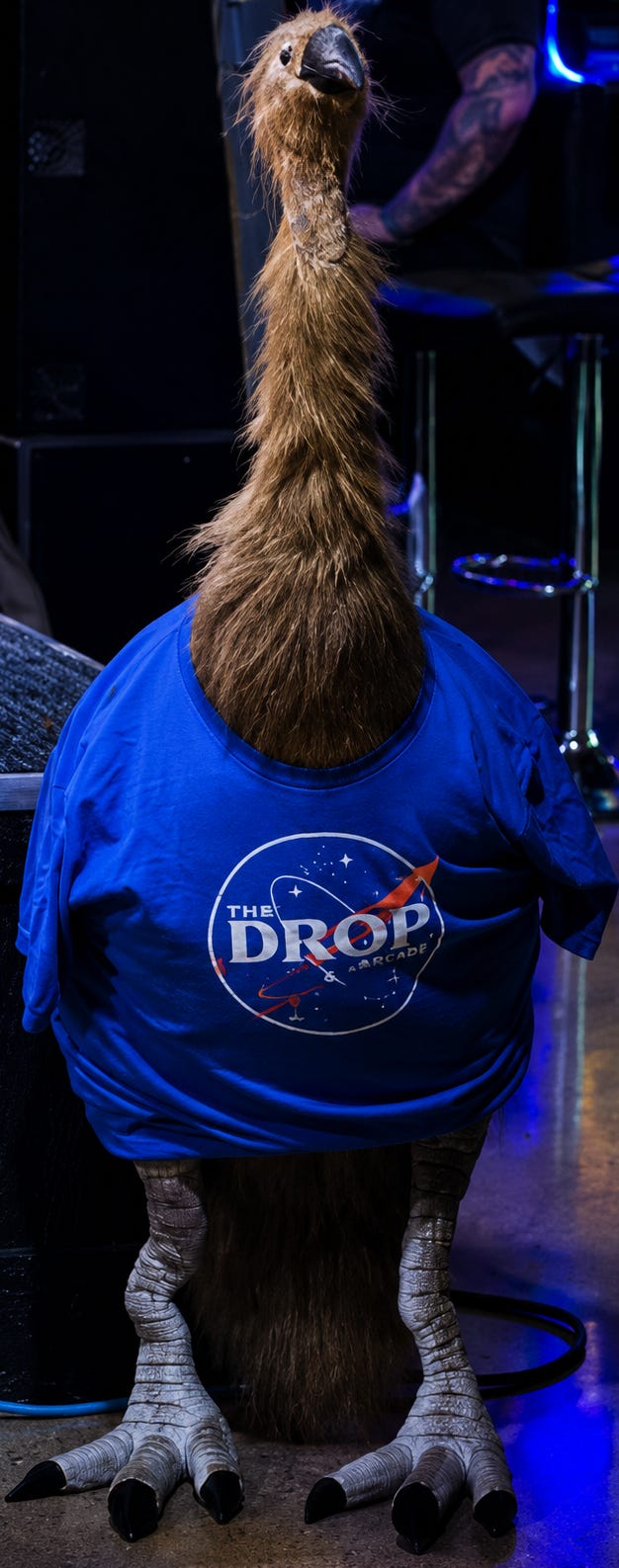
Even the odd little details felt at home, including the tall bird-like figure standing in a blue Drop shirt, watching over the room like some unofficial mascot of the evening. It was funny, slightly absurd, and somehow exactly right for a show that would later include broken-string jokes, thruple folklore, “Horny Rob” shirts, and a band compared to different stages of Weird Al.
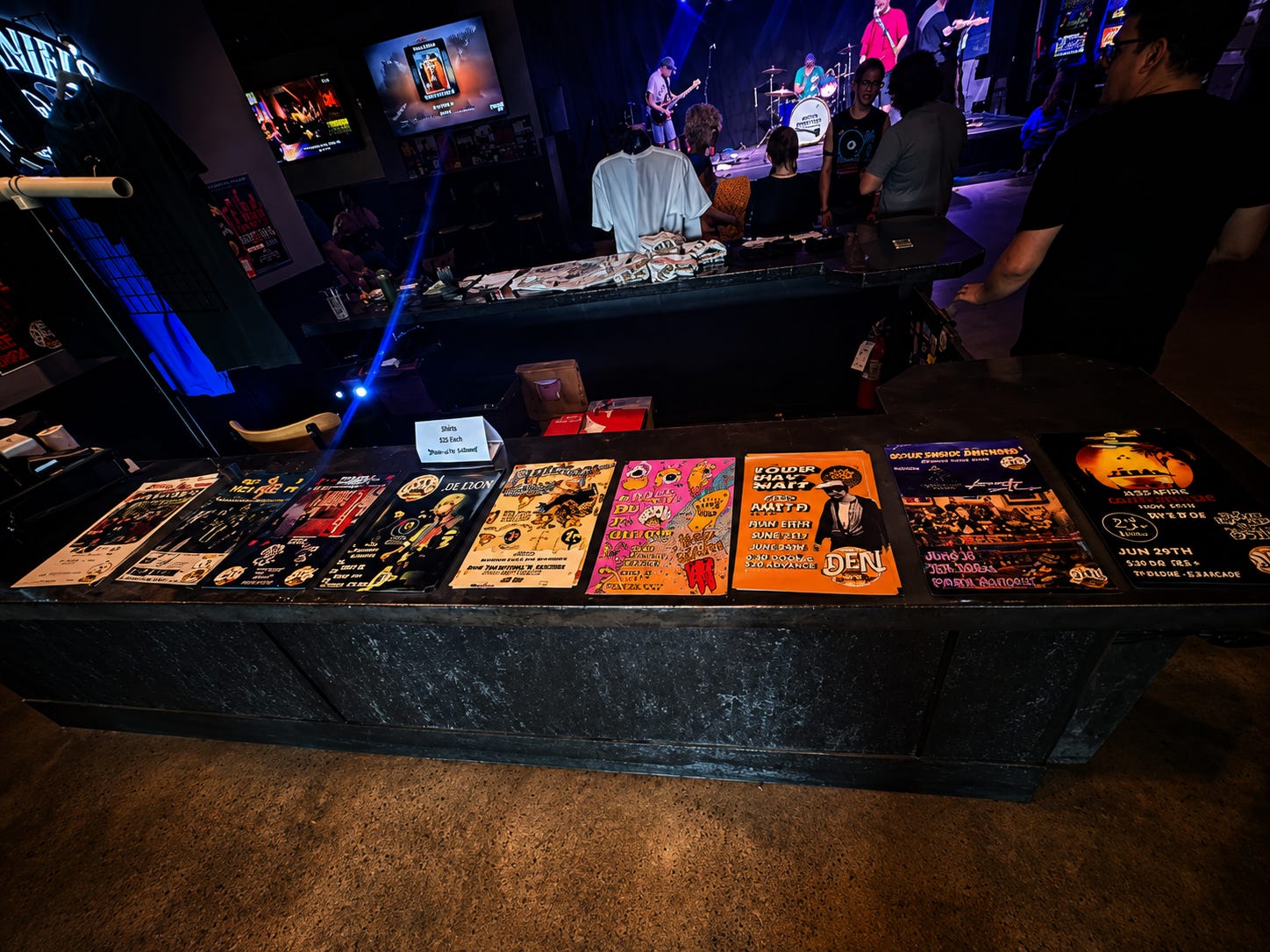
The merch table gave the night another layer before the music even had to explain itself. It showed the community around the bands, the personality behind the posters, and the way these shows become more than a lineup on a flyer. People bring their jokes, their designs, their friends, their cash apps, their handmade pieces of scene mythology, and then the room slowly turns into a memory.
Lovely Ave. Starts the Night With a Push
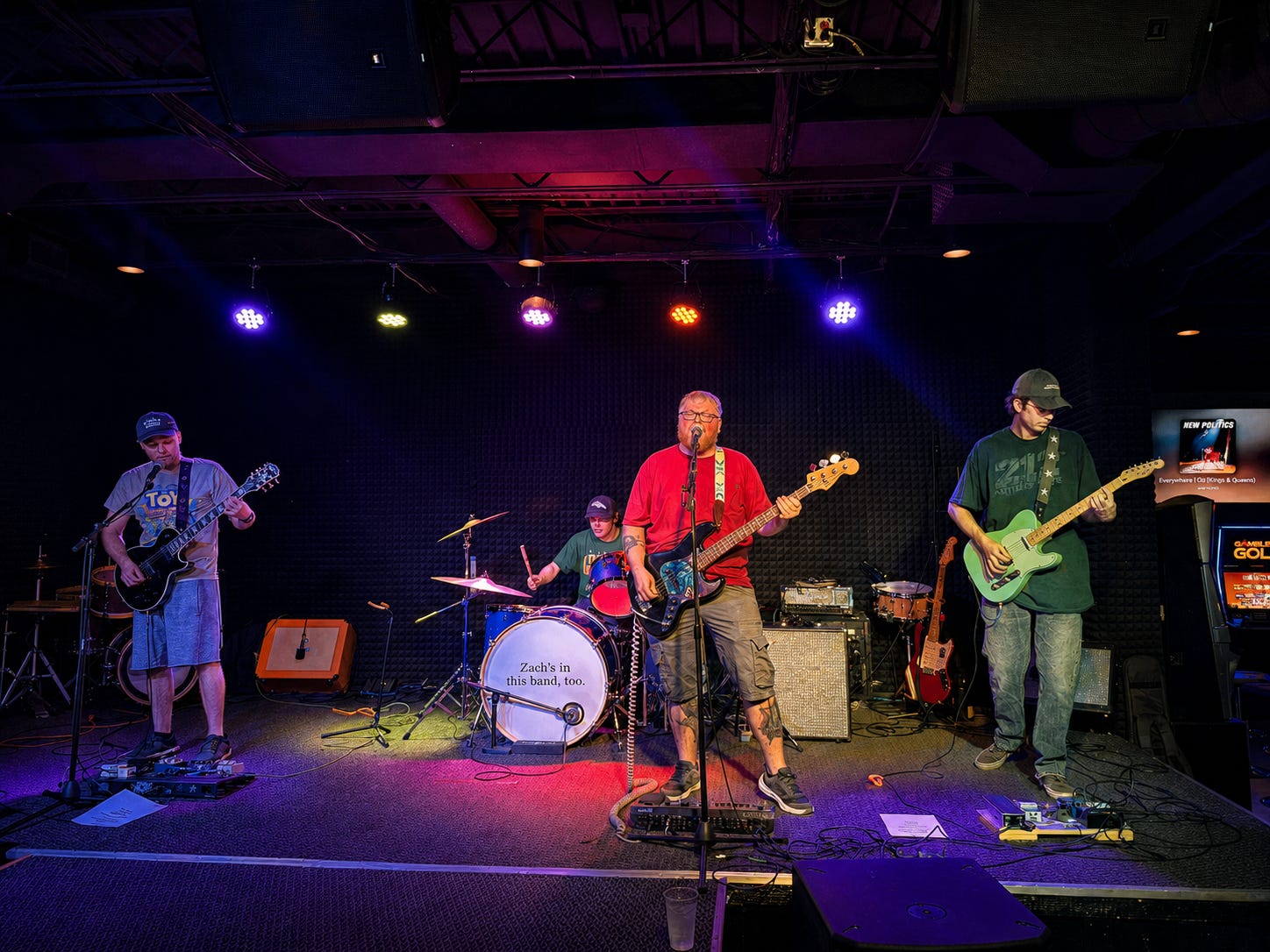
Lovely Ave. opened the night by getting the crowd properly riled up with Cage the Elephant’s “No Rest for the Wicked,” a choice that landed well because it already carries that scrappy, tired, still-moving feeling that fits a young band chasing music before the world has fully caught up to them.
There was something fitting about starting there. A song like that makes sense for artists still somewhere between passion and career, doing it because they love it, because the songs are there, because the stage keeps calling even when the practical world has plenty of opinions. It was not hard to feel that thread running underneath the set.
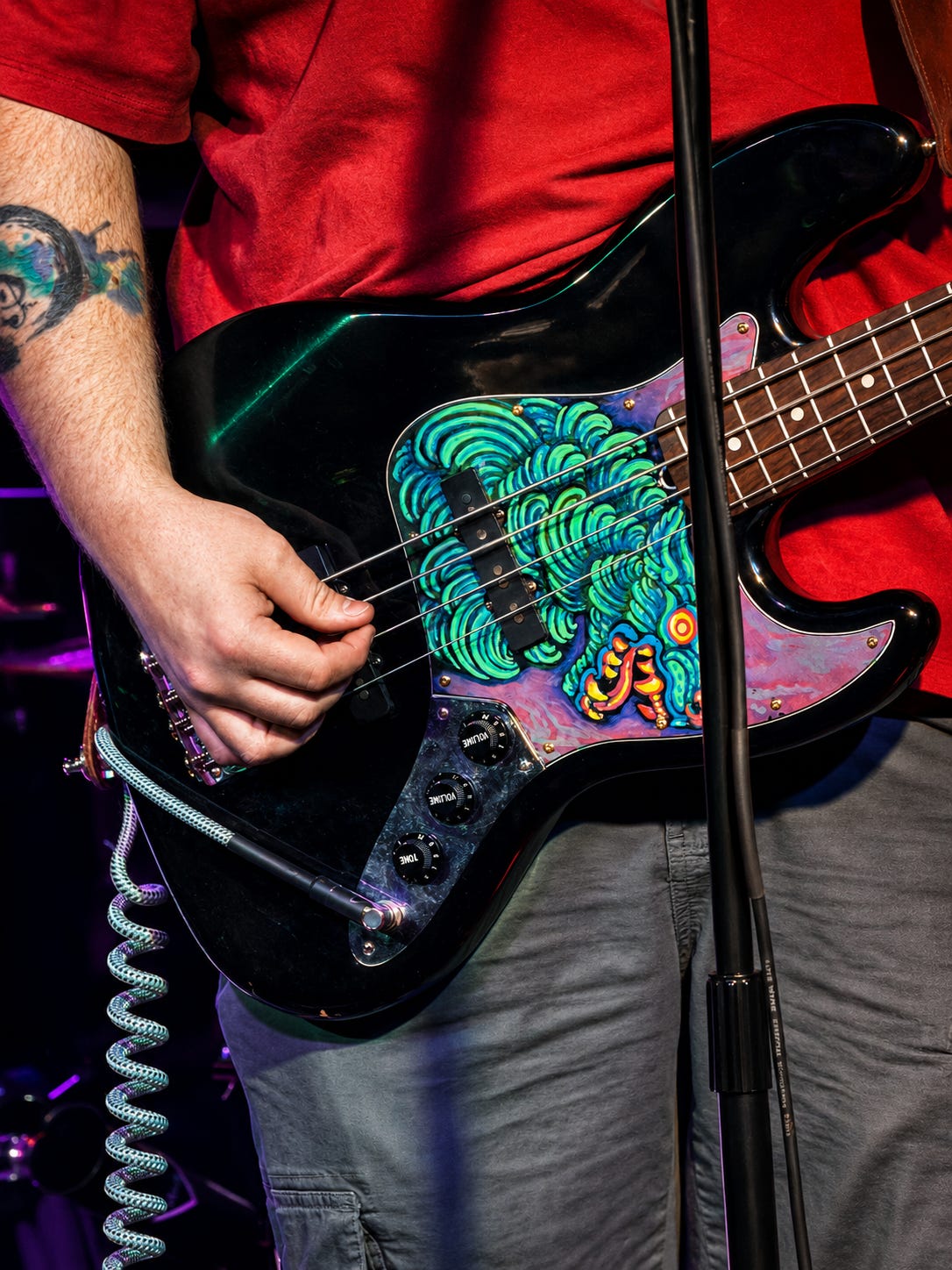
Their original “Take Me on the Road” carried that same pull. It had dominant guitar parts that did not quite become a full solo, but still pushed through the song with enough character to stand out. The guitar moved over the track rather than simply decorating it, giving the song a little extra lift without pulling it away from the band’s overall punk-rock drive.
Then came the gorilla song, inspired by the Yeastie Boys after Lovely Ave. saw them at Full Circle Book Co-op. The song had a similar musical lane to what came before, but the band slowed things down enough to do proper introductions. The gorilla sounds brought a fun bit of looseness into the set, the kind of thing that reminds everyone in the room that local rock is allowed to have a sense of humor. It does not all have to arrive with a serious face and folded arms.
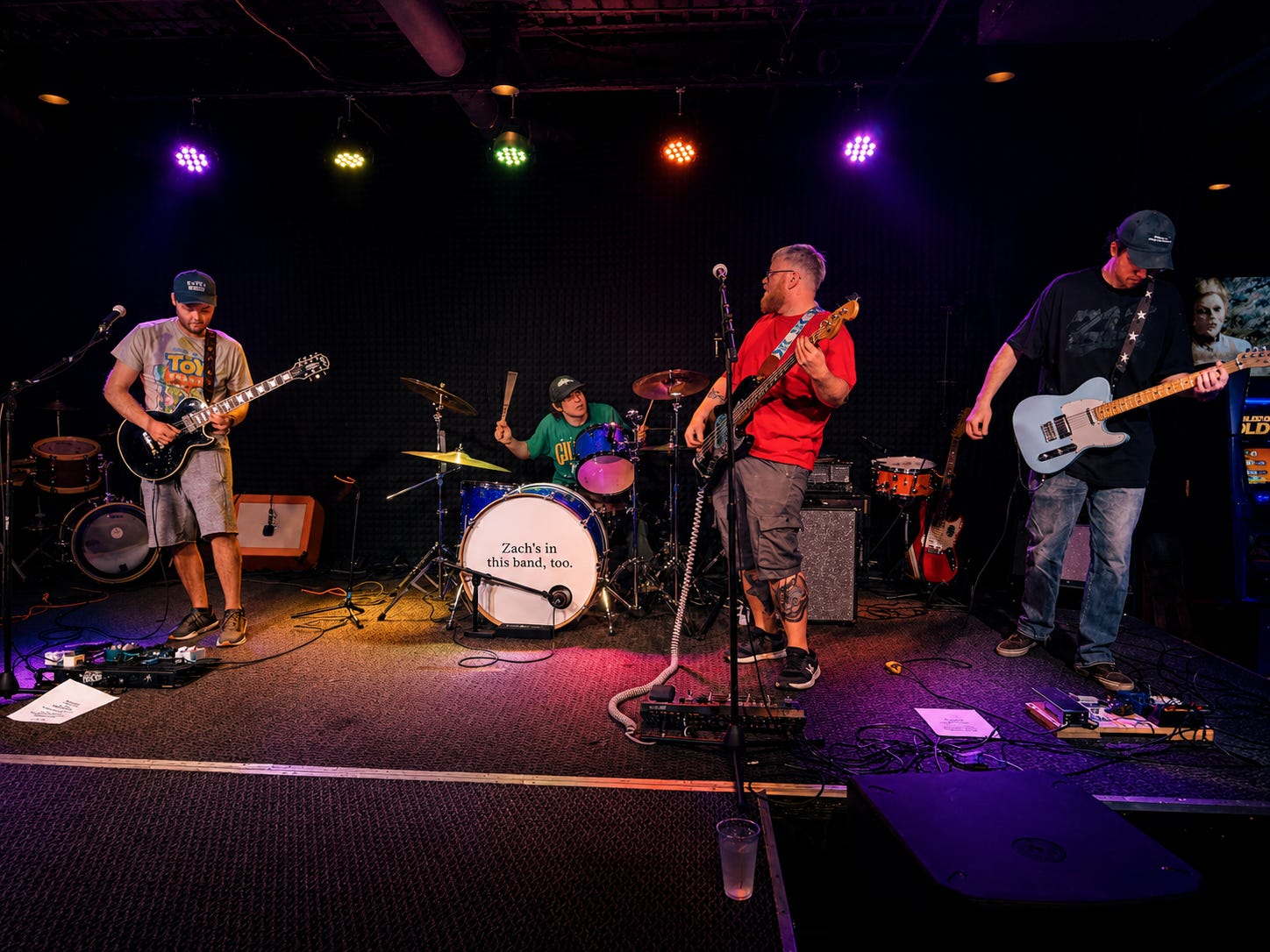
By the time they moved into Bowling for Soup’s “1985,” the crowd was fully with them. People were bopping, singing, and letting themselves fall into the song’s familiar pop-punk bounce. Lovely Ave. has a punk-rock sound that likes an immediate start. Their songs did not wander around looking for the door. They kicked it open. The guitarist also had some genuinely solid solo moments throughout the set, adding flash without turning the whole thing into a guitar clinic.
Please consider Donating to Sponsor an article even $1 helps!

Aliens Do Exist Bring Covers & Banter
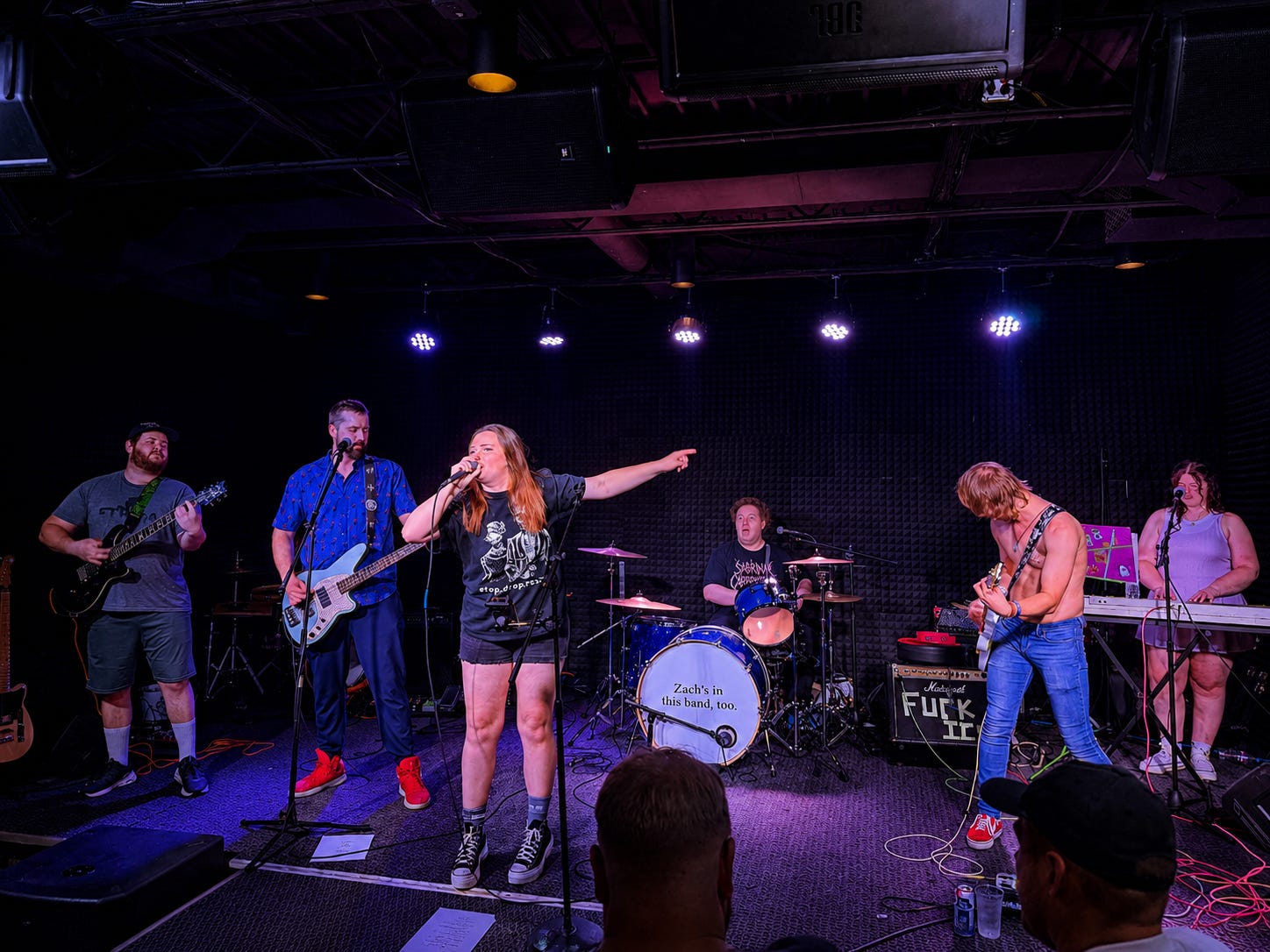
Aliens Do Exist came in with a Strokes cover to get the crowd engaged, and it worked. There was an immediate feeling of recognition in the room, and I have to admit, I was fully aware and invested pretty quickly. Some bands use covers like filler. Aliens Do Exist used them like a door into the room.
Their set had the kind of banter that only works when the band is comfortable enough with each other to let the jokes breathe. There was talk about a guitar string breaking, followed by a joke about the bassist’s G-string breaking, because of course that is where the night decided to go. It was dumb in the best live-show way, and the crowd was there for it.
They came in hot with a Paramore cover, with the bassist tricking us into thinking it was going to be “Airplanes.” That little fake-out got the exact kind of reaction it was built for. Unfortunately, the lead was hard to hear during that song, and there were moments where the vocal pushed into more of a yell into the mic than a clean cut through the mix. Still, the band kept moving, and the room stayed with them.
Their third song was an original with a very punky Blink-182 kind of sound, built around a main line of “I wanna.” It had that youthful, forward-leaning pop-punk feel, the kind where the point is not overcomplication. It is motion. It is wanting something. It is saying the line until it sticks.
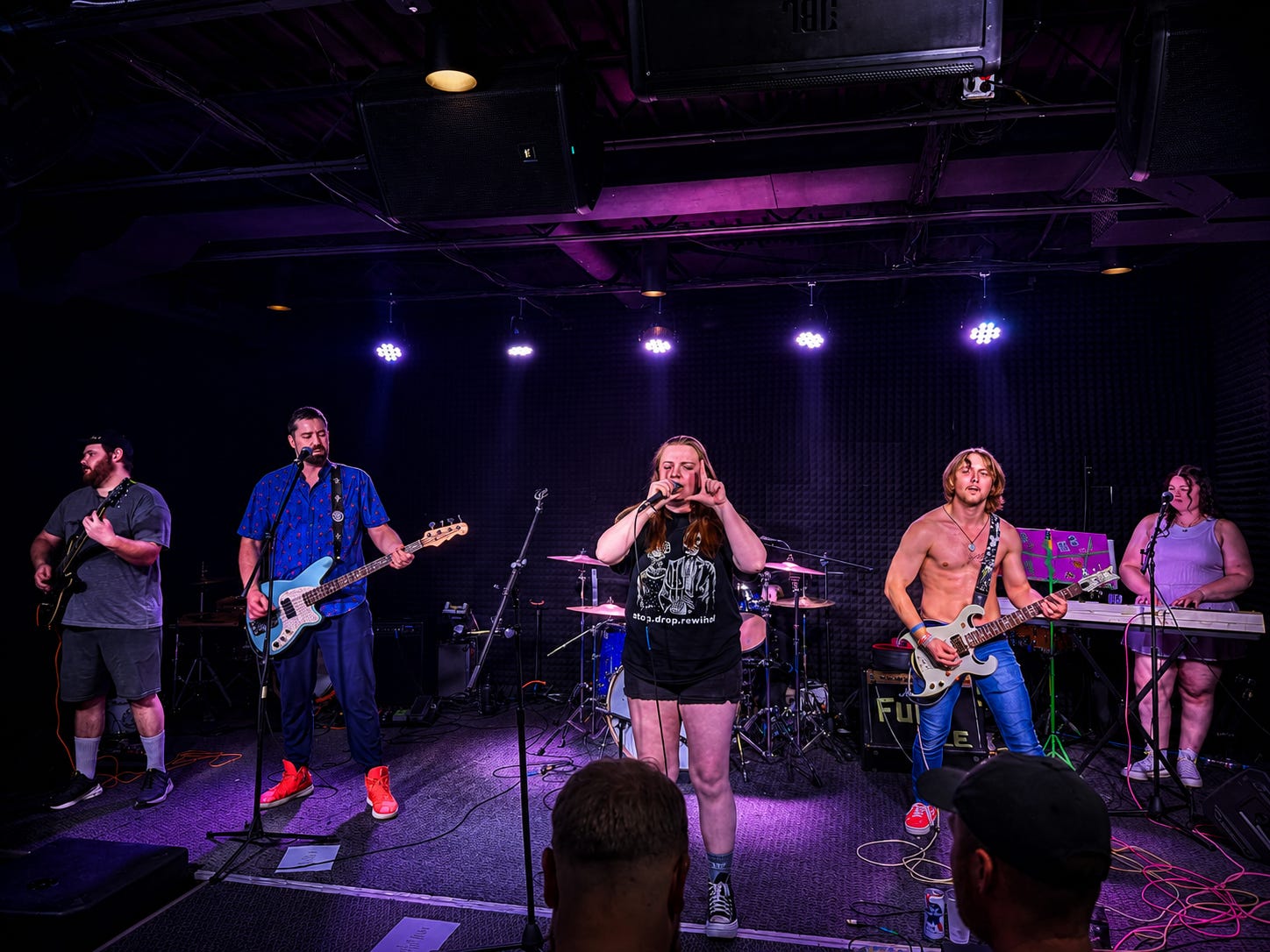
One of the smaller details of the set somehow said a lot about the band’s presence and the generation around them. My bestie, Emily, pointed out that the main lead singer had a vape in her hand for an extended period of time, and honestly, it felt completely of the moment. Not staged. Not dramatic. Just there, part of the posture, part of the young-scene visual language in the same way studded belts and side bangs once told on all of us.
The crowd was energized, especially with plenty of friends in the room and local favorite Zach Dresch tied into the night. That kind of hometown connection changes the feel of a set. People are not just watching a band. They are watching people they know, or people their friends know, or people they have seen around enough times to already feel invested before the song starts.
The lead singer had great stage presence, and that helped carry the set through its rougher sonic moments. At one point, the bassist mentioned that she ripped the last song, and her response was that she thought he meant she ripped ass.
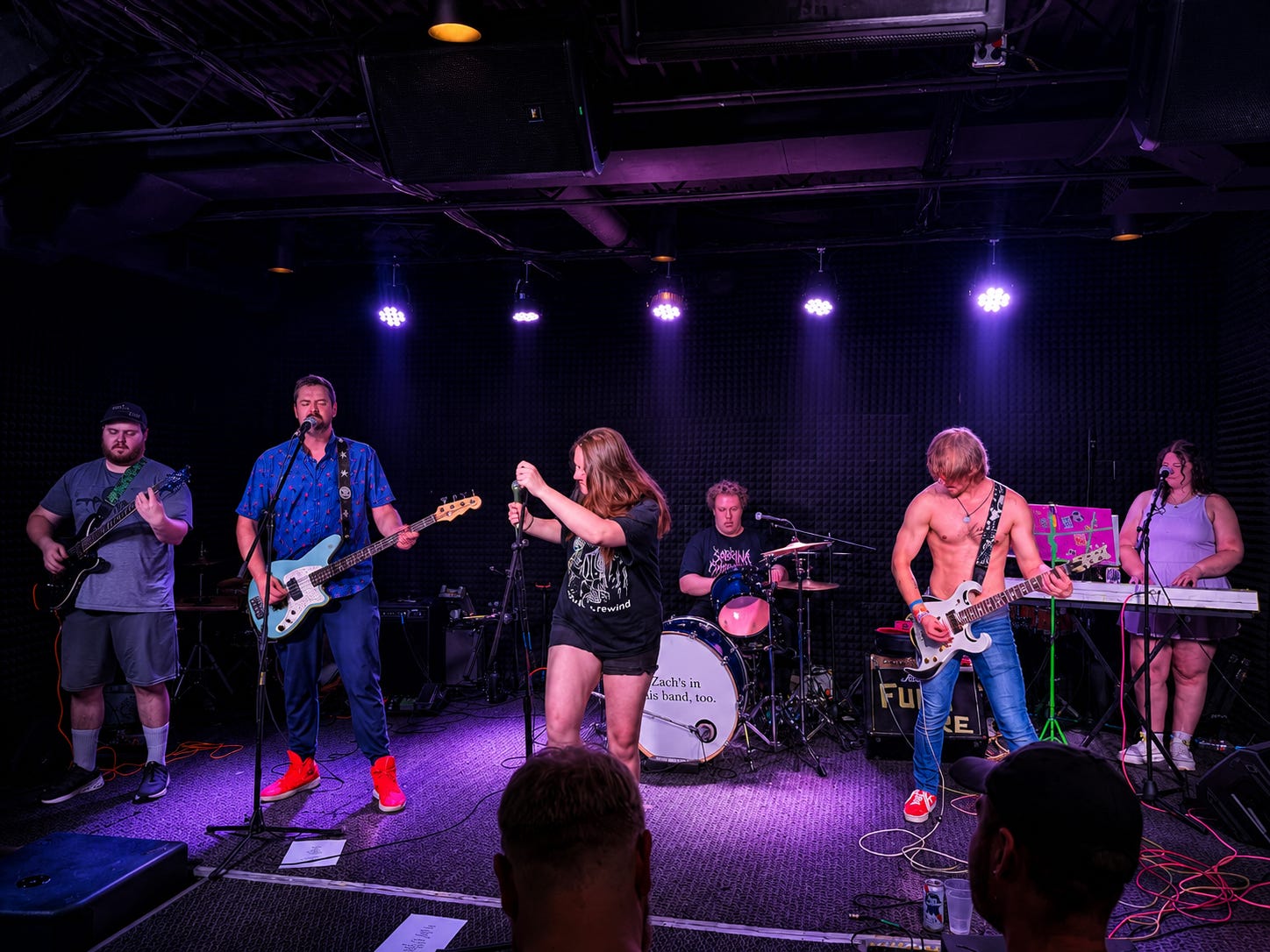
A Blink song came next, with one of the band members saying they felt it in their balls. Then they rolled into No Doubt’s “Sunday Morning,” another cover that gave the room something familiar to grab onto while still staying inside the band’s pop-punk and alt-rock wheelhouse.
Aliens Do Exist were not trying to be pristine. Their set worked because it felt present, funny, and socially alive. The imperfections did not sink it. They made it feel like a band playing to people, not at them.
stop.drop.rewind Turns the Room Sideways
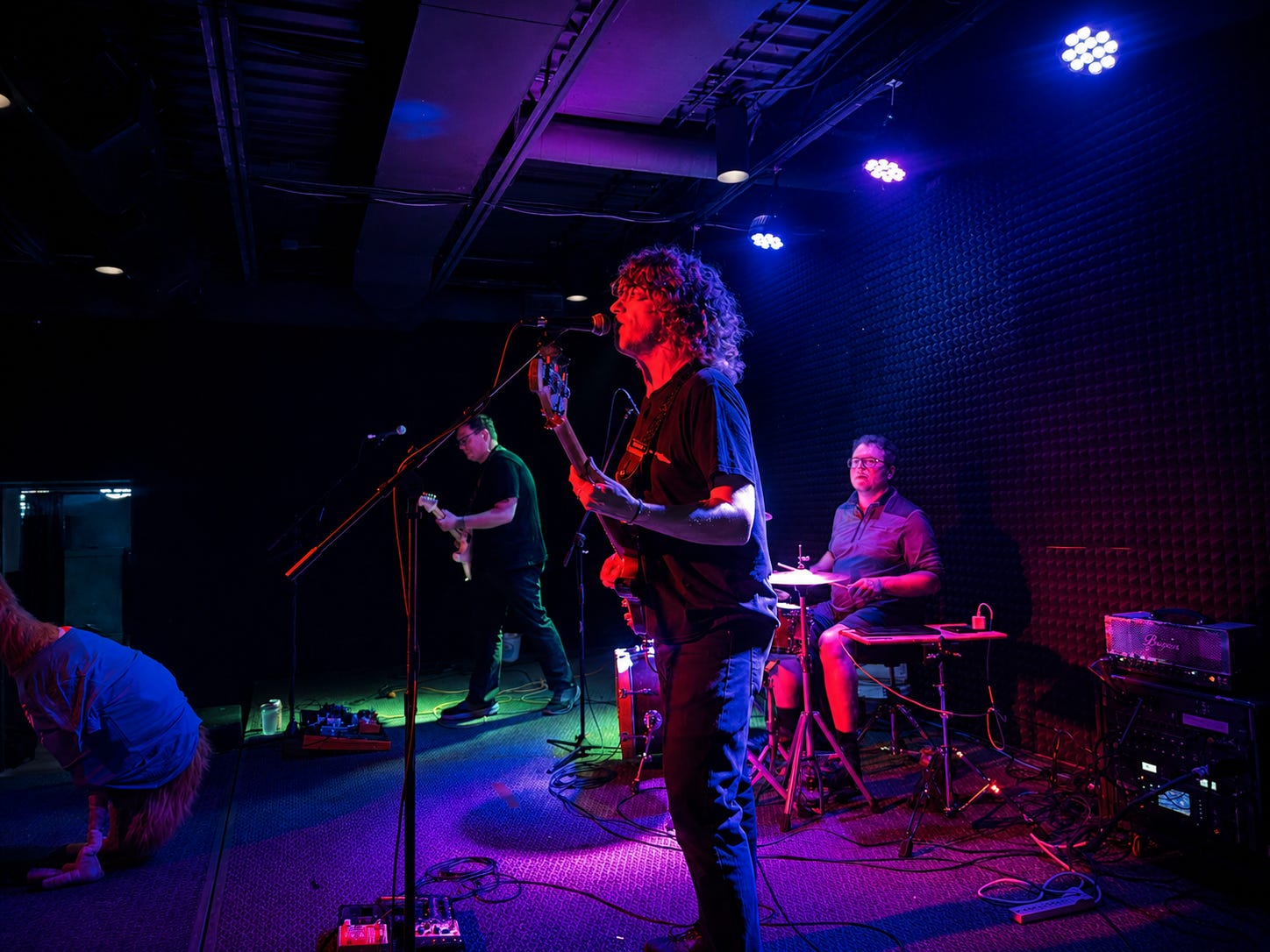
By the time stop.drop.rewind began, the night had already built up its own personality. Then the Northwest Indiana band opened with a narrative, robot-like voice giving them a personalized intro, and the whole room shifted into something stranger and more technically playful.
They came out with great energy and strong stage presence right away. There was a confidence to them, but not in a stiff way. More like they knew exactly how weird they could get and still bring everybody along. The band describes itself through a progressive-powerpop lens, pulling from pop-punk, jazz, and progressive rock, and that combination made sense once the set started bending in unexpected directions.
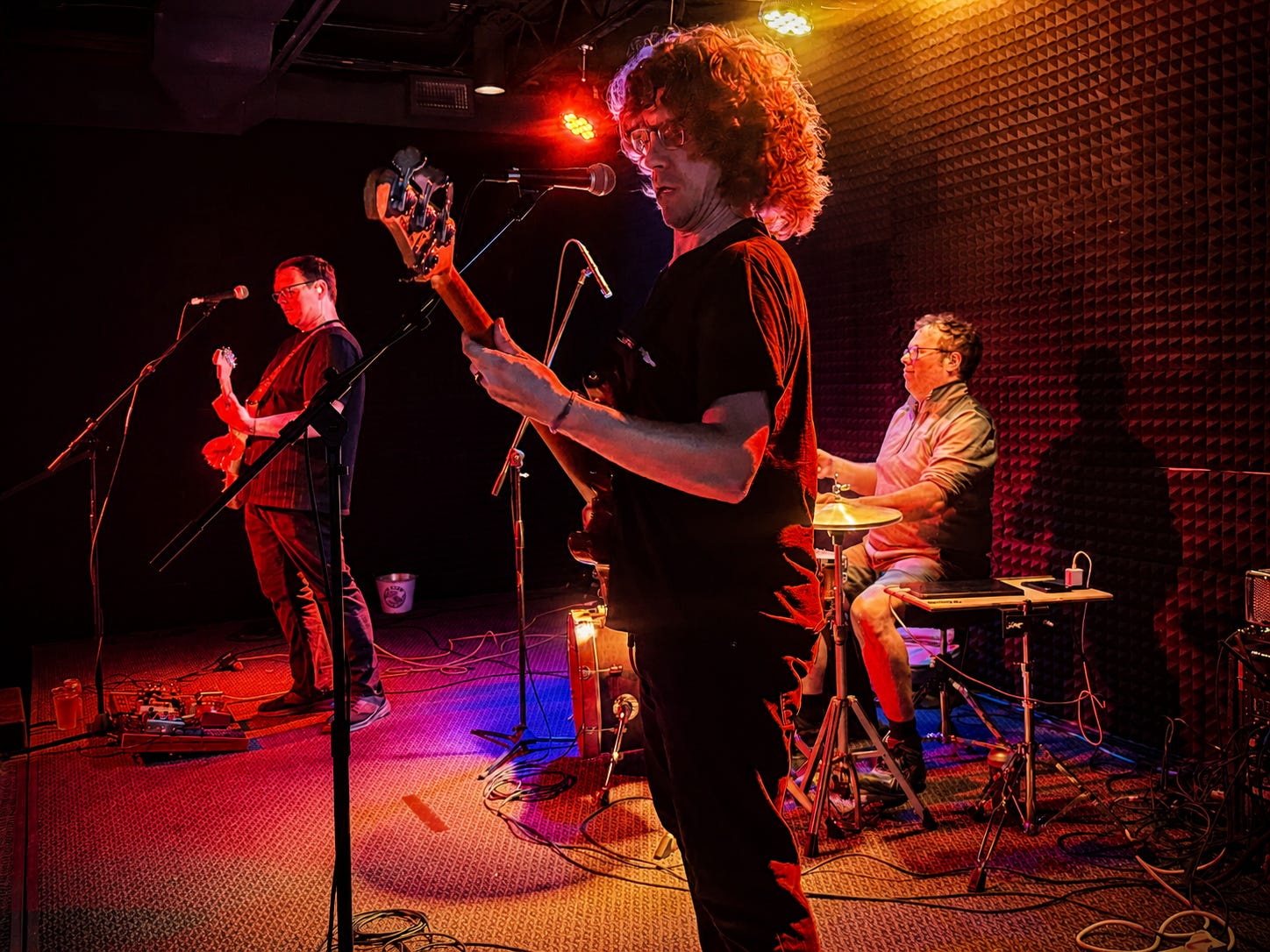
The band spoke about their connection to Zach’s pending mother-in-law from about eight years ago, then moved into a song connected to anxiety, mentioning how his mom has anxiety and that the previous song was about that. It was a small personal explanation, but it helped ground the set. For a band that can get rhythmically slippery and musically odd, those human moments kept the songs from floating away into pure musicianship.
The timing in their songs kept catching my ear. There were moments where the off-time hits felt like a school bell yelling, “Get to your class,” sudden and sharp enough to make your brain look up. But then the band would fall right back into normal time as if nothing had happened. It gave the songs this controlled sense of anarchy. They were so good they could make it sound like they were messing up, then prove they knew exactly where they were all along.
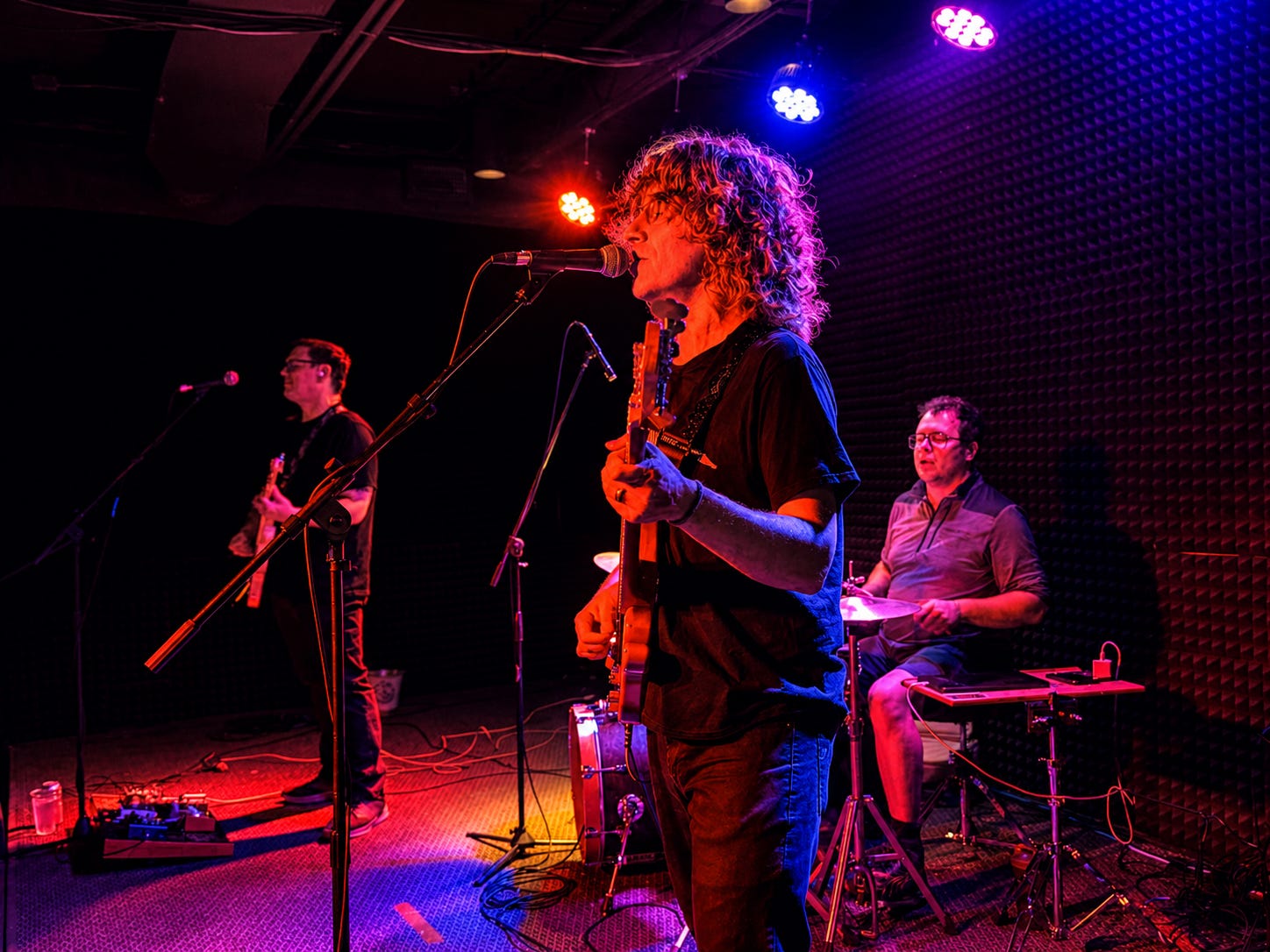
That is a risky trick. When a band plays with time like that, it can either feel clever in a way that leaves the audience outside the joke, or it can feel physical enough that people come along for the ride. stop.drop.rewind kept it alive. Their sound had its own version of a String Cheese Incident kind of jam-band looseness, but filtered through prog-punk instincts, sharper edges, and a lot less patience for staying in one lane.
Their storytelling between songs gave the set its own folklore. The vocalist and bassist talked about watching a thruple making out on a bench while he was onstage, then falling offstage because his attention was so locked onto them. That story became one of the funniest threads of the night, especially because about nine or ten people in the audience were wearing homemade shirts that said “Horny Rob,” inspired by the thruple story.
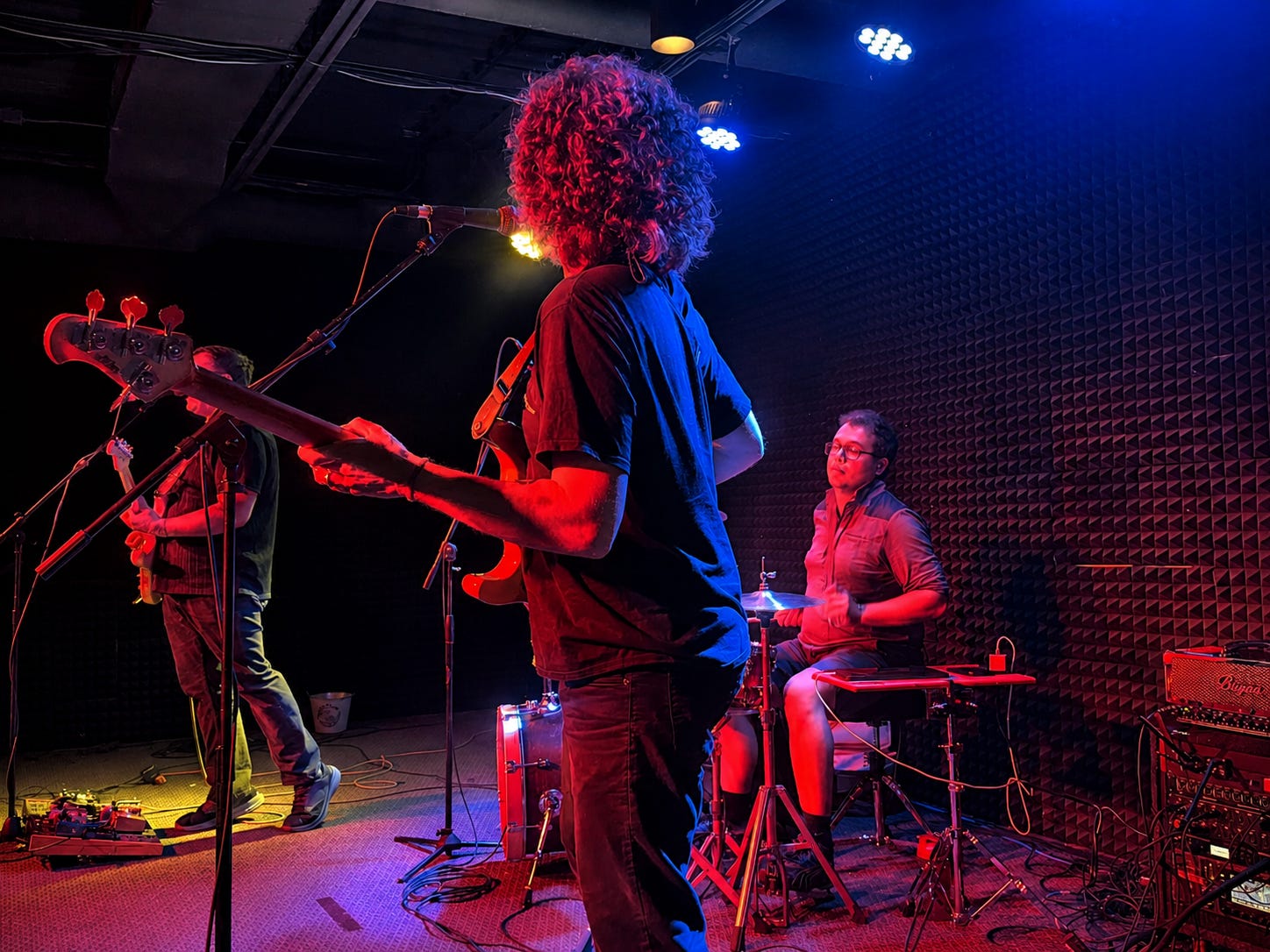
That is the kind of detail that makes a scene feel like a scene. Not just people arriving, buying a drink, and leaving. People made shirts. They carried the joke into the room. They turned a story into a uniform. By the time you see a cluster of “Horny Rob” shirts in the audience, you are no longer just watching a touring band pass through town. You are watching local memory being built in real time, one absurd phrase at a time.
Then there was “stop.drop.&behind,” a joke too perfectly fitted to the night to leave out. Somewhere in the middle of all this, Jamie, one of my favorite people, pointed out that all the members looked like different stages of Weird Al. Once that was said, there was no unseeing it. It became part of the visual texture of the set, folded right in with the mathy turns, the robot intro, the thruple mythology, and the strange little joy of watching a band completely understand its own oddness.
The ending came with a killer guitar solo, the kind that gave the set one last real punch before the crowd started cheering for another song. That response felt earned. After all the jokes, time changes, personal stories, and musical curveballs, people still wanted one more pass through the chaos.
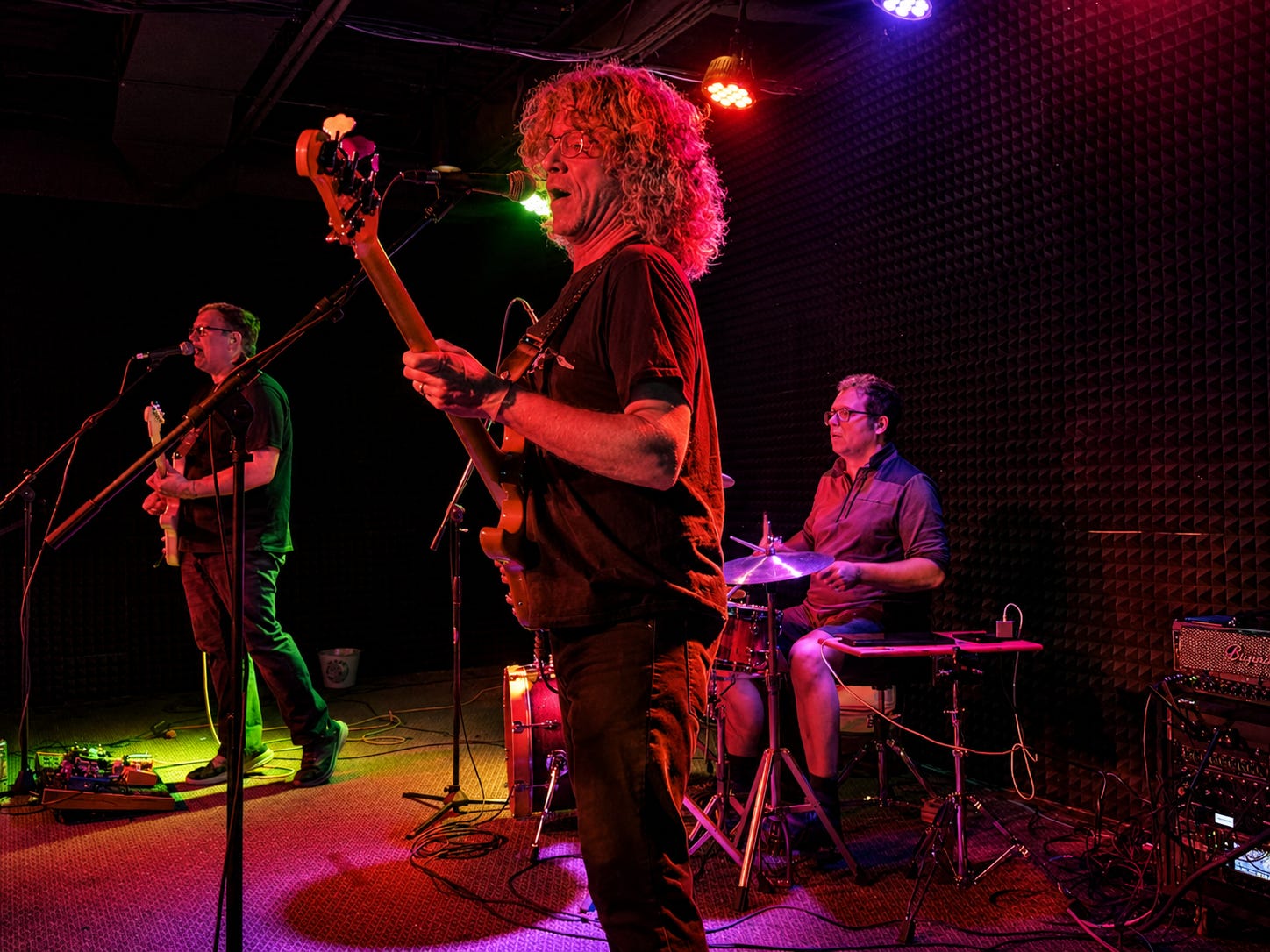
There was also a moment with the lead girl vocalist from the previous band near the end, tying the night back to the shared-room feeling that had been there all along. This was not a lineup where each act disappeared into a separate compartment. The night kept folding people into each other.
Afterglow
Walking out of a show like this, you do not just remember the songs. You remember the things around the songs. The gorilla sounds. The broken string joke. The vape in the singer’s hand. The bassist’s G-string line. The robot voice. The anxiety story. The school-bell timing shifts. The homemade “Horny Rob” shirts. Jamie quietly detonating the Weird Al observation and changing the way the band looked for the rest of the night.
That is the charm of a room like The Den when the right bands are in it. The music is the reason everyone gathers, but the memory is built from all the little human sparks happening around it. Lovely Ave. started the night with punk-rock motion and a sense of local possibility. Aliens Do Exist kept the crowd laughing, singing, and leaning into the familiar pull of pop-punk covers and originals. stop.drop.rewind closed it by bending the room into something weirder, funnier, and more musically restless.
Somewhere between “No Rest for the Wicked,” “1985,” “Sunday Morning,” the off-time school-bell moments, and a small army of “Horny Rob” shirts, the night became the kind of local show people will retell badly and lovingly later, probably with someone interrupting halfway through to say, “No, no, you forgot the part where she thought he said she ripped ass.”
Please consider Donating to Sponsor an article even $1 helps!
