



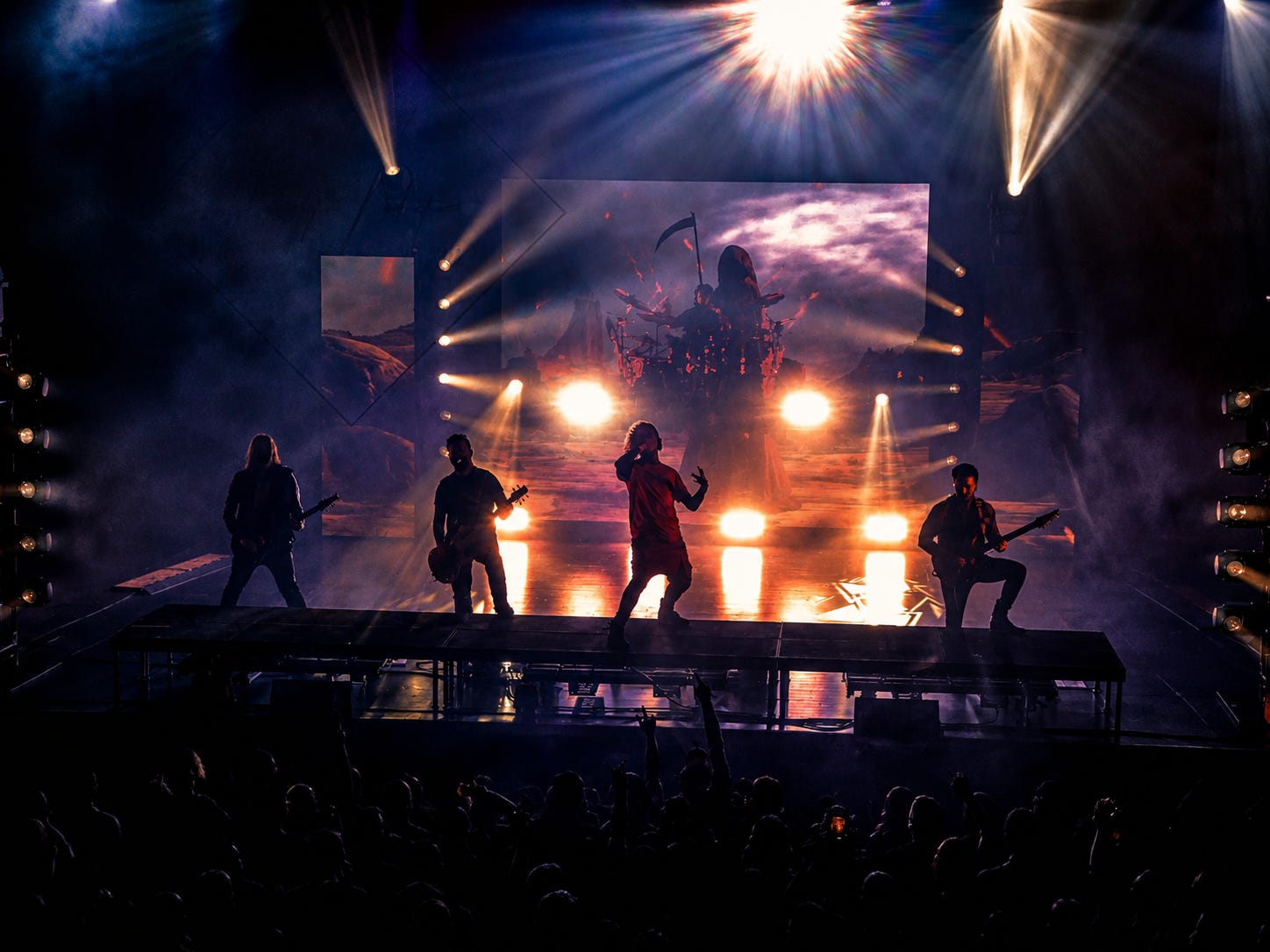
Having only been to Vibrant Music Hall once before, I thought I had already seen it close to full.
I was wrong.
When I got to the show, the place was packed from one side to the other, with the balcony filling in quickly and the floor already compressed into one breathing mass of black shirts, crossed arms, raised horns, and people waiting to be flattened by sound. There is a particular kind of anticipation that only happens at a heavy show when the room knows what is coming. It is not polite excitement. It has teeth.

Signs of the Swarm
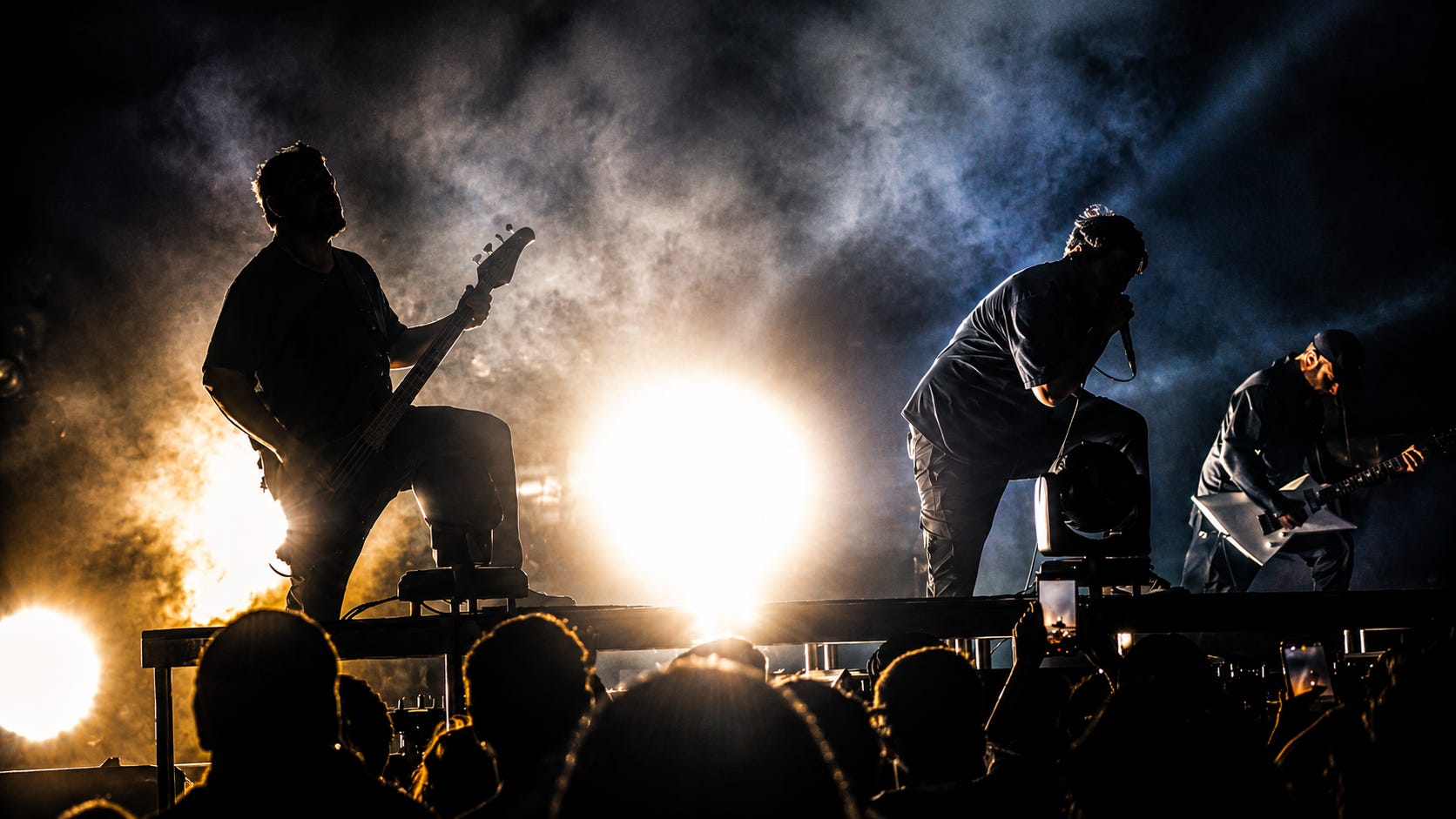
By the time I entered, Signs of the Swarm were already playing and had pulled the audience into a tightly knit group of fans. I had heard the name passed through circles and tour conversations for years, usually by people whose taste in heavy music I trusted enough to take seriously. They have been in the scene since 2014, and through a menagerie of lineup changes, they have sharpened themselves into something with a clear shape: brutal, technical, guttural, and carved deep into one of the heavier corners of deathcore and blackened extreme music.
This was not background noise for people still finding their places. Signs of the Swarm arrived like a weather system built out of double bass, guitar swells, and vocals that sounded less performed than summoned. Their music has that strange ability to make the body react before the brain finishes sorting out what is happening. The drums were structural and punishing, the guitars moved in thick waves, and David Simonich’s vocals cut through the room with a kind of animal precision. It was ugly in the way extreme music can be beautiful, all tension and pressure and release.
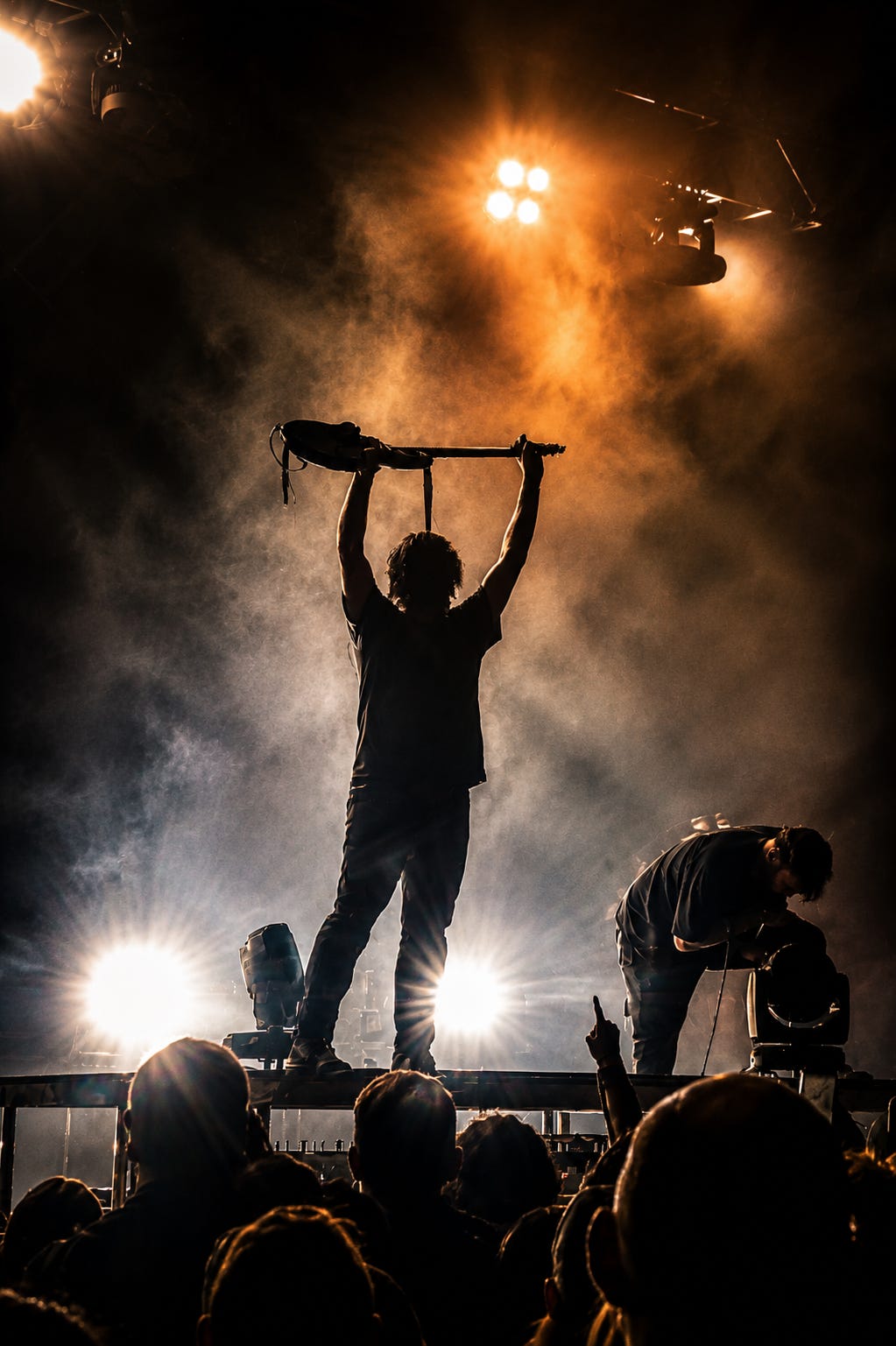
The lights helped turn it into something more physical. Endless strobe patterns hammered the room until it became easy to feel consumed by it, pulled into a natural and strange state of primal rage. During one song, which I have narrowed down to either “IWONTLETYOUDIE” or “Amongst the Low & Empty,” Simonich unleashed a high-pitched growl that seemed to match the strobe light in rhythm and intensity. For a few seconds, voice and light felt fused, both flickering at the same impossible speed.
Their name prepares you for heaviness, but the live version still had force behind it. Signs of the Swarm filled every second of their 7:00 to 7:30 set with brutality, but brutality was not the only thing they brought. There was craft in it. There was control. There was the feeling of a band that knows exactly where the trapdoors are in its own music and knows when to kick them open.
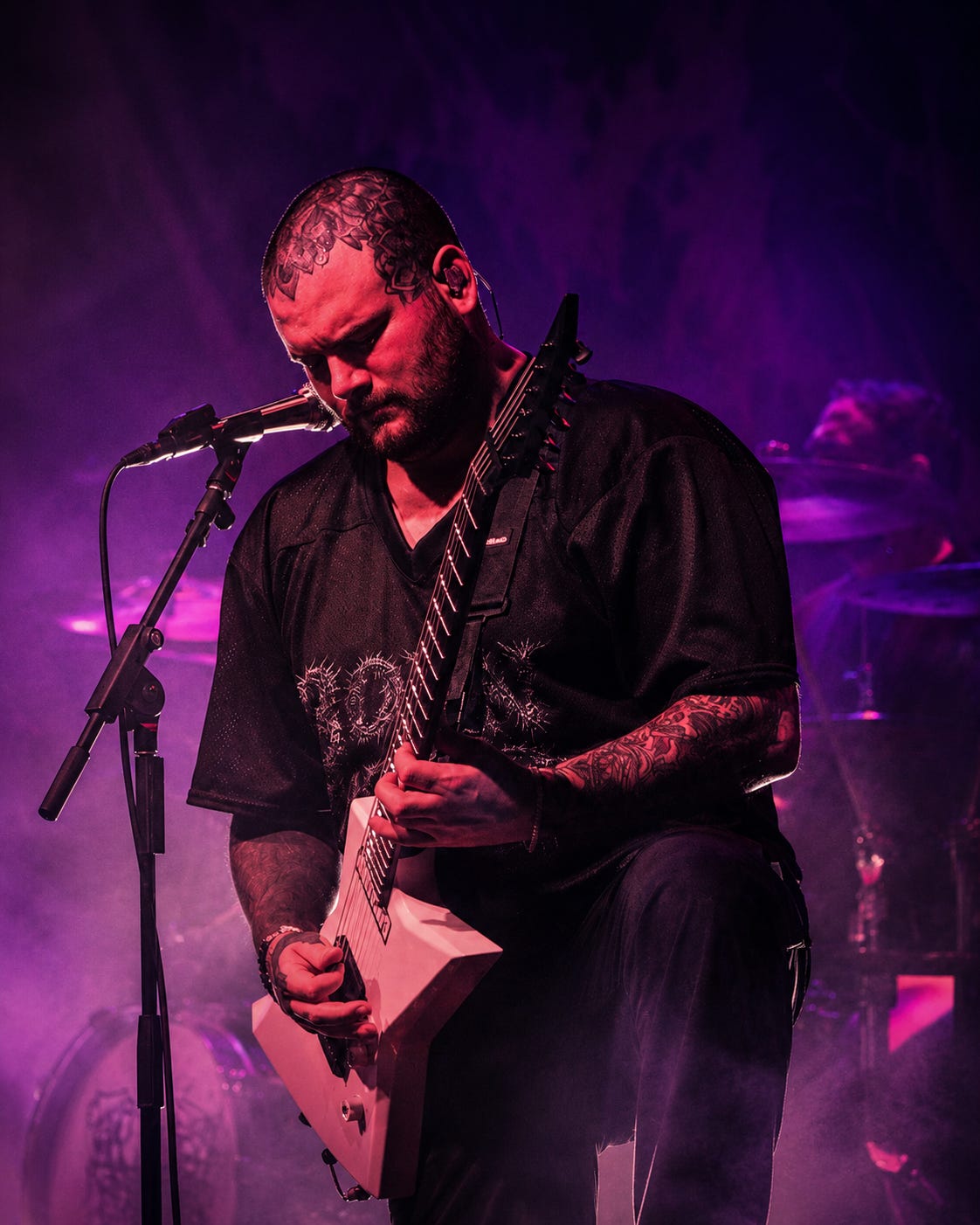
In my early years of listening to heavy music, back in the early 2000s, this probably would have been too much for me. Thankfully, my opinions have learned how to behave less like fences and more like doors. I am a fan now. Everyone who lives with me is too, although they did not exactly get a vote. It gets played at my house every day.
The Beauty of a Clean Changeover
After Signs of the Swarm finished, set change began immediately.
Having had a direct hand in set changes in past routes my life has taken, I always try to watch at least part of that process. It is easy for audiences to miss how much work happens between bands because, when it is done well, it almost disappears. Vibrant Music Hall and the touring stage teams made it look clean, quick, safe, and structured. After seeing it happen a few times there, I can honestly say I am a bit jealous of their workflow.
They know what they are doing, and they all do it well.
That matters more at a show like this than some people realize. These bands do not travel light. There are lighting cues, backline changes, risers, drums, cables, instruments, smoke, haze, and enough moving parts to turn a sloppy changeover into a delay or a hazard. Instead, the room kept its pulse. Nothing sagged. Nothing felt stranded. The night moved with purpose.
By the time Paleface Swiss were ready, the crowd had not deflated. It had thickened.
Please consider Donating to Sponsor an article even $1 helps!

Paleface Swiss Break the Room Open
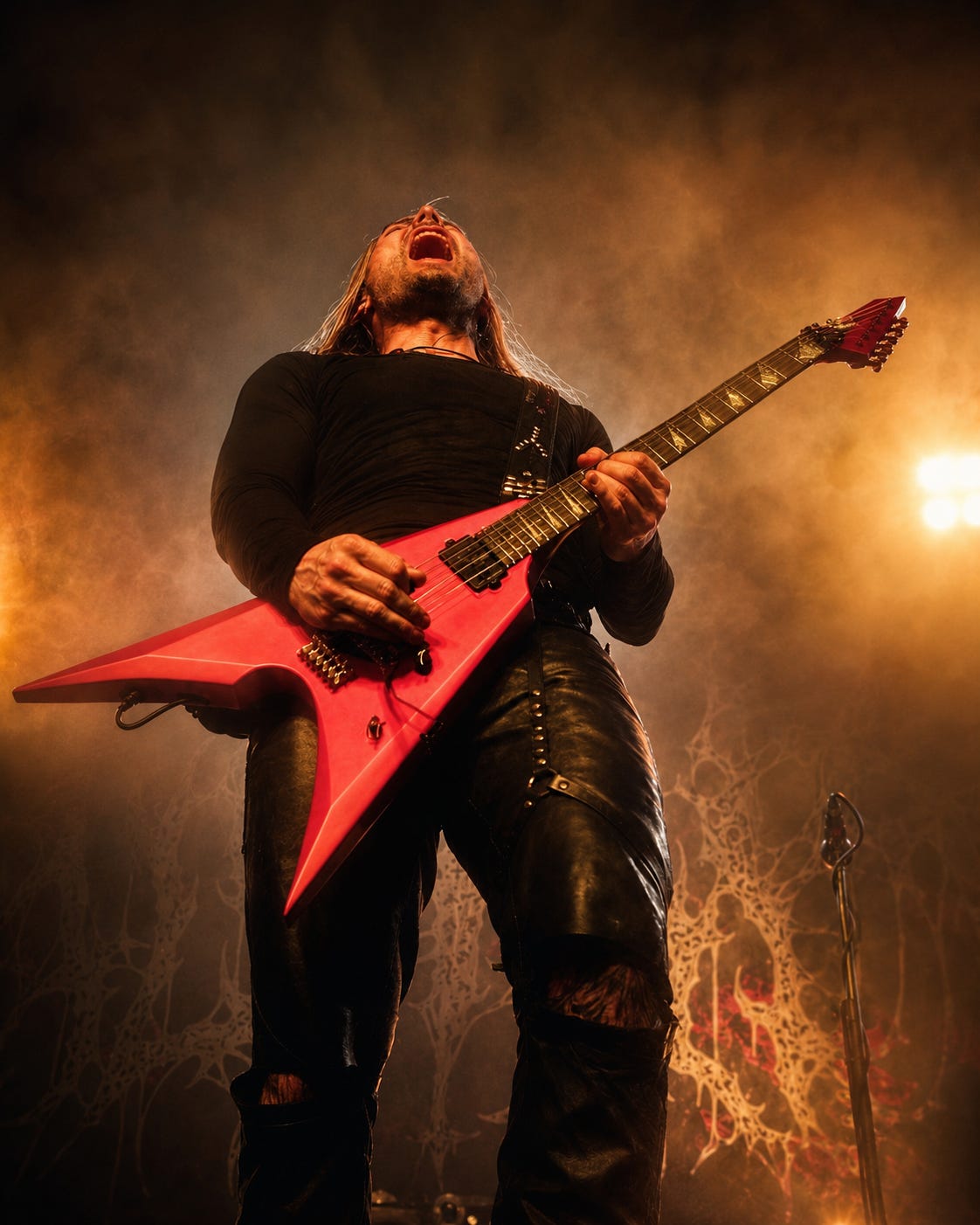
Paleface Swiss came to the stage with a presence you could feel before the first full hit landed. The room was not silent. It was busy and noisy, full of conversations, movement, and the rustling impatience of people preparing themselves for impact. Then the band started playing, and the room changed immediately.
By the time they were into their second song, I believe they already had a circle pit moving. For anyone unfamiliar, a circle pit is a large mosh pit where everyone runs in the same direction, which sounds silly until you are close enough to feel the air pull as bodies start orbiting the floor. It can look chaotic from the outside, but inside the scene there is an odd structure to it, a rough code of movement, collision, and quick hands helping people back up.
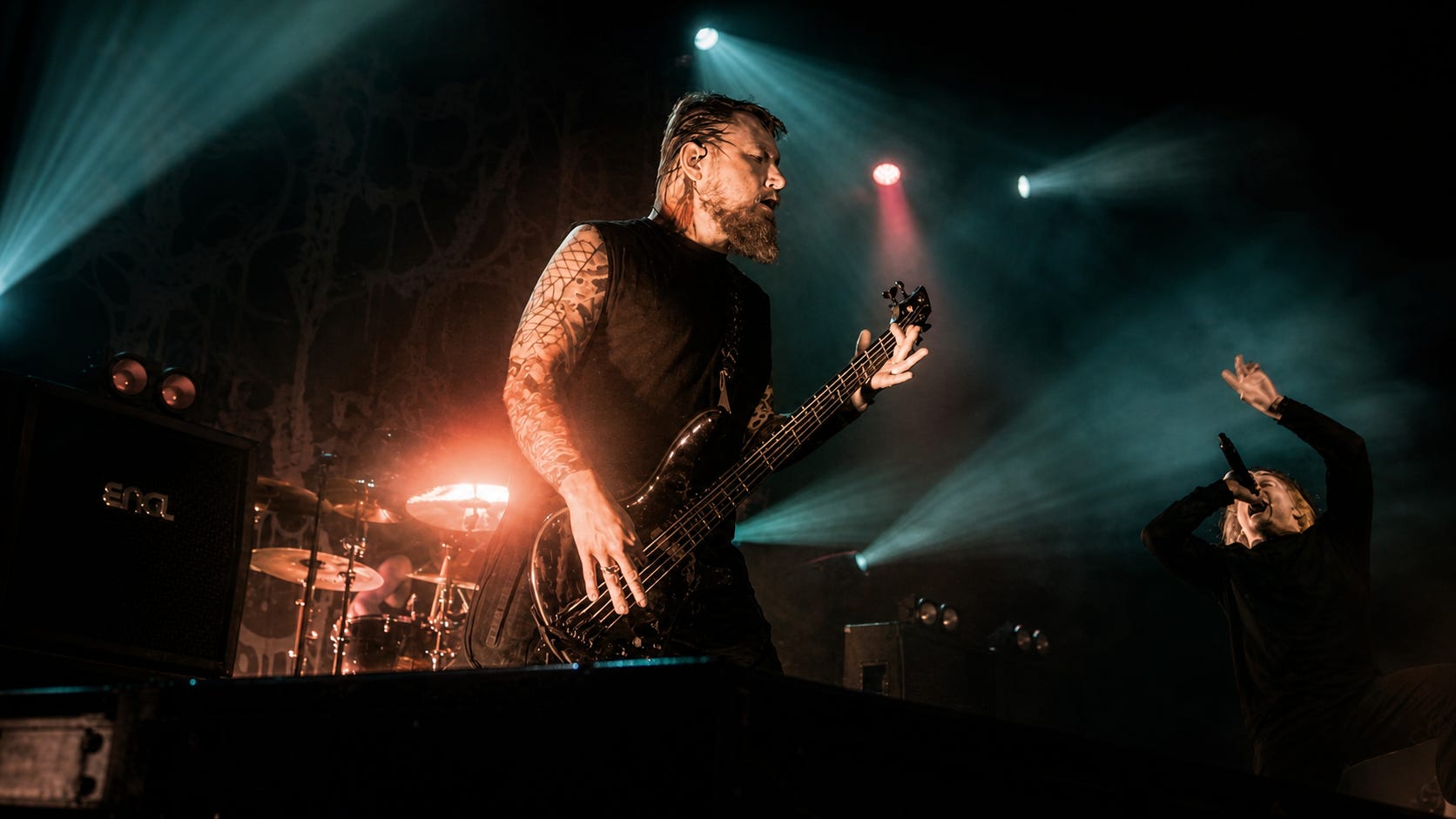
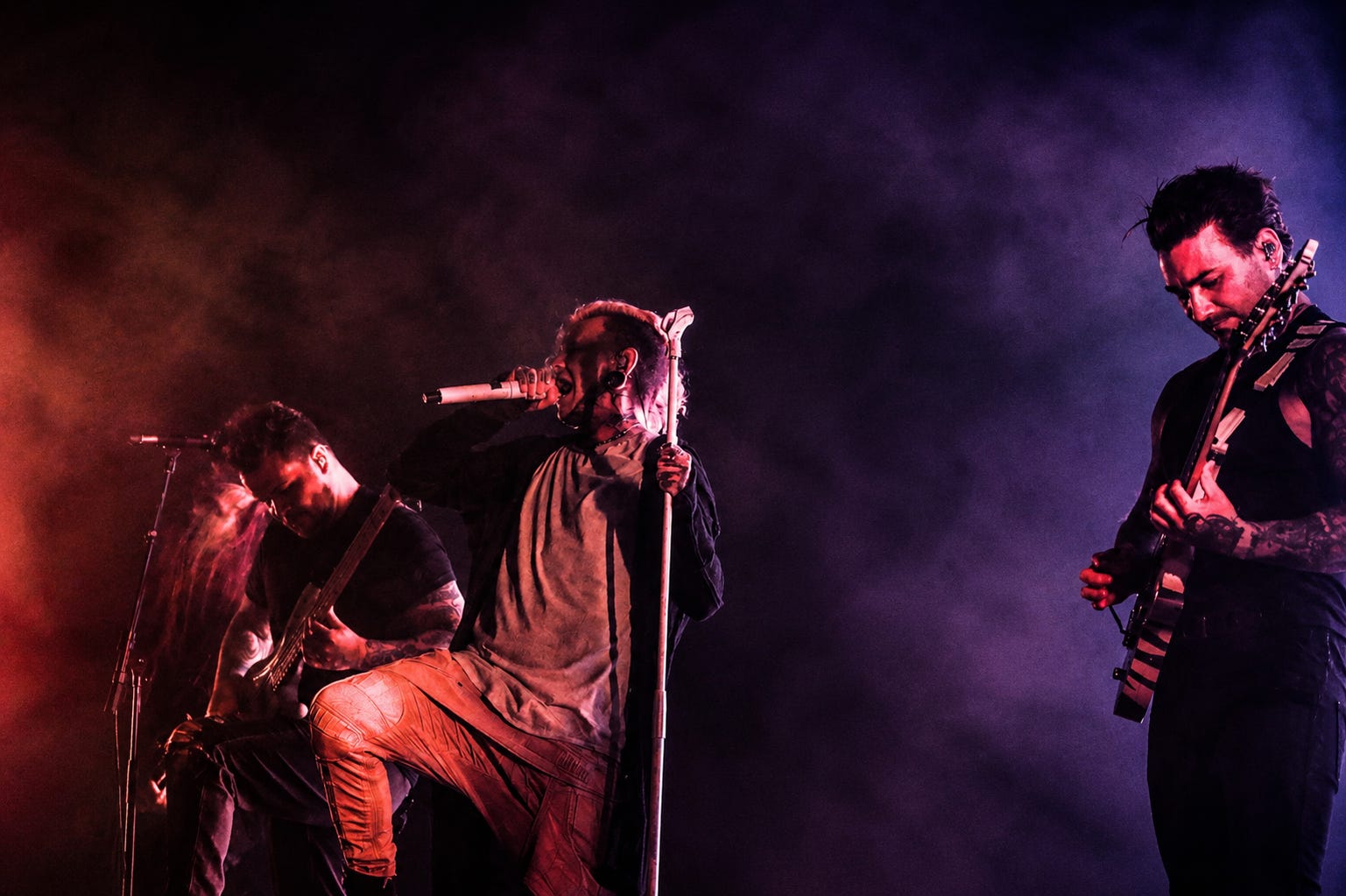
Paleface Swiss brought a different kind of attitude than what often gets expected from the metal world. The band made its name playing bars in Switzerland and Germany, and they carry that history with them: hungry, physical, direct, and fully aware of the room. But there was also something else on that stage. Most of them wore mesh shirts. Their stage presence pushed against the stiff, hyper-masculine armor that heavy music can sometimes mistake for authenticity. They did not posture like men trying to prove they were dangerous. They performed like people confident enough to be strange, sensual, funny, aggressive, and entirely themselves in the same breath.
When learning more about the band, I found that this is not some accident of styling. Paleface Swiss are openly comfortable breaking against the boundaries of toxic masculinity that still get guarded too heavily in parts of the heavy metal community. They are not afraid to share a kiss on stage. During the show, vocalist Marc Zellweger sensuously grabbed the guitarist from behind around the neck mid-solo, turning what could have been standard metal staging into something more playful and more confrontational.
And they know exactly what they are doing.
There is humor in it. There is defiance in it. There is a clear sense that if someone leaves the show because the band expresses fluid sexuality on stage, Paleface Swiss will not be wounded by that reaction. They might actually find it funny. Personally, I find that very cool. Heavy music is supposed to make people confront something. Sometimes that thing is fear. Sometimes it is grief. Sometimes it is anger. Sometimes it is a man in a mesh shirt making fragile people uncomfortable by being freer than they are.
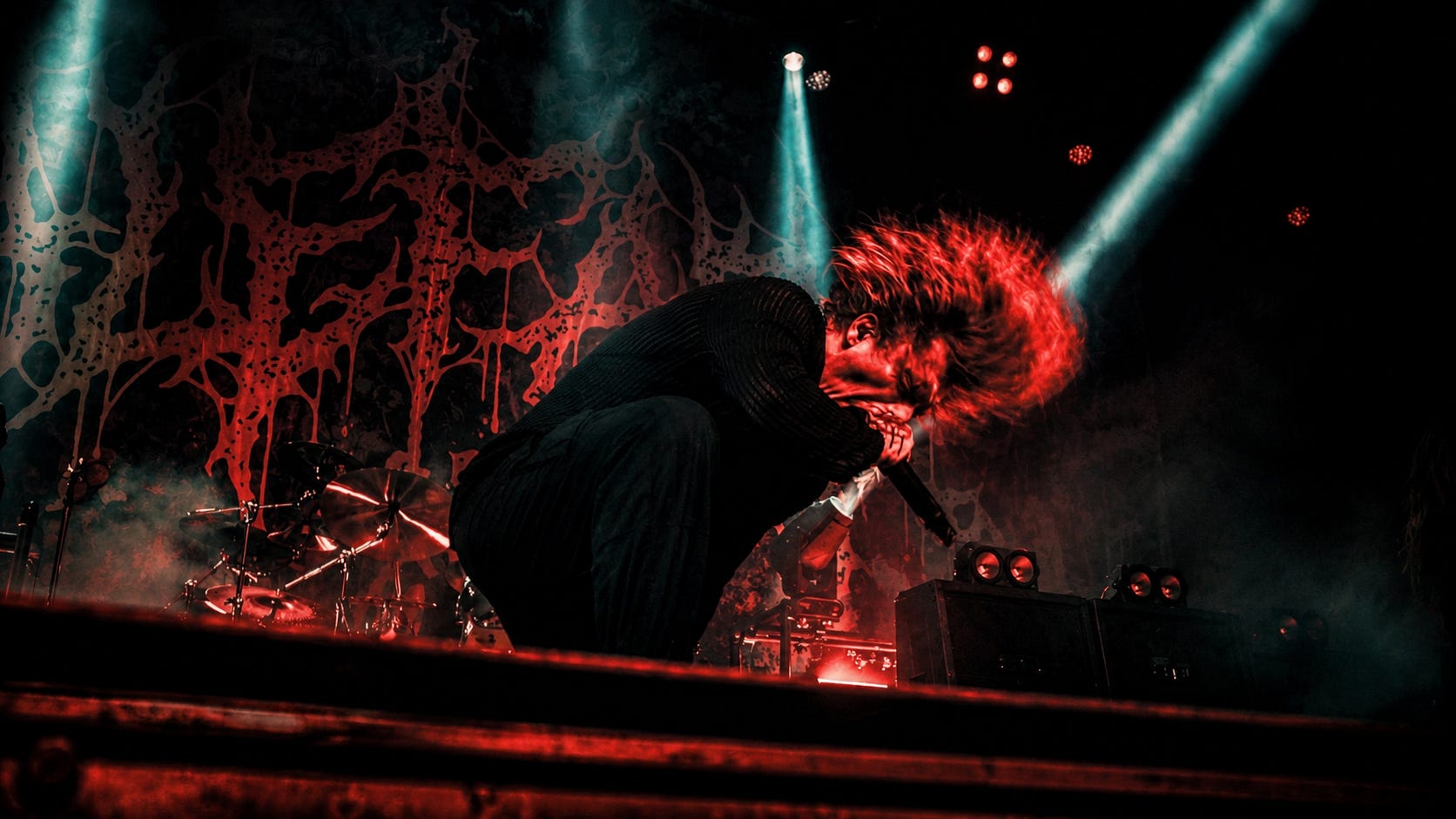
Musically, Paleface Swiss were punishing. Their sound pulls from deathcore, beatdown hardcore, and nu-metal pressure, with grooves that do not ask permission before stepping on your chest. The pit responded accordingly. The room bent itself around them, and the band kept pushing.
They played until 8:45, thanking the fans for coming out and thanking Lorna Shore for bringing them on tour. With the least bit of irony, they also thanked Slipknot and dedicated a song to them. In Iowa, that gesture landed differently. Slipknot are not just another influence here. They are part of the state’s heavy-music mythology, a band that turned Iowa into something louder and stranger in the global imagination. Considering Zellweger discovered Slipknot as a kid, it felt appropriate. Without that discovery, Paleface Swiss may not exist the way they do now.
That is one of the stranger chains in heavy music: a kid finds a band, builds a life around the feeling it gives him, crosses oceans with his own band years later, then thanks that same band in the state that birthed it. Metal has a memory, even when it is screaming.
Haze Before the Horse Breaks Loose
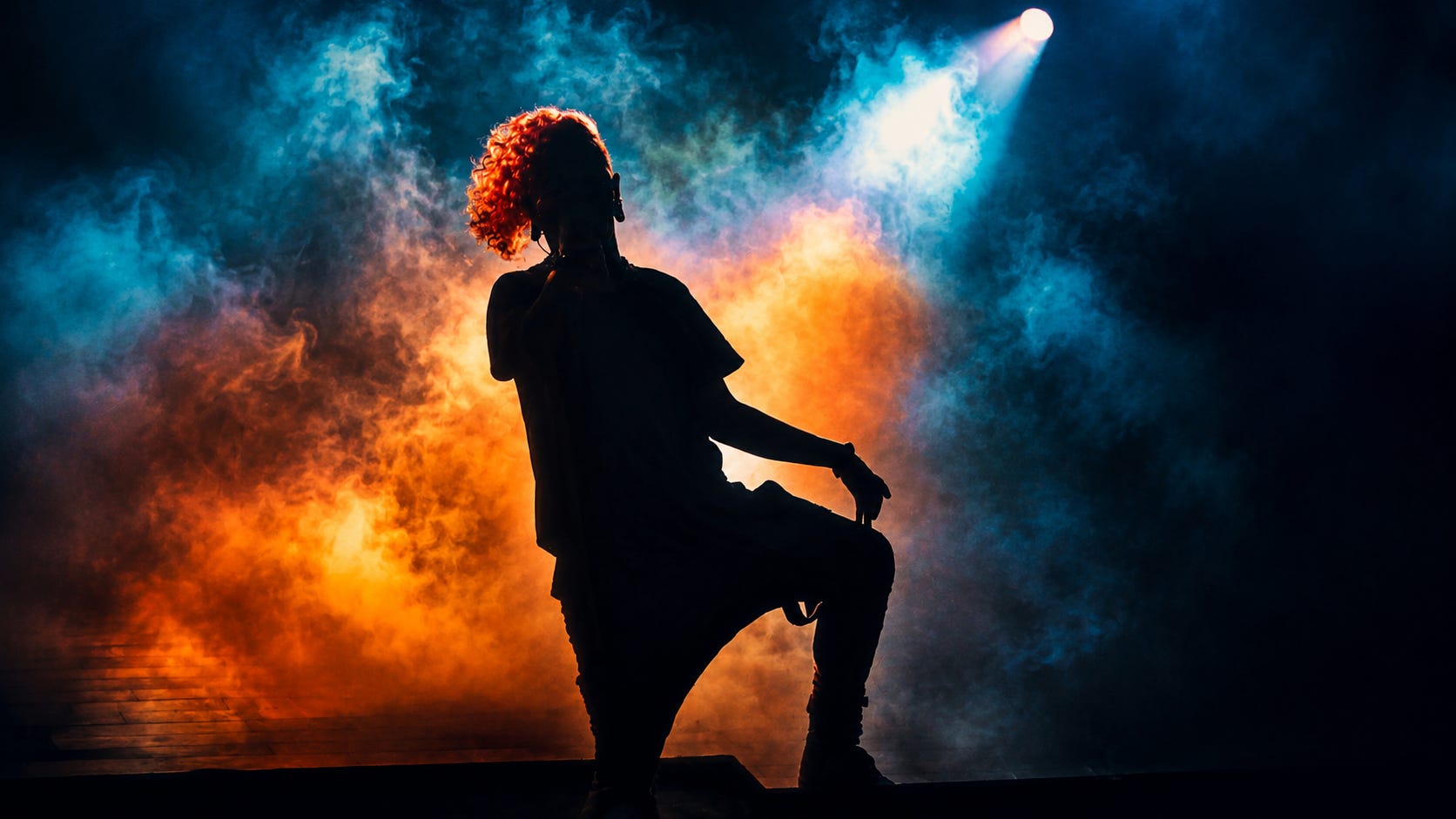
Lorna Shore started at 9:05, and saying the anticipation was radiant still feels too small.
Before they appeared, haze swallowed the stage. Floodlights lingered through it like travelers moving down a misted road at night. The room was no longer merely waiting. It was bracing. Lorna Shore have become one of those bands whose reputation arrives before they do, especially after the explosion of “To the Hellfire” and the way their music has pushed symphonic deathcore into larger rooms than some people once imagined possible. But knowing a band is powerful and standing in front of that power are two different things.
They took the stage as “Oblivion” began to unfold, and Will Ramos came out wearing the same sweater from the music video. He took the stage like it was a training pen and he was a wild horse.
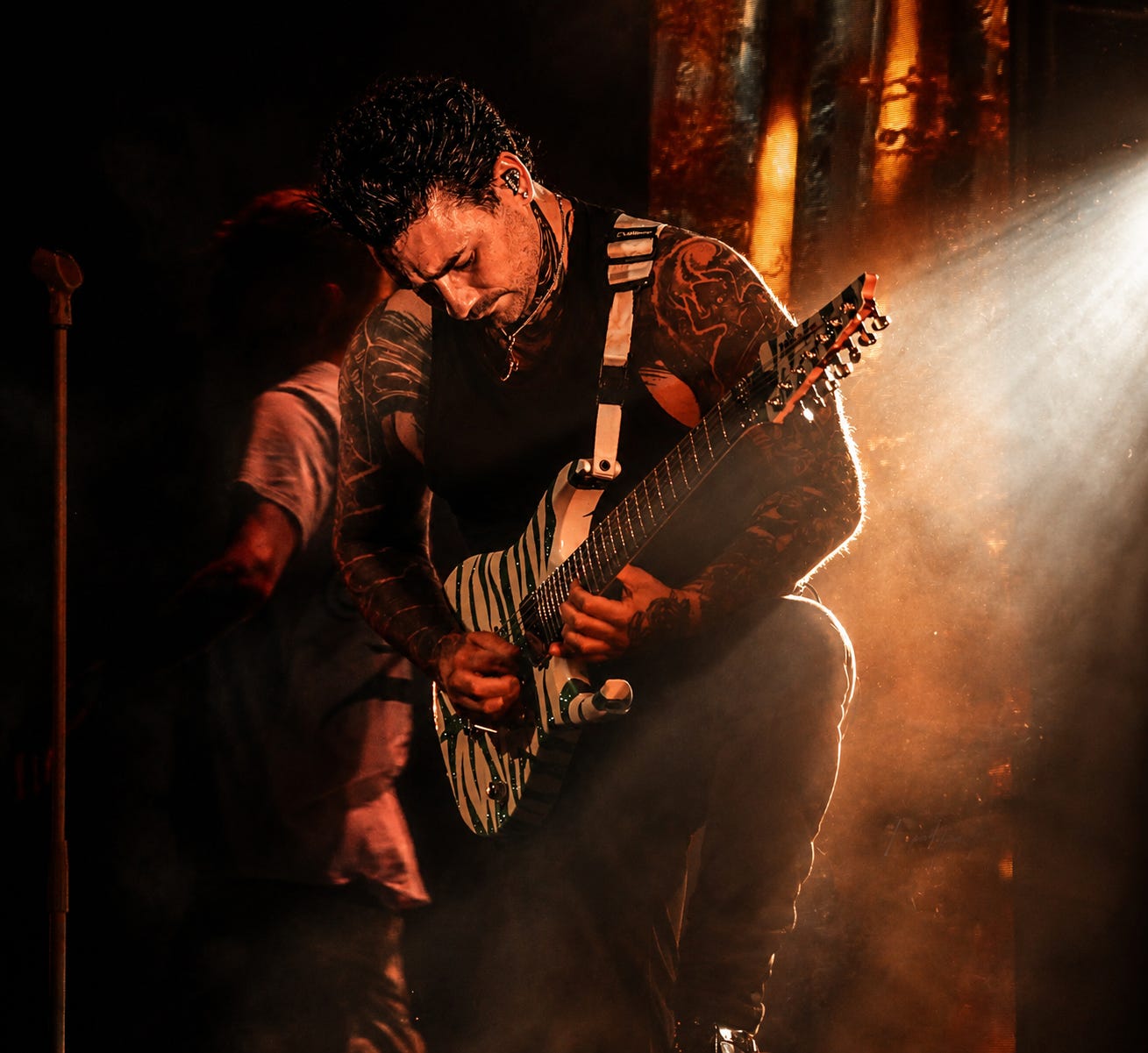
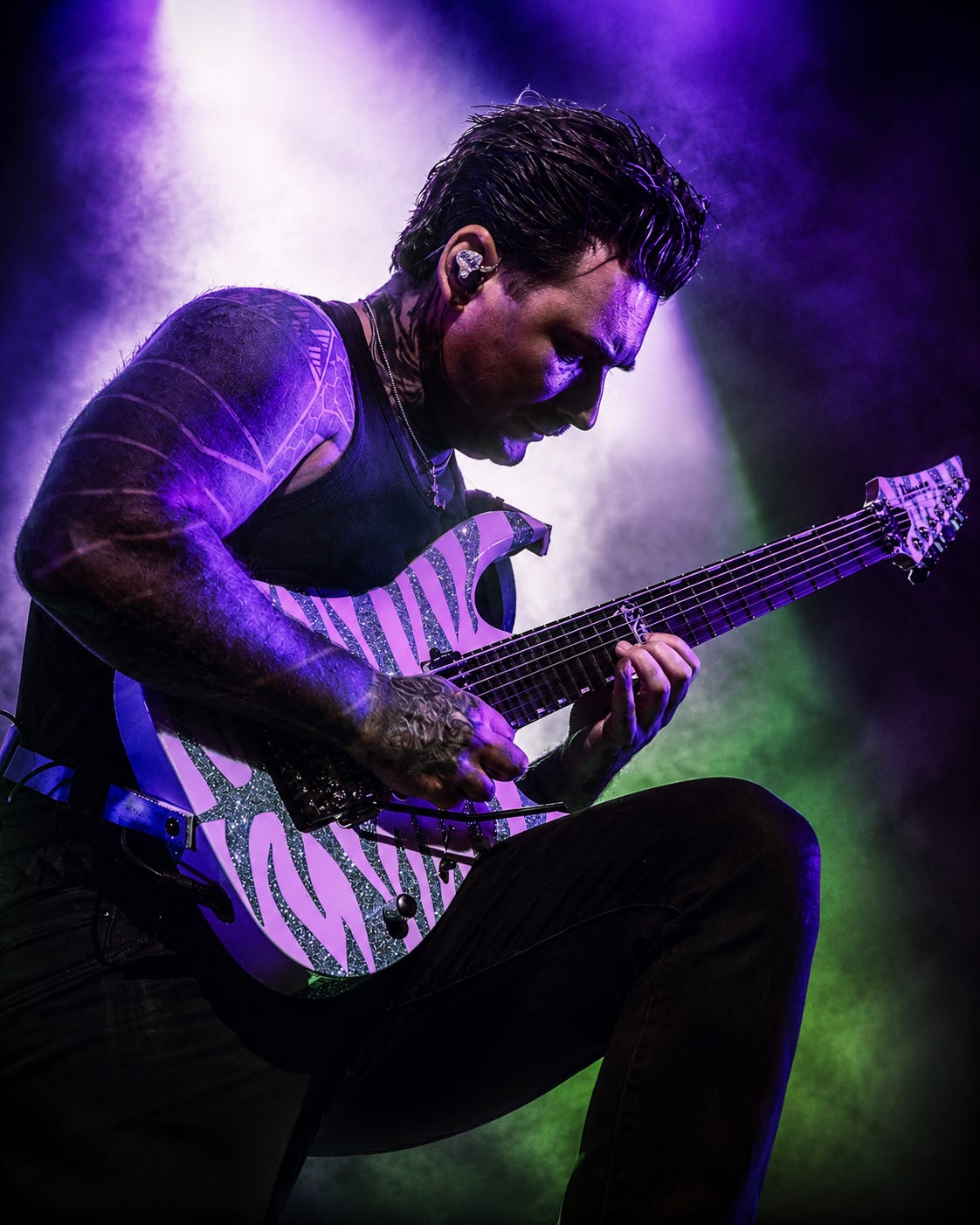
From side to side, with unwavering force, Ramos took the night by storm. As a fan, I was overtaken by the sheer joy of witnessing this band live. I had never imagined this would be something I would get to do: stand there in front of a band I genuinely love, record the experience, photograph it, and then write about it afterward. I was trying my best to keep my composure from the front of the stage, between the crowd and the band, screaming along to the lyrics while still doing the job.
Then they played “Unbreakable,” my favorite song.
I nearly had tears in my eyes while taking in the full experience, singing along and shooting photos. There are songs that hit because they are heavy, and then there are songs that hit because the heaviness feels like it is carrying something upward instead of dragging everything down. Lorna Shore have that rare quality. Their songs often carry an essence of earth-shattering hope. The music is devastating, but it does not feel empty. It feels like something clawing toward light through a collapsed ceiling.
That hope rides on top of backing music heavy enough to crack pavement. Part of Lorna Shore’s rise can be traced through the moment “To the Hellfire” broke beyond the usual lanes, reaching No. 7 on Billboard’s Hot Hard Rock Songs chart and helping producer Josh Schroeder hit No. 1 on Billboard’s Hard Rock Producers chart in August 2021 through his work with the band. That kind of chart placement does not explain the band’s emotional force, but it does show how far the sound has traveled.
At Vibrant, it felt like the sound had traveled all the way into the bones of the building.
Human Waterfalls and Midwest Treasure
The set stretched across Lorna Shore’s recent era, reaching from the shadow and grandeur of 2022’s Pain Remains into newer material from I Feel the Everblack Festering Within Me. They played songs like “Cursed to Die” and “In Darkness,” the latter made even wilder when their photographer Nick Johnson came out for guest vocals. That moment gave the crowd another charge, the kind that ripples through a packed room before anyone has time to decide what to do with it.
Then came “Sun//Eater,” and the crowd surfing turned relentless. People came over the rail in such repetition that it started to look like a waterfall of humans, bodies spilling forward again and again to be caught, guided, and safely administered back into the crowd. Security had their hands full, but the flow stayed controlled enough to keep the moment from tipping into danger. It was one of those scenes where the crowd becomes part of the show’s machinery, not in a cheap participation way, but as a moving extension of the music’s force.
Lorna Shore treated Vibrant Music Hall like a Midwest treasure deserving the full experience. That is still the phrase that keeps circling my brain. We do not get nights like this every day in rooms like this. The show felt part awestruck, part enriching, thoroughly overwhelming. I keep trying to put the exact feeling into words, and the words keep looking too small for the shape of it.
When they finally played “Glenwood,” the room was already somewhere beyond normal concert exhaustion. Then, in one of the strangest and funniest turns of the night, Ramos found a pack of Pokémon cards that had been thrown onto the stage by a fan. He picked it up and showed the crowd before the lights dimmed and the band sauntered backstage.
Moments later, you could hear him exclaim that they got a Mega Charizard and that it deserved a pit.
So they played “Prison of Flesh,” with Signs of the Swarm’s David Simonich coming out for guest vocals. It was the kind of ridiculous, perfect live-show moment that cannot be planned into feeling real. A Pokémon card pull became a pit command. A Mega Charizard became a reason for more destruction. Somewhere, an eight-year-old collector and a deathcore vocalist briefly occupied the same spiritual dimension.
Pain Remains
The band left the stage, then returned for an encore with Ramos acknowledging the sadness of a final song. But it was okay, he said, because it was a trilogy.
Then Lorna Shore played the full Pain Remains sequence: “Dancing Like Flames,” “After All I’ve Done, I’ll Disappear,” and “In a Sea of Fire.”
There is a reason that trilogy has become sacred ground for the band’s fans. In a genre often misunderstood as pure abrasion, Pain Remains reaches for grief with both hands. It is enormous, theatrical, mournful, and punishing. Live, it became less like three songs and more like one long emotional collapse with blast beats underneath it. The crowd did not simply listen. It endured, celebrated, and carried it.
Then Ramos brought the Pokémon cards back into the story.
“Who the f--k said Pokémon cards aren’t valuable?” he joked. “That Mega Charizard is worth 10 dollars! You guys know what that means? We get to share a meal at Taco Bell after the show!”
It was funny because it broke the cathedral atmosphere without cheapening it. One moment, the room was drowning in the Pain Remains trilogy. The next, the frontman was turning a fan-thrown Pokémon card into a Taco Bell budget meeting. That balance is part of why Ramos connects the way he does. He can summon impossible vocals and still talk to the crowd like a human being who cannot believe his luck either.
Before sending everyone into the night, he thanked the crowd again, thanked Slipknot, and pointed out a few MVP crowd members. One was a little guy who could not have been older than eight and had been crowd surfing. Another was a girl he said had been to every Iowa show they had played and was tougher than any guy in the pit. He had the crowd surf the boy up once more, gave him the setlist, asked everyone to get home safely, and told the fans the band loved them.
Then the room emptied into the night.
Afterglow
After the show, I drove to the campground near Saylorville Lake, where my family and friends had set up camp. I got there and all but gloated about how great the night had been.
Some shows leave you tired. Some leave you bruised. Some leave your ears ringing in a way that makes ordinary silence feel suspicious. This one left me enriched. That is the word I keep returning to, even if it sounds strange for a night built from gutturals, pits, strobes, blast beats, and human waterfalls. I left with the kind of high that does not come from spectacle alone. It came from standing in the narrow space between fan and correspondent, between the crowd and the band, realizing I was inside a moment I never expected to hold.
Signs of the Swarm turned brutality into architecture. Paleface Swiss broke open the room with confidence, humor, and force. Lorna Shore made the whole building feel like it was rising and collapsing at the same time.
The experience of live music sits in a category of beauty by itself. Every soul should try it at least once. Not because every show will be this exact kind of overwhelming, but because sometimes the room fills, the haze rises, the lights hit, the first note lands, and something in you gets reminded that it is still alive.


Please consider Donating to Sponsor an article even $1 helps!
