


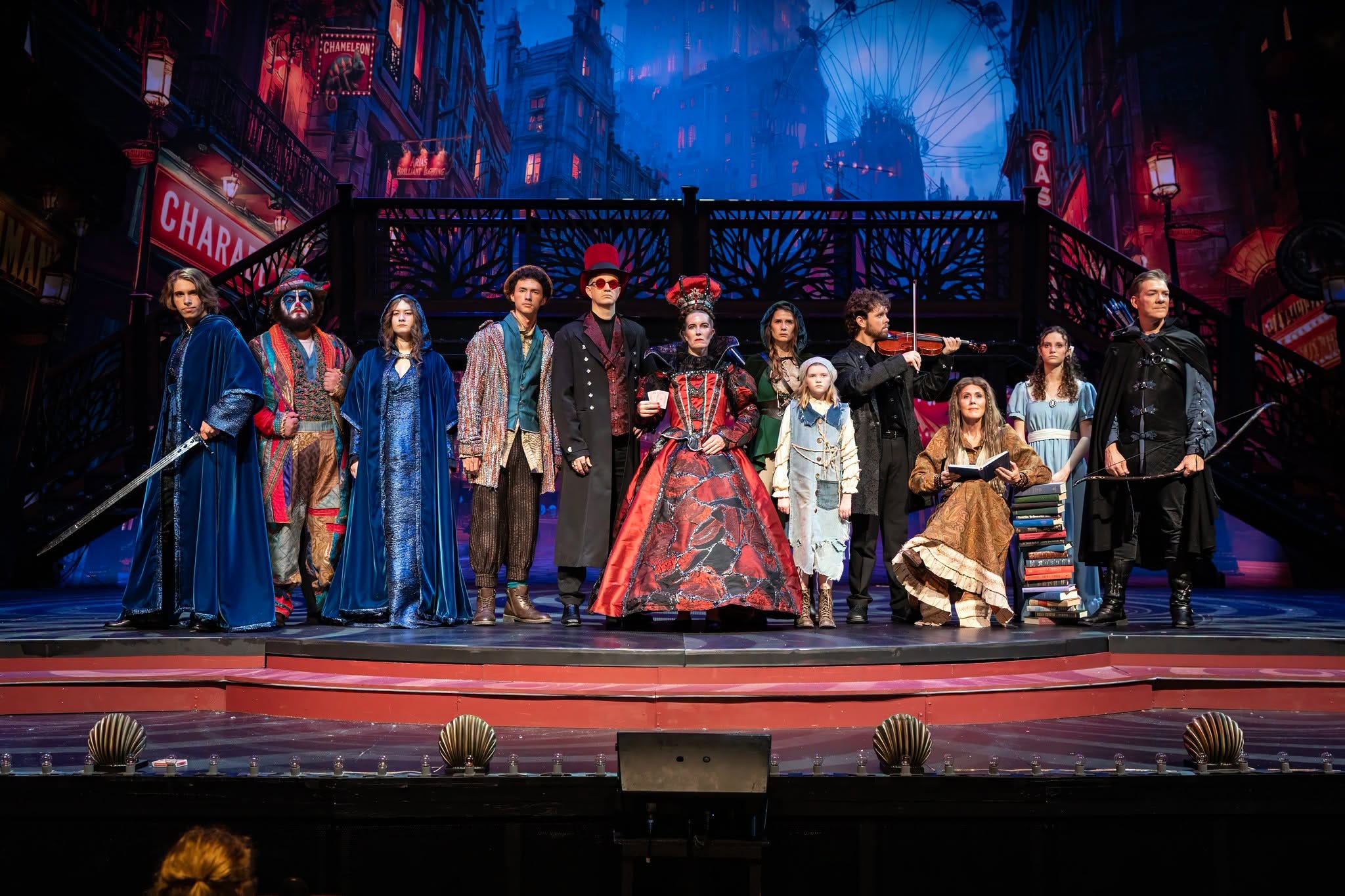
If you’ve been following me for a while, you’ll probably recognize the name Lights Up Production. For years, this Sioux Falls nonprofit production company has been putting on ambitious musical productions at the Orpheum Theater that tell the Christmas story of Jesus’ birth and the Easter story of His death and resurrection. Those productions have become something I look forward to, not simply because of the quality of the theater, but because of the way Lights Up consistently finds creative ways to point an audience toward Jesus.
This time around, however, writer and producer Brent Grosvenor takes Lights Up Production in a completely different direction with Masquerade.
Rather than directly portraying a biblical story, Masquerade is an original musical allegory that pulls inspiration from familiar stories such as The Chronicles of Narnia, Pilgrim’s Progress, and Alice in Wonderland while weaving the heart and message of the Gospel throughout the production.
And while Masquerade is not nearly as openly spiritual as Lights Up’s Christmas and Easter productions, the story of Jesus is there. You just have to know what you’re looking, and listening, for.

Please consider Donating to Sponsor an article even $1 helps!

A World Where Everyone Has Forgotten Who They Are
At the center of Masquerade is an envious general named Vaelor who enacts a curse that causes the people of the story to forget where they came from, who they are, and ultimately what their purpose is.
From there, the story follows those who weren’t affected by the curse for some reason as they attempt to unravel what happened and ultimately free those who have been trapped by it.
That premise gives Masquerade plenty of room to play with familiar characters and ideas.
The production brings together characters from stories such as The Nutcracker, Pinocchio, Snow White, Robin Hood, and, most prominently, Alice in Wonderland. The result is a strange and fascinating mixture of fairy tales and the real world, with familiar characters placed into an entirely new story.
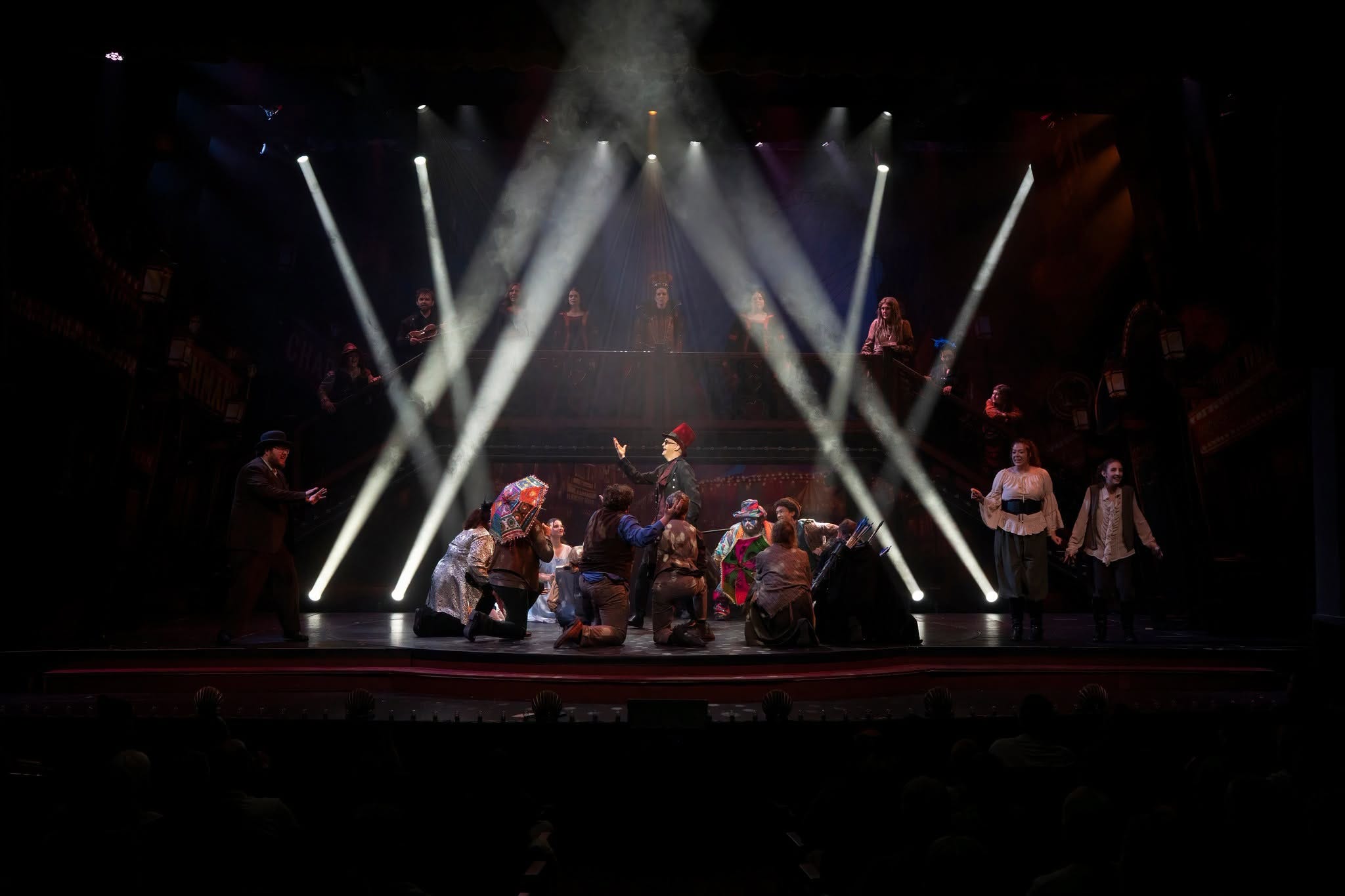
It was fun recognizing a character while simultaneously watching them exist in a world I’ve never seen before. But underneath all of that is something deeper.
The characters are wrestling with identity, memory, freedom, deception, and the search for truth. Those themes create plenty of opportunities for the Gospel message to exist underneath the surface.
Masquerade may not have the same direct “this is a story about Jesus” approach as the previous Lights Up productions, but that doesn’t mean the message has disappeared.
It’s simply wearing a different mask.
A Long Musical That Never Felt Quite as Long as It Was
One of my biggest concerns going into Masquerade was the runtime.
This isn’t a short musical.
The first act runs approximately 92 minutes, followed by an intermission, with the second act running approximately 72 minutes.
That’s a lot of theater.
I’ll be honest. When I saw the runtime, I was a little concerned. A nearly three hour production can be difficult to pull off, especially when you’re introducing an entirely original story with a large cast, extensive world building, character development, and enough exposition to make sure the audience understands what’s happening.
And yet, Masquerade worked surprisingly well in that regard.
There were certainly moments in the first act where I thought some material could’ve been shortened. With an original story, though, some of that groundwork is necessary. Brent Grosvenor has created an entirely new world, and the audience needs to understand the characters, the curse, the conflict, and the stakes before the story can really take off.
Despite that, I never felt like the production completely dragged on.
The intermission was definitely welcome, but once I settled into the story, I found myself invested in where everything was going.
A Dragon, Sword Fights, and a Stage That Keeps Moving
One of the first things Masquerade does is establish that this isn’t simply a group of actors standing on a stage singing.
The show opens with a battle, including sword fights.
And then, to my complete astonishment, a full size dragon puppet appeared.
Yes, a dragon.
At the Orpheum Theater.
That alone gives you an idea of the ambition behind this production.
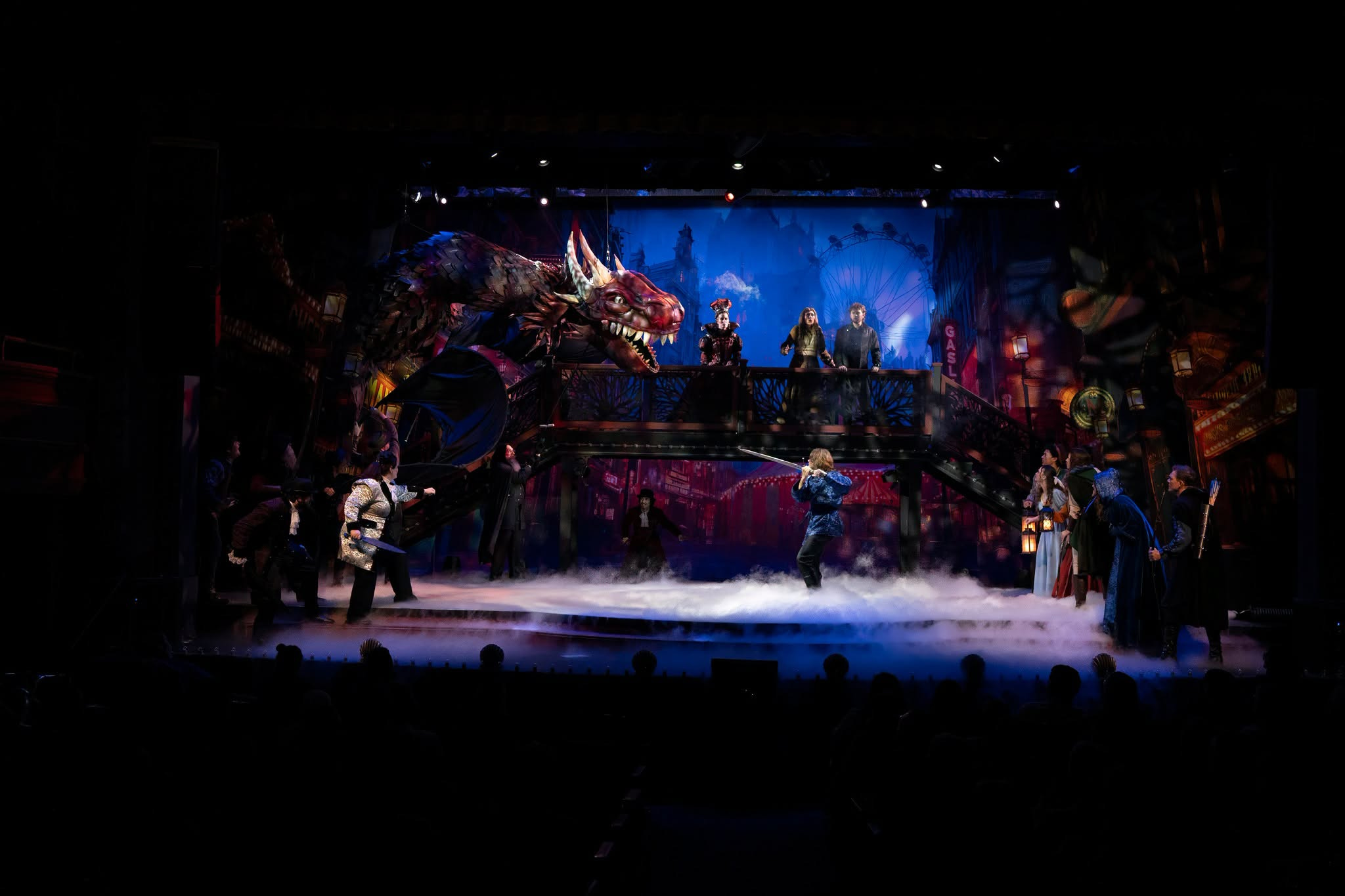
The set pieces throughout Masquerade do a tremendous amount of work in bringing the world to life. Considering the size of the theater and the fact that Lights Up Production is a nonprofit organization, I was genuinely impressed by the scale of what they were able to accomplish.
But one of the biggest surprises for me was something I honestly didn’t expect to see at the Orpheum.
A rotating stage floor that brought me right back to my favorite recent musical, Hamilton.
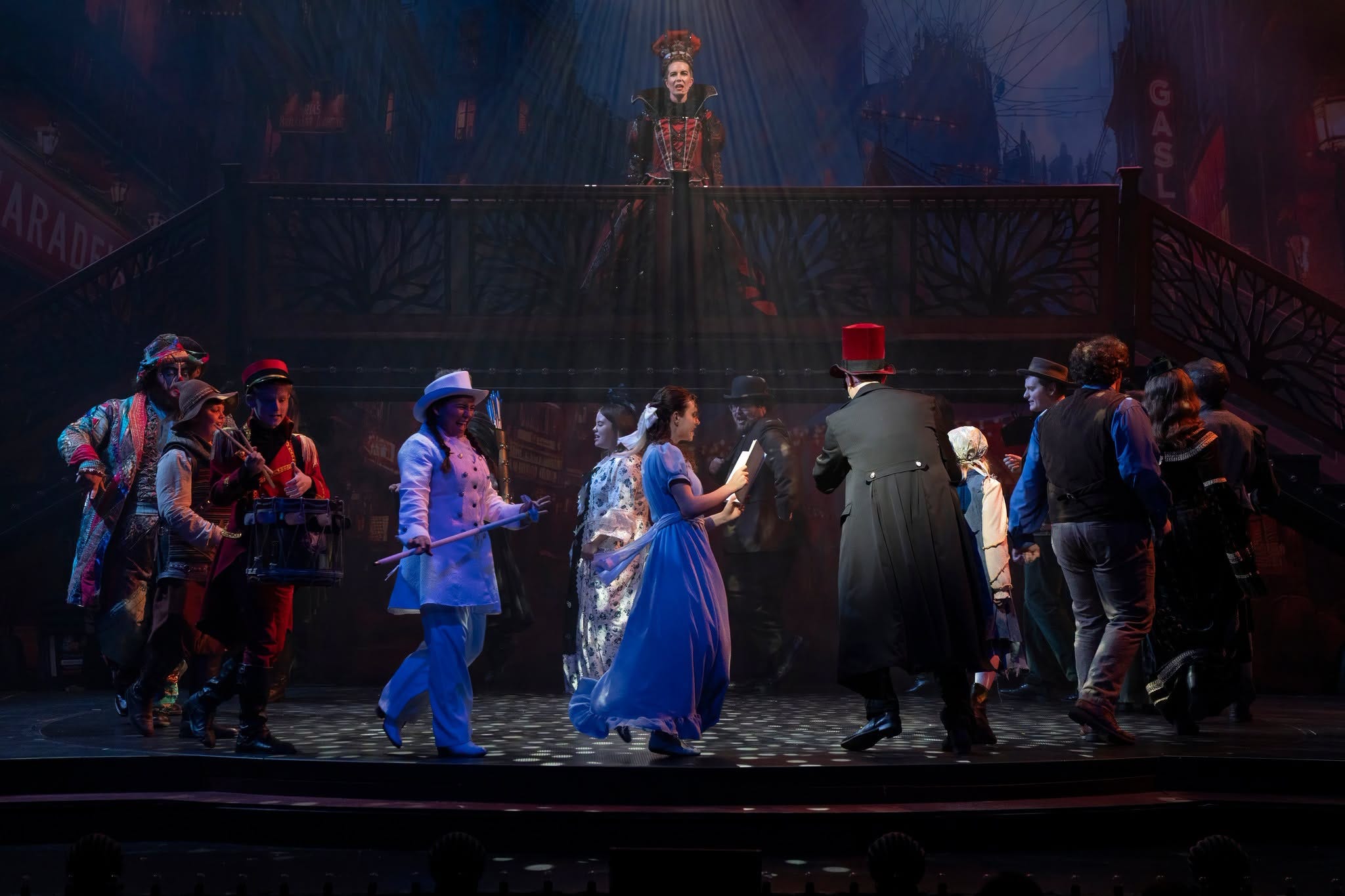
The rotating stage helped keep the story moving while allowing crew members to reposition pieces in the background. It was one of those production decisions that might seem like a small technical detail, but it made a noticeable difference in the flow of the show.
Rather than constantly stopping the action to completely reset the stage, although this still happened quite a few time, Masquerade found a way to keep the story moving.
And that’s exactly what a production this large needs.
The Sapphire Arrow and One of My Favorite Moments
To keep this review as spoiler free as possible, I’m going to avoid explaining too much about the story’s later developments.
But I have to talk about one particular moment.
As the characters begin to awaken from the curse and the beginnings of a rebellion take shape, a sapphire arrow becomes a catalyst for what follows.
The way this moment was presented absolutely stunned me.
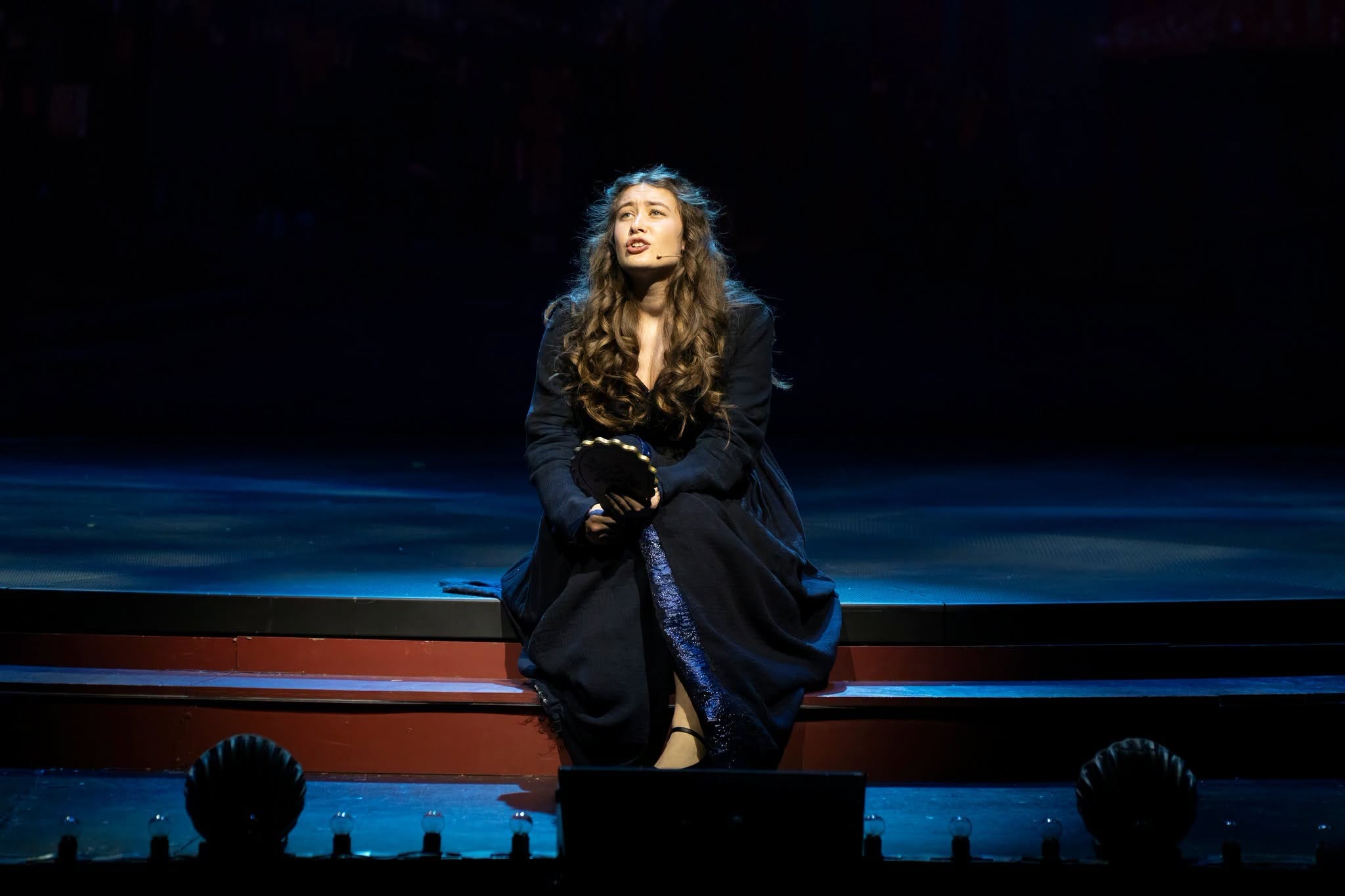
The lighting, the acting, the music, and the physical reaction of Alice, played by Lydia Warden, all came together in a way that created one of those rare theatrical moments where everything just clicks.
And the interesting thing is that it wasn’t a traditional musical number.
There was no need for someone to sing their way through the moment.
The lighting became part of the storytelling. The acting carried the emotion. The musical score provided the exclamation point.
And I got chills.
It was one of the most emotionally effective moments of the entire production for me, and honestly, it felt like a master class in how theater can communicate emotion without needing a musical number to spell everything out.
The Performances That Stood Out
While there was a large cast involved in bringing Masquerade to life, two performances in particular stood out to me outside of Alice.
The first was Jude Elkins as Pinocchio.
Jude’s musical ability was clear, but what really caught my attention was the physicality he brought to the character.
Pinocchio is, of course, traditionally portrayed as a puppet. Jude didn’t simply play the character as someone who was supposed to be a puppet. He incorporated puppet like mannerisms into his performance.
The movements, posture, and physical choices made it feel like I was actually watching a puppet come to life.
Anytime he entered a scene, I found myself watching him.
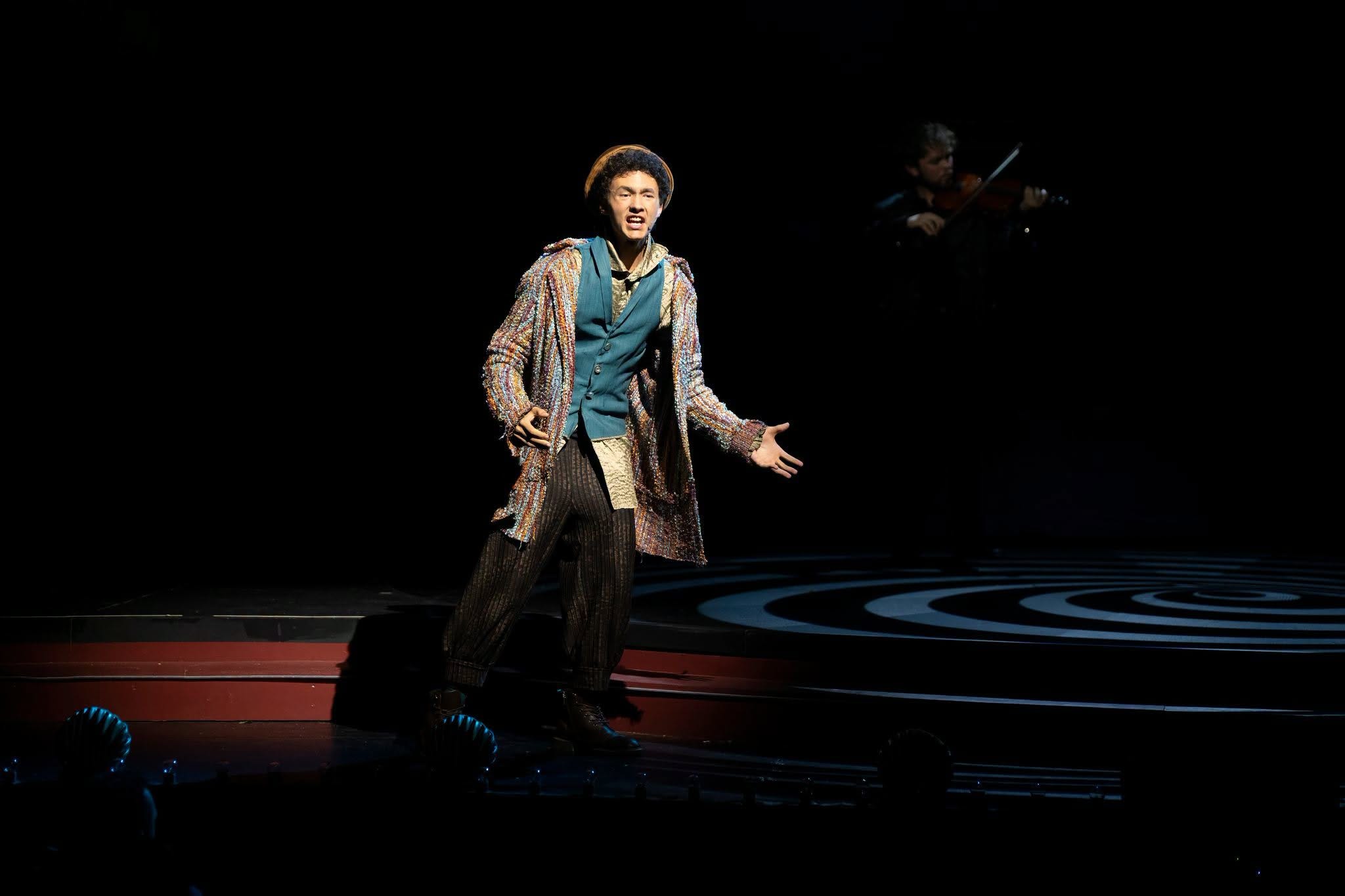
That’s one of those character choices that can easily become gimmicky if it’s overdone, but Jude managed to make it feel like a natural part of the character.
The second performance that stood out was Chloe Ter Haar as Irene.
Chloe was one of the youngest performers on stage, but she absolutely held her own throughout the production.
There was a confidence to her performance that caught my attention, especially considering the scale of the production surrounding her.
And then she had a lengthy solo that she absolutely killed.
It was one of those performances that reminded me that age doesn’t necessarily dictate stage presence or talent.
Where Masquerade Could Have Given Me More
For all the things I enjoyed about Masquerade, there’s one area where I personally found myself wanting more.
The ensemble numbers.
Most of the musical numbers featured smaller individual parts, but there were only four true solos throughout the entire production.
For a musical of this length, I found that a little disappointing.
That’s not necessarily a criticism of the performers or the music itself. In fact, the ensemble work was often very strong and provided several goosebump moments.
It’s simply a personal preference.
With such a talented cast, I would have loved to hear more opportunities for individual performers to step into the spotlight and carry a song on their own.
That said, it’s a relatively small critique when compared with everything Masquerade accomplishes.
Finding Jesus Beneath the Masquerade
This is probably the most important part of the production for me.
If you walk into Masquerade expecting another direct retelling of the Gospel like Lights Up Production’s Christmas or Easter productions, you’re going to find something very different.
Masquerade is an allegory.
It asks questions about identity, freedom, truth, deception, sacrifice, and remembering who you are.
And underneath those themes, the Gospel is still present.
That’s something I’ve come to appreciate about Lights Up Production.
They’re not simply putting on technically impressive theater for the sake of entertainment. There’s an intentional message behind what they’re creating.
Masquerade takes a much more subtle approach.
The story of Jesus isn’t necessarily standing in the middle of the stage announcing itself in every scene. Instead, pieces of the Gospel are strategically woven throughout the story.
You have to pay attention.
You have to listen.
You have to look beneath the surface.
And maybe that’s part of the point.
The title itself, Masquerade, speaks to the idea of wearing a mask or becoming something other than who you truly are. The story then asks what happens when people forget who they are and where they came from.
That creates a natural connection to the Christian understanding of identity.
The world constantly tells us to find our identity in something else. Success. Failure. Relationships. Popularity. Work. Talent. Appearance. Achievement.
The Gospel tells a different story.
Our identity is ultimately found in Christ.
That message may not be delivered through a direct retelling of Scripture in Masquerade, but the themes are there for those willing to look for them.
Afterglow
I love seeing a local nonprofit production company continue to dream bigger. Lights Up Production could have simply repeated what worked with its Christmas and Easter productions.
Instead, Brent Grosvenor and the team took a risk on an entirely original story.
Masquerade is ambitious.
It is long.
It has a massive cast of characters, elaborate sets, sword fights, puppetry, lighting effects, a rotating stage, original music, and a story that asks the audience to pay attention.
And despite the occasional moment where I felt the first act could have been trimmed and my desire for more individual solos, I walked away impressed.
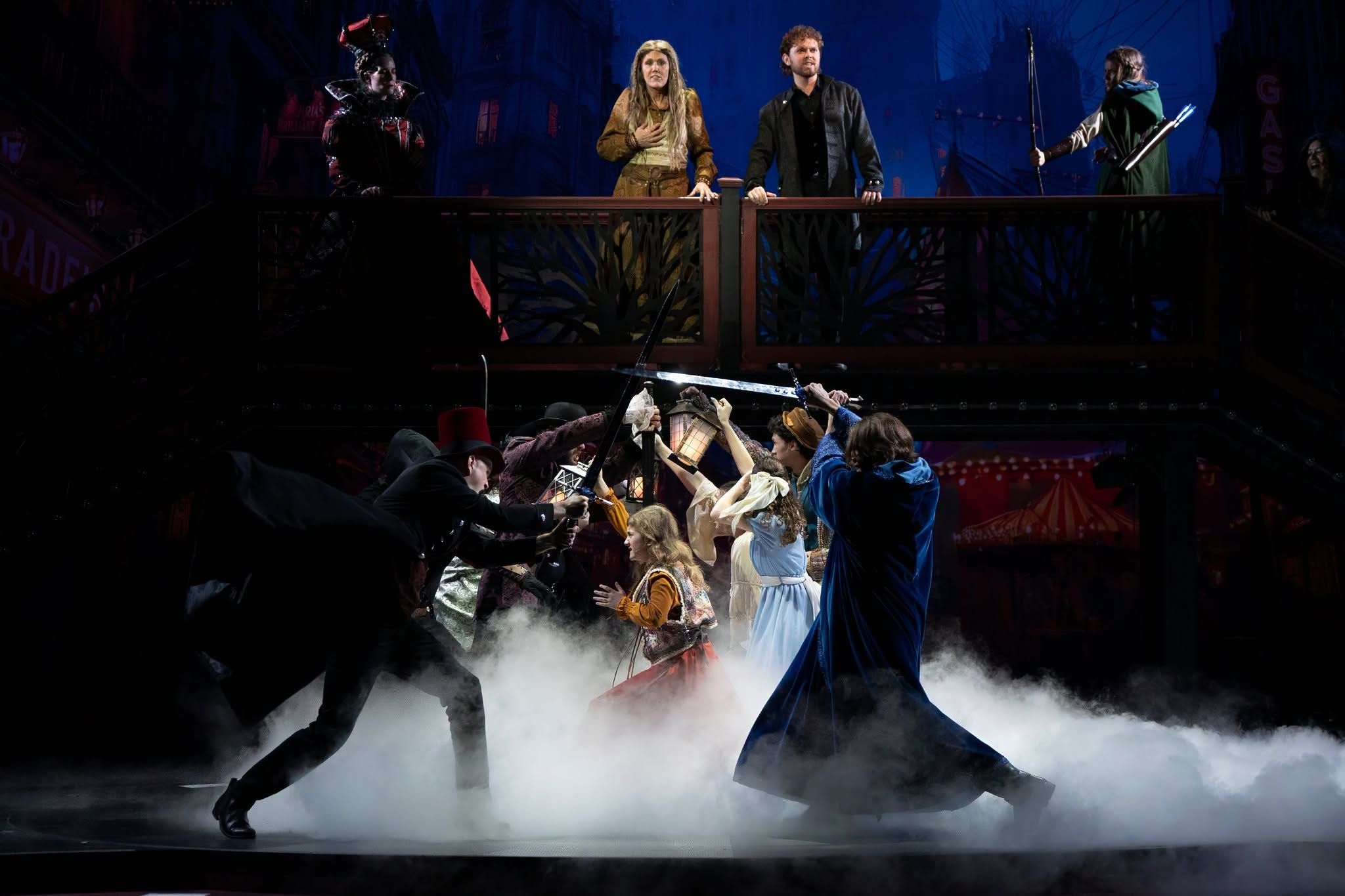
The production quality continues to surprise me.
The talent continues to surprise me.
And perhaps most importantly, the storytelling continues to point people toward Jesus.
That’s ultimately what makes Lights Up Production different.
Masquerade has four performances remaining from October 2 through October 4, 2026, at the Orpheum Theater in Sioux Falls.
If you don’t have weekend plans, I highly recommend grabbing some tickets and experiencing this production for yourself.
Go for the dragon.
Go for the sword fights.
Go for the rotating stage.
Go for the music and performances.
But most importantly, pay attention to the story underneath the story.
Because beneath the masks, the fairy tales, the music, and the spectacle, Lights Up Production is still pointing its audience toward the same person it’s pointed to from the beginning.
Jesus.
And that’s a message worth hearing.
Please consider Donating to Sponsor an article even $1 helps!

The wife and I are going Saturday night. Lights Up Productions never disappoint.