



The drive to Omaha went faster than I expected. One stop for gas and an energy drink, then back on the road with the anticipation building. I knew there were good times waiting at the other end and did not want to waste a minute getting there.
Forty minutes before showtime, the parking lot at Stir Cove at Harrah’s Council Bluffs was already jammed, with cars spilling onto the adjacent street. I found one lonely space at the far end of the lot and took it, even though it left me more than a quarter-mile from the stage. Judging by the number of vehicles already packed around me, nobody was leaving quickly after the final song. The long walk could be tomorrow’s problem.
Still wearing sunglasses in the last stretch of daylight, I headed toward the venue and asked the first security guard I saw where to find the box office. He was standing just beyond the fence from the stage. The box office, he explained, was all the way around at the hotel’s front entrance. Good thing I was early.
Inside Harrah’s, two security workers were handing out 21-and-older wristbands beside a sign that read, “No bags! Clear plastic bags only!” I had a black camera backpack. Not ideal. I explained that I was photographing the show, had not known about the clear-bag policy and needed to find the press entrance. One of the women directed me to the security office, where the staff did everything they could to help. Another employee walked me to the box office and cut through the line so the attendant knew I had been cleared for a press ticket.
Ticket and ID back in hand, I went through another set of doors and onto a sidewalk that seemed to run about 300 feet. I still was not inside the venue. At this point the process had begun to feel like a video game: go here, find this person, speak to someone else, unlock checkpoint A. Yet nobody treated the camera bag or press credential like an inconvenience. At the last gate, one guard shined a flashlight into the main pocket, another scanned my ticket so quickly that I asked whether I was actually good to go.
“Of course, honey. Have a great time!” she said.
Just before I crossed through, the sunset opened above the Omaha skyline. I stopped to photograph it and used the moment to check my camera settings. Then I stepped inside Stir Cove for the first time and finally understood the name. The stage sits against the Harrah’s hotel tower and faces a grassy bowl where people spread blankets and unfolded camping chairs. A bar and elevated “Flight Deck” rise to the left. A VIP lounge and Guy Fieri’s restaurant sit to the right. The whole place folds inward toward the stage, close enough to feel communal without losing the relaxed sprawl of an outdoor show.
People were still claiming patches of grass when the night’s first problem announced itself with smoke.

A small fire before the sunshine
Photographers near the stage had started asking one another why the opener was late when a security guard leaned over with the explanation: one panel in the rear LED wall had spontaneously combusted. Not a metaphor. An actual piece of the production had caught fire before the first song.
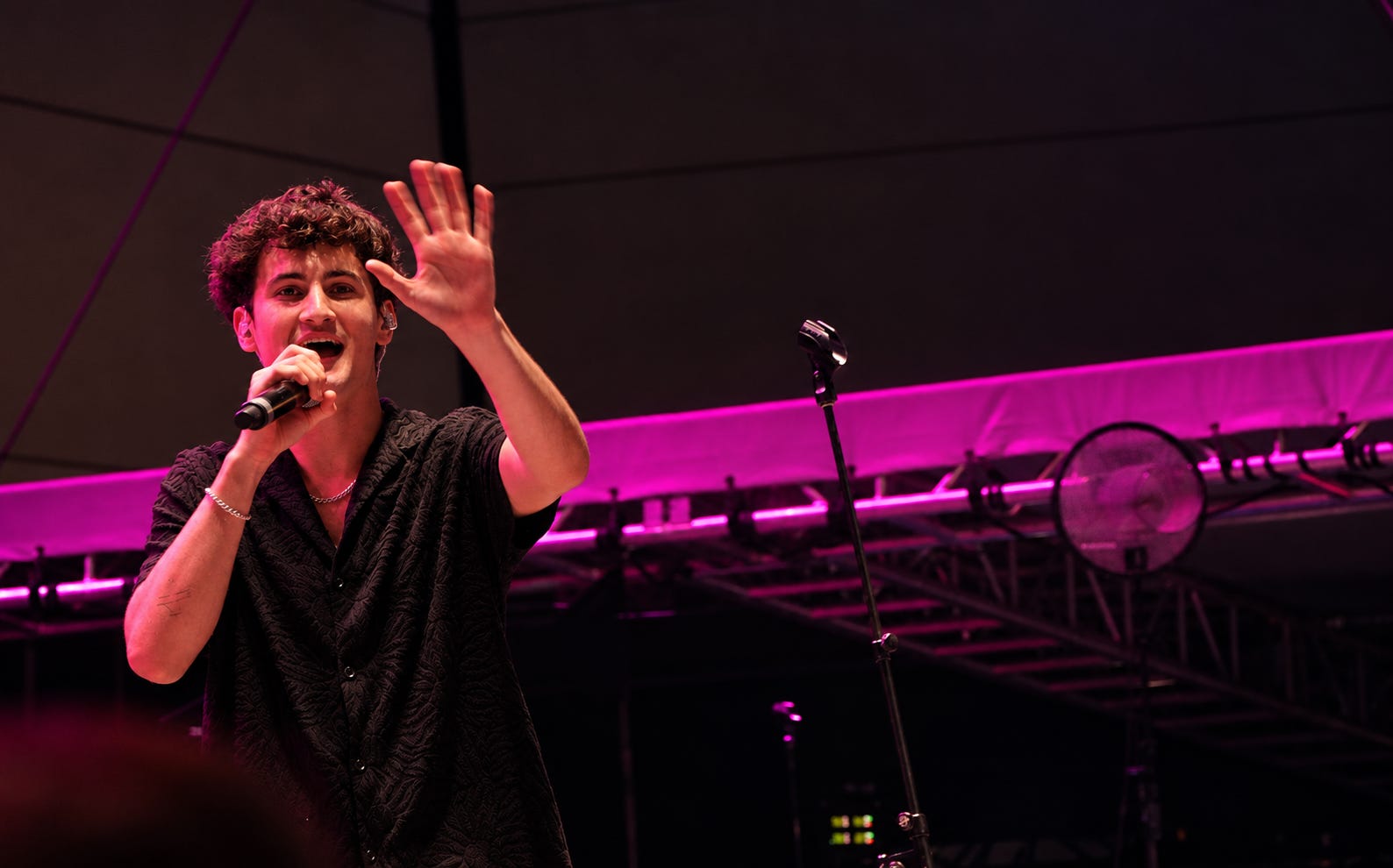
Arden Jones arrived shortly after 8 p.m., about five minutes beyond the scheduled start, and spent a moment joking about how the band had nearly been lit on fire. Then he went to work. The 25-year-old California artist, who first gained wider attention after posting “Parallel Parking” to TikTok near the end of 2020, moved constantly, crossing the stage with the looseness of somebody determined not to let a technical scare dictate the mood.
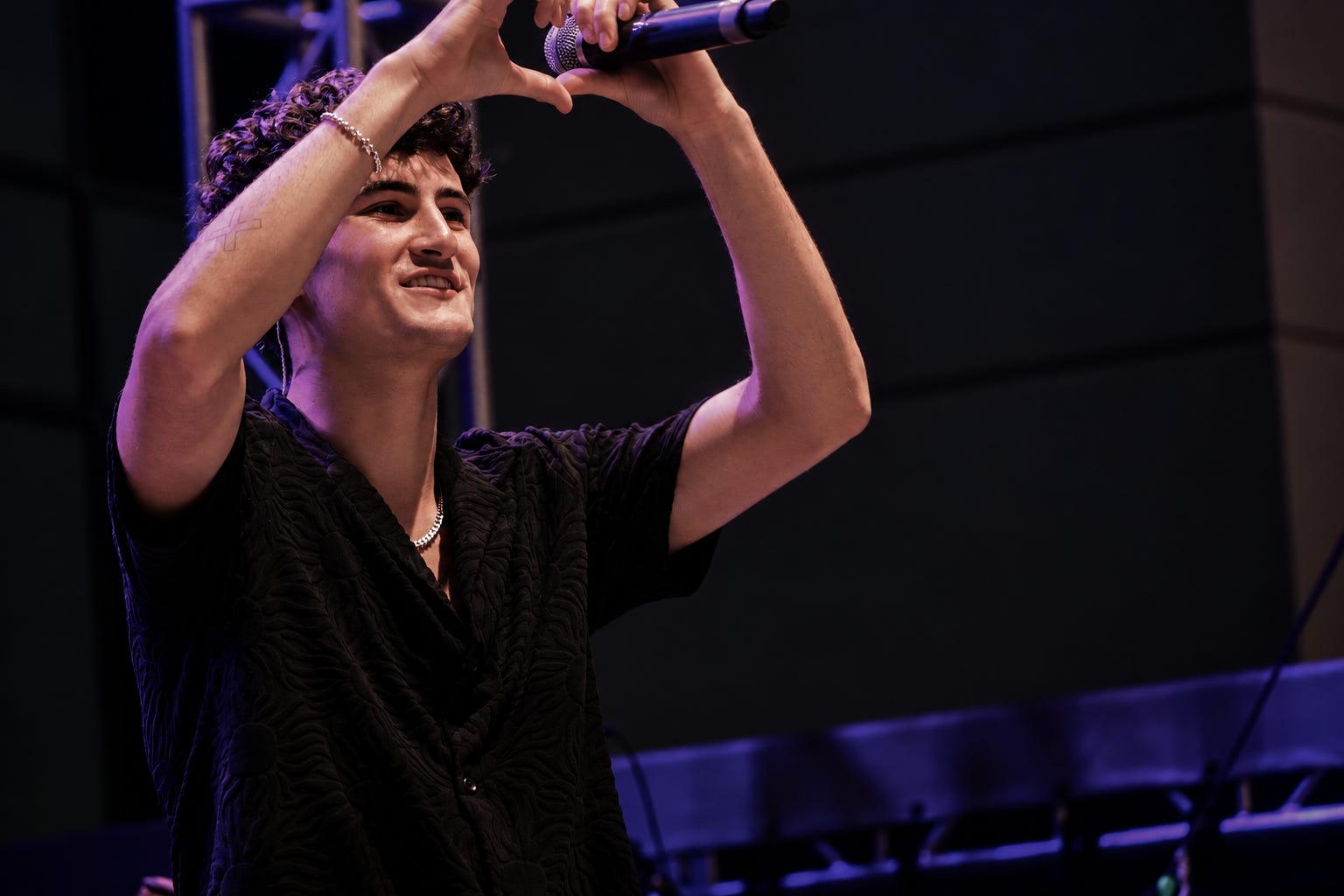
I had saved some of Jones’ music more than a year earlier but did not know he was opening until shortly before the show. That surprise worked in the night’s favor. His songs make room for uneasy thoughts without surrendering their lift. Even when the subject turns inward, the melodies carry a stubborn reassurance: things may be a mess, but happiness has not left the building.
There was also an echo of Oliver Tree in Jones’ elastic vocal delivery and collision of pop, hip-hop and alternative music. After Tree’s death in June, hearing that influence did not feel like imitation so much as proof that an artist’s instincts can keep moving through somebody else’s work. The comparison stayed at the edge of Jones’ set, never swallowing his own voice.
“Serotonin Highs,” “Someone New” and “Mr. Sunshine” gave the lowering sun a fitting soundtrack. Jones had brought the California brightness with him, but the set was not all surface shine. The springy arrangements worked because they pushed against the uncertainty in his lyrics. Joy sounded less like a default setting than a decision he kept making in public.
Behind him, stagehands replaced the damaged LED panel while he performed. During the final stretch, calibration images flashed across the wall as the crew tested the repair. The work was visible if you knew where to look, yet it never became the show. The problem was contained, the panel changed and the production restored without panic.
Hearing “Skipping Seasons” landed differently for me. It was the first Jones song I had encountered, back when it was only something coming through my speakers. Now I was photographing him playing it in front of a crowd. Careers rarely announce their turning points when they happen. Sometimes the circle closes quietly while you are checking exposure through a viewfinder.
Jones finished around 8:40. The crew needed another half-hour to complete the changeover, and the house playlist prevented that time from going slack. A-ha’s “Take on Me,” John Denver’s “Take Me Home, Country Roads” and Chappell Roan’s “HOT TO GO!” turned the wait into a loose communal singalong. People danced on the grass. Voices carried up the bowl. Thirty minutes can flatten a crowd when the music between sets is chosen without care; here, nobody near me complained.
At 9:11, the waiting ended.
Please consider Donating to Sponsor an article even $1 helps!

Pop music with moving parts
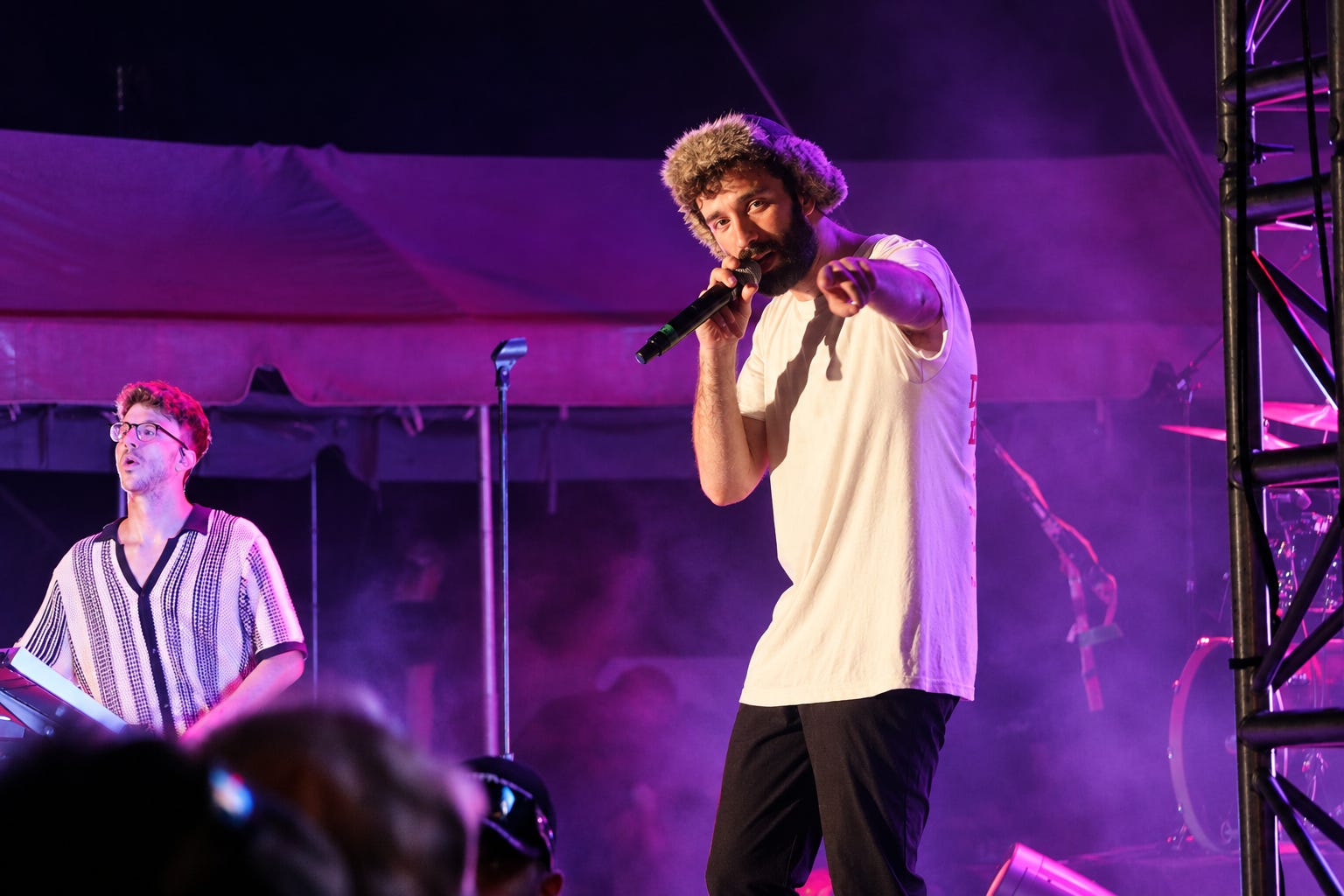
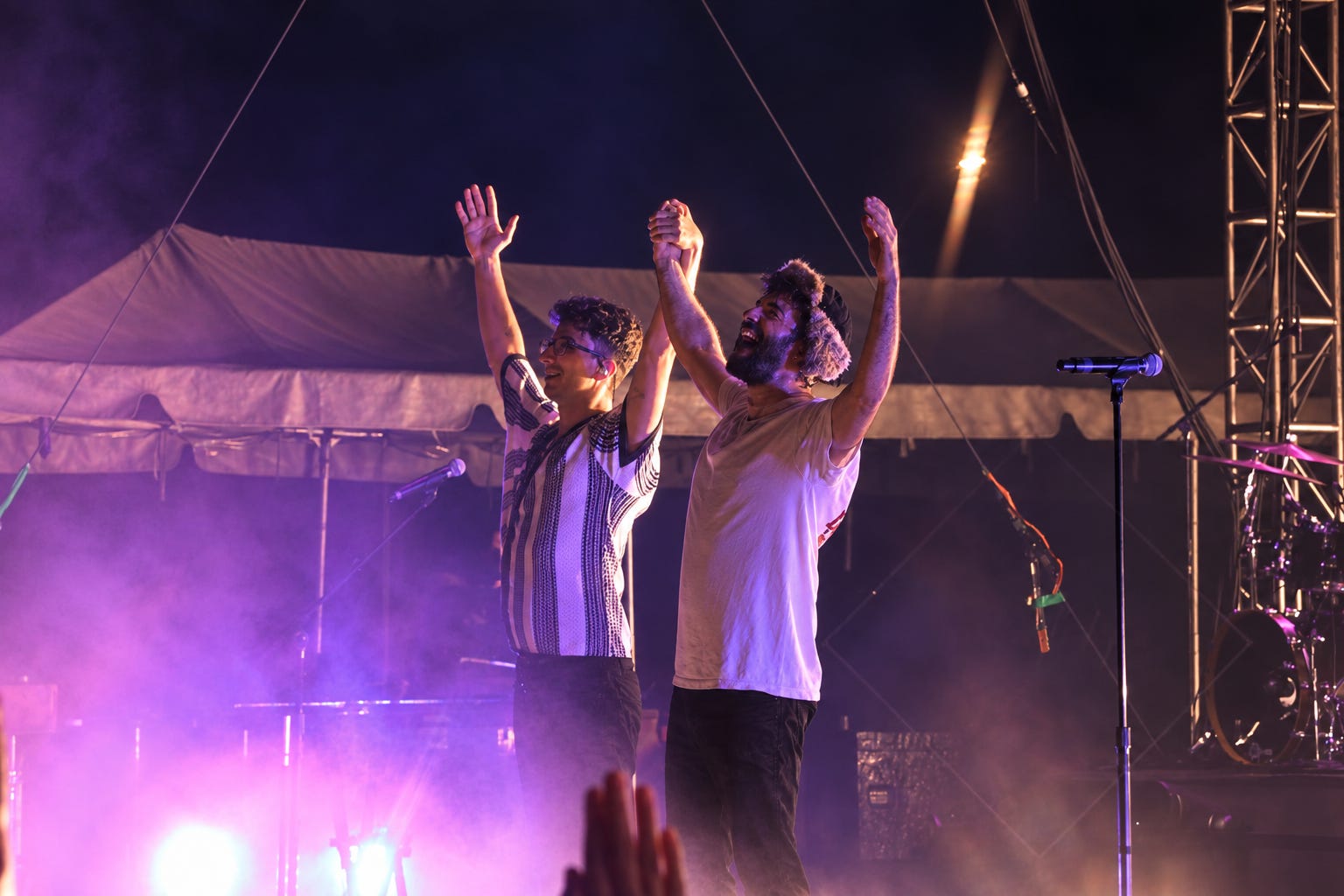
The stage went dark. The familiar AJR logo appeared alone on the LED wall, multiplied, multiplied again and kept reproducing until the entire screen became a checkerboard of three letters. Then the opening notes of “Bummerland” rang through the cove and the crowd erupted. “Sober Up” followed, its singalong chorus moving across the grass almost instantly.
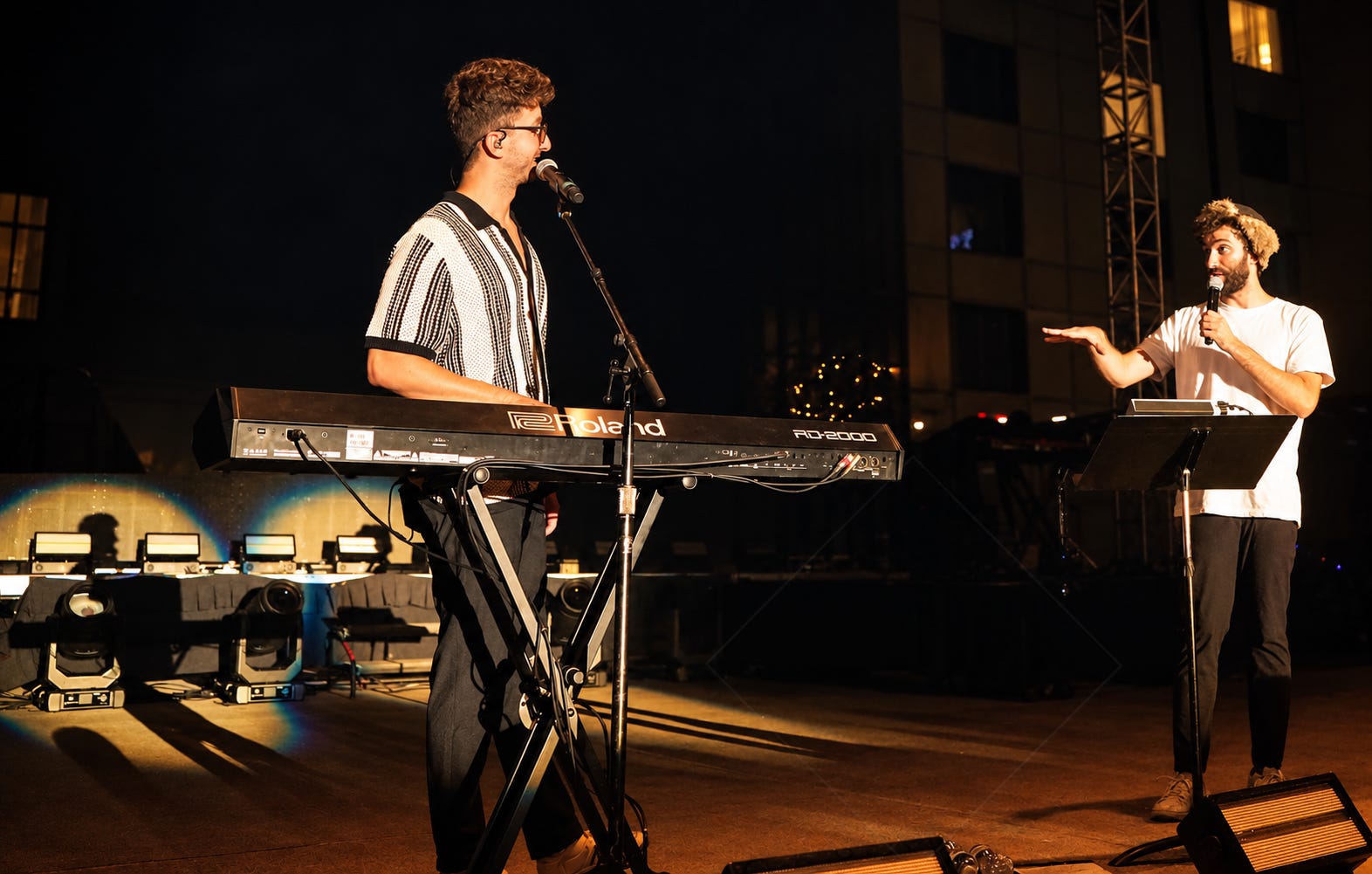
AJR’s songs are engineered around recognition, but the live show did more than press play on a row of hooks. The arrangements kept changing shape around the musicians. Arnetta Johnson moved between trumpet and keys while Chris Berry’s drums gave the electronic production a physical center. Ryan and Jack Met worked the front of the stage, letting the supporting players carry the details that keep the songs from collapsing into backing tracks.
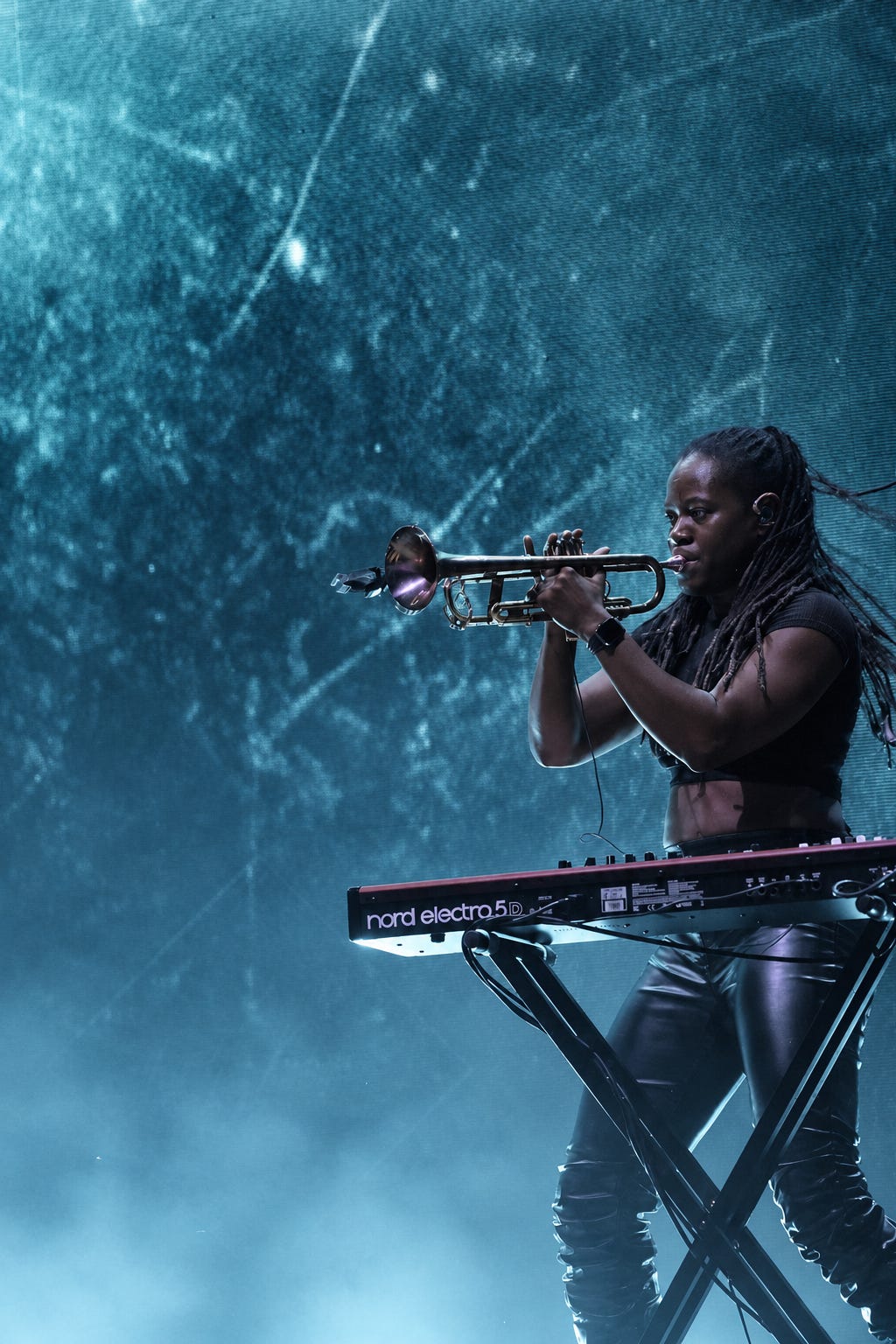
The audience knew the material deeply enough that each opening sound produced its own reaction. People did not wait for choruses to identify “Karma,” “Bang!” or “Steve’s Going to London.” Recognition arrived in the first few seconds, followed by thousands of voices joining as if everyone had been handed the same private memory. AJR’s best trick is not simply writing large hooks. It is giving anxious, self-questioning thoughts a shape people can shout together without sanding away their awkwardness.
Jack paused at one point to introduce everyone onstage and revive a running joke: when he says his own name, he gets almost no applause, but Ryan’s name makes the crowd lose its mind. To return the favor, Jack produced an “embarrassing” childhood video of Ryan dancing and put it on the big screen. It was sibling warfare scaled for an amphitheater—petty, affectionate and carefully timed. The crowd laughed, Ryan survived and the set moved on.
A cover of Fountains of Wayne’s “Stacy’s Mom” fit the band’s sensibility better than it might appear on paper. Its compressed power-pop writing and joke that grows sharper with repetition belong comfortably beside AJR’s own appetite for songs that make their point quickly. The performance did not require a grand reinvention. Familiarity was the pleasure.
I changed viewpoints throughout the set and spotted Jones standing in the crowd, watching AJR and taking photographs with fans. Openers sometimes vanish backstage the moment their work is done. He stayed. I nearly approached him for a few questions, then decided against it. The people around him might not get these chances as often as I do, and I did not want to turn their moment into my assignment.
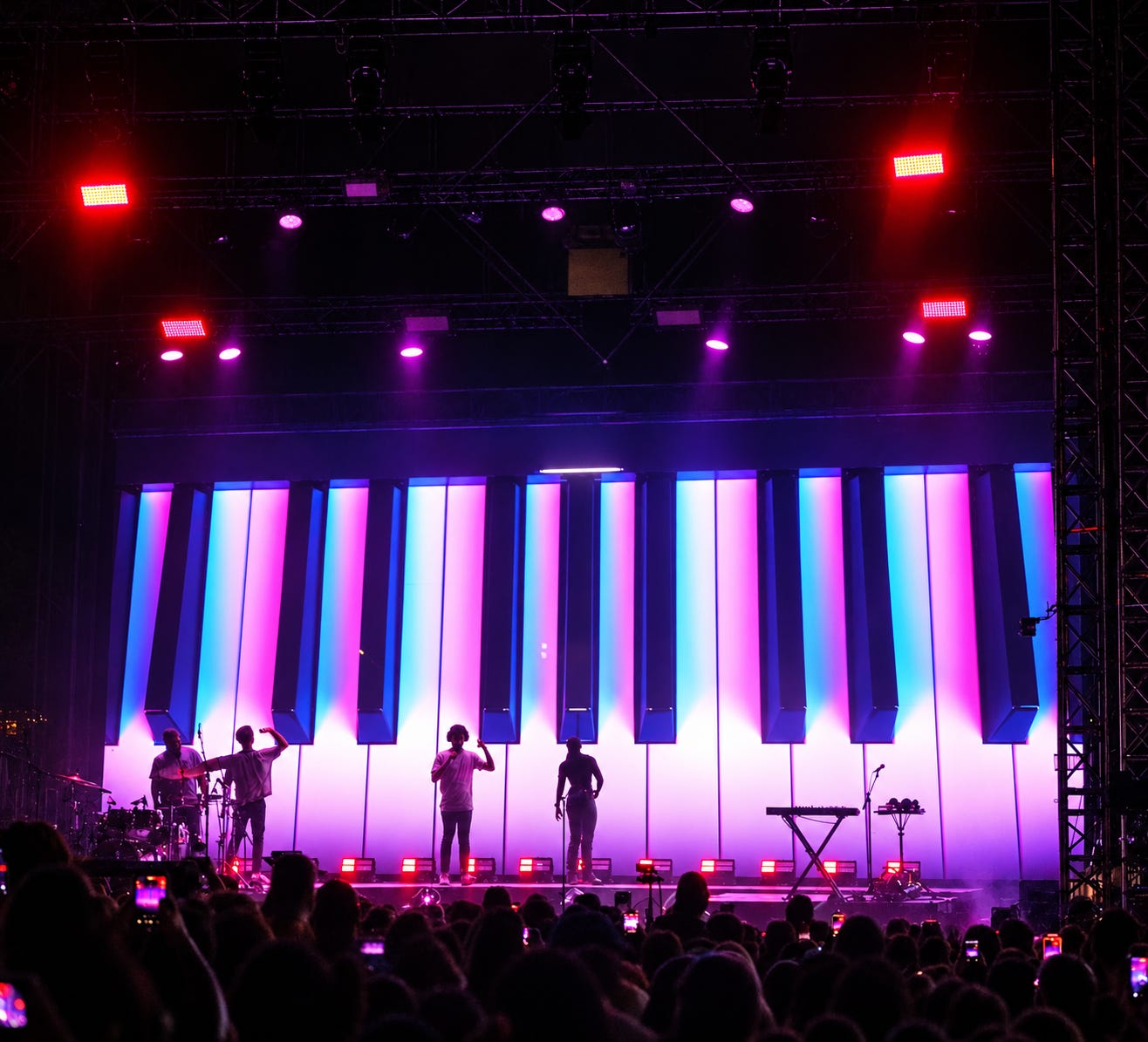
AJR kept offering new things to look at. Giant piano keys appeared on the LED wall, and the musicians gathered in front of them, tapping at the screen as though the whole stage had become one oversized instrument during “Bang!” It was playful but exact; the visual gag worked because the movement, music and animation met at the same beat.
Another shift came after “Karma,” when Jack called out, “Oh, hey, we’re over here now!” A spotlight snapped toward the Flight Deck above the crowd, where the band had relocated for the next song. The venue’s odd little balcony stopped being peripheral architecture and became part of the set. When the song ended, Jack announced that he needed to get back to the stage and hurried off, turning the return trip into a piece of the performance.
“Ordinaryish People” delivered the most elaborate stretch. AJR recreated the theatrical language associated with the song’s Blue Man Group video: drumheads splattered paint while a ball appeared to bounce across the LED screen, each physical hit tied to the animation behind it. Many pop tours use video as expensive wallpaper. Here the screen behaved like another band member, responding to the percussion and demanding precise coordination from everyone in front of it.
The show loosened again when the band invited a young fan named Nadine onstage to compete against Ryan for signed merchandise. The contest was simple: stand on one leg longer than he could. Nobody seemed shocked when Nadine won. The band signed a shirt for her, and for a few minutes the enormous production shrank to the scale of one kid trying not to wobble.
That balance kept the performance from becoming sterile. AJR can build a show around cues, animation, comedy and tightly synchronized movement, but the machinery still leaves space for something unpredictable—a fan on one leg, an opener mingling on the lawn, a childhood dance clip deployed for maximum brotherly embarrassment.
There was no drawn-out encore ritual, no extended game of pretending the night might be finished while everyone stared at an empty stage. When the show ended, it ended. The lack of ceremony felt right. AJR had already packed the set with enough entrances, relocations and visual feints that another disappearance would have been redundant.
Afterglow
I made the quarter-mile walk back to the van and discovered that my prediction had been correct: I was not going anywhere. Traffic leaving the lot looked worse than it had coming in. I opened the trunk, sat down and watched people make their own calculations. After half an hour with almost no movement, another thought arrived. I was 30 years old, had never been inside a casino and happened to be parked beside one. Why not?
I entered Harrah’s with $40 and quickly turned it into $150. This should have been the end of the story. Instead, I left the computerized slots and tried blackjack. The table behind me was reserved for AJR, who sounded as though they were doing considerably better than I was. Forty minutes later, my $150 was gone.
Consider this practical advice for anyone attending a Stir Cove show: if your luck is better than mine, the casino is right there. If it is not, bring a cooler, something to drink and maybe a charcuterie board. A parking-lot picnic in the open trunk will cost less than blackjack and probably last just as long as the traffic jam.
I finally pulled out around 11 p.m. and started the drive home with the quiet satisfaction that follows a night when the work and the reason for doing it briefly become the same thing. Not long ago, if someone had told me I would be covering a multiplatinum band with billions of streams as a concert photojournalist, I would have laughed them off.
One question from “The Good Part” stayed with me: “What am I gonna do with mine?” In the song, it is a young person’s impatience with the distance between dreaming about a life and actually living it. After photographing AJR beneath a repaired LED wall, catching Arden Jones at a full-circle moment and losing my winnings one blackjack hand at a time, my answer felt less complicated.
Keep shooting.
Please consider Donating to Sponsor an article even $1 helps!
