



By the time we reached Climate Pledge Arena, a massive crowd had swallowed the sidewalks outside. The most committed fans were easy to spot. Several had arrived in full pink bodysuits, carrying a piece of George Miller’s bizarre internet history into the arena with them.
I had to explain the reference to my friends. Before the melancholy vocals and slow-burning alt-R&B of Joji, Miller built an online following through Filthy Frank and Pink Guy, the latter being the Lycra-covered chaos creature represented in the crowd. Seeing those pink suits among fans who had discovered Joji through songs such as “Glimpse of Us” offered a quick survey of his entire career. The old internet guard had shown up alongside a newer generation ready to turn up on a Sunday night, even if their reasons for loving him began in completely different corners of the internet.
Getting everyone inside proved to be its own production. Bag-check lines stretched far enough to make bringing a purse feel like a poor life decision. Luckily, we had arrived without bags and slipped into a significantly shorter line. Once inside, the arena staff were exceptionally helpful in directing us toward our seats. Out of all the venues I have visited, Climate Pledge had some of the nicest employees I have encountered. Clear directions and a little patience go a long way when thousands of people are wandering through an arena looking for the correct section.
Then I paid $18.25 for a tall boy.
Some memories are made by music. Others are burned into the soul by beverage pricing.

A slow trip to the seats
The official schedule for the Seattle stop of the Solaris global arena tour listed doors at 6:30 p.m. We were settled into our seats around 7:45, but large pockets of the crowd continued filtering into their sections well past 8:30. Even shortly before 9, people were still navigating rows, apologizing while stepping over knees and trying to figure out which cupholder belonged to whom.
Because we arrived after the scheduled start, this review begins with the opening performance we actually caught. Around 8:30, Nate Sib took the stage with an electronic pop sound parked somewhere in modern Justin Bieber territory. The music carried glossy production and youthful pop instincts, though the live presentation did not always land from our seats.
At several points, Sib rolled around onstage or dropped into what can only be described as “Disney knees.” The exaggerated movement seemed designed to project emotional intensity, but it occasionally crossed into awkwardness. Instead of pulling attention deeper into the songs, the choreography became the main event. There is always room for physical performance in pop music, especially when the production leans synthetic and kinetic, but the movements need to feel connected to the music. Here, some of them felt placed on top of it.
Cringe is subjective, of course. One person’s dramatic pop release is another person’s reason to stare at the floor and wait for the next song. From where we sat, the rolling and crouching were difficult to watch without a little secondhand embarrassment.
Fortunately, the wait for the main event was nearly over.
Please consider Donating to Sponsor an article even $1 helps!

The signal reaches Seattle
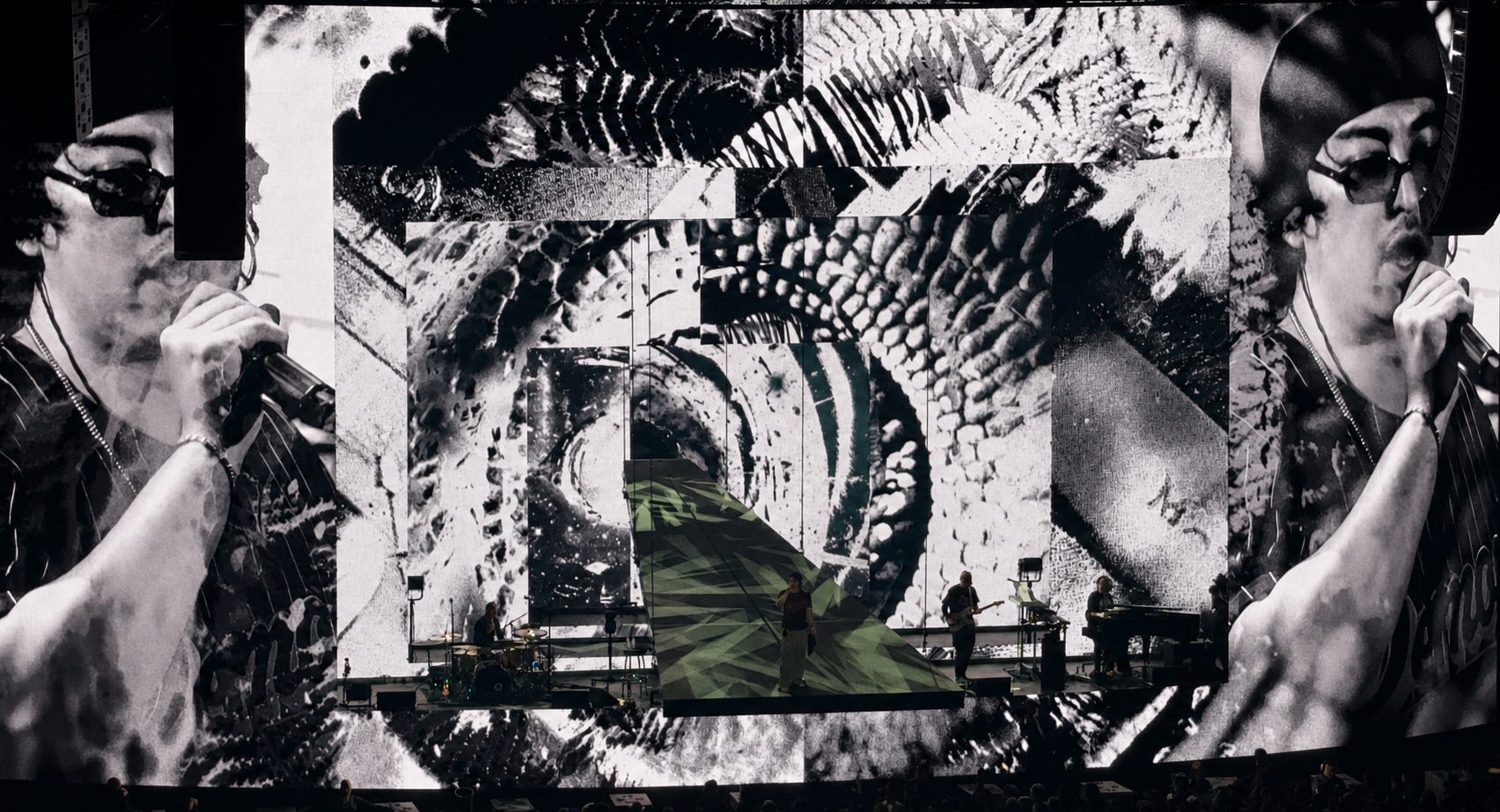
At 9:01 p.m., the room shifted as Joji appeared and opened with “PIXELATED KISSES”, the first track from his latest album, Piss in the Wind. Its distorted production and clipped momentum immediately gave the audience somewhere to place all the anticipation built during the long entrance process.
The opener flowed seamlessly into “Sojourn”, extending the darker electronic atmosphere before Joji began moving toward the quieter material associated with much of his career. Opening with two songs from the new album was a smart choice. It gave the show an immediate sense of forward motion instead of relying on an older hit to secure an easy reaction.
From there, the set moved between recent material and familiar favorites without allowing either side of his catalog to dominate. Longtime fans had recognizable songs to hold onto while newer tracks were given enough room to establish their own identity. Arena shows can lose momentum when the latest album is treated as a mandatory block the audience must endure before the hits return. Joji avoided that problem by weaving the eras together.
His career has always contained an unusual tension. A performer once known for deliberately obnoxious internet comedy now makes music built around isolation, distance and emotional hesitation. The pink suits in the crowd carried one version of him into the building, while the stage belonged almost entirely to the other. There were a few flashes of absurdity, but the music remained at the center.
One of those flashes arrived when Joji sat near the edge of the stage and produced a T-shirt cannon. It was random, unnecessary and genuinely fun. For a moment, the brooding atmosphere gave way to the simple joy of watching an artist fire merchandise into an arena. Nobody needed a deeper artistic explanation. Sometimes a man just has a cannon full of shirts.
Letting the visuals do the moving
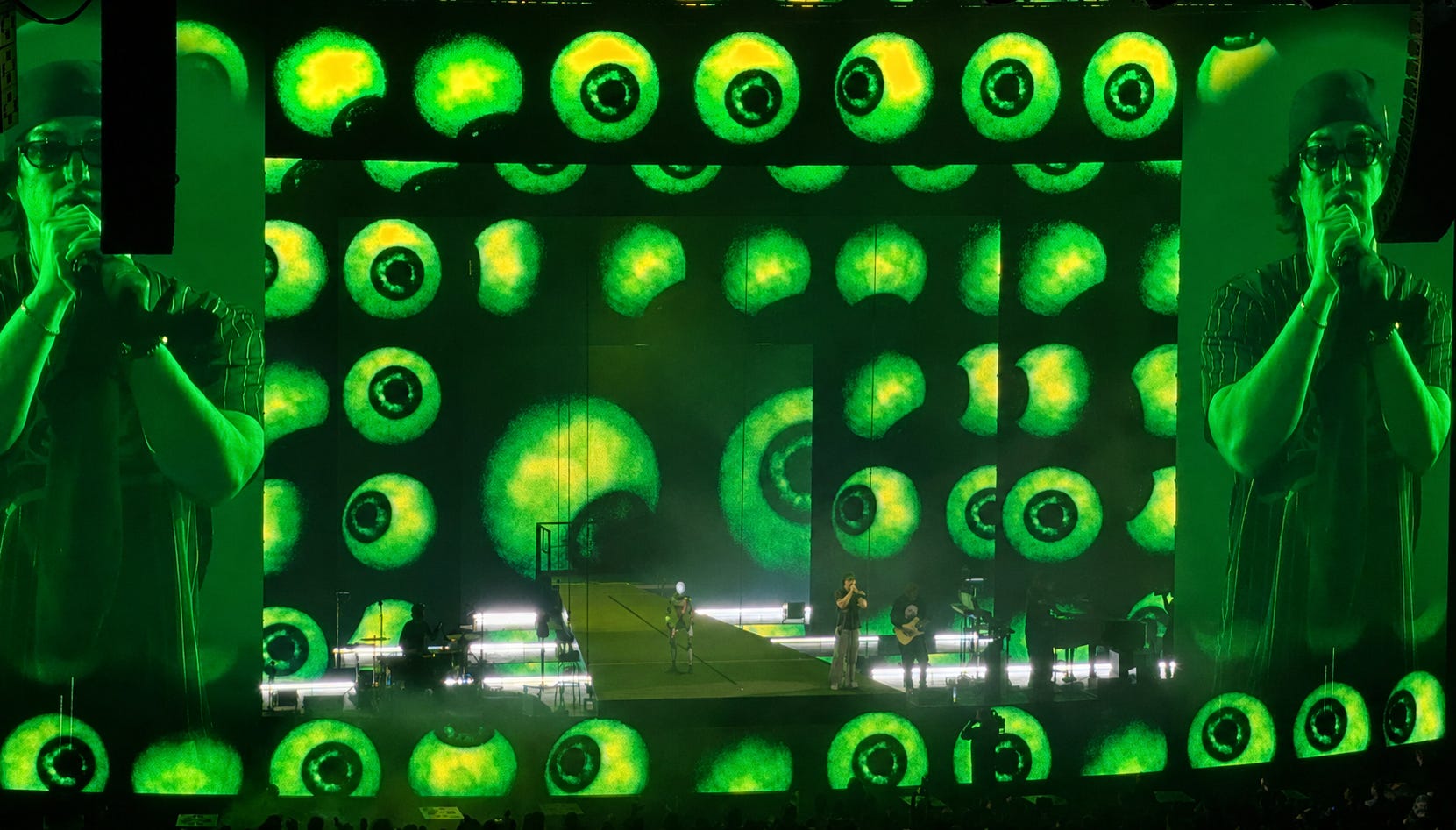
The most unexpected staging choice arrived during “Last of a Dying Breed”, when Joji brought out a robotic backup dancer. The sight of a machine moving beside him could have become a distracting gimmick, but it fit naturally within the cold, digitally fractured world surrounding the new material. I had never seen anything quite like it at a concert. It was strange, memorable and far more effective than another burst of fire or obligatory confetti drop.
Joji himself remained much more subdued. Throughout the performance, he looked tired and occasionally unenthused. There is no point pretending otherwise. His body language rarely suggested someone eager to command every inch of an arena stage, and anyone expecting relentless crowd work or oversized showmanship may have found his presence distant.
Thankfully, the apparent fatigue did not damage his vocals.
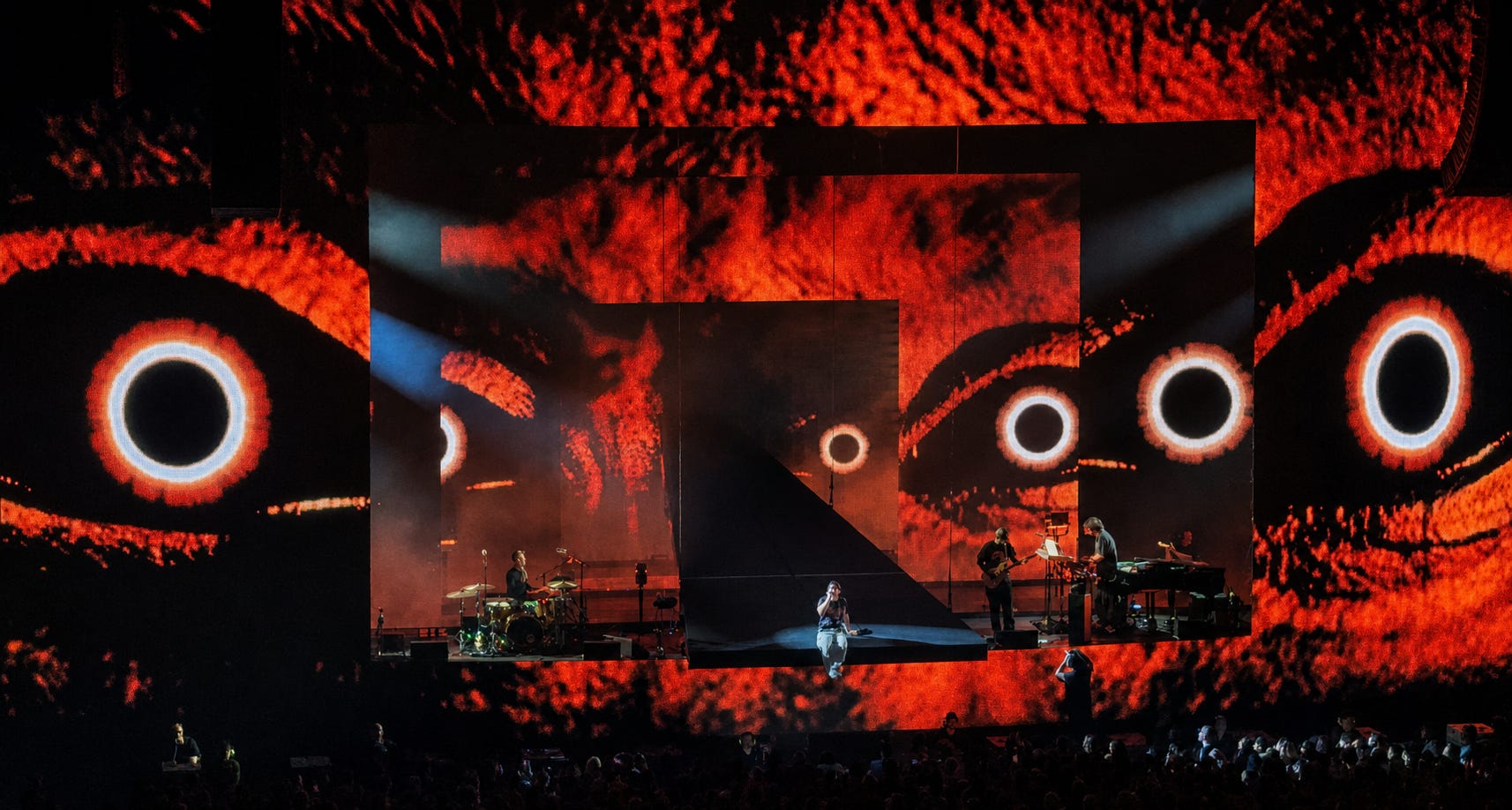
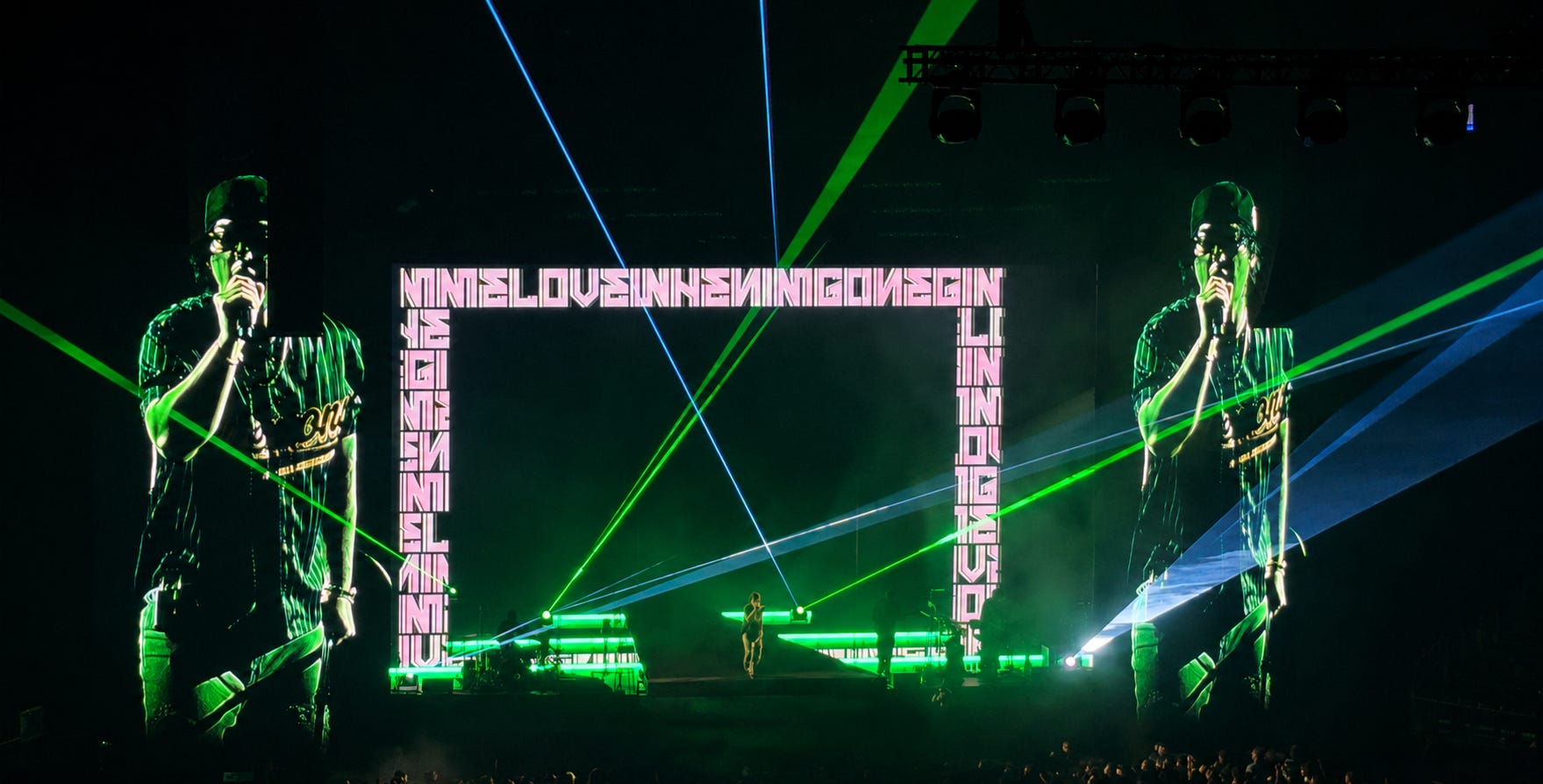
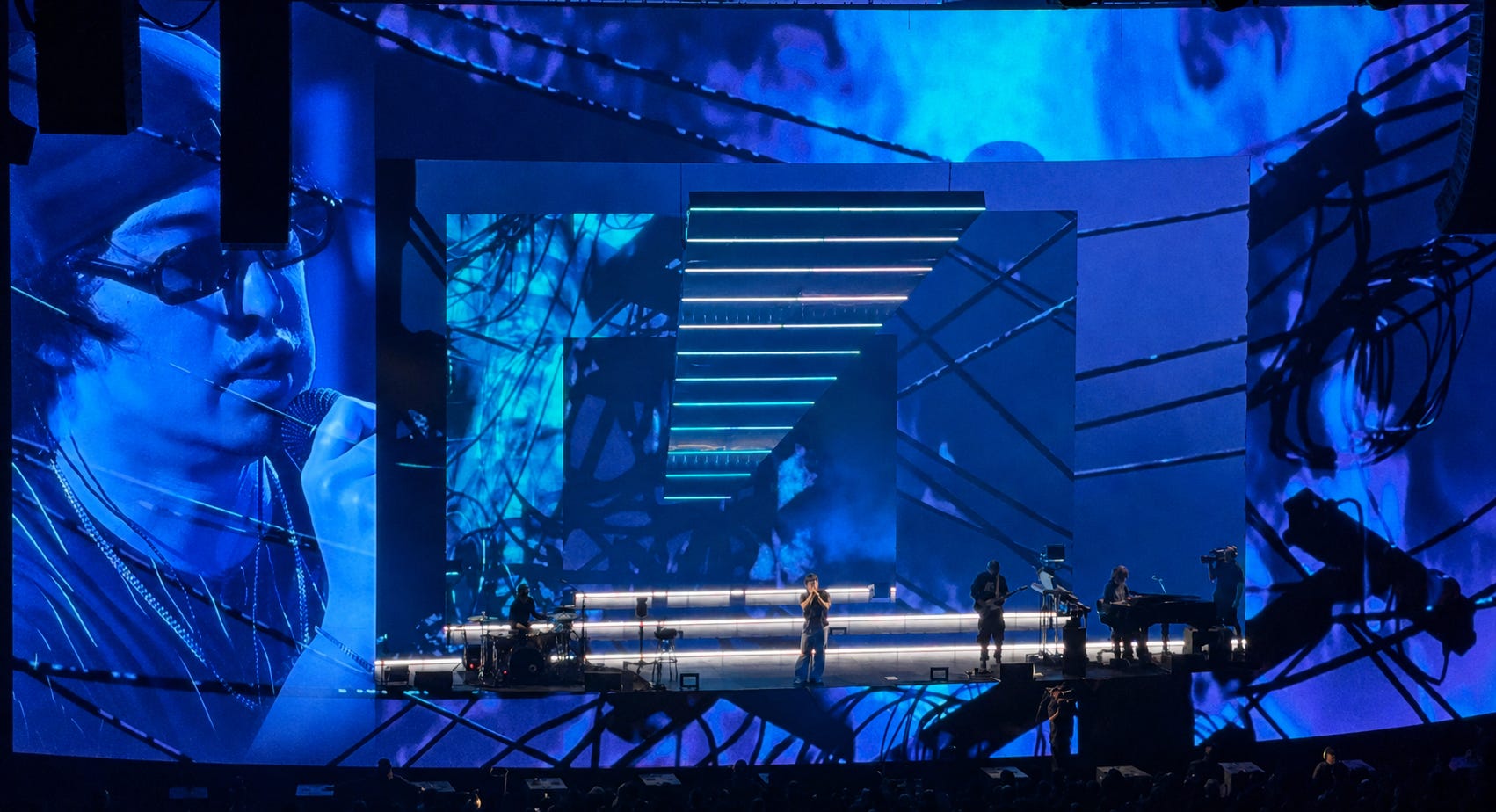
Joji’s singing remained the foundation of the show, and the production seemed intentionally designed around that strength. The stage visuals supplied movement, scale and atmosphere while he concentrated on delivering the songs. Instead of competing with a dozen effects, the audience could focus on the shape of his voice and the emotional weight it carried through the room.
It was a welcome change from arena productions in which every moment arrives with another explosion, costume change or mechanical platform. Large shows often operate under the assumption that silence must be filled and stillness must be corrected. Joji allowed both to exist. The screens and lighting enlarged the mood without burying him beneath spectacle.
His reserved presence still left room for criticism. Restraint can be purposeful, but visible exhaustion can also weaken the connection between performer and audience. The Seattle performance occasionally drifted close to that boundary. Joji’s vocals kept it from crossing over. Even when his physical presence seemed detached, his voice remained controlled enough to carry the songs.
Several arrangements also departed from their familiar studio versions. Songs including “Ew” and “SLOW DANCING IN THE DARK” appeared in altered keys or moved at slower tempos. Those changes gave the material a heavier, worn-in quality. Rather than reproducing recordings note for note, Joji let the songs settle into the room at their own pace.
Slowing familiar material can be risky. Pull too far and the song loses its pulse. Here, the stretched arrangements generally supported the evening’s subdued character. The crowd recognized the songs immediately, but the altered delivery forced everyone to listen again instead of automatically singing over a carbon copy of the record.
A short night with a long shadow
The pacing made the entire show feel surprisingly quick. We reached our seats at 7:45, Joji began at 9:01 and the evening wrapped around 10:30. For a Sunday-night arena show, the efficiency was almost merciful. Most of the audience probably had alarms waiting for them Monday morning, and no encore is powerful enough to negotiate with a work schedule.
Despite the relatively compact experience, the set never felt carelessly rushed. Joji covered both sides of what his audience had come to hear: the newer, more distorted world of Piss in the Wind and the quieter songs responsible for building his wider following. The visual production filled the spaces left by his restrained stage presence, while occasional oddities such as the T-shirt cannon and robotic dancer kept the show from becoming too solemn.
The final eruption arrived with “SLOW DANCING IN THE DARK”. Used as the closing encore, the song drew the loudest response of the night. The crowd went wild as soon as it recognized the opening, and the slower live arrangement gave the finale an added sense of weight. It was the right song to close with: familiar enough to unite the arena, emotionally heavy enough to linger after the lights came up.
Afterglow
Outside the arena, those pink bodysuits returned to the Seattle streets alongside fans who had come to Joji through an entirely different life. Some had followed George Miller since the days of Filthy Frank and Pink Guy. Others knew only the soft voice, shadowed production and songs built for staring at the ceiling long after everyone else has gone to sleep.
My friends belonged closer to the second group, although even they had only recently begun listening. They entered without much history with Joji and left happy, curious and interested in exploring more of his music. A concert does not need to convert someone into an obsessive fan before they reach the parking lot. Sometimes opening the next door is enough.
The performance was not flawless. Nate Sib’s stage movement frequently felt forced, Joji looked tired and the arena’s beer prices bordered on a personal attack. Still, the vocals held, the visual choices served the music and the mix of old favorites with new material kept the crowd engaged.
Joji did not leave Seattle with a wall of fire behind him. He left with thousands of voices carrying “SLOW DANCING IN THE DARK” toward the exits. For a performer who built an arena show around distance, stillness and digital noise, the strongest moment came when everyone in the room finally sang together.
Please consider Donating to Sponsor an article even $1 helps!

thanks for sharing!