



A lawn waiting to be claimed
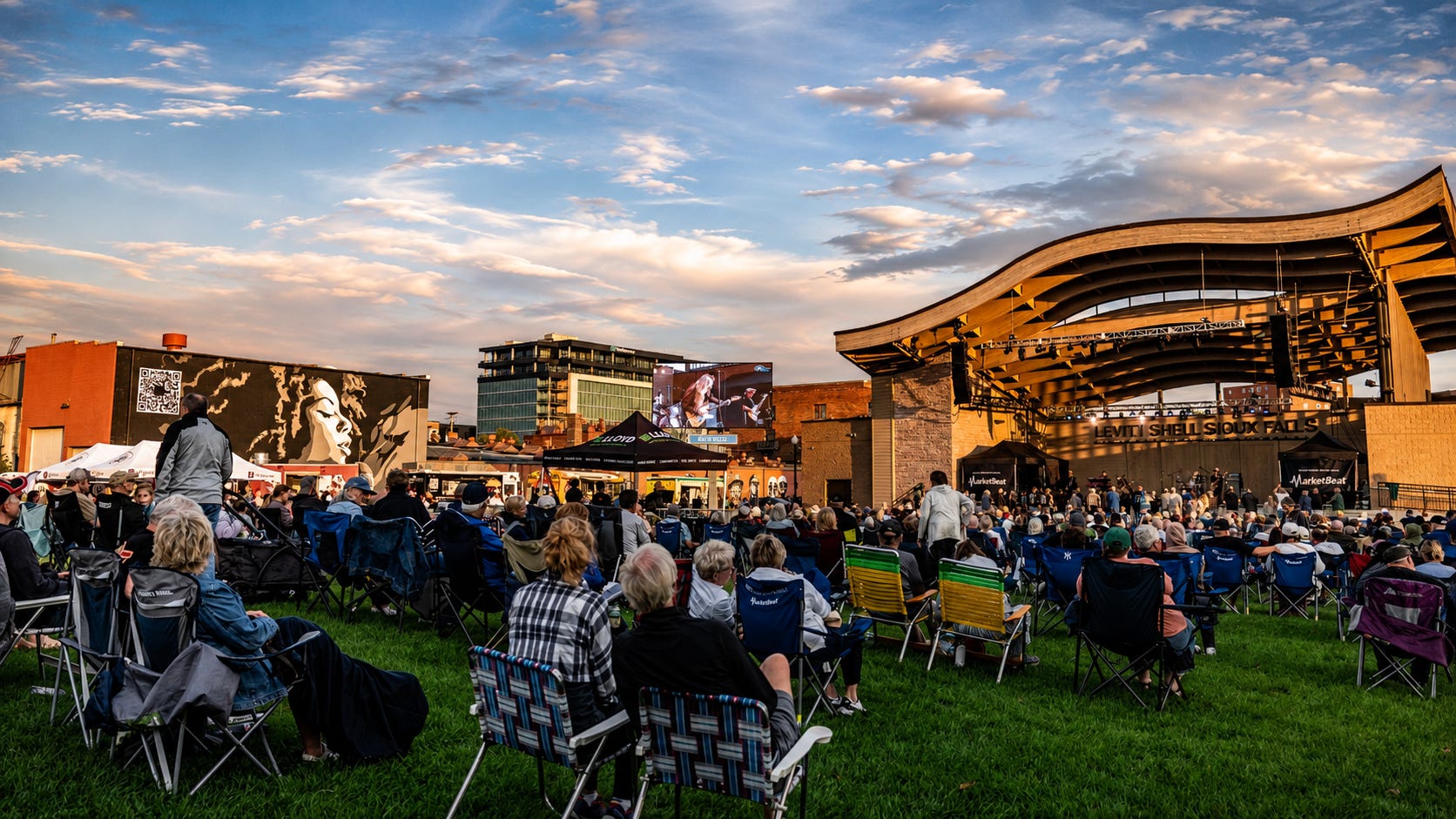
The evening first appeared in one enormous frame: the curved wooden shell glowing at the edge of downtown Sioux Falls, hundreds of folding chairs planted across the grass and a pale blue sky broken into long strokes of cloud. The large video screen carried the performance to the back rows, where the stage itself had become a small rectangle beyond a congregation of lawn chairs.
It was Friday night at Levitt, but the view contained more than a concert. Food trucks lined the perimeter. People settled into chairs brought from home or bought right there at the Levitt. A child rode higher than the heads around them. Near the front, standing bodies had begun to gather against the rail. Farther back, a curly-haired dog named Barry Boy rested between pairs of shoes, watching the evening with the solemn patience of someone who had not been consulted about the lineup.
The free July 31 concert paired Omaha-rooted troubadour Kris Lager with British blues-rock guitarist Joanne Shaw Taylor. Levitt listed Lager as the opening act before Taylor’s headlining performance, placing two artists under the blues banner who have spent much of their careers finding ways around its borders.
Lager worked outward, pulling the audience into the machinery of the set until the space between the stage and the rail nearly vanished. Taylor worked inward, tightening songs around guitar lines and vocals until the crowd had no choice but to follow her toward the pressure point.

Kris Lager Opens
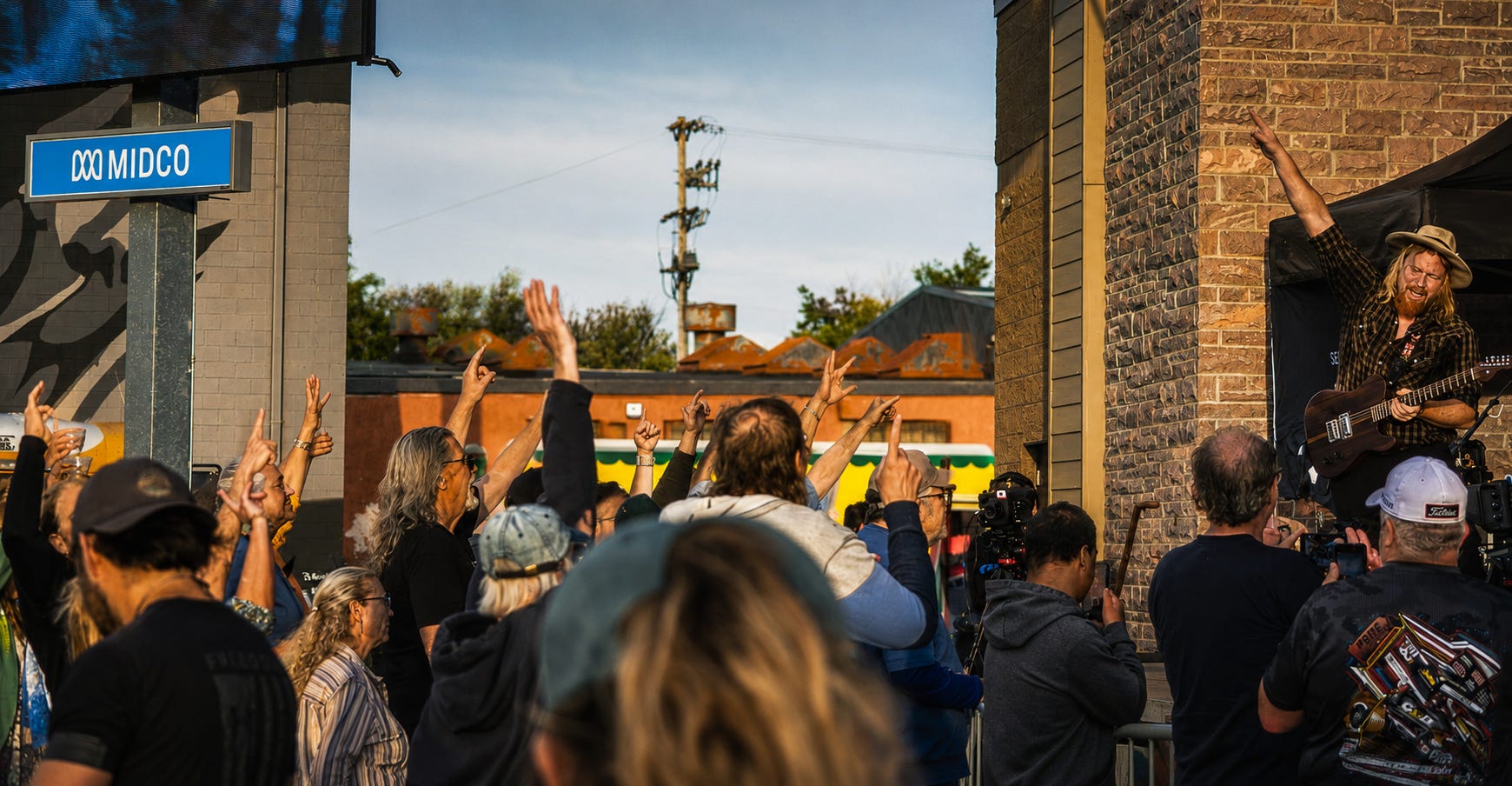
Lager has built much of his public identity around a “Celebrate Life” philosophy, language that could easily turn weightless outside a live setting. At Levitt, it became physical. He sent a gesture into the crowd and the crowd returned it. The exchange moved quickly enough to feel instinctive, a human call-and-response preceding whatever the instruments did next.
His music has always required that circuit. The guitar may lead, but the performance is designed to travel through bodies rather than stop at the lip of the stage. Lager’s work pulls from blues, soul, funk, country, rock and Americana, styles connected less by category than by their ability to make a room move together. His own site calls him a troubadour and musical journeyman, while his recent work has leaned further into the Black Dirt Troubadour identity, a patch of roots music where the soil is Midwestern but the roads run in several directions.
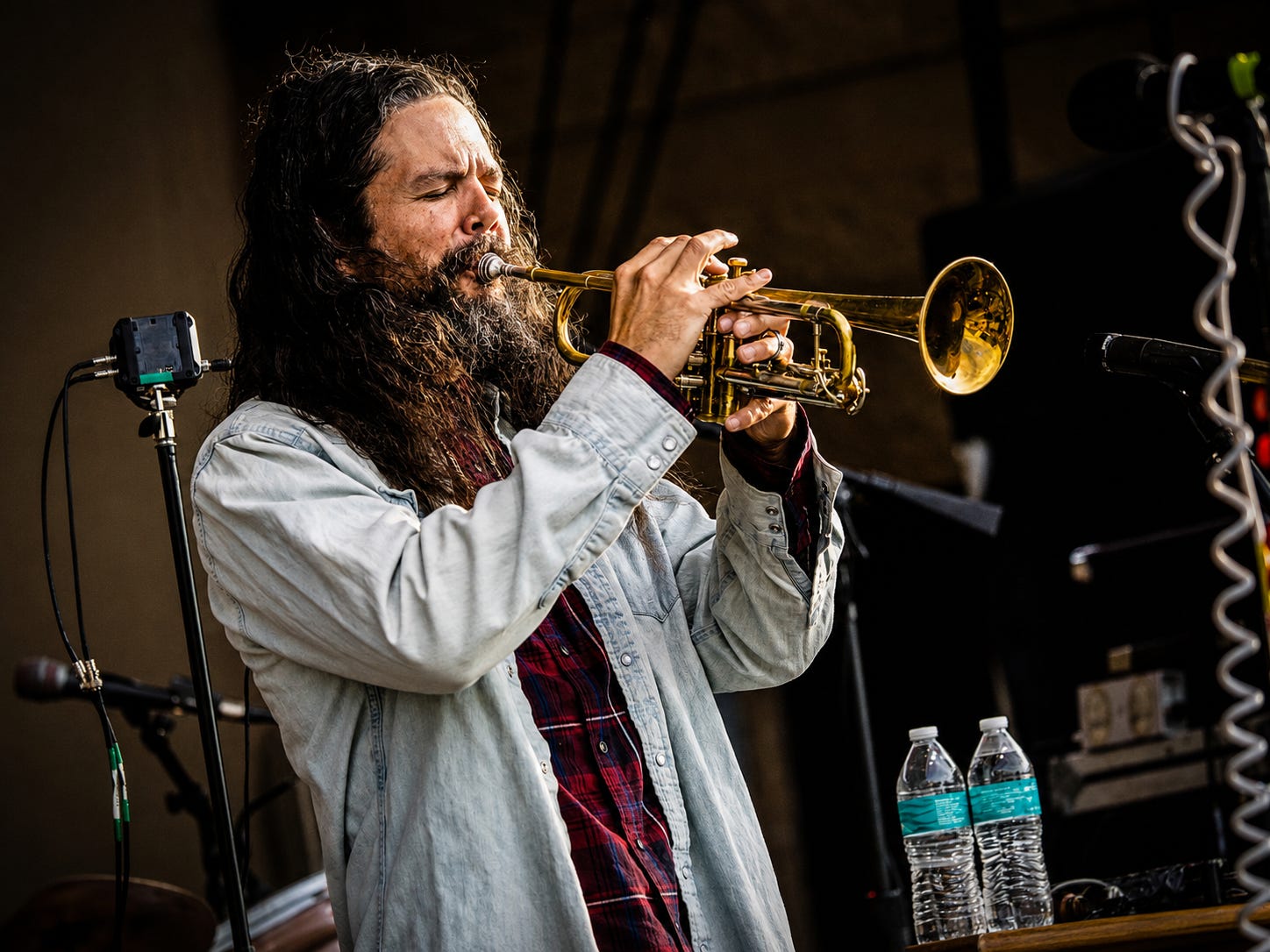
A trumpet player stood beneath the shadowed roof of the stage, eyes closed and face tightened around the mouthpiece. The bell caught the afternoon light while his hands worked the valves. The horn introduced another language into the set, one associated with soul revues, funk bands and the humid brass traditions farther south. It did not appear attached for ornament. It was another engine.
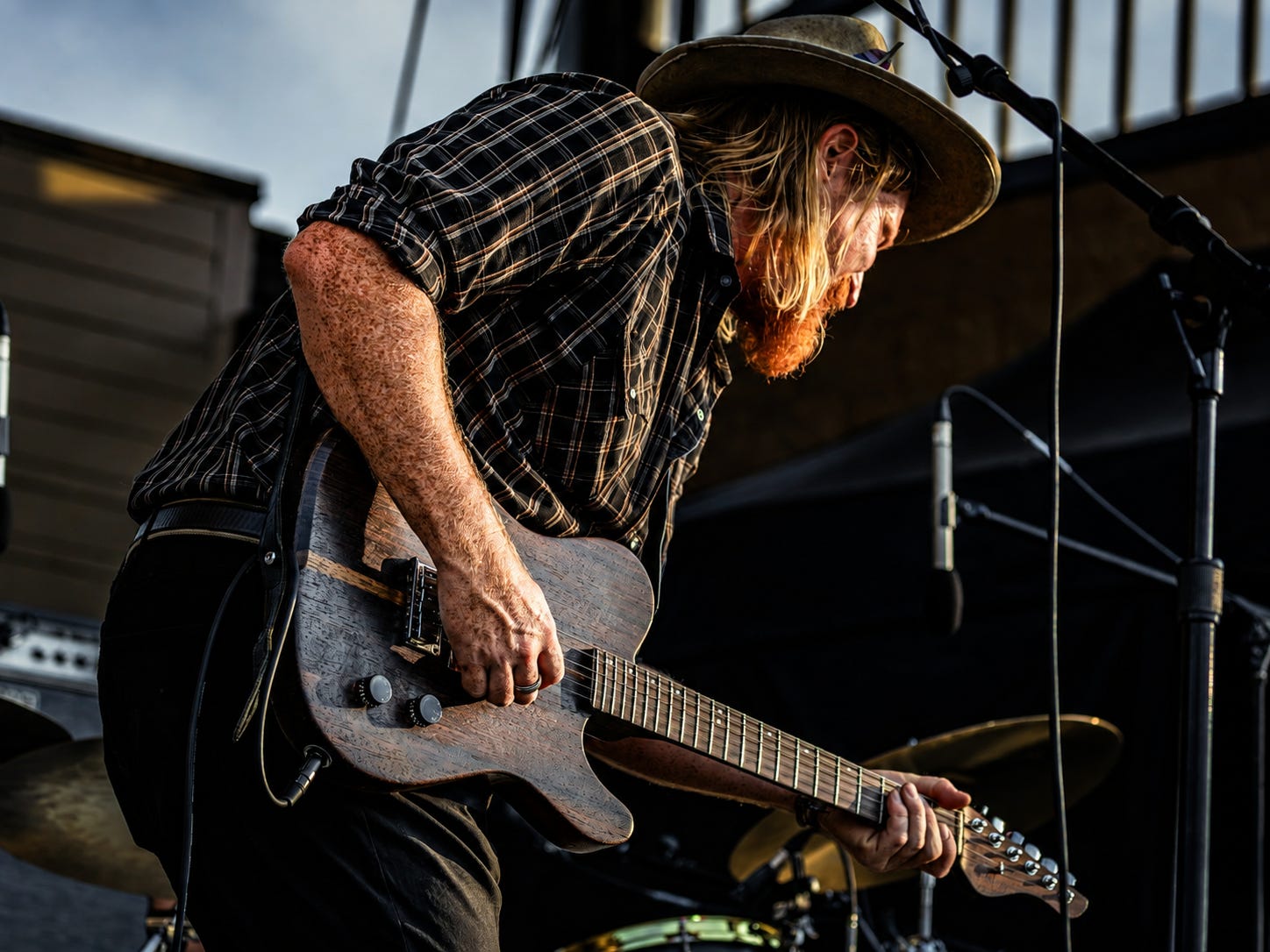
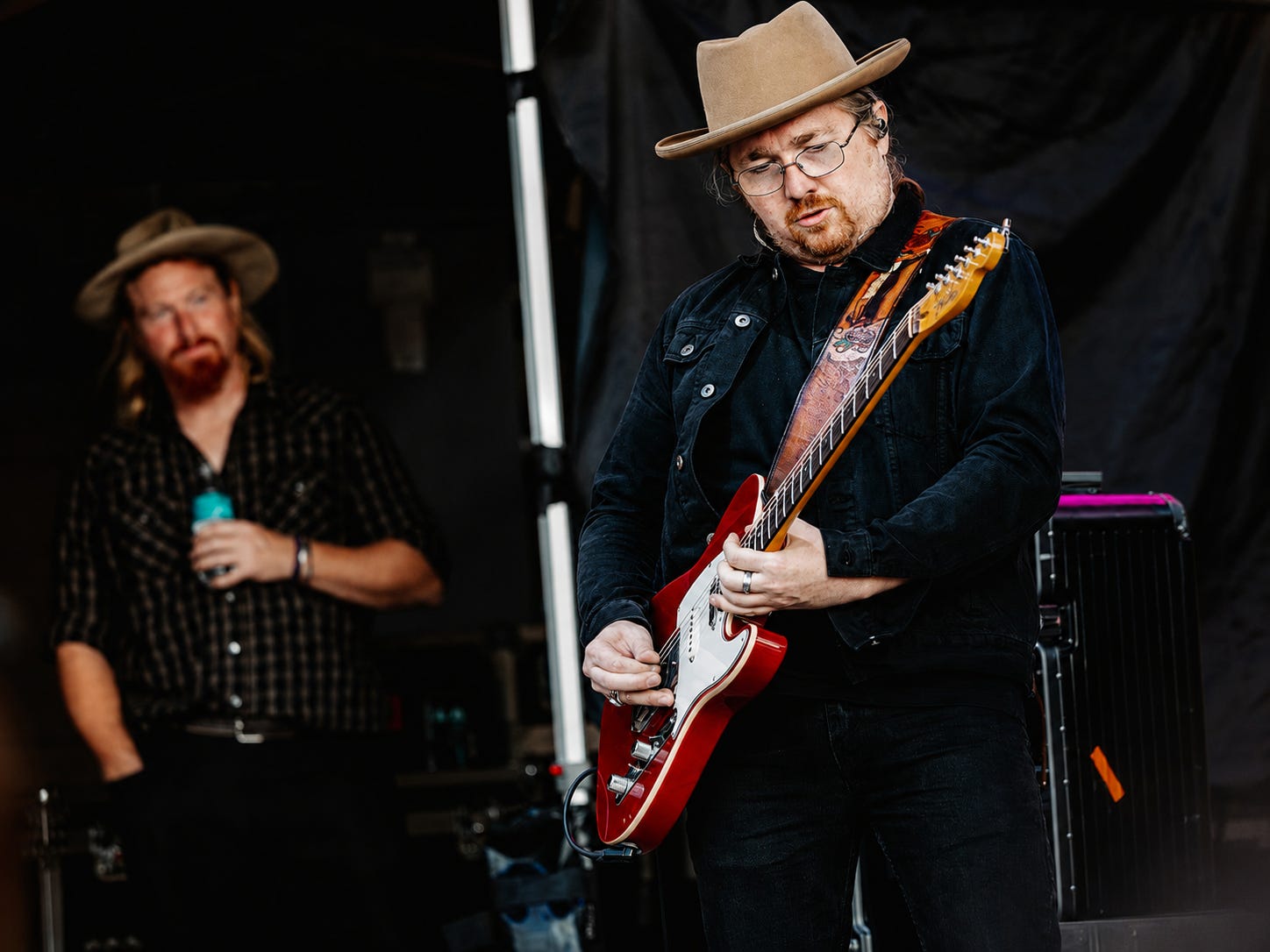
At center stage, Lager folded over a dark, weathered electric guitar, his hat pushed forward while his picking hand stayed close to the bridge.
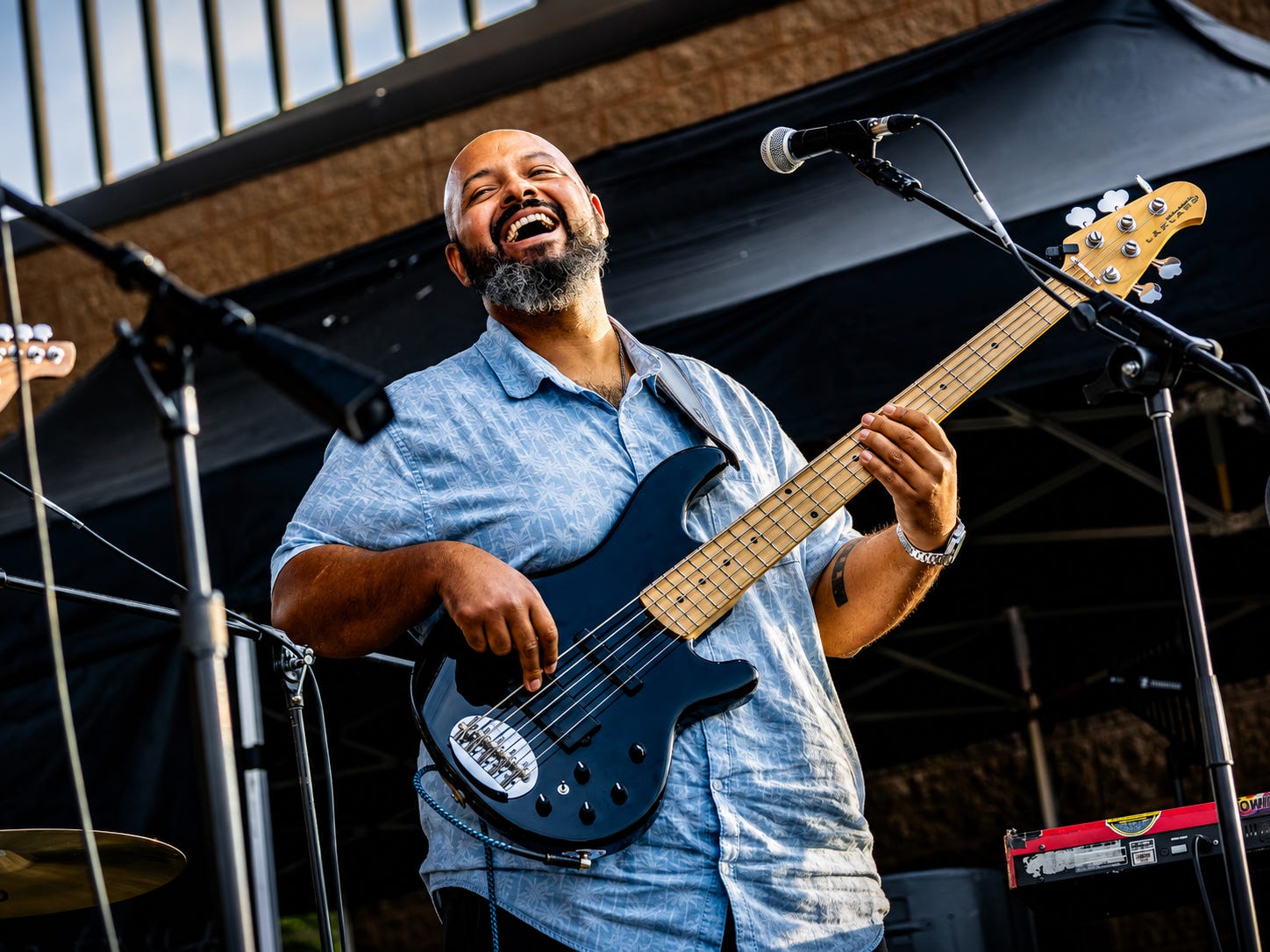
There is history in that stance. Lager grew up in Lincoln before establishing his work around Omaha, first digging into players such as Jimi Hendrix, B.B. King and Freddie King. In 2007, his band was recruited to back Mato Nanji in Indigenous, spending more than two years on the road and appearing on the group’s 2008 album “Broken Lands.” The experience placed Lager inside a nationally touring blues-rock operation, but his own music continued wandering into funk, country, soul and jam-oriented improvisation.
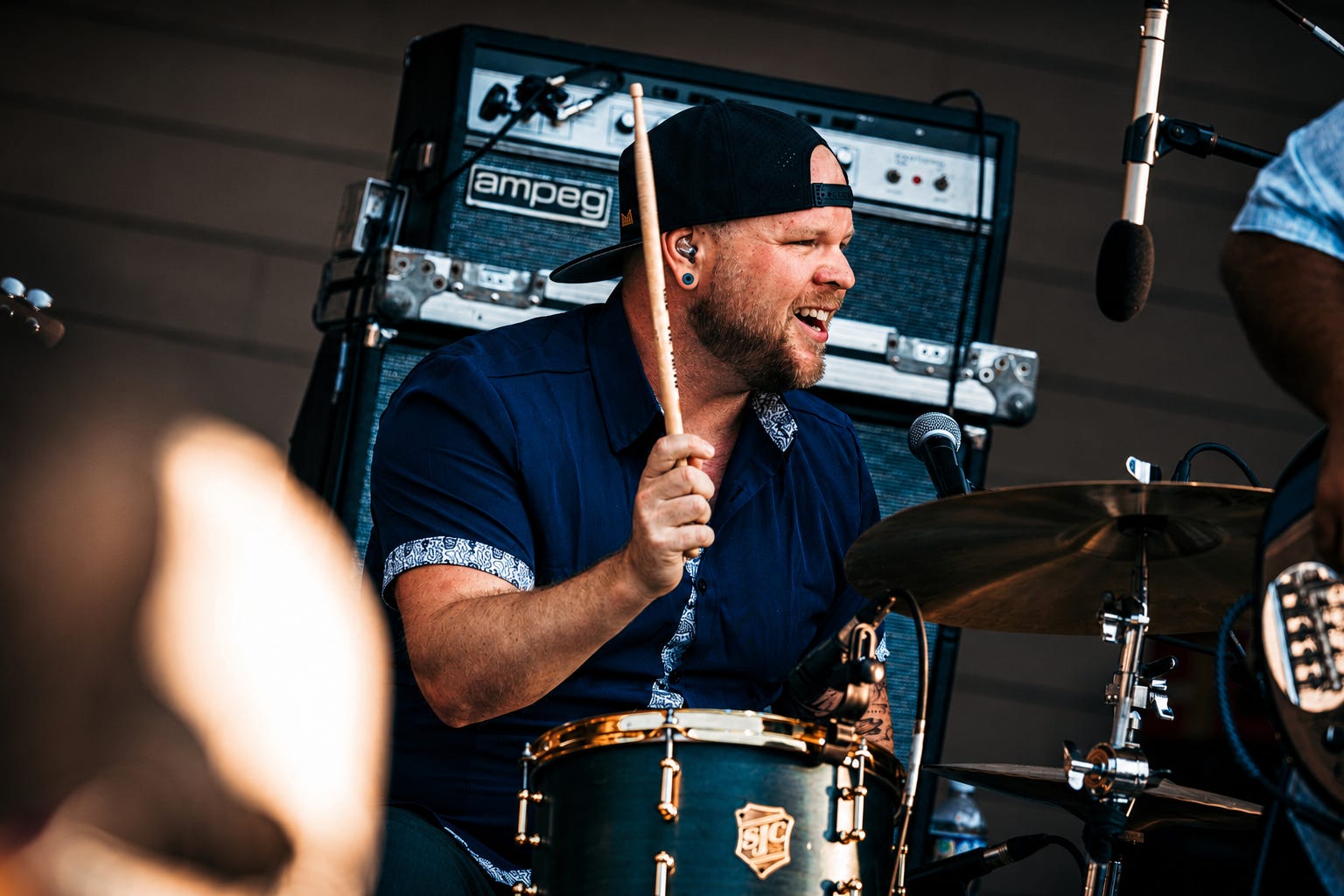
Looseness is essential to music built around groove. Funk stiffens when everyone sounds afraid of the next measure. Soul loses its warmth when each gesture feels timed by committee. Lager’s band appeared comfortable enough to let the songs breathe, and the smiles were not separate from the musicianship. They were evidence of trust inside it.


Lager’s recent album, “Black Dirt Troubadour”, pushes his roots writing toward country and Americana without abandoning the blues and soul foundation beneath it. Songs including “The Little Things” and “There Ain’t Nothin’ (That Can Get in My Way)” carry his familiar insistence on persistence, gratitude and movement, though the optimism has gained new shadows as Lager has spoken about balancing touring with raising his children.
Please consider Donating to Sponsor an article even $1 helps!

Joanne Shaw Taylor Headlines
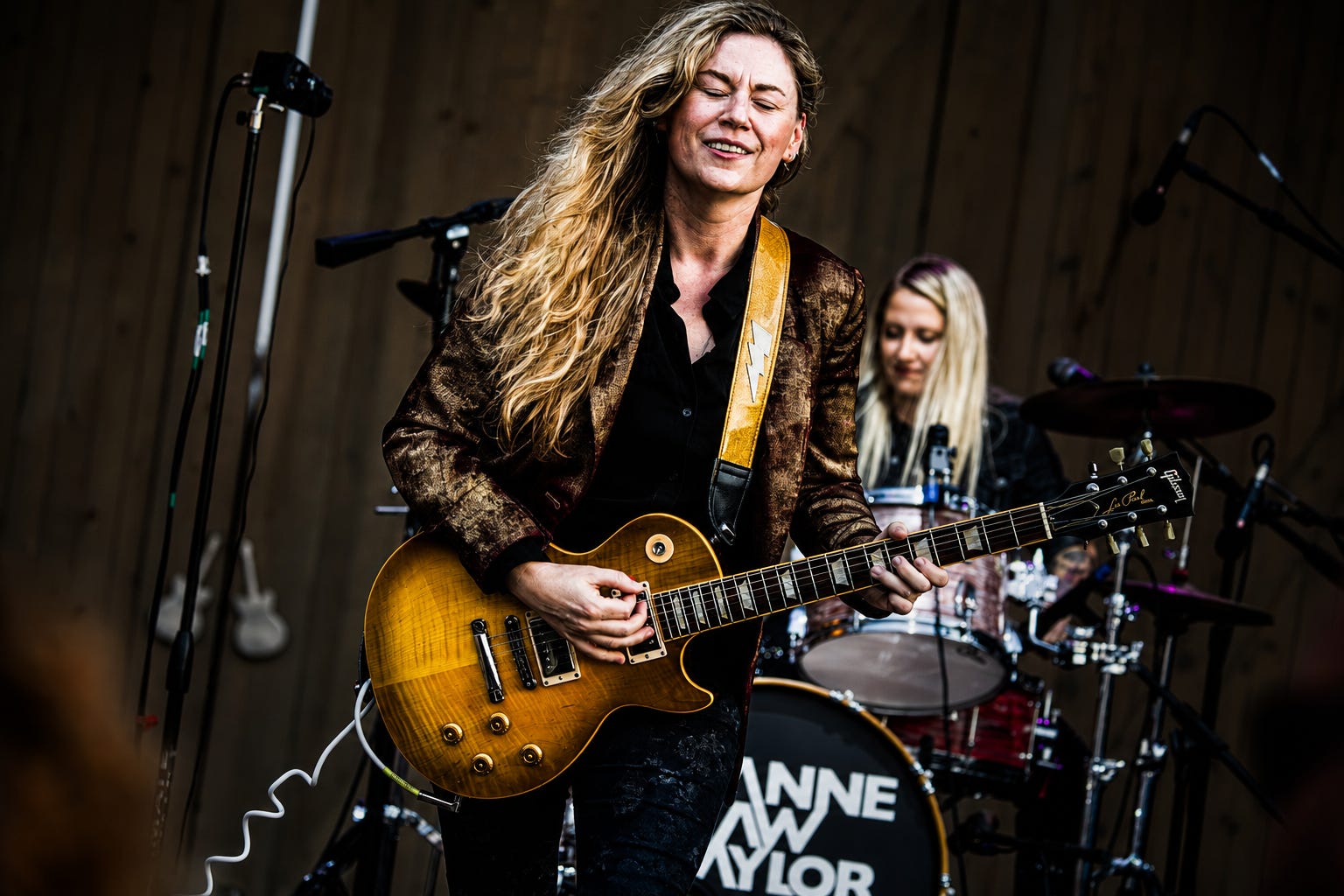
Joanne Shaw Taylor entered wearing a dark metallic jacket that shifted between bronze, brown and burgundy as the remaining daylight moved across it. A guitar rested close against her body. Her long hair fell across one shoulder. Behind her, a drummer sat at a red-grained kit bearing Taylor’s name in stark white lettering.
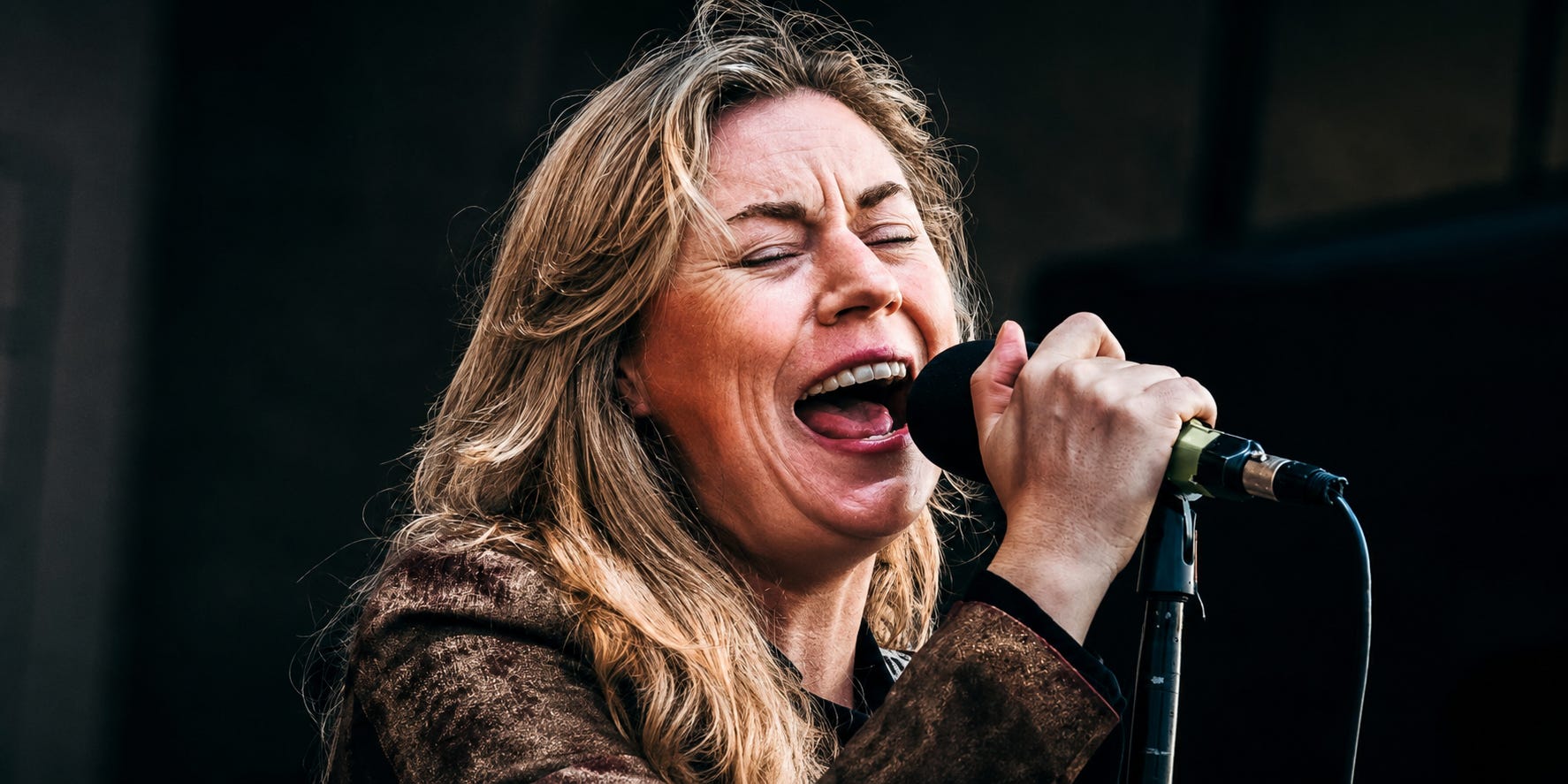
She does not play and sing as though they are separate jobs. The guitar carries the same emotional argument as the voice. When she leaves the fretboard and leans into the microphone, the rasp in her singing feels related to the abrasion in her lead work.
Taylor started performing in British pubs and clubs while still in her teens. A demo eventually reached Eurythmics co-founder Dave Stewart, who invited her to London and brought her into his D.U.P. project. Taylor has credited Stewart with recognizing something beyond her ability as a young guitarist: the possibility that she could become a singer and songwriter who played guitar rather than remain a guitar phenomenon standing beside unfinished songs.
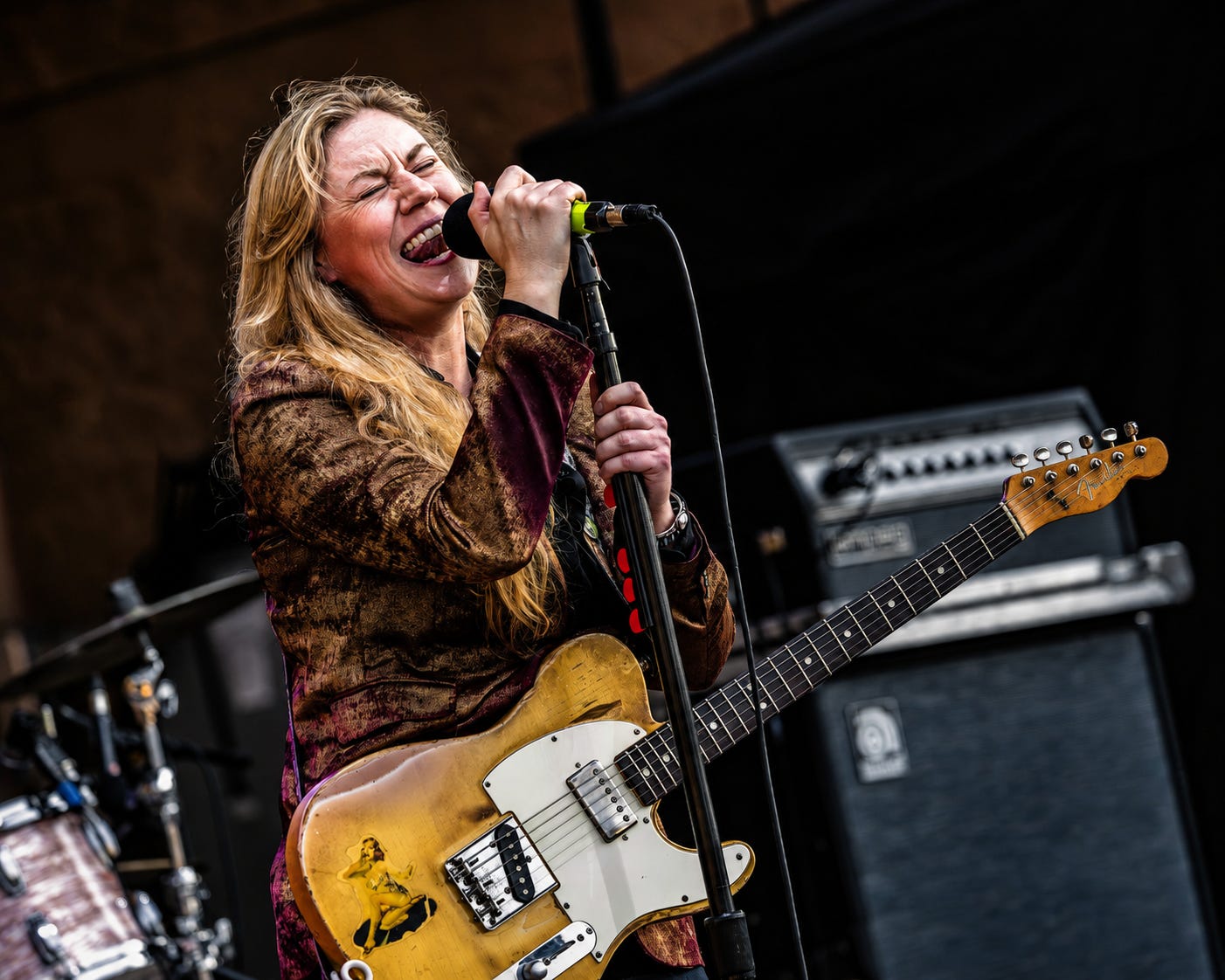
Taylor changed instruments as the set developed. The polished grain of the Les Paul gave way to a battered, yellowed Telecaster-style guitar marked by scratches, worn finish and a pinup image near the lower bout. The road damage had become part of the instrument’s appearance. Against the shimmer of Taylor’s jacket, it looked less like an accessory than a document.
Her long association with Telecaster-style guitars is deliberate. Taylor’s first major guitar influence was Stevie Ray Vaughan, but she has spoken about avoiding Stratocasters because they pull her too easily back toward imitating that early influence. Her principal instrument, a modified 1966 Fender Esquire called “Junior,” has accompanied her since she was 15.
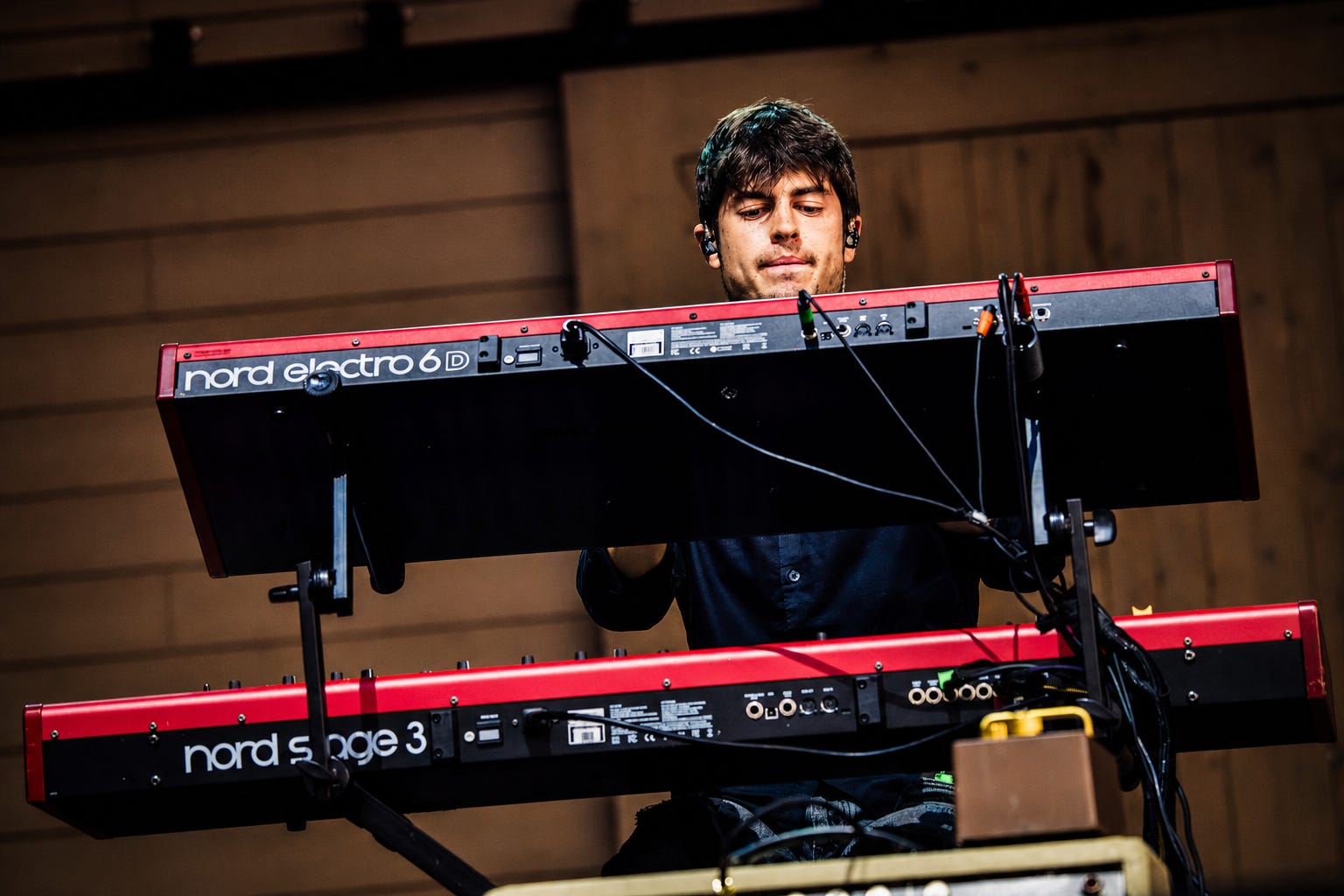
The band widened the frame around her. A keyboardist worked behind stacked red Nord instruments, visible primarily from the shoulders up as his attention remained fixed on the keys. Organ and electric-piano textures give a guitarist options: another voice to push against, a cushion beneath the vocal or a warm current running below a sharper lead tone.
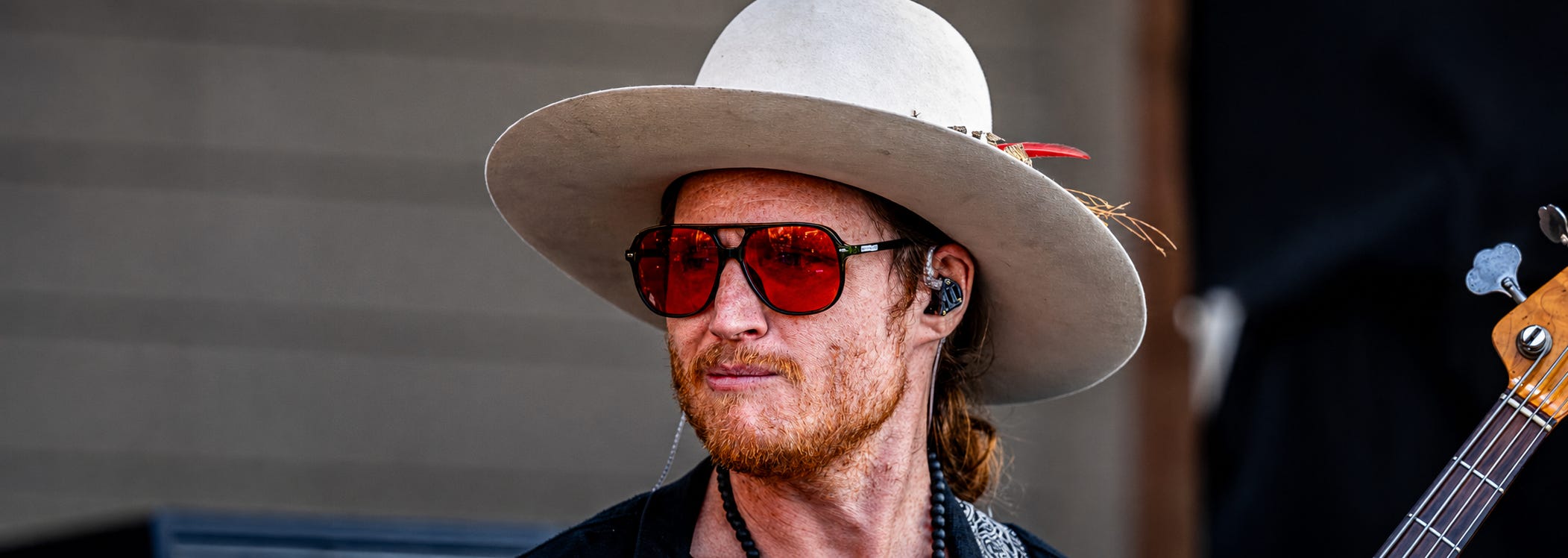
The bassist, wearing a broad white cowboy hat and red-tinted glasses, appeared almost motionless compared with the activity around him. His visual presence was impossible to miss, but his role was one of restraint. Taylor’s music could pull outward through guitar bends, vocal peaks and keyboard swells. The bass kept the center of gravity from moving with it.
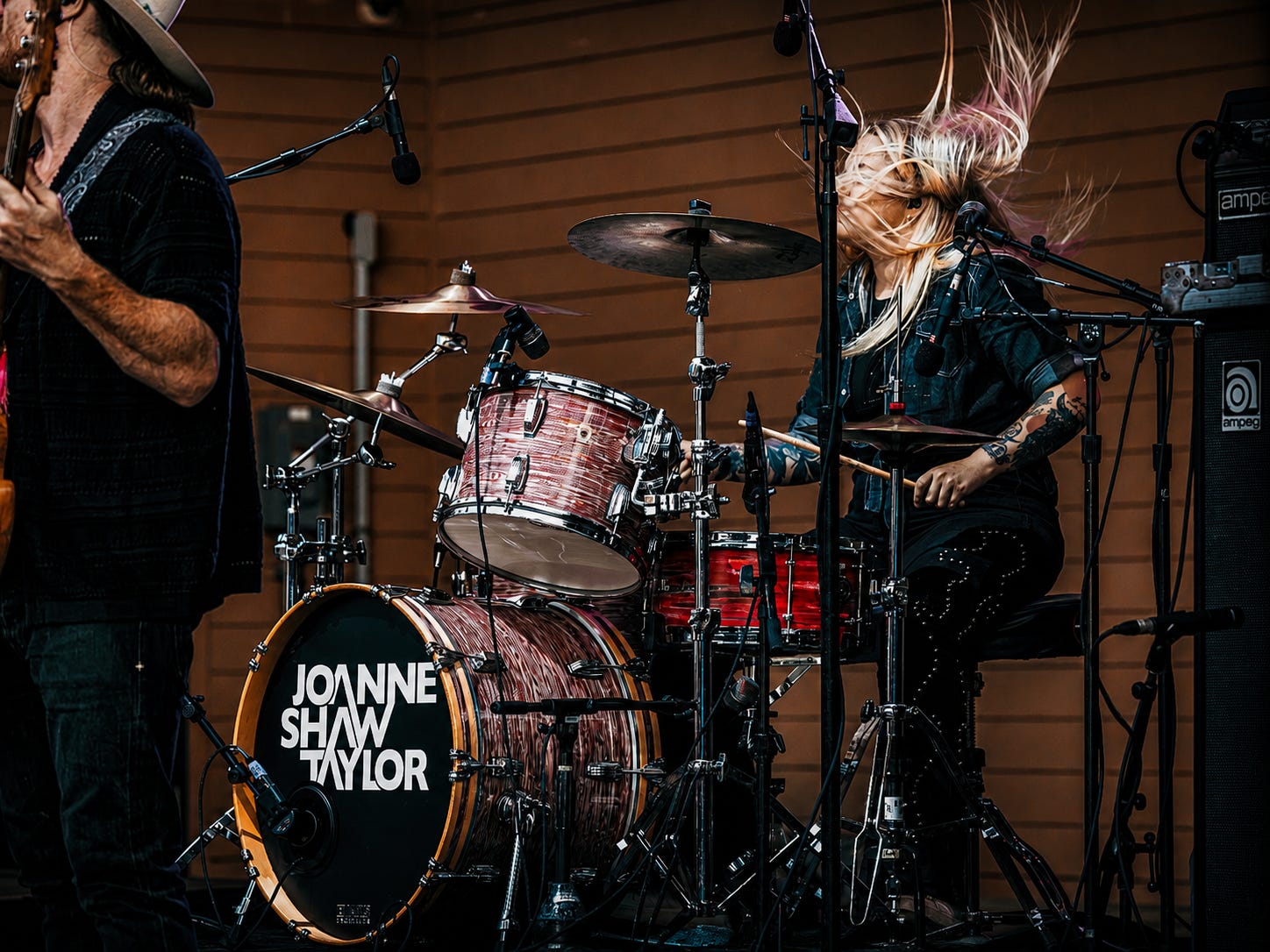
Then there was the drummer. Blonde hair thrown almost vertically above her head. One hand remained low near the kit as the cymbals crowded the space around her. This was not percussion added to dignify a collection of guitar solos. It was propulsion.
Taylor’s career has been surrounded by language about technique since she was a teenager. Her playing earned early recognition, but her catalog has continued expanding beyond conventional blues-rock. The 2024 album “Heavy Soul” brought contemporary soul and pop writing into the mix. “Black & Gold”, released in 2025, carried that movement into Americana, retro pop and polished rock while keeping the guitar at the center. Her next album, “The Trouble With Love”, is scheduled for October 23, 2026.
Levitt caught her between records, with one chapter still recent and another already visible ahead.


The timing suited the performance. Taylor looked neither nostalgic nor anxious to abandon the language that built her career. She used blues as foundation. The songs could move toward soul or rock, the guitar could switch from thick Les Paul sustain to the leaner bite of a Telecaster-style instrument and her voice could roughen the polished edges of either.
Afterglow
By the end of the night, the Levitt lawn had witnessed two different theories of connection.
Kris Lager reached across the rail and made participation feel unavoidable. His set passed through raised hands, smiling bandmates, brass lines and a groove broad enough to collect people who had arrived with no knowledge of his catalog. The performance insisted that a crowd could be assembled in real time.
Joanne Shaw Taylor followed by turning that assembled crowd toward something more private. Her band created space around her voice and guitar, then tightened it measure by measure. Where Lager opened the music, Taylor pressed deeper into it.
Blues has survived because artists keep arguing with what it is allowed to contain. Lager filled it with Midwestern funk, country roads, brass and communal optimism. Taylor ran it through soul, rock, pop instincts and the rough edge of a voice that refused to remain secondary to her guitar.
Please consider Donating to Sponsor an article even $1 helps!
