


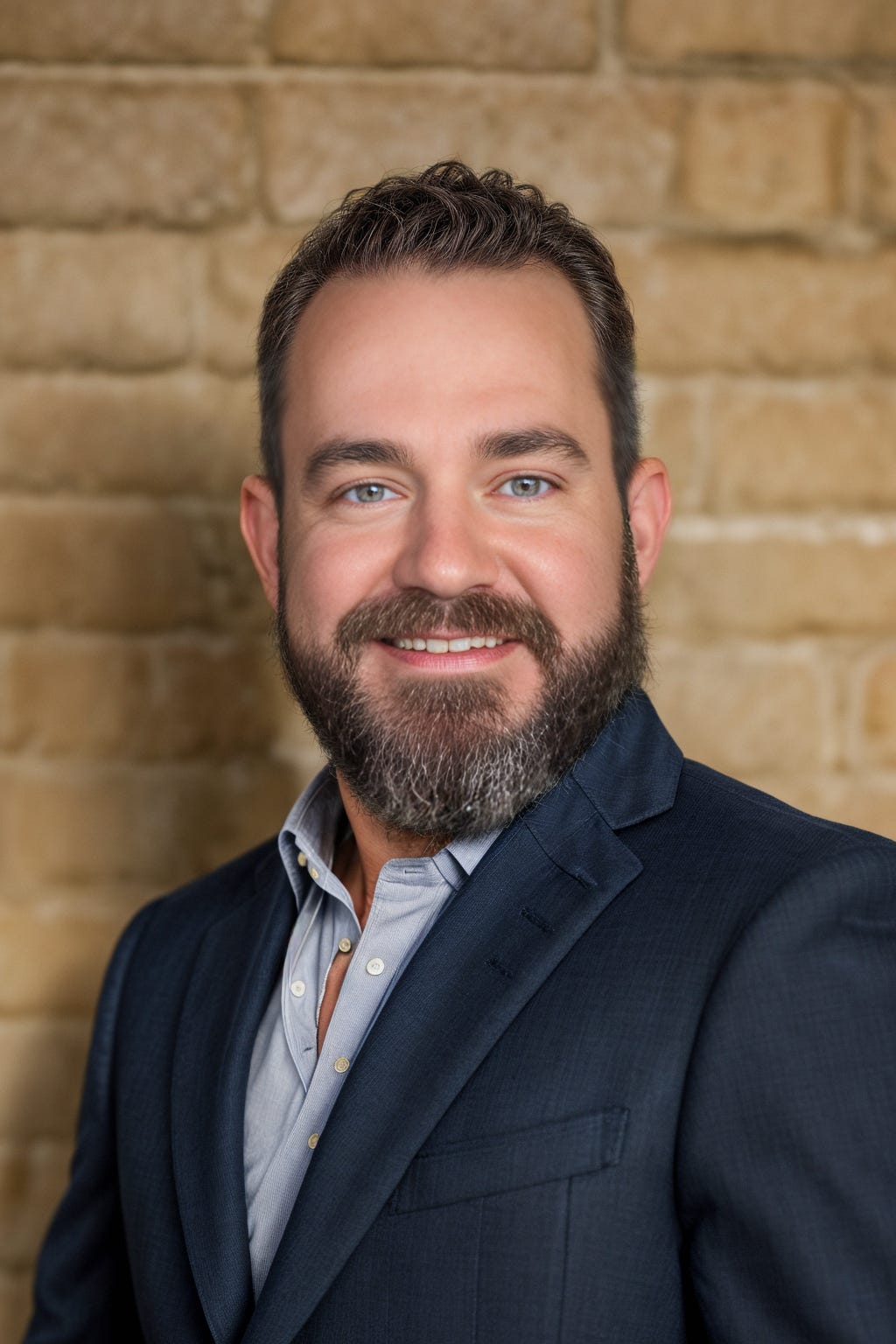
I recently sat down with Justin McNeal, a Republican candidate for U.S. Senate in South Dakota, for a conversation about his campaign, his background, and where he stands on some of the major issues facing the country.
McNeal is challenging Senator Mike Rounds in the Republican primary. During the interview, we covered his personal background, the national debt, campaign finance, Social Security, health care, defense spending, energy policy, foreign policy, eminent domain, and the role of government in private industry.

Background
McNeal started by talking about his family’s South Dakota roots, his upbringing in Texas, and his time in the Navy.
After high school, he joined the military and trained as a nuclear engineer on submarines. He served aboard the USS Key West out of Pearl Harbor and spent several years at sea. After leaving the military, he went into financial services and helped build a company that grew into multiple offices across several states.
More recently, McNeal returned to South Dakota and started Dakota Biochar, a company focused on using waste wood from the Black Hills National Forest to generate power and produce biochar. He described biochar as a carbon-based product that can help soil retain water and nutrients, with the goal of improving farmland and addressing waste wood buildup in the forest.
Why He’s Running
McNeal said the main reason he is running is the federal debt.
He argued that the national debt is not a Democrat or Republican issue, but an American issue. His view is that Washington has avoided making hard decisions for too long, and that the country needs a serious plan to deal with spending, deficits, and long-term obligations.
He said the debt problem is “a simple math problem” in the sense that the government is spending more than it brings in. The hard part, in his view, is whether elected officials are willing to make the decisions needed to change course.
Campaign Finance and Transparency
We also discussed McNeal’s criticism of Washington, D.C., and what he has described as the influence of special interests, lobbyists, and career politicians.
McNeal argued that businesses and industries that depend heavily on government spending have an incentive to support politicians who can help direct federal money. He said this creates a system where incumbents and special interests benefit from keeping the same people in power.
He also talked about his own campaign spending and said he has been trying to run a very lean campaign. He contrasted that with the amount of money available to the incumbent campaign.
One of the specific commitments McNeal made was on transparency. He said that, if elected, he would publish explanations for his votes so constituents could see why he voted the way he did. He also said he would make his Senate office spending public.
The National Debt: Social Security, Health Care, and Defense
When asked what specific reforms he would support to address the national debt, McNeal identified three major areas: Social Security, health care, and defense spending.
On Social Security, he said the program’s formula is outdated and that the country needs an honest conversation about what changes may be necessary. He argued that doing nothing is still a decision, and that if the system is not addressed, benefit cuts or other consequences will come later.
On health care, McNeal focused on administrative costs and the role of insurance. He said that, in his experience, the cost of administering care has increased significantly, and that too much money is going into the system around health care rather than directly to the people providing and receiving care.
On defense spending, McNeal talked about his time in the military and described the “use it or lose it” budget culture that can happen near the end of the fiscal year. He said he supports making sure the military has the resources it needs, but wants a more efficient and accountable budgeting process.
Grants, Subsidies, and Dakota Biochar
We also talked about corporate welfare, subsidies, economic development, and McNeal’s own company.
McNeal described himself as a free-market person and criticized situations where government uses taxpayer money to pick winners and losers. He specifically discussed tax increment financing, development incentives, and subsidies for private companies.
I asked him whether Dakota Biochar had received, applied for, or benefited from any public grants, tax credits, or development incentives.
McNeal said Dakota Biochar had applied for a $25,000 proof-of-concept grant through South Dakota’s Governor’s Office of Economic Development. He also said the company had applied for a private grant and a USDA Wood Innovations grant.
When asked how he squares criticism of subsidies with applying for grants, McNeal said he sees a distinction between grants and subsidies. He described grants as programs tied to a specific public problem or proof of concept, while describing subsidies more as tax breaks or benefits given to specific companies.
Energy Policy
McNeal also talked about energy policy, including nuclear power, wind, solar, and biomass.
Because of his Navy nuclear background, nuclear energy was part of the conversation. McNeal said he supports using the best energy source for the specific need rather than letting subsidies drive the market.
He said the country does not really have a clear energy plan, and that much of the energy market is shaped by government incentives. He did not reject wind or solar, but described different energy sources as different tools in a toolbox.
His position was that energy policy should be based on what works for the situation, not just what receives the most favorable subsidy treatment.
Foreign Policy and Military Force
We discussed McNeal’s views on foreign policy, especially regarding Iran and the use of military force.
McNeal said his first question before supporting military action would be: what is the threat to the United States?
He said he does not currently see how Iran poses a direct threat to the American mainland, while also acknowledging that he no longer has a top-secret clearance and may not have access to all the information available to national security officials.
He said leaders should be willing to explain the threat and the objective before involving the United States in military action.
We also talked about the Strait of Hormuz and the argument that Iran can threaten global trade and energy markets. McNeal said that if the United States is going to talk about controlling that area militarily, it should be honest about what that could require.
Trump, Party Pressure, and the Constitution
I asked McNeal when he would break with President Trump or Senate Republicans.
McNeal said he would represent the people of South Dakota, not a party or a president. He said he wants the president to succeed, but also believes Congress has a role in checking the executive branch.
He argued that the executive branch has gained too much power over time because Congress has not done its job effectively. He said the federal government works best when the legislative, executive, and judicial branches each stay within their proper roles.
When asked for an example of where he might break with party leadership, he pointed again to questions around Iran and military action. More broadly, he said he would break with party leadership if he believed something went beyond the proper constitutional role of the federal government.
Eminent Domain and 45Q
The final major topic was eminent domain, carbon capture, and the 45Q tax credit.
McNeal said he supports eminent domain for public uses such as highways, airports, hospitals, schools, power lines, and other infrastructure that serves the public.
However, he said he does not support eminent domain for private corporate gain. He discussed carbon dioxide pipelines and said private companies should negotiate directly with landowners rather than using government power when they cannot get the easements they want.
He also criticized the 45Q carbon capture tax credit. His argument was that if carbon dioxide is being used for enhanced oil recovery, then companies and policymakers should be direct about that with the public.
Closing
Overall, the interview covered a lot of ground.
McNeal presented his campaign as focused heavily on the national debt, government transparency, constitutional limits, and reducing the influence of special interests in politics. He also discussed his background in the Navy, his business experience, and how those experiences shape the way he thinks about spending, energy, and government accountability.
The goal of the conversation was to give voters a better sense of where he stands and how he thinks through these issues.
You can watch the full interview for the complete conversation.



