


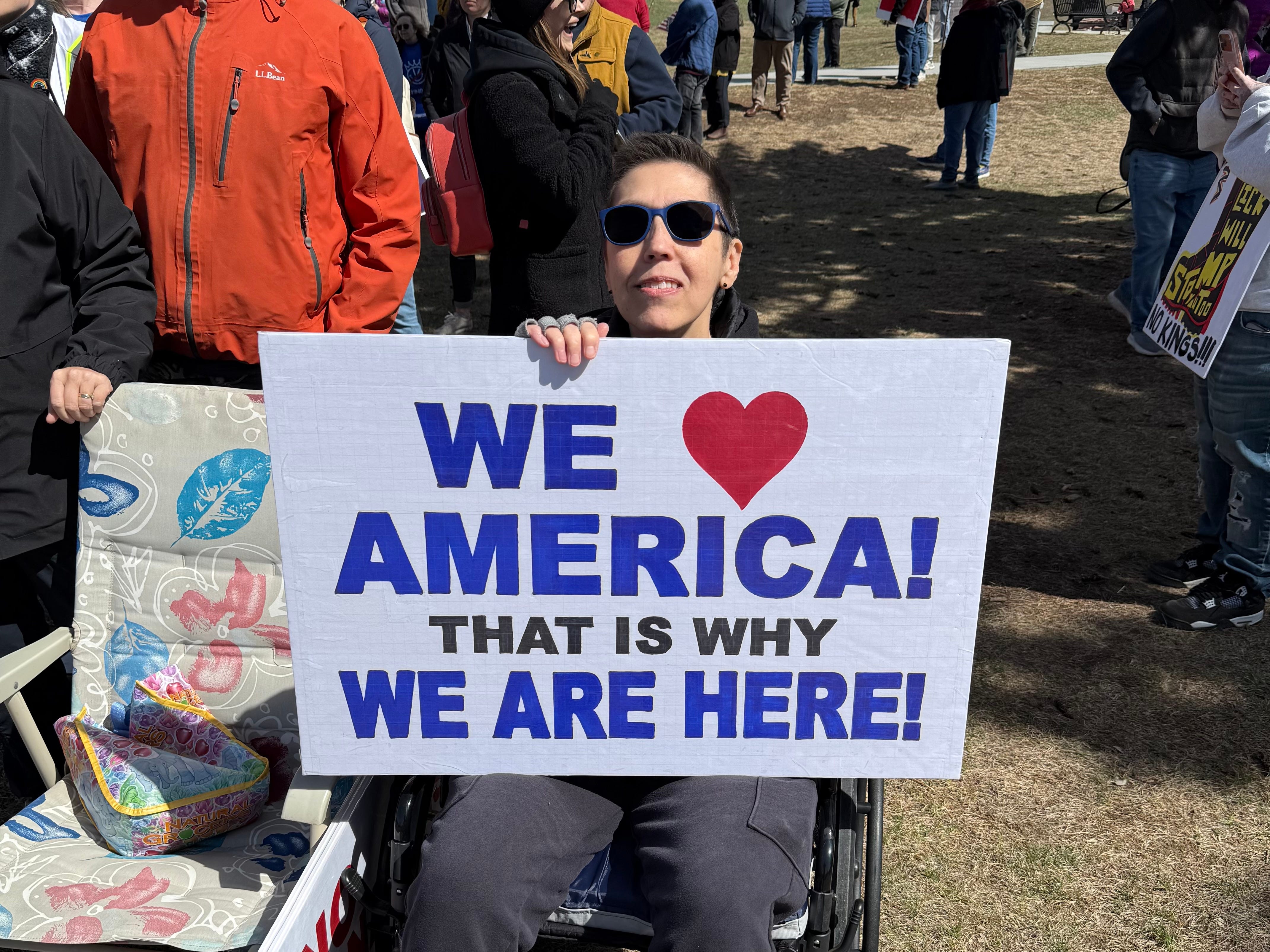
On March 28, 2026, thousands of Sioux Falls residents gathered at Drake Springs Park for Indivisible 605’s third No Kings Day of Action protest.
The event took place from 1 p.m. to 3 p.m. and featured a range of speakers and performances. Speakers included city, state, and congressional-level Democratic candidates, while performances featured groups like Singing Resistance Sioux Falls, a newly formed group separate from Indivisible 605 whose mission is “to give music and purpose to protests,” according to organizers.
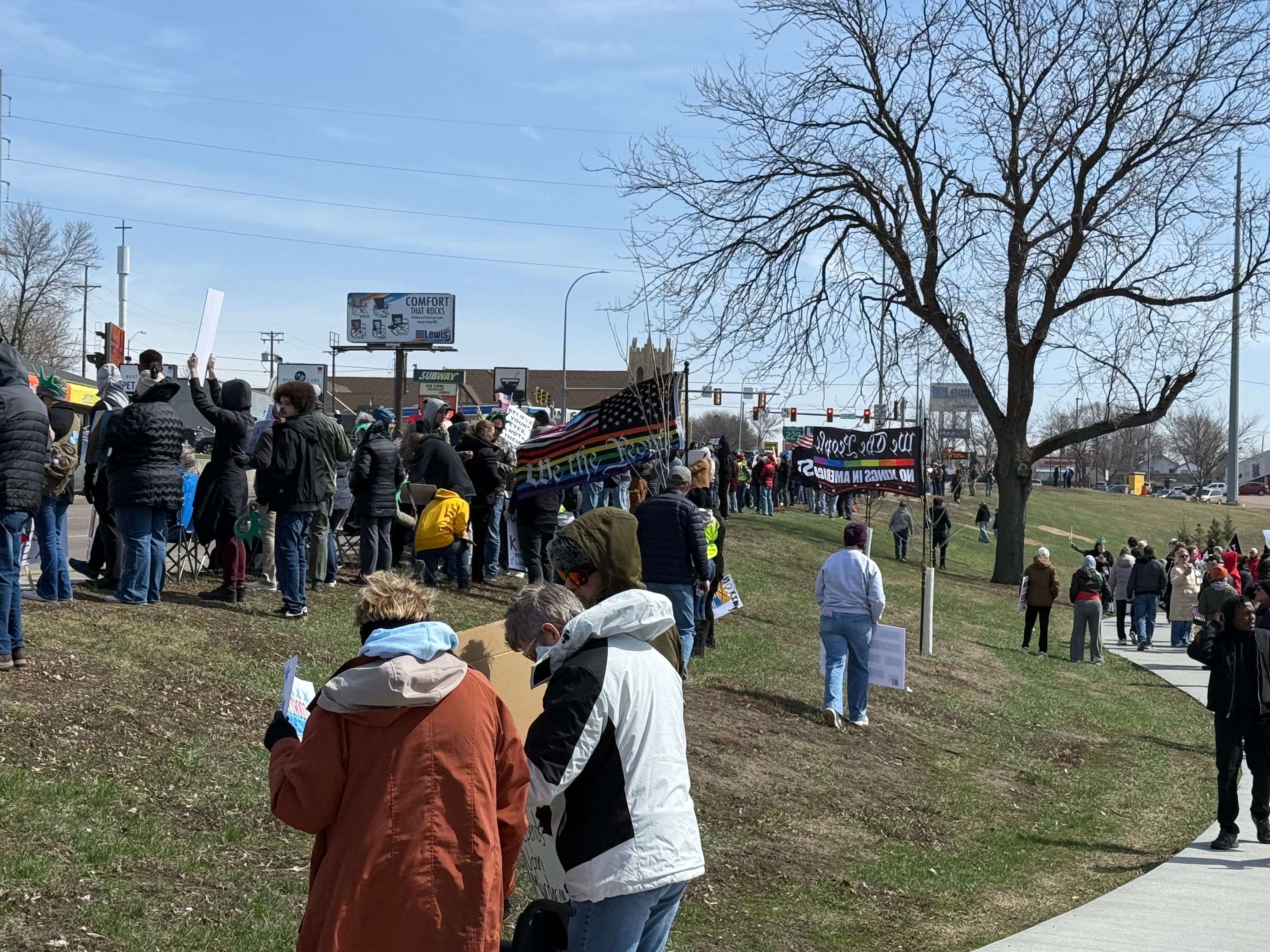
Protesters gathered around the stage located just west of the Drake Springs Skate Park, while many more lined the sidewalks along the west side of Cliff Avenue and the south side of 10th Street, stretching as far west as the viaduct leading into downtown Sioux Falls.
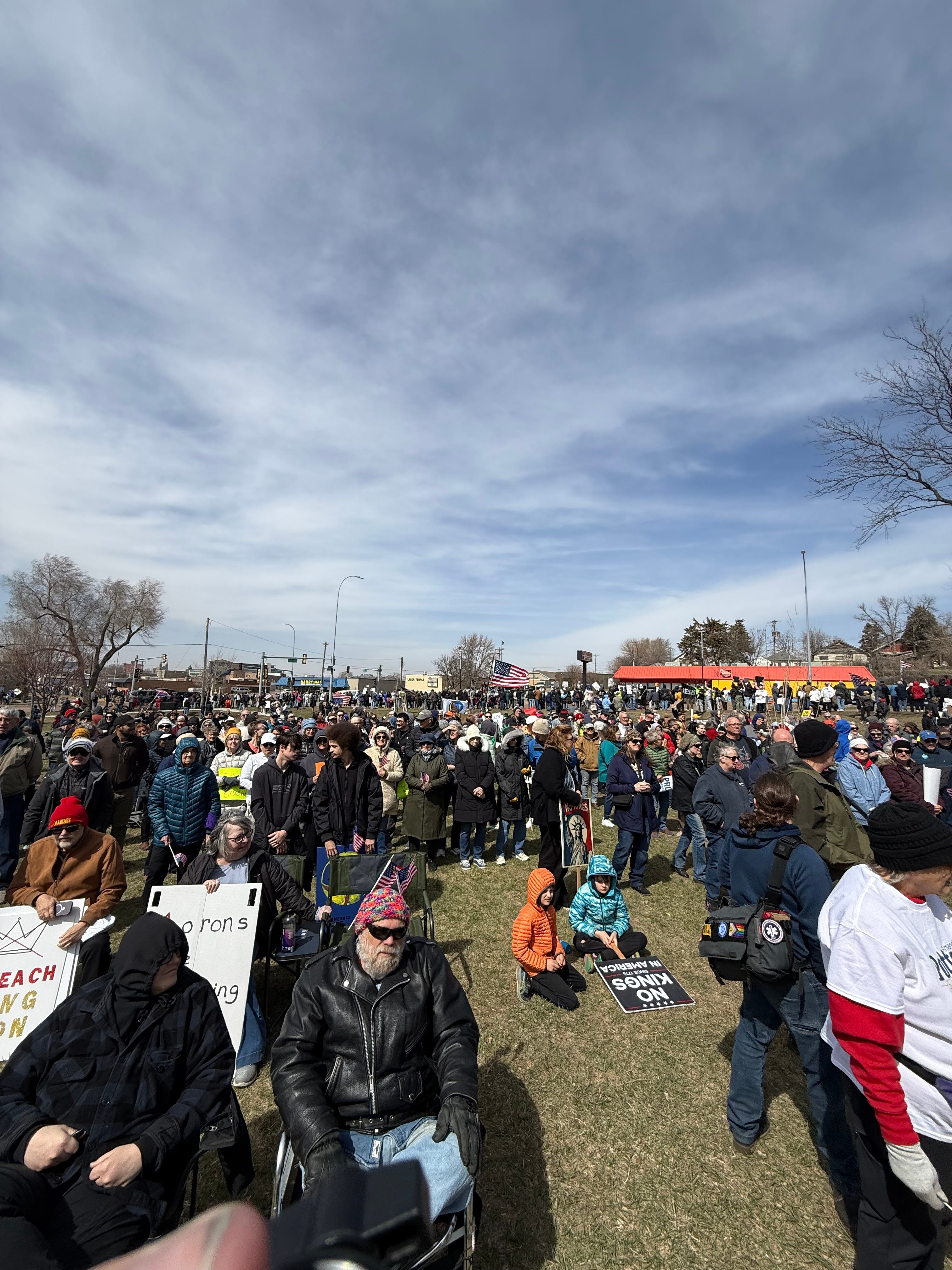
Event organizers said their official count showed between 3,000 and 3,500 attendees over the span of two hours. A rough visual estimate by reporters at the scene suggests that figure is likely close to accurate.
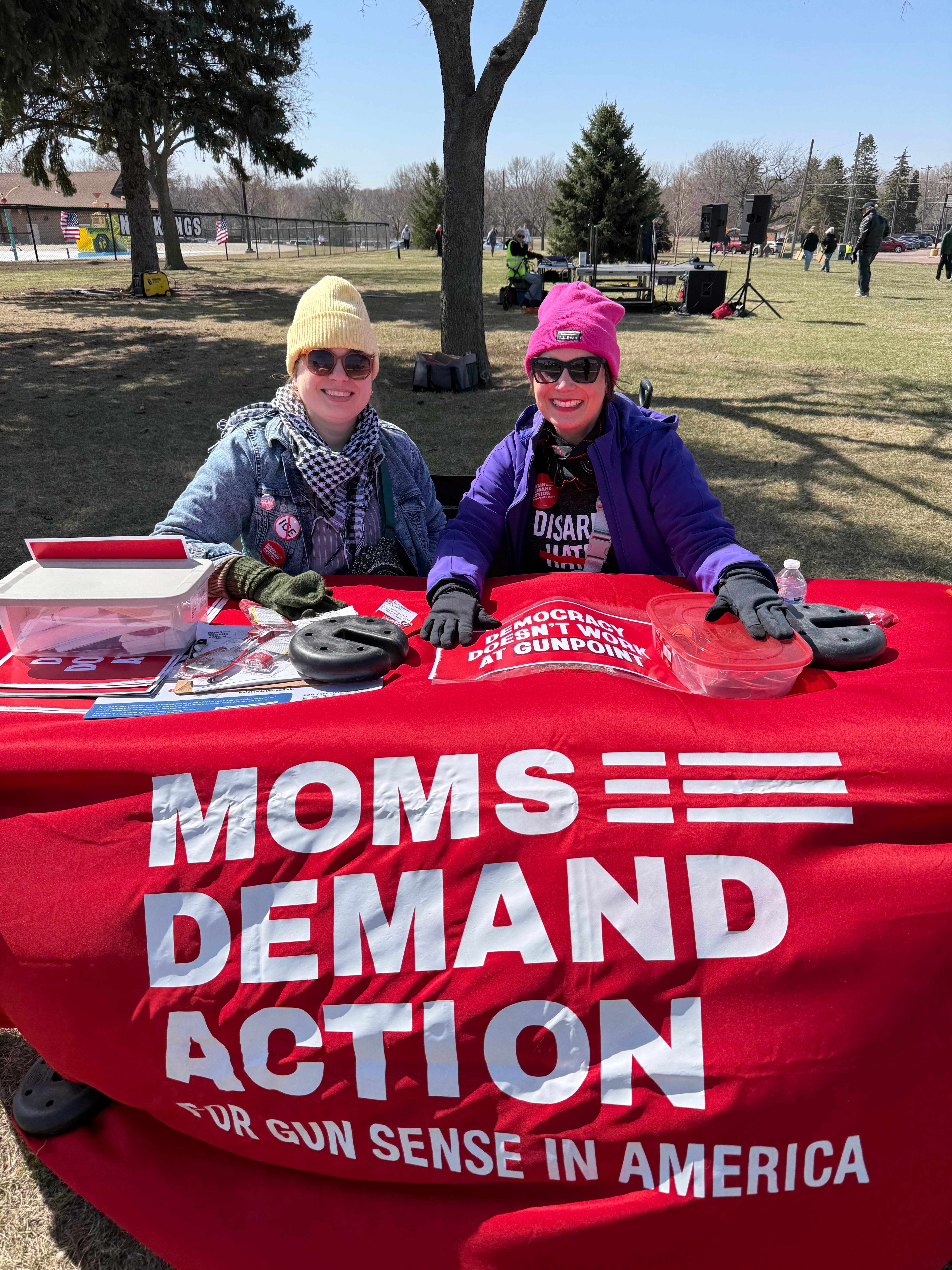
Groups such as the ACLU of South Dakota and Moms Demand Action for Gun Sense in America were stationed at the park with stands where they spoke with protesters and handed out informational materials on behalf of their organizations.
Those in attendance ranged from the elderly to children whose parents brought them along to witness the peaceful event on the warm but windy Saturday afternoon.
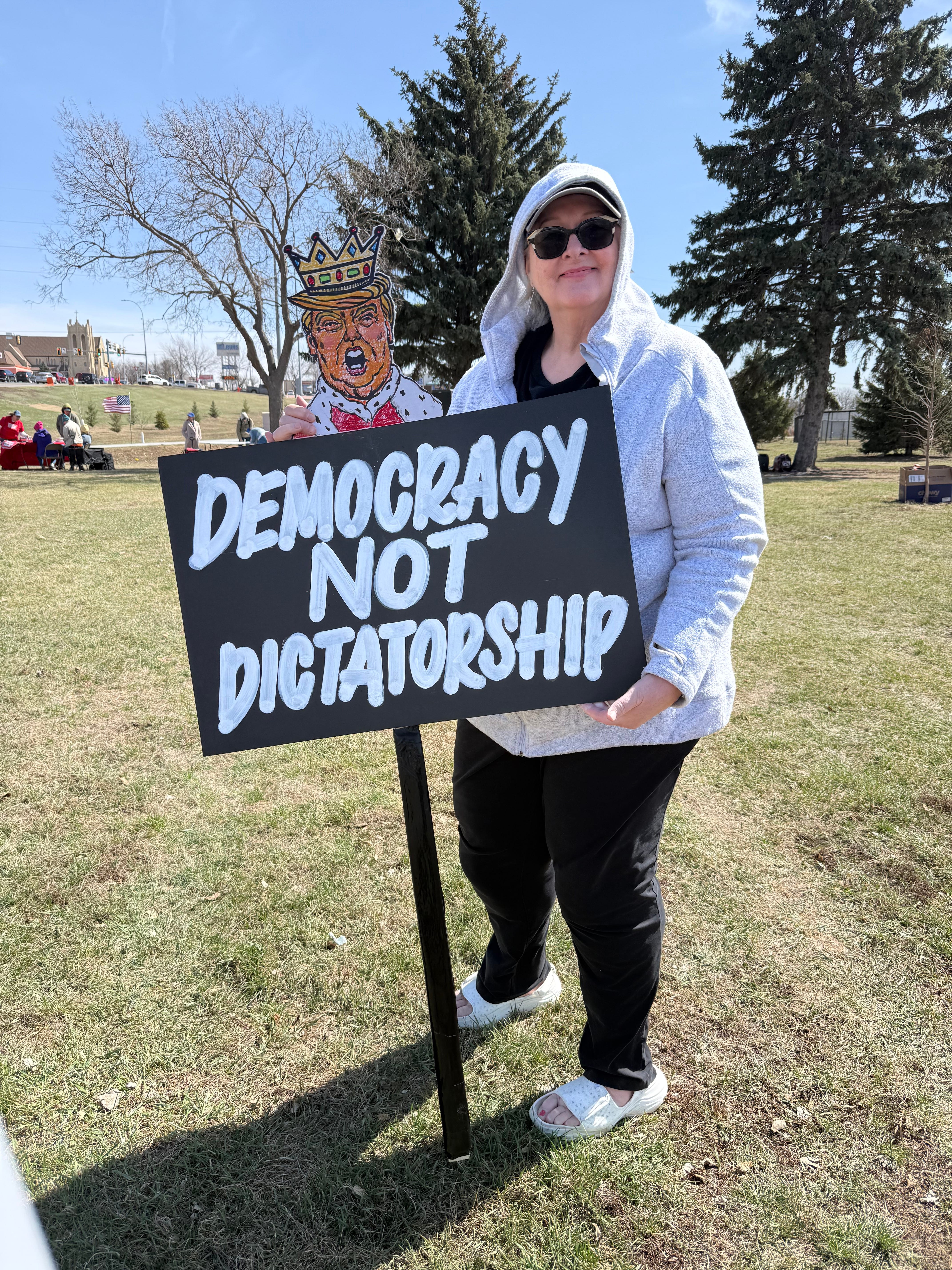
There was no shortage of signs made by protestors expressing the various sentiments associated with the movement. One sign read “DEMOCRACY NOT DICTATORSHIP” with a caricature of Trump wearing a crown.
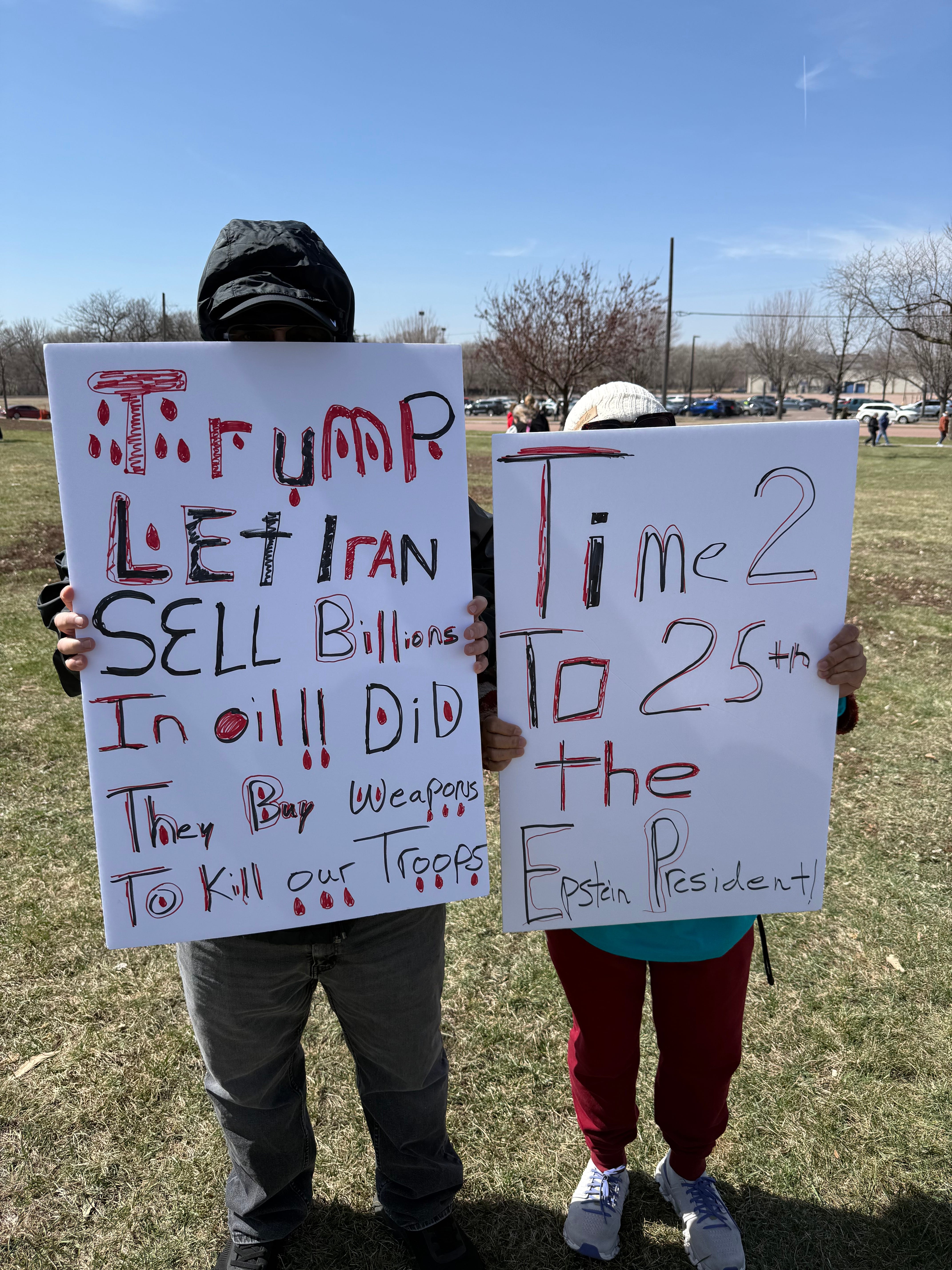
Others featured statements such as “Trump Let Iran Sell Billions in Oil!! Did They Buy Weapons to Kill Our Troops” and “Time 2 25th the Epstein President”.
A local protest tied to a national movement
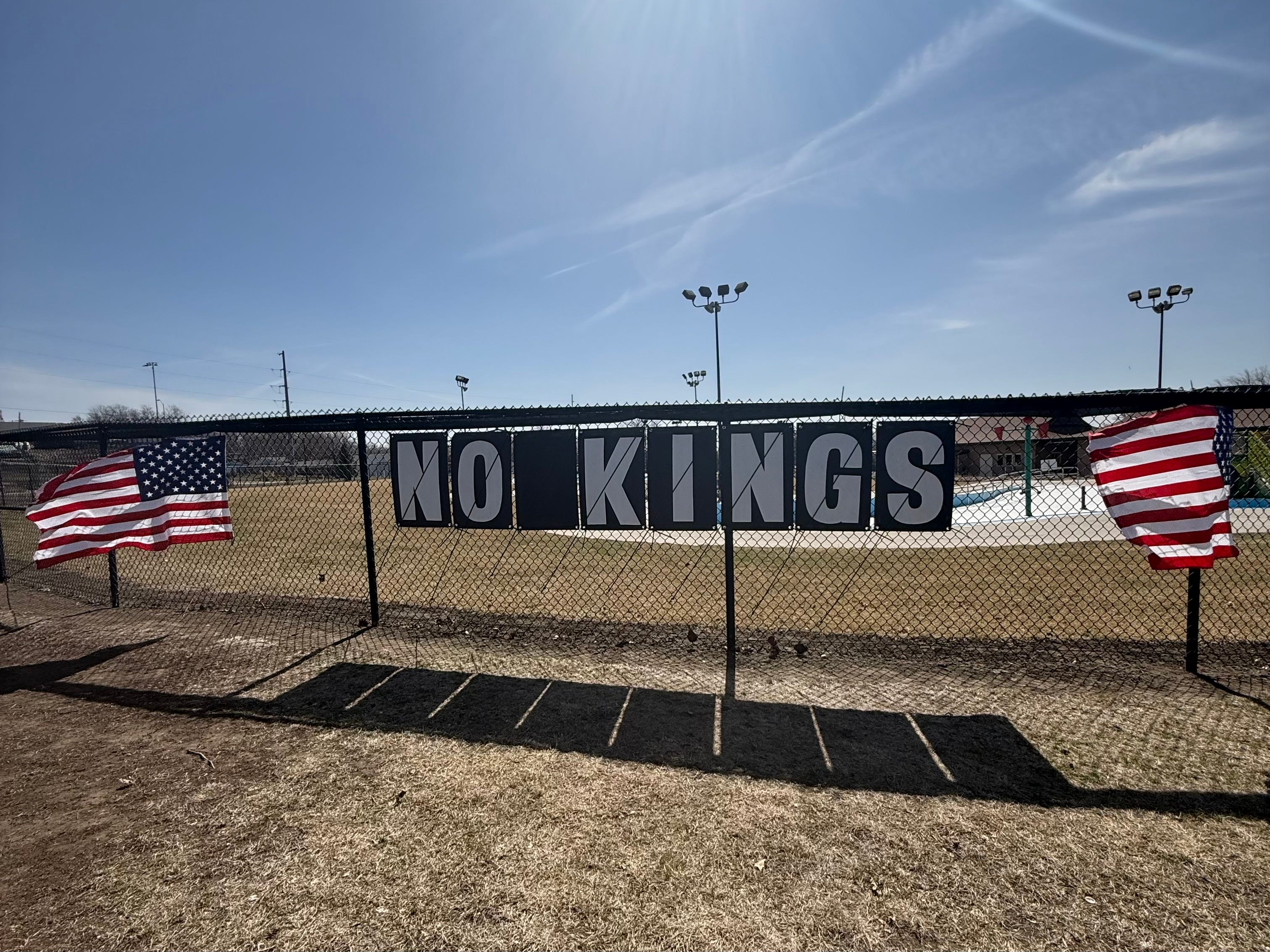
Much like Indivisible 605’s second No Kings protest held in October 2025, the overarching theme of the event was to make it known that in America, there are no kings, and that the country is a democracy in which no one individual holds unchecked power. Organizers and protesters alike expressed concerns over what they described as abuses of power and disregard for constitutional rights by the Trump administration.
“As the regime continues to launch one atrocity after another, threats to democracy and civil rights increase and are beginning to impact all Americans,” said Indivisible 605 organizer Roni Wegner. “We are in a war where the Administration cannot agree on a reason why; while our military men and women sacrifice with their lives. The overreach of this Administration and abdication of Congress has resulted in the murder of numerous human beings and placed others, including children, in filthy, torturous detention centers. And now an assault on voting rights has begun. This is not who we are - in America our constitution rules, and under God, every human deserves dignity.”
At this event, Indivisible 605 promoted their Nationwide Red Line Campaign. The campaign asks Members of Congress “who have a red hat” to find their red line and take action to stop the reckless actions of this Administration. “Participants complete a Red Line letter to be delivered to their MOC; a red crayon is included to help them find their red line,” said Roni Wegner with Indivisible 605.
Common issues touched on throughout the event included the importance of organizing and voting in both local and federal elections, ICE deportations, the shootings of Minneapolis residents just months prior, the affordability crisis many Americans say they are experiencing, and how communities can come together to address those concerns.

Speakers call for organizing, voting, and collective action
Samantha Chapman
Samantha Chapman, advocacy manager for the ACLU of South Dakota, gave a speech focused on what she described as threats to constitutional rights and abuses of power posed by the Trump administration. Speaking on behalf of the ACLU’s mission to defend constitutional rights, Chapman said power belongs to the people, not to President Trump, Governor Kristi Noem, or any one administration. She also criticized South Dakota’s new voter law, S.B. 175, as a barrier to participation and urged attendees to check their registration, meet deadlines, and vote.
Amanda Potter
Amanda Potter, a candidate for South Dakota State House District 9, spoke less as a politician than as a neighbor urging people to see protest as part of a long American tradition. Drawing on examples from the Boston Tea Party, the Civil Rights Movement, and the Stonewall riots, Potter argued that progress is never immediate, but depends on ordinary people who are willing to keep showing up. She encouraged the crowd to turn that energy into action by voting in local and state elections, supporting community candidates, and strengthening the communities around them.
Everett Palmer
Everett Palmer urged attendees to stay rooted in history, community, and one another, arguing that lasting action begins with understanding where those struggles come from. He said people come from “a long lineage of freedom fighters” and pointed to efforts to erase Native American history as a reminder that knowledge itself holds power. Palmer encouraged the crowd not to leave feeling powerless, but to support local organizations, make and support art, volunteer, learn more about South Dakota’s communities, and stay engaged politically.
Nikki Gronli
Congressional candidate Nikki Gronli warned that democracy does not vanish all at once, but instead erodes gradually when people fail to defend it. Framing the upcoming election as a critical moment, Gronli urged voters to stay engaged, take action in November, and continue organizing beyond Election Day.
Amanda Kendall
Amanda Kendall, co-founder of Let Sioux Falls Vote, pointed to local examples such as the data center meeting and a petition drive to argue that voting remains one of the most important ways people can reclaim power. She urged people to register, confirm their voter status, and stay engaged over the long term so community voices are not pushed aside.
Julian Beaudion
Julian Beaudion, a U.S. Senate candidate seeking to unseat Sen. Mike Rounds, argued against what he called unchecked power and urged a return to a democracy where power belongs to the people. He framed the rally as both a protest against current leadership and a stand for accountability, representation, and a government that listens to ordinary people.
Jamie Smith
Sioux Falls mayoral candidate Jamie Smith closed his remarks by laying out a vision for the city centered on unity, inclusion, and collaborative leadership, while urging residents to vote on June 2. Emphasizing that “we are better when we work together,” Smith rejected divisive politics and said leaders should “bring us together” and “breach divides” by engaging with different viewpoints and building mutual understanding.
Music and poetry shaped the event’s tone
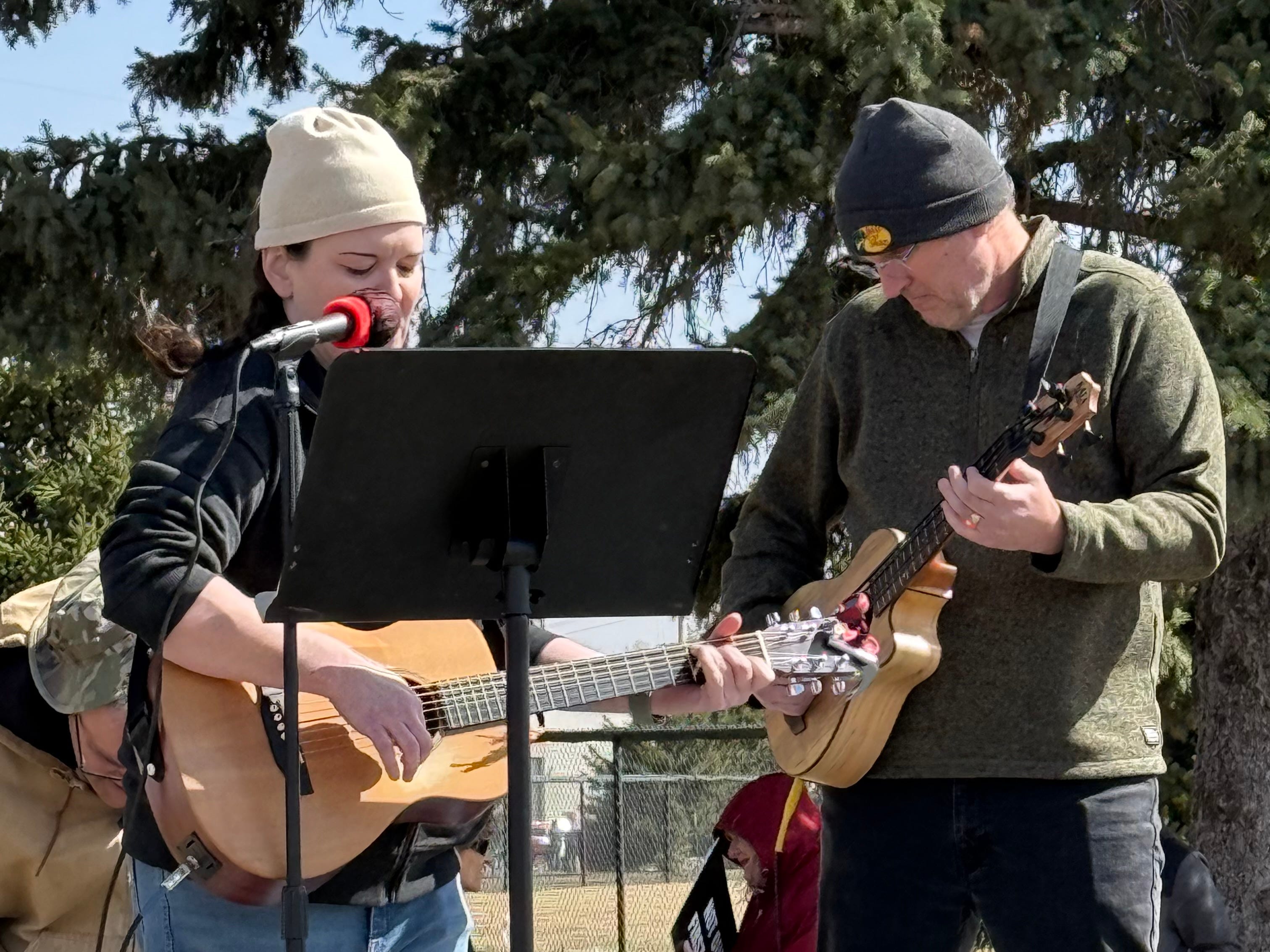
Performance also played a role in shaping the tone of the afternoon.
In her poem, KC Brauer moved from personal vulnerability to a message of collective strength, telling the crowd that their presence was itself an act of defending democracy. By connecting individual hardship to shared resilience and ending with a unifying chant, Brauer’s poem emphasized that resisting autocracy requires unity, participation, and a deep love for community.
Singing Resistance Sioux Falls took to the stage to provide political relevance to the protest via song in their first ever public appearance.
A visible show of political energy
As the event came to a close Saturday afternoon, attendees slowly filtered out of Drake Springs Park after two hours of speeches, music, and organizing. With thousands turning out, a visible presence along Cliff Avenue and 10th Street, and multiple advocacy groups participating, the gathering reflected a level of political energy that organizers say continues to grow in Sioux Falls.
For many there, the message was straightforward: democracy depends on participation, and local action remains one way to respond to national concerns.

Thanks so much for your coverage!
The Knoxville TN No Kings rally was also really great. The energy was amazing.