


There are drives you remember because of thunderstorms, traffic jams or some roadside oddity that leaves you wondering whether everybody else is living on the same planet. Then there is my usual, habitual run up the interstate and across Tupelo. I have made it often enough that the truck could probably finish the trip without me, though I have no plans to test that theory.
Nothing was out of the ordinary this week. That was fine by me. I was headed back to Backline Music Hall to see some friends and spend an evening with Riki Rachtman, a man whose stories were raised on the Sunset Strip and had now traveled to the birthplace of Elvis Presley.
Marla, Randy, Clay and Ricky met up with me before the doors opened. We collected our wristbands, got everything squared away and talked for a few minutes before making our way inside. The room filled quickly once the doors opened. We found good seats, I made my usual rounds to speak with the Backline team, grabbed a drink and settled in.
Our group had grown up watching Rachtman host “Headbangers Ball” on MTV. Back then, finding new music required patience, a television schedule and occasionally a blank VHS tape with somebody else’s birthday written on the label. Seeing the man who once delivered heavy metal into our living rooms now standing a few feet away in Tupelo felt like somebody had pulled an old memory from the attic, dusted it off and handed it a microphone.
Before metal history could be replayed on demand, Riki Rachtman was already living inside it. He co-founded Hollywood’s World Famous Cathouse with Faster Pussycat frontman Taime Downe, then hosted MTV’s “Headbangers Ball” from 1990 until the original show ended in 1995. With one hand on the club door and the other wrapped around a microphone, Rachtman became the hinge between the Sunset Strip’s private chaos and the millions watching from home. His authority was never borrowed from a cue card. It came from friendships, questionable decisions, sleepless nights and the trust granted only to somebody who was already in the room.
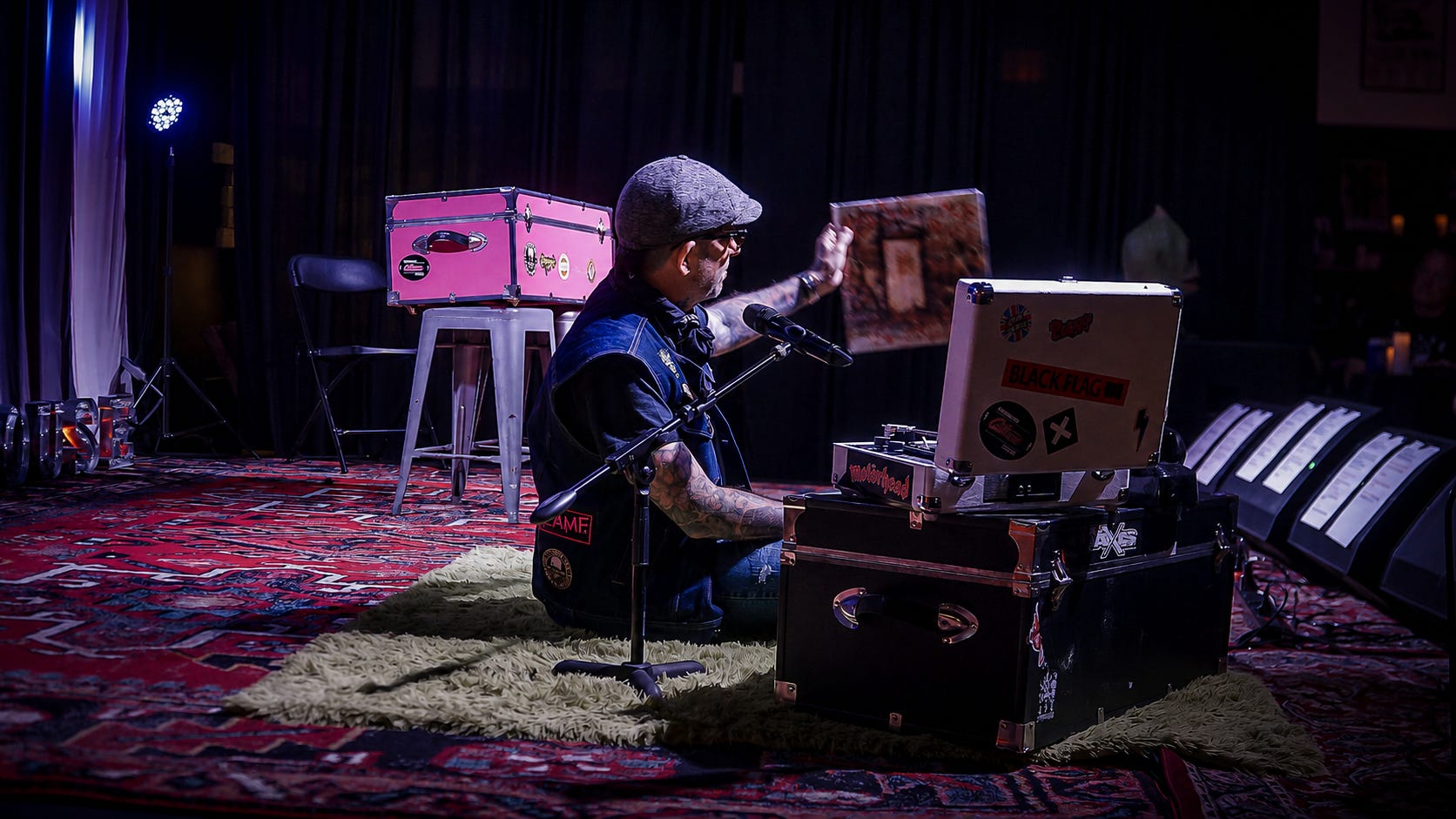
A video presentation played before the show, flashing a few oddities and treasures across the screen while we waited. It offered a first glimpse into the collection of photographs, footage and personal artifacts Rachtman would use throughout “One Foot in the Gutter”. The official description promises true stories of rock and roll, sleaze and debauchery, but the show also examines what remains after the party finally turns on the lights.

Please consider Donating to Sponsor an article even $1 helps!

Put the phone down and watch
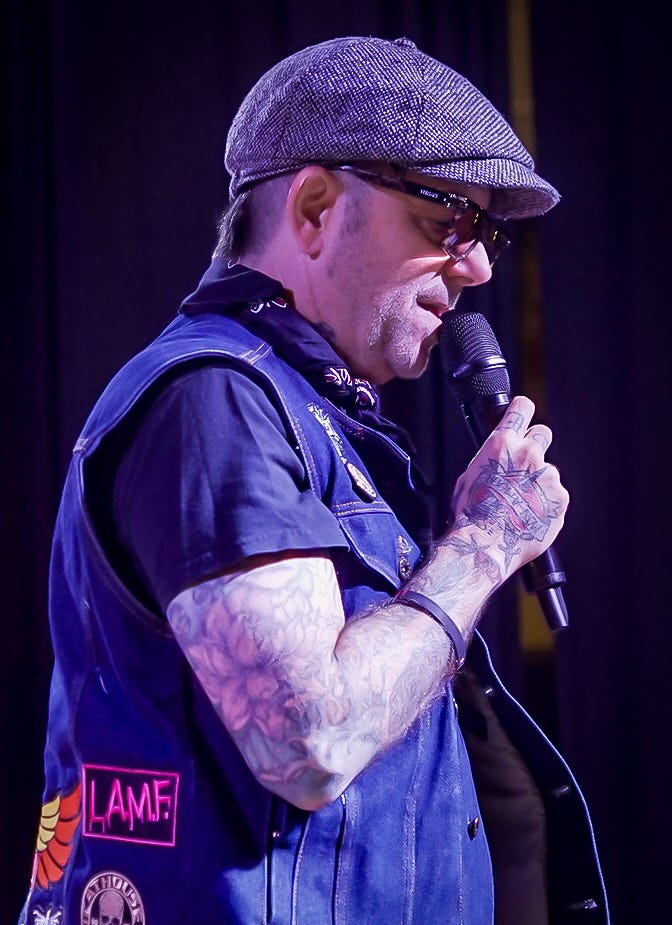
Before Rachtman came out, I stopped at the merchandise table to meet Cathouse Karen. I wanted to make sure taking photographs would be all right, so she went directly to Riki and asked.
The answer came back simple. Photos were allowed. Video was not.
That worked for me.
I understand Riki’s policy. We have all been to shows where half the room is filming the other half of the room trying to film the stage. People pay good money for a ticket, then spend the evening watching everything through their own phone. You did not pay all that money to stare at a six-inch screen, did you?
Keeping the cameras down also protected the stories. “One Foot in the Gutter” depends on surprise, timing and the feeling that Rachtman might open any one of those cases and pull out a piece of rock history nobody expected to see. Recording the entire performance would turn those moments into internet scraps before the next audience had the chance to discover them.
The policy also kept everyone involved. People watched Riki instead of watching themselves record Riki. When he addressed someone in the crowd, they answered. When a photograph appeared onscreen, the room reacted together. The evening felt like a conversation rather than a lecture.
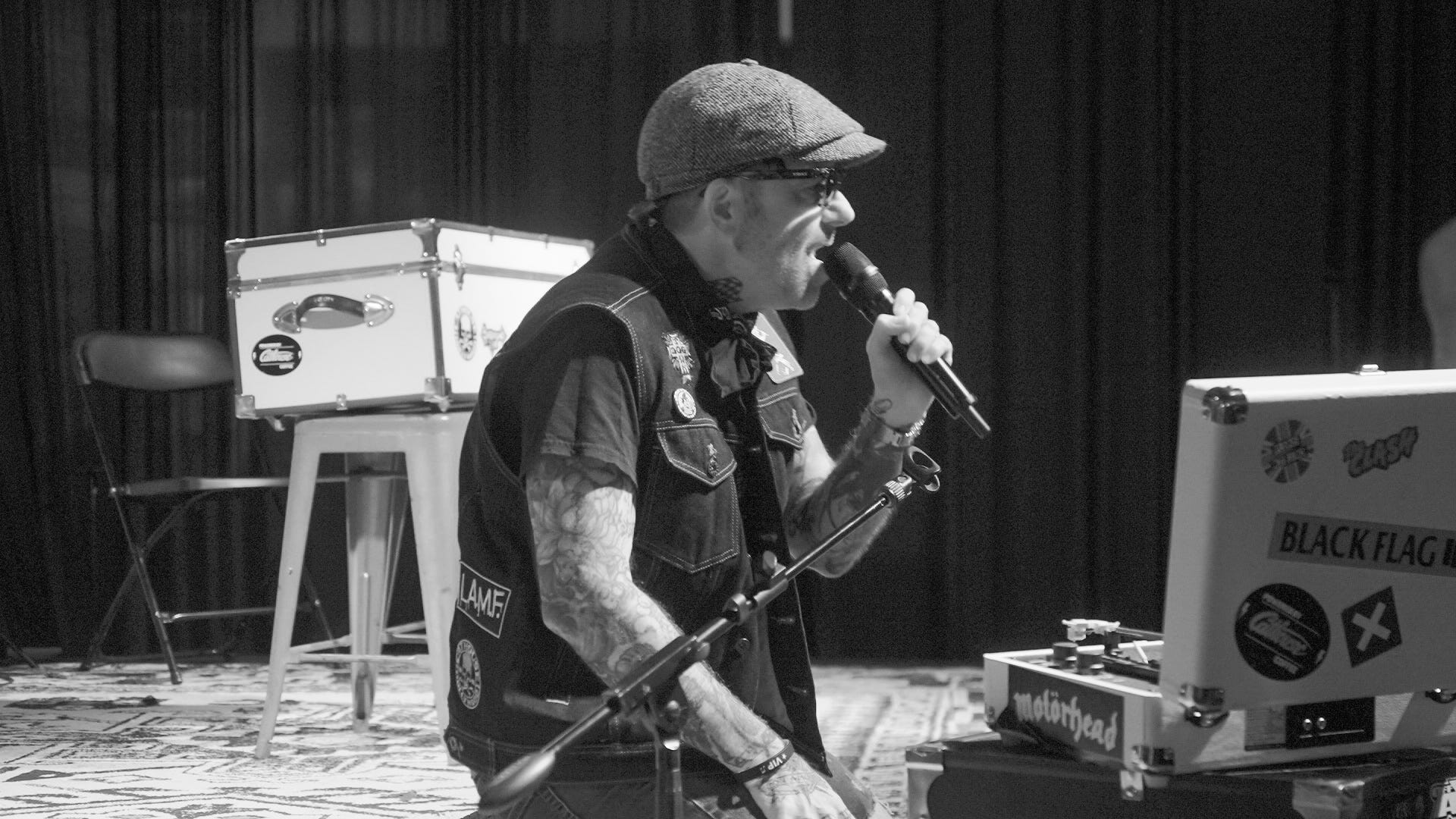
Rachtman, Anita, Cathouse Karen and Jerry have clearly put a great deal of work into building and touring this production. I am not going to hand out the best stories in advance. There is enough here to explain the shape of the show without opening every box before it reaches your town.
When nothing wants to cooperate
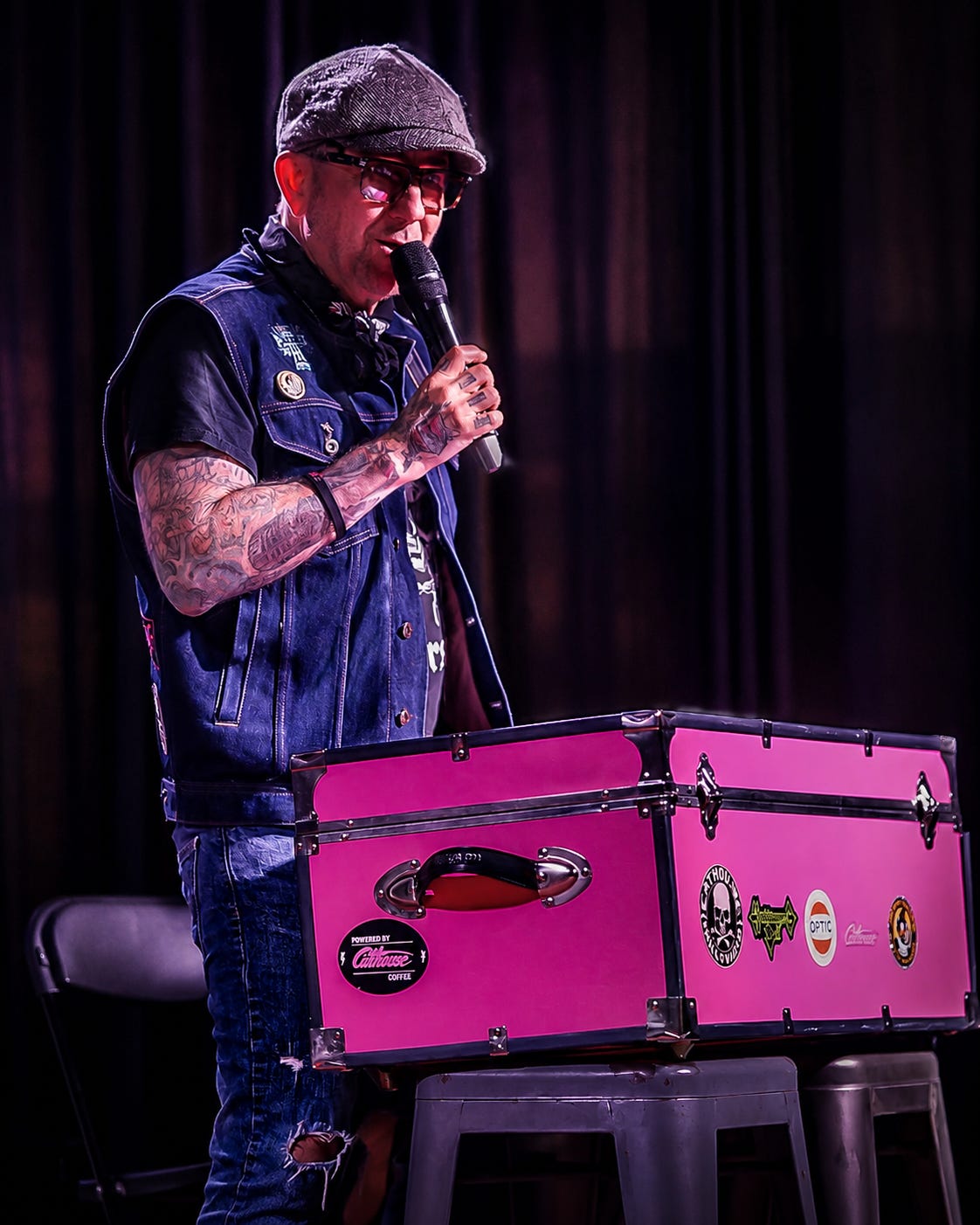
Rachtman began by explaining that they had experienced one of those days when absolutely nothing wanted to cooperate. Anyone who has spent time around live events knows those days. Cables become temperamental, equipment forgets what it was designed to do and technology suddenly decides it would rather pursue a different career.
A couple of bugs followed the crew onto the Backline stage. Instead of allowing them to derail the evening, Rachtman and Anita worked through the trouble while taking playful shots at each other. Their jabs became part of the show, turning technical frustration into some of the night’s first big laughs.
You could see how well they functioned together on the road. There was no panic and no awkward attempt to pretend everything was perfect. Riki acknowledged the problems, Anita gave him a little grief and together they pulled the show back into place.
Once everything settled, the presentation moved back toward Los Angeles and the beginning of the World Famous Cathouse. Rachtman and Taime Downe built the club through friendship, shared trust and their connections to a scene that was about to become much larger than any of them could have predicted. Downe eventually turned his attention toward Faster Pussycat, leaving Rachtman to guide the club deeper into rock-and-roll history.
The Cathouse became one of Hollywood’s most infamous rock-and-roll gathering places, where musicians could walk through the door without immediately becoming a performance for everyone around them. Many were already Rachtman’s friends before their faces appeared on magazine covers and arena screens. Inside those walls, rising stars, established musicians and assorted creatures of the night all entered the same orbit.
Rachtman took us from the club’s beginning through its final years, following friendships that survived the chaos and stories that probably should not have. He shared rare photographs, old footage and moments many people in the crowd had never seen. Some images drew immediate recognition. Others felt like somebody had discovered a secret compartment beneath the Sunset Strip.
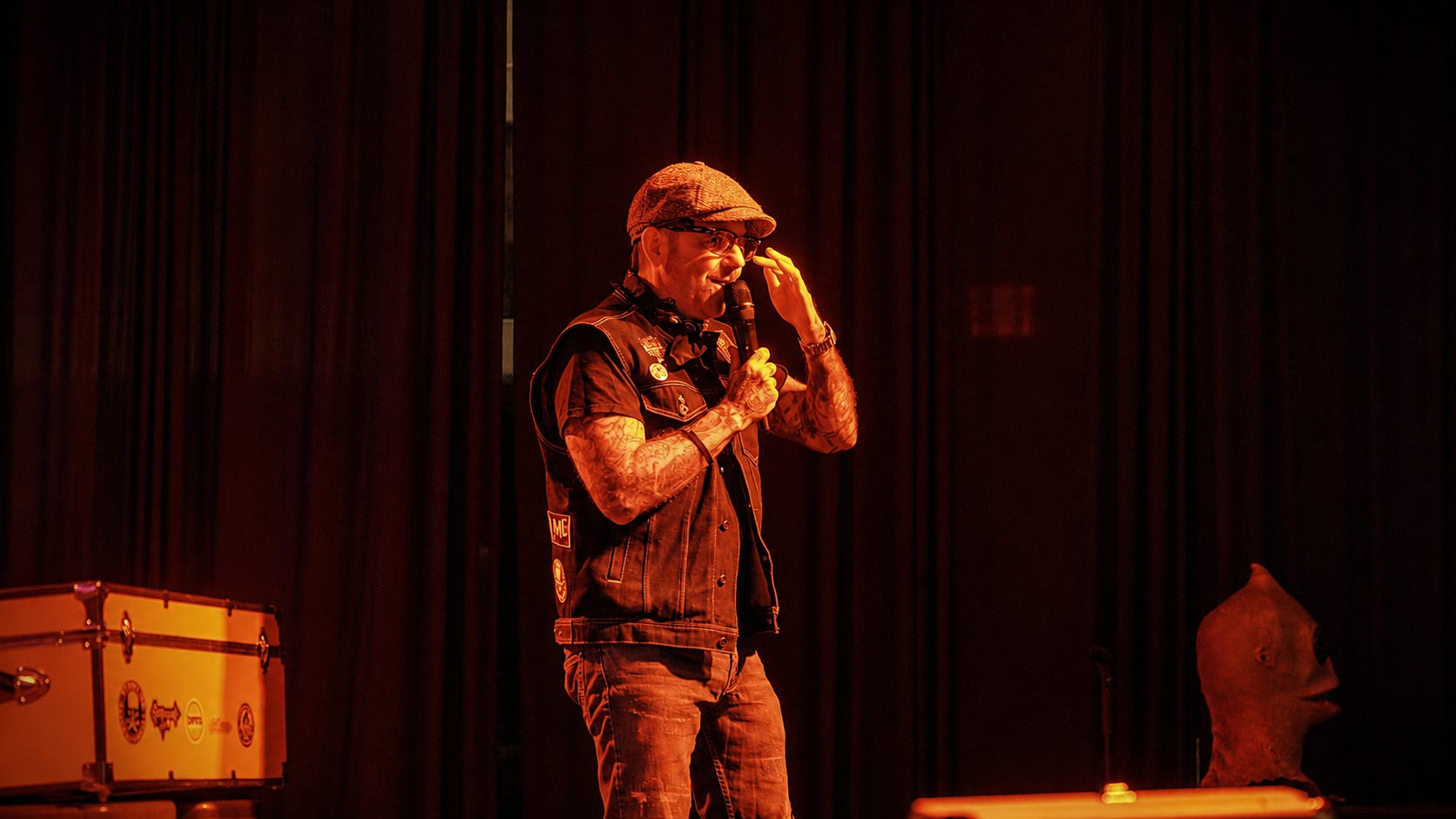
There was plenty of debauchery. Nobody walked into a Cathouse story expecting a seminar on sensible decision-making. Still, the show did not treat the club as one endless parade of drunken celebrities. The real foundation was trust.
The musicians knew Rachtman before television turned him into a national figure. He knew them before fame added publicists, security and layers of mythology. Those relationships gave him access, but they also gave the stories warmth. Beneath the madness were people looking out for one another, laughing at one another and occasionally dragging one another out of situations that had seemed like excellent ideas several hours earlier.
The Ball rolls through Tupelo
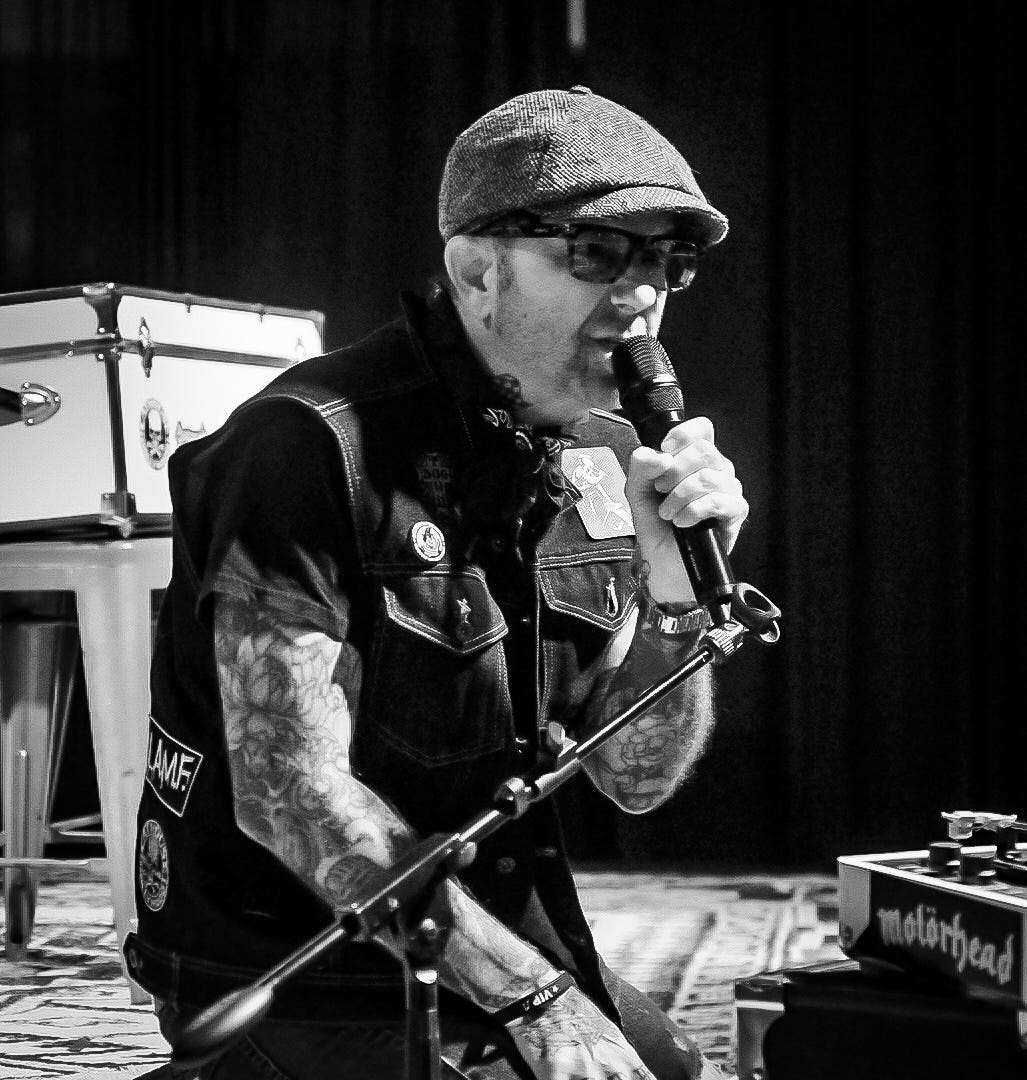
After exploring the Cathouse years, Rachtman moved into the chapter most familiar to our table: MTV’s “Headbangers Ball”.
For metal fans in the early 1990s, the show was an appointment. There were no streaming libraries waiting for you the next morning. There was no algorithm preparing a playlist based on whatever you had listened to while mowing the lawn. You stayed awake, turned on MTV and waited to see where Rachtman would take you.
“Headbangers Ball” could introduce a band, provide a glimpse backstage or turn an interview into the kind of chaos that would make a network executive quietly reconsider several life choices. Rachtman hosted the program from 1990 through 1995, sitting across from many of the biggest names in metal and hard rock during one of the genre’s most dramatic periods. The surviving episode archive reads like a directory of everyone who made the era louder, stranger and harder to explain to our parents.
By then, many of the guests were already his friends.
That changed the interviews. Rachtman was rarely approaching musicians as a stranger armed with a list of polite questions. He knew their personalities, their history and which buttons could be pushed without starting an international incident. The resulting footage often felt less like a formal television appearance and more like friends causing trouble near expensive cameras.
At Backline, Rachtman guided us through photographs, video and stories from those years. Some moments brought loud laughter. Others produced the low murmur of recognition that moves through a room when everyone suddenly remembers the same Saturday night.
For our group, those clips did not simply document an old television show. They reopened the years when we first encountered many of those bands. Watching the footage in 2026, with Rachtman standing beside the screen and explaining what happened outside the camera frame, stitched the public version of “Headbangers Ball” to the private one.
He was not looking back from a distance. He knew what happened before the red light came on, what happened after the director yelled cut and which stories improved with age.

Some history arrives in dates and headlines. This history wore leather jackets, ignored curfews and occasionally woke up with no clear explanation for the previous evening.
Rachtman also refused to present the past as a perfect kingdom destroyed by modern music. The era was exciting, reckless and often absurd. Some friendships lasted. Others broke. The television landscape changed, the Sunset Strip transformed and the culture moved on, usually before anyone had finished packing.
The people missing from the photographs
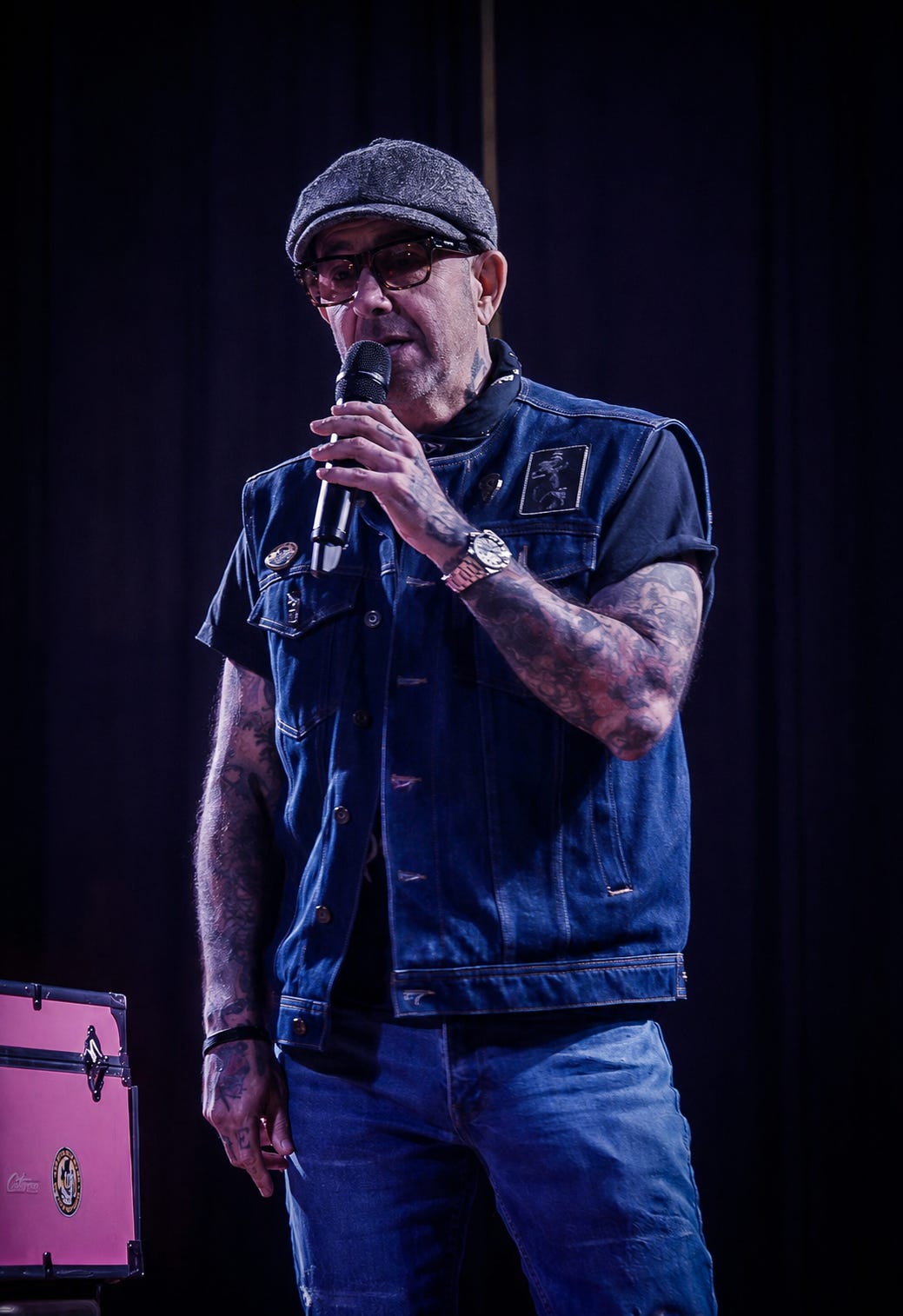
As the presentation moved through the years, the tone gradually changed. The laughter remained, but the photographs began carrying the weight of people who are no longer here.
Rachtman remembered musicians including Shannon Hoon, Lemmy Kilmister, Ozzy Osbourne and Kurt Cobain. Their images returned them to the room for a few moments, not as distant figures carved into rock history, but as people Rachtman had spoken with, laughed with and sometimes watched stumble through the same strange machinery of fame.
Ozzy’s inclusion carried a different weight after his death in July 2025, adding another name to the growing list of figures whose work shaped the world Rachtman was describing. His official archive still holds the music, videos and history of a career that stretched from Black Sabbath’s earliest records through his final performance.
After Lemmy died, several people close to him received bullet-shaped capsules containing some of his ashes. Rachtman was among those chosen. At Backline, he showed us the engraved bullet entrusted to him, a small silver object carrying part of a friendship much larger than anything that could fit inside it.
Rachtman has previously spoken about the bullet containing Lemmy’s ashes, describing it as the greatest gift he had ever received. The photographs accompanying the story explained why. They showed a relationship that existed beyond interviews and television appearances. Lemmy was not simply the frontman of Motörhead or a legendary musician Rachtman once met. He was his friend.
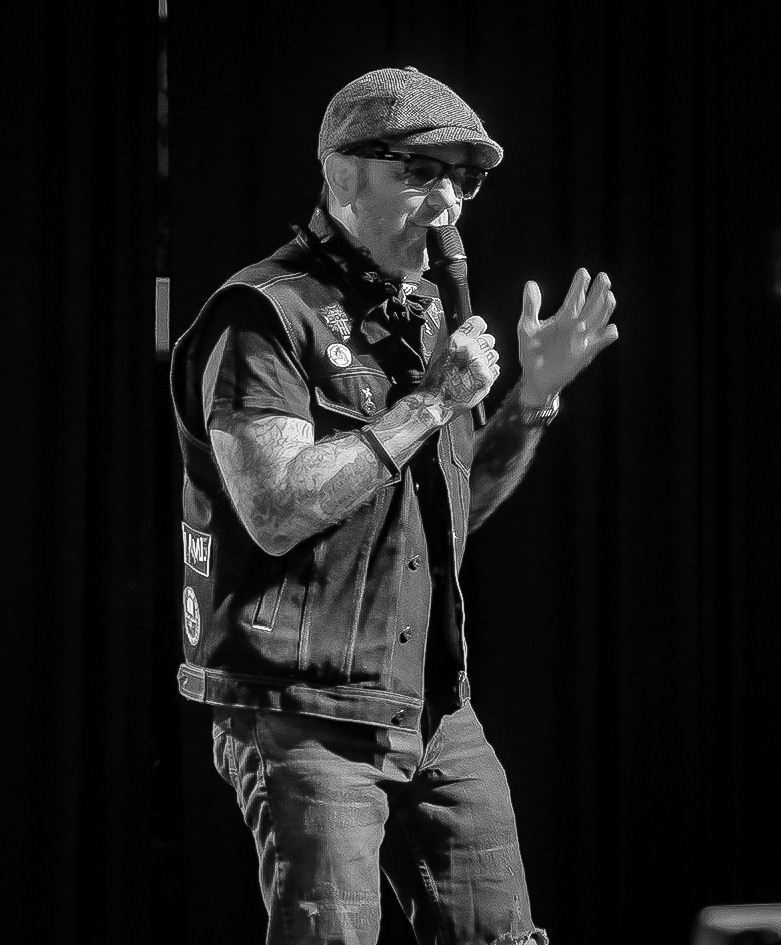
It would be difficult to imagine a memorial better suited to Lemmy. Nothing delicate. Nothing dressed up in soft language. A bullet carrying the ashes of a man who played bass as though the amplifier owed him money.
Then, as good storytellers know how to do, Rachtman eventually brought us back toward laughter. Grief and humor shared the stage without one canceling out the other. That is often how old friendships survive inside us. One story leaves you smiling. The next catches in your throat. Then another makes you laugh before you have fully recovered.
One foot farther down the road
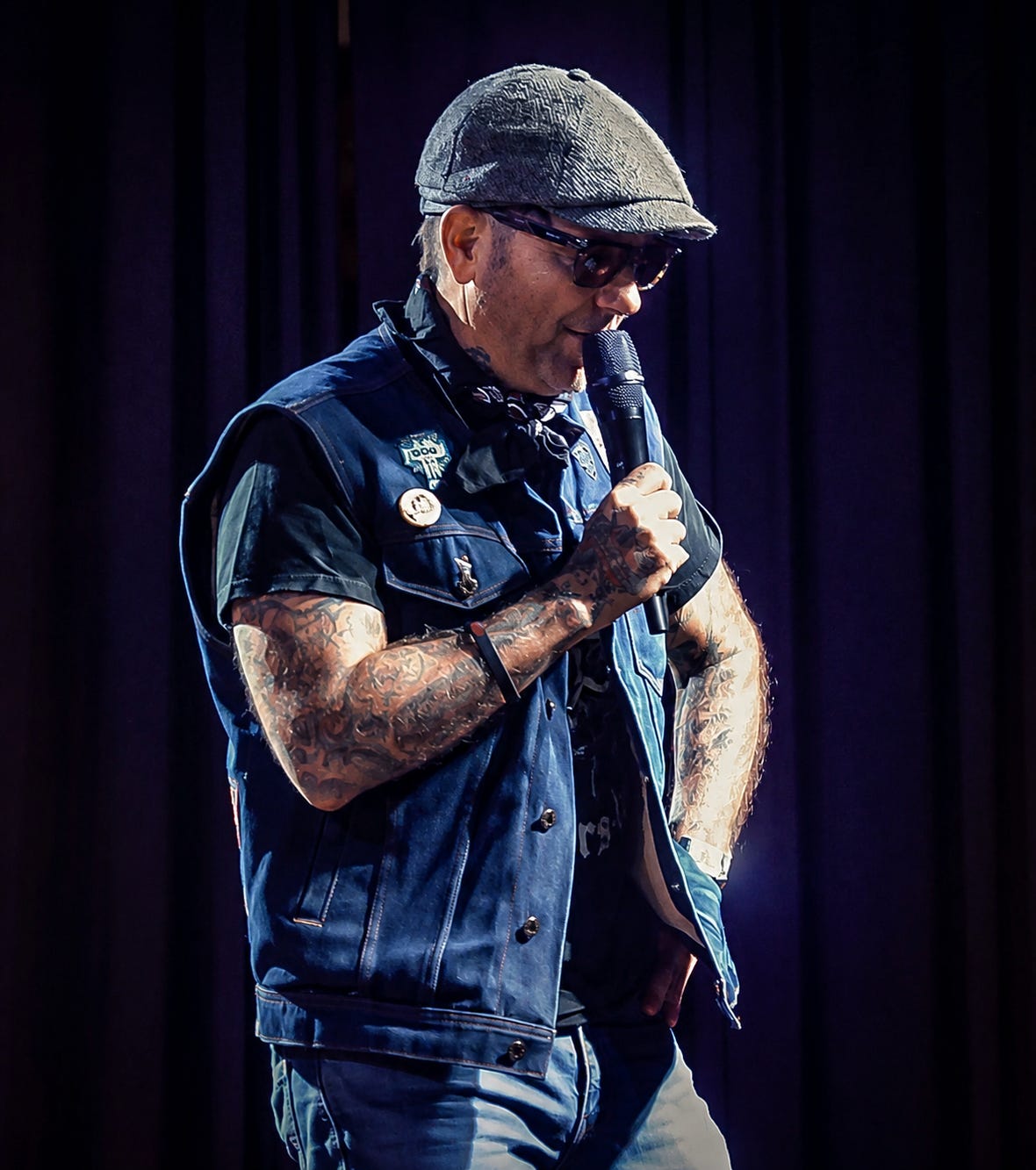
The evening ran longer than expected, but nobody seemed concerned. We would have stayed much later to hear Rachtman keep talking.
He continued through other projects, later chapters in his life and the collection of choices that eventually brought “One Foot in the Gutter” to a small music hall in Tupelo. The famous landmarks were all present, but the distance between them became just as interesting.
Most people knew the Cathouse and “Headbangers Ball.” Rachtman filled in some of the roads connecting those destinations. Careers rarely travel in straight lines. They take wrong turns, stall in strange towns and occasionally find their most interesting chapter somewhere they never expected to stop.
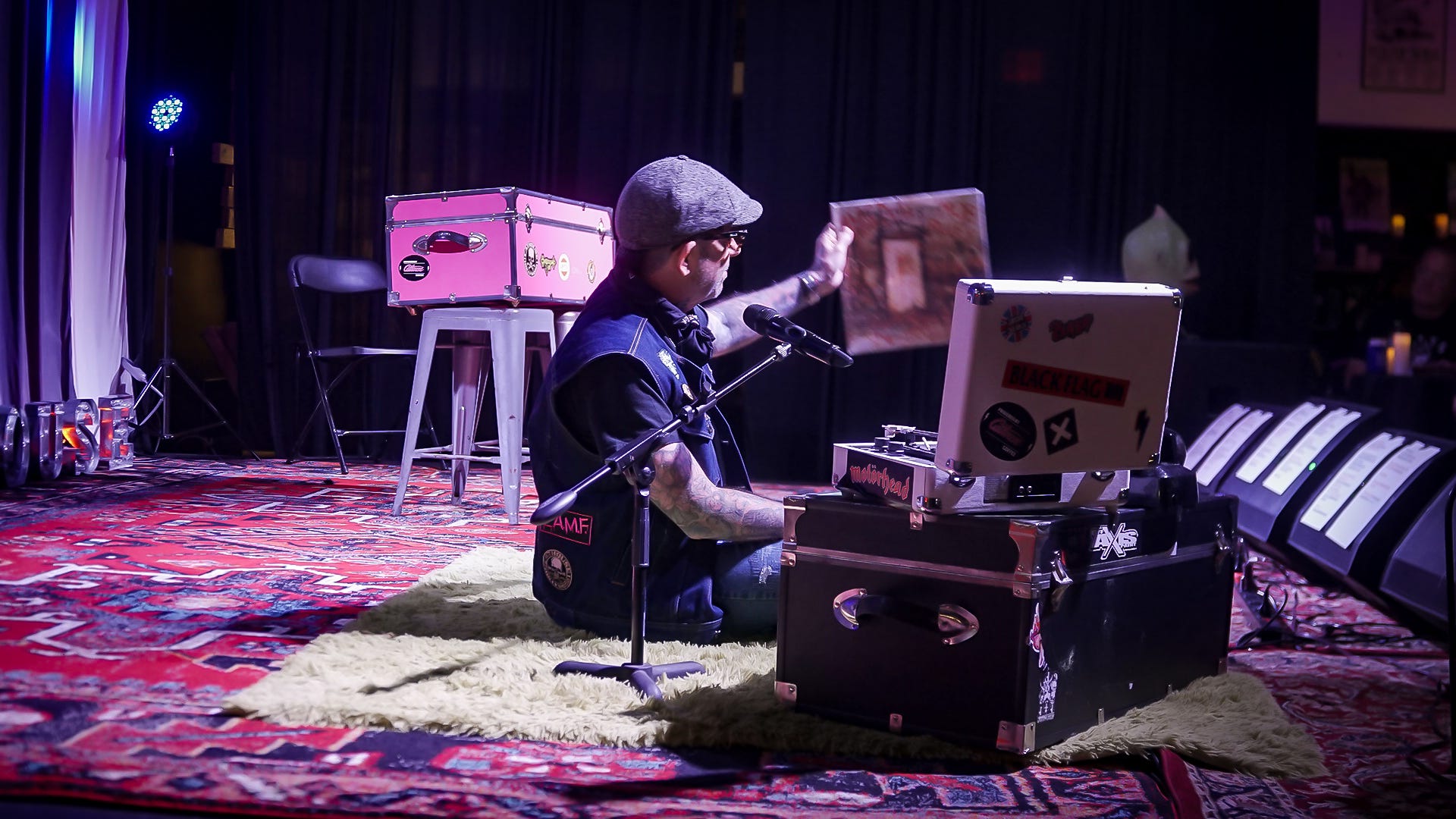
Thirty-five years can reduce a life to a handful of familiar images. Rachtman placed movement back inside them. The old photographs became scenes again. The television clips regained everything that had happened around them. Friends who had died walked back into the story for a while.
Afterglow
Elvis has left the building.
Well, actually, he was never there.
Riki Rachtman sure as hell was.
Heavy metal came to Tupelo looking for the ghosts of the Sunset Strip and found them sitting inside a collection of road cases. Rachtman opened those cases one at a time, pulling out photographs, footage, artifacts and several decades of stories that had somehow survived the people living them.
We heard about the debauchery, chaos and madness of those years. We learned the truth behind a few familiar events and discovered interesting corners of others. We spent the evening listening to someone who had been close enough to see the legends before the rest of the world decided what their legends would become.
The drive home followed the same familiar interstate. Same exits. Same pavement. Same Mississippi night.
Still, a familiar road can feel different after somebody hands you 35 years of memories before sending you back onto it.
Thank you to Riki Rachtman for a great evening and to Anita, Cathouse Karen and Jerry for carrying the show from town to town, even when the equipment has other plans.
Thanks once again to Cid, Christina, Meredith, Brian and Brent at Backline Music Hall for continuing to bring unusual events into Tupelo.
Get some rest.
Until next time……
Please consider Donating to Sponsor an article even $1 helps!
