



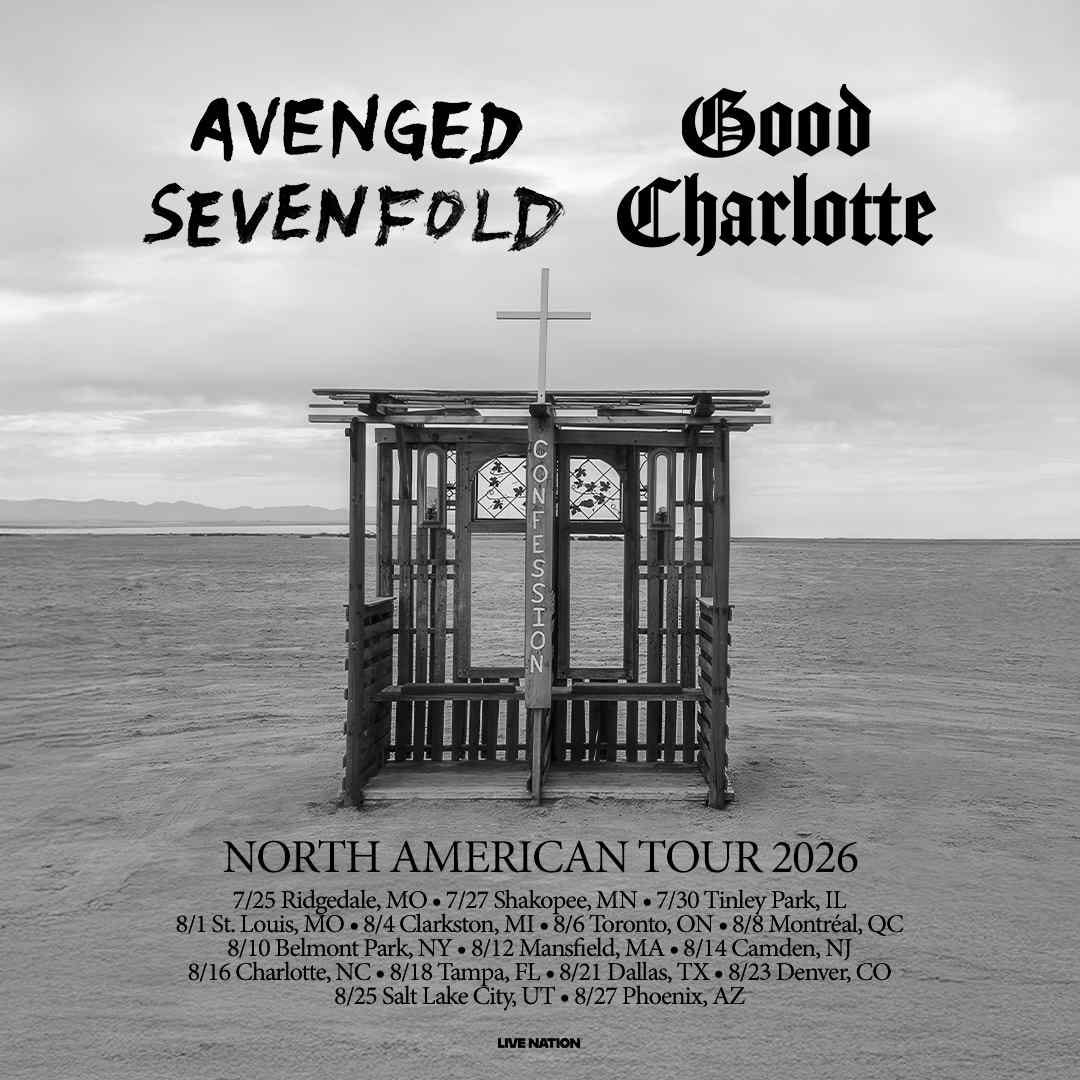
Avenged Sevenfold and Good Charlotte’s North American run continues through August, with dates still ahead in cities including Belmont Park, Mansfield, Camden, Charlotte, Tampa, Dallas, Denver, Salt Lake City and Phoenix. Anyone still debating whether to go should stop treating the decision like an encore that might never arrive. The remaining shows are already on sale, and tickets are available here.

Concert journalism has taught me one rule above all others: nothing is official until the email lands.
Coverage requests can sit unanswered for months before an approval appears hours before doors. Sometimes it never arrives. Eventually, you learn not to become emotionally invested in an assignment until your name is attached to an actual credential.
Except this was not just another assignment.
Avenged Sevenfold has been my band for as long as I can remember. Not one of my favorites. The favorite. Their music has followed me through long drives, bad days, victories and nearly every chapter that mattered. Covering them had remained untouched at the top of my professional bucket list, one of those dreams too important to mention casually because admitting how badly you want something gives disappointment sharper teeth.
By noon on July 30, I had accepted defeat.
The math refused to cooperate. Credit Union 1 Amphitheatre sat roughly 350 miles from our base in Des Moines. Doors were scheduled for 6 p.m., and credentialed media needed to arrive before the public. Without approval in hand, making the drive would have meant gambling nearly six hours of interstate travel on hope.
At 12:19 p.m., my phone buzzed. A Live Nation email. Approved. I had entirely given up already considering they had denied us for our closer to home show already a few days before in Minnesota. For some reason with Live Nation we get approved more for farther away shows which is inconvenient for our stronger MN, SD, IA, NE readership.
Not just for me, either. Igor had received his photo pass.
Everything changed in an instant.
We dropped whatever plans the day originally held. I climbed behind the wheel while Igor balanced his laptop in the passenger seat, determined to finish the work he had been in the middle of before the approval arrived. Somewhere between adrenaline and disbelief, Interstate 80 became a blur of construction zones, lane changes and increasingly questionable estimates from the GPS.
Red Bull probably deserves partial writing credit for this story.
With a 350-mile gap separating us from the venue, failure no longer felt like a reasonable option. My foot stayed hard on the gas while Igor worked beside me, occasionally looking up from his screen to check our progress. Five and a half hours later, after enough traffic to test anyone’s patience, we rolled into Tinley Park only to discover that surviving the drive had merely been the opening act.
Parking attendants bounced us between lots that were already full. Nobody seemed entirely certain where credentialed media were supposed to go, and every wrong turn burned another minute. We eventually found a space, grabbed our equipment and started running. The pressure faded once the amphitheater came into view. The photo pit was waiting, and somehow, against some fairly hostile logistics, we had made it.
The amphitheater fills
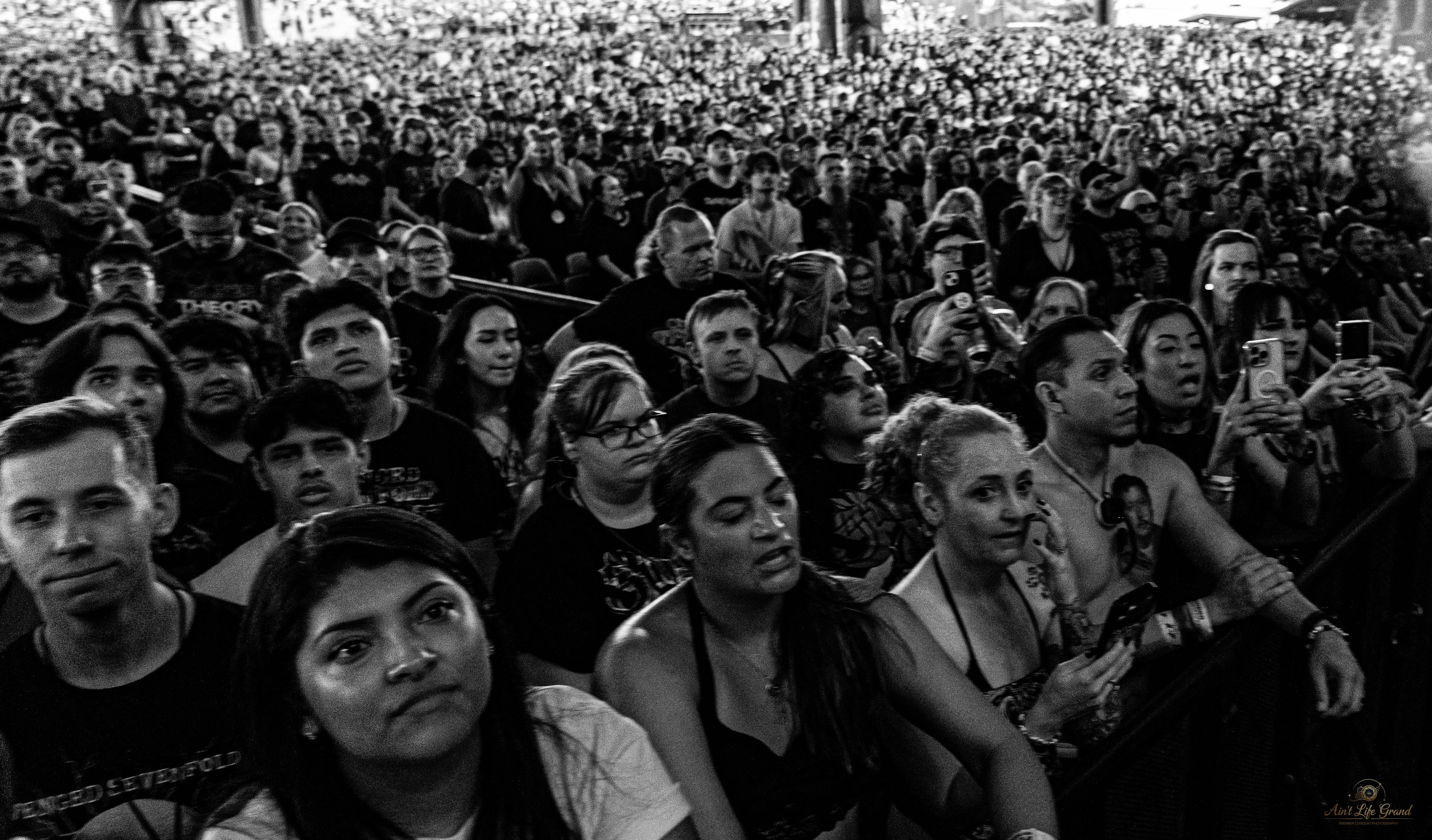
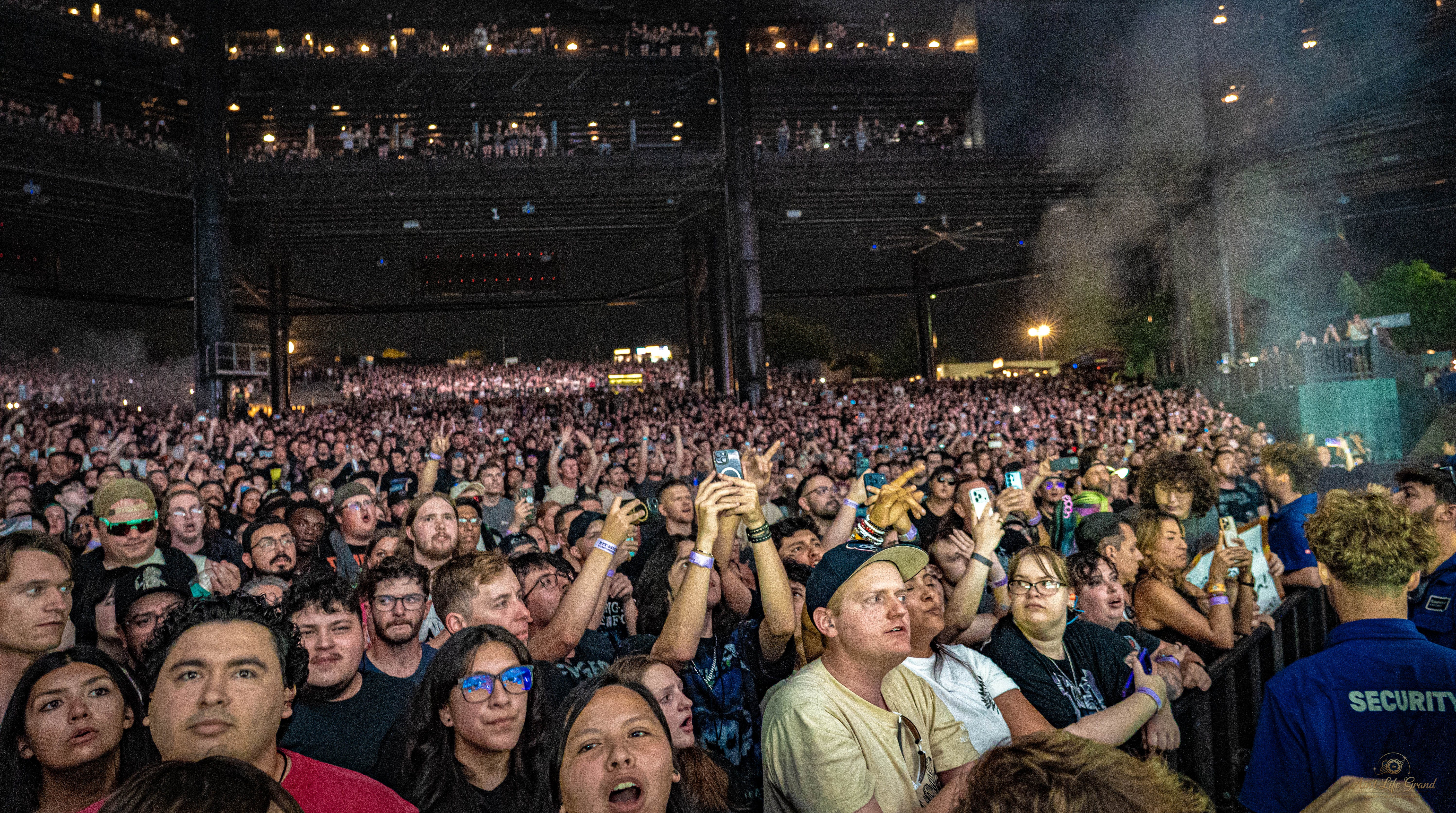
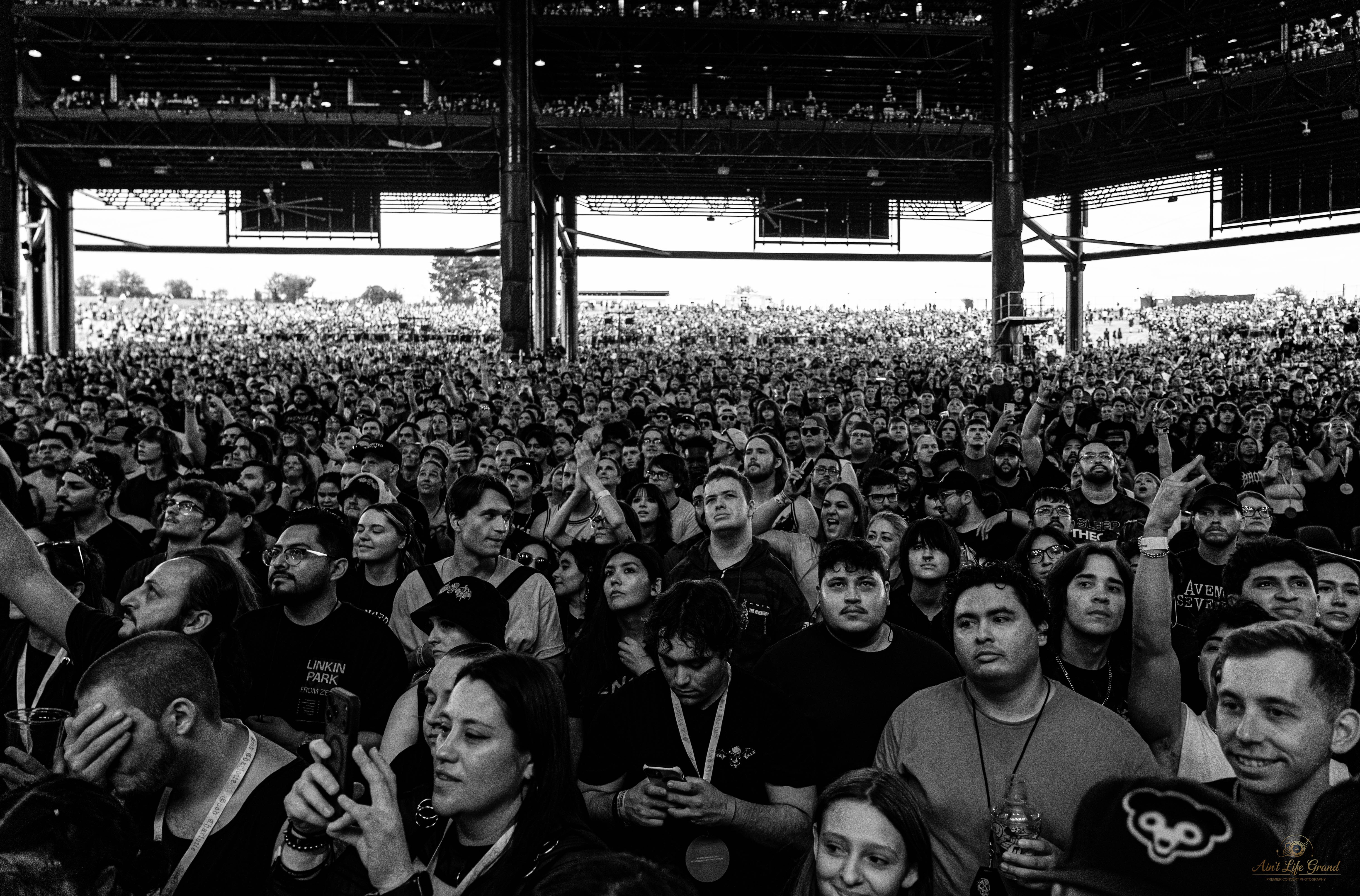
Credit Union 1 Amphitheatre is built for scale. The sprawling outdoor venue holds thousands beneath its pavilion roof, with the lawn rising behind the reserved seats until the audience becomes a dense field of bodies, blankets and raised phones.
People moved toward the entrances wearing shirts from nearly every era of Avenged Sevenfold’s career. City of Evil. Nightmare. The Stage. Several longtime fans wore fading Waking the Fallen designs that had clearly survived years of concerts and washing machines. Younger fans stood beside parents who had discovered the band decades earlier. Groups compared setlist predictions while others examined the merchandise lines, trying to determine how financially irresponsible they were willing to become.
The crowd carried the particular restlessness that forms when a band has been part of people’s lives for long enough that attending the show feels personal. This was not simply another summer date on the amphitheater calendar. For many of the people filling the pavilion and lawn, it was a reunion with music that had grown up beside them.
Please consider Donating to Sponsor an article even $1 helps!

Statica stays behind the curtain
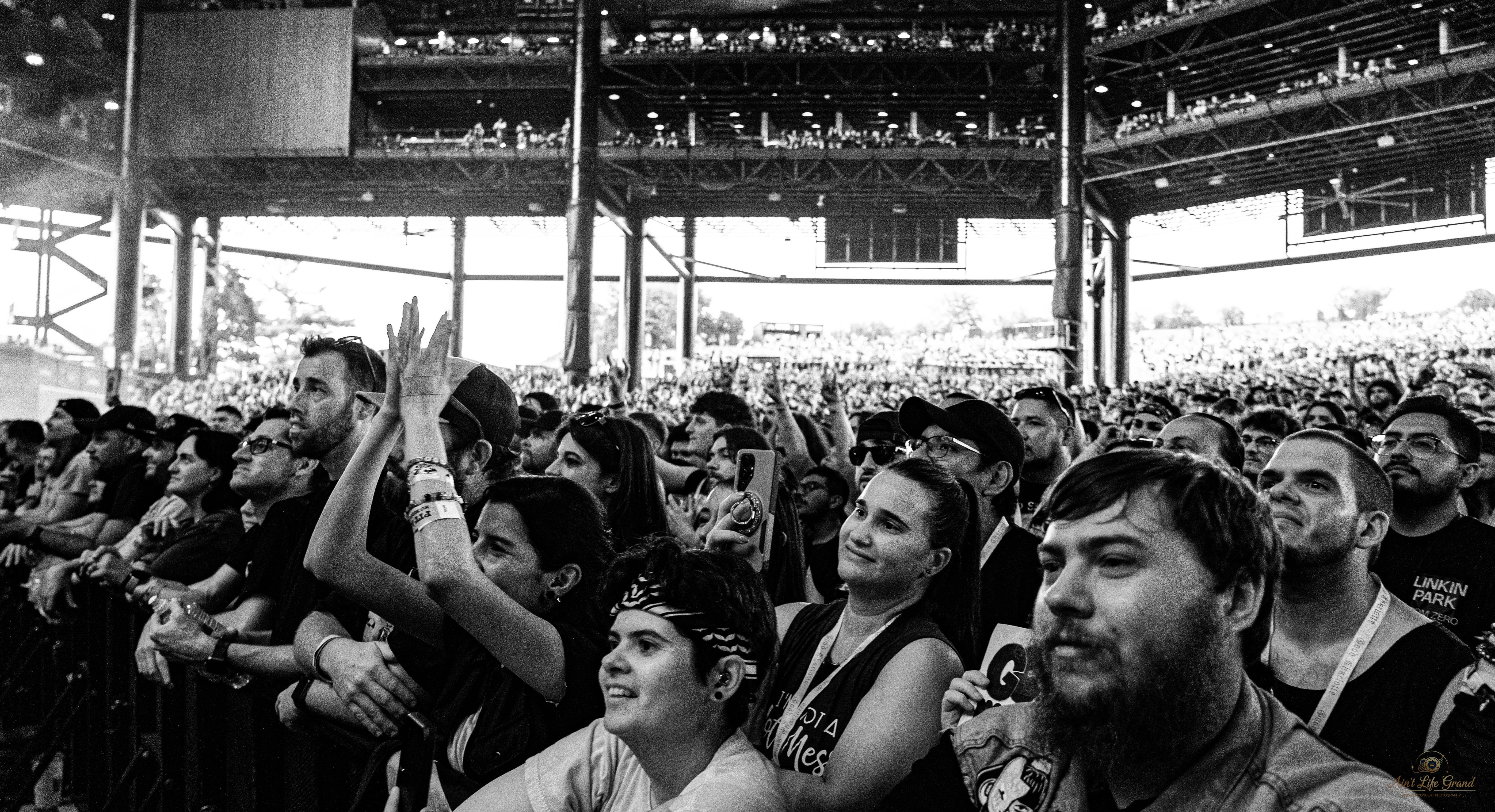
The evening’s first surprise had arrived one week earlier when Avenged Sevenfold released the four-song experimental EP Statica with little warning.
Built around heavy synthesizers, robotic vocals and electronic rhythms, the project swerved away from the harmonized guitars, aggressive percussion and sharp melodic turns that first carved the band into my memory. I had already listened to the EP before the show, and I will admit something that may not be a music journalist’s finest confession: I was confused.
Not offended. Not angry. Just unsure what to do with it.
Avenged Sevenfold has earned the right to experiment, and one of the band’s most compelling qualities has always been its refusal to keep making the same record. Still, the separation between Statica and the hard, guitar-driven sound rooted in my heart was enormous. I arrived open-minded, thinking the material might reveal itself differently in a live setting.
Instead, the presentation pushed the distance even further.
The stage remained empty. House lights stayed low. No musicians walked into view. For the entire opening slot, the audience stared at a vacant setup while live cameras showed M. Shadows, Synyster Gates, Zacky Vengeance, Johnny Christ and Brooks Wackerman performing from somewhere backstage.
The camera direction committed fully to the project’s mechanical atmosphere. Tight close-ups caught hands moving across synthesizers and faces half-hidden in darkness. The video feed favored shadows, narrow frames and subdued lighting rather than the broad gestures of a conventional rock performance. It was not presented as Avenged Sevenfold casually playing electronic songs. It felt like a separate entity occupying the screens while refusing to enter the room.
The concept was deliberate, and I respect the nerve required to open a major tour with music this far removed from what much of the audience expected. Around me, however, the response remained noticeably restrained. Fans watched with curiosity, but the applause lacked the urgency that would arrive later in the night.
Seeing Statica performed did not convert me. I appreciate M. Shadows, Synyster Gates, Brooks Wackerman, Zacky Vengeance and Johnny Christ walking into unfamiliar territory, especially at a stage in their career when repeating proven formulas would be much easier. I simply do not hold true love in my heart for the result.
Good Charlotte opens the memory vault
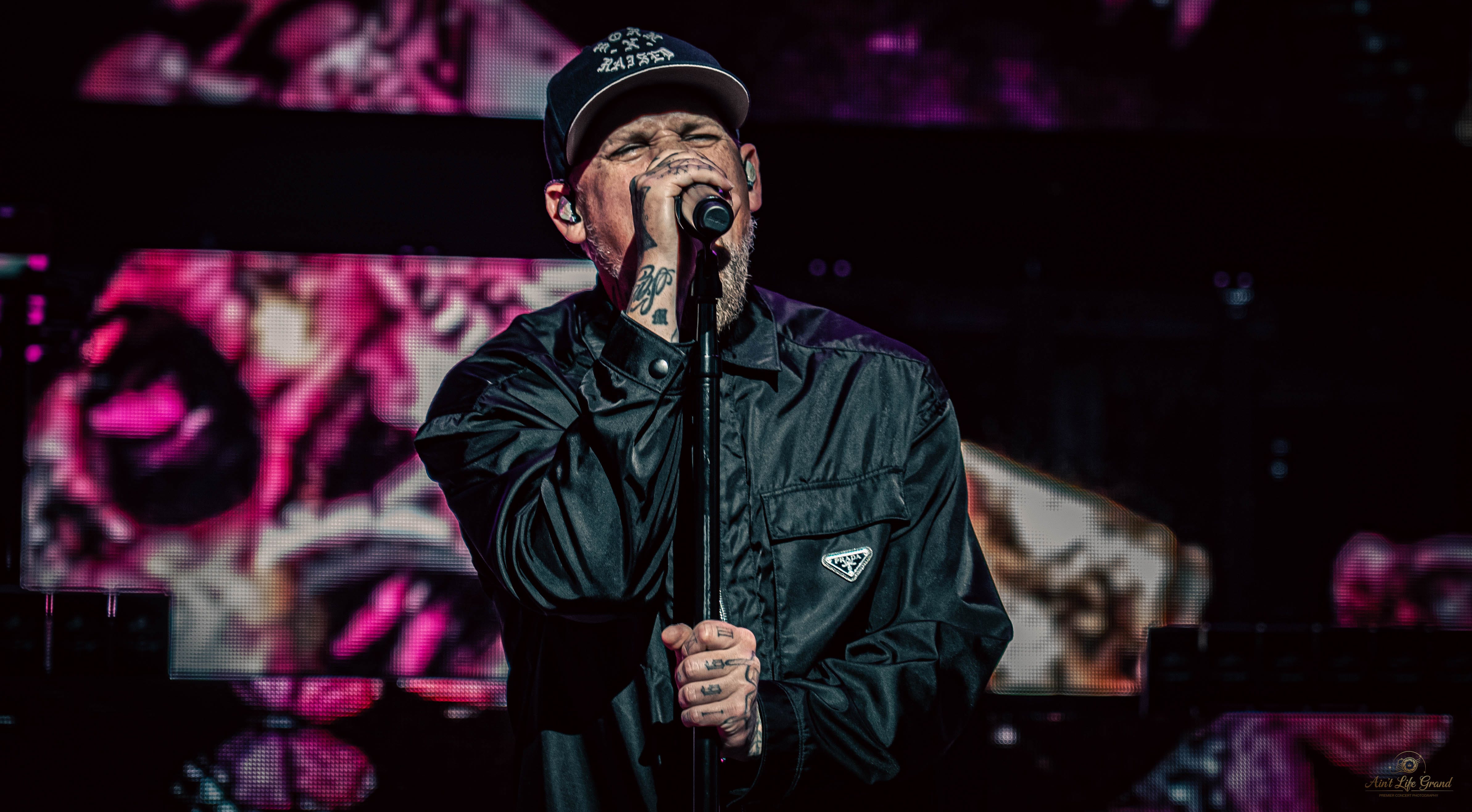
Good Charlotte walked into an entirely different atmosphere.
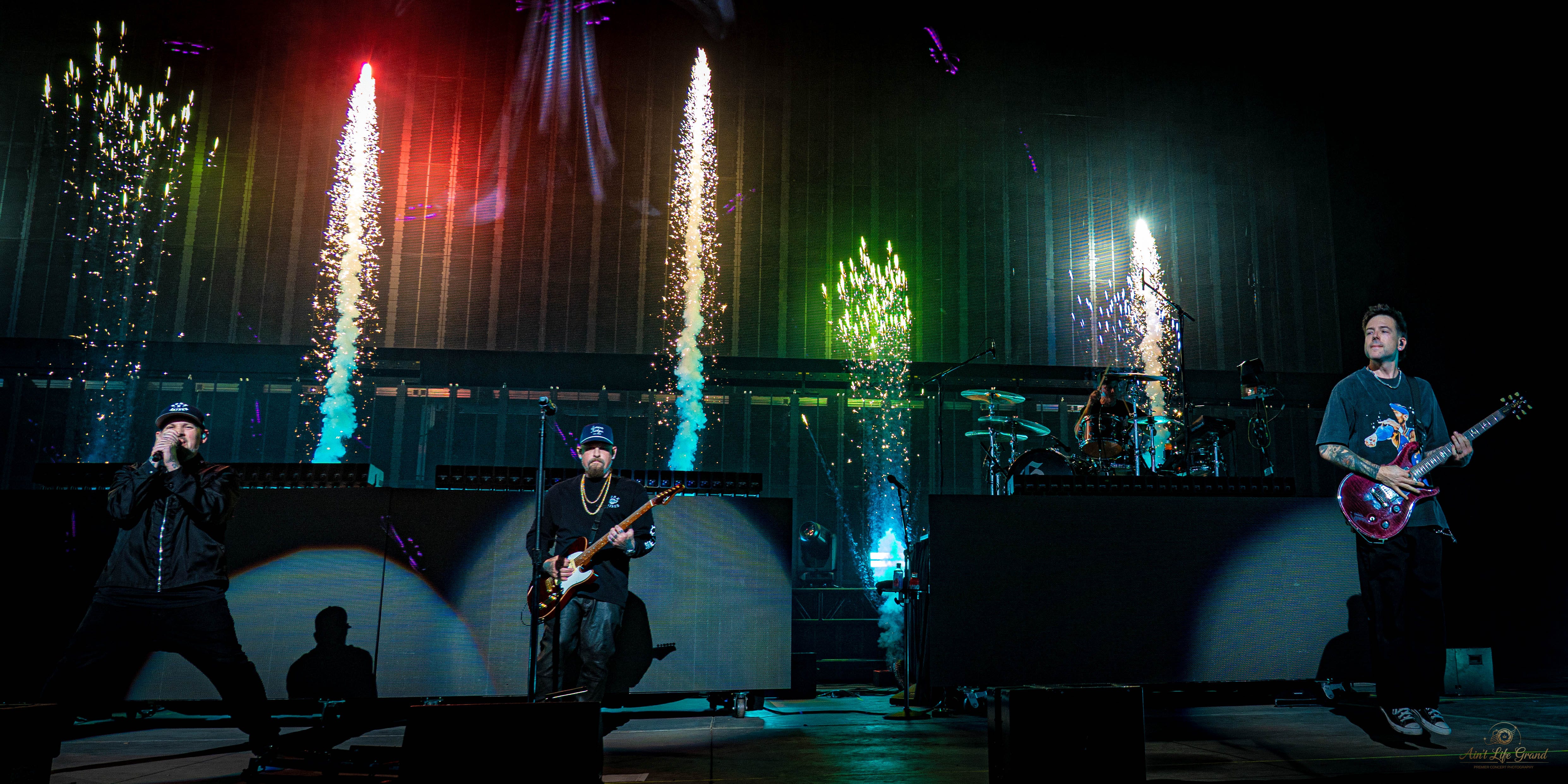
The opening notes of “The Anthem” sent a nostalgic jolt across the amphitheater. People who had spent the previous set quietly studying the screens were suddenly shouting lyrics they had memorized during the pop-punk explosion of the early 2000s. Friends threw arms around one another. Couples pointed across the aisle when a familiar line landed. Even several people who had clearly arrived wearing Avenged Sevenfold allegiance from head to toe gave in before the first chorus.
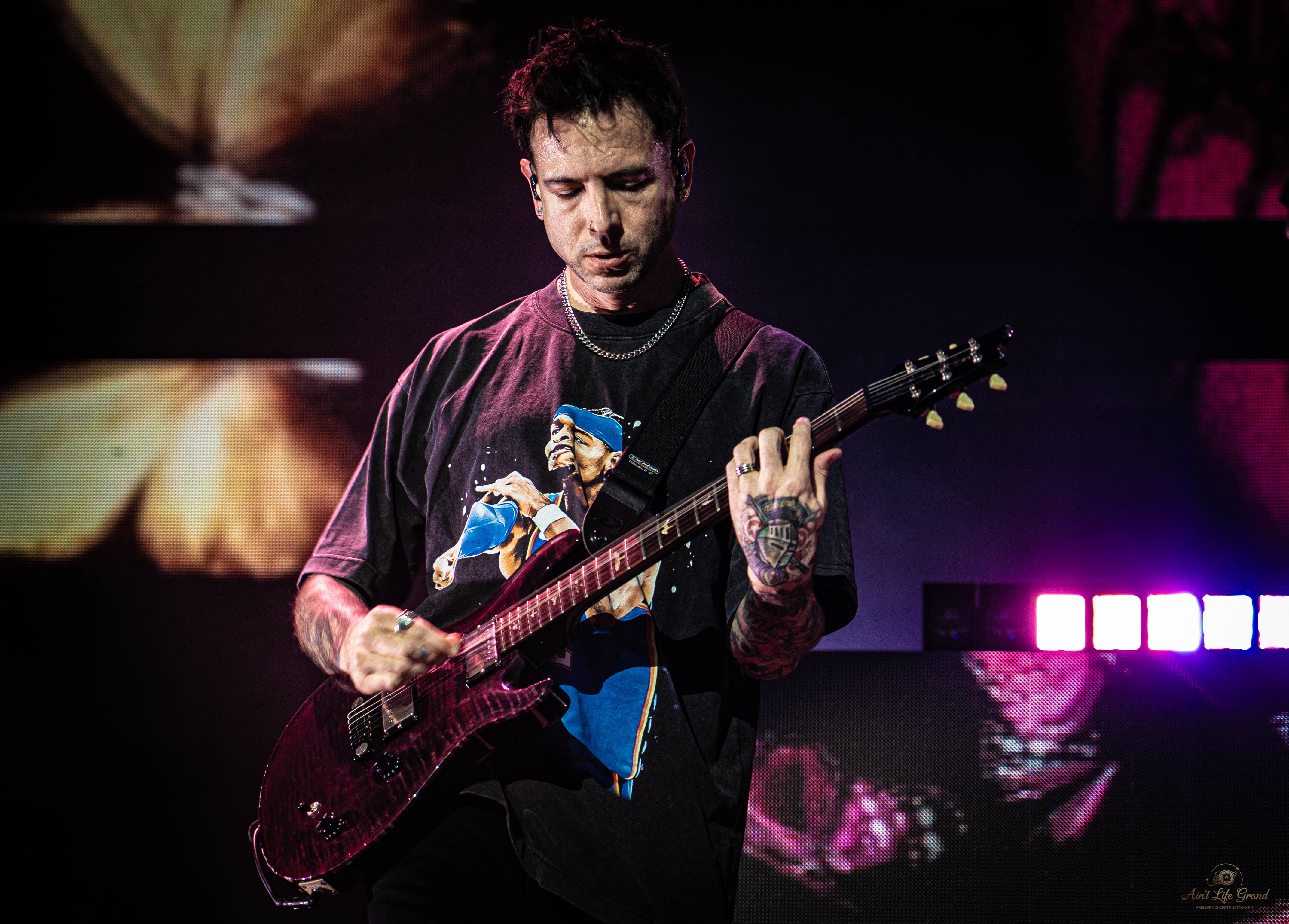
Good Charlotte sounded solid, with the Maddens guiding the songs through the same clean hooks and defiant choruses that made them unavoidable during their commercial peak. The performance did not carry the reckless physicality associated with the band’s younger years, and their stage presence occasionally settled into a comfortable middle gear. Still, the songs did much of the necessary work. When a crowd knows every word, a band does not need to sprint across the stage to keep people engaged.
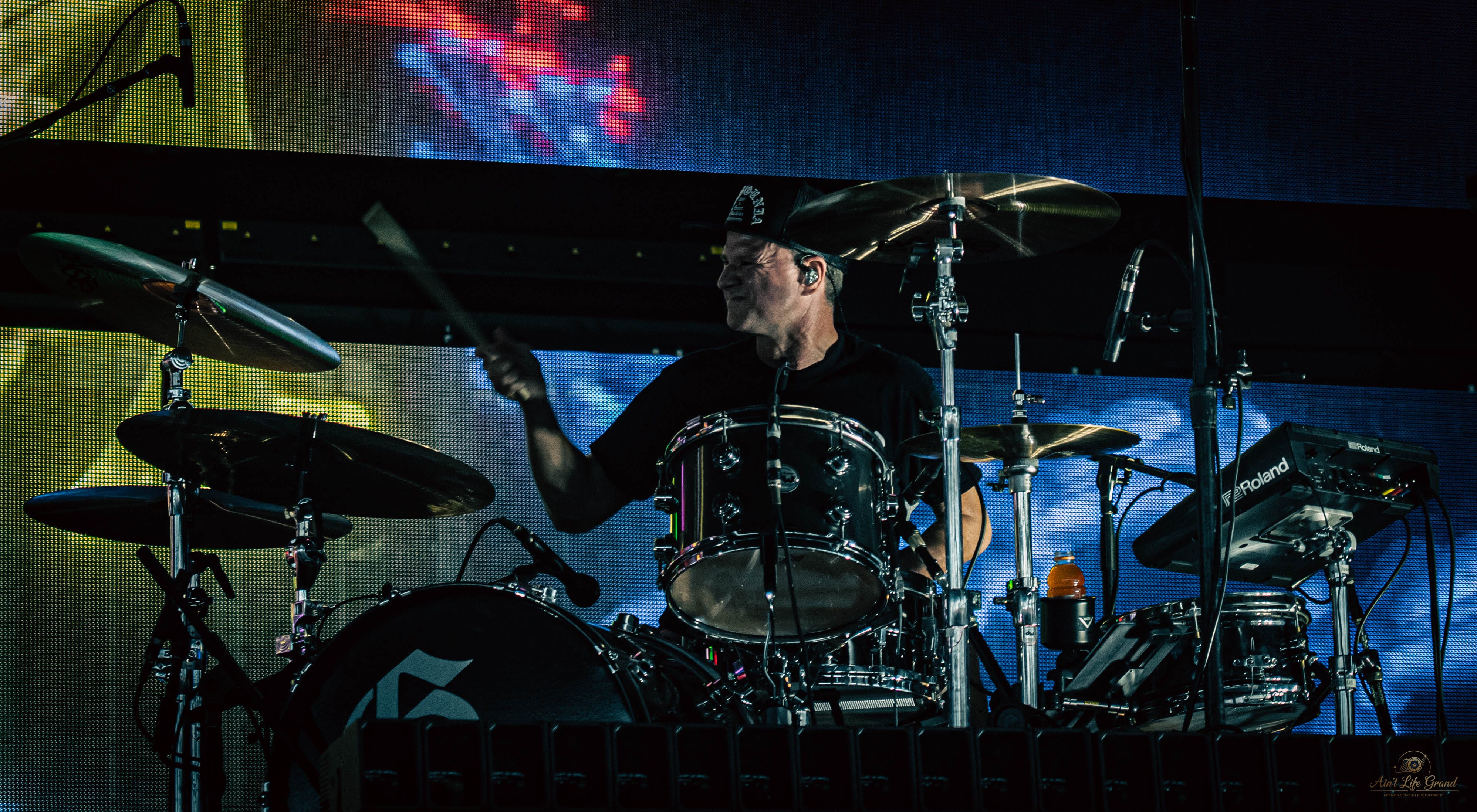
The production remained fairly safe until a carefully timed eruption of pyro flashed across the stage. The sudden burst widened eyes throughout the pavilion and kept the audience alert without overwhelming the songs. Much of the set’s appeal came from recognition rather than spectacle. Hearing thousands of voices collide during “Lifestyles of the Rich & Famous” provided its own production value.
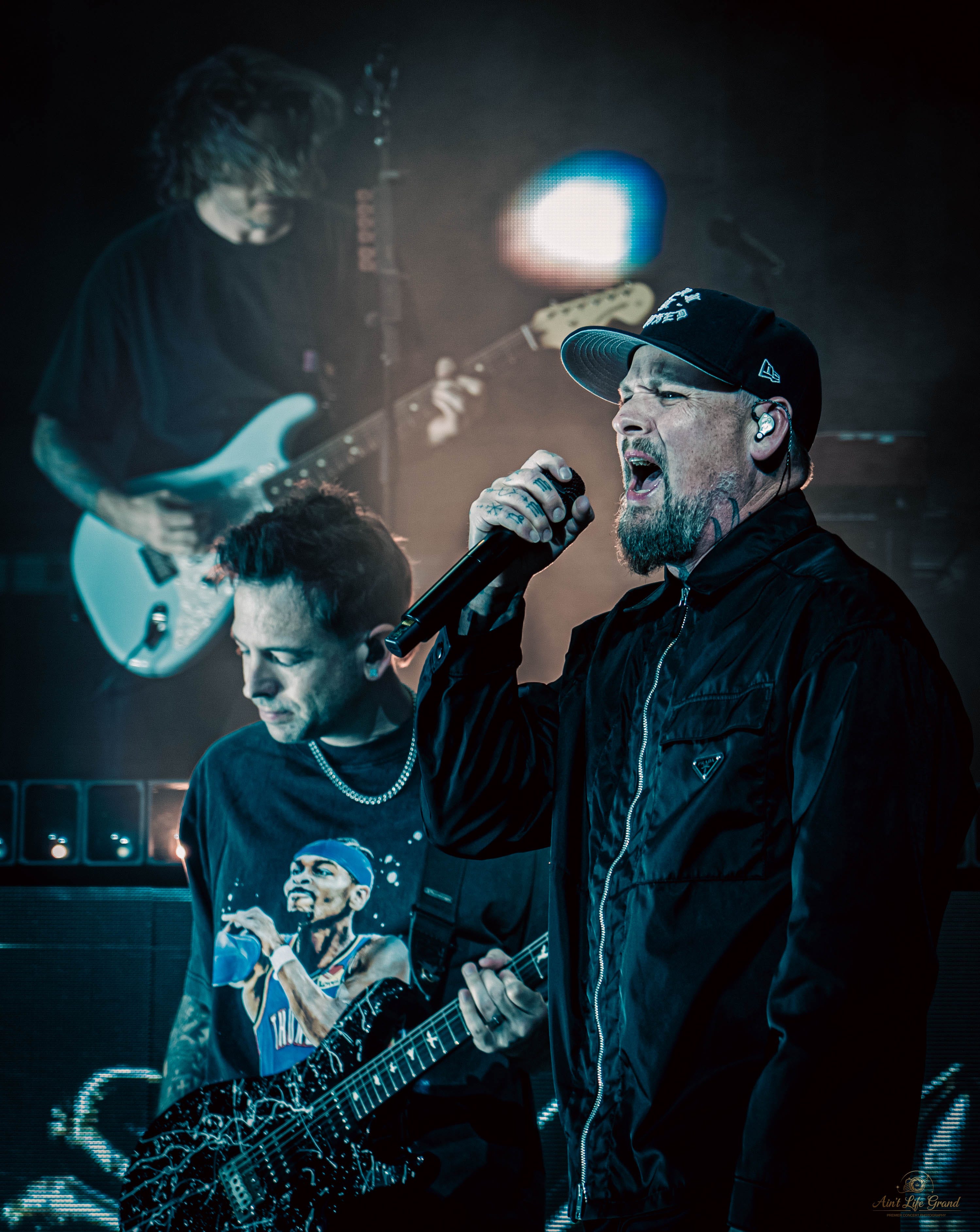
The highlight arrived when M. Shadows joined Good Charlotte for “The River”, the 2007 collaboration that also features Synyster Gates on the original recording. The audience recognized what was happening before Shadows reached the microphone, and the volume rose accordingly. Plenty of tour cameos feel contractual. This one carried history, and the crowd treated it as something worth celebrating
Thousands of screens, one pulse
Avenged Sevenfold had another experiment waiting before the first note of its proper set.
As the crew prepared the stage in the dimming light, a massive QR code appeared across the video screen. I pulled out my phone and scanned it, partly from curiosity and partly because the band had already made it clear that ignoring its technological detours might mean missing part of the show.
Within seconds, my phone became part of the production.
Across the pavilion and lawn, thousands of screens began flashing and pulsing in synchronization. The effect spread section by section until the entire amphitheater appeared to breathe with the same programmed rhythm. Instead of asking fans to put their phones away, Avenged Sevenfold absorbed them into the design and turned a familiar concert distraction into a coordinated visual element.
It was clever without becoming a novelty act. Before the band had stepped onto the stage, the audience had already been recruited into the performance.
“Nightmare” and the missing drummer
There was no slow build or drawn-out introduction. The venue dropped into darkness before “Nightmare” tore through the amphitheater, immediately pushing the audience into full voice.
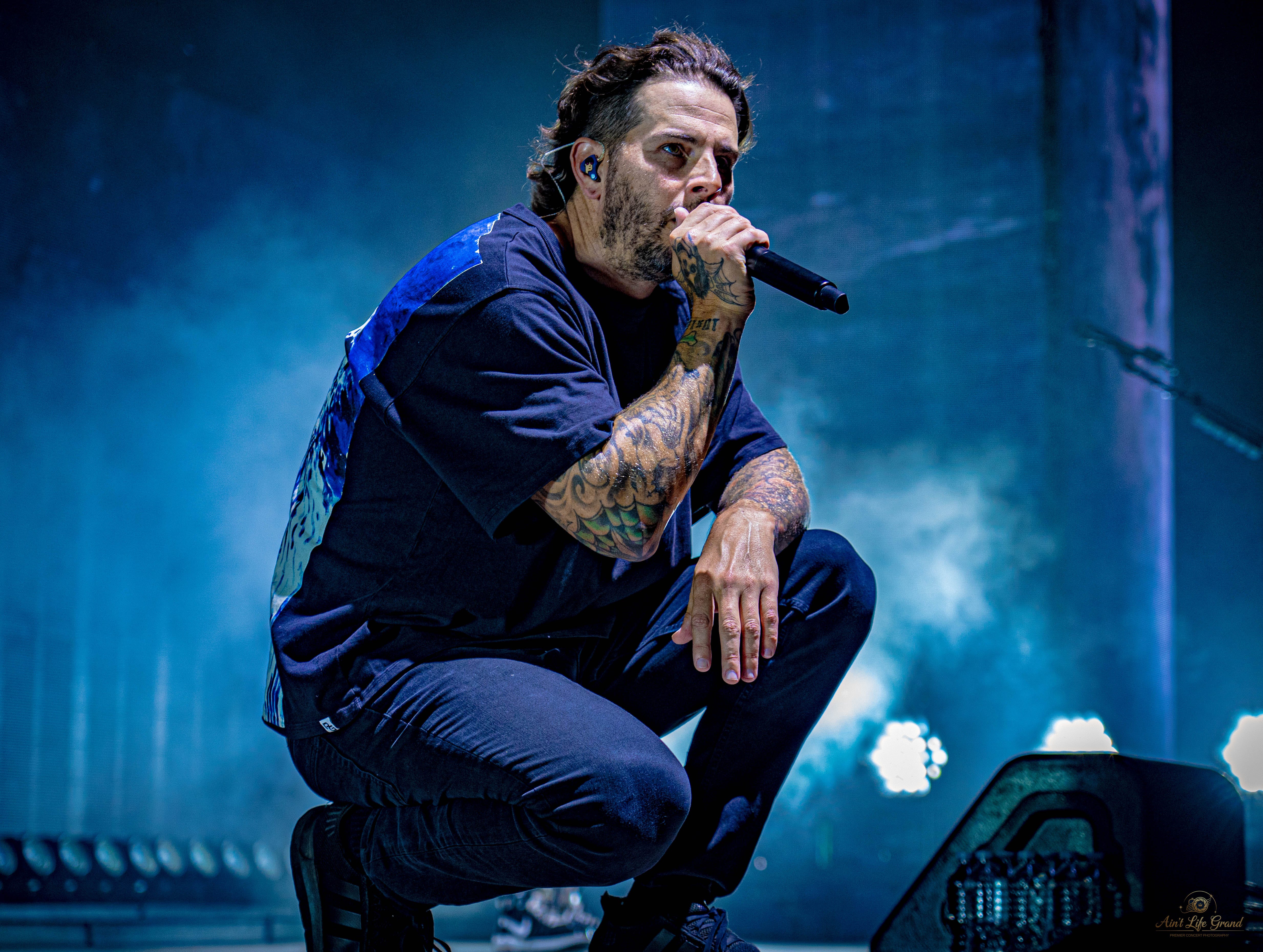
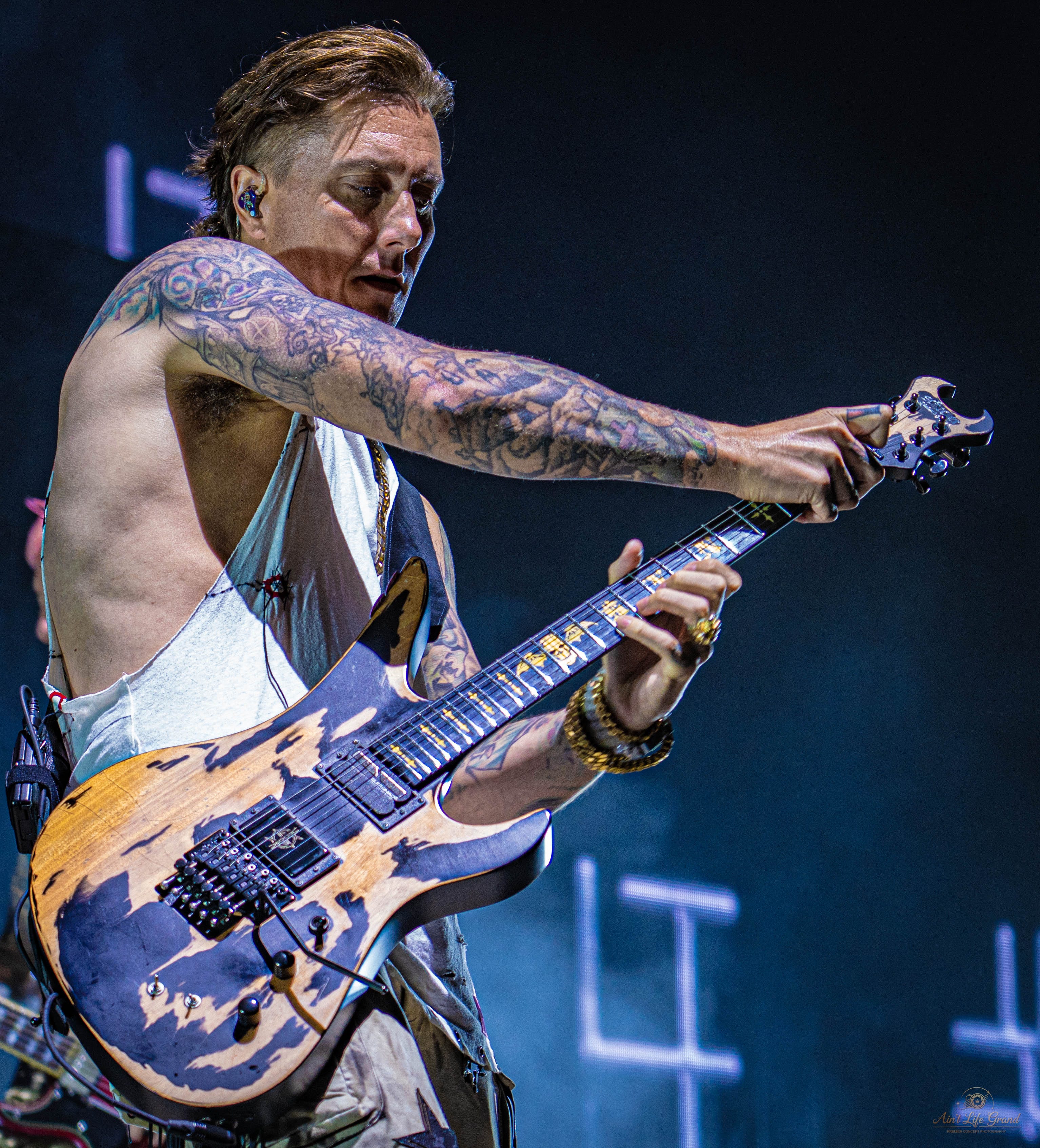
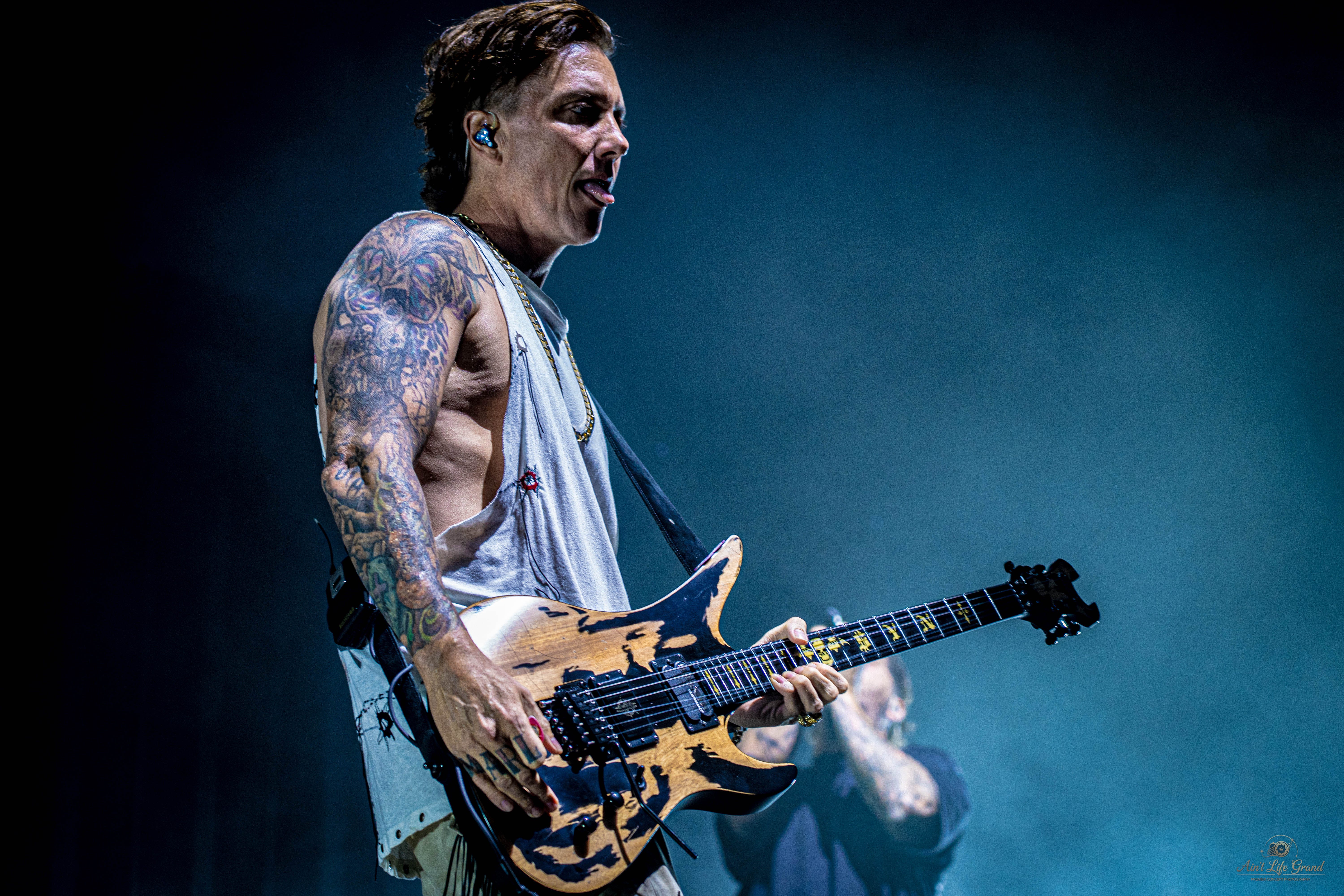
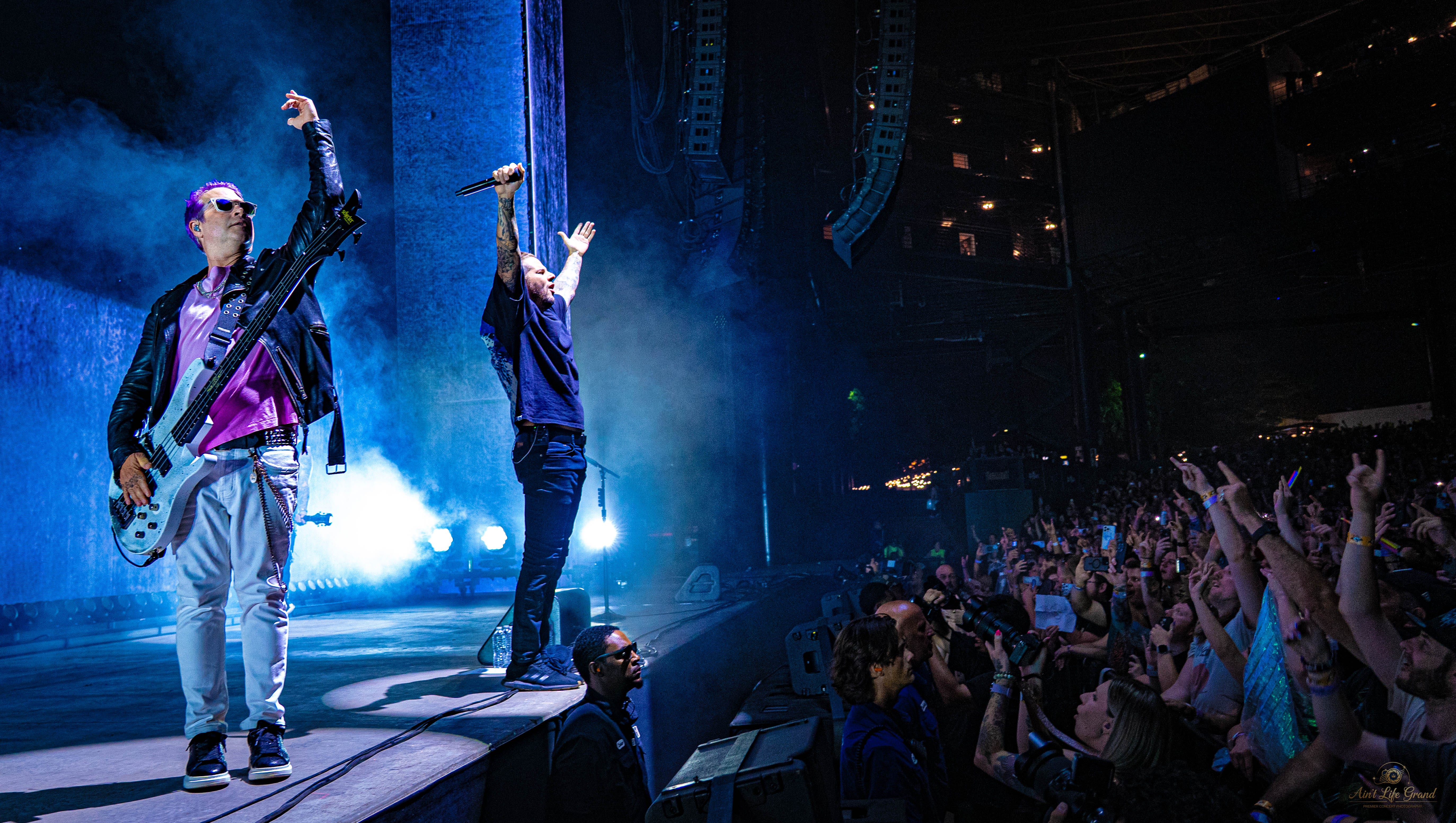
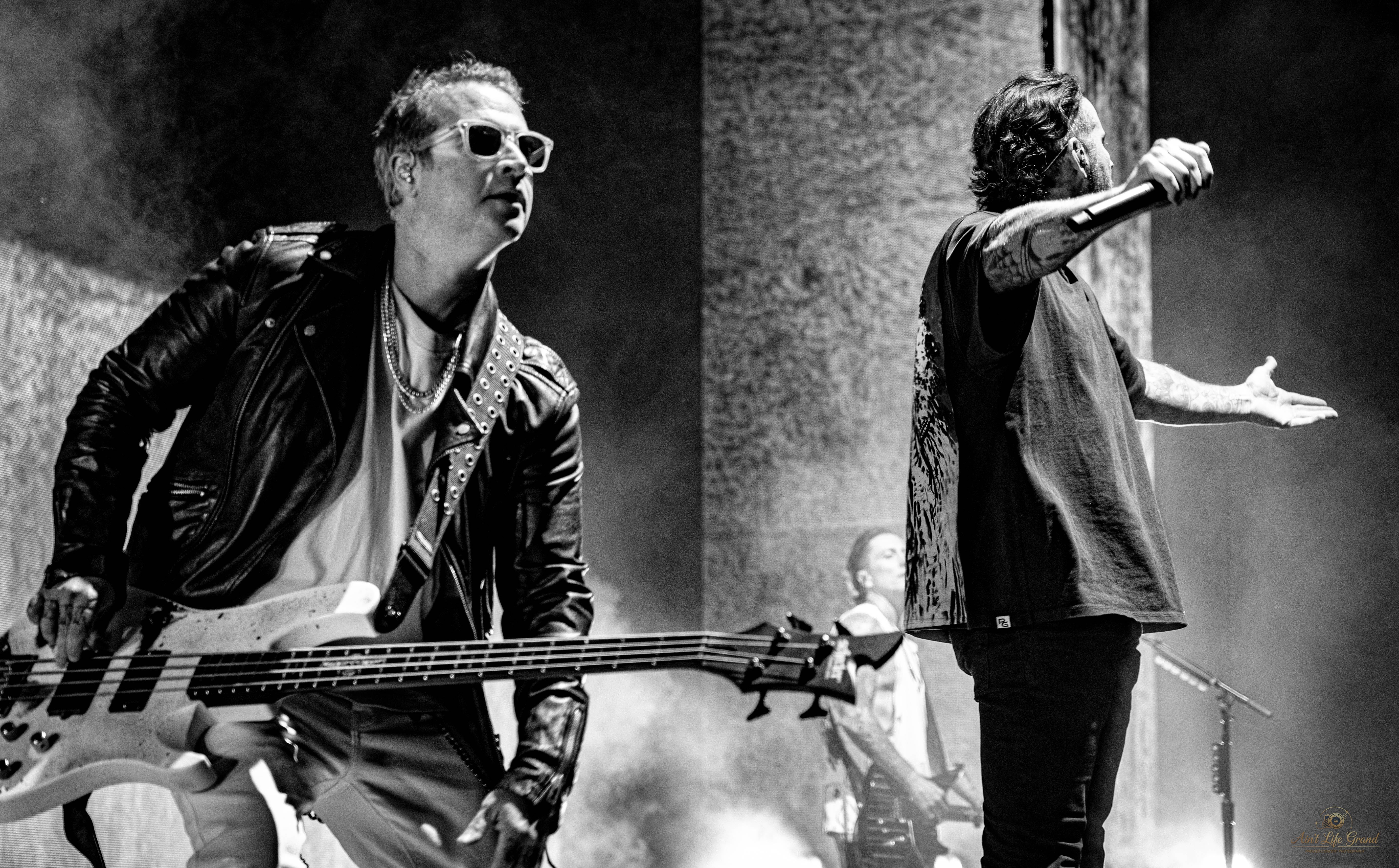
Opening with one of the band’s largest songs carried the confidence of a group with enough material to spend a major hit before everyone had settled into place. M. Shadows came out sounding controlled and forceful, navigating the song’s demanding vocal lines without allowing the chorus to disappear beneath the production. Synyster Gates and Zacky Vengeance locked together with the precision that has defined Avenged Sevenfold’s live attack for years, while Johnny Christ moved through his usual territory with purple hair glowing beneath the stage lights.
I have watched Avenged Sevenfold live more than twenty times, so the familiar pieces clicked into place quickly. The band sounded tight. The guitars cut cleanly. The low end hit with enough force to vibrate through the pavilion floor.
One detail kept pulling my attention away.
Brooks Wackerman was hidden behind a heavy metal structure surrounding his drum riser. His playing thundered through the venue, but actually watching one of modern metal’s finest drummers perform became needlessly difficult. During “Nightmare,” my ears were locked into his fills while my brain kept returning to the same irritated question: Why can’t we see Brooks?
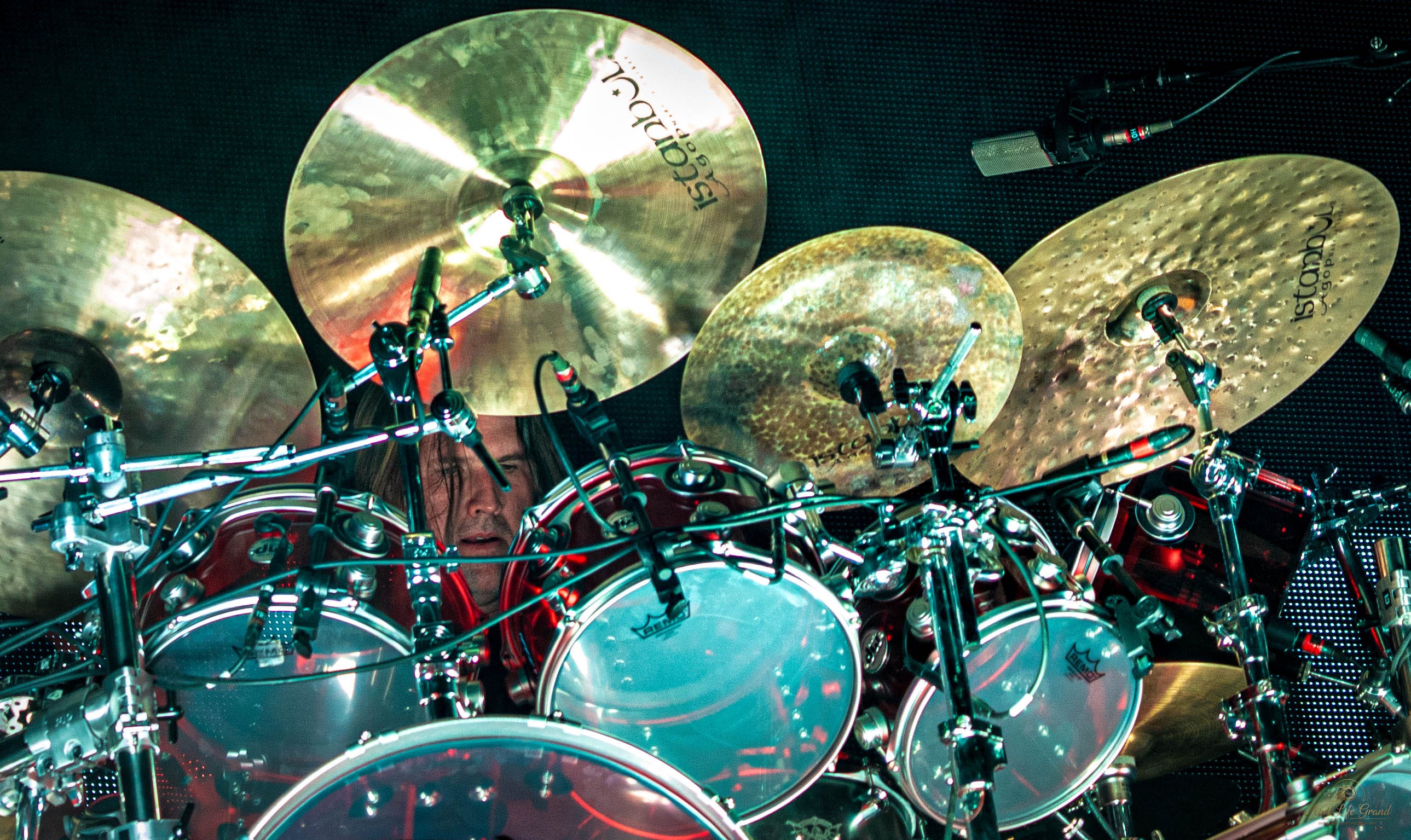
Drumming is not background decoration in Avenged Sevenfold. The physical movement matters, especially with a player whose control and power are such central pieces of the band’s current sound. Concealing him behind a rigid structure may have served the stage design, but it blocked one of the most compelling parts of the live performance.
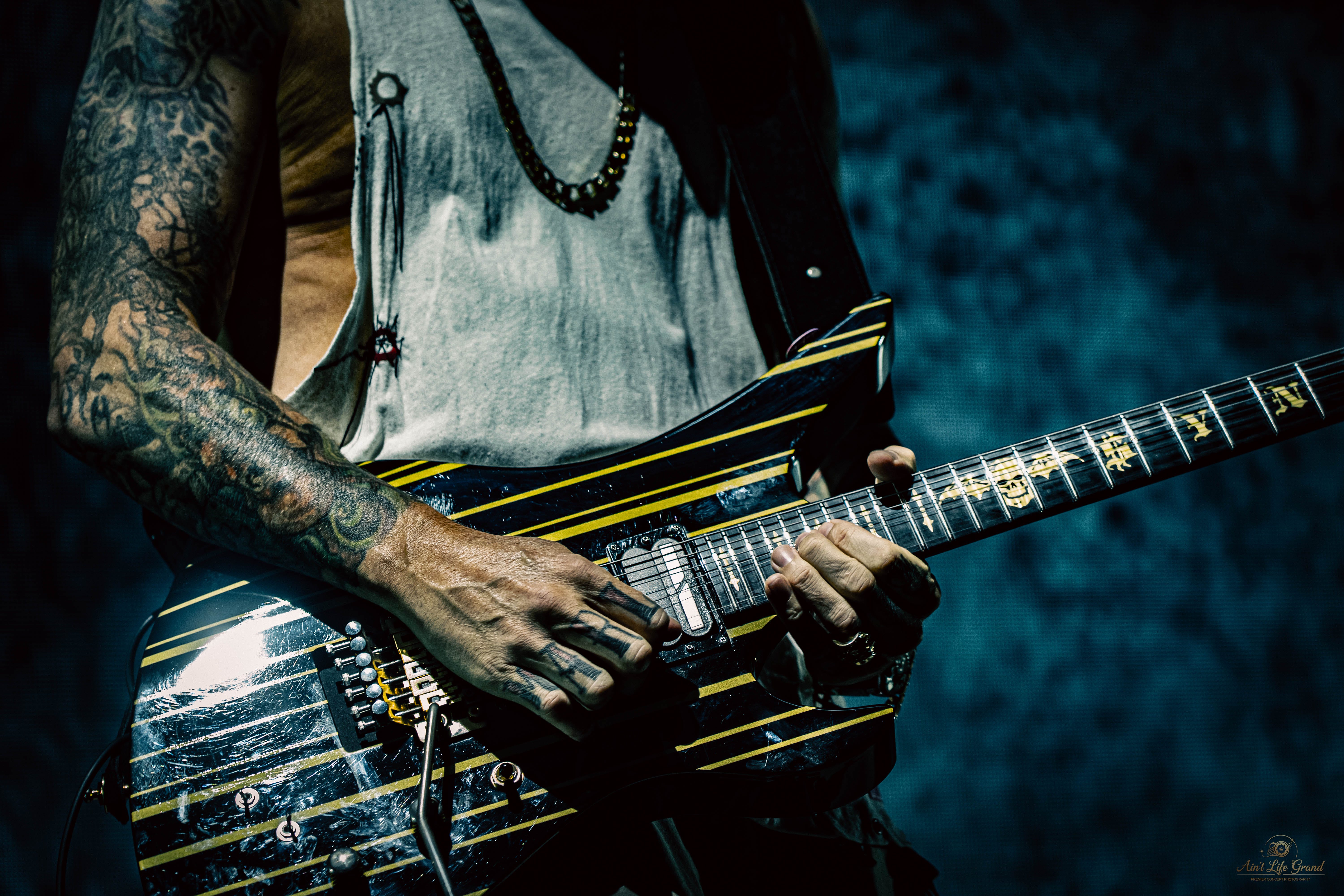
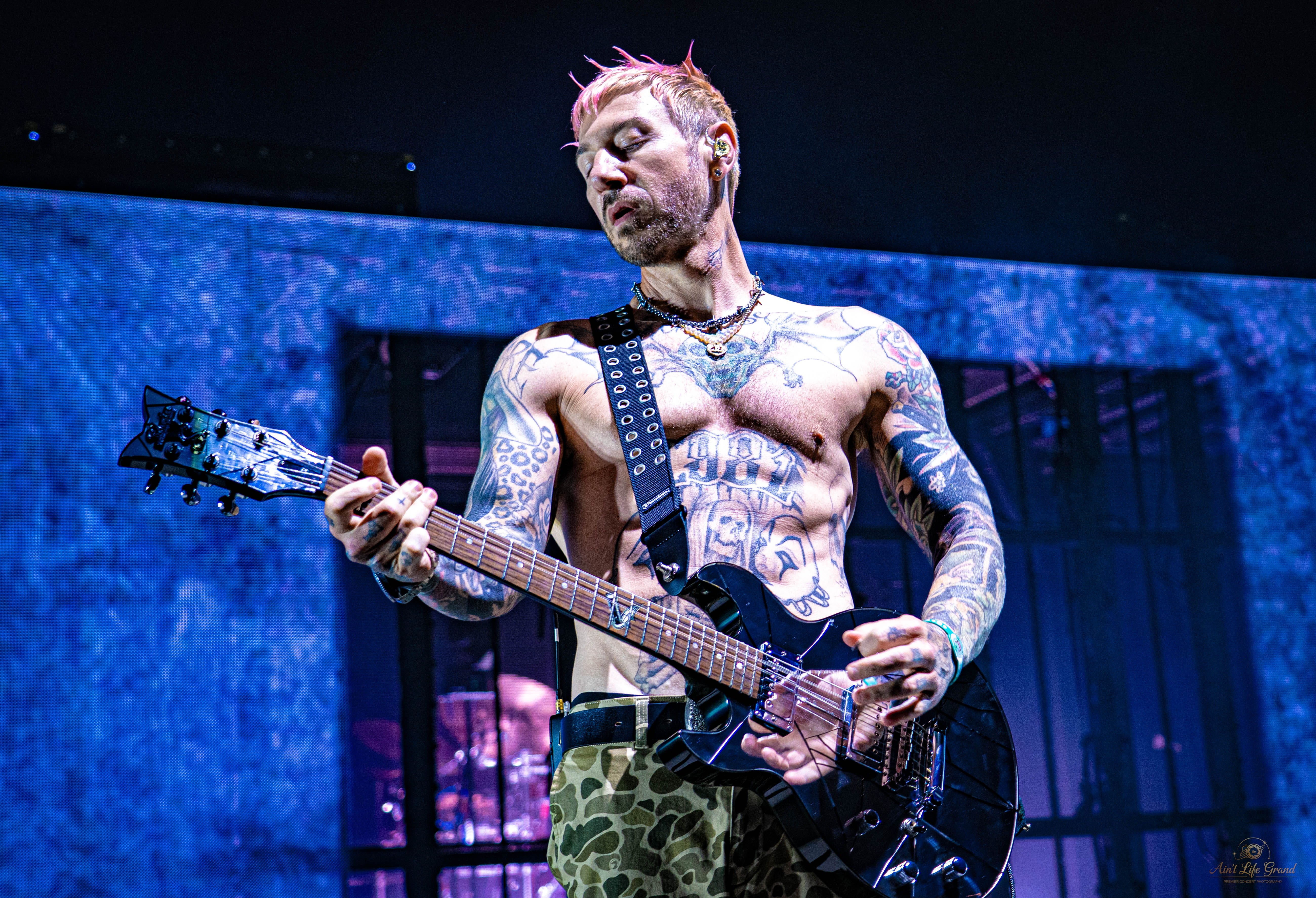
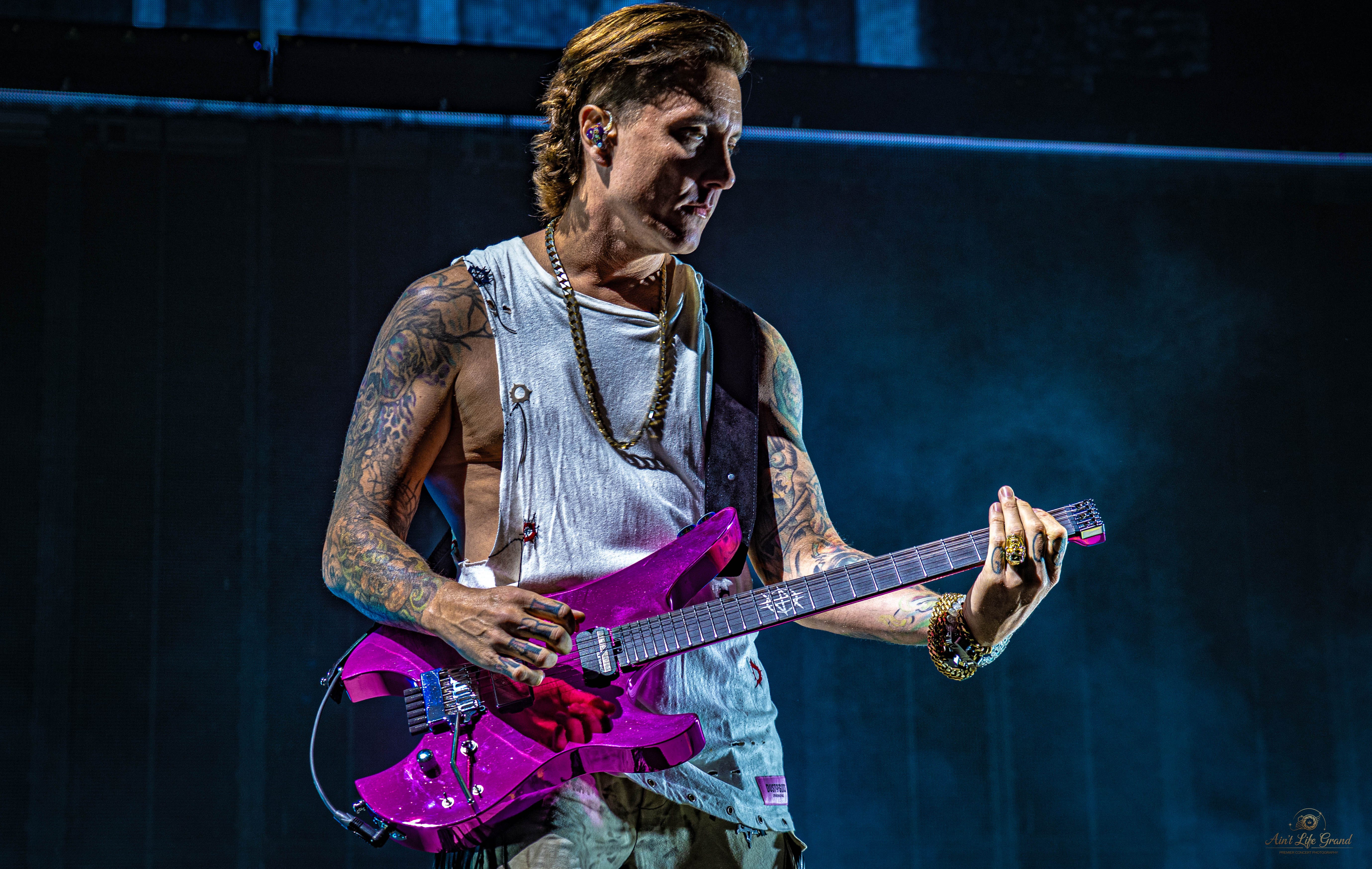
Once the initial rush settled, smaller details began to emerge. Johnny’s bright purple hair popped against the darker production. Zacky had decided shirts were unnecessary. Synyster wore fringe pants with the ease of someone fully aware that nobody else onstage could make the same decision without inviting questions.
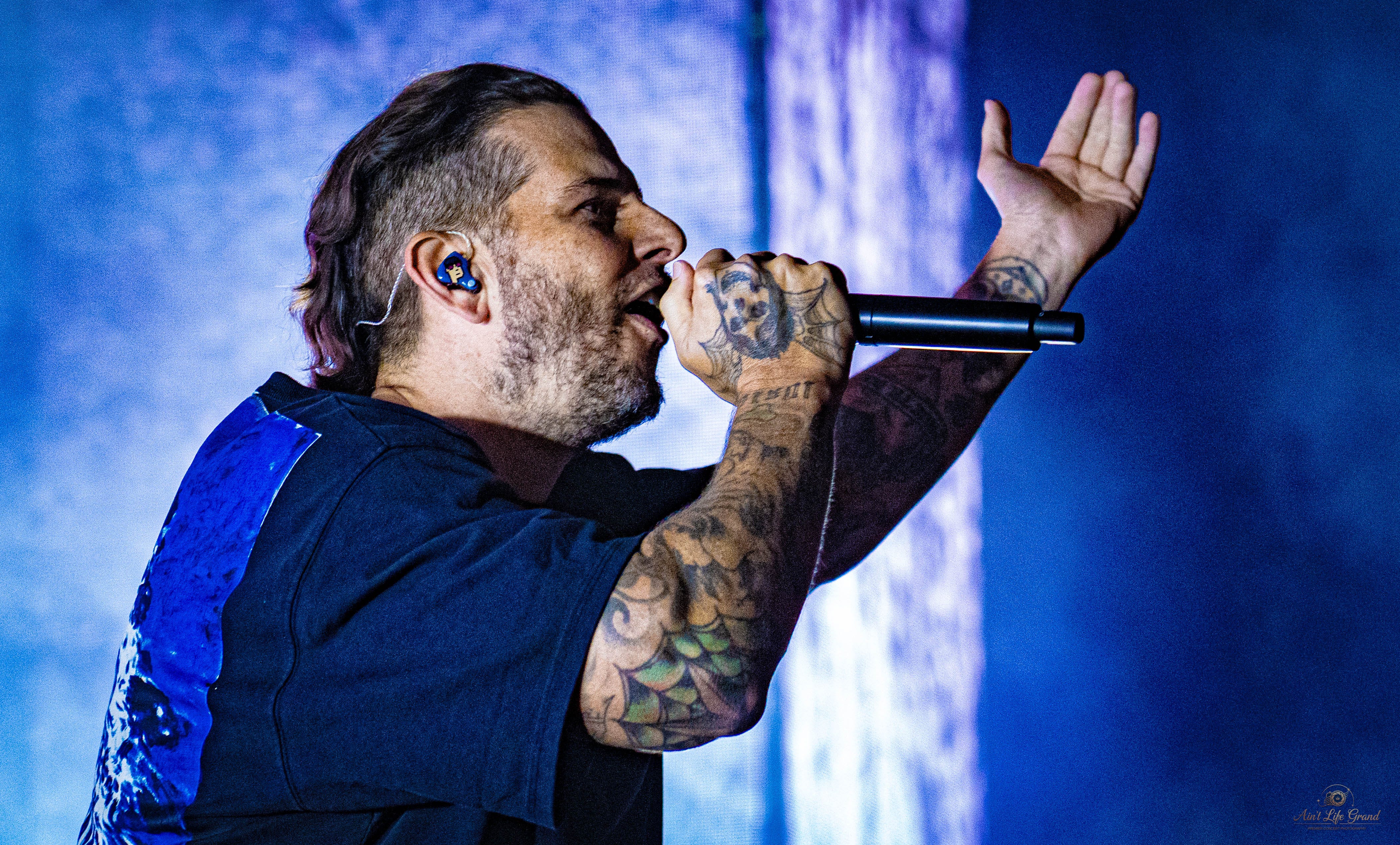
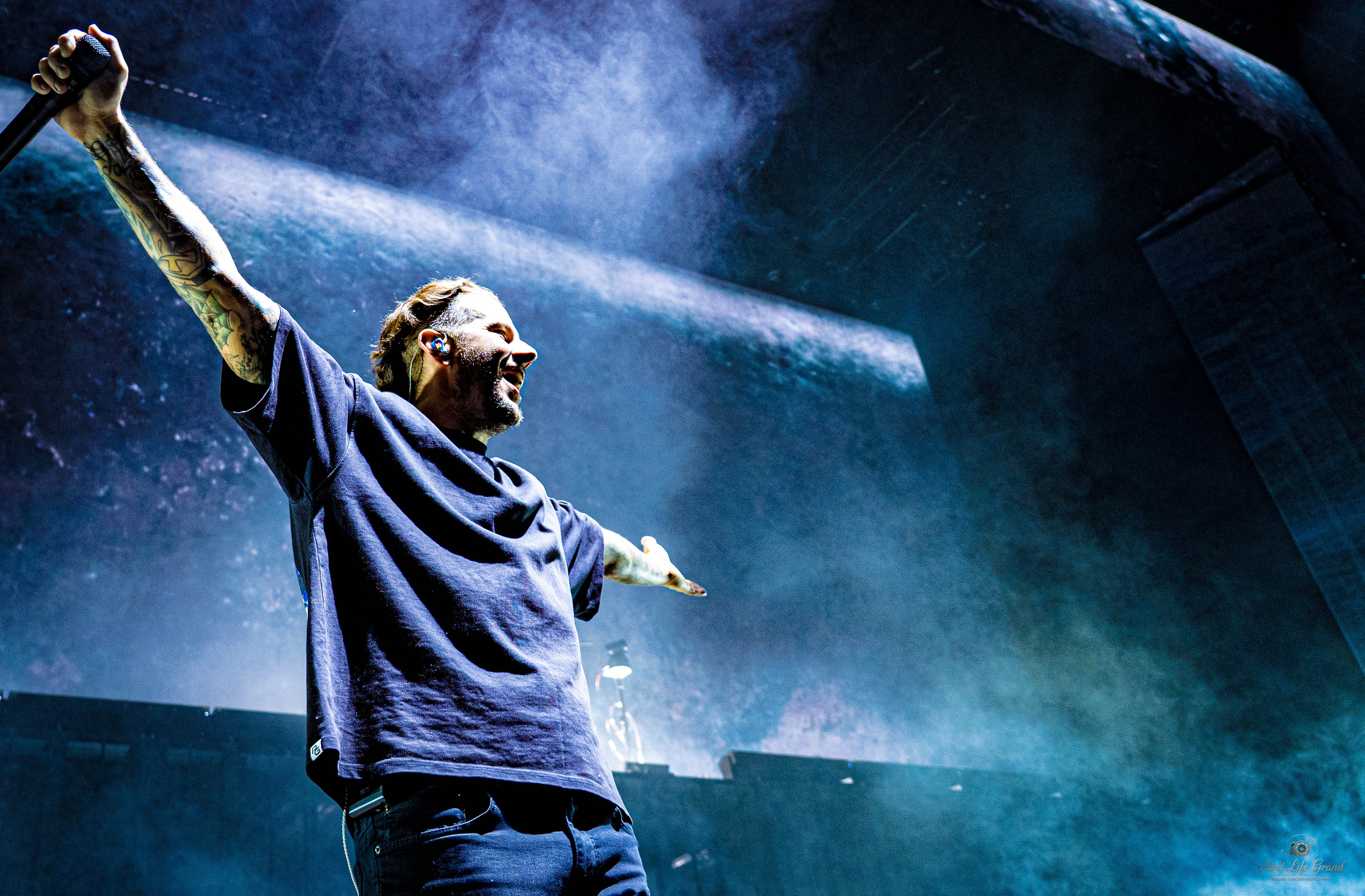
M. Shadows remained committed to his familiar uniform: dark shirt, jeans and black sneakers. While the rest of the band offered varying degrees of rock-show flamboyance, Shadows looked ready to walk directly from the stage into an ordinary restaurant without changing clothes. The contrast suited them.
The cage rises
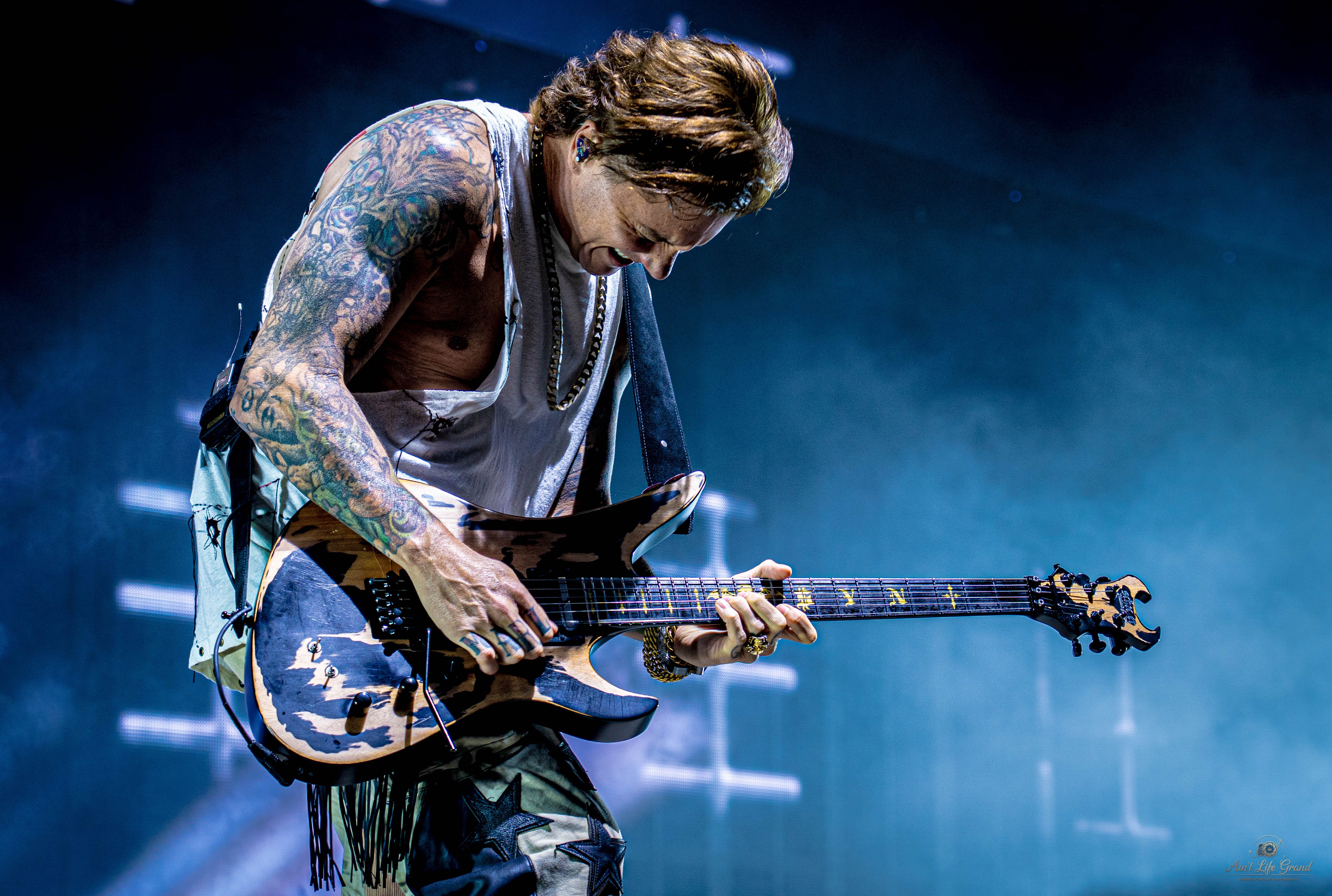
Just when the caged setup began to feel like an ongoing visual tease, Avenged Sevenfold revealed the plan behind it.
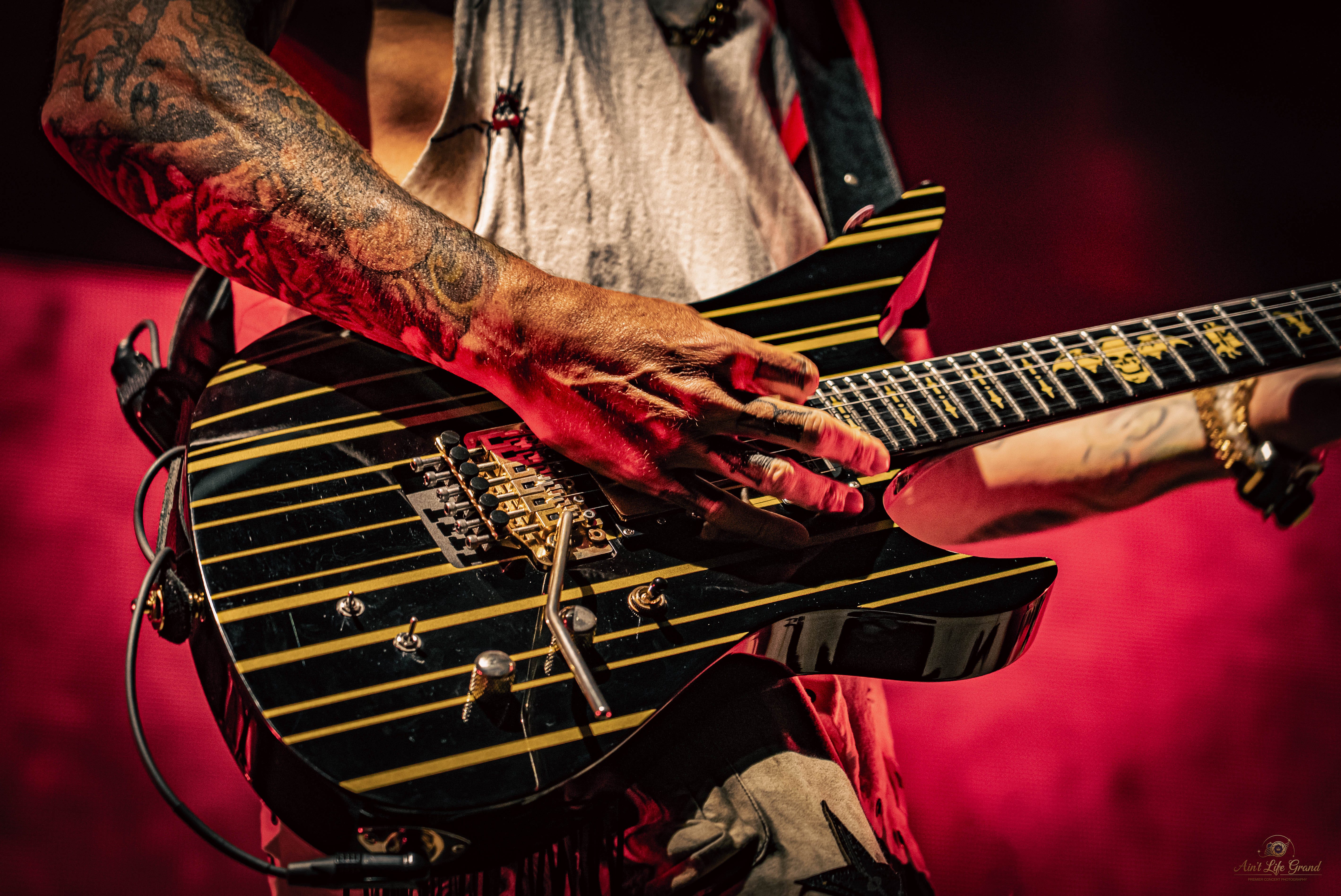
As the set shifted into a more theatrical stretch, complete with onstage magic tricks, Synyster Gates stepped forward holding a striking purple headless guitar. Then the entire shape of the stage changed. The heavy structure surrounding Brooks Wackerman began to rise, slowly clearing the sightline that had frustrated me during “Nightmare.”
There he was, elevated high above the rest of the band on a towering platform.
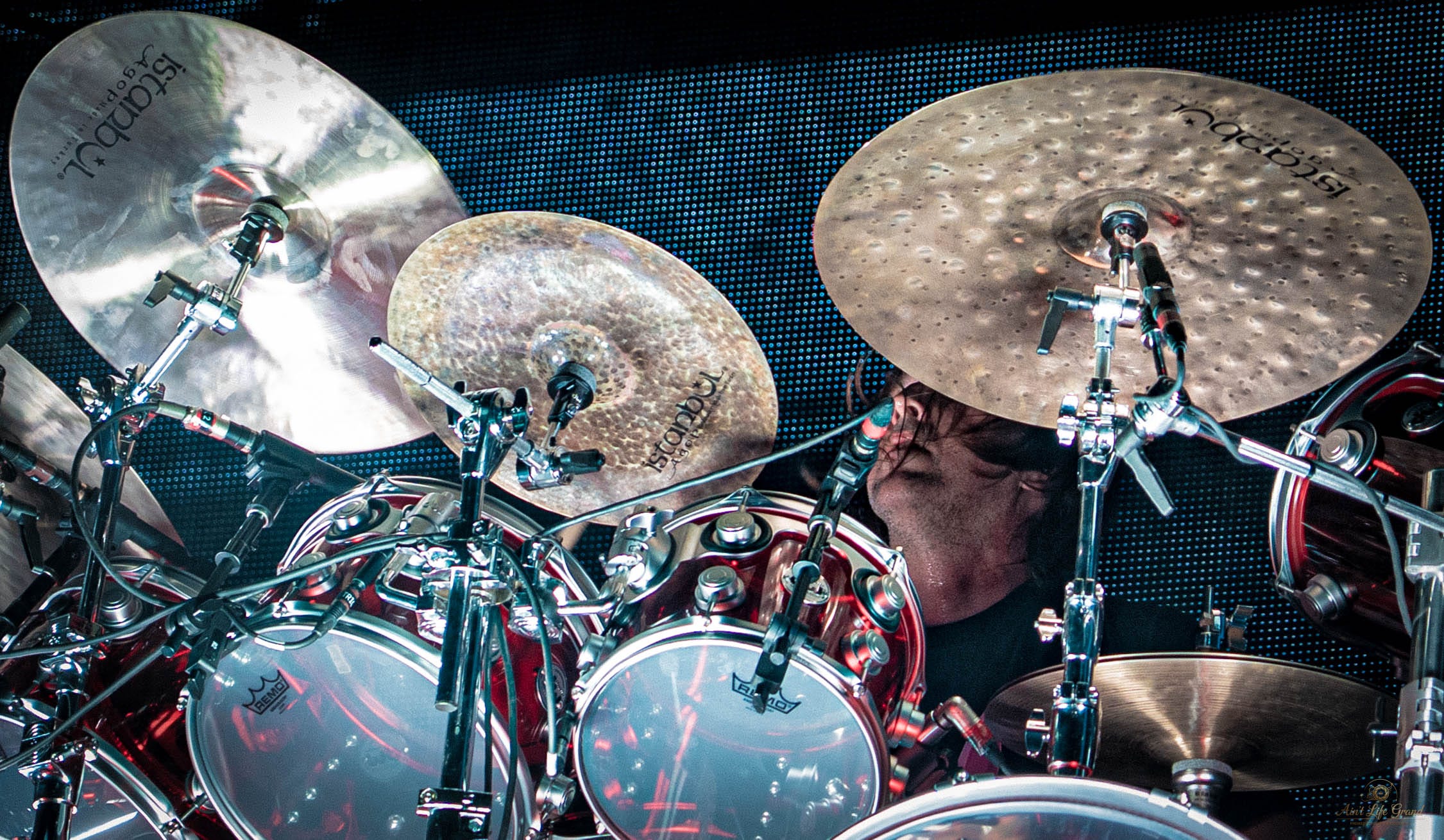
Suddenly, the staging made sense. What had looked like an unnecessary obstruction became part of an elaborate reveal, placing Brooks on a literal pedestal above the venue. Once I could finally watch him attack the kit from that height, the earlier frustration disappeared. The visual payoff was sharp, theatrical and perfectly timed, a reminder that Avenged Sevenfold rarely places anything onstage without eventually giving it a purpose.
“M.I.A.” breaks professional composure
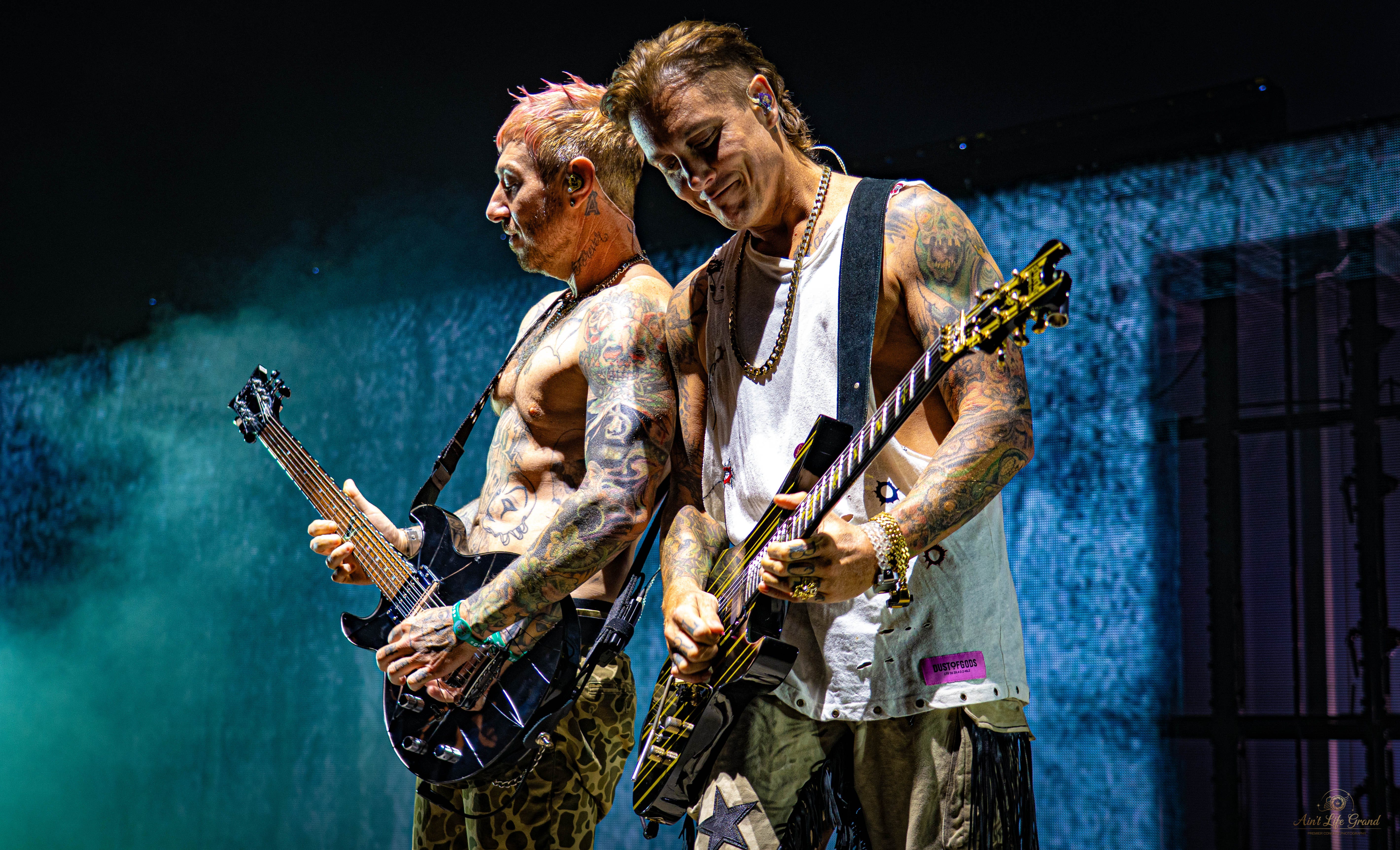
After seeing a band more than twenty times, you begin dividing its catalog into categories. Some songs are dependable. Others remain technically possible but emotionally filed under probably never happening.
“M.I.A.” belonged to the second group.
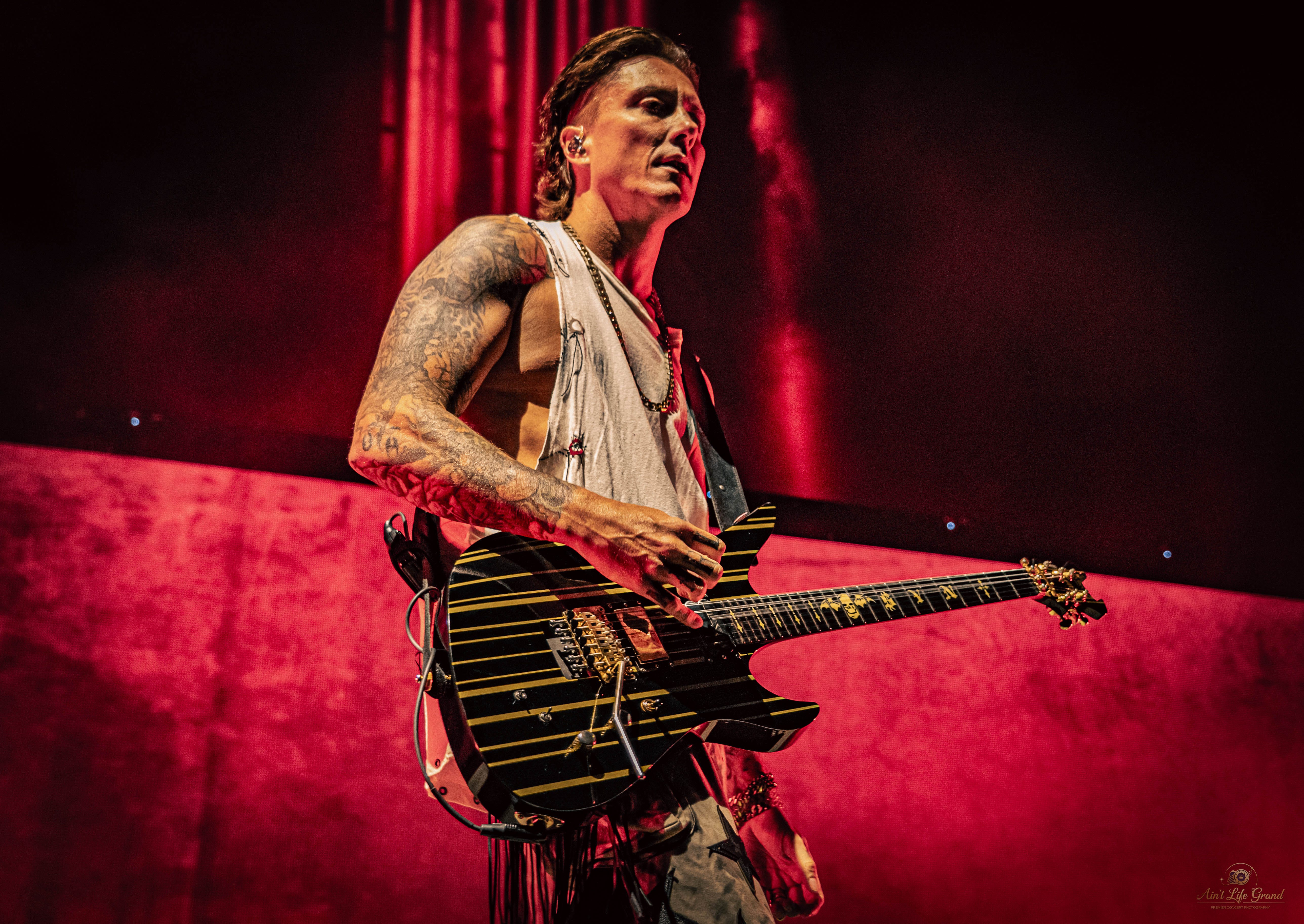
When the opening guitar lines cut through the Chicago-area night, my jaw dropped. My notebook, camera and professional detachment disappeared in the same instant. I was no longer working. I was another longtime fan shouting every word with the people around me.
Released on City of Evil, “M.I.A.” is one of the band’s most ambitious early compositions, shifting between tightly arranged guitar lines, military imagery and the psychological collapse of a soldier trying to survive what he has done. It does not reduce war to heroic posture. The song becomes more desperate as it progresses, eventually leaving its narrator trapped between guilt, duty and the knowledge that returning home does not guarantee escape.
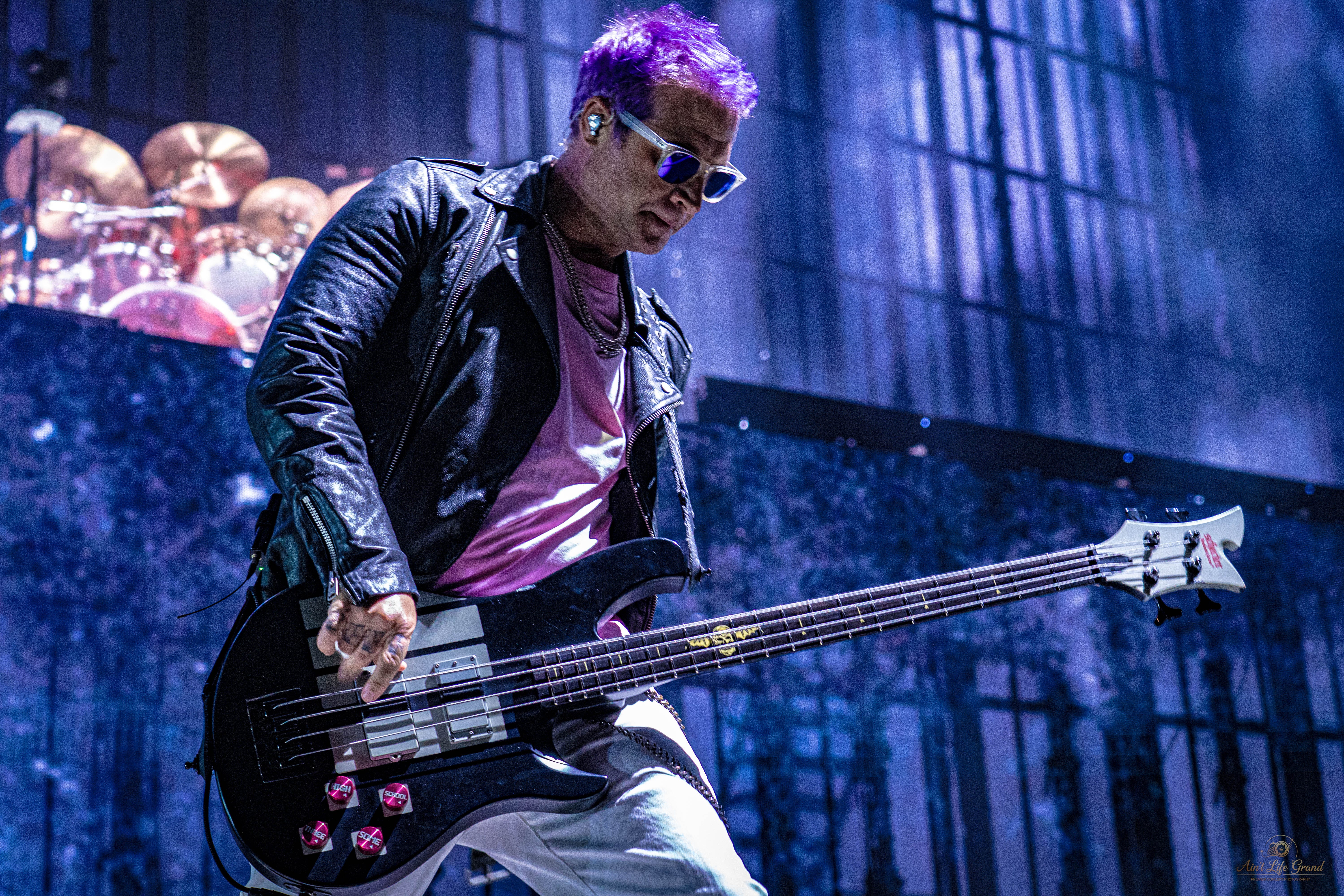
Hearing it live carried the charge of discovering something I had quietly stopped expecting. The rarity mattered, but so did the performance. Synyster and Zacky’s guitars gave the song its serrated edge while Shadows pushed through its changes with a sense of urgency that kept the older material from feeling preserved behind glass.
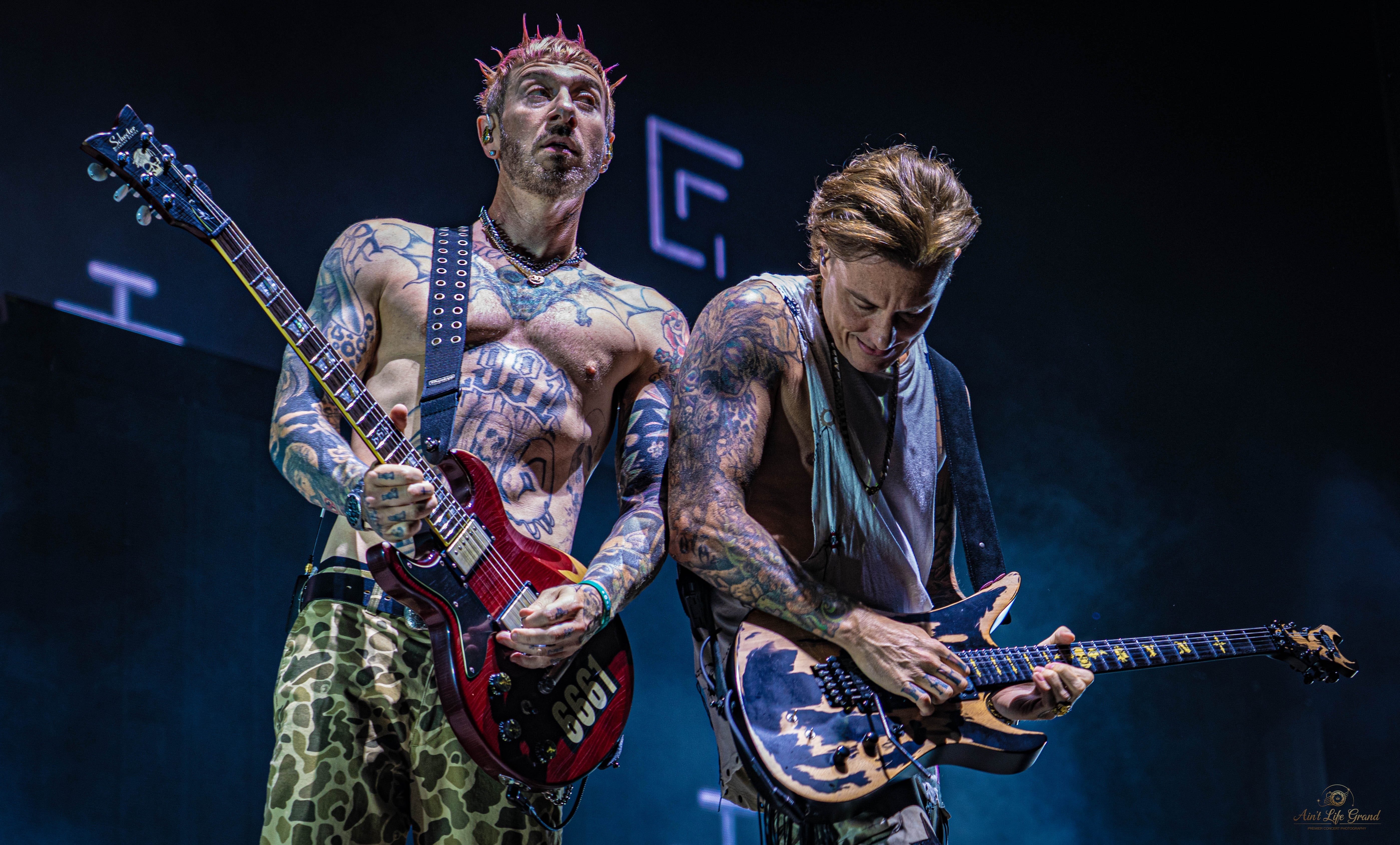
For those few minutes, covering the show and loving the band became impossible to separate.
Dust rises during “Unholy Confessions”
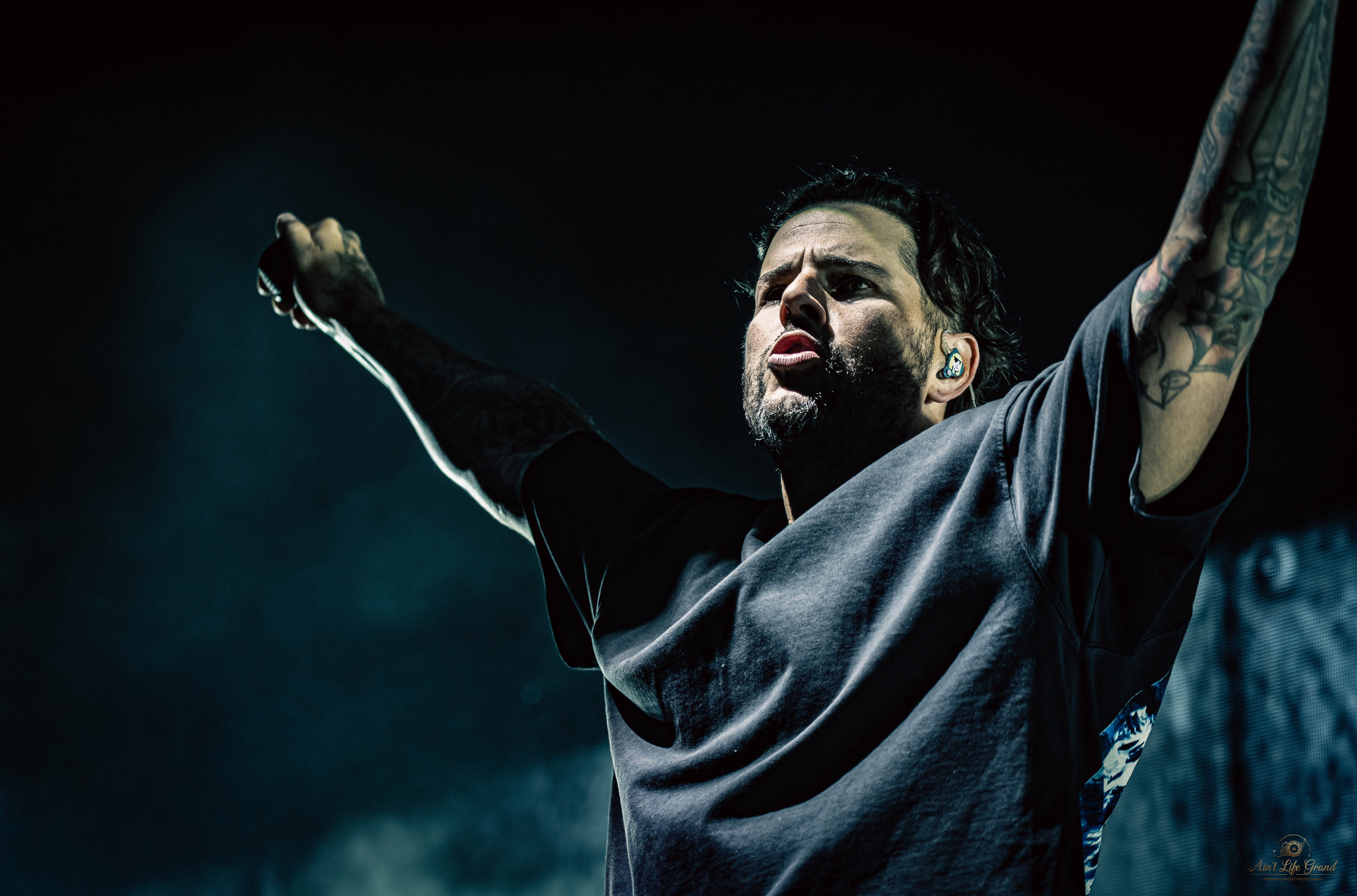
By the time Igor finished his shift in the photo pit and met me on the lawn, the controlled rows beneath the pavilion had given way to something much less orderly.
“Unholy Confessions” turned the back lawn into a dust storm. Bodies collided inside a wide mosh pit, each impact throwing another layer of dirt into the air until portions of the crowd disappeared behind a brown haze. Shoes slipped against the dry ground. People stumbled, laughed, pulled one another upright and threw themselves back into the movement.
Near the edge of the grass stood a line of roughly eight to twelve venue security guards. They watched the pit with hesitation written across their faces, none appearing particularly interested in becoming the first person sent into the cloud. Their expressions said what nobody needed to hear out loud: I do not get paid enough to walk into that.
The chaos never seemed cruel. Fans opened space when someone fell and then closed ranks again once they were standing. It was loud, dirty and physical, closer to the old Avenged Sevenfold shows I first fell in love with than anything else that evening.
“Unholy Confessions” remains my favorite song in the band’s catalog, partly because it captures Avenged Sevenfold before the machinery became enormous. The guitars are sharp and immediate. The breakdown still pulls an instinctive reaction from a crowd. Years of larger stages, evolving production and increasingly elaborate compositions have not dulled its ability to turn an audience feral.
“Cosmic” burns orange
If “Unholy Confessions” brought the old violence back to the surface, “Cosmic” moved the set toward something more controlled and strange.
It has never been one of my favorite Avenged Sevenfold songs, but its live presentation made a stronger argument than the studio recording ever had for me. M. Shadows’ use of the vocoder gave the performance an artificial, disembodied quality while the arrangement gradually expanded around him. The effect demonstrated how far the band has moved from the straightforward metal expectations that followed its early career.
The visuals completed the song. Deep orange and fiery red spread across the stage, with the graphics shifting slowly behind the band. Brooks hammered through the arrangement from his elevated position.
The production did not simply make the song larger. It clarified what the band was reaching for. “Cosmic” is built around mortality, recurrence and the possibility that human connection might outlast the bodies carrying it. In the amphitheater, surrounded by orange light and thousands of people standing unusually still, the song’s scale finally made sense.
The encore that never arrived
After “Cosmic,” the stage went dark and the familiar encore calculation began.
People remained in place, waiting. I mentally worked through the catalog and became convinced we were about to hear “A Little Piece of Heaven”. The song’s theatrical structure, violent humor and enormous vocal arrangement make it an obvious closing spectacle, especially for an audience already prepared to sing every twisted word.
Minutes passed before road cases rolled onto the stage, crew members began unplugging equipment and the house lights came up.
At first, the ending did not feel real. Fans stayed where they were, looking toward the stage as though the crew activity might somehow be an elaborate fake-out. It was not. Avenged Sevenfold was finished.
For a band with this much material, ending without a conventional encore created a strange hollow space. The performance itself had not lacked intensity, but everyone appeared to be holding something back for one final release. When it never arrived, the crowd’s anticipation had nowhere to go.
We remained in place for another moment before accepting that “A Little Piece of Heaven” was not coming. Around us, people gathered blankets, checked for lost phones and began the long shuffle toward the parking lots. The night had delivered “M.I.A.,” “Unholy Confessions” and a visually commanding “Cosmic,” yet the abrupt finality of the house lights still left a small bruise.
Afterglow
Walking back toward the car, exhaustion finally caught up with me. Excitement remained, but it had become tangled with a strange sadness I had not anticipated.
For years, I had imagined what covering Avenged Sevenfold would feel like. Once it happened, my mind immediately asked an unfair question: What do I do now?
Checking off the highest item on a bucket list carries its own kind of comedown. The dream does not disappear, exactly. It becomes a memory, and there is a brief period when your brain struggles to understand why something that once felt impossibly distant is suddenly behind you.
After escaping the parking lot traffic, Igor and I headed into the Chicago area rather than turning immediately toward Iowa. Our business and personal lives had been heavily scheduled for weeks, so we claimed Friday as a miniature vacation. We visited the beaches along Lake Michigan, wandered through Alef Sausage & Deli and eventually treated ourselves to dinner at Enzo & Lucia Ristorante in Long Grove.
The prices matched the quality of the food, but we had earned it.
Later, the laptop came out. Memory cards filled the screen with images from the pit, and the post-concert blues disappeared beneath the familiar rhythm of editing. Igor and I compared crops, discussed lighting and framing and zoomed into the strongest photographs he had captured. The adrenaline returned as we realized how much of the evening he had preserved.
I looked at the screen, then across at Igor, and the full absurdity of the previous day finally landed. We had received approval at 12:19 p.m., dropped everything, driven five and a half hours, survived the parking confusion, entered the official press pit and watched Avenged Sevenfold command one of the Midwest’s largest amphitheaters.
We had actually pulled it off.
Sitting in the laptop’s glow, I stopped worrying about what dream might replace this one. There would be another assignment soon enough, another impossible drive, another email arriving far later than anyone sensible would prefer.
For that night, it was enough to know we had chased this one down.
Avenged Sevenfold and Good Charlotte’s North American run continues through August, with dates still ahead in cities including Belmont Park, Mansfield, Camden, Charlotte, Tampa, Dallas, Denver, Salt Lake City and Phoenix. Anyone still debating whether to go should stop treating the decision like an encore that might never arrive. The remaining shows are already on sale, and tickets are available here.
Please consider Donating to Sponsor an article even $1 helps!
