



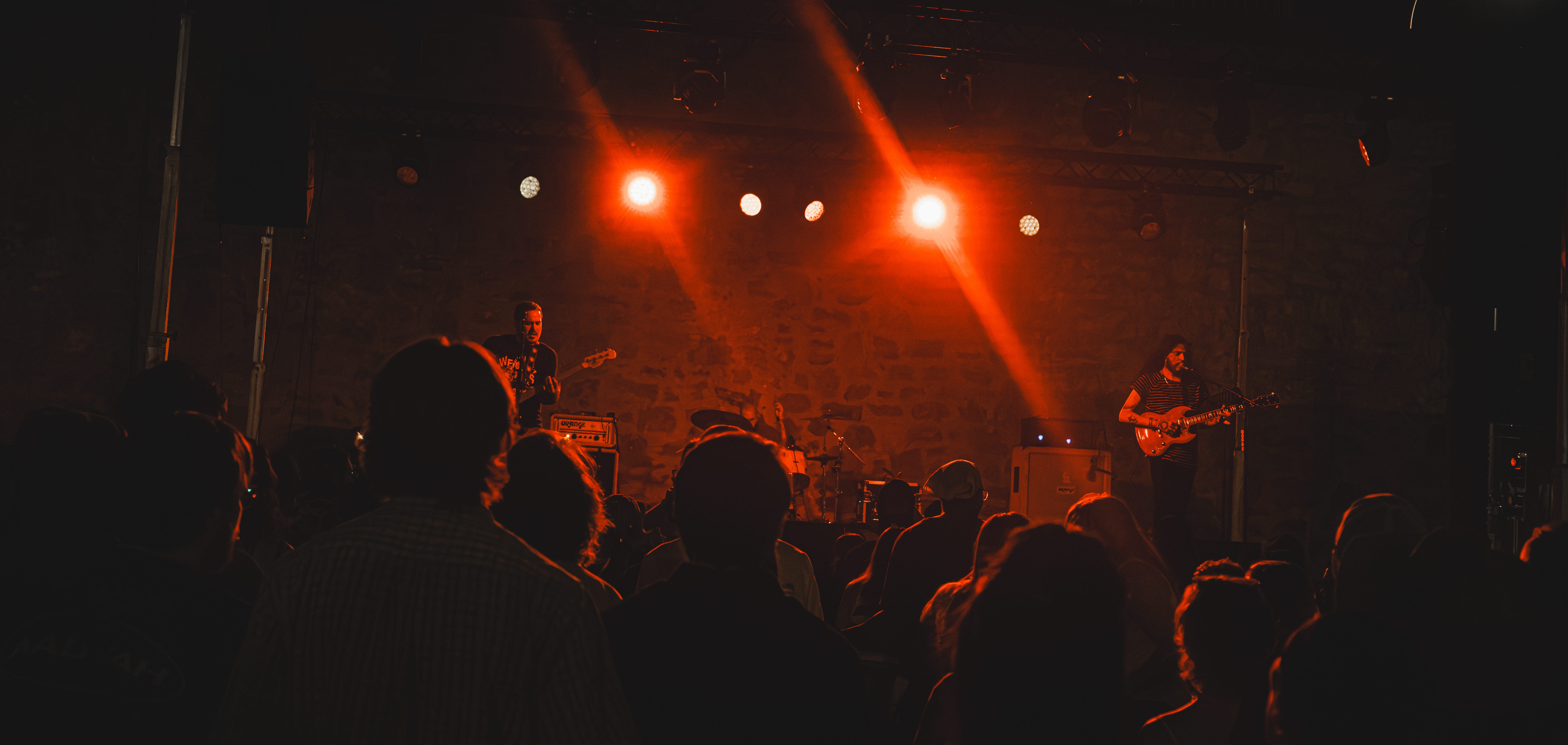
At 3 p.m., downtown Sioux Falls had not yet caught up with the schedule. Saturday’s doors opened three hours earlier than Friday’s, and the first pockets of people inside the Four Winds Music & Art Festival grounds looked less like a festival crowd than advance scouts. A few committed to a stage. Others studied the set times, calculating how quickly they could move among five venues without missing the artist everyone might be talking about later.
Four Winds seemed a little dead at first. There is no prettier way to put it. It was also early, and the same thing had happened Friday before the crowd thickened and the festival got properly rowdy within the first couple of hours. Saturday simply had a longer runway. The day began while some people were still deciding what to do with it.
Playing first is the ugly little bargain of an all-day festival. The grounds are quiet, the audience is thin and there are hours of music ahead, but the opening act still has to walk onto the stage and perform as if the room is already full. Saturday made the assignment even stranger by scattering radically different sounds across downtown. Friday had leaned heavily into metalcore and rock. This second day placed instrumental surf rock, indie pop, folk, hip-hop, metal, reggae and EDM within a few blocks of each other. The crowd had not arrived yet. The festival’s range had.

The Times’ Four finds the secret-agent frequency
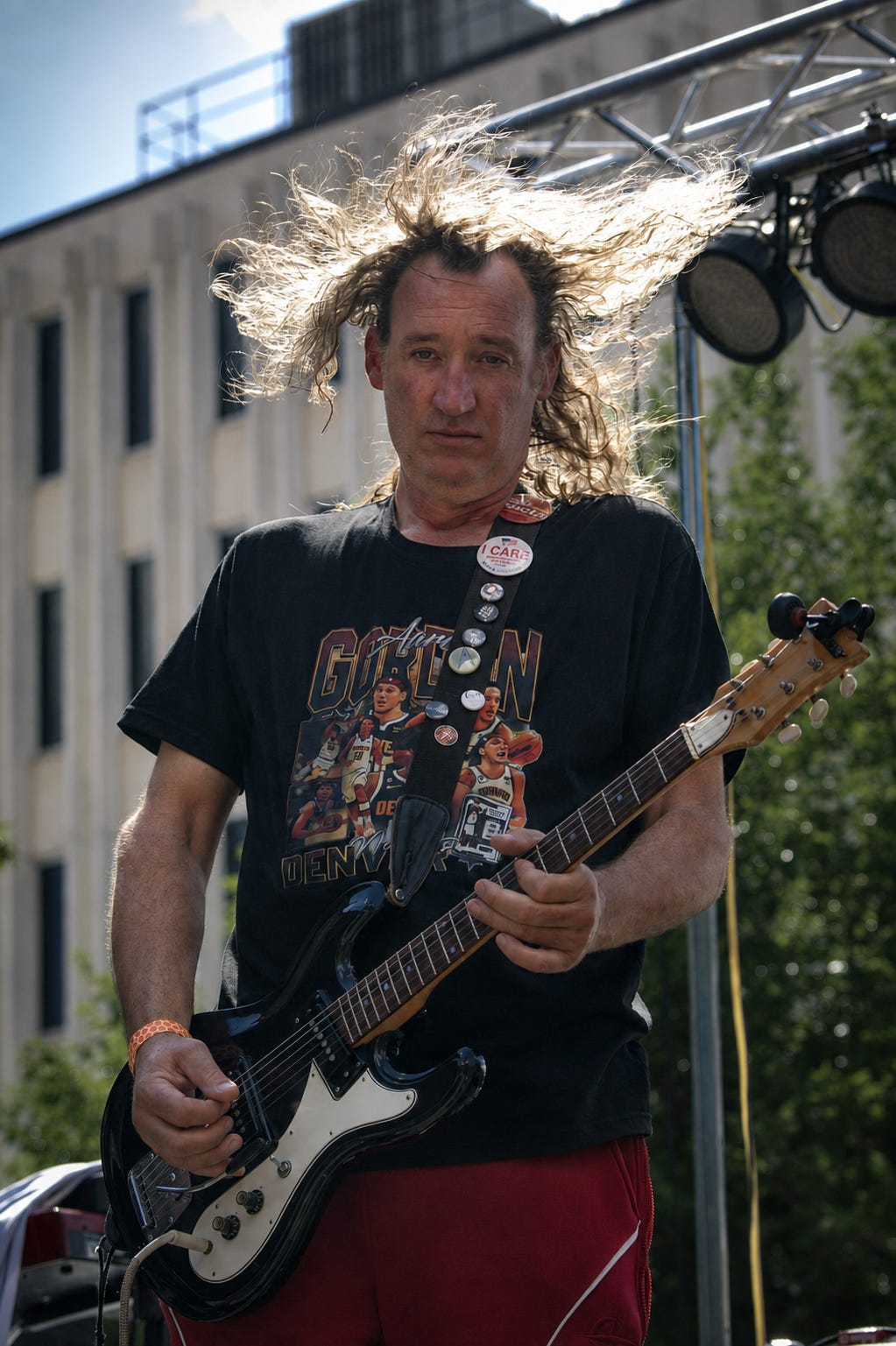
Outside Vishnu Bunny, The Times’ Four played without a singer because they did not need one. Bass, guitar, saxophone and drums gave the Sioux Falls quartet every necessary piece. The sax occupied the space where a vocal melody usually sits, stepping forward to state a phrase before dropping back into the arrangement. Guitar and bass kept the songs clipped and mobile. The result landed somewhere among instrumental jazz rock, vintage surf music and psychedelic pop—the kind of combination capable of taking you on a trip, if you know what I mean.
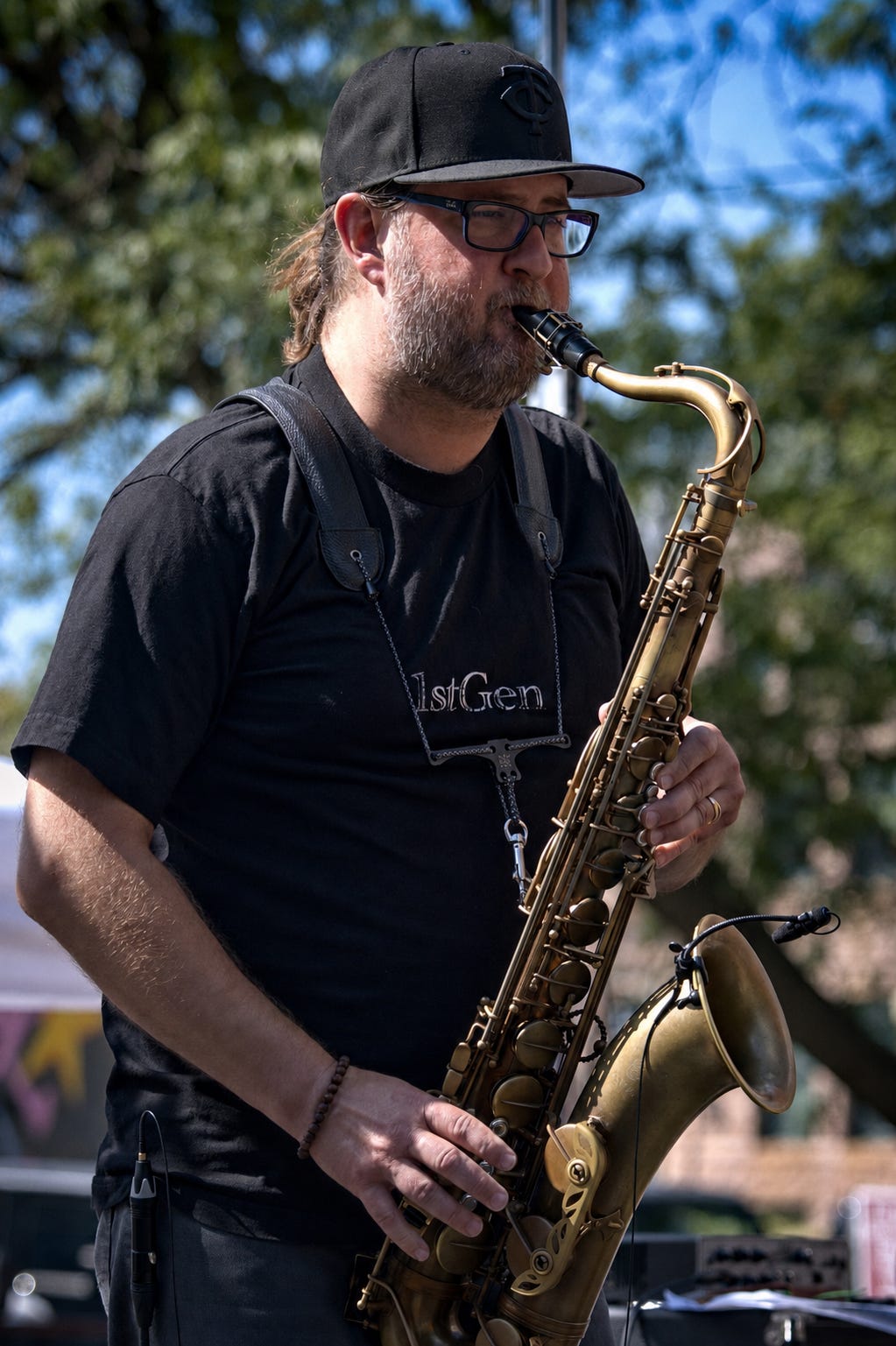
Formerly known as Habeas Porpoise, the band has described 1960s surf rock and vintage film and television scores as part of its foundation. You could hear both without reading the biography. The rhythms carried that old beach-party snap, but the sax added a slyer mood, less bonfire and more suspicious character entering a hotel lobby.
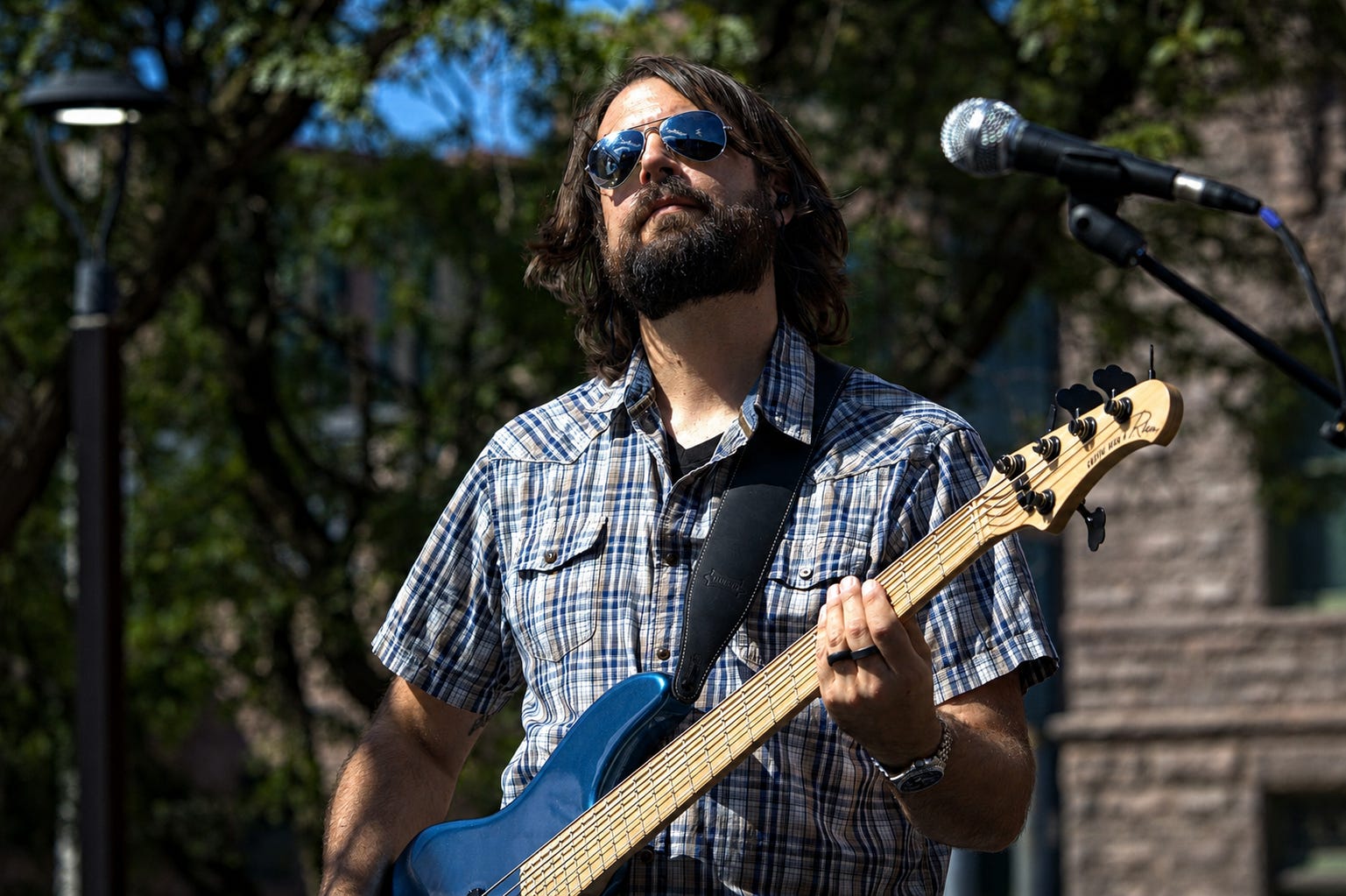
Closing with the James Bond theme made the connection explicit. Of course this band would end there. The famous guitar line, the brass-shaped melody and the built-in sense of danger fit their entire set so naturally that it felt less like a cover than a reveal.
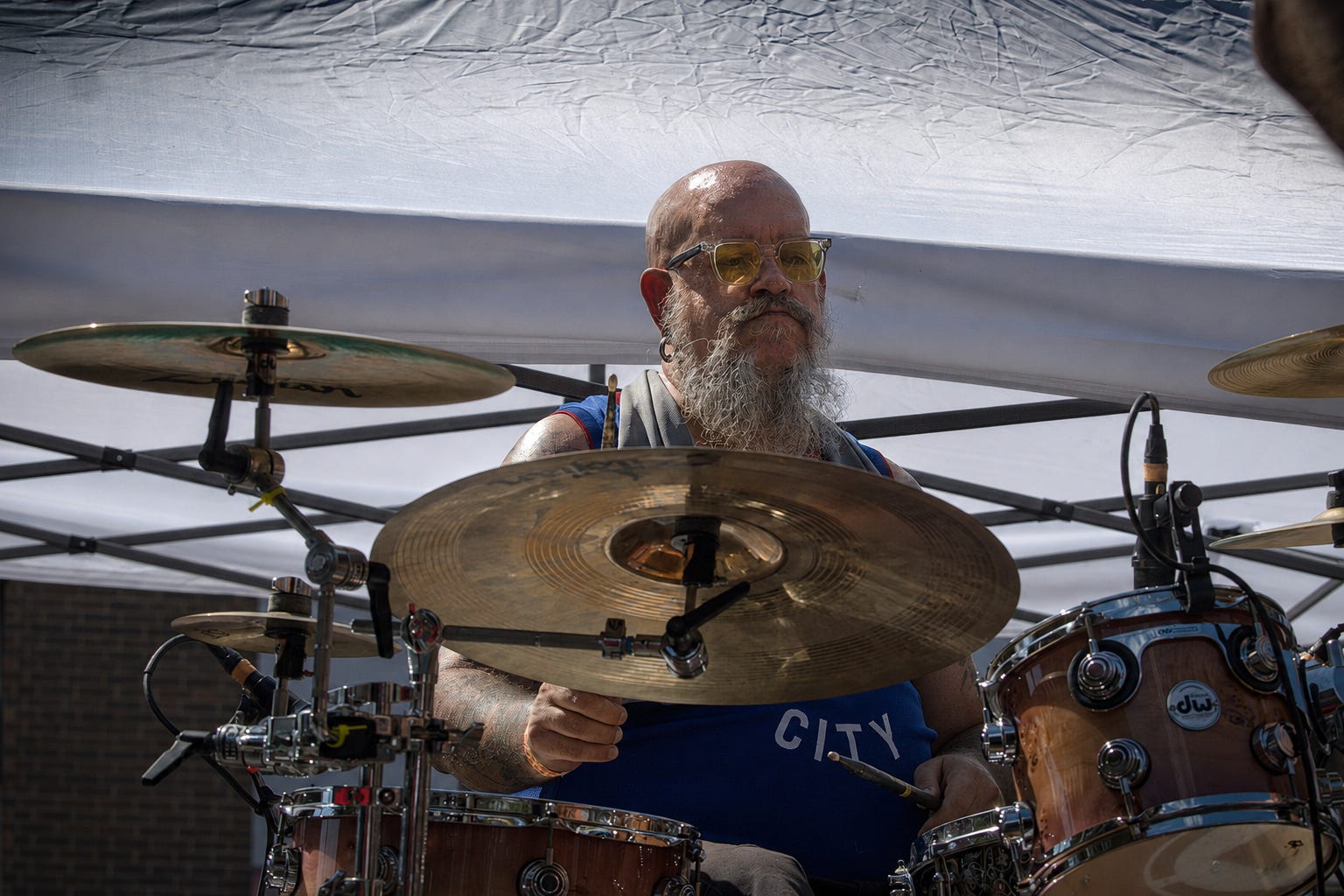
Visually, the guitarist’s long, scraggly gray hair may have stolen the set. It appeared to move even when there was no wind. Maybe Vishnu Bunny had a fan hidden somewhere. Maybe the band had invested in an extremely specific stage effect. Maybe I was still tired from Friday. At that hour, all three explanations felt reasonable.
Please consider Donating to Sponsor an article even $1 helps!

Sad Planet makes one person sound like a band
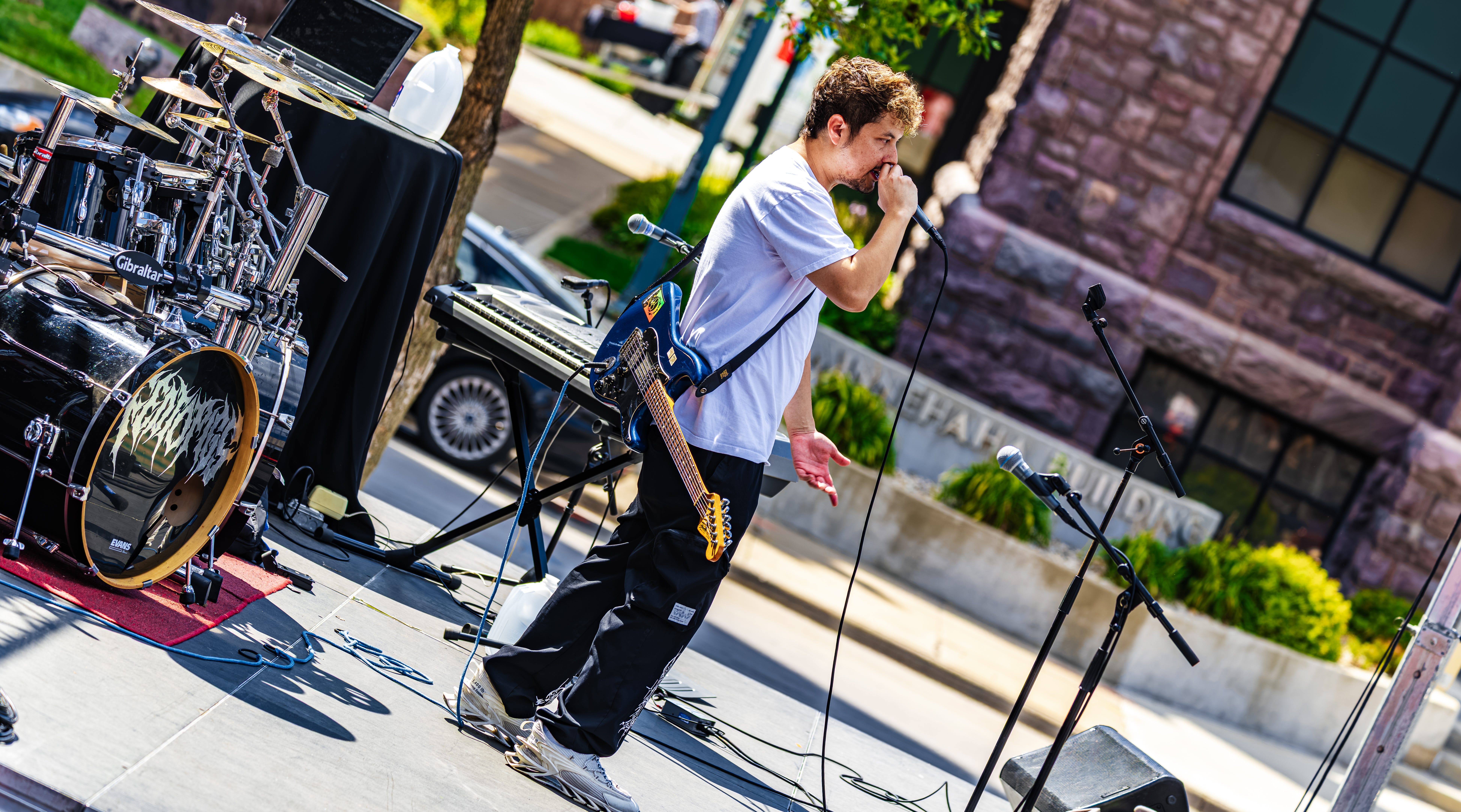
Outside at ICON, Sad Planet faced the hardest assignment of the day: opening the outdoor stage while the festival was still filling in around him. Performing largely as a one-man band, he moved between keys and guitar while a backing track supplied the instrumentation he could not physically play at the same time. That setup can expose a solo performer. There is no bandmate to redirect the eye, no drummer to manufacture motion and nowhere to hide when a transition loses its footing.
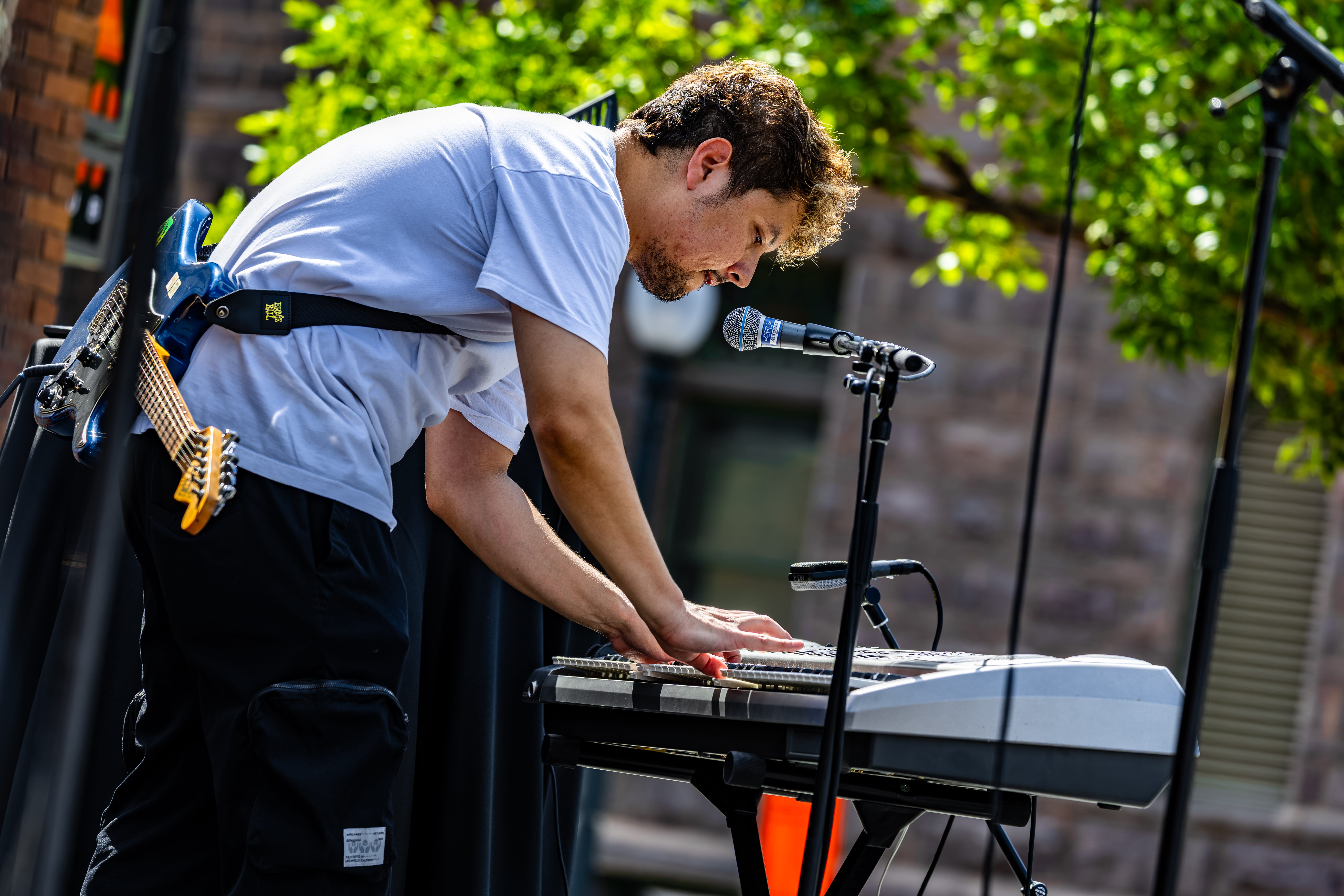
Sad Planet used the limitations instead of apologizing for them. The set moved from melodic passages into rap and then straight spoken word, keeping the vocal approach in motion while the stage picture stayed spare. The switches did not feel like a performer rifling through genres to show range. They kept the material from settling into one predictable cadence. When he sang, the melodies softened the backing track. When he rapped, the percussion came forward. Spoken passages reduced the distance between the stage and the small group listening.
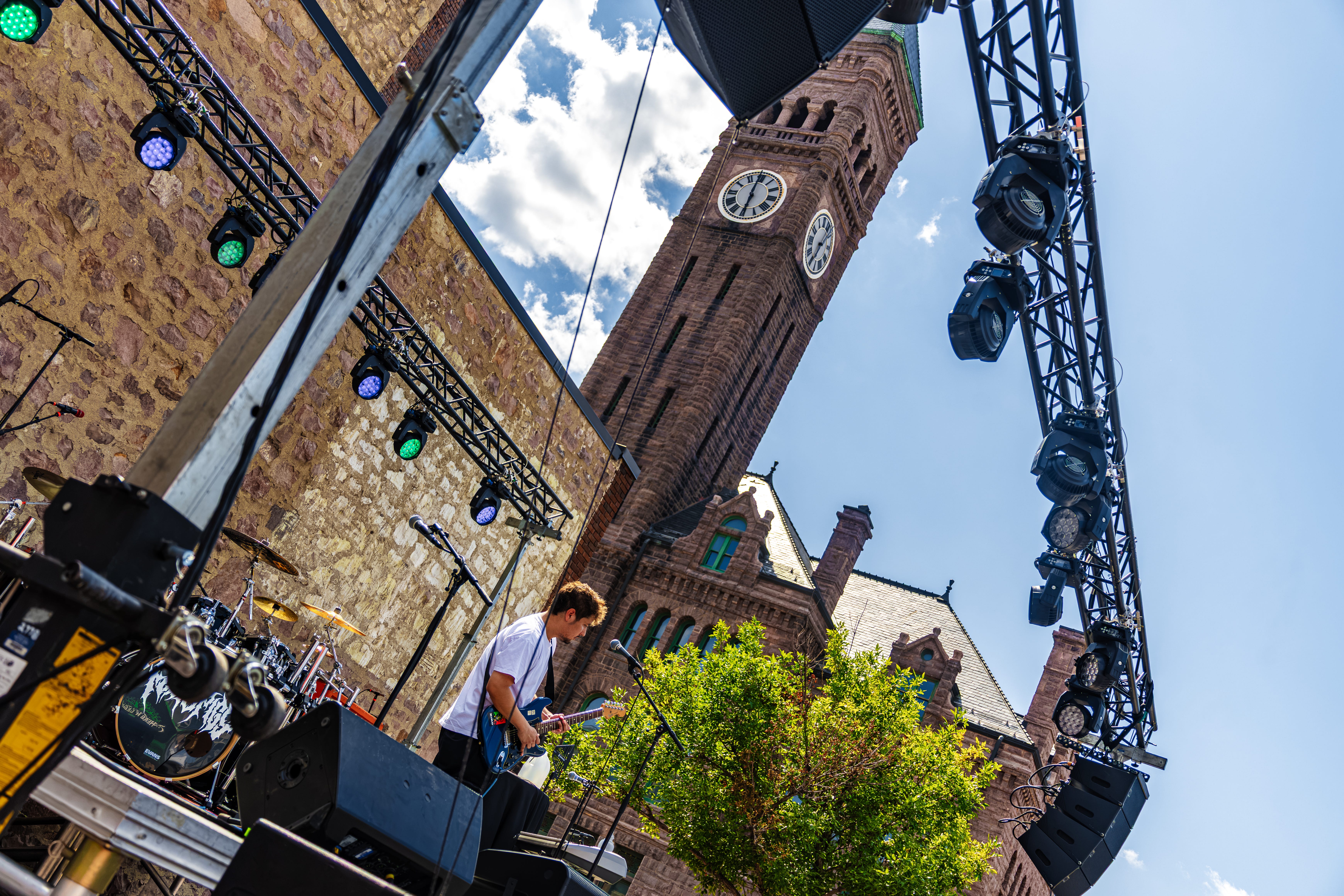
Near the end, a friend joined him on trombone. One additional person changed the scale of the entire arrangement. The horn was brassy, physical and a little unruly, a live breath moving against the clean edges of the track. What had sounded carefully constructed suddenly had friction. It capped a performance that felt larger than the number of people onstage suggested it should.
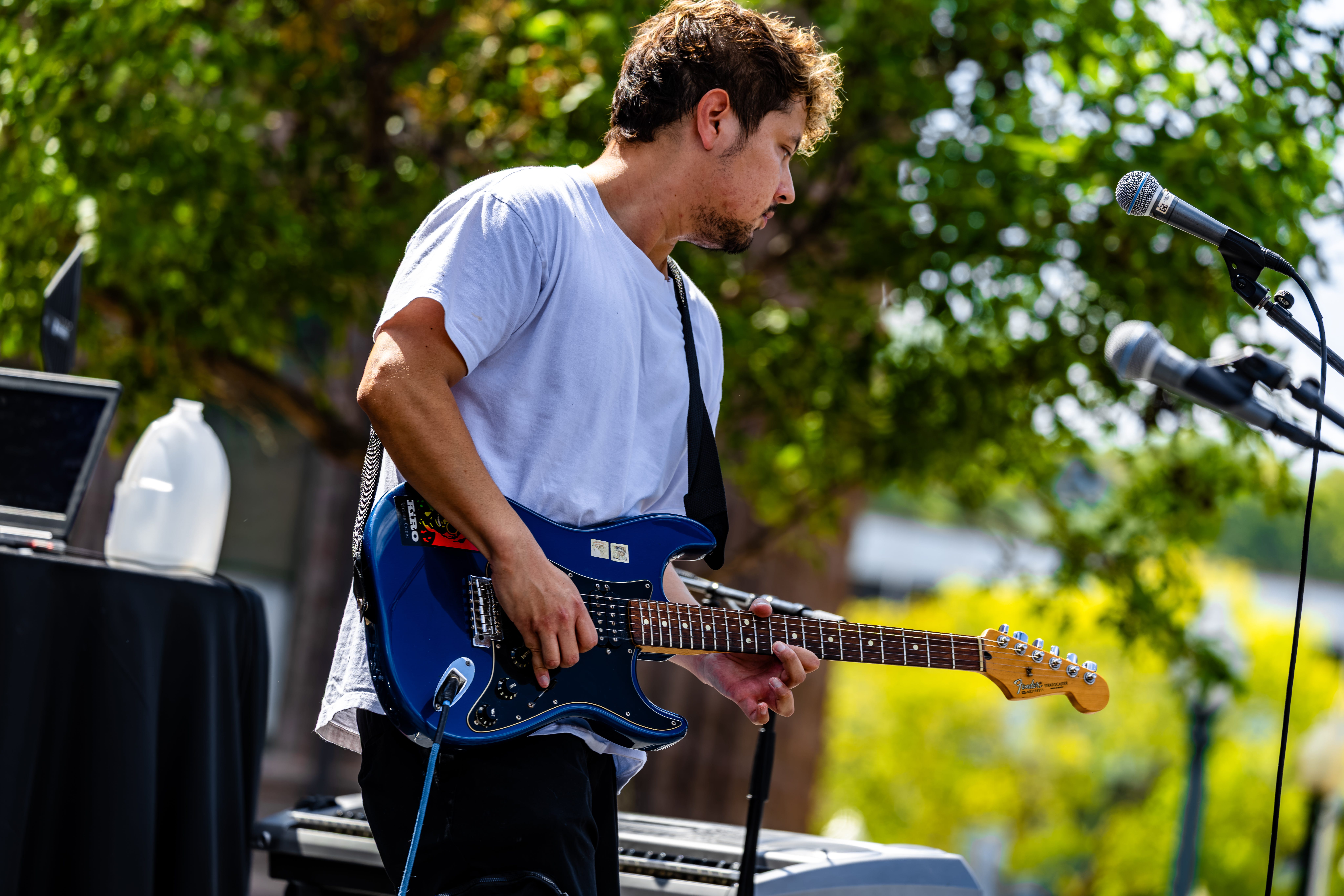
Sad Planet never treated the opening slot like a rehearsal for a better crowd later. He played for the people who were actually standing there. The grounds were still waking up, but he had already set a standard for how seriously the day should be taken.
TJ FIGH pushes against an empty room
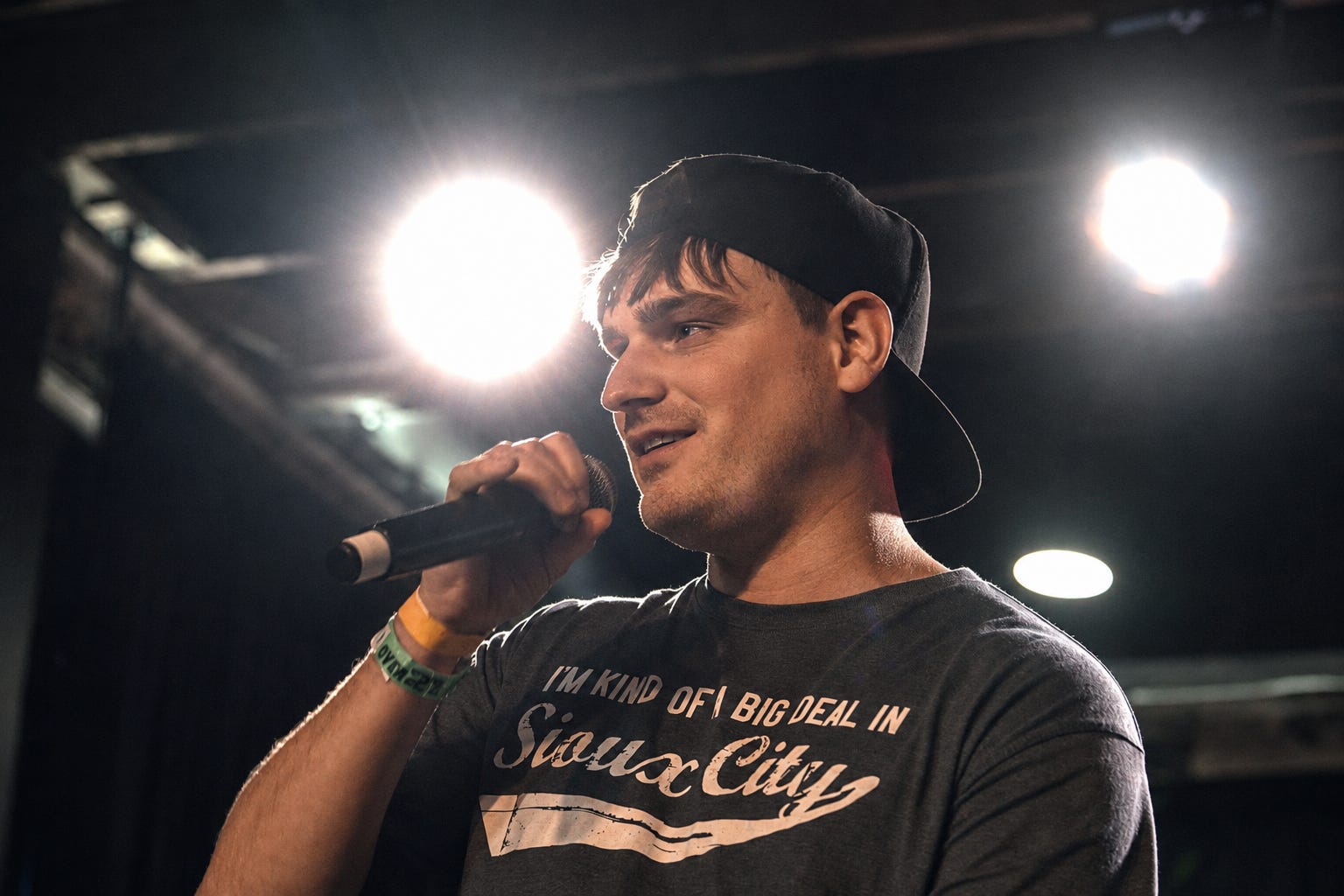
I decided to stay at Club David for two early rap sets, beginning with TJ FIGH. The festival flier and setlist had his name spelled incorrectly as, “TJ FIGHT”. A friend of his was able to clear that up for us. The Sioux City rapper walked into the same problem every early performer had faced: not enough people and too much visible floor. At one point he asked the small crowd to say “fuck the police,” explaining that the police make him hide his weed. Those present gave the words back to him, but a response from a few people cannot hit with the physical force of a packed room shouting the same thing.
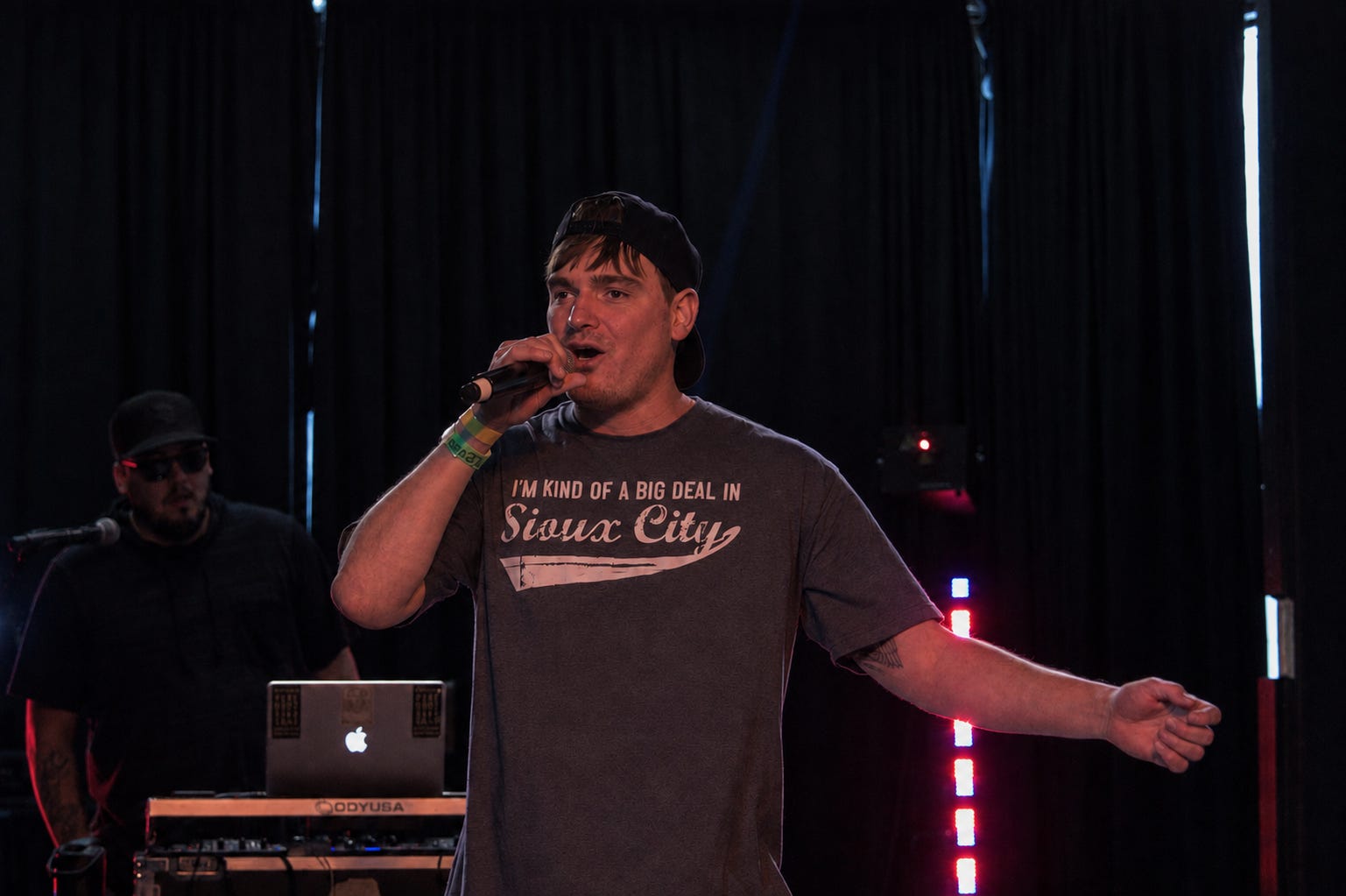
In a larger setting, I could see TJ FIGH doing quite well. His directness would have more bodies to bounce against, and the audience-participation moments would create their own momentum. Saturday demanded that he generate more of that pressure by himself. Regardless of crowd size, rap needs projection, movement and a sense that the performer is pushing through the front edge of the stage. His performance remained slightly too settled for the amount of empty space in the room. The songs hinted at a show with more force than this particular set delivered.
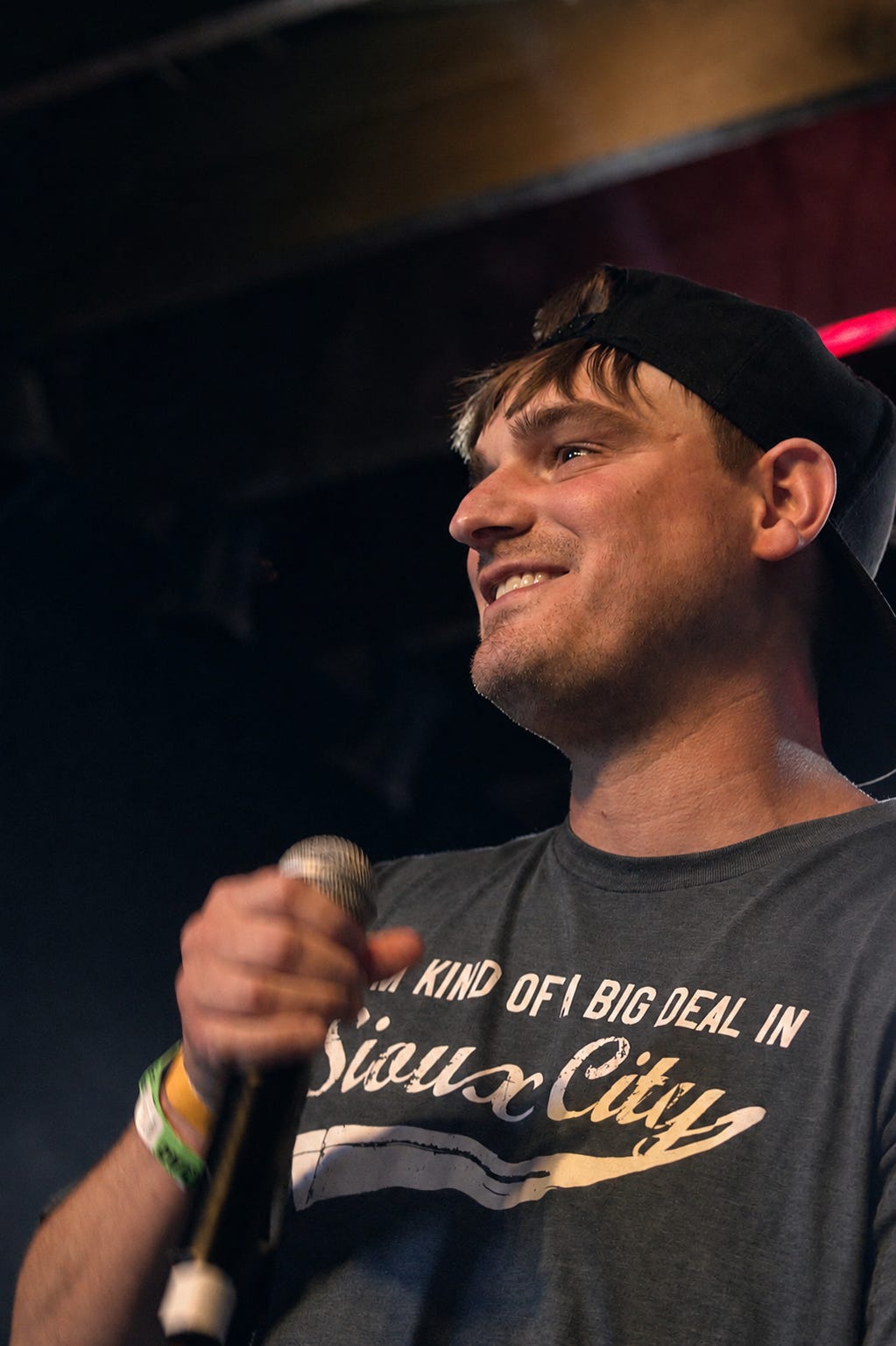
None of this criticism erases the person standing behind it. TJ FIGH’s mother told me he became mostly blind shortly after his 18th birthday following surgery for scoliosis. “The doctors really screwed up,” she said. She described his remaining vision as being able to make out shadows. A public artist biography also places the loss of his sight at 18 and explains that he returned his focus to a childhood love of rap afterward. Before that, he had played piano and saxophone, experience that later helped him build instrumentals of his own.
His first project, “The Balance”, arrived in 2017 with songs centered on self-examination, fear, addiction and the pull between better and worse instincts. Knowing that history sharpened what I wanted from the live set.
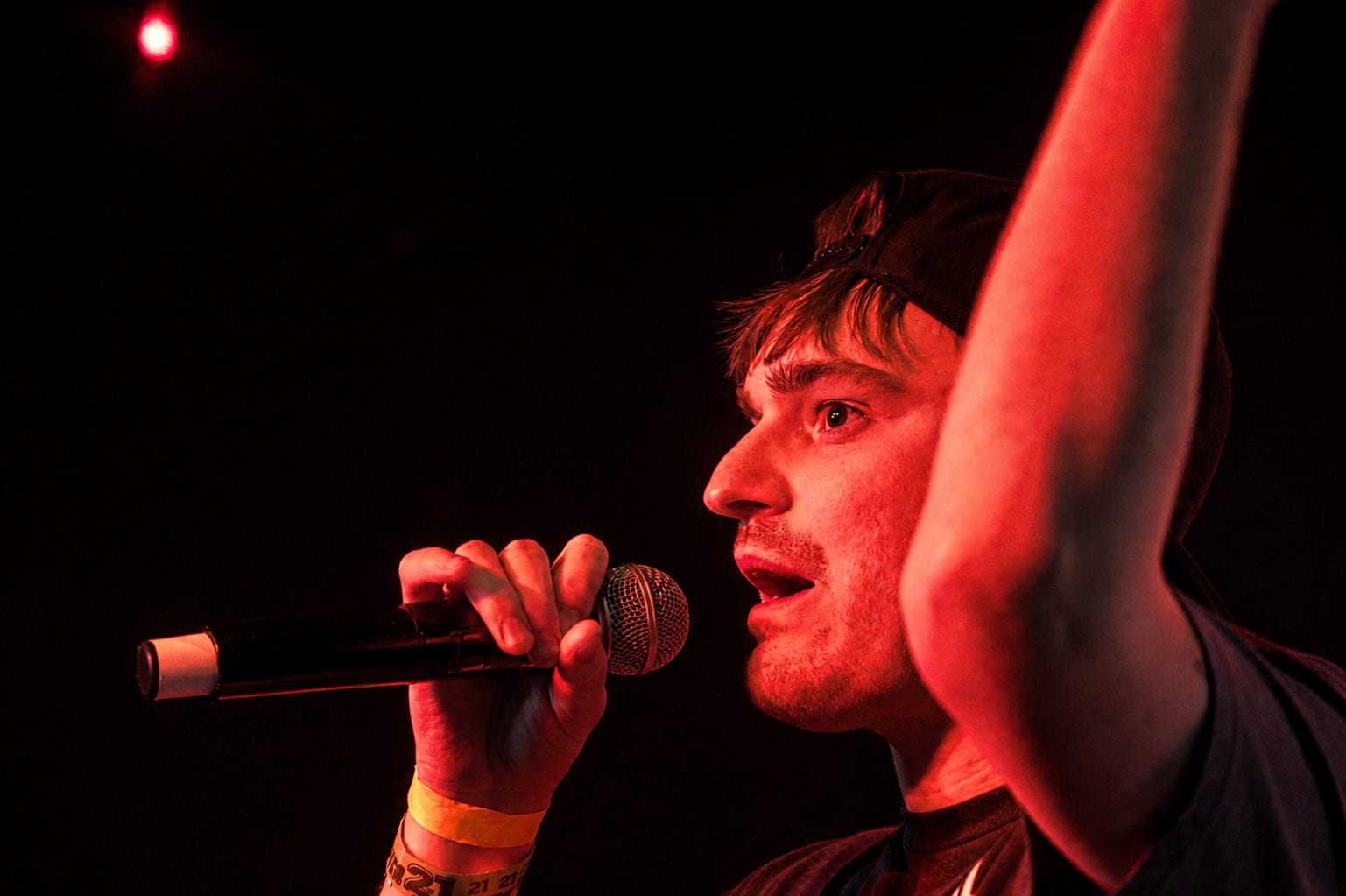
TJ FIGH has already pushed through circumstances far more difficult than a sparse afternoon crowd. The next step is bringing that same refusal to retreat into every physical part of the performance, even when Club David has not filled yet.
4Worn N4tion loosens up Club David
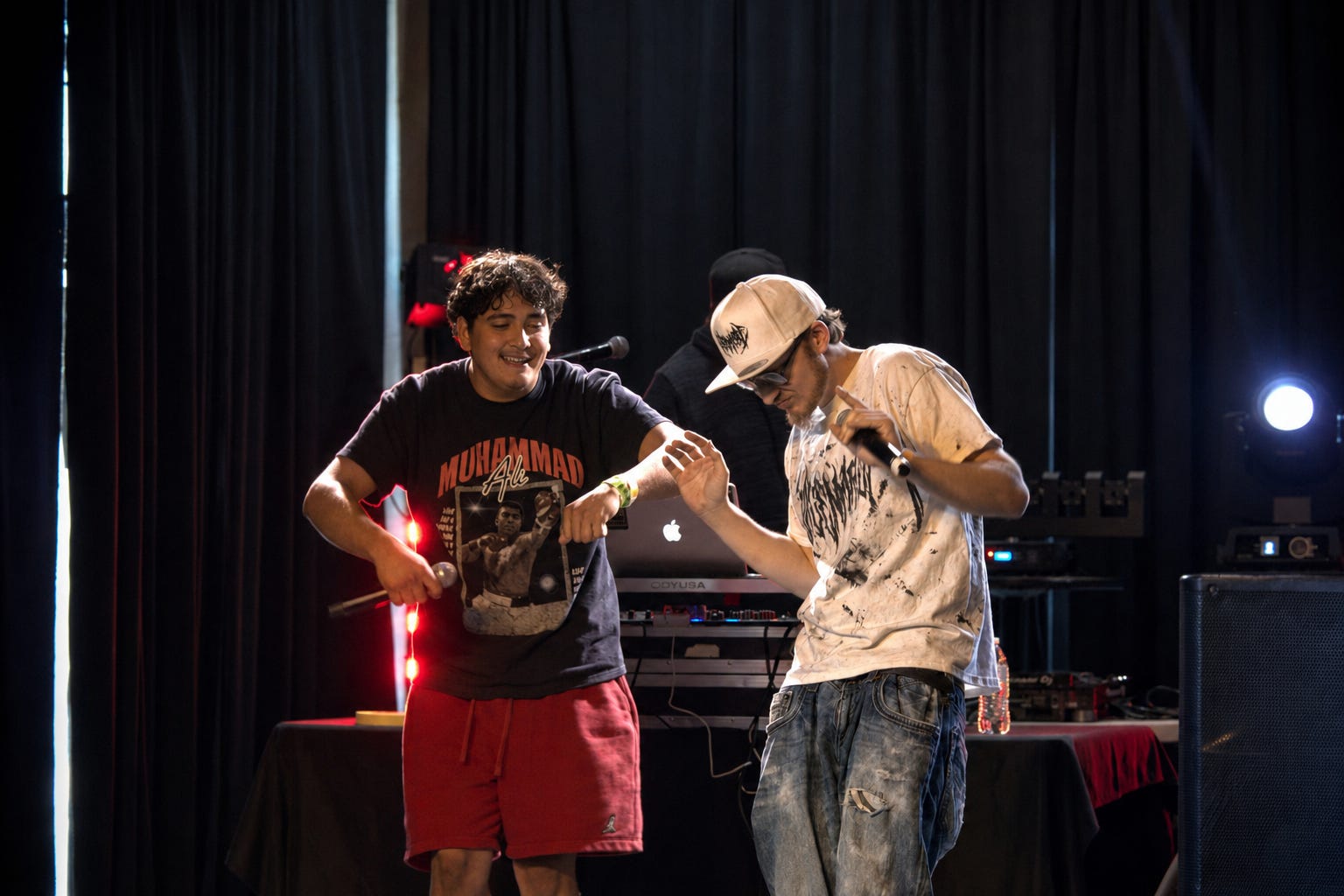
4Worn N4tion followed and brought Angel BP onstage for the first song. The difference between a solo figure and a functioning duo registered immediately. They had a natural rapport, trading attention without crowding each other and giving the audience two points of movement. Their engagement felt conversational rather than rehearsed—one voice opening space, the other stepping into it.
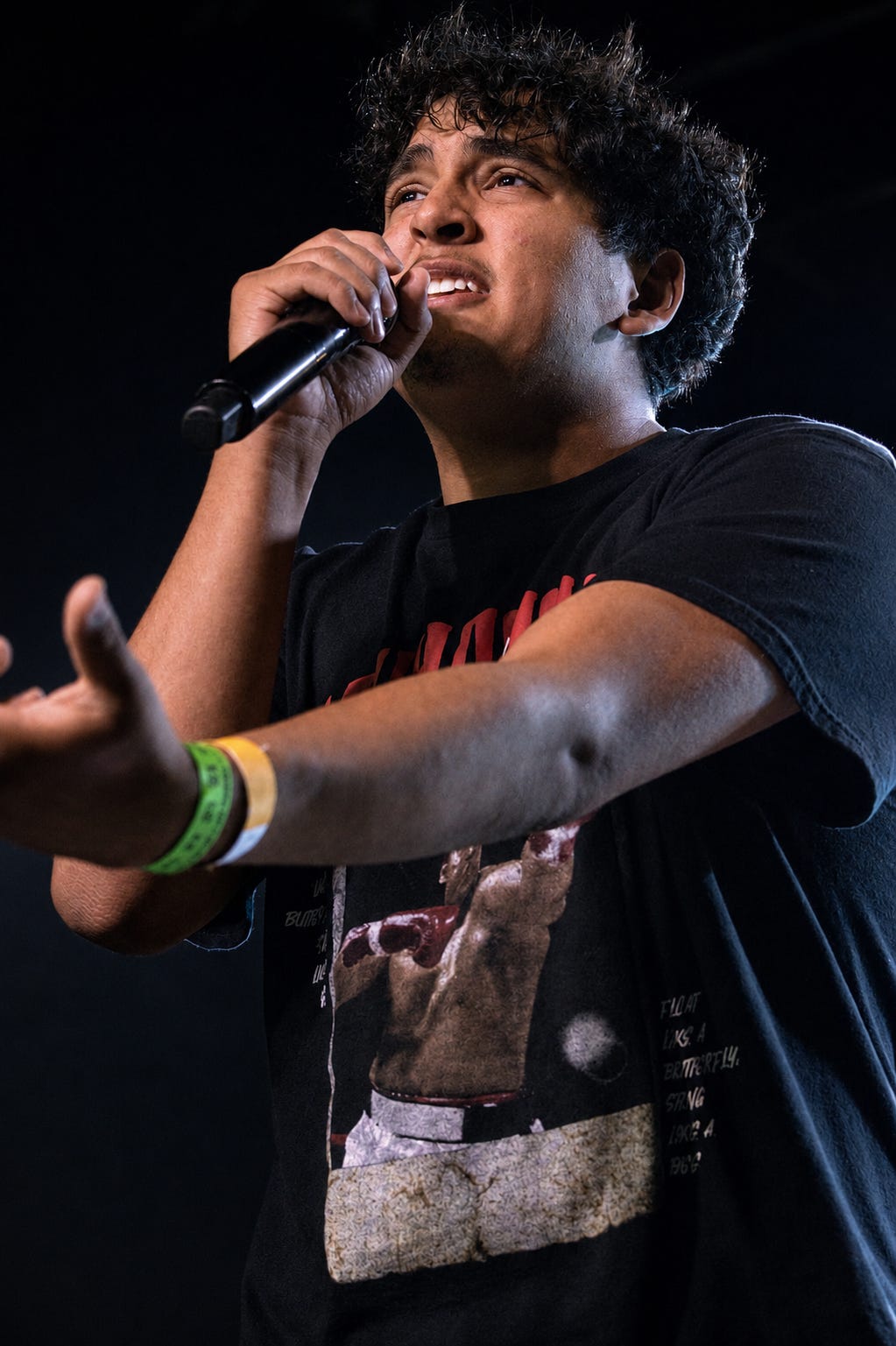
For his second song, 4Worn N4tion performed “Gold Chains,” which he said is available across streaming platforms. He also joked that he needed to get back into the gym, a small bit of self-deprecation that helped relax the room. Humor matters when attendance is light. It tells the people who did show up that the artist sees the situation and intends to have fun with them anyway.
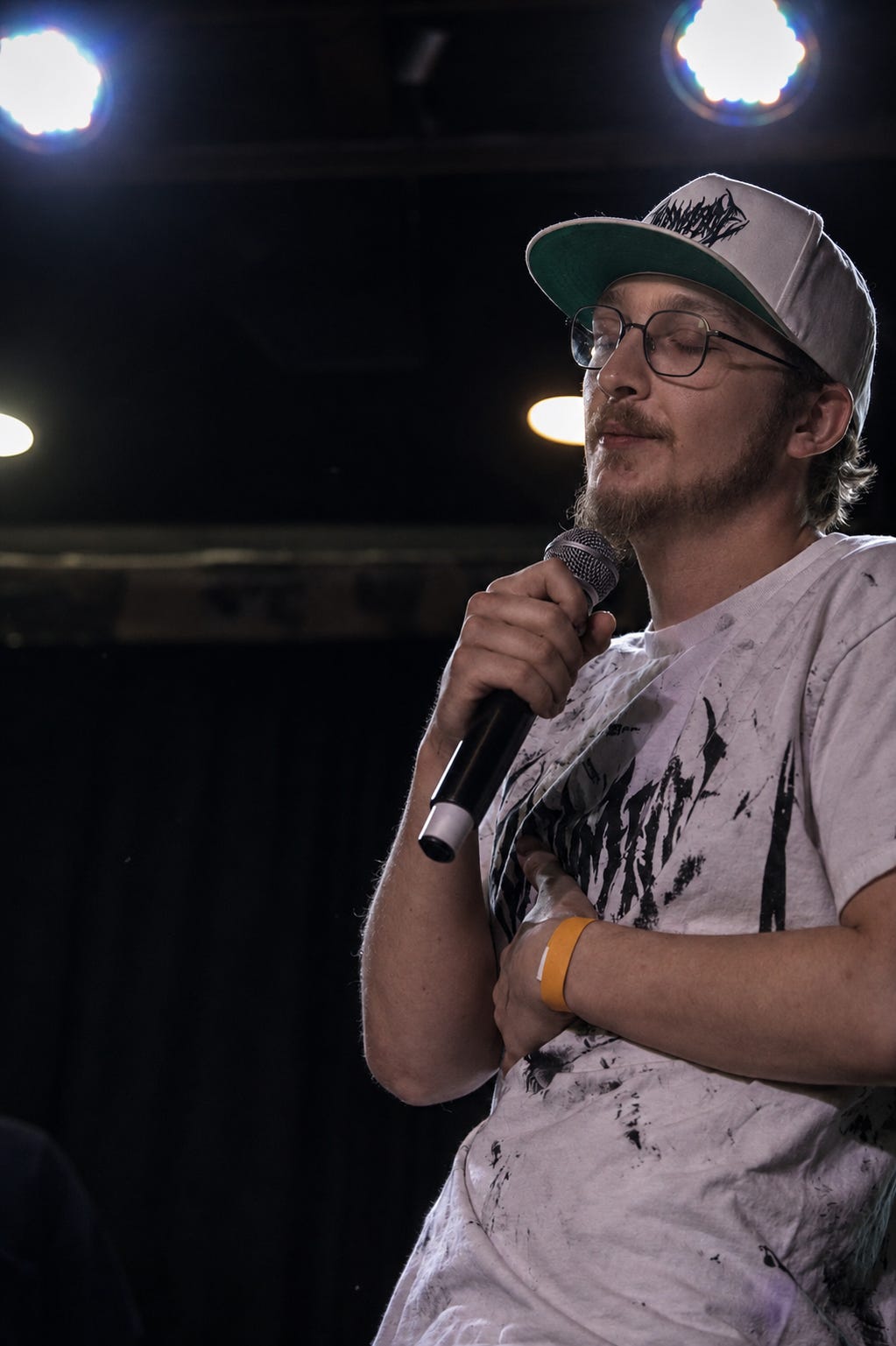
Vocally, 4Worn N4tion carried a familiar grain. His tone was relaxed, slightly weathered and conversational, with phrases leaning behind the beat in a way that recalled Mac Miller. If I had to guess, Miller is a major influence. I would still want to ask before printing that as fact. What I heard Saturday was not a copy of Miller’s delivery, but a similar instinct: making a rap verse sound like a private thought that happened to find a microphone.
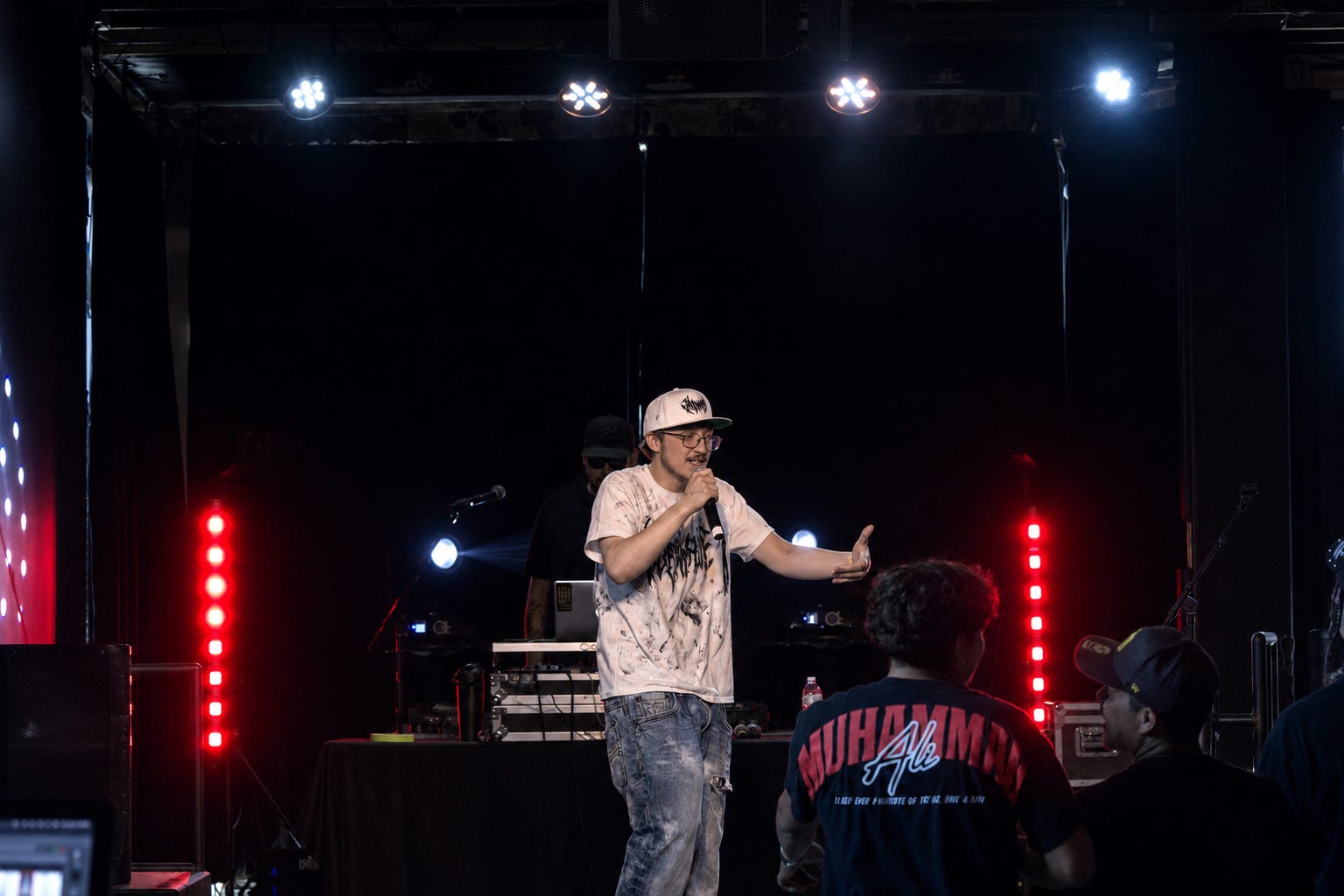
Between TJ FIGH’s directness and 4Worn N4tion’s looser partnership with Angel BP, the early Club David sets showed two different ways of working against the same room. Neither had the crowd later performers would inherit. Both had to make something out of whoever was already present.
Kevin McClure makes presence the point
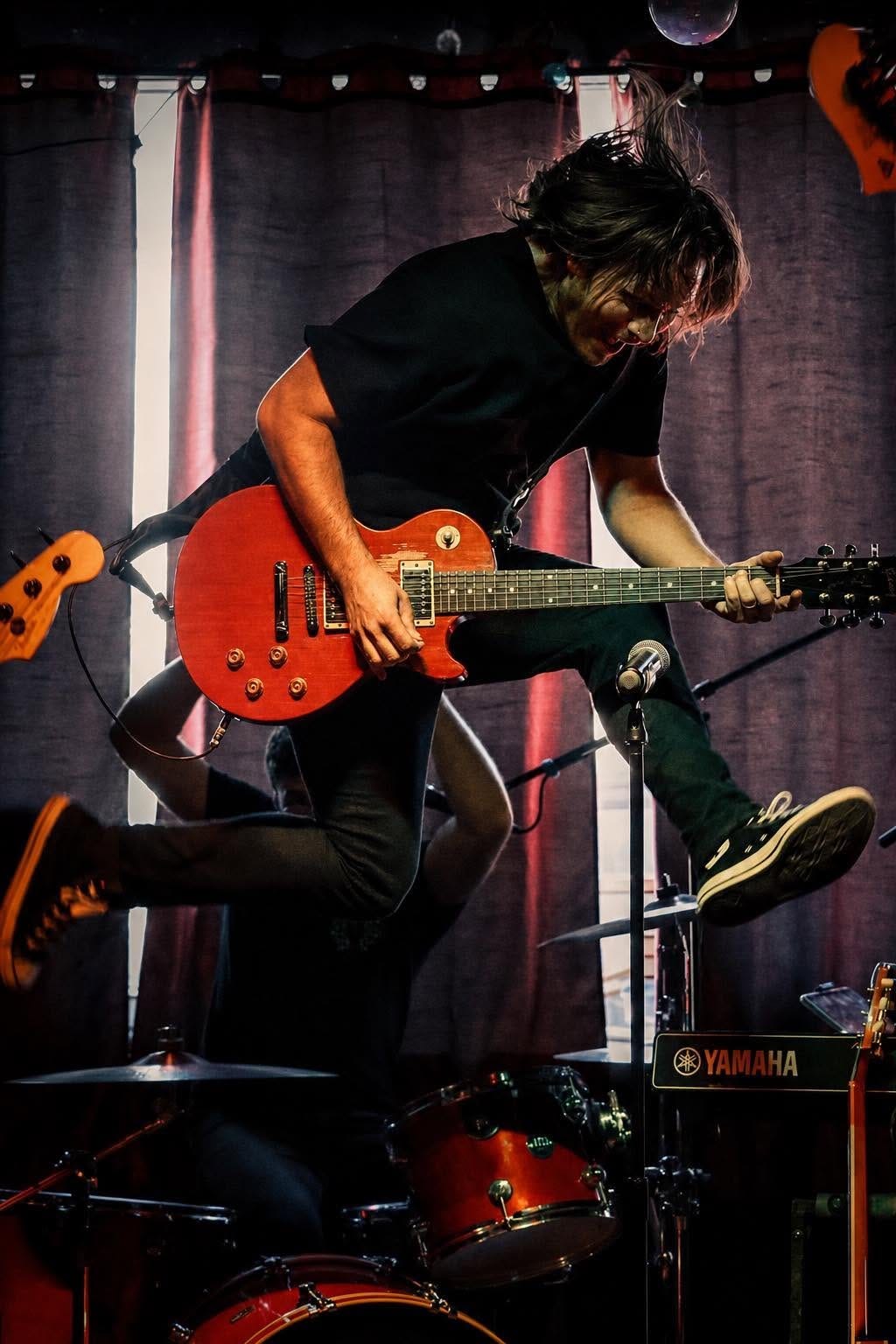
At Full Circle Book Co-op, Omaha’s Kevin McClure offered the most complete surprise of my Saturday. McClure said the project began in fall 2022, and this was the first time the full band had performed live in Sioux Falls. The songs leaned toward rock without surrendering their indie-pop shape. Folk phrasing, pop hooks and a heavier guitar attack could surface within the same set, which made the band a particularly good fit for a festival otherwise comfortable changing genres every time you changed buildings.
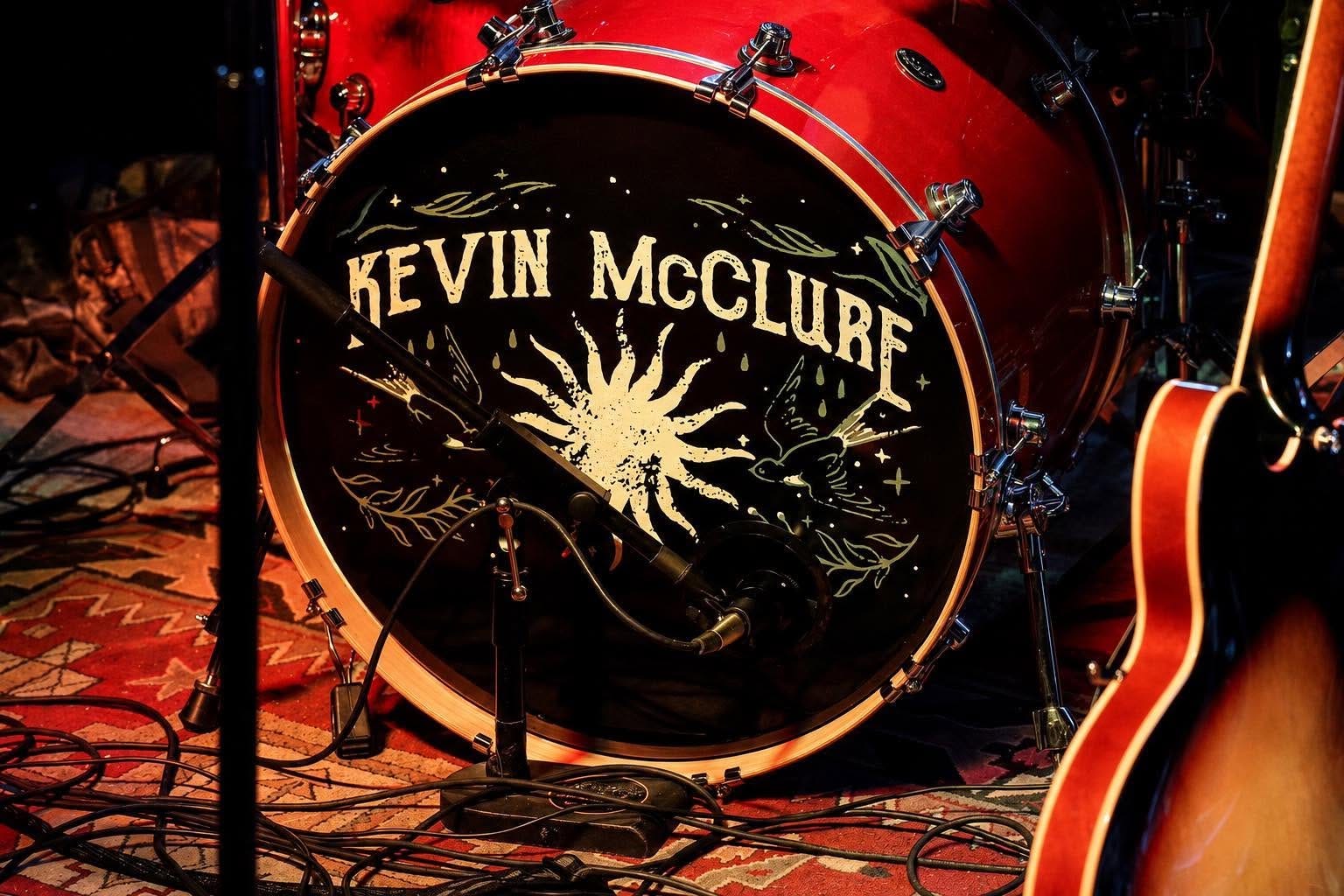
McClure’s debut full-length album, “Flawlessly Flawed”, also comes with an idea about listening that runs against current industry habits. Part of the album is streamable. The complete collection is available through a physical purchase on vinyl or CD, along with a digital download sold through his site. Rather than feeding an entire record into the same platforms where listeners may abandon it after one single, he reserved part of the work for people willing to choose the album.
Going physical contradicts the standard release manual. Singles generate most of the attention now. Full albums struggle to compete even when every track is one tap away. McClure’s perspective is that his audience is not made up entirely of passive listeners. If someone wants the whole first album, that person has to seek it out and own it in some form.
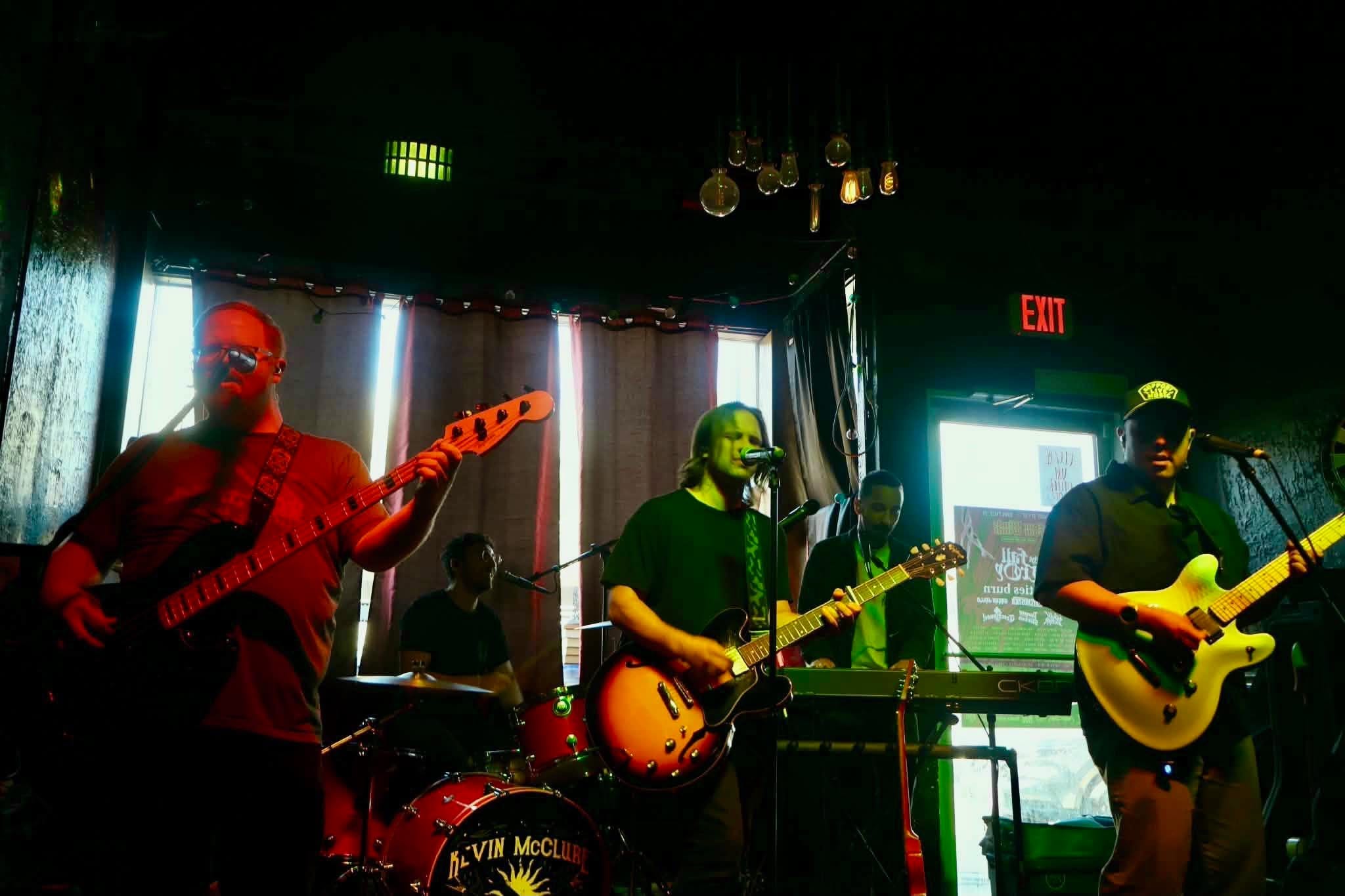
There is a risk in that decision. Inconvenience can become invisibility, especially for an independent artist trying to reach people who have never heard the name. Inside Full Circle, the choice made more sense. The band played one of the songs unavailable on the major streaming platforms, creating a small pocket of access for the people in the room. You could not necessarily recreate that experience by opening Spotify on the drive home. Either buy the full record or remember how it sounded live.
Faces gave the songs another dimension—several of them, actually. During choruses and breakdowns, the musicians smiled or tightened into those involuntary expressions players make when a passage hits exactly the way they hoped it would. Their features contorted with the changes. They looked at one another. Nobody seemed to be merely completing an arrangement. The visible pleasure in playing together became part of why the set worked.
Then McClure broke a guitar string during the second song.
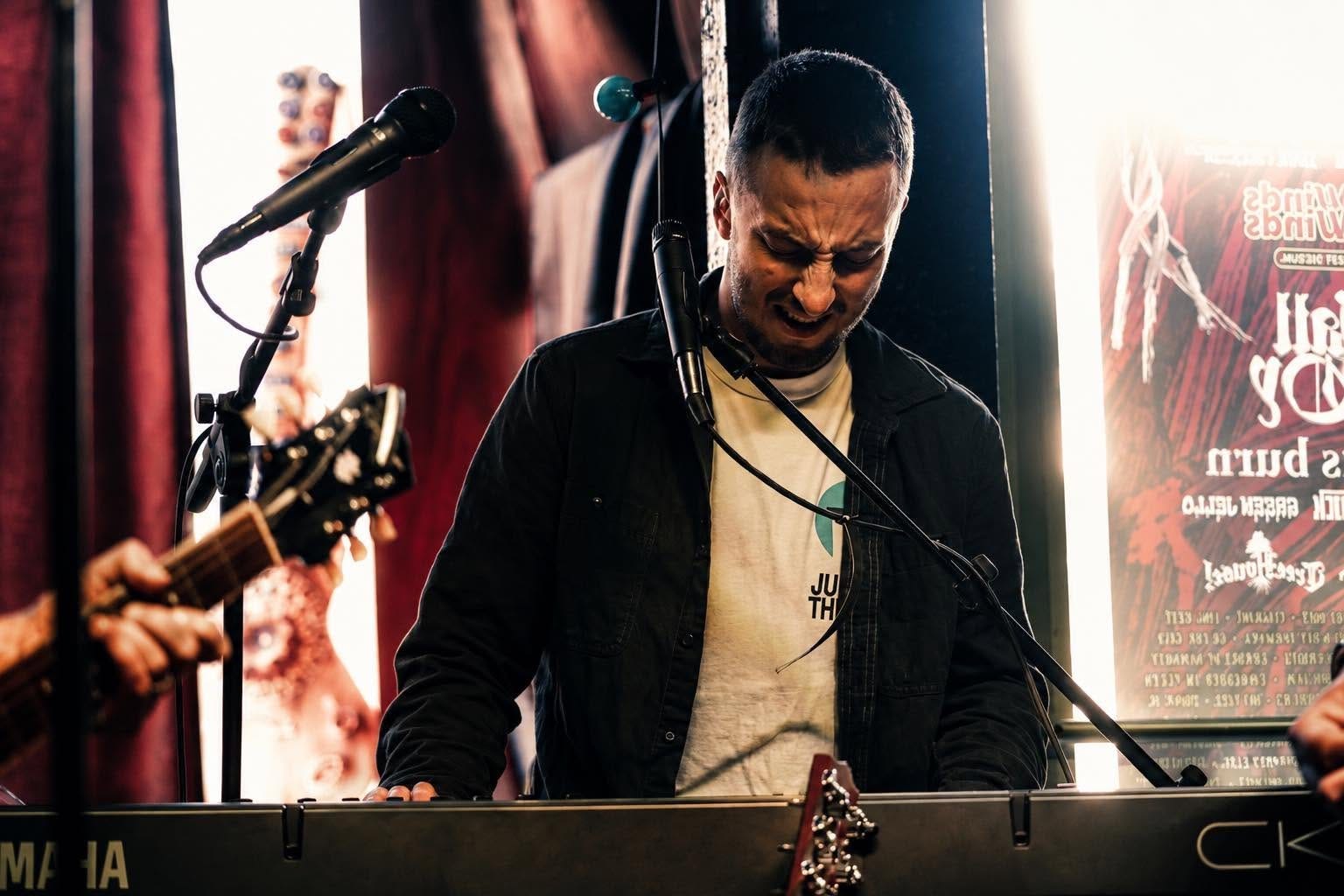
He had another guitar ready, which prevented the break from turning into a full stop, but the smoothest part was how he handled the seconds between instruments. McClure pulled the crowd into singing “so far gone,” keeping their attention on the lyric while he reached for the backup guitar and completed the swap. The room stayed inside the song. Equipment failed; the performance did not.
Following that recovery, the band played Britney Spears’ “…Baby One More Time”. It was fun, full stop. A bookstore festival set had just moved from earnest rock into a broken-string singalong and then one of the most recognizable pop songs of the late 1990s. The cover did not feel like a desperate bid for familiarity. It exposed how easily this group could change the temperature of a room without losing its own sound.
McClure said they had chosen a slightly harder set for Four Winds, and the selection showed how much flexibility sits inside these songs. The heavier passages had weight, but they did not flatten the hooks. The indie-pop side kept the music open while the guitar tone pushed harder than the softer singer-songwriter label might imply.
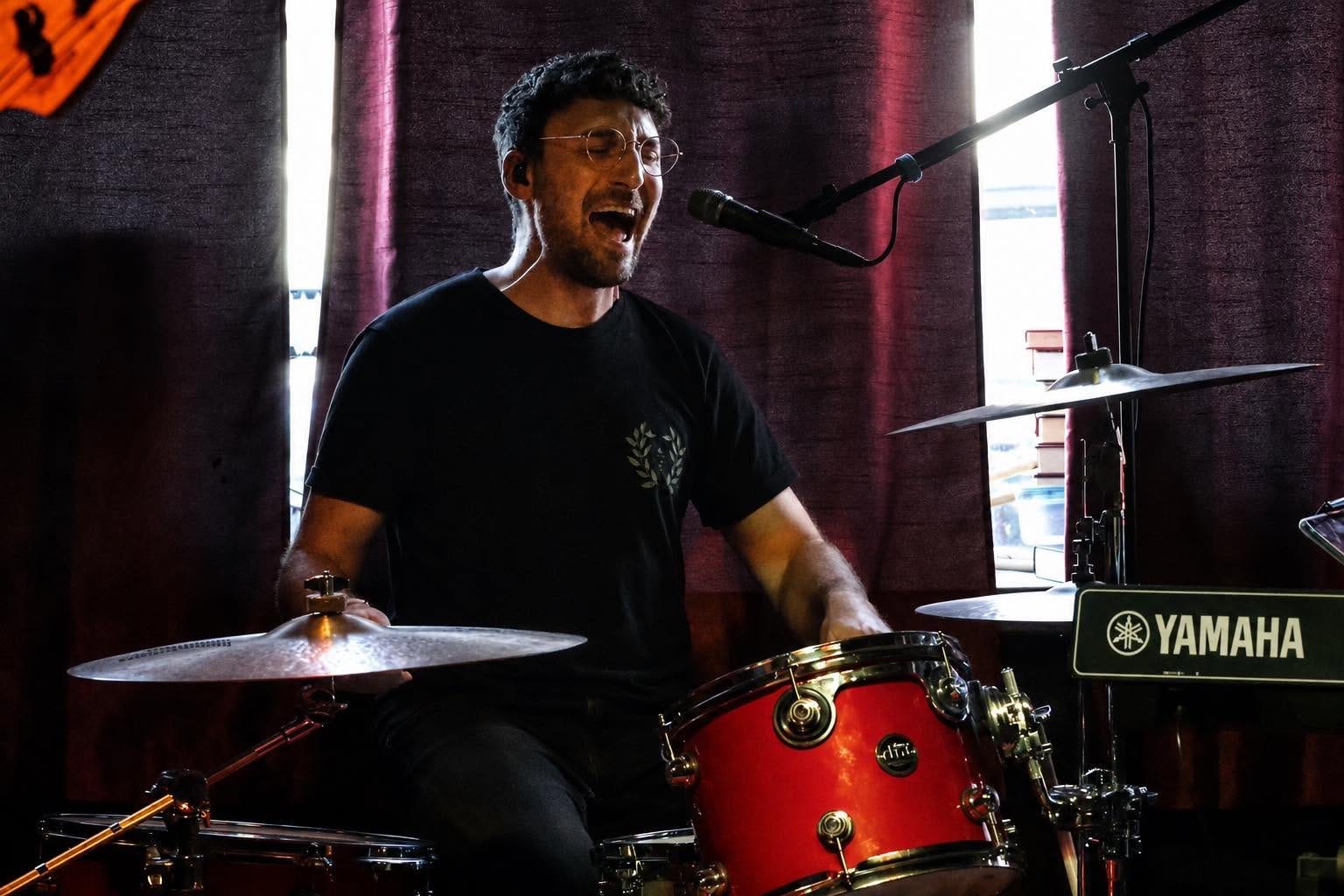
Because the set was running well on time, McClure offered a bonus song. He pulled out a harmonica for “Cheating Death”, a moody rock track that gave the closing stretch another texture. The harmonica did not arrive as a roots-music costume. Its thin, cutting tone sat above the darker arrangement and made the song feel more unsettled.
This was a full band playing Sioux Falls for the first time, dealing with a broken string in the second song, folding Britney Spears into a harder festival set and introducing listeners to music they could not simply stream later. They looked thrilled to be doing it. Highly recommended is a phrase I try not to hand out casually. Kevin McClure earned it.
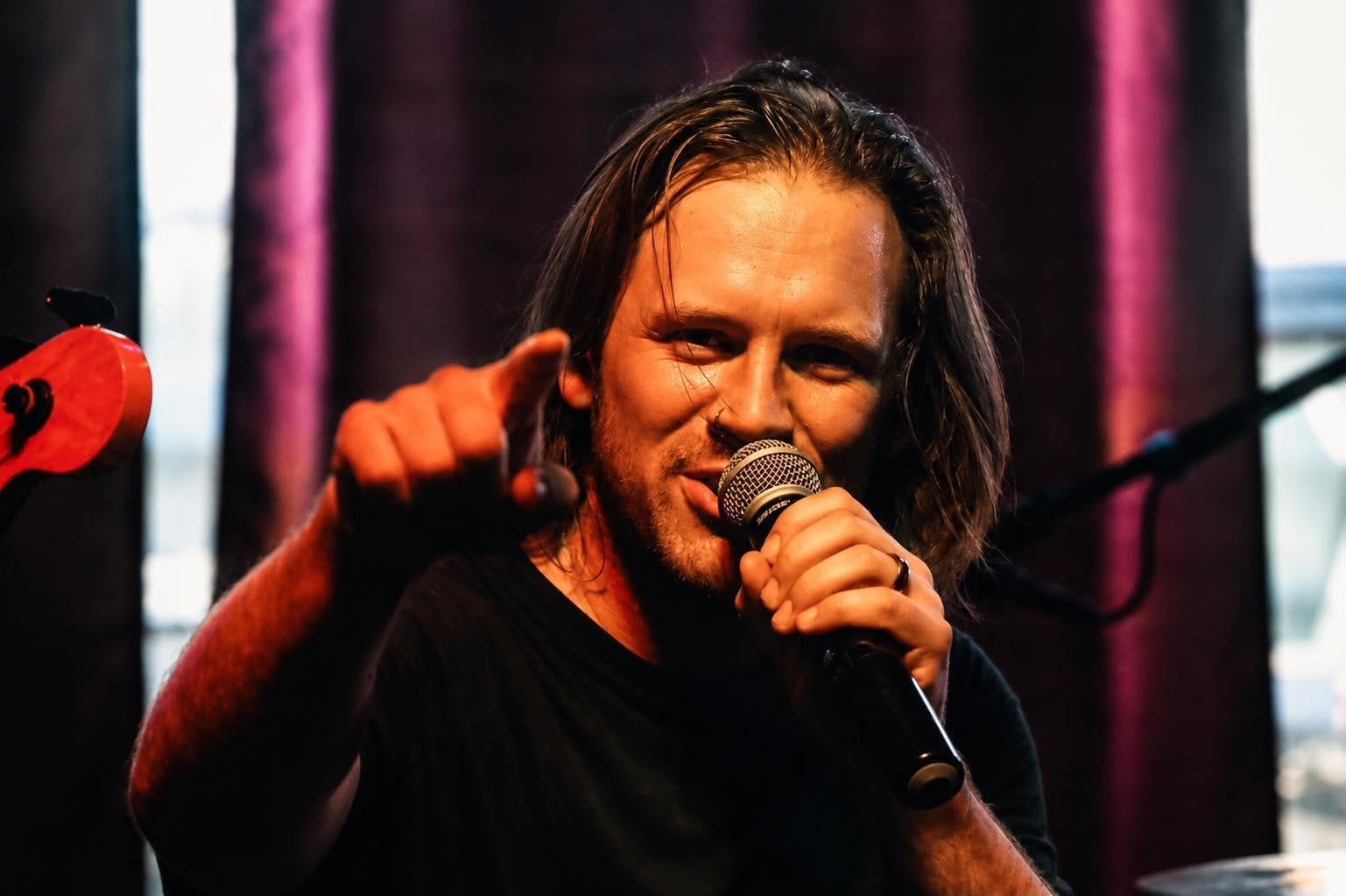
Following the festival, Lyrical Limelight was informed that when McClure jumped off the kick drum at the end of his set, as seen in the image above, he had herniated a disc in his spine, requiring him to undergo surgery just days later. Surgery went well, and he his home safely recovering.
H.E.A.T. under the high sun
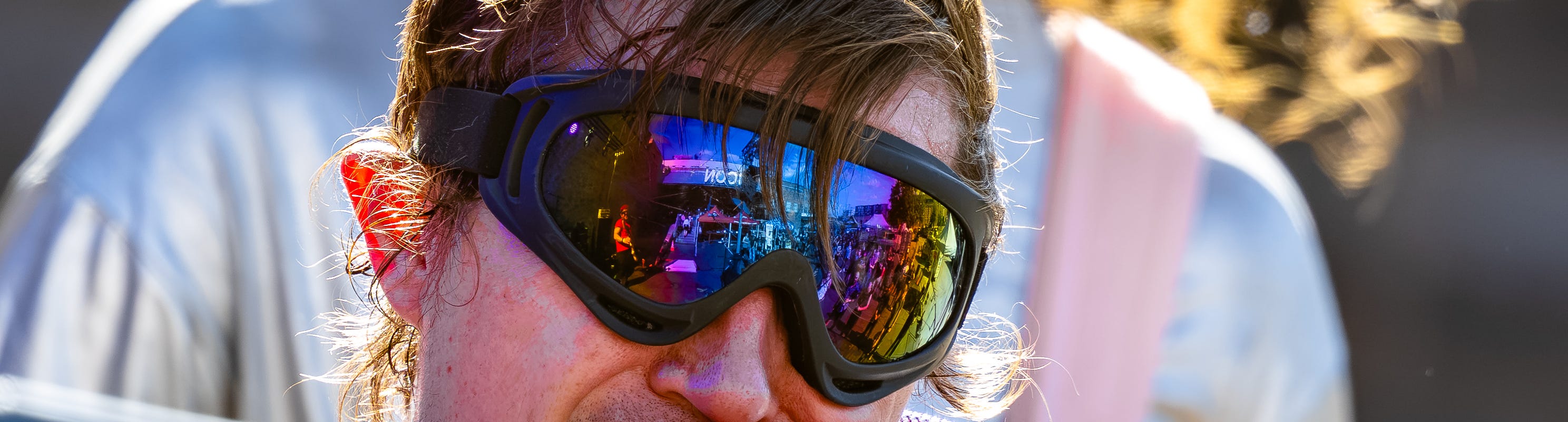
Around the same stretch of afternoon, H.E.A.T. took the outdoor stage looking like something straight out of Halloween Express. The visual presentation grabbed me before a note did, but the sound quickly justified the costumes. These guys were a trip: fast, aggressive “scream-talk” that brought Rage Against the Machine to mind, only with less melodic release and even more raw abrasion.
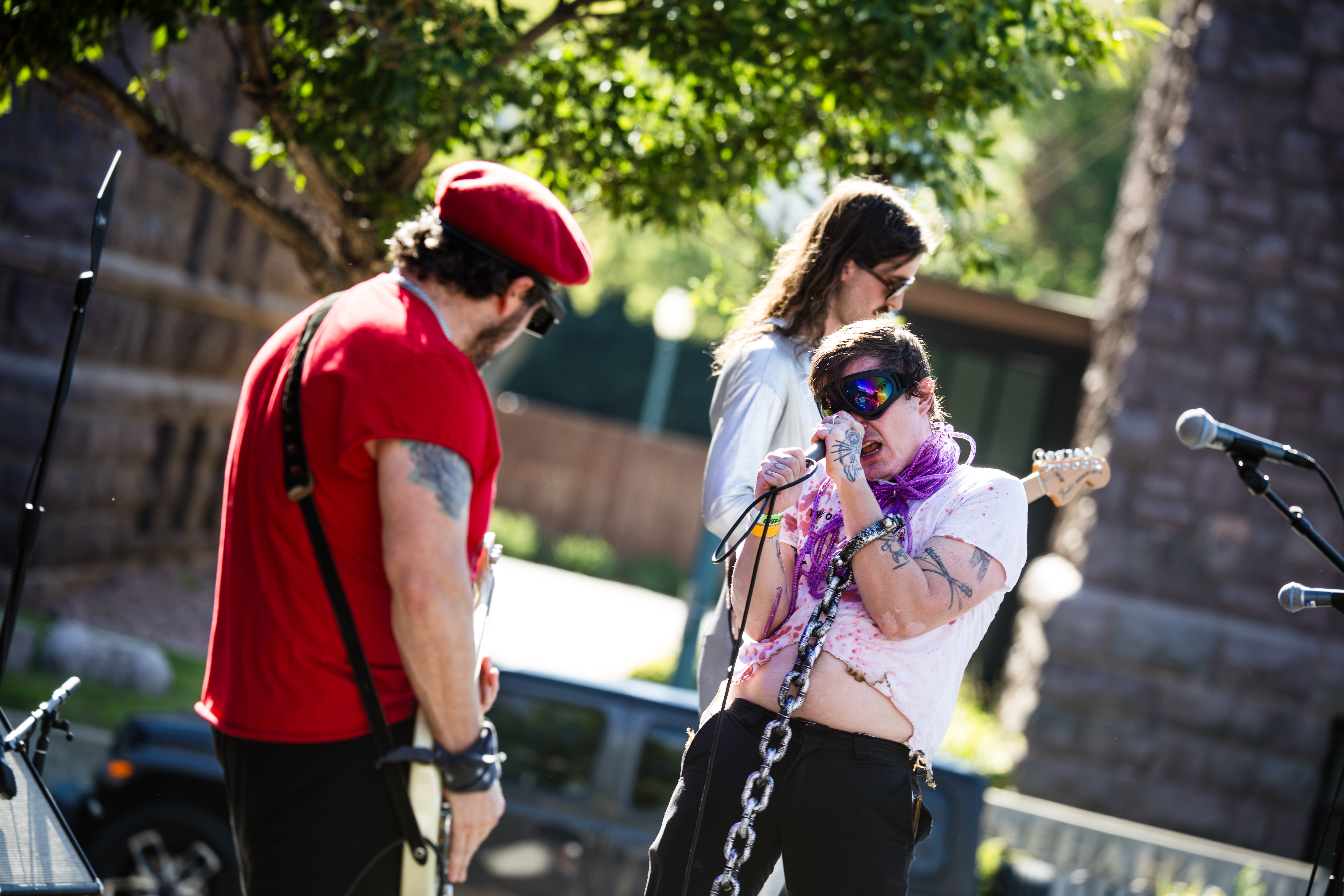
There was little room to catch a breath. Phrases came out as rhythmic commands, and the band pressed forward without giving the crowd much time to reset. The approach could become monotonous in weaker hands, but H.E.A.T. used repetition as pressure. Every new passage felt designed to keep the body braced.
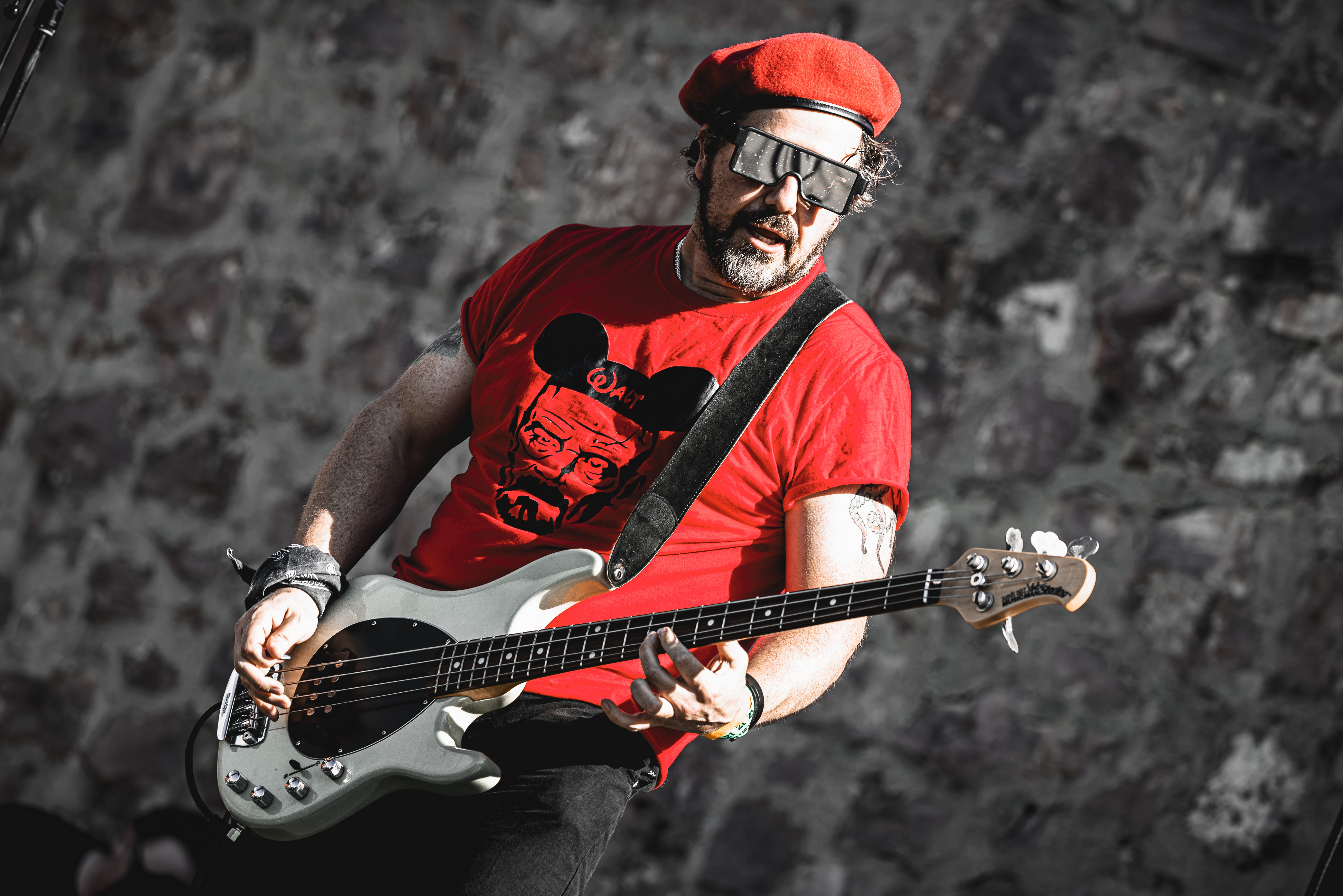
H.E.A.T.’s timing could not have been more literal. With the sun sitting high above the outdoor stage and the afternoon turning sweltering, the band brought the heat while performing in the heat. Yes, the joke is sitting right there. No, I am not going to pretend I am above using it. Rather than allowing the conditions to slow them down, they seemed to lean into the discomfort, matching the weather with a set that refused to relax.
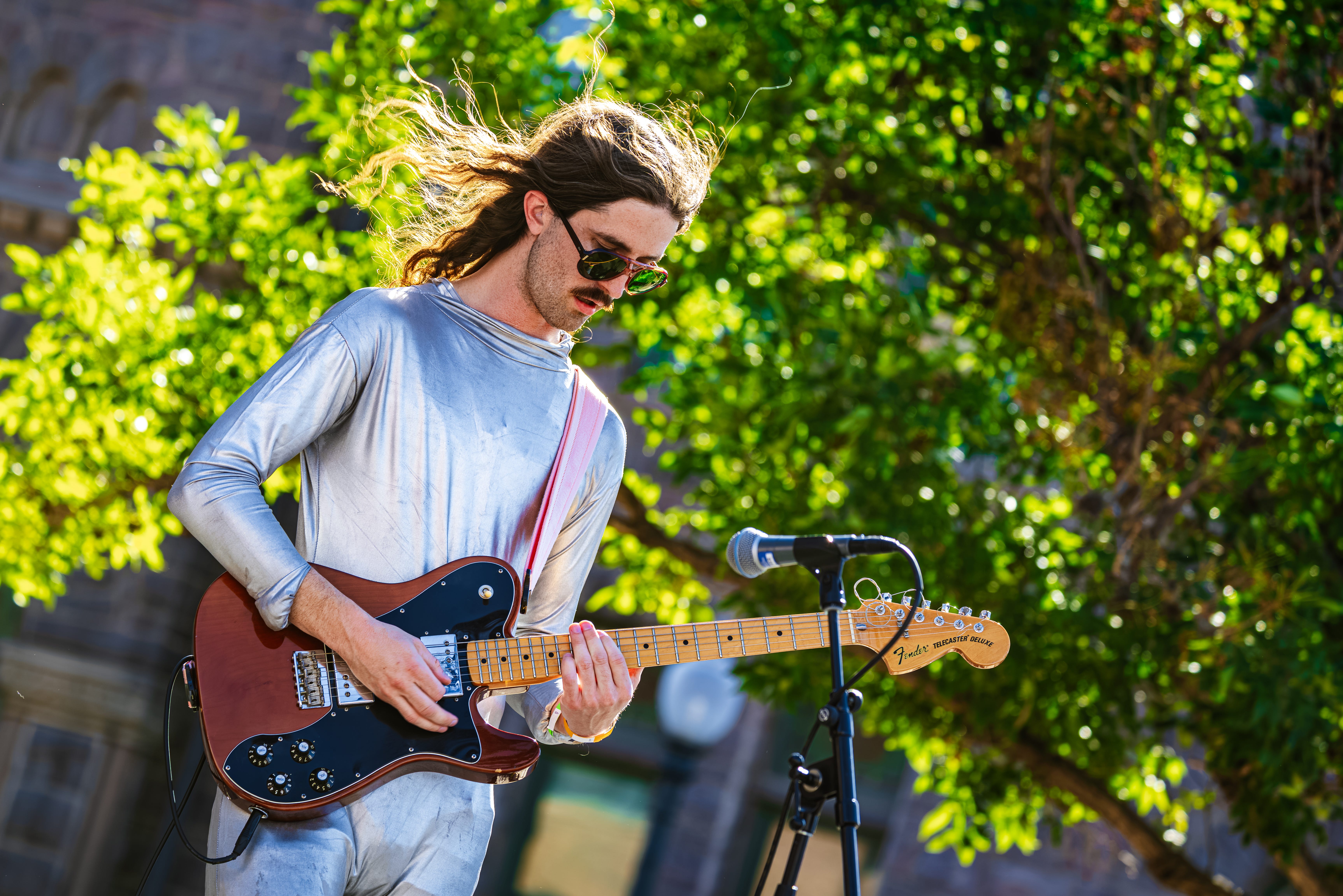
People went with them. Bodies moved closer, reactions came faster and the strange visual presentation stopped being the main story. H.E.A.T. was loud, unconventional and impossible to leave in the background. For a midday slot, they knew how to wake up a festival that had started three hours earlier than most of its audience.
Rival Within arrives later—and louder
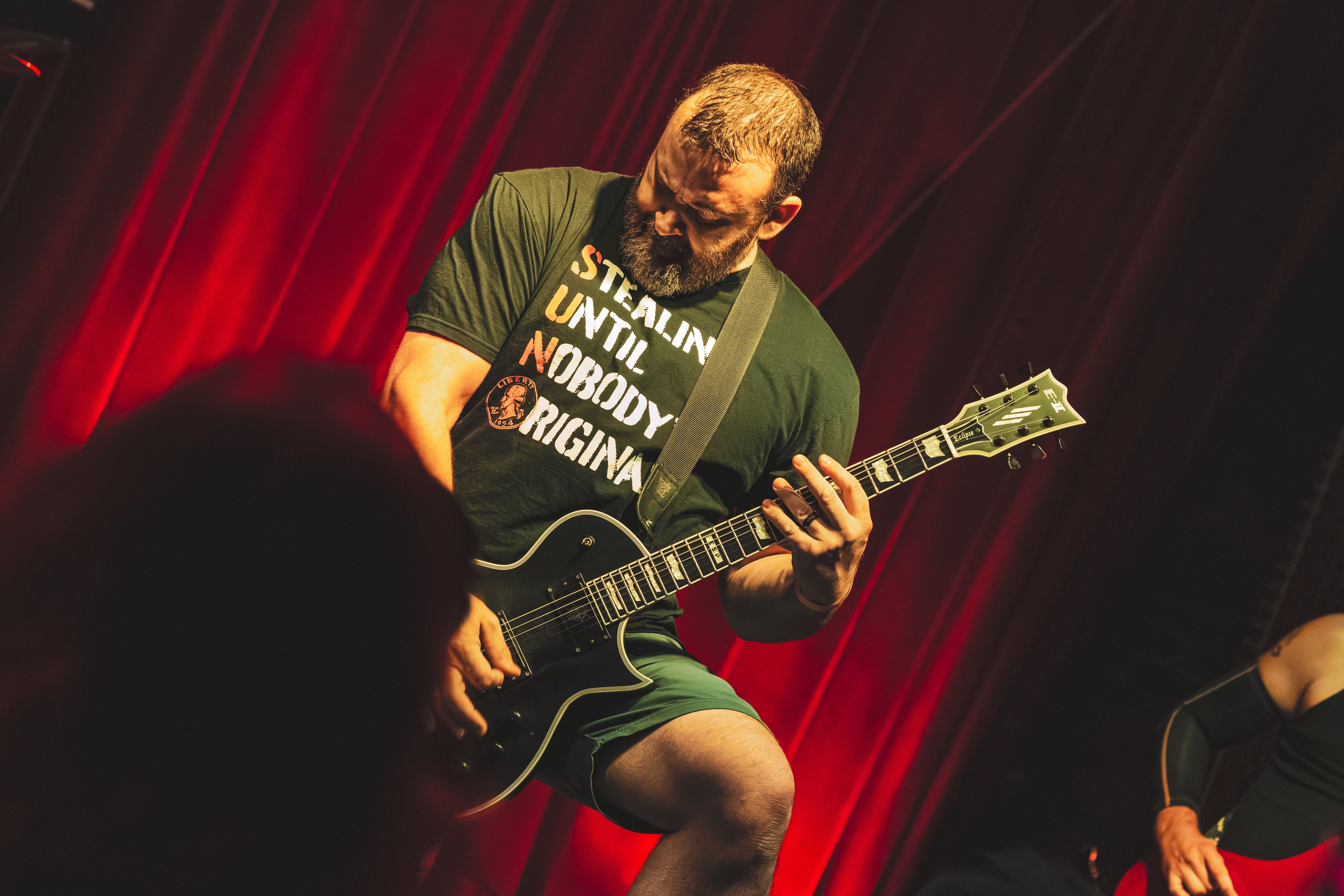
According to the original festival poster, Rival Within was supposed to play at 2:30 p.m. and kick off the indoor ICON schedule. Somewhere along the way, the lineup shifted and the band appeared later in the afternoon, apparently filling a vacancy around the 5:30 slot. It looked as if another act had canceled, though the exact cause still needs confirmation. Whatever moved them, the later time worked. More people had arrived, and Rival Within had an audience large enough to appreciate just how committed the band was to its presentation.
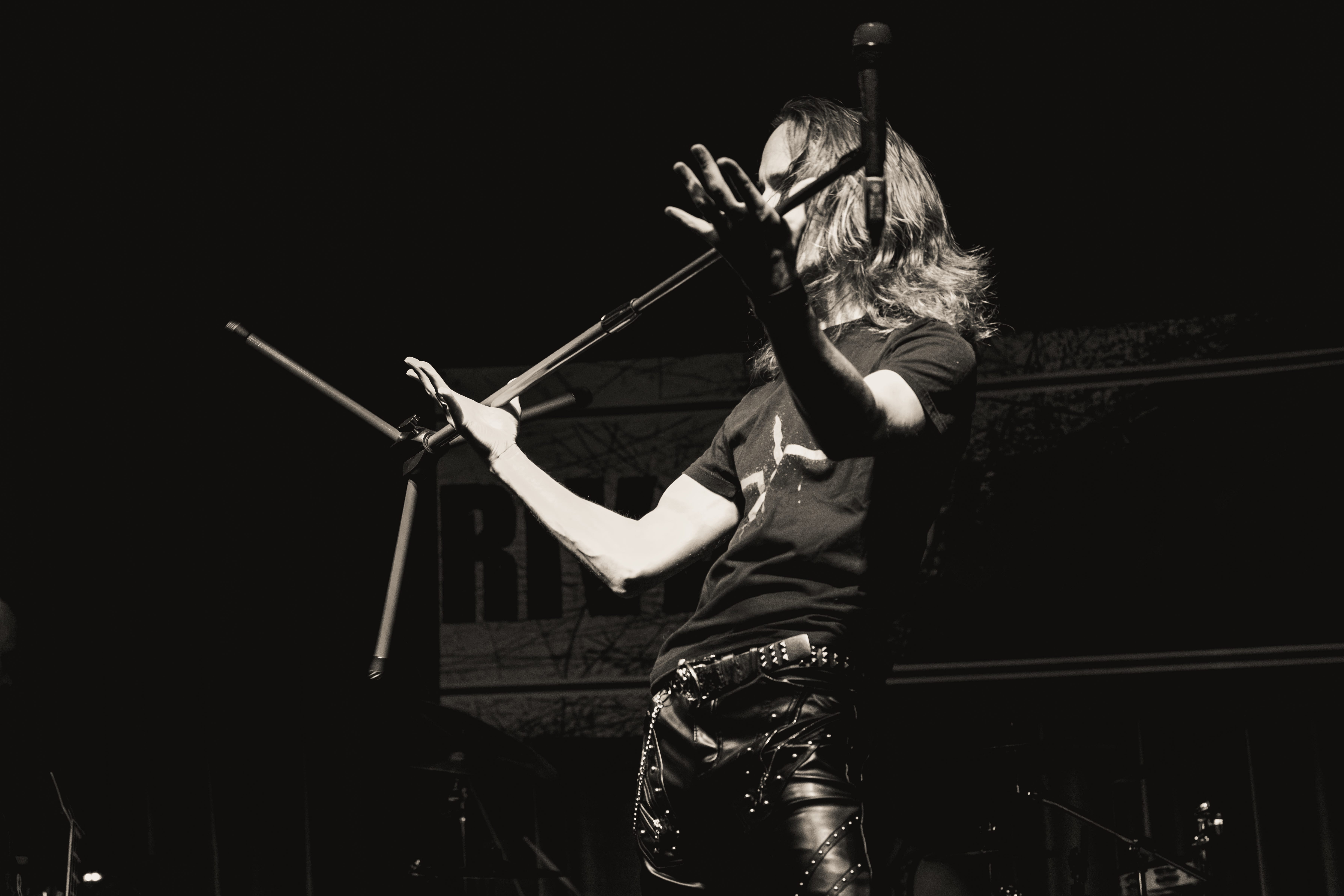
Visually, the group carried an ’80s hair-metal aesthetic that immediately brought Mark Wahlberg’s 2001 film “Rock Star” to mind. Big hair, broad gestures and a larger-than-life attitude recalled a period when a rock band was expected to look as loud as it sounded. Nothing about Rival Within suggested embarrassment over that lineage. Flash was part of the job.
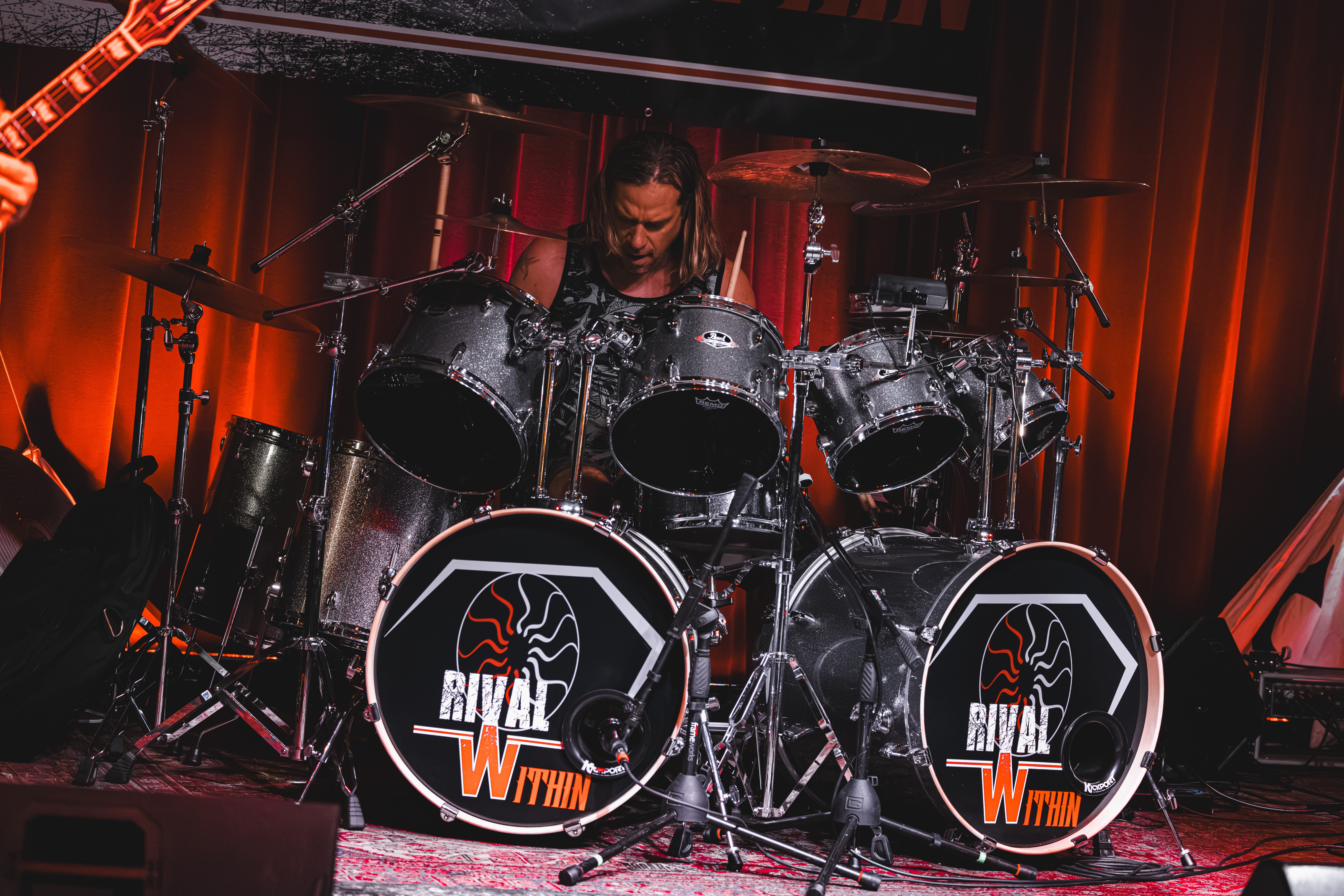
Most striking was the contrast between two members. The singer worked the stage with neon lights flashing from his shoes. A few feet away, the guitarist performed barefoot. One appeared prepared to be visible from the other end of the block; the other had abandoned footwear entirely. Those choices gave the band personality before any biography could.
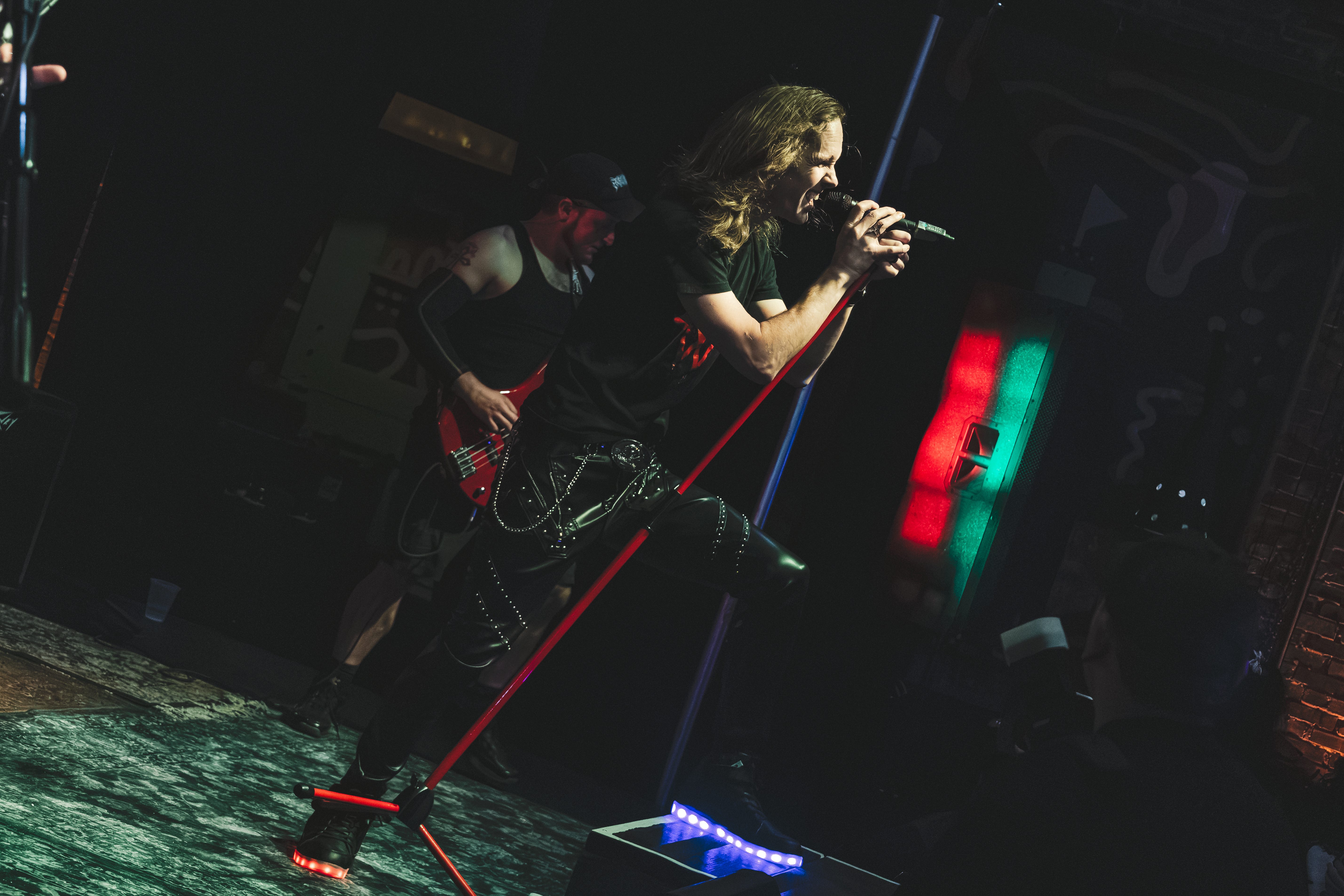
Their straight-ahead rock set landed as a needed pickup in a schedule full of stranger edges. Rival Within did not have to be the most experimental act of the day. The band needed to keep the festival moving, give the growing crowd something immediate and make classic rock-and-roll showmanship feel intentional rather than dated. The glowing soles, bare feet and refusal to stand still accomplished exactly that.
Shurr Jr. keeps it in the family
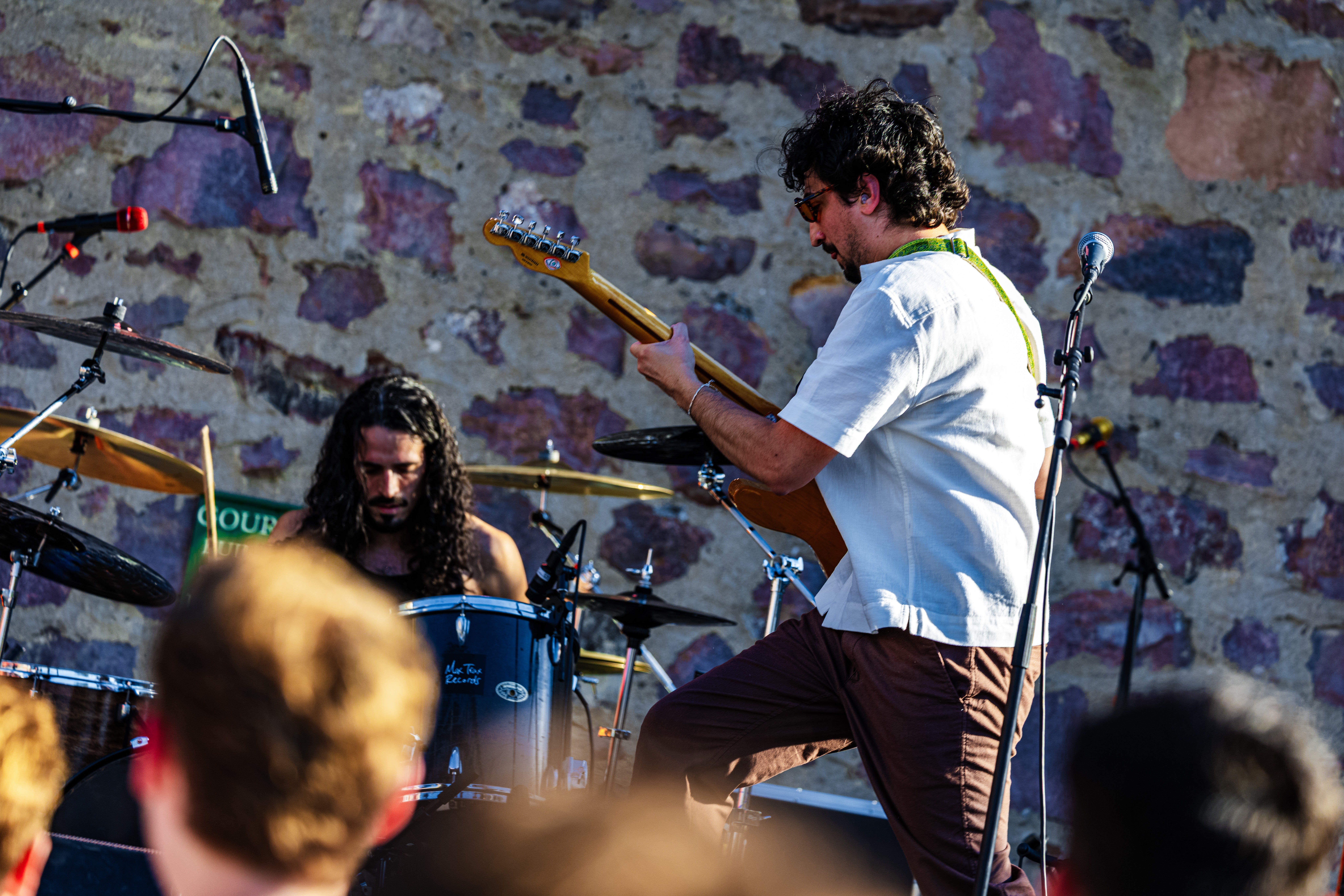
When Shurr Jr. took the outdoor stage, my first thought was that all three members looked remarkably similar. There was a reason. Nick Maxwell sings and plays guitar, Kelly Maxwell plays bass and Frankie Maxwell plays drums. They are siblings from Sioux Falls, and a large hometown following had arrived with them. Shurr Jr. shirts appeared throughout the crowd. Fans knew the songs, sang along and treated the set like a chance to claim one of their own in front of the wider festival.
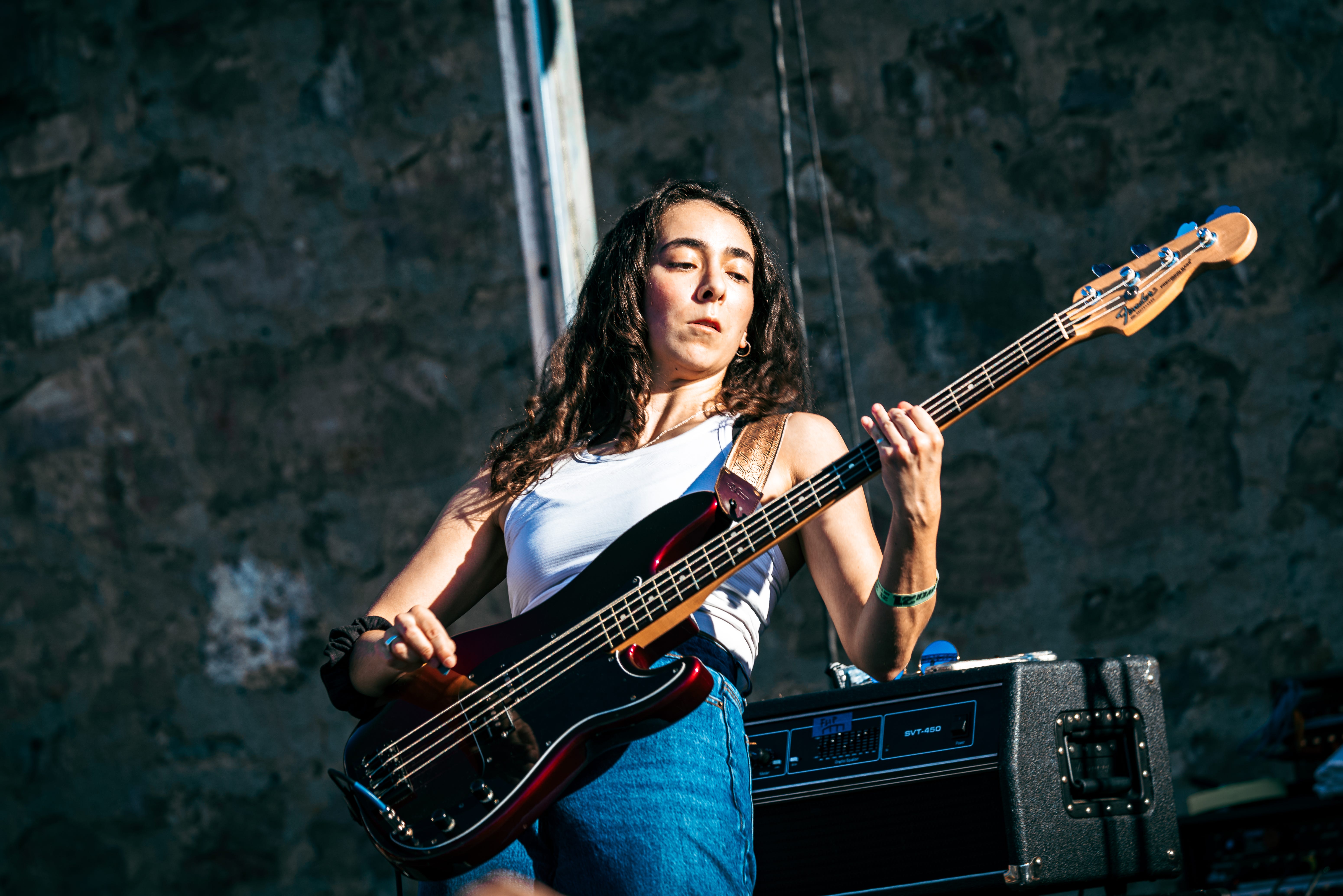
Matching faces were only the beginning of the family connection. Their late father, Frank Maxwell, played in Omaha’s 1990s rock scene and passed his love of music to the siblings. He called Frankie “Jr.” and was known for saying “sure” when opportunity arrived, which helped supply the band name. “Red Shelter,” the title of Shurr Jr.’s 2025 debut EP, was also a name he had once saved for a future project. The record allowed his children to carry it forward through indie rock shaped by emo, punk, grunge and loss.
None of that history hung over Saturday’s set like assigned reading. You could see it in how the siblings watched one another and how naturally their bodies answered the same changes. Each member got fully into the instrument instead of settling onto an assigned patch of stage.
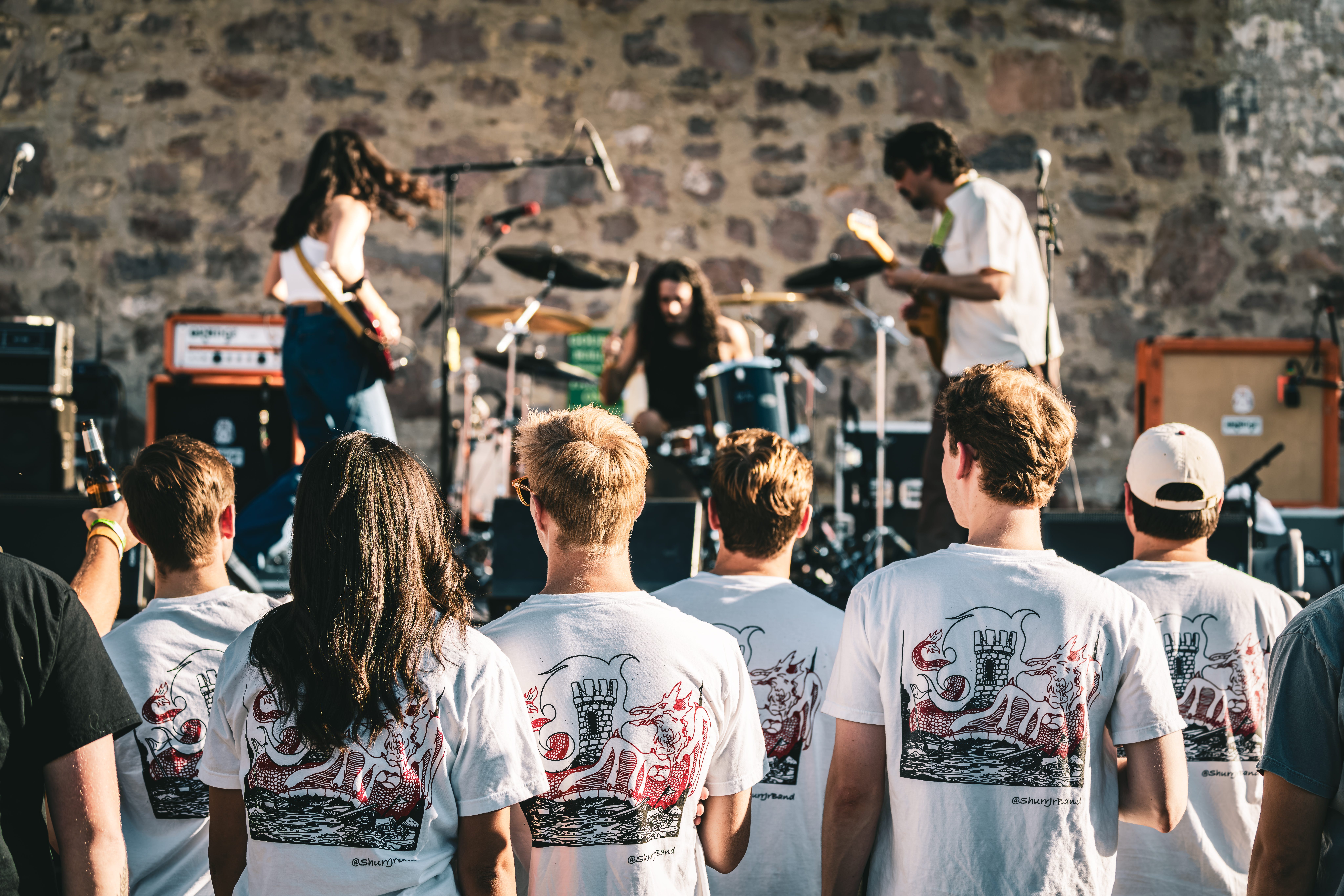
One of my biggest complaints with any band—whether it is playing for a few hundred people or several thousand—is when the musicians simply stand in one place for the entire set. Movement is not a substitute for musicianship, but a live performance has a visual dimension. If the players look unmoved by their own songs, the audience has to work harder to believe in them.
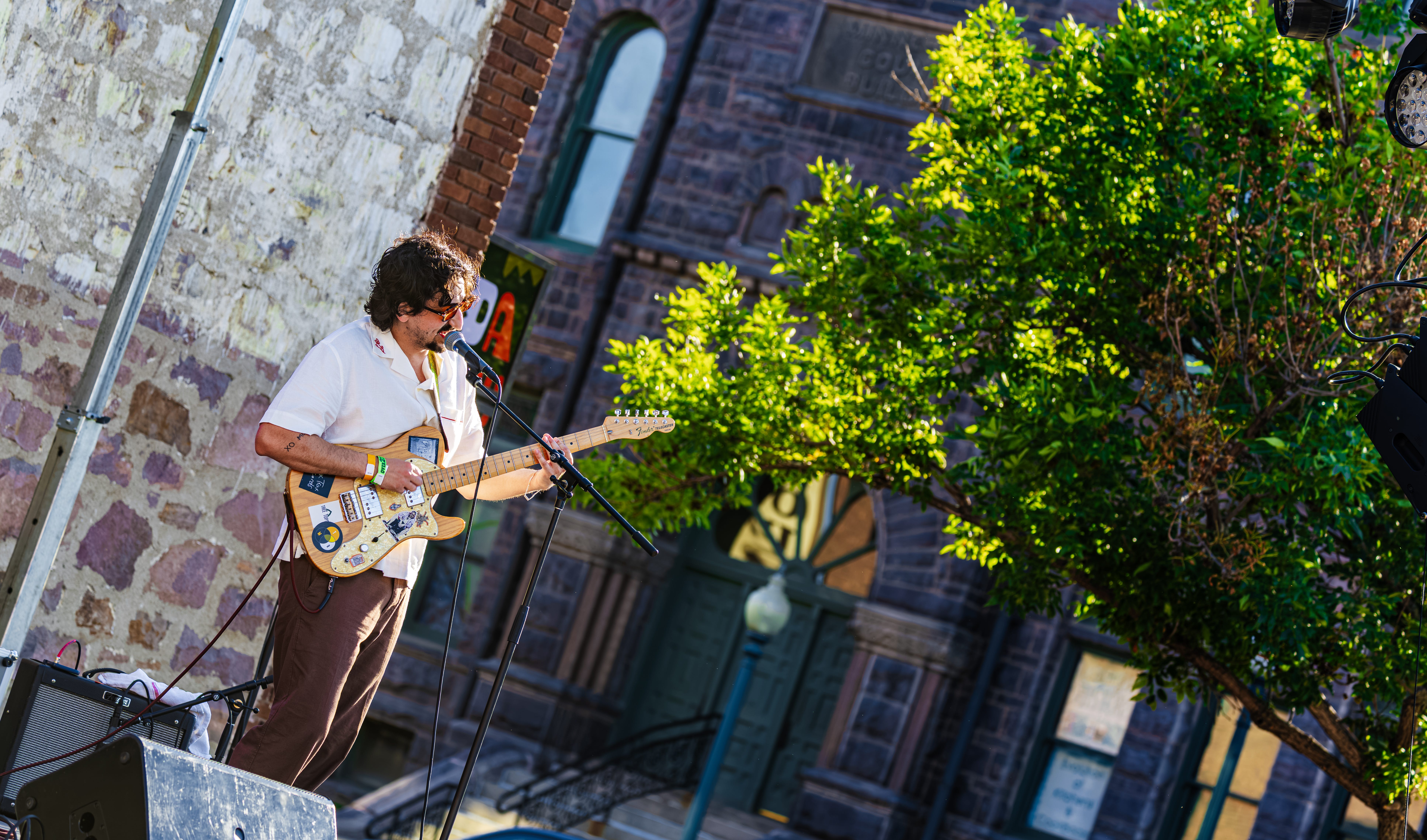
Shurr Jr. did not have that problem. They leaned into changes, turned toward each other and played with the loose physical confidence of people who were enjoying themselves. The crowd returned it. Their built-in fan base may have guaranteed attention, but it did not manufacture the interaction happening onstage. Watching three siblings visibly feel the same music made the set more enjoyable for everyone in front of them.
Reviver opens the floor
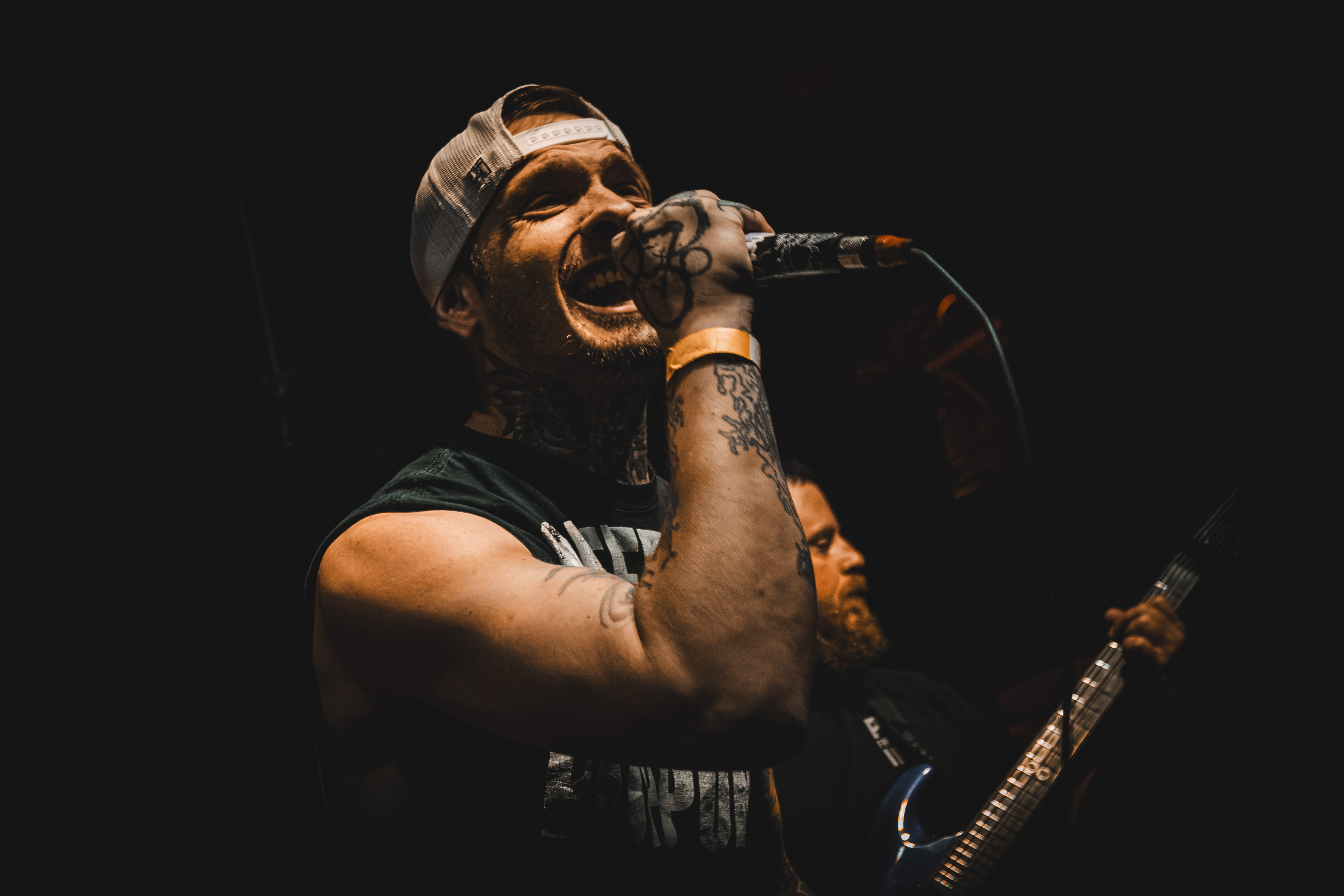
By the time Reviver took over inside ICON, the festival no longer had an attendance problem. You know a band is going to be heavy when you cannot read its name on the merchandise, and Reviver honored the stereotype. Their artwork offered the usual knot of hostile lettering. Their set translated it into sound.
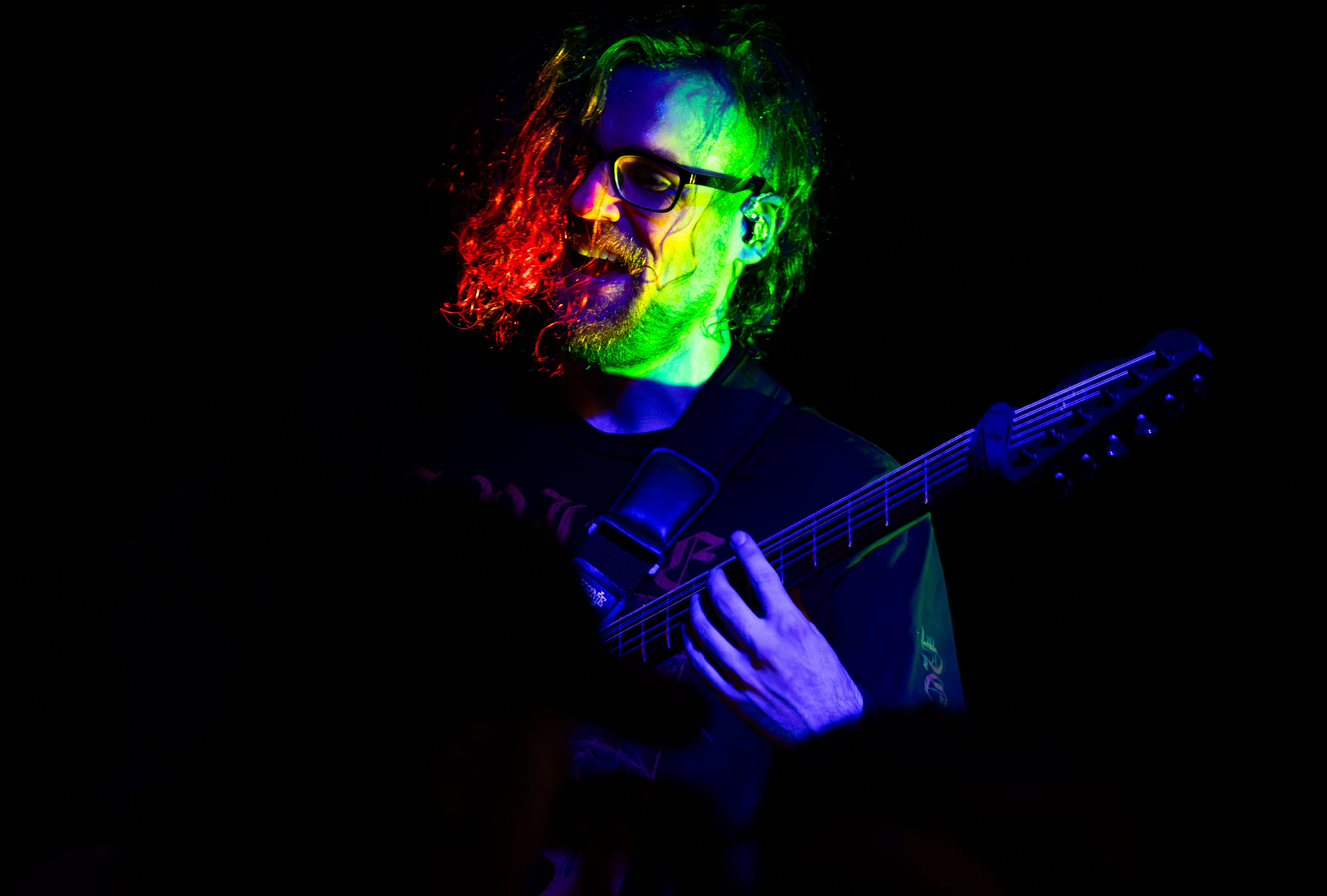
Two lead vocalists traded brutal low screams and high squeals, immediately separating Reviver from everything else I had caught Saturday. The pairing invited a Whitechapel comparison, not simply because both acts are heavy, but because of the vocal layering—the way one register could make the next sound even more inhuman. One voice descended, the other cut across it and the room tightened around both.
Here, the scheduling revealed a bit of practical festival logic. The heavier rock and metal acts were largely playing inside while the “tamer” music went outdoors. In a downtown community setting, that appeared to be a smart way to keep the harshest frequencies from carrying into the surrounding neighborhood. Outside, there were limits. Inside, Reviver had none.
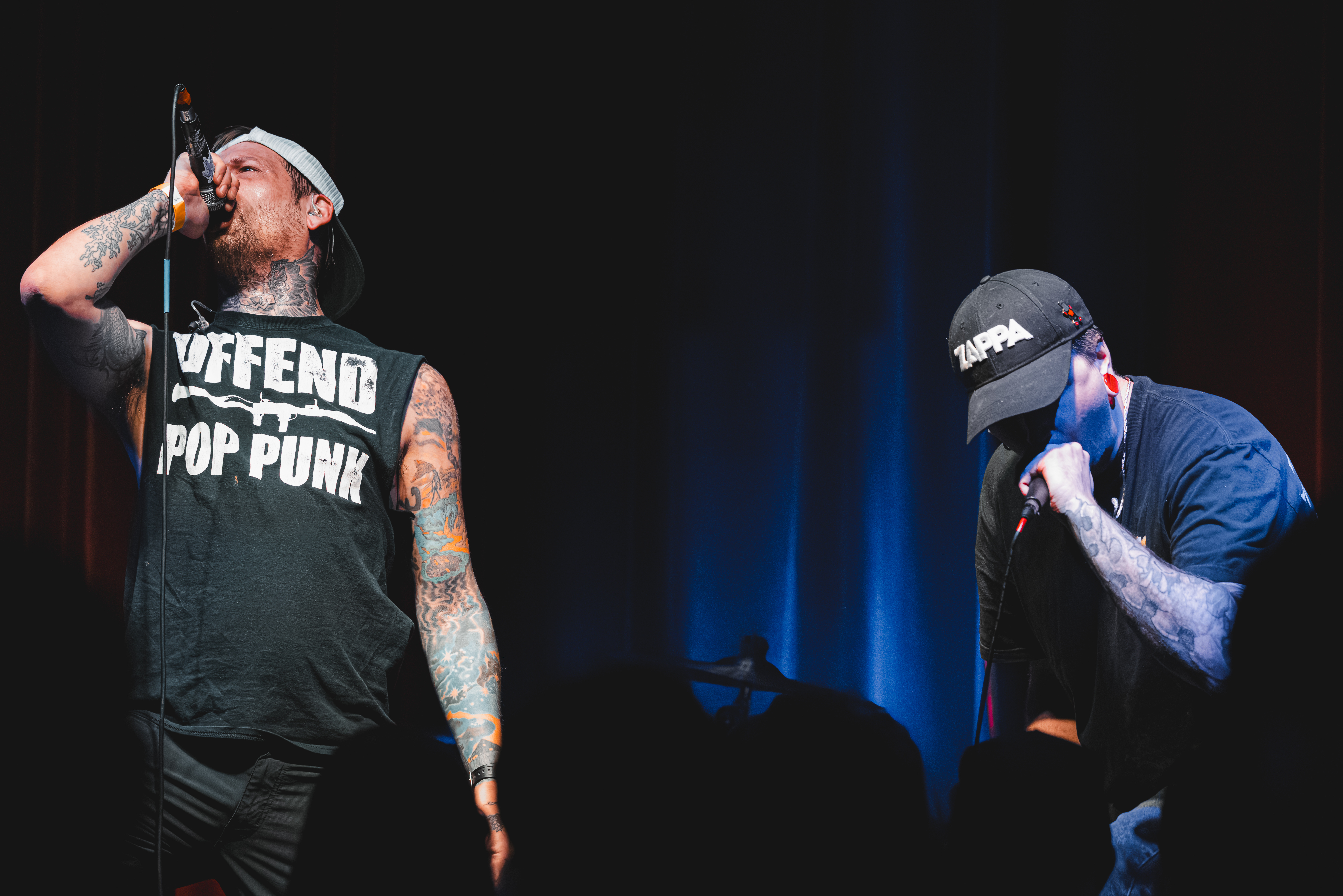
They used the freedom. Crabcore crouches snapped into headbanging, and the crowd’s movement expanded until the floor held what I believe was the largest pit I have ever seen in a venue like ICON. Fans threw themselves into the opening, releasing what looked like hours—possibly much longer—of pent-up aggression. The room stopped functioning like an event hall and became one rotating physical response to the band.
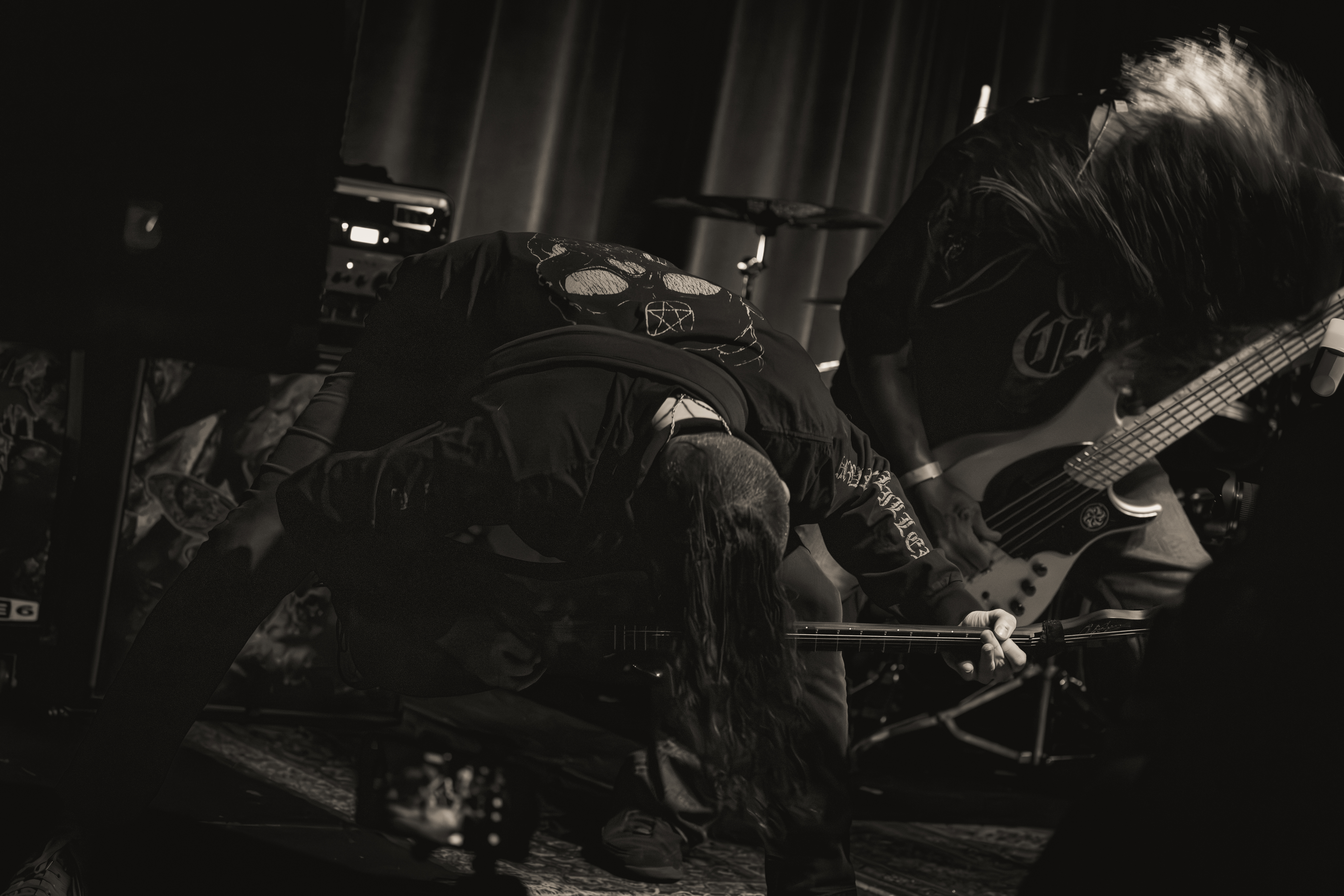
This was the heavy set I had been waiting for. Reviver did not flirt with aggression, polish it for broader appeal or interrupt it with an apology. The dual vocals, unreadable logo and widening pit all pointed in the same direction. I was vibing with it to the core.
The Fall of Troy finally makes it back
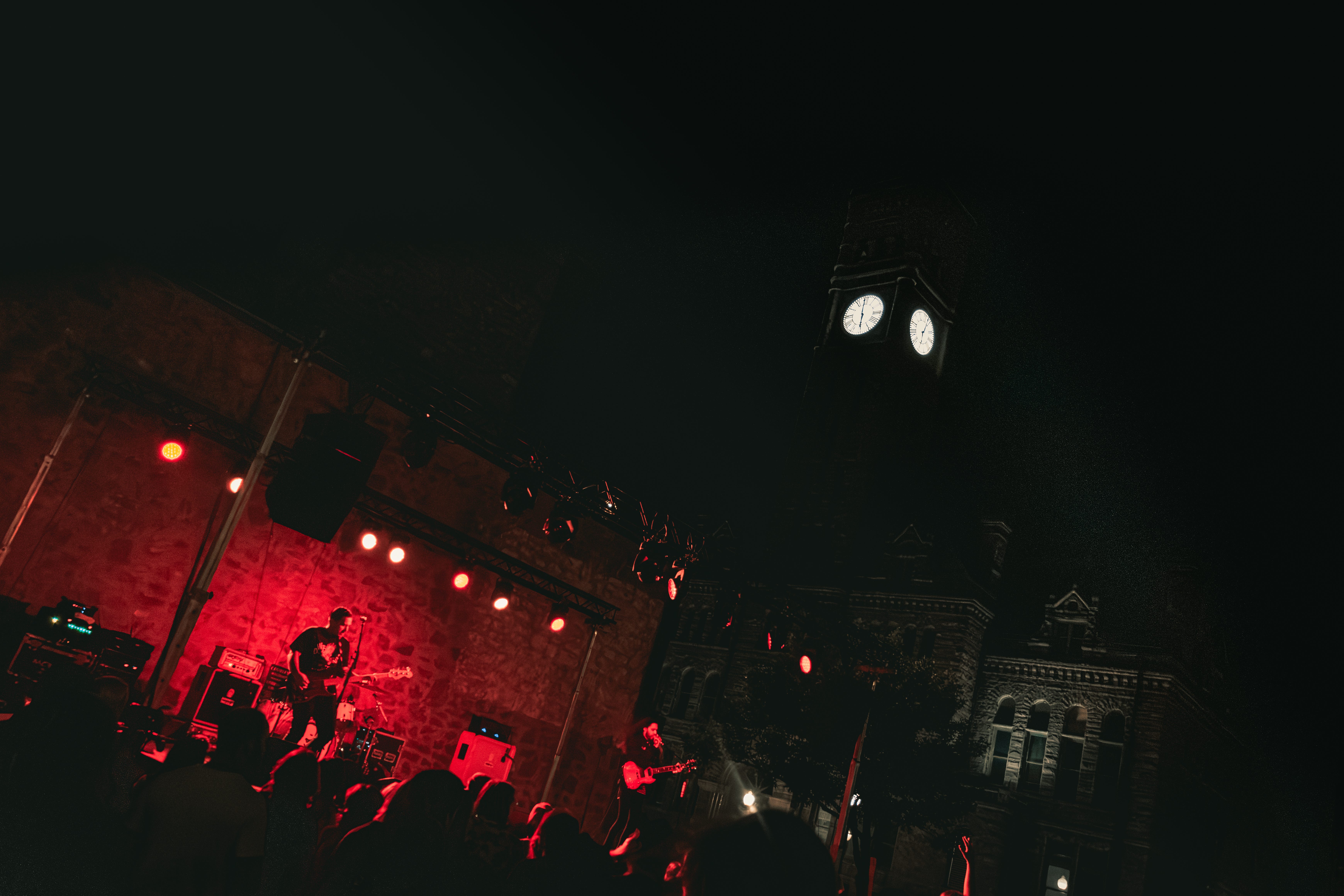
Then came the outdoor headliner, The Fall of Troy. People had been hyping this band to me throughout the entire day, and by the time the trio finally walked onstage, expectations had become almost unfair. Hype is a rotten opening act. It raises the ceiling, makes a few promises on somebody else’s behalf and disappears before the headliner has to fulfill them.
The Washington trio—Thomas Erak on guitar and vocals, Tim Ward on bass and Andrew Forsman on drums—has earned that devotion through progressive post-hardcore built from abrupt rhythmic turns, tapped guitar lines and melodies capable of breaking into abrasion without warning. Their music is right up my alley. The technical restlessness, the refusal to sit inside one tempo and the friction between hook and chaos all make sense to my ears.
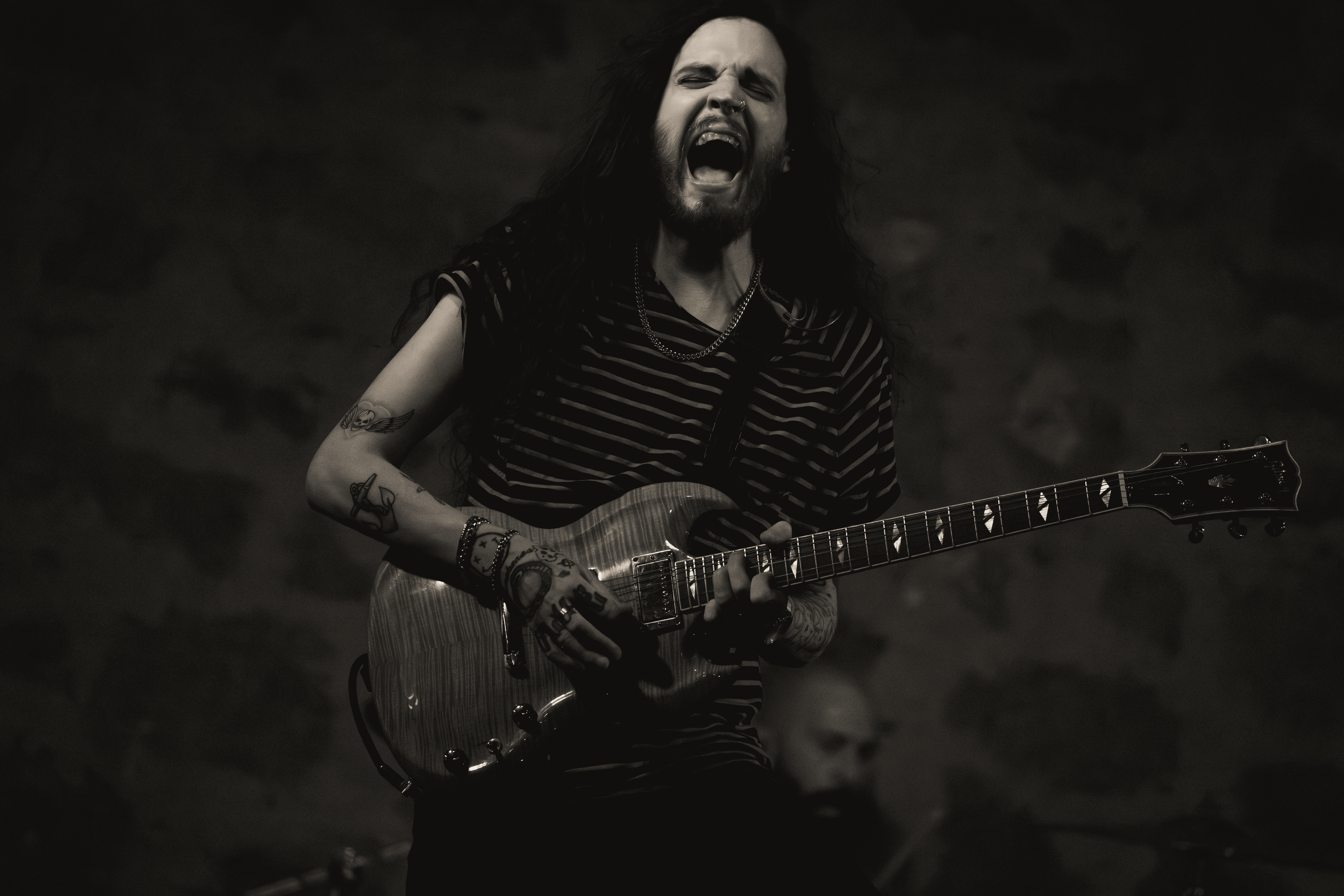
I will be honest, though: the performance did not quite reach the lofty version that had been built in my head. That does not mean I had a bad time. I had an absolute blast. The band gave me plenty of the tightly controlled disorder I wanted, and live, the appeal became obvious in the way three musicians could make complicated passages feel like something a festival crowd could grab. My expectations had simply been inflated beyond what any real set was likely to satisfy.
Part of me wishes I had gone in without hearing the day-long sales pitch. Then the performance could have arrived on its own terms instead of competing with a show that had already happened in other people’s memories. By the end, I understood why The Fall of Troy receives that kind of love. I just did not experience the personal revelation I had been promised.
Between songs, the band shared some Sioux Falls history. It had been a long time since their last appearance in the area. They recalled another scheduled visit that never happened because a snowstorm left them stuck on the side of the road and unable to reach town. The story gave Saturday’s set the weight of a delayed return. Some fans had been waiting years for a performance that weather had once taken away.
From a photographer’s perspective, the return came with a problem: red light. The late-night outdoor set was bathed almost entirely in red with an occasional dash of yellow, a combination that can erase natural skin tone, swallow detail and make every frame look flatter than the music feels. It was rough. It was also part of the job. You adjust, search for whatever usable contrast the lighting gives you and keep shooting.
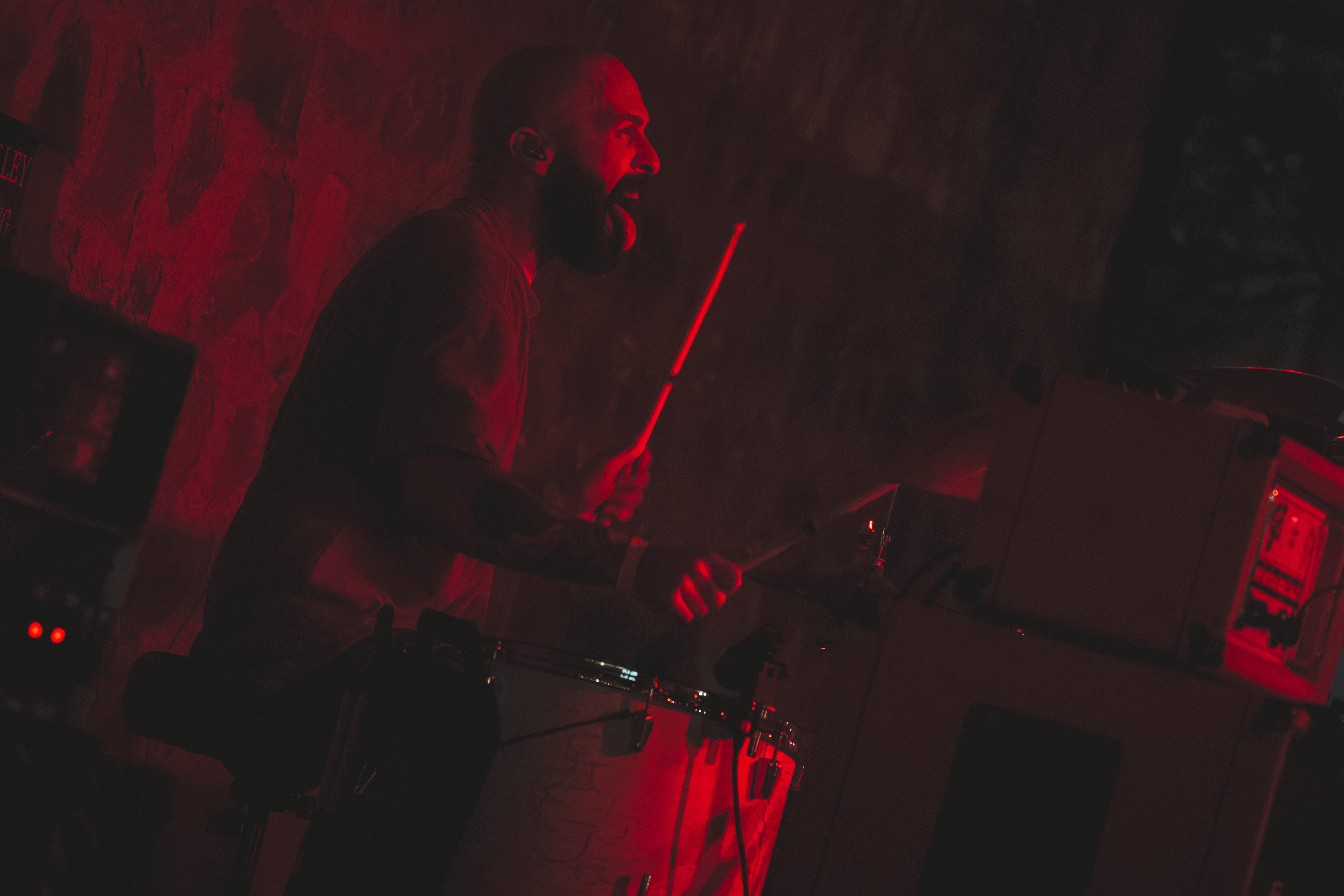
For all my resistance to the hype, The Fall of Troy earned the outdoor headlining position. The playing was busy without becoming careless, the history made the appearance matter and the crowd’s affection was easy to understand. My only real enemy was the impossible set I had been told to expect—and perhaps the lighting designer.
When Flagrant’s schedule stopped matching
We moved inside for what I thought would be the final act of the night. Instead, Flagrant and the sound crew became caught in the festival’s ugliest moment.
I do not enjoy writing a section like this. I typically try not to be overly negative in reviews, and even a poor performance usually contains something worth examining before the knives come out. What happened during Flagrant’s set was not a matter of taste. It was an issue of time, respect and how a disagreement was allowed to consume the stage.
According to the printed schedule, Flagrant had already exceeded its allotted slot. When the band was asked to wrap up, it remained onstage for more than 30 additional minutes, delaying Enlightened Ones from beginning the indoor headlining set. Security and the sound engineer eventually came onto the stage. An argument followed. After all of that, Flagrant was granted one final song.
We learned afterward that the printed schedule did not tell the entire story. Flagrant had reportedly been promised more performance time than the schedule showed, and the sound engineer had not been informed of that agreement. From the band’s perspective, they were being cut off before the time they had been given. From the sound engineer’s perspective, a set had run long and the final act was being delayed. Both sides entered the confrontation believing the other was refusing to follow the plan.
That missing context makes the disagreement understandable. It does not make the way it unfolded acceptable.
Flagrant should not have responded by refusing to clear the stage, carrying the argument in front of the audience and turning the final song into an opportunity to criticize Four Winds as “unorganized.” The sound engineer should not have handled the confrontation the way he did, either. Once it became clear that the band believed it had been promised additional time, the dispute needed to move off-mic and away from the crowd. Neither side de-escalated. The audience and Enlightened Ones paid for that failure.
Having attended the event across the day, I still cannot accept “unorganized” as a fair description of the festival as a whole. This was one of the most well-oiled independent festivals I have attended. Dozens of artists moved through multiple venues. Stages changed over, crowds shifted among buildings and most of the schedule held together despite the sheer number of opportunities for something to go wrong.
This particular incident, however, was a real organizational failure. Someone apparently promised the band more time without making sure the sound engineer received the same information. One schedule existed on paper and another existed in the band’s understanding. That communication gap lit the fuse. The people onstage and at the soundboard still chose how to respond once it was lit, and neither response helped.
Then the microphones hit the stage.
At the time, that was the final straw for me. I immediately deleted my photos of the group, something I had never done after covering a performance. Learning about the conflicting promises afterward changed my understanding of why the argument began. It did not change my opinion of the band throwing microphones or using the audience as part of the dispute. A legitimate grievance does not justify every reaction to it.
I left the set hoping I would never have to see Flagrant perform live again. With the fuller story, the blame no longer belongs entirely to them. The disappointment in how they acted remains.
Enlightened Ones takes the night back
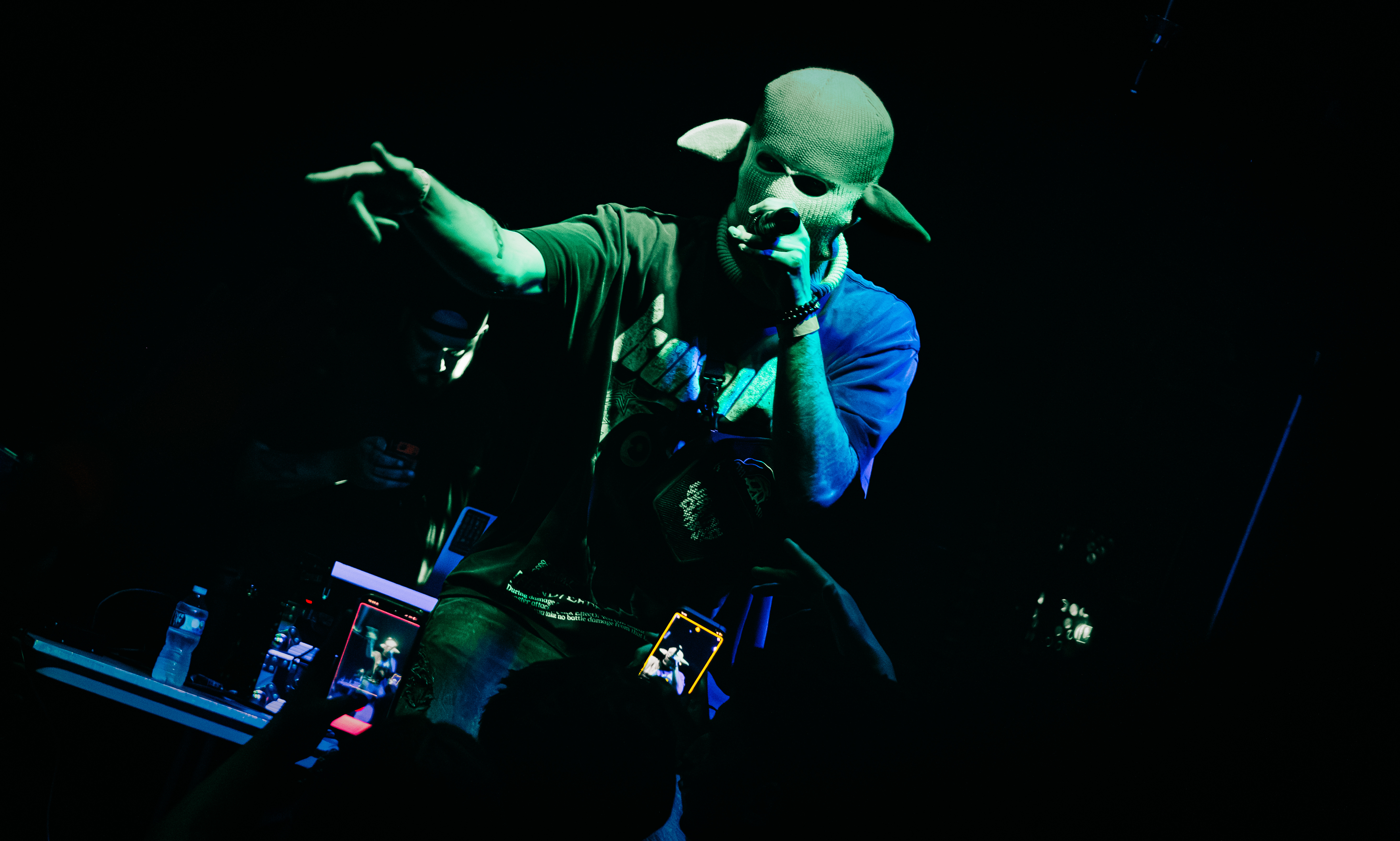
Once the confrontation finally cleared the stage, it was time for the indoor headliner and final live act of the festival, Enlightened Ones. It had been a minute since I had seen the Sioux Falls group—2023, when they opened for King Iso—and the refinement was obvious as soon as they began.
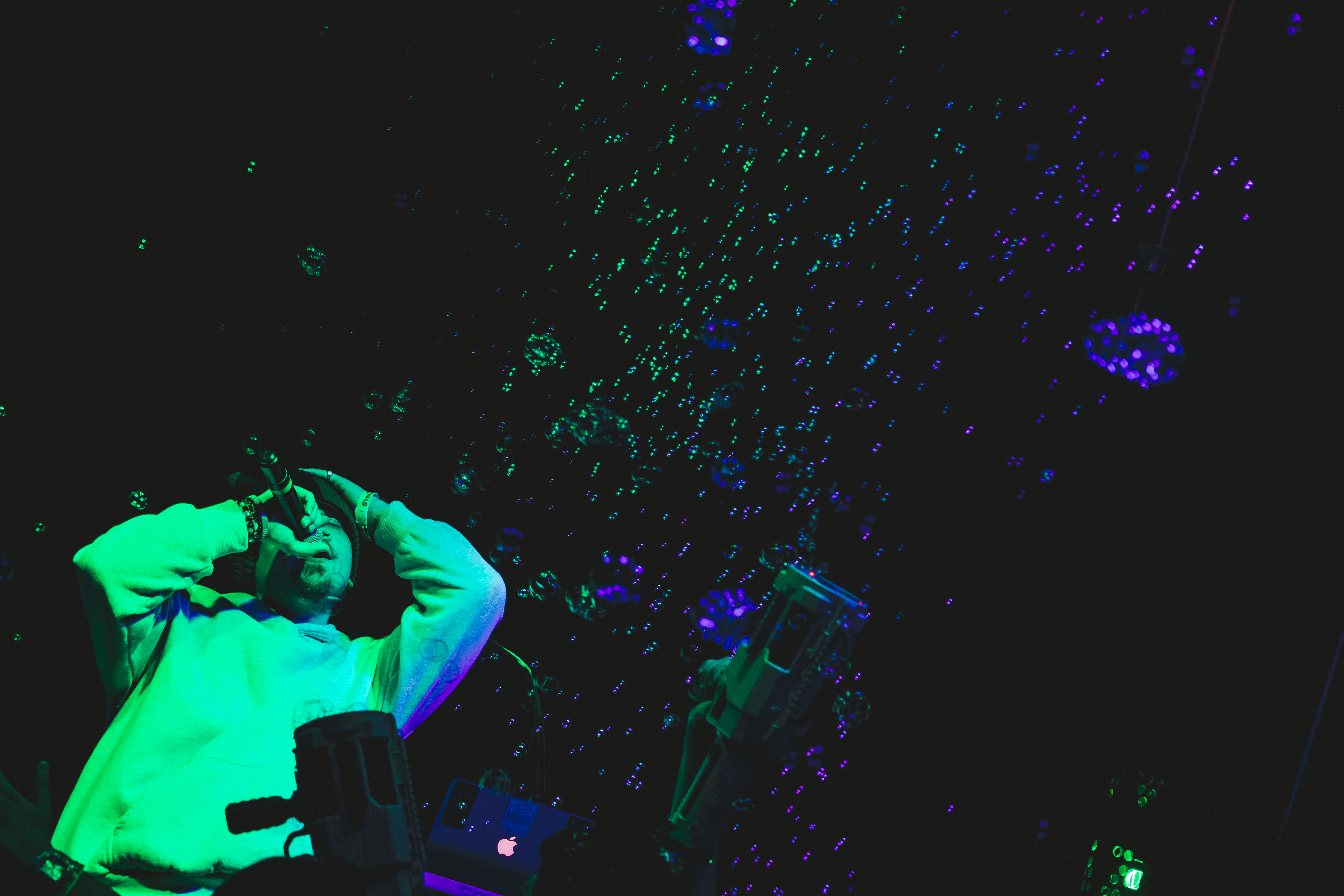
Several rap artists throughout the day had relied heavily on vocal backing tracks, using recorded voices to fill the lines they could not complete when breath ran short. Enlightened Ones used backing tracks for the instrumentals. The rappers carried the vocals themselves.
Considering how ridiculously fast these guys can spit, you would assume they need the extra help. They do not. I am not talking about the ordinary live-show version of a “fast rapper,” where a few bursts of speed are surrounded by enough space to recover. Enlightened Ones sustained passages at a pace that became mesmerizing to watch. Consonants stayed intact. Entries landed together. Neither breath nor tempo forced them to hand the verse back to a prerecorded version of themselves.
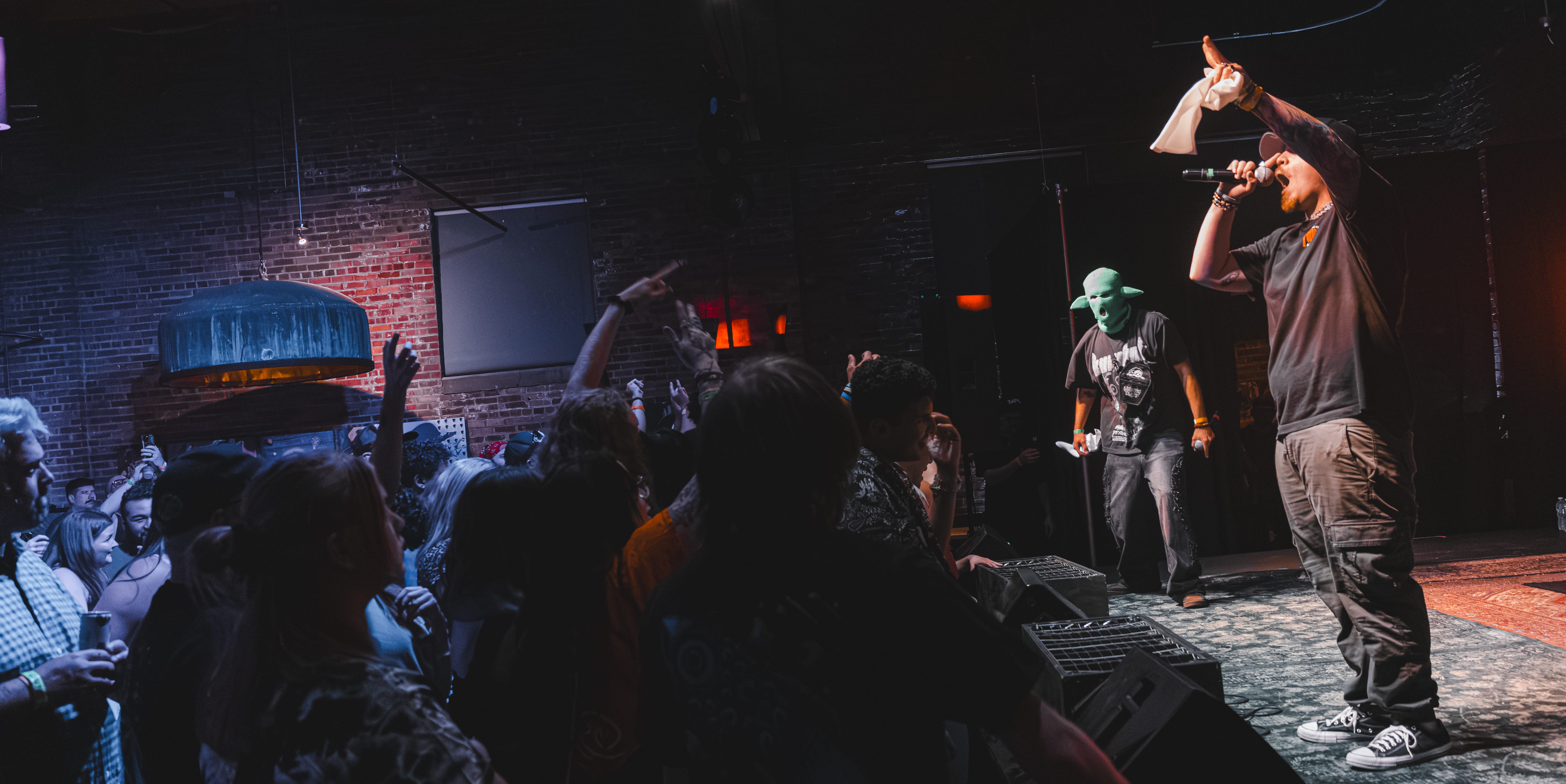
Precision marked the difference between performing a song and mastering it. Speed alone can become a gimmick. Their control kept it musical. The words remained shaped, the delivery stayed synchronized with the instrumentals and the physical act of producing those verses became part of the show. There was no safety net pretending to be a second vocalist.
At one point, the group announced that a music video would be filmed during one of the songs. The crowd surged closer and got louder as people realized their faces, raised hands and reactions might become part of the finished video. After a day that had begun with performers trying to coax responses from thin rooms, the final audience did not need coaxing.
Because of that timing, Enlightened Ones became more than a strong closing act. After the frustration of Flagrant’s overrun, I needed a reminder of why I love live music in the first place: artists taking the opportunity seriously, doing something difficult without cheating it and giving the crowd a reason to stay engaged after midnight. Enlightened Ones provided it.
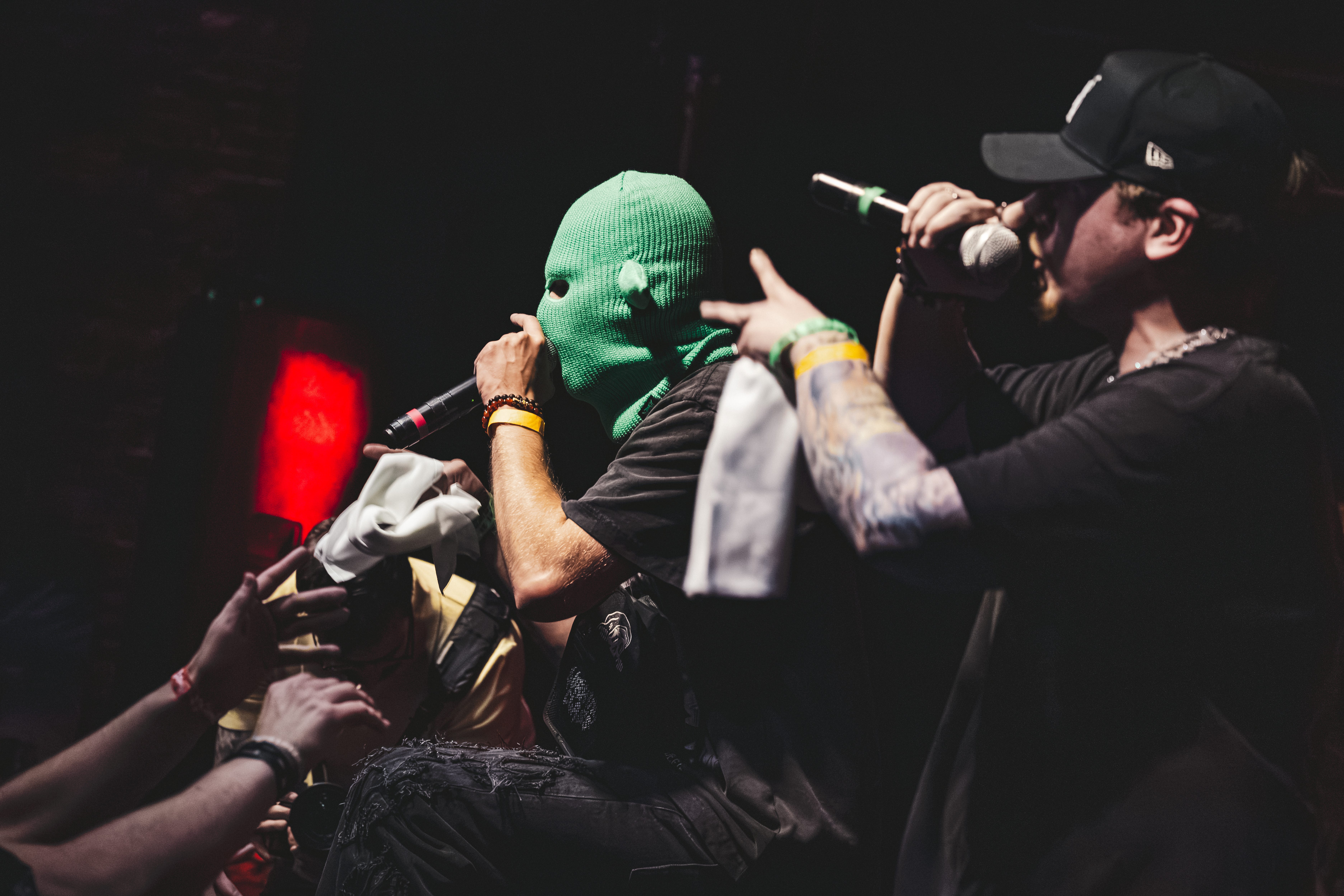
I cannot thank them enough for helping wash away the rage that was still running through my veins. They inherited a delayed stage and a room with every reason to be irritated, then replaced the sourness with speed, precision and a crowd suddenly thrilled to be on camera. They did not ask anyone to forget what had just happened. They gave us something better to remember.
Afterglow
At 3 p.m., Four Winds had scattered musicians across rooms still waiting for people. The first performers had to act on faith: play the full set, make the joke, take the solo, ask for the response and trust that the day would eventually meet them at their level. The Times’ Four ended with a spy theme for a half-awake afternoon. Sad Planet expanded a one-man arrangement with one trombone. TJ FIGH and 4Worn N4tion worked against visible floor space. Kevin McClure made a broken string part of the show.
By the final indoor set, empty space was no longer the problem. Reviver had already opened the largest pit I could remember seeing in ICON. The Fall of Troy had finally made it through the weather and back to Sioux Falls. A schedule conflict had spilled into public view because neither the band nor the sound engineer de-escalated it. Then Enlightened Ones took the last available minutes and treated them like they mattered.
Not every set deserved equal praise, and one confrontation deserved criticism on both sides. The performers who defined Saturday understood the same basic responsibility, whether the room held 20 people or a heaving pit: respect whoever showed up and give them something that could only happen there.
Enlightened Ones did exactly that. After a long day—and an even longer 30 minutes—they closed Four Winds with the crowd pressed forward, every word performed live and a camera rolling.
Please consider Donating to Sponsor an article even $1 helps!
