




Faith in Focus is a weekly reflection on what God has been teaching me throughout the week regarding my faith. Whether it’s personal interactions, reading, or the Sunday sermon, God speaks through it all, and I hope this helps you focus on His mission.
Follow Ben, and subscribe to Intellectual Dissatisfaction to receive next week’s edition.
Sermon Reflection:
Clarity Over Chaos: What 1 Corinthians 14 Demands of the Church
Based on the sermon by Jonathan Land, Connection Church Sioux Falls, March 29, 2026.
In 1 Corinthians 14, Paul confronts a chaotic church and calls it back to something simple but costly. Clarity that builds others up in the Gospel.
It did not take long for the point to land. This week, Jonathan stepped back into the pulpit and opened 1 Corinthians 14 by reading the first verses in German, then Spanish, then Ancient Greek. For most in the room, comprehension vanished almost immediately. The words may have been accurate, even beautiful in their original form, but they were inaccessible.
That moment was not just a creative opener. It was the sermon in miniature.
Paul’s concern in 1 Corinthians 14 is not whether spiritual gifts exist. It is whether they actually serve the people gathered. The issue in Corinth was not a lack of spirituality, but a misdirection of it. Gifts that were meant to build up the church had become tools of confusion. Paul is not diminishing spiritual experience. He is reordering it under the authority of love and the mission of the church.
If what we do in worship cannot be understood, it cannot accomplish what God intends for it.
The World Behind the Text
The church in Corinth was vibrant, diverse, and deeply fractured. Throughout 1 Corinthians, Paul addresses divisions, misuse of freedom, and confusion around spiritual gifts. Chapter 14 sits within a larger argument that begins in chapter 12 and crescendos in chapter 13, where love is defined as the governing ethic of all gifts.
By the time Paul reaches chapter 14, he is applying that ethic to corporate worship.
The Corinthian believers placed a high value on tongues, likely because of its dramatic and spiritual appearance. Tongues, especially in light of Acts 2, had a clear role in the expansion of the early church. When the Spirit came at Pentecost, language barriers were overcome as people heard the gospel in their own tongues.
But Corinth had taken something good and made it ultimate.
Paul’s correction is not to eliminate tongues, but to situate it properly. He elevates prophecy, not because it is more spiritual, but because it is more intelligible. It communicates truth in a way that others can receive.
In a gathering meant to proclaim Christ, understanding is not optional.
Walking the Passage
Paul begins with a clear directive in 1 Corinthians 14:1, calling believers to pursue love and earnestly desire spiritual gifts, especially prophecy. This is not a rejection of tongues, but a prioritization of what builds others up. He draws a contrast. One who speaks in a tongue speaks not to men but to God, uttering mysteries in the Spirit. Meanwhile, the one who prophesies speaks to people for their upbuilding, encouragement, and consolation.
The issue is not authenticity. It is accessibility.
Paul presses further. If the church gathers and everyone speaks in tongues without interpretation, outsiders will not be drawn in. They will be confused. In 1 Corinthians 14:16, he asks a pointed question. If you give thanks with your spirit, how can anyone in the position of an outsider say “Amen” to your thanksgiving when he does not know what you are saying?
This is the heart of the argument.
Worship is not a private experience performed in a public room. It is a shared act meant to include, instruct, and invite. Paul then delivers one of the most striking comparisons in 1 Corinthians 14:19. Nevertheless, in church I would rather speak five words with my mind in order to instruct others, than ten thousand words in a tongue.
Clarity is not a downgrade of spirituality. It is the evidence of love at work.
Paul is not measuring spiritual depth by emotional intensity or supernatural display. He is measuring it by edification. The question is not what feels powerful to the speaker, but what actually builds up the listener. Paul does not abolish tongues. He regulates it. If tongues are used, there must be interpretation. Without it, the speaker builds up only themselves, not the church. And the gathered church is precisely where building up must happen.
This leads to Paul’s broader command in 1 Corinthians 14:26. Let all things be done for building up. That sentence serves as a filter for everything that happens in corporate worship.
A Fair Counter-Reading
Some traditions read this passage as a case for the cessation of tongues altogether. Others elevate tongues as the primary evidence of spiritual vitality.
Both positions tend to miss Paul’s actual emphasis.
He neither eliminates the gift nor exalts it above others. Instead, he subordinates it to love and clarity. His concern is not whether tongues exist, but whether their use aligns with the mission of the church.
A balanced reading recognizes that spiritual gifts are good, but they are never ultimate. Their purpose is always tied to the building up of others and the clear proclamation of the Gospel.
The Turn
One of the most compelling insights from the sermon came from a connection that stretches back to Genesis 11. At Babel, humanity shared one language and used it to pursue self-exaltation. The result was judgment. God confused their language and scattered them across the earth.
Language became a barrier.
But in Acts 2, that barrier begins to break. The Spirit enables people from different nations to hear the Gospel in their own languages. What was divided is now, in part, restored. The gift of tongues, rightly understood, is not about confusion. It is about connection. Tongues are not meant to obscure the Gospel but to advance it across boundaries. Any use of spiritual gifts that creates unnecessary barriers runs against the grain of God’s redemptive work.
The trajectory of Scripture moves from division to unity in Christ. From Babel to Pentecost to the global church, the aim is not spectacle but reconciliation. That is why clarity matters so much.
Song of the week: Left it in the River - Jamie MacDonald
During this Easter season, I find myself marking a personal milestone alongside the broader celebration of renewal and resurrection. The second anniversary of my public baptism on Easter Sunday 2024. It’s a moment that continues to shape my faith, and one that comes back into focus each year alongside this holiday.
This song by Jamie MacDonald has, for me, become an unexpected companion to that memory. Its lyrics trace a journey that feels deeply familiar. One of carrying burdens into the water and emerging changed. Each listen brings me back to that day, reinforcing a sense of joy that, as the song suggests, cannot be taken away. The imagery of being washed clean and “leaving it in the river” mirrors the emotional and spiritual weight of the experience.
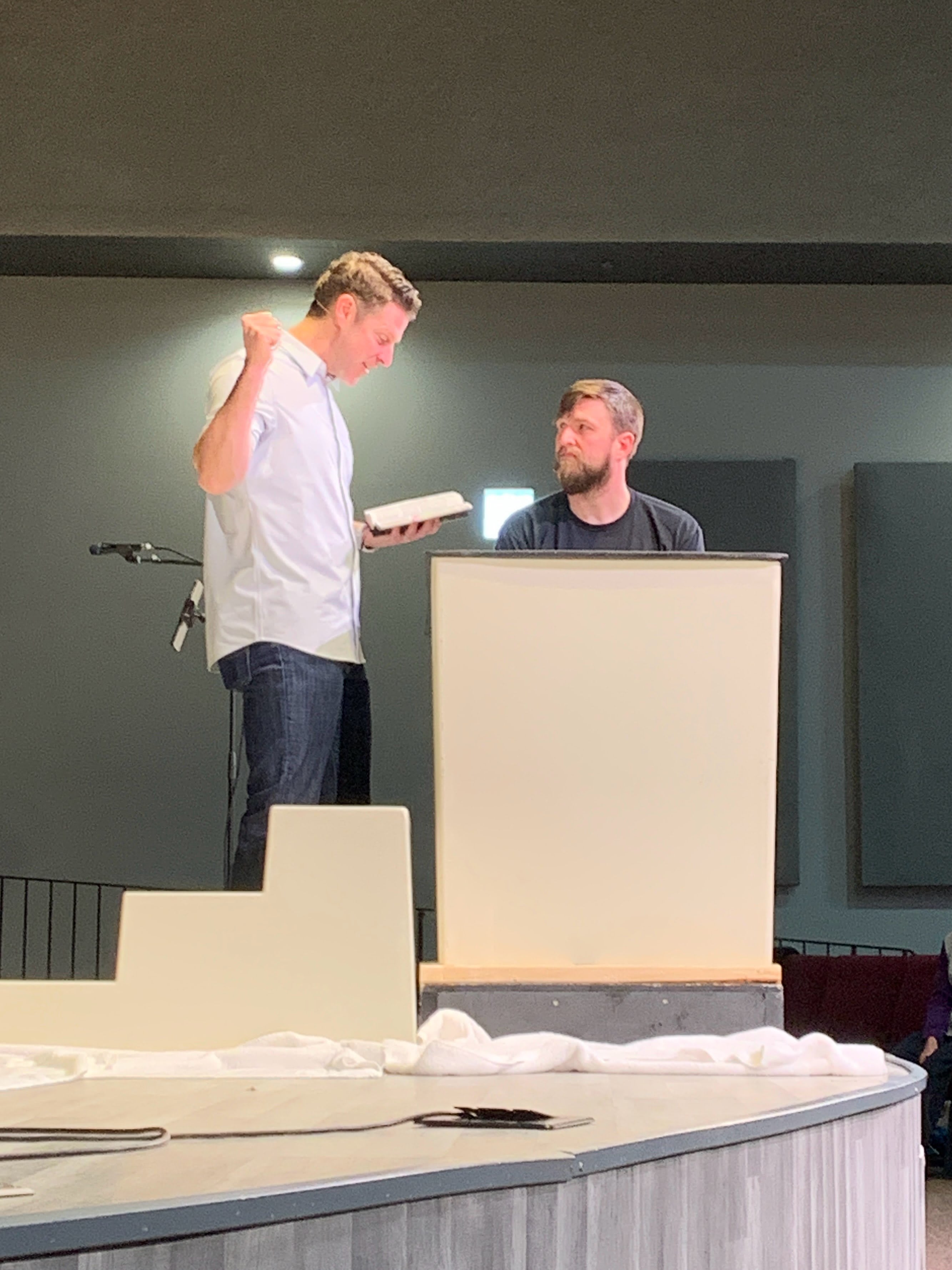
My own baptism didn’t take place in a river, but rather at Connection Church. Still, the symbolism holds. The setting may have been different, but the transformation felt just as profound.
Even now, putting that experience into words proves difficult. But if there were a way to fully capture it, it might sound something like the lyrics of this song. An attempt to articulate a moment that continues to resonate long after the water has settled.

Carry It Into the Week
Paul closes this section with a principle that extends beyond any single gift. God is not a God of confusion but of peace, as stated in 1 Corinthians 14:33.
This is where the conversation around verses 33 to 35 often becomes tense. These verses, which call for women to be silent in churches, have been used in ways that flatten the broader witness of Scripture.
Context matters.
Elsewhere, Paul affirms the ministry of women. Jesus himself consistently elevated women within his ministry. A faithful reading recognizes that Paul is addressing a specific disruption within the Corinthian gathering, not issuing a universal prohibition on women speaking.
These verses respond to a local issue rather than establish a timeless ban. We must read difficult texts in light of the whole counsel of Scripture and the character of Christ. The larger point of the chapter remains unchanged. Worship should reflect the nature of God. It should be ordered, intelligible, and aimed at building others up.
For a church shaped by the Gospel, this has clear implications.
Gospel: The message of Jesus must be proclaimed in a way that can be understood. The good news is not meant to be hidden behind inaccessible language or insider expression.
Community: The gathered church exists to build one another up. Every contribution should serve that end.
Mission: If outsiders cannot understand what is happening, they cannot respond to the invitation of Christ.
Clarity is not a stylistic preference. It is a missional necessity.
Week in Reflection
The start of Holy Week offered a powerful reminder of the story at the center of the Christian faith. On Palm Sunday, I had the opportunity to attend The Passion and The Cross, staged by Lights Up Production at the Orpheum Theatre here in town. For those unfamiliar with the show, it presents the story of Jesus through music and live performance with an approach that brings fresh immediacy to a narrative many know well.
What stood out most was not just the scale of the production, but the emotional weight it carried. The crucifixion scene, often acknowledged during Good Friday services, was depicted with a stark brutality that lingered well beyond the final note. Performed by a cast of local volunteers, the production showcased a depth of talent that elevated each moment. There were multiple points where I found myself unexpectedly moved to tears, not only by the quality of the performance, but by the conviction behind it.
Holy Week itself remains a deeply reflective period, marking both solemn remembrance and celebration. While Good Friday centers on the crucifixion that is understood by believers as the moment Jesus bore the weight of sin once and for all, it also serves as a lead-in to the hope of Easter Sunday. That tension between grief and joy is what makes this week so significant.
This season, as stated above, also carries a personal milestone. Two years ago, on Easter Sunday 2024, I publicly affirmed my faith through baptism. Looking back, it’s been a period marked by both challenges and growth, but one I would not trade for anything. It remains, without hesitation, the most meaningful decision I’ve made in my life. While there is still much in my journey I continue to surrender and work through, the transformation at the heart level is undeniable and with it, a growing trust that, in time, all things will be made right.
As Holy Week concludes, my hope is that others found space to reflect as well. Whether through a Good Friday service, a moment of quiet consideration, or a full celebration of Easter. More than two millennia later, the story of the resurrection continues to resonate, inviting both reflection and renewal.
And remember, God loves you, and so do I.

Connection Church in Sioux Falls is a gospel-centered community committed to helping people follow Jesus through authentic relationships, biblical teaching, and everyday mission. Rooted in historic Christian belief and aligned with gospel renewal movements, the church exists to see lives transformed by Jesus. Learn more: https://siouxfallsconnection.com/who-we-are
