






There’s a certain kind of gratitude that hits before a single note is played. The kind that sits in your chest a little heavier than excitement. Standing inside the Denny Sanford PREMIER Center, knowing full well that Journey doesn’t always hand out coverage lightly, and knowing this Final Frontier Tour may well be one of the last chances to catch them on a run like this, it felt earned just to be in the room. Huge thanks to Doria with the PREMIER Center and Journey team for approving us. Some nights feel like assignments. This one felt like a privilege.
And maybe that’s the right word for Journey in 2026. Not just a band. Not just a legacy act. A privilege to witness while it’s still here.
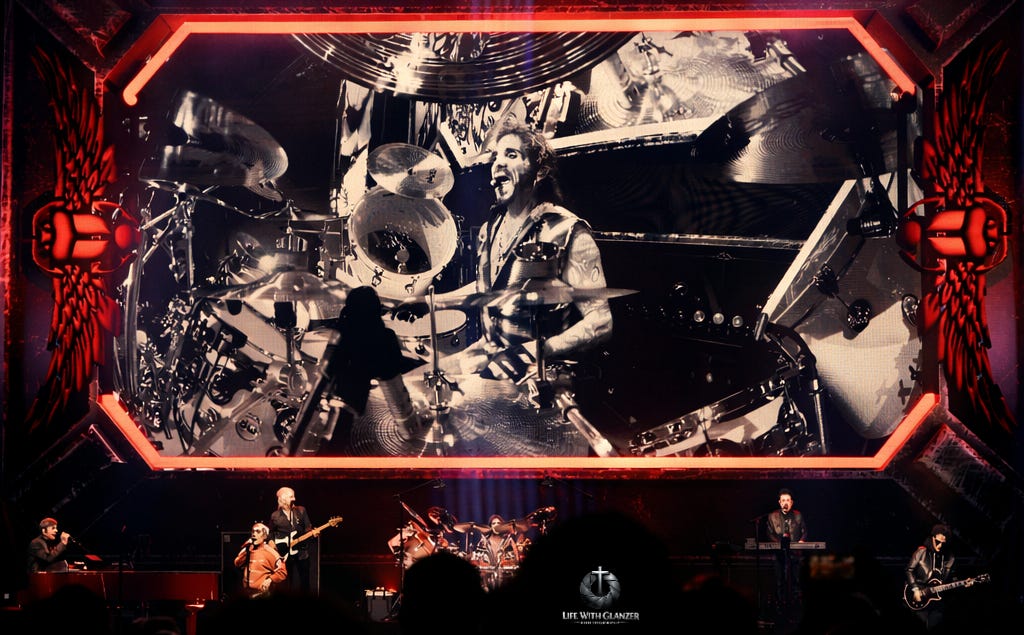
With room for roughly 12,000, the house was packed and buzzing long before the band took the stage. I hadn’t been in my seat long before a countdown timer popped up on the screen, and that alone told the story. This production was sharp. No dragging start time, no vague “sometime soon” energy, no wandering around the edge of anticipation. When the clock hit zero, they were there. Exactly on time. And they came out strong.

Please consider Donating to Sponsor an article even $1 helps!

Photographers Viewpoint: Ben Glanzer
Entering the venue that evening felt bigger than just another show. It was my first time being approved to cover a concert at my local arena—something that, for a local creative, carries a certain weight. That alone would have been enough to make the night memorable. But the artist on the bill made it something else entirely. Journey. A band whose music has long outlived any single era, now out on a farewell run.
That combination—first credential, legendary act, final tour—brought a level of anticipation I hadn’t quite felt before. And a fair amount of nerves too.
When I arrived, I was met by Doria, the venue’s Director of Marketing, who greeted me with an ease that immediately cut through some of that tension. There’s something grounding about being welcomed into a space like that, especially when you’re still trying to prove you belong in it. She walked me through the logistics, made sure I was set up, and for a moment, everything felt seamless.
Then came the reality check.
I asked where I should go after the photo window closed, hoping to take in the rest of the show from somewhere in the building. Her expression shifted slightly. Not harsh, just matter-of-fact. Without a second approved credential, I’d need to leave the venue once my contracted time was up. It wasn’t personal. It was policy.
Still, it stung.
I nodded, told her I understood, and meant it. Access is a privilege in this line of work, not a guarantee. Even so, there was a quiet disappointment in knowing the night would end just as the music really began. I pushed it aside, focused on the task at hand, and prepared to make the most of the opportunity I did have.
But just as quickly as that door seemed to close, another opened.
As the arena filled and the energy in the room began to build, Doria returned—same calm presence, same steady tone—and handed me a ticket.
Row 7.
For a second, I didn’t quite process it. Then it hit. Not only had she gone out of her way to secure additional access—something she absolutely didn’t have to do—but she made sure it was an experience I wouldn’t forget.
Moments like that don’t just elevate an assignment. They redefine it.
In a field where so much revolves around credentials, restrictions, and timing, it’s easy to view the experience through a transactional lens. You’re there to do a job. You get in, you get the shots, you move on. But every once in a while, someone reminds you that there’s still a human side to all of it. That people notice effort. That they care enough to go a step further.
That’s what stayed with me long after the lights went down.
The Machine Starts Moving
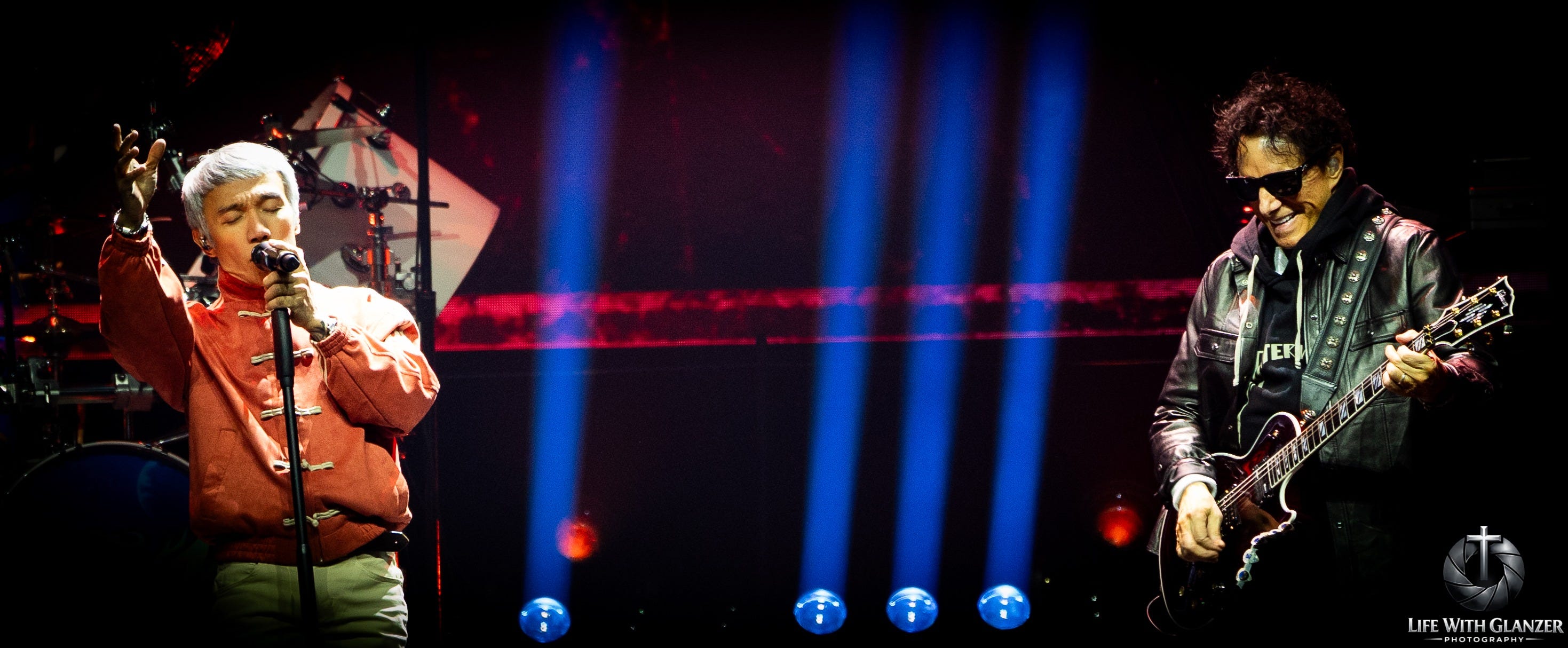
The opening stretch made that clear in a hurry. “Be Good to Yourself,” “Stone in Love,” “Just the Same Way,” “Girl Can’t Help It,” and “Only the Young” hit with the kind of muscle that instantly snapped the room to attention. It was a strong opening run, the kind that reminds you Journey has never really needed to ease into anything. They know how to take command of an arena, and they did.
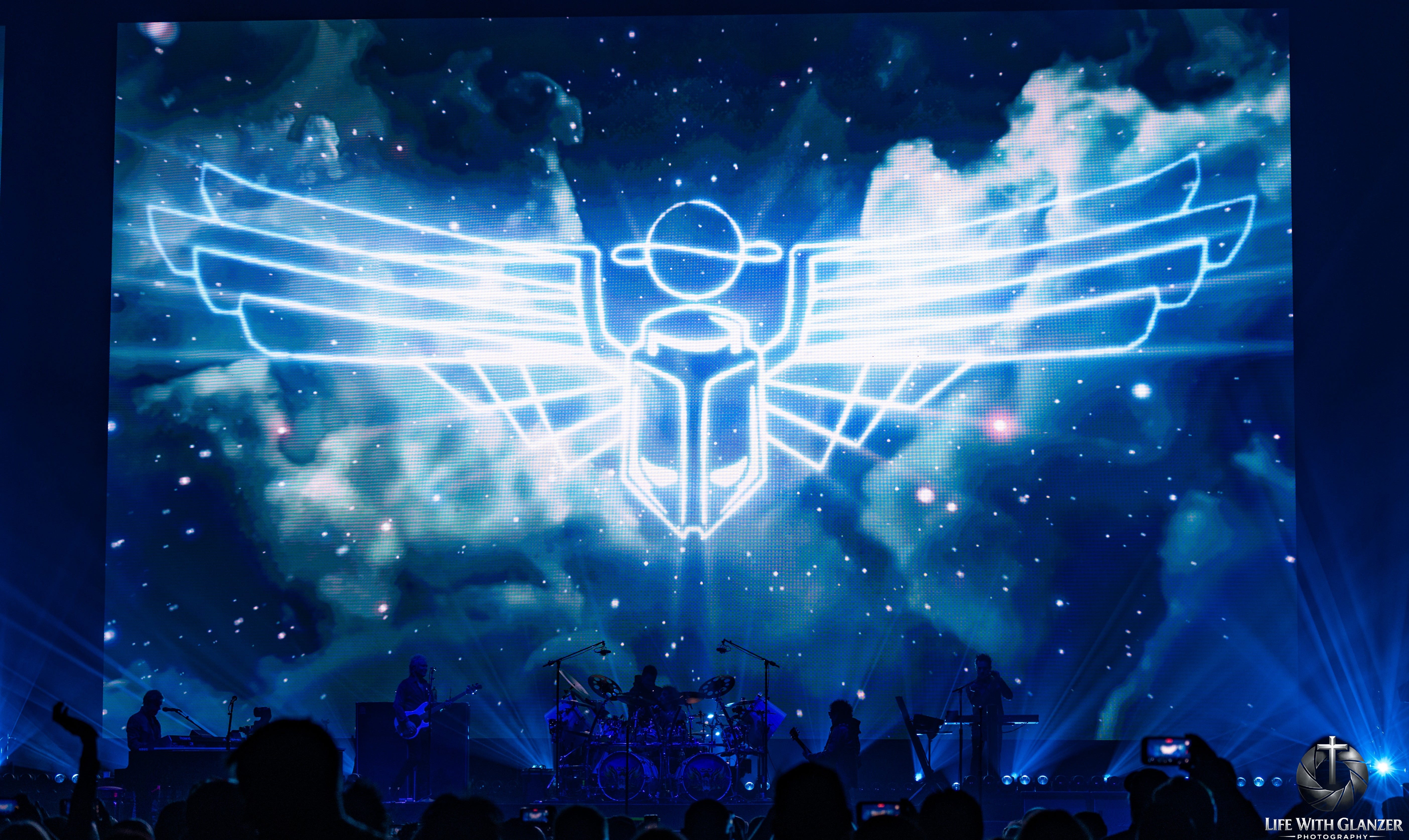
What stood out right away was how polished the whole thing looked. The production quality on this tour is top notch, with effects shifting from song to song instead of recycling the same visual trick all night. Lighting changed with the mood. Screen work kept pace with the music. The whole show had that rare feeling of being expensive, yes, but also thoughtfully built. Nothing felt tossed in just because it could be.
They slowed it down with “When You Love a Woman,” which they announced was for all the ladies there that night. It changed the temperature in the building immediately. The power of a Journey set has never just been about the big choruses or the air-punching hooks. It’s the balance. They know when to hit hard and when to let a song breathe.
Back to San Francisco, Then Forward Again
From there they reached back into their roots with “Lights,” introduced with a nod back to San Francisco in the ’70s, and then dug even deeper with “Of a Lifetime,” a first-album reminder that Journey’s story did not begin as the slick, arena-sized singalong machine most people now remember. Before the mass-radio dominance, before the immortal hooks became cultural furniture, there was a band built on musicianship, movement, and a willingness to keep changing shape.
That shape-shifting has always been the heart of Journey’s story.
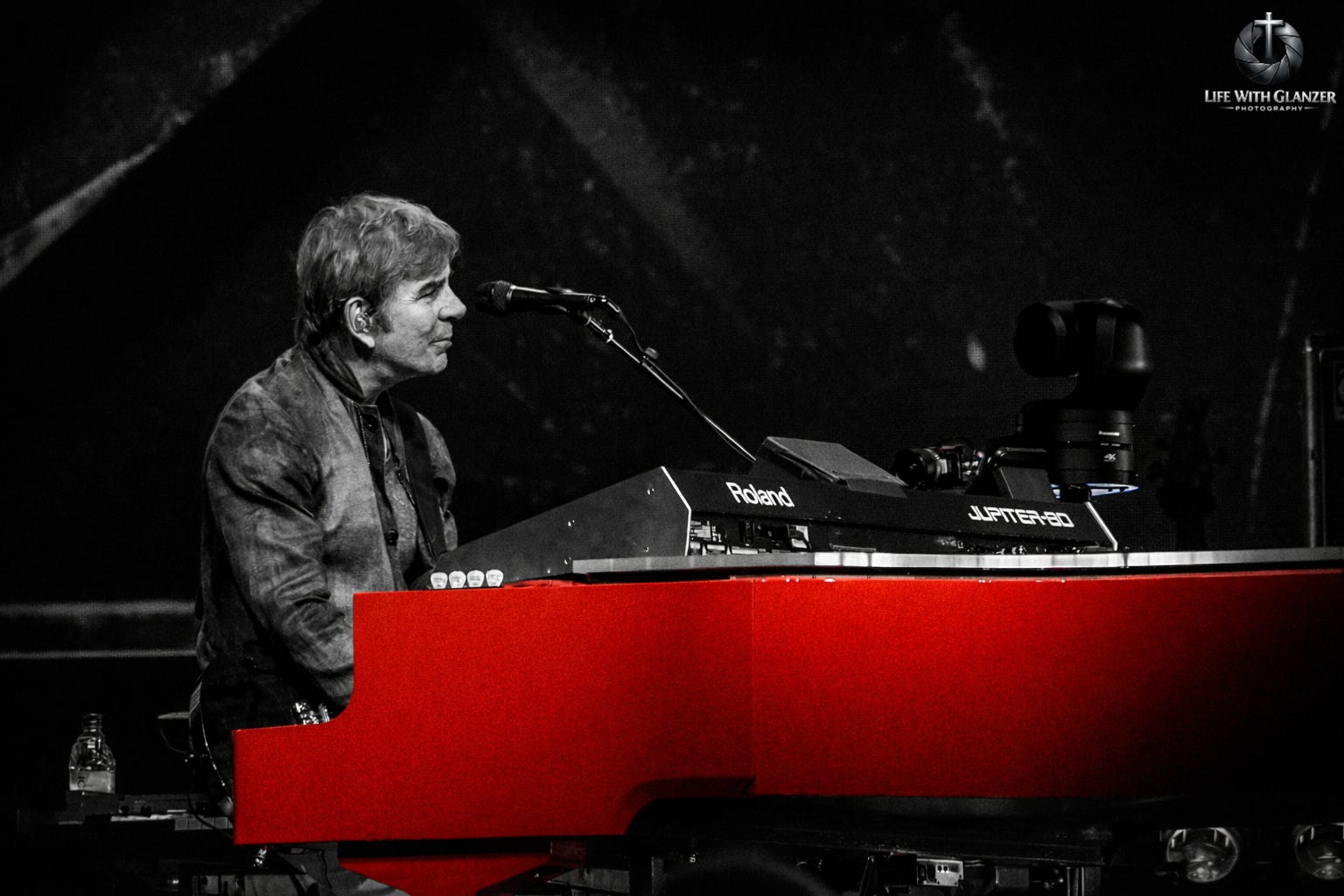
So when the middle of the show moved through “La Do Da,” “Chain Reaction,” “Suzanne,” a piano solo, “Who’s Crying Now,” “Ask the Lonely,” and “Dead or Alive,” it never felt like a random pile of selections. It felt like a band walking through its own long shadow and still finding fresh angles inside it.
Then came “Wheel in the Sky.”
That one hit me in a different place entirely.
This song means a lot to me because my aunt Cinda fought a battle with lung cancer, only to be hit with pneumonia afterward. With her lungs already compromised, she couldn’t fight it off. “Wheel in the Sky” was the song she requested at her funeral. So hearing it live in that room didn’t land as just another classic in the setlist. It came with memory attached. With grief attached. With love attached. And in a strange, beautiful way, hearing thousands of people sing along to a song that has lived in such a personal corner of my life made it feel even larger. Not less personal. More. Like the song had enough room to hold all of it.

The Voice Question—Answered
And while we’re being honest, there’s no way to talk about modern Journey without talking about the voice. That question hangs over every show whether anyone says it out loud or not.
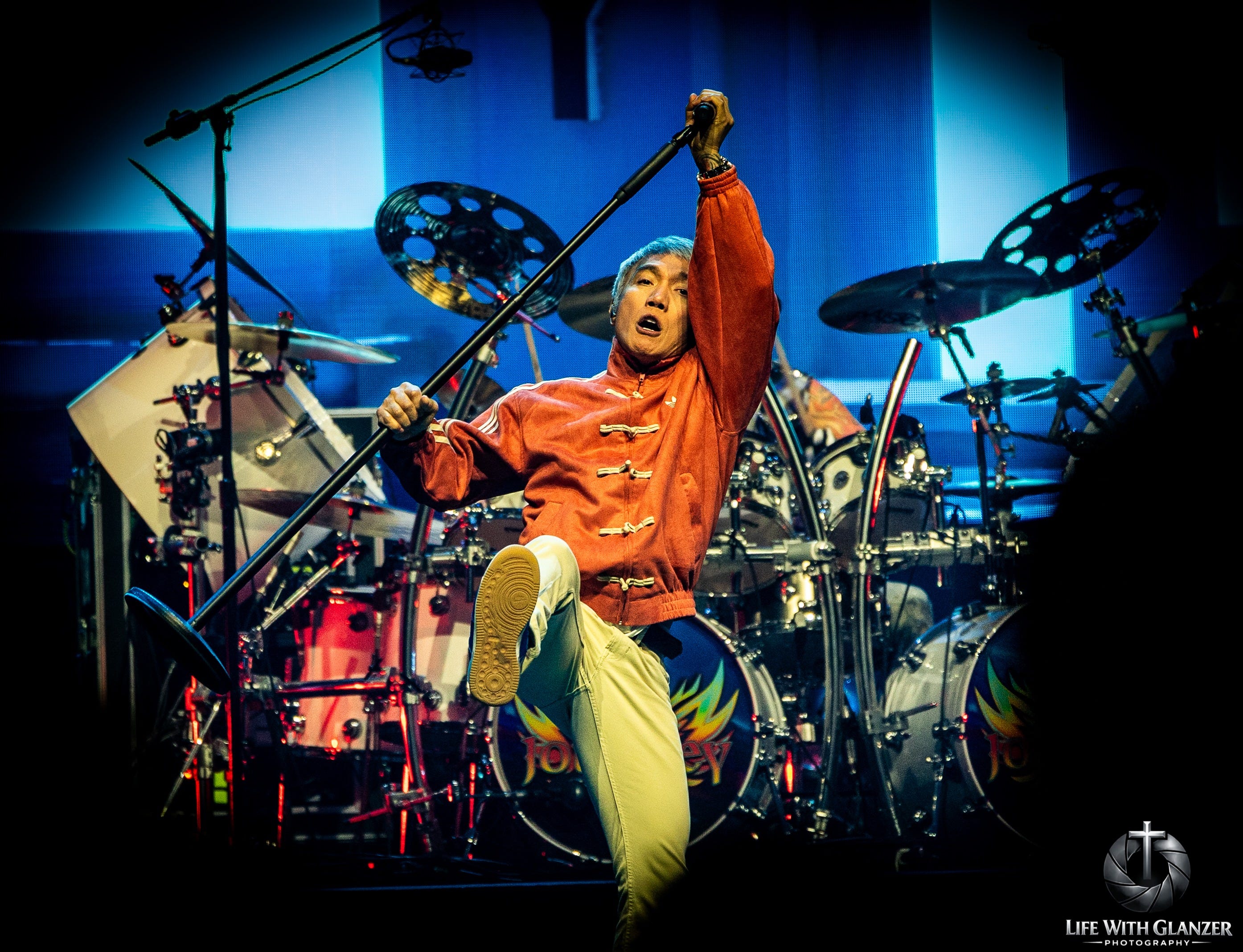
It’s crazy how close Arnel Pineda’s lead vocal sounds to the legendary Steve Perry.
Not in a hollow imitation way. Not in some tribute-band approximation. There are moments where the resemblance is genuinely startling, where the phrasing and lift hit with a familiarity that makes the room collectively lean in. But what makes it work is that he doesn’t come off like someone trying to erase the past. He comes off like someone who understands the burden of carrying it. That’s a very different thing, and it’s the reason this version of Journey still works.
The Stretch Run
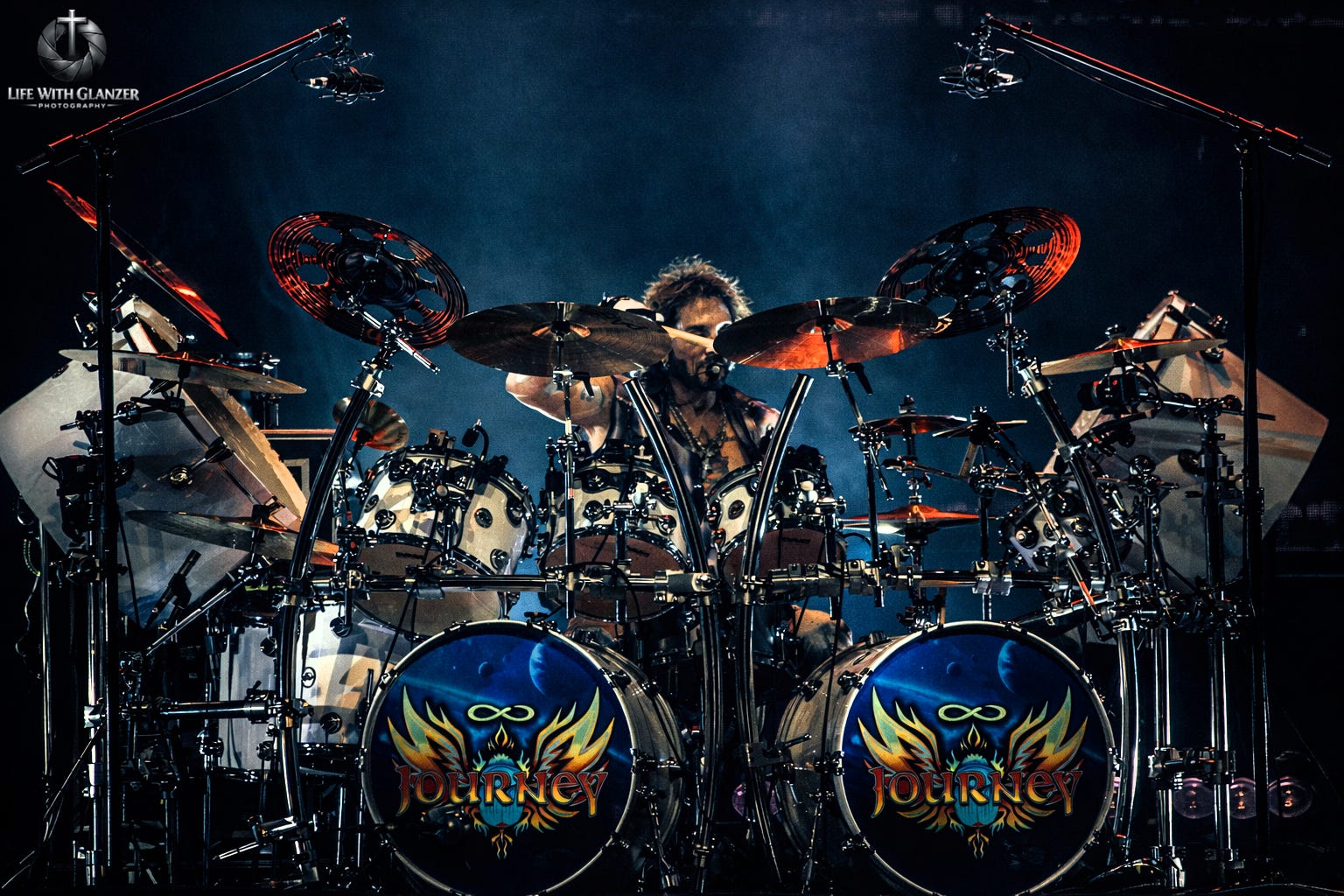
The stretch run of the show was built for maximum impact. “Feeling That Way,” “Faithfully,” “Anytime,” “I’ll Be Alright Without You,” and “Open Arms” kept the emotional current running strong, while the drum solo reminded everyone that beneath the polish and sentiment, this band is still rooted in players who know exactly how to drive a big room.
Then came “Lovin’, Touchin’, Squeezin’” and “Separate Ways (Worlds Apart),” and you could feel the crowd shifting from admiration into full-throated ownership. That’s the moment in a legacy-act show where the line disappears. It’s no longer performer and audience. It’s one big shared muscle memory.
And then, of course, the ending everyone was waiting for.
The Price of Memory
Before the lights dropped and the first chord cut through the room, there was another kind of ritual happening out in the concourse.
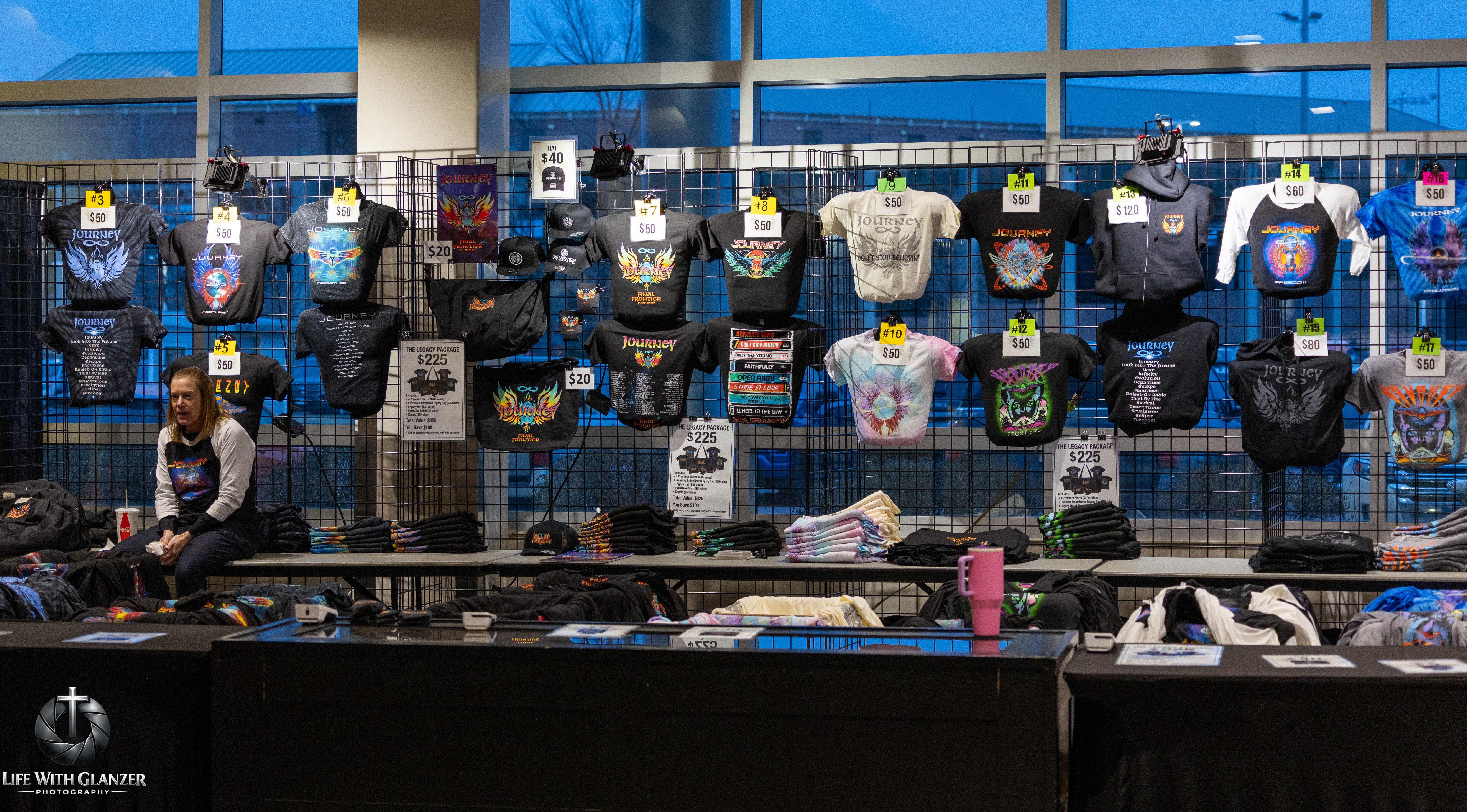
The merch wall.
Lined end to end with black tees, neon prints, tour dates, and that unmistakable winged Journey iconography, it looked less like a sales table and more like a timeline you could wear home. Designs pulled from different eras, different albums, different identities of the band all sitting side by side. You could almost trace their evolution just by walking from left to right.
But like everything else tied to a legacy act of this size, it came with a price tag that made you pause.
Most shirts hovered around $50, hoodies sat at $80-$120, and bundle packages climbed even higher. It’s the modern reality of touring—where the ticket gets you in the door, but the merch is where fans decide how much of the night they want to physically take with them.
And people were buying.
Stacks of folded shirts moved steadily. Sizes disappeared and got restocked. You could see fans holding up designs, debating between eras, between colors, between which version of Journey meant the most to them. It wasn’t just shopping. It was choosing a memory.
That’s the thing about merch at a show like this. It’s not just branding. It’s proof you were there. A wearable timestamp from a band that, for a lot of people in that building, has been part of their lives for decades.
The Band That Refused to Stay Still
To understand why this still works, you have to zoom out for a second.
Journey was never supposed to be this band.
They started as a jazz-rock experiment in 1973, built by musicians who valued complexity over accessibility. Neal Schon and Gregg Rolie, fresh off Santana, weren’t chasing radio hits—they were chasing musicianship. Early records proved they had the talent, but not the reach.
Then Steve Perry walked in.
And everything changed.
Suddenly the songs had hooks. Emotion cut deeper. The band had a center. Albums like Infinity, Evolution, and Departure didn’t just elevate them—they redefined them.
By the time Escape and Frontiers hit, Journey wasn’t just successful. They were everywhere. “Don’t Stop Believin’,” “Open Arms,” “Separate Ways,” “Faithfully”—these weren’t just hits. They were cultural anchors.
Then came the fractures. The burnout. The breakup.
Reunions that almost worked.
Replacements that almost fit.
And then, in one of the strangest, most perfect twists in rock history, Neal Schon found Arnel Pineda on YouTube.
A cover singer from the Philippines.
And suddenly, the band had a future again.
That’s the real story of Journey. Not stability. Not consistency. Survival. Reinvention. Tension between what they were, what they became, and what they needed to be to keep going.
Without Neal Schon, there is no Journey.
Without Steve Perry, there is no legend.
Without Arnel Pineda, there is no present.
Afterglow
When the lights came up and the crowd started to spill out into the South Dakota night, it didn’t feel like the end of a concert. It felt like stepping out of something larger than the room itself.
A timeline.
A memory bank.
A reminder.
Journey has spent decades shifting shapes, breaking apart, rebuilding, chasing something just out of reach—and somehow, against all odds, keeping it alive.
And standing there, watching thousands of people walk out still humming the same songs their parents once played, it hit in a quiet, undeniable way.
They didn’t just keep the lights on.
They became the light people carry with them.


Please consider Donating to Sponsor an article even $1 helps!
