



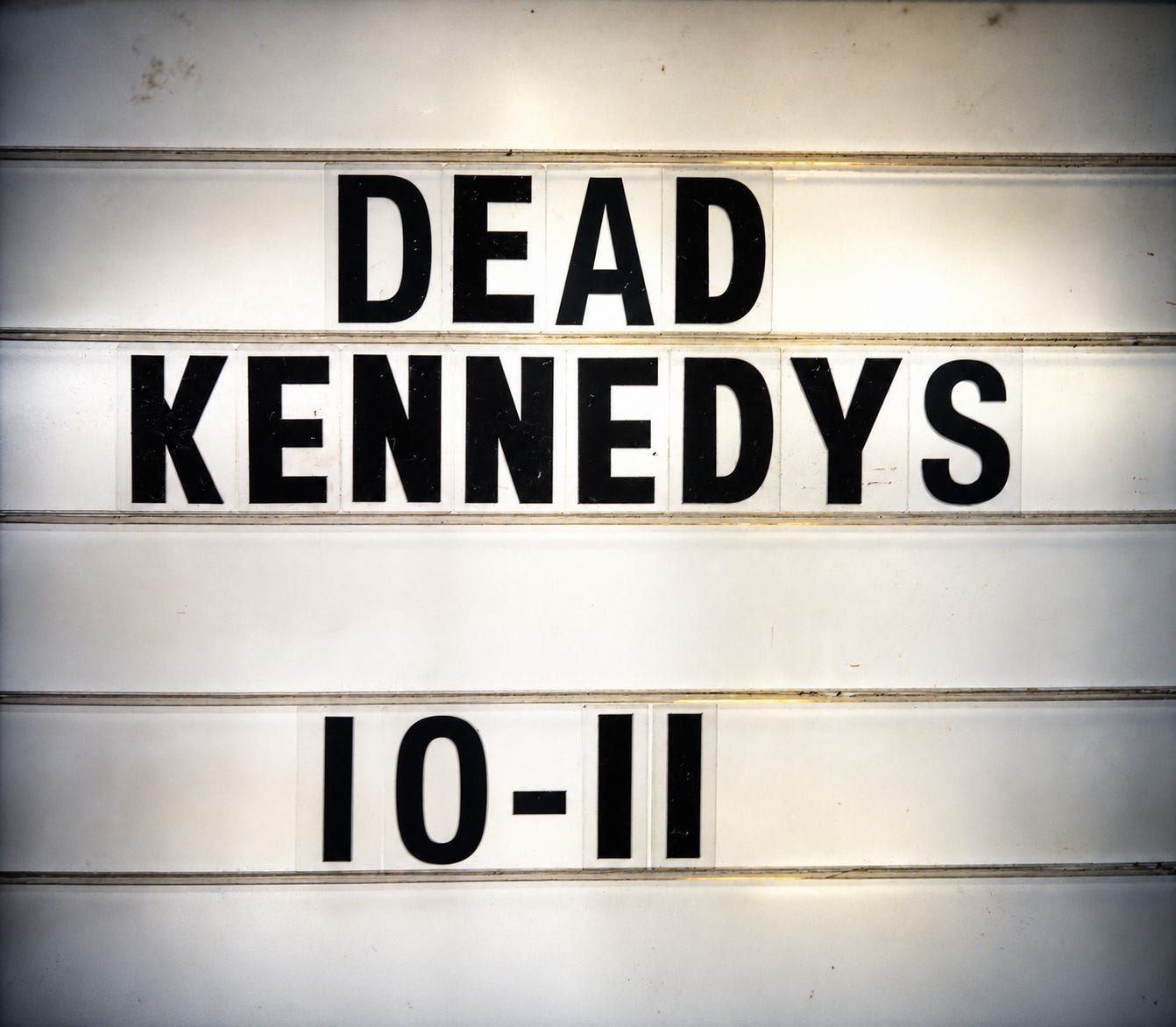
When someone went down in the pit, people helped them back up. Across three sets at Riverside Municipal Auditorium, that exchange became as much a part of the evening as the noise coming from the stage: bodies colliding, someone losing their footing, and nearby hands immediately getting them upright again. The floor stayed rowdy without abandoning the people on it. For a night built around music that thrives on confrontation, there was a reassuring amount of care in the room.
Above and around that movement, the venue offered a different kind of drama. Velvet-clad curtains and seating framed a large standing floor, giving the show a formal setting that none of the bands seemed particularly interested in honoring. The audience remained mostly in darkness. Basic stage lighting kept the performers visible without supplying much spectacle, leaving expressions, gestures, and physical movement to do the visual work.
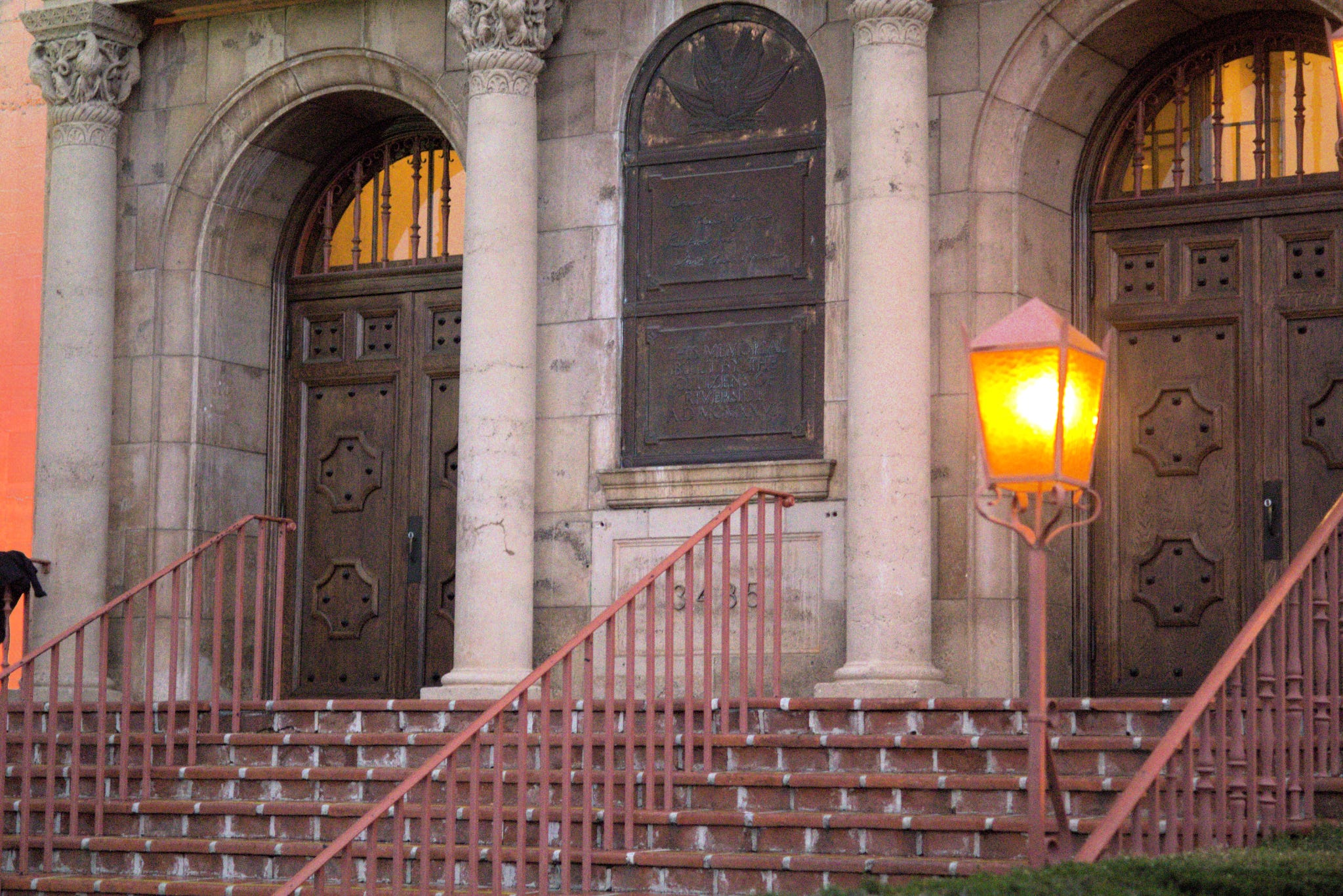
Venue staff supplied another layer of atmosphere: stories of a haunted building, appearances on local ghost walks, and footsteps reportedly heard on the third floor. Those accounts belonged to the staff, rather than anything witnessed during the show, but they suited the surroundings. Downstairs, The Detours, Flipper, and Dead Kennedys were making plenty of noise without supernatural assistance.

A suit and a microphone
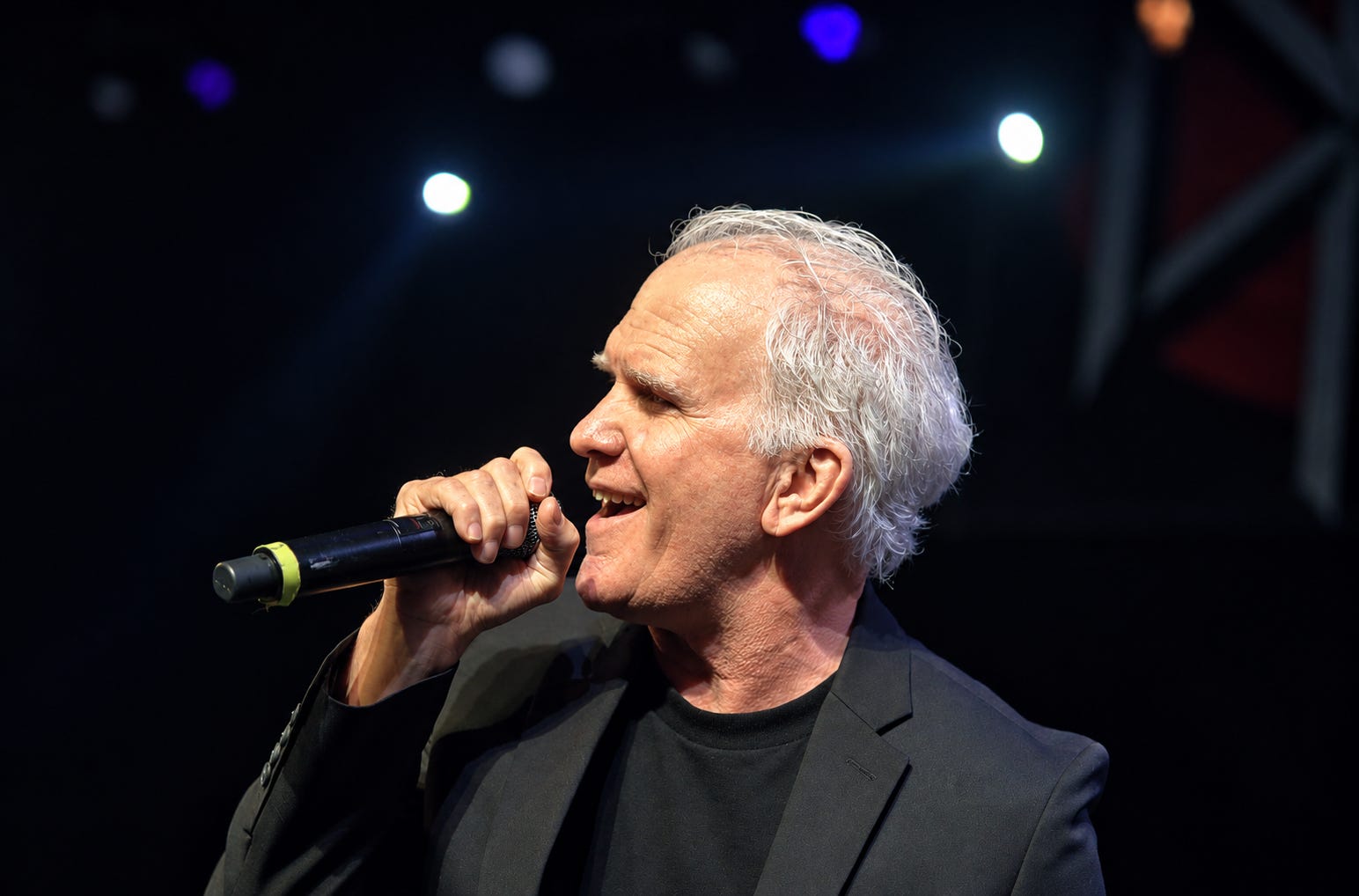
The Detours opened with a frontman who looked prepared to seek public office and behaved like someone who would make the campaign trail considerably more entertaining. His formal three-piece suit gave him a presidential silhouette. The animated crowd gestures and frequent jokes supplied a less restrained personality, making the outfit feel like part of the performance rather than an attempt at respectability.
The contrast worked because he kept using it. A suit can create distance between a performer and an audience; here, the constant engagement prevented that distance from settling in. He addressed the crowd with his whole body, giving the room something to follow between songs as well as during them. Under lighting that offered little embellishment, that kind of charisma carried its own production value.
The band’s place on the bill also had more history behind it than the opening slot might suggest. Formed in Fullerton in 1977, The Detours belong to the early development of Orange County punk, with a catalog and membership connected to several of the scene’s better-known names. Their appearance was especially appropriate on a California bill bringing together distinct branches of punk’s history.
Their set included “OC Life,” “Creatures,” “Losers,” “Obnoxious,” “Falling Out,” and “No Way,” before closing with “Amoeba.” The songs gave the singer plenty of room to maintain his conversation with the floor, while the audience established early that moshing would extend beyond the headliner. People were participating in the opening set, giving The Detours an active crowd to work with.
“Amoeba,” widely associated with the Adolescents, also carried a connection to The Detours themselves. Their own catalog lists the song in 1979, credited to Casey Royer and Rikk Agnew, and includes it on a three-song DIY single from that year. Closing with it brought a piece of that shared history into the room without requiring anyone to stop moving for a lesson.
Please consider Donating to Sponsor an article even $1 helps!

Flipper leave the grain intact
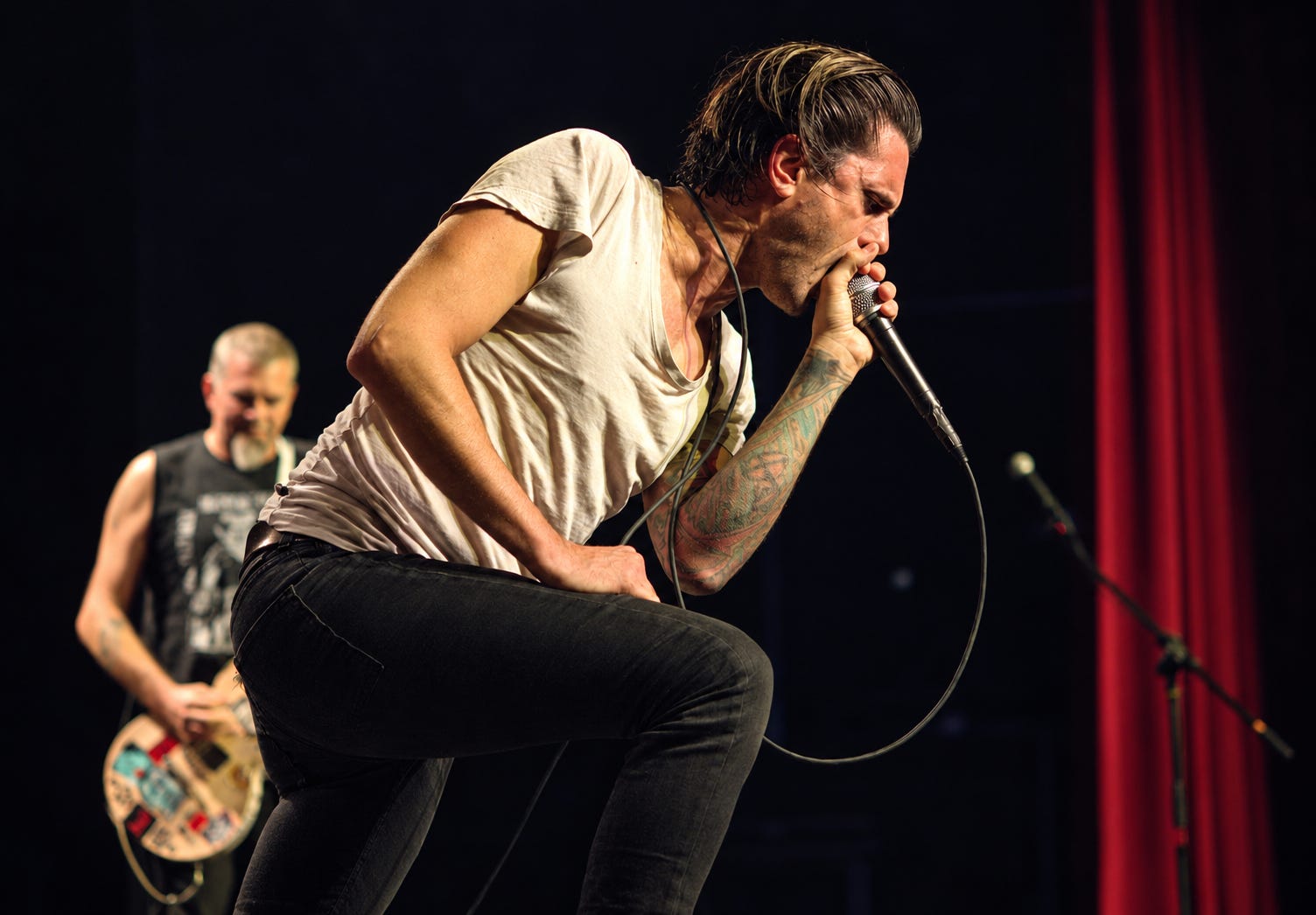
Flipper brought a rougher texture to the stage, with greaser looks and a raw, grainy sound that suited the lack of visual polish around them. Their music has long occupied its own stubborn corner of punk; the band’s 1982 debut, Generic, remains central to that identity. In Riverside, the roughness was an audible part of the experience, giving the set a different character from the performances on either side of it.
Their frontman made that character impossible to watch passively. He roamed the entire stage, physically interacting with the other musicians and repeatedly changing where the audience’s attention landed. His movement gave the performance an unsettled quality. Even with the microphone in hand, he seemed unwilling to accept the usual boundaries of a singer’s position.

At one point, he wrapped the microphone cord around his neck while performing. It was an uncomfortable image, especially within a set already driven by such intense physical engagement. The gesture drew attention because it came from the same restless behavior that defined the rest of his performance; it was part of a sustained refusal to stand still.
Flipper opened with “Ever,” followed by “Life Is Cheap,” “Shed No Tears,” and “Way of the World.” From there came “Life,” “Ha Ha Ha,” “Shine,” “Sacrifice,” and the closing “Sex Bomb.” Several of those songs reach back to Generic, tying the set to a record whose dirty, sludging approach pushed against hardcore’s preference for short, fast attacks.
The sequence gave him an extended stretch in which to hold the room through motion and presence. His interactions with the band kept the performance from becoming a singer operating in isolation at the front. Attention moved across the stage with him, while the grain of the sound kept everything feeling appropriately abrasive.
Out on the floor, the pit continued. Flipper’s place between The Detours and Dead Kennedys gave the evening a welcome change in texture, with enough physical activity on both sides of the stage to keep that shift from feeling like a pause. The performance was intensely engaging, and the audience remained willing to meet the band where it stood—or wherever its singer happened to move next.
The talent show gets loud
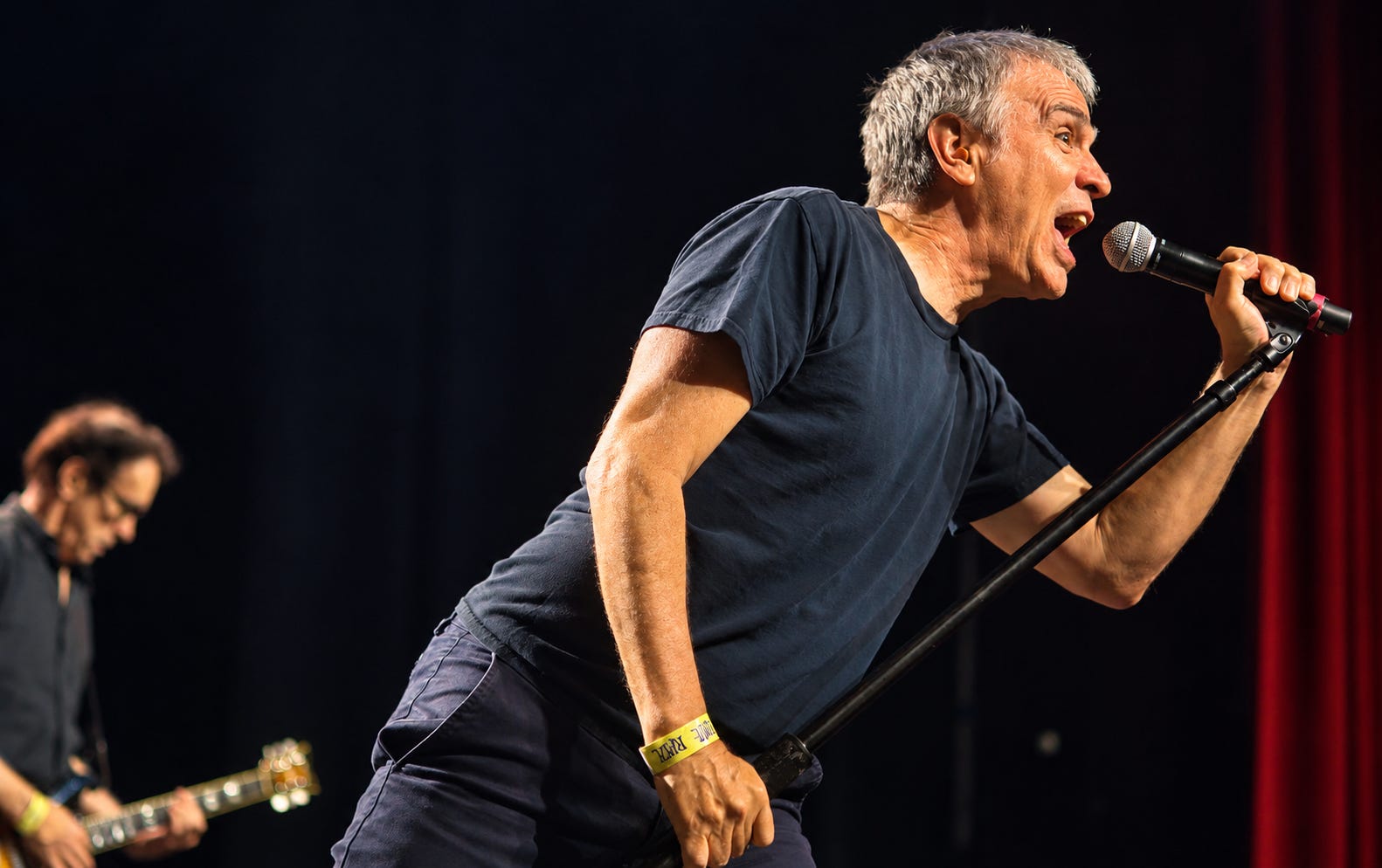
Dead Kennedys greeted the room with the sort of sarcasm that could puncture its grandeur in a sentence. A joke about playing the “Riverside Municipal High School Talent Show” made the auditorium feel briefly like an overqualified school assembly. With the curtains, surrounding seats, and straightforward lighting, the comparison had enough visual evidence behind it to land.
The joke also captured the band’s approach to crowd connection. Humor remained part of the performance, keeping the audience involved between songs while expressive faces, animated gestures, and dynamic movement carried that conversation through the music. There was little sense of a formal presentation being delivered from a safe distance. The band kept reaching outward.
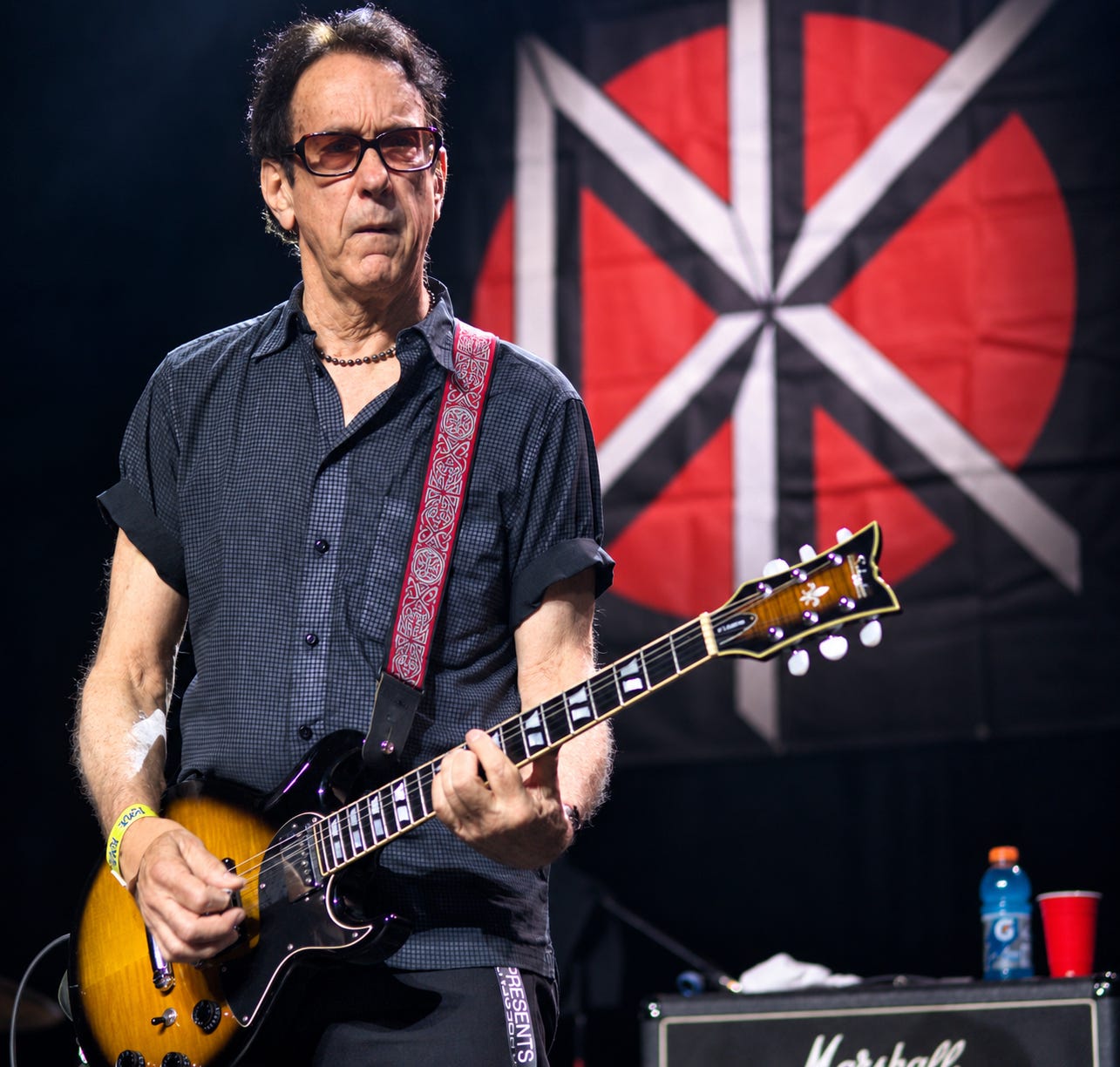
Greer, identified by the band as its vocalist since 2008, occupies a role with a long and unusually recognizable history attached to it. In Riverside, the performance could be judged on its immediate terms: how he moved, how the band connected, and how the room answered. The gestures and facial reactions supplied a visual vocabulary that remained readable even when the sound presented a problem.
The rhythm section was heavy, tight, and punchy. Bass and drums gave the set a forceful foundation, with the impact necessary to keep an already active floor moving. The lead vocals, however, sat noticeably low in the mix. For a band whose identity depends so heavily on language, sarcasm, and the bite of a delivered line, that imbalance was a meaningful weakness.
The physical performance helped sustain the connection, but the mix still deserved more clarity. There was plenty of weight coming from the stage; the voice needed more room within it. That tension became one of the defining features of the set: a band visibly engaged with its audience, backed by a rhythm section that hit hard, while a crucial part of the presentation remained less prominent than it should have been.
“Police Truck” arrived early and sent the crowd into one of its wildest peaks. The song, included on the band’s singles-and-rarities collection Give Me Convenience or Give Me Death, gave the audience an immediate point of recognition and release. The floor’s response was the clearest measure of its impact that night.
There was no physical setlist laid out onstage to preview the route ahead. “Police Truck” therefore registered as an early eruption in a performance whose next turn was not being advertised on a sheet of paper at the musicians’ feet. The band’s eclectic, casual clothing reinforced that unceremonious appearance. Everyone looked dressed for personal comfort, leaving the movement and playing to establish the stage presence.
Political remarks brought another enormous response. Criticism of Trump and other political figures, alongside comments on current social issues, drew an enthusiastic roar from the room. The reaction was immediate and collective. Whatever limitations the vocal balance imposed during the songs, the crowd made its response to those remarks unmistakable.
Dead Kennedys also encouraged the activity on the floor and directed photographers toward the pit. It was a useful acknowledgment of where part of the show was happening. The musicians were generating the sound, but the audience was giving it visible consequences: movement, collisions, recovery, and another turn through the crowd.
Statements you can wear home
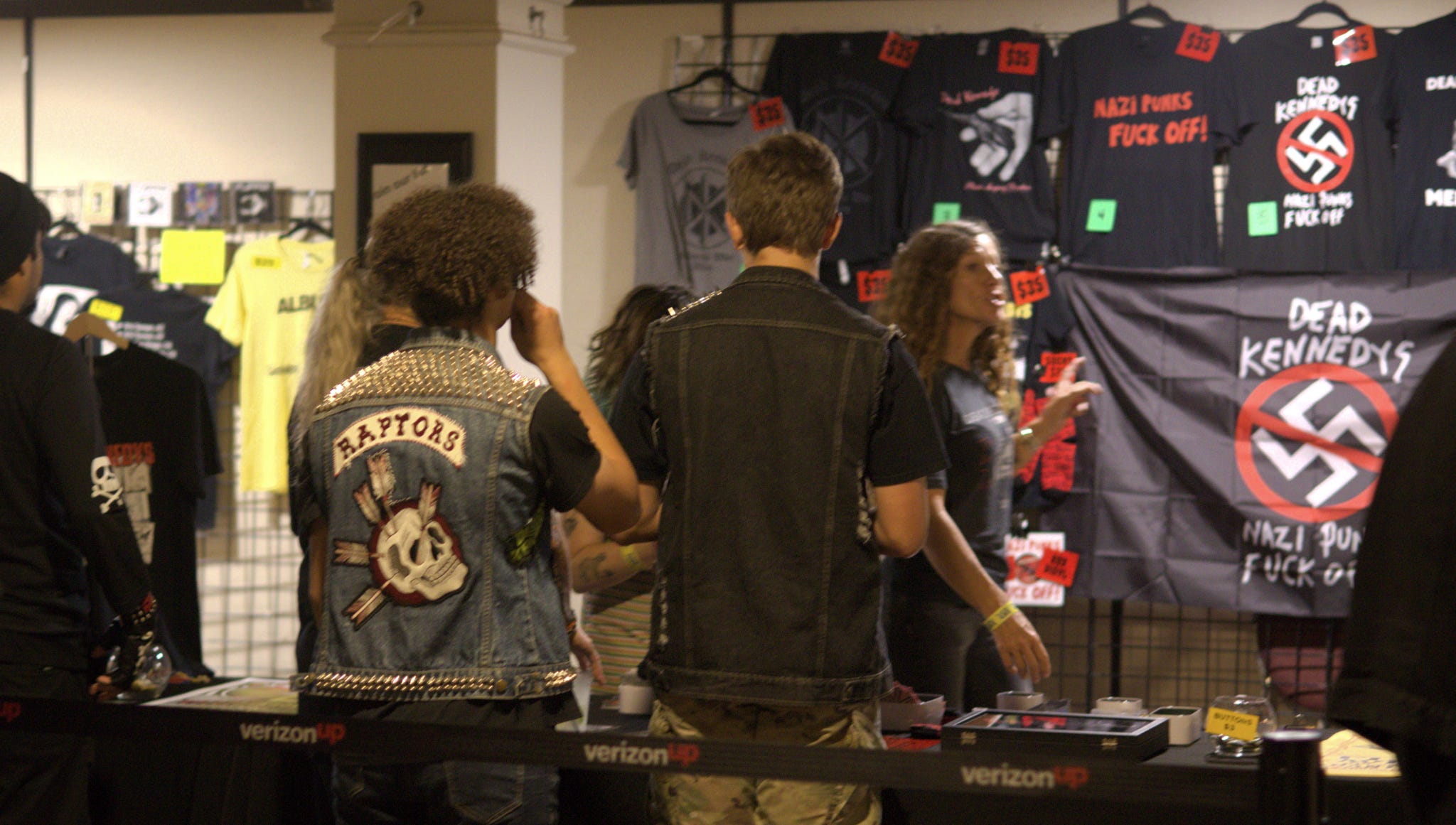
The merch area carried the same blunt visual language as the stage. Black shirts hung behind the table, with red and white graphics doing much of the talking. “Nazi Punks Fuck Off” appeared prominently, alongside the Dead Kennedys name and a crossed-out swastika. Studded denim and band patches on the people browsing made the display feel like a continuation of what the audience was already wearing.
That visual language continues through Dead Kennedys’ current official merchandise. The range includes “California Über Alles” shirts and sweatshirts, a text patch carrying the anti-Nazi declaration, and a “Melt I.C.E.” shirt. Records sit alongside those wearable statements, including colored-vinyl editions of Plastic Surgery Disasters, Frankenchrist, and Bedtime for Democracy. The current selection keeps the catalog and its confrontational imagery closely connected.
Flipper’s official range has its own immediately recognizable vocabulary: the long fish logo on black, white, and yellow shirts, Album Generic Flipper artwork, and an X Fish zip hoodie. Buttons, stickers, and an enamel pin extend the designs into smaller formats. The simple fish graphic is especially suited to that migration between shirt, pin, and sticker, retaining its character without needing an elaborate presentation.
The Detours’ store reaches back into the band’s early history. Its listed designs include a “Hang 10 in East Berlin” shirt with an early song catalog on the back and a “Credo” shirt bearing “Be Proud, Live Fast, Carry On.” Both are currently marked sold out. Even in those listings, the relationship between songs and clothing is direct: the material played onstage becomes something an audience member can carry into another room, another show, another year.
Around this crowd, the results were already visible. Shirts, patches, paint, and studs had been assembled into individual combinations, giving familiar band imagery a personal history. The merchandise display offered fresh versions of that vocabulary; the audience showed what could happen after it left the table.
The audience wears its record collection
The clothes deserved their own look. A towering arrangement of liberty spikes rose above a Dead Kennedys shirt. One jacket gathered Circle Jerks, the Exploited, and Sex Pistols references; another brought together the Aquabats, Guttermouth, and a large cartoon centerpiece. Elsewhere, the anti-Nazi message seen at the merch table appeared in a rough, handwritten treatment across the back of a sleeveless shirt.


There was no single uniform to account for all of it. The common element was the willingness to make musical allegiance visible, whether through a densely worked jacket or one phrase large enough to read across a room. Monica Estes’ photographs give those details space alongside the performers who brought everyone together.
Afterglow
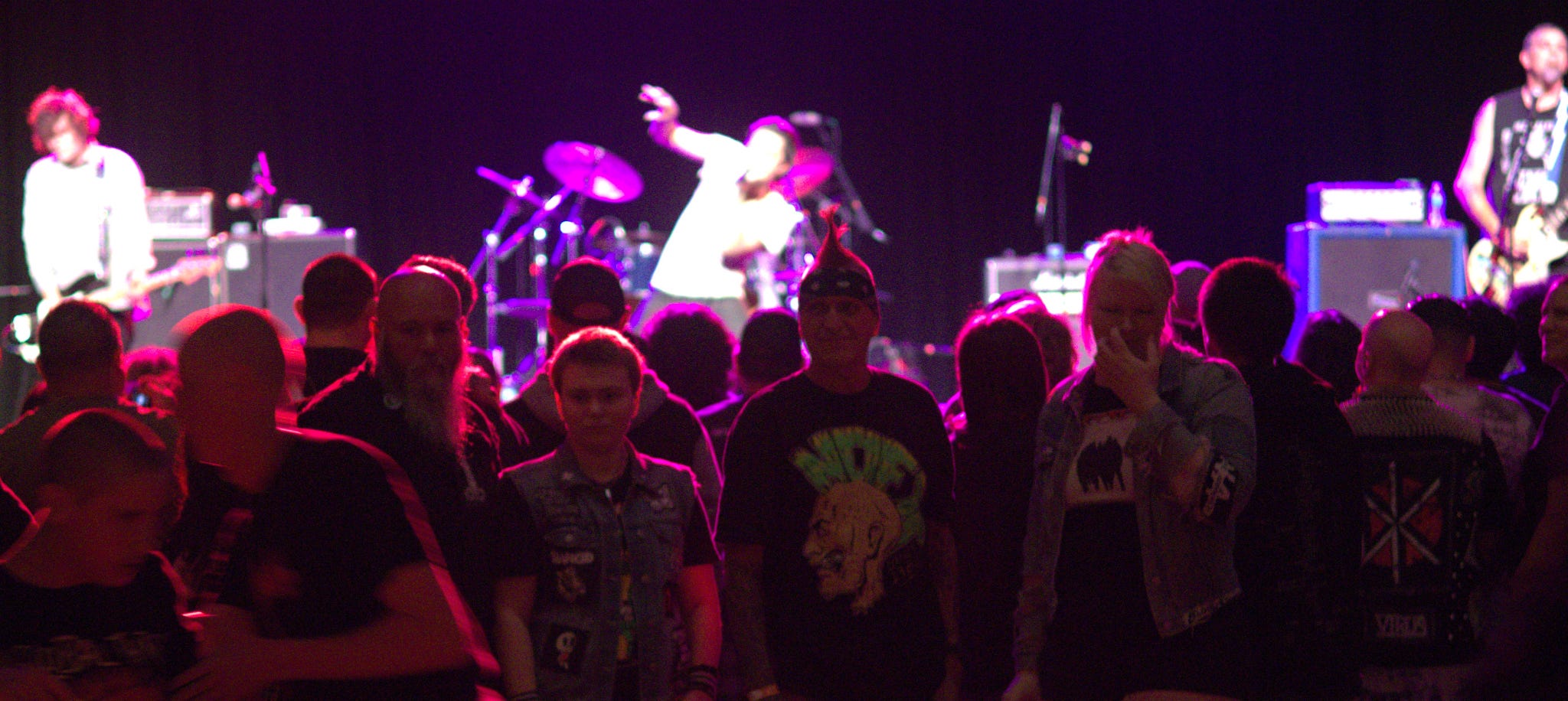
The most persuasive image of the evening remained that quick response when somebody fell. It happened within active pits across the bill, giving the night a consistency that extended beyond differences in sound or stagecraft. The Detours could work the room through jokes and gestures, Flipper could pull attention toward another tense physical exchange, and Dead Kennedys could push the floor toward another eruption. Nearby people still paid attention to one another.
That care gave the disorder its balance. Under the auditorium’s restrained lights, with velvet curtains framing the stage and the audience mostly swallowed by darkness, the show’s character came from people doing things: provoking, laughing, playing, shoving, reaching down.
The reported footsteps upstairs could remain a mystery. On the main floor, there was no mystery about who kept the room moving—or who helped someone get back into it.
Please consider Donating to Sponsor an article even $1 helps!
