



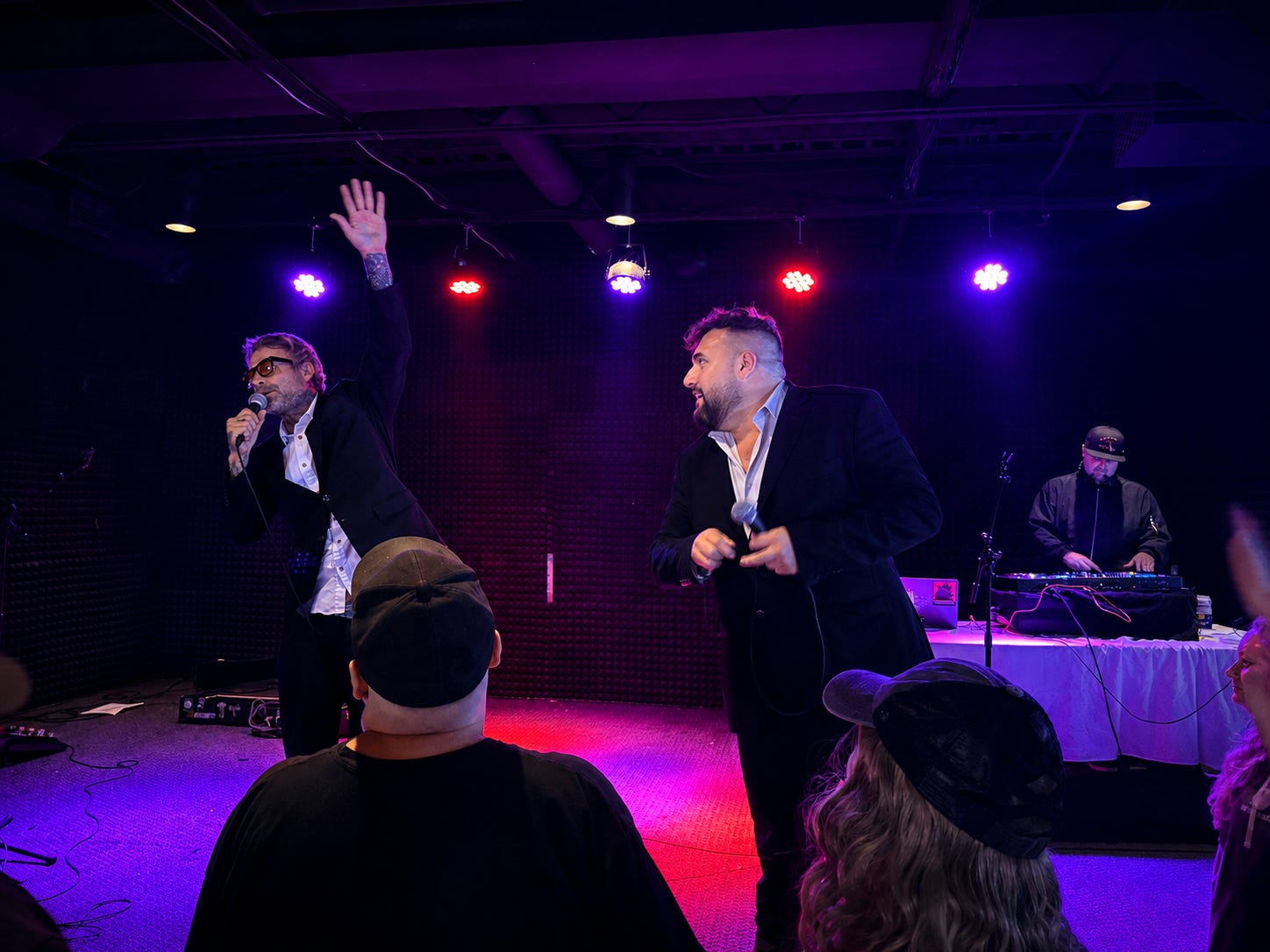
There are some bands you expect to find in Sioux Falls. Codefendants is not necessarily one of them.
South Dakota does not often fall directly into the path of a band colliding punk, underground hip-hop, acoustic songwriting and sharp social commentary into something its members have called “Crime Wave.” Yet there they were at The Den, setting up in the same room where Sioux Falls regulars drink, talk over amplifiers and recognize half the people standing near the stage.
Nightshield opened the night before Aliens Do Exist swung the room toward the pop-punk side of the equation. The order created its own crooked little history lesson. Sioux Falls hip-hop came first. Familiar punk songs followed. Then Codefendants stepped into the overlap and began tearing down whatever boundaries remained.


Sioux Falls makes the introduction
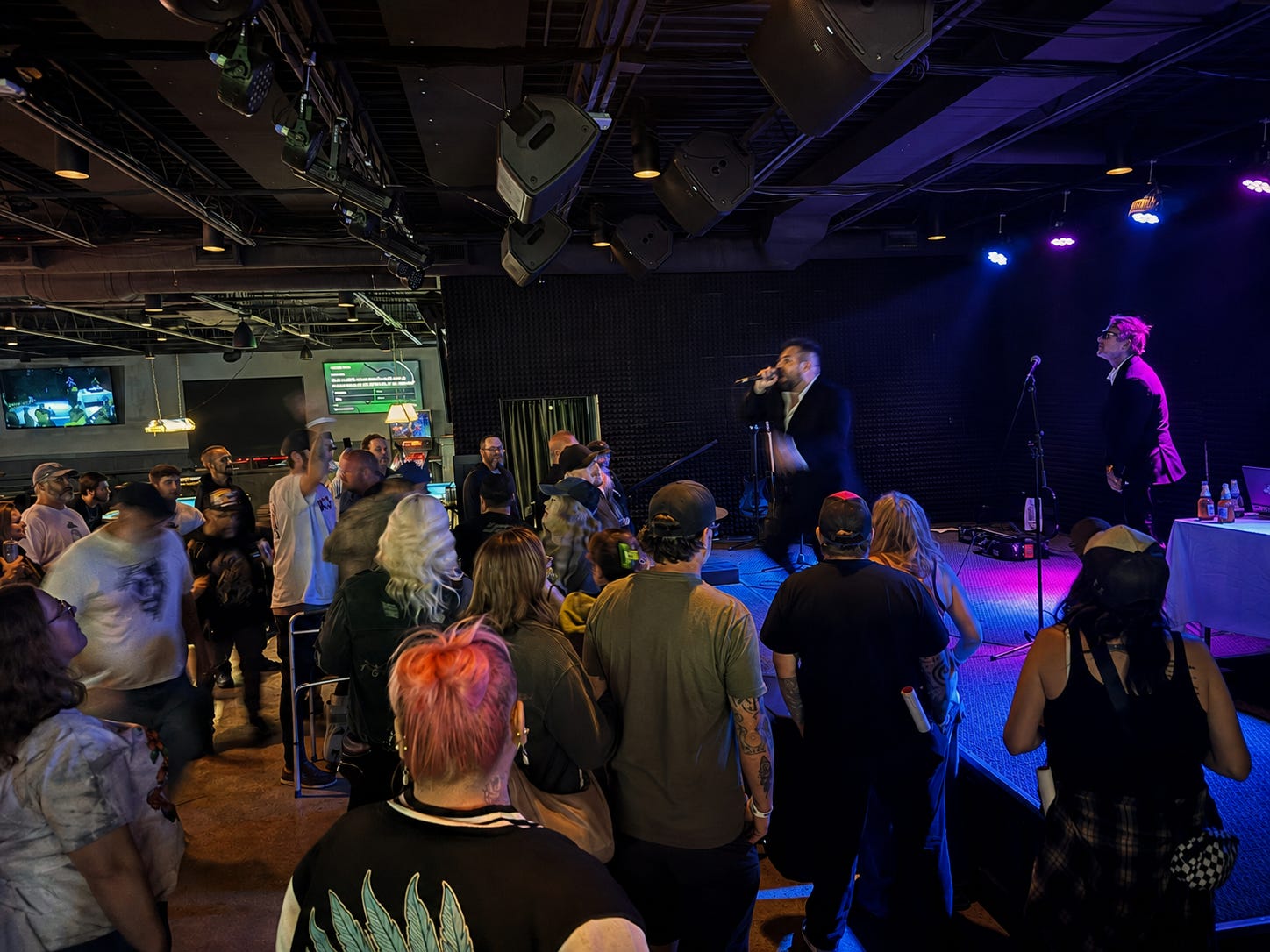
Calling Nightshield a local opener would flatten the history standing at the microphone.
He has been part of South Dakota hip-hop since before streaming platforms made regional scenes searchable from anywhere. A three-time Native American Music Award winner, Nightshield has spent decades working inside Native hip-hop as a performer, promoter, collaborator and builder. His ninth album, “Handsome Devil”, arrived in 2025, extending a catalog that reaches back through several different eras of independent music distribution.
That history gave his place on the bill more weight than a routine opening slot. Codefendants came to Sioux Falls carrying a hybrid of punk and hip-hop, but the city did not need outsiders to introduce that collision. Nightshield had already spent years pushing South Dakota rap beyond whatever narrow expectations outsiders placed upon it. His appearance gave the show a hometown foundation.
Aliens Do Exist followed by moving the crowd toward a different strain of local memory. The Sioux Falls band has built its identity around Blink-182 and a wider collection of 1990s and early-2000s alternative rock, pop-punk and emo. Those songs arrive with their own luggage. Burned CDs. High-school parking lots. Questionable hair decisions. Relationships that probably survived three months longer than they should have because somebody put the right song on a mix.
The band’s usefulness goes beyond imitation. Aliens Do Exist can operate as a tribute act, a bar band, a live-karaoke engine or an opening act capable of loosening a room before a touring punk group takes over. Their set at The Den gave the audience something familiar to grab onto.
Ceschi Ramos had traveled from Germany before a member of Aliens Do Exist picked him up from the airport and brought him to the venue. An international arrival had been reduced to one of the oldest rituals in independent music. Somebody lands somewhere unfamiliar. A local musician receives the message. A ride appears.
While Aliens Do Exist was playing, Jamie led us through the noise to meet Ceschi. Calling it a conversation would be generous. The music was too loud for introductions to survive beyond a few words, so we exchanged soft smiles, handshakes and glances before everyone returned to their original locations.
Sometimes that is all a show allows. You meet someone without really meeting them, then hope the music fills in whatever the room swallowed.
A few minutes later, Codefendants would begin saying plenty.
Please consider Donating to Sponsor an article even $1 helps!

Everybody can eat
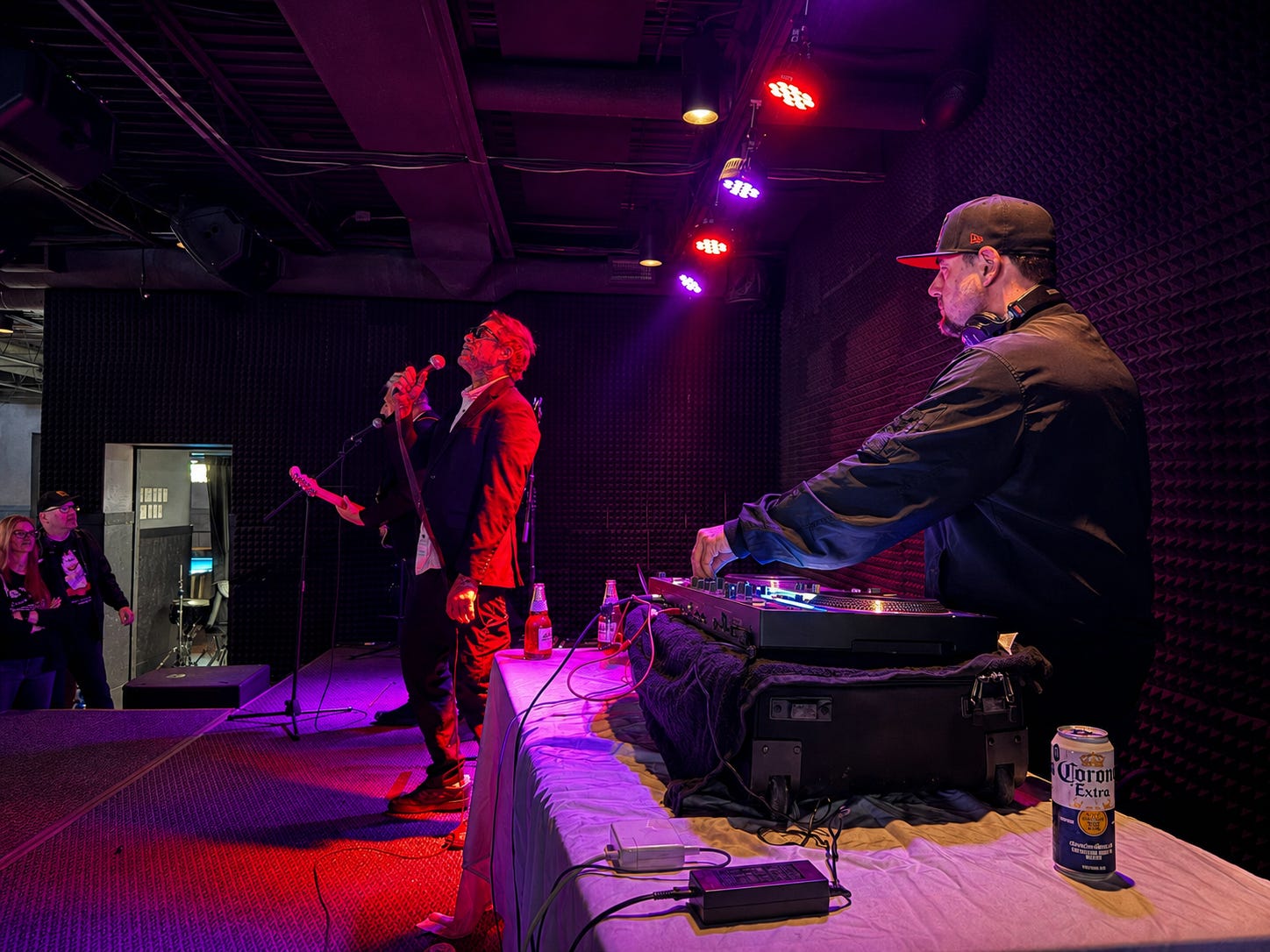
Codefendants repeatedly returned to an idea that has become difficult to discuss without people reaching for political labels before they have listened. There is enough for everyone to eat. The problem is not always scarcity. Sometimes the problem is the people hoarding the meal.
The band did not dress the point in academic language. They spoke about it plainly, with the understanding that most people in a small music venue already know what it is like to watch somebody else collect more than they could ever use while others are told to accept less.
Ceschi comes from a long history of underground hip-hop, experimental songwriting and do-it-yourself releases. He co-founded Fake Four Inc., an independent label created to release music that rarely fits comfortably into one section of a record store. King brings the torn-throat urgency of punk into the same space.
Clean vocals and gruff vocals are often treated as opposites, as though one provides beauty while the other supplies aggression. Ceschi and King make that separation seem useless. The clearer passages can carry the ugliest truths. The rougher voice can be the one offering reassurance.
“Lifers” refuses the easy version
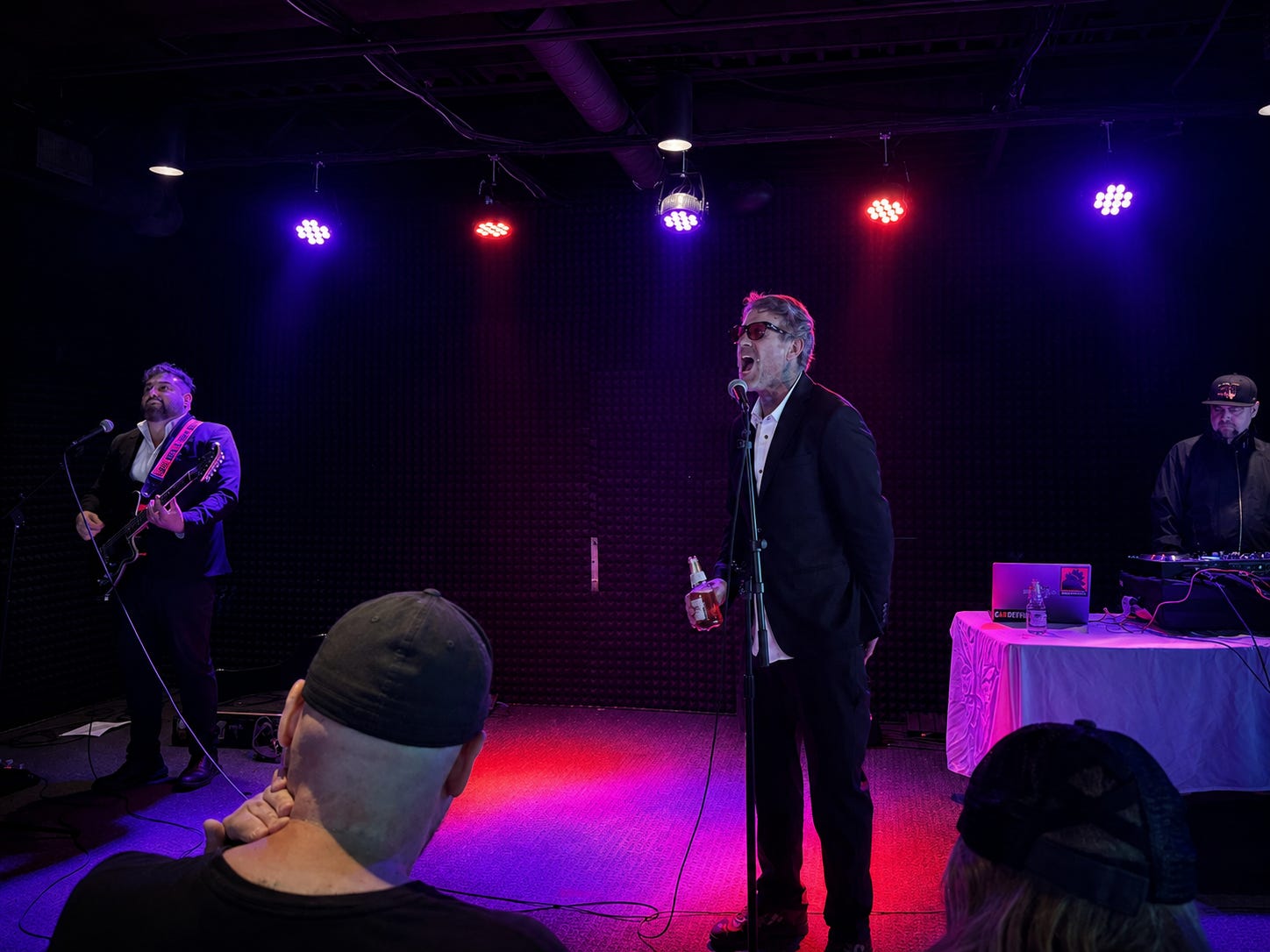
The acoustic version of “Lifers” became one of the night’s defining moments. Slowing the song changed the way its words reached the room. Without a dense arrangement pushing everything forward, the verses had nowhere to hide. Each line arrived with more space around it, leaving the crowd to sit inside its implications.
The title works in more than one direction. A lifer can be somebody who has dedicated everything to a calling. It can also describe somebody serving a sentence with no expectation of release.
Codefendants leaves those meanings pressed together. Commitment and confinement become difficult to separate. You stay because this is who you are. You stay because you no longer know where else you could go.
The song looks at self-destruction without turning it into romantic decoration. It recognizes the habits people repeat even when they understand where those habits lead. It questions the systems profiting from illness, fear and dependence, then turns the accusation back inward.
During the acoustic arrangement, that refusal became harder to ignore. The slower pace made the song less of an attack and more of an admission. “We’re in this for life” could sound like a pledge one moment, then a diagnosis the next.
As the song continued, Ceschi’s guitar strap began refusing to remain attached. It slipped loose with the stubborn timing of an object determined to prove that punk rock should never become too orderly. He secured it, continued playing and eventually had to contend with it again.
Nothing about the performance depended on pretending the machinery was flawless. Codefendants allowed the loose strap, the room noise and the awkward pauses to remain part of the night. The song did not lose its meaning because the equipment misbehaved.
Brutal enough to be beautiful
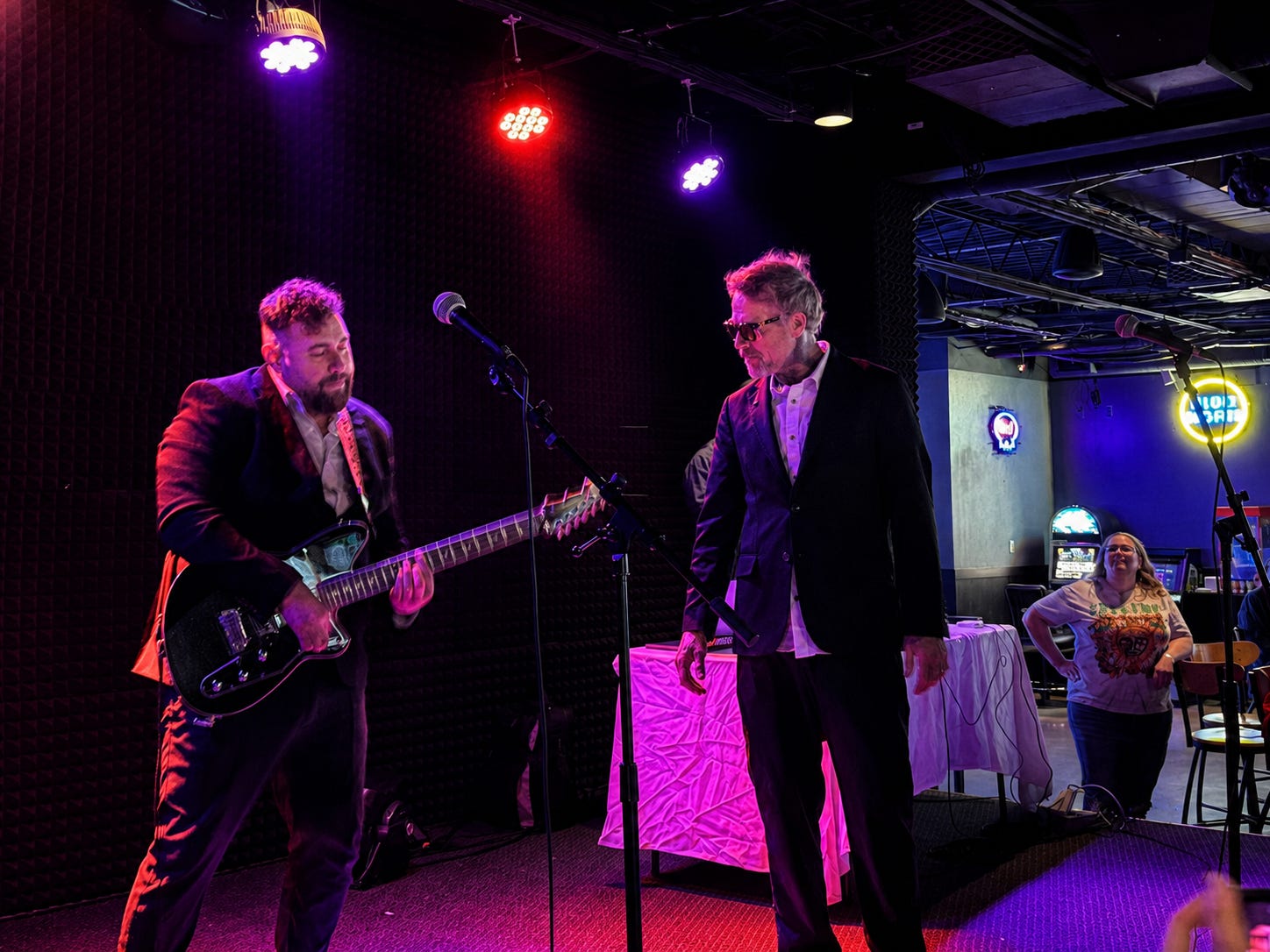
“Brutiful” brought more movement from the crowd and one of the strongest examples of how well Ceschi and King’s voices fit together.
Beauty and brutality are not separate conditions in the song. They coexist in the same memories, relationships and people. Its lyrics reject the comfortable fiction that heroes remain pure simply because someone needs them to be.
King’s gruff delivery gave the words physical weight. Ceschi’s cleaner passages exposed their details. Together, they avoided the usual trap of turning pain into a competition over who could sound the most wounded.
That same chemistry made the banter feel so natural. The conversation between them did not stop when the songs started. It simply changed form. Melodies interrupted verses. Shouted phrases answered quieter ones. Even when their vocal textures pulled in opposite directions, they appeared to be arguing toward the same truth.
Afterglow
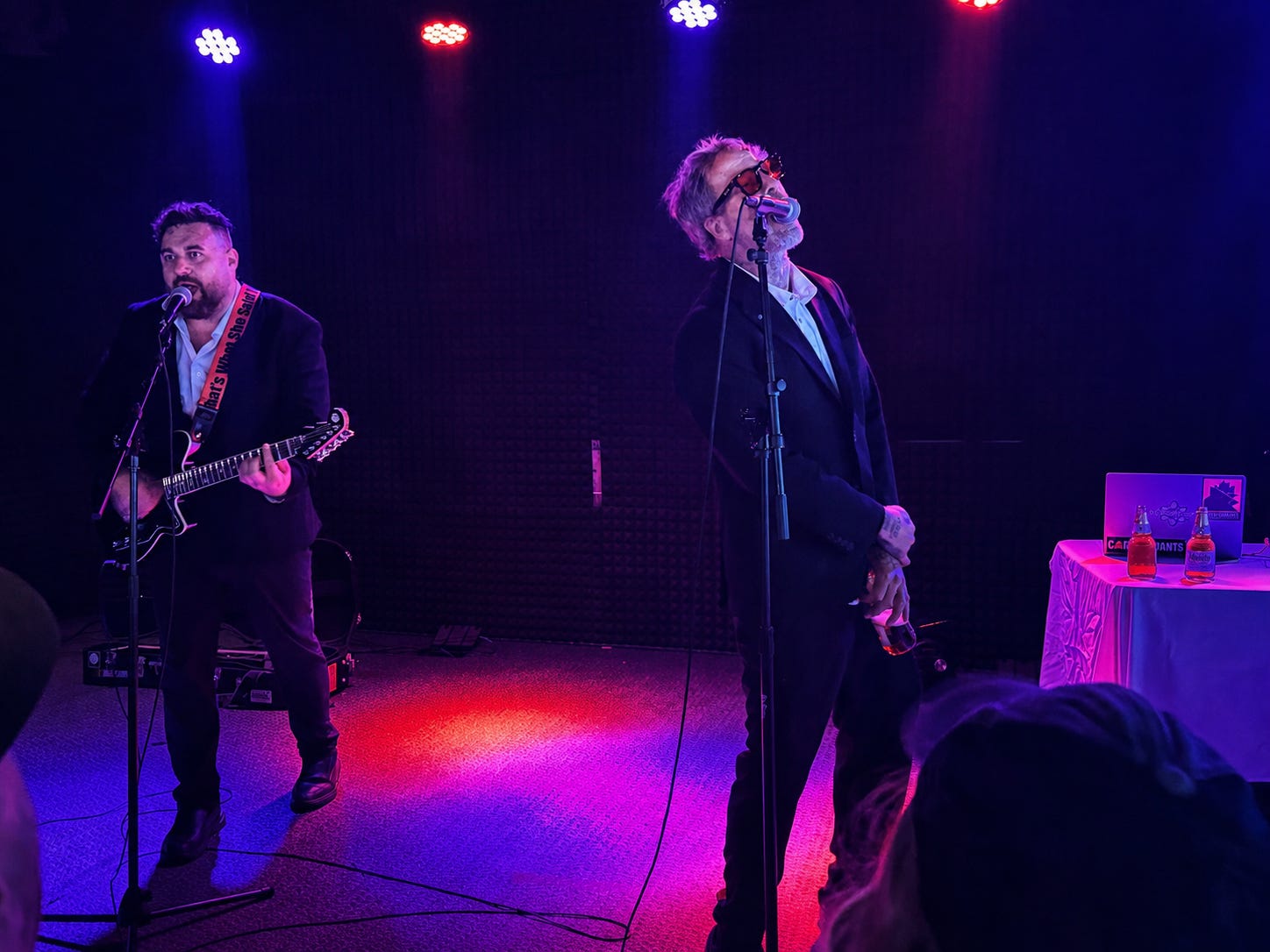
Near the end, “Coda-Fendants” returned the set to its simplest and most difficult idea.
“We are all we have.”
The line is not comforting in the usual way. It removes the fantasy that some distant force will eventually arrive to straighten everything out. Nobody is necessarily coming to rescue us from addiction, grief, inequality, loneliness or our own talent for repeating the worst parts of our history.
Codefendants in Sioux Falls had seemed unlikely when the night began. By the time the final words settled, the pairing no longer felt unlikely.
It felt like three different corners of the underground recognizing each other.
It felt overdue.
Please consider Donating to Sponsor an article even $1 helps!
