


On one of those quintessential Sioux Falls summer mornings, McKennan Park was alive with the kind of energy that keeps residents returning year after year. Children played beneath towering trees, families spread blankets across the grass, and a gentle breeze carried the scent of blooming flowers through one of the city’s most beloved gathering spaces.
It was the perfect setting for a recent Sioux Falls herbal tea workshop hosted by the local chapter of Herbalists Without Borders. Gathered beneath the summer canopy, participants came together to learn about herbs, tea making, foraging, and practical wellness practices rooted in both tradition and everyday accessibility.

A Personal Connection to Tea and Herbal Wellness
Herbs and tea have been a part of my life for years.
Long before attending this workshop, I worked at Teavana in Sioux Falls, helping customers discover teas and herbal blends from around the world. Like many tea enthusiasts across the city, I felt a genuine sense of loss when the Sioux Falls location closed its doors in 2018.
My interest in herbal wellness did not end there. In the years that followed, I had the opportunity to work alongside a local herbalist, gaining a deeper appreciation for the traditions, practical applications, and history surrounding medicinal plants.
That journey shaped the way I approached this event. I expected to learn more about herbs. What I did not expect was to be reminded how powerful community can be when people gather to share knowledge.

Please consider Donating to Sponsor an article even $1 helps!


Learning Beneath the Trees
Surrounded by nature, conversations naturally turned toward the plants growing around us and the often-overlooked knowledge hiding in plain sight.
The workshop focused on the art and science of herbal tea making. Participants explored a variety of herbs, discussed their properties, and learned ways they can be incorporated into everyday life. Yet what unfolded throughout the morning became much more than a lesson in brewing tea.
The class was led by Ashton Blaha and Tera Regnier, coordinators of the Sioux Falls chapter of Herbalists Without Borders. Together, they brought far more than instruction to the gathering. They brought a clear sense of purpose and a genuine passion for community education.

A Table Full of Color, Texture, and Possibility
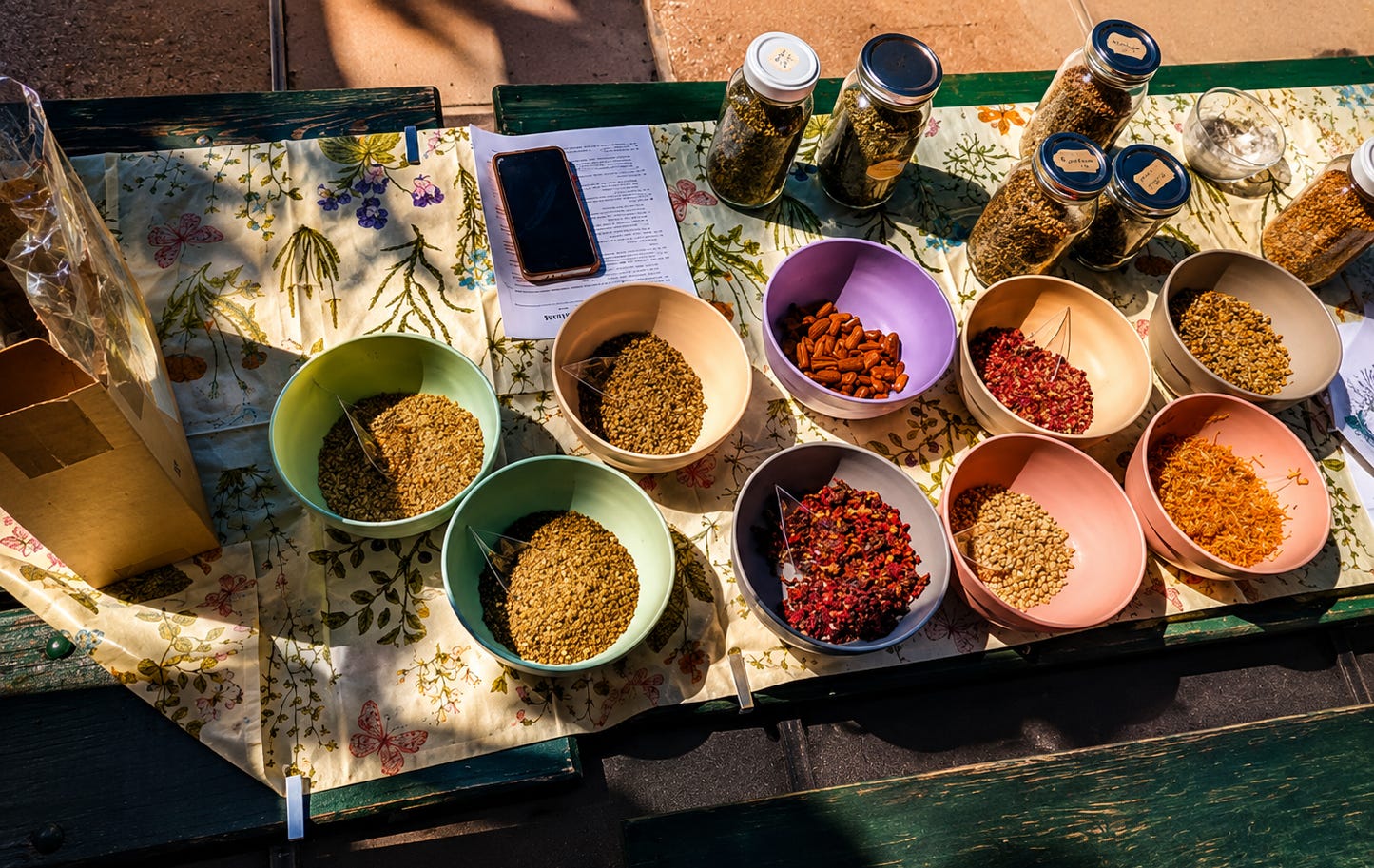
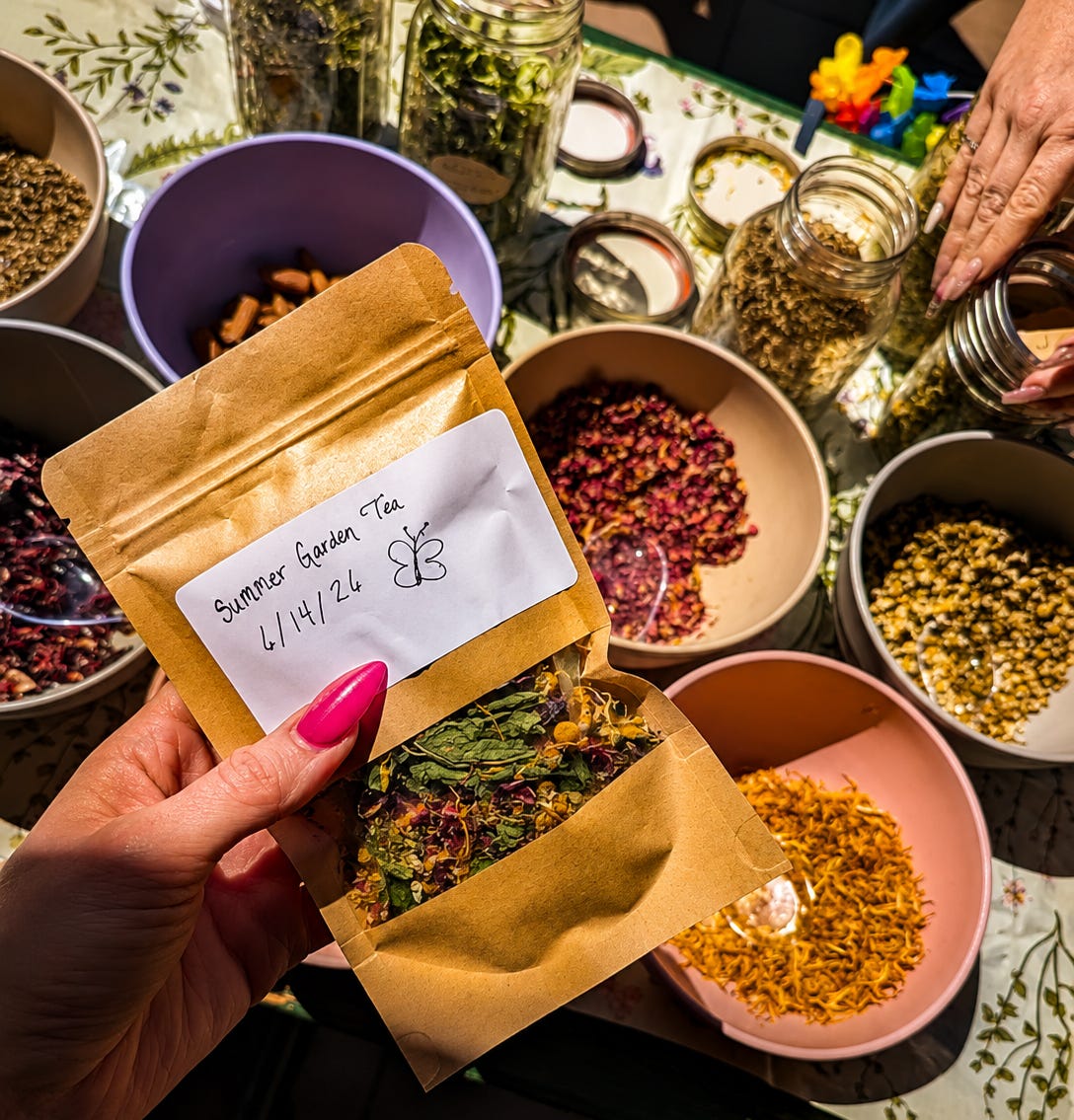
At the center of the workshop was a long table covered with bowls of dried herbs, flowers, seeds, and roots, each one offering its own color, fragrance, and texture. There were bright orange calendula petals, deep red hibiscus, pale chamomile blossoms, green leafy herbs, and jars filled with plant material waiting to become something personal.
The setup invited participation. This was not a lecture where attendees simply listened and left. Participants were encouraged to look closely, smell the herbs, ask questions, and begin thinking about how each ingredient might contribute to a blend. Some herbs offered floral notes. Others brought earthiness, brightness, bitterness, or body. Together, they showed how tea-making can be both practical and creative.
By the end of the workshop, that hands-on approach came together in a small take-home blend labeled “Summer Garden Tea.” It was a fitting reminder of the morning itself: local, personal, imperfect in the best human way, and rooted in the shared act of making something with your own hands.

The Mission Behind the Workshop
According to the mission of the local Herbalists Without Borders chapter, the organization is dedicated to accessible herbal medicine through community care, land-based education, mutual aid, medicinal plant stewardship, gardens, seed saving, and equitable access to plant-based wellness.
That mission was evident throughout the workshop.
Ashton and Tera were not simply teaching participants how to combine herbs into a flavorful cup of tea. They were helping people recognize that wellness can begin much closer to home than many realize. Whether through a backyard garden, a community food forest, or the plants already growing around us, the message was clear: knowledge and empowerment often start locally.
What stood out most was how naturally their partnership worked. Each brought unique experiences and perspectives, yet the presentation flowed seamlessly. Beginners felt comfortable asking questions, experienced learners were able to deepen their understanding, and everyone contributed to an atmosphere that encouraged curiosity rather than intimidation.

More Than a Cup of Tea
As the morning unfolded, discussions expanded beyond tea preparation.
Participants explored topics ranging from foraging and food forests to home gardening and preventative wellness practices. The conversation repeatedly returned to a simple but profound idea: many useful plants are already present in our communities.
Some of the herbs discussed were not rare ingredients imported from distant regions. They were plants that can often be found growing in local yards, gardens, parks, and natural spaces, frequently overlooked by the people who pass them every day.
That perspective offers something valuable in today’s fast-moving world. It encourages people to slow down, observe their surroundings, and develop a deeper relationship with the landscapes they inhabit.

Reclaiming Traditional Knowledge
One theme surfaced repeatedly throughout the class.
Knowledge does not always have to originate from a bottle, a package, or a prescription label. Sometimes it begins with understanding the resources already available within our communities and ecosystems.
That idea is not about rejecting modern medicine. Rather, it is about becoming more informed and more engaged with the many ways people can support their overall well-being through education, nutrition, gardening, and mindful daily practices.
The workshop emphasized empowerment through learning, giving participants tools to make informed choices while fostering greater awareness of the natural world around them.

Community as the Real Ingredient
Perhaps the most encouraging aspect of the event was not the tea itself.
It was the people.
Attendees were not simply sitting through a lecture. They were building relationships, exchanging stories, asking questions, and reconnecting with traditions that have been passed down through generations.
In an era when so much information is consumed through screens, there is something remarkably powerful about gathering around a table, touching herbs with your hands, smelling fresh leaves, and learning directly from people who care deeply about their craft.

Strengthening the Fabric of Sioux Falls
As Sioux Falls continues to grow, opportunities like this play an important role in strengthening the community.
Organizations, educators, and volunteers who create spaces for learning help cultivate curiosity, self-education, and a stronger connection to the place we call home. They encourage residents to see familiar landscapes through new eyes and remind us that community is built through shared experiences.
For me, the workshop felt less like the conclusion of a class and more like the beginning of a new chapter. I look forward to attending future events and finding opportunities to continue learning from the individuals helping expand awareness around herbalism, foraging, food forests, and community wellness.

To learn more about the Sioux Falls chapter of Herbalists Without Borders, visit their official chapter page.
For more stories highlighting the people, organizations, and events shaping our region, visit Intellectual Dissatisfaction

Please consider Donating to Sponsor an article even $1 helps!

