


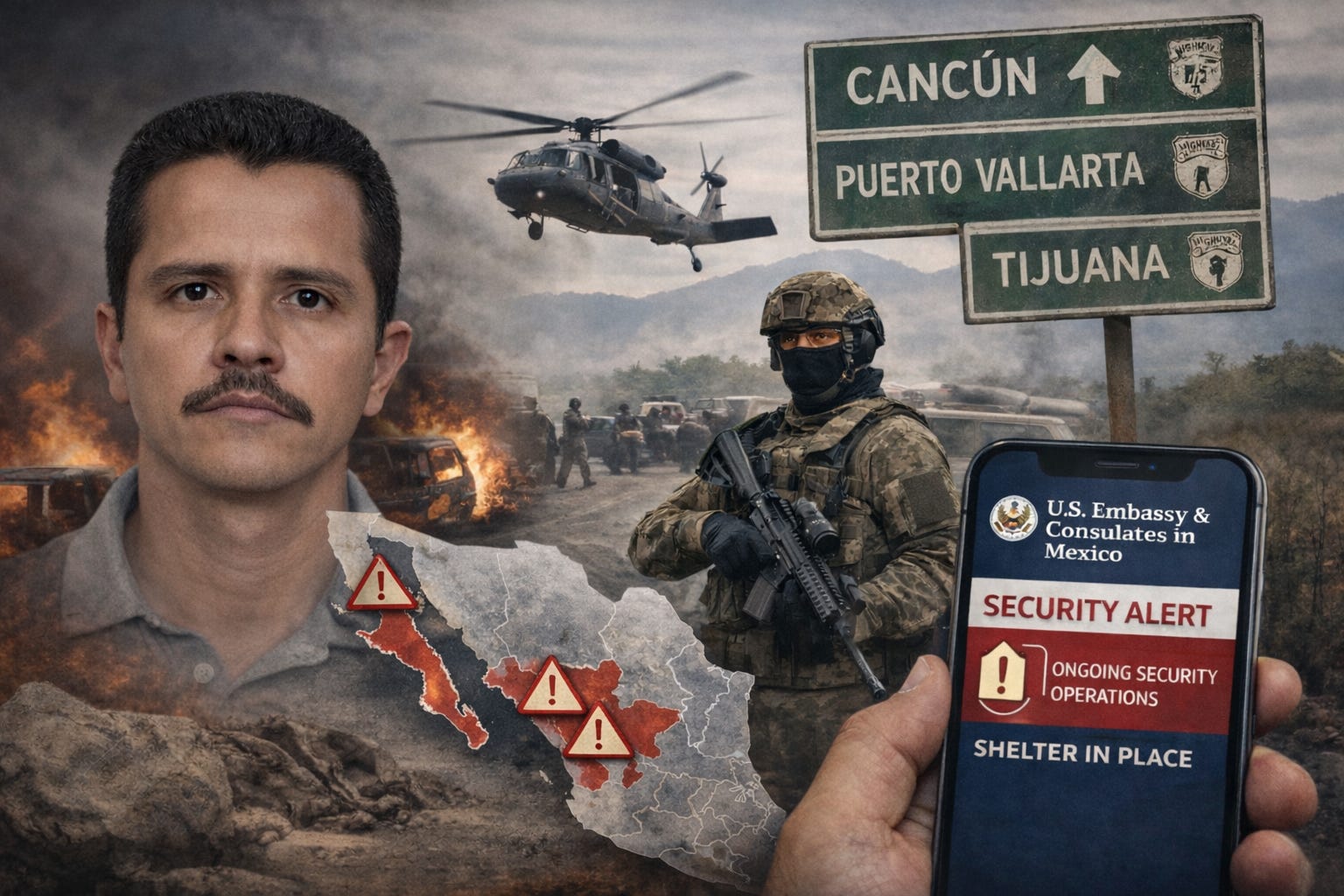
“El Mencho” was the nickname of Nemesio Rubén Oseguera Cervantes, a Mexican cartel boss best known as the founder and top leader of the Cártel Jalisco Nueva Generación (CJNG), one of Mexico’s most powerful and violent criminal organizations.
He was killed in an attempted capture by the Mexican Army, which has led to widespread retaliatory violence — largely “narco-blockades” and arson. Reporting indicates over 200 blockades nationwide in Mexico as of February 22nd, 2026, and numerous deaths of security personnel and cartel members.

What U.S. warnings actually tell us about the operation that reportedly killed El Mencho
On Feb 22, 2026, the language coming out of the U.S. Mission in Mexico was a straightforward, “Shelter in place.”
As Mexico’s security forces reportedly killed Nemesio Rubén Oseguera Cervantes, known as El Mencho, during an operation in Jalisco, the U.S. alerts spread outward across a surprising geography. The map was the story. Not because it proves who pulled the trigger, but because it shows how quickly officials believed instability could infect civilians areas.
What follows is a timeline tied to what can be verified, separated from what is still rumor dressed up as certainty.

What we can verify and what we cannot
The most important sourcing detail is also the most annoying one. The official U.S. Mission Mexico security alert page existed and was referenced widely, but the page itself was intermittently inaccessible during retrieval in the source gathering used for this write-up. That means the precise posted-at timestamps cannot be quoted directly here from the primary page.
What we can verify with high confidence is the scope and sequence of the warnings because multiple reputable outlets summarized the alert language and listed the affected locations, including the reporting that described a morning alert followed by an expanded afternoon update in the same day.
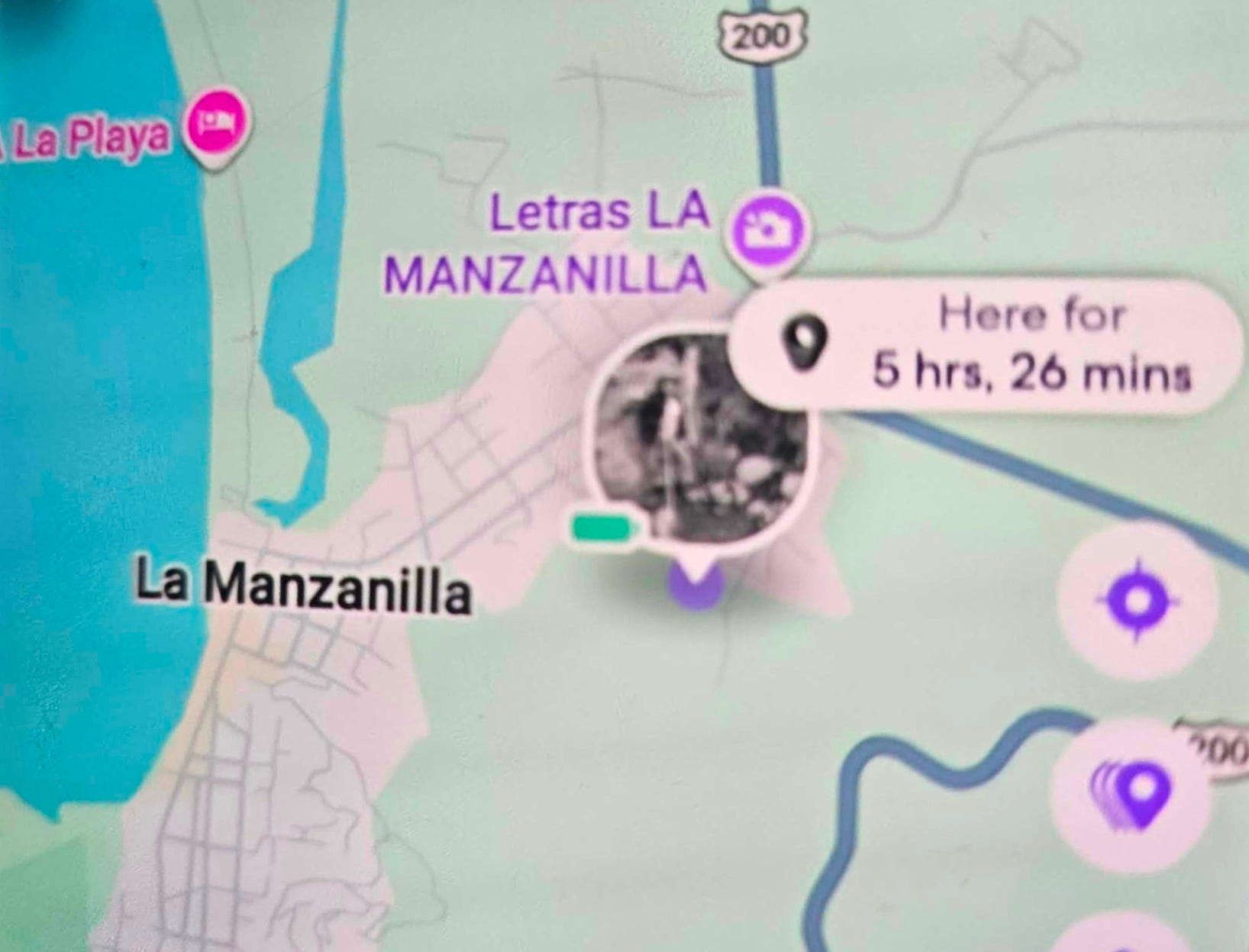
After speaking with someone I know personally — my Electric Forest camping neighbor from 2019 — I was told their mother-in-law is currently in Mexico. They said that roughly an hour heading out from Puerto Vallarta, in the town of La Manzanilla, roads are closed. She was told by a tour guide to stay in the hotel and not come out.
Timeline of the shelter in place alerts on Feb 22, 2026
Mexico uses local time, and the reporting generally describes the alerts as morning and afternoon rather than giving minute-by-minute timestamps.
A U.S. Embassy security alert summarized by the San Francisco Chronicle directed U.S. citizens in multiple states to shelter in place due to ongoing security operations and related road blockages and criminal activity.
Locations named in the morning scope, as described in that reporting, include: Puerto Vallarta, Guadalajara, Jalisco, Tamaulipas, Guerrero, Nuevo León, and Parts of Michoacán as of the afternoon of Feb 22.
The same day, the alert was expanded, according to the San Francisco Chronicle’s reporting on the afternoon update. The expansion matters because it reaches beyond the immediate footprint of Jalisco and into major tourist corridors.
Locations added or emphasized in the afternoon expansion include: Baja California, Quintana Roo, including Cancún, Cozumel, Playa del Carmen, and Tulum, Areas of Guanajuato, and Areas of Oaxaca.
U.S. government personnel guidance the same day reporting also notes that U.S. government personnel in impacted zones such as Tijuana were directed to shelter in place, a sign the posture wasn’t only about tourists but also about operational risk to U.S. staff. The clearest single summary of that posture in the source set comes from the same San Francisco Chronicle report.
How the alerts correlate with the reported Jalisco operation
The central event was the reported death of El Mencho during an operation in Tapalpa, Jalisco, described as a capture attempt that ended in lethal force. The Associated Press report on the operation and the death is one of the most straightforward, high-credibility accounts in the available reporting.
What happened next is the part that makes the U.S. alert map make sense. Multiple outlets describe a wave of retaliatory violence that included road blockages and vehicles set on fire, the sort of disruption that can leap from one state to another like sparks in dry grass. The Financial Times report on the nationwide violence after the reported killing captures that wider shockwave, and the Associated Press coverage aligns with the same pattern.
This is the core correlation
a high-profile strike in Jalisco, followed by multi-state instability consistent with the embassy’s stated reasons for warning people to shelter in place.
What the geographic spread suggests and what it does not
This is where people get sloppy, because humans love a thriller.
A shelter in place alert is not a fingerprint on a weapon. It is a risk bulletin. When the U.S. expands warnings into places like Quintana Roo, it does not automatically mean the triggering event happened there. It means officials believe conditions could deteriorate there, and that Americans there are exposed in a way that’s worth a public instruction.
The expansion to areas such as Cancún and Tulum can be read as a conservative protective move toward high-density U.S. traveler hubs, especially when uncertainty is high and rumors travel faster than confirmation. The People summary of the shelter in place warnings also frames the alerts through the lens of traveler safety rather than operational attribution.
Extent of U.S. involvement
The extent of U.S. involvement, per credible sources, suggests it amounted to intelligence support and coordination, not direct kinetic action.
The Associated Press reporting describes the operation as supported by U.S. intelligence, which is consistent with how bilateral security cooperation often appears in public record.
The Guardian’s account of the reported killing and its framing also describes U.S. involvement in terms of intelligence support.
So far, there is no credible information showing direct U.S. military action on Mexican soil.
None of the high-credibility sources referenced here substantiate claims that U.S. troops carried out the raid, that U.S. aircraft conducted a strike, or that the operation was executed as a direct U.S. military action.
If you see those claims circulating, treat them the way you treat a fireworks stand selling gourmet vegetables.
Why this day matters beyond the news cycle
Cartels do not evaporate when leaders die. They mutate, they fracture, they retaliate, and they recruit new myths. The CJNG has built a reputation for rapid, spectacular disruption, and the pattern of roadblocks and arson described in major reporting fits that institutional muscle memory.
The U.S. alerts matter because they show how quickly officials believed the ripple could spread. They also show something else, quietly. The border is not a line. It’s a shared weather system. When one pressure front slams into Jalisco, the barometer moves in Cancún, in Tijuana, in the routines of ordinary people trying to get home before dark.
That’s what the warnings tell us. Not who fired. Not who planned. Not what the internet wants to believe.
They tell us where the risk was expected to run.

