


July has been busy around here, and not only because of the music. Life has been moving fast enough on its own. Add a couple of events at my favorite place to hang, a short trip to Nashville and the usual miles spent watching the road disappear beneath the car, and another weekend was already underway.
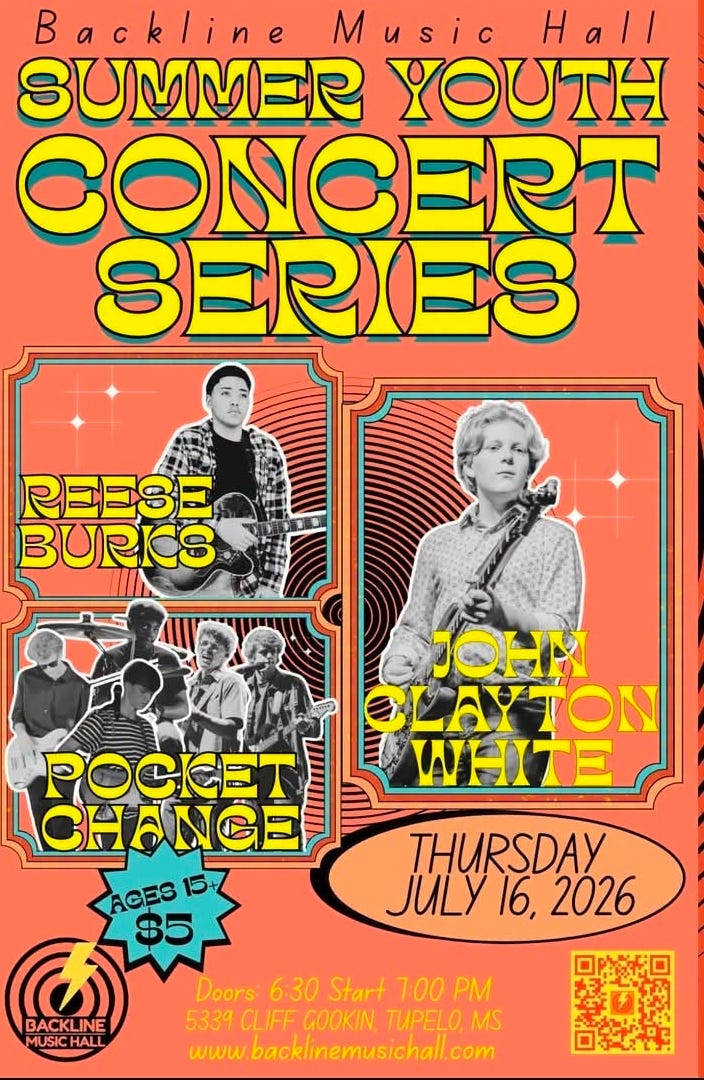
The first stop was Backline Music Hall’s second Summer Youth Concert Series showcase. Five dollars at the door. Three acts. Reese Burks returning to the opening slot, Pocket Change making its first official appearance and John Clayton White closing with a set steeped in Chicago and Delta blues.
Before getting into the music, Cid, Meredith, Christina, Brian and Brent deserve another thank-you for keeping this series alive. Monthly showcases do not organize themselves. Someone has to book the performers, open the building, handle the sound, make the adjustments and give developing artists a real stage instead of asking them to wait until they are older, more established or easier to sell.
Tupelo and the surrounding communities have plenty of talent. It still needs somewhere to play.

Start with “Jeremy”
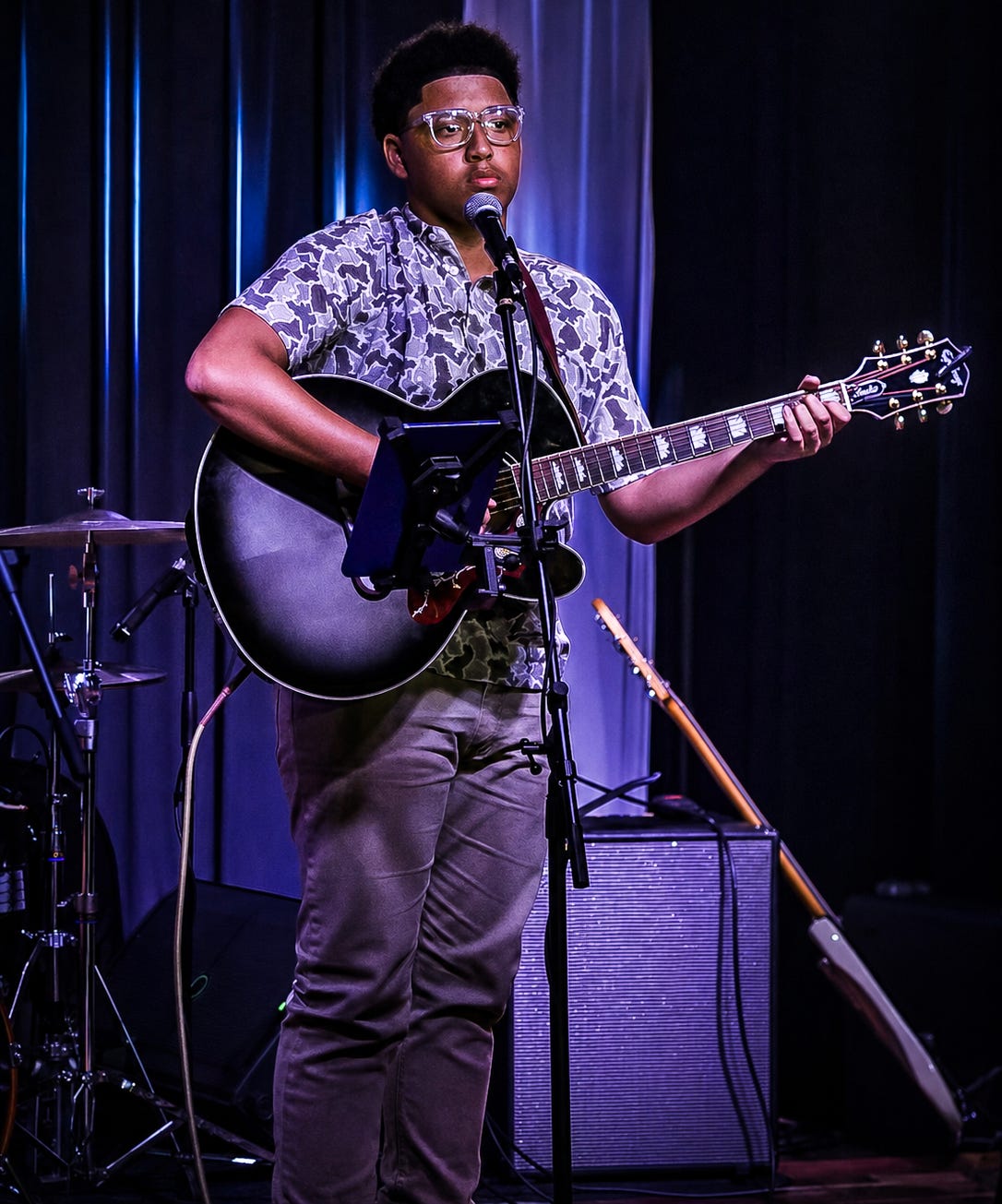
Reese Burks returned to the opening position and made a bold decision immediately: he began with Pearl Jam’s “Jeremy”.
Ballsy choice.
“Jeremy” carries more weight than the average rock cover. Its verses sit in an uneasy quiet before the chorus breaks open, and Eddie Vedder’s original performance is so recognizable that a singer can disappear beneath it if he treats the song like an imitation exercise. Reese did not back away from the difficult parts. He stayed with the song’s tension, let the louder passages arrive naturally and delivered a version that sounded considered instead of merely ambitious.
A few originals from his forthcoming EP followed. Their titles were not announced clearly enough in our notes to publish with confidence, but hearing them alongside the covers helped explain where Reese is headed. The older songs are not random crowd bait. They are part of how he is shaping his own material.
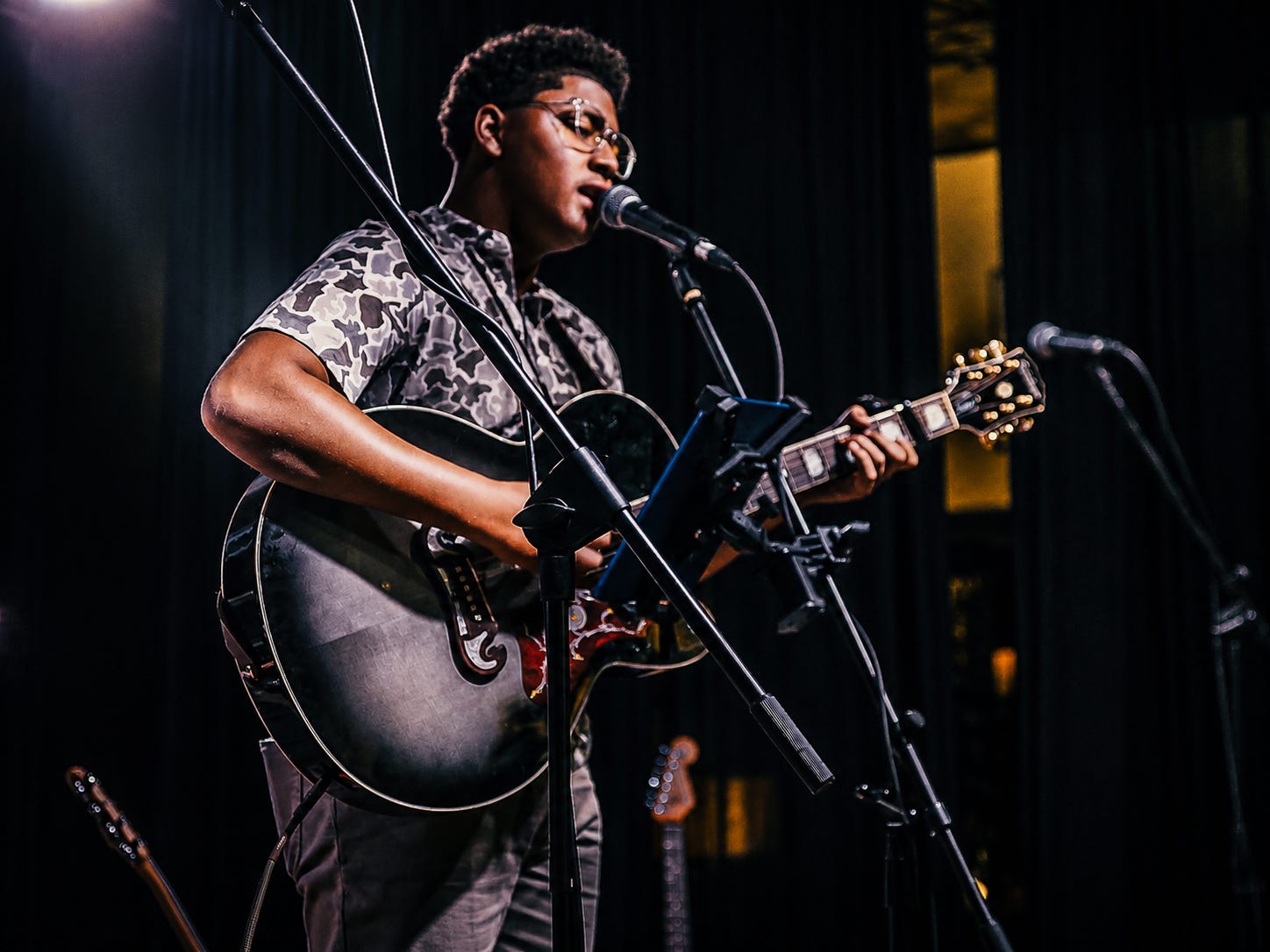
Reese told us he listens heavily to rock and older classics, with Darius Rucker and Hootie & the Blowfish among his favorites. You could hear the connection when he moved into Hootie’s “Let Her Cry”, a song built around restraint rather than vocal fireworks. His version kept its plainspoken quality intact. Nothing needed to be oversold.
Rucker’s “Wagon Wheel” brought a more familiar country swing into the set, followed by “Forever and Ever, Amen”, material associated with the Red Clay Strays and a closing run through Ben E. King’s “Stand by Me”. Closing with a song nearly everyone knows can become a shortcut. Here, it worked as punctuation. Reese had already spent the set moving between his influences and his own writing, so the final melody felt communal rather than predictable.
His upcoming debut EP is the next step, and recording one costs money long before anybody presses play. Reese and his family have launched The Road to My Own Lane, a Kickstarter campaign supporting the project. Anyone who wants to help a local artist move his original songs out of the room and onto a record can contribute there.
Please consider Donating to Sponsor an article even $1 helps!

Five players, no soft launch
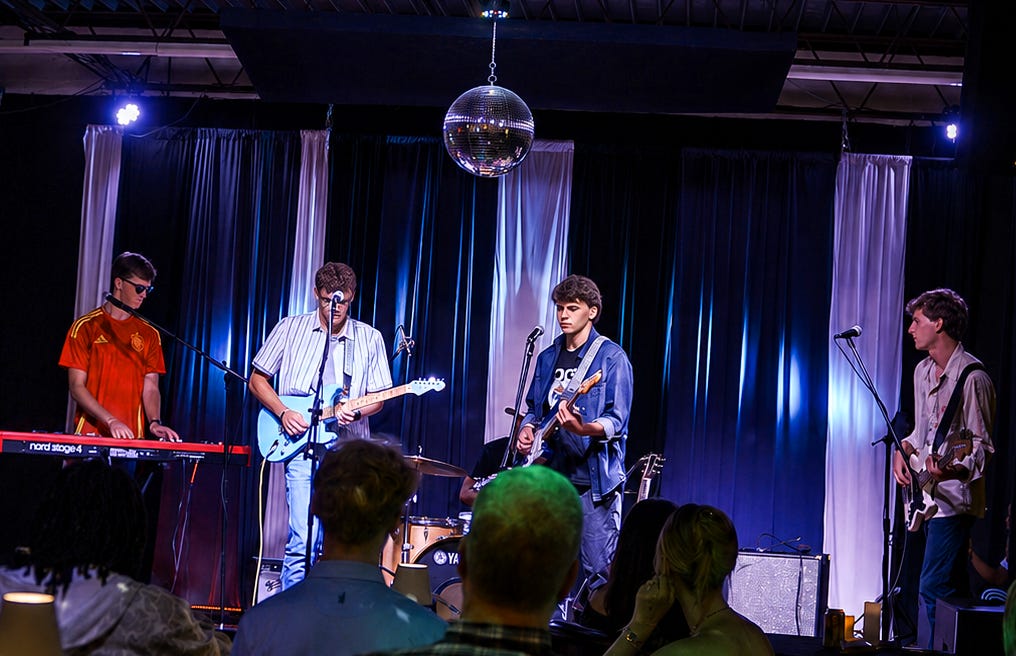
Pocket Change followed with the kind of first show that makes the phrase “first show” difficult to believe.
The lineup brings together brothers Clay, James and Mason Cordell with Kayden Shumpert and William Henson. Their backgrounds stretch through classical training, gospel performance, rock, blues and enough years spent practicing to make their ages feel almost irrelevant once they began playing.
Kayden has reportedly been drumming since he could crawl. He is now in the 11th grade and also performs in a gospel quartet, which may help explain the confidence behind his playing. He did not tap his way cautiously through Pocket Change’s debut. He hit the drums as if someone had informed him this would be his last chance to play them.
Cid, working sound, eventually shut off the snare microphone.
Kayden did not need it.
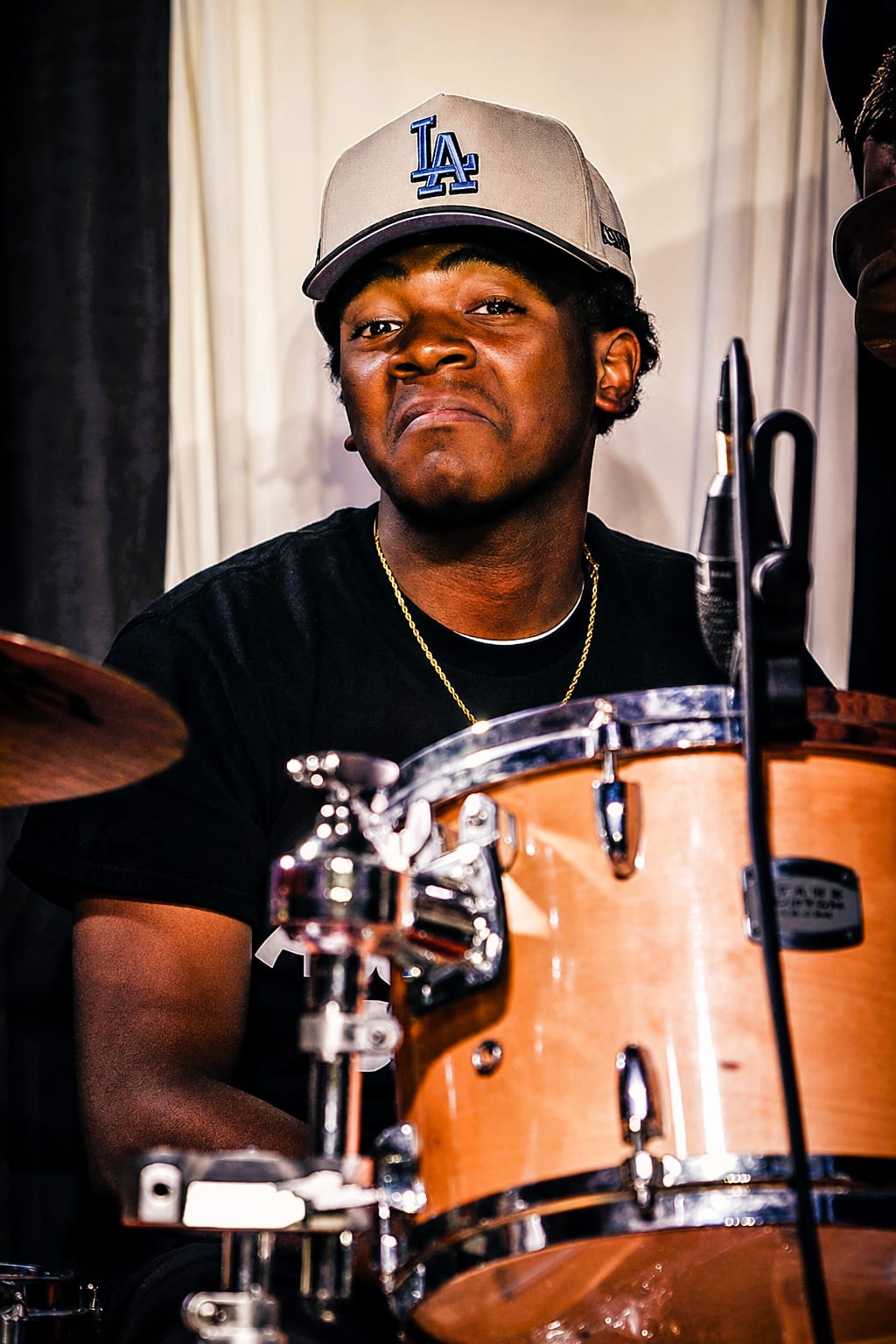
The snare was already cutting through the room under its own power, each strike arriving with enough force to make additional amplification unnecessary. Plenty of drummers play loudly. Kayden played with control inside the volume, keeping the band moving without turning the songs into a percussion demonstration.
Clay held down the bass after six years with the instrument, although his musical training reaches much further back. A junior in college, he also has 14 years of violin behind him. He considers bass the coolest position in the band, partly because it requires less cardio during a performance. Fair point. Somebody has to remain calm while the drummer tries to murder the snare.
James, the youngest member and a college junior, has played guitar for three years after spending six years with the cello. He is also an avid hunter, and his favorite story involves taking down an 11-point buck on November 11, 2011—11 points on 11/11/11. Pretty cool.
The coincidence became stranger while I was writing this section. YouTube decided to play Fall Out Boy’s “Sugar, We’re Goin Down” at the exact moment I typed “11-point buck.” Suddenly the antlers appeared on my television.
I could not have queued it better if I tried.
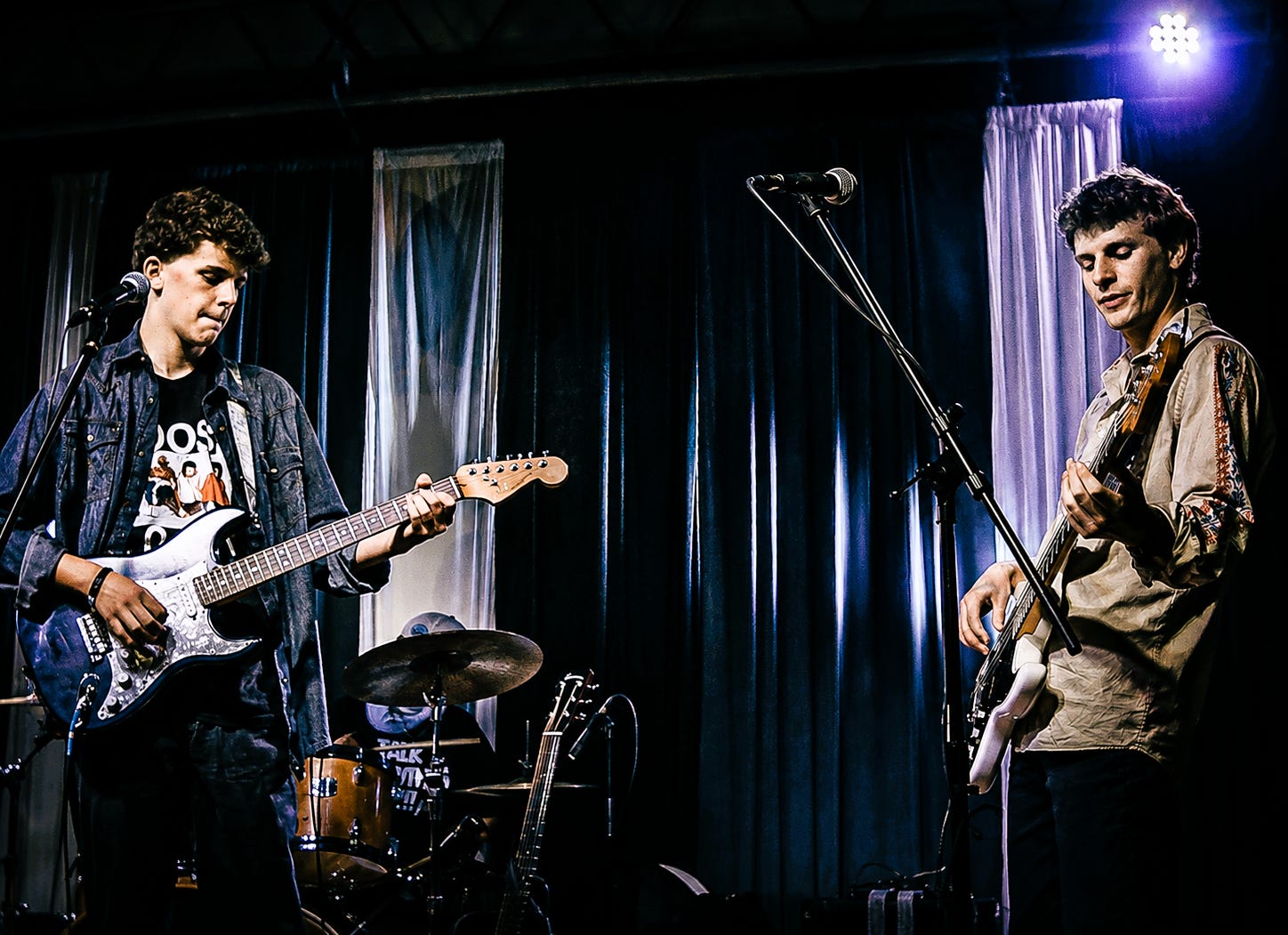
Mason brings 11 years of piano, six years of bass and five years of guitar into the group. A college freshman, he also plays golf and occasionally throws his clubs into the lake. Nobody offered an official count for how many clubs remain underwater, but his musical training has survived the frustration. The years behind several different instruments could be heard in the way he approached the set—less concerned with claiming space than with understanding where the arrangement needed him.
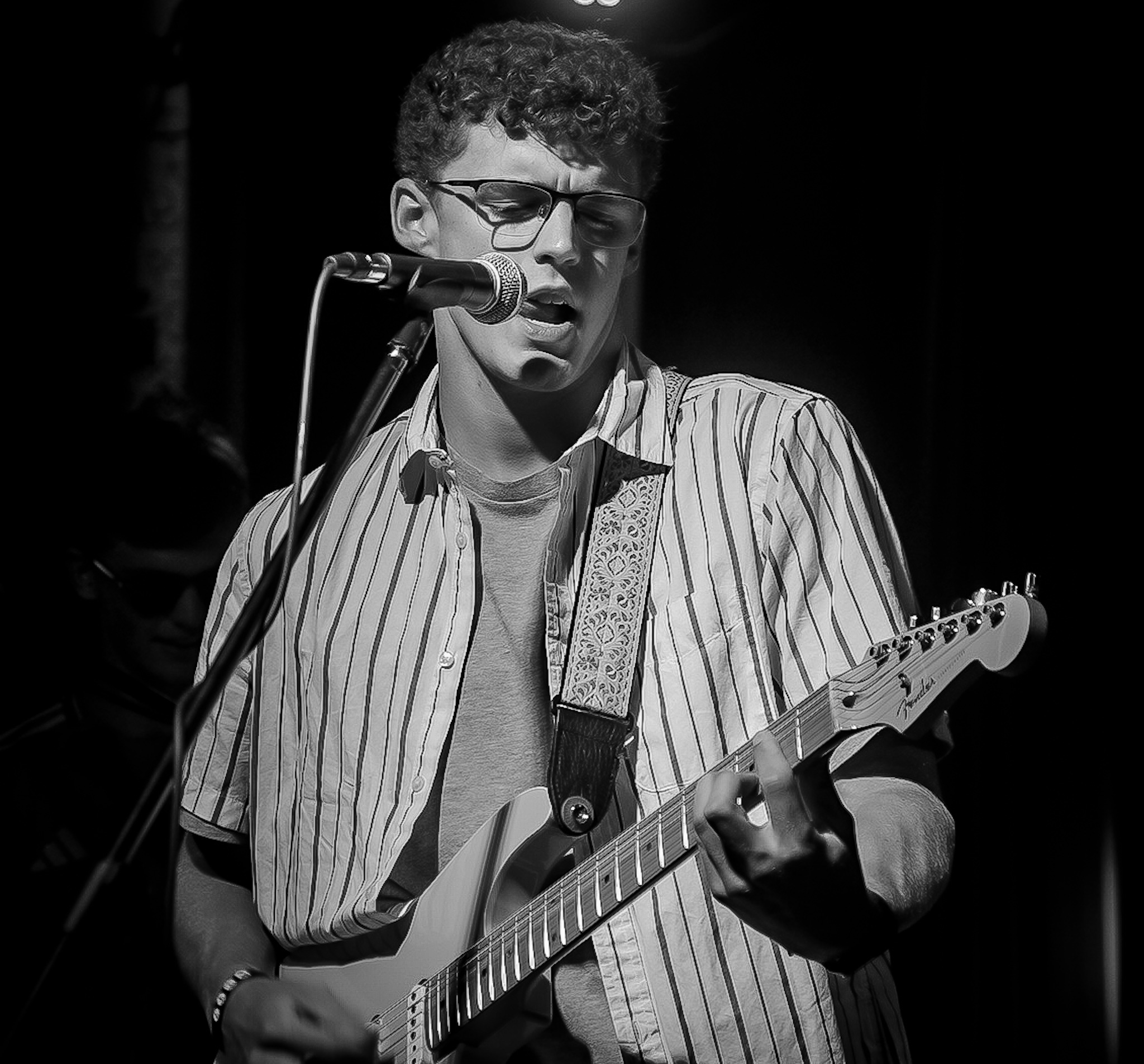
William Henson completed the lineup on keys and shades.
The shades are important.
A college junior, Will has spent 12 years playing piano, six years with guitar and three years with the melodica. Melodica? Huh. Add it to the résumé and keep moving. He once took a golf ball to the head while playing, which may or may not have produced the unbothered Mr. Cool who appeared onstage at Backline. Medical science has not weighed in.
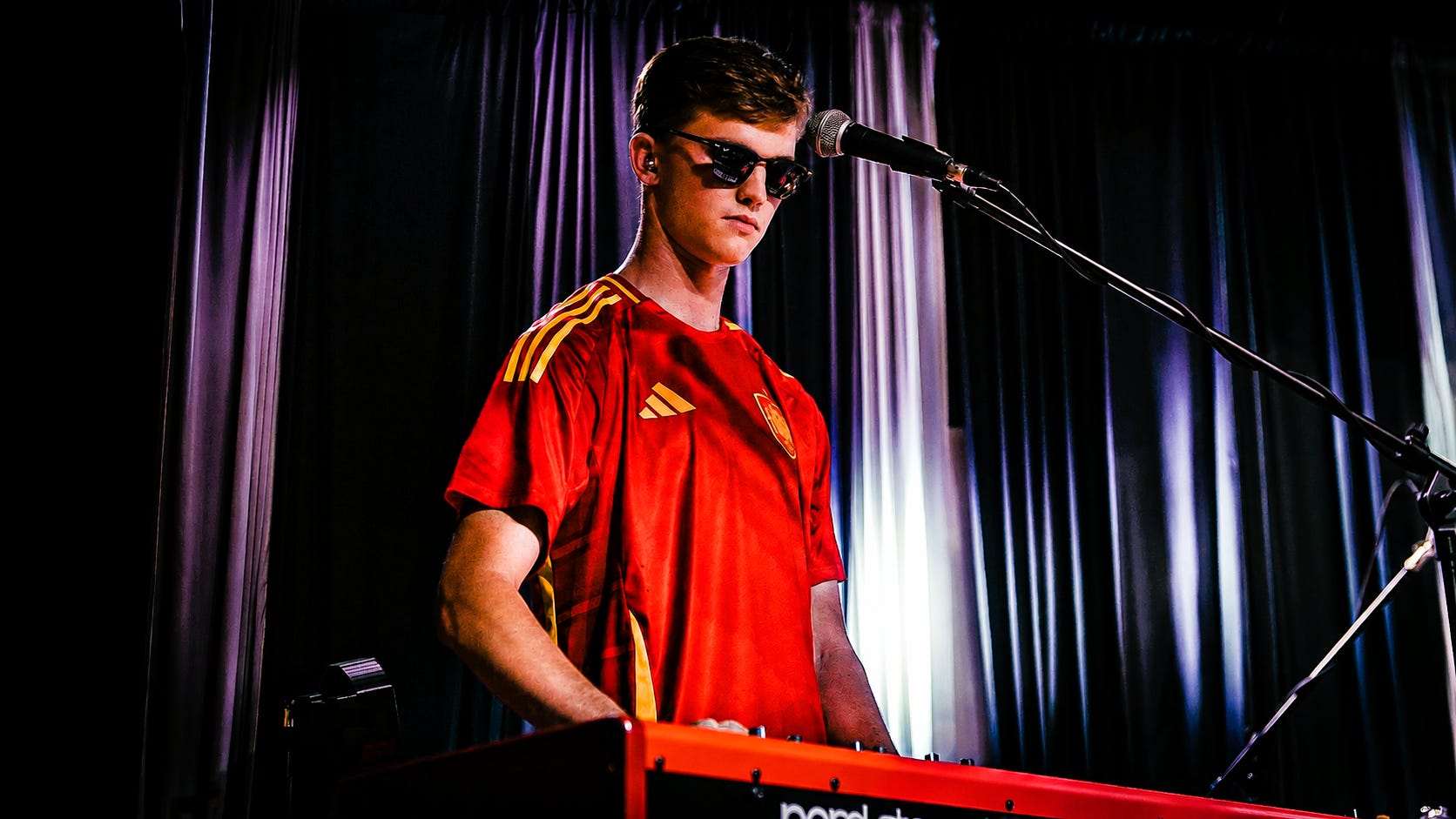
The stories are funny, but the playing kept Pocket Change from becoming a novelty. Their sound landed somewhere between funk-minded rock and blues, with the keyboards adding color around a rhythm section that preferred a little dirt beneath the polish. Their classical backgrounds did not make the set stiff. The training showed up in how well they listened to one another.
They worked through the Eagles’ “Take It Easy”, then leaned into the Black Crowes’ “She Talks to Angels”. The latter gave them more room to sit inside a slower arrangement, holding back where the song needed space instead of treating every measure like a chance to prove something.
For five musicians making their first official appearance together, Pocket Change sounded unusually settled. Transitions stayed intact. The rhythm section remained connected even when Kayden’s playing grew forceful. Will’s keys filled the open spaces without crowding the guitars. The audience responded accordingly, growing louder as the familiar songs arrived and the band proved it was not going to come apart under the excitement of its debut.
They came to put on a show. They did.
The blues already know John Clayton White
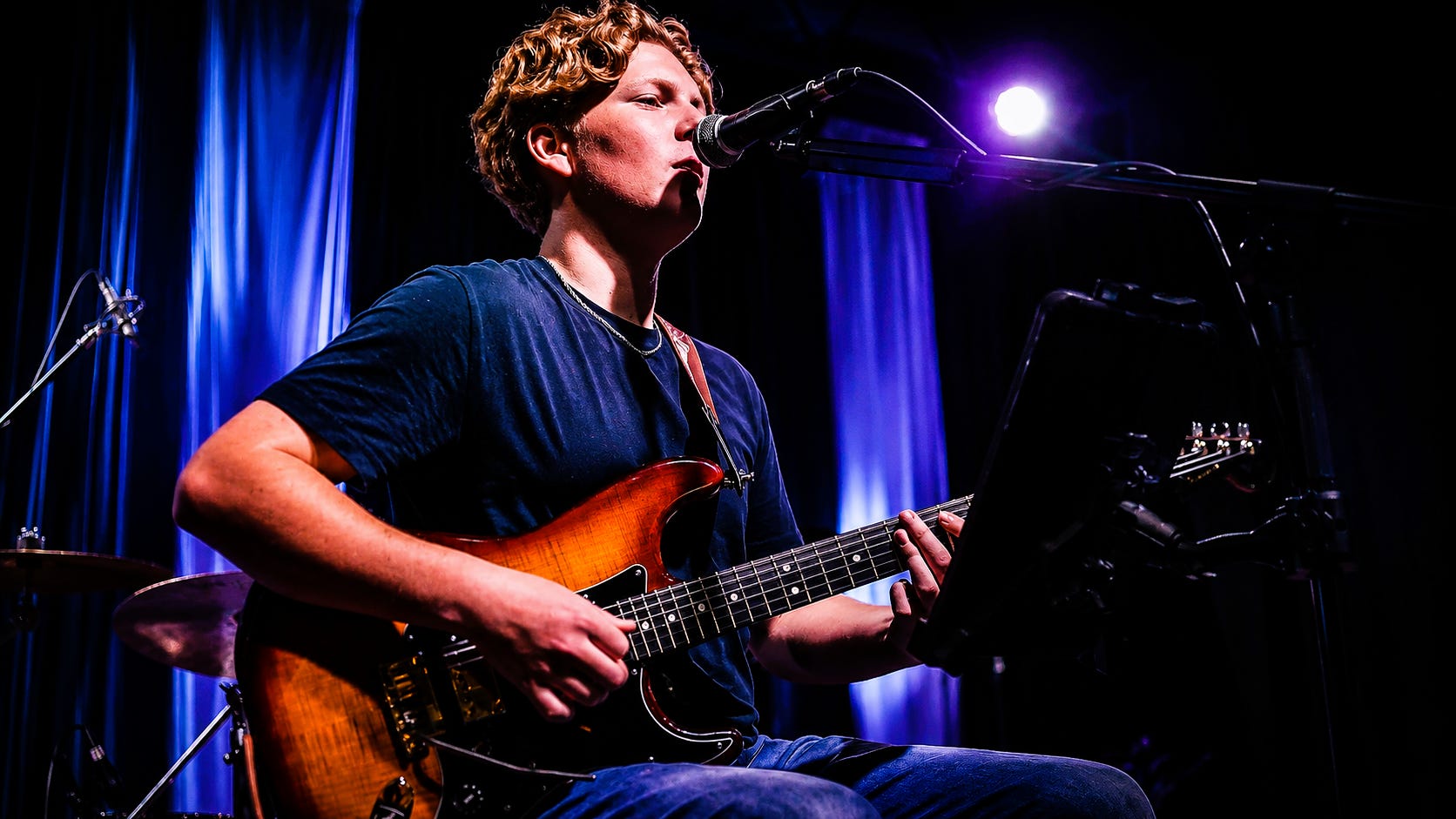
John Clayton White is only 15, but listing his previous appearances takes longer than explaining his age.
His résumé already includes a noon performance on the Visit Mississippi Crossroads Stage during the 2026 Chicago Blues Festival, an opening appearance at Mississippi Makers Fest and a featured program at the GRAMMY Museum Mississippi. The Mississippi Delta Blues Society selected him for the Youth Showcase at the International Blues Challenge in Memphis after he and his band won the society’s regional competition.
Then there is the list of people and places already attached to his name. Kenny Wayne Shepherd. Christone “Kingfish” Ingram. Mr. Sipp. The Legendary Rhythm and Blues Cruise. Susan Tedeschi and Derek Trucks at the 2023 grand reopening of Club Ebony, alongside members of B.B. King’s band.
In May 2025, White opened Ground Zero Blues Club’s 24th-anniversary celebration for John Primer—not John Prine, as an early version of our notes mistakenly read—with Ground Zero co-owner Morgan Freeman in attendance. His performance record also includes B.B. King’s 100th Birthday Celebration and a reported headline appearance at Ground Zero’s Biloxi location on April 18h 2025.
None of those names played the guitar for him at Backline.
White opened with an original, “Tires Gone Flat,” and immediately brought his Chicago-blues instincts into the room. The guitar phrasing had bite without becoming a blur of notes, and the song allowed him to establish himself as a writer before reaching for familiar material.
The Marshall Tucker Band’s “Can’t You See” and the Allman Brothers Band’s “Ramblin’ Man” pushed the set toward Southern rock. When the familiar “ride, Sally, ride” refrain arrived, the crowd took the invitation. People who had been watching closely were suddenly participating, the response growing as White worked through the section.
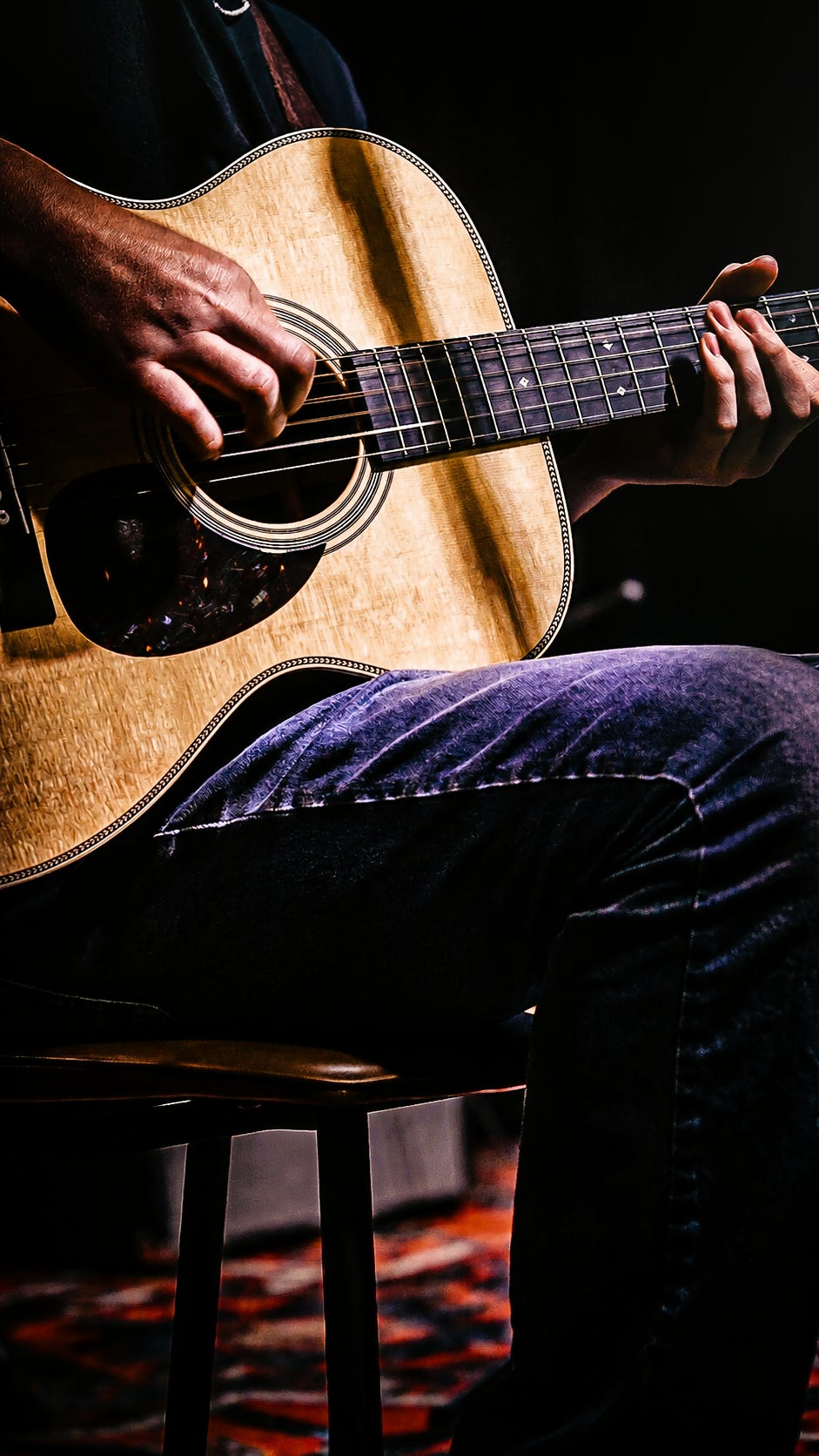
His version of Jimi Hendrix’s “Red House” returned the focus to the guitar. Covering Hendrix can encourage players to chase volume and speed while forgetting the pauses between the phrases. White’s command came from knowing when to press and when to leave the next note alone for a second.
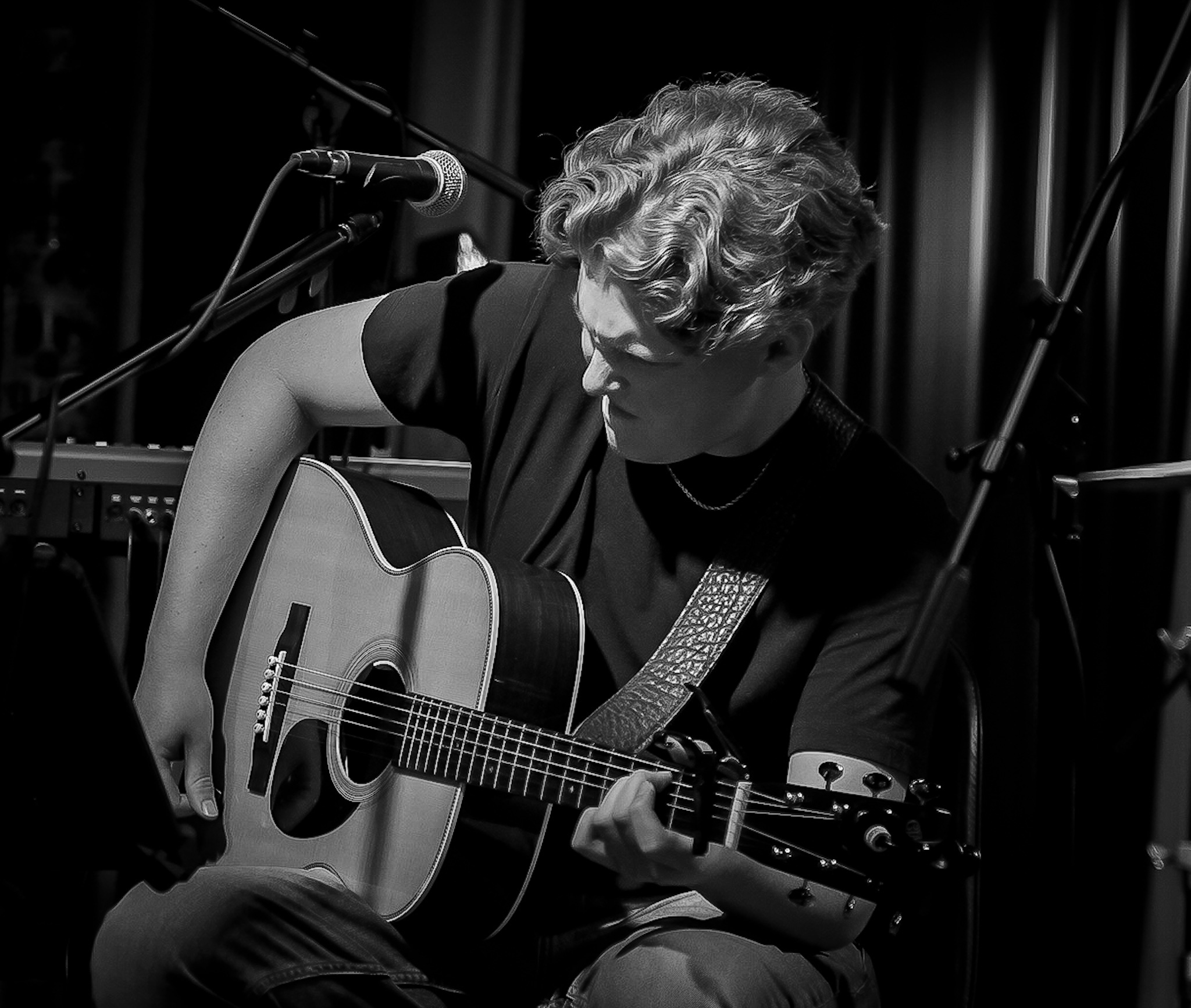
In Tupelo, an Elvis Presley turn is never far away. White brought “Blue Suede Shoes” and “Hound Dog” into the set without turning the hometown connection into a costume. The songs moved as part of the same musical vocabulary he had been using all evening: blues structure, rock-and-roll attack and a performer paying attention to how a crowd reacts.
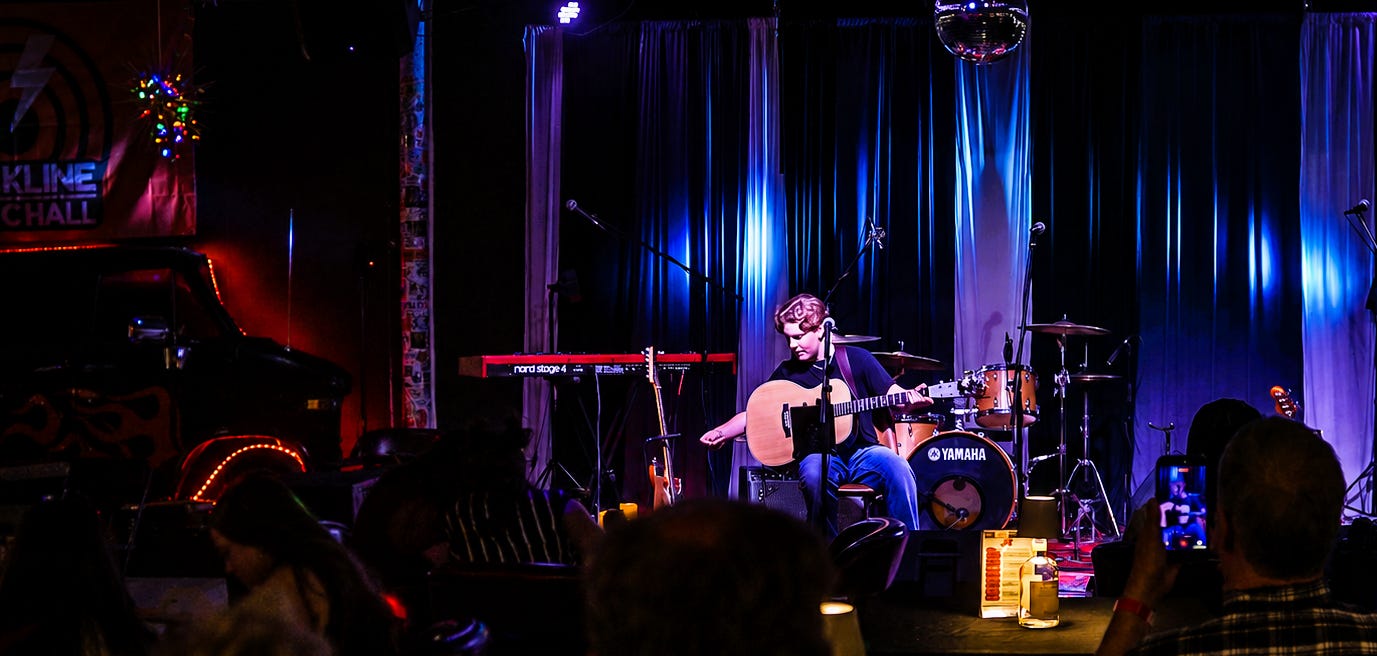
The originals provided a better indication of where his music may be headed. “Not Going Back” carried its own identity, while “Something in the Mud” leaned harder into the Delta side of his playing. The title itself sounds local—less interested in polishing the Mississippi out of the music than in digging into it.
White has already performed in rooms many adult musicians spend years trying to reach. Backline still offered something useful: a close audience, a local stage and no famous names standing nearby to explain why he belonged there. He had to do it himself.
He did.
Afterglow
Three acts represented three different points in development. Reese Burks is preparing to record his debut EP while testing his originals beside the music that shaped him. Pocket Change walked into its first official show with five separate musical histories and left sounding like a band instead of an experiment. John Clayton White arrived with an oversized résumé, then made the résumé secondary once he began playing.
This is why the Summer Youth Concert Series deserves more than polite applause on social media. Backline is giving developing performers stage time, a working sound system, an audience and room to find out what survives once rehearsal ends. Cid, Meredith, Christina, Brian and Brent are building a place where the artist comes first, and the proof is louder than any slogan.
Sometimes it is loud enough to turn off the snare mic.
Belhaven and a last-minute run to Nashville were still waiting, the next two events in a three-stop weekend. July was not slowing down. The opening night had already given us a Pearl Jam gamble, a drummer playing beyond the microphone, an improbable pileup of elevens, submerged golf clubs, a keyboard player in shades and a young bluesman making old songs answer to him.
Not bad for a Thursday.
“IS YOUR MUSIC ON THE RIGHT TRAKKS!””
Please consider Donating to Sponsor an article even $1 helps!
