




Editor’s Note: Press Access & Thanks to our Sponsor
A heartfelt thank you to Beyond Media Entertainment and Ain’t Life Grand Photography for sponsoring the evening and covering the costs that helped make this article possible. Support like that means a great deal, and it allows nights like this to be documented with the care they deserve.
We also want to thank xBk Live for their help with the press pass and for being so welcoming throughout the evening. Their kindness and professionalism made the experience that much better.
It takes a team behind the curtain to make coverage like this happen, and we’re truly grateful to all of them.

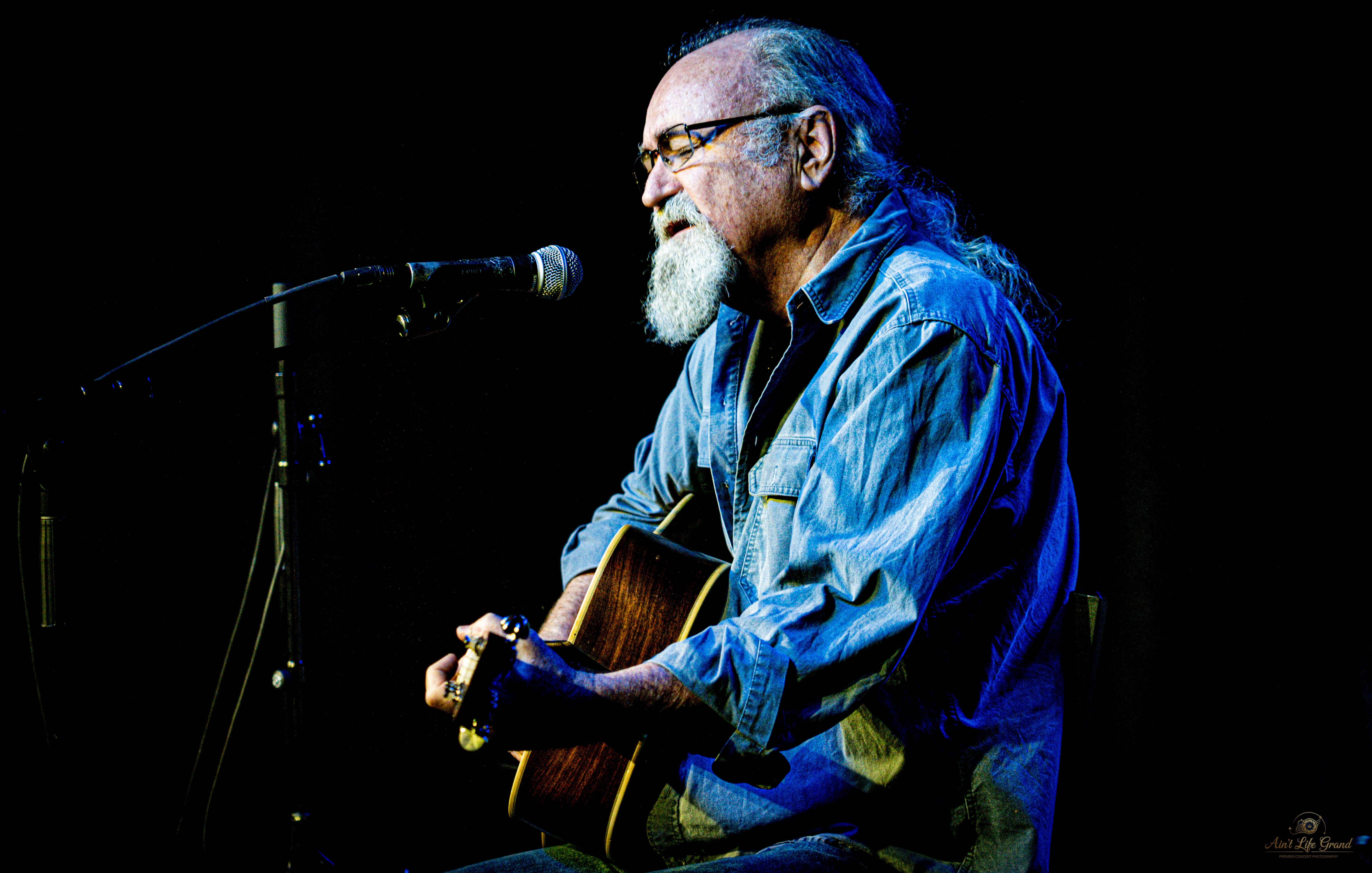
The Room Before the First Note
At xBk Live, the room is small in the best way, close and breathable, the kind of venue where a performer does not need to conquer the space so much as fill it honestly. The Des Moines listening room, located at 1159 24th Street and built around a 250-person capacity, has developed a reputation for hosting local and national acts in a setting where sound actually matters and the atmosphere never feels stiff or overblown.
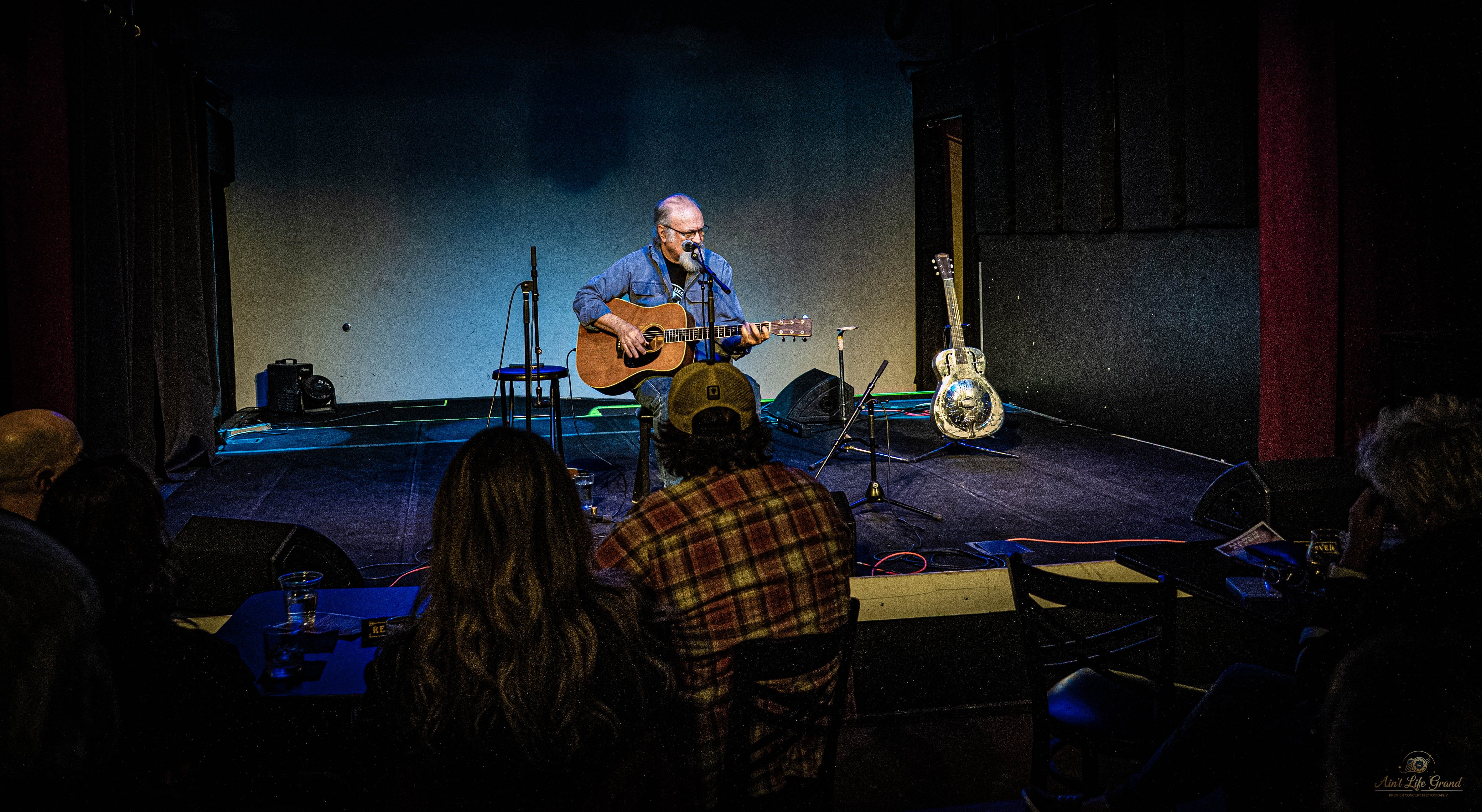
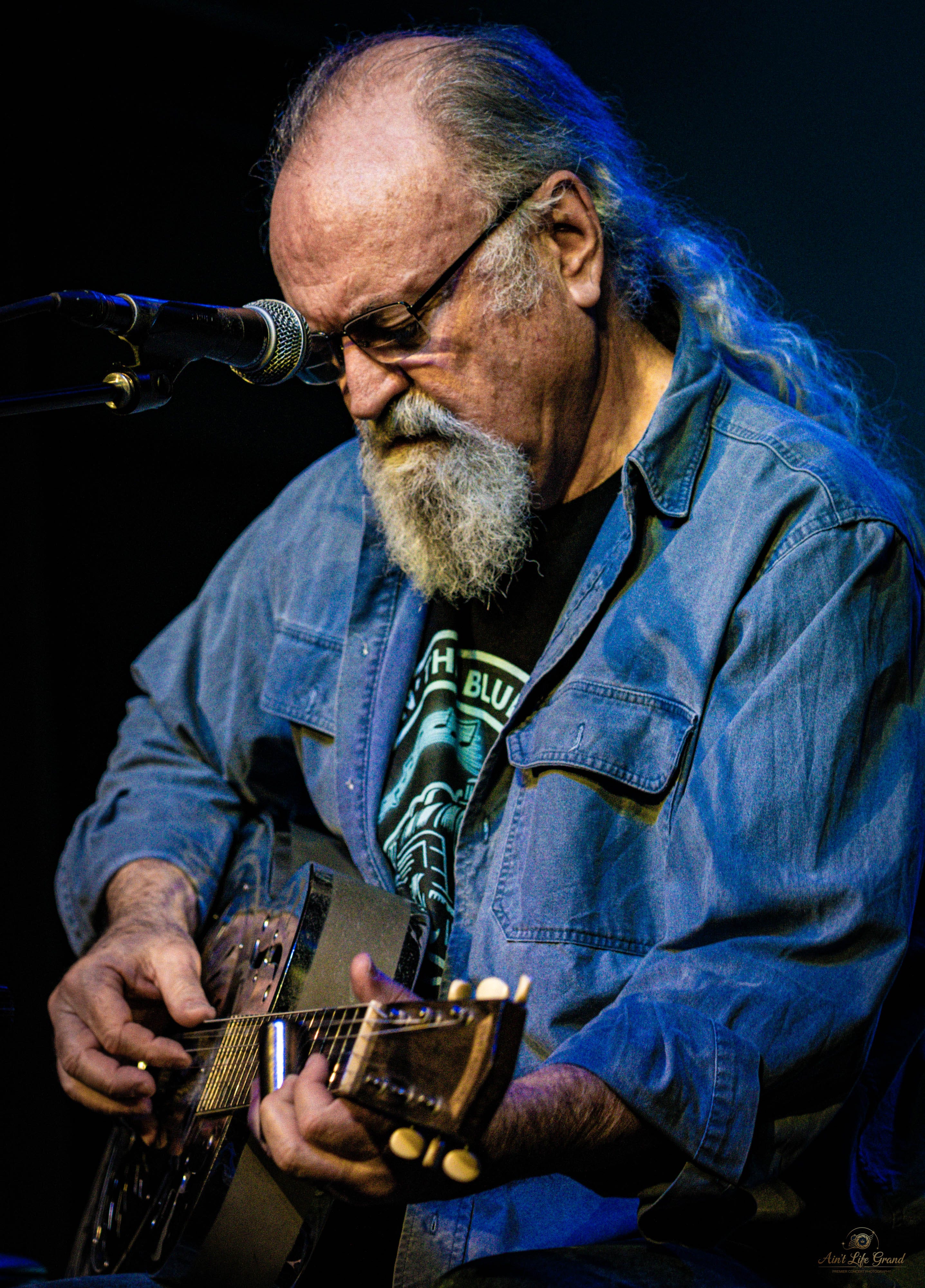
That intimacy fit Tinsley Ellis perfectly. Ellis, the Atlanta blues-rock guitarist and songwriter who has spent decades carving out a place as one of the genre’s most durable road warriors, did not treat the night like an acoustic set stripped of force. He treated it like a conversation. A raw one. A funny one. A wise one. Sometimes a wicked one. One man, one guitar, and a room quiet enough to catch every bit of gravel in his voice and every sting in the strings. His official bio still frames him as a major live blues presence, and that checked out immediately. Nothing about him read as legacy-act autopilot. He still played like the song had something to prove.
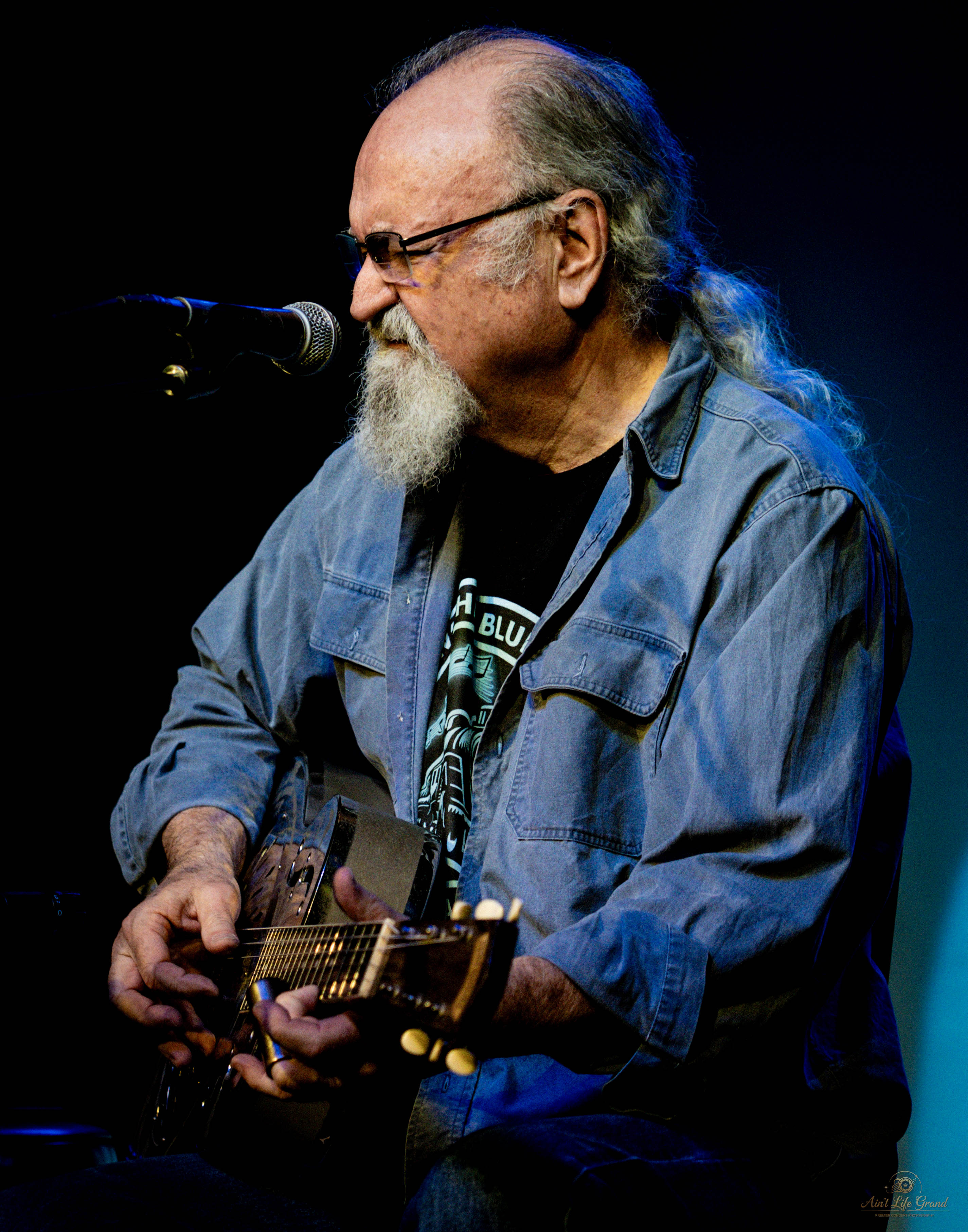
This was not just a concert. It was story time, but the kind where the storyteller has lived enough life to make even the punchlines sound road-worn and earned.


Getting In, Settling Down, Getting Lucky
xBk is one of those venues that rewards planning and laughs at it anyway. Parking around there can be annoying, mostly street-side, the usual little urban scavenger hunt. Still, luck was with us, and we found a spot in a small lot less than a block away. That small victory already had the night leaning in a friendly direction.
The bigger surprise came at the door. We had arrived without full press approval, which is usually the sort of detail that can turn a smooth evening into administrative soup. Instead, after some pleasant conversation and a quick check with Ellis himself, credentials were approved. Just like that. We had free rein of the venue, which for a correspondent is somewhere between professional privilege and cartoon-level fantasy.
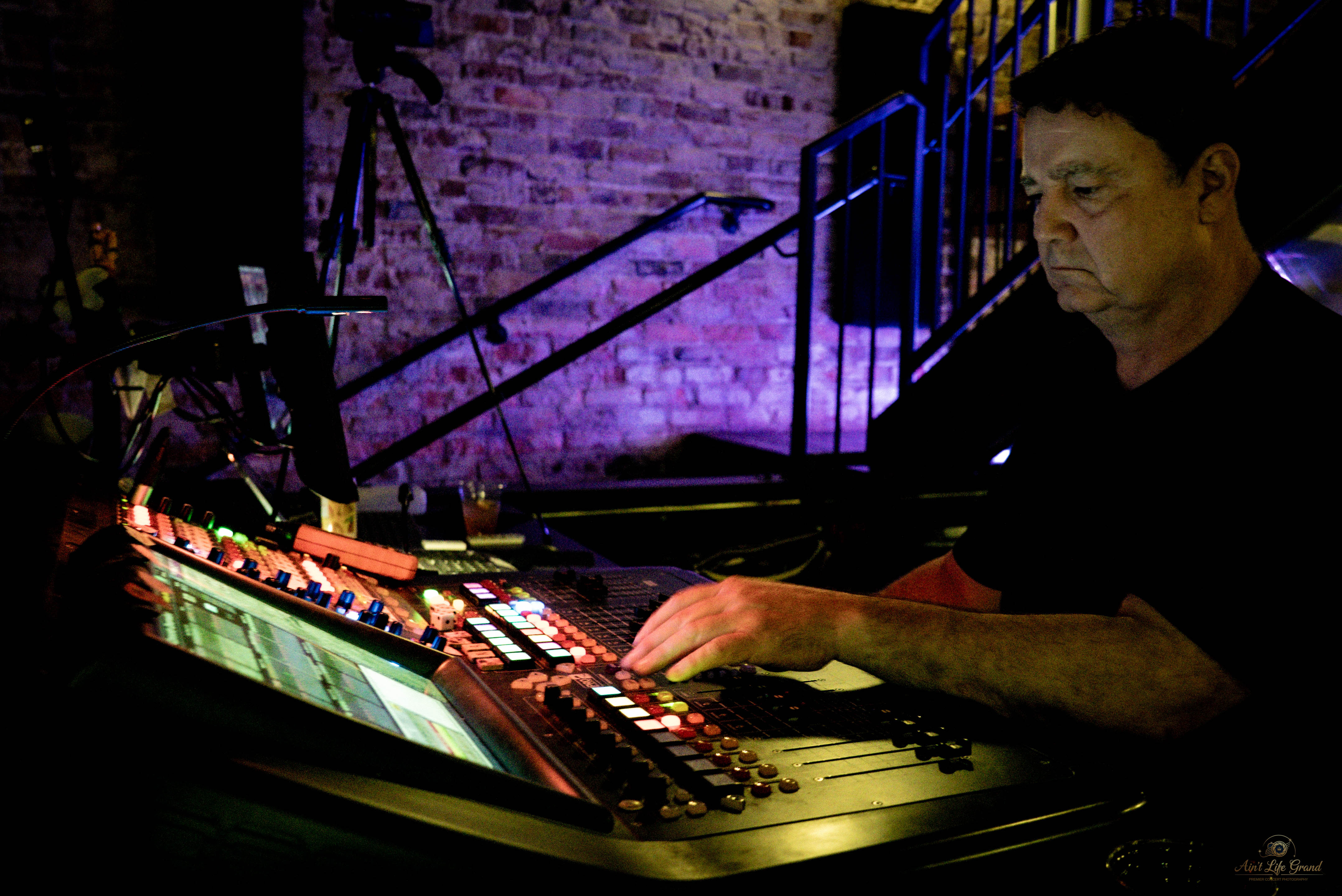
That set the tone for everything that followed. Our friend and production engineer Brian Dodson was working sound for Ellis that night, which meant we had a cozy place to post up in the sound booth, store gear, and orbit in and out of the room without feeling like we were constantly in somebody’s way. Seeing Brian is always a pleasure, and the whole evening took on the feel of a social gathering that just happened to include world-class blues guitar. There are worse jobs on this earth. Plenty worse.
Before the performance, the venue’s wall-sized projector cycled through advertisements for upcoming shows, and that little pre-show detail created one of the stranger and sweeter moments of the night. Up on the wall, bright and impossible to ignore, was a plug for an upcoming booking through Beyond Media Entertainment, including Minneapolis shock-rock act Caster Volor with local acts Parabola and Psycho X. I had worked that booking with the xBk talent buyer, and seeing that logo blazing huge across the wall stopped me dead for a second. Not in a grand, self-important way. More in a holy-hell-that’s-mine kind of way. I was giddy. I took the photo. Of course I took the photo.
Please consider Donating to Sponsor an article even $1 helps!

Cocktails, Fire Poles, and the xBk Ecosystem
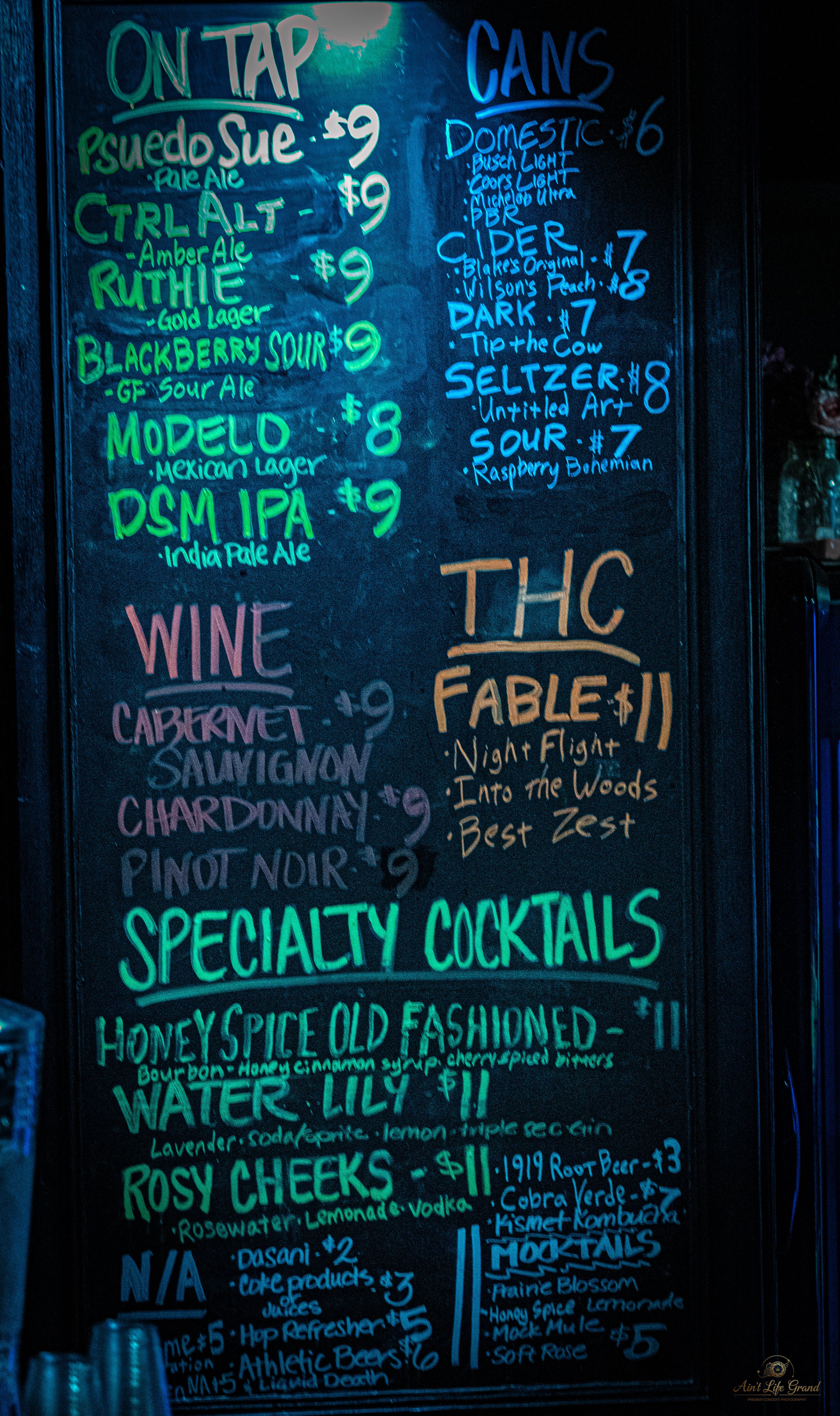
There are venues where the drinks feel like an afterthought. xBk is not one of them. Their cocktail menu tends to have its own personality, and this night was no exception. I had the “Rosy Cheeks,” a sweet vodka drink built with rose water, while Igor went for the “Honey Spiced Old Fashioned.” Later, we shared a blueberry lager. All three got an enthusiastic approval from me. Two thumbs up, no hesitation. Sometimes a review needs one tiny moment of unashamed simplicity, and there it is.
The evening also doubled as my first in-person meeting with Bill, the xBk talent buyer, after recently making my first booking with him. We had a number of genuinely enjoyable conversations throughout the night, the kind that make the machinery behind live music feel human instead of transactional. At one point Igor and I slipped away with Bill to check out the newer sister venue next door, the xBk Annex, which has become a home for open mics and emerging local acts. The building used to be a firehouse, and yes, the original fire pole is still there. It is the sort of architectural relic that makes a place feel like it has memory baked into its walls.
That little detour mattered because it sharpened what xBk as a whole seems to be doing. It is not just hosting shows. It is building a local ecology, one room for polished listening, another for emergence, risk, and local growth. A venue can book talent. A venue can also become part of the bloodstream. The good ones do the second thing.


Tinsley Ellis Turns a Listening Room Into a Front Porch
Once Ellis began, the room settled into a hush that never felt forced. The audience skewed older, and they were notably respectful, but not lifeless. This was not the dead-eyed politeness of people waiting for the parking lot to clear. They were locked in. You could see it in the smiles, the nodding heads, the shoulders moving just enough to admit they were feeling it. The energy was gentle but present, less eruption than absorption.
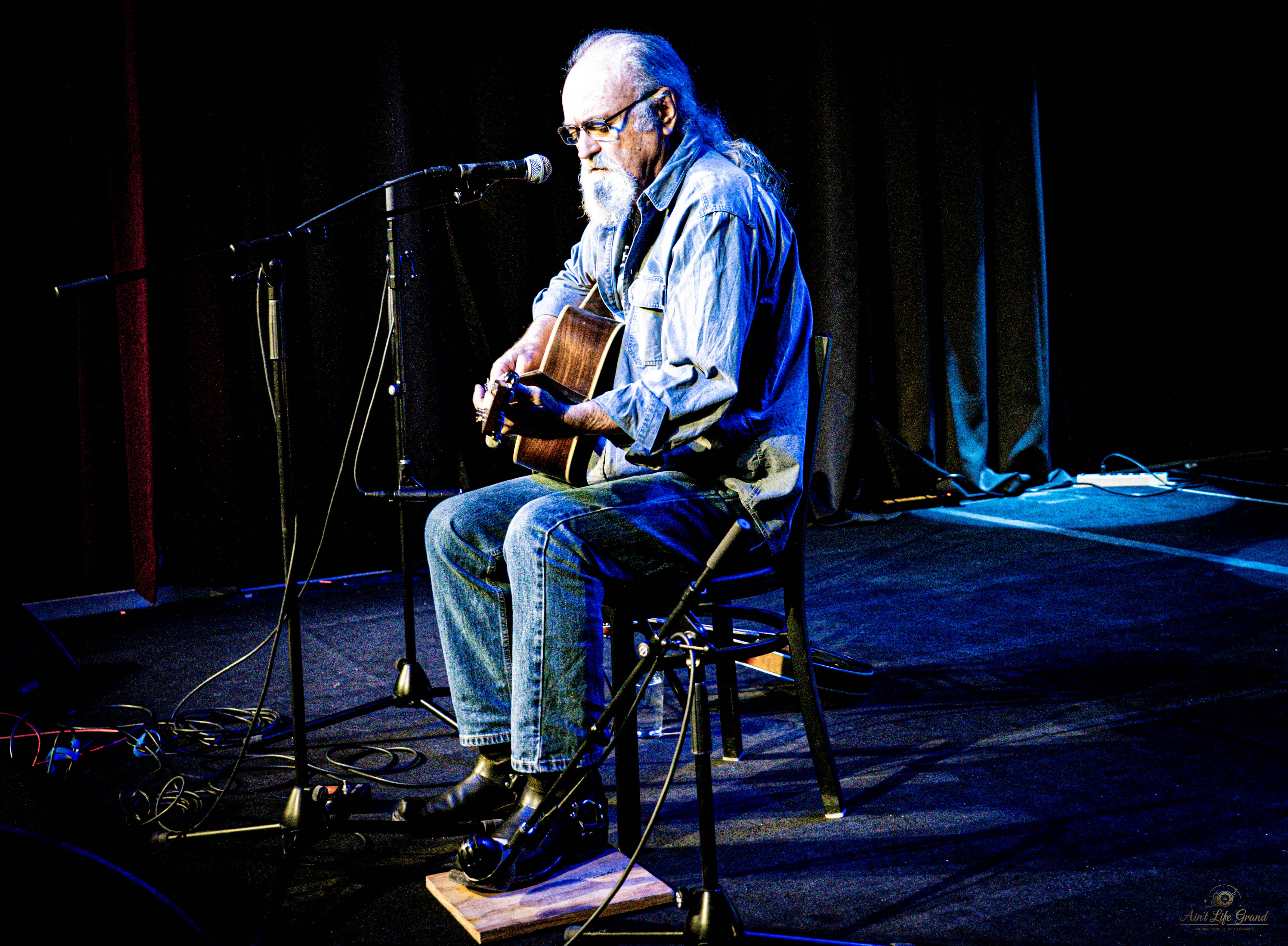
That turned out to be the perfect crowd for Ellis, because the evening depended as much on timing and personality as it did on musicianship. He delivered songs as if each one arrived with a shadow attached, and then he would step sideways into a story, a memory, a joke, some half-mischievous sermon from the long road. He clearly enjoyed himself in that role. The guitar did not vanish when he spoke. It just waited, like another character in the conversation.
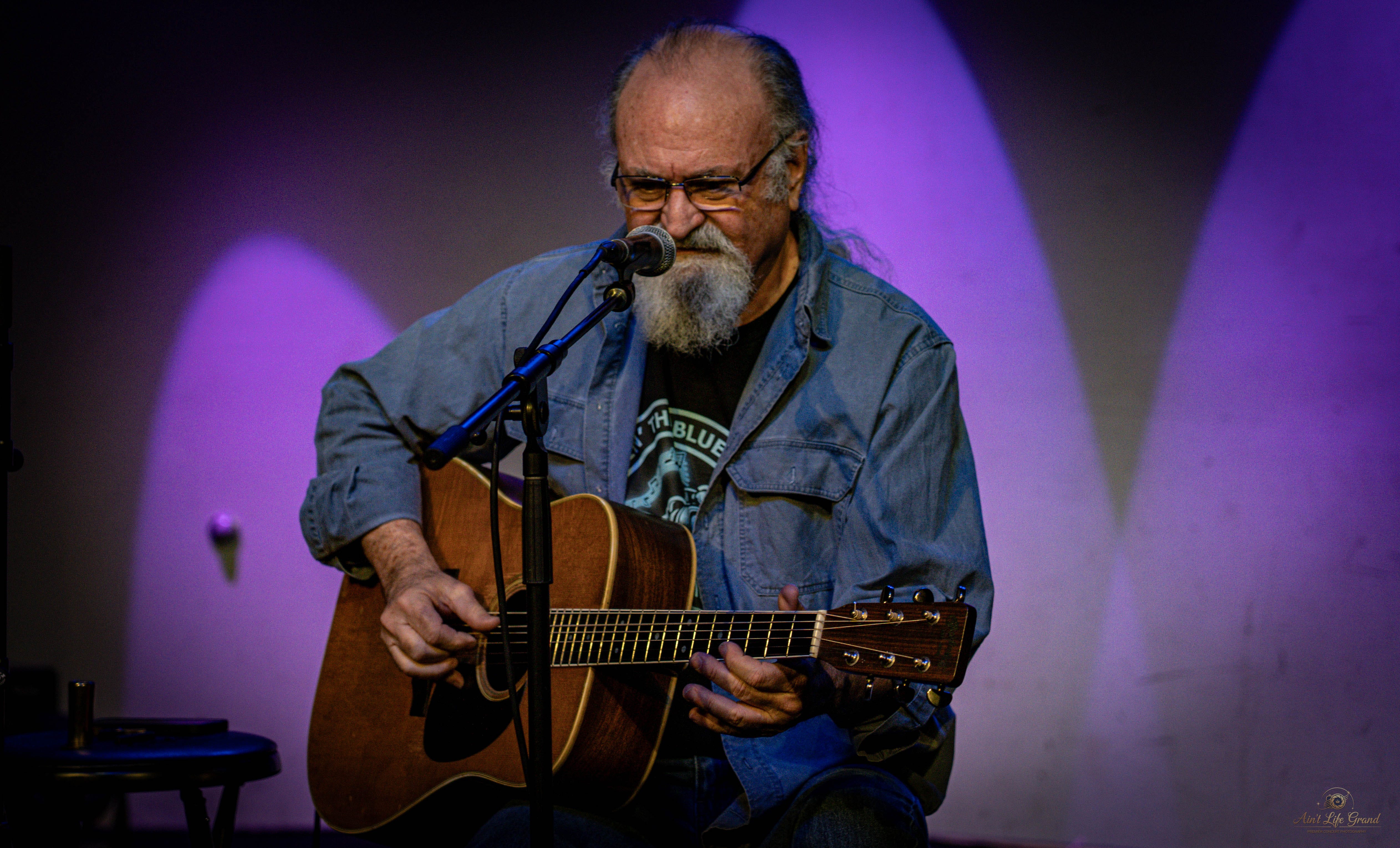
During intermission, audience members lined up to buy vinyl and merch directly from Ellis, and he signed every item. Every single one. Igor and I joined the line to chat and take pictures, and the first impression was immediate. He came off friendly and humble, approachable without that oily fake-humble stagecraft some performers never quite wash off. The crowd favorites seemed plain enough in the room. “Hell or High Water” landed hard, and “One Last Ride” had that unmistakable pull of a song people were already carrying around with them before they walked in.
That personal warmth only made the performance stronger. When somebody plays the blues with authority, there is always the danger of reverence calcifying into museum glass. Ellis never let that happen. He kept things alive, conversational, cracked open.
Stories With Teeth
The most memorable moments of the night came when Ellis threaded songs into stories and stories back into songs. During “A Quitter Never Wins,” a song already full of grit and emotional stubbornness, he paused to tell one of the evening’s standout tales. Years ago, just before taking the stage, a young boy knocked on his dressing-room door. Ellis let him in. The kid turned out to be a then-unknown Jonny Lang. Lang would later cover “A Quitter Never Wins,” helping push the song to a much larger audience. On paper, it is a nice bit of musical trivia. In the room, told by the man who lived it, it felt like a little hinge in blues history swinging quietly open.
Then there was the Allman Brothers story, which supplied the evening with one of its cleanest jokes. According to Ellis, they taught him two rules: no drinking during the gospel numbers, and no gospel numbers. That deadpan rhythm tells you a lot about his comic instincts. He likes the laugh that arrives half a second late, after the sentence has already walked by.
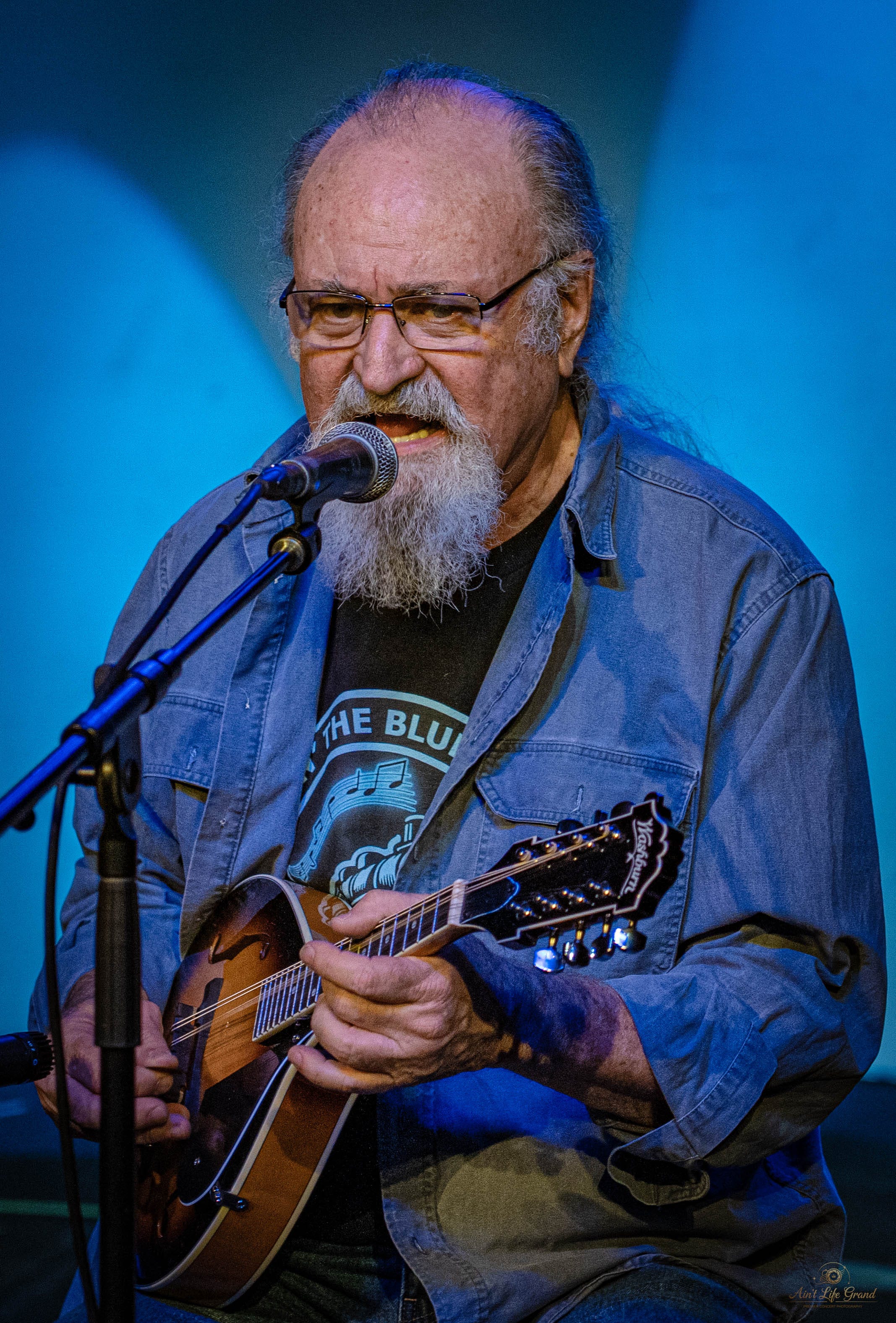
He returned from break and called the crowd “all-nighters,” joking about whether they would even be able to get up the next morning. This at around 8:30 p.m., which made the jab hit even better. When Igor shouted, “Sick note,” Ellis shot back, “I’ll sign the note!” It got a genuine laugh, mine included. Not a courtesy laugh. A real one.
Just as importantly, he knew how to court the room by honoring its local memory. He mentioned the lost Des Moines spots Blues on Grand, which closed in October 2010, and Connie’s Lounge, another name from the city’s older live-music map. For a crowd like this one, that was not just banter. That was a recognition signal. It told them he knew enough to know what was gone.
The Legends Behind the Legend
One of the most revealing stories Ellis told was about being, in his own framing, the annoying kid who followed blues legends around asking questions. There was no vanity in it. He presented it like apprenticeship by pestering, which frankly is one of the more honorable ways to learn anything. He referenced names like Cream and Johnny Winter as part of that long line of influence and obsession, then shared the story of being pointed toward a B.B. King performance at a Miami hotel bar called the Swingers Lounge in the early 1970s.
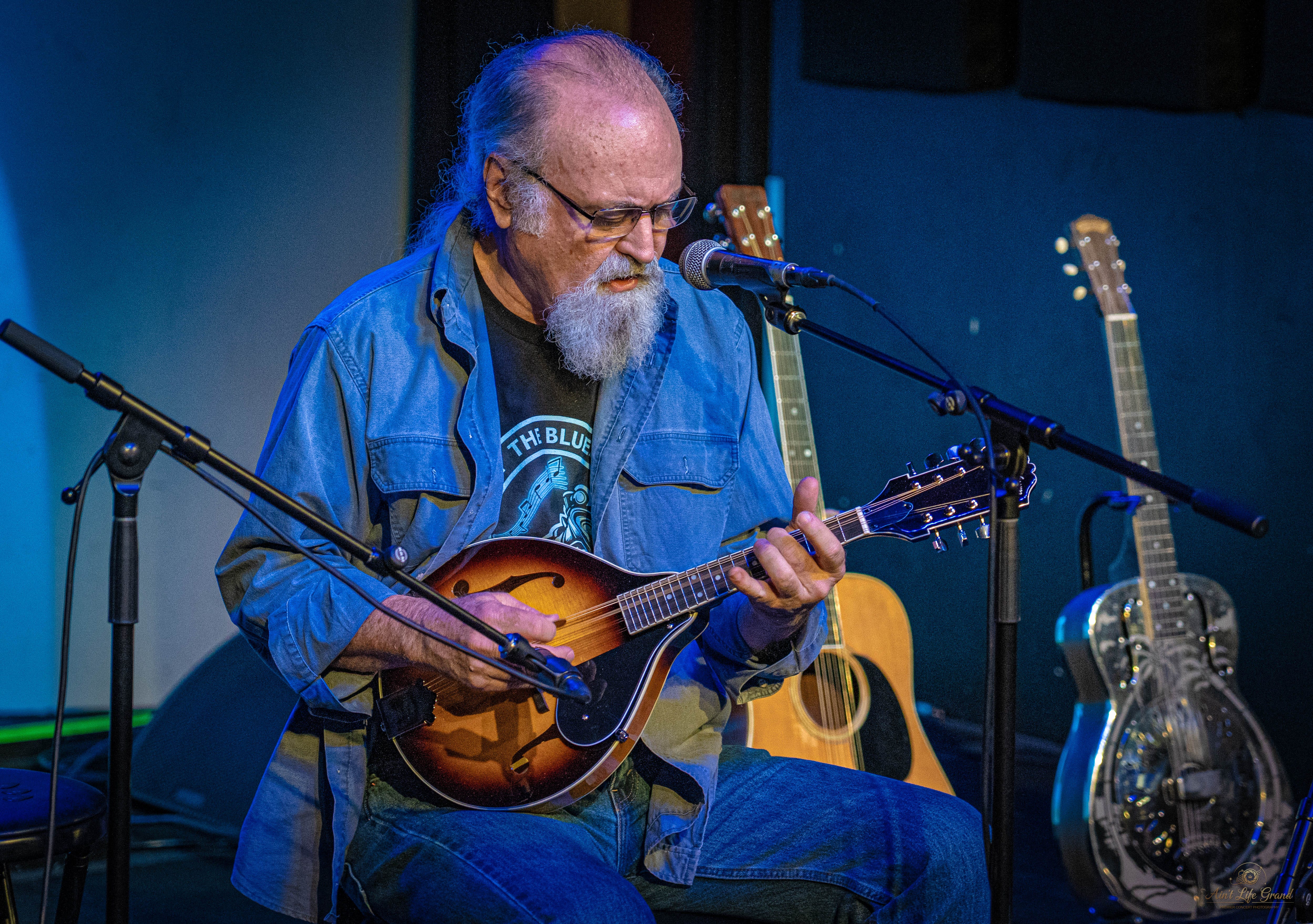
Ellis sat right up front. B.B. King, he said, was the man. More than that, B.B. spoke to him in the lobby afterward with humility and kindness. The detail lands because it mirrors something visible in Ellis himself. You could hear in the telling that B.B. was not just a hero because he could play. He was a hero because he carried greatness without turning into a jerk about it. That kind of lesson sticks harder than a guitar lick. A version of that story also appears in public materials about Ellis, including the detail that a young Ellis met B.B. after a performance and was marked by the encounter.
Then Ellis gave us the other side of the coin. If B.B. was the good influence, Howlin’ Wolf was the unruly one. The Rated R one, as Ellis put it. He described Wolf taking a microphone down his pants and swinging it around by the cord, which is the sort of image that arrives in the mind fully formed and refuses to leave. Live music history is full of saints, devils, weirdos, and men who were somehow all three before midnight.
That story bled right into Ellis’ take on “Little Red Rooster,” and suddenly the room became participatory in the best possible way. When he sang “Hounds begin to howl,” the whole audience howled back in unison. Respectful crowd or not, they were in it now. It was one of those moments that snaps a room from attentive to communal. Nobody had to be told what to do. The song told them.
Afterglow
All good things end before you feel fully ready for them to. That is part of the bargain. I would have happily listened to Ellis play for another few hours, but there was something refreshing about the early finish too, especially with an early work morning waiting on the other side of the night like a disapproving hall monitor.
As the room emptied, the spell did not exactly break. It just loosened. I spent some time catching up with Brian Dodson while Igor connected with Ellis on stage during teardown. The venue returned to being a venue. The booth became a booth again. The wall would go back to cycling ads. People would head home, maybe with signed vinyl in hand, maybe with one story already rehearsed for whoever they talked to the next day.
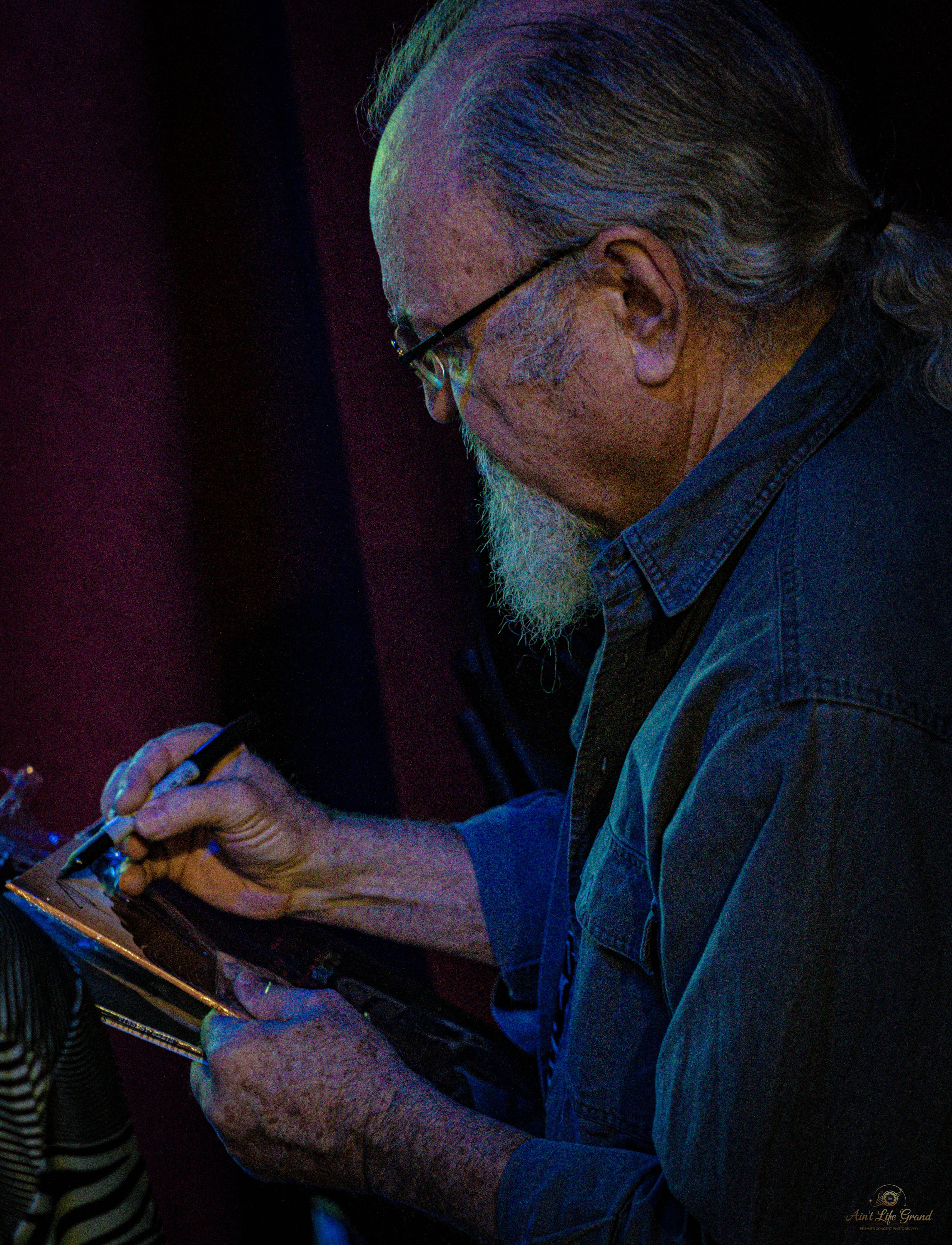
That is what made the night linger. It was intimate without being small. Funny without becoming lightweight. Reverent toward the blues without embalming it. Ellis did not arrive as some distant elder statesman there to deliver wisdom from the mountain. He came across like a man still thrilled by the music, still amused by its characters, still willing to sit in a room and tell you how he learned what he learned.


Please consider Donating to Sponsor an article even $1 helps!
