



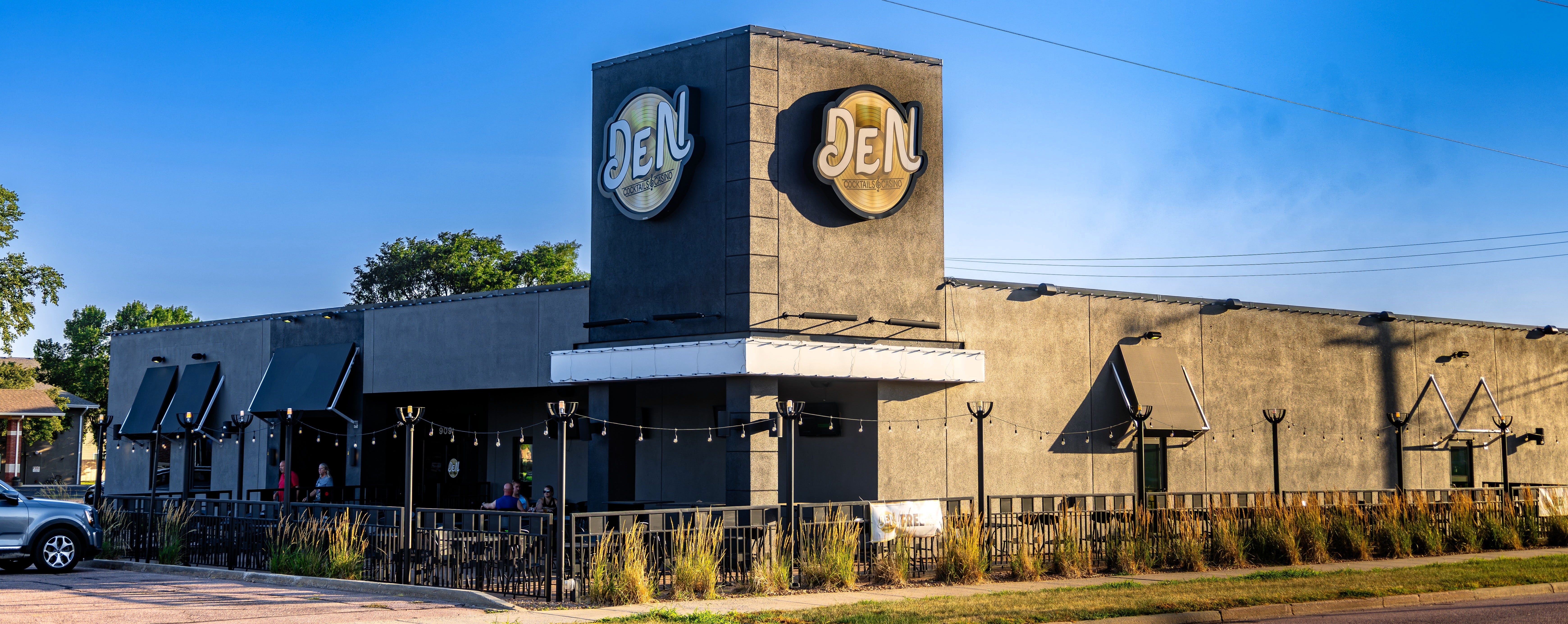
The Den
The Den occupies the remains of an old Buffalo Wild Wings, a building I had not entered since the wings stopped flying. From the outside, the place could easily pass for another neighborhood bar waiting on its regulars. Step through the doors on a concert night, however, and its second life becomes visible.
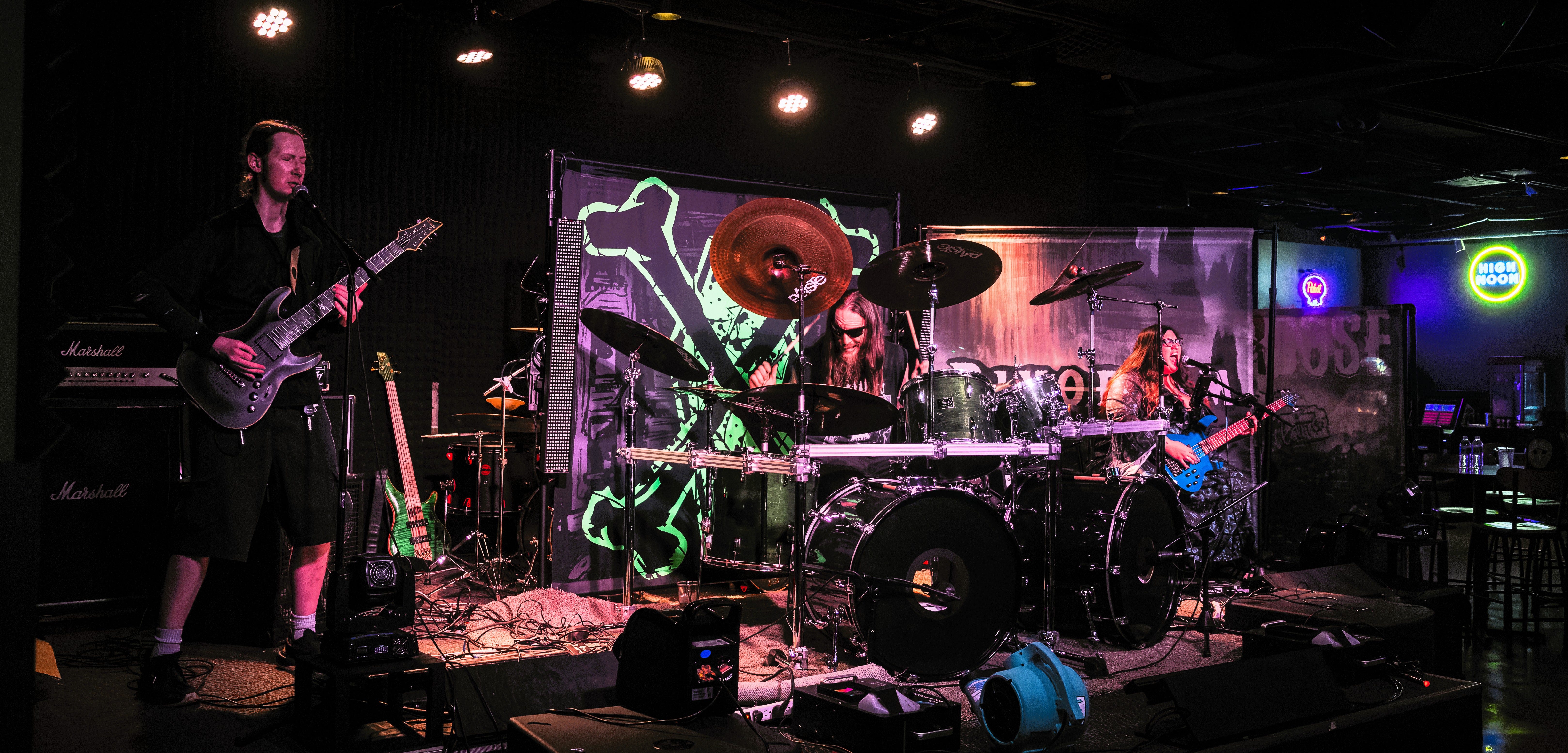
The Den offers pinball, billiards, darts and foosball alongside drinks for those looking for somewhere to land after dark. Fairly regularly, the room opens for a more specific crowd: concertgoers. Pool cues share space with guitar cases. Conversations compete with sound checks. People begin gathering near the stage instead of around the televisions.
On this Thursday evening, The Den belonged to the Point of No Return shows with Sioux Falls’ Rivorium, Iowa horror-rock institution Grave Corps and Portland industrial nu-metal band Amerakin Overdose.

Three people and plenty of thunder
The advertised starting time came and went while Rivorium worked through a last-minute bass problem. Equipment has a sense of humor about schedules, especially after somebody has already printed one on a flyer. The delay could have rattled the trio, but once Rivorium took its place, the set moved forward without another visible hitch.
Watching a genuinely local band walk onto a Sioux Falls stage carries a different feeling. There is no distance between the performers and the community being represented. These are not mysterious travelers appearing from a faraway tour van. They are people we know from around town, now standing under stage lights and asking everyone to hear another side of them.
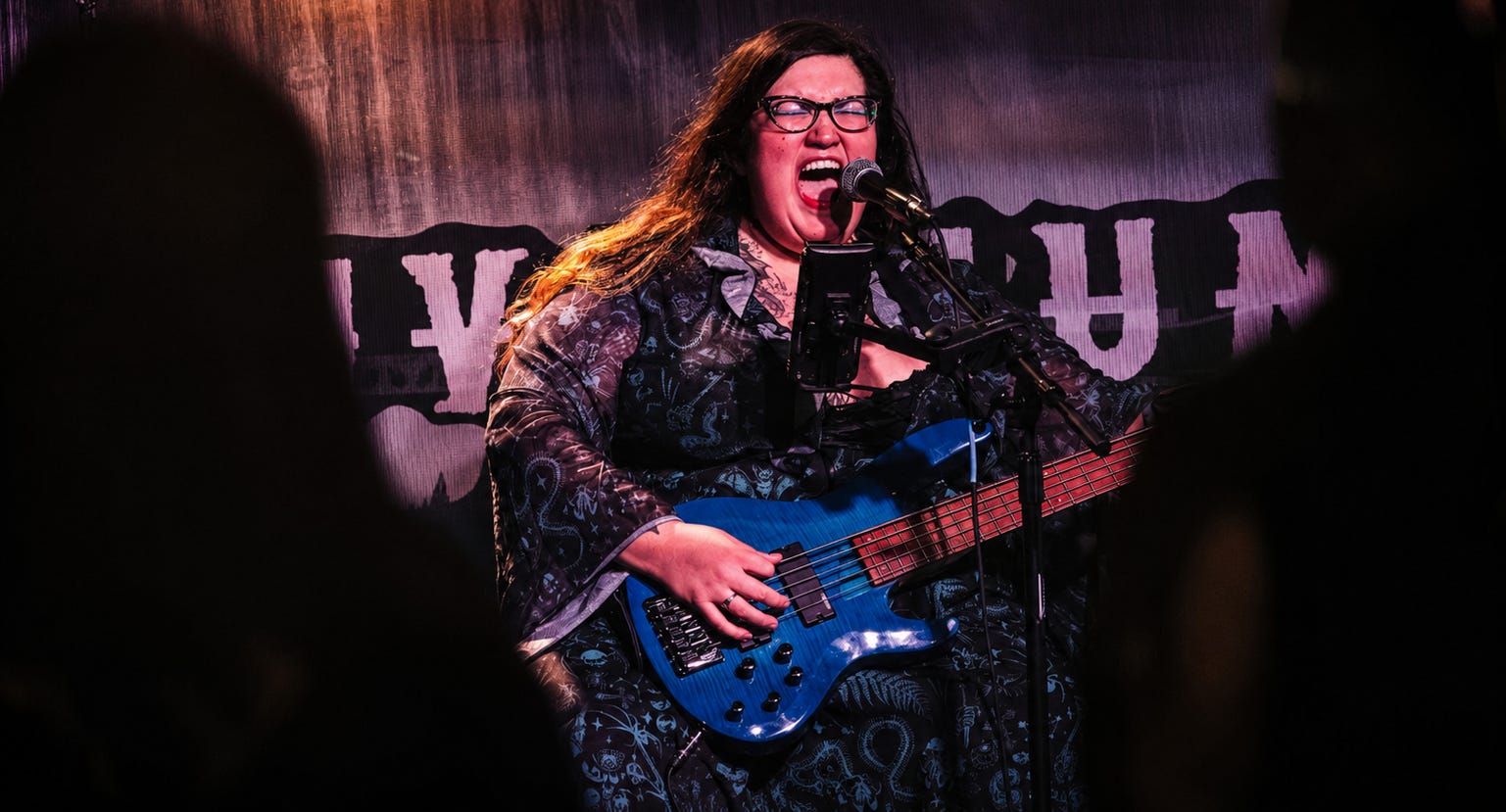
Lead vocalist and bassist Mariah is also a friend of ours. She entered the performance with an injured foot, forcing her to remain seated throughout the set. Sitting limited her movement, but it did not weaken her command of the music.
She handled vocals and bass simultaneously, marking only the second time I have watched a lead singer carry the low end of a band from center stage. John Cooper of Skillet immediately came to mind, although this arrangement arrived in female form and inside a considerably smaller room.
Rivorium is only a three-piece, but the sound was never thin. The trio brought powerful riffs, frequent rhythmic turns and enough volume to make the venue feel several feet smaller. Their songs traveled through extended passages and time changes without losing their central direction. One section would settle into a steady classic-metal stride before another turn pulled the arrangement elsewhere.
Mariah described Rivorium’s music as storytelling, and her explanation matched what we heard. These songs were not built solely to reach a chorus as quickly as possible. They unfolded in scenes, allowing the riffs and tempo changes to carry the narrative.
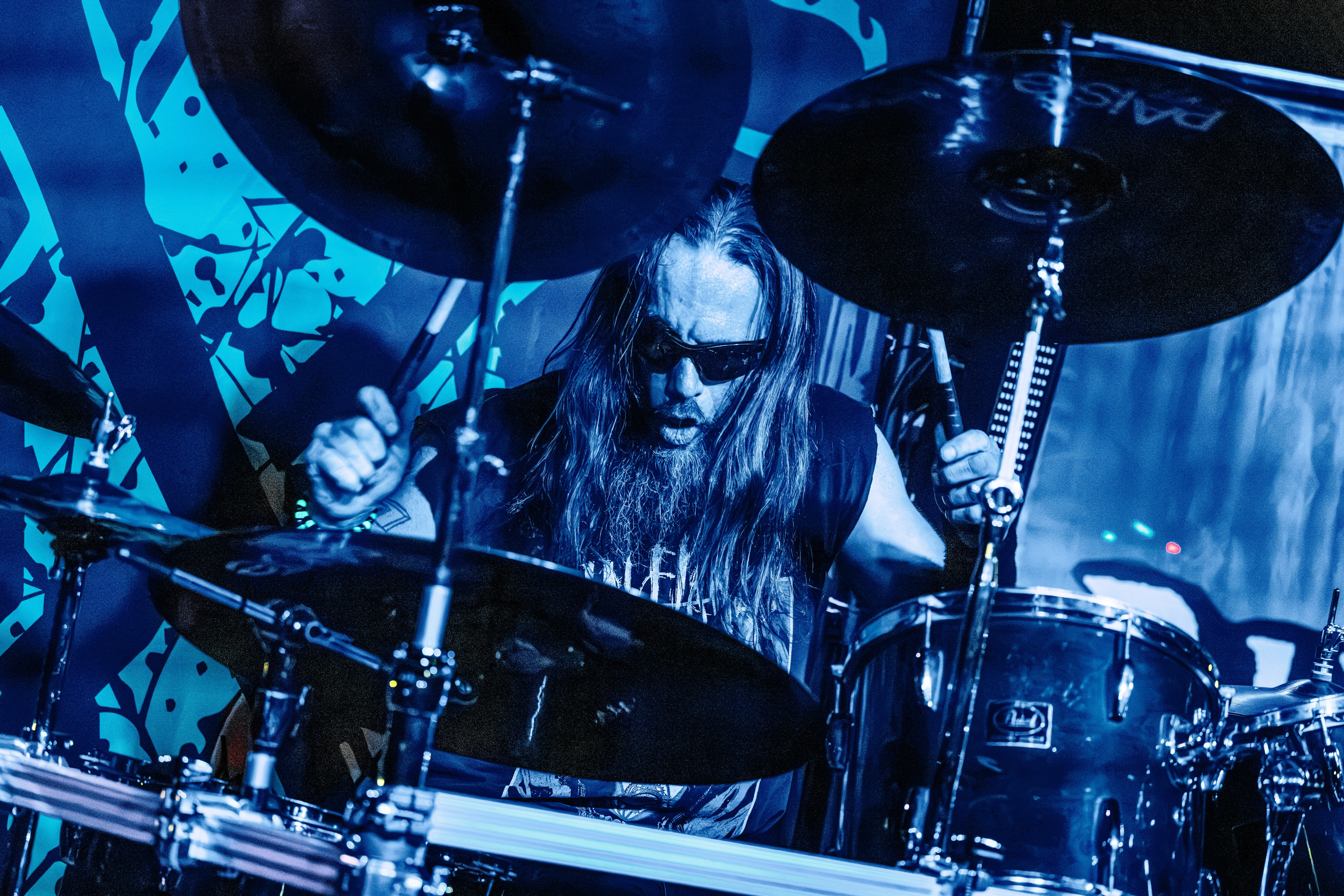
One introduction reached into family memory, bringing up white-magic cards and a song written about her grandmother. Even without every detail explained, the personal origin gave the performance another layer. Someone’s family history had found its way into a Sioux Falls bar through a bass line and a wall of guitar.
Rivorium’s sound carries classic rock and traditional metal instincts, while the structural turns keep it from becoming simple revivalism. The trio can provide the blunt satisfaction of a heavy riff, then complicate it with longer arrangements and narrative ideas.
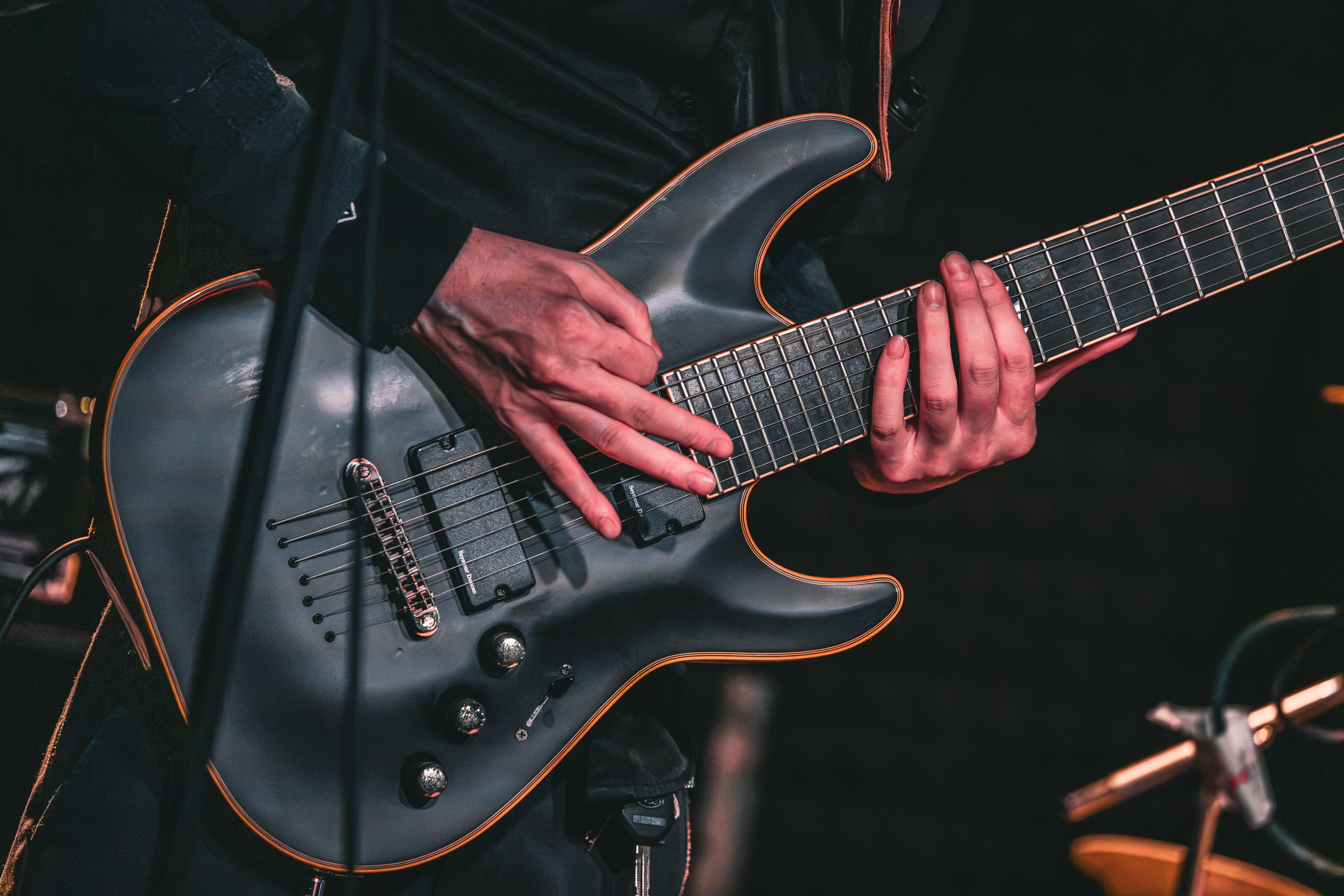
The delayed start and Mariah’s injured foot remained visible around the edges of the set, but neither controlled the performance. Once the trio started playing, Rivorium sounded prepared to stay on its feet—even if its singer temporarily could not.
Nineteen years among the undead
Our press director knew exactly what he was doing when he sent us to cover a bill featuring Grave Corps. He had already experienced them at the Iowa Music Awards. Once seven blood-covered musicians took their places inside The Den, we understood why he wanted our eyes on them.

Grave Corps followed with the second female-fronted band of the evening, but nearly everything else changed when the seven musicians took their positions.
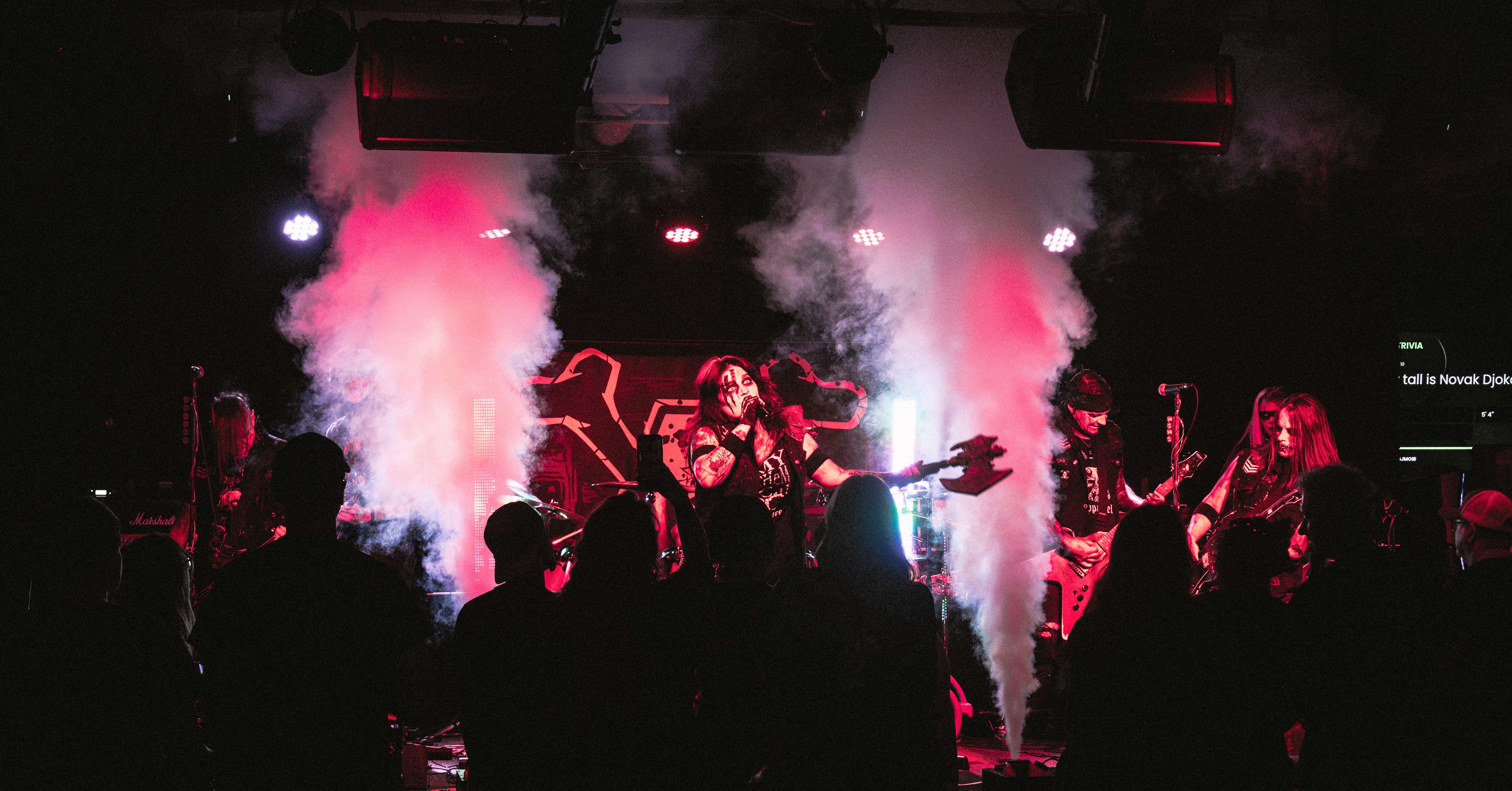
For nineteen years, Grave Corps has developed its own corner of horror rock in Iowa. The group began in 2007, building from horror-punk foundations while pulling in sleaze rock, classic heavy metal and the theatrical instincts of performers who understand how much the eyes contribute to hearing a song.
The current seven-member incarnation arrived with face paint, fake blood, dark costumes and enough undead personality to resemble KISS after a long and unfortunate evening in a cemetery. Grave Corps does not treat its visual presentation as a seasonal accessory. The costumes belong to the identity of the band. Remove them and the songs would remain, but part of Grave Corps would disappear.
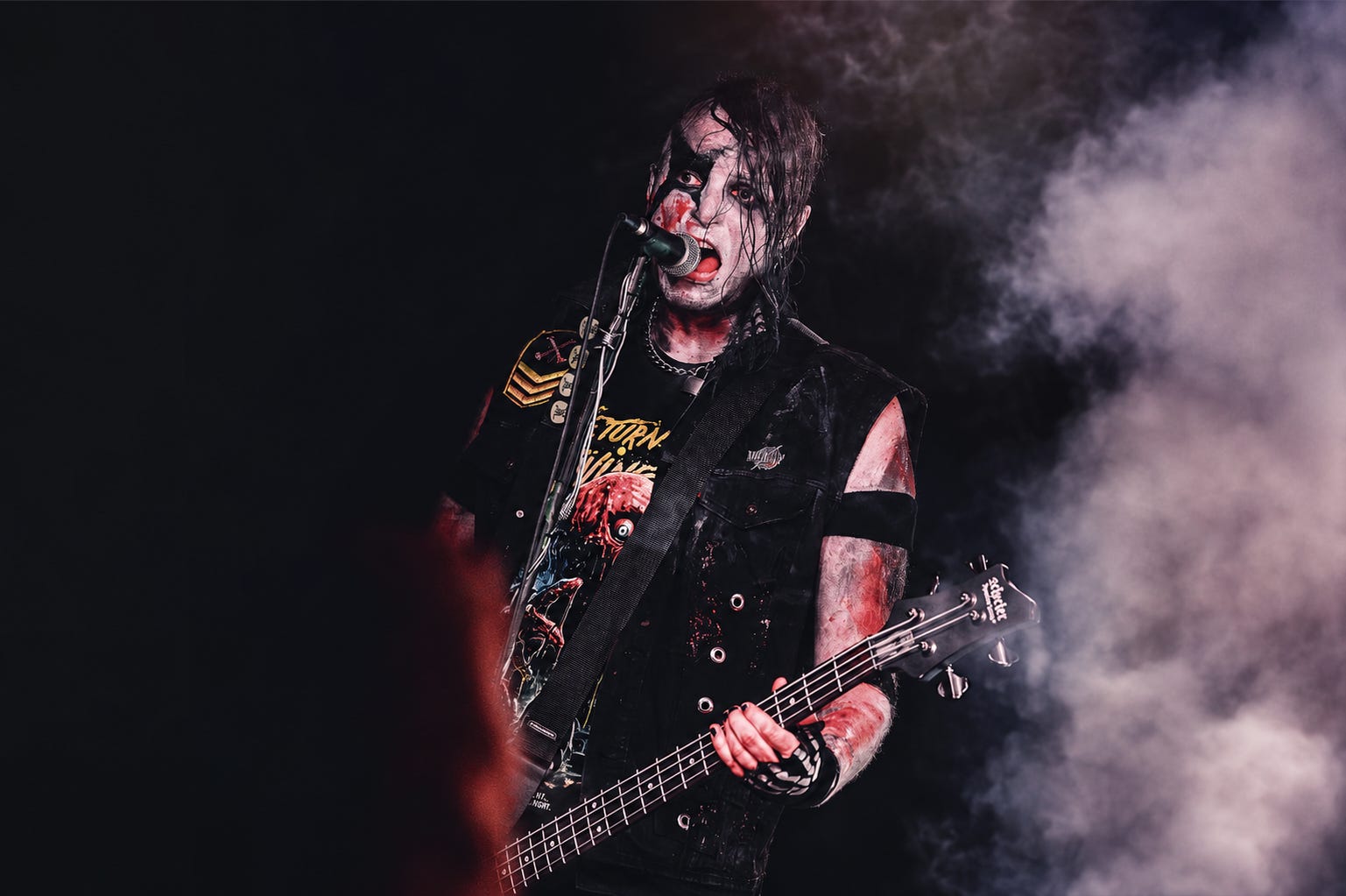
The commitment reminded me of covering Castle Rat, another group willing to step fully into its imagined world. For artists operating this way, wardrobe does not hang around the music as decoration. It gives the music a body.
At the center stood Traci Von Krypt, a powerful vocalist capable of leading six other musicians without vanishing into the crowd behind her. Her voice brought grit and range along with a firm grasp on melody. Grave Corps may arrive drenched in fake blood, but the group knows its way around a hook.
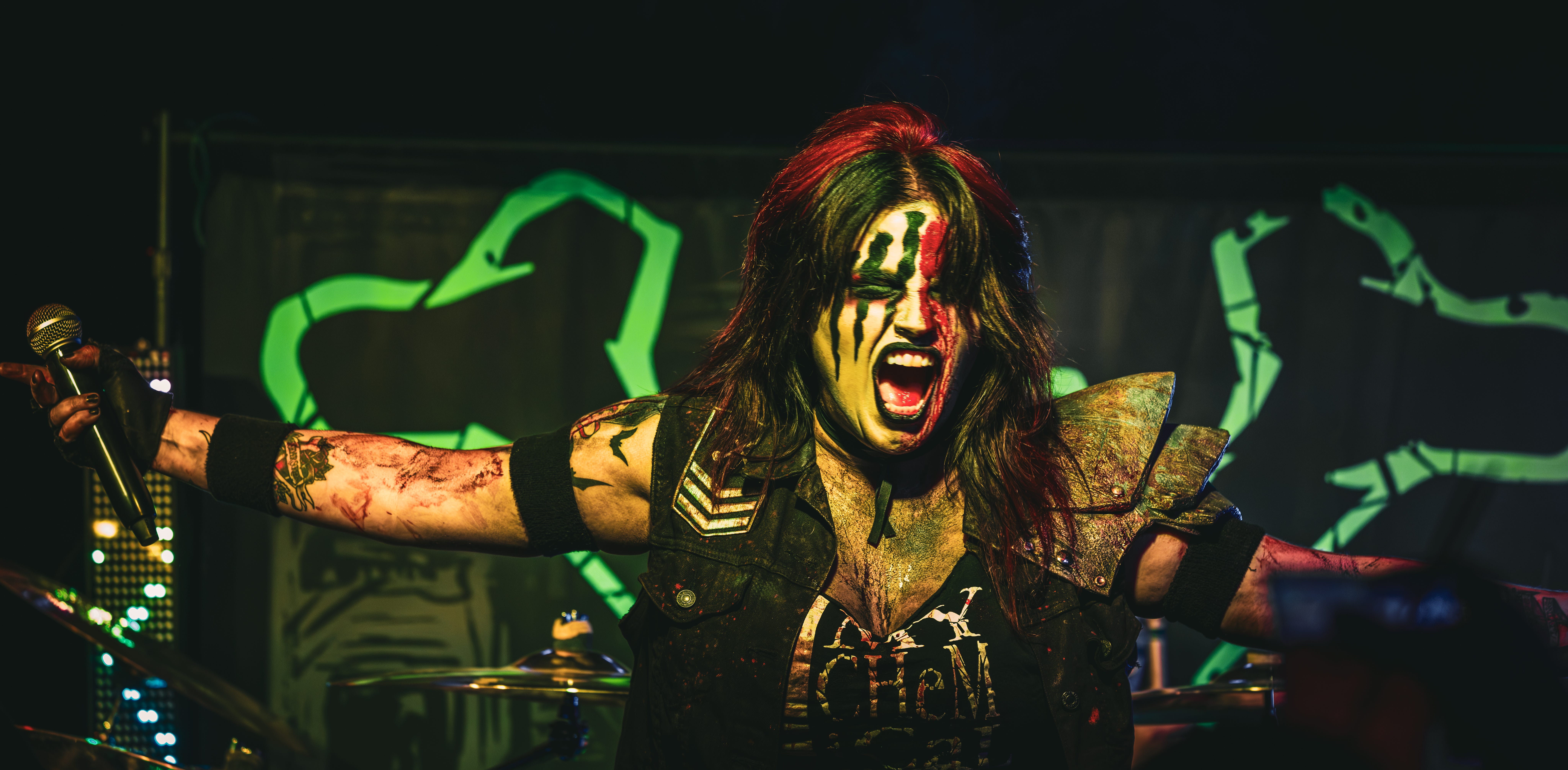
Their balance between heaviness and movement shaped the set. The riffs remained steady enough to pull heads into motion while the rhythm carried a hip-moving rock-and-roll swing. The audience could headbang, dance or invent a compromise involving both.
Three guitars, bass, drums and keyboards gave the arrangements considerable weight, yet the musicians did not simply stack noise until every open space disappeared. Each part served the song, producing a broader and more melodic attack than the band’s early horror-punk material.
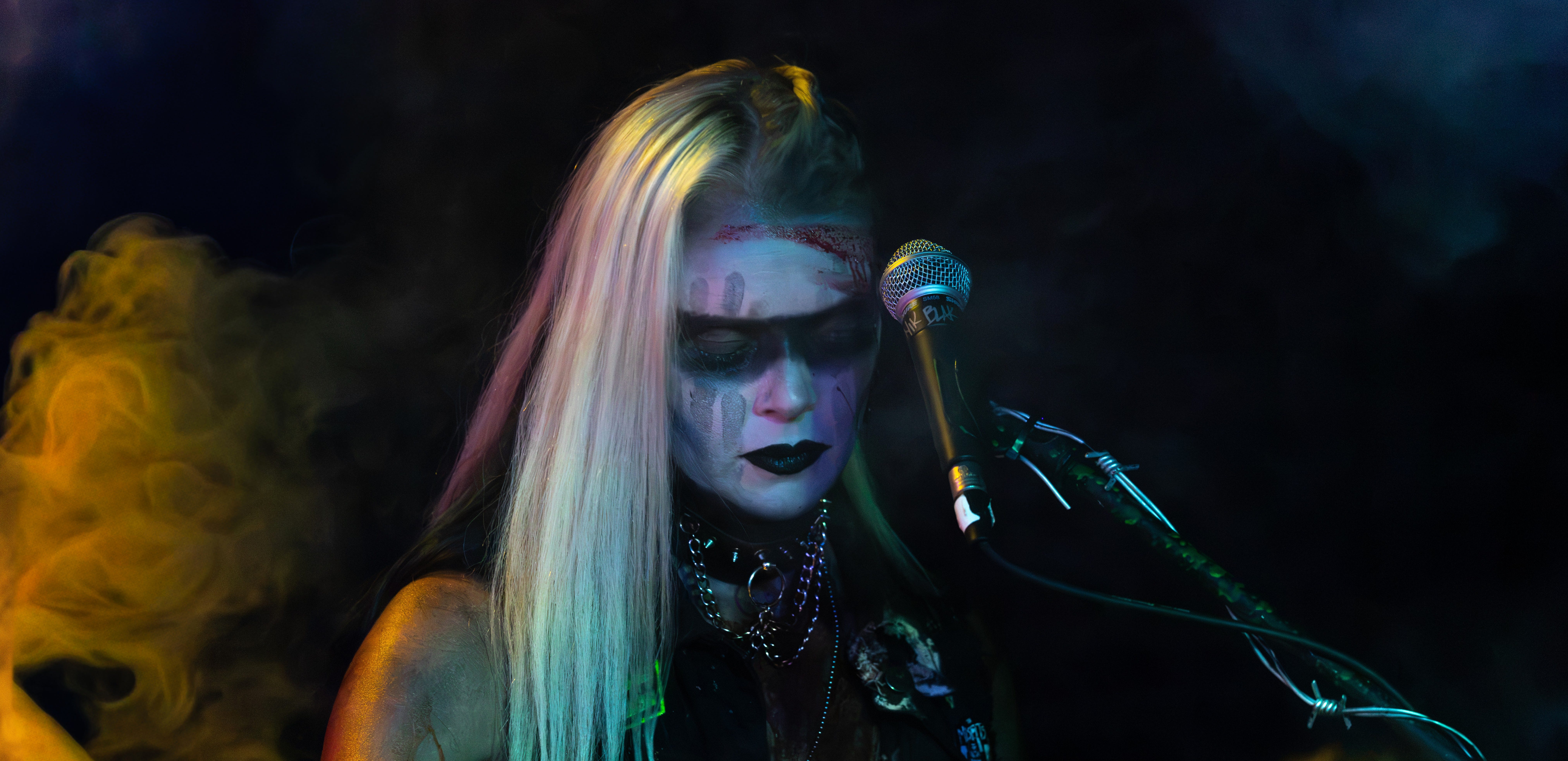
Gang vocals and theatrical flourishes gave the songs a communal quality suited to the band’s name for its following, the Army of the Undead. Several fans already knew the material, providing Grave Corps with voices from the floor whenever a chorus called for reinforcements.
The performance included music from the group’s recent chapter. The two-track Hellfire Boulevard release arrived in August 2025, pairing its original title song with a cover of W.A.S.P.’s “Wild Child.” “Hellfire Boulevard” begins with an engine before racing into melodic guitar work, gang vocals and a hard-rock drive built for a midnight road with questionable intentions.
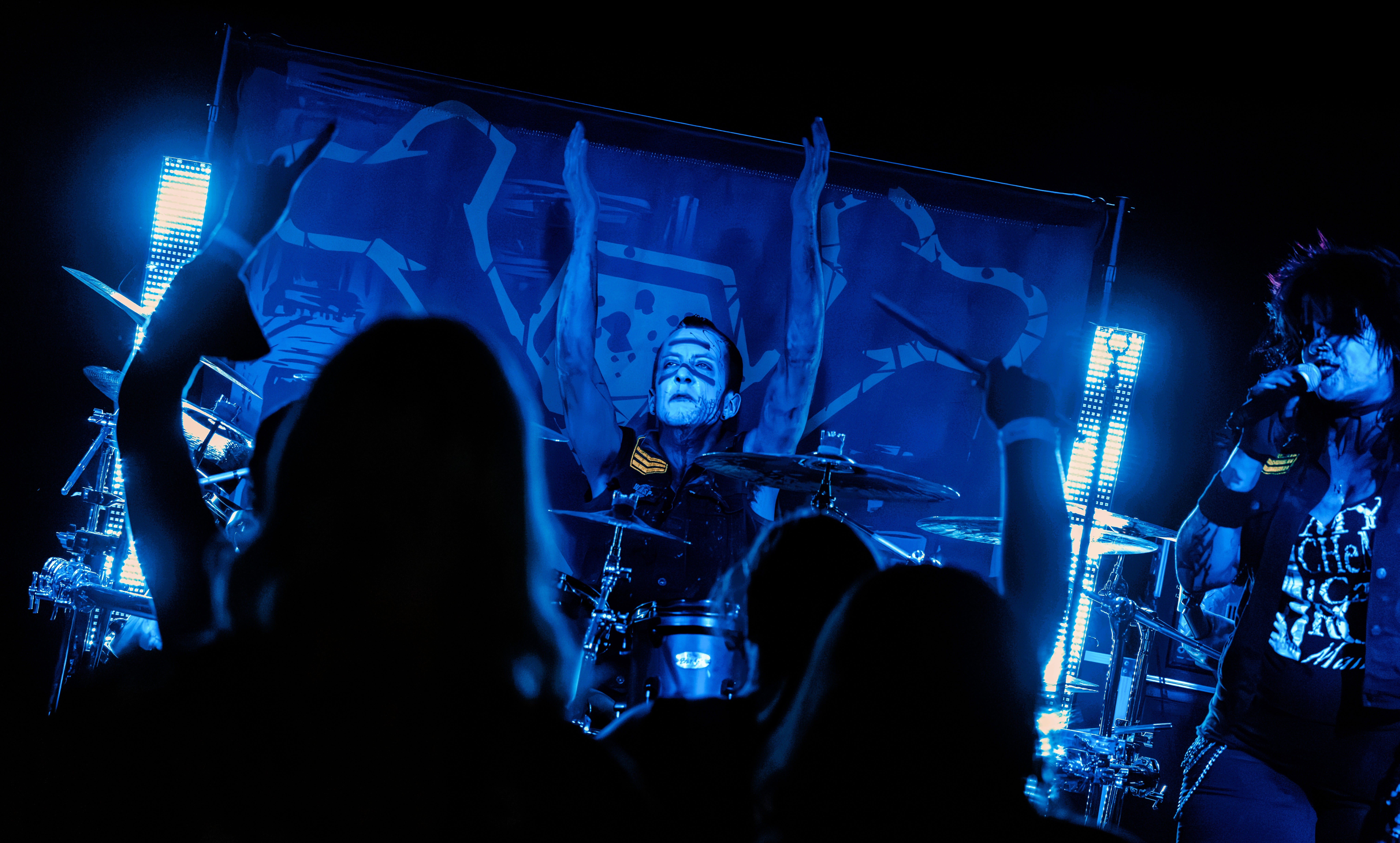
Their rendition of Alice Cooper’s “School’s Out” became one of the set’s most recognizable moments. Cover songs can become dead space when a band merely recreates something everyone already knows. Grave Corps pulled the song into its own theatrical world instead. The familiar chorus remained, while the blood-spattered presentation and heavier delivery made it sound at home among the undead.
The horror presentation also connects to work far removed from fake knives and stage blood. Grave Corps helped create Rock 108’s annual Chaos for a Cause Halloween concert in Waterloo. The event supports the Iowa Giving Crew’s Operation Give Birds, which distributes complete Thanksgiving meals to families across eastern Iowa.
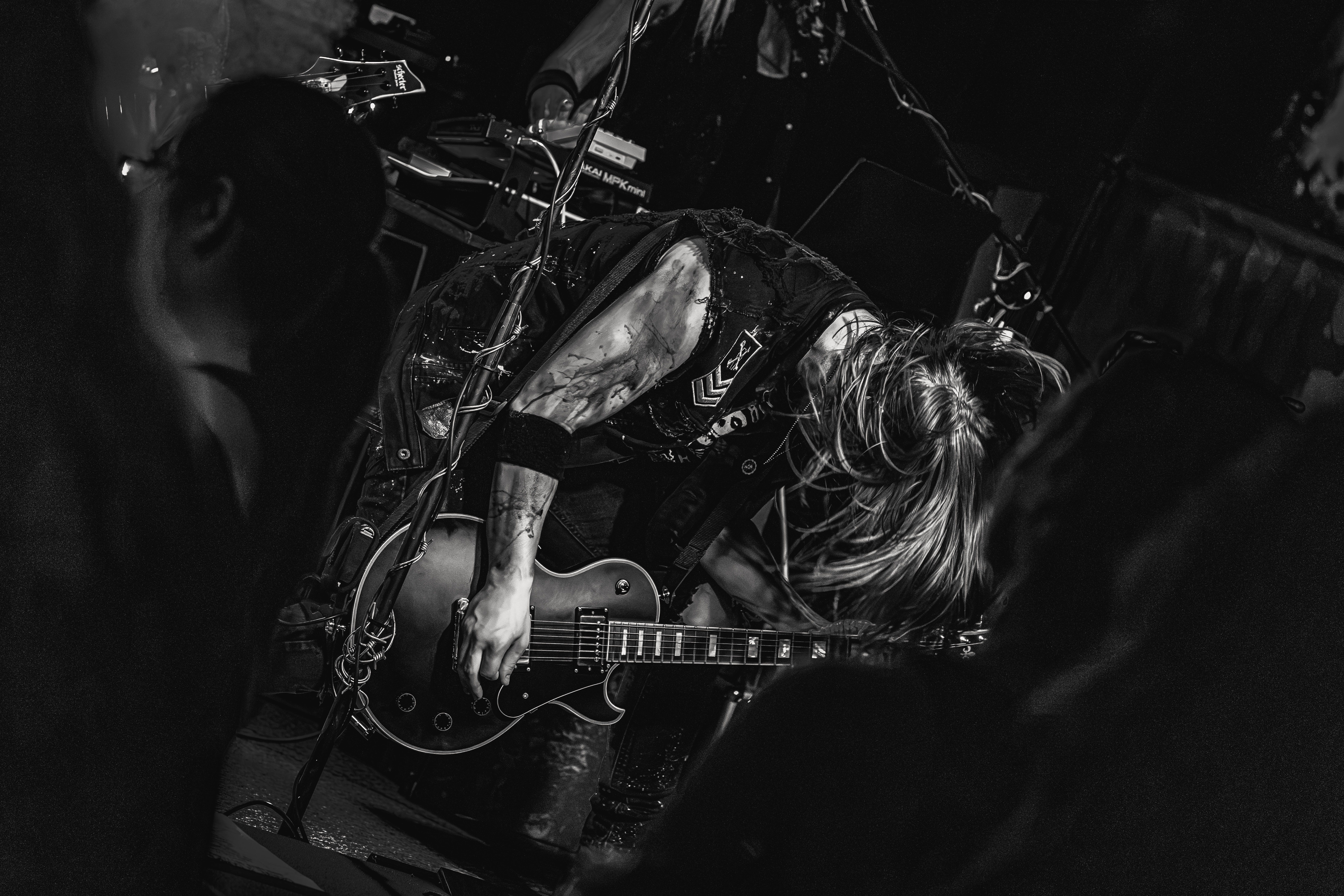
By its fifth year in 2025, Chaos for a Cause had raised over $32,000 through its first four events. Operation Give Birds planned to provide meals to over 2,500 families during the 2025 holiday season, with each package designed to feed at least four people. Roughly 10,000 people could sit down to turkey, potatoes, stuffing, vegetables and the dignity of preparing a holiday meal at home.
Grave Corps spends the year raising the dead. Around the holidays, the band helps feed the living.
Please consider Donating to Sponsor an article even $1 helps!

The masks arrive from Portland
Amerakin Overdose entered next, ending the evening’s streak of female lead vocalists and pushing the room from horror rock into industrial nu-metal.
The band hails from Portland, Oregon, rather than Billings, Montana. Amerakin Overdose had performed in Billings the previous evening before continuing east to Sioux Falls. The Den was one stop in the group’s Point of No Return run, which would take them to Rock Fest in Cadott, Wisconsin two days later.
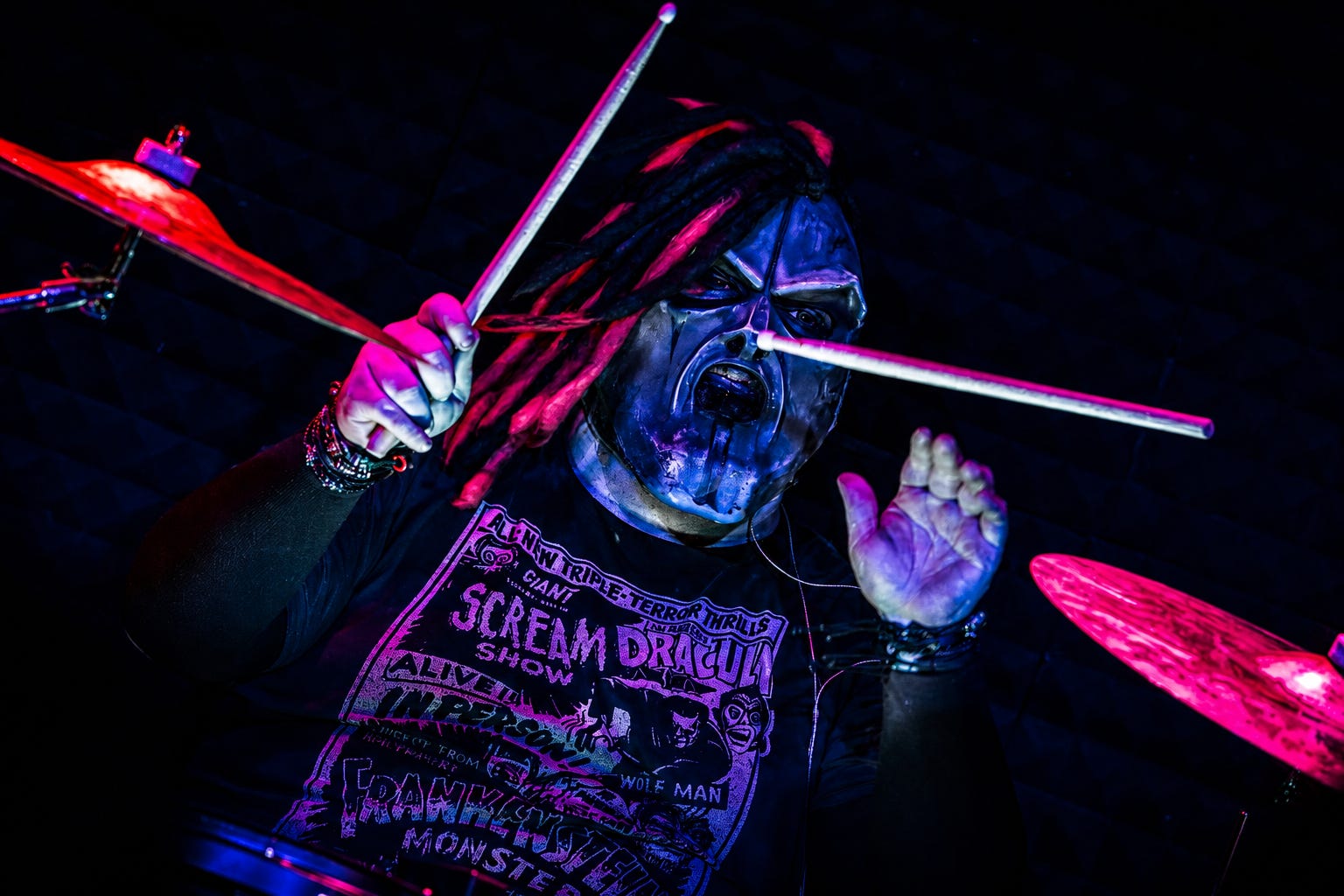
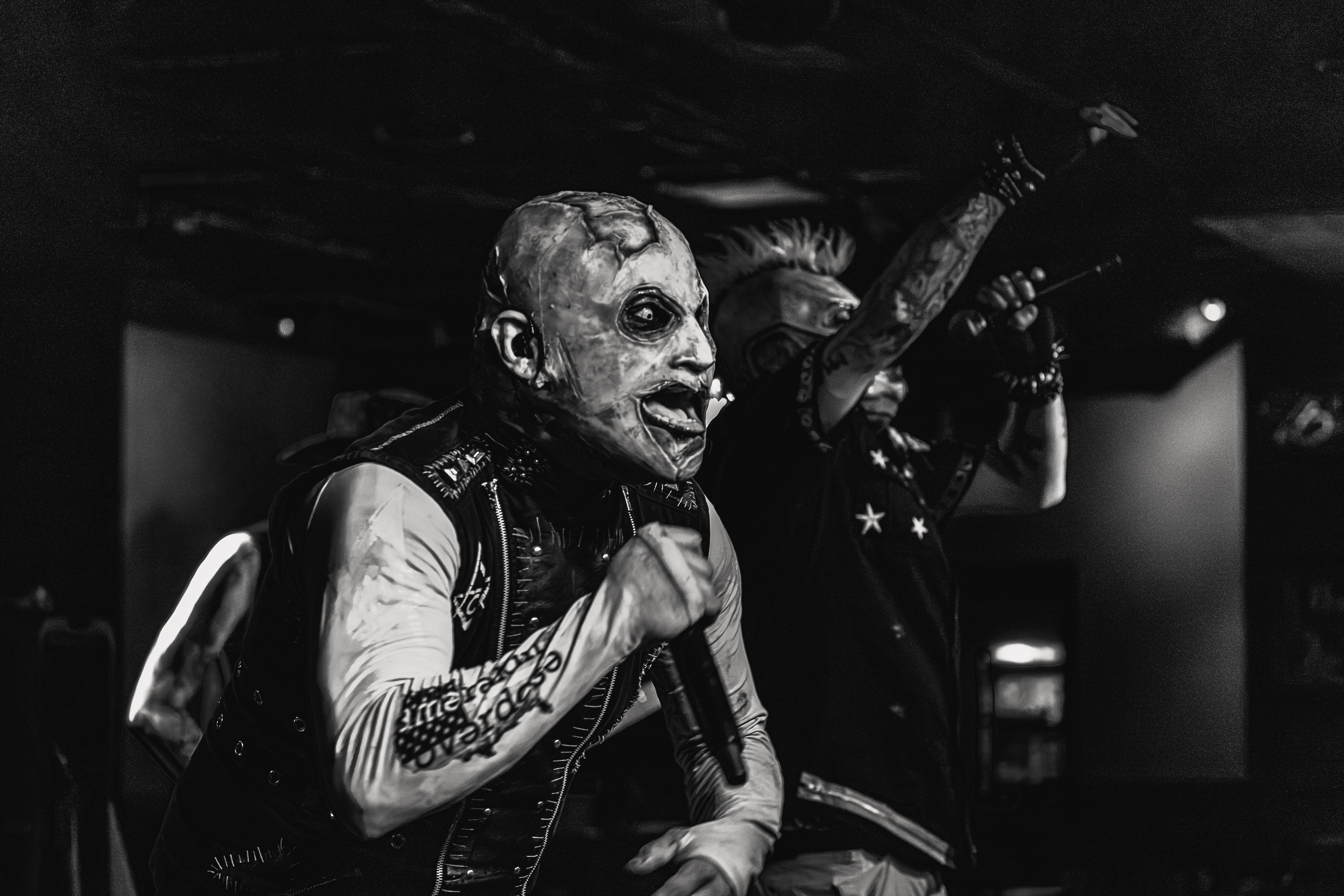
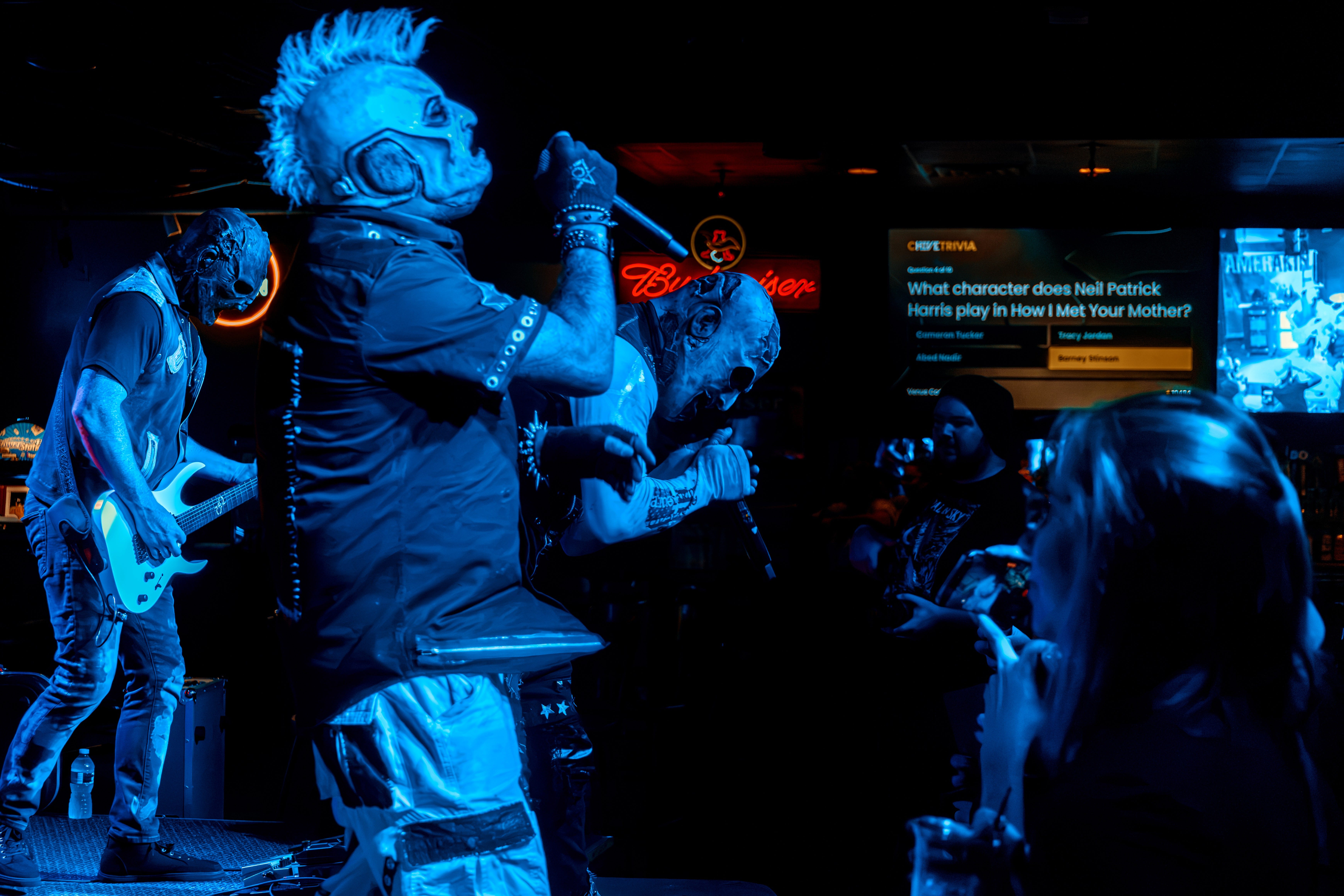
The Slipknot influence announced itself immediately. Every member appeared in a mask, while the music arrived with downtuned grooves, electronic textures, dual vocals and the physical bounce associated with nu-metal’s heaviest years. The resemblance was easy to hear, but Amerakin Overdose carried enough personality to escape the shadow of its influences.
The band’s identity grew from a satire of American excess. Vocalist Cody Perez founded Amerakin Overdose in 2009 as an outlet for his thoughts on the country’s appetite for celebrity, violence, sex and manufactured identity. Even the altered spelling of “Amerakin” feels like a corrupted brand name pulled from a culture consuming too much of itself.
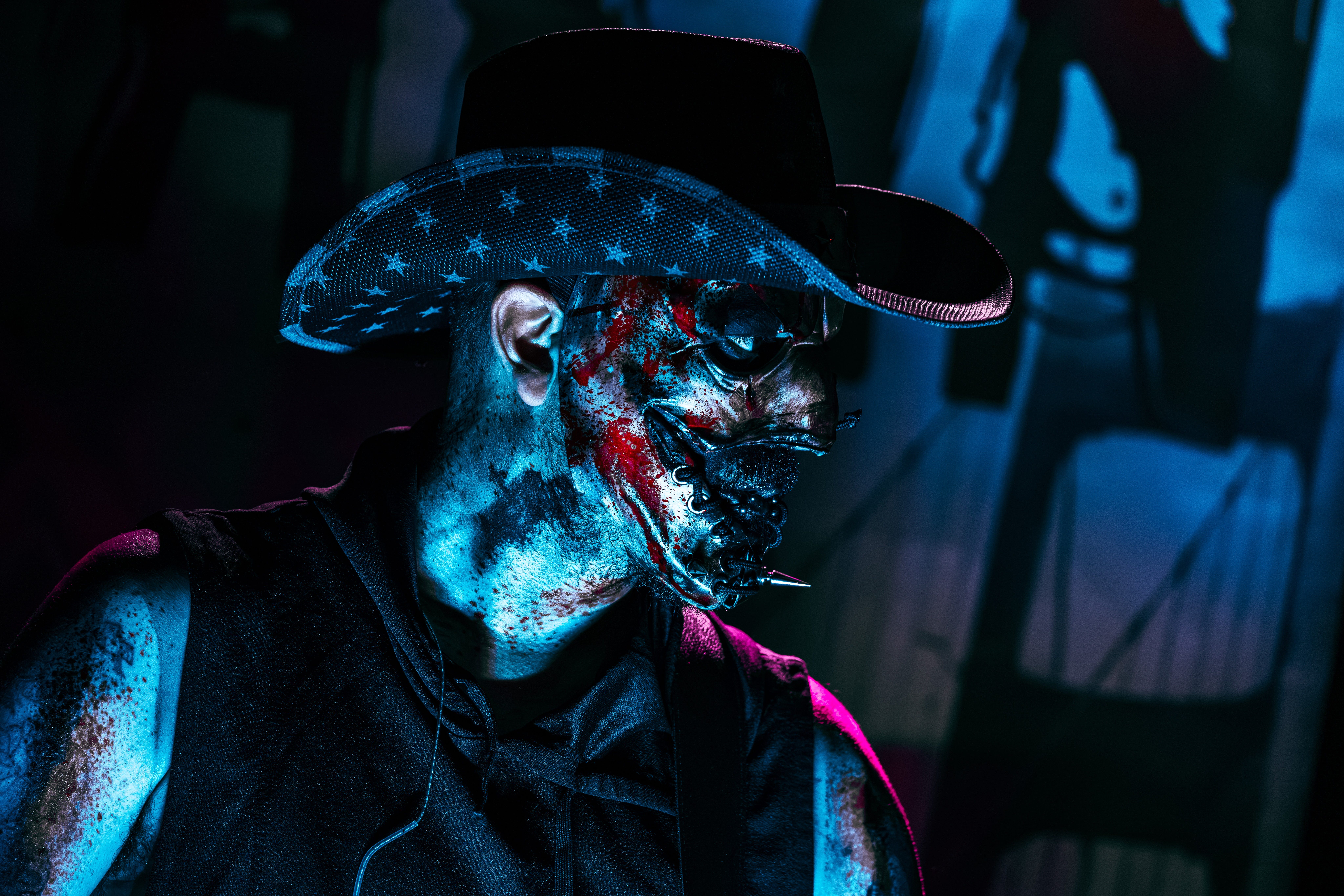
The masks represent characters distorted by greed, vanity and social decay. Their faces are ugly because the habits underneath them are ugly.
Amerakin Overdose also arrived prepared to claim the room. Much like Grave Corps before them, they carried their own lights, illuminated signs and banners. Those details can seem small until someone is trying to identify performers and reconstruct the evening later. A visible band name is a welcome gift for writers, photographers and new listeners trying to remember who just rearranged their hearing.
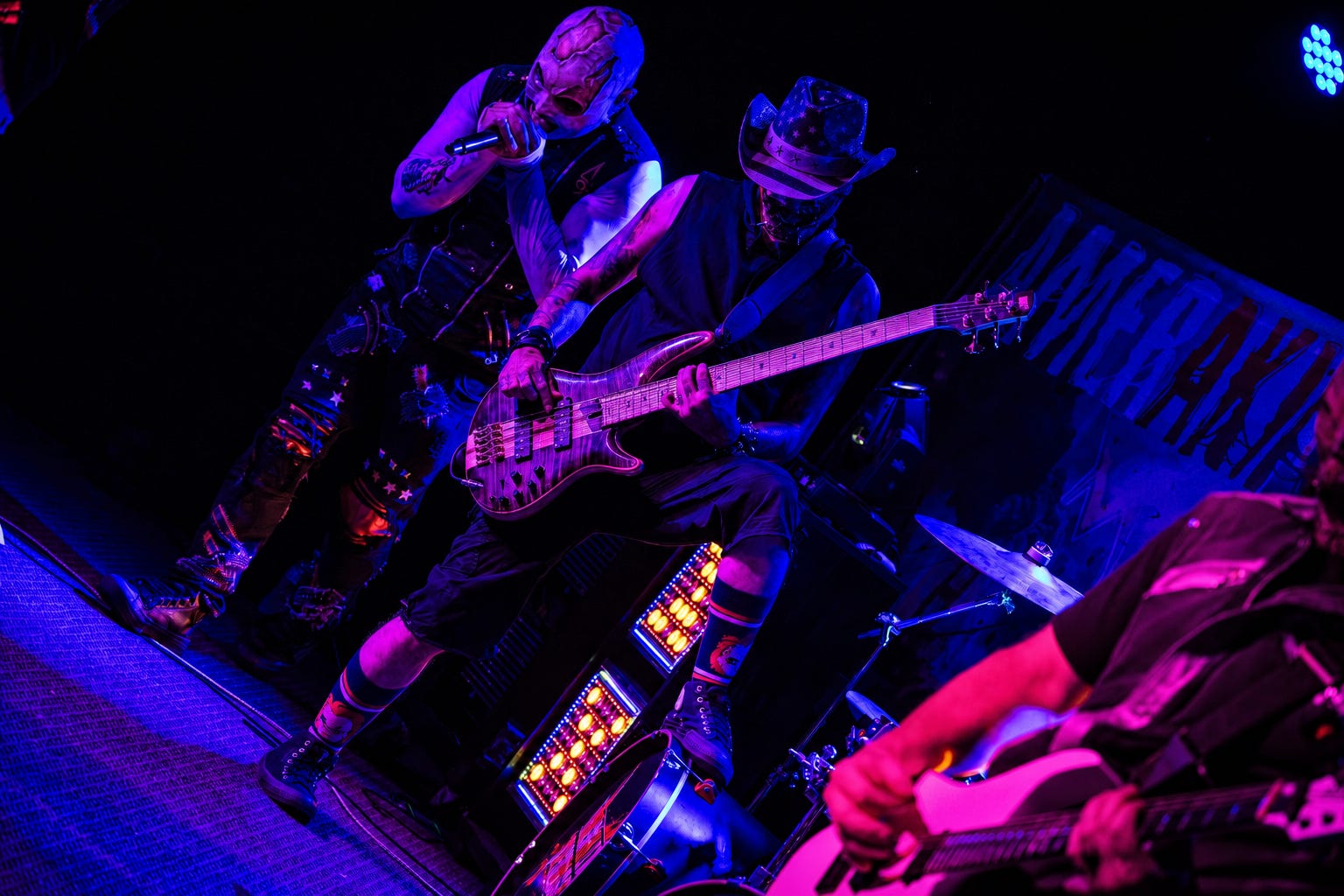
The lighting and signs made the small stage theirs. The result felt less like a touring group borrowing the corner of a bar and closer to stepping briefly into the world of Amerakin Overdose.
Both touring bands brought visible supporters who already understood their music. Familiar fans change the opening minutes of a set. Someone already knows when to shout, where the chorus lands and which riff demands movement. The band receives an immediate response instead of spending half its set introducing itself.
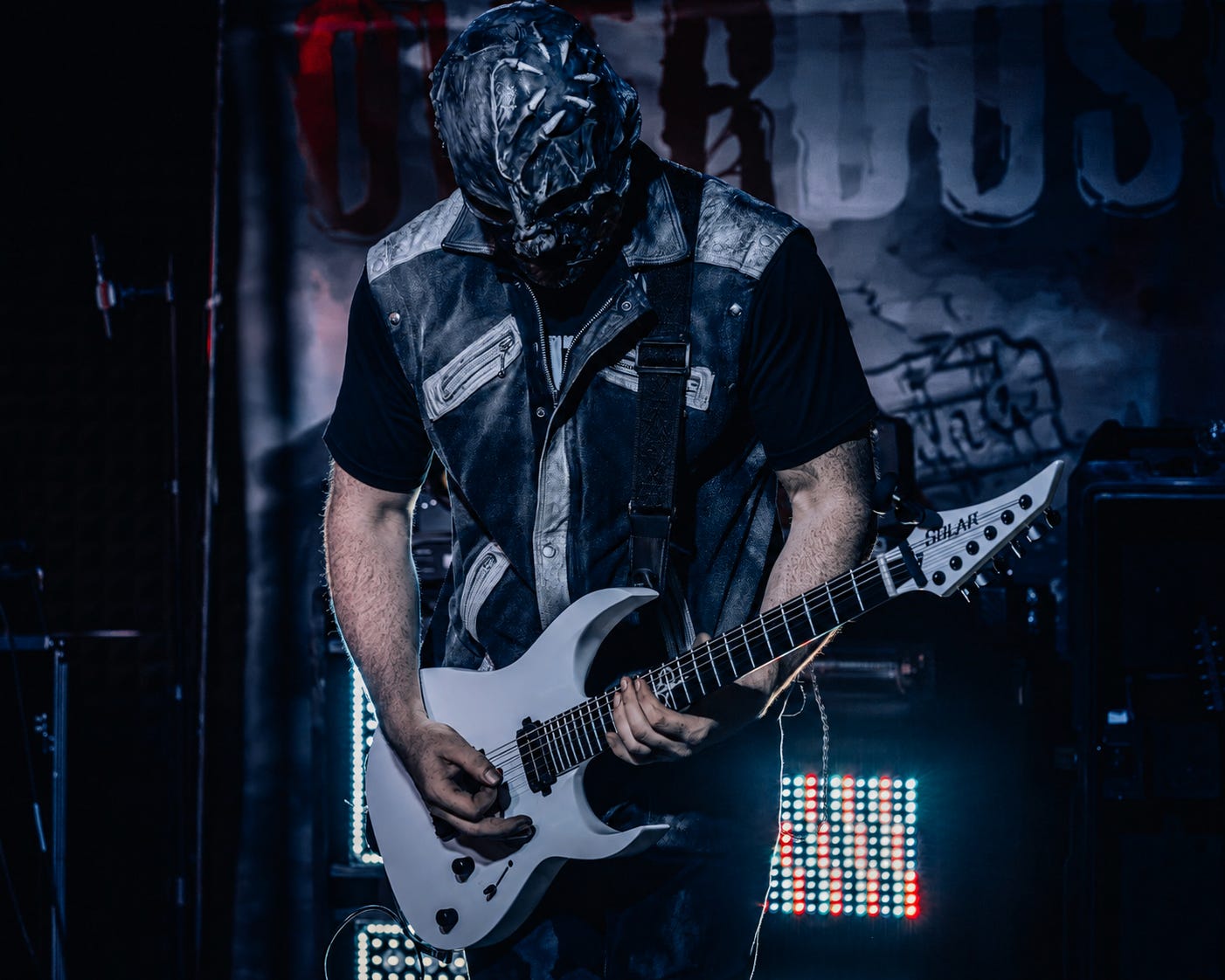
Amerakin Overdose mixed screams, melodic vocals and rhythmic phrasing over groove-heavy guitar work. Electronic layers thickened the atmosphere while the rhythm section kept everything moving. The music was aggressive without becoming shapeless. Hooks remained buried inside the machinery.
The strangest and most entertaining turn came when the band launched into “Genie in a Bottle”, the Christina Aguilera hit few people would expect to hear during an industrial-metal show.
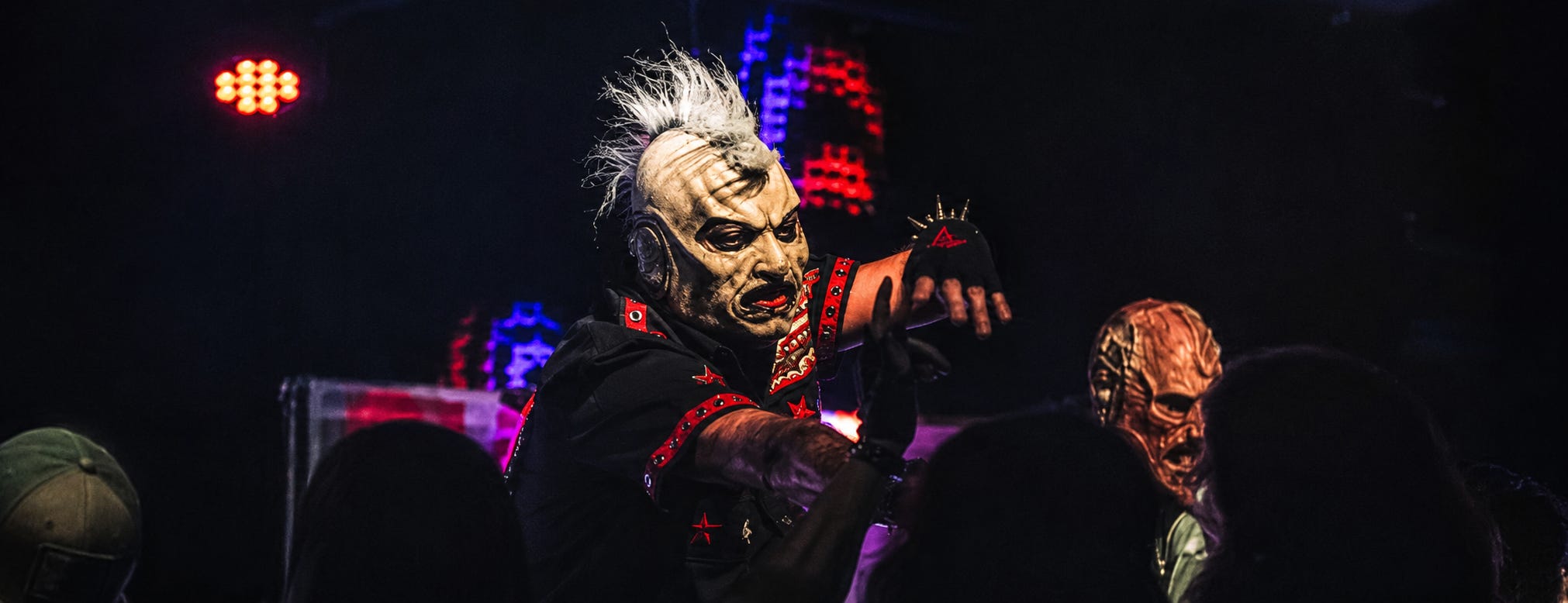
Amerakin Overdose respected the pop structure underneath the original, rebuilt it with heavier guitars and allowed the collision between nostalgia and metal to carry the moment. When one vocalist extended the microphone toward the women near the stage, they supplied the familiar lyrics. A Portland shock-rock band in grotesque masks had turned The Den into the least predictable late-1990s singalong in Sioux Falls.
The cover also suited the group’s fascination with celebrity, desire and pop culture. Amerakin Overdose has spent years criticizing the machinery of fame while remaining willing to reach inside it and pull out something catchy.
Their recent music has grown increasingly personal. The 2024 album Artificial Infection focused heavily on social media, digital dependency and corrupted identity. Newer songs including “Time Bomb,” “My Endless Battle” and “Oxygen” turn toward trauma, mental health, emotional captivity and the struggle to escape destructive attachments.
The newer work complicates the masks. They once served primarily as monstrous reflections of society. Now the songs are beginning to expose the people wearing them.
Afterglow
Rivorium played through an injured foot and a delayed bass. Grave Corps brought nineteen years of blood, melody and charitable mischief onto a small stage. Amerakin Overdose carried its masks, lights and corrupted pop songs across the country before leaving for one of Wisconsin’s largest rock festivals.
The equipment packed away. The old Buffalo Wild Wings returned to looking like a neighborhood bar. For a few hours, though, the room had held white-magic cards, undead rock and Christina Aguilera beneath a wall of industrial guitars.
Please consider Donating to Sponsor an article even $1 helps!
