



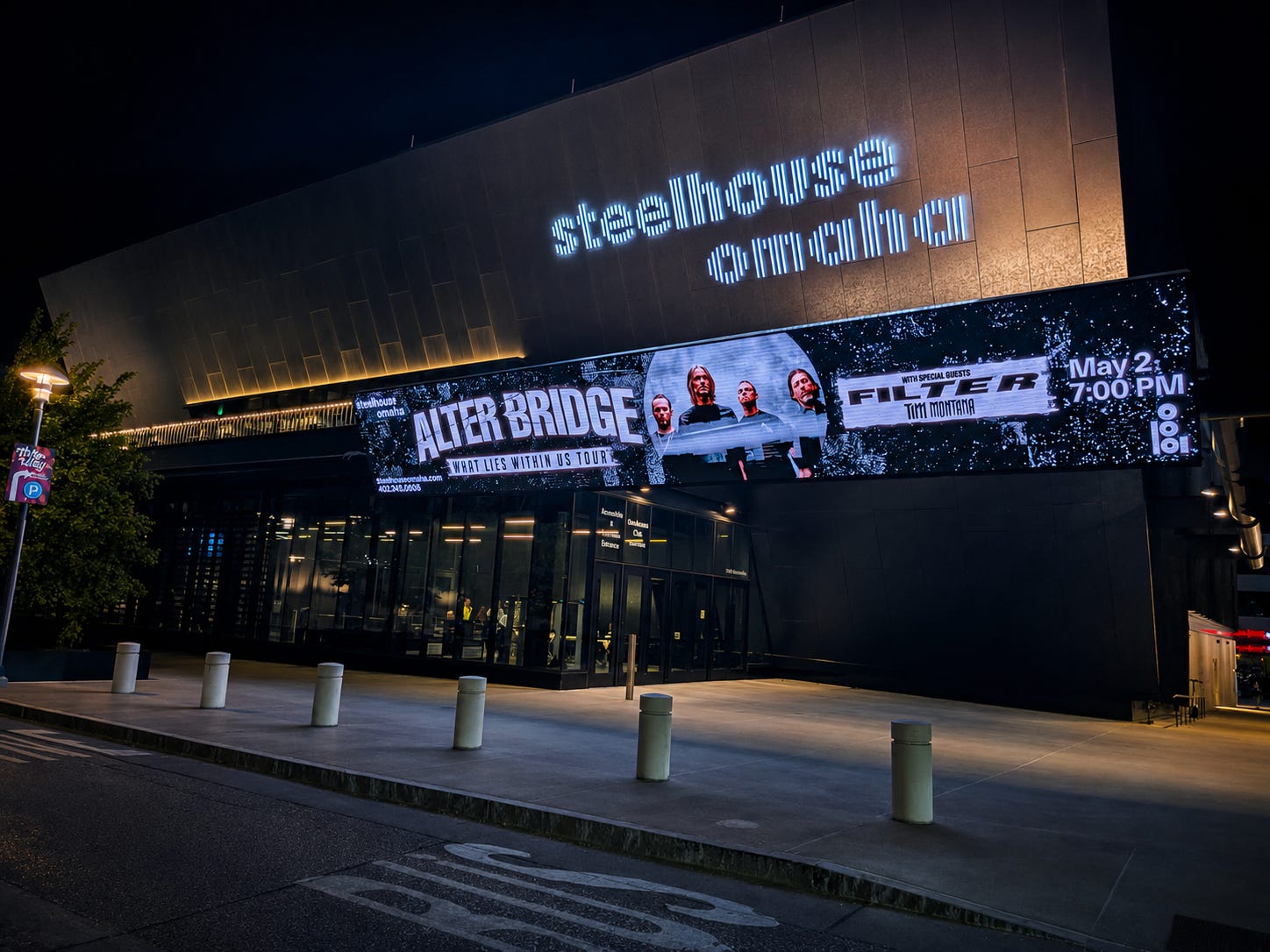

The nearly sold-out Omaha stop of Alter Bridge’s What Lies Within Tour had the kind of electricity that does not politely announce itself. It was already moving through Steelhouse Omaha before the first full band hit landed, bouncing off the floor, climbing the walls, and making its way up to the Lounge like voltage looking for somewhere to live.
Watching from upstairs changed the whole night. Down on the floor, a rock show can swallow you in bodies, volume, and instinct. From the balcony, the machinery reveals itself. The massive circular LED rigs were not just big glowing ornaments. They had geometry. The vertical light pillars were not just there to blast color at people’s faces. They gave the stage a frame, a kind of cathedral math. From above, you could see how intentional the whole production was, how the circles and columns kept shifting the eye back toward the band without ever letting the room feel still. It was arena thinking inside a room tight enough that you could still catch the human details.
And the best human detail of the night happened before the show really began.
A crew guy named Mike met a fan who had brought a photo of herself as a 9-year-old from the band’s very early days. That kind of thing can easily become another “sorry, we can’t” moment in the machinery of a concert night. Mike made it something else. He took the photo backstage and got the band to sign it for her. Before Tim Montana had kicked into gear, before Filter turned the room blue and white, before Alter Bridge’s lights started moving like planets, that fan had already gotten the memory she came for. Maybe better than the one she came for.
Please consider Donating to Sponsor an article even $1 helps!

The Room Before the Riff
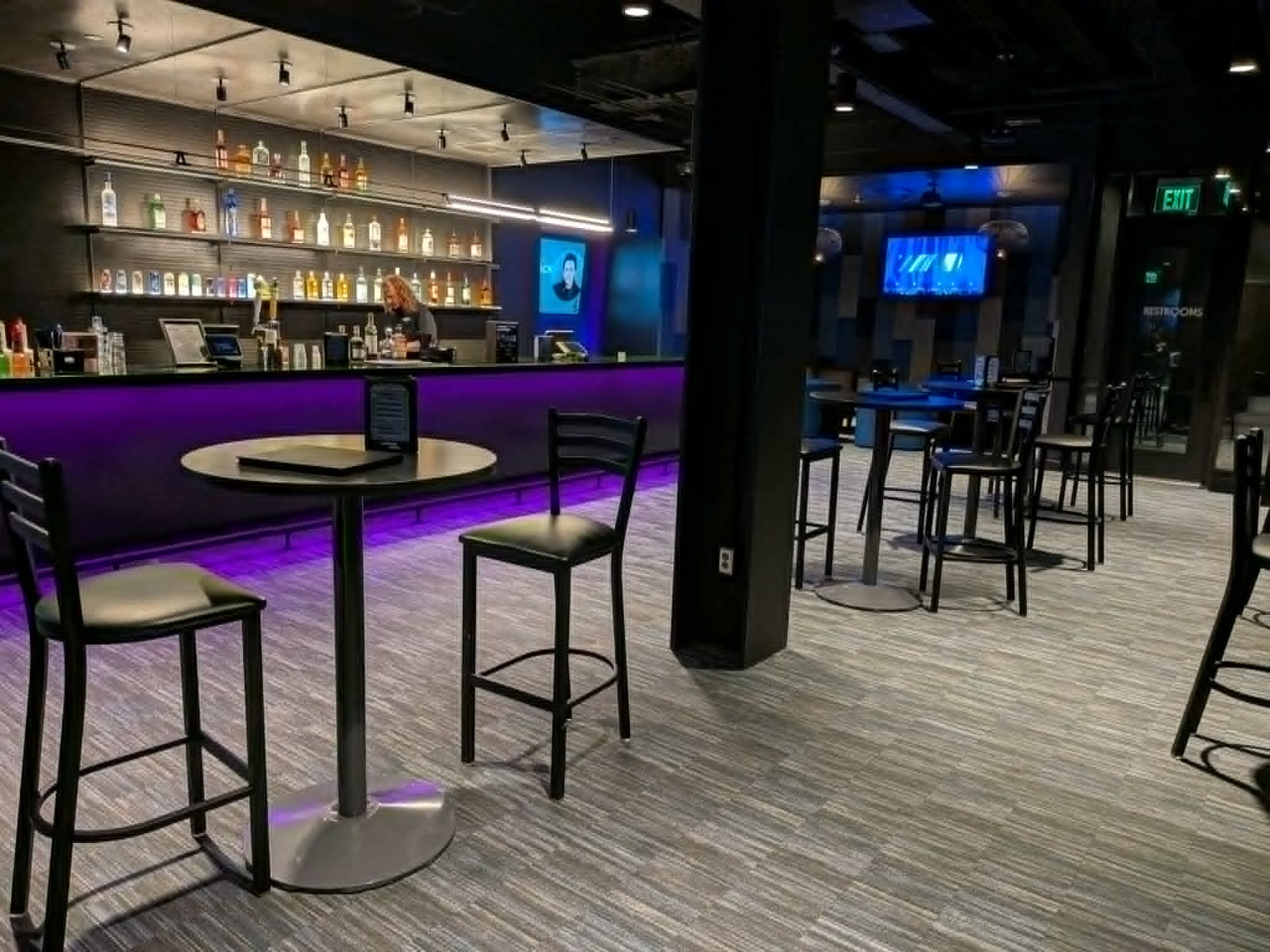
Steelhouse Omaha has a way of looking calm before it gets loud. Before the sold-out room packed itself tight for Alter Bridge, the venue felt almost surgical in its design: polished concrete floors, dark metal lines, long ceiling lights, and bars glowing red and purple like the building was warming up from the inside. It is a clean, modern space, but not sterile. The place has angles. It has sheen. It has that new-venue feeling where every surface looks intentional, from the lobby wall to the upstairs lounge to the outdoor patio wrapped in glass and city light.
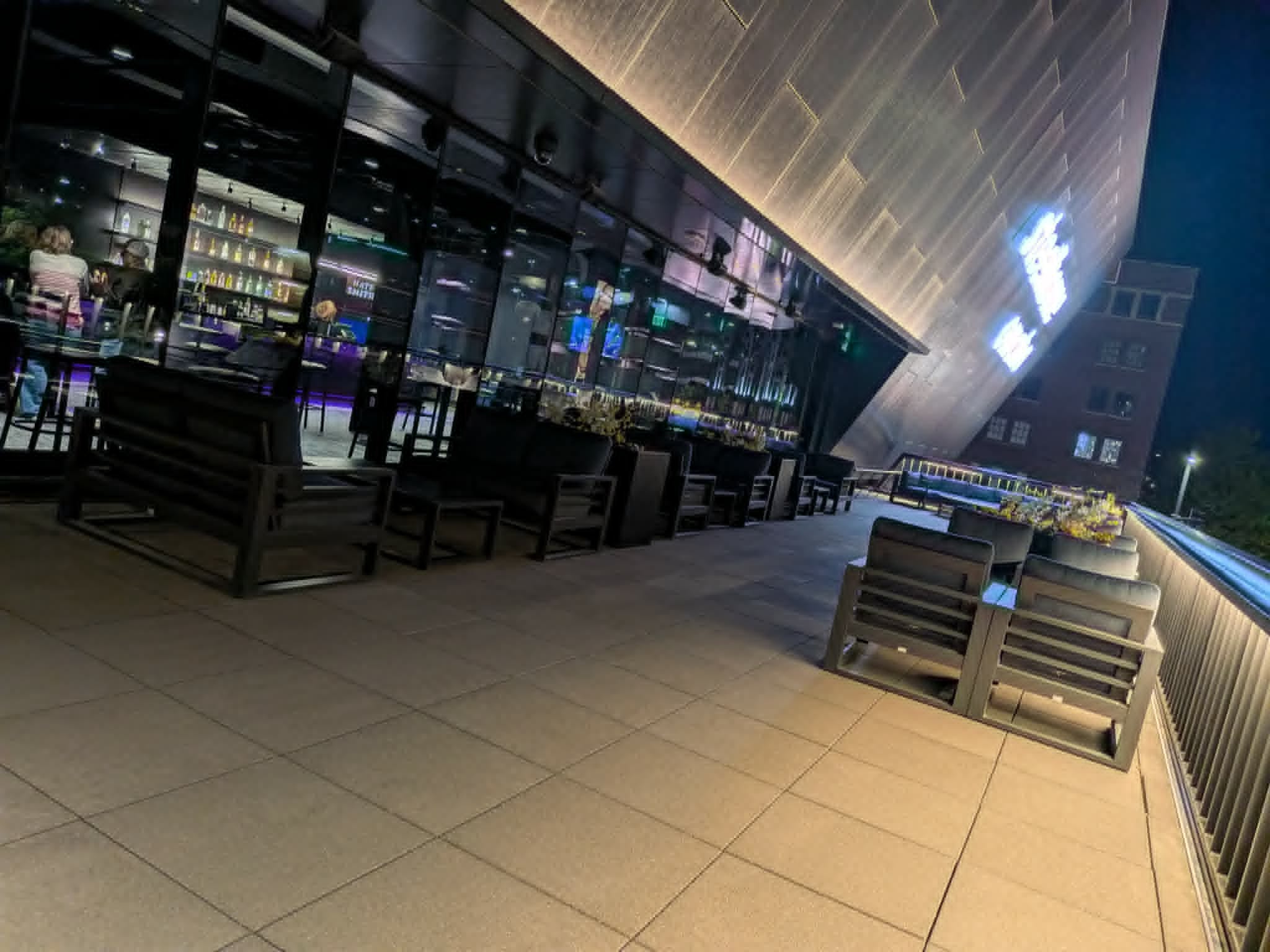
The night kept playing with perspective. From the lounge and patio areas, Steelhouse felt less like a holding pen for concertgoers and more like part of the production’s slow build. You could step outside and catch the venue’s exterior glow against the Omaha night, then move back inside to the bar and see the crowd starting to gather in pockets, drinks in hand, anticipation doing its usual quiet work. Even the emptier moments before the surge had their own atmosphere, the kind of pre-show hush where you can feel the building waiting for the first amp to bite.
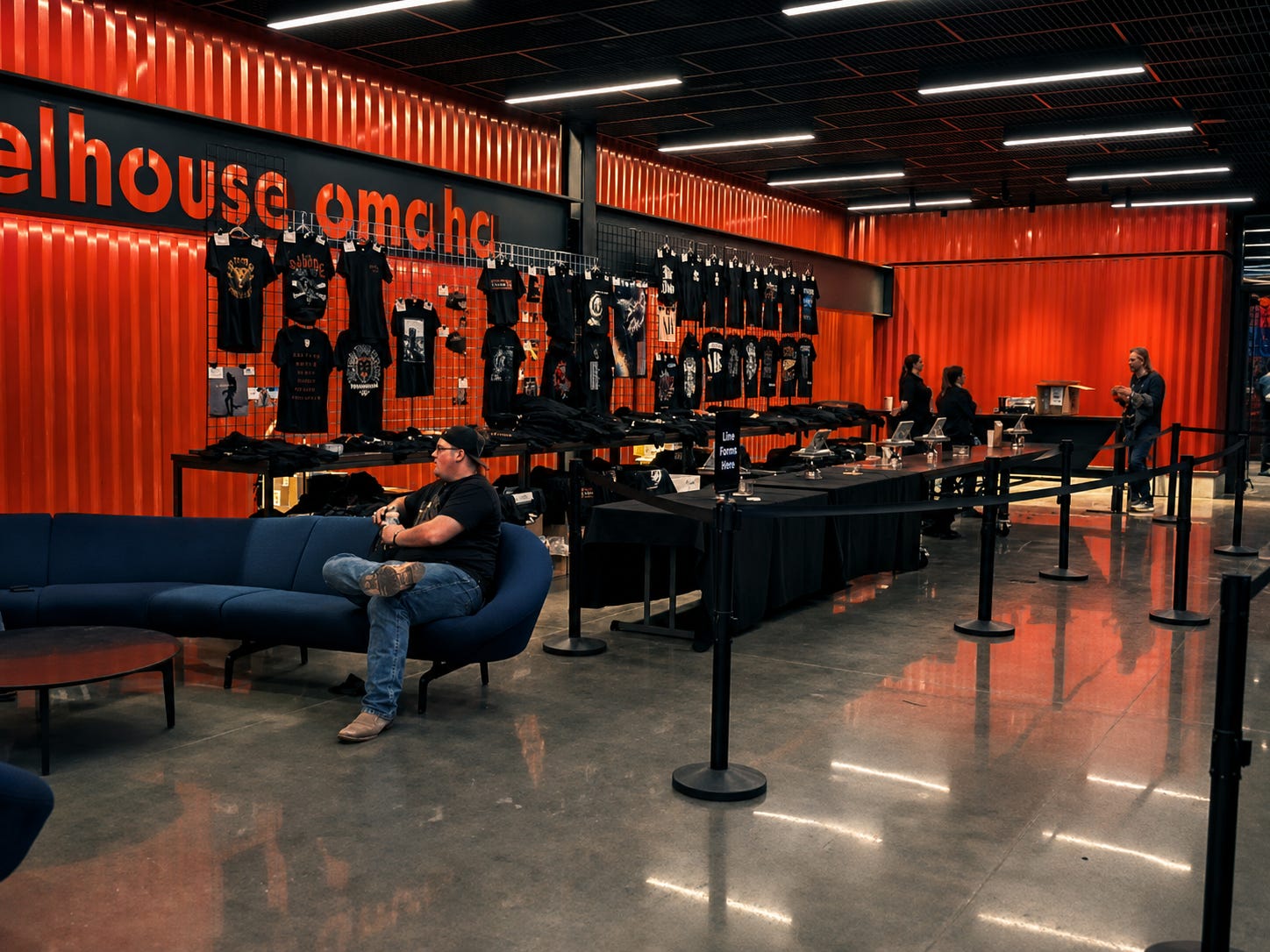
The merch area leaned into that same clean industrial look, only louder. The orange Steelhouse Omaha wall made the black tour shirts pop hard, with Alter Bridge, Filter, and Tim Montana gear lined up in a way that felt sharp rather than chaotic. There were tables stacked with shirts, racks hanging above them, and a steady path roped out for fans ready to grab something before the floor filled in. It looked organized, easy to navigate, and visually on-theme with the rest of the venue: black shirts, hard edges, orange wall, polished floor, no wasted clutter.
For a show built around heavy guitars and arena-scale lighting, Steelhouse gave the night a smart frame before anyone stepped onstage. The venue did not compete with the bands. It set the table, dimmed the edges, lit the bar, pointed people toward the room, and let the noise do the rest.
Gravel Before Steel
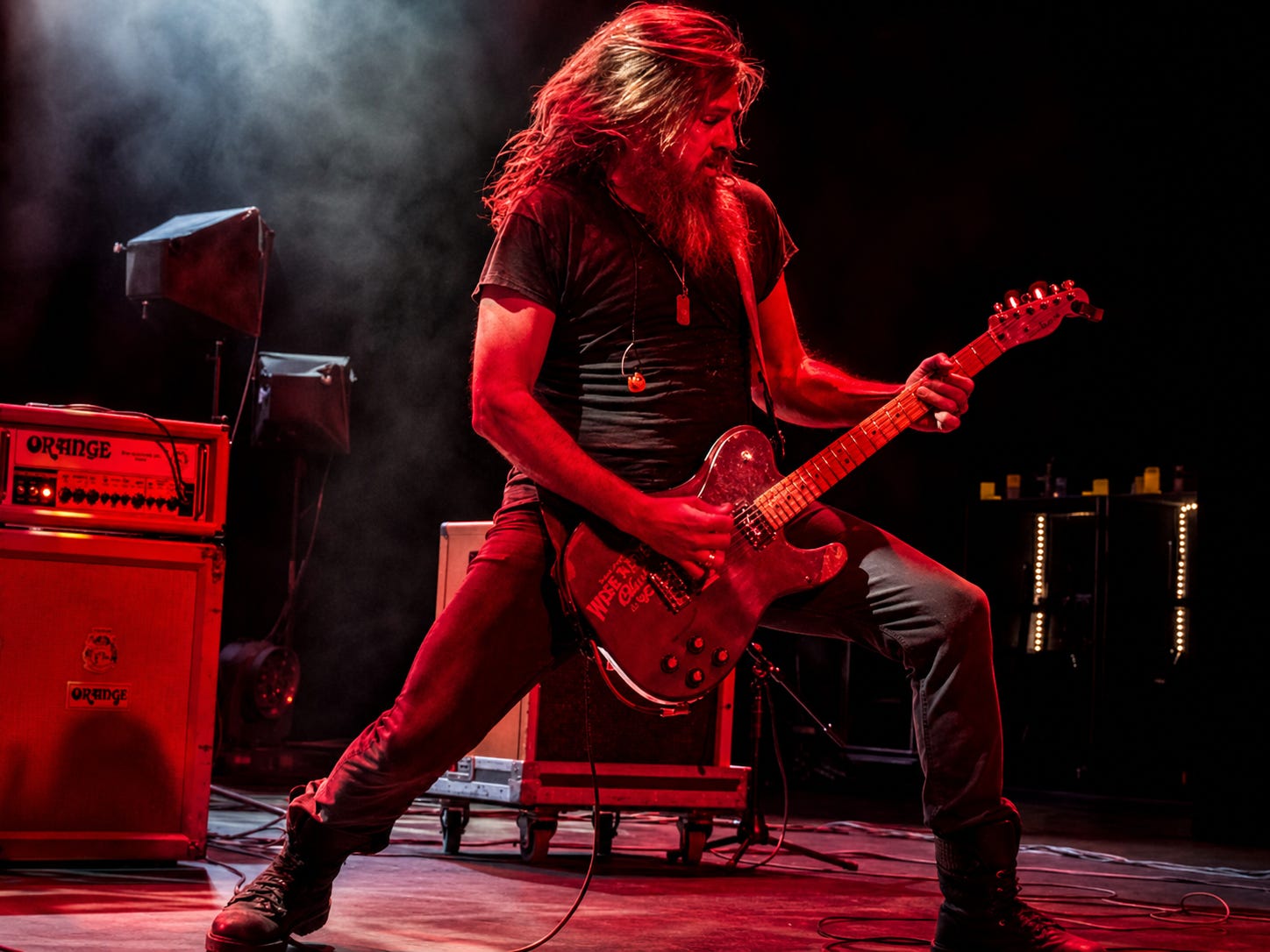
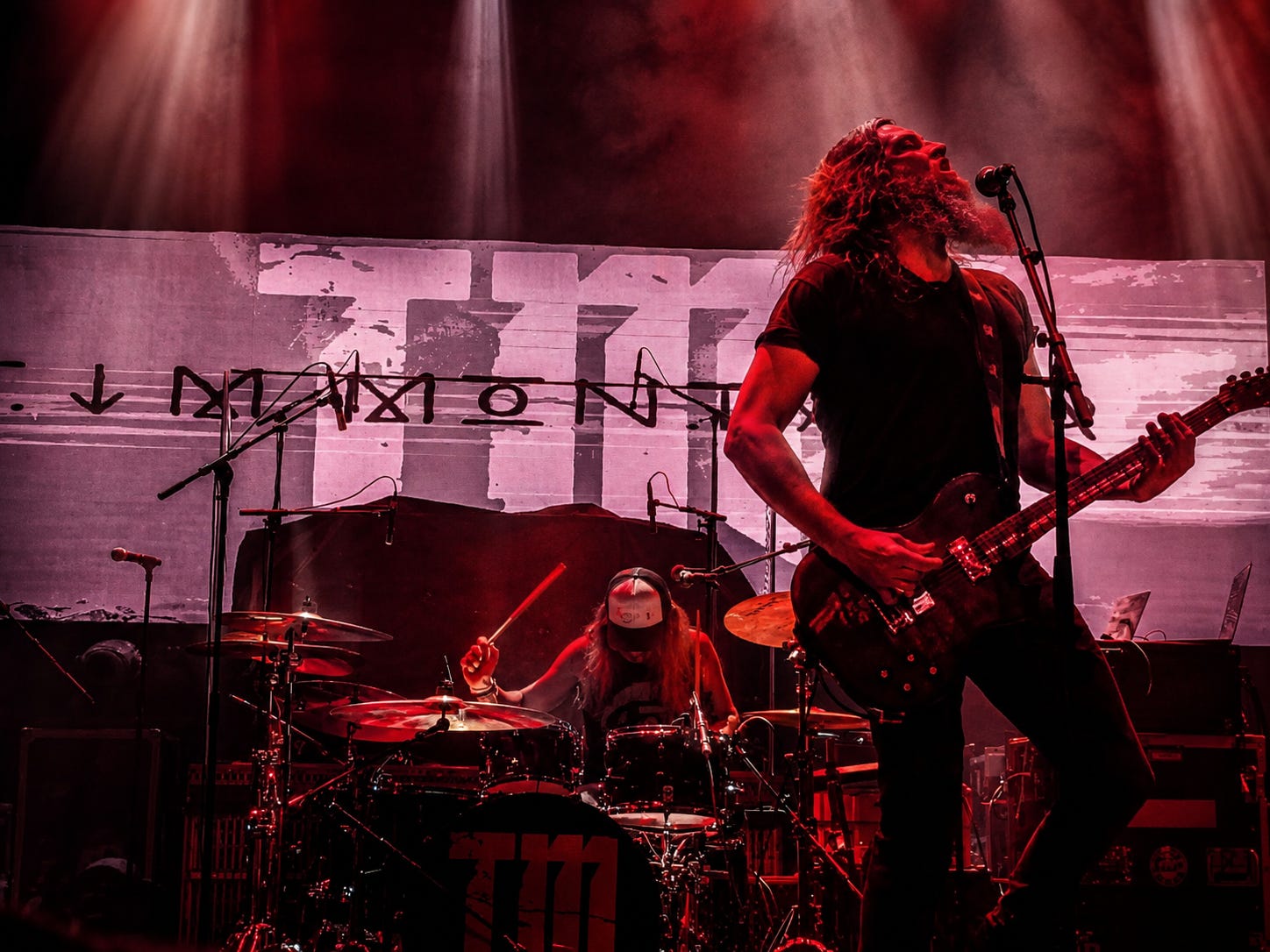
Tim Montana opened with a set that knew exactly what job it had. He did not try to pretend he was the heaviest thing on the bill, and he did not soften himself into a warm-up act either. His lane sat somewhere between southern rock, hard rock, and a barroom dare, which made him a smart bridge into the rest of the night. The songs had grit, but the delivery had lift. He played like a guy who knows how to win over a room that may not have arrived for him.
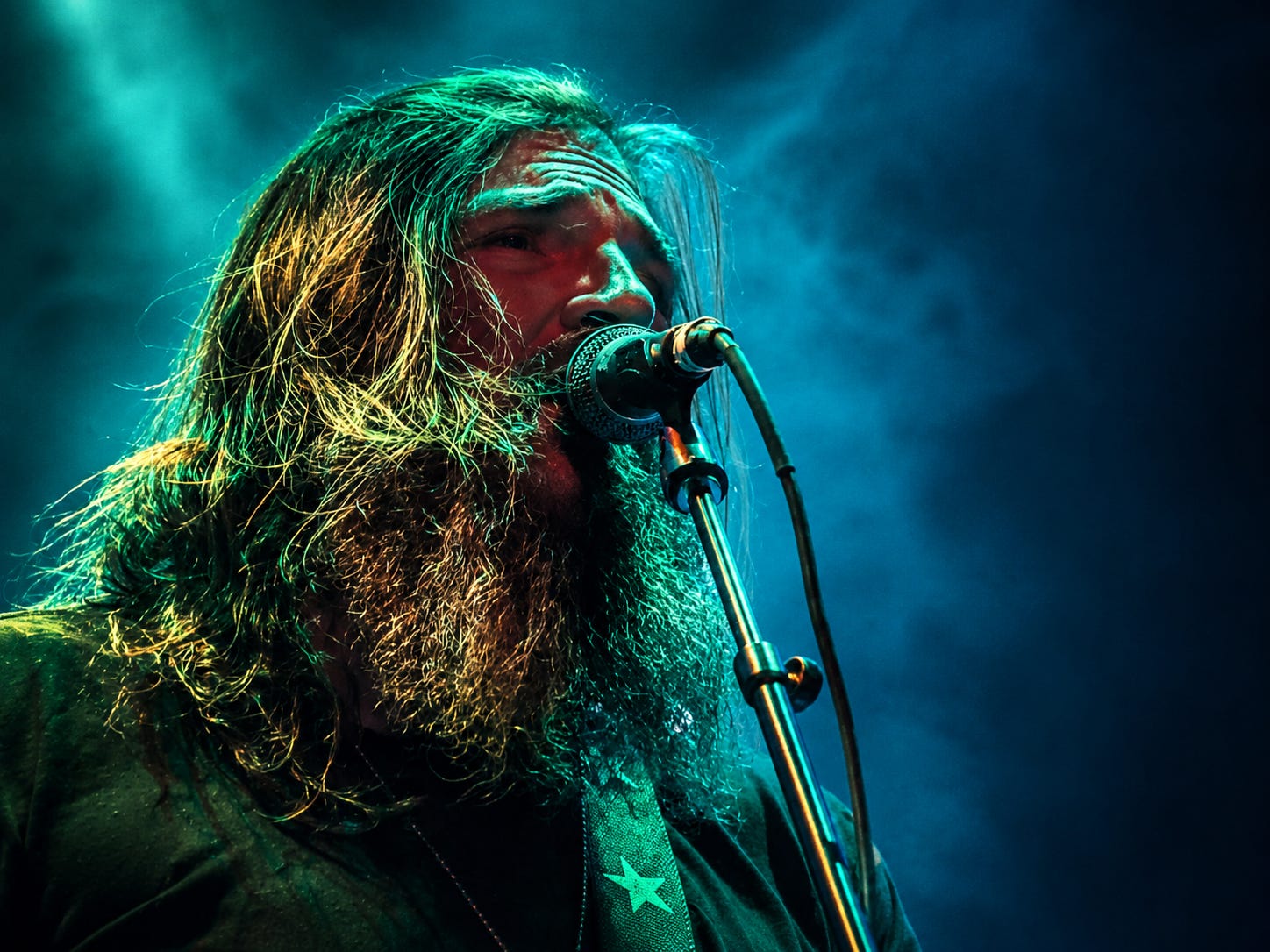
The moment that cut through was not only musical. Montana took time to talk about the years of hustle it took to finally make something stick, and he said it with the kind of directness that does not feel polished for applause. Right before 40, he told the crowd, he finally felt like he had made it. There was no fake mythology in it, no overnight-success fantasy. Just mileage. You could hear the grind in the way he framed it, and then you could hear it again in the way he sang.
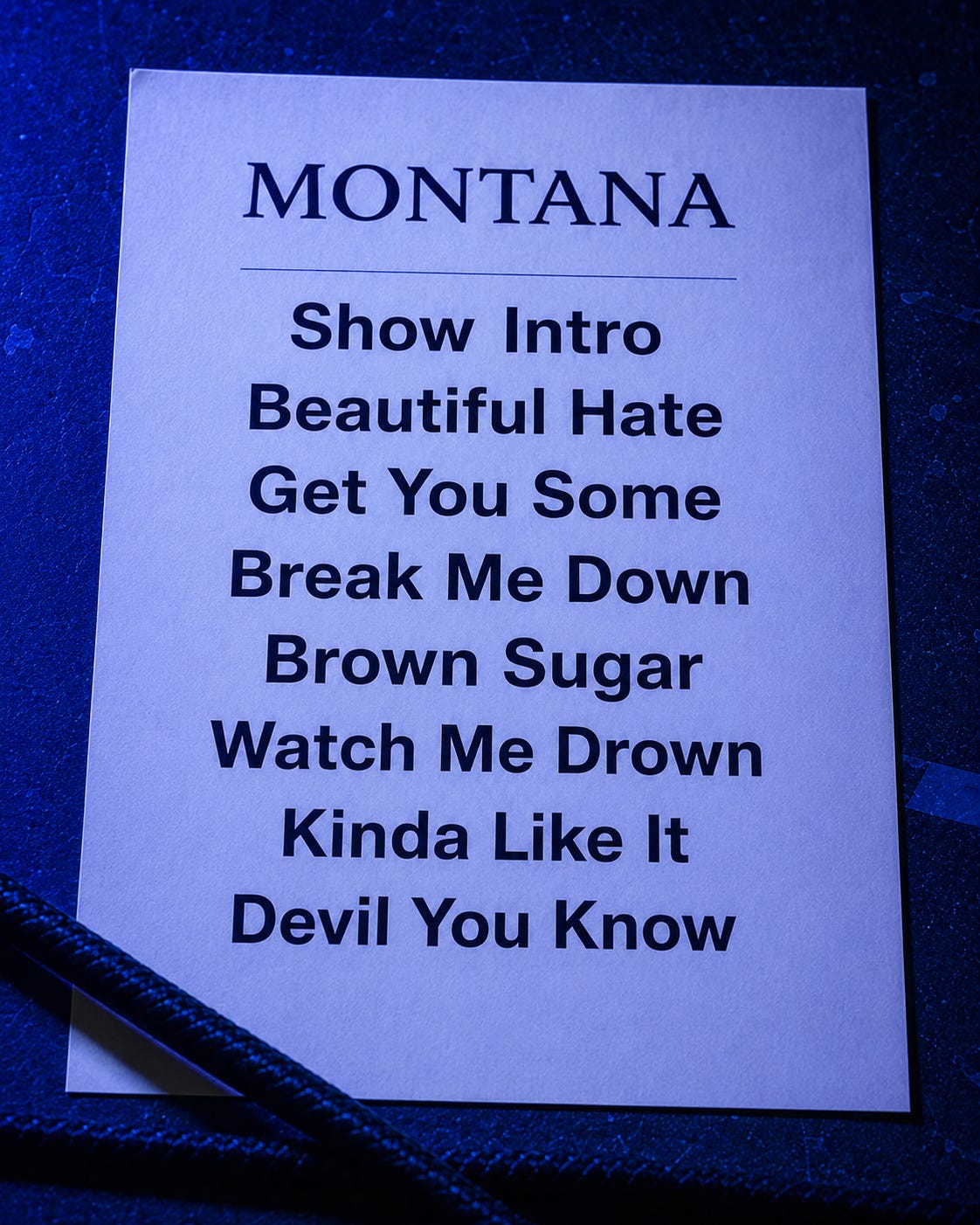
His cover of “Brown Sugar” fit him cleanly because it did not sound like a borrowed costume. It landed in his raw vocal grain, all smoke and bite, and gave the room something familiar without letting the set drift into karaoke territory. It was a good opening-set trick: give the crowd a door they recognize, then kick it open hard enough that they remember who did it.
Blue Light, White Noise
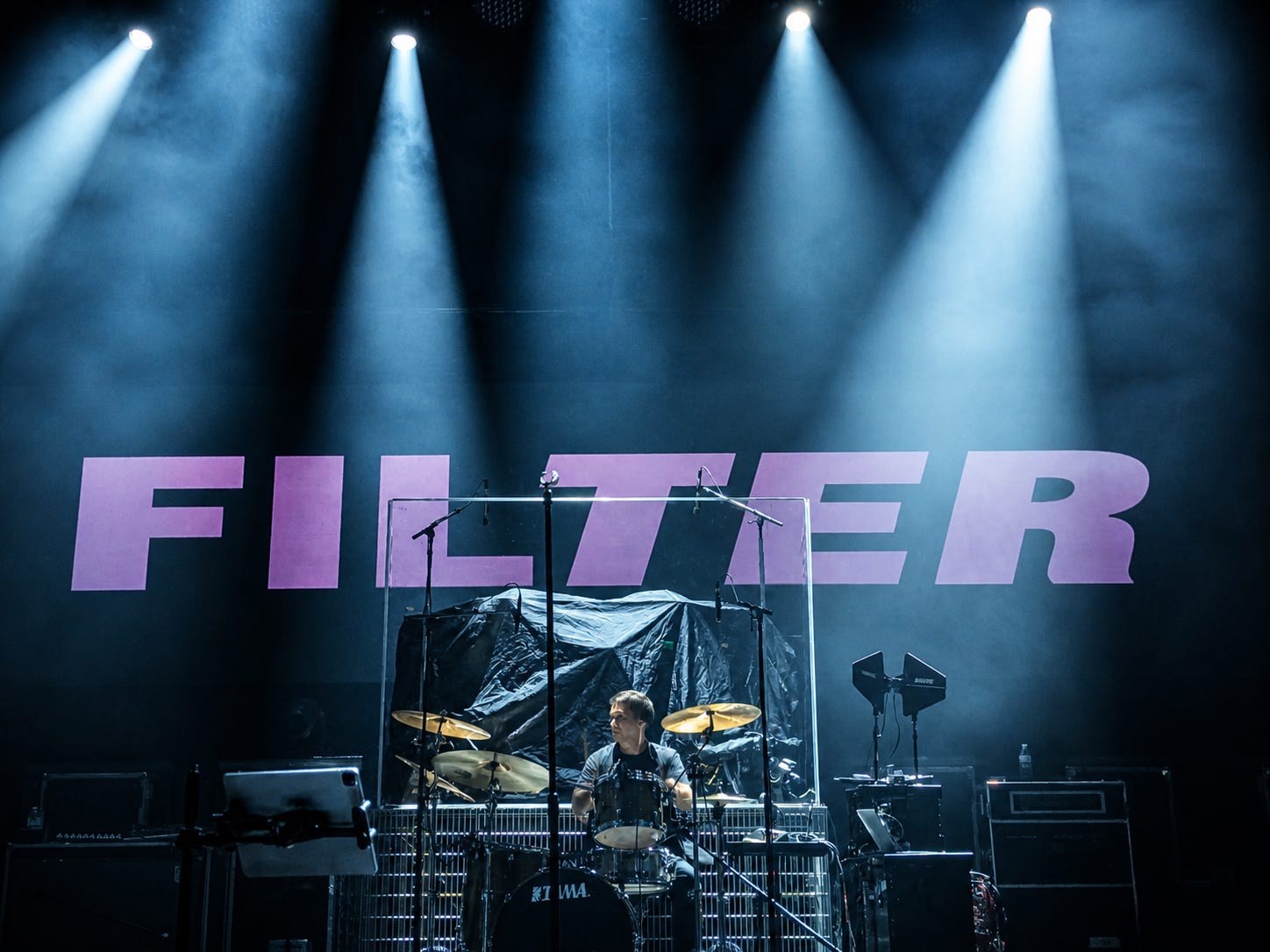
Then Filter pulled the room into a colder place.
The lighting changed the temperature before the songs even had to. Sharp blue and white washed the stage, keeping the band mostly in silhouette. Where Montana felt like dust, sweat, and amplifier heat, Filter felt clinical. Industrial. The kind of music that looks better when the performers are half-swallowed by light instead of presented plainly. It made the stage feel less like a platform and more like a lab where something had already gone wrong.
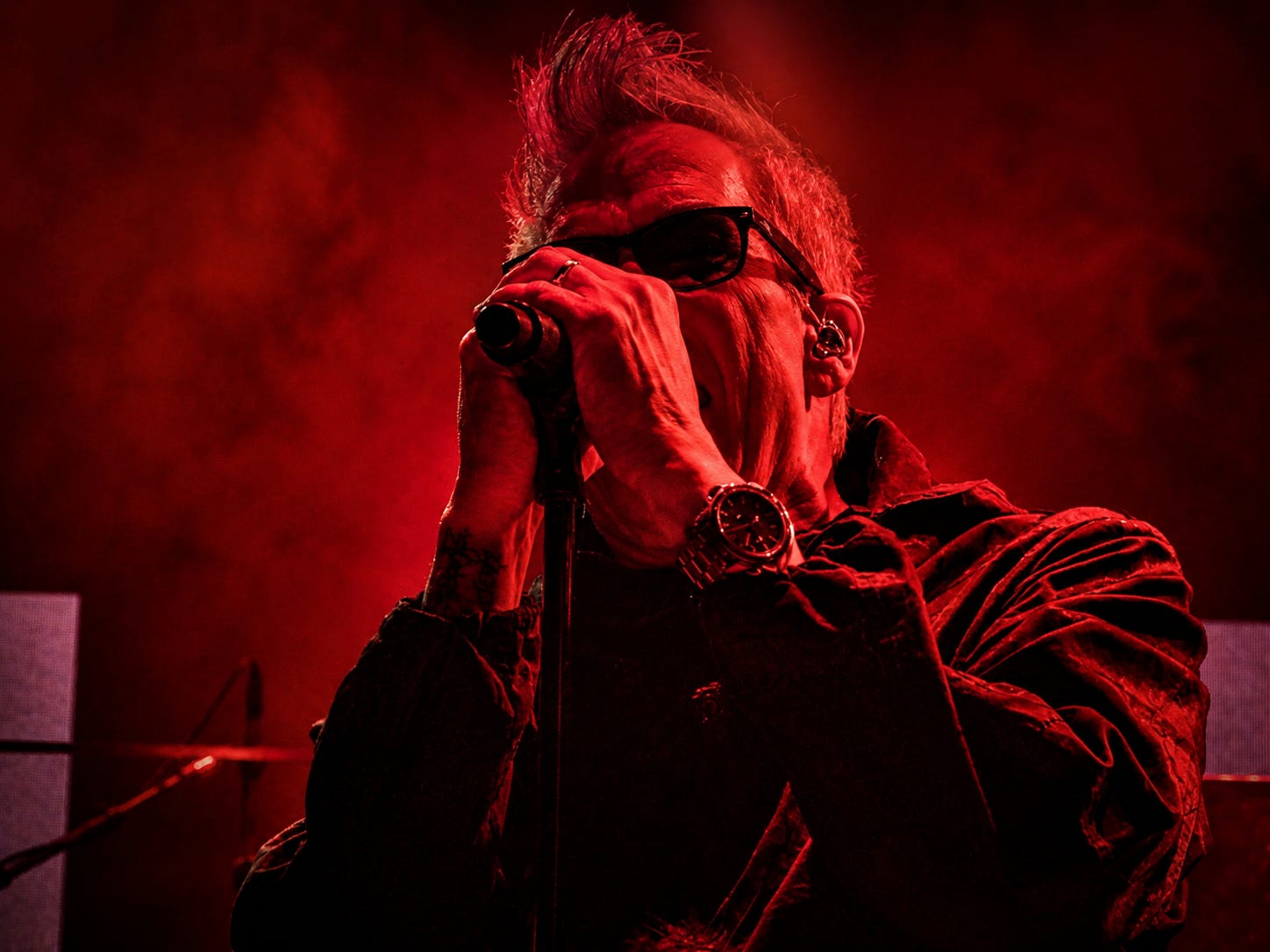
Richard Patrick knows what hangs in the air before “Hey Man, Nice Shot”. He also knows everybody else knows. That pause before the biggest hit can be dead space in the wrong hands, but he turned it into the night’s strangest little mirror. Before going into it, he pulled out his phone and snapped a photo of the packed room. He said he wanted to actually “remember” the night.
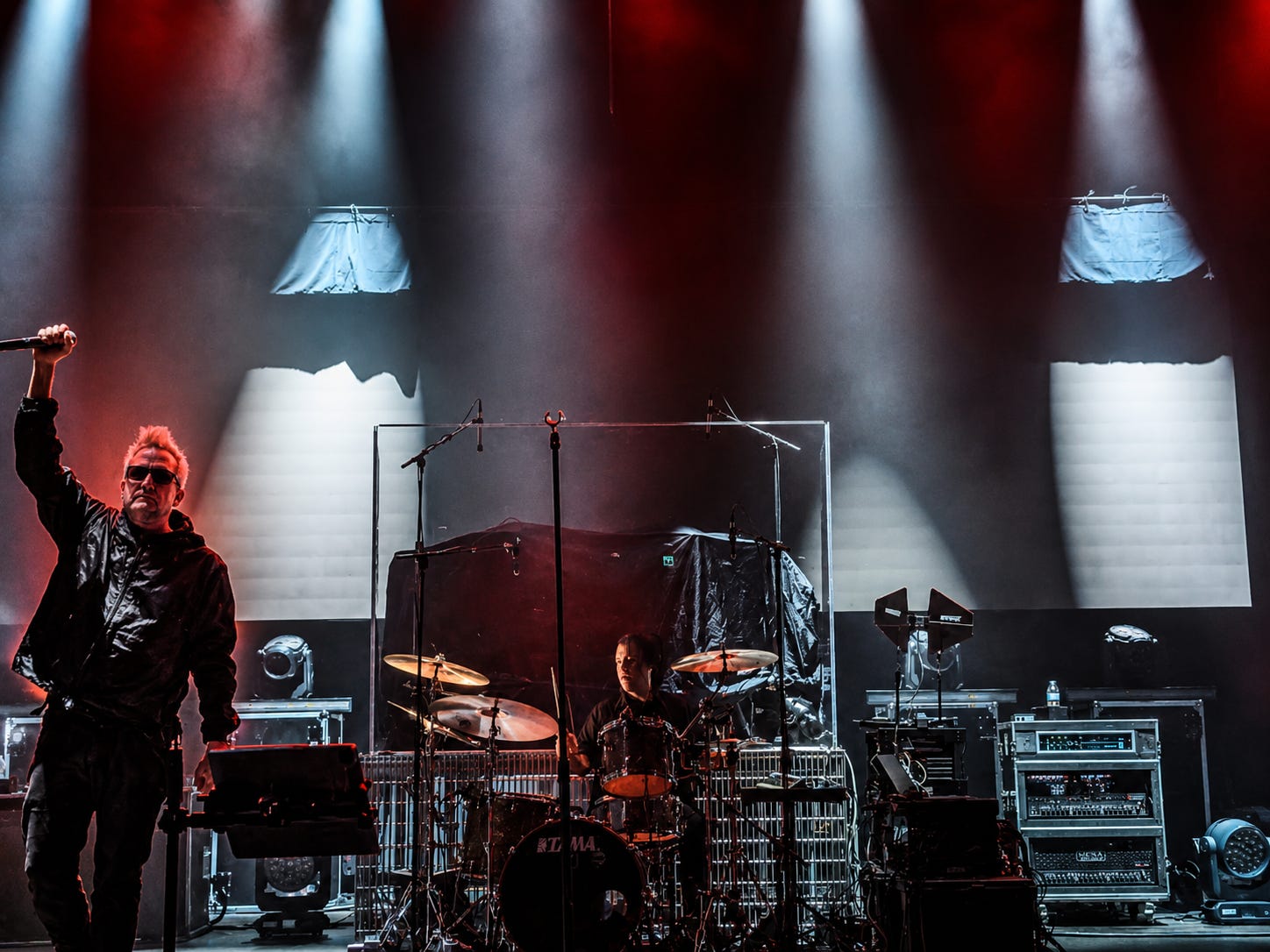
It was funny, but not cheap. A wink, but not a bit. The crowd was waiting for the line, waiting for the release, and he slid the idea of memory right into the moment before the song did what everyone knew it would do. From upstairs, it played almost like stage direction: man photographs crowd before singing song everybody remembers him for. The room got the joke and the point at the same time.
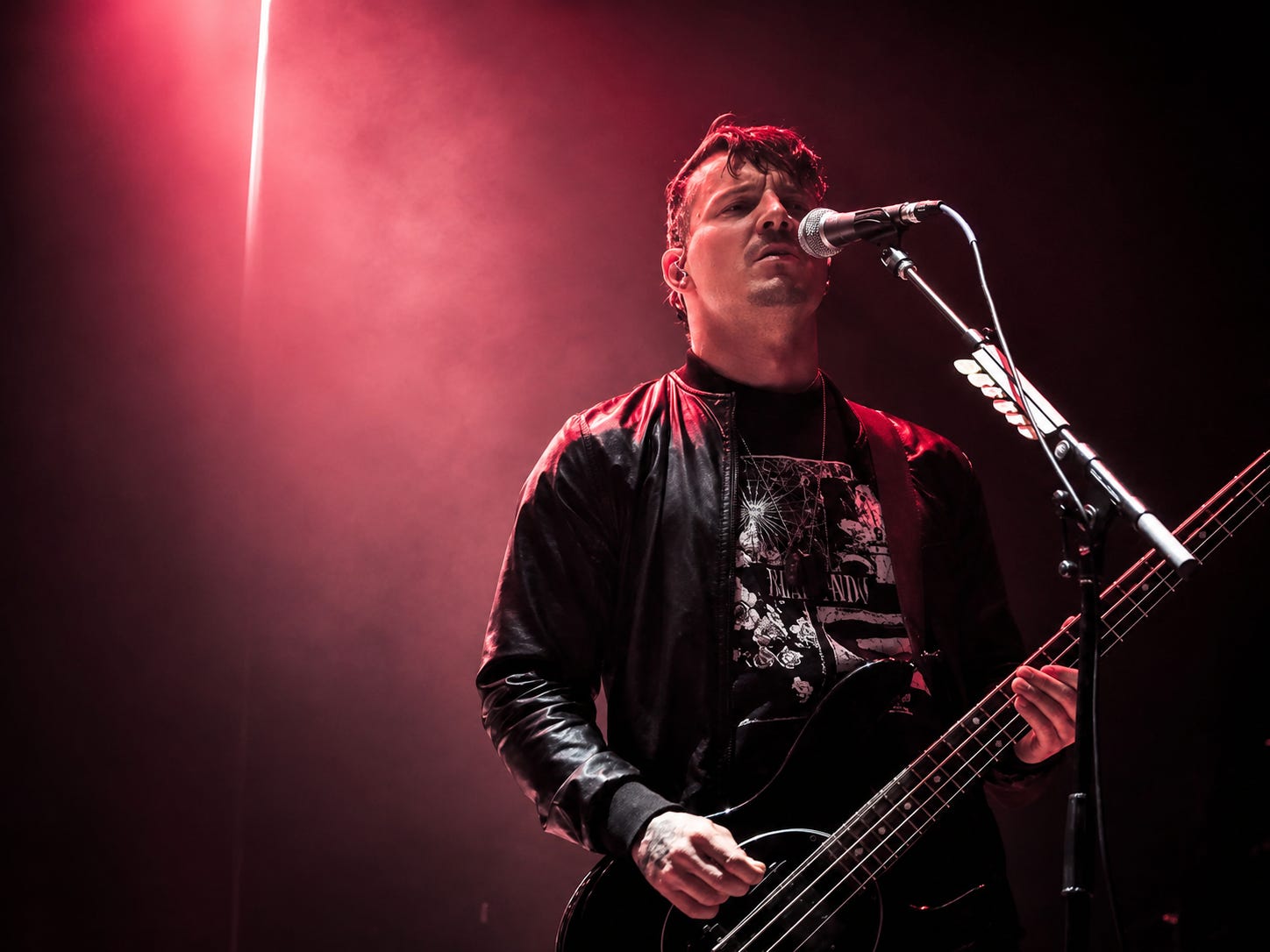
Filter’s set did not need warmth. It worked because it refused it. The silhouettes, the blue-white glare, the hard edges of the songs — all of it sharpened the middle of the night before Alter Bridge came in with something bigger, wider, and more emotionally open.
Circles, Pillars, and the Big Room Brain
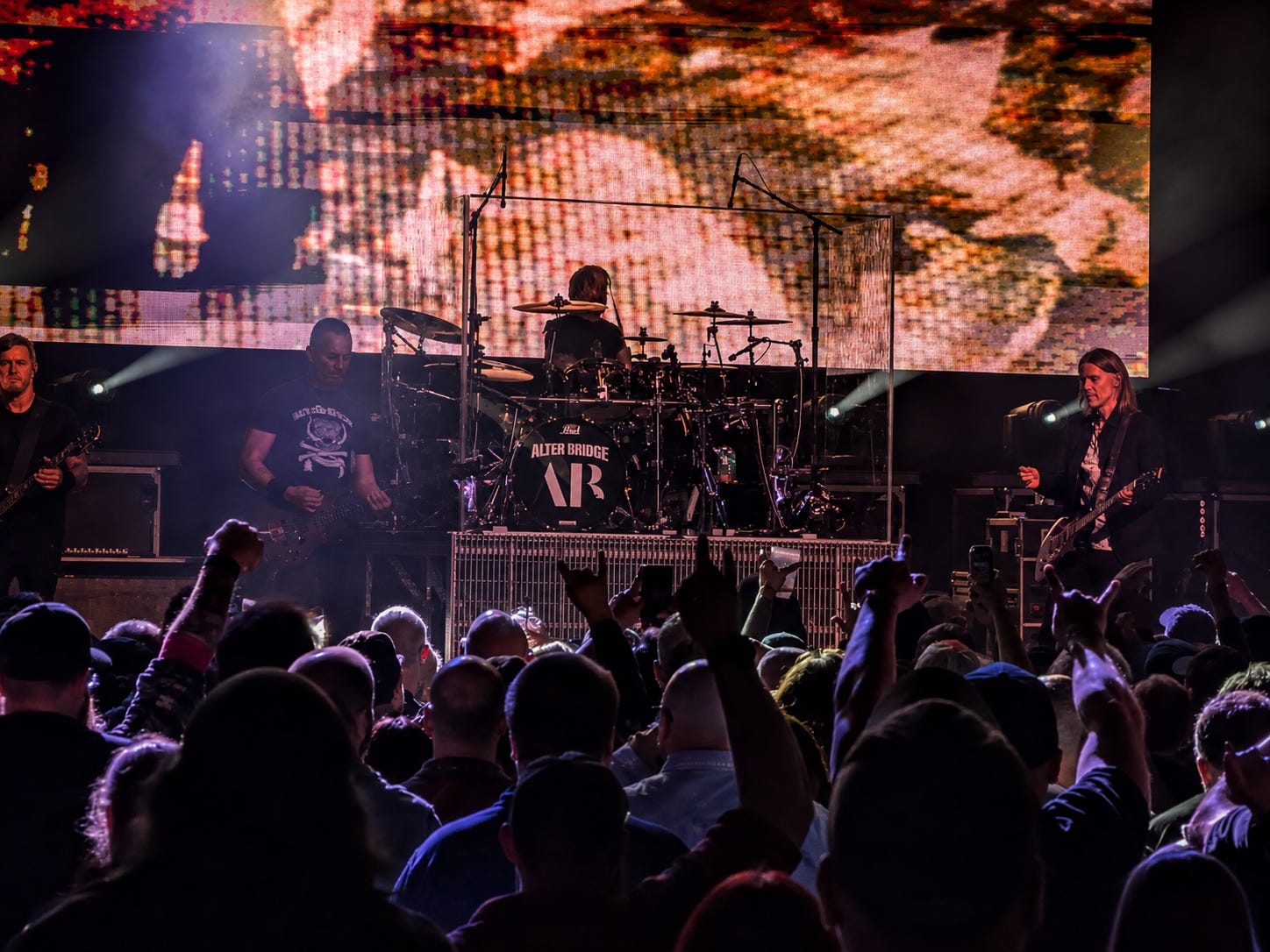
Alter Bridge came on like a band fully aware of scale. Not just volume, not just lights, not just the usual “big rock show” posture. Scale. Their set had the architecture of a headliner that understands how to make a room feel larger than it is without losing the faces inside it.
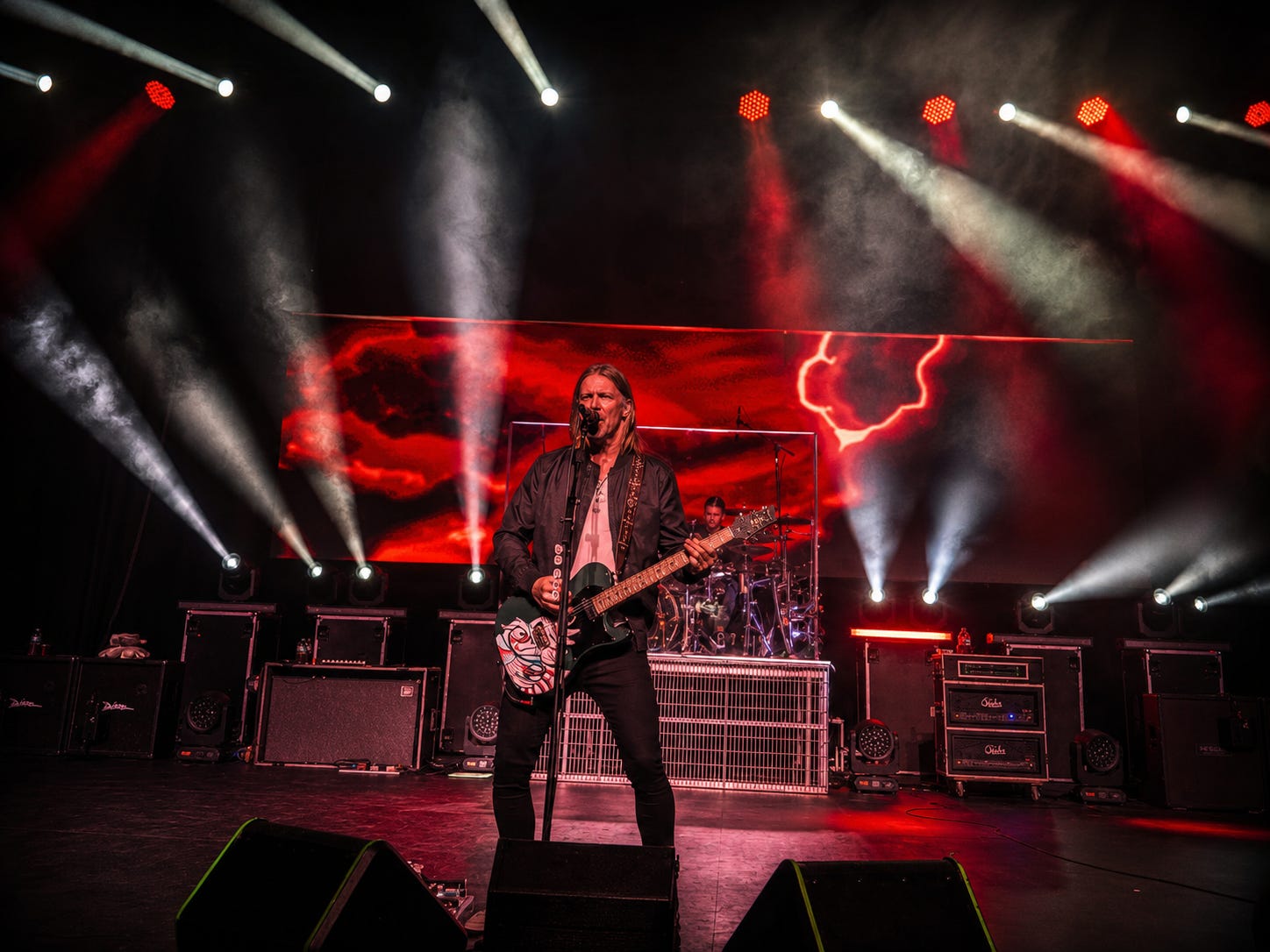
From the Lounge, that design mattered. The circular LED rigs became a kind of orbit around the performance, while the vertical pillars gave songs a spine. It was the sort of production that would be easy to miss from the floor, where the crowd’s movement becomes its own weather. From above, you could watch the lighting carve the stage into shapes, then dissolve them and build something new. The show was heavy, but it was also cleanly drawn.
Mark Tremonti stepping up for lead vocals on “Burn It Down” gave the set one of its darker turns. His voice sits differently than Myles Kennedy’s — heavier in the corners, less skyward, more shadowed. It brought out another shade in the band without making the night feel interrupted. That is not always easy when a band is built around a frontman as vocally recognizable as Kennedy, but Tremonti’s moment had its own gravity.
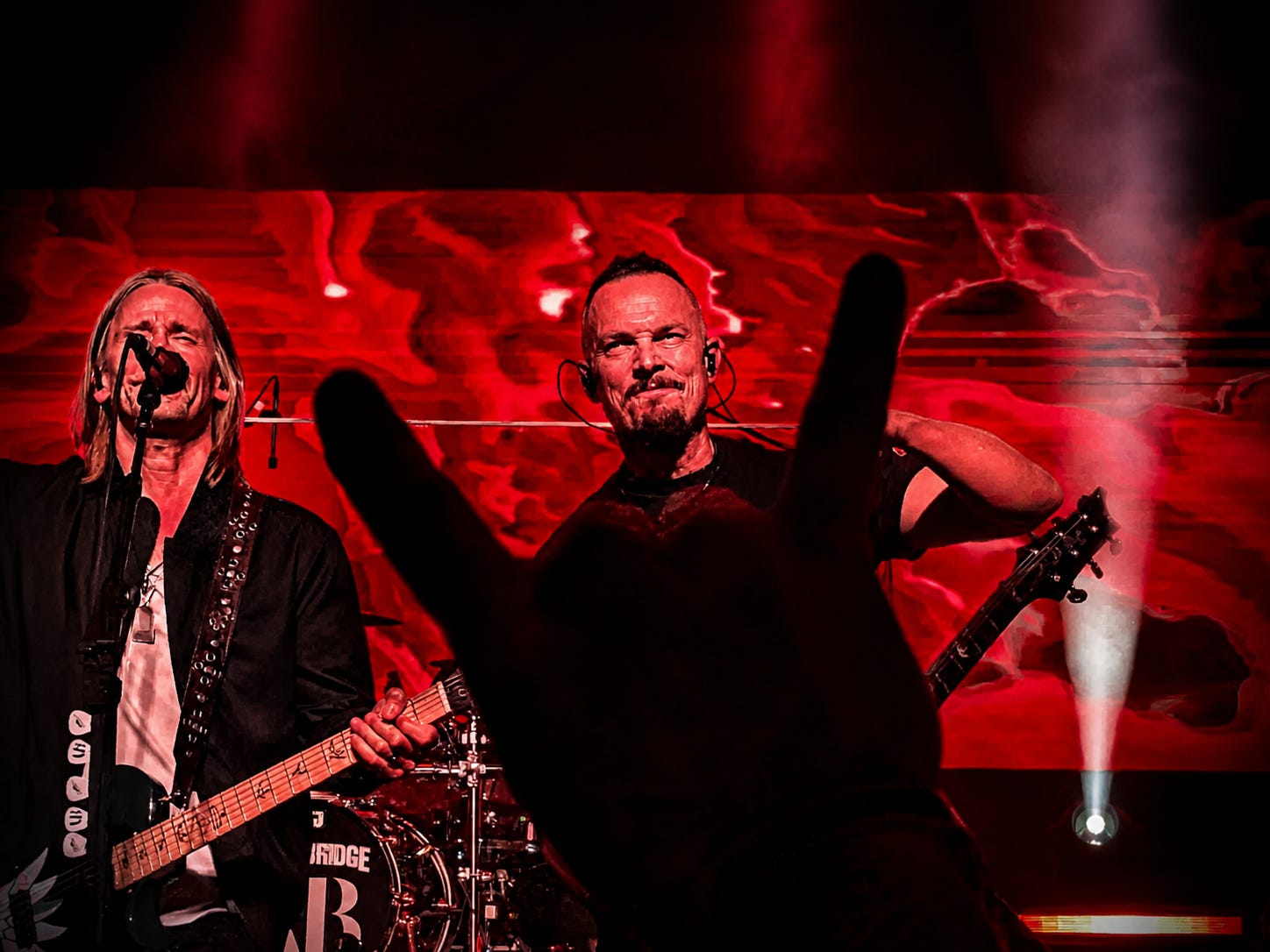
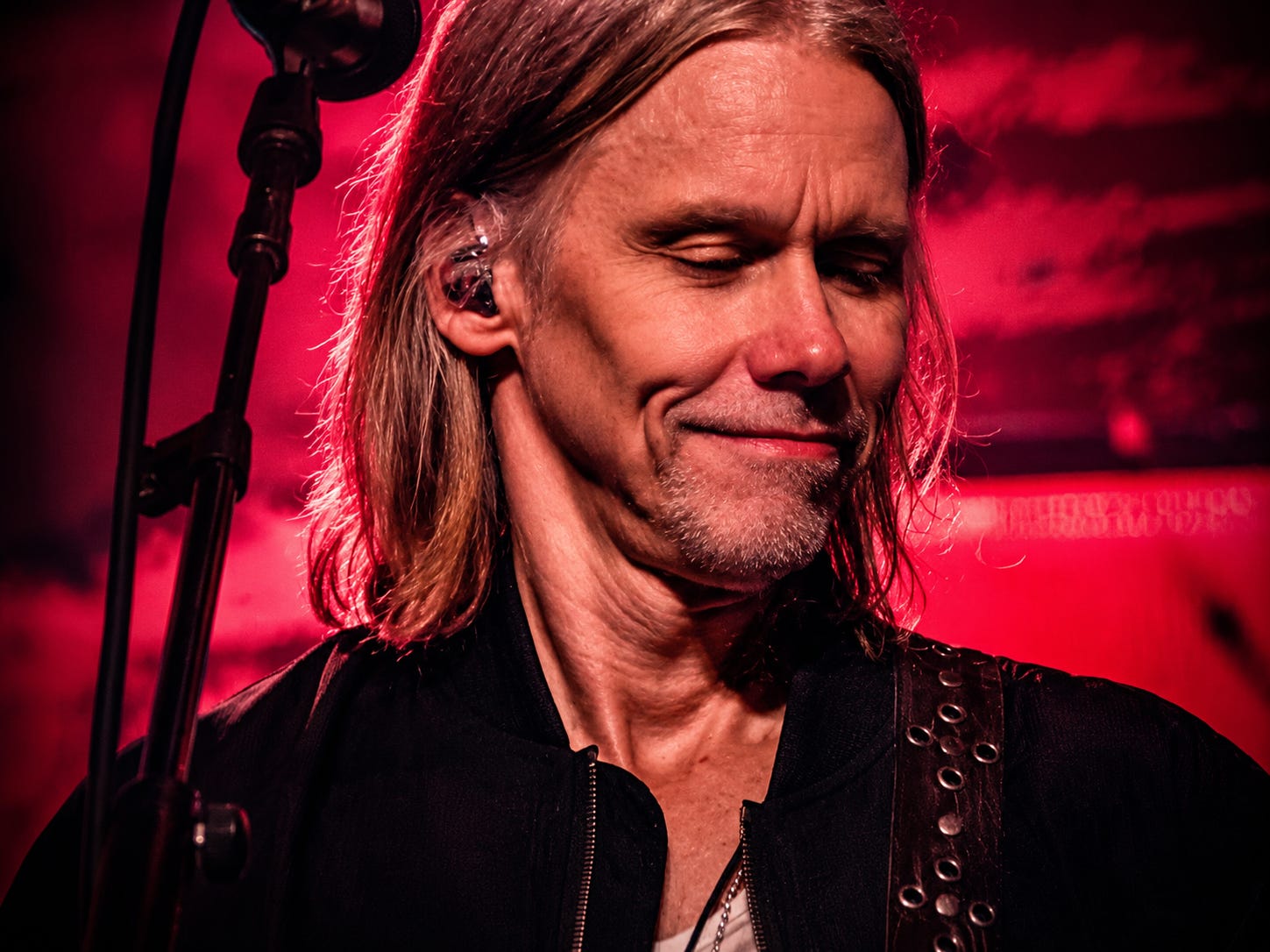
Kennedy, meanwhile, gave one of the night’s prettiest pivots when he opened the encore with Blackbird.
The buzz upstairs really changed, though, when the band broke out “Tested and Able.” You could feel the day-one fans clock it before everyone else did. The Lounge had its own little ripple of disbelief, the kind that starts with a few heads snapping up and spreads through whispered confirmation. Fans around me were saying it had not surfaced on a setlist in six years. I’m leaving that as the room told it, because that was the point of the moment anyway. It was not just a song selection. It was a private door opening in public.
Later, I saw a fan who had managed to snag a setlist. Protective is the word. Not rude, not performative, just careful with it. Some souvenirs are trophies. This one looked more like evidence. Proof that the thing everyone had just freaked out about had actually happened.
Afterglow
The obvious story of the night is that Alter Bridge brought a polished, arena-level rock show to Omaha and made Steelhouse feel built for it. That is true. The circles, the light pillars, the balcony view, the heavy lift of the production — all of that gave the night its shape.
But the thing that stayed with me was smaller.
It was Mike taking a fan’s childhood photo backstage before the music started. It was Richard Patrick taking a photo so he could “remember” the room before singing the song everyone came ready to remember. It was Tim Montana talking about the grind before 40 without dressing it up. It was the day-one fans losing their minds over “Tested and Able” like a secret had been handed back to them.
From the Lounge, the machine looked beautiful. The lights had geometry. The show had muscle. But the night worked because the human moments kept slipping through the steel.
Please consider Donating to Sponsor an article even $1 helps!
