



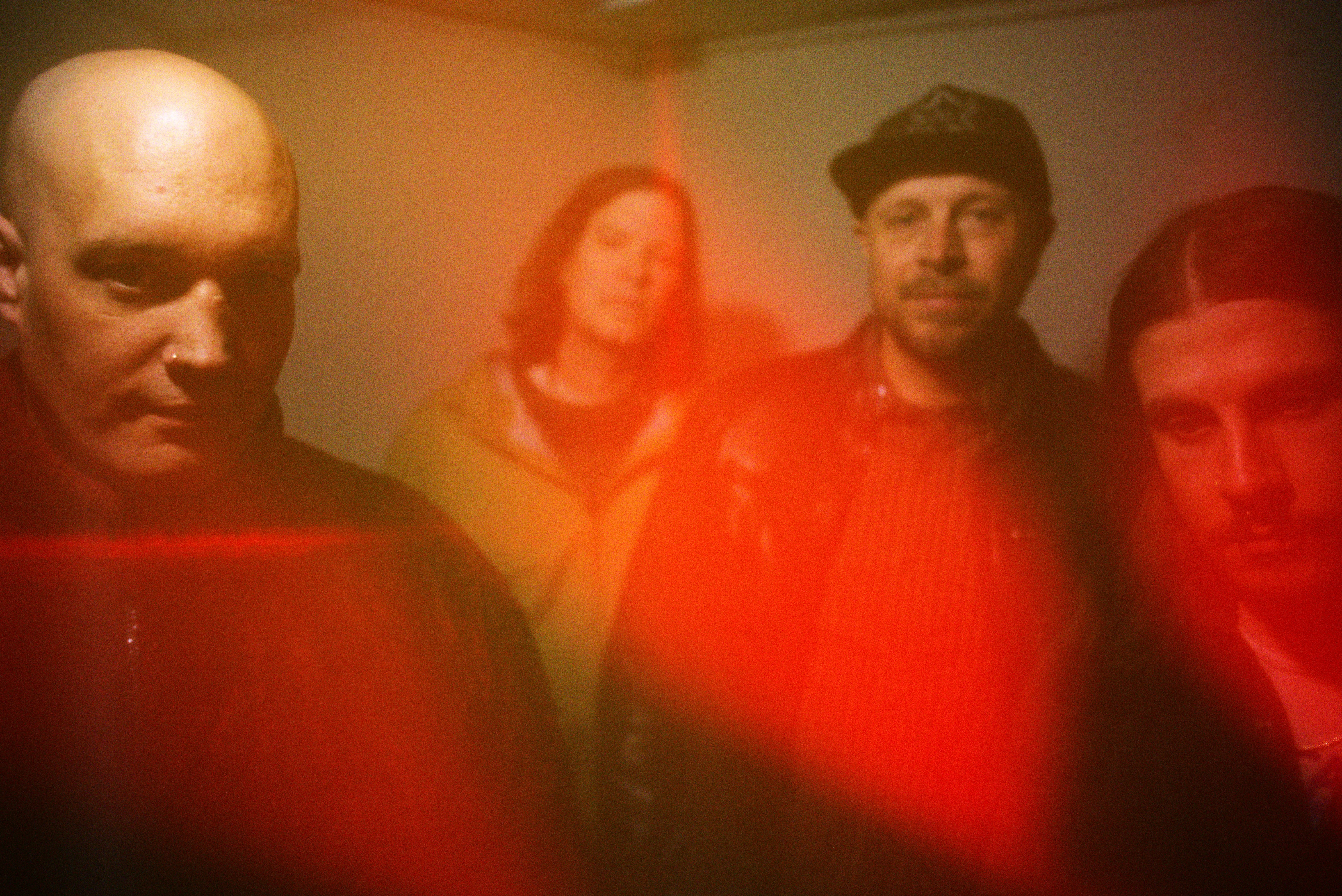
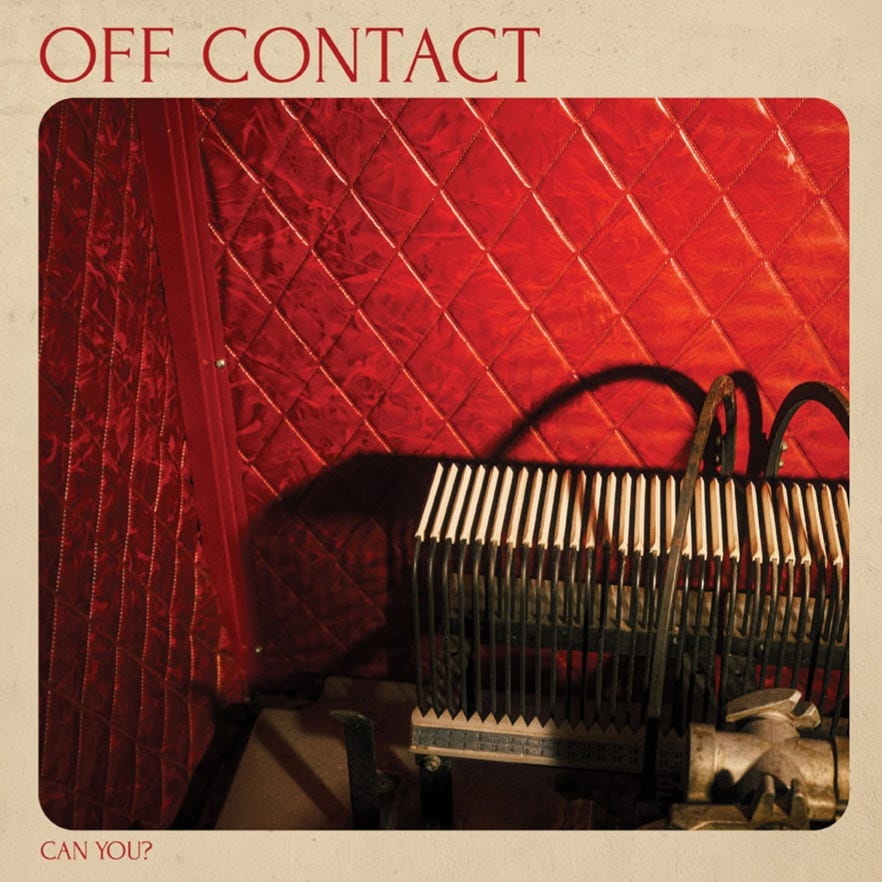
Some albums introduce themselves with a firm handshake. Others ask a question, glance toward the nearest exit and let the silence grow uncomfortable.
Can You? belongs firmly in the latter category.
For years, Off Contact has quietly occupied one of the most distinctive corners of Sioux Falls' music scene, blending post-punk, shoegaze, psychedelia, and art rock into something that increasingly feels less like a collection of influences than a language of its own.
For listeners expecting towering choruses or immediate hooks, the album’s deliberate pacing may initially feel restrained. The restraint is precisely where Off Contact separates itself from many contemporary post-punk acts. Across forty-odd minutes, the band shows little interest in racing toward catharsis. It would rather study the pressure building beforehand: the private craving, the public threat, the thought circling after midnight and the bargain made when desperation has worn down every lock.
The approach rewards close attention. The music draws a listener inward through repetition, then the lyrics reveal how little safety exists once you arrive. Even the album title feels intentionally incomplete. Can you what? Change? Notice? Endure? Trust your own mind? Refuse the hand offering an easier life at a terrible price? Each song supplies another possible ending, but none stays settled for long.
Off Contact has described its sound as existing somewhere between post-punk urgency, Madchester grooves, shoegaze haze, psychedelic textures and the slow-building progression of post-rock. The description sounds ambitious on paper, but Can You? justifies every piece of it. The album rarely rests inside one identity. A driving bass line may recall classic post-punk before dissolving into shimmering guitar washes, then rhythmic repetition carries the song forward with a krautrock-like pulse.
What could have become an inventory of influences instead feels cohesive. The record understands movement as more than speed. Sometimes movement means a body dancing. Sometimes it means a thought pacing a groove into the floor.

The rhythm section is the album’s secret weapon
If the album has a defining musical characteristic, it is not the guitars. It is the rhythm section.
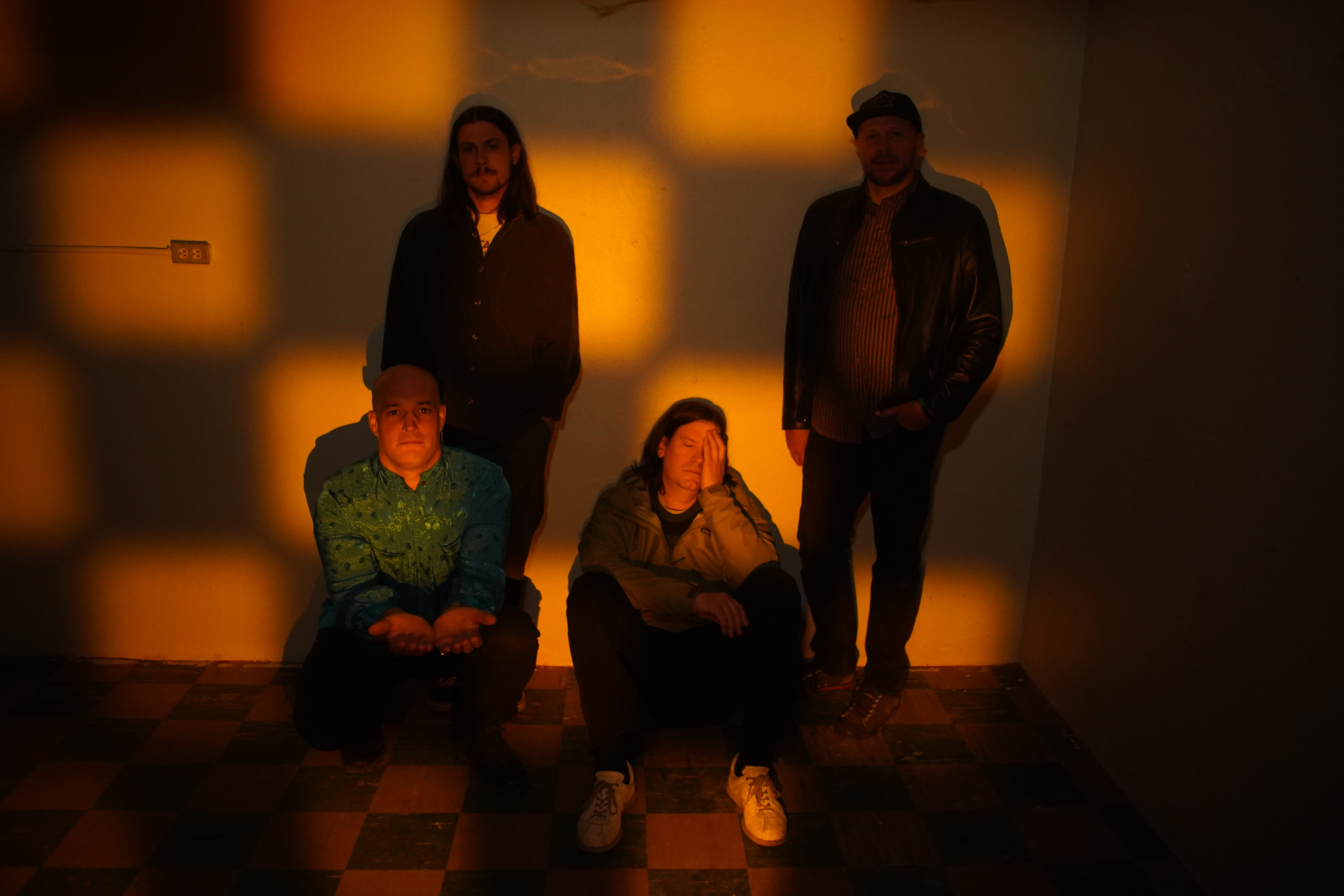
Bassist Pat Nelson and drummer Brogan Costa provide a remarkably disciplined foundation throughout the record, locking into grooves both mechanical and deeply human. Their playing rarely elbows its way to the front, yet nearly every memorable passage begins with the pair establishing an unwavering pulse before the rest of the band reaches outward. Costa’s drums give the songs forward motion without rushing them. Nelson treats the bass as a melodic anchor, adding shape beneath arrangements capable of drifting into abstraction.
Their patience gives guitarist Simon Keller room to paint instead of merely riff. Chorus, delay and reverb shift around the rhythm section without burying it. Distortion becomes weather rather than blunt force, changing the air pressure around a song until its shape feels larger than it did a minute earlier. Keller’s saxophone credit also speaks to the album’s willingness to widen its palette without placing a blinking arrow over every new color.
Qarl Koyzer’s vocals and keys complete the architecture. The vocal is intentionally integrated into the mix, often functioning as another instrument instead of a narrator standing above the band. Listeners seeking an arena-sized performance may wish for more separation, but the decision suits a record concerned with obscured motives, unreliable thoughts and voices creeping in from the edge of perception. Koyzer does not simply deliver the unease. He lives inside it.
This balance also explains why the lyrics and music work so well together. The rhythm section supplies order. The guitars cloud its boundaries. The vocal tries to make sense of whatever is moving in the fog. The record repeatedly sounds stable from the floor down and unsettled everywhere else.
Please consider Donating to Sponsor an article even $1 helps!

Everybody needs something
If the music establishes Can You?'s atmosphere, the lyrics explain why it feels so unsettled. Rather than telling a single narrative, Off Contact assembles a series of emotional and symbolic snapshots linked by a common question: what do people reach for when they can no longer live comfortably inside themselves? Escape appears in many forms—compulsion, authority, refuge, reason, grief, and the promise of becoming someone else—but every path carries its own cost.
“Anew” opens with a catalog of human needs. Pain, war, shame, praise, drugs, sex, love, and hope are presented with equal weight, blurring the line between what sustains a person and what ultimately consumes them. By the song’s close, the plea to be “made anew” feels less like optimism than desperation. Reinvention is introduced as the album’s central desire, but never as a guaranteed salvation.
That search immediately collides with outside authority on “The Clink.” Endless questioning transforms investigation into intimidation as institutions reduce individuals to categories and procedures. Whether the song points toward criminal justice, politics, or bureaucracy is deliberately left unresolved. Its real subject is the way systems can make guilt feel inevitable simply by refusing to stop asking.
“Haven” widens the lens through vivid natural imagery. Mountains, streams, rain, and circling vultures create a landscape that feels both beautiful and uneasy. The song never decides whether its refuge is physical, emotional, or environmental. Instead, it suggests that safety itself may be conditional—something promised but never fully secured.
If the first three songs examine forces outside ourselves, “Heart and Mind” turns inward. Instinct and reason become competing saboteurs rather than reliable guides, arguing that either can become destructive when followed without restraint. The conflict gives the album one of its clearest recurring themes: our greatest obstacles often speak in our own voice.
That idea continues through “Violent Walking” and “Side.” The former explores regret, decay, and the quiet ways harm can arrive without spectacle, while the latter places personal crisis in the middle of a crowd that never notices it unfolding. Physical proximity offers no guarantee of genuine connection, making isolation feel even more profound.
The album’s final stretch shifts from observation toward consequence. “Stakes Are High” frames every decision as a wager whose outcome can never be fully known, while “Maybe Another Day” exchanges fear for grief. Memories linger like ghosts, and survival narrows to the modest hope of enduring one more day.
Closing track “This Is A Stick Up” brings the album full circle. Where “Anew” introduced the longing to become someone else, the finale imagines that desire exploited by a figure offering transformation at an unbearable price. Reinvention, once imagined as liberation, becomes another transaction capable of leaving someone emptier than before.
Taken together, the songs never settle into a single narrative, but they consistently return to the same unresolved questions. Can people truly change? Can they trust themselves? Can they recognize false refuge before surrendering to it? The album’s title, Can You?, remains intentionally unfinished because every track proposes a different ending to the question—and none offers an easy answer.
Production that serves the songs
One of Can You?’s greatest achievements lies in its production. The album was recorded and mixed by Jack Liedel at Carpet Booth Studios in November 2025, then mastered by Bruce Templeton at Microphonic Mastering. Dense rock records often sacrifice either clarity or impact when every instrument competes for the same space. This mix preserves both.
The openness makes repeat listens rewarding. Guitar flourishes emerge from corners previously mistaken for empty air. Bass lines reveal melodic turns beneath the vocal. Small rhythmic accents begin to feel indispensable. Even Koyzer’s partially submerged delivery gains definition once the ear learns where to find it.
The same restraint can become a weakness on an initial listen. Several songs ask more from the audience than they immediately return. A sharper melodic anchor in a few passages could have given the atmosphere somewhere firmer to land, and the middle distance between songs may blur before their individual personalities emerge. Listeners accustomed to immediate payoff could mistake patience for sameness.
Time changes the criticism without erasing it. Repetition gradually exposes the deliberate differences between each song, much as walking the same neighborhood reveals which porch light flickers and which gate never quite closes. Can You? is built for familiarity. Its details gather slowly, then refuse to leave.
Comparisons to Shame, Iceage, Ulrika Spacek or Geese offer a useful starting map, especially for listeners encountering Off Contact for the first time. They do not explain the destination. The deeper identity lives in how this lineup lets a groove remain physical while everything above it grows psychologically unstable. By now, the group sounds less like musicians arranging their influences and more like a band arranging a world of its own.
Can You? arrives July 31, followed by an album release show at Icon Lounge in Sioux Falls on August 1. For a scene often overlooked outside the Upper Midwest, the record offers another reminder of how much ambitious music grows far from the places accustomed to claiming the conversation.
Afterglow
The album’s written arc begins by asking to be made new and ends with a knife placed inside the offer. Between those points, Off Contact finds people dancing beside suffering, running from wagers already lost and listening for absent friends in the movement of leaves.
The final seconds tidy nothing up. The rhythm keeps moving, the question remains unfinished and the silence after the final track feels less empty than watchful.
Off Contact has made one of South Dakota’s strongest albums of the year, but the state line is not the edge of its reach. Can You? deserves a wider conversation because it trusts uncertainty enough to leave the door open.
Some records give answers. This one looks you in the eye and waits.
Please consider Donating to Sponsor an article even $1 helps!
