


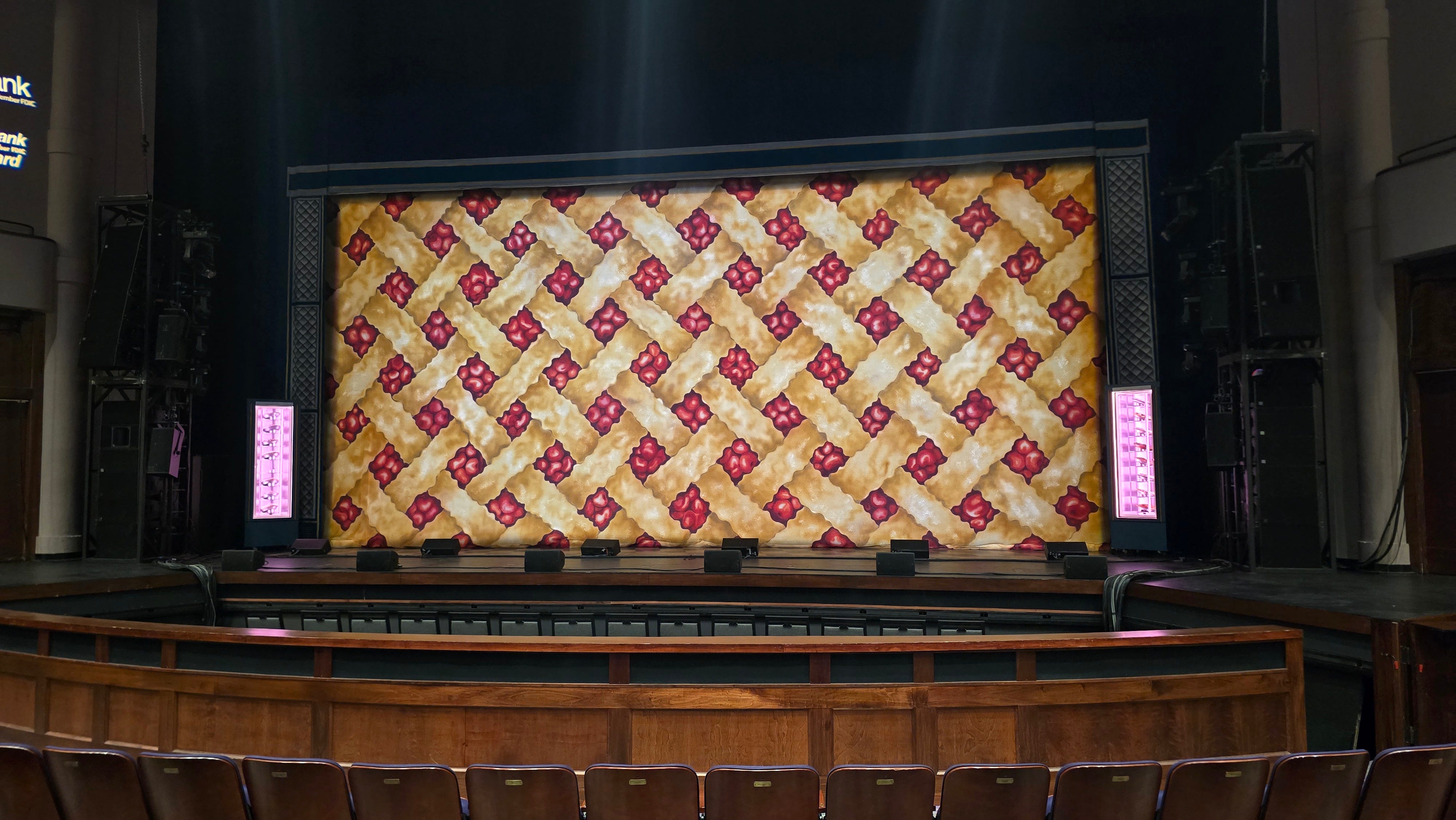

And, so it begins…
The 10th anniversary of Waitress brings Sara Bareilles’ beloved musical to Sioux Falls, pairing a lively diner atmosphere and standout performances with a story that’s more complicated than its sweet exterior suggests.
The Washington Pavilion’s 28th theater season is upon us! Starting with the 10th anniversary tour of Waitress, Sioux Falls gets a little taste of Broadway right here at home. While I love live music with my concert reviews, theater will always be my first passion. There’s something different about amazing musical talent in the element of telling a story, where every note, movement, expression, and line of dialogue works together to bring characters to life.
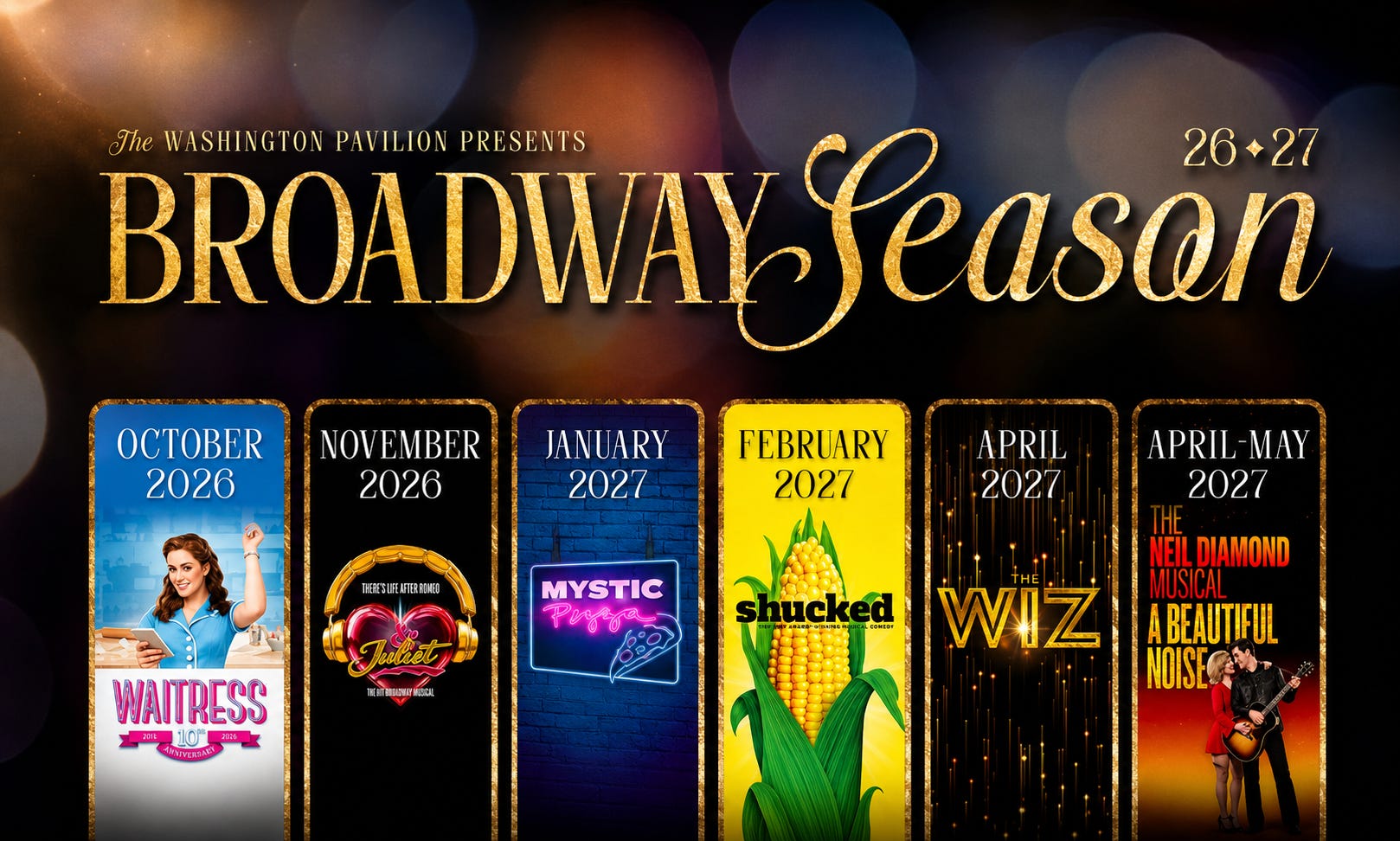
With my new series subscription seat bringing me closer to the middle of the magic, I was excited to see how it differed from being more stage left in years prior. A change in perspective might seem like a small thing, but theater is a visual experience as much as an auditory one. Where you sit can influence what you notice. From the expressions on an actor’s face to the movement happening across the stage. And with a production like Waitress, which balances comedy, music, choreography, and some difficult subject matter, there’s plenty to take in.
The national tour arrived in Sioux Falls October 9–11, opening the Washington Pavilion’s 2026–27 Broadway Series with a musical that has spent a decade finding its way into audiences’ hearts. With music and lyrics by Grammy Award winning singer songwriter Sara Bareilles, a book by Jessie Nelson, choreography originally created by Lorin Latarro, and direction originally led by Tony Award winner Diane Paulus, Waitress has a creative history worth recognizing. When the musical debuted on Broadway in 2016, its four leading creative positions were all held by women, a historic first for Broadway.
That accomplishment is a fitting backdrop for a show centered on women trying to figure out what they want from life, what they can endure, and what they are willing to change.
Welcome to Joe’s
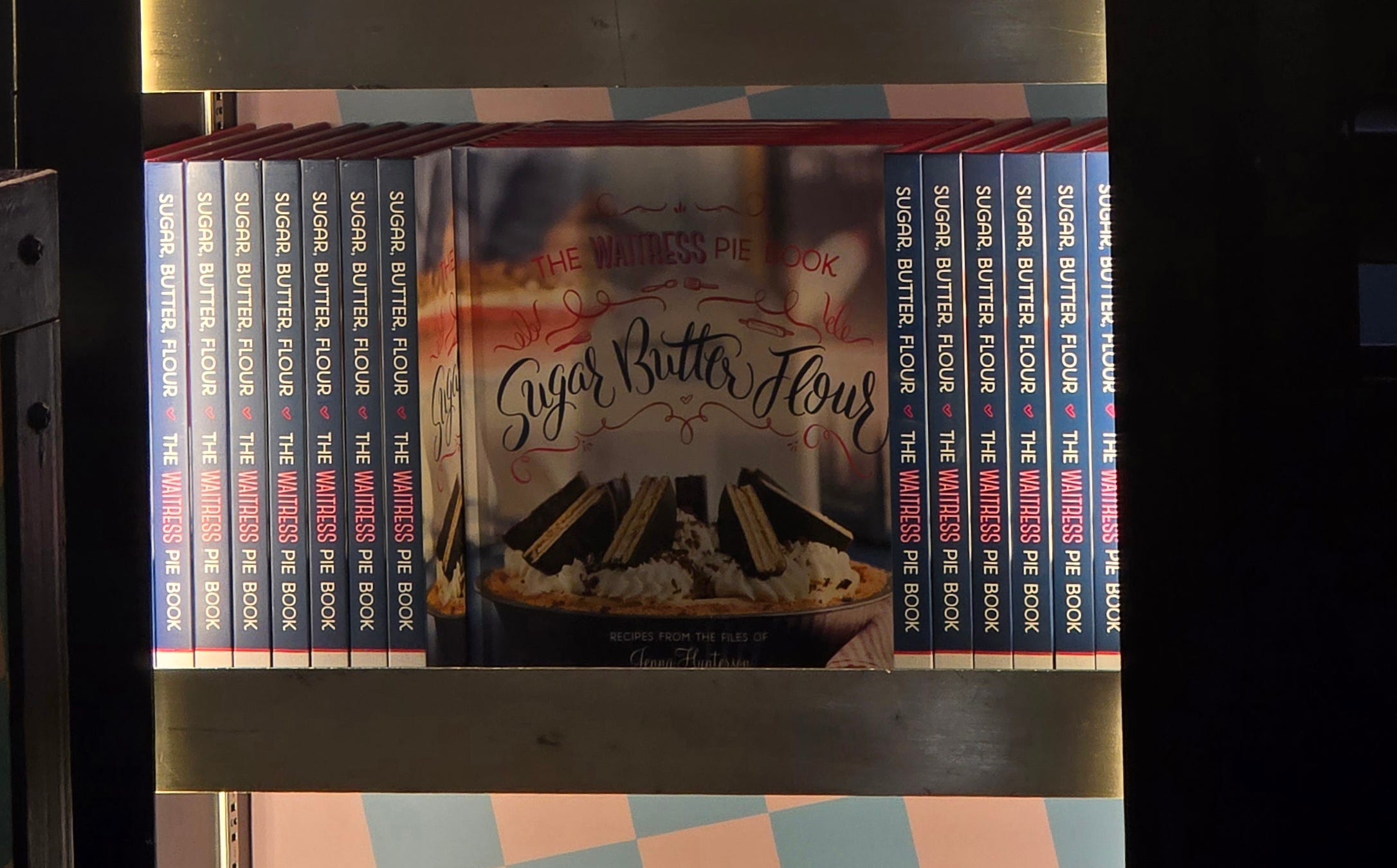
Based on Adrienne Shelly’s 2007 film, Waitress follows Jenna Hunterson, a talented pie maker working in a small town diner while trapped in an abusive marriage. An unexpected pregnancy complicates her already difficult circumstances, but the possibility of a different future begins to emerge through her friendships, her baking, and an unexpected romantic connection.
It’s a story that could easily become relentlessly heavy. Instead, Waitress finds much of its personality in the ordinary rhythms of diner life. The friendships between the women, the quirks of the people who pass through the restaurant, and the humor found in everyday frustrations let the show unfold naturally. The laughter isn’t simply a break from the serious material. It’s part of the way these characters navigate their lives.
One of the first things that caught my attention was the sheer amount of real food represented in the production. These were some of the most convincing food props I’ve seen in a theatrical production, and they helped sell the setting. A diner built around pie making needs to feel like a place where people actually work, eat, and spend their days. The food isn’t merely decoration. It belongs to Jenna’s identity, providing an outlet for her creativity when so much else in her life feels beyond her control.
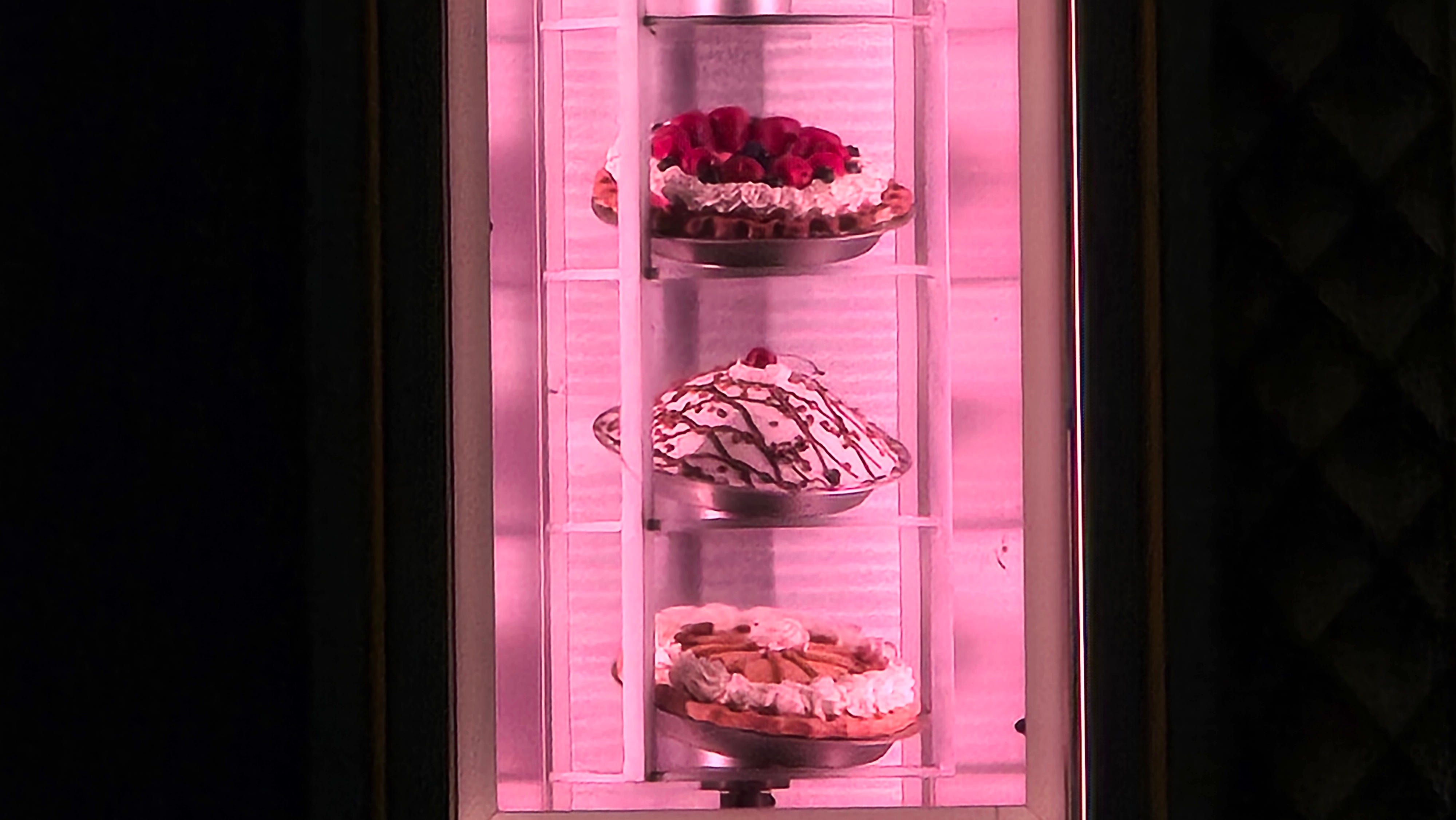
There’re plenty of moving pieces, too. The production has to make the diner feel like a functioning workplace while leaving room for the performers, the musical numbers, and the changing emotional temperature of the story. The stage picture has to support both the practical business of the restaurant and Jenna’s more personal inner life. That balance gives the production a theatrical language of its own, allowing the audience to distinguish between what’s happening around Jenna and what’s happening inside her head.
The musical also benefits from having its musicians onstage. Rather than treating the score as something detached from the action, the production keeps the music visibly connected to the world of the show. Bareilles’ songs are central to that relationship. Her background as a singer songwriter gives the score a contemporary pop sensibility, but the music still has to do the work of musical theater: carry the story forward, reveal what characters struggle to say aloud, and shift the emotional stakes from one scene to the next. Bareilles has described the freedom of writing for Waitress as an opportunity to explore different musical styles while keeping storytelling at the center.
That combination is a large part of the show’s appeal. The music can be catchy without losing its connection to the characters, and the humor can be broad without making the underlying circumstances feel trivial.
Jenna at the center of it all
At the heart of Waitress is Jenna, and the production depends on its leading performer making the character’s contradictions believable. She’s talented, funny, and capable of imagining a different life, yet she’s also dealing with an abusive husband and an uncertain future. Her pies offer a glimpse of the person she wants to be, even as the rest of her circumstances threaten to keep her in place.
Samantha Lane Scruggs leads the touring production as Jenna Hunterson. The role requires more than delivering the score’s big emotional moments. Jenna needs to feel like someone who can joke with her coworkers, lose herself in the details of a recipe, and carry private pain into a room without announcing it to everyone around her. The comedy and vulnerability have to belong to the same person.
That’s one of the musical’s most interesting balancing acts. Jenna isn’t defined exclusively by what’s happened to her, nor is she presented as someone who can simply decide to leave and immediately solve every problem. The story gives her room to be conflicted. Her desire for something better is real, but so are the complications that make pursuing it difficult.
The show’s emotional center is especially clear in the way it treats baking. Jenna’s creativity isn’t just a charming character trait or a convenient way to give the musical its title. It’s a part of herself that remains available even when her personal life’s become restrictive. Through the pies she makes, she can express feelings that might otherwise stay buried. The production’s commitment to making the food look convincing strengthens that idea: this is a craft Jenna knows intimately, a place where she can still make something of her own.
Bareilles’ score supports that sense of an inner life continuing beneath the surface. She didn’t begin with the intention of writing a collection of songs that would simply decorate a familiar story. In interviews about the musical, she’s discussed how Jenna’s character opened the door into the material, eventually leading to “She Used to Be Mine,” one of the show’s defining songs.
That history gives the musical a particularly personal center. The songs aren’t just there to make the evening sound like Broadway. They allow the characters to become more complicated than the roles they play in the diner.
Ogie steals the First Act
For all the heavier material, Waitress knows how to have fun, and one of my favorite moments of the first act belonged to Ogie.
Played by Davey Fried, Ogie brings a distinctive comic presence to the production. During “Never Getting Rid of Me,” he stole the show in Act I. It’s the kind of number that depends on a performer committing fully to the character’s peculiarities and letting the comedy build rather than playing everything at the same volume. Fried made the moment a standout, giving the audience a welcome chance to laugh without reservation.
Ogie’s role in the story also helps demonstrate the musical’s willingness to embrace eccentricity. The diner is populated by people with their own oddities, insecurities, and desires. They aren’t all moving through the story with the same level of self awareness, and the comedy often comes from the distance between how a character sees a situation and how everyone else sees it.
The musical’s humor is at its best when it comes from those character differences. Rather than pausing the story to deliver jokes, the production allows the characters to create the comedy themselves. Fried’s performance was a particularly strong example of that approach.
It’s also a useful counterweight to Jenna’s story. The audience needs the lighter moments, not because the more painful scenes should be forgotten, but because a diner full of people doesn’t stop being funny just because someone is struggling. People keep flirting, making mistakes, getting on one another’s nerves, and finding reasons to laugh. The tonal shifts are part of what makes the world of Waitress feel alive.
The harder ingredients
Here’s where my feelings about Waitress become more complicated.
The musical tackles domestic abuse, a subject that deserves to be treated with care. Jenna’s marriage isn’t simply an unhappy relationship. Her husband’s behavior creates a situation in which her choices, confidence, and sense of what’s possible are constrained. The show’s ability to place humor beside that reality is one of its strengths, but it also creates a responsibility to handle the serious material thoughtfully.
The production’s funniest scenes can make the diner feel like a refuge, a place where Jenna and her friends have room to be themselves. Yet the story outside those walls is considerably more troubling. That contrast gives the musical much of its emotional force. The audience sees the difference between the person Jenna is among friends and the person she has to be when dealing with her husband.
My biggest reservation is the use of adultery as an escape for many of the characters. I understand the dramatic function of the romance and why the story presents it as an opening toward a different life. Jenna’s lonely, vulnerable, and searching for a way forward. It’s not difficult to understand why a new connection might feel like a lifeline when her marriage has become a source of pain.
Understanding the circumstances, however, doesn’t mean I have to agree with the choice the story makes. I found myself wrestling with the idea that an affair becomes part of the route out. A story about a woman reclaiming her agency could have explored that struggle without making infidelity such a prominent part of her escape.
That tension didn’t erase the strengths of the production, but it kept me from embracing the story without pause. Waitress wants audiences to root for Jenna as she begins imagining a life beyond the one she knows. I could root for her desire to find safety, independence, and a future of her own while still questioning the path the musical gives her.
A character can be sympathetic without every decision being beyond criticism, and a story can raise worthwhile questions without providing answers that satisfy every audience member. In this case, the show gave me plenty to enjoy while leaving me with a disagreement that was difficult to set aside.
That complexity is part of the experience of seeing theater live. The performers make the characters real, and the audience has to sit with their choices rather than simply reading a synopsis and moving on. You can laugh at one moment, feel the weight of a scene the next, and still be uncertain about what the story asks you to accept.
A new seat for a new season
The new subscription seat was another reason I was looking forward to this production. Moving closer to the middle from my usual position farther stage left gave me a different perspective on the show’s visual composition. With an ensemble production, the center of the stage is only part of the picture. Movement, entrances, reactions, and the relationships between performers all contribute to what the audience sees.
Waitress has plenty happening at once, from the working diner environment to its musical sequences and the moments when Jenna’s imagination takes over. The change between the real world and her internal daydreams was one of the production details I particularly appreciated. Theater can make an internal thought visible in a way that film and books approach differently, and the show uses that possibility to help the audience understand Jenna’s emotional experience.
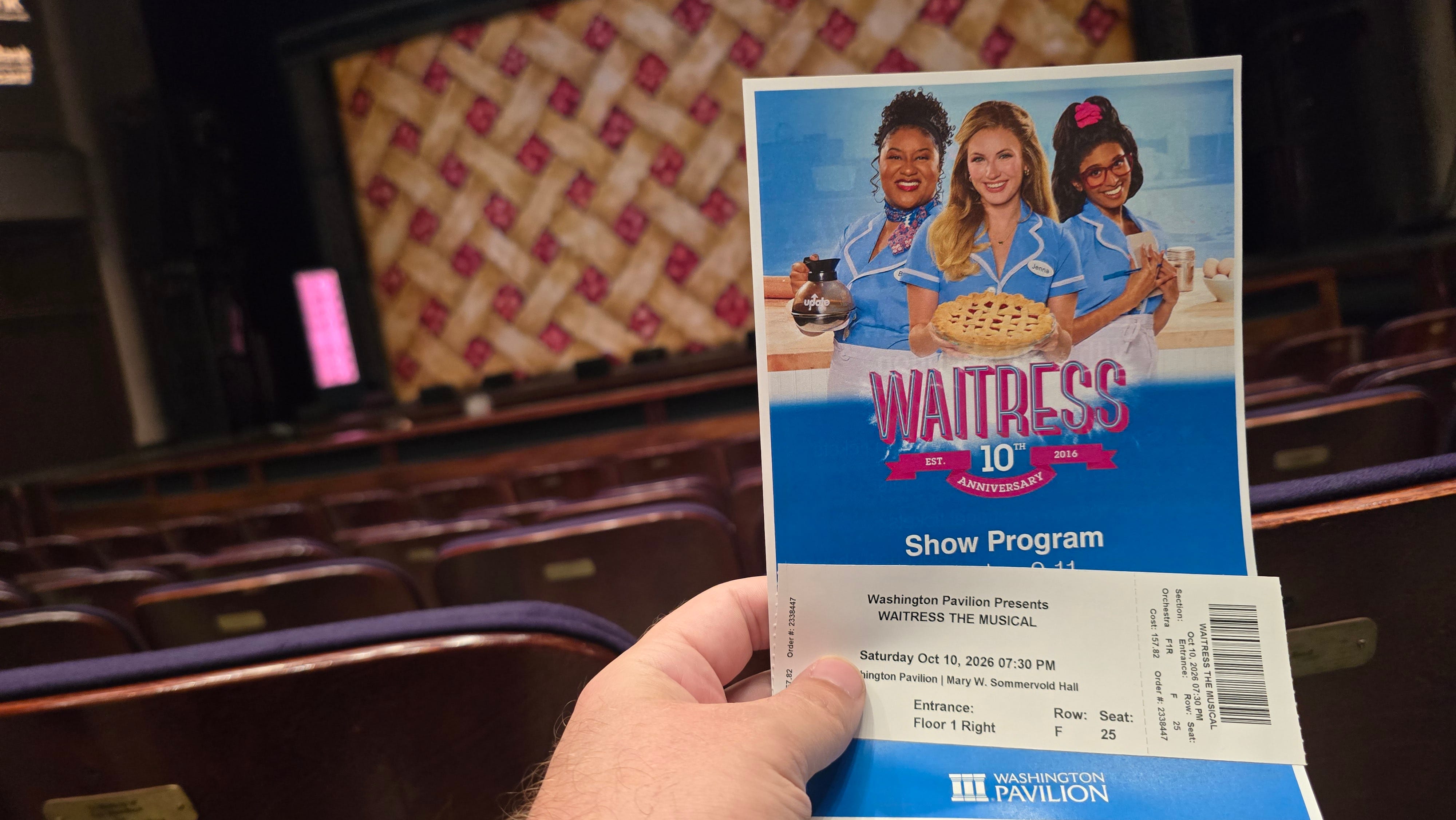
The staging has to make those transitions legible without interrupting the story. The diner needs to remain a recognizable place, but the production also needs room to move beyond its everyday reality. The musicians, the food, and the ensemble all contribute to a stage world that can shift between comedy and introspection.
Having the band onstage adds another layer to that experience. The musicians aren’t hidden away from the audience, and their presence reinforces the connection between the score and the story being told. With Bareilles’ music at the center, the songs become part of the production’s personality rather than an interruption to it.
The Washington Pavilion has opened its 2026–27 Broadway Series with a show that offers more than a collection of familiar musical theater conventions. Its combination of contemporary songwriting, ensemble comedy, physical stagecraft, and emotionally complicated storytelling gives audiences plenty to discuss after the curtain falls.
Curtain call
Theater will always be my first passion, even with the time I spend photographing and reviewing live music. A concert can leave me thinking about a guitar tone, a vocal performance, or the way a room responded to a song. A musical adds another dimension, asking how those same elements can serve a character and help tell a story.
Waitress gave me plenty to appreciate: the convincing food props, the moving pieces of the production, the presence of the live musicians, the distinction between Jenna’s reality and her daydreams, and Davey Fried’s scene stealing turn in “Never Getting Rid of Me.” Sara Bareilles’ score gives the show a musical identity that can move between humor and vulnerability, while the cast has to carry a story that refuses to remain entirely sweet.
I didn’t agree with every choice the story made, particularly its treatment of adultery as a way out of abuse. But I’d rather leave a theater with a genuine question about a story than pretend every element worked for me simply because the production was entertaining.
The Washington Pavilion’s new theater season is underway, and Waitress is a lively, frequently funny, and sometimes uncomfortable way to begin it. Like a good pie, the show has several ingredients, and not every flavor will appeal to everyone in the same way. For me, the best parts were the moments when the music, performances, and stagecraft came together to make Jenna’s world feel alive, even when I was still questioning the recipe.
