




A New Standard in the Midwest
Opened in 2023, Vibrant Music Hall has wasted no time establishing itself as a serious player in the Midwest live music circuit. In just a short span, the Waukee venue has attracted an impressive mix of rising acts and chart-topping artists, signaling both strong booking vision and a rapidly growing reputation among touring professionals.
Strategically positioned in Waukee’s newest entertainment district, the hall benefits from a location designed for experience. From accessibility to atmosphere, the surrounding development complements the venue’s modern identity, making it feel like a destination rather than another dot on a tour schedule.
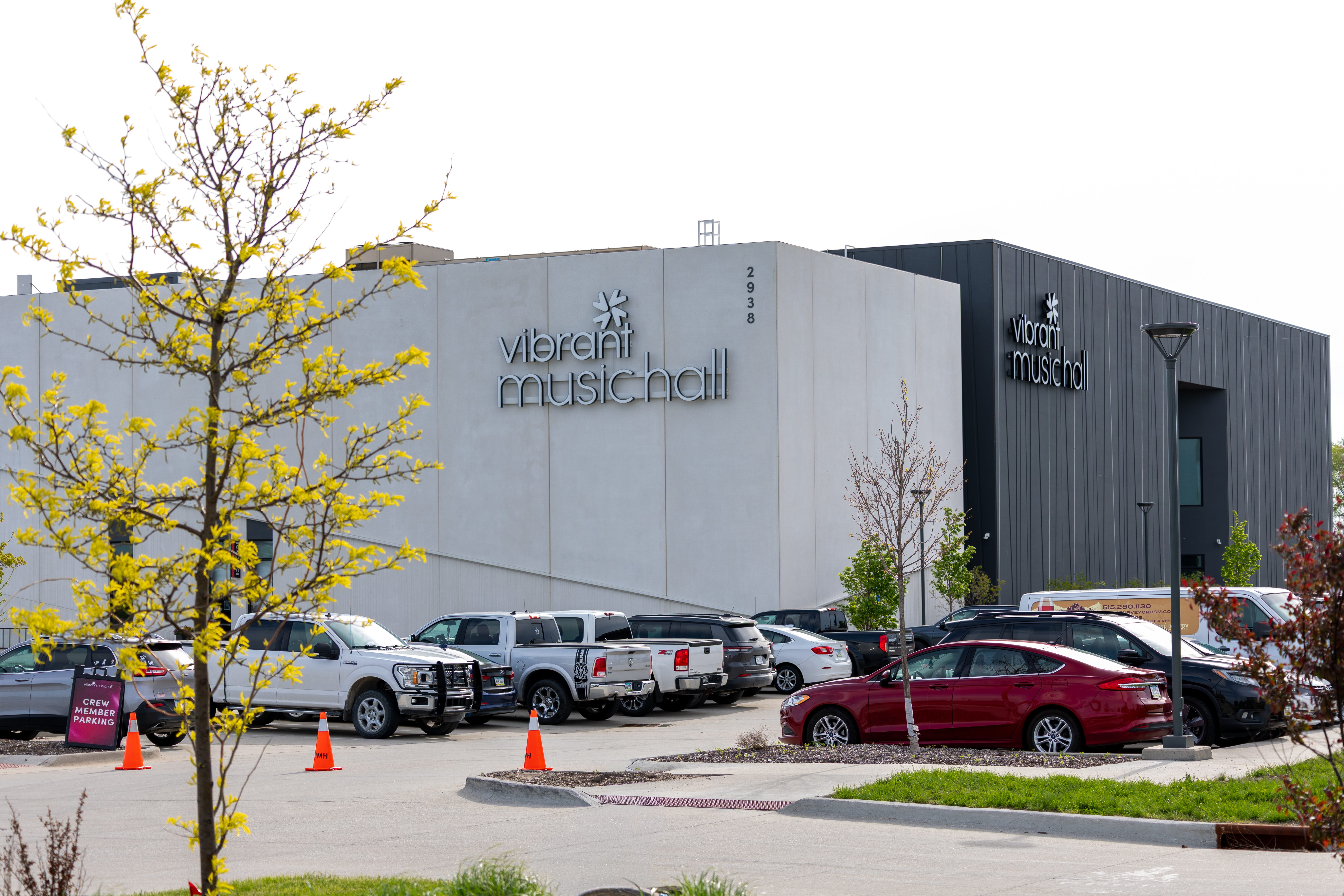
With a capacity of 3,300, Vibrant Music Hall strikes a balance many venues struggle to achieve. It is large enough to host high-demand acts and sell-out crowds, yet still intimate enough to maintain a tangible connection between artist and audience. That dynamic has already translated into a string of packed shows, reinforcing its status as a go-to room for both performers and fans.
Beyond the stage and sound, what truly elevates the experience is the people behind the operation. The staff moves with a level of professionalism that stands out even among more established venues. From seamless coordination to clear communication, every interaction reflected a team that understands the nuances of live event execution. Leadership within security and marketing showed a commitment not only to safety and logistics, but to creating an environment where artists, fans, and media all feel supported.
For a venue still in its infancy, Vibrant Music Hall doesn’t feel like it is finding its footing. It feels like it has already arrived.
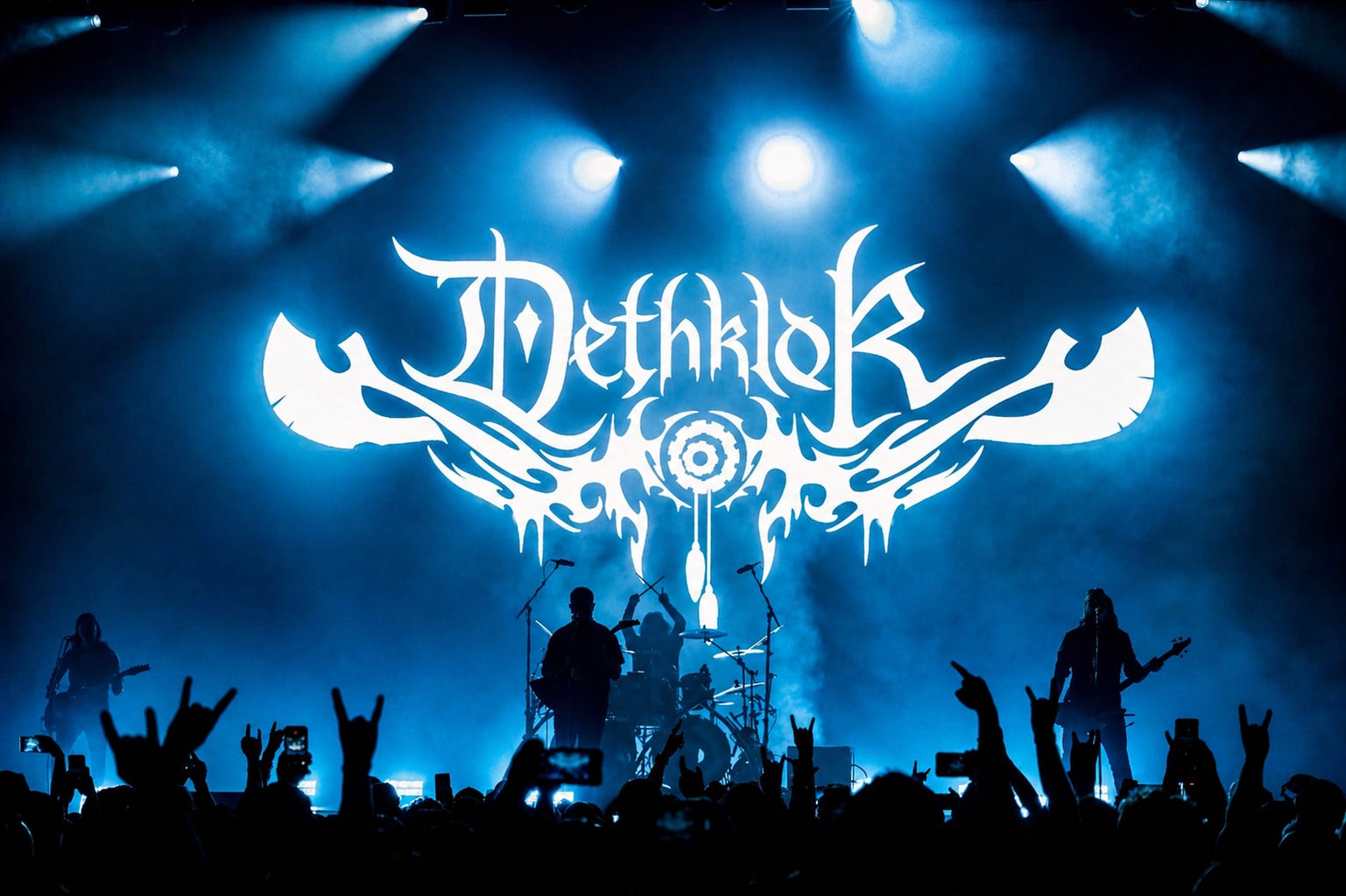
And on this night, it didn’t take long before the room stopped feeling like a modern Midwest concert hall and started feeling like someone had hijacked the late-night broadcast feed. The kind of signal you used to catch half-awake, somewhere between sleep and bad decisions, when Adult Swim’s Metalocalypse was less a show and more a warning from the darker, funnier corner of television.
The screen flickered. The riffs sharpened. The weirdness had paperwork.
The Amonklok Conquest had begun.
Please consider Donating to Sponsor an article even $1 helps!

Castle Rat: A Live Fantasy Campaign Brought to Life
If most live sets aim to entertain, Castle Rat aims to transport. What unfolded on stage wasn’t simply a concert. It was a fully realized fantasy epic played out in real time, with the crowd as both witnesses and participants.
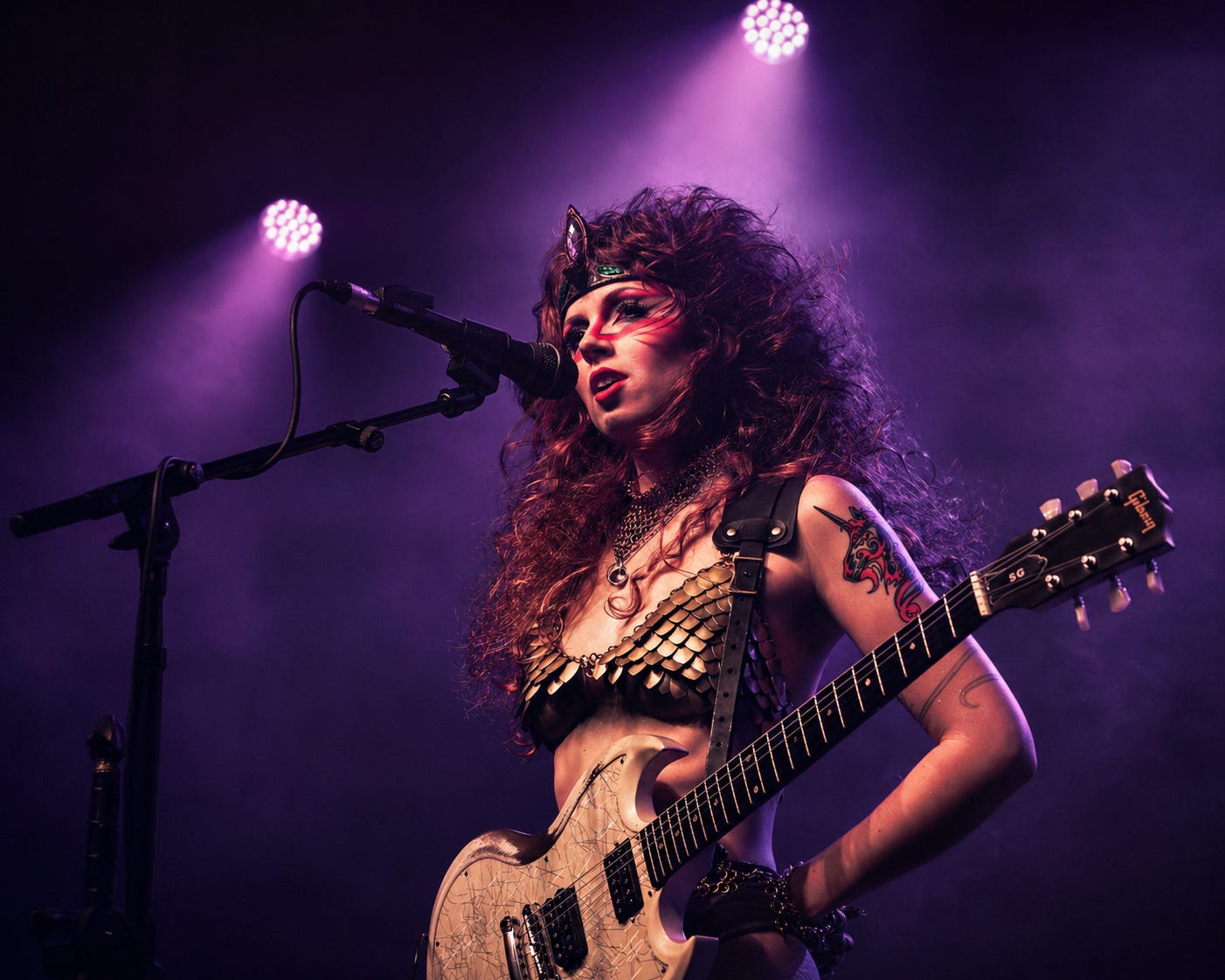
From the opening moments, the band committed to a sweeping theatrical storyline. The theme centered on a dungeon rat fighting to keep his power against a vampiric guitarist, a plague doctor bassist, and a singing, guitar-playing female crusader. That sentence sounds like something pulled from a fake band’s lore page in a Metalocalypse cutaway gag, except Castle Rat made it breathe, stomp, bleed, and rise again.
Queens and vampires clashed under dim stage lights. The plague doctor moved through the set like a bad diagnosis wearing a mask. Sword fights weren’t implied; they were acted out. Death wasn’t a metaphor; it was staged, blood and all. And when the hero resurrected, it landed as part of the story’s arc rather than a random shock beat.
The phrase “Now is forever in this realm” became the spell holding the performance together. It wasn’t only a line. It was a chant, a command, a password into the world Castle Rat was building. The crowd fed it back until the room began to feel less like Waukee and more like a cursed kingdom accidentally booked through a professional ticketing platform.
It felt less like a setlist and more like a campaign session pulled straight from Dungeons & Dragons, complete with characters, stakes, and a clear sense of progression, all conducted with theatrical command by Riley Pinkerton. There was a handmade quality to it that gave the performance teeth. Not cheap. Not flimsy. Handmade in the best sense — like every prop, costume, and character choice had been carried in from another realm because nobody trusted the modern world to understand the assignment.
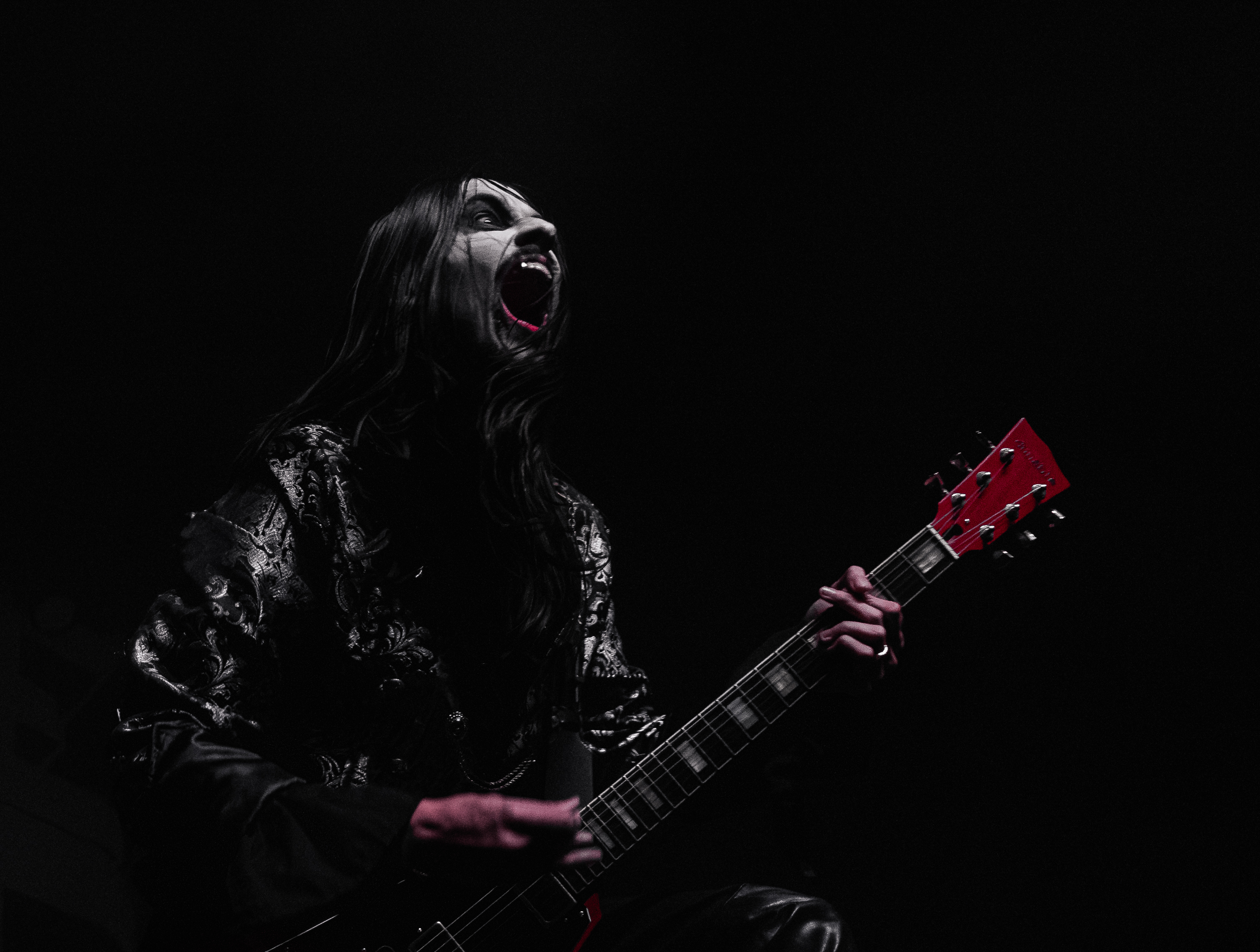
That strange sincerity is what made Castle Rat such a strong opening transmission for the night. Their world had its own internal logic. It wasn’t asking permission to be dramatic. It arrived dramatic, planted a flag, drew a blade, and dared the audience not to follow.
It felt less like a setlist and more like a campaign session pulled straight from Dungeons & Dragons complete with characters, stakes, and a clear sense of progression, all masterfully conducted by Riley Pinkerton.
A Realm Built in Real Time
What makes Castle Rat stand out isn’t only the concept, but the execution. The band doesn’t treat the theatrical elements as a gimmick or backdrop. The music and the narrative are fully intertwined. Each chord, tempo shift, and vocal delivery feels intentional, driving the story forward rather than pulling attention away from it.
The aesthetic of costumes, props, and stage design locks in with the sound in a way that feels cohesive rather than overproduced. It is immersive without becoming inaccessible, dramatic without losing its edge. There is a careful line between fantasy performance and accidental camp. Castle Rat walked that line with a torch in one hand and a sword in the other.
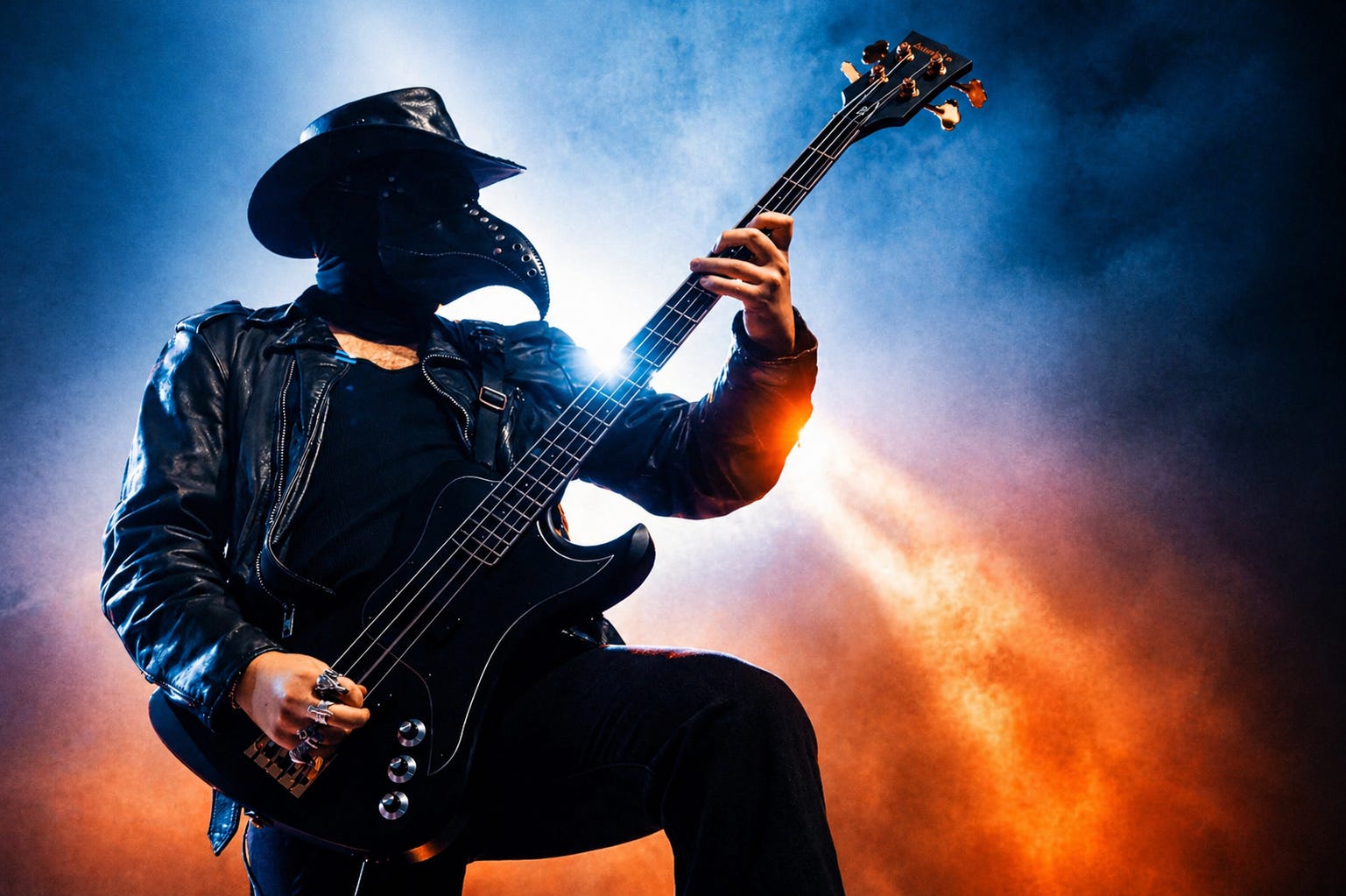
Even for those unfamiliar with the band going in, it was the kind of performance that held attention from start to finish because something was always unfolding. A look across the stage meant something. A character entrance meant something. A death meant something. A chant meant something. The band created a reason to keep watching beyond the normal mechanics of a rock set.
And still, the songs had to carry the weight. That is where Castle Rat avoided the trap that catches so many theatrical bands. The visual world didn’t have to compensate for weak music. The riffs had body. The vocals had purpose. The stage story gave the music shape, but the music kept the whole thing from floating away into novelty.
In a landscape where many performances blur together by the time the parking lot empties, Castle Rat stood apart immediately. Their set played like a fantasy broadcast from the late-night edge of the dial, the kind of thing you stumble into while channel surfing and then never fully shake.
Even for those unfamiliar with the band going in, it’s the kind of performance that holds attention from start to finish simply because there’s always something unfolding.
Ending in Resurrection
The set closed not with a fade-out, but with resolution. Toward the end, the giant Castle Rat very theatrically killed the singer. The room didn’t hesitate. The chant returned from the crowd, “Now is forever in this realm,” louder now, stranger now, pulling the performance into its final act.
Then came the potion from the plague doctor.
The singer came back to life, spitting blood over the crowd as she rose to her feet, much to the dismay of the Castle Rat. It was messy, theatrical, funny, committed, and somehow exactly the ending the set had been promising since the first moment the band stepped into character.
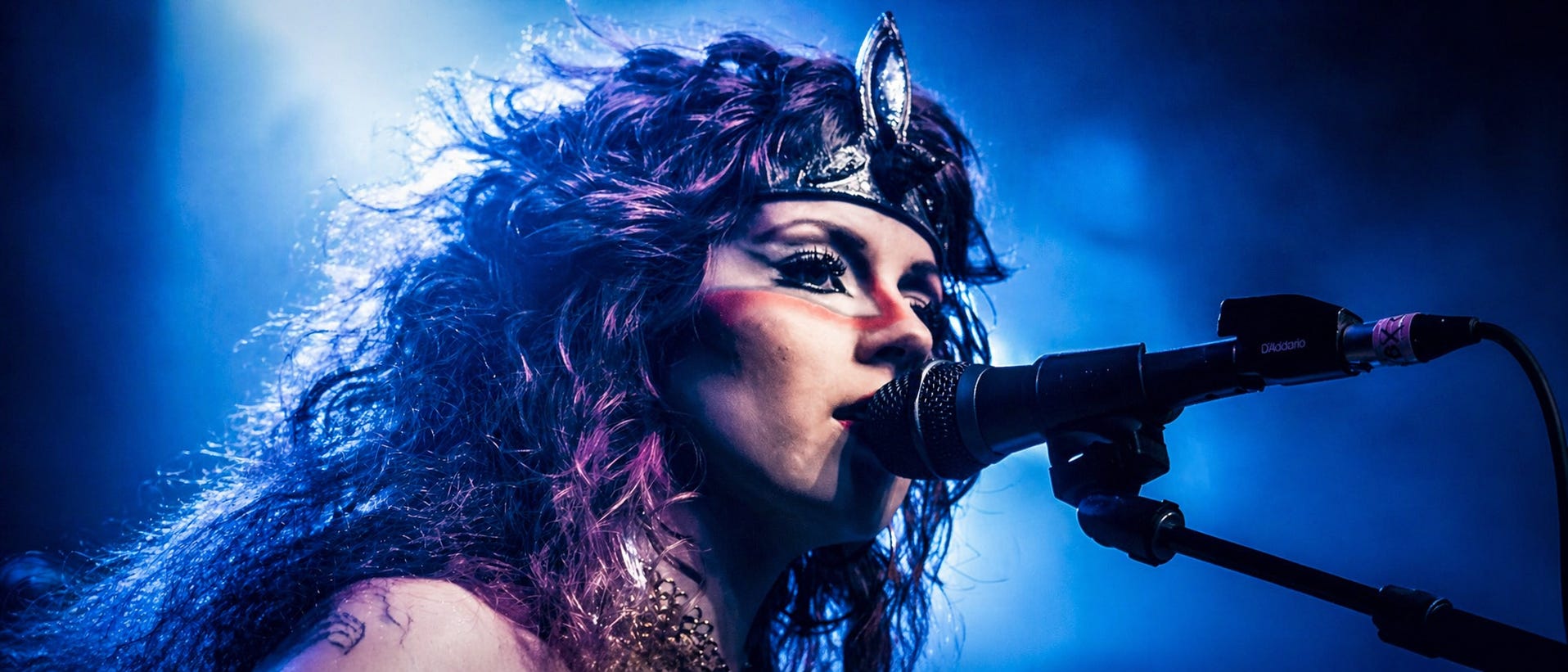
The set ended without an encore, and that was the right move. Castle Rat didn’t need to come back and explain the trick. They had completed the ritual. The battle had been fought. The dead had risen. The spell had closed.
It was a fitting end to a performance that told a story fully and unapologetically from beginning to end. Castle Rat didn’t warm up the room in the ordinary opener sense. They opened a gate.


Viking Shenanigans, Dialed to Eleven
Then Amon Amarth marched through it with weapons.
A night with Amon Amarth is a full-scale invasion. From the moment they took the stage, the atmosphere shifted from anticipation to immersion, pulling the crowd straight into a world of Norse mythology, battle cries, and unrelenting spectacle.
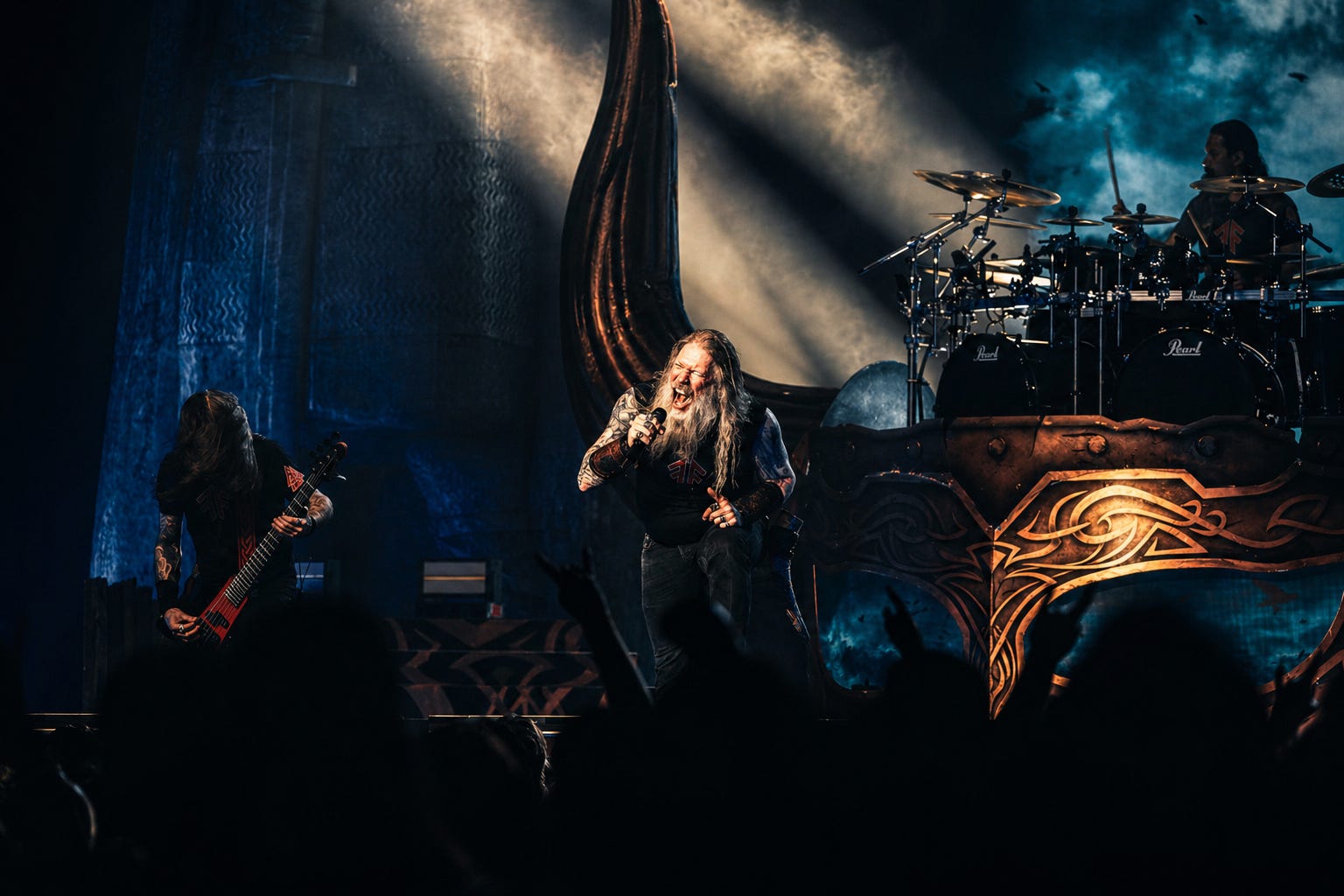
True to form, the band leaned hard into the theatrics without sacrificing the music. Early in the set, Johan Hegg checked in with the crowd and asked if they were ready to feast like Vikings, because Vikings live for the kill. It was huge, ridiculous, and completely effective. Amon Amarth knows exactly what kind of band it is, and that confidence lets the crowd stop overthinking and start rowing.
There was looseness, too, which made the scale feel alive rather than rehearsed to death. At one point, the band moved toward “Death in Fire,” only for Hegg to admit he had “fucked up the intro.” Instead of pretending it didn’t happen, he owned it, laughed it off, and steered the ship back to the original setlist.
“Cry of the Black Birds” came roaring in, and the crowd took the detour like a gift.
After finishing “Cry of the Black Birds,” they circled back and took another swing at “Death in Fire.” Judging by the reaction, they nailed it. That moment did something valuable for the set. It cracked the armor just enough to show the people inside, then immediately sealed it again with volume, precision, and force.
Metal can get stiff when it tries too hard to look indestructible. Amon Amarth looked stronger because they could laugh, reset, and still crush the room.
Then “Hermod’s Ride to Hel” pulled the crowd’s full focus forward. The circle pit shifted into something stranger and more communal. Roughly 20 people locked arms over each other’s shoulders and started group headbanging together, moving as one heavy, many-headed beast. It was brutal, funny, and weirdly wholesome, like a Viking drinking hall had discovered synchronized neck damage.
And then there was the drinking, because of course there was. In full Viking spirit, a horn was raised, the crowd roared, and performance blurred into ritual. Amon Amarth doesn’t invite the audience to observe from a safe distance. They draft the room into service.
True to form, the band leaned hard into the theatrics but never at the expense of the music. At one point, a pick was tossed across the stage mid-song, casually caught, and put right back into use without missing a beat. It’s that kind of looseness, that sense of disciplined frenzy, that makes their performances feel alive.
And then there was the drinking, because of course there was. In full Viking spirit, a horn filled with beer was raised and skolled in one go by Johan Hegg, a moment that blurred the line between performance and ritual.
Stagecraft Worthy of Valhalla
VVisually, the set evolved like chapters in a saga. Massive Viking statues loomed over the stage before giving way to the hull of a ship, transforming the venue into something closer to open sea than solid ground. Each transition added scale, building the performance from concert into campaign.
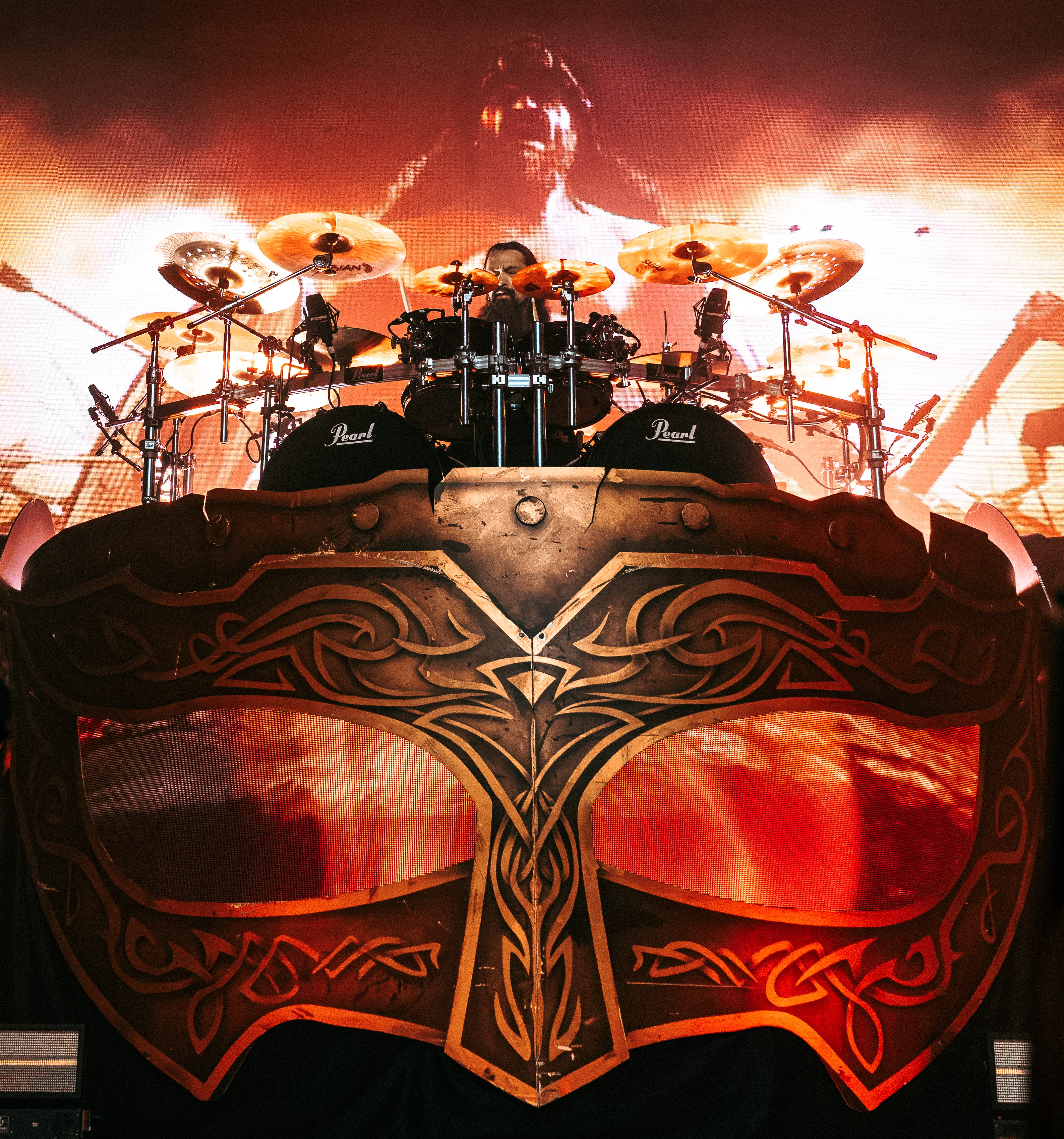
Behind it all, drummer Jocke Wallgren was framed inside a massive Viking helm, making him feel less like a band member and more like the war engine driving the assault forward.
One of the night’s most unforgettable moments came when the crowd fully joined the story. When “Put Your Back Into the Oar” began, Hegg instructed the crowd to row.
Half the floor sat down and did exactly that.
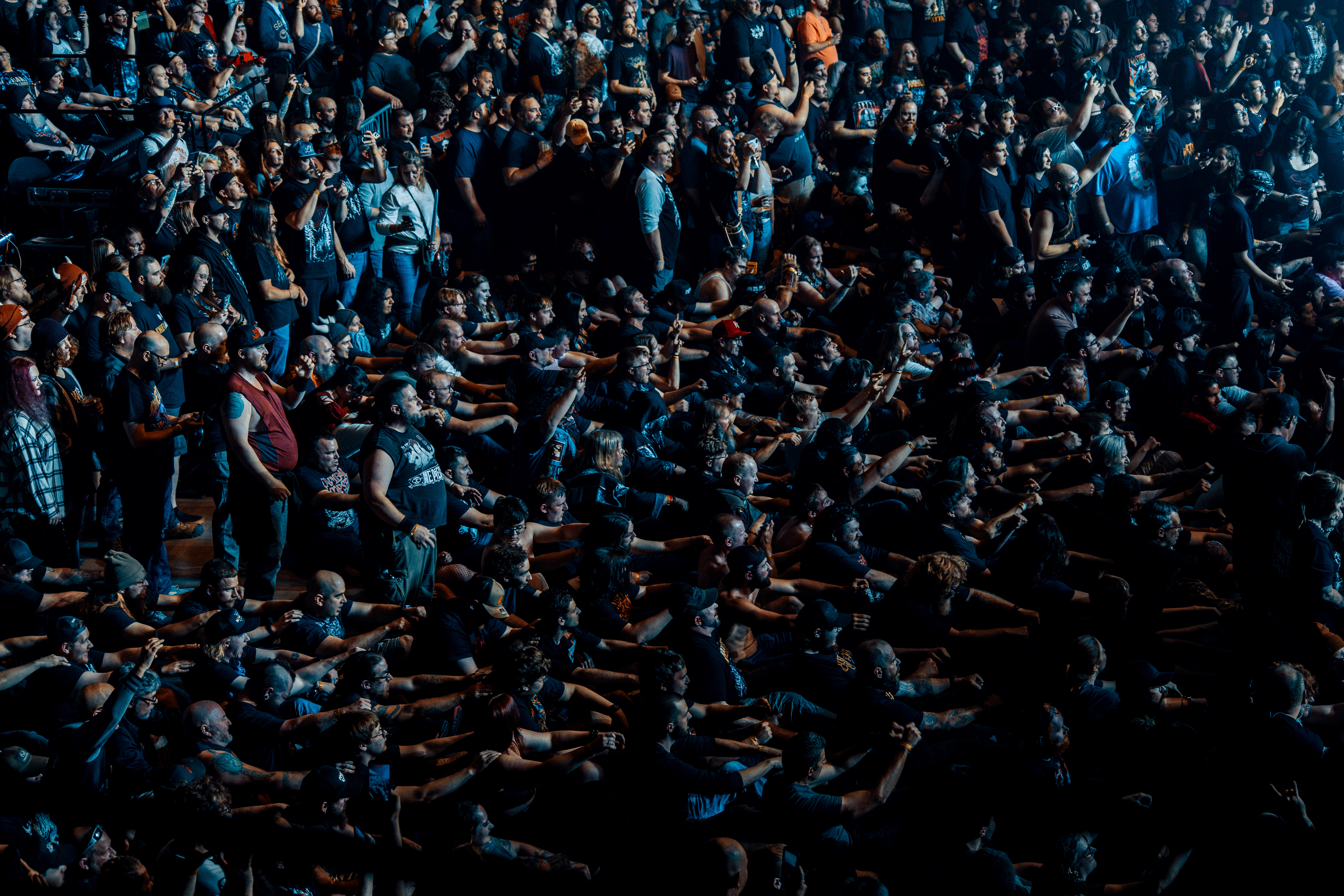
It is one of Amon Amarth’s signature live moments, but watching it happen in person is still something else entirely. You can explain it plainly and make it sound absurd. You can watch it happen and feel it become the only reasonable response in the room. The audience stopped reacting to the show and started operating inside it.
For a few minutes, the barrier between band and crowd disappeared. Everyone was part of the same crew, moving in rhythm, locked into the same purpose. It had the glorious stupidity of the best Adult Swim set pieces: a room full of adults deciding, with total seriousness, to become a Viking longship because the Swedish death metal band told them to.
That’s the good stuff. That’s the part you remember.
For a few minutes, the barrier between band and audience disappeared. Everyone was part of the same crew, moving in rhythm, locked into the same purpose.
Myth, Mayhem, and Mjölnir
The finale didn’t hold back. During “We Rule the Waves,” Amon Amarth became even more theatrical with the stage design, removing the large Viking statues and replacing them with a boat’s helm and a massive sea serpent. Two men in Viking regalia moved across the stage taking up arms, pointing swords and arrows around the room like the venue had been dragged into myth against its will.
At one point, Hegg took a large war hammer to the serpent, fighting it off with the kind of straight-faced conviction that makes a ridiculous image become a great one. The stage became a battleground. Weapons were raised. Chaos unfolded. The imagery reached its peak with the presence of Thor’s hammer, bringing the Norse theme full circle.
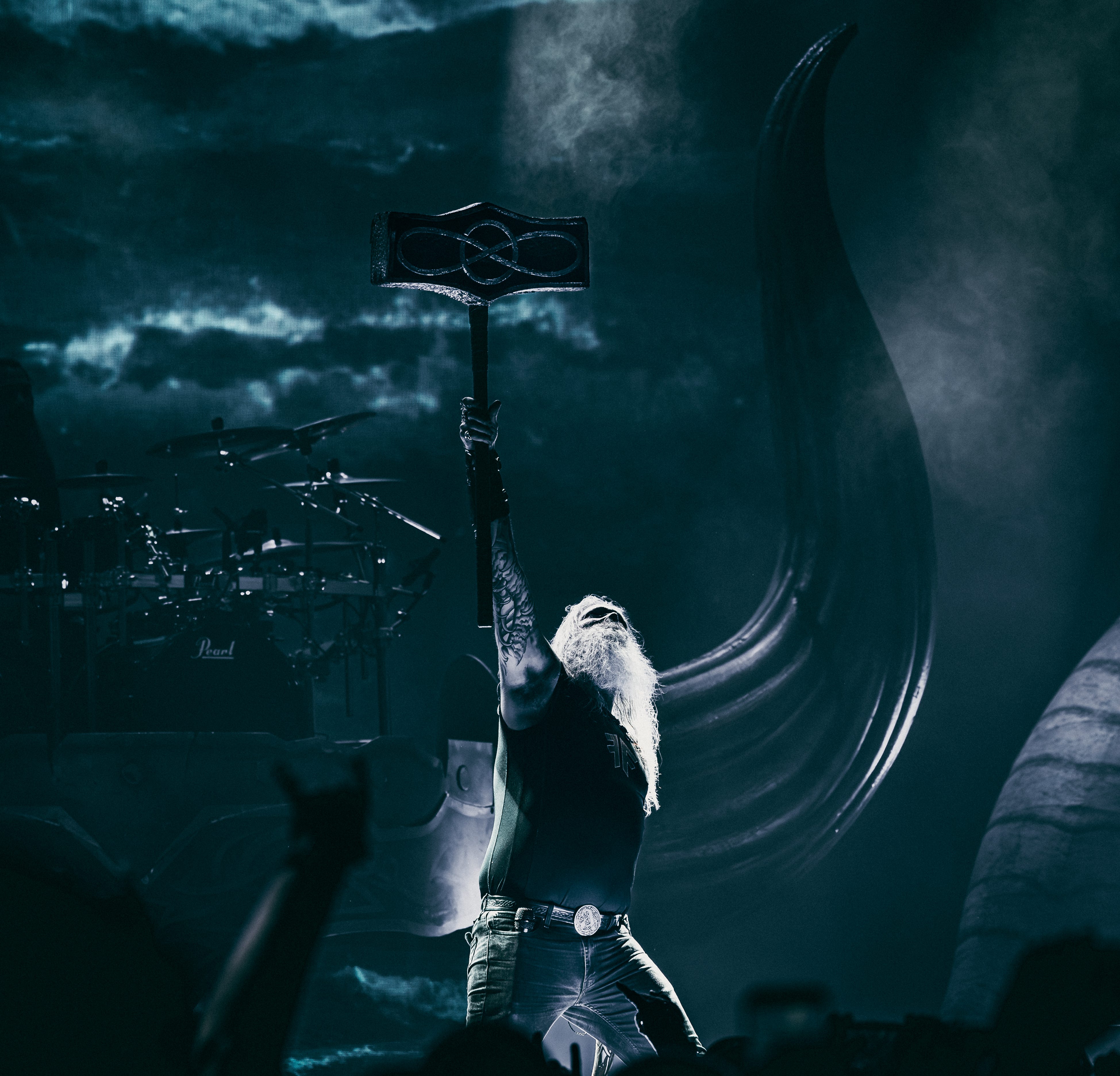
It was theatrical, over-the-top, and exactly what you hope for from a band so deeply committed to its identity. Amon Amarth never seemed embarrassed by scale. They didn’t shrink the fantasy for realism. They made the room bigger until the fantasy fit.
The main set closed with Hegg pulling a bullhorn-style cup from his waistband, raising it to the crowd, thanking them for the party, and sending the room into “Raise Your Horns.” It played less like a typical closer and more like a toast from a war chief who had just successfully convinced a few thousand people to row across Iowa.
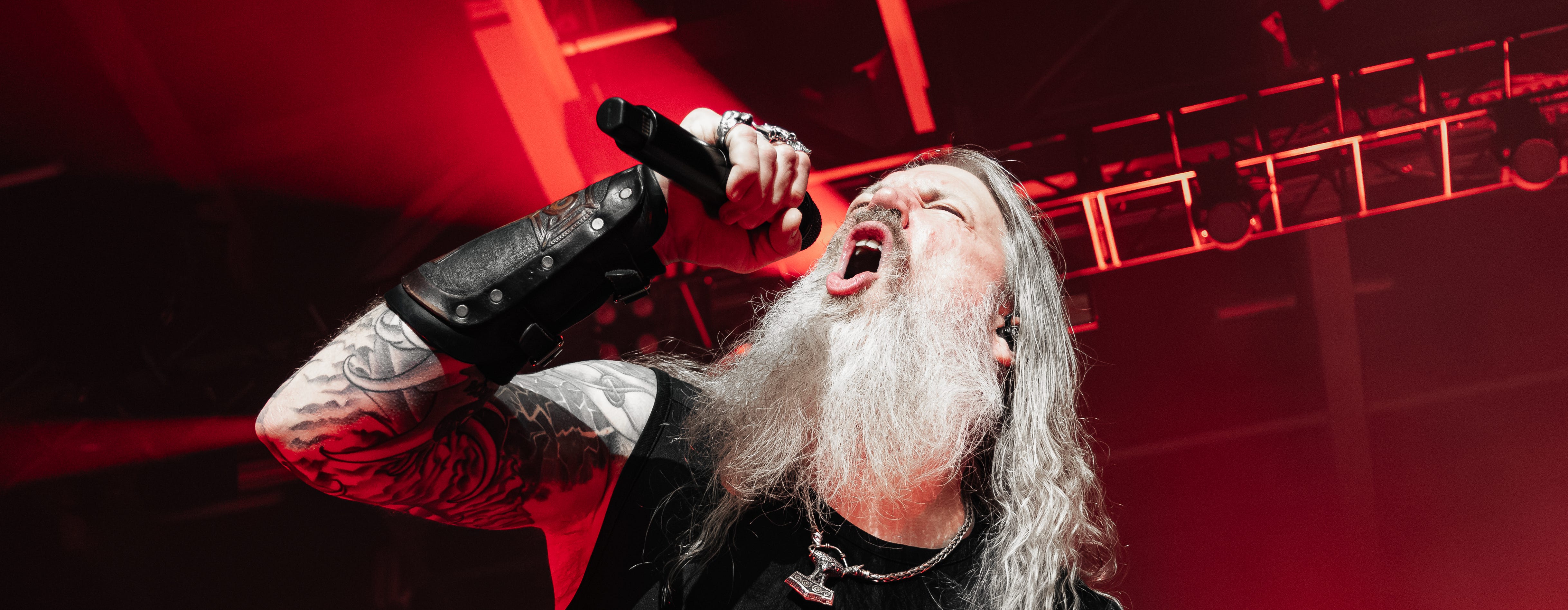
They returned for “Saxons and Vikings,” bringing the raid to a thunderous close. By the time it was over, the feeling wasn’t only that you had watched a show. The sweat, the movement, the scale, and the absurdity left behind the sensation of having taken part in something.
Not metaphorically.
Physically.
Like you and a few thousand others had crossed the sea, stormed a village, fought a serpent, and lived to tell the story.
Then the broadcast changed again.
The screen took over.


The Animation Is the Band
For a certain kind of fan, Dethklok was the nostalgia nerve of the night. Not soft nostalgia. Not warm nostalgia. Adult Swim nostalgia. The kind that feels like staying up too late with the volume low, watching something violent, stupid, brilliant, and weirdly formative while the rest of the house sleeps.
Born from Metalocalypse, Dethklok doesn’t perform like a normal band because Dethklok was never only a normal band. Their live show leans directly into that origin, blurring the line between concert and episode until the screen becomes the frontman and the musicians become the machinery underneath it.
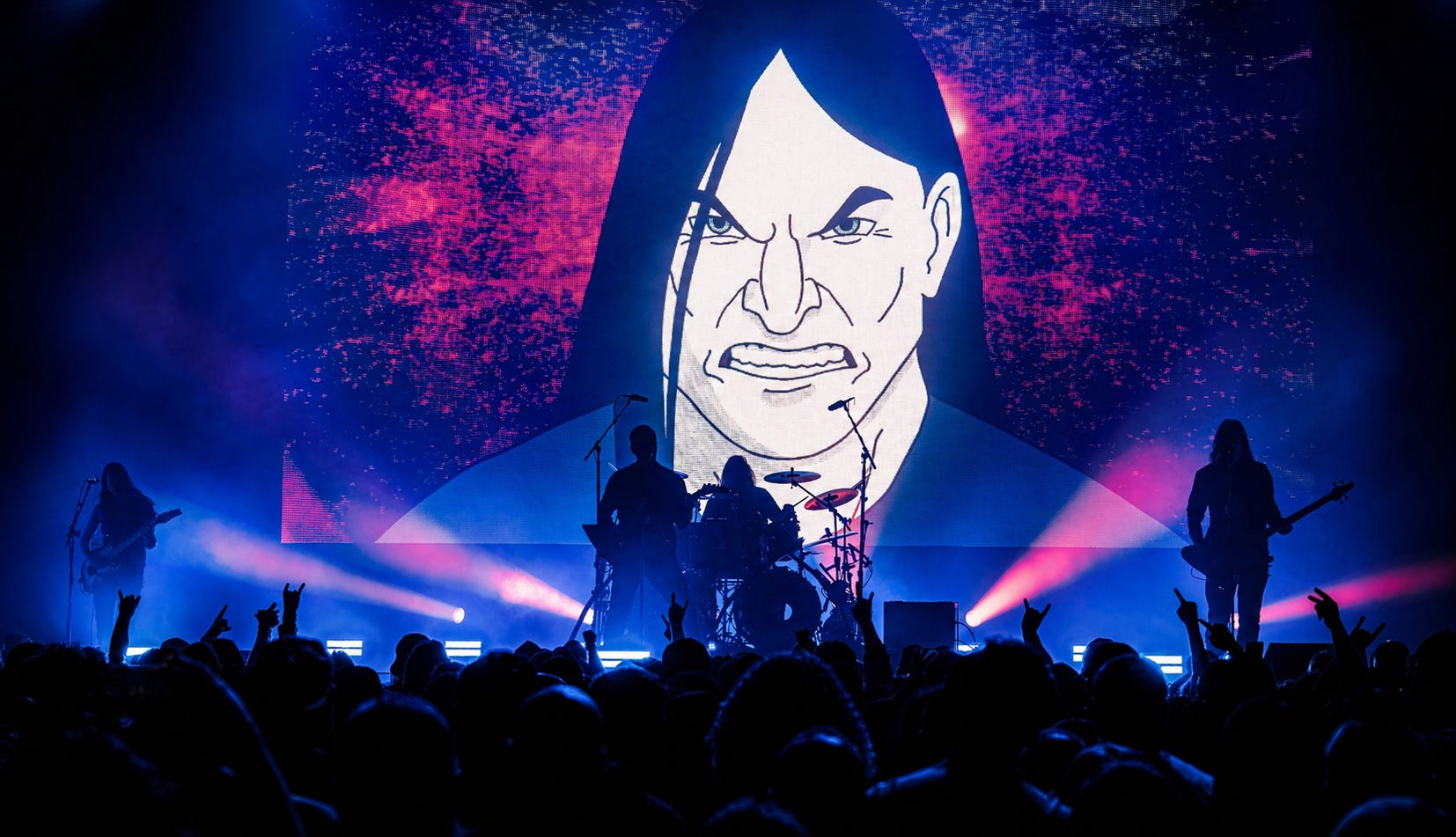
Dethklok followed with the “Dethklok Theme,” and the night entered its third world.
From the jump, the animated visuals dominated the experience. The band members themselves remained intentionally obscured, swallowed by dim lighting that kept them in the shadows. It was a deliberate reversal of the typical live dynamic. Instead of watching performers command the stage, your eyes were pulled upward into the chaotic, hyper-violent, darkly comedic universe that built Dethklok’s following in the first place.
The characters on the screen are Dethklok. The real-life musicians bring that world to life sonically, not visually. That setup can feel distancing if you come in expecting the usual band-in-the-light arrangement. But for fans who came through Metalocalypse, the distance is part of the design.
About a third of the way through the show, Facebones appeared on screen to explain that it was the 20th Klokiversary. That unlocked a very specific response in the room: laughter, recognition, and the sudden realization that two decades have passed since this cartoon death-metal empire first crawled into people’s brains.
Then came “Birthday Dethday,” followed by “Awaken.” At that point, the nostalgia stopped functioning like a reference and became fuel. For fans who found Dethklok through late-night television, the songs carried the strange charge of something fictional becoming physical right in front of them.
Two more songs passed before “Aortic Desecration.” After that, Facebones returned and asked if everyone had smoked weed tonight. He explained how he smoked, got too high, decided he liked it, then warned the crowd to only partake in what they could handle because nobody wants to take care of your dumpy ass.
Then they played the “Duncan Hills Coffee Jingle.”
Witnessing the Metalocalypse in panoramic view. Image by Ben Glanzer © Life with Glanzer Photography.
That sequence says plenty about why Dethklok still works. The music is punishing. The concept is ridiculous. The comedy is dumb until it suddenly becomes precise. The whole thing feels like a nightmare corporate ad campaign that accidentally created a legitimate metal band and then caused several international incidents.
A Stoic Presence by Design
On stage, the performance was stripped of traditional frontman theatrics. There was no constant crowd-baiting, no long speeches from the actual players, no attempt to pull focus away from the animated world. The delivery was steady, controlled, almost mechanical.
That stoicism isn’t a weakness. It mirrors the cold, exaggerated seriousness of the animated band, reinforcing the idea that this isn’t about personality in the usual live-performance sense. It is about the world Dethklok inhabits.

For fans, that commitment to character is exactly why it works.
As a live experience, it lands differently depending on what someone wants from a concert. If you come expecting a visually engaging band performance with faces lit and bodies moving across the stage, the heavy reliance on screens can feel distant. At times, it leans closer to watching a feature-length visual companion piece than a traditional concert.
But Dethklok isn’t trying to conform. The show is built to honor the concept that made the band resonate in the first place.
The musicians are there, and they sound massive, but the myth gets the light. Nathan Explosion, Skwisgaar Skwigelf, Toki Wartooth, Pickles, Murderface, Facebones, Charles Offdensen — the whole absurd ecosystem of Metalocalypse becomes the stage presence. The live players become the black-clad operators of a machine that fans already understand.
That choice will not connect with every attendee the same way. But for the people who grew up with Dethklok’s violent absurdity flashing across Adult Swim, the approach makes sense. The show doesn’t ask the musicians to compete with the animated band. It lets the animated band become real by sound, scale, and crowd response.
The Crowd Decides
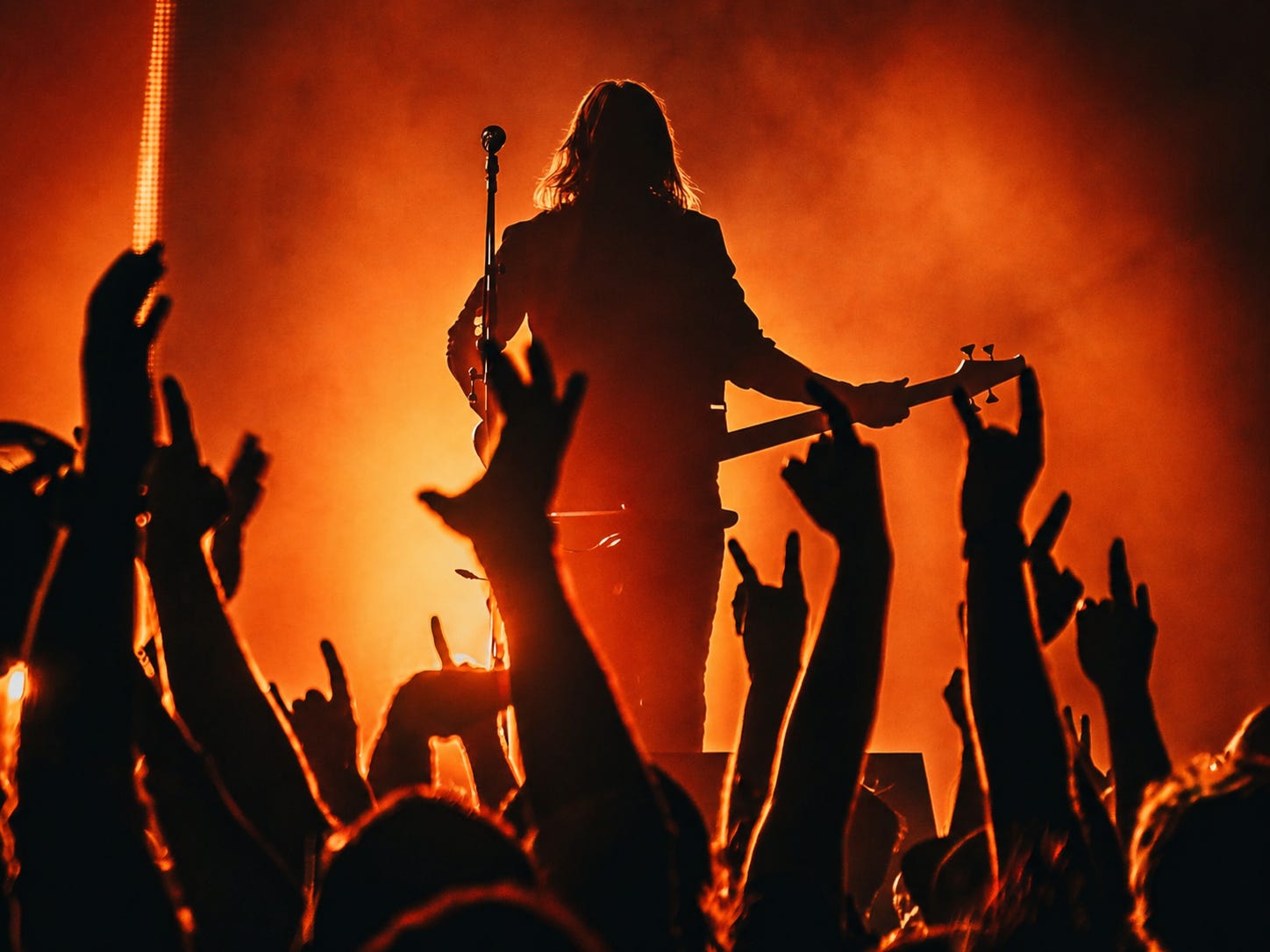
And if any measure carried the final word, it was the crowd response. Throughout the set, fans were locked in, reacting to the visuals, shouting, headbanging, raising horns, laughing at the bits, and embracing the experience exactly as it was designed.
Toward the end of the set, the stage went completely dark and Nathan Explosion asked how everyone was enjoying themselves. Then Skwisgaar explained that he was happy to come to the state of Waukee to party, which was one of the funniest location-specific moments of the night simply because it sounded so wrong and so perfect at the same time.
Nathan asked William Murderface how he liked Waukee.
All the crowd heard in response were bass notes.
Nathan explained that they had taken Murderface’s mic away a long time ago and, trust him, it was the right idea.
Then Charles Offdensen’s voice came through the speakers, informing Nathan that his contract had been fulfilled and he didn’t need to keep playing if he didn’t want to. Nathan replied that Charles was making a lot of people want his head on a stick. A lot of people wanted to kill him. Charles continued, explaining that Nathan could be done, go back to the bus, and do that thing he does on the tour bus.
Nathan let the crowd decide.
If they were loud enough, Dethklok would play a few more.
The crowd got loud.
So they played three more songs, and then the crowd was gone in quick succession. The broadcast ended. The bodies remembered they had to leave. The weird little spell broke in the most Dethklok way possible: contract fulfilled, threat implied, encore crowd-approved, signal cut.
Even if Dethklok doesn’t resonate with every attendee on a personal level, the connection between the band and its audience was undeniable. People showed up to see Dethklok in all its animated, over-the-top glory, and they got exactly that.
No apology. No softening. No forced sincerity.
Just the fans, the music, the screen, and the shared language of a cartoon metal empire that somehow grew up with its audience without ever becoming respectable.
Thank God.
Afterglow
By the time the final notes rang out, it was clear this wasn’t another standard stop on a tour. It was a collision of three completely different worlds, each one fully realized in its own way. From Castle Rat’s fantasy storytelling to Amon Amarth’s larger-than-life Viking spectacle to Dethklok’s screen-driven Adult Swim chaos, every set brought its own mythology to the room.
What stood out most was the commitment. Each band stayed true to its identity, never bending to meet expectations or blend into the lineup. Castle Rat didn’t shrink its realm. Amon Amarth didn’t apologize for the hammer, the horn, or the serpent. Dethklok didn’t pretend to be a normal band when the entire thrill is that they were never normal to begin with.
As the lights came up and the crowd began to filter out, there was a lingering feeling that is hard to replicate. Not only the ringing in your ears or the exhaustion from hours on your feet, but the sense that the room had briefly stopped obeying regular programming.
For a few hours, Vibrant Music Hall became a dungeon, a longship, a battlefield, and a late-night television signal from the heavy-metal end of the universe. The kind of night that plays back in pieces later: the chant, the potion, the blood, the rowing crowd, the hammer, the serpent, Facebones giving weed advice, Murderface answering Waukee with bass notes.
Some shows entertain. Some impress. Then there are nights like this, where the movie-like storytelling keeps looping in your head long after the stage goes dark.
Now is forever in this realm.
And apparently, so is Adult Swim.


Please consider Donating to Sponsor an article even $1 helps!
